Tag: Information Finance

  • The Death of the Poll: How Google and Meta are Turning Prediction Markets into the Global Truth Engine

    The Death of the Poll: How Google and Meta are Turning Prediction Markets into the Global Truth Engine

    As of February 6, 2026, the digital landscape has undergone a tectonic shift. Once relegated to the fringes of the internet and dismissed as "speculative casinos," prediction markets have officially entered the mainstream. This transformation is crystallized by the recent, sweeping policy updates from Alphabet (NASDAQ: GOOGL) and Meta (NASDAQ: META), which have moved to treat prediction markets not as gambling, but as vital financial and information tools.

    The current probability of prediction markets becoming the primary source for real-time news verification—a concept now widely known as "Information Finance" or InfoFi—sits at an all-time high. Markets tracking the efficacy of traditional polling versus prediction market accuracy for the upcoming 2026 U.S. Midterms show a staggering 85% confidence level that markets will outperform traditional data sets. This surge in interest is driven by a series of regulatory victories and a fundamental change in how the world's largest advertising platforms categorize "event-based" trading.

    The Market: What’s Being Predicted

    The "market" for prediction markets itself has exploded. Leading platforms like Kalshi and Polymarket are no longer niche startups; they are billion-dollar infrastructure plays. In early 2026, Kalshi reached an estimated valuation of $11 billion, while Polymarket, following its successful U.S. pivot, is trailing closely at $9.5 billion. The sheer volume of trade is the most telling metric: industry analysts project notional trading volume for event contracts to reach between $120 billion and $150 billion by the end of this year.

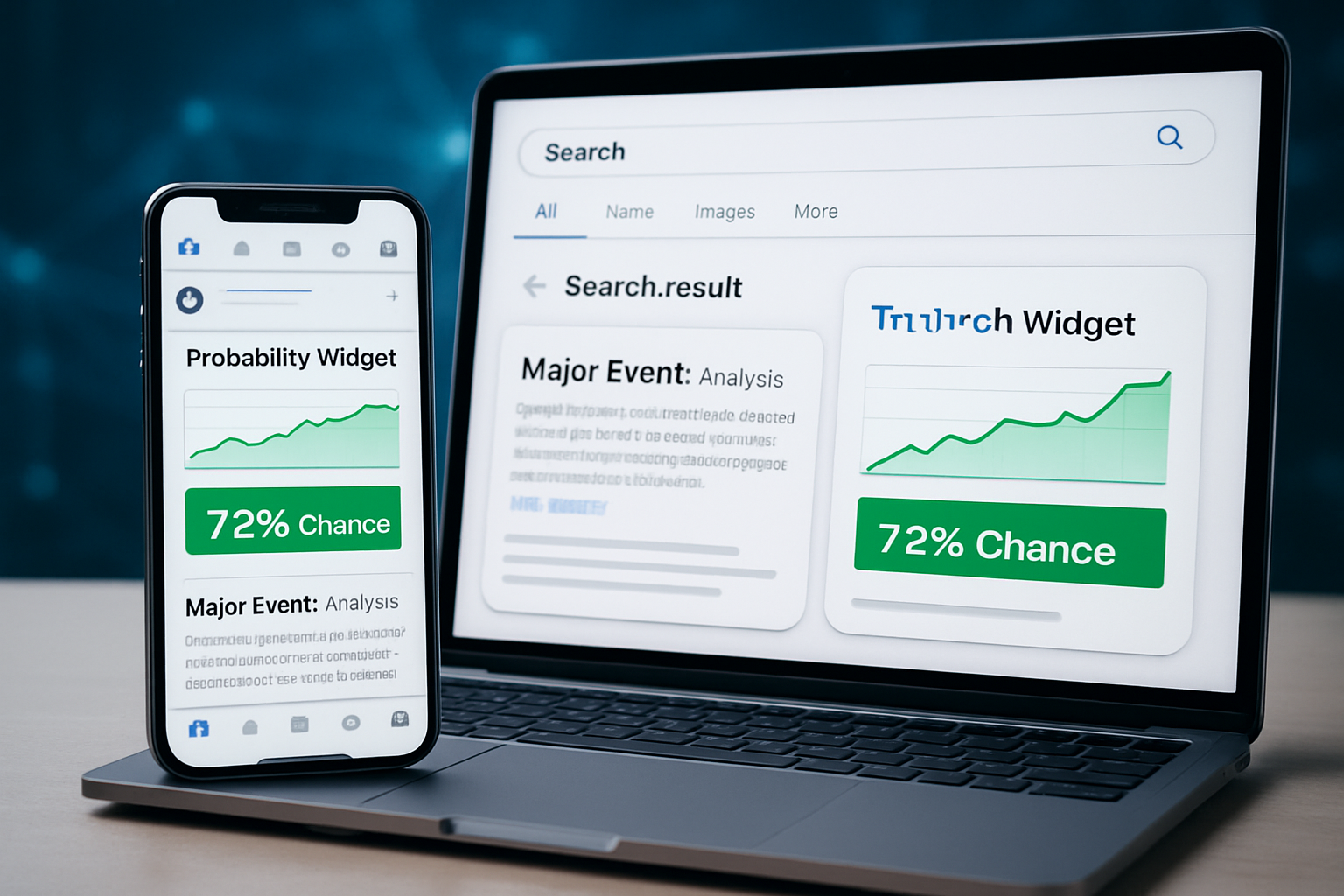
    This growth is being funneled through highly visible integrations. Google has recently embedded "Probability Widgets" directly into Google Finance and Search results. Users searching for "Fed interest rate hike" or "2026 World Cup winner" are now presented with a live odds-based widget sourced from CFTC-regulated exchanges. Meanwhile, Robinhood (NASDAQ: HOOD) has fully integrated election and economic contracts into its primary retail app, making "trading the news" as accessible as buying a fractional share of an ETF.

    The key resolution criteria for this shift rest on the "mainstreaming" of these platforms. When Google updated its ads policy on January 21, 2026, it specifically opened the gates for Commodity Futures Trading Commission (CFTC)-authorized markets to run search ads. This move ended a decade of "shadow-banning" for the industry, effectively legitimizing prediction markets as regulated financial instruments rather than offshore betting sites.

    Why Traders Are Betting

    The primary driver for the current betting frenzy is the proven accuracy of these markets during the 2024 election cycle. While traditional polls were mired in margin-of-error debates, prediction markets provided a stable, real-time barometer of voter sentiment that correctly signaled key pivots weeks in advance. Traders aren't just betting on outcomes; they are betting on the superiority of the mechanism.

    Recent movements have been fueled by the concept of "Information Finance," a term popularized by thinkers like Vitalik Buterin. The logic is simple: when people put their money where their mouth is, the resulting data is "correct by construction." This has led to the rise of institutional "alpha seekers"—hedge funds and market makers—who now provide deep liquidity to these markets. They treat event contracts as legitimate hedges against geopolitical and economic risks, such as sudden shifts in trade policy or central bank decisions.

    Furthermore, the introduction of interactive "Truth Widgets" on Meta platforms like Facebook and Instagram has created a new class of "social predictors." Meta’s pilot program allows users to see real-time market odds alongside controversial news stories. This serves as a market-based counter-narrative to misinformation, shifting the public perception from "gambling for profit" to "participating in truth discovery."

    Broader Context and Implications

    The mainstreaming of InfoFi represents a massive regulatory and cultural pivot. The 2024 landmark legal victory of Kalshi over the CFTC acted as a catalyst, stripping the agency of its power to unilaterally ban political event contracts. Under the leadership of the current CFTC Chairman, Michael Selig, the agency has performed a "Regulatory Reset," withdrawing previous bans and asserting exclusive federal jurisdiction over these markets. This has effectively pre-empted the patchwork of state-level gambling laws that previously stifled growth.

    This shift reveals a growing public hunger for objective truth in an era of AI-generated content and fragmented media. Prediction markets offer a decentralized, incentive-aligned alternative to the "expert class." Historically, these markets have shown a remarkable ability to process complex information faster than traditional newsrooms, accurately predicting everything from the resolution of the Hollywood strikes to the exact timing of tech layoffs.

    However, the "InfoFi" revolution is not without friction. Some platforms, including X (formerly Twitter), have faced challenges with "market spam"—automated accounts designed to manipulate odds or farm rewards. This has led to a technological arms race, where platforms are deploying advanced verification and anti-manipulation algorithms to ensure that the market signal remains pure.

    What to Watch Next

    The most immediate milestone to monitor is the full-scale rollout of Meta’s prediction widgets across its global news feeds. If successful, this will integrate market data into the daily social experience of billions, potentially making "checking the odds" as common as checking the weather. Additionally, the 2026 FIFA World Cup, hosted in North America, is expected to be the largest non-political event in prediction market history, providing a massive liquidity test for platforms like DraftKings (NASDAQ: DKNG) and Fanatics, which are increasingly eyeing the event-contract space.

    Investors should also watch for the potential launch of a "Prediction Market ETF." With the industry's valuation soaring, rumors of a structured product that allows investors to gain exposure to a basket of event-contract platforms are intensifying. The regulatory path for such a product seems clearer now than ever before, following the CFTC’s shift toward a pro-innovation stance.

    Bottom Line

    The mainstreaming of prediction markets marks the end of the "speculative casino" era and the beginning of the "Information Finance" age. By allowing these markets to advertise and integrating their data into core products, Alphabet and Meta have effectively deputized prediction markets as the internet’s "Source of Truth." This is not just about betting on the future; it is about creating a more accurate, incentive-driven way to understand the present.

    As we move deeper into 2026, the distinction between a "trader" and a "news consumer" is blurring. In a world where information is the most valuable commodity, the platforms that can most accurately price that information are the ones that will win. Prediction markets have evolved from a niche hobby into the foundational infrastructure of the modern information economy, and the "Big Tech" seal of approval is the final hurdle they needed to clear.


    This article is for informational purposes only and does not constitute financial or betting advice. Prediction market participation may be subject to legal restrictions in your jurisdiction.

    PredictStreet focuses on covering the latest developments in prediction markets.
    Visit the PredictStreet website at https://www.predictstreet.ai/.
  • The ‘Oracle Layer’: How Prediction Markets Became the New Backbone of Financial Media

    The ‘Oracle Layer’: How Prediction Markets Became the New Backbone of Financial Media

    In the world of finance, information has always been the most valuable currency. But as of early 2026, how that information is gathered, verified, and broadcast has undergone a fundamental transformation. The 2024 U.S. Election was the "proof-of-concept" for prediction markets; today, they have become the "Oracle Layer" for the global economy.

    Major media conglomerates, once skeptical of "election betting," have now fully integrated prediction market data into their core newsroom operations. Platforms like Polymarket and Kalshi are no longer just alternative data sources—they are the official scoreboards for reality. With probability data now appearing on the same ticker tapes as the S&P 500, the era of "Information Finance" (InfoFi) has officially arrived, turning every headline into a price and every event into a trade.

    The Market: What's Being Predicted

    Today, prediction markets cover nearly every measurable outcome in the modern world. While political markets remain a cornerstone, the scope has expanded drastically. Traders are now forecasting everything from the exact Federal Funds Rate target in the next FOMC meeting to the specific earnings-per-share (EPS) beats for tech giants like Nvidia (NASDAQ: NVDA) and Apple (NASDAQ: AAPL).

    The two dominant players, Polymarket and Kalshi, have divided the landscape into global and domestic spheres. Polymarket, which saw its profile explode after the 2024 election cycle, now operates with a projected $1 trillion annual trading run-rate. Meanwhile, Kalshi has solidified its role as the premier CFTC-regulated venue for U.S. institutional and retail traders. The liquidity in these markets has reached a "critical mass," where even billion-dollar "whale" positions move the odds by only fractions of a percent, providing a level of stability and signal accuracy that traditional polling simply cannot match.

    Why Traders Are Betting

    The shift toward prediction markets as a primary news source is driven by the concept of "skin-in-the-game." Unlike traditional analysts or pollsters who face little professional consequence for being wrong, traders in these markets face immediate financial loss. This creates a powerful incentive for accuracy, known in the industry as the "Truth Premium."

    In late 2025 and early 2026, we saw the emergence of massive hedging strategies where institutional investors used Kalshi contracts to protect against legislative changes. For example, during the debate over new AI regulations, the market-implied probability of a "strict regulatory flip" provided a more accurate signal for hedge funds than the public statements of lobbyists. Furthermore, retail participation has surged following the integration of event contracts into major brokerages like Robinhood (NASDAQ: HOOD), allowing everyday investors to trade on their personal knowledge of local trends or industry news.

    Broader Context and Implications: The Rise of 'InfoFi'

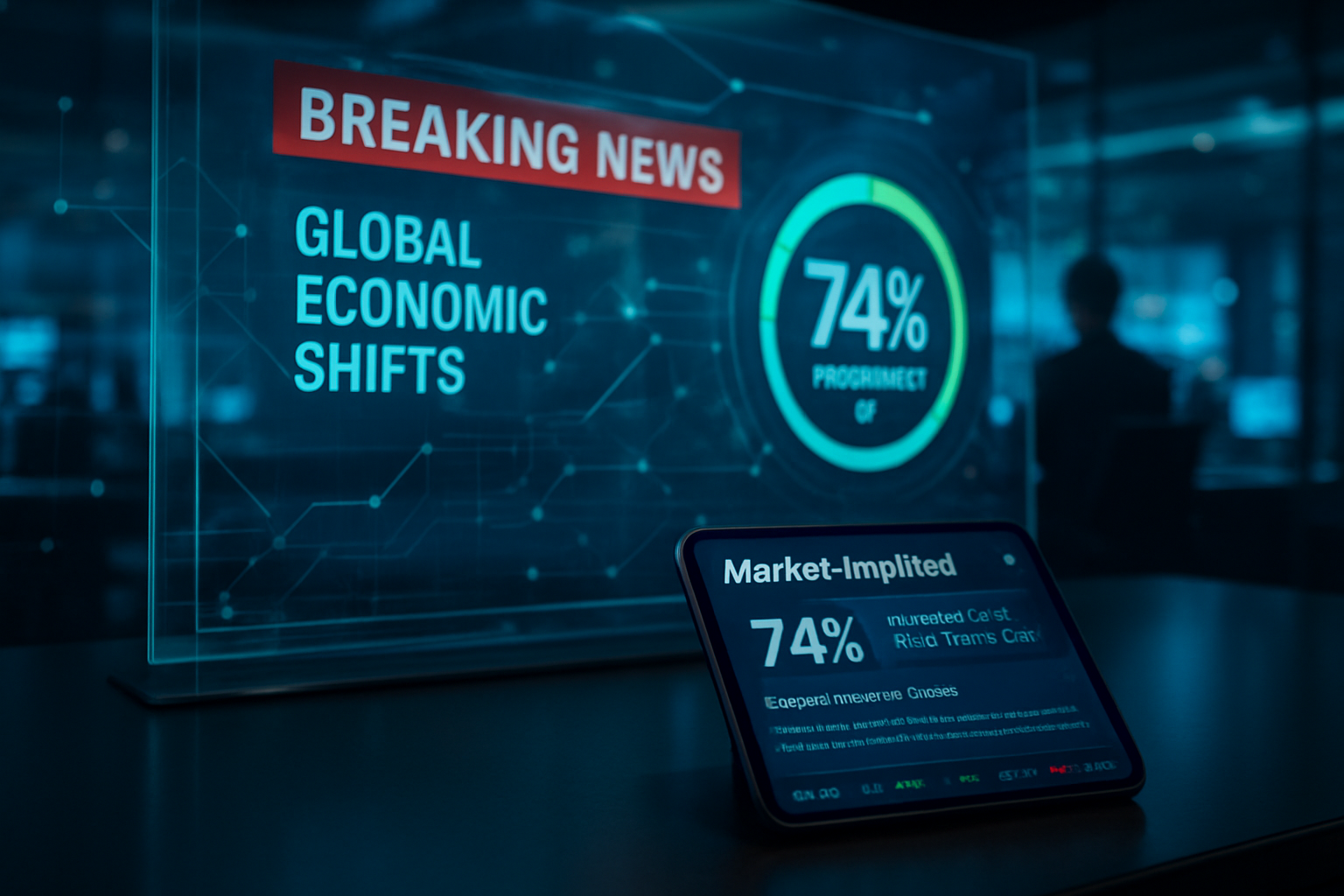
    The integration into mainstream media is perhaps the most significant milestone for the industry. In January 2026, News Corp (NASDAQ: NWSA), the parent company of The Wall Street Journal and Barron’s, announced an exclusive distribution partnership with Polymarket. Readers now see "Market-Implied Probability" widgets alongside every political and economic article. Similarly, Warner Bros. Discovery (NASDAQ: WBD), through CNN, has designated Kalshi as its "Official Prediction Market Partner," using their real-time odds to "fact-check" traditional polling data on-air.

    This marks the definitive shift to "Information Finance." The narrative has changed from "gambling" to "price discovery for information." By treating odds as factual indicators, financial news outlets are acknowledging that a liquid market is the most efficient way to aggregate disparate pieces of information. This has profound implications for regulatory considerations; as these markets become vital public utilities for information, the push for clearer federal frameworks has intensified, leading to the institutionalization of the sector.

    What to Watch Next

    As we look toward the remainder of 2026, several key milestones will test the resilience of this new information ecosystem. The upcoming 2026 Midterm Elections will be the first major political test for the fully integrated "InfoFi" newsrooms. Analysts are already watching how "Market-Implied House Control" odds diverge from traditional surveys, which struggled to keep pace with the market’s predictive power in 2024.

    Additionally, the expansion of "micro-markets" is a trend to monitor. We are seeing the rise of hyper-local prediction markets—such as the probability of a specific city council's zoning vote or the likelihood of a local weather event. These niche markets are becoming essential tools for local news outlets looking to provide their audiences with something more substantial than mere speculation.

    Bottom Line

    The integration of prediction market data into mainstream media represents the most significant change in financial journalism in a generation. By moving beyond the "expert opinion" model and toward a "market-driven truth" model, outlets like the WSJ and CNN are providing their audiences with a more objective, data-backed view of the world.

    Prediction markets have evolved from a curiosity into a structural pillar of the financial world. They offer a real-time, high-stakes vibe check that traditional methods simply cannot replicate. While the risks of market manipulation or volatility remain, the sheer volume of liquidity and the diversity of participants have turned these platforms into the ultimate tools for navigating an increasingly uncertain global landscape. In 2026, the question is no longer "what do the experts think?" but rather, "what is the market price of the truth?"


    This article is for informational purposes only and does not constitute financial or betting advice. Prediction market participation may be subject to legal restrictions in your jurisdiction.

    PredictStreet focuses on covering the latest developments in prediction markets.
    Visit the PredictStreet website at https://www.predictstreet.ai/.
  • The ‘Liquid Truth’ of 2028: JD Vance and Gavin Newsom Emerge as Early Favorites in the Information Finance Era

    The ‘Liquid Truth’ of 2028: JD Vance and Gavin Newsom Emerge as Early Favorites in the Information Finance Era

    While the dust of the 2024 election cycle has barely settled, the financial world is already placing its bets on the next battle for the White House. As of February 2026, prediction markets—the once-niche platforms that successfully forecasted the 2024 outcome with surgical precision—are signaling a clear trajectory for the 2028 U.S. Presidential Election. Vice President JD Vance has solidified his position as the GOP frontrunner, while California Governor Gavin Newsom has emerged as the clear favorite to lead the Democratic ticket.

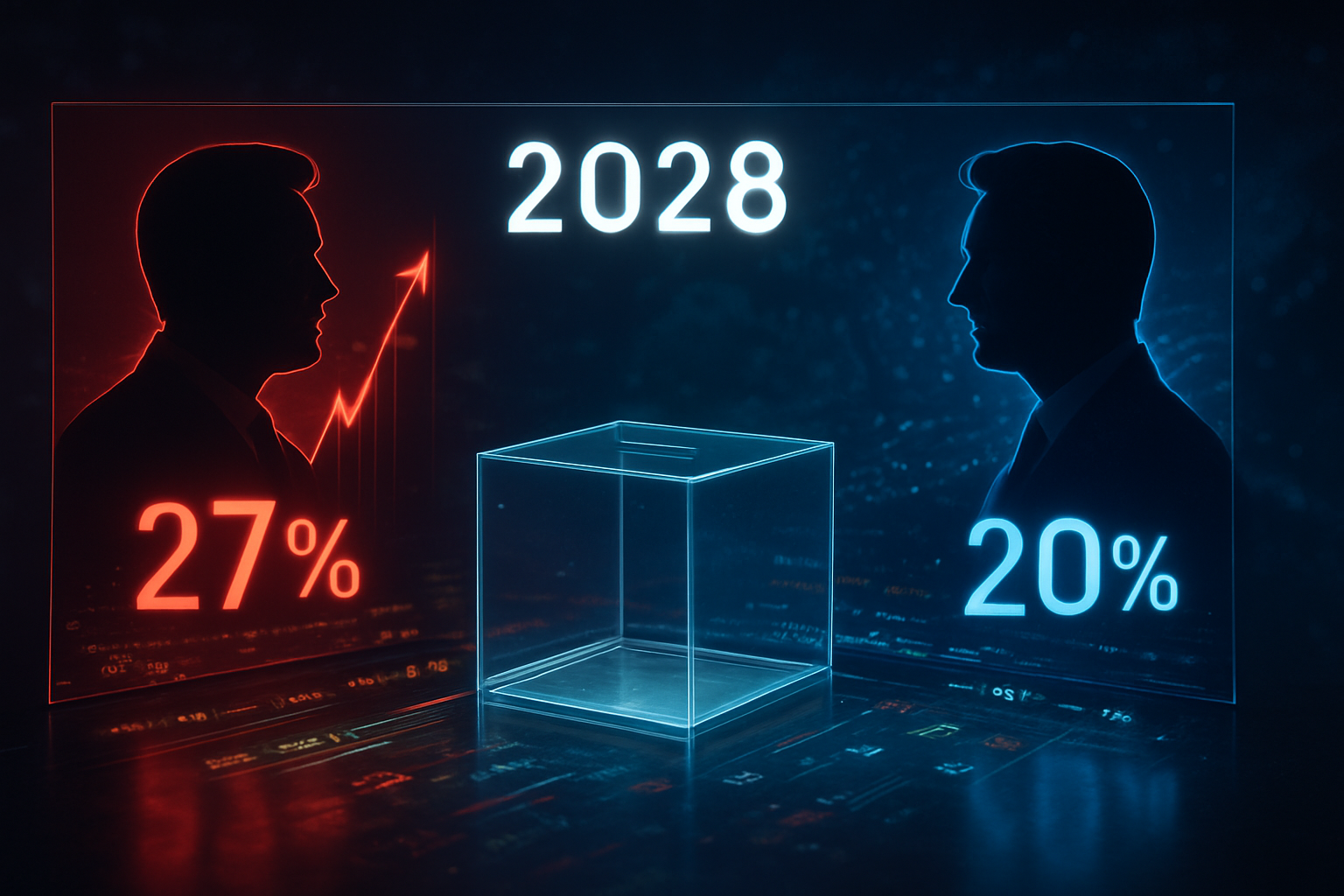
    Traders on Kalshi and Polymarket are currently pricing a Vance presidency at a 27% probability, a striking figure for a race still nearly three years away. Newsom follows closely at approximately 20%, reflecting a market that is increasingly viewing the 2028 cycle as a high-stakes clash between the incumbent "America First" successor and the West Coast’s most prominent Democratic "fighter." This early activity is not merely speculative; it is the cornerstone of what analysts are calling "Information Finance," where these markets serve as long-term sentiment indicators that influence everything from corporate hedging to legislative strategy.

    The Market: What’s Being Predicted

    The 2028 Presidential election is no longer just a political conversation; it is a high-liquidity financial market. On Polymarket, the world’s largest decentralized prediction platform, the "2028 Presidential Winner" contract has already surpassed $250 million in total trading volume. Meanwhile, Kalshi—the first federally regulated exchange to offer such contracts—has seen over $12.5 million in its GOP nomination market alone. These platforms allow participants to buy and sell "shares" in a candidate, with prices fluctuating between $0.01 and $0.99 based on the perceived probability of the outcome.

    The current odds reflect a significant consolidation within both parties. JD Vance’s nomination odds are currently trading at nearly 50%, a level of dominance that suggests traders view him as the undisputed heir to the MAGA movement. His primary competition, according to the markets, remains at a distance: Florida’s political heavyweights and other GOP rising stars are trading in the low double digits. On the Democratic side, Gavin Newsom has pulled away from a crowded field that includes figures like Representative Alexandria Ocasio-Cortez (7%) and Pennsylvania Governor Josh Shapiro (8%), with Newsom’s nomination odds hovering around 32%.

    This surge in liquidity has been bolstered by the entry of mainstream financial institutions. Robinhood Markets, Inc. (NASDAQ: HOOD) and Interactive Brokers Group, Inc. (NASDAQ: IBKR) have integrated event contracts into their retail platforms, bringing millions of new participants into the ecosystem. The resolution of these markets is straightforward: a "yes" contract pays out $1.00 if the candidate is inaugurated as President in January 2029, while all other contracts expire at zero.

    Why Traders Are Betting

    The market’s favoritism toward JD Vance is largely driven by his performance during the first year of his vice presidency. Traders point to his role as the administration’s "legislative enforcer" and his deep ties to the domestic manufacturing and trade policy sectors as evidence of his entrenched power within the party. Unlike traditional polling, which often measures "favorability," prediction markets measure "electability" and "institutional momentum." The markets are effectively "pricing in" the consolidation of the Republican base behind Vance.

    For Gavin Newsom, the momentum is tied to his aggressive stance against federal policies in late 2025. Specifically, his successful push for California’s "Prop 50"—a measure that allowed the state to redraw its congressional maps mid-decade—is viewed by traders as a signal that he is willing to engage in the "bare-knuckle" politics required for a national campaign. When the federal courts upheld these maps in January 2026, Newsom’s odds of winning the Democratic nomination saw a 15% jump in a single week.

    Traders are also heavily influenced by the "Nate Silver Effect"—the retrospective realization that prediction markets were far more accurate than traditional polls in 2024. While many pollsters described the 2024 race as a 50/50 toss-up until Election Night, markets on Polymarket and Kalshi consistently priced a 60% probability for the eventual winner weeks in advance. This track record has transformed "liquid truth" into a preferred metric for hedge funds and institutional investors looking to mitigate political risk.

    Broader Context and Implications

    The 2028 markets are the primary evidence for the rise of "Information Finance" (InfoFi), a term increasingly used to describe the transition of truth into a tradable asset. The Intercontinental Exchange, Inc. (NYSE: ICE), the parent company of the New York Stock Exchange, recently finalized a strategic investment in prediction infrastructure, recognizing that political futures are now critical utilities for the global economy. Major firms like Susquehanna International Group (SIG) have become primary market makers, ensuring that these markets have the depth and liquidity required for institutional participation.

    This shift has been aided by a dramatic change in the regulatory climate. In January 2026, under new leadership, the Commodity Futures Trading Commission (CFTC) withdrew several long-standing proposals that sought to ban political event contracts. The agency's new "pro-innovation" stance treats these markets as vital tools for price discovery, allowing platforms like Kalshi to operate with greater legal certainty and partner with media giants like Warner Bros. Discovery, Inc. (NASDAQ: WBD) and Comcast Corporation (NASDAQ: CMCSA) to provide real-time probability data.

    Historically, early-cycle markets have been criticized for their volatility, but the 2028 cycle is different. The sheer volume of capital involved has compressed bid-ask spreads and reduced the impact of "noise" traders. These markets are now acting as early-warning systems for corporations, which use the JD Vance or Gavin Newsom odds to hedge against future tax reforms, environmental regulations, or changes in international trade agreements.

    What to Watch Next

    As we move through the remainder of 2026, several key milestones are expected to shift the 2028 odds. The first major hurdle will be the 2026 Midterm Elections. If the GOP maintains or expands its control of Congress, Vance’s odds are expected to climb further, potentially breaking the 30% mark for the presidency. Conversely, a Democratic "Blue Wave" would likely see Newsom’s odds surge as he would be credited as the party’s most effective surrogate and strategist.

    Legislative battles in the summer of 2026 regarding the renewal of major tax provisions will also be a catalyst for market movement. Traders will be watching how Vance navigates these negotiations as the tie-breaking vote in the Senate. On the Democratic side, the upcoming primary debates for various governorships and Senate seats will provide a platform for Newsom to further consolidate his "leader of the opposition" status.

    Additionally, the integration of prediction market data into mainstream financial terminals like Bloomberg and Refinitiv is expected to bring a second wave of institutional liquidity. As more quantitative trading firms—such as DRW and Jane Street—establish dedicated InfoFi desks, we expect the 2028 Presidential market to become one of the most stable and scrutinized assets in the world.

    Bottom Line

    The early 2028 presidential markets represent more than just a bet on a candidate; they are a sophisticated real-time analysis of the American political landscape. The current lead held by JD Vance reflects a market that sees his incumbency and party consolidation as a formidable barrier to any challenger. At the same time, Gavin Newsom’s steady rise illustrates a Democratic base—and a donor class—that is increasingly rallying behind a candidate perceived as a media-savvy fighter.

    These markets have successfully moved from the fringes of the internet to the core of Wall Street. By treating political outcomes as financial risks that can be hedged, the prediction market ecosystem has created a more accurate, or at least more responsive, indicator of public sentiment than traditional methods.

    As the 2028 cycle progresses, the "liquid truth" provided by these exchanges will likely become the primary lens through which the world views the future of American leadership. While 2028 remains far on the horizon, the markets are already telling us that the battle for the next decade has already begun.


    This article is for informational purposes only and does not constitute financial or betting advice. Prediction market participation may be subject to legal restrictions in your jurisdiction.

    PredictStreet focuses on covering the latest developments in prediction markets.
    Visit the PredictStreet website at https://www.predictstreet.ai/.
  • The Rise of InfoFi: How Prediction Markets Became the World’s ‘Truth Machine’

    The Rise of InfoFi: How Prediction Markets Became the World’s ‘Truth Machine’

    The concept of "Information Finance," or InfoFi, has transitioned from a niche crypto-economic theory into a foundational pillar of global finance and media. As of February 2, 2026, prediction markets are no longer viewed as mere platforms for speculation; they have been repositioned as sophisticated data-transmission mechanisms that assign a market price to the accuracy of information itself. This shift is most visible in the current pricing of the Federal Reserve’s next moves, where the market is currently pricing in a 64% probability of a 25-basis-point rate cut in March, a signal that traditional economists are now using to calibrate their own models.

    The surge in interest surrounding InfoFi is driven by a fundamental realization: financial stakes force an honesty that social media algorithms and traditional polling lack. This "Truth Machine" philosophy, championed by industry leaders, has been validated by a massive influx of institutional capital and a landmark shift in how the world’s largest tech companies treat the sector. With total weekly trading volumes across major platforms recently hitting a record $6.32 billion, the era of purely speculative "betting" is being replaced by a disciplined quest for the "Truth Premium."

    The Market: What's Being Predicted

    At the heart of the InfoFi movement are two dominant platforms: the federally regulated Kalshi and the globally expansive Polymarket. These exchanges have moved beyond simple "yes/no" binaries on pop culture to become the primary clearinghouses for high-stakes geopolitical and macroeconomic data. On Kalshi, the "March 2026 Fed Rate Decision" contract has seen over $450 million in open interest, effectively functioning as a real-time shadow FOMC.

    Meanwhile, on Polymarket, traders are currently fixated on the 2026 U.S. Midterm Elections. The market currently prices a 78% probability that Democrats will flip the House, while Republicans maintain a 66% chance of holding the Senate. These odds are being cited by major news networks as a more reliable indicator than traditional polls, which many argue have failed to account for the "incentivized accuracy" that comes when traders have "skin in the game."

    The liquidity in these markets has reached a tipping point. On January 21, 2026, Alphabet Inc. (NASDAQ: GOOGL) updated its global advertising policies to officially permit prediction market advertisements in the United States for the first time. This regulatory "blessing" from Google has allowed platforms like Kalshi to tap into the world’s largest advertising network, provided they are federally regulated as Designated Contract Markets (DCMs). This move effectively reclassified these markets from "gambling" to "financial products," placing them in the same category as options or futures.

    Why Traders Are Betting

    Traders are flocking to InfoFi because it offers a "pure" play on information that is often obscured by institutional bias or media spin. Kalshi CEO Tarek Mansour has frequently described his platform as a "Truth Machine," arguing that "people don't lie with their money." This sentiment is the driving force behind the current market movements. Traders are not just betting on an outcome; they are betting that they have discovered a piece of information—whether it’s a shift in voter sentiment or a supply chain delay at NVIDIA (NASDAQ: NVDA)—before the rest of the market does.

    The incentive structure is simple: if you are right, you profit; if you are wrong, you lose. This Darwinian environment has given rise to a new professional class of "Prediction Market Traders." These individuals use specialized expertise, such as tracking FDA approval timelines or analyzing semiconductor shipment data (specifically the NVIDIA Blackwell Ultra B300 shipments, which are currently a hot-button InfoFi contract), to generate alpha.

    Furthermore, the integration of prediction markets into mainstream financial tools has lowered the barrier to entry. Robinhood Markets, Inc. (NASDAQ: HOOD) and Coinbase Global, Inc. (NASDAQ: COIN) have both integrated "Prediction Market Hubs" directly into their apps, reaching over 25 million combined users. This has brought a "flywheel" effect to the market: more users lead to better liquidity, which leads to sharper price signals, which in turn attracts even more institutional traders.

    Broader Context and Implications

    The rise of InfoFi represents a paradigm shift in how society processes truth. Historically, we have relied on "experts" and "institutions" to tell us what is likely to happen. However, the consistent accuracy of prediction markets during the 2024 elections and the subsequent AI boom has eroded trust in traditional forecasting. In late 2025, Mansour stated that Kalshi’s mission is about "replacing debate and subjectivity with markets and accuracy."

    This trend is also being reflected in the legislative halls of Washington D.C. In January 2026, the Public Integrity in Financial Prediction Markets Act (H.R. 7004) was introduced to ensure the "purity of data" in these markets by banning federal officials from trading on non-public information. This suggests that the government now views these markets not as a nuisance to be regulated out of existence, but as a critical piece of national financial infrastructure that must be protected.

    The broader implication is a world where "truth" is a tradable asset. When Intercontinental Exchange (NYSE: ICE), the parent company of the New York Stock Exchange, backed Polymarket with a $2 billion investment in 2025, it signaled that the old guard of finance had finally accepted InfoFi. These markets are now used to hedge against "event risk"—situations like a government shutdown or a sudden geopolitical conflict—where traditional stocks and bonds may not provide an adequate shield.

    What to Watch Next

    As we move through the first quarter of 2026, several key milestones will determine if InfoFi can maintain its momentum. First and foremost is the Federal Reserve’s March meeting. If the market’s 64% prediction of a rate cut proves accurate, it will further solidify the "Truth Machine" narrative. Conversely, a significant miss would give ammunition to critics who still view these markets as volatile and prone to manipulation.

    Another critical area to monitor is the "AI Release Cycle." On Polymarket, the contract for "GPT-5.3 released by February 28, 2026" is currently trading at 82% odds. This market serves as a proxy for the entire tech sector's health. If OpenAI misses this window, it could trigger a broader sell-off in AI-related stocks, proving how deeply intertwined InfoFi has become with the traditional Nasdaq.

    Finally, the expansion of Google’s ad program will be a major catalyst. As more regulated platforms enter the space, the cost of customer acquisition is expected to drop, potentially bringing hundreds of millions of new retail dollars into the prediction ecosystem. This liquidity surge will be the ultimate test of the platforms' stability and their ability to remain "un-manipulatable."

    Bottom Line

    The emergence of Information Finance (InfoFi) marks the end of the era where truth was a matter of opinion. By attaching a price tag to accuracy, prediction markets have created a global, real-time feedback loop that is increasingly difficult for traditional institutions to ignore. Tarek Mansour’s vision of a "Truth Machine" is no longer a theoretical goal; it is a multi-billion-dollar reality that is being indexed by Google and traded on Robinhood.

    For the average observer, these markets provide a level of clarity that was previously impossible. Whether you are looking at the probability of a 2026 House flip or the release date of the next major AI model, the "wisdom of the crowd"—when backed by billions of dollars—is proving to be the most reliable compass in an uncertain world.

    As we look toward the remainder of 2026, the question is no longer whether prediction markets are legal or moral, but rather: how much is the truth worth to you?


    This article is for informational purposes only and does not constitute financial or betting advice. Prediction market participation may be subject to legal restrictions in your jurisdiction.

    PredictStreet focuses on covering the latest developments in prediction markets. Visit the PredictStreet website at https://www.predictstreet.ai/.

  • The Great Prediction War: Polymarket and Kalshi Battle for the Soul of Information Finance

    The Great Prediction War: Polymarket and Kalshi Battle for the Soul of Information Finance

    The prediction market landscape has officially entered its most volatile and high-stakes era yet. Following a staggering 2025 that saw over $40 billion in total trading volume, the industry is now locked in what analysts are calling the "Great Prediction War." This isn't just a race for market share; it is a fundamental clash between two visions of the future: the decentralized, crypto-native "truth engine" of Polymarket and the regulated, Wall Street-compliant exchange model of Kalshi.

    As of February 1, 2026, the "meta-market" on Manifold Markets—where traders bet on the success of other platforms—paints a picture of a tightening race. Polymarket currently leads the odds at 47% to be the top platform by volume in 2026, while Kalshi holds a strong 34% share. The stakes have never been higher, as these platforms compete to fulfill the promise of "Information Finance," a concept where markets aren't just for gambling, but serve as the definitive source of truth for a world drowning in misinformation.

    The Market: What's Being Predicted

    The primary metric of success in the Great Prediction War is notional trading volume, and the numbers are staggering. In 2025, the industry hit a record-breaking $40 billion in volume, a nearly 400% increase from the previous year. This growth was fueled by a perfect storm of global events, ranging from hyper-local sports betting to high-stakes geopolitical conflicts. On Manifold Markets, the "Top Prediction Market by Volume in 2026" contract has become one of the most liquid markets on the site, serving as a real-time scoreboard for the industry's civil war.

    Polymarket’s 47% favorite status is largely driven by its dominance in "high-signal" events. During 2025, the platform processed over $33 billion in trades, much of it concentrated in areas where traditional media often lags: Federal Reserve policy shifts, the nuances of the Russia-Ukraine conflict, and major cultural milestones. Traders favor its decentralized infrastructure, which allows for rapid market creation and a global user base that brings diverse, often "insider" perspectives to the pricing.

    Kalshi, meanwhile, is the heavy-hitting incumbent of the regulated space. While it trails Polymarket in the Manifold odds at 34%, its 2025 performance was technically superior in raw notional volume, clocking in at $43.1 billion. However, much of this volume was derived from high-frequency sports contracts—a sector currently under fire from state regulators. The market is currently pricing in the risk that Kalshi’s legal battles over sports betting might stunt its growth, allowing Polymarket’s broader, global event catalog to take the lead in 2026.

    Why Traders Are Betting

    The divergence in odds between Polymarket and Kalshi reflects a deeper debate over the utility of "insider" information. A recent flashpoint occurred during the so-called "Maduro Trade," where a Polymarket user reportedly netted $400,000 by betting on the capture of Nicolás Maduro just hours before the news was officially broken by international wires. This incident has reinforced the belief among "Information Finance" advocates that decentralized markets are superior "truth engines" precisely because they incentivize those with privileged information to reveal it through their trades.

    Conversely, the "regulated" camp argues that long-term institutional adoption requires the safeguards that only a platform like Kalshi can provide. Goldman Sachs (NYSE: GS) CEO David Solomon recently noted that institutional clients are looking for "event-contract derivatives" that are cleared through regulated exchanges to hedge against macro risks. For these players, the transparency and compliance of Kalshi are more valuable than the raw speed of a crypto-native platform.

    Furthermore, the integration of prediction markets into mainstream retail apps has changed the game. Robinhood (Nasdaq: HOOD) and Interactive Brokers (Nasdaq: IBKR) have both moved to offer event contracts directly to their millions of users. This influx of retail "dumb money" has created massive liquidity, allowing professional traders to execute sophisticated arbitrage strategies between the decentralized prices on Polymarket and the regulated prices on Kalshi or ForecastEx.

    Broader Context and Implications

    The "Great Prediction War" is occurring against a backdrop of intense regulatory scrutiny. In January 2026, a Massachusetts judge issued a preliminary injunction against Kalshi, halting its sports-related contracts on the grounds that they constitute unlicensed gambling. This ruling has sent ripples through the industry, raising questions about whether the "regulated" path is actually more perilous than the decentralized one. Meanwhile, in Washington, U.S. Representative Ritchie Torres has introduced the "Public Integrity in Financial Prediction Markets Act of 2026," aimed at preventing government officials from trading on policy-related markets.

    These developments highlight the central tension of Information Finance: how to maintain the accuracy of the market without allowing it to become a "cesspool of insider trading," as some critics claim. The industry's massive 2025 volume proved that there is an insatiable appetite for these markets, but the legal framework is still struggling to catch up. The outcome of the Polymarket vs. Kalshi rivalry will likely dictate the regulatory template for the next decade.

    The validation of these markets is also coming from the highest levels of traditional finance. Intercontinental Exchange (NYSE: ICE), the parent company of the New York Stock Exchange, recently took a strategic stake in the sector, signaling that prediction markets are no longer a niche curiosity but a legitimate asset class. As these markets become more integrated with the global financial system, their ability to "predict" the future will increasingly be used by corporations to guide multi-billion dollar investment decisions.

    What to Watch Next

    The next six months will be a decisive period in the Great Prediction War. The most significant upcoming milestone is the full U.S. rollout of "Polymarket US." Following its 2025 acquisition of the CFTC-licensed exchange QCEX, Polymarket is preparing to launch a hybrid model that combines its popular interface with a fully compliant U.S. clearinghouse. If successful, this could neutralize Kalshi’s primary advantage and send Polymarket’s Manifold odds soaring past 60%.

    Simultaneously, the market is watching the moves of Robinhood (Nasdaq: HOOD). The platform recently announced a joint venture with Susquehanna International Group (SIG) to build its own in-house exchange for event contracts. If Robinhood decides to bypass both Kalshi and Polymarket to keep its users within its own ecosystem, it could disrupt the current duopoly and create a third front in the prediction war.

    Finally, keep a close eye on the "Torres Bill" in Congress. If the legislation passes with strict anti-insider trading provisions, it could paradoxically hurt the "accuracy" of the markets by removing the very people—government insiders—who have the most signal to provide. The debate over whether a market should be "fair" or "accurate" will be the defining philosophical struggle of 2026.

    Bottom Line

    The Great Prediction War of 2026 is more than a competition for trading fees; it is a battle to define how humanity aggregates truth in the digital age. Polymarket’s current lead in the Manifold meta-market suggests that traders value the platform's global reach and "pure" information signal, despite the regulatory clouds hanging over the crypto space. However, Kalshi’s 34% probability remains a formidable threat, backed by the weight of Wall Street and a "compliance-first" philosophy that may ultimately win over the world’s largest institutional hedgers.

    As we move deeper into 2026, the $40 billion volume of the previous year will likely be eclipsed as Information Finance becomes a standard feature of every retail brokerage account and corporate treasury. Whether the winner is a decentralized protocol or a regulated exchange, the real victor is the concept of the prediction market itself. We are moving toward a world where the "market price" of an event is seen as more reliable than a news headline or a political poll.

    For participants, the message is clear: the volatility in these platforms' odds reflects the volatility of our times. The Great Prediction War is just beginning, and the prize is nothing less than the authority to tell the world what will happen next.


    This article is for informational purposes only and does not constitute financial or betting advice. Prediction market participation may be subject to legal restrictions in your jurisdiction.

    PredictStreet focuses on covering the latest developments in prediction markets. Visit the PredictStreet website at https://www.predictstreet.ai/.
  • The $44 Billion Prediction War: How Kalshi and Polymarket Redefined the Truth in 2026

    The $44 Billion Prediction War: How Kalshi and Polymarket Redefined the Truth in 2026

    As of January 27, 2026, the global financial landscape has been permanently altered by what analysts are calling the "Great Prediction War." This isn't a conflict of weapons, but of data, liquidity, and "truth pricing." For the first time in history, the collective intelligence of the crowd is outperforming traditional polling, expert analysis, and even some institutional intelligence services. At the center of this revolution are two titans: the regulated, sports-heavy Kalshi and the geopolitical "truth engine" Polymarket.

    The industry has just capped off a historic 2025, with total notional volume reaching a staggering $44 billion—a figure that has transformed prediction markets from a niche corner of the internet into a foundational pillar of modern finance. While the probabilities on major events shift by the second, the underlying message is clear: "Information Finance" has arrived, and it is here to stay.

    The Market: What's Being Predicted

    The competition between Kalshi and Polymarket has created a duopoly that mirrors the legendary rivalries of the New York Stock Exchange (NYSE) and the Nasdaq. In 2025, Kalshi reported a record-breaking $43.1 billion in notional trading volume, a meteoric 2,100% rise from the previous year. This volume is largely driven by its "sports flywheel," with 91.1% of its contracts tied to athletic outcomes. Kalshi’s dominance in the sports sector has been cemented by its integration with retail giants like Robinhood (NASDAQ: HOOD) and partnerships with major leagues such as the NHL.

    Conversely, Polymarket has captured the global "mindshare" for geopolitical and macroeconomic forecasting. While its 2025 volume of $33.4 billion trails Kalshi in raw numbers, its cultural and political impact is arguably greater. Polymarket’s odds on the Russia-Ukraine ceasefire, Iranian political stability, and Federal Reserve interest rate hikes are now cited as "the source of truth" by newsrooms and algorithmic trading desks globally. The platform’s liquidity in these high-stakes markets has become so deep that the Intercontinental Exchange (NYSE: ICE)—the parent company of the New York Stock Exchange—recently finalized a landmark $2 billion investment in the platform to bridge the gap between traditional finance and decentralized forecasting.

    Why Traders Are Betting

    The surge in trading volume isn't just about gambling; it's about the search for accurate information in an era of deepfakes and media polarization. Traders are increasingly using these platforms to hedge against real-world risks. For example, the "Maduro Trade" on January 3, 2026, became the stuff of legend when a Polymarket user turned a $32,000 position into $436,000 by betting on the capture of Venezuelan leader Nicolás Maduro by U.S. forces (Operation Absolute Resolve) just hours before it was officially announced.

    This event sparked a firestorm of debate regarding insider trading in prediction markets. It also highlighted why traders prefer these markets over traditional methods: they are reactive in real-time. While cable news was still debating rumors, the "Maduro capture" contract on Polymarket had already spiked to a 98% probability, providing a signal that was far ahead of any official press release.

    Furthermore, the entry of institutional "whales" on January 2nd, 2026, saw multi-million dollar trades on U.S. economic policy contracts, signaling that hedge funds are now using prediction markets as a legitimate alternative to Treasury futures or the VIX (CBOE Volatility Index). This shift is being supported by the regulatory legitimacy of Kalshi's CFTC-regulated model, which offers a safe harbor for institutional capital that requires strict compliance.

    Broader Context and Implications

    The "Great Prediction War" reflects a broader trend toward the "gamification of truth." As the industry approaches the projected $44 billion milestone, it is facing unprecedented regulatory scrutiny. In response to the Maduro Trade, Rep. Ritchie Torres introduced the "Public Integrity in Financial Prediction Markets Act of 2026," which aims to ban federal employees from trading on markets where they may have material non-public information. This mirrors the SEC's oversight of the stock market and suggests that prediction markets are now viewed as a legitimate financial asset class.

    Historically, prediction markets have proven more accurate than traditional polling. During the 2024 election cycle, these platforms correctly signaled shifts in battleground states days before pollsters adjusted their numbers. However, the rise of sports contracts on Kalshi has invited a different kind of regulation. Courts in Massachusetts and Connecticut have recently issued injunctions against certain sports-related contracts, arguing they overlap with unlicensed gambling. The resolution of these legal battles will determine whether prediction markets can continue to scale as a hybrid of finance and entertainment.

    What to Watch Next

    The next major milestone for the industry is the 2026 U.S. Midterm Elections. Early high-intent volume is already flowing into "Control of the House" and "Control of the Senate" markets as corporations look to hedge against potential tax code changes. These markets are currently showing a high degree of volatility, reflecting the polarized political climate.

    Additionally, the upcoming 2026 FIFA World Cup, hosted in North America, is expected to be the largest betting event in human history. Both Kalshi and Polymarket are reportedly in a bidding war to secure exclusive "prediction data partnerships" with FIFA and major broadcast networks. If Kalshi successfully integrates World Cup markets into the Robinhood app, analysts predict their 2026 volume could exceed $100 billion.

    Investors should also watch for the official U.S. relaunch of Polymarket. After acquiring the CFTC-licensed exchange QCEX, Polymarket is set to challenge Kalshi on its home turf with a fully regulated U.S. offering, potentially ending the "offshore" stigma that has historically followed decentralized platforms.

    Bottom Line

    The battle between Kalshi and Polymarket is no longer just about which platform has more users; it is a competition over who will provide the world’s "Source of Truth." Kalshi has won the battle for volume through its aggressive expansion into sports and its "Wall Street" regulatory approach. Polymarket, meanwhile, has won the battle for mindshare, becoming the essential dashboard for anyone trying to navigate the complexities of global politics and macroeconomics.

    As the industry crosses the $44 billion threshold, the ultimate winner is the public's access to better information. Whether you are a hedge fund manager hedging against a "black swan" event or a retail investor looking for a more accurate weather forecast, prediction markets have become an indispensable tool. The "Great Prediction War" of 2026 isn't just a financial story—it's the story of how humanity finally found a way to put a price on the future.


    This article is for informational purposes only and does not constitute financial or betting advice. Prediction market participation may be subject to legal restrictions in your jurisdiction.

    PredictStreet focuses on covering the latest developments in prediction markets.
    Visit the PredictStreet website at https://www.predictstreet.ai/.

  • The Rise of ‘Information Finance’: How Susquehanna and DRW Are Professionalizing Prediction Markets

    The Rise of ‘Information Finance’: How Susquehanna and DRW Are Professionalizing Prediction Markets

    The landscape of global finance is undergoing a structural transformation as the boundaries between speculative betting and institutional trading continue to blur. As of January 2026, the entry of Wall Street heavyweights Susquehanna International Group (SIG) and DRW into the prediction market space has signaled the end of the "retail-only" era. These firms are not just participating; they are pioneering dedicated "Information Finance" desks, treating the probability of real-world events with the same mathematical rigor once reserved for high-frequency equity trading.

    Currently, monthly notional volume across the prediction market sector has surged past $8.5 billion, driven by a record single-day trading volume of $701.7 million on January 12, 2026. This surge was catalyzed by geopolitical volatility in South America and a series of high-stakes macroeconomic shifts in the U.S. The arrival of institutional liquidity has compressed bid-ask spreads on major event contracts from 10% in the early 2020s to less than 0.5% today, effectively turning these markets into the world’s most efficient "truth engines."

    The Market: What's Being Predicted

    While prediction markets once focused on niche election outcomes, the modern "InfoFi" (Information Finance) ecosystem covers everything from the timing of Federal Reserve rate cuts to scientific breakthroughs and geopolitical conflicts. These contracts are primarily traded on two powerhouse platforms: the CFTC-regulated Kalshi and the decentralized giant Polymarket. By early 2026, the valuation of these platforms has reached atmospheric heights, with Kalshi valued at $11 billion and Polymarket at $9 billion following a landmark investment from the Intercontinental Exchange (NYSE:ICE).

    The market is no longer just a haven for political junkies. Major retail brokerages like Robinhood Markets, Inc. (NASDAQ:HOOD) and Webull have integrated "Prediction Market Hubs" directly into their apps, allowing millions of retail investors to trade event outcomes alongside their stock portfolios. This influx of retail "noise" has created a fertile environment for institutional market makers like SIG and DRW to provide liquidity, capture the "edge" in pricing, and ensure that contracts accurately reflect the aggregate sum of available human information.

    Trading volume is now concentrated in "Macro Truth" contracts. For instance, the market for the next FOMC interest rate decision currently processes billions in volume, with odds shifting in real-time as economic data is released. Unlike traditional polling, these markets require traders to put "skin in the game," a mechanism that has historically made them more accurate than expert forecasts or media sentiment analysis.

    Why Traders Are Betting

    The primary driver for institutional entry into prediction markets is the pursuit of "alpha" through sophisticated arbitrage and hedging strategies. Firms like Susquehanna and DRW have built specialized desks to exploit the discrepancies between prediction markets and traditional financial instruments. This is often referred to as "TradFi-Event Arbitrage." For example, if S&P 500 futures drop following a leaked news report while a related "Presidential Policy" contract on Kalshi remains stagnant, HFT algorithms can trade the lead-lag relationship between the two in milliseconds.

    Another key strategy is asset-class hedging. Institutional traders are increasingly using event contracts as a "pure" hedge against systemic risks. Rather than buying gold or defensive stocks to hedge against inflation, a fund might buy a "CPI exceeds 3.1%" contract. This provides a direct payout that is uncoupled from the volatility of the equity or bond markets, offering a cleaner way to manage specific macro exposures.

    Furthermore, the concept of "Information Finance," popularized by Ethereum co-founder Vitalik Buterin, has taken hold. Traders are betting because they believe these markets are the ultimate tool for truth aggregation. As SIG recruiting documents for their "Event Trading" teams suggest, the goal is to detect "incorrect fair values" in public sentiment. By identifying where the public consensus deviates from the mathematical probability of an outcome, these firms can harvest significant profits while simultaneously correcting the market price toward reality.

    Broader Context and Implications

    The professionalization of prediction markets carries profound implications for society and the financial system. We are witnessing the birth of a "Truth Layer" for the internet. When major news breaks, such as the capture of Nicolás Maduro in early January 2026—an event known as the "Maduro Trade"—the odds on Polymarket moved hours before official government confirmation. This has led many to view prediction markets as a more reliable source of breaking news than traditional journalism.

    However, this rapid growth has caught the attention of regulators. The "Maduro Trade" sparked allegations of insider trading by individuals with non-public information, leading to the introduction of the Public Integrity in Financial Prediction Markets Act of 2026 (H.R. 7004) by Rep. Ritchie Torres. This bill seeks to prohibit government officials from trading on event contracts tied to their own policy areas. The market currently prices the likelihood of this bill passing at 15%, reflecting the ongoing tension between innovation and regulation.

    At the regulatory level, the CFTC, under the leadership of Chairman Mike Selig, has moved toward a "future-proof" framework. Selig has explicitly stated that prediction markets should be distinguished from gambling, treating them instead as vital tools for price discovery in the "Information Economy." This regulatory clarity has been a green light for firms like SIG and DRW to expand their operations, provided they maintain high levels of collateralization.

    What to Watch Next

    As we move deeper into 2026, all eyes are on the upcoming U.S. Midterm Elections. This will be the first major political cycle where institutional liquidity providers like SIG and DRW are fully integrated into the market. Observers will be watching to see if this professionalization prevents the wild price swings and "fat-finger" errors that plagued thinner markets in the 2020 and 2024 cycles.

    Another critical milestone is the potential approval of "Exchange Traded Prediction Funds" (ETPFs). Several asset managers have already filed applications to launch these funds, which would allow retail investors to hold diversified baskets of event outcomes in their retirement accounts. If approved, the influx of 401(k) capital could push prediction market liquidity into the trillions, making "Information Finance" as common as index fund investing.

    Finally, the resolution of the legal "checkerboard" in the United States remains a key factor. While federal rulings have favored exchanges like Kalshi, individual states like Massachusetts have attempted to ban specific types of event contracts. The outcome of these jurisdictional battles will determine whether prediction markets can truly operate as a unified, global liquidity pool or remain fragmented by local regulations.

    Bottom Line

    The entry of Susquehanna and DRW marks a turning point where prediction markets have graduated from a curiosity into a core component of the global financial architecture. By treating information as a tradable commodity, "Information Finance" is professionalizing the search for truth, providing a hedge against uncertainty, and creating a new frontier for quantitative alpha.

    As prediction markets continue to outperform traditional polling and media analysis, they are becoming the definitive "source of truth" for the 21st century. For the first time, we have a financial incentive for accuracy in public discourse. While regulatory hurdles and ethical questions about insider information remain, the momentum behind "InfoFi" suggests that the market-driven aggregation of human knowledge is here to stay.

    The next few months will be a "trial by fire" for the industry. If prediction markets can navigate the volatility of the midterms and the scrutiny of Congress, they will solidify their role as the world’s most powerful forecasting tool. In the world of Information Finance, the most valuable asset isn't gold or oil—it's the truth.


    This article is for informational purposes only and does not constitute financial or betting advice. Prediction market participation may be subject to legal restrictions in your jurisdiction.

    PredictStreet focuses on covering the latest developments in prediction markets.
    Visit the PredictStreet website at https://www.predictstreet.ai/.

  • The 100-Hour Hustle: How Logan Sudeith Became the Face of the $100,000-a-Month Prediction Market Elite

    The 100-Hour Hustle: How Logan Sudeith Became the Face of the $100,000-a-Month Prediction Market Elite

    As of January 2026, the image of the "professional trader" has undergone a radical transformation. Gone are the days when high-stakes finance was solely the province of Wall Street floor traders or quantitative hedge fund analysts staring at Bloomberg terminals. Today, the new face of alpha is Logan Sudeith, a 25-year-old former risk analyst from Atlanta, Georgia, who famously resigned from a stable $75,000-a-year job to trade the "scoreboard of reality" full-time.

    Sudeith represents a burgeoning class of "Professional Event Traders" (PMTs) who have turned prediction markets like Kalshi and Polymarket into their personal ATM machines. While many retail investors were still learning the ropes of "Information Finance" in late 2024, Sudeith was already scaling a lifestyle that defies traditional labor norms: working 100-hour weeks, "bed-lounging" with a laptop, and DoorDashing every meal to ensure he never misses a live market ticker. The results have been staggering, culminating in a recent milestone that has sent shockwaves through the community—a single $100,000 profit month.

    The Market: What’s Being Predicted

    The markets Sudeith and his peers navigate are far more granular than the broad indices of the traditional stock market. While a typical investor might buy shares in Apple Inc. (NASDAQ: AAPL) or Tesla, Inc. (NASDAQ: TSLA) based on quarterly earnings, Sudeith trades on the specificities of daily life. These "event contracts" allow traders to buy and sell shares in the probability of a specific outcome, ranging from Federal Reserve interest rate hikes to the specific phrasing used by political figures in press conferences.

    The primary arenas for this activity are Kalshi and Polymarket. By early 2026, Kalshi has seen its valuation surge to a reported $11 billion, with weekly volumes frequently exceeding $2 billion. Meanwhile, Polymarket has completed a massive re-entry into the U.S. market following its acquisition of a CFTC-licensed exchange. These platforms offer thousands of niche markets, such as whether a certain bill will pass the Senate by Friday, the exact number of times a sports commentator will say "air ball," or the winner of the New York City mayoral race—a trade that netted Sudeith over $7,400 in profit.

    Why Traders Are Betting

    For Sudeith, the "edge" isn't found in guessing the future, but in identifying "mispriced probabilities." His strategy involves a blend of high-speed data mining and obsessive monitoring of live events. To win $40,236 on the Time Magazine Person of the Year contract, Sudeith didn't just guess; he meticulously analyzed historical selection patterns and tracked late-breaking media signals that the broader market had ignored.

    "Professional event trading is about being faster and more informed than the person on the other side of the contract," says one peer in Sudeith's "Crypto Inner Circle" Discord. Traders now use institutional-grade tools like API integrations for millisecond execution and order flow analysis software to spot "insidered" activity—outlier bets that suggest a trader has non-public information, such as the exact release date of a new AI model. Sudeith’s 100-hour work week is dedicated to this information gathering, often focusing on high-volatility events like Donald Trump's speeches, where a single keyword—like "drill baby drill"—can move half a million dollars in a matter of seconds.

    Broader Context and Implications

    The rise of traders like Logan Sudeith signals a broader shift toward "Information Finance," a term popularized in 2025 to describe the use of markets to aggregate truth. Major brokerages like Robinhood Markets, Inc. (NASDAQ: HOOD) have leaned into this trend, now offering regulated event contracts to their millions of retail customers. In late 2025, Robinhood reported that its users traded over 2.5 billion event contracts, treating questions about Fed rate cuts with the same seriousness as blue-chip stocks.

    This mainstreaming has been bolstered by a shifting regulatory environment. While previous administrations viewed prediction markets with skepticism, the current 2026 landscape treats them as vital forecasting tools. News networks like CNN and CNBC now display "Kalshi Tickers" alongside traditional stock prices, acknowledging that these markets are often more accurate than traditional polling or expert punditry. The "sober boom" of prediction markets has turned what was once a "gray market" into a fundamental pillar of the American financial system.

    What to Watch Next

    As the industry matures, the focus is shifting toward the institutionalization of event trading. We are likely to see the emergence of "Event Hedge Funds" that utilize the same high-frequency strategies Sudeith pioneered, potentially squeezing out solo retail traders. The next major milestone to monitor will be the launch of "Macro-Event ETFs," which would allow investors to hedge against broad geopolitical risks—like the outbreak of a trade war or a global pandemic—through a single diversified product.

    Furthermore, keep an eye on the "rulescucks"—a slang term for traders who win on the technical wording of contracts. As the stakes rise, the precision of contract language is becoming a legal battleground. The resolution of high-profile disputes in early 2026 will set the precedent for how these markets are governed for the next decade.

    Bottom Line

    Logan Sudeith’s journey from a $75,000-a-year analyst to a six-figure-a-month event trader is the quintessential success story of the Information Finance era. It proves that in a world of infinite data, the ability to accurately price probability is one of the most valuable skills in the modern economy. Sudeith isn't just betting; he is participating in a global machine that rewards truth and punishes noise.

    As prediction markets continue to integrate with traditional finance through platforms like Robinhood Markets, Inc. (NASDAQ: HOOD), the line between "gambling" and "investing" continues to blur. For Sudeith and the new class of PMTs, the world is no longer just a series of events—it is a series of tradeable opportunities, provided you are willing to put in the 100 hours a week to find them.


    This article is for informational purposes only and does not constitute financial or betting advice. Prediction market participation may be subject to legal restrictions in your jurisdiction.

    PredictStreet focuses on covering the latest developments in prediction markets.
    Visit the PredictStreet website at https://www.predictstreet.ai/.
  • From Courtroom to Living Room: How Kalshi’s 2024 Victory Built the $40 Billion Prediction Economy of 2026

    From Courtroom to Living Room: How Kalshi’s 2024 Victory Built the $40 Billion Prediction Economy of 2026

    As we cross the midpoint of January 2026, the landscape of American finance and political discourse has been fundamentally rewritten. What was once a niche corner of the internet for statistics nerds and high-stakes contrarians has become the primary lens through which the public views reality. Today, "market-implied probability" is no longer just a metric; it is the headline.

    The 2026 Midterm elections are already seeing unprecedented volume, with over $8 billion positioned across various House and Senate control markets. This "marquee year" for prediction markets didn't happen by accident. It is the direct result of a legal domino effect that began in October 2024, when a federal court order shattered the regulatory shackles holding back Kalshi and the broader industry. Looking back, that court victory was the "Big Bang" for what we now call Information Finance.

    The Market: What’s Being Predicted

    Currently, the primary focus for traders is the "2026 Midterm Power Balance" markets on Kalshi. Traders are currently pricing in a 68% probability that the GOP retains control of the House, while the Senate remains a toss-up at 51% for Democratic retention. Unlike the 2024 cycle, where liquidity was often fragmented, these markets now boast deep order books and institutional-grade stability.

    Kalshi, the only U.S.-regulated exchange of its kind, has seen its daily active user base grow by 400% since January 2025. Alongside it, Polymarket continues to dominate global volume, though Kalshi’s integration into mainstream retail platforms has given it a distinct edge in "Main Street" participation. The current total value locked (TVL) across political markets has crossed the $12 billion mark this month, with resolution criteria for the Midterms set for the first Tuesday of November 2026.

    The timeline for these markets has also shifted. In previous years, trading only heated up weeks before an election. In 2026, the markets are live and liquid two years out, providing a real-time "fear and greed" index for political sentiment that traditional polling—now largely relegated to a secondary data point—simply cannot match.

    Why Traders Are Betting

    The explosion in betting volume is driven by the formalization of "Information Finance." Investors no longer view these bets as mere gambling; they are increasingly used as a hedge against policy shifts. For instance, institutional traders are using House control markets to hedge against potential changes in corporate tax law, while retail investors are betting on Federal Reserve rate cuts to offset their mortgage concerns.

    This shift was accelerated by the integration of prediction markets into major brokerage apps. After Kalshi’s legal win, Robinhood Markets, Inc. (NASDAQ: HOOD) and Interactive Brokers Group, Inc. (NASDAQ: IBKR) moved quickly to offer event contracts to their millions of users. This provided a "firehose" of liquidity that permanently moved the needle on market accuracy.

    The cultural mainstreaming of the industry was perhaps best captured in late 2025, when the long-running animated series South Park aired the episode "Conflict of Interest" (Season 27, Episode 5). The plot, which featured the townspeople betting on everything from school board meetings to the lunch menu, satirized the "betting on everything" culture that Kalshi helped create. In a meta-twist that only 2026 could produce, Kalshi actually hosted a market on how many times the word "prediction" would be uttered in the episode, with over $500,000 traded on the outcome.

    Broader Context and Implications

    To understand why 2026 is a "marquee year," one must look back to October 2, 2024. On that day, the D.C. Circuit Court of Appeals denied the Commodity Futures Trading Commission (CFTC) an emergency stay, effectively legalizing election trading in the United States. Judge Jia Cobb’s earlier ruling—which argued that the CFTC had exceeded its authority by labeling elections as "gaming"—became the "Magna Carta" of prediction markets.

    By mid-2025, the CFTC officially dropped its remaining appeals, signaling a "white flag" moment that allowed for permanent regulatory clarity. This legal peace led to a massive influx of venture capital and the entry of traditional sports betting giants like DraftKings Inc. (NASDAQ: DKNG) and Flutter Entertainment PLC (NYSE: FLUT), the parent company of FanDuel, into the event-contract space.

    The implications for public sentiment are profound. We have moved from an era of "manufactured consensus" via polls to "skin-in-the-game" reality. When a market moves today, people pay attention because money is changing hands. This has created a more resilient information ecosystem, where rumors are quickly "priced out" by those with better information, making the 2026 markets the most efficient we have ever seen.

    What to Watch Next

    As we head deeper into 2026, the next major catalysts for the market will be the primary season debates. Traditionally, these were television events; now, they are high-frequency trading sessions. Watch for "candidate survival" markets to fluctuate wildly as the first debates of the 2026 cycle begin this summer.

    Furthermore, keep an eye on the "Regulatory Harmonization Act" currently being debated in Congress. This proposed legislation aims to create a unified federal framework for all event contracts, potentially merging the oversight duties of the CFTC and the SEC for this asset class. If passed, it would likely trigger another massive wave of institutional adoption.

    Finally, the evolution of "Social Betting"—where users can create their own private markets for friends and communities—is expected to be the next big feature release from Kalshi. This could turn the 2026 Midterms into a localized experience, with neighbors betting on local city council races and school board seats with the same ease they trade the S&P 500.

    Bottom Line

    The retrospective on Kalshi’s 2024 victory reveals a simple truth: the genie is out of the bottle. What was once dismissed as a legal longshot has transformed into a $40 billion industry that has fundamentally changed how we process news and risk. 2026 is the year prediction markets became the "source of truth" for a world weary of partisan polling and media spin.

    The "marquee year" is characterized by a fusion of entertainment, finance, and democracy. Whether it’s through a South Park parody or a Robinhood notification, prediction markets are now part of the American fabric. As we look toward the 2026 Midterms, the odds don't just tell us what might happen—they tell us what the world knows will happen.


    This article is for informational purposes only and does not constitute financial or betting advice. Prediction market participation may be subject to legal restrictions in your jurisdiction.

    PredictStreet focuses on covering the latest developments in prediction markets.
    Visit the PredictStreet website at https://www.predictstreet.ai/.
  • The Death of the Pundit: Kalshi’s Media Deals Turn Prediction Markets into Newsroom ‘Truth Engines’

    The Death of the Pundit: Kalshi’s Media Deals Turn Prediction Markets into Newsroom ‘Truth Engines’

    As of mid-January 2026, the landscape of broadcast journalism has fundamentally shifted. For decades, viewers tuned into news networks for opinions, expert "hot takes," and statistical polling that often lagged behind reality. That era ended this month. With the full-scale launch of landmark media partnerships between the regulated exchange Kalshi and news giants CNN (NASDAQ: WBD) and CNBC (NASDAQ: CMCSA), prediction market data has moved from the financial fringe to the center of the television screen.

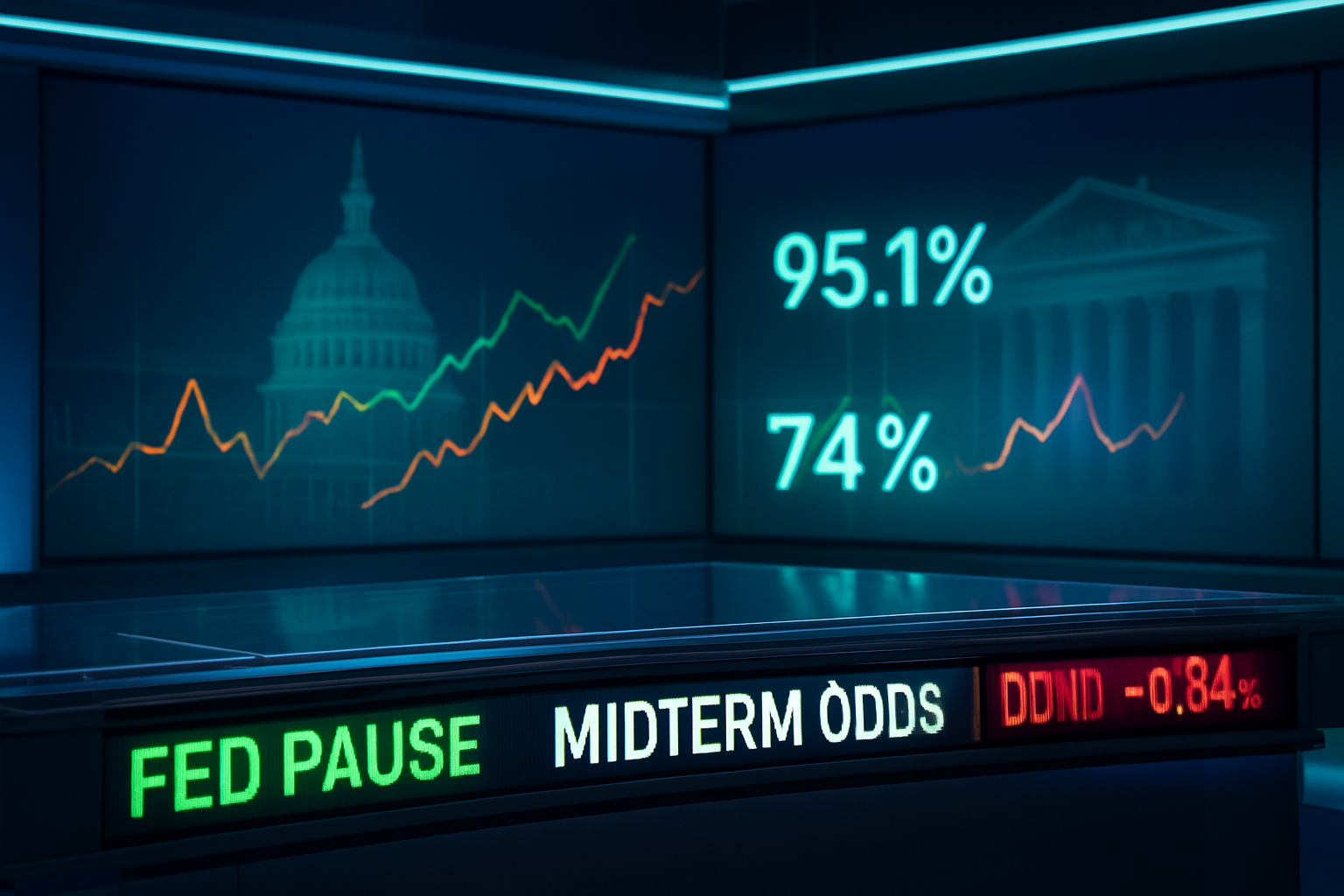
    Today, if you tune into "Squawk Box" or "The Lead," you won't just hear a pundit's guess on the next Federal Reserve move or a legislative vote. Instead, you'll see a live, ticker-tape stream of real-money probabilities. As of January 16, 2026, these markets show a staggering 95.1% probability that the Fed will pause interest rate hikes at its upcoming meeting on January 28. This isn't just a survey; it’s the collective "hive mind" of thousands of traders who have hundreds of millions of dollars on the line.

    The Market: What’s Being Predicted

    The integration of Kalshi data into mainstream media is powered by an explosion in trading volume. In the first full week of January 2026, Kalshi recorded over $2 billion in weekly notional volume, capturing approximately 66% of the U.S. regulated event-trading market. While Polymarket—recently bolstered by a $2 billion investment from the Intercontinental Exchange (NYSE: ICE)—continues to lead in global decentralized markets, Kalshi has become the "official scoreboard" for American domestic affairs.

    The specific "Information Finance" contracts being broadcast to millions of households cover a vast array of topics:

    • Monetary Policy: Real-time odds on Fed rate cuts, inflation benchmarks, and employment numbers.
    • Political Shifts: Probability of the Democrats reclaiming the House (currently 74%) vs. Republicans retaining the Senate (66%) in the 2026 Midterm elections.
    • Corporate Events: Likelihood of specific mergers passing regulatory hurdles and CEO transitions.
    • Cultural Milestones: From the winner of Super Bowl LX (the Los Angeles Rams currently lead at 14%) to the probability of 2026 becoming the hottest year on record (38%).

    These contracts are settled based on verifiable real-world outcomes, and their prices, ranging from $0.01 to $0.99, serve as a direct proxy for the percentage chance of an event occurring.

    Why Traders Are Betting

    The surge in market participation is driven by a radical "skin in the game" philosophy. Unlike traditional pollsters, who face little consequence for being wrong, prediction market participants are financially incentivized to be right. This has attracted a new class of "truth-seekers," including high-frequency trading (HFT) firms like Jane Street and Susquehanna (SIG), which now act as designated market makers, providing deep liquidity and razor-thin spreads.

    Traders are increasingly moving away from traditional forecasting methods. The 2024 and 2025 election cycles proved that polling often fails to capture "shy" voters or rapid sentiment shifts. In contrast, prediction markets reacted in real-time to breaking news, such as the 2025 court rulings that legalized election betting in the U.S. This legal clarity, following Kalshi’s victory over the CFTC, has allowed retail platforms like Robinhood (NASDAQ: HOOD) and Interactive Brokers (NASDAQ: IBKR) to offer event contracts to their millions of users, further deepening the pool of intelligence.

    Broader Context and Implications

    The deals with CNN and CNBC signal the birth of a new era: the "Information Finance" age. CNN’s Chief Data Analyst, Harry Enten, has largely replaced his traditional "Poll of Polls" segments with "Market-Driven Signals," arguing that a market of incentivized traders is a more reliable filter for truth than a panel of consultants. CNBC has even launched a "Prediction Hub," allowing viewers to see live probabilities directly on the CNBC Pro app.

    This shift has profound implications for public discourse. By providing a cold, hard number for the probability of an event, prediction markets help to de-polarize news. It is difficult to argue with a market where people are betting their own money against your bias. Historically, these markets have proven more accurate than experts in predicting everything from Supreme Court decisions to the timing of recessionary dips.

    However, the rapid growth has not been without controversy. Legislative battles are currently raging in states like New York, where the "ORACLE Act" (Assembly Bill A9251) seeks to limit political event contracts. Kalshi’s market currently prices the probability of that ban passing at a modest 22%, suggesting that the "truth engine" believes it will ultimately prevail in the courts.

    What to Watch Next

    As we move deeper into 2026, several key milestones will test the robustness of this new media-market alliance:

    1. The FOMC Meeting (Jan 27–28): This will be the first major test of the CNBC-Kalshi ticker during a period of high economic volatility.
    2. The 2026 Primary Season: Watch for how CNN utilizes Kalshi data to forecast primary upsets, potentially influencing donor behavior and campaign strategies in real-time.
    3. The "Super Bowl Signal": On February 8, the massive liquidity flowing into Super Bowl LX contracts will demonstrate Kalshi's ability to handle high-frequency, mass-market sports data alongside its "serious" economic contracts.

    Bottom Line

    The 2026 media deals between Kalshi, CNN, and CNBC mark the moment prediction markets ceased being a "sideshow" and became the "truth engine" for the public. By moving probability data from the trading floor to the living room, these platforms are providing a more objective, faster, and more accurate way for the world to understand the future.

    In an age of deepfakes and extreme partisanship, "Information Finance" offers a rare commodity: a scoreboard for reality. Whether the event is a rate hike or a presidential primary, the question is no longer "What do the experts think?" but rather "What does the market say?"


    This article is for informational purposes only and does not constitute financial or betting advice. Prediction market participation may be subject to legal restrictions in your jurisdiction.

    PredictStreet focuses on covering the latest developments in prediction markets.
    Visit the PredictStreet website at https://www.predictstreet.ai/.