Tag: InfoFi

  • The ICE Age of InfoFi: How a $2 Billion Bet Turned Polymarket into Wall Street’s Truth Engine

    The ICE Age of InfoFi: How a $2 Billion Bet Turned Polymarket into Wall Street’s Truth Engine

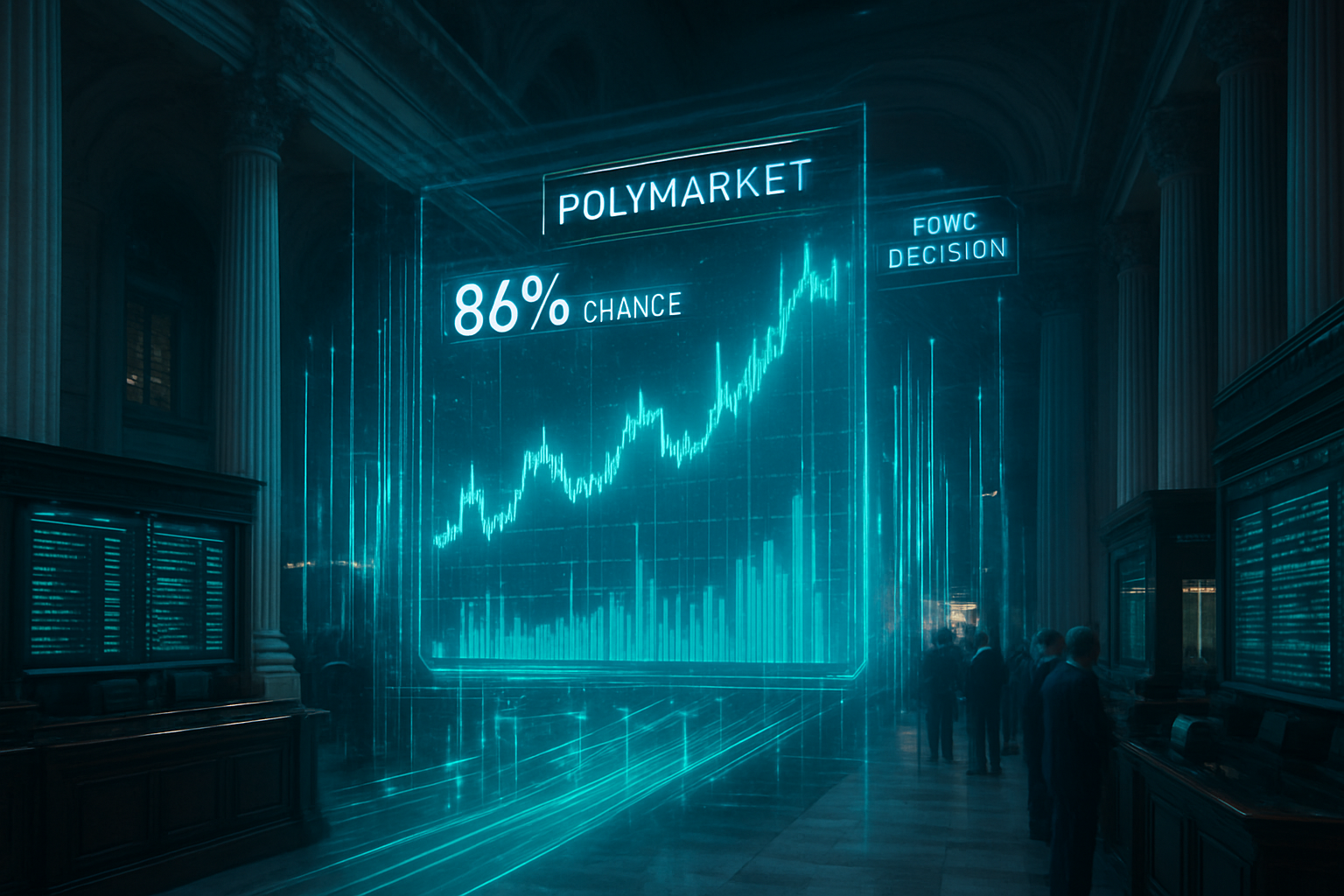
    The landscape of global finance shifted permanently this winter as the Intercontinental Exchange (NYSE: ICE) finalized a staggering $2 billion strategic investment into Polymarket. For years, prediction markets were viewed as the "Wild West" of decentralized finance—a niche playground for crypto-natives and political junkies. However, with the backing of the world’s most powerful exchange operator, the narrative has shifted from speculative curiosity to institutional necessity.

    As of early February 2026, the "institutional seal of approval" has propelled Polymarket’s cumulative trading volume to a record-shattering $33.4 billion, with $12 billion of that activity occurring in January 2026 alone. The market is currently laser-focused on the Federal Reserve’s March policy meeting, where traders are pricing in an 86% probability that interest rates will remain unchanged. This surge in volume and precision isn't just a trend; it is the arrival of "Information Finance" (InfoFi) as a foundational pillar of the global economy.

    The Market: What's Being Predicted

    While Polymarket rose to prominence during the 2024 election cycle, the platform has evolved into a multi-asset "truth engine" following its $112 million acquisition of the CFTC-licensed derivatives exchange, QCX. This regulatory pivot allowed Polymarket to legally relaunch in the United States, bringing domestic institutional capital into the fold. Today, the most liquid markets are no longer just about politics; they are about macroeconomic shifts and corporate performance.

    The March FOMC Decision market is currently the platform’s crown jewel, boasting over $72 million in active volume. Beyond the Fed, traders are heavily engaged in corporate "Earnings Beats" markets for tech giants like NVIDIA (NASDAQ: NVDA) and Amazon (NASDAQ: AMZN). For instance, the market currently assigns a 95% probability to an NVIDIA earnings beat later this month, a signal that traditional equity traders are now using to front-run movements in the NASDAQ 100. These contracts resolve based on official government reports or SEC filings, providing a clear, binary outcome that eliminates the ambiguity often found in traditional analyst forecasts.

    Why Traders Are Betting

    The primary driver behind this explosion in activity is the "liquidity backstop" provided by the Intercontinental Exchange (NYSE: ICE). Historically, prediction markets suffered from thin order books, where a $1 million trade could drastically swing the odds. With ICE’s $2 billion infusion, the platform now possesses the depth to handle nine-figure positions from hedge funds and institutional desks without significant slippage.

    Wall Street giants like Goldman Sachs (NYSE: GS) and Point72 have reportedly begun integrating Polymarket’s real-time probability data into their risk management models. Traders are no longer betting just to "win" a wager; they are using these markets to hedge macro risks. For example, a firm heavily exposed to Iranian oil disruptions may take a "Yes" position on the "US strikes Iran by March 31" market (currently at 42%) as a direct hedge against geopolitical volatility. This shift from "gambling" to "hedging" has fundamentally changed the participant profile of the platform.

    Furthermore, the integration of Polymarket data into ICE Connect terminals has placed prediction market odds alongside S&P 500 benchmarks and Treasury yields. This proximity has fostered a new level of trust among traditional finance (TradFi) firms, who now view these decentralized probabilities as more reliable and reactive than traditional polling or lagging economic indicators.

    Broader Context and Implications

    The ICE-Polymarket alliance marks the end of the "polling era" in financial forecasting. In a world where traditional surveys have repeatedly failed to capture public sentiment or economic reality, prediction markets offer a "skin-in-the-game" alternative. When people put money behind their opinions, the noise of partisan bias is filtered out, leaving a high-fidelity signal that has consistently outperformed think-tank models in terms of Brier scores—the gold standard for measuring forecasting accuracy.

    This transition also highlights a major regulatory win for the industry. By securing a CFTC-licensed path through the QCX acquisition, Polymarket has neutralized the legal "grey area" that plagued the sector for years. This regulatory clarity is what allowed the Intercontinental Exchange (NYSE: ICE) to step in, providing a template for how other legacy financial institutions might interact with blockchain-based protocols.

    The implications for "InfoFi" are vast. We are seeing the birth of an asset class where the underlying commodity is truth. As more real-world assets (RWAs) are tokenized, the line between a prediction market and a traditional futures market will continue to blur, creating a unified global ledger for both value and information.

    What to Watch Next

    The next major milestone for the ICE-Polymarket partnership is the widely rumored "Tokenization Initiative." Industry insiders suggest that the two entities are working on a framework to bring SpaceX IPO participation to the platform. Currently, traders assign an 84% chance that SpaceX will be the largest IPO of 2026. If Polymarket can facilitate the trading of "pre-IPO" synthetic shares or derivatives, it could disrupt the entire private equity landscape.

    Another key date to monitor is the upcoming nomination for the next Federal Reserve Chair. Following reports of a nomination plan in late January, the market for "Who will Trump nominate as Fed Chair?" has seen Kevin Warsh emerge as the 58% frontrunner. Any shift in these odds will likely precede official White House announcements, serving as the ultimate "alpha" for bond traders.

    Finally, the industry is watching for the full integration of Polymarket accounts into retail brokerage apps. Once a user can trade Apple (NASDAQ: AAPL) stock and "Apple Earnings Beat" prediction contracts within the same interface, the mainstreaming of prediction markets will be complete.

    Bottom Line

    The $2 billion investment by the Intercontinental Exchange (NYSE: ICE) is more than just a capital infusion; it is the moment prediction markets graduated to the major leagues of global finance. By providing the liquidity and regulatory cover necessary for institutional participation, ICE has turned Polymarket into a $33 billion "truth engine" that Wall Street can no longer ignore.

    This evolution proves that prediction markets are not merely a tool for betting on elections, but a sophisticated financial instrument for price discovery in an increasingly uncertain world. As we move deeper into 2026, the markets that once seemed like high-stakes experiments are now the very benchmarks by which the world measures its future. Whether it is interest rate cuts or corporate earnings, the "smart money" is no longer looking at polls—it’s looking at the tape.


    This article is for informational purposes only and does not constitute financial or betting advice. Prediction market participation may be subject to legal restrictions in your jurisdiction.

    PredictStreet focuses on covering the latest developments in prediction markets.
    Visit the PredictStreet website at https://www.predictstreet.ai/.
  • The Death of the Poll: How Google and Meta are Turning Prediction Markets into the Global Truth Engine

    The Death of the Poll: How Google and Meta are Turning Prediction Markets into the Global Truth Engine

    As of February 6, 2026, the digital landscape has undergone a tectonic shift. Once relegated to the fringes of the internet and dismissed as "speculative casinos," prediction markets have officially entered the mainstream. This transformation is crystallized by the recent, sweeping policy updates from Alphabet (NASDAQ: GOOGL) and Meta (NASDAQ: META), which have moved to treat prediction markets not as gambling, but as vital financial and information tools.

    The current probability of prediction markets becoming the primary source for real-time news verification—a concept now widely known as "Information Finance" or InfoFi—sits at an all-time high. Markets tracking the efficacy of traditional polling versus prediction market accuracy for the upcoming 2026 U.S. Midterms show a staggering 85% confidence level that markets will outperform traditional data sets. This surge in interest is driven by a series of regulatory victories and a fundamental change in how the world's largest advertising platforms categorize "event-based" trading.

    The Market: What’s Being Predicted

    The "market" for prediction markets itself has exploded. Leading platforms like Kalshi and Polymarket are no longer niche startups; they are billion-dollar infrastructure plays. In early 2026, Kalshi reached an estimated valuation of $11 billion, while Polymarket, following its successful U.S. pivot, is trailing closely at $9.5 billion. The sheer volume of trade is the most telling metric: industry analysts project notional trading volume for event contracts to reach between $120 billion and $150 billion by the end of this year.

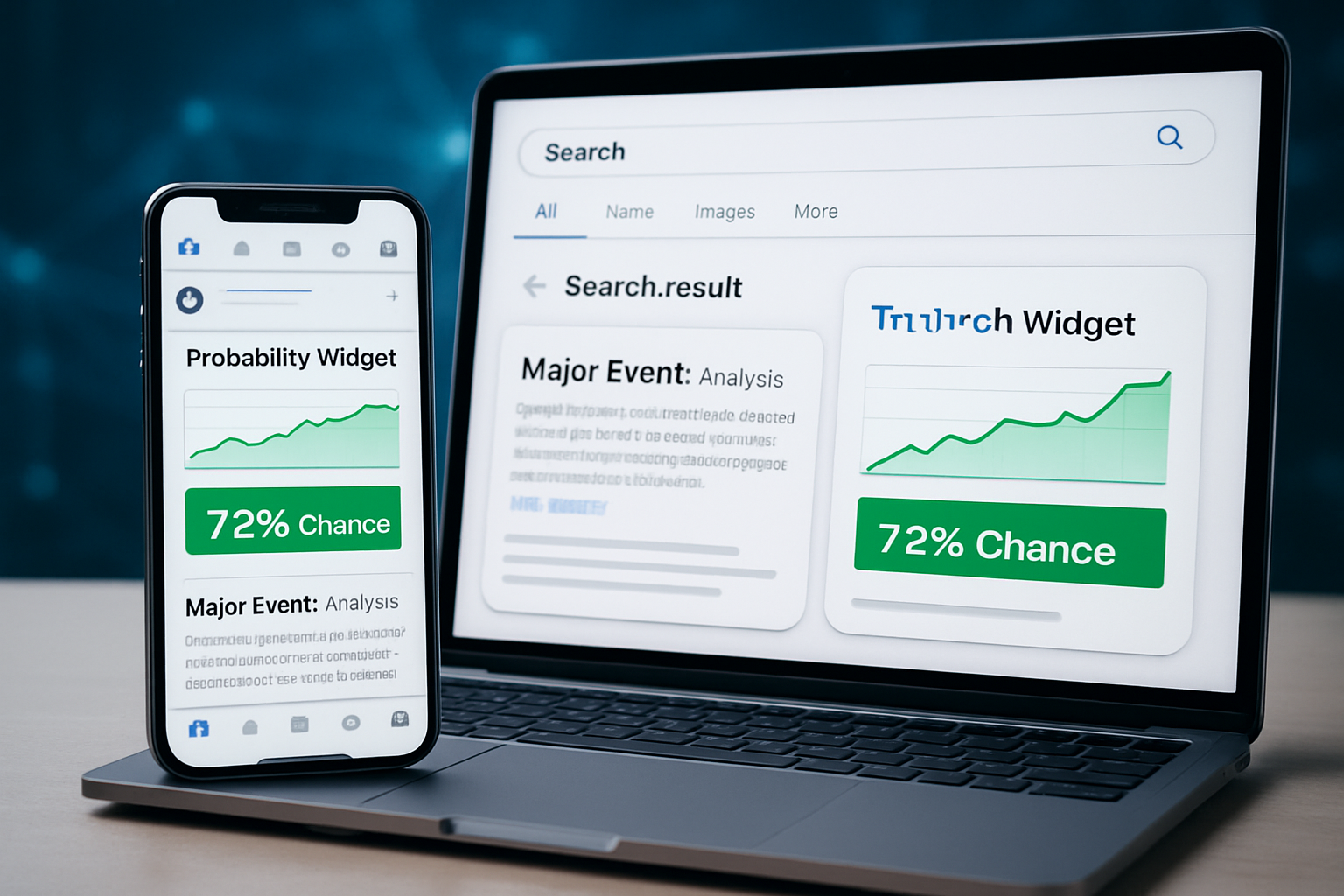
    This growth is being funneled through highly visible integrations. Google has recently embedded "Probability Widgets" directly into Google Finance and Search results. Users searching for "Fed interest rate hike" or "2026 World Cup winner" are now presented with a live odds-based widget sourced from CFTC-regulated exchanges. Meanwhile, Robinhood (NASDAQ: HOOD) has fully integrated election and economic contracts into its primary retail app, making "trading the news" as accessible as buying a fractional share of an ETF.

    The key resolution criteria for this shift rest on the "mainstreaming" of these platforms. When Google updated its ads policy on January 21, 2026, it specifically opened the gates for Commodity Futures Trading Commission (CFTC)-authorized markets to run search ads. This move ended a decade of "shadow-banning" for the industry, effectively legitimizing prediction markets as regulated financial instruments rather than offshore betting sites.

    Why Traders Are Betting

    The primary driver for the current betting frenzy is the proven accuracy of these markets during the 2024 election cycle. While traditional polls were mired in margin-of-error debates, prediction markets provided a stable, real-time barometer of voter sentiment that correctly signaled key pivots weeks in advance. Traders aren't just betting on outcomes; they are betting on the superiority of the mechanism.

    Recent movements have been fueled by the concept of "Information Finance," a term popularized by thinkers like Vitalik Buterin. The logic is simple: when people put their money where their mouth is, the resulting data is "correct by construction." This has led to the rise of institutional "alpha seekers"—hedge funds and market makers—who now provide deep liquidity to these markets. They treat event contracts as legitimate hedges against geopolitical and economic risks, such as sudden shifts in trade policy or central bank decisions.

    Furthermore, the introduction of interactive "Truth Widgets" on Meta platforms like Facebook and Instagram has created a new class of "social predictors." Meta’s pilot program allows users to see real-time market odds alongside controversial news stories. This serves as a market-based counter-narrative to misinformation, shifting the public perception from "gambling for profit" to "participating in truth discovery."

    Broader Context and Implications

    The mainstreaming of InfoFi represents a massive regulatory and cultural pivot. The 2024 landmark legal victory of Kalshi over the CFTC acted as a catalyst, stripping the agency of its power to unilaterally ban political event contracts. Under the leadership of the current CFTC Chairman, Michael Selig, the agency has performed a "Regulatory Reset," withdrawing previous bans and asserting exclusive federal jurisdiction over these markets. This has effectively pre-empted the patchwork of state-level gambling laws that previously stifled growth.

    This shift reveals a growing public hunger for objective truth in an era of AI-generated content and fragmented media. Prediction markets offer a decentralized, incentive-aligned alternative to the "expert class." Historically, these markets have shown a remarkable ability to process complex information faster than traditional newsrooms, accurately predicting everything from the resolution of the Hollywood strikes to the exact timing of tech layoffs.

    However, the "InfoFi" revolution is not without friction. Some platforms, including X (formerly Twitter), have faced challenges with "market spam"—automated accounts designed to manipulate odds or farm rewards. This has led to a technological arms race, where platforms are deploying advanced verification and anti-manipulation algorithms to ensure that the market signal remains pure.

    What to Watch Next

    The most immediate milestone to monitor is the full-scale rollout of Meta’s prediction widgets across its global news feeds. If successful, this will integrate market data into the daily social experience of billions, potentially making "checking the odds" as common as checking the weather. Additionally, the 2026 FIFA World Cup, hosted in North America, is expected to be the largest non-political event in prediction market history, providing a massive liquidity test for platforms like DraftKings (NASDAQ: DKNG) and Fanatics, which are increasingly eyeing the event-contract space.

    Investors should also watch for the potential launch of a "Prediction Market ETF." With the industry's valuation soaring, rumors of a structured product that allows investors to gain exposure to a basket of event-contract platforms are intensifying. The regulatory path for such a product seems clearer now than ever before, following the CFTC’s shift toward a pro-innovation stance.

    Bottom Line

    The mainstreaming of prediction markets marks the end of the "speculative casino" era and the beginning of the "Information Finance" age. By allowing these markets to advertise and integrating their data into core products, Alphabet and Meta have effectively deputized prediction markets as the internet’s "Source of Truth." This is not just about betting on the future; it is about creating a more accurate, incentive-driven way to understand the present.

    As we move deeper into 2026, the distinction between a "trader" and a "news consumer" is blurring. In a world where information is the most valuable commodity, the platforms that can most accurately price that information are the ones that will win. Prediction markets have evolved from a niche hobby into the foundational infrastructure of the modern information economy, and the "Big Tech" seal of approval is the final hurdle they needed to clear.


    This article is for informational purposes only and does not constitute financial or betting advice. Prediction market participation may be subject to legal restrictions in your jurisdiction.

    PredictStreet focuses on covering the latest developments in prediction markets.
    Visit the PredictStreet website at https://www.predictstreet.ai/.
  • The ‘InfoFi’ Dynasty: Trump Family Seals Dominance Over the Prediction Market Industry

    The ‘InfoFi’ Dynasty: Trump Family Seals Dominance Over the Prediction Market Industry

    As of February 6, 2026, the intersection of high finance and political power has reached a new frontier. The Trump family, led by Donald Trump Jr., has successfully pivoted from the political arena into the bedrock of the global "Information Finance" (InfoFi) movement. With strategic advisory roles at the industry’s two largest platforms, Kalshi and Polymarket, and the recent launch of a proprietary prediction wing within Trump Media & Technology Group (NASDAQ: DJT), the family has positioned itself as the gatekeeper of the world’s most accurate "truth engines."

    The prediction market sector, once a niche hobby for data nerds and political junkies, has exploded into a multi-billion dollar pillar of the financial system. Current odds across major platforms suggest that prediction market volume will surpass traditional polling revenue by a factor of ten by the end of 2026. This surge is being driven by a massive influx of retail capital and the family’s aggressive branding of these markets as the ultimate antidote to "fake news"—a move that has turned market forecasting into a populist movement.

    The Market: What's Being Predicted

    The current landscape is dominated by a three-way battle for liquidity. Kalshi, the federally regulated heavyweight now valued at approximately $11 billion, has seen its user base skyrocket following its integration with retail trading giants like Robinhood Markets, Inc. (NASDAQ: HOOD). Meanwhile, Polymarket, the decentralized leader, has cemented its status with a $9 billion valuation, bolstered by a landmark $2 billion investment from the Intercontinental Exchange (NYSE: ICE) in late 2025.

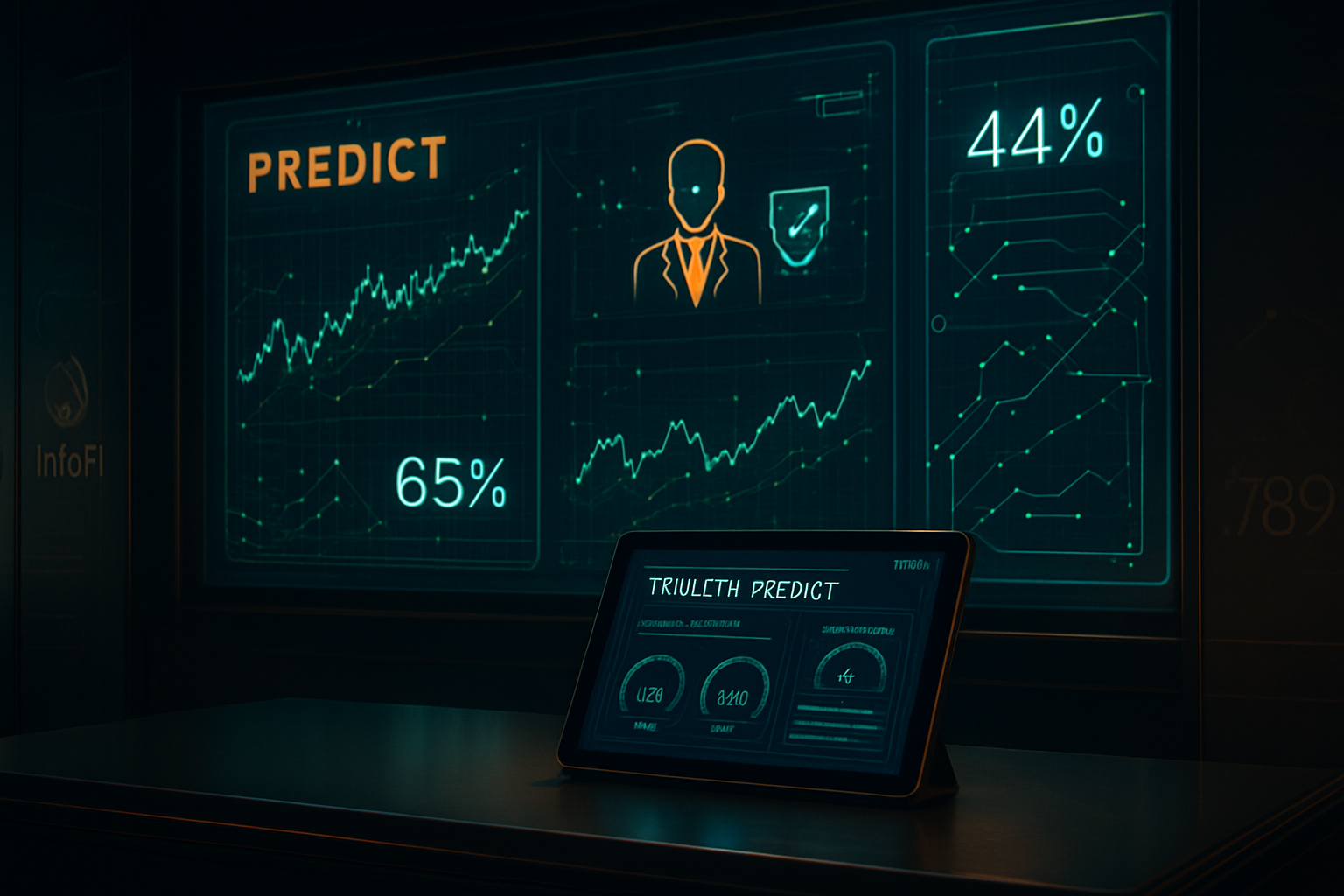
    However, the newest and most disruptive entrant is Truth Predict, the prediction market arm of Truth Social. Launched in late 2025, Truth Predict utilizes a partnership with Crypto.com’s CFTC-registered derivatives arm to offer U.S. users legal, regulated event contracts. Traders are currently betting on everything from the 2026 midterm election outcomes to specific Federal Reserve interest rate hikes. The most active market at the moment, "Will the DJT Shareholder Token reach $10.00 by June?", has seen over $500 million in volume, reflecting the intense intersection of fandom and finance.

    Why Traders Are Betting

    The primary driver for the current betting frenzy is the perceived "insider edge" provided by the Trump family’s involvement. Donald Trump Jr.’s dual advisory roles at Kalshi and Polymarket—facilitated by the venture capital firm 1789 Capital—have signaled to traders that these platforms are no longer just mirrors of public sentiment, but are actively influenced by the pulse of the political establishment. Omeed Malik, President of 1789 Capital, has been a central figure in this transition, framing the firm's eight-figure investment in Polymarket as a move toward "patriotic capitalism."

    Traders are also reacting to the "InfoFi" narrative. By rebranding prediction markets as a layer of the financial system dedicated to accurate data rather than gambling, the Trump family has attracted a more sophisticated class of institutional investors. Notable large positions, or "whales," have moved from traditional hedge funds into InfoFi platforms, using them as hedges against political volatility. For example, several large-scale bets on U.S. foreign policy shifts in early 2026 have yielded massive returns, leading some to speculate that prediction markets are now front-running traditional news outlets by hours, if not days.

    Broader Context and Implications

    The rise of the "Trump InfoFi Empire" marks a fundamental shift in how the public consumes information. For decades, traditional polling and media analysis were the primary tools for forecasting; today, the market price is the "scoreboard of reality." This shift has profound implications for democratic processes. As prediction markets become more liquid, they exert a gravitational pull on policy, as politicians and officials look to market probabilities to gauge the success of their initiatives.

    From a regulatory standpoint, the landscape is complex but stabilizing. Following a series of legal victories against the CFTC in 2024 and 2025, prediction markets have gained the legal standing of commodities exchanges. However, the Trump family’s deep involvement has sparked a new debate over potential conflicts of interest and "insider trading" in InfoFi. While federal oversight remains favorable under the current administration, several states are still pushing for local restrictions, viewing the integration of social media and betting as a public health risk.

    What to Watch Next

    The coming months will be a stress test for the InfoFi ecosystem. On February 2, 2026, Trump Media & Technology Group set a record date for its "DJT shareholder token" program, which is expected to launch later this month. If this program successfully bridges the gap between equity ownership and prediction market participation, it could create a new model for corporate governance and shareholder engagement.

    Furthermore, the industry is closely watching for a potential merger or "super-app" development. Rumors suggest that Truth Predict may seek to acquire a larger stake in a decentralized protocol to expand its global reach beyond the U.S. regulatory perimeter. Any such move would likely trigger a massive shift in liquidity across the board. The 2026 midterm primaries will serve as the first major test of whether these markets can maintain their accuracy under the weight of unprecedented retail and political pressure.

    Bottom Line

    The Trump family’s deepening involvement in prediction markets represents the ultimate convergence of media, finance, and politics. By leveraging the advisory power of Donald Trump Jr. and the capital of 1789 Capital, the family has effectively turned the prediction market industry into a central pillar of their "Information Finance" vision. These markets are no longer just about betting on outcomes; they are about defining what is true in an era of digital fragmentation.

    Ultimately, the success of platforms like Kalshi, Polymarket, and Truth Predict suggests that the world has moved past the era of the "expert" and into the era of the "market." As liquidity grows, the "scoreboard of reality" will only become harder to ignore. For investors and citizens alike, the message is clear: the most valuable commodity in 2026 is no longer just money, but the accurate prediction of what comes next.


    This article is for informational purposes only and does not constitute financial or betting advice. Prediction market participation may be subject to legal restrictions in your jurisdiction.

    PredictStreet focuses on covering the latest developments in prediction markets.
    Visit the PredictStreet website at https://www.predictstreet.ai/.
  • The ‘Oracle Layer’: How Prediction Markets Became the New Backbone of Financial Media

    The ‘Oracle Layer’: How Prediction Markets Became the New Backbone of Financial Media

    In the world of finance, information has always been the most valuable currency. But as of early 2026, how that information is gathered, verified, and broadcast has undergone a fundamental transformation. The 2024 U.S. Election was the "proof-of-concept" for prediction markets; today, they have become the "Oracle Layer" for the global economy.

    Major media conglomerates, once skeptical of "election betting," have now fully integrated prediction market data into their core newsroom operations. Platforms like Polymarket and Kalshi are no longer just alternative data sources—they are the official scoreboards for reality. With probability data now appearing on the same ticker tapes as the S&P 500, the era of "Information Finance" (InfoFi) has officially arrived, turning every headline into a price and every event into a trade.

    The Market: What's Being Predicted

    Today, prediction markets cover nearly every measurable outcome in the modern world. While political markets remain a cornerstone, the scope has expanded drastically. Traders are now forecasting everything from the exact Federal Funds Rate target in the next FOMC meeting to the specific earnings-per-share (EPS) beats for tech giants like Nvidia (NASDAQ: NVDA) and Apple (NASDAQ: AAPL).

    The two dominant players, Polymarket and Kalshi, have divided the landscape into global and domestic spheres. Polymarket, which saw its profile explode after the 2024 election cycle, now operates with a projected $1 trillion annual trading run-rate. Meanwhile, Kalshi has solidified its role as the premier CFTC-regulated venue for U.S. institutional and retail traders. The liquidity in these markets has reached a "critical mass," where even billion-dollar "whale" positions move the odds by only fractions of a percent, providing a level of stability and signal accuracy that traditional polling simply cannot match.

    Why Traders Are Betting

    The shift toward prediction markets as a primary news source is driven by the concept of "skin-in-the-game." Unlike traditional analysts or pollsters who face little professional consequence for being wrong, traders in these markets face immediate financial loss. This creates a powerful incentive for accuracy, known in the industry as the "Truth Premium."

    In late 2025 and early 2026, we saw the emergence of massive hedging strategies where institutional investors used Kalshi contracts to protect against legislative changes. For example, during the debate over new AI regulations, the market-implied probability of a "strict regulatory flip" provided a more accurate signal for hedge funds than the public statements of lobbyists. Furthermore, retail participation has surged following the integration of event contracts into major brokerages like Robinhood (NASDAQ: HOOD), allowing everyday investors to trade on their personal knowledge of local trends or industry news.

    Broader Context and Implications: The Rise of 'InfoFi'

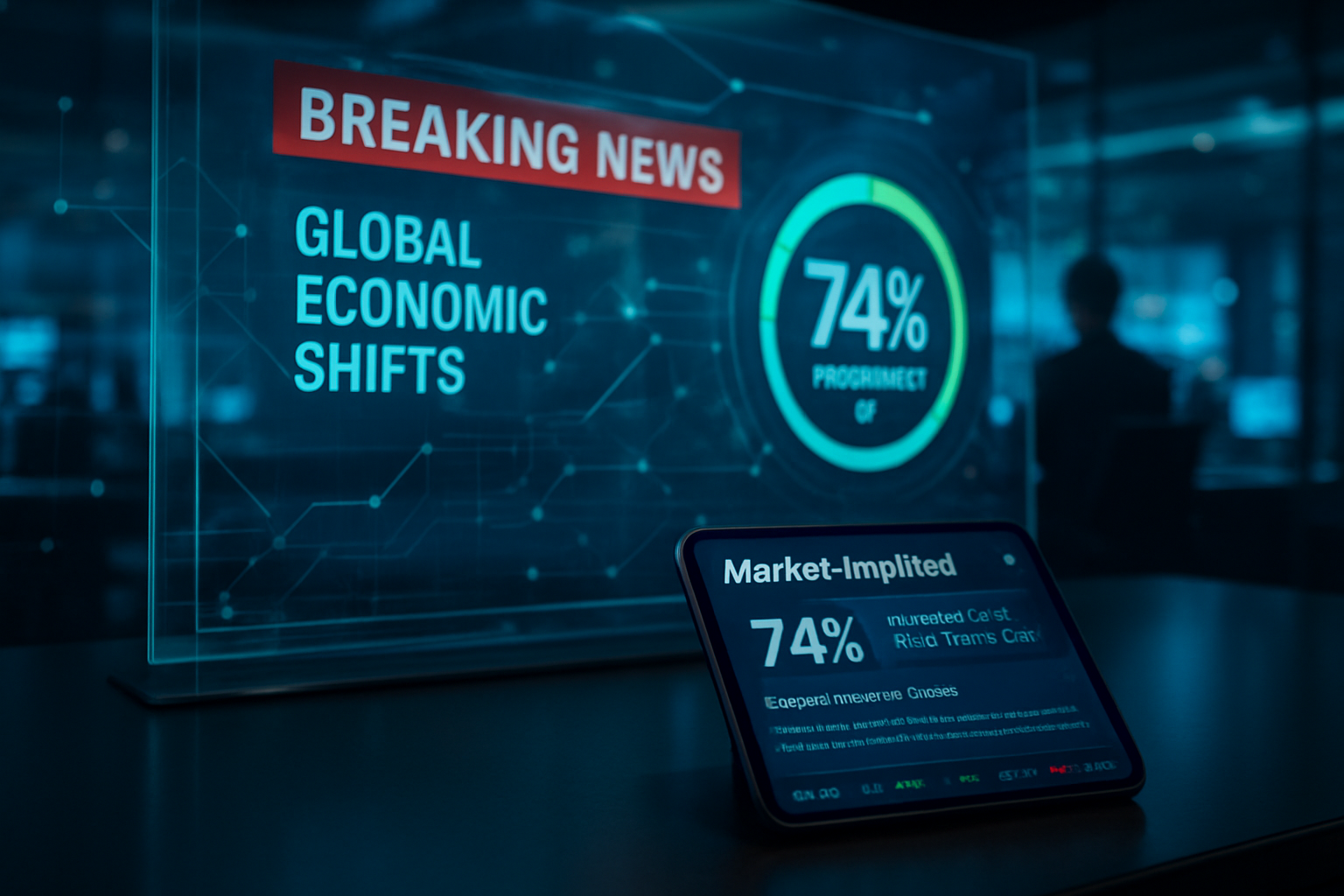
    The integration into mainstream media is perhaps the most significant milestone for the industry. In January 2026, News Corp (NASDAQ: NWSA), the parent company of The Wall Street Journal and Barron’s, announced an exclusive distribution partnership with Polymarket. Readers now see "Market-Implied Probability" widgets alongside every political and economic article. Similarly, Warner Bros. Discovery (NASDAQ: WBD), through CNN, has designated Kalshi as its "Official Prediction Market Partner," using their real-time odds to "fact-check" traditional polling data on-air.

    This marks the definitive shift to "Information Finance." The narrative has changed from "gambling" to "price discovery for information." By treating odds as factual indicators, financial news outlets are acknowledging that a liquid market is the most efficient way to aggregate disparate pieces of information. This has profound implications for regulatory considerations; as these markets become vital public utilities for information, the push for clearer federal frameworks has intensified, leading to the institutionalization of the sector.

    What to Watch Next

    As we look toward the remainder of 2026, several key milestones will test the resilience of this new information ecosystem. The upcoming 2026 Midterm Elections will be the first major political test for the fully integrated "InfoFi" newsrooms. Analysts are already watching how "Market-Implied House Control" odds diverge from traditional surveys, which struggled to keep pace with the market’s predictive power in 2024.

    Additionally, the expansion of "micro-markets" is a trend to monitor. We are seeing the rise of hyper-local prediction markets—such as the probability of a specific city council's zoning vote or the likelihood of a local weather event. These niche markets are becoming essential tools for local news outlets looking to provide their audiences with something more substantial than mere speculation.

    Bottom Line

    The integration of prediction market data into mainstream media represents the most significant change in financial journalism in a generation. By moving beyond the "expert opinion" model and toward a "market-driven truth" model, outlets like the WSJ and CNN are providing their audiences with a more objective, data-backed view of the world.

    Prediction markets have evolved from a curiosity into a structural pillar of the financial world. They offer a real-time, high-stakes vibe check that traditional methods simply cannot replicate. While the risks of market manipulation or volatility remain, the sheer volume of liquidity and the diversity of participants have turned these platforms into the ultimate tools for navigating an increasingly uncertain global landscape. In 2026, the question is no longer "what do the experts think?" but rather, "what is the market price of the truth?"


    This article is for informational purposes only and does not constitute financial or betting advice. Prediction market participation may be subject to legal restrictions in your jurisdiction.

    PredictStreet focuses on covering the latest developments in prediction markets.
    Visit the PredictStreet website at https://www.predictstreet.ai/.

  • The Great Prediction War: Polymarket vs. Kalshi

    The Great Prediction War: Polymarket vs. Kalshi

    The global financial landscape has shifted into a new era of "Information Finance," or InfoFi, where the most valuable commodity is not gold or oil, but the "truth." As of February 5, 2026, the battle for dominance in this sector has narrowed down to two titans: Polymarket, the decentralized, crypto-native pioneer, and Kalshi, the regulated, Wall Street-compliant exchange. This rivalry, often dubbed "The Great Prediction War," has evolved from a niche betting experiment into a multi-billion-dollar infrastructure that now dictates the narrative of global politics and economics.

    Current sentiment on Manifold Markets reflects the high stakes of this struggle. Traders are currently pricing Polymarket at a 47% probability to hold the title of the world’s leading prediction engine by the end of 2026, while Kalshi trails at 34%. This divergence highlights a fundamental debate among forecasters: whether the future of prediction markets lies in the permissionless liquidity of the blockchain or the structured safety of regulated finance.

    The Market: What's Being Predicted

    The central question currently captivating traders is which platform will claim the "Volume Crown" for 2026. For the week ending February 1, 2026, the combined trading volume across both platforms hit a staggering $6.32 billion, a record high that reflects the growing mainstream adoption of event contracts. While the market share is currently split nearly down the middle—with Kalshi holding a slight 51/49 edge in raw volume—the composition of that volume tells a different story.

    Kalshi’s volume is heavily bolstered by its expansion into the sports betting sector, where it cleared over $43.1 billion in 2025. Conversely, Polymarket, which ended 2025 with $33.4 billion in volume, remains the undisputed king of "high-signal" events. Its markets on geopolitics, macroeconomic shifts, and scientific breakthroughs attract a different class of high-conviction traders. The Manifold Markets contract specifically excludes "pure sports betting" from its resolution criteria, which explains why Polymarket remains the favorite despite Kalshi’s larger total footprint.

    Why Traders Are Betting

    The 2024 U.S. Presidential Election was the "Netscape moment" for this industry, proving that prediction markets could provide more accurate, real-time data than traditional polling. Polymarket famously outpaced mainstream media in 2024, handling $3.7 billion on the election outcome alone. Since then, the platform has sought to solidify its lead by aggressively expanding its reach. In a major strategic move in late 2025, Polymarket completed a $112 million acquisition of QCEX, a CFTC-licensed exchange, allowing it to legally re-enter the U.S. market and compete head-to-head with Kalshi on American soil.

    Meanwhile, Kalshi has leveraged its status as the "regulated incumbent" to integrate with mainstream brokerage giants like Robinhood (NASDAQ: HOOD). By early 2026, the Robinhood "Prediction Markets Hub" has become a massive funnel for Kalshi, processing billions of contracts for retail users who prefer the simplicity of a bank transfer over the complexities of crypto wallets. However, Kalshi has faced its own hurdles, most notably a recent preliminary injunction in Massachusetts that effectively banned it from offering sports-related contracts in the state, labeling them unlicensed gambling.

    Broader Context and Implications

    The prediction war is no longer confined to the platforms themselves; it has drawn in the largest players on Wall Street. The Intercontinental Exchange (NYSE: ICE), the parent company of the New York Stock Exchange, signaled its endorsement of the sector with a $2 billion investment into Polymarket in late 2025. Simultaneously, Interactive Brokers (NASDAQ: IBKR) has captured a significant portion of the institutional hedging market through its ForecastEx platform, which offers yield on open positions—a feature that attracts corporate treasurers looking to hedge against interest rate fluctuations or climate risks.

    Regulatory sentiment has also shifted dramatically under the new leadership of the CFTC. The focus has moved from "prevention" to "oversight," as policymakers realize that these markets offer a public utility: an unbiased, real-time gauge of public sentiment. This "truth engine" model is increasingly seen as a necessary antidote to misinformation and the decline of traditional media credibility. However, the legal landscape remains a patchwork, with Polymarket facing recent bans in France and Singapore, highlighting the ongoing tension between global, decentralized protocols and national jurisdictions.

    What to Watch Next

    As we move toward the 2026 midterm elections, all eyes will be on how these platforms handle the influx of political volume. A key milestone to watch is the anticipated launch of a native prediction market by Coinbase (NASDAQ: COIN) in late Q1 2026. Coinbase’s entry could potentially disrupt the duopoly, as it possesses both the crypto-native user base of Polymarket and the regulatory licenses to operate within the U.S.

    Additionally, traders are monitoring the "Nevada Restraining Order" against Polymarket, which was issued by the state's Gaming Control Board in late January. The resolution of this legal skirmish will likely set a precedent for how individual states interact with federally licensed prediction exchanges. If Polymarket can navigate these state-level challenges as effectively as it has the national ones, its path to the 2026 Volume Crown seems increasingly secure.

    Bottom Line

    The battle between Polymarket and Kalshi is more than a fight for market share; it is a clash of philosophies. Polymarket represents the "Bloomberg of the Blockchain"—a global, high-signal network that rewards conviction and expertise. Kalshi, meanwhile, is the "Robinhood of Events," aiming to democratize event trading by making it as safe and accessible as buying a share of stock.

    While Kalshi currently holds the lead in raw numbers due to its sports-heavy volume, the market’s betting odds favor Polymarket’s dominance in the "Information Finance" space. As we approach the mid-point of 2026, the real winner may be the public at large, who now have access to a sophisticated, real-time mirror of the world's collective expectations. Whether the future is decentralized or strictly regulated, the prediction market has officially become the world's most vital source of truth.


    This article is for informational purposes only and does not constitute financial or betting advice. Prediction market participation may be subject to legal restrictions in your jurisdiction.

    PredictStreet focuses on covering the latest developments in prediction markets.
    Visit the PredictStreet website at https://www.predictstreet.ai/.
  • The Rise of InfoFi: How Prediction Markets Became the World’s ‘Truth Machine’

    The Rise of InfoFi: How Prediction Markets Became the World’s ‘Truth Machine’

    The concept of "Information Finance," or InfoFi, has transitioned from a niche crypto-economic theory into a foundational pillar of global finance and media. As of February 2, 2026, prediction markets are no longer viewed as mere platforms for speculation; they have been repositioned as sophisticated data-transmission mechanisms that assign a market price to the accuracy of information itself. This shift is most visible in the current pricing of the Federal Reserve’s next moves, where the market is currently pricing in a 64% probability of a 25-basis-point rate cut in March, a signal that traditional economists are now using to calibrate their own models.

    The surge in interest surrounding InfoFi is driven by a fundamental realization: financial stakes force an honesty that social media algorithms and traditional polling lack. This "Truth Machine" philosophy, championed by industry leaders, has been validated by a massive influx of institutional capital and a landmark shift in how the world’s largest tech companies treat the sector. With total weekly trading volumes across major platforms recently hitting a record $6.32 billion, the era of purely speculative "betting" is being replaced by a disciplined quest for the "Truth Premium."

    The Market: What's Being Predicted

    At the heart of the InfoFi movement are two dominant platforms: the federally regulated Kalshi and the globally expansive Polymarket. These exchanges have moved beyond simple "yes/no" binaries on pop culture to become the primary clearinghouses for high-stakes geopolitical and macroeconomic data. On Kalshi, the "March 2026 Fed Rate Decision" contract has seen over $450 million in open interest, effectively functioning as a real-time shadow FOMC.

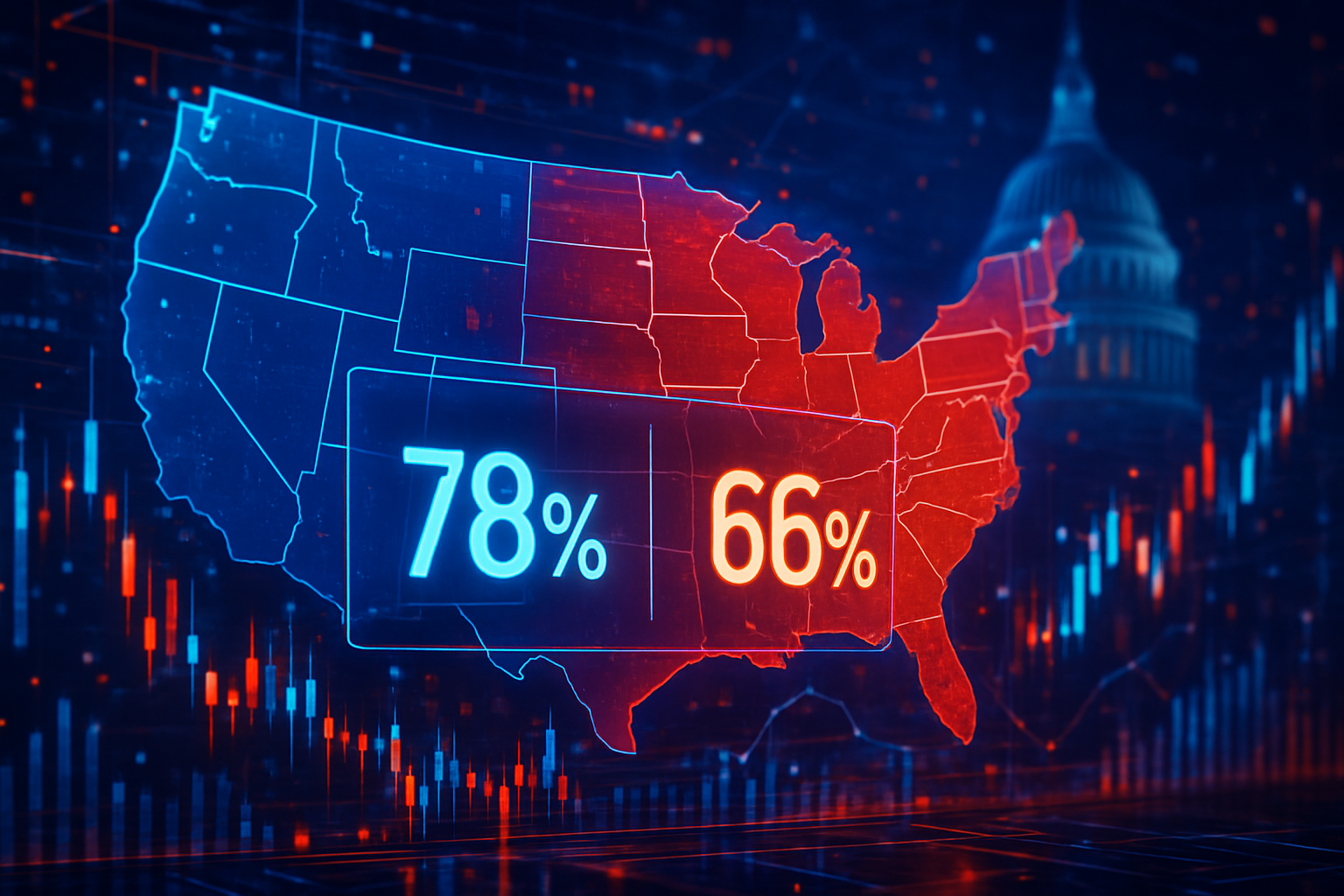
    Meanwhile, on Polymarket, traders are currently fixated on the 2026 U.S. Midterm Elections. The market currently prices a 78% probability that Democrats will flip the House, while Republicans maintain a 66% chance of holding the Senate. These odds are being cited by major news networks as a more reliable indicator than traditional polls, which many argue have failed to account for the "incentivized accuracy" that comes when traders have "skin in the game."

    The liquidity in these markets has reached a tipping point. On January 21, 2026, Alphabet Inc. (NASDAQ: GOOGL) updated its global advertising policies to officially permit prediction market advertisements in the United States for the first time. This regulatory "blessing" from Google has allowed platforms like Kalshi to tap into the world’s largest advertising network, provided they are federally regulated as Designated Contract Markets (DCMs). This move effectively reclassified these markets from "gambling" to "financial products," placing them in the same category as options or futures.

    Why Traders Are Betting

    Traders are flocking to InfoFi because it offers a "pure" play on information that is often obscured by institutional bias or media spin. Kalshi CEO Tarek Mansour has frequently described his platform as a "Truth Machine," arguing that "people don't lie with their money." This sentiment is the driving force behind the current market movements. Traders are not just betting on an outcome; they are betting that they have discovered a piece of information—whether it’s a shift in voter sentiment or a supply chain delay at NVIDIA (NASDAQ: NVDA)—before the rest of the market does.

    The incentive structure is simple: if you are right, you profit; if you are wrong, you lose. This Darwinian environment has given rise to a new professional class of "Prediction Market Traders." These individuals use specialized expertise, such as tracking FDA approval timelines or analyzing semiconductor shipment data (specifically the NVIDIA Blackwell Ultra B300 shipments, which are currently a hot-button InfoFi contract), to generate alpha.

    Furthermore, the integration of prediction markets into mainstream financial tools has lowered the barrier to entry. Robinhood Markets, Inc. (NASDAQ: HOOD) and Coinbase Global, Inc. (NASDAQ: COIN) have both integrated "Prediction Market Hubs" directly into their apps, reaching over 25 million combined users. This has brought a "flywheel" effect to the market: more users lead to better liquidity, which leads to sharper price signals, which in turn attracts even more institutional traders.

    Broader Context and Implications

    The rise of InfoFi represents a paradigm shift in how society processes truth. Historically, we have relied on "experts" and "institutions" to tell us what is likely to happen. However, the consistent accuracy of prediction markets during the 2024 elections and the subsequent AI boom has eroded trust in traditional forecasting. In late 2025, Mansour stated that Kalshi’s mission is about "replacing debate and subjectivity with markets and accuracy."

    This trend is also being reflected in the legislative halls of Washington D.C. In January 2026, the Public Integrity in Financial Prediction Markets Act (H.R. 7004) was introduced to ensure the "purity of data" in these markets by banning federal officials from trading on non-public information. This suggests that the government now views these markets not as a nuisance to be regulated out of existence, but as a critical piece of national financial infrastructure that must be protected.

    The broader implication is a world where "truth" is a tradable asset. When Intercontinental Exchange (NYSE: ICE), the parent company of the New York Stock Exchange, backed Polymarket with a $2 billion investment in 2025, it signaled that the old guard of finance had finally accepted InfoFi. These markets are now used to hedge against "event risk"—situations like a government shutdown or a sudden geopolitical conflict—where traditional stocks and bonds may not provide an adequate shield.

    What to Watch Next

    As we move through the first quarter of 2026, several key milestones will determine if InfoFi can maintain its momentum. First and foremost is the Federal Reserve’s March meeting. If the market’s 64% prediction of a rate cut proves accurate, it will further solidify the "Truth Machine" narrative. Conversely, a significant miss would give ammunition to critics who still view these markets as volatile and prone to manipulation.

    Another critical area to monitor is the "AI Release Cycle." On Polymarket, the contract for "GPT-5.3 released by February 28, 2026" is currently trading at 82% odds. This market serves as a proxy for the entire tech sector's health. If OpenAI misses this window, it could trigger a broader sell-off in AI-related stocks, proving how deeply intertwined InfoFi has become with the traditional Nasdaq.

    Finally, the expansion of Google’s ad program will be a major catalyst. As more regulated platforms enter the space, the cost of customer acquisition is expected to drop, potentially bringing hundreds of millions of new retail dollars into the prediction ecosystem. This liquidity surge will be the ultimate test of the platforms' stability and their ability to remain "un-manipulatable."

    Bottom Line

    The emergence of Information Finance (InfoFi) marks the end of the era where truth was a matter of opinion. By attaching a price tag to accuracy, prediction markets have created a global, real-time feedback loop that is increasingly difficult for traditional institutions to ignore. Tarek Mansour’s vision of a "Truth Machine" is no longer a theoretical goal; it is a multi-billion-dollar reality that is being indexed by Google and traded on Robinhood.

    For the average observer, these markets provide a level of clarity that was previously impossible. Whether you are looking at the probability of a 2026 House flip or the release date of the next major AI model, the "wisdom of the crowd"—when backed by billions of dollars—is proving to be the most reliable compass in an uncertain world.

    As we look toward the remainder of 2026, the question is no longer whether prediction markets are legal or moral, but rather: how much is the truth worth to you?


    This article is for informational purposes only and does not constitute financial or betting advice. Prediction market participation may be subject to legal restrictions in your jurisdiction.

    PredictStreet focuses on covering the latest developments in prediction markets. Visit the PredictStreet website at https://www.predictstreet.ai/.
  • Midterm Mania: Why the 2026 Elections are Set to Break Prediction Market Records

    Midterm Mania: Why the 2026 Elections are Set to Break Prediction Market Records

    As the calendar turns to February 2026, the United States is bracing for a political showdown that promises to be as much a financial event as a democratic one. The 2026 U.S. Midterm Elections are already generating unprecedented activity in the prediction market space, with traders pouring billions of dollars into contracts determining the future control of the 119th Congress. Currently, the "Balance of Power" markets show a high probability of a divided government, with Democrats holding a commanding 78% chance of flipping the House of Representatives, while Republicans maintain a 66–68% lead to keep the Senate.

    This surge in interest is more than just political speculation; it represents the maturation of "Information Finance," or InfoFi. For the first time, prediction markets are not just side-bets for political junkies but are functioning as a primary source of real-time probability data for news networks and institutional investors alike. Weekly notional volume across major platforms recently hit a staggering $6.32 billion, signaling that the 2026 midterms will likely be the highest-volume event in the history of the industry.

    The Market: What's Being Predicted

    The core of the 2026 prediction frenzy revolves around the control of the two legislative chambers. On Kalshi, the first fully regulated U.S. exchange for such contracts, the "Democratic House Control" contract is trading at 78¢, implying a near-certainty among traders of a "midterm correction." Meanwhile, Polymarket, the decentralized heavyweight that recently secured a massive $2 billion investment from the Intercontinental Exchange, Inc. (NYSE: ICE), shows a more contested but still favorable outlook for a Democratic House.

    The Senate remains the primary battleground for Republican defense. On PredictIt—which recently underwent a "Grand Relaunch" under the Aristotle Exchange with higher investment limits—Republican Senate control is priced at 67¢. This divergence between the House and Senate forecasts suggests that traders expect a legislative stalemate starting in 2027. Liquidity has never been higher; individual contracts for the "Balance of Power" have already surpassed $500,000 in volume on Kalshi, while the total open interest across all political markets is approaching record highs.

    Why Traders Are Betting

    The massive volume is being driven by a combination of retail enthusiasm and sophisticated institutional hedging. Many traders are using these markets to protect their portfolios against potential shifts in tax policy and regulatory oversight that would accompany a change in House leadership. The entry of Interactive Brokers Group, Inc. (NASDAQ: IBKR) through its ForecastEx platform has provided a bridge for institutional players to enter the space, capturing roughly 12% of the institutional market share by early 2026.

    Beyond hedging, the "InfoFi" movement has turned political outcomes into a new asset class. Notable "whale" activity has been spotted on Polymarket, where large positions are being taken on specific swing-state Senate races. These traders are often betting against traditional polling, which many in the prediction community view as slower and more prone to bias than a market with "skin in the game." The decentralized nature of Polymarket allows it to tap into global liquidity, providing a broader, perhaps less American-centric, perspective on U.S. political stability, which often contrasts with the more domestic-focused sentiment on Kalshi.

    Broader Context and Implications

    The 2026 cycle marks a turning point in the regulatory landscape. Newly appointed CFTC Chairman Michael Selig recently launched the "Future-Proof Initiative," which aimed to eliminate the regulatory uncertainty that plagued the industry during the 2024 cycle. By withdrawing old proposals to ban political betting, the federal government has effectively signaled that prediction markets are here to stay. This has paved the way for Robinhood Markets, Inc. (NASDAQ: HOOD) to dominate the retail sector, processing over 3.0 billion event contracts in late 2025 alone.

    However, the rise of these markets has not been without friction. While federal regulators are leaning toward acceptance, state-level conflicts are intensifying. Nevada and Massachusetts have both recently challenged the legality of these platforms under state gambling laws. This ongoing tug-of-war between federal preemption and state enforcement remains a key risk factor for the industry. Despite these hurdles, the historical accuracy of these markets—which famously outperformed polls in several 2024 battlegrounds—has given them a level of credibility that is now attracting interest from even the most traditional financial institutions.

    What to Watch Next

    As we move deeper into the 2026 primary season, several key milestones will likely shift the current odds. The first major data point will be the fundraising totals for the first quarter of 2026, which often serve as a proxy for candidate viability. Additionally, traders are keeping a close eye on a pending court ruling in Nevada that could determine whether decentralized platforms like Polymarket can continue to operate through U.S.-licensed intermediaries without interference from state gaming commissions.

    Market participants should also watch for the expected launch of a native prediction platform by Coinbase Global, Inc. (NASDAQ: COIN) later this year. A Coinbase entry would likely bring a fresh wave of crypto-native liquidity to the midterms, potentially challenging the current dominance of Kalshi and Polymarket. Any significant shifts in inflation data or unemployment figures will also immediately reflect in the House control markets, as economic sentiment remains the strongest historical indicator of midterm results.

    Bottom Line

    The 2026 Midterm Elections are cementing prediction markets as the ultimate "truth machine" for political forecasting. With $6 billion in weekly volume and the backing of major financial entities like ICE and Interactive Brokers, these platforms have moved beyond the fringes and into the heart of the American financial system. The current consensus of a Democratic House flip and a Republican Senate hold reflects a market that is pricing in a return to legislative gridlock.

    Ultimately, the success of these markets in 2026 will tell us whether "InfoFi" is a permanent fixture of the global economy or a temporary bubble. If the markets continue to provide more accurate and timely data than traditional polls, they will likely become the standard by which all future political events are measured. For now, the message from the traders is clear: the political pendulum is swinging, and the smart money is already positioned for the impact.


    This article is for informational purposes only and does not constitute financial or betting advice. Prediction market participation may be subject to legal restrictions in your jurisdiction.

    PredictStreet focuses on covering the latest developments in prediction markets.
    Visit the PredictStreet website at https://www.predictstreet.ai/.
  • The InfoFi Divide: Why PredictIt Traders Are Fading the ‘Public Integrity’ Act Despite CEO Support

    The InfoFi Divide: Why PredictIt Traders Are Fading the ‘Public Integrity’ Act Despite CEO Support

    The InfoFi Divide: Why PredictIt Traders Are Fading the 'Public Integrity' Act Despite CEO Support

    As the 2026 midterm election cycle kicks into high gear, a legislative battle over the soul of the "Information Finance" (InfoFi) movement has reached a fever pitch on Capitol Hill. At the center of the storm is H.R. 7004, the "Public Integrity in Financial Prediction Markets Act of 2026." While the bill aims to curb insider trading by government officials on event contracts, the very traders it seeks to regulate remain deeply skeptical of its prospects.

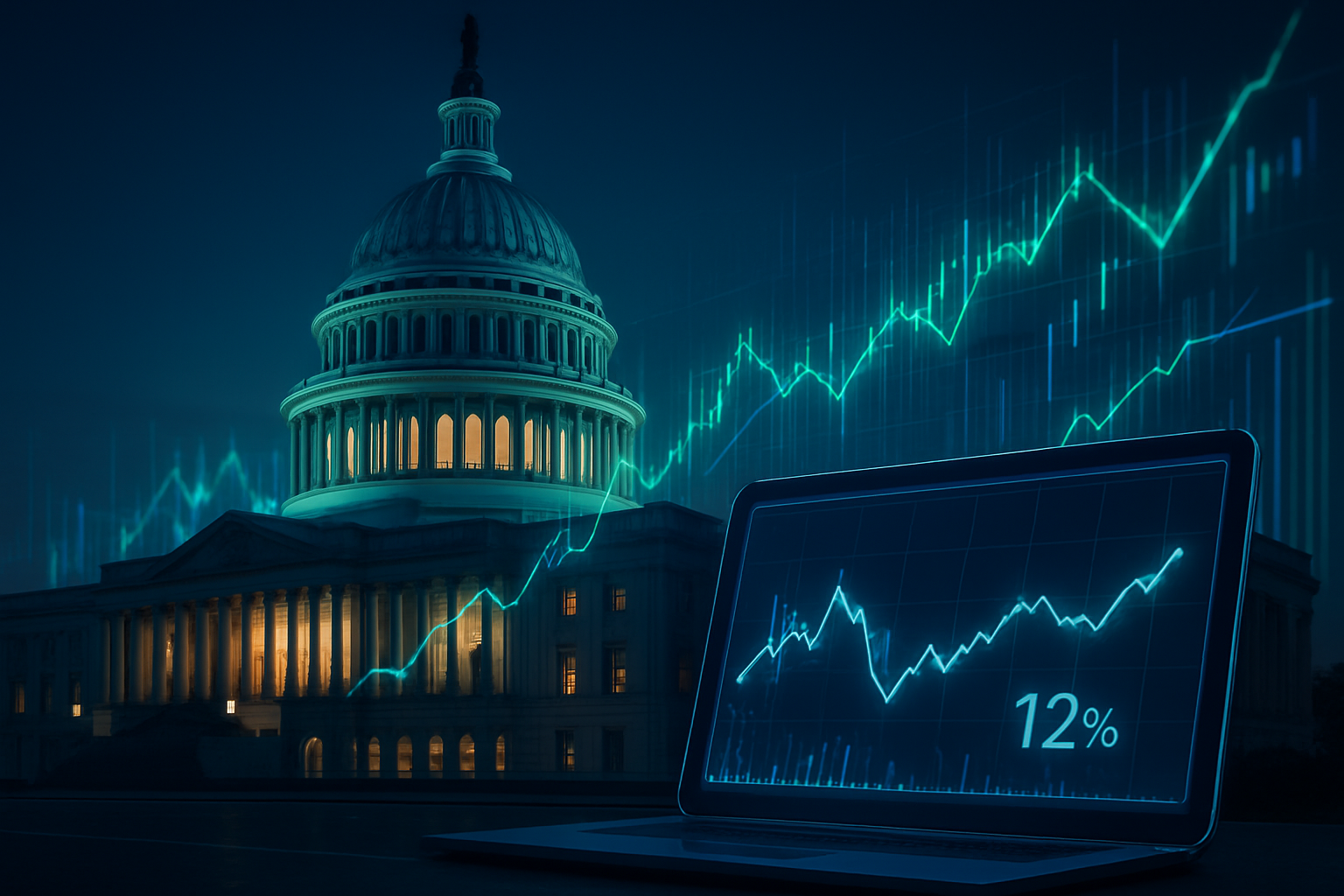
    On the popular political betting platform PredictIt, the contract for H.R. 7004’s passage in 2026 is currently trading at just $0.12, implying a slim 12% chance of the bill becoming law this year. This bearish sentiment persists despite a rare alignment of interests between high-profile Democrats, led by Representative Ritchie Torres (D-NY) and Speaker Emerita Nancy Pelosi, and industry titan Tarek Mansour, the CEO of Kalshi. The clash highlights a growing divide between the optimistic "InfoFi" narrative—which views prediction markets as the ultimate truth-seeking tool—and the harsh realities of a gridlocked Congress during an election year.

    The Market: What’s Being Predicted

    The primary market tracking the bill's fate is PredictIt's "Will H.R. 7004 (Public Integrity Act) pass in 2026?" contract. Since its launch in mid-January, the market has seen significant volatility, initially spiking to 25 cents following the bill's introduction before drifting down to its current 12-cent floor. The contract is designed to pay out $1.00 if the bill is signed into law by December 31, 2026, and $0.00 otherwise.

    Trading volume has been robust, with over 150,000 shares exchanged in the last three weeks alone. Liquidity has improved significantly since PredictIt’s successful 2025 transition into a fully regulated Designated Contract Market (DCM) under the Aristotle Exchange, which saw the removal of the 5,000-trader cap and an increase in individual investment limits to $3,500. While offshore giant Polymarket—which recently saw a $2 billion investment from the Intercontinental Exchange (NYSE: ICE)—hosts similar thematic markets, PredictIt remains the primary venue for US-based traders specifically focused on the legislative process.

    Why Traders Are Betting

    The 12% probability reflects a classic "efficient market" assessment of legislative hurdles. While the bill, nicknamed the "STOCK Act for Prediction Markets," seeks to ban federal officials and congressional staff from trading contracts tied to their official duties, traders point to the looming midterm elections as a primary obstacle. History suggests that non-essential, complex financial regulation rarely moves through both chambers in the final months before a nationwide vote.

    However, the "Yes" side is being fueled by lingering public outrage over the infamous "Maduro Trade" of early January 2026. In that event, a Polymarket user netted over $400,000 on a wager involving the removal of Venezuelan President Nicolás Maduro just hours before a secret U.S. military operation was announced. This perceived insider advantage has given proponents like Tarek Mansour a powerful narrative. Mansour has aggressively lobbied for the bill, pursuing a "Clean Market" strategy to differentiate regulated U.S. exchanges like Kalshi from their offshore counterparts. By supporting federal oversight, Mansour hopes to institutionalize prediction markets as a legitimate asset class comparable to those traded on the Nasdaq (NASDAQ: NDAQ).

    Broader Context and Implications

    The debate over H.R. 7004 is the latest chapter in the evolution of InfoFi. In 2026, prediction markets are no longer seen as mere gambling dens; they are increasingly integrated into the global financial infrastructure. The concept of "Information Finance" posits that pricing the probability of real-world events provides a vital public service, often outperforming traditional media and intelligence agencies in accuracy. For instance, InfoFi advocates point to a February 2026 shift in "Government Shutdown" odds on Kalshi that preceded official news by nearly three minutes, a phenomenon now called the "InfoFi Premium."

    This transition has been aided by a regulatory pivot at the Commodity Futures Trading Commission (CFTC). Under Chairman Michael Selig, the agency has moved away from its 2024-era attempts to ban election markets, instead focusing on "modernization." The Public Integrity Act represents the legislative branch's attempt to catch up with this new reality. If passed, it would provide the legal certainty that institutional giants like Interactive Brokers (NASDAQ: IBKR) have sought before fully committing their balance sheets to the event contract space.

    What to Watch Next

    Traders should keep a close eye on the House Financial Services Committee, where H.R. 7004 is currently stalled. A scheduled hearing on February 15 will be a critical bellwether. If the committee moves to a "markup" session—where the bill is debated and amended—the PredictIt odds could easily double overnight. Conversely, if the bill is not attached to a "must-pass" piece of legislation, such as the upcoming spring budget resolution, the 12% probability may continue its slow decay toward zero.

    Another key factor is the stance of the White House. While President Biden has generally supported measures to increase government transparency, his administration has remained quiet on the specific nuances of InfoFi. A formal Statement of Administration Policy (SAP) in favor of the bill would be a massive catalyst for market movement, potentially bringing in "whales" who have been waiting on the sidelines for a clearer political signal.

    Bottom Line

    The 12% probability of H.R. 7004's passage reveals a cynical but perhaps realistic view of Washington's ability to police itself. While the "InfoFi" revolution has successfully rebranded prediction markets as essential data tools, the political will to enact a "STOCK Act" for this new frontier remains tested by the distractions of an election year.

    Ultimately, whether the bill passes or not, the debate itself has solidified the status of prediction markets in the national discourse. By forcing a conversation on public integrity and the "pricing of truth," H.R. 7004 has already achieved one of the primary goals of any InfoFi instrument: it has forced the market to put a price on the integrity of the government itself. For now, the market says that price is low, and the hurdles are high.


    This article is for informational purposes only and does not constitute financial or betting advice. Prediction market participation may be subject to legal restrictions in your jurisdiction.

    PredictStreet focuses on covering the latest developments in prediction markets.
    Visit the PredictStreet website at https://www.predictstreet.ai/.
  • The Great Prediction War of 2026: Polymarket and Kalshi Battle for the Volume Crown

    The Great Prediction War of 2026: Polymarket and Kalshi Battle for the Volume Crown

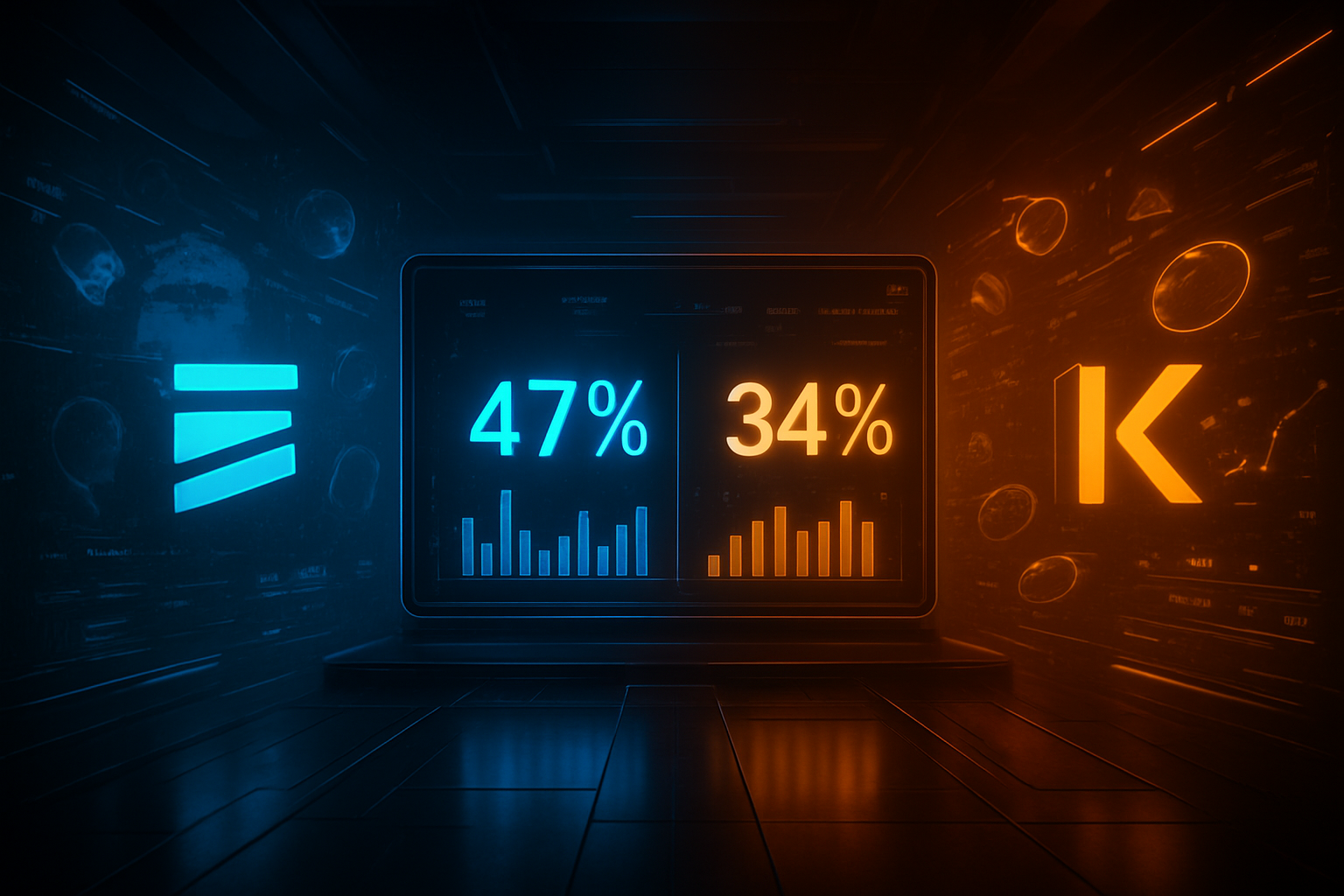
    As of early February 2026, the prediction market landscape has transformed from a niche hobby for "superforecasters" into a multi-billion dollar pillar of the global financial system. At the heart of this explosion is a titanic struggle for dominance between the two undisputed heavyweights: Polymarket and Kalshi. The stakes are nothing less than the title of the world’s primary "truth engine." Currently, a high-traffic contract on Manifold Markets, which serves as a meta-layer for industry sentiment, gives Polymarket a 47% chance of claiming the 2026 volume crown, while Kalshi trails at 34%.

    This rivalry has divided the trading community into two distinct camps. While Kalshi has leveraged its regulatory compliance to become the "Robinhood of events," Polymarket has maintained its status as the "Bloomberg of the blockchain," dominating the high-stakes world of geopolitical and macroeconomic forecasting. The current betting activity on Manifold reflects a growing debate: will the raw mass-market appeal of sports propel Kalshi to the top, or will Polymarket’s dominance in "high-signal" global events prove more lucrative?

    The Market: What's Being Predicted

    The central point of contention is the definition of "volume leadership." The Manifold Markets contract, which has seen heavy participation from industry insiders and "whales," specifically tracks which platform will handle the most notional volume for the calendar year 2026. However, there is a critical caveat in the resolution criteria: the contract excludes "pure sports betting" volume to focus on "event-based information finance." This distinction is vital because, in 2025, Kalshi cleared a staggering $43.1 billion in total volume, but over 90% of that was tied to sports contracts through its integration with Robinhood Markets, Inc. (NASDAQ:HOOD).

    Polymarket, which ended 2025 with $33.4 billion in volume, is currently the favorite on Manifold because of its perceived monopoly on "pure" prediction markets. Traders are pricing in the fact that while Kalshi attracts millions of small-dollar sports bettors, Polymarket attracts massive institutional liquidity on "high-alpha" events. The odds have shifted significantly since January 1st, when the two were nearly neck-and-neck. Polymarket’s recent surge to 47% follows a series of high-volume geopolitical events in January that saw over $5 billion in monthly activity on the platform.

    Why Traders Are Betting

    The divergence in odds is driven by the vastly different "moats" each platform has built. Kalshi’s strength lies in its "sports flywheel." By partnering with the NHL and other major leagues, Kalshi has turned prediction markets into a regulated alternative to traditional sportsbooks. This has created a massive influx of retail traders, but it also makes the platform vulnerable to regional regulatory shifts. For example, a recent preliminary injunction in Massachusetts has barred Kalshi from offering sports contracts in the state, a move that traders fear could be replicated in other high-volume states like New York or Nevada.

    Conversely, Polymarket’s 47% lead is fueled by its "Geopolitical/Macro" dominance. In January 2026, the platform famously outperformed every major news outlet during "Operation Absolute Resolve" in Venezuela. While traditional media struggled to verify reports on the ground, the "Maduro Trade" on Polymarket saw $56.6 million in volume, accurately pricing the regime's collapse hours before official confirmation. Similarly, markets regarding the nomination of Kevin Warsh as the next Federal Reserve Chair saw over $368 million in volume, with the "Yes" side hitting 94% probability just before the official announcement from the White House.

    Traders are also closely watching the "whale" activity. Large institutional firms like Susquehanna and DRW have reportedly been shifting more liquidity into Polymarket’s macro markets, viewing them as a superior hedging tool compared to traditional derivatives. This "institutionalization" of the truth is a major factor driving the Manifold odds in Polymarket's favor.

    Broader Context and Implications

    This rivalry represents a pivotal moment for "Information Finance" (InfoFi). The 2024 US Election was the "Big Bang" for this industry, proving that prediction markets could act as a more accurate barometer of reality than traditional polling. Now, in 2026, the question is no longer if these markets work, but how they will be regulated and integrated into the broader economy.

    The regulatory environment has shifted dramatically under the new CFTC Chairman, Michael Selig. His "pro-market" stance has been a boon for both platforms, but a new conflict has emerged: the war between federal pre-emption and state-level gaming commissions. While Selig has expressed support for a federal framework for prediction markets, states like New Jersey and Nevada are fighting to classify these platforms as "gambling," which would subject them to high taxes and restrictive licensing.

    Furthermore, Polymarket’s successful re-entry into the US market—via its $112 million acquisition of QCEX, a CFTC-licensed exchange—has leveled the playing field. This move stripped Kalshi of its "only legal US option" advantage, forcing the competition to be fought purely on the quality of the markets and the depth of liquidity.

    What to Watch Next

    The coming months will provide several "stress tests" for these platforms. The first major milestone is the resolution of the Massachusetts legal challenge against Kalshi. If the court upholds the ban on sports contracts, Kalshi’s volume could take a significant hit, likely causing its Manifold odds to plummet further. On the other hand, if Kalshi successfully defends its model as "economic hedging" rather than gambling, it could reclaim its momentum.

    For Polymarket, the key will be maintaining its edge in "breaking news" markets. Watch for the upcoming "Global Climate Accord" negotiations in March; if Polymarket can once again provide a faster, more accurate signal than traditional diplomacy observers, it will cement its status as the world’s premier information source. Additionally, the potential for a "super-app" launch from Polymarket later this year could further bridge the gap with Kalshi’s retail-friendly interface.

    Bottom Line

    The battle for the 2026 volume crown is more than just a competition between two apps; it is a fight to define the future of how humanity consumes information. Kalshi is betting on the ubiquity of sports and the power of mainstream financial integrations. Polymarket is betting on the value of "pure" truth and the global demand for geopolitical clarity.

    The Manifold Markets odds—47% for Polymarket and 34% for Kalshi—suggest that while sports volume is impressive, traders believe the real future of prediction markets lies in the "Macro" niche. As we move deeper into 2026, the platform that can best navigate the regulatory minefield while maintaining deep liquidity on world-changing events will likely emerge victorious. For now, the "Truth Engine" of Polymarket holds the lead, but in a market where everything is a bet, nothing is guaranteed.


    This article is for informational purposes only and does not constitute financial or betting advice. Prediction market participation may be subject to legal restrictions in your jurisdiction.

    PredictStreet focuses on covering the latest developments in prediction markets.
    Visit the PredictStreet website at https://www.predictstreet.ai/.
  • The InfoFi Revolution: How Prediction Markets Became the World’s Fastest Financial Data Feed

    The InfoFi Revolution: How Prediction Markets Became the World’s Fastest Financial Data Feed

    As of February 1, 2026, the global financial landscape has been fundamentally rewired by a concept once relegated to the fringes of crypto-economic theory: Information Finance, or "InfoFi." What began as a tool for political junkies to hedge election risks has evolved into the world’s most potent data transmission mechanism. Prediction markets have transitioned from "betting parlors" to the "source of truth" for the global financial machine, with liquidity across major platforms now exceeding $50 billion annually.

    The most profound shift, however, is not in who is trading, but what is trading. Today, algorithmic bots—not humans—are the primary participants in prediction markets. These AI agents treat shifts in event probabilities as "truth events," using them as high-speed triggers to execute multi-billion dollar trades in traditional markets like the S&P 500 (NYSEARCA: SPY) and U.S. Treasuries. In this new era, the prediction market moves first, and the rest of the world follows in milliseconds.

    The Market: What's Being Predicted

    The prediction market landscape in early 2026 is dominated by two giants: the decentralized Polymarket and the federally regulated Kalshi. While these platforms still offer markets on everything from the Oscars to weather events, the high-volume activity is concentrated in macro-economic and geopolitical "nexus events." Currently, the most liquid markets center on Federal Reserve policy, specifically the "March 2026 Rate Cut" and "Year-End Inflation" contracts.

    Liquidity has reached a critical mass where "whale" positions—often exceeding $50 million—are common. On Kalshi, the "Federal Reserve Target Rate" contracts have seen their daily volume rival that of traditional interest-rate futures at the CME Group (NASDAQ: CME). The resolution criteria for these markets are ironclad, often tied to official government releases or blockchain-verified data, providing the "clean" data sets that algorithmic models crave.

    The speed of price discovery is now staggering. On Feb 1, 2026, a 4% shift in the probability of a "Government Shutdown" on Kalshi was reflected in the market price within 400 milliseconds of a leaked Congressional memo, whereas traditional news wires took nearly three minutes to report the same information. This delta—the "InfoFi Premium"—is where the new generation of traders makes their fortunes.

    Why Traders Are Betting

    The rise of "Information Arbitrage" is the primary driver behind current market movements. Traditional hedge funds and high-frequency trading (HFT) firms have deployed specialized AI agents, such as the widely discussed "Alphascope" and "Polybro" bots, to scan these markets 24/7. These bots do not just bet on the outcome; they use the outcome as a leading indicator for traditional assets.

    For instance, when a prediction market on Polymarket shows an uptick in the probability of a specific regulatory change, bots immediately execute trades in the affected sectors. If a contract for "SEC Leadership Change" moves toward "Yes," bots may preemptively buy or sell the Bitcoin Trust (NASDAQ: IBIT) or shares of Coinbase Global, Inc. (NASDAQ: COIN). Traders are no longer waiting for the news to break; they are trading on the collective intelligence of the "skin-in-the-game" participants who are incentivized to find the truth first.

    Furthermore, the introduction of the CLARITY Act of 2026 (Digital Asset Market Clarity Act) has legitimized these strategies. The Act provides a clear regulatory framework for "event contracts," allowing institutional giants like Apollo Global Management (NYSE: APO) and BlackRock, Inc. (NYSE: BLK) to treat prediction market positions as legitimate hedges against systemic risk. This institutional inflow has compressed spreads and made prediction market signals more reliable than ever.

    Broader Context and Implications

    The "feedback loop" between prediction markets and traditional finance has created a self-reinforcing cycle. When a prediction market shifts, it triggers automated selling in the S&P 500 (NYSEARCA: SPY). This market movement is then picked up by other algorithms as a "momentum signal," which in turn causes more traders to enter the prediction market to hedge their newfound exposure. This loop has effectively turned prediction markets into the world’s fastest financial data feed.

    This phenomenon reveals a deepening skepticism of traditional media and analyst reports. In the 2026 economy, a "buy" rating from a major bank carries less weight than a 10-cent move in a prediction market. The public sentiment captured here is cold and calculated; it is the sentiment of people willing to lose money if they are wrong, which distinguishes it from the "cheap talk" of social media or cable news.

    Historically, prediction markets have shown a remarkable ability to outperform "expert" consensus. During the 2024 election cycle and the subsequent economic shifts of 2025, markets like Kalshi consistently priced in outcomes weeks before traditional polling or economic forecasting firms. This accuracy has forced regulators at the CFTC to pivot from a stance of hostility to one of integration, recognizing that these markets provide a vital "early warning system" for the financial stability of the United States.

    What to Watch Next

    As we move further into 2026, the next major milestone is the full integration of prediction market APIs into mainstream brokerage platforms. Rumors persist that platforms like Charles Schwab (NYSE: SCHW) and Robinhood Markets, Inc. (NASDAQ: HOOD) are preparing to offer "Event Hedging" tabs, allowing retail investors to buy "No" on a recession as easily as they buy an ETF.

    The upcoming March FOMC meeting will be the ultimate test of the InfoFi feedback loop. Currently, Kalshi is pricing a 62% chance of a 25-basis-point cut, while traditional Fed Fund Futures are lagging at 54%. If the prediction market proves correct again, it may mark the moment when "Event Contracts" officially replace "Futures" as the primary tool for interest rate discovery.

    Additionally, the expansion of "Synthetic Straddles"—where traders hedge physical assets against event outcomes—is expected to grow. Watch for how high-tech firms like NVIDIA Corporation (NASDAQ: NVDA) see their stock volatility correlate with "Taiwan Conflict" or "AI Regulation" contracts. The tighter this correlation becomes, the more the prediction market acts as the "shadow price" for the world's most valuable companies.

    Bottom Line

    Prediction markets have evolved from a niche curiosity into the central nervous system of global finance. By 2026, "InfoFi" has proven that information is not just something you read—it is something you price. The rise of algorithmic bot trading has eliminated the latency between a "truth event" and a market reaction, making the world more efficient but also more volatile for those who cannot keep pace with the machines.

    This shift tells us that the most valuable commodity in the modern economy is no longer oil or even data, but accuracy. Prediction markets provide a ruthless mechanism for filtering noise and surfacing reality. For the modern investor, ignoring these signals is no longer an option; the bots have already integrated them, and the feedback loop is only getting faster.

    Whether we are looking at interest rates, election results, or corporate mergers, the prediction market is now the first place the "truth" appears. As institutional adoption continues and regulatory clarity deepens, the line between "betting" and "investing" will continue to blur until it disappears entirely.


    This article is for informational purposes only and does not constitute financial or betting advice. Prediction market participation may be subject to legal restrictions in your jurisdiction.

    PredictStreet focuses on covering the latest developments in prediction markets. Visit the PredictStreet website at https://www.predictstreet.ai/.