
Tag: HPE acquisition

  • Apple in 2026: Navigating the AI Frontier and the $4 Trillion Milestone

    Apple in 2026: Navigating the AI Frontier and the $4 Trillion Milestone

    As of January 13, 2026, Apple Inc. (NASDAQ: AAPL) remains the most scrutinized and significant entity in the global technology landscape. With a market capitalization hovering near the $4 trillion threshold, the Cupertino-based giant is no longer just a hardware manufacturer; it is a sprawling digital ecosystem that defines modern consumer habits. This article examines Apple at a critical juncture: the company is currently navigating a transition from its legacy as the "iPhone company" to a future defined by generative artificial intelligence (AI), a massive services portfolio, and a shifting leadership guard. Despite navigating the most aggressive regulatory environment in its history, Apple’s ability to extract premium margins from a user base of over 2.2 billion active devices remains its primary competitive moat.

    Historical Background

    Founded in 1976 by Steve Jobs, Steve Wozniak, and Ronald Wayne, Apple’s history is a narrative of near-collapse followed by unprecedented redemption. The company’s early success with the Apple II was followed by a decade of internal strife, leading to Jobs’s ouster in 1985. His return in 1997 marked the beginning of a "golden age" of product innovation, starting with the iMac and culminating in the 2007 release of the iPhone—a device that fundamentally altered the global telecommunications and software industries.

    Under the leadership of Tim Cook, who took the helm in 2011, Apple transformed from a product-cycle dependent firm into a logistical and operational powerhouse. The last decade has been defined by the "Services Pivot," where the company successfully monetized its massive installed base through iCloud, the App Store, Apple Music, and Apple Pay. By 2026, Apple has evolved through the "Silicon Transition," replacing Intel chips with its own high-performance M-series and A-series processors, effectively vertically integrating its entire stack.

    Business Model

    Apple’s business model is a masterclass in the "walled garden" strategy. It relies on high-margin hardware to onboard users into an ecosystem where high-frequency, recurring services revenue creates a feedback loop of brand loyalty.

    Revenue is primarily segmented into:

    • iPhone: Still the flagship, accounting for approximately 50% of total revenue.
    • Services: The fastest-growing and highest-margin segment, including the App Store, Apple Care, iCloud+, Apple TV+, and Apple Intelligence subscriptions.
    • Wearables, Home, and Accessories: Comprising the Apple Watch, AirPods, and the HomePod.
    • Mac and iPad: Mature segments that focus on the "pro" and creative consumer markets.

    The core of the model in 2026 is the synergy between on-device AI and cloud-based services. By controlling the hardware (silicon), software (iOS), and now the AI infrastructure, Apple creates a switching cost that remains the highest in the consumer electronics industry.

    Stock Performance Overview

    Apple's stock performance over the last decade has been nothing short of extraordinary, though the last two years have seen increased volatility as the market adjusted to higher interest rates and a shifting AI landscape.

    • 1-Year Performance: Apple shares rose approximately 8.5% in 2025. While it slightly trailed some "Magnificent Seven" peers like Nvidia due to a slower initial AI rollout, the stock saw a late-year rally following the successful launch of the iPhone 17.
    • 5-Year Performance: Investors who held AAPL from early 2021 have seen a total return of approximately 107.6%, vastly outperforming the broader S&P 500 index.
    • 10-Year Performance: Over a decade, Apple has delivered a staggering 1,054.9% return. This growth was driven by consistent share buybacks—Apple has retired nearly 40% of its shares over the last ten years—and a dividend that has grown steadily, cementing its status as a core holding for both growth and value investors.

    Financial Performance

    In its Fiscal Year 2025 (ending late 2025), Apple reported record-breaking figures that silenced critics who questioned its growth ceiling.

    • Revenue: Totaled $416.16 billion, a significant jump from 2024, driven by the strong reception of the iPhone 17 and a 13.5% surge in Services.
    • Net Income: $112.01 billion, reflecting a net margin of nearly 27%.
    • Gross Margins: Reached a record 46.91%, largely due to the "Services-mix" effect, where 75% margins on software and subscriptions dilute the lower margins of hardware.
    • Cash Position: Apple maintains a massive cash pile of over $160 billion, though it continues to target a "cash-neutral" position by returning billions to shareholders via buybacks and dividends.
    • Valuation: As of January 2026, the stock trades at a forward P/E ratio of 32x. While historically high, this premium is justified by the predictability of its Services cash flow.

    Leadership and Management

    Apple is currently navigating its most significant executive transition in 15 years.

    • Tim Cook (CEO): At 65, Cook remains the steady hand. His strategy in 2025-2026 has focused on geopolitical maneuvering and the pivot to AI.
    • Kevan Parekh (CFO): Having recently succeeded Luca Maestri, Parekh’s focus has been on maintaining the rigorous capital return program and managing the high-interest-rate environment.
    • Sabih Khan (COO): Successor to Jeff Williams, Khan is overseeing the complex migration of the supply chain away from China toward India and Vietnam.
    • The Succession Race: John Ternus (SVP of Hardware Engineering) is widely viewed by analysts as the "CEO-in-waiting." His increasing visibility in product keynotes throughout 2025 signals a potential "product-first" era for Apple in the late 2020s.

    Products, Services, and Innovations

    The 2025-2026 product cycle is dominated by Apple Intelligence.

    • iPhone 17 Series: Released in September 2025, the iPhone 17 introduced the "iPhone Air"—a ultra-thin, premium model that has reinvigorated the replacement cycle.
    • AI Integration: In January 2026, Apple made the landmark announcement of a partnership with Google to use Gemini for cloud-based generative AI tasks, while keeping sensitive data processing on-device using its proprietary A19 chips.
    • Vision Pro and Vision Air: The original $3,500 Vision Pro has seen niche adoption. However, Apple is reportedly readying a "Vision Air" headset for late 2026, priced at $2,000, which aims to bring spatial computing to a broader market.
    • Apple Intelligence Pro: A new subscription tier launched in late 2025 provides advanced AI capabilities (automated video editing, advanced coding assistants), marking Apple’s first direct monetization of generative AI.

    Competitive Landscape

    Apple faces a dual-front battle in 2026.

    • In Hardware: Samsung (OTC: SSNLF) continues to lead in foldable innovation, a category Apple has yet to enter. In China, Huawei’s resurgence with its domestic chips has reclaimed significant market share from Apple in the high-end segment.
    • In AI: Apple is playing catch-up to Microsoft (NASDAQ: MSFT) and Google (NASDAQ: GOOGL). While Apple’s "privacy-first AI" is a marketing winner, its rivals' deeper integration of LLMs into productivity software (Office, Workspace) remains a threat to Mac sales.
    • Competitive Strengths: Apple’s primary strength remains its "vertical integration." By designing its own chips, it can run AI models that are more efficient and private than those of competitors who rely on third-party silicon.

    Industry and Market Trends

    The "Edge AI" revolution is the defining trend of 2026. As consumers become more wary of cloud-based data processing, the demand for devices that can perform heavy AI lifting locally (on-device) has surged. Apple is perfectly positioned for this shift.

    Additionally, the "China + 1" supply chain strategy has matured. As of 2026, over 25% of all iPhones are produced in India, and Vietnam has become the primary hub for iPad and Mac production. This diversification has somewhat insulated the company from the ongoing US-China trade tensions and potential tariff shocks.

    Risks and Challenges

    • Regulatory Scrutiny: The European Union’s Digital Markets Act (DMA) continues to squeeze App Store margins by forcing Apple to allow third-party app stores and alternative payment systems.
    • DOJ Antitrust Case: The US Department of Justice’s lawsuit against Apple is now in the discovery phase. While a resolution is years away, the potential for a forced "breakup" of the ecosystem or a change in iMessage/App Store integration remains a "black swan" risk.
    • Vision Pro Adoption: If the spatial computing category fails to gain traction with the cheaper "Vision Air" model, Apple may face questions about its R&D spending priorities.
    • China Dependency: While diversifying, Apple still relies on China for a significant portion of its sales and manufacturing. Any escalation in geopolitical conflict could be catastrophic.

    Opportunities and Catalysts

    • AI Monetization: The transition of Apple Intelligence from a free feature to a tiered subscription (Apple Intelligence Pro) could add billions to Services revenue by 2027.
    • The "iPhone Air" Cycle: If the new thin-form-factor iPhone 17 continues its momentum, it could trigger the largest upgrade cycle since the iPhone 12.
    • Health Tech: Rumors of non-invasive glucose monitoring in the Apple Watch Series 12 (expected late 2026) could revolutionize the healthcare segment and tap into a multi-billion dollar market.

    Investor Sentiment and Analyst Coverage

    Wall Street remains overwhelmingly bullish on AAPL, though valuation concerns persist.

    • Analyst Ratings: As of January 2026, approximately 75% of analysts cover AAPL with a "Buy" or "Outperform" rating. Average price targets range from $240 to $275, implying a market cap toward $4.2 trillion.
    • Hedge Fund Moves: Institutional ownership remains high, with major firms like Berkshire Hathaway and Vanguard maintaining core positions, though some "Growth" funds have rotated toward pure-play AI stocks.
    • Retail Chatter: Retail investors remain loyal, viewing Apple as a "tech-utility"—a safe place to park capital during macroeconomic uncertainty.

    Regulatory, Policy, and Geopolitical Factors

    The geopolitical landscape of 2026 is fraught with complexity. The US government’s push for "onshoring" semiconductor manufacturing has benefited Apple through its partnership with TSMC’s Arizona plants. However, the EU’s aggressive stance on "digital sovereignty" means Apple must constantly rewrite its software architecture to comply with regional laws.

    In India, Apple has become a "poster child" for the government’s "Make in India" initiative, earning significant tax incentives and policy support, which has helped it grow its market share in the world’s most populous nation to record highs in 2025.

    Conclusion

    Apple Inc. enters 2026 in a position of unrivaled financial strength, yet it faces a more complex operational path than ever before. The success of the "iPhone 17" cycle and the early rollout of Apple Intelligence suggest that the company’s ability to innovate within its ecosystem is intact. However, the plateauing of the Vision Pro and the relentless pressure from global regulators represent genuine headwinds.

    For investors, the thesis for Apple has shifted from "high-growth hardware" to "high-yield ecosystem." The company is now a dividend-paying, share-retiring juggernaut that is successfully layering high-margin AI services onto its massive hardware foundation. As the market watches the 2026 leadership transitions and the debut of the "Vision Air," the central question is whether Apple can maintain its premium valuation while the "Walled Garden" is slowly dismantled by global regulators.


    This content is intended for informational purposes only and is not financial advice.

  • The Silicon Sovereign: A Deep-Dive Research Feature on TSMC (TSM) in 2026

    The Silicon Sovereign: A Deep-Dive Research Feature on TSMC (TSM) in 2026

    As of January 9, 2026, the global technology ecosystem finds itself at a critical juncture, and all eyes are fixed on a single company in Hsinchu, Taiwan. Taiwan Semiconductor Manufacturing Company (NYSE: TSM), the world’s largest and most advanced dedicated independent semiconductor foundry, is set to report its fourth-quarter 2025 earnings next week on January 15. In an era where artificial intelligence (AI) has transitioned from a buzzword to the primary engine of global GDP growth, TSMC has become the ultimate gatekeeper of progress.

    With a market capitalization hovering near $1.65 trillion, TSMC is not just a company; it is a sovereign-grade strategic asset. As investors await the upcoming earnings call, the stakes have never been higher. The report will serve as a definitive barometer for the "AI Supercycle," providing hard data on whether the insatiable demand for Nvidia’s GPUs and Apple’s AI-integrated devices is translating into sustainable, long-term margin expansion for the silicon that powers them.

    Historical Background

    The story of TSMC is the story of a paradigm shift in the electronics industry. Founded in 1987 by Dr. Morris Chang, a visionary veteran of Texas Instruments, TSMC pioneered the "pure-play foundry" model. Before TSMC, semiconductor companies designed and manufactured their own chips (Integrated Device Manufacturers, or IDMs). Chang realized that as chip designs became more complex and fabrication plants (fabs) more expensive, a company that focused solely on manufacturing—never competing with its customers’ designs—could achieve economies of scale and technological focus that no IDM could match.

    Starting with 6-inch wafer technology and a handful of employees, TSMC steadily climbed the value chain. By the late 1990s, it had become the preferred partner for the nascent fabless semiconductor industry, enabling giants like Nvidia, Qualcomm, and Broadcom to thrive. The company's "Grand Alliance" strategy—a collaborative ecosystem of EDA tools, IP partners, and equipment suppliers—cemented its dominance. Over four decades, TSMC has transitioned from a low-cost manufacturer to the undisputed leader in extreme ultraviolet (EUV) lithography, leaving once-mighty rivals struggling to keep pace.

    Business Model

    TSMC’s business model is built on three pillars: technological leadership, manufacturing excellence, and customer trust. As a pure-play foundry, it manufactures over 12,000 products for more than 500 different customers using roughly 300 distinct technologies.

    Revenue is primarily segmented by:

    1. Platform: High-Performance Computing (HPC) now represents the largest share (roughly 48%), surpassing Smartphones (approx. 34%) as of late 2025. This shift reflects the explosive growth of AI data centers. Other platforms include IoT, Automotive, and Digital Consumer Electronics.
    2. Process Technology: TSMC generates the lion's share of its revenue from "Advanced Technologies" (defined as 7nm and smaller). As of early 2026, 3nm and 5nm nodes account for over 60% of total revenue, with the newly launched 2nm node expected to ramp up significantly throughout the year.

    By acting as a neutral manufacturer, TSMC creates a "flywheel" effect: more customers lead to higher volumes, which funds the massive R&D and capital expenditures (CapEx) required to maintain a lead in the next generation of physics-defying chip geometry.

    Stock Performance Overview

    TSM has been a cornerstone of growth portfolios over the last decade, consistently outperforming broader indices. As of January 9, 2026:

    • 1-Year Performance: The stock has surged approximately 55.6%, fueled by a record-breaking 2025 where AI chip demand consistently outstripped supply.
    • 5-Year Performance: TSM has delivered a total return of ~191%, navigating the post-pandemic supply chain crisis and the subsequent AI boom.
    • 10-Year Performance: Long-term shareholders have seen a staggering ~1,881% return (approx. 33.5% CAGR), a testament to the company’s ability to compound value through multiple technology cycles.

    While the stock experienced volatility in late 2024 due to geopolitical jitters, the fundamental strength of its earnings power has driven it to new all-time highs in the first week of 2026.

    Financial Performance

    TSMC enters its Q4 earnings cycle in a position of unprecedented financial strength. For the full year 2025, the company is estimated to have achieved record revenue of approximately $113 billion, a 36% increase year-over-year in USD terms.

    Key metrics to watch in the upcoming report include:

    • Gross Margins: TSMC has maintained a target of 58%–60% for 2025. Despite the higher costs associated with its Arizona and Japan fabs, high utilization rates in its Taiwan "Gigafabs" have preserved profitability.
    • Capital Expenditure: The 2025 CapEx ended near $42 billion. Analysts are looking for 2026 guidance, with some predicting a jump to $50 billion as the company accelerates its 2nm and A16 (1.6nm) roadmaps.
    • Valuation: Trading at a forward P/E of approximately 22x, TSM remains attractively priced compared to the "Magnificent Seven" and other AI beneficiaries, especially given its essential role in the AI supply chain.

    Leadership and Management

    Since June 2024, TSMC has been led by Dr. C.C. Wei, who consolidated the roles of Chairman and CEO following the retirement of Mark Liu. This transition ended the dual-leadership structure that had been in place since Morris Chang’s retirement in 2018.

    Wei’s leadership style is characterized by operational pragmatism. He has been the primary architect of TSMC's "Global Footprint" strategy, managing the delicate balance of expanding manufacturing into the US, Japan, and Germany while keeping the company's core R&D and most advanced production firmly rooted in Taiwan. His ability to navigate the "cost gap" between Taiwan and overseas locations—often through strategic price hikes passed on to customers—has won him high marks from institutional investors.

    Products, Services, and Innovations

    The technological frontier for TSMC in 2026 is the N2 (2nm) process. Unlike the 3nm node, which utilized FinFET transistors, the 2nm node marks TSMC’s transition to Nanosheet Gate-All-Around (GAA) architecture. This shift allows for greater power efficiency and performance, essential for the next generation of mobile AI and high-efficiency data centers.

    Beyond transistor density, TSMC has become a leader in Advanced Packaging. Its Chip-on-Wafer-on-Substrate (CoWoS) technology is the unsung hero of the AI revolution, allowing Nvidia’s GPUs to connect to High-Bandwidth Memory (HBM) at speeds required for Large Language Models. By early 2026, TSMC has doubled its CoWoS capacity to roughly 120,000 wafers per month, yet demand continues to exceed supply.

    Looking ahead, the company has begun sampling its A16 (1.6nm) node, which incorporates "Backside Power Delivery," a revolutionary way to deliver electricity to the transistors that further reduces interference and improves performance.

    Competitive Landscape

    The "Foundry War" has narrowed to a three-horse race, though TSMC remains several laps ahead:

    • Intel (INTC): Under its "IDM 2.0" strategy, Intel is racing to regain "transistor leadership" with its 18A node. While Intel has secured some foundry customers, it still relies on TSMC for critical parts of its own flagship CPUs (like Panther Lake), a sign of TSMC's superior yields.
    • Samsung Electronics (005930.KS): Samsung was first to adopt GAA technology at 3nm, but it has struggled with yield stability compared to TSMC. In 2025, several major customers reportedly shifted orders back to TSMC due to the reliability of the N3P process.

    TSMC’s competitive edge is not just its machines, but its "Yield Learning Curve." With every million wafers produced, TSMC gets better at the process, creating a barrier to entry that requires tens of billions of dollars and years of experience to overcome.

    Industry and Market Trends

    Three macro trends are defining the semiconductor landscape in 2026:

    1. The AI Supercycle: The shift from general-purpose computing to accelerated computing is permanent. Data center capex from hyperscalers (Google, Microsoft, Meta) remains at record levels.
    2. Edge AI: The release of "AI-first" smartphones and PCs in 2025 has triggered a replacement cycle. These devices require 3nm and 2nm chips to handle on-device AI tasks, benefiting TSMC's smartphone segment.
    3. Silicon Sovereignty: Governments now view chips as the "new oil." This has led to massive subsidies (CHIPS Act) but also complex regulatory requirements for geographic diversification.

    Risks and Challenges

    TSMC is not without significant risks:

    • Geopolitical Tension: The "Taiwan Risk" remains the most cited concern. Any disruption in the Taiwan Strait would cripple the global economy.
    • Cost of Diversification: Building and operating fabs in Arizona and Germany is significantly more expensive than in Taiwan due to labor costs, regulation, and supply chain maturity. TSMC must pass these costs to customers without losing market share.
    • Resource Constraints: In Taiwan, the company faces potential shortages of green energy and water, both of which are required in massive quantities for advanced semiconductor manufacturing.

    Opportunities and Catalysts

    • 2nm Ramp-Up: As Apple and Nvidia move to 2nm in late 2026/early 2027, TSMC will benefit from the higher Average Selling Prices (ASPs) of these premium wafers.
    • Custom Silicon (ASICs): More cloud providers (Amazon, Google) are designing their own AI chips. These companies are increasingly turning to TSMC’s foundry and packaging services, diversifying TSMC's revenue away from just merchant silicon providers like Nvidia.
    • Automotive Electrification: The shift toward Software-Defined Vehicles (SDVs) is driving demand for advanced nodes (5nm/7nm) in cars, a segment that was once dominated by legacy 28nm processes.

    Investor Sentiment and Analyst Coverage

    Sentiment toward TSMC remains overwhelmingly positive. Most Wall Street analysts maintain "Buy" or "Strong Buy" ratings, citing the company's "indispensability" in the AI era. Institutional ownership remains high, with major sovereign wealth funds and pension funds holding TSM as a core position.

    However, PredictStreet’s AI-generated sentiment analysis notes a growing conversation around "margin normalization." Investors are watching closely to see if TSMC can maintain 60% gross margins as its higher-cost US fabs become a larger portion of its operational mix.

    Regulatory, Policy, and Geopolitical Factors

    The geopolitical landscape in 2026 is complex. TSMC is currently navigating a new US trade environment characterized by "reciprocal tariffs." Reports of a potential 15% tariff on Taiwan-made chips have forced TSMC to accelerate its "localized production" strategy.

    While the US CHIPS Act provided billions in subsidies for the Arizona project, it also comes with "guardrail" provisions that limit TSMC’s ability to expand advanced capacity in certain other regions. TSMC has proven adept at diplomacy, maintaining its status as a "trusted partner" to the US while keeping its essential ties to the global supply chain intact.

    Conclusion

    As we approach the January 15 earnings report, TSMC stands as the most critical link in the global technology chain. The company has successfully navigated the transition to the AI era, maintaining its technological lead while beginning the difficult process of globalizing its manufacturing footprint.

    For investors, the key will be the 2026 guidance. If TSMC can demonstrate that the AI boom is entering a phase of sustained infrastructure build-out, and that it can successfully manage the costs of its international expansion, the stock's recent rally may only be the beginning. However, the shadow of geopolitics and the rising costs of "silicon sovereignty" mean that TSMC is a high-reward play that requires constant monitoring of the macro environment.

    Investors should watch for three things next week: the pace of the 2nm ramp-up, the final 2026 CapEx figure, and management’s commentary on the pricing of US-made wafers. In the world of 2026, as goes TSMC, so goes the global economy.


    This content is intended for informational purposes only and is not financial advice.

  • Snowflake (SNOW) 2026 Deep Dive: From Data Warehousing to the AI Agent Engine

    Snowflake (SNOW) 2026 Deep Dive: From Data Warehousing to the AI Agent Engine

    As of January 9, 2026, Snowflake Inc. (NYSE: SNOW) stands at a pivotal intersection of enterprise data management and the rapidly maturing world of generative AI. Once regarded purely as a cloud-based data warehousing solution, the company has successfully rebranded and re-engineered itself into the "AI Data Cloud." Under the strategic leadership of CEO Sridhar Ramaswamy, Snowflake has navigated a tumultuous few years—including a high-profile leadership transition and a challenging macro environment—to emerge as a primary infrastructure layer for the "agentic" AI era.

    At PredictStreet, our analysis suggests that Snowflake’s shift from simple data storage to a platform capable of hosting large language models (LLMs) and autonomous agents has fundamentally altered its valuation narrative. While its growth rates have normalized from the hyper-growth seen post-IPO, the quality of its revenue and the depth of its enterprise integration have never been stronger.

    Historical Background

    Founded in 2012 by Benoit Dageville, Thierry Cruanes, and Marcin Zukowski, Snowflake was born out of a desire to reinvent the data warehouse for the cloud. Unlike legacy on-premise solutions or early cloud offerings that simply ported old architectures to the cloud, Snowflake’s "shared-data, multi-cluster" architecture allowed for the decoupling of storage and compute. This innovation enabled businesses to scale their data operations infinitely without the performance bottlenecks that plagued traditional systems.

    The company’s trajectory changed significantly when Frank Slootman, the veteran CEO of Data Domain and ServiceNow, took the reins in 2019. Slootman led Snowflake to the largest software IPO in history in September 2020. However, the "growth-at-all-costs" era eventually met the reality of 2022–2023’s high-interest-rate environment. In early 2024, Slootman retired, handing the mantle to Sridhar Ramaswamy, a former Google ad executive and the founder of Neeva. This transition signaled Snowflake’s official pivot toward AI, moving beyond mere data storage into data intelligence.

    Business Model

    Snowflake operates on a unique consumption-based revenue model, which distinguishes it from traditional Software-as-a-Service (SaaS) companies that rely on per-user subscriptions.

    • Snowflake Credits: Customers purchase "credits" to pay for the compute resources they use. This model allows for high scalability but also introduces revenue volatility, as customers can optimize their usage during economic downturns.
    • Storage: Billed separately, storage provides a stable recurring revenue base.
    • Data Marketplace: A growing segment of the business where organizations buy and sell third-party datasets directly within the Snowflake environment, facilitating a "data network effect."
    • The Data Cloud: By facilitating seamless data sharing across different cloud providers (AWS, Azure, and GCP) without the need for data movement, Snowflake acts as a cross-cloud orchestration layer.

    Stock Performance Overview

    Over the past five years, SNOW has been a barometer for high-growth tech sentiment.

    • 1-Year Performance: In 2025, SNOW shares saw a recovery of approximately 28%, rebounding from the lows following the 2024 CEO transition and security concerns. As of January 2026, the stock is trading near $233.
    • 5-Year Performance: The stock remains below its all-time highs reached during the late 2021 tech peak. Investors who bought at the IPO have seen significant volatility, but the recent stabilization suggests a floor has been established by enterprise-grade AI adoption.
    • Long-Term Horizon: The market is currently valuing Snowflake not as a 50% grower, but as a durable 20-30% grower with high free cash flow (FCF) margins.

    Financial Performance

    For the most recent fiscal quarter (Q3 FY2026, ended October 2025), Snowflake demonstrated its ability to maintain double-digit growth at scale:

    • Revenue: Total revenue reached $1.21 billion, up 29% year-over-year.
    • Remaining Performance Obligations (RPO): A key forward-looking metric, RPO grew 37% to $7.88 billion, indicating that large enterprises are committing to Snowflake on multi-year contracts.
    • Net Revenue Retention (NRR): While down from historical highs of 150%+, NRR remains healthy at 125%, proving that existing customers continue to expand their usage.
    • Profitability: The non-GAAP operating margin has expanded to 11%, and the company continues to be a massive generator of free cash flow, supporting aggressive share buyback programs.
    • Valuation: Trading at roughly 15-18x forward sales, the valuation is premium but significantly compressed from its 40x+ P/S history.

    Leadership and Management

    CEO Sridhar Ramaswamy has been the architect of Snowflake’s "Product-First" era. His background in search and AI (via Neeva) has allowed Snowflake to move faster in shipping AI products than under previous regimes. CFO Mike Scarpelli remains a steady hand at the helm of the company’s finances, known for his disciplined approach to margins and transparent communication with Wall Street.

    The governance team has also been reinforced with talent from the AI and cybersecurity sectors, reflecting the company’s dual focus on innovation and the protection of enterprise data assets.

    Products, Services, and Innovations

    Snowflake’s product roadmap has shifted from "data warehousing" to "AI readiness":

    • Snowflake Cortex: A fully managed service that provides access to industry-leading LLMs. By late 2025, over 6,100 accounts were actively using Cortex to build AI apps within their secure data perimeter.
    • Arctic: Snowflake’s own "open-source" enterprise LLM, designed with a Mixture-of-Experts (MoE) architecture to provide efficient, high-performance reasoning for SQL generation and coding.
    • Snowflake Horizon: A comprehensive governance suite that ensures data security, privacy, and compliance across the entire Data Cloud.
    • Polaris Catalog: An open-source catalog for Apache Iceberg, which allows customers to use Snowflake’s management capabilities on data stored in open formats, reducing "vendor lock-in" concerns.

    Competitive Landscape

    The competitive field for Snowflake has narrowed to a few high-stakes rivals:

    • Databricks: The primary rival in the "Data Lakehouse" space. Databricks remains strong in data engineering and machine learning. With its IPO highly anticipated in early 2026 and a private valuation of $134 billion, the competition for the "Gold Standard" of data architecture is at an all-time high.
    • Microsoft Fabric: An all-in-one analytics solution that leverages the Azure ecosystem. Fabric is a threat to Snowflake’s lower-market accounts, though many large enterprises still prefer Snowflake for its superior cross-cloud capabilities and multi-cloud governance.
    • Big Tech (AWS Redshift/Google BigQuery): While these remain competitors, Snowflake’s advantage lies in its neutrality and ease of use across different clouds.

    Industry and Market Trends

    The dominant trend in 2026 is the shift toward Open Data Standards. Enterprises are increasingly wary of being locked into a single vendor's proprietary format. Snowflake’s aggressive adoption of Apache Iceberg has been a strategic masterstroke, allowing it to remain the management layer even as data sits in open formats.

    Furthermore, the rise of "Agentic AI"—AI that can take actions, not just generate text—has placed a premium on clean, governed data, which is Snowflake’s core value proposition.

    Risks and Challenges

    Despite its strengths, Snowflake faces several headwinds:

    • Consumption Volatility: Because Snowflake is billed by usage, any macro-driven cost-cutting by enterprises can lead to immediate revenue deceleration.
    • Security Trust: While the mid-2024 credential-stuffing incidents did not have a material financial impact, they reminded the market that as a central repository for the world’s data, Snowflake is a high-value target for hackers.
    • Competition: The aggressive growth of Microsoft Fabric and the impending public listing of Databricks could lead to pricing pressure.

    Opportunities and Catalysts

    • AI Workload Scaling: As enterprises move from AI "pilots" to full-scale production, the compute required to run these agents on Snowflake’s infrastructure could drive a new wave of consumption growth.
    • M&A Potential: With a massive cash pile, Snowflake is a prime candidate to acquire smaller AI startups or specialist data firms to bolster its "Arctic" ecosystem.
    • Unstructured Data: Over 80% of enterprise data is unstructured (PDFs, images, etc.). Snowflake’s new capabilities in processing this data represent a massive untapped revenue stream.

    Investor Sentiment and Analyst Coverage

    Wall Street remains largely bullish on SNOW, with an average "Buy" rating and price targets ranging from $275 to $285. Institutional investors, including major hedge funds, have recently increased their positions, viewing Snowflake as a "picks and shovels" play for the AI revolution. PredictStreet’s internal sentiment tracking shows a shift in retail chatter from "valuation concerns" to "AI product leadership" over the last six months.

    Regulatory, Policy, and Geopolitical Factors

    Data residency and privacy laws (GDPR, CCPA, and emerging AI regulations) are tailwinds for Snowflake. Because the platform provides built-in governance and the ability to keep data within specific regions, it helps multinational corporations comply with increasingly complex global laws. The company's "Snowflake Horizon" suite is specifically designed to handle these regulatory hurdles, making it a "must-have" for regulated industries like finance and healthcare.

    Conclusion

    As we look toward the remainder of 2026, Snowflake Inc. has successfully transitioned from a high-flying IPO story into a foundational pillar of the global AI infrastructure. The leadership of Sridhar Ramaswamy has re-energized the product roadmap, and the company’s embrace of open standards like Apache Iceberg has mitigated the "lock-in" risks that once plagued its narrative.

    For investors, Snowflake offers a balanced profile: the safety of a profitable, cash-flow-positive giant combined with the upside of a company at the heart of the AI agent revolution. While consumption volatility and fierce competition from Databricks remain ever-present, Snowflake’s deep enterprise moats and "Secure-by-Design" philosophy make it a formidable player in the data cloud wars. Investors should closely watch the adoption rates of Snowflake Cortex in the coming quarters as the ultimate indicator of the company’s AI-driven future.


    This content is intended for informational purposes only and is not financial advice.
  • The Architect of the AI Industrial Revolution: A 2026 Deep Dive into NVIDIA (NASDAQ:NVDA)

    The Architect of the AI Industrial Revolution: A 2026 Deep Dive into NVIDIA (NASDAQ:NVDA)

    As of January 9, 2026, NVIDIA Corporation (NASDAQ:NVDA) stands not just as a semiconductor designer, but as the foundational architect of the "AI Industrial Revolution." In the span of less than three years, NVIDIA has transitioned from a high-performance graphics leader to a multi-trillion-dollar titan whose silicon and software orchestrate the global transition to accelerated computing.

    With a market capitalization that recently crossed the $5 trillion threshold, the company finds itself at a unique crossroads. While the initial "AI gold rush" of 2023 and 2024 was defined by frantic hardware acquisition, 2026 is the year of deployment, "Sovereign AI," and the emergence of "Physical AI." Today, NVIDIA's influence extends from the massive data centers of the Mojave Desert to the sovereign "AI Factories" of Europe and Asia, making it the most scrutinized and vital entity in the global technology ecosystem.

    Historical Background

    Founded in 1993 by Jensen Huang, Chris Malachowsky, and Curtis Priem, NVIDIA’s origins were rooted in the nascent world of 3D graphics for gaming. The company survived early existential threats, including a near-bankruptcy before the launch of the RIVA 128 in 1997. However, the most pivotal moment in NVIDIA’s history—and perhaps modern computing—occurred in 2006 with the introduction of CUDA (Compute Unified Device Architecture).

    By opening the Parallel Processing power of the GPU (Graphics Processing Unit) to general-purpose computing, Jensen Huang bet the company on a future that did not yet exist. For over a decade, NVIDIA subsidized the development of CUDA while Wall Street questioned the investment. This "long game" paid off as researchers discovered that the matrix-math capabilities of GPUs were ideally suited for training deep neural networks, the precursor to today’s Generative AI. This transformation from a gaming-centric company to an AI-first platform is widely regarded as one of the most successful strategic pivots in corporate history.

    Business Model

    NVIDIA operates a sophisticated, vertically integrated platform model that encompasses hardware, software, and systems.

    • Compute & Networking (Data Center): This is the company’s crown jewel, accounting for approximately 90% of revenue in early 2026. NVIDIA does not just sell chips; it sells "pods" and "racks"—entire supercomputers like the GB200 NVL72—which integrate GPUs, custom Grace CPUs, and high-speed networking.
    • Networking: Following the acquisition of Mellanox, networking has become a critical pillar. The Spectrum-X Ethernet platform and InfiniBand technologies are essential for connecting thousands of GPUs, preventing the "bottlenecks" that can stifle AI training.
    • Software and Services: Through NVIDIA AI Enterprise, the company has moved toward a recurring revenue model. By charging per-GPU per-year for its software stack, NVIDIA ensures that it captures value not just at the point of sale, but throughout the lifecycle of the hardware.
    • Gaming and Professional Visualization: While overshadowed by the Data Center, these segments remain robust. The RTX series continues to dominate the high-end PC market, while the "Omniverse" platform serves as the operating system for industrial digital twins.
    • Automotive: Positioned as a long-term growth lever, NVIDIA provides the "brains" for autonomous driving, with the 2026 Mercedes-Benz lineup serving as a high-profile showcase for the NVIDIA DRIVE platform.

    Stock Performance Overview

    NVIDIA’s stock performance over the last decade is a statistical anomaly in the large-cap world.

    • 10-Year Performance: Investors who held NVDA since January 2016 have seen returns exceeding 35,000%, as the company rode the waves of gaming, crypto-mining, and eventually, the AI explosion.
    • 5-Year Performance: The stock has seen a nearly 1,500% increase since early 2021, fueled by the post-pandemic digital acceleration and the launch of ChatGPT in late 2022.
    • 1-Year Performance: Over the past twelve months, the stock has risen approximately 70%, driven by the flawless execution of the Blackwell rollout and the aggressive move to a one-year product cycle.

    The stock has undergone multiple splits, most recently a 10-for-1 split in 2024, to keep shares accessible to retail investors even as the market cap soared.

    Financial Performance

    NVIDIA’s financials in early 2026 reflect a company operating at peak efficiency.

    • FY2025 Recap: For the fiscal year ending January 2025, NVIDIA reported staggering revenue of $213 billion, representing a 63% year-over-year increase.
    • FY2026 Projections: Analysts at PredictStreet and major institutions forecast FY2026 revenue to hit between $315 billion and $320 billion.
    • Profitability: Gross margins remain the envy of the industry at approximately 75%. This is a testament to NVIDIA’s pricing power; despite the emergence of competitors, the "total cost of ownership" (TCO) advantage provided by the CUDA ecosystem allows NVIDIA to command massive premiums.
    • Cash Flow and Balance Sheet: NVIDIA holds over $40 billion in cash and cash equivalents, with a debt-to-equity ratio that remains exceptionally low. This fortress balance sheet allows for aggressive R&D and strategic buybacks.

    Leadership and Management

    Jensen Huang, the leather-jacket-clad co-founder and CEO, remains the central figure of the NVIDIA narrative. Known for his "flat" organizational structure—where he reportedly has 50 direct reports—Huang fosters a culture of "speed as a moat."

    In 2025 and 2026, Huang’s strategy has shifted toward what he calls "One-Year Rhythms." Unlike the traditional two-year semiconductor cycle, NVIDIA now releases a new architecture every year (Hopper in 2022, Blackwell in 2024, Blackwell Ultra in 2025, and Rubin in 2026). This relentless pace is designed to exhaust competitors and maintain a permanent technological lead. The leadership team, including CFO Colette Kress, is lauded for its operational discipline and its ability to manage a supply chain that involves thousands of components and specialized liquid-cooling requirements.

    Products, Services, and Innovations

    NVIDIA’s product roadmap in 2026 is centered on two pillars: Blackwell and Rubin.

    1. Blackwell (B200/GB200): Now in full-scale production, the Blackwell architecture has redefined energy efficiency in AI. The GB200 NVL72 rack integrates 72 GPUs and 36 Grace CPUs, acting as a single giant GPU with 1.4 exaflops of AI performance.
    2. Vera Rubin (R100): Unveiled at the start of 2026, the Rubin architecture utilizes HBM4 (High Bandwidth Memory) and the new Vera CPU. It is designed specifically for the next generation of 100-trillion-parameter models.
    3. Spectrum-X: This networking platform has become a multi-billion-dollar business, allowing Ethernet-based data centers to achieve the low latency previously reserved for specialized InfiniBand networks.
    4. Project GR00T: A foundational model for humanoid robots, positioning NVIDIA to be the "brain" for the physical machines of the future.

    Competitive Landscape

    While NVIDIA dominates, the competitive field is more active in 2026 than ever before.

    • Advanced Micro Devices (NASDAQ:AMD): Under Lisa Su, AMD has emerged as the most credible hardware challenger. The Instinct MI400 series offers impressive memory capacity, appealing to customers looking for an alternative to NVIDIA’s closed ecosystem.
    • Custom Silicon (CSPs): Tech giants like Amazon (NASDAQ:AMZN), Alphabet (NASDAQ:GOOGL), and Microsoft (NASDAQ:MSFT) are designing their own chips (Trainium, TPU, and Maia). While these chips are used for internal workloads to lower costs, they cap the "addressable market" for NVIDIA’s third-party sales.
    • Intel (NASDAQ:INTC): Though struggling with foundry transitions, Intel's Gaudi 3 and subsequent architectures remain a factor in the "value" segment of the AI market.

    Industry and Market Trends

    Three macro trends are defining the 2026 landscape:

    1. Sovereign AI: Nations are increasingly viewing AI compute as a national utility. Countries like France, Japan, and Saudi Arabia are investing billions to build "National AI Factories" using NVIDIA hardware to ensure their data and cultural nuances remain under local control.
    2. The Inference Shift: In 2024, the focus was on training models. In 2026, over 60% of data center compute is dedicated to inference (running the models). This shift favors architectures that can provide high throughput at low power.
    3. Energy Constraints: The massive power consumption of AI data centers has become a bottleneck. NVIDIA’s move toward liquid-cooled systems and energy-efficient architectures is a response to this physical limit of the grid.

    Risks and Challenges

    NVIDIA’s ascent has not been without significant headwinds:

    • Antitrust Scrutiny: The U.S. Department of Justice (DOJ) and EU regulators are investigating NVIDIA’s business practices. Concerns center on "bundling"—specifically whether NVIDIA leverages its GPU dominance to force customers into using its networking and software products.
    • Concentration Risk: NVIDIA is heavily dependent on Taiwan Semiconductor Manufacturing Company (NYSE:TSM) for fabrication and packaging. Any geopolitical instability in the Taiwan Strait remains the single largest "tail risk" for the company.
    • The AI "Air Pocket": There is a persistent fear that if the "Return on Investment" (ROI) for AI software does not materialize for NVIDIA's customers, they may drastically cut their CapEx, leading to a massive inventory glut.

    Opportunities and Catalysts

    • Physical AI and Robotics: Jensen Huang believes the next wave of AI will be "physical." NVIDIA’s Isaac and Thor platforms for robotics and autonomous vehicles could represent a revenue stream as large as the Data Center business by the end of the decade.
    • Edge AI: As AI models become more efficient (through techniques like quantization), the demand for "Edge" chips to run AI locally on PCs, phones, and industrial equipment is expected to explode.
    • M&A Potential: With its massive cash pile, NVIDIA is well-positioned to acquire software or silicon-interconnect companies to further solidify its moat, though regulatory hurdles remain high.

    Investor Sentiment and Analyst Coverage

    Sentiment among institutional investors remains overwhelmingly "Overweight," though the narrative has shifted from "growth at any cost" to "valuation discipline." Wall Street analysts point to NVIDIA’s forward P/E ratio, which, despite the stock price, often looks reasonable due to the company's triple-digit earnings growth.

    Retail sentiment is a mix of fervor and "bubble" anxiety. However, the high degree of institutional ownership (over 65%) provides a floor for the stock, as pension funds and ETFs are forced to hold the stock due to its massive weighting in the S&P 500 and Nasdaq-100.

    Regulatory, Policy, and Geopolitical Factors

    The geopolitical landscape in 2026 is complex. Under the current U.S. administration, export controls on China have evolved into a "managed trade" system. NVIDIA is permitted to sell specialized "H20" chips to Chinese firms, but these sales are subject to a significant "security fee" or tax that goes to the U.S. Treasury.

    Domestically, the U.S. government’s "CHIPS Act 2" is incentivizing more on-shore production, which could eventually reduce NVIDIA's reliance on overseas foundries, though this transition will take years.

    Conclusion

    NVIDIA in 2026 is a company at the height of its powers, functioning as the central nervous system of the global technology economy. Its ability to maintain a 75% gross margin while shipping hundreds of billions of dollars in hardware is a feat of engineering and supply chain management that has few historical parallels.

    For investors, the key to the NVIDIA story is no longer about whether AI is "real"—that debate is settled. The question is now about durability. Can NVIDIA continue to outrun its customers' desire to build their own chips? Can it navigate an increasingly hostile regulatory environment? And most importantly, can it successfully pivot from being the "architect of training" to the "architect of the physical world"?

    As 2026 unfolds, NVIDIA remains the ultimate barometer for the global economy's digital future. While the path ahead is fraught with geopolitical and regulatory traps, the company’s relentless innovation cycle makes it a difficult giant to bet against.


    This content is intended for informational purposes only and is not financial advice.

  • Apple (AAPL) in the AI Era: Analyzing the Giant’s Descent to the #3 Market Cap Spot

    Apple (AAPL) in the AI Era: Analyzing the Giant’s Descent to the #3 Market Cap Spot

    Date: January 8, 2026

    Introduction

    For over a decade, Apple Inc. (NASDAQ: AAPL) stood as the undisputed titan of the global equity markets, a symbol of consumer dominance and financial engineering. However, as of early 2026, the landscape of Silicon Valley’s hierarchy has undergone a seismic shift. Apple now finds itself in the unaccustomed position of the world’s third-most valuable company, trailing the semiconductor powerhouse Nvidia (NASDAQ: NVDA) and locked in a fierce battle with Alphabet (NASDAQ: GOOGL) and Microsoft (NASDAQ: MSFT) for the runner-up spot. This transition marks the end of the "Mobile Era" and the definitive dawn of the "Intelligence Era," where hardware serves merely as the vessel for sophisticated agentic AI. This deep dive explores whether Apple is a maturing giant losing its step or a coiled spring preparing for an AI-led "supercycle" that could reclaim its throne.

    Historical Background

    Founded in 1976 by Steve Jobs, Steve Wozniak, and Ronald Wayne, Apple’s journey is the stuff of corporate legend. From the garage-born Apple I to the near-bankruptcy of the late 1990s, the company’s trajectory changed forever with the 1997 return of Steve Jobs and the subsequent launch of the iMac, iPod, and, most crucially, the iPhone in 2007. Under Tim Cook’s leadership since 2011, Apple transformed from a product-centric visionary into an operational juggernaut. Cook oversaw the expansion into wearables with the Apple Watch and AirPods, and the pivot toward Services, which turned Apple’s massive install base into a recurring revenue engine. By late 2024 and throughout 2025, the narrative shifted again as the market began valuing generative AI capabilities over historical hardware consistency.

    Business Model

    Apple’s business model is centered on a "walled garden" ecosystem that prioritizes hardware-software integration. Its revenue is derived from five primary segments:

    • iPhone: Still the primary engine, representing roughly 50% of total revenue.
    • Services: Including the App Store, iCloud, Apple Music, and the newly launched "Apple Intelligence Pro" subscription. This segment boasts margins exceeding 75%.
    • Wearables, Home, and Accessories: Featuring the Apple Watch, AirPods, and the Vision Pro spatial computing line.
    • Mac and iPad: Mature segments that provide stable productivity tools for the ecosystem.
      The "lock-in" effect—where users find it difficult to leave due to iMessage, iCloud, and interconnected device functionality—remains Apple’s greatest competitive moat.

    Stock Performance Overview

    Apple’s stock performance in 2025 was a tale of two halves. While the broader S&P 500 climbed 16% and Nvidia surged to the top of the market cap rankings, AAPL ended 2025 with a more modest 9% gain.

    • 1-Year: AAPL has faced "AI laggard" accusations for much of the past 12 months, though a late-2025 rally driven by iPhone 17 demand helped recover early losses.
    • 5-Year: The stock has delivered strong triple-digit returns, largely fueled by aggressive share buybacks and the expansion of the Services division.
    • 10-Year: Apple remains one of the greatest wealth-creation machines in history, though its 2025 performance suggests it is now being viewed by many as a "value" or "defensive" tech play rather than a hyper-growth AI stock.

    Financial Performance

    Apple’s fiscal year 2025 results were record-breaking, despite the market cap slip. The company reported total revenue of approximately $416 billion and a net income of $112 billion.

    • Margins: Gross margins hit a multi-year high of nearly 48% in late 2025, buoyed by the high-margin Services segment.
    • Cash Flow: Apple continues to generate over $100 billion in free cash flow annually, facilitating its legendary capital return program.
    • Valuation: Trading at a forward P/E of roughly 30x, Apple is more expensive than its historical average but looks "cheap" compared to the 40x+ multiples seen in some AI-pure plays.

    Leadership and Management

    The 2025-2026 period is a time of transition for Apple’s C-suite. Tim Cook remains at the helm, but succession planning has become a central focus for investors.

    • New CFO: Kevan Parekh officially took the reins from Luca Maestri on January 1, 2025, maintaining a "neutral" cash position strategy.
    • COO Change: Following Jeff Williams' retirement in 2025, Sabih Khan has taken over global operations, navigating the complex diversification of the supply chain.
    • The Heir Apparent: John Ternus, SVP of Hardware Engineering, is widely viewed by analysts as the most likely successor to Cook, representing a "product-first" leadership style for the next decade.

    Products, Services, and Innovations

    The launch of the iPhone 17 in late 2025 served as a critical catalyst.

    • iPhone 17 Air: This ultra-thin model replaced the "Plus" variant, reinvigorating the premium design language.
    • Apple Intelligence (Siri 2.0): Apple’s "Agentic AI" allows Siri to perform complex, multi-app tasks, such as cross-referencing an email with a calendar and booking an Uber automatically.
    • Vision Pro 2: Rumors of a more affordable "Apple Vision" headset in early 2026 suggest Apple is not giving up on its spatial computing ambitions, despite slow initial adoption.
    • Innovation Pipeline: Patents suggest a growing interest in "Liquid Glass" designs and health-tech sensors that could move the Apple Watch into medical-grade diagnostic territory.

    Competitive Landscape

    Apple faces intense competition across all fronts:

    • AI Superiority: Nvidia (NASDAQ: NVDA) has eclipsed Apple in valuation by providing the "shovels" for the AI gold rush. Microsoft and Alphabet have leveraged their cloud infrastructure to lead in LLM development.
    • Smartphones: Samsung (KSE: 005930) and Chinese OEMs like Huawei are challenging Apple with aggressive AI hardware integration.
    • Ecosystem: Google’s Android remains the only global scale rival, with Alphabet’s recent market cap surge highlighting the market’s preference for search-integrated AI.

    Industry and Market Trends

    The technology sector is currently defined by the transition from Mobile-First to Intelligence-First.

    • On-Device AI (Edge AI): Unlike competitors who rely heavily on the cloud, Apple is betting on "private" on-device processing.
    • Hardware-as-a-Service: There is an industry-wide trend toward subscription-based hardware cycles, which Apple is testing via its Apple Intelligence Pro bundles.
    • Supply Chain Diversification: "China Plus One" remains the dominant strategy, with Apple rapidly expanding production in India and Vietnam.

    Risks and Challenges

    • Regulatory Headwinds: The U.S. Department of Justice (DOJ) antitrust lawsuit entered its discovery phase in 2025, creating a multi-year legal overhang.
    • China Exposure: Geopolitical tensions and a resurgence of domestic Chinese brands continue to threaten Apple’s most important international market.
    • AI Perception: If Siri 2.0 fails to meet consumer expectations, Apple risks being permanently labeled an "AI laggard" in an era where software intelligence dictates hardware sales.

    Opportunities and Catalysts

    • AI Monetization: The $9.99/month Apple Intelligence Pro subscription represents a massive new revenue stream that could significantly boost Services revenue.
    • The India Opportunity: As India’s middle class expands, Apple is seeing double-digit growth in a market that could eventually rival China in scale.
    • Health Tech: Integrating non-invasive glucose monitoring or advanced heart-health tracking into the Apple Watch remains a "holy grail" opportunity.

    Investor Sentiment and Analyst Coverage

    Wall Street remains divided. Dan Ives of Wedbush remains a staunch bull, with a $350 price target, arguing that Apple is on the verge of a "$5 trillion valuation." Conversely, firms like Raymond James have downgraded the stock to "Market Perform," citing valuation concerns and a lack of "explosive" growth catalysts. Interestingly, late 2025 saw a "rotation trade" where hedge funds like Thiel Macro began shifting capital from volatile AI chip stocks like Nvidia into the perceived safety of Apple’s diversified cash flows.

    Regulatory, Policy, and Geopolitical Factors

    Apple is navigating a minefield of international regulation:

    • EU Digital Markets Act (DMA): Apple has been forced to open its ecosystem to third-party app stores and payment systems in Europe, though it has maintained profitability through new fee structures.
    • Geopolitics: Trade restrictions between the U.S. and China remain the largest macro risk, potentially impacting both the supply chain and demand in the Greater China region.

    Conclusion

    Apple’s fall to the #3 spot in global market cap is not necessarily a sign of decline, but rather a reflection of a market currently intoxicated by the infrastructure of AI. While Nvidia provides the chips and Microsoft provides the enterprise software, Apple remains the ultimate gateway to the consumer. With record-high margins, a burgeoning AI subscription model, and the iPhone 17 supercycle in full swing, Apple is playing a long game focused on privacy and ecosystem integration. For investors, the question is whether they want the high-octane growth of a chipmaker or the steady, compounding resilience of the world’s most powerful consumer brand. As we move further into 2026, Apple’s ability to turn "Siri" into a truly indispensable personal assistant will likely determine if it can reclaim the top spot.


    This content is intended for informational purposes only and is not financial advice.
  • The Telco Pivot: Analyzing HCLTech’s Transformation and the HPE Solutions Acquisition

    The Telco Pivot: Analyzing HCLTech’s Transformation and the HPE Solutions Acquisition

    As of today, December 19, 2025, HCL Technologies (NSE: HCLTECH) has solidified its position as a global leader in the telecommunications and engineering services landscape. While the broader Indian IT sector grapples with shifting geopolitical tides and a volatile macroeconomic environment, HCLTech has made a definitive move to dominate the "Telco-to-Techco" transformation. The focus today is the company's strategic acquisition of Hewlett Packard Enterprise’s (NYSE: HPE) Telco Solutions business—a deal that marks the culmination of a multi-year pivot toward high-value, IP-led engineering services. This acquisition is not merely a transfer of assets; it is a declaration of HCLTech's intent to own the underlying infrastructure of the 5G and autonomous networking era.

    Historical Background

    The HCL (Hindustan Computers Limited) story is one of the foundational narratives of the Indian technology industry. Founded in 1976 by Shiv Nadar and seven others in a Delhi garage, the company predates many of its global competitors. Originally a hardware firm, HCL was instrumental in bringing modern computing to India.

    Over the decades, HCL underwent several metamorphoses. In the 1990s, it pivoted aggressively toward software services, birthing HCL Technologies. Unlike its peers TCS or Infosys, which focused heavily on application development and maintenance, HCLTech carved out a niche in remote infrastructure management and engineering R&D. This "engineering DNA" has remained its core differentiator. Under the leadership of figures like Shiv Nadar and later C Vijayakumar, the company evolved from an outsourcing vendor to a strategic partner for the world’s largest enterprises.

    Business Model

    HCLTech operates through three primary business segments, each contributing to a diversified and resilient revenue stream:

    1. IT and Business Services (ITBS): The largest segment, focusing on digital transformation, cloud migrations, and managed infrastructure services.
    2. Engineering and R&D Services (ERS): The "crown jewel" of HCLTech. This segment focuses on product engineering, hardware design, and embedded software for industries like aerospace, automotive, and telecommunications.
    3. HCLSoftware: A high-margin segment born from the acquisition of IBM’s legacy software portfolio. It focuses on DevOps, security, and customer experience products, providing HCLTech with a recurring, IP-based revenue model that most Indian IT firms lack.

    The customer base is heavily skewed toward Global 2000 companies, with a significant presence in the United States and Europe.

    Stock Performance Overview

    Over the long term, HCLTech has been a "steady compounder," rewarding patient investors with both capital appreciation and consistent dividends.

    • 10-Year Horizon: The stock has delivered a total shareholder return (TSR) of approximately 425%, significantly outperforming the Nifty IT index.
    • 5-Year Horizon: Despite various market cycles, the stock doubled investor capital between 2020 and 2025, fueled by the pandemic-era digital acceleration.
    • 1-Year Horizon: The last 12 months have been more challenging. As of December 2025, the stock is down roughly 14% from its 52-week highs. This decline is largely attributed to external shocks—specifically, US trade policy shifts and a broader cooling of discretionary IT spending—rather than internal operational failures.

    Financial Performance

    HCLTech’s financial health remains robust, characterized by disciplined margin management and a strong balance sheet. For FY2025, the company reported:

    • Revenue: ₹1,17,055 Crore ($14.2 Billion), representing a 6.5% year-on-year growth.
    • Net Income: ₹17,390 Crore, up 10.8% YoY, reflecting improved operational efficiencies.
    • EBIT Margins: Stabilized in the 18% to 19.5% range, a significant feat given the rising costs of specialized AI and engineering talent.
    • Cash Position: The company effectively slashed its net debt by nearly 97% over the past year, entering 2026 with a near-zero net debt position.
    • Dividends: A payout of ₹60 per share in 2025 maintains its reputation as one of the best dividend-yielding stocks in the Indian IT space (yielding approx 3-4%).

    Leadership and Management

    Continuity is the hallmark of HCLTech’s leadership. C Vijayakumar (CVK), who has been with the company since 1994 and CEO since 2016, was recently reappointed to lead until March 2030.

    CVK’s "Mode 1-2-3" strategy has been the North Star for the company’s growth. Under his tenure, HCLTech has successfully integrated multi-billion dollar acquisitions, shifted the focus toward AI-led digital services, and maintained a culture of "Ideapreneurship." The board, led by Chairperson Roshni Nadar Malhotra, is praised for its conservative financial oversight and strategic long-term vision.

    Products, Services, and Innovations

    The acquisition of HPE’s Telco Solutions business, announced in full detail today, is the latest innovation catalyst. This deal brings:

    • Autonomous Networking: AI-driven Operations Support Systems (OSS) that allow networks to "self-heal" and optimize without human intervention.
    • 5G Mastery: Specialized Subscriber Data Management (SDM) solutions that manage over 1 billion devices globally.
    • GenAI Enterprise Foundry: HCLTech’s proprietary framework for deploying Large Language Models (LLMs) in industrial settings.

    By owning the IP for these telco solutions, HCLTech moves beyond just implementing HPE’s technology—it now owns the technology, allowing for higher-margin licensing and specialized consulting.

    Competitive Landscape

    HCLTech occupies a unique position. While Tata Consultancy Services (NSE: TCS) and Infosys (NSE: INFY) are larger in terms of total headcount and revenue, HCLTech is the undisputed leader in Engineering and R&D Services (ERS), holding an estimated 7.3% global market share in the outsourced engineering space.

    Compared to global giants like Accenture (NYSE: ACN) or Capgemini, HCLTech offers a more competitive cost structure while maintaining high-end product engineering capabilities. Its HCLSoftware division also provides a "product-led" growth lever that remains elusive for many of its domestic competitors.

    Industry and Market Trends

    The IT services industry in late 2025 is undergoing a "bifurcation." Standard application maintenance is being commoditized by AI, forcing firms to move up the value chain.

    1. Agentic AI: The shift from chat-based AI to "Agentic AI"—where autonomous agents perform complex workflows—is the new frontier. HCLTech’s early investment in this space is a key differentiator.
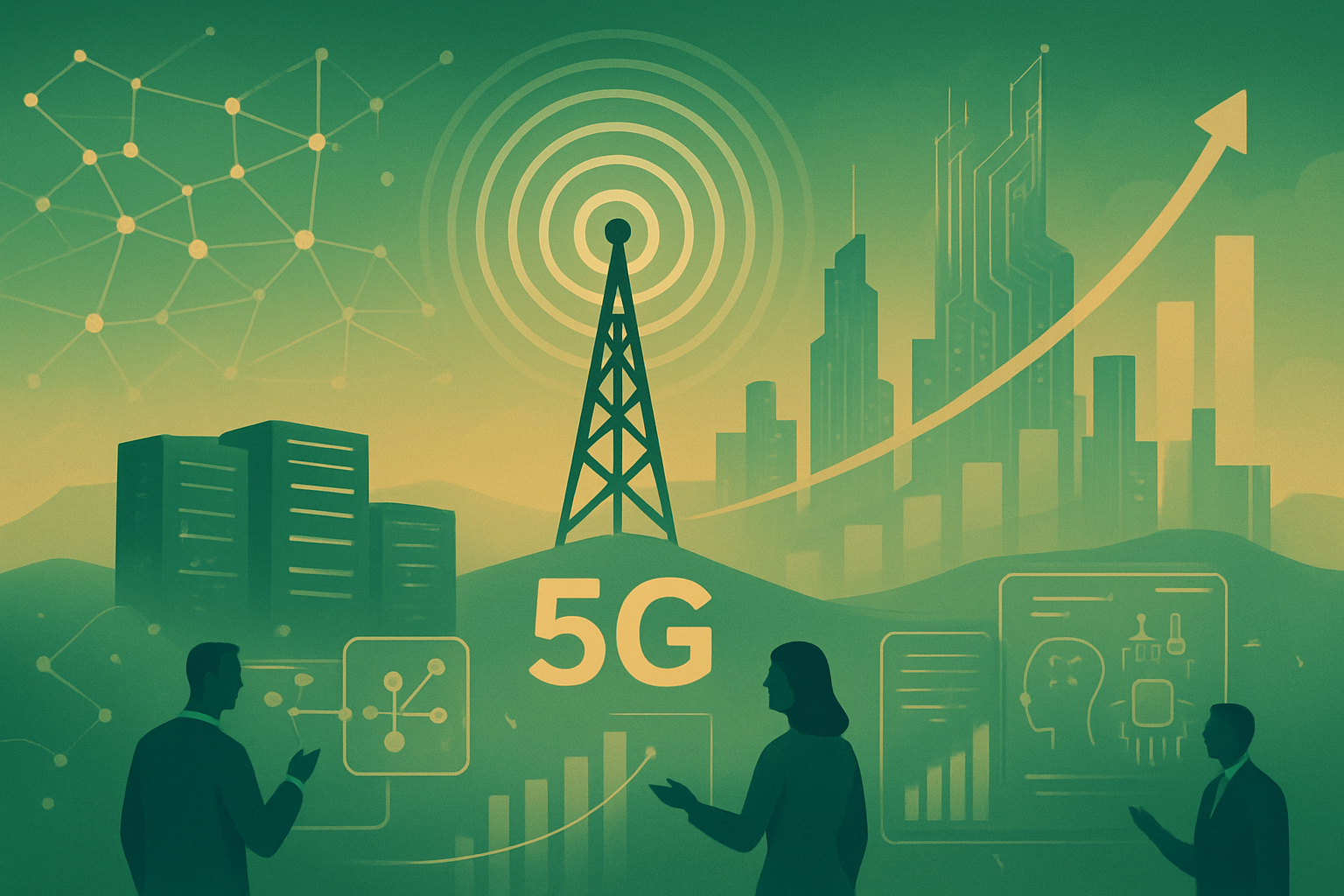
    2. 5G Monetization: After years of infrastructure rollout, telecom companies are finally focusing on monetizing 5G. HCLTech’s acquisition of HPE’s assets positions it perfectly to help CSPs (Communication Service Providers) manage this transition.

    Risks and Challenges

    The "elephant in the room" for HCLTech—and the entire Indian IT sector—is the shifting regulatory landscape in the United States.

    • Tariff Pressures: Proposed reciprocal tariffs of up to 26% on services could squeeze margins if clients are unwilling to absorb the costs.
    • Visa Costs: Drastic increases in H-1B visa fees (potentially up to $100,000 for new petitions) are forcing a rapid shift toward local hiring in the US, which typically comes with higher wage bills.
    • Macro Slowdown: With JP Morgan placing US recession odds at 60% for late 2025/early 2026, discretionary IT spending remains under pressure.

    Opportunities and Catalysts

    Despite the headwinds, the HPE Telco acquisition provides a massive growth lever.

    • Cross-Selling: HCLTech now has direct relationships with 20 of the top 30 global telcos. There is significant potential to cross-sell its AI and Cloud services to this new, elite client base.
    • Margin Expansion: As the HPE IP is integrated into HCLSoftware, the shift from a linear "time and material" model to a non-linear "licensing" model should provide a tailwind for EBIT margins.
    • Verizon Partnership: The $2.1 billion deal with Verizon continues to ramp up, providing a stable revenue floor for the Telecom vertical.

    Investor Sentiment and Analyst Coverage

    Analyst sentiment is currently "cautiously optimistic." While technical indicators suggest a bearish trend due to the recent stock price pullback, fundamental analysts highlight HCLTech’s resilience.

    • Wall Street/Dalal Street: The consensus rating remains a "Moderate Buy." Analysts at firms like Goldman Sachs and ICICI Securities point to the company’s zero-net-debt status and attractive valuation (trading at roughly 22x forward earnings) as a margin of safety.
    • Institutional Investors: Hedge fund activity has seen some consolidation, though long-only mutual funds continue to favor HCLTech for its dividend yield and "defensive" characteristics in a volatile market.

    Regulatory, Policy, and Geopolitical Factors

    The geopolitical environment in late 2025 is characterized by "protectionist pragmatism." The US administration’s focus on domestic manufacturing and "Buy American" policies has forced HCLTech to increase its US-based delivery centers (e.g., in Texas and North Carolina).

    Conversely, the "India-Middle East-Europe Economic Corridor" (IMEC) presents long-term opportunities for infrastructure and telco engineering services, where HCLTech’s new HPE-acquired capabilities will be highly relevant for digital sovereignty projects in Europe and the Middle East.

    Conclusion

    HCL Technologies stands at a crossroads on December 19, 2025. The acquisition of HPE’s Telco Solutions business is a bold, $160 million bet that the future of technology lies in the intersection of AI, 5G, and autonomous engineering. While the stock has faced short-term pressure from US policy uncertainty, the underlying business fundamentals—strong margins, zero debt, and a leadership position in ERS—suggest a company built for the long haul.

    For investors, the key will be monitoring the integration of the 1,500 new HPE specialists and the company’s ability to navigate the rising costs of US operations. If HCLTech can successfully transform these telco assets into a high-margin recurring revenue stream, it may well emerge as the most resilient player in the "Big Three" of Indian IT.


    This content is intended for informational purposes only and is not financial advice.