
Tag: Geopolitics

  • The “Greenland Gambit”: Prediction Markets Signal Growing Odds of U.S. Territorial Expansion

    The “Greenland Gambit”: Prediction Markets Signal Growing Odds of U.S. Territorial Expansion

    January 26, 2026 — What once seemed like a fringe diplomatic curiosity or a social media provocation has transformed into a high-stakes geopolitical reality. Prediction markets are currently pricing in a significant probability that the United States will secure a formal stake in Greenland before the end of the decade. On Polymarket, a leading decentralized prediction platform, the contract for the U.S. acquisition of Greenland by the end of 2026 has surged to a 28% chance, while the odds of President Donald Trump successfully acquiring the territory before 2027 currently sit at 13%.

    These figures represent a dramatic shift from late 2025, when such outcomes were viewed as near-zero probabilities. The movement has been fueled by a flurry of mid-January diplomatic maneuvers, including aggressive tariff threats against Denmark and a strategic proposal for a "Sovereign Base" model—a legal framework that could grant the U.S. direct jurisdiction over mineral-rich regions without requiring a total sovereign transfer of the entire island.

    The Market: What's Being Predicted

    The primary theater for this speculation is Polymarket, where tens of millions of dollars in volume have poured into "Greenland contracts." The most active market, "Will the US acquire Greenland by 2026?", has seen its probability rise to 28% following reports of a potential "Grand Bargain" being discussed at the recent World Economic Forum. Traders define "acquisition" as any official announcement of a treaty or executive agreement that transfers primary jurisdiction or sovereignty of a majority of the territory to the United States.

    Another key contract, "Will Trump acquire Greenland before 2027?", currently trades at 13%. While lower than the general 2026 acquisition odds, this reflects the market's skepticism toward a full sovereign buyout compared to the 24% probability assigned to a "partial acquisition." On the regulated exchange Kalshi, longer-dated contracts are even more bullish; the market for U.S. control of any part of Greenland before 2029 is currently trading at a staggering 42%.

    Liquidity in these markets has reached record highs for a geopolitical event, with over $25 million traded on the 2027 acquisition contract alone. Resolution criteria are strict: an official government announcement or signed legislation is required, explicitly excluding social media posts as sole evidence of success.

    Why Traders Are Betting

    The surge in "Yes" bets is driven by a combination of resource security and national defense strategy. Greenland holds approximately 1.5 million tons of rare earth elements (REEs), ranking it 8th globally. As the U.S. seeks to decouple its high-tech supply chain from China, Greenlandic minerals have become a matter of national security. Companies like MP Materials (NYSE: MP) have seen their stock prices fluctuate in tandem with these prediction markets, as investors bet that a U.S.-controlled Greenland would provide a massive new frontier for domestic mining firms.

    Furthermore, the proposed "Golden Dome" missile defense system—a $1.5 trillion initiative aimed at protecting North America from trans-polar ballistic threats—requires permanent infrastructure in the Arctic. Military analysts suggest that the current 1951 defense agreement with Denmark is no longer sufficient for the scale of construction required. This has led many "whales" in the prediction markets to bet that the U.S. will pivot toward a "Sovereign Base Area" model, similar to British territories in Cyprus, to secure these sites.

    Recent news has also acted as a catalyst. In mid-January 2026, Secretary of State Marco Rubio met with Danish officials to discuss "Arctic security frameworks," which many traders interpreted as the opening salvo of a formal acquisition negotiation. These meetings were accompanied by threats of 10% to 25% tariffs on Danish exports if "strategic dialogue" regarding the island did not progress.

    Broader Context and Implications

    The Greenland markets highlight a growing trend in the prediction space: the "Meme-to-Policy Pipeline." What begins as a provocative statement from the administration often becomes a priced-in market reality as traders analyze the underlying strategic necessity. This market mirrors previous high-volatility events, such as the 2024 election and subsequent cabinet appointments, where prediction markets often moved faster than traditional polling or beltway analysis.

    However, the "Greenland Gambit" remains a divisive topic among analysts. Some view the surging odds as a "weapon of mass distraction"—a calculated move by the administration to shift media focus away from domestic controversies. Skeptics point to the 85% opposition among the local Greenlandic population and the "not for sale" stance maintained by the Danish Parliament.

    For industrial giants like Lockheed Martin (NYSE: LMT) and Rio Tinto (NYSE: RIO), the implications are profound. A U.S. acquisition would likely trigger a massive infrastructure boom in the Arctic, involving everything from deep-water ports to advanced radar arrays. Conversely, failure to secure a deal could lead to a fracture within NATO, potentially weakening the alliance's eastern flank at a time of heightened tension with Russia.

    What to Watch Next

    The next major volatility event for these markets is the NATO Ministerial Meeting in February 2026. Traders are watching for any joint statements regarding "territorial administration" or "Arctic security zones" that might signal a compromise between Washington and Copenhagen.

    Additionally, the summer 2026 drilling season will be critical. 80 Mile PLC (LSE: 80M), formerly Bluejay Mining, is scheduled to begin a massive exploration program at the Disko-Nuussuaq project. Any significant discovery of nickel or copper, coupled with further U.S. government financing—similar to the $120 million Letter of Interest previously issued to the Tanbreez project—could send "Yes" odds toward the 50% mark.

    Lastly, the market will react sharply to any change in the Greenlandic government’s internal policy regarding uranium mining. If the current ban is modified to allow for byproduct extraction, it would remove a major hurdle for the Kvanefjeld project, making the territory far more attractive for a U.S. buyout.

    Bottom Line

    The Greenland prediction markets are no longer a joke; they are a sophisticated real-time valuation of U.S. grand strategy in the 21st century. With a 28% chance of success by 2026, traders are signaling that the Arctic is the next major frontier for American territorial and economic expansion.

    Whether this is a genuine policy shift or a masterclass in diplomatic distraction, the movement in these markets has already succeeded in re-pricing global Arctic risk. For the first time in decades, the map of the North Atlantic is being treated not as a static entity, but as a live negotiation. As we move deeper into 2026, the convergence of mineral scarcity and missile defense may just turn a 13% longshot into a geopolitical reality.


    This article is for informational purposes only and does not constitute financial or betting advice. Prediction market participation may be subject to legal restrictions in your jurisdiction.

    PredictStreet focuses on covering the latest developments in prediction markets. Visit the PredictStreet website at https://www.predictstreet.ai/.
  • The Oracle of War: Shin Bet Probes Polymarket as ‘Rundeep’ Bets on Near-Term Iran Strike

    The Oracle of War: Shin Bet Probes Polymarket as ‘Rundeep’ Bets on Near-Term Iran Strike

    The intersection of high-stakes military intelligence and decentralized finance has reached a boiling point this week as Israeli security services launch an unprecedented investigation into a single prediction market account. The focus is on the user known as Rundeep (formerly RicoSauve666), whose uncanny ability to "predict" Israeli military operations has earned them over $150,000 in profits and the intense scrutiny of the Shin Bet.

    As of January 26, 2026, the global eyes of the trading community are fixed on a specific market: "Israel strikes Iran by January 31, 2026?" What began as a low-probability long shot earlier this month has surged in value, driven largely by the massive positions taken by Rundeep. With only five days remaining until the deadline, the odds have fluctuated wildly between 38% and 50%, reflecting a market that is no longer just speculating on geopolitics, but following what many believe to be a direct leak from within the Israeli defense establishment.

    The Market: What's Being Predicted

    The current focus of the controversy is a high-volume contract on the decentralized platform Polymarket. The market asks a binary question: will Israel conduct a kinetic strike against Iranian territory before the clock strikes midnight on January 31? While diplomatic channels remain officially quiet, the liquidity in this specific market has ballooned to over $12 million, making it one of the most active geopolitical contracts of the year.

    The odds for this event were languishing at a mere 16% in the first week of January. However, the momentum shifted dramatically when the Rundeep account resurfaced from a seven-month hiatus. After placing an initial wager of approximately $15,517 on the "Yes" outcome, the market saw a "follow-trade" effect. Retail traders and institutional "whales" alike have begun mirroring the account's moves, assuming that the user has access to classified military timelines. The resolution criteria are strict: an officially acknowledged strike or undeniable satellite confirmation of an attack on Iranian soil.

    Why Traders Are Betting

    The obsession with Rundeep stems from a track record that many analysts call "statistically impossible" without insider knowledge. The account first gained notoriety during Operation Rising Lion in June 2025. During that 12-day conflict (June 13–24), the user—then trading as RicoSauve666—placed four high-conviction bets just 48 hours before the first missiles were launched. At the time, the market gave a strike only a 14% chance of occurring.

    The user’s precision was surgical, betting on the exact dates of the initial aerial assault on Iranian nuclear facilities in Natanz and Isfahan. By the time the operation concluded, the account had cleared over $154,219 in profit. The Shin Bet and the Israel Defense Forces (IDF) have reportedly been "looking into" the account for months, but the recent activity has accelerated the probe. Authorities are reportedly weighing the risk of a formal criminal investigation against the possibility that such a move would confirm to the world that the account’s bets are indeed based on top-secret military clocks.

    Traders are not just betting on war; they are betting on the integrity of the source. The phenomenon has turned Polymarket into a "shadow intelligence agency," where the movement of a single digital wallet carries more weight for some than official statements from the Pentagon or the Knesset.

    Broader Context and Implications

    The Rundeep saga is part of a growing trend of "geopolitical insider trading" that is forcing a reckoning for prediction market platforms. Earlier this month, a different anonymous account profited over $400,000 on the surprise capture of Venezuelan leader Nicolás Maduro, placing bets just hours before U.S.-led forces moved in. This has caught the attention of regulators in Washington.

    U.S. Representative Ritchie Torres (D-NY) has already introduced the Public Integrity in Financial Prediction Markets Act of 2026. The bill aims to prohibit federal officials and political appointees from trading on these platforms and would classify the use of material non-public information in prediction markets as a federal crime. While proponents of these markets, including Coinbase Global, Inc. (NASDAQ: COIN) CEO Brian Armstrong, have previously argued that such "insiders" help create a more accurate "truth oracle," national security experts are concerned that these platforms provide a financial incentive for leaking state secrets.

    The historical accuracy of these markets has often outperformed traditional intelligence analysis, but at a cost. If military commanders can see their own surprise attacks being priced in real-time by anonymous bettors, the strategic element of surprise is fundamentally compromised.

    What to Watch Next

    The next 120 hours are critical. If the "Israel strikes Iran" market resolves as "Yes" by January 31, it will virtually confirm that Rundeep has a direct line to the IDF's tactical plans. This could lead to a massive crackdown on the platform or a "purge" of suspected leakers within the Israeli security establishment.

    Conversely, if the deadline passes without a strike, the "Oracle" will be debunked, likely causing a massive liquidity exit from geopolitical markets as traders lose faith in the "insider" narrative. Watch for any sudden shifts in the odds during the overnight hours in Tel Aviv; in previous operations, Rundeep's most aggressive betting occurred precisely six to eight hours before kinetic action.

    Bottom Line

    The Rundeep investigation highlights the double-edged sword of prediction markets. While they offer unparalleled foresight into global events by aggregating hidden information, they also create a "marketplace for secrets" that can destabilize international relations. As of now, the market is pricing in a coin-flip chance of a major conflict in the Middle East within the week.

    For the Shin Bet, the goal is no longer just about catching a leaker; it is about managing the narrative in a world where the blockchain may know the date of the next war before the generals do. Whether Rundeep is a high-ranking official or an incredibly lucky analyst, the $150,000 in profits has already changed the way the world watches the drums of war.


    This article is for informational purposes only and does not constitute financial or betting advice. Prediction market participation may be subject to legal restrictions in your jurisdiction.

    PredictStreet focuses on covering the latest developments in prediction markets.
    Visit the PredictStreet website at https://www.predictstreet.ai/.
  • Betting on a Revolution? Khamenei’s Exit Odds Hit 21% Amid Tehran Turmoil

    Betting on a Revolution? Khamenei’s Exit Odds Hit 21% Amid Tehran Turmoil

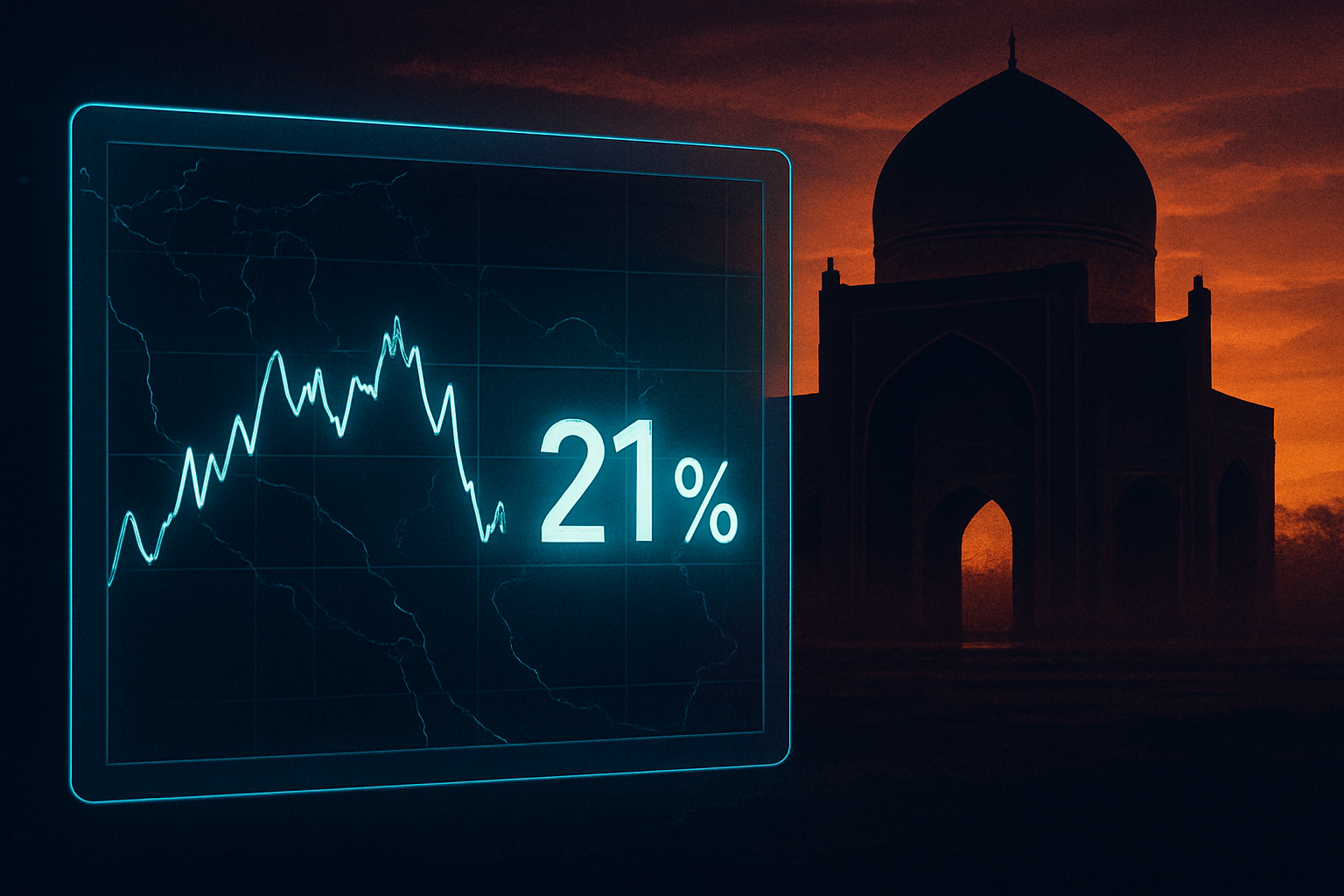
    As of January 24, 2026, the geopolitical landscape of the Middle East is being distilled into a single, high-stakes number on the world’s leading prediction markets. Traders on Polymarket are currently pricing in a 21% probability that Ali Khamenei will be out as the Supreme Leader of Iran by February 28, 2026. This surge in betting activity comes as Tehran faces its most existential crisis since the 1979 Revolution, driven by a combination of internal domestic uprising and intensifying external military pressure.

    The market has captured the attention of both retail speculators and institutional analysts, with trading volume recently surpassing the $1.25 million mark. In a region where official state media often masks the truth, many are looking to these decentralized platforms as a more accurate barometer of the regime's stability. The 21% chance reflects a significant uptick in volatility; just weeks ago, the odds of a transition before March were in the low single digits.

    The Market: What's Being Predicted

    The primary contract driving this conversation is Polymarket’s "Khamenei out as Supreme Leader by February 28?" This binary market allows participants to buy "Yes" or "No" shares, with the price of a "Yes" share representing the market-implied probability of the event. The resolution criteria are explicit: the market will resolve to "Yes" if Ali Khamenei ceases to be the Supreme Leader for any reason—including death, resignation, or removal—at any point before the February 28 deadline.

    Liquidity in the market has been robust, sustained by over $1 million in total volume. This depth allows for large "whale" positions to enter without immediately destabilizing the price, suggesting that the 21% figure is a settled consensus rather than a fluke of low-volume trading. While Polymarket is the epicenter of this activity, similar shadow markets and private forecasting circles have seen comparable spikes in "regime change" sentiment.

    The contract’s expiration date is particularly noteworthy. February 28 marks the end of a critical winter window where Iranian infrastructure is traditionally strained and geopolitical tensions often peak around the anniversary of the 1979 Revolution. If Khamenei remains in power through 11:59 PM ET on that date, the market resolves to "No," rewarding the current 79% majority of skeptics.

    Why Traders Are Betting

    The sudden interest in this market is driven by a convergence of "Black Swan" events. Chief among them are credible reports concerning the 86-year-old leader’s health. Intelligence suggests Khamenei has been suffering from "advanced cognitive impairment" and has experienced several "coma-like episodes" over the last quarter. As of late January, reports indicate he has moved into a fortified bunker in Tehran, with his son, Masoud Khamenei, reportedly managing the day-to-day operations of the Office of the Supreme Leader.

    Furthermore, Iran is currently in the grip of the "Economic Uprising" that began on December 28, 2025. Sparked by a total collapse of the Iranian rial, protests have spread to over 180 cities. Unlike previous movements, this unrest has seen a brutal state response, with human rights groups estimating deaths in the thousands. The use of live ammunition by security forces has only galvanized the protesters, many of whom are calling for the return of Prince Reza Pahlavi to lead a transitional government.

    Traders are also closely monitoring the movement of U.S. military assets. A massive carrier strike group, led by the USS Abraham Lincoln, is currently positioned in the Persian Gulf. The Trump administration has issued stern "red lines" regarding the execution of protesters, and the market is pricing in the possibility that a U.S. or Israeli kinetic action could serve as the final catalyst for a leadership collapse. Defense contractors like Lockheed Martin (NYSE: LMT) and Raytheon (NYSE: RTX) are seeing increased scrutiny from investors as the likelihood of a major regional escalation climbs.

    Broader Context and Implications

    The existence of a million-dollar market on the life or death of a world leader highlights the evolving role of prediction markets in international relations. While critics argue that these markets can be macabre or even incentivize "assassination markets," proponents argue they provide an invaluable "wisdom of the crowds" that traditional intelligence often misses. For companies with significant exposure to global energy markets or shipping, such as ExxonMobil (NYSE: XOM) or Maersk, these odds act as a real-time risk hedge.

    Historically, prediction markets have been remarkably prescient at identifying the "breaking point" of autocratic regimes before they are officially acknowledged. The 21% probability is not just a bet on a person’s health; it is a bet on the failure of a 47-year-old political system under extreme duress. If the market continues to climb toward 50%, it could trigger a "reflexive" effect, where the belief in the regime's fall becomes a self-fulfilling prophecy, discouraging security forces from defending a leader they believe is already gone.

    Moreover, the regulatory environment for such markets remains complex. While platforms like Kalshi operate under CFTC oversight in the U.S., Polymarket’s decentralized nature allows global participants—including those inside Iran using VPNs—to cast their "vote" with their capital. This provides a rare, unfiltered look at Iranian sentiment that social media platforms like those owned by Meta Platforms (NASDAQ: META) struggle to provide due to government-imposed internet blackouts.

    What to Watch Next

    As we move toward the February 28 resolution date, several key milestones will likely move the needle. The most significant is the February 11 anniversary of the Islamic Revolution. Traditionally a day of state-sponsored rallies, this year it is expected to be a flashpoint for the opposition. If the regime fails to mobilize its base or if the security forces show signs of defection during the anniversary, the "Yes" odds could easily double overnight.

    The status of the nationwide internet blackout, which began on January 8, is another critical variable. If the blackout is lifted and footage of the scale of the uprising reaches the international community, the pressure on the U.S. and its allies to intervene will increase. Conversely, a sudden televised appearance by Khamenei—if he is cognitively and physically able—would likely cause the "Yes" shares to crater as the market recalibrates for a longer survival timeline.

    Finally, traders are keeping a close eye on the U.S. Treasury's new 25% tariff on countries continuing to trade with Iran. If China (NYSE: BABA) or India-based firms begin to pull back from Iranian oil contracts in response to these tariffs, the resulting economic "asphyxiation" could trigger a palace coup before the month is out.

    Bottom Line

    The 21% probability on Polymarket is a stark reminder that the status quo in Iran is more fragile than it has been in decades. While a one-in-five chance is far from a certainty, the $1.25 million in volume suggests this is more than mere speculation; it is an aggregation of geopolitical anxiety and whispered intelligence.

    Prediction markets are proving to be a ruthless but efficient tool for cutting through state propaganda. Whether Khamenei remains in power on March 1 or not, the "Khamenei Exit" market has already succeeded in quantifying the unquantifiable. It tells us that the "invincibility" of the Islamic Republic is currently being questioned by the most honest metric we have: the willingness of people to put their money where their mouth is.

    In the coming weeks, the movements of the USS Abraham Lincoln and the resilience of the protesters in the streets of Tehran will dictate whether that 21% was a high-water mark or merely the beginning of the end.


    This article is for informational purposes only and does not constitute financial or betting advice. Prediction market participation may be subject to legal restrictions in your jurisdiction.

    PredictStreet focuses on covering the latest developments in prediction markets.
    Visit the PredictStreet website at https://www.predictstreet.ai/.

  • Arctic Real Estate: Greenland Acquisition Odds Surge as Trump Pivots to NATO ‘Framework’

    Arctic Real Estate: Greenland Acquisition Odds Surge as Trump Pivots to NATO ‘Framework’

    As of January 24, 2026, the geopolitical landscape has been rocked by a sudden and intense focus on the world's largest island. What was once dismissed as a peripheral diplomatic curiosity has transformed into one of the most liquid and debated markets in the prediction space. Traders are currently grappling with the nuances of "ownership" versus "control," as President Donald Trump’s administration signals a strategic pivot that has recalibrated expectations across major forecasting platforms.

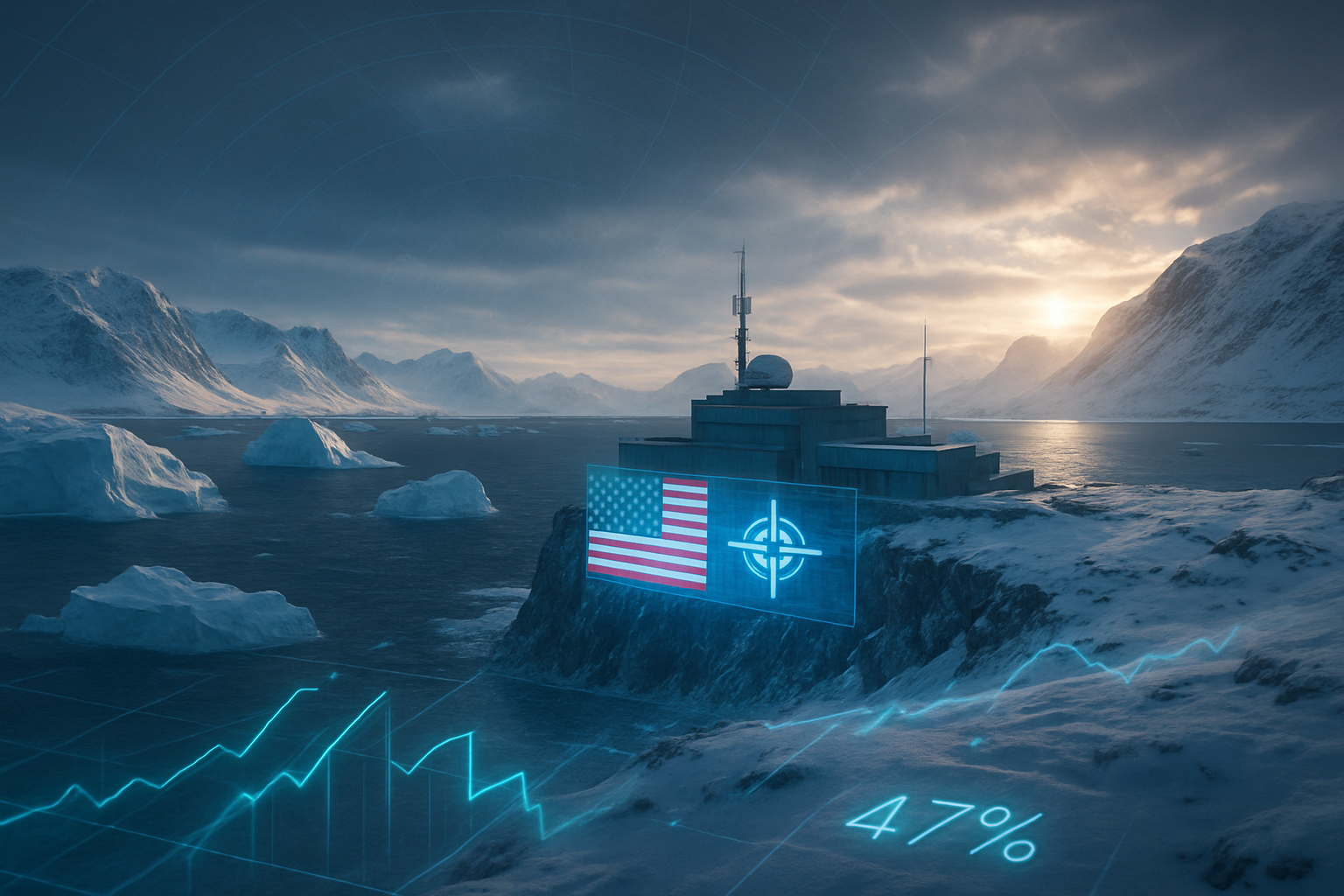
    On Polymarket, the flagship contract tracking whether the U.S. will acquire Greenland has seen its volume skyrocket to a massive $25 million. Meanwhile, on the regulated exchange Kalshi, a broader contract predicting whether the U.S. will take control of any part of Greenland before 2029 is currently pricing in a 47% probability. This surge in interest follows a pivotal week of diplomacy at the World Economic Forum in Davos, where a shift in rhetoric has fundamentally changed how the market views the "Greenland question."

    The Market: What's Being Predicted

    The prediction markets regarding Greenland are currently bifurcated into two distinct categories: outright sovereignty and strategic jurisdictional control. On Polymarket, a crypto-native platform, the primary focus is on the total acquisition of the island before the end of 2026 or 2027. Despite the high volume, the odds for a full "purchase" remain relatively conservative, hovering between 13% and 20%. This reflects the significant legal and international hurdles required for a total transfer of sovereignty from the Kingdom of Denmark.

    In contrast, Kalshi, which operates under the oversight of the Commodity Futures Trading Commission (CFTC), offers a contract with a wider lens. Their market—"Will the U.S. take control of any part of Greenland before 2029?"—is trading at a much higher 47% chance. The discrepancy lies in the resolution criteria. While Polymarket traders are betting on a formal deed or annexation, Kalshi traders are betting on "formal jurisdiction" or "governance" over specific "pockets" of the island. This distinction has made the Kalshi contract a preferred vehicle for those betting on a hybrid "leasing" or "basing" model.

    The liquidity in these markets is unprecedented for a geopolitical event of this nature. Polymarket’s $25 million volume demonstrates the global interest and the "whale" activity often seen in decentralized finance. On the other hand, Kalshi’s $3.8 million in total Greenland-related contracts shows a growing participation from institutional and retail traders who prefer a regulated environment to express their views on American foreign policy.

    Why Traders Are Betting

    The primary driver of the recent market movement was a bombshell announcement on January 21, 2026. During the Davos summit, President Trump revealed he had reached a "framework of a future deal" with NATO Secretary-General Mark Rutte. This announcement marked a significant de-escalation from earlier in the month when the administration had floated the possibility of 25% tariffs against European allies to force a sale.

    Traders responded immediately to this "NATO Framework." By ruling out military force and dropping tariff threats, the administration shifted the goalposts toward a "Sovereign Base" model, similar to the UK’s Sovereign Base Areas in Cyprus. This model would allow the U.S. to exert permanent sovereign control over specific strategic zones—particularly those housing the proposed "Golden Dome" missile defense system—without requiring Denmark to surrender the entire island.

    Major defense contractors like RTX Corporation (NYSE: RTX) and Lockheed Martin Corporation (NYSE: LMT) are central to this narrative. The "Golden Dome" project, a cornerstone of the Trump administration's defense policy, would require significant infrastructure in the Arctic. Traders are betting that the promise of increased NATO-wide security and shared mineral rights will be enough to sway the Danish government toward a compromise.

    Broader Context and Implications

    The Greenland market is more than just a bet on real estate; it is a proxy for the shifting dynamics of the 21st-century "Great Power Competition." The Arctic has become a frontline for energy security and rare earth mineral extraction. MP Materials Corp. (NYSE: MP) and other mineral producers have seen their prospects tied to these geopolitical maneuvers, as Greenland holds some of the world's largest untapped deposits of neodymium and praseodymium.

    This market also highlights the growing utility of prediction platforms as a sentiment gauge. While traditional polls or punditry might dismiss a "Greenland deal" as impossible, the $25 million in "skin in the game" on Polymarket suggests that a significant portion of the global community views some form of U.S. jurisdictional expansion as a realistic possibility.

    Historically, prediction markets have been more accurate than pundits in forecasting complex international negotiations. By aggregating the collective intelligence of thousands of participants, these markets are pricing in a "middle path" outcome: the U.S. will likely not "buy" Greenland in a traditional real estate transaction, but it may very well obtain "de facto" sovereignty over the island's most critical assets.

    What to Watch Next

    The immediate focus for traders will be the upcoming NATO ministerial meetings in February 2026. This is where the technical details of the "Sovereign Base" framework are expected to be hashed out. Any signal from the Danish government or the Greenlandic Self-Rule Government that they are open to "jurisdictional leases" would likely send the Kalshi odds well above the 50% mark.

    Key milestones to monitor include:

    • The "Golden Dome" Budget Allocation: If Congress fast-tracks funding for Arctic missile defense, it will signal that the "control" model is the administration's primary objective.
    • Danish Parliamentary Statements: Watch for any shift in the "Not for Sale" rhetoric toward "Strategic Cooperation Agreements."
    • Rare Earth Mining Licenses: Any U.S.-led consortia receiving licenses to mine in southern Greenland would serve as a "soft" indicator of increasing American influence.

    Bottom Line

    The prediction markets for Greenland have evolved from a fringe curiosity into a sophisticated barometer for a new era of American diplomacy. The shift from "outright purchase" to a "NATO security framework" has allowed the market to find a more realistic equilibrium, reflected in the 47% probability of the U.S. taking control of strategic portions of the island by 2029.

    For observers of prediction markets, the Greenland saga is a masterclass in how market resolution criteria can dictate price discovery. While the "ownership" dream of 2019 has faded, the "strategic control" reality of 2026 is gaining steam. Whether this results in a formal lease or a new type of sovereign partnership, the $25 million already wagered shows that the market is convinced the Arctic map is about to be redrawn.


    This article is for informational purposes only and does not constitute financial or betting advice. Prediction market participation may be subject to legal restrictions in your jurisdiction.

    PredictStreet focuses on covering the latest developments in prediction markets.
    Visit the PredictStreet website at https://www.predictstreet.ai/.
  • $89 Million Wagered on US Strike on Iran as January Deadline Approaches

    $89 Million Wagered on US Strike on Iran as January Deadline Approaches

    As January 2026 enters its final week, the digital landscape of prediction markets is flashing a warning sign that global intelligence communities and defense analysts are watching closely. On Polymarket, a decentralized prediction platform, the collective "wisdom of the crowd" is currently pricing in a significant possibility of a direct United States military strike on Iranian targets before the month concludes.

    With a staggering $89 million in total volume now flowing through Iran-related conflict contracts, the markets are currently reflecting a volatile probability range between 10% and 26% for a strike to occur by January 31. This surge in betting activity comes amidst the "January Uprising" in Iran and a massive naval redeployment by the Trump administration, turning what was once a geopolitical tail-risk into the most liquid and debated market of the year.

    The Market: What’s Being Predicted

    The primary theater for this financial forecasting is Polymarket, though similar contracts have seen increased liquidity on other platforms. The specific market in question—“US Strike on Iran by Jan 31, 2026”—has become a focal point for traders, with resolution criteria strictly defined as any kinetic military action (missile strikes, drone attacks, or manned aircraft sorties) officially acknowledged by the Pentagon or the White House as directed against Iranian territory or military assets.

    Current odds have been highly sensitive to real-time events. After a mid-month spike that saw probabilities climb as high as 37% following reports of mass casualties in Tehran protests, the odds have settled into a "wait-and-see" range of 10% to 26% as of January 24. This pricing suggests that while traders view a strike as a tail-risk, they believe the window for immediate action is rapidly narrowing. The liquidity in these markets is unprecedented for a geopolitical event; the $89 million volume represents a massive shift toward "conflict betting" as a form of alternative data for hedge funds and political analysts alike.

    Why Traders Are Betting

    The primary driver behind the sudden influx of capital into these contracts is the deteriorating internal situation within Iran. Since late December 2025, the nation has been gripped by the "January Uprising," a series of nationwide protests triggered by economic collapse and harsh internet blackouts. Reports from human rights agencies suggest a death toll exceeding 5,000 people as of January 23, 2026. The White House's pivot from negotiation to "maximum pressure" has provided the fundamental catalyst for the market's movement.

    Traders are also tracking physical military movements. The USS Abraham Lincoln Carrier Strike Group is currently transiting the Indian Ocean, expected to reach the Arabian Sea by the end of the month. Furthermore, the defense sector has signaled a shift toward readiness. Companies like Northrop Grumman (NYSE: NOC) and Lockheed Martin (NYSE: LMT) are trading near record highs, buoyed by the administration’s proposed $1.5 trillion defense budget for FY2026.

    Notably, some market volatility has been attributed to potential "insider" activity. On January 8, several newly created wallets placed synchronized bets on a strike when odds were below 18%. This follows a pattern seen earlier this month during U.S. operations in Venezuela, leading many to believe that traders with access to logistical or diplomatic intelligence are using these markets to hedge or profit from upcoming escalations.

    Broader Context and Implications

    The sheer volume of the Iran markets underscores a transformative trend: prediction markets are increasingly being treated as a more accurate, or at least more responsive, indicator than traditional diplomatic cables or cable news punditry. In an era where "black box" intelligence is often delayed or politicized, the real-time financial commitment of thousands of traders provides a raw sentiment analysis that is difficult to ignore.

    This market also reveals a grim public sentiment regarding regional stability. While defense stocks like RTX (NYSE: RTX) have seen a 7% year-to-date increase due to a record $251 billion backlog in missile defense systems, the prediction markets suggest that the public views defense as more than just a deterrent. The heavy betting on a kinetic strike indicates a belief that the "red lines" of 2024 and 2025 are being redrawn in early 2026.

    Historically, markets of this nature have a mixed record. While they successfully predicted the timing of recent tactical shifts in South America, they often over-index on "noise" from high-profile political rhetoric. However, the regulatory gaze is intensifying. The massive payouts—such as a $400,000 win for a single trader earlier this month—have prompted calls for Congressional oversight, specifically regarding the ethics of profiting from kinetic warfare.

    What to Watch Next

    As we approach the January 31 deadline, several key milestones could send the odds toward the 50% mark or crashing toward zero. The most critical factor is the positioning of the USS Abraham Lincoln. Should the carrier strike group begin launch-cycle preparations or be joined by additional assets from the Mediterranean, the market is likely to see a massive spike in "Yes" shares.

    Furthermore, the diplomatic rhetoric from regional players is a key indicator. Iran has warned that any strike launched from neighboring territories like Qatar or the UAE would result in immediate retaliation. Traders should watch for any movement of U.S. personnel from regional airbases, similar to the recent withdrawal from Ain al-Asad Airbase in Iraq, which some analysts interpreted as a move to clear the deck for offshore naval operations.

    Bottom Line

    The $89 million currently sitting in the US-Iran prediction market is more than just a series of bets; it is a high-stakes aggregation of global anxiety and intelligence. As of January 24, the 10% to 26% odds reflect a world that is bracing for a "spark" but hasn't yet seen the flame. Whether these markets are providing a true signal of impending conflict or merely reflecting the chaotic rhetoric of the new year remains to be seen.

    What is clear, however, is that prediction markets have officially entered the "War Room." As investors and world leaders alike look toward the January 31 deadline, the fluctuating percentages on Polymarket may offer the most honest assessment of where the line between diplomacy and conflict truly lies. For now, the world waits to see if the crowd is right—or if the end of the month will bring a de-escalation that the markets have not yet priced in.


    This article is for informational purposes only and does not constitute financial or betting advice. Prediction market participation may be subject to legal restrictions in your jurisdiction.

    PredictStreet focuses on covering the latest developments in prediction markets. Visit the PredictStreet website at https://www.predictstreet.ai/.

  • The Greenland Gamble: Polymarket Traders Price in a 20% Chance of U.S. Acquisition Amid Trump Tariff Threats

    The Greenland Gamble: Polymarket Traders Price in a 20% Chance of U.S. Acquisition Amid Trump Tariff Threats

    As of January 21, 2026, the world of prediction markets is fixated on an audacious geopolitical wager: the "Greenland Gamble." On the decentralized platform Polymarket, traders are currently pricing in a 20% to 23% probability that the United States will successfully acquire Greenland by the end of 2026. This surge in betting activity follows a series of aggressive diplomatic and economic maneuvers by the second Trump administration, which has effectively tied the island's sovereignty to the future of transatlantic trade.

    The market has become a focal point for political analysts and investors alike, as it represents a real-time sentiment gauge on President Donald Trump’s "transactional" foreign policy. Just this morning, during a keynote address at the World Economic Forum in Davos, Switzerland, the President reiterated his intent to "once again discuss the acquisition of Greenland," framing it as a necessity for American national security and a hedge against Chinese expansion in the Arctic. With over $13.8 million in trading volume, the Greenland market is no longer a fringe curiosity; it is a high-stakes arena where the future of international borders is being traded in real-time.

    The Market: What's Being Predicted

    The primary vehicle for this speculation is the Polymarket contract titled "Will the U.S. acquire Greenland by the end of 2026?" The rules for resolution are stringent. To trigger a "Yes" payout, there must be a formal transfer of sovereignty—such as a signed treaty, ratified legislation by both the U.S. and Denmark, or a clear legal instrument of sale—on or before December 31, 2026. Notably, the market explicitly excludes scenarios where the U.S. merely secures additional military basing rights, long-term leases, or "joint administration" agreements that do not involve a total change in territorial ownership.

    The odds have undergone a dramatic transformation over the last few months. In late 2025, the market hovered in the low single digits, with most participants viewing the proposal as a relic of Trump’s first term. However, the probability spiked following the January 17, 2026, announcement of a tiered tariff system targeting European nations. Liquidity in the market remains robust, with individual "whale" positions reaching hundreds of thousands of dollars, suggesting that some institutional-level traders believe the Danish government’s resolve may have a price.

    Why Traders Are Betting

    The 20% probability is largely driven by what traders call the "Tariff Bazooka." On January 17, President Trump announced via Truth Social that a 10% tariff would be imposed on eight European nations—including Denmark, France, and Germany—beginning February 1, 2026. He warned that these rates would jump to 25% by June if a "Complete and Total purchase" of Greenland was not finalized. For traders, this creates a binary outcome: either Denmark yields to economic pressure, or the U.S. risks a full-scale trade war with the European Union.

    Beyond trade leverage, the strategic importance of Greenland’s mineral wealth is fueling the "Yes" side of the trade. Companies like Critical Metals Corp (Nasdaq: CRML) have seen their stock prices skyrocket—CRML is up 154% since the start of the year—as the U.S. Export-Import (EXIM) Bank signaled interest in a $120 million loan for the Tanbreez rare-earth project. Similarly, Greenland Resources Inc. (TSX: MOLY) has become a proxy for the island's value, as its Malmbjerg Molybdenum Project is central to the manufacture of high-strength defense steel. Traders betting "Yes" believe that the U.S. administration views Greenland not just as land, but as a critical supply chain asset that is "too big to leave to the Danes."

    Broader Context and Implications

    The "Greenland Gamble" highlights a growing trend in prediction markets: their use as a hedge against radical geopolitical shifts. If the U.S. were to actually acquire the territory, it would be the most significant expansion of American borders since the 1867 purchase of Alaska. However, the obstacles remain formidable. Danish Prime Minister Mette Frederiksen has repeatedly called the proposal "absurd," and the European Union has threatened to trigger its "Anti-Coercion Instrument," which would allow for massive retaliatory tariffs on American goods.

    Historically, prediction markets have often been more accurate than traditional pundits because they force participants to "put their money where their mouth is." In this case, the 20% odds suggest that while the "sale" is unlikely, it is no longer impossible. The market reflects a world where traditional norms of sovereignty are being challenged by economic might. It also underscores a shift in how the public views Greenland—no longer as an autonomous territory of Denmark, but as a "real estate deal" in a new era of Great Power competition.

    What to Watch Next

    The immediate milestone for this market is February 1, 2026, the date the first 10% tariffs are scheduled to go into effect. If the Trump administration follows through with the implementation, traders expect the Polymarket odds to climb toward 30% as the economic pressure on Copenhagen intensifies. Conversely, any joint statement from NATO or a successful EU retaliatory package could send the "Yes" shares tumbling.

    Another key factor is the internal politics of Greenland itself. Greenland’s Prime Minister, Jens-Frederik Nielsen, has maintained that the island is "not for sale." However, the U.S. has been increasing its "soft power" presence in the capital, Nuuk, through increased diplomatic staff and promises of massive infrastructure investment. Any shift in the Greenlandic Parliament’s stance toward "independence followed by a U.S. compact" would be a massive catalyst for market movement.

    Bottom Line

    The 20% probability of a Greenland acquisition represents a significant "Trump Premium"—a belief that the former developer's unorthodox and aggressive negotiating tactics can achieve what traditional diplomacy cannot. While the Danish government remains officially opposed, the massive volume on Polymarket suggests that a sizeable portion of the financial world is taking the threat of a trade-for-territory swap seriously.

    Ultimately, the Greenland market serves as a fascinating case study in the power of prediction markets to quantify geopolitical risk. Whether the "Gamble" pays off or resolves to zero, the 20% odds currently reflect a world that is bracing for a fundamental reorganization of the Arctic. For now, the eyes of the world remain on the February 1st tariff deadline, which will likely serve as the first true test of this extraordinary 21st-century land deal.


    This article is for informational purposes only and does not constitute financial or betting advice. Prediction market participation may be subject to legal restrictions in your jurisdiction.

    PredictStreet focuses on covering the latest developments in prediction markets. Visit the PredictStreet website at https://www.predictstreet.ai/.
  • The $32,000 ‘Glint’ Before the Storm: Did a Polymarket Trader Have Advance Knowledge of Maduro’s Capture?

    The $32,000 ‘Glint’ Before the Storm: Did a Polymarket Trader Have Advance Knowledge of Maduro’s Capture?

    The sudden and dramatic capture of Nicolás Maduro by U.S. special operations forces in early January 2026 sent shockwaves through the global political landscape. However, for those watching the prediction markets, the real explosion happened hours before the first Delta Force helicopter crossed the Venezuelan border. A single, anonymous trader placed a high-stakes bet that has now become the center of a firestorm involving allegations of insider trading and calls for a federal crackdown on the industry.

    As the dust settles in Caracas and Maduro awaits trial in New York, the focus has shifted to Polymarket, the decentralized betting platform that correctly—if suspiciously—predicted the regime's collapse. At the heart of the controversy is a $32,000 wager that ballooned into a nearly half-million-dollar payout, occurring just as the final authorization for "Operation Absolute Resolve" was being signed in the Oval Office.

    The Market: What's Being Predicted

    The primary theater for this financial drama was the Polymarket contract titled "Will Maduro remain in power?" Throughout the final months of 2025, as the U.S. tightened a naval blockade on Venezuelan oil exports, the market remained remarkably skeptical of a total regime change. For most of December, the odds of Maduro being ousted by January 31, 2026, hovered between a mere 7% and 10%. Liquidity was high, with the market attracting over $57 million in total volume as speculators weighed the likelihood of continued diplomatic stalemate against the possibility of military action.

    The resolution criteria for the market were explicit: the contract would settle as "Yes" (for removal) if Maduro was physically removed from Venezuelan territory or if he officially resigned and a successor was recognized by the international community. Trading remained relatively stagnant until the evening of January 2, 2026, when a flurry of activity—led by a single account—completely upended the order book.

    In addition to the "power" market, a secondary contract regarding a potential "U.S. invasion" of Venezuela saw over $10.5 million in volume. While the "power" market resolved in favor of those betting on Maduro's downfall, the "invasion" market sparked its own controversy. Despite the presence of U.S. troops, Polymarket ruled the event as "No," citing their criteria that defined an invasion as "establishing territorial control" rather than a "snatch-and-extract" raid. This semantic nuance has led to a "Polyscam" backlash among traders who feel the platform moved the goalposts to avoid a massive payout.

    Why Traders Are Betting

    The sudden shift in odds was driven by a trader using the pseudonym "Burdensome-Mix." This account, created only weeks prior, began a methodical accumulation of "Yes" shares in late December. The defining moment occurred at 9:58 PM ET on January 2—less than an hour before President Donald Trump reportedly signed the final strike authorization. At that time, with the "downfall" probability still sitting at 8%, "Burdensome-Mix" dropped a final $32,537 into the pool.

    When the news of the raid broke at 4:21 AM the following morning, the shares spiked to a full $1.00. The trader walked away with a profit of $436,759.61, a staggering 12-fold return on an event the broader market viewed as highly improbable. Analysts from various crypto-intelligence firms have pointed out that the timing was too precise to be a mere coincidence. "It is statistically an anomaly to see that level of conviction on a low-probability event right before the command is given," noted one lead researcher at Polysights.

    Traditional forecasting methods, including geopolitical risk assessments from major firms, had estimated the likelihood of a direct military extraction as a "tail risk" due to the potential for regional escalation. However, the prediction markets proved once again that they can act as a magnet for "dark information." Whether this trader was a high-level government staffer, a military contractor, or simply an incredibly lucky speculator remains the subject of intense debate.

    Broader Context and Implications

    This incident has reignited the conversation regarding the role of prediction markets in modern governance. Supporters of platforms like Polymarket and Kalshi argue that these markets serve as an invaluable tool for "truth discovery." CEO Shayne Coplan has previously suggested that if someone has inside information, the market provides a way for that truth to be priced in, essentially alerting the public to impending events before they happen.

    However, the "Maduro Trade" has also caught the attention of regulators who see it differently. Following the capture, U.S. Representative Ritchie Torres introduced the "Public Integrity in Financial Prediction Markets Act of 2026." The bill seeks to explicitly bar government officials, their staff, and military personnel from trading on markets where they possess material nonpublic information. The concern is that prediction markets could become a new, harder-to-track avenue for corruption and the monetization of classified secrets.

    The geopolitical ramifications are equally massive. As the U.S. signals its intention to oversee a "safe transition" in Venezuela, global energy markets are already reacting. Companies like Chevron (NYSE: CVX), ExxonMobil (NYSE: XOM), and ConocoPhillips (NYSE: COP) are being watched closely by investors as the potential for the revitalization of Venezuela’s massive oil reserves becomes a reality. The prediction markets correctly signaled the end of the Maduro era, but the resulting regulatory fallout may change how these platforms operate forever.

    What to Watch Next

    The immediate focus for the markets is now on the stability of the transitional government in Caracas. While Vice President Delcy Rodríguez was technically sworn in as acting president, her hold on power is tenuous. Polymarket has already launched new contracts regarding the date of the next Venezuelan general election and the potential for a formal U.S. military occupation to secure oil fields.

    On the regulatory front, a group of 12 U.S. Senators has called on the Commodity Futures Trading Commission (CFTC) to launch a full-scale investigation into the "Burdensome-Mix" trade. If the identity of the trader is linked to the U.S. government or the military, it could lead to the first major "insider trading" prosecution in the history of decentralized prediction markets. This would likely result in mandatory Know Your Customer (KYC) requirements that could alienate a large portion of the current user base.

    Bottom Line

    The capture of Nicolás Maduro will be remembered as a pivotal moment in 21st-century history, but in the world of finance, it will be remembered as the "Maduro Trade." The event highlighted the uncanny ability of prediction markets to sniff out "black swan" events before they occur, often by attracting those with "inside" knowledge who are looking for a payout.

    While the $32,000 bet by "Burdensome-Mix" was a masterstroke of timing, it has also put a target on the back of the entire prediction market industry. As lawmakers move to close the "insider trading" loophole, the platform's reputation for being an unbiased aggregator of truth is being tested. Ultimately, the Maduro controversy proves that when the stakes are high enough, the line between a "prediction" and "privileged information" becomes razor-thin.


    This article is for informational purposes only and does not constitute financial or betting advice. Prediction market participation may be subject to legal restrictions in your jurisdiction.

    PredictStreet focuses on covering the latest developments in prediction markets.
    Visit the PredictStreet website at https://www.predictstreet.ai/.
  • Betting on the Brink: Inside the Explosive Rise of Geopolitical Disaster Markets

    Betting on the Brink: Inside the Explosive Rise of Geopolitical Disaster Markets

    As of January 19, 2026, the global financial landscape is increasingly dominated by a controversial new asset class: geopolitical instability. Following the chaotic start to the year—marked by the capture of Nicolás Maduro in Venezuela on January 3 and a subsequent hypersonic missile test by Pyongyang on January 4—prediction markets have seen an unprecedented surge in activity. These "disaster markets," which allow traders to bet on everything from nuclear tests to regime changes, are no longer just niche corners of the internet; they have become a multi-billion-dollar "parallel intelligence" infrastructure.

    On platforms like Polymarket and Kalshi, the volume of bets regarding North Korean aggression and potential U.S. diplomatic breakthroughs has reached a fever pitch. Currently, the market for a face-to-face summit between Donald Trump and Kim Jong-un in 2026 is trading at a robust 42% probability, while more extreme "invasion" contracts are seeing high-frequency fluctuations as traders attempt to price in the risk of a global kinetic conflict. This shift has transformed prediction markets into a leading indicator of real-world volatility, often moving faster than traditional news cycles.

    The Market: What's Being Predicted

    The focus of the early 2026 trading season has been the Korean Peninsula. On the decentralized platform Polymarket, cumulative volume for 2025 reached nearly $40 billion, with a significant portion dedicated to "North Korean provocation" contracts. Specifically, the market for "North Korea to launch a ballistic missile by January 31, 2026" saw a massive spike in liquidity following the January 4 test. Before the launch was even officially confirmed by the Pentagon, "Yes" contracts reached near-parity, suggesting that traders with localized intelligence or advanced satellite monitoring were front-running the official news.

    On the regulated U.S. exchange Kalshi, the focus is more diplomatic but no less high-stakes. Traders are currently eyeing the "Kim Jong-un to visit the U.S. in 2026" contract. While the odds remain lower at 18%, the volume has increased tenfold since the start of the year. Unlike the "wild west" markets on offshore platforms, Kalshi’s contracts are strictly defined, requiring a physical presence in the 50 U.S. states to resolve.

    In Asia, a new Binance-backed platform named Opinion has gained massive traction, specifically targeting South Korean retail investors. This platform hosts hyper-local markets, such as "DMZ skirmish before March" and "Cyberattack on Seoul infrastructure." Weekly volumes on Opinion have reportedly exceeded 2 trillion won ($1.5 billion), highlighting a regional obsession with hedging against the very real possibility of local disaster.

    Why Traders Are Betting

    The motivations for these bets are shifting from speculative gambling to strategic hedging. Institutional players, once wary of the "death pool" optics, are now the primary drivers of volume. Goldman Sachs (NYSE: GS) recently acknowledged that it tracks a "Basket of Geopolitical Risk Stocks" that directly correlates with the odds seen on these prediction platforms. For a hedge fund manager, a "Yes" bet on a North Korean missile launch acts as a protective hedge against their long positions in South Korean equities or global tech manufacturing.

    "We aren't just looking at what CNN says anymore," noted one anonymous high-volume trader on Polymarket. "We are looking at where the $500,000 'whale' positions are moving at 3:00 AM. When a whale bets $30,000 at 7-cent odds on a regime change and wins, like we saw with the Maduro removal in early January, you realize these markets are being fed by people with boots-on-the-ground information."

    Furthermore, the "Trump Factor" remains a primary catalyst. The market's 42% odds for a Trump-Kim summit reflect a belief in the return of "personal diplomacy" and the President's penchant for grand, televised summits. Traders are betting on the President's unpredictability, using historical patterns from the 2018-2019 period to gauge the likelihood of a sudden de-escalation that would see Kim Jong-un on U.S. soil.

    Broader Context and Implications

    The rise of these markets has ignited a firestorm of ethical debate. Critics argue that allowing individuals to profit from war and suffering is inherently "ghoulish." In response, Representative Ritchie Torres introduced the Public Integrity in Financial Prediction Markets Act of 2026 earlier this month. The bill aims to prevent federal officials from trading on outcomes they might influence, treating prediction markets with the same scrutiny as the equities market to prevent "government insider trading."

    The ethical concern extends to moral hazard: could a high-stakes bet on an assassination or a terrorist attack actually incentivize the event? While no such link has been proven, the sheer amount of money—over $10 billion in monthly volume in late 2025—makes the possibility a central concern for regulators at the CFTC.

    Despite the controversy, the accuracy of these markets is difficult to ignore. Throughout 2025, prediction markets consistently outperformed traditional think tanks and intelligence agencies in forecasting regional skirmishes. The correlation between these markets and the stock prices of major defense contractors is now nearly 1:1. For instance, Hanwha Aerospace (KRX: 000880) and LIG Nex1 (KRX: 079550) saw their stock prices surge by 25.4% and 15.2% respectively in the first week of 2026, perfectly mirroring the rising "conflict odds" on Polymarket. Similar movements were seen in U.S. giants like Lockheed Martin (NYSE: LMT) and Northrop Grumman (NYSE: NOC).

    What to Watch Next

    The coming weeks will be a critical litmus test for these disaster markets. All eyes are on the upcoming vote for the 2026 U.S. defense budget, which President Trump has proposed at a record $1.5 trillion. If the budget passes with its current focus on "Pacific Deterrence," expect the odds for a diplomatic summit to drop while "Missile Launch" and "Satellite Deployment" contracts see increased action.

    Key dates to monitor include the late-February anniversary of the founding of the Korean People’s Army. Traditionally a time for military parades, traders are already positioning themselves for a "spectacular" missile demonstration. Additionally, any movement in the stock of Korea Aerospace Industries (KRX: 047810) will be closely watched; the company’s stock has recently moved in tandem with markets predicting the detection of new North Korean submarine-launched ballistic missile (SLBM) capabilities.

    Bottom Line

    The emergence of "geopolitical disaster" markets represents a fundamental shift in how the world processes risk. What was once considered a morally questionable hobby has matured into a vital instrument for financial hedging and information aggregation. Whether it is the 42% chance of a Trump-Kim summit or the split-second reaction to a missile launch, these markets provide a raw, unfiltered look at public and institutional sentiment that traditional polls cannot match.

    However, the legal landscape is shifting. As the Torres Bill makes its way through Congress and the ethical debate over "profiting from chaos" intensifies, the future of these platforms may depend on their ability to self-regulate. For now, they remain the most accurate—and perhaps the most unsettling—barometer of a world on the edge.


    This article is for informational purposes only and does not constitute financial or betting advice. Prediction market participation may be subject to legal restrictions in your jurisdiction.

    PredictStreet focuses on covering the latest developments in prediction markets. Visit the PredictStreet website at https://www.predictstreet.ai/.

  • The Maduro Bet: How a $32,000 Wager Foretold a U.S. Military Raid

    The Maduro Bet: How a $32,000 Wager Foretold a U.S. Military Raid

    In the hyper-volatile world of decentralized prediction markets, "alpha"—the industry term for an information edge—is everything. But on the evening of January 2, 2026, a single trader on Polymarket appeared to possess an edge so sharp it cut through the fog of international diplomacy. Just hours before U.S. Special Forces descended on Caracas in a daring mission codenamed "Operation Absolute Resolve," an anonymous account turned a $32,537 bet into a staggering $436,000 windfall.

    The wager, now infamously known as the "Maduro Bet," has sent shockwaves through the financial world and the U.S. intelligence community. By betting that Venezuelan President Nicolás Maduro would be out of power by the end of January—at a time when the market gave the outcome a mere 7% probability—the trader known as "Burdensome-Mix" didn't just win a bet; they ignited a national debate over the legality of betting on state secrets and the potential for prediction markets to serve as a back door for high-level insider trading.

    The Market: What's Being Predicted

    The focal point of the controversy was a contract on Polymarket titled "Will Nicolás Maduro be out of power by January 31, 2026?". Polymarket, a decentralized platform that uses the Polygon blockchain, allows users to buy and sell "shares" in the outcome of real-world events. Each share pays out $1.00 if the prediction comes true and $0.00 if it does not.

    For much of late 2025, the "Yes" shares for Maduro’s removal were trading in the "basement," hovering around $0.06 to $0.07. Geopolitical analysts largely agreed that while tensions were high, Maduro’s control over the Venezuelan military remained firm. However, the volume surged on January 2, 2026. Within a four-hour window, liquidity poured into the "Yes" side, briefly moving the needle to $0.15 before the market was flooded by the "Burdensome-Mix" account.

    The resolution criteria were crystalline: Maduro had to be physically removed from the presidency, resign, or be captured by a foreign power. When news broke at 4:30 AM ET on January 3 that U.S. Special Forces had successfully extracted Maduro from the Fort Tiuna military complex, the market instantly spiked to $0.98. By the time Maduro was arraigned in a New York courtroom on January 5, the market settled, and the anonymous trader walked away with a 1,242% return on investment.

    Why Traders Are Betting

    The "Maduro Bet" stands out not because of its size—whales often move millions on Polymarket—but because of its surgical timing. While retail traders were busy betting on the NFL playoffs or the price of Bitcoin, "Burdensome-Mix" placed their final, largest buy order at 9:58 PM ET on January 2. This was approximately four hours before the first U.S. aircraft entered Venezuelan airspace.

    The community’s initial reaction was one of awe, but it quickly soured into suspicion. Unlike traditional forecasting methods—which relied on satellite imagery showing increased naval activity from Chevron (NYSE: CVX) tankers or regional troop movements—this trade showed no signs of hedging. It was an "all-in" move on a low-probability event.

    Evidence of a leak became undeniable when the White House announced on January 16 that federal authorities had arrested Aurelio Perez-Lugones, a Navy veteran and government contractor. Perez-Lugones allegedly used his Top Secret clearance to access tactical databases and pass the timing of "Operation Absolute Resolve" to an associate linked to the "Burdensome-Mix" account. This "insider edge" allowed the trader to front-run a geopolitical earthquake that would eventually send shares of defense giants like Lockheed Martin (NYSE: LMT) and RTX Corporation (NYSE: RTX) to record highs.

    Broader Context and Implications

    The Maduro Bet has forced a reckoning for the prediction market industry. Proponents, such as those at the Mercatus Center, argue that these markets are "truth machines" that successfully aggregated hidden information to provide a public warning of the impending raid. They point out that the price spike on January 2 was a leading indicator that something major was about to happen—information that could have been used by civilians or businesses to prepare for the fallout.

    However, regulators view it differently. The Commodity Futures Trading Commission (CFTC) has ramped up its scrutiny of Polymarket, questioning whether the platform’s lack of "Know Your Customer" (KYC) rigor for certain tiers of users makes it a haven for illicit gains. The incident has already sparked legislative action: Representative Ritchie Torres introduced the "Public Integrity in Financial Prediction Markets Act of 2026." The bill proposes a total ban on federal employees and contractors wagering on outcomes related to their official duties.

    Furthermore, the event has highlighted the intersection of "Info-War" and finance. Media conglomerates like Fox Corp (NASDAQ: FOX) and Warner Bros. Discovery (NASDAQ: WBD) saw record viewership during the weekend of the raid, but prediction markets provided the only venue where that information was being priced into a tradable asset in real-time.

    What to Watch Next

    As Maduro remains in federal custody at the Metropolitan Detention Center in Brooklyn, the prediction market community has shifted its focus to his trial. Markets are already forming around the likelihood of a conviction versus a plea deal that would see him exiled to a third country.

    Key dates to monitor include:

    • February 12, 2026: The first evidentiary hearing for Aurelio Perez-Lugones, which may reveal more about the "Burdensome-Mix" trader’s identity.
    • March 2026: The expected floor vote for the Torres Bill, which could fundamentally change how prediction markets operate in the United States.
    • Infrastructure Tenders: Watch for movement in Palantir Technologies (NYSE: PLTR) and Exxon Mobil (NYSE: XOM), as markets begin to bet on which U.S. firms will be awarded the lion's share of contracts for Venezuela’s reconstruction.

    Bottom Line

    The "Maduro Bet" is a watershed moment for the 2020s. It demonstrated that prediction markets are no longer just a niche playground for "crypto-bros" and political junkies; they are a potent, albeit dangerous, tool for surfacing information that traditional intelligence and journalism often miss.

    While "Burdensome-Mix" may have successfully cashed out their $436,000, the cost to the industry may be much higher. If prediction markets are perceived as a way for insiders to monetize classified information, they risk a regulatory crackdown that could stifle the very "wisdom of the crowd" they seek to harness. For now, the Maduro Bet remains the ultimate example of a market that knew too much, too soon.


    This article is for informational purposes only and does not constitute financial or betting advice. Prediction market participation may be subject to legal restrictions in your jurisdiction.

    PredictStreet focuses on covering the latest developments in prediction markets.
    Visit the PredictStreet website at https://www.predictstreet.ai/.

  • The Great Disconnect: Prediction Markets Brace for Undersea Cable Sabotage Through 2026

    The Great Disconnect: Prediction Markets Brace for Undersea Cable Sabotage Through 2026

    The global internet, a seemingly ethereal cloud of data, is anchored to the reality of thousands of miles of fiber-optic cables resting on the ocean floor. According to prediction market participants, that physical foundation is looking increasingly precarious. As of mid-January 2026, traders on platforms like Manifold Markets are pricing in a staggering 43% to 89% chance of a major internet outage caused by undersea cable failure before the end of the year.

    This surge in "Yes" bets follows a series of high-profile "gray-zone" incidents in the Baltic and Red Seas that have left infrastructure experts and geopolitical analysts on edge. With traditional diplomatic channels strained, the vulnerability of the global data backbone has become a focal point for speculators who believe the next major theater of conflict won't be fought on land, but in the depths of the ocean.

    The Market: What's Being Predicted

    The primary theater for this speculation is Manifold Markets, where the question "Major internet outage due to undersea cables breaking by end of 2026?" has seen significant volume and volatility. While the odds have fluctuated wildly based on daily news cycles, the consensus has trended upward since a recent incident near Liepāja, Latvia, on January 14, 2026. Resolution criteria for these markets are typically stringent: a "YES" resolution requires an outage that affects at least one entire nation or results in a documented 50% or greater reduction in regional bandwidth specifically attributed to physical cable damage.

    On Polymarket, the focus has been more granular, targeting specific geopolitical actors. For instance, a market regarding whether Iranian activity will be blamed for recent U.S. service disruptions is currently trading at 18%, reflecting a more skeptical view of domestic impacts versus international ones. Meanwhile, regulated exchanges like Kalshi (whose parent company is KalshiEX LLC) have seen increased interest in broader infrastructure and power grid markets, which often serve as a proxy for traders hedging against a general breakdown in societal connectivity.

    Why Traders Are Betting

    The bullishness on a "Global Disconnect" scenario is driven by a sobering reality: undersea cables are remarkably easy to break and notoriously difficult to fix. Traders are pointing to the "economic asymmetry" of cable sabotage. As evidenced by the February 2024 sinking of the Rubymar and the subsequent damage to the AAE-1 and Seacom lines, a single ship's anchor can cause hundreds of millions of dollars in damage and disrupt 25% of traffic between Asia and Europe.

    Geopolitical tensions are the primary catalyst. In late 2024 and throughout 2025, suspicious vessel activity—including a Chinese-linked ship and a Finnish-investigated vessel—coincided with severed links in the Baltic Sea. Traders are betting that these are not accidents but "stress tests" by adversarial powers. Furthermore, the global fleet of cable-repair ships is currently at a breaking point; with a record backlog of repairs as of early 2026, even a minor increase in cable "faults" could lead to the kind of prolonged, major outage that would trigger a market payout.

    Corporate giants like Alphabet Inc. (NASDAQ: GOOGL) and Meta Platforms, Inc. (NASDAQ: META) have invested billions in private subsea infrastructure to ensure redundancy, but even their massive networks are not immune to simultaneous cuts in chokepoints like the Luzon Strait or the Suez Canal. Traders on Manifold have noted that if a conflict were to erupt in the Taiwan Strait, the resulting cable damage would likely cause a total regional blackout, making a "YES" resolution almost certain.

    Broader Context and Implications

    This market reflects a broader shift in prediction markets away from election forecasting and toward "tail-risk" infrastructure events. The high probability assigned to a cable failure suggests that the public—or at least the segment of the public that trades on these platforms—has lost confidence in the "invincibility" of the modern web. It highlights a transition where the internet is no longer viewed as a resilient, decentralized mesh, but as a fragile series of pipes owned by a handful of tech titans and vulnerable to any bad actor with a heavy enough anchor.

    The real-world implications of such an event would be catastrophic. Beyond the inability to scroll social media, a major cable failure would paralylyze global finance, disrupt supply chains managed by companies like Amazon.com, Inc. (NASDAQ: AMZN), and potentially take down cloud services provided by Microsoft Corporation (NASDAQ: MSFT). Prediction markets are currently serving as an early warning system, pricing in risks that traditional insurance and government agencies may be slower to acknowledge publicly.

    What to Watch Next

    The next several months are critical for this market. Traders are closely monitoring the deployment of new cable-laying vessels and the progress of the "Far North Fiber" project, which aims to bypass traditional chokepoints by laying cable through the Arctic. Any delay in these projects will likely drive the "YES" odds higher on Manifold Markets.

    Key dates to watch include the upcoming NATO summit in June 2026, where "undersea infrastructure resilience" is expected to be a top agenda item. Additionally, any unusual movement of "research vessels" in the North Sea or the South China Sea will likely cause immediate spikes in betting volume. If the current trend of "accidental" anchor draggings continues into the spring, we could see the probability of a major 2026 outage cross the 90% threshold.

    Bottom Line

    The prediction markets are sending a clear, if alarming, signal: the "physical internet" is under siege. With odds sitting well above 50% for a major disruption by the end of 2026, traders are no longer asking if a major cable failure will happen, but where and when. The convergence of aging infrastructure, a shortage of repair capacity, and aggressive "gray-zone" tactics by nation-states has created a perfect storm for a global connectivity crisis.

    Whether these markets prove to be accurate or merely a reflection of modern geopolitical anxiety remains to be seen. However, for those looking to understand the fragility of our digital age, the activity on Manifold and Polymarket offers a much more immediate and visceral data point than any white paper. In the high-stakes game of global infrastructure, the "smart money" is currently betting that the lights—or at least the routers—might soon go out.


    This article is for informational purposes only and does not constitute financial or betting advice. Prediction market participation may be subject to legal restrictions in your jurisdiction.

    PredictStreet focuses on covering the latest developments in prediction markets.
    Visit the PredictStreet website at https://www.predictstreet.ai/.