Tag: Geopolitics

  • The Fog of War and the Wisdom of Crowds: Traders Price in 56% Chance of U.S. Strike on Iran

    The Fog of War and the Wisdom of Crowds: Traders Price in 56% Chance of U.S. Strike on Iran

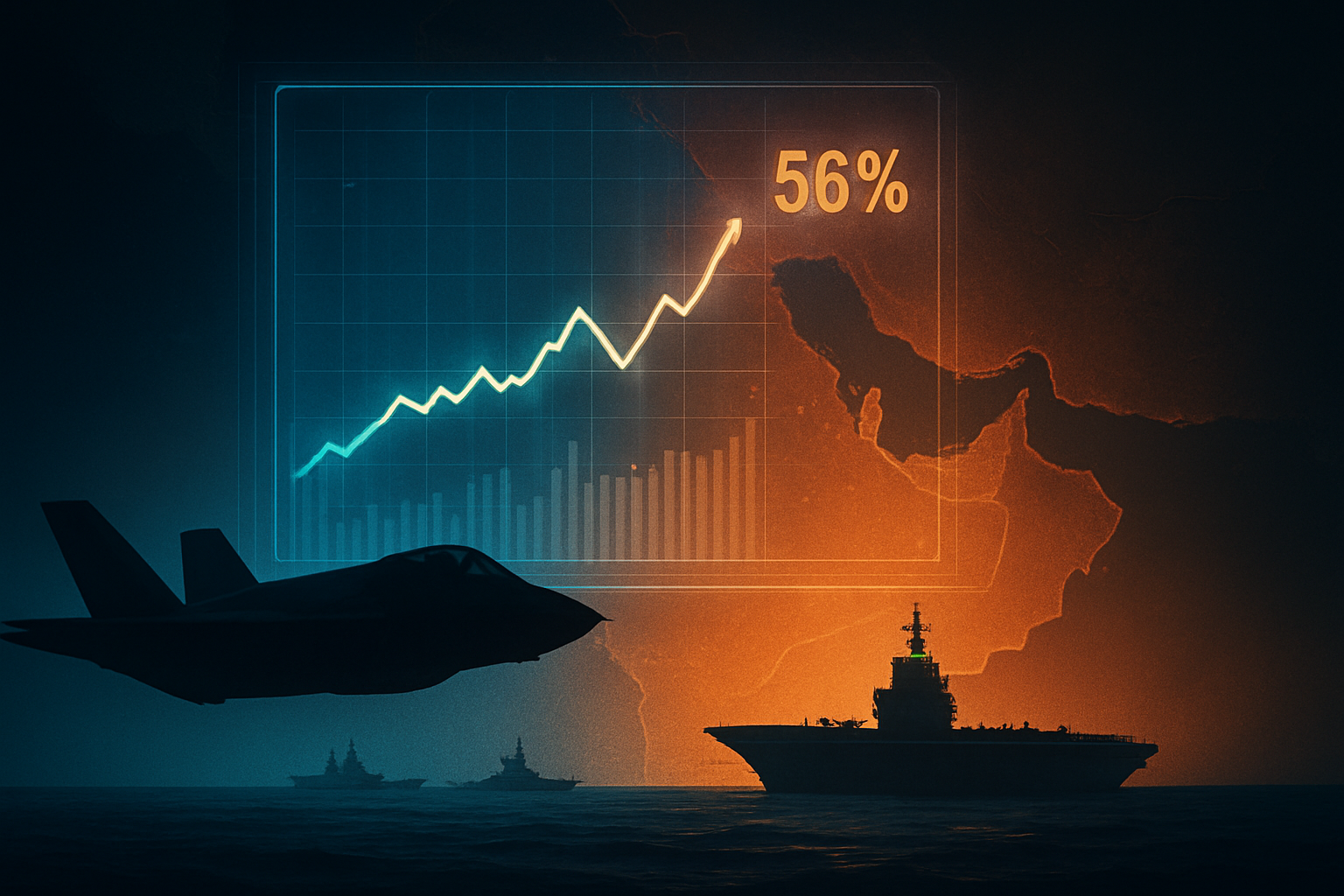
    As the diplomatic thaw of the winter freezes over, the shadow of conflict in the Middle East has lengthened. On the decentralized prediction platform Polymarket, the collective intelligence of thousands of global traders is currently pricing in a staggering 56% probability that the United States will conduct a kinetic strike against Iran by June 30, 2026. This surge in odds reflects a sudden and sharp pivot from the relative optimism seen just weeks ago, signaling a "war risk premium" that is now dominating geopolitical discourse.

    The market has become a focal point for institutional investors, defense analysts, and political junkies alike, amassing a significant $203 million in trading volume. This level of liquidity suggests that the 56% figure is not mere speculation from retail participants, but a calculated assessment from "whales" and informed actors who are effectively betting on the failure of high-stakes diplomacy. With the June deadline approaching, the high volume indicates a rare consensus: the current status quo between Washington and Tehran is increasingly viewed as unsustainable.

    The Market: What’s Being Predicted

    The primary vehicle for this sentiment is the Polymarket contract titled "U.S. strike on Iran by June 30, 2026." The contract is binary, meaning it will resolve to either "Yes" or "No." For the market to resolve as "Yes," the U.S. military must conduct a "kinetic operation"—defined as an aerial, drone, or missile strike—specifically against official Iranian territory or its diplomatic missions. Notably, the criteria exclude cyberattacks or strikes on Iranian proxies in third countries like Syria or Iraq, focusing the bet strictly on direct state-on-state escalation.

    Trading volume on this specific market has exploded to over $203 million, making it one of the most liquid geopolitical contracts in the history of prediction markets. Throughout early February 2026, the price per "Yes" share has fluctuated wildly. After peaking at 69% in early January following domestic unrest in Iran, the odds dipped to 25% during the lead-up to the Oman peace talks. However, the current rebound to 56% represents a "dead cat bounce" in diplomacy that has left traders bracing for a military resolution.

    The liquidity provided by such a high volume allows for large institutional entries, which has historically led to higher accuracy in these markets compared to traditional punditry. On Polymarket, where participants have "skin in the game," the price movement is often seen as a leading indicator, reacting to news cycles minutes—or sometimes hours—before mainstream media outlets can provide a comprehensive analysis.

    Why Traders Are Betting

    The primary driver behind the current 56% odds is the spectacular collapse of the "Oman Round" of indirect negotiations on February 4, 2026. Intended to de-escalate nuclear tensions and provide a framework for a new "Maximum Pressure 2.0" deal, the talks broke down when Tehran refused to include its regional missile program in the scope of the treaty. This diplomatic failure was immediately followed by a series of tactical skirmishes in the Arabian Sea.

    On February 3, 2026, a U.S. Navy F-35C, manufactured by Lockheed Martin (NYSE: LMT), shot down an Iranian surveillance drone that had aggressively approached the USS Abraham Lincoln strike group. This incident, combined with reports of a massive U.S. naval "armada" currently transiting toward the Persian Gulf, has convinced many traders that the Trump administration is seeking a decisive "red line" moment.

    Furthermore, "whale" activity—large-scale bets often exceeding $500,000—has shifted toward the "Yes" side. These large-scale traders appear to be betting that the naval standoff in the Strait of Hormuz will reach a breaking point by mid-summer. Sentiment analysis within the prediction community suggests that while a full-scale invasion is considered unlikely, a targeted "demonstration strike" on Iranian nuclear facilities or IRGC infrastructure is now the baseline expectation for more than half the market.

    Broader Context and Implications

    This market is not operating in a vacuum; it is deeply correlated with the broader defense and energy sectors. As strike odds climbed above the 50% threshold, shares of major defense contractors like Northrop Grumman (NYSE: NOC) saw a "gamma squeeze" effect, with the stock rising 20% year-to-date. Traders are increasingly using Polymarket as a hedging tool for their equity portfolios. If the odds of a strike increase, defense stocks generally rise, allowing investors to offset potential losses in other sectors sensitive to high oil prices or regional instability.

    The U.S.-Iran market also highlights a growing trend where prediction markets act as "truth engines" in an era of fragmented information. The high volume of $203 million serves as a bulwark against manipulation; it would require an immense amount of capital to artificially move the price of the contract for more than a few minutes. This makes the 56% probability a sobering metric for policymakers, as it suggests that the "smart money" sees conflict as more likely than not.

    Historically, markets like these have been remarkably prescient. Similar liquidity was seen in the lead-up to the capture of Nicolás Maduro in Venezuela in early 2026, where prediction markets flagged the operation hours before it was officially announced. However, critics point out that these markets can also create a "feedback loop," where high strike odds in the betting world might embolden hawks in the real world, though the causality of such a relationship remains a subject of intense academic debate.

    What to Watch Next

    As we move closer to the June 30 deadline, several key milestones will likely dictate the next major swing in the odds. First, the International Atomic Energy Agency (IAEA) is scheduled to release a "special report" in late February regarding Iran’s enrichment levels at the Fordow facility. Any indication that Iran has reached "breakout capacity" will likely send the Polymarket "Yes" shares into the 70% to 80% range.

    Second, the movement of the USS Abraham Lincoln and its supporting strike group is being tracked by traders via satellite imagery and maritime transponders. A move into the Persian Gulf proper, rather than staying in the Gulf of Oman, would be viewed as a high-conviction signal for an imminent strike. Traders are also monitoring the legislative progress of the proposed $1.5 trillion U.S. defense budget for FY2027; a fast-tracked approval would provide the fiscal "green light" for prolonged engagement.

    Finally, keep an eye on "insider" signals. In previous high-stakes geopolitical markets, sudden, massive buy orders for "Yes" shares often preceded official military announcements by 4-12 hours. If the volume spikes past the $250 million mark without a corresponding news event, it may indicate that those with proximity to the Pentagon are placing their final bets.

    Bottom Line

    The 56% probability of a U.S. strike on Iran by June 30, 2026, is a chilling reminder of how quickly the geopolitical landscape can deteriorate. With over $203 million at stake, this is no longer a niche curiosity; it is a high-stakes financial instrument that reflects a genuine belief among participants that diplomacy has reached its end.

    The correlation between these market movements and the stock prices of companies like Lockheed Martin (NYSE: LMT) and Northrop Grumman (NYSE: NOC) suggests that the "war risk" is being integrated into the very fabric of the global economy. Whether these traders are right or wrong, the sheer scale of the betting volume indicates that the world is bracing for a summer of high-intensity friction. For now, the "wisdom of the crowd" suggests that the fuse is lit, and the clock is ticking.


    This article is for informational purposes only and does not constitute financial or betting advice. Prediction market participation may be subject to legal restrictions in your jurisdiction.

    PredictStreet focuses on covering the latest developments in prediction markets.
    Visit the PredictStreet website at https://www.predictstreet.ai/.

  • Truth Engines: How Prediction Markets Are Pricing the Next Chapter of Global Instability

    Truth Engines: How Prediction Markets Are Pricing the Next Chapter of Global Instability

    In the high-stakes world of global diplomacy and macroeconomics, traditional intelligence and polling have often struggled to keep pace with the rapid-fire shifts of the 2020s. However, as of February 8, 2026, a new class of "truth engines" has emerged as the definitive guide for investors navigating a fractured world. Prediction markets, once seen as a niche for political junkies, are now providing the cold, hard data needed to price geopolitical risk—and the latest signals from these markets are painting a picture of strategic stability in the face of long-standing tensions.

    Currently, two major narratives are dominating the boards on platforms like Polymarket and Kalshi. First, despite aggressive posturing in the Middle East, the likelihood of a U.S. military strike on Iran remains remarkably low, with markets pricing only a 5% chance of such an event occurring by the February 13 milestone. Simultaneously, across the Pacific, traders are pricing in a near-certainty: a landslide victory for the Liberal Democratic Party (LDP) in the Japanese general elections, a result that promises to cement Tokyo’s current fiscal and defense trajectories for the foreseeable future.

    The Market: What's Being Predicted

    The geopolitical forecasting landscape has seen an explosion in liquidity throughout early 2026. On the decentralized platform Polymarket, the contract "U.S. Kinetic Action Against Iran before July" has become a primary benchmark for energy traders. While tensions spiked in early January following naval maneuvers in the Arabian Sea, the "no" side of the contract has seen heavy accumulation. Traders are currently pricing the "unlikely" scenario with high confidence; specifically, the market for a strike within the next week (by February 13) sits at a mere 5% probability. This represents a significant decoupling from the more alarmist rhetoric found in some mainstream media outlets.

    In Japan, the prediction markets have been even more decisive. Following the dissolution of the Diet earlier this year, the "Winner of Japanese General Election" contracts on both Kalshi and Polymarket have stayed pinned above 95% for the Liberal Democratic Party (LDP). Market participants aren't just betting on a win; they are betting on the scale of the victory. The "LDP 300+ Seats" contract—referring to the 465-seat Lower House—is currently trading at 82%, suggesting a "supermajority" is the most likely outcome. This high-conviction pricing has turned the election into a "volatility-dampening" event for the Japanese Yen and the Nikkei 225.

    Why Traders Are Betting

    The divergence between the low probability of conflict in Iran and the high-conviction LDP landslide is driven by a series of quiet diplomatic and political maneuvers. In the case of Iran, traders are closely monitoring the high-stakes negotiations currently taking place in Oman. Reports of a potential nuclear framework or a "long-term freeze" agreement between U.S. Special Envoy Steve Witkoff and Iranian officials have led "whale" traders—those with massive positions—to bet heavily against an escalation. This "skin in the game" approach suggests that those with the most to lose believe the diplomatic channel is far more robust than publicly acknowledged.

    Regarding Japan, the LDP's dominance is anchored by the perceived stability under Prime Minister Sanae Takaichi. Investors are betting on her "proactive fiscal policy" and the expansion of Japan's defense capabilities. Defense contractors like Mitsubishi Heavy Industries (TYO: 7011) and Kawasaki Heavy Industries (TYO: 7012) have seen their stock prices correlate closely with the "LDP Landslide" contract prices. Traders see the LDP as the only viable path for a Japan that is increasingly wary of regional security threats, making the landslide prediction more of a mathematical certainty than a political gamble.

    Broader Context and Implications

    This shift toward prediction markets marks the rise of "Information Finance," or InfoFi. Major institutional players, including firms like Susquehanna International Group and DRW, are reportedly utilizing these markets to hedge against "black swan" geopolitical events. For instance, an institutional investor heavily exposed to oil could hedge against a sudden spike in crude prices by taking a "Yes" position on the U.S.-Iran strike contract. If the 5% "long shot" occurs, the prediction market payout helps offset the volatility in the energy markets.

    Furthermore, the accuracy of these markets has begun to eclipse traditional forecasting methods. While political analysts often rely on historical precedent or diplomatic "cheap talk," prediction markets force participants to filter out bias through the threat of financial loss. This "truth engine" effect has made them an essential tool for companies like Toyota Motor Corp (NYSE: TM) and Lockheed Martin Corp (NYSE: LMT), which must plan years in advance for supply chain disruptions or shifts in defense spending. The historical accuracy of these markets during the 2024 U.S. elections and the 2025 European trade disputes has only bolstered their reputation as the most reliable early warning systems available.

    What to Watch Next

    As we approach the February 13 cutoff for the current Iran strike contracts, all eyes will be on the conclusion of the Oman talks. Any breakdown in communication or a sudden tactical provocation in the Persian Gulf could cause the 5% probability to gap upward, creating a "gamma squeeze" effect for those betting on peace. A move from 5% to even 20% would signal a massive shift in the geopolitical consensus and likely trigger a rally in defense-related equities.

    In Japan, the official vote counting is expected to conclude within the next 24 hours. While the landslide is essentially priced in, the exact margin of the LDP victory will dictate the strength of the yen. If the LDP surpasses 310 seats, it would give the Takaichi administration a mandate for more aggressive economic reforms, potentially moving the USD/JPY pair toward the 155.00 level. Investors should watch the "Supermajority" contracts for any last-minute volatility that might suggest a late shift in voter sentiment.

    Bottom Line

    The current state of the prediction markets suggests a world that is pragmatically avoiding the "worst-case scenarios" that often dominate the headlines. With a U.S.-Iran strike deemed highly unlikely (5%) and a stable LDP government in Japan nearly guaranteed, the markets are pricing in a window of relative geopolitical continuity.

    As these "truth engines" continue to mature, they are doing more than just predicting outcomes; they are providing a framework for managing the unmanageable. By turning geopolitical risk into a tradable asset, prediction markets are allowing investors to hedge against instability and find clarity in an increasingly complex global landscape. For now, the "smart money" is betting on the status quo, even if the rhetoric in the streets remains heated.


    This article is for informational purposes only and does not constitute financial or betting advice. Prediction market participation may be subject to legal restrictions in your jurisdiction.

    PredictStreet focuses on covering the latest developments in prediction markets.
    Visit the PredictStreet website at https://www.predictstreet.ai/.
  • The Silent Succession: $17M Bet on the End of the Khamenei Era

    The Silent Succession: $17M Bet on the End of the Khamenei Era

    As of February 7, 2026, the geopolitical world is fixated on a high-stakes question that has long been whispered in the corridors of power in Tehran: when will the era of Ayatollah Ali Khamenei end? For years, this was the subject of classified intelligence briefs and academic speculation. Today, it is a $17 million market on the regulated exchange Kalshi. Traders are currently pricing in a 38% probability that Khamenei will exit his position as Supreme Leader of Iran by September 1, 2026.

    This market is not merely a curiosity for political junkies; it has become a focal point for global finance and intelligence analysts alike. The 38% odds represent a volatile consensus that has fluctuated wildly over the last six months, driven by reports of the 86-year-old leader's deteriorating health and a series of unprecedented internal and external pressures on the Islamic Republic. As the volume nears the $20 million mark, the contract is now one of the most liquid geopolitical instruments in the history of prediction markets.

    The Market: What's Being Predicted

    The primary vehicle for this speculation is the Kalshi contract titled "Ali Khamenei out as Supreme Leader?" Specifically, the September 2026 series (Series: KXKHAMENEIOUT) has captured the lion's share of the volume. The rules are clinical and definitive: the market resolves to "Yes" if Ali Khamenei officially leaves the office of Supreme Leader, is removed, or if an official state announcement is made regarding a definitive transition within the designated timeframe.

    The resolution criteria are rigorous, relying on official announcements from the Iranian government or corroboration by at least two major international news organizations, such as The New York Times (NYSE: NYT) or The Wall Street Journal, owned by News Corp (NASDAQ: NWSA). To maintain ethical standards, the market includes a "Death Provision"—if the Leader passes away in office, the market resolves based on the last traded price prior to the announcement, effectively preventing the contract from becoming an "assassination bounty" while still allowing traders to hedge against the political vacuum a death would create.

    Currently, the market boasts over $17 million in total volume, with hundreds of thousands of individual contracts changing hands. Liquidity is remarkably deep, allowing institutional players to take significant positions. This is a far cry from the "play money" markets of a decade ago; the capital at risk suggests that those with access to high-level intelligence are using the platform to express their views on the stability of the Iranian regime.

    Why Traders Are Betting

    The 38% probability reflects a complex "perfect storm" of factors that traders are weighing daily. Chief among them is the physical fragility of the Supreme Leader. Throughout late 2025 and into early 2026, reports have surfaced regarding Khamenei's retreat into a hardened bunker in Lavizan, with some intelligence leaks suggesting he has suffered from "advanced cognitive impairment" or intermittent medical crises.

    Furthermore, the succession race has been thrown into chaos. Following the 2024 death of Ebrahim Raisi, who was the hand-picked successor, the field has narrowed to a few contentious figures. Traders are closely monitoring the influence of Mojtaba Khamenei, the Leader's second son. While he commands the loyalty of the IRGC Intelligence Organization, the possibility of a "hereditary" transition is a flashpoint for internal dissent. Recent market activity spiked following reports that Ali Khamenei excluded his son from a "shortlist" presented to the Assembly of Experts, a move intended to preserve the revolutionary ideology of the state but one that creates a massive power vacuum.

    External pressures are also priced in. Continued regional escalations involving Israel and the United States have forced the Iranian leadership into a defensive crouch. Traders often move the "Yes" odds higher following major kinetic events in the region, betting that external shocks could accelerate a transition or collapse of the current leadership structure.

    Broader Context and Implications

    The "Khamenei Exit" market serves as a leading indicator for several global sectors. The energy market is perhaps the most sensitive; a sudden transition in Tehran could lead to massive volatility in crude prices, affecting giants like Exxon Mobil (NYSE: XOM) and Chevron (NYSE: CVX). Similarly, defense contractors such as Lockheed Martin (NYSE: LMT) and RTX Corporation (NYSE: RTX) often see their stock prices correlate with the perceived instability in the Middle East, a sentiment that is now being distilled into a single percentage on prediction platforms.

    Beyond the financial implications, this market represents a milestone for prediction platforms as a tool for "nowcasting" geopolitical stability. Unlike traditional polling or intelligence reports, which can be lagging or biased, prediction markets provide a real-time, incentivized aggregate of information. The historical accuracy of such markets—often outperforming expert panels in high-uncertainty environments—gives this 38% figure a weight that the Iranian government cannot easily ignore.

    However, regulatory scrutiny remains a shadow over the industry. As markets like Kalshi and Polymarket grow in influence, regulators are increasingly wary of the potential for market manipulation or the ethical implications of "betting" on the death or removal of foreign heads of state. For now, the Kalshi market remains a legal, regulated venue for U.S. participants to trade on one of the most significant transitions of the 21st century.

    What to Watch Next

    The next six months will be critical for this market. Investors should keep a close eye on the biennial meetings of the Assembly of Experts. Any sudden change in the composition of this 88-member body or an unscheduled "emergency" session would likely send the "Yes" odds for a September 2026 exit soaring above 50%.

    Additionally, the "January 2026 Uprising"—a wave of domestic protests sparked by economic stagnation and 45%+ inflation—remains a wildcard. If the IRGC’s response to these protests shows signs of fracturing or if the "Regency Council" currently managing day-to-day affairs in Tehran loses its grip on the narrative, the probability of an "early" exit will likely climb. Traders should also watch for any rare public appearances by Khamenei; his physical presence (or lack thereof) during the upcoming Persian New Year (Nowruz) in March will be a binary event for the market.

    Bottom Line

    The $17 million volume on the Ali Khamenei exit market is a testament to the growing role of prediction markets in deciphering the world’s most opaque political systems. At 38%, the market is signaling that while a transition is not yet the "base case" for the next 18 months, it is a high-probability risk that is no longer being ignored by the global financial community.

    For participants and observers alike, this market highlights a shift in how we process global risk. We are moving away from the era of the "expert opinion" and into the era of the "incentivized consensus." Whether or not Khamenei remains in power by September 2026, the movement of this market will provide the most accurate real-time barometer of the regime’s longevity that we have ever seen.


    This article is for informational purposes only and does not constitute financial or betting advice. Prediction market participation may be subject to legal restrictions in your jurisdiction.

    PredictStreet focuses on covering the latest developments in prediction markets. Visit the PredictStreet website at https://www.predictstreet.ai/.
  • Geopolitical Risk Pricing: Iran Strike Odds Surge as Polymarket Volume Hits $188M Milestone

    Geopolitical Risk Pricing: Iran Strike Odds Surge as Polymarket Volume Hits $188M Milestone

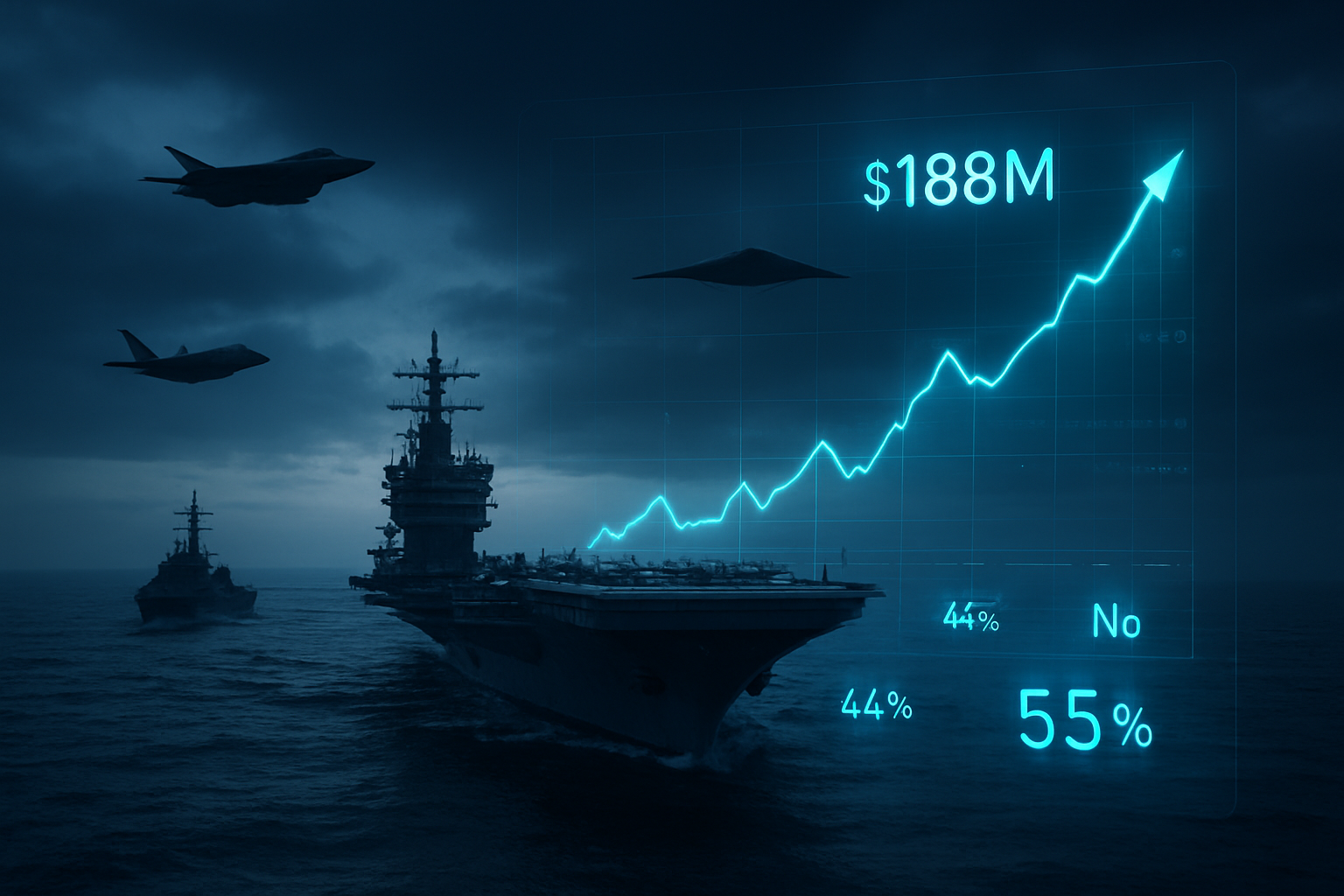
    As of February 7, 2026, the intersection of high-stakes diplomacy and military posturing has turned the eyes of the world toward the Persian Gulf. Prediction markets are currently pricing in a significant probability of military conflict between the United States and Iran, with the flagship "U.S. strike on Iran" market on Polymarket seeing its cumulative volume surge to a staggering $188 million. This massive influx of capital comes as the USS Abraham Lincoln carrier strike group takes its position in the Gulf of Oman, creating a visual and strategic catalyst that has sent traders into a frenzy.

    Current odds reflect a complex geopolitical landscape: the probability of a U.S. strike by the mid-February deadline (February 13) stands at 31%, while the odds for a strike by the end of the month (February 28) have climbed to 44%. These figures represent a volatile "truth signal" that often moves faster than traditional news cycles, as participants bet millions on whether the current "maximum pressure" campaign will culminate in kinetic action or de-escalate through high-stakes diplomacy currently unfolding in Oman.

    The Market: What's Being Predicted

    The primary theater for this financial forecasting is Polymarket, a decentralized prediction platform that has dominated the geopolitical betting space throughout late 2025 and into early 2026. The specific contract, "U.S. strikes Iran by…?", has become a focal point for institutional hedgers and retail speculators alike. While Polymarket handles the bulk of the decentralized volume, Kalshi, a U.S.-regulated exchange, has captured over $87 million in volume for related contracts concerning Iranian leadership stability and domestic government shutdown risks, providing a regulated alternative for American participants.

    The resolution criteria for these markets are notoriously strict. For a "Yes" resolution on the February deadlines, the U.S. military must conduct a confirmed kinetic strike—ranging from drone strikes to manned aerial bombardments—within Iranian territory or territorial waters. As of early February, the liquidity in these markets is exceptionally high, with approximately $1 million in standing buy/sell orders, ensuring that even large "whale" trades do not cause irrational price swings without significant conviction.

    Why Traders Are Betting

    The current surge in volume is not occurring in a vacuum. Traders are heavily weighing the precedent set by "Operation Absolute Resolve" on January 3, 2026, which saw the surprise U.S. capture of Nicolás Maduro. This event signaled to the markets that the current administration is willing to authorize high-risk, high-reward operations. Furthermore, the memory of "Operation Midnight Hammer" in June 2025—a massive U.S.-Israeli strike on the Fordow nuclear facility—remains fresh, establishing a baseline expectation for military intervention if diplomatic red lines are crossed.

    Recent movements have also been influenced by the domestic political climate. A fatal Border Patrol shooting in late January led to a U.S. government shutdown on January 31, 2026. Initially, this caused "strike" odds to plummet, as traders assumed a distracted Washington would avoid foreign entanglements. However, the deployment of the USS Abraham Lincoln has reversed that trend. Notably, "Unusual Whales" recently flagged a massive $5 million "No" bet on the February 28 deadline, suggesting that some high-net-worth traders believe the naval buildup is a leverage play for the Oman nuclear talks rather than a precursor to immediate war.

    Broader Context and Implications

    The activity in these prediction markets is mirrored in the traditional equities market, particularly within what analysts are calling the "Security Supercycle." Shares of Lockheed Martin (NYSE: LMT) have surged nearly 28% year-to-date, trading near $628 as investors eye the company’s $194 billion backlog and the prominent role of the F-35 Lightning II in regional deployments. Similarly, Northrop Grumman (NYSE: NOC) has seen increased scrutiny as its B-21 Raider stealth bombers are viewed as the primary assets for any deep-strike mission into fortified Iranian airspace.

    This trend highlights a growing reliance on prediction markets as a more accurate gauge of sentiment than traditional polling or expert punditry. When millions of dollars are on the line, "noise" tends to be filtered out, leaving a raw probability that incorporates everything from troop movements to leaked diplomatic cables. The accuracy of these markets was recently vindicated in January, when "insider" betting patterns correctly predicted the Maduro ouster hours before it was officially announced, leading to increased regulatory scrutiny but also increased public trust in the markets' predictive power.

    What to Watch Next

    The immediate focus for traders is the outcome of the bilateral talks in Muscat, Oman, which began on February 6. If these talks show signs of stalling or if either side issues a formal walk-away statement, the 44% probability for a late-February strike could easily spike above 60%. Conversely, any joint statement regarding a "de-escalation framework" would likely cause the markets to "fade," rewarding the "No" bettors who have recently taken large positions.

    Key milestones to monitor include the February 13 deadline, which serves as a psychological "checkpoint" for the market. If this date passes without incident, attention will shift entirely to the February 28 deadline, which many see as the "breaking point" for the current diplomatic cycle. Beyond the military aspect, watch for movements in the United States Oil Fund (NYSEARCA: USO) and Brent crude futures, which are currently forecasting a $64/bbl floor but remain highly sensitive to "Strait of Hormuz closure" odds, currently sitting at 31%.

    Bottom Line

    The $188 million volume on Polymarket’s Iran contracts is a testament to the maturation of prediction markets as a vital tool for geopolitical risk assessment. By aggregating the collective intelligence of thousands of traders—and the heavy conviction of million-dollar "whales"—these platforms offer a real-time probability of conflict that traditional media simply cannot replicate.

    While the current odds of 44% for a strike by the end of February suggest a "coin-flip" scenario, the underlying data points to a period of unprecedented tension. Whether the USS Abraham Lincoln’s presence in the Gulf of Oman leads to a "kinetic event" or serves as the ultimate diplomatic bargaining chip, the prediction markets will likely be the first to know the outcome. For now, the "smart money" is split, but the massive volume indicates that the world is bracing for a definitive conclusion to this February standoff.


    This article is for informational purposes only and does not constitute financial or betting advice. Prediction market participation may be subject to legal restrictions in your jurisdiction.

    PredictStreet focuses on covering the latest developments in prediction markets.
    Visit the PredictStreet website at https://www.predictstreet.ai/.
  • The Signal in the Noise: Why Prediction Markets Are the New ‘Information Asset Class’ for Global Crises

    The Signal in the Noise: Why Prediction Markets Are the New ‘Information Asset Class’ for Global Crises

    As of February 6, 2026, the traditional landscape of geopolitical analysis is undergoing a radical transformation. While cable news pundits and academic experts grapple with the nuances of diplomatic cables and legislative posturing, a more precise—and often more brutal—barometer has emerged: the prediction market. In the first week of February, these markets have become the primary "truth signal" for two of the most volatile issues of the year: the escalating military tensions with Iran and the ongoing paralysis of the U.S. government.

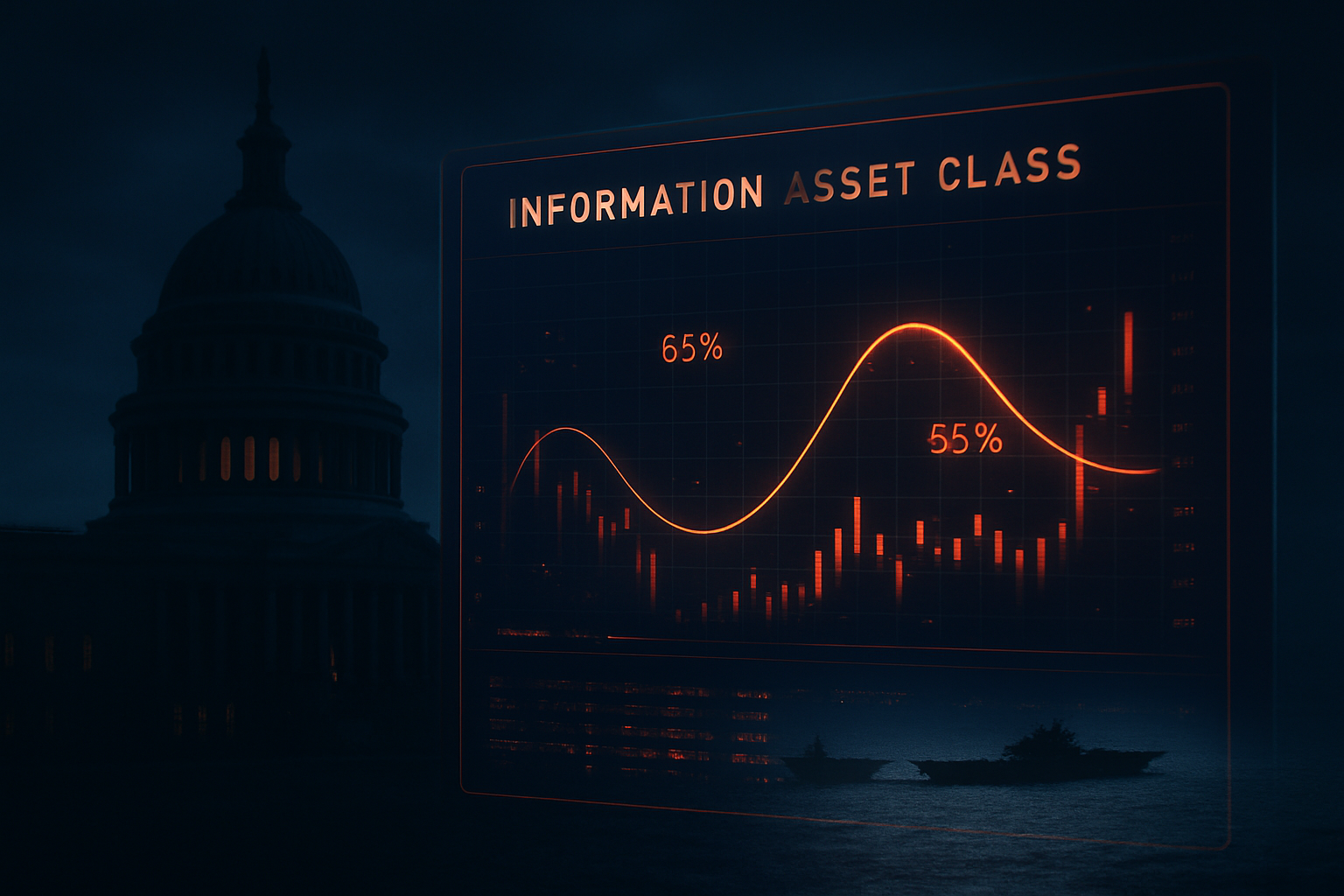
    Currently, Polymarket and Kalshi are pricing the likelihood of another U.S. government shutdown at 65%, following a peak of 73% in late January. Simultaneously, the probability of a U.S. strike on Iran by mid-summer has climbed to a significant 55%, even as short-term traders "fade the heat" of an immediate conflict. This shift represents more than just a new way to gamble; it marks the maturation of prediction markets into a bona fide "Information Asset Class" that consistently outperforms traditional forecasting models by aggregating real-time data through the lens of financial risk.

    The Market: What's Being Predicted

    The current focus of global traders is split between the "Maximum Pressure" campaign in the Persian Gulf and the domestic budget gridlock in Washington. On Polymarket, the world’s largest decentralized prediction platform, the market for a "U.S. strike on Iran" has seen its volume swell past $182 million. While the odds for a strike by the end of February sit at a relatively low 29%, the "By June 30" contract is trading at 55%, suggesting that traders expect the current naval standoff to reach a breaking point within the next quarter.

    Domestically, the U.S. government is currently navigating a partial shutdown that began on January 31, 2026. On Kalshi—the first regulated prediction market in the U.S.—the "Government Shutdown Extension" contract is the most liquid asset on the platform. Traders are currently pricing a 65% chance that the Department of Homeland Security (DHS) will remain unfunded past the upcoming February 14 deadline. These markets are no longer dominated by retail hobbyists; the involvement of major financial institutions and platforms like Interactive Brokers (NASDAQ: IBKR) and Robinhood (NASDAQ: HOOD), which both integrated prediction products in late 2024, has brought unprecedented liquidity and professional rigor to these forecasts.

    Why Traders Are Betting

    The 73% probability peak for the current shutdown wasn't driven by general political malaise, but by a specific catalyst known as the "Minneapolis Incident." Following the fatal shooting of a U.S. citizen, Alex Pretti, by Border Patrol agents in late January, Senate Democrats withdrew support for the DHS funding bill. Prediction market traders identified this "black swan" event instantly, spiking the shutdown odds 40 points higher in a single afternoon—hours before mainstream political analysts realized the legislative path forward had vanished.

    In the geopolitical sphere, the 55% odds for an Iran strike are being influenced by the deployment of the USS Abraham Lincoln and its surrounding carrier strike group to the Gulf of Oman. However, a significant "whale" position—recently flagged by the tracking tool Unusual Whales—has placed $5 million on "No strike by February 28." These sophisticated traders are betting that the current naval posturing is a high-stakes negotiating tactic designed to force Iran back to the table in Oman, rather than a precursor to immediate kinetic action. This "fading the heat" strategy highlights the depth of analysis within these markets, where participants must distinguish between political theater and actual intent.

    Broader Context and Implications

    The rise of the "Information Asset Class" finds its roots in the 2024 U.S. Presidential Election. During that cycle, traditional pollsters and cable news networks labeled the race a "dead heat" or "too close to call" well into election night. In contrast, prediction markets had consistently priced a 60% probability of a Republican sweep for weeks. The most famous example was "Théo," a French trader who used "neighbor polling" techniques to identify hidden voter support, eventually netting over $80 million on Polymarket.

    This historical accuracy has forced a shift in how the public and policymakers view these platforms. Unlike pundits, who face no financial penalty for being wrong, prediction market participants are incentivized to seek out the most accurate, unvarnished truth. This has led to a "virtuous cycle" of accuracy: as the markets prove more reliable, they attract more capital, which in turn leads to even more precise pricing. However, this success has also brought regulatory scrutiny. The Commodity Futures Trading Commission (CFTC) continues to monitor these markets for potential "insider trading" by government officials, especially following reports of high-accuracy trades originating from sensitive diplomatic zones.

    What to Watch Next

    The coming weeks will be a crucible for these markets. The February 14 budget deadline is the next major milestone for the government shutdown contracts. If a bipartisan deal regarding DHS reform remains elusive by February 12, expect the 65% odds to surge toward 90% as "lame duck" legislative sessions begin to stall.

    Regarding Iran, the key signal will be the conclusion of the Oman diplomatic talks. If the Sultanate of Oman issues a "no progress" statement, the June 30 strike odds are expected to climb toward 70%. Traders are also closely watching the movement of the USS Abraham Lincoln; any repositioning toward the Strait of Hormuz will likely trigger an immediate price jump in the conflict-related contracts.

    Bottom Line

    The current pricing of a 73% shutdown peak and a 55% chance of mid-year conflict with Iran confirms that prediction markets have transcended their origins as "betting sites." They are now essential tools for navigating an increasingly complex world where traditional media often lags behind the reality of the ground. By forcing participants to "put their money where their mouth is," these markets strip away the partisan bias and "hopium" that often cloud expert analysis.

    As we move through 2026, the success of these platforms as an "Information Asset Class" suggests that the most accurate news of the future won't be found in a headline, but in a price chart. Whether it’s the survival of a government or the start of a war, the smartest money in the room is already telling us what happens next.


    This article is for informational purposes only and does not constitute financial or betting advice. Prediction market participation may be subject to legal restrictions in your jurisdiction.

    PredictStreet focuses on covering the latest developments in prediction markets. Visit the PredictStreet website at https://www.predictstreet.ai/.

  • Geopolitical Truth Engines: Why Prediction Markets Are the New Early Warning System

    Geopolitical Truth Engines: Why Prediction Markets Are the New Early Warning System

    As of February 5, 2026, the global information landscape has been fundamentally reshaped not by a new cable news network or a government intelligence agency, but by the relentless, cold-blooded efficiency of prediction markets. What were once dismissed as niche "gambling" platforms for political junkies have evolved into what institutional analysts now call "Geopolitical Truth Engines." Across platforms like Polymarket and Kalshi, billions of dollars are now flowing into contracts that predict everything from the next tactical missile strike in the Middle East to the administrative feasibility of the United States acquiring Greenland.

    The shift is driven by a stark reality: traditional expert models and diplomatic "cheap talk" are failing to keep pace with a volatile world. Currently, traders are pricing a 56% probability of a U.S. military strike on Iranian assets by the end of March 2026, and a surprising 42% chance that a deal for Greenland is reached within the next three years. These aren't just numbers; they are real-time, capital-backed aggregations of global intelligence that are increasingly being used by hedge funds and policy think tanks to navigate a world where official statements are often the last place to find the truth.

    The Market: What's Being Predicted

    The most high-stakes "truth engine" currently running involves the renewed, serious effort by the Trump administration to negotiate a territorial transfer or a massive strategic lease for Greenland. On the regulated exchange Kalshi, the contract for "U.S. to acquire part of Greenland by 2029" has seen its odds surge to 42%, a significant jump from just 26% late last year. Meanwhile, on the decentralized platform Polymarket, more granular markets regarding a "Greenland deal in 2026" are trading at a 23% probability. This divergence suggests that while a short-term acquisition remains a long shot, the market is beginning to price in the long-term geopolitical inevitability of a U.S.-Danish-Greenlandic realignment, with over $13.8 million already wagered on the outcome.

    In the Middle East, the markets are even more liquid and urgent. The "Military Action" categories have become the primary source of risk assessment for global shipping and energy firms. Markets predicting an Israeli strike on Iranian strategic sites by June 30, 2026, have climbed to a 60% probability. Even more striking is the volume: the contract for "U.S. kinetic action against Iran" by the end of Q1 2026 has attracted over $142 million in cumulative volume. This level of liquidity ensures that the "market price" is highly resistant to manipulation, reflecting a sophisticated consensus built on thousands of individual data points.

    Why Traders Are Betting

    The rise of these markets is fueled by a concept known as "InfoFi" (Information Finance). Unlike traditional analysts who may be hindered by institutional bias or diplomatic sensitivities, prediction market traders are incentivized solely by accuracy. These markets allow individuals with asymmetric information—ranging from embassy staff and defense contractors to regional journalists and satellite imagery analysts—to anonymously monetize their knowledge. When a trader with inside knowledge of a carrier group's movement or a diplomatic cable's tone places a large bet, the "price" of the contract shifts, effectively broadcasting that truth to the public.

    Major institutional players have also entered the fray. Market makers such as Susquehanna International Group (SIG) and Jane Street have significantly increased liquidity in 2025, narrowing spreads and making it possible for large-scale "geopolitical hedging." Furthermore, media conglomerates like News Corp (NASDAQ: NWSA) have begun integrating live Polymarket widgets into their reporting, treating the market price as a more reliable indicator than the "official line" from government press secretaries. This institutionalization has transformed these platforms from speculative playgrounds into essential tools for "systemic arbitrage."

    Broader Context and Implications

    The credibility of prediction markets as "Truth Engines" is backed by a track record of outperforming traditional models. In the 2024 U.S. Presidential Election, Polymarket consistently gave Donald Trump a lead in key swing states weeks before traditional polls showed any significant movement. More recently, in January 2026, the markets correctly anticipated the collapse of the Maduro regime in Venezuela just hours before "Operation Absolute Resolve" was launched—at a time when traditional media outlets like The New York Times (NYSE: NYT) were still reporting on "diplomatic gridlock."

    This shift has profound implications for public sentiment and democratic accountability. A 2025 study from Vanderbilt University confirmed that prediction markets are roughly 23% more accurate than expert surveys in "rapid-shift" environments where data changes hour-by-hour. By providing a transparent, real-time probability of major events, these markets strip away the "fog of war" and partisan spin. However, they also raise regulatory questions. While Kalshi operates under the oversight of the Commodity Futures Trading Commission (CFTC), decentralized platforms like Polymarket continue to navigate a complex global legal landscape, even as their influence on global finance becomes undeniable.

    What to Watch Next

    As we move toward the spring of 2026, several key milestones will serve as a "stress test" for these geopolitical truth engines. For the Greenland market, the upcoming April summit between U.S., Danish, and Greenlandic officials will be a major catalyst. If the odds on Kalshi move toward 50%, it will signal that the "impossible" deal is entering the realm of the probable. Traders are currently watching for any shifts in "infrastructure investment" language, which often precedes a formal territorial negotiation.

    In the Middle East, the March 31 deadline for the "U.S. strike Iran" contract is the date to watch. If the probability continues to hover above 50%, it suggests that the market has already factored in military movements that have yet to be confirmed by the Pentagon. Additionally, watch for the launch of new "Cyber War" markets, which aim to predict state-sponsored hacks on critical infrastructure—an area where prediction markets may prove to be the only effective early warning system for the private sector.

    Bottom Line

    The transformation of prediction markets into "Geopolitical Truth Engines" represents the most significant shift in information gathering since the advent of the 24-hour news cycle. By forcing participants to put "skin in the game," these platforms cut through the noise of modern media and the opacity of international diplomacy. Whether it is the potential redrawing of the Arctic map or the ignition of a regional conflict in the Middle East, the "market price" is now the most honest signal we have.

    Ultimately, these markets tell us that the public is no longer content to wait for "expert" post-mortems after a crisis has already begun. In 2026, the quest for truth has been financialized, and the result is a more accurate, if sometimes more frightening, view of the world’s future. For anyone looking to understand where the world is actually headed, the ticker tape is now more important than the teleprompter.


    This article is for informational purposes only and does not constitute financial or betting advice. Prediction market participation may be subject to legal restrictions in your jurisdiction.

    PredictStreet focuses on covering the latest developments in prediction markets.
    Visit the PredictStreet website at https://www.predictstreet.ai/.
  • Betting on the Brink: Geopolitical Supercycle Drives Record $230M+ into Prediction Markets

    Betting on the Brink: Geopolitical Supercycle Drives Record $230M+ into Prediction Markets

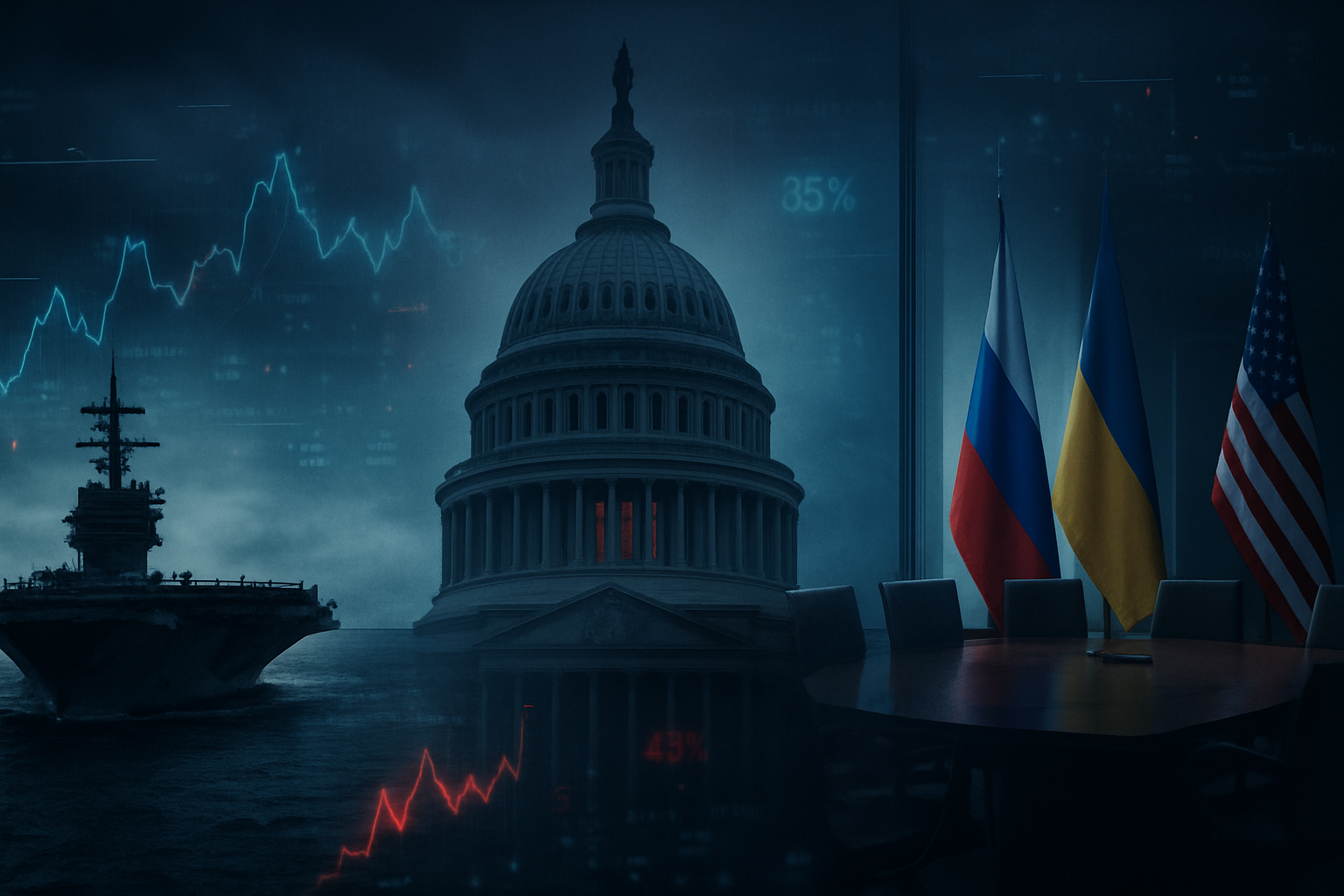
    As the world wakes up on February 1, 2026, the traditional tools of diplomacy and statecraft are increasingly being viewed through a new, high-resolution lens: the prediction market. In a year already defined by unprecedented volatility, three major geopolitical flashpoints have emerged as the primary drivers of global speculation. Traders are currently navigating a landscape where the United States is locked in a high-stakes naval standoff with Iran, the federal government has just entered a partial shutdown, and a fragile hope for peace in Eastern Europe hangs in the balance.

    The numbers are staggering. As of this morning, over $147 million has been wagered on whether the U.S. will launch a direct military strike against Iran, while a separate $87 million market tracks the fallout of the current domestic budget crisis. Meanwhile, the most watched contract of the year—the prospect of a Russia-Ukraine ceasefire—is currently hovering at a 45% probability. These markets are no longer just hobbies for the "pundit class"; they have become essential "truth events," providing a cold, hard-money assessment of global stability that often moves faster than official government briefings.

    The Market: What's Being Predicted

    The geopolitical "Big Three" of 2026 are primarily concentrated on Polymarket and Kalshi, with the former hosting the lion's share of international military speculation. The "US strikes Iran" market, which has seen its volume swell to $147 million, is specifically trading on whether the U.S. military will conduct a kinetic operation against Iranian territory or its assets by the end of the second quarter. Current odds have fluctuated wildly, spiking recently as the USS Abraham Lincoln carrier strike group reached its station off the Iranian coast.

    On the domestic front, Kalshi has become the epicenter for the $87 million "Government Shutdown" contracts. These markets are uniquely designed for U.S. participants to hedge against the economic disruption caused by the current partial shutdown that began yesterday, January 31, 2026. Unlike military markets, these contracts are highly technical, resolving based on official Congressional funding status for specific departments, including the Department of Homeland Security (DHS).

    Finally, the Russia-Ukraine ceasefire market has become the definitive sentiment barometer for the ongoing Abu Dhabi peace talks. Trading at a 45% probability for a signed agreement by March, the market reflects a "coin-flip" reality despite the optimistic rhetoric from the State Department. Liquidity in this market is at an all-time high, with major institutional players using the 45% mark to price risk in European energy and defense stocks, such as Lockheed Martin (NYSE: LMT) and Northrop Grumman (NYSE: NOC).

    Why Traders Are Betting

    The 83% implied probability of a U.S. strike on Iran—despite the 45% ceasefire odds in Ukraine—is fueled by the traumatic military escalations of 2025. Traders vividly remember "Operation Midnight Hammer" in June 2025, when the U.S. bombed the Fordow nuclear facility. The recent 2026 surge in betting volume was triggered by Iran's brutal crackdown on internal dissent earlier this month, leading to a "MIGA" (Make Iran Great Again) posture from the Trump administration. Large-scale "whales" in these markets are betting that the U.S. cannot afford to let its 2025 momentum dissipate without achieving total regime concessions.

    In the "Government Shutdown" market, the driving force is a specific domestic flashpoint: the Minneapolis Shooting. In early January 2026, federal agents were involved in a fatal encounter with U.S. citizens, causing a massive rift in the Senate. Traders who correctly predicted the January 31 shutdown (then a 15% longshot) focused on the intransigence of House leadership regarding DHS funding reforms. Many high-volume traders are currently betting that the shutdown will be short-lived—less than 72 hours—expecting a stopgap measure to pass by Monday evening.

    Regarding the Russia-Ukraine conflict, the 45% ceasefire probability represents a cautious optimism born from the "Energy Truce" brokered by President Trump in mid-January. While traditional diplomats cite "unreconcilable differences" regarding occupied territories, prediction market traders are looking at secondary signals: the massive reduction in artillery fire and the repositioning of General Dynamics (NYSE: GD) equipment away from the front lines. The market suggests that while a full "peace treaty" is unlikely, a formal cessation of hostilities is a near-even bet.

    Broader Context and Implications

    This surge in volume represents a maturation of prediction markets as a vital component of the global intelligence architecture. For years, skeptics dismissed these platforms as "gambling for geeks," but in 2026, they serve as a real-time sanity check against propaganda. When the Russian Foreign Ministry claims talks are failing, but the ceasefire market stays steady at 45%, global observers look to the market for the underlying "truth." This has created a feedback loop where even officials at companies like Palantir (NYSE: PLTR) and RTX Corporation (NYSE: RTX) are rumored to monitor these odds to assess operational risk.

    Furthermore, the $87 million shutdown market highlights the regulatory evolution of platforms like Kalshi. By providing a legal, regulated venue for U.S. traders to hedge against legislative failure, these markets have effectively democratized "political insurance." However, the sheer scale of the $147 million Iran market has also drawn the attention of the Commodity Futures Trading Commission (CFTC), which remains concerned about the ethics of profiting from kinetic warfare.

    Historically, these markets have outperformed traditional polling and expert panels. During the 43-day shutdown of late 2025, prediction markets correctly identified the resolution date three days before a deal was announced to the press. This track record is exactly why we are seeing such massive capital inflows today; traders believe the collective "wisdom of the crowd" can pierce the fog of war more effectively than a single analyst at a think tank.

    What to Watch Next

    The next 48 hours will be critical for all three markets. For the "US strikes Iran" contract, all eyes are on the Persian Gulf. Any reports of Iranian naval provocation or a "freedom of navigation" exercise by the U.S. Navy will likely send the 83% probability toward the 95% range. Conversely, any last-minute diplomatic outreach from Tehran could see a sharp "crash" in the contract price, creating a high-volatility environment for intraday traders.

    In Washington, the "Shutdown" market will react to the House's Monday session. If a vote on the stopgap funding bill fails to materialize by 4:00 PM EST tomorrow, the probability of a "long-term shutdown" (defined as >14 days) will likely double. Traders should watch for any movement on DHS funding reforms, as this remains the primary "poison pill" in current negotiations.

    Finally, the Abu Dhabi peace talks entering their second round today (February 1) is the "make-or-break" moment for the 45% ceasefire probability. If the parties agree to an extension of the Energy Truce by tomorrow evening, expect the ceasefire odds to jump to 60%. If the talks break down without a scheduled Round 3, the market will likely plummet toward 10%, signaling a return to full-scale winter offensive operations.

    Bottom Line

    As we enter February 2026, prediction markets have become the "central nervous system" of geopolitical risk. The $147 million volume in Iran-related markets and the $87 million shutdown bets prove that participants are no longer just guessing; they are aggressively pricing the future. The 45% ceasefire probability for Russia and Ukraine is perhaps the most telling figure of all—it is a clear-eyed rejection of both total war and total peace, signaling a "frozen conflict" scenario that markets are uniquely equipped to navigate.

    Ultimately, these markets tell us that the world is currently in a state of precarious equilibrium. Whether it is the tension in the Strait of Hormuz or the legislative gridlock in D.C., the odds reflect a global community that is bracing for impact while simultaneously looking for an exit ramp. For observers and investors alike, the primary takeaway is clear: in the "truth economy" of 2026, the most reliable signal is not what world leaders say, but where the money is moving.


    This article is for informational purposes only and does not constitute financial or betting advice. Prediction market participation may be subject to legal restrictions in your jurisdiction.

    PredictStreet focuses on covering the latest developments in prediction markets.
    Visit the PredictStreet website at https://www.predictstreet.ai/.

  • The Maduro Capture Windfall: How a $33,000 Bet Sparked an Insider Trading Scandal

    The Maduro Capture Windfall: How a $33,000 Bet Sparked an Insider Trading Scandal

    The predawn hours of January 3, 2026, will be remembered for one of the most audacious military operations in modern history: "Operation Absolute Resolve." As U.S. special operations forces descended on Caracas to extract Venezuelan President Nicolás Maduro, the geopolitical landscape shifted in an instant. But while the world watched the tactical execution of the raid, a different kind of drama was unfolding on the digital ledgers of Polymarket, where an anonymous trader turned a modest $32,537 into a staggering $436,760 windfall.

    The trade—executed just hours before the first F-35 fighter jets, manufactured by Lockheed Martin (NYSE: LMT), crossed into Venezuelan airspace—has become the flashpoint for a heated national debate. With the "Maduro Out of Office" contract spiking from a mere 7% probability to near-certainty in a matter of minutes, the "Burdensome-Mix" trader’s suspiciously well-timed bet has prompted federal investigations, new legislation, and a fundamental questioning of whether prediction markets are a "truth machine" or a playground for insiders with access to classified military intelligence.

    The Market: What's Being Predicted

    The primary vehicle for this financial phenomenon was a Polymarket contract titled "Will Nicolás Maduro be out of power by January 31, 2026?" Throughout late 2025, the market had been relatively stagnant, reflecting a skepticism that any U.S. administration would risk a direct kinetic intervention. For months, the odds hovered between 3% and 10%, with trading volumes picking up only slightly as diplomatic tensions rose.

    By the time the operation was launched, the total volume across Maduro-related contracts had swelled to an unprecedented $64.3 million. Polymarket commanded the lion's share of this liquidity, hosting $56.6 million in total wagers. Other platforms, including Kalshi and Interactive Brokers (NASDAQ: IBKR), also saw significant action, as retail and institutional traders sought to hedge against the potential for a localized energy crisis or regional instability.

    The resolution criteria for the Polymarket contract were stringent: Maduro had to be removed from the presidency or effectively unable to exercise power by the end of the month. When news broke at 4:30 a.m. EST that Maduro was in custody and being transported to New York to face narco-terrorism charges, the contract hit its ceiling. For the "Burdensome-Mix" trader, whose final "Yes" shares were purchased at a deep discount, the payout was nearly 13 times their initial investment.

    Why Traders Are Betting

    The surge in betting activity wasn't just driven by geopolitical enthusiasts. In the weeks leading up to the raid, sophisticated traders were monitoring "on-chain" activity and physical movement of military assets. Lockheed Martin (NYSE: LMT) and other defense contractors had seen an uptick in maintenance contracts and logistics deployments, a signal that many "whale" accounts on prediction markets interpreted as a precursor to action.

    However, the "Burdensome-Mix" trade was different. Unlike the gradual accumulation of positions seen by institutional hedgers on platforms like Interactive Brokers (NASDAQ: IBKR), this specific user placed a concentrated series of bets in a six-hour window before the operation was public knowledge. This "information asymmetry" is what separates a smart macro play from a suspected leak. Analysts noted that the odds shifted significantly enough to suggest that someone, somewhere, knew the "go-order" had been given.

    Moreover, the integration of prediction market data into mainstream platforms has changed the betting psychology. Alphabet (NASDAQ: GOOGL) and Meta (NASDAQ: META) have recently begun embedding real-time "Probability Widgets" into search results and social feeds. This democratization of data meant that as soon as the "Burdensome-Mix" whale moved the needle, thousands of retail traders on Robinhood (NASDAQ: HOOD) followed suit, creating a feedback loop that accelerated the price movement before the first official press release from the White House.

    Broader Context and Implications

    The Maduro windfall has effectively ended the "wild west" era of prediction markets. On January 9, 2026, Representative Ritchie Torres (D-NY) introduced the Public Integrity in Financial Prediction Markets Act, a bill designed to extend the insider-trading prohibitions of the STOCK Act to event contracts. The logic is clear: if it is illegal for a Senator to trade stocks based on a classified briefing, it should be equally illegal to bet on the outcome of a military raid they helped oversee.

    The Commodity Futures Trading Commission (CFTC), under the leadership of Chairman Michael S. Selig, has taken a nuanced stance. Rather than banning political contracts—a move the agency considered in 2024—Selig has opted to "plant the flag" as the definitive regulator. The agency is now drafting standards for "market integrity" that would require platforms like Polymarket to implement more robust Know Your Customer (KYC) protocols and report "suspiciously timed" trades directly to federal investigators.

    The event has also highlighted a growing rift in how these platforms settle disputes. While the "Maduro Out" contracts were paid out smoothly, a secondary contract on "U.S. Invasion of Venezuela" remains in a $10.5 million legal limbo. Polymarket’s decentralized oracle initially ruled that a "snatch-and-extract" capture did not qualify as an "invasion," leading to an outcry from traders who argued the spirit of the bet was fulfilled. This dispute highlights the "contract risk" that remains a major hurdle for prediction markets seeking institutional legitimacy.

    What to Watch Next

    The immediate focus for the markets now shifts to the legal proceedings in New York. Prediction markets are already active on whether Maduro will be convicted before the end of 2026 and whether a new Venezuelan election will be held by the fourth quarter. These markets are currently trading at a 65% probability for a conviction, though legal experts warn that the discovery process could be lengthy.

    Investors should also keep a close eye on the legislative progress of the Torres Bill. If it passes, we could see a massive "de-risking" event where government-adjacent traders exit the markets, potentially leading to a temporary drop in liquidity across high-stakes political contracts. Furthermore, the CFTC’s upcoming "integrity standards" will likely dictate whether mainstream brokers like Robinhood (NASDAQ: HOOD) continue to expand their event contract offerings or pull back due to compliance costs.

    Finally, the resolution of the $10.5 million "Invasion" dispute on Polymarket will be a landmark moment for the industry. If the platform's decentralized governance cannot reach a consensus that satisfies the majority of participants, it may accelerate the migration of serious capital toward more traditionally regulated exchanges like Kalshi or those offered by Interactive Brokers (NASDAQ: IBKR).

    Bottom Line

    The "Maduro Capture" windfall is a double-edged sword for the prediction market industry. On one hand, the markets successfully "predicted" the event by showing a massive, albeit suspicious, move in probability hours before the media could report it. This reinforces the idea of prediction markets as the world’s most efficient "truth machine," aggregating information from those with the highest conviction.

    On the other hand, the $436,000 profit for a single anonymous user has laid bare the vulnerabilities of these platforms to insider trading. If prediction markets are to become a permanent fixture of the global financial system—used by companies like Lockheed Martin (NYSE: LMT) to gauge geopolitical risk or by Alphabet (NASDAQ: GOOGL) to verify news—they must survive the regulatory firestorm currently brewing in Washington.

    As Maduro awaits trial, the prediction market for his ultimate fate remains the most liquid geopolitical contract in history. Whether these markets represent the future of intelligence or a new frontier for corruption remains the $64 million question.


    This article is for informational purposes only and does not constitute financial or betting advice. Prediction market participation may be subject to legal restrictions in your jurisdiction.

    PredictStreet focuses on covering the latest developments in prediction markets. Visit the PredictStreet website at https://www.predictstreet.ai/.
  • Predictive Power: Iran Conflict Markets Surge to $107M as Traders Price in 83% Chance of US Action

    Predictive Power: Iran Conflict Markets Surge to $107M as Traders Price in 83% Chance of US Action

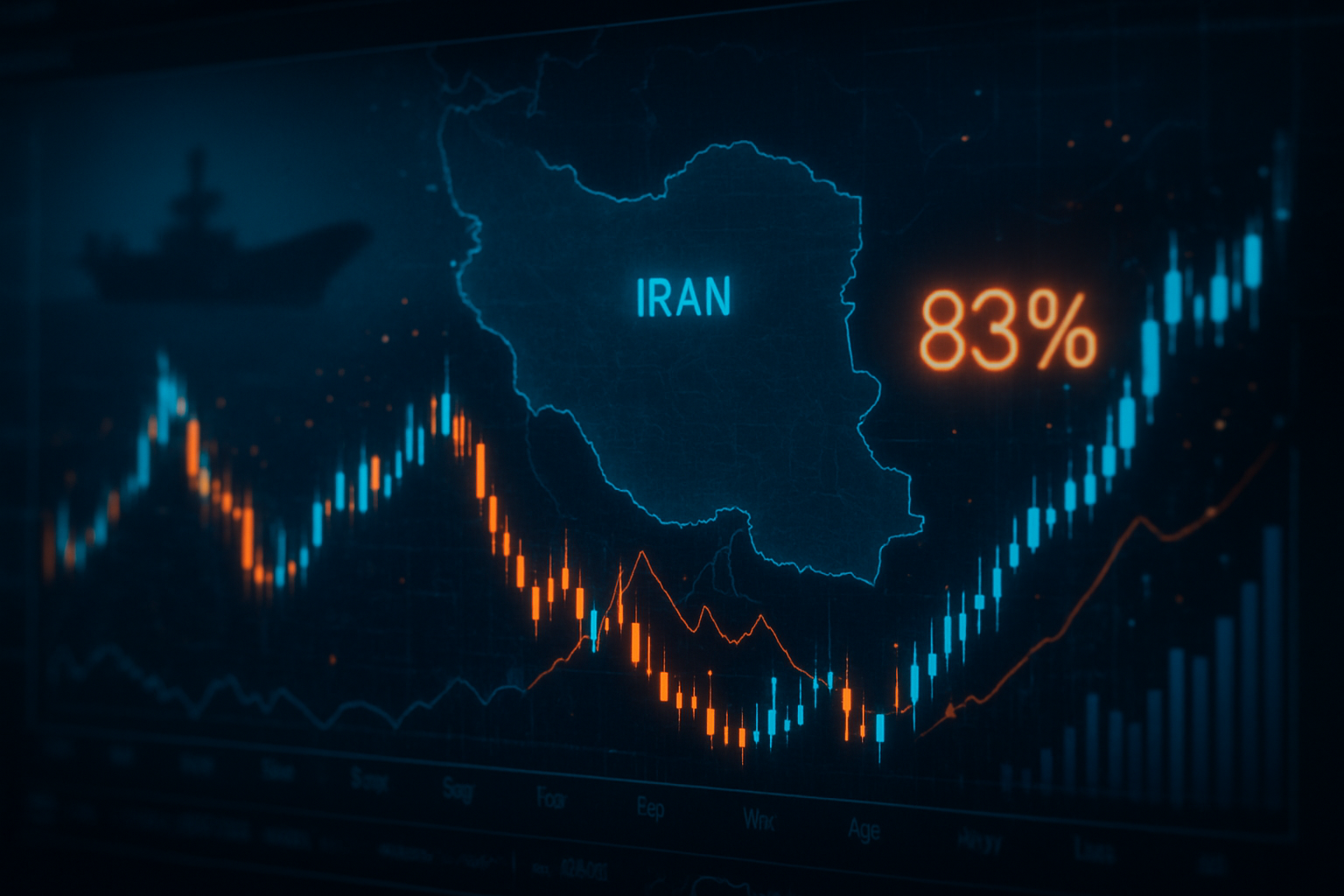
    As of January 27, 2026, the geopolitical landscape in the Middle East has reached a fever pitch, and nowhere is this tension more visible than on global prediction markets. Polymarket, the world’s largest decentralized prediction platform, has seen the volume in its Iran-related military action markets explode to over $107 million. Traders are currently pricing in a staggering 83% probability that the United States will conduct a military strike against Iranian targets before June 30, 2026—a sharp climb from just 48% at the start of the year.

    The surge in trading activity follows a volatile 2025, marked by direct military confrontations and shifting diplomatic alliances. What was once dismissed as "digital gambling" has transformed into a critical barometer for global risk. With millions of dollars at stake, these markets are no longer just reflecting public opinion; they are serving as a high-stakes "shadow intelligence" network that many institutional investors now monitor more closely than traditional news broadcasts from outlets like CNN, owned by Warner Bros. Discovery (NASDAQ: WBD).

    The Market: What's Being Predicted

    The focal point of this massive liquidity is the "US Military Action Against Iran" umbrella market on Polymarket. This contract, which has recorded over $107 million in total volume, requires a definitive "Yes" resolution if the U.S. military executes an airstrike, naval attack, or ground operation on Iranian soil, airspace, or maritime territory. While the 83% chance of U.S. action dominates the long-term outlook, short-term contracts are equally active. A market predicting an Israeli strike by January 31, 2026, is currently trading at a low 6%—a dramatic drop from 53% earlier this month—suggesting that traders believe unilateral Israeli action is being sidelined in favor of a coordinated, U.S.-led operation.

    The resolution criteria for these markets are notoriously strict to prevent ambiguity. For a "Yes" to be triggered, the action must be a physical kinetic strike; economic sanctions or cyberattacks are explicitly excluded. Verification relies on official government statements or a consensus of at least five major international news organizations, including Thomson Reuters (NYSE: TRI), the Associated Press, and The New York Times Company (NYSE: NYT). This level of rigor has attracted professional arbitrageurs and institutional desks looking for a clear, binary way to play geopolitical volatility.

    Why Traders Are Betting

    The current bullishness on military action is heavily informed by the events of June 2025, known as "Operation Rising Lion." During that period, Israel conducted surgical strikes on Iranian nuclear facilities in Natanz and Isfahan. In the 48 hours leading up to those strikes, Polymarket odds for an Israeli attack surged from 14% to nearly 99%, providing a much faster signal than traditional media. This historical accuracy has emboldened traders in the current cycle.

    However, the market is also being driven by whispers of "insider" activity. The platform is still reeling from the controversy surrounding a trader known as "Rundeep," who allegedly placed massive "Yes" bets just hours before Operation Rising Lion. This has led to increased scrutiny from intelligence agencies, including Israel's Shin Bet, though the decentralized nature of the platform makes enforcement difficult. Beyond speculation, the fundamental drivers include the continued expansion of Iran's enrichment programs and the recent deployment of U.S. carrier strike groups to the North Arabian Sea, which many see as a precursor to the 83% probability currently reflected in the odds.

    Broader Context and Implications

    The evolution of these markets represents a paradigm shift in risk management. Hedge funds are no longer just using traditional derivatives to hedge their energy exposure; they are "shorting" peace. For instance, risk managers for global logistics firms have been using the "Strait of Hormuz Closure" market—currently at 48%—to offset potential spikes in shipping insurance costs. The "wisdom of the crowd" found in prediction markets often incorporates fragmented information from ground-level sources and diplomatic leaks that haven't yet reached the mainstream.

    Furthermore, these markets have shown a significant correlation with other asset classes. Analysts have noted a high inverse correlation between the "Iran Strike" odds and the price of Bitcoin, while safe-haven assets have moved in tandem with the conflict probability. In early 2026, as the odds of a U.S. strike climbed, Gold prices surged past the $5,000 per ounce mark. Even major tech platforms like Alphabet Inc. (NASDAQ: GOOGL) via Google Finance have begun integrating real-time prediction market data into their dashboards, signaling a growing acceptance of these odds as legitimate financial signals.

    What to Watch Next

    The immediate focus for traders is the January 31, 2026, deadline for the unilateral Israeli strike market. While the 6% probability suggests the immediate threat of a solo mission has passed, any sudden movement in these odds could signal a breakdown in U.S.-Israel coordination. Market participants are also keeping a close eye on the "Regime Stability" contracts. Currently, there is a 27% probability that Supreme Leader Ali Khamenei will be removed from power by March 31, 2026, reflecting the domestic unrest that has plagued Iran since late 2025.

    As we approach the June 30th deadline for the primary U.S. strike market, expect liquidity to tighten and volatility to increase. Key dates for U.S. Congressional testimony on Middle East policy and the scheduled rotation of naval assets in the Persian Gulf will be major catalysts for market movement. Traders will be looking for any deviation from the current 83% "Yes" price as a signal of a possible diplomatic breakthrough or a delay in military plans.

    Bottom Line

    The $107 million volume in Iran military action markets underscores a new reality: prediction markets are becoming the world’s most efficient processing engine for geopolitical risk. By incentivizing the discovery of truth through financial gain, platforms like Polymarket are providing a level of clarity that traditional intelligence and media often struggle to match. The high conviction behind an impending U.S. strike suggests that the "smart money" is preparing for a significant escalation in the first half of 2026.

    Whether these markets are accurately predicting the future or simply reflecting a collective anxiety, their impact on modern finance is undeniable. As tools for hedging and "shadow intelligence," they have become essential for anyone navigating the complexities of the modern Middle East. For now, all eyes remain on the 83% probability, a number that carries the weight of billions in potential economic impact and the lives of millions in the region.


    This article is for informational purposes only and does not constitute financial or betting advice. Prediction market participation may be subject to legal restrictions in your jurisdiction.

    PredictStreet focuses on covering the latest developments in prediction markets. Visit the PredictStreet website at https://www.predictstreet.ai/.

  • Arctic Real Estate: How the ‘Greenland Framework’ is Shaking Up Prediction Markets

    Arctic Real Estate: How the ‘Greenland Framework’ is Shaking Up Prediction Markets

    The "Greenland Framework," a diplomatic and strategic pivot announced by President Donald Trump at the World Economic Forum in Davos on January 21, 2026, has sent shockwaves through geopolitical prediction markets. After weeks of escalating tensions that some dubbed the "Arctic Missile Crisis," the market is now pricing in a sophisticated compromise: the transition from an outright purchase of the world's largest island to a "sovereign lease" model.

    As of late January 2026, the probability of the United States establishing a permanent, sovereign-controlled presence in Greenland by the end of President Trump’s term has surged. Traders are no longer betting on a simple real estate transaction, but on a complex geopolitical architecture that integrates Greenland into the U.S. "Golden Dome" missile defense system. This shift has triggered record volume on platforms like Polymarket and Kalshi, as participants weigh the likelihood of a "Cyprus-style" arrangement over the next three years.

    The Market: What's Being Predicted

    The betting landscape for Greenland has matured significantly since the initial rumors surfaced in 2019. On Polymarket, the contract for "U.S. acquires Greenland by end of 2026" is currently trading at 23%, a significant bounce from the 5% lows seen in mid-2025. However, the real action is in the longer-dated markets. On Kalshi, the probability that the U.S. will achieve "sovereign control or title" over any part of Greenland by January 20, 2029, is currently sitting at 43%, with total trading volume across Greenland-related contracts nearing $20 million.

    The resolution criteria for these markets have become increasingly granular. Most platforms now specify that "acquisition" includes the creation of Sovereign Base Areas (SBAs), similar to the British territories in Cyprus. This allows for a "Yes" resolution even if the entire island does not become the 51st state, provided the U.S. gains "right, title, and ownership" over strategic zones like the Pituffik Space Base. This nuance has allowed liquidity to pool in "partial acquisition" contracts, which are currently trading at a premium compared to "total annexation" scenarios.

    Why Traders Are Betting

    The primary driver of the recent market volatility was the "Greenland Crisis" of early January 2026. After Deputy Chief of Staff Stephen Miller declined to rule out military force to secure the island’s rare earth minerals, odds for a forced takeover spiked to nearly 40%. However, the unveiling of the "Greenland Framework" in Davos provided a diplomatic off-ramp. Traders are now betting that the Trump administration will use 25% tariffs on European goods—specifically targeting Denmark and its neighbors—as a "hammer" to force a lease agreement rather than a sale.

    Strategic interests are also fueling the "Yes" side of the trade. The integration of Greenland into the "Golden Dome" (NYSE:RTX)—the space-based missile defense constellation—is seen by defense analysts as a non-negotiable for the Pentagon. Reports of a $2 billion contract for SpaceX to provide a 600-satellite "Starshield" constellation have led traders to believe the U.S. will not stop until its "ground station bridge" in Greenland is fully secured. Additionally, the U.S. Commerce Department's $1.6 billion investment in companies like USA Rare Earth (Nasdaq:USAR) signals a long-term commitment to bypassing Chinese supply chains via Greenlandic minerals.

    Broader Context and Implications

    This market represents a new era for prediction platforms, which are increasingly being used as "real-time sentiment gauges" for high-stakes diplomacy. Unlike traditional polling, which struggled to capture the rapid shift in Danish-U.S. relations, prediction markets reacted instantly to the appointment of Louisiana Governor Jeff Landry as Special Envoy to Greenland. Traders recognized Landry’s "culinary diplomacy"—involving high-profile fishing trips with Greenlandic officials—as a signal that the administration was moving toward a "hearts and minds" economic approach rather than a purely hostile one.

    The real-world implications are immense. If the "Greenland Framework" succeeds, it could redefine national sovereignty in the 21st century, creating a precedent for "sovereign economic zones" in strategic territories. For investors, the "Greenland Trade" has extended beyond the prediction platforms and into the equities of mining firms. Amaroq Minerals (TSXV:AMRQ), which holds significant gold and strategic metal assets in South Greenland, has seen its stock price correlate closely with the "Yes" odds on Kalshi, serving as a secondary vehicle for those looking to play the Greenland narrative.

    What to Watch Next

    The next major catalyst for this market will be the scheduled "Operation Arctic Endurance" in mid-2026. This NATO-led exercise will test the security of the proposed Greenland corridor and serve as a "stress test" for the Framework. If Denmark or the Greenlandic Parliament (Inatsisartut) refuses to participate or blocks U.S. access during the exercise, expect the "Yes" odds for 2026 to plummet while the "forced acquisition" contracts on decentralized platforms may see a speculative spike.

    Traders should also monitor the U.S. Treasury’s implementation of the 10% "Greenland Tariff" on European nations currently opposing the Framework. Any signs of a "thaw" in Copenhagen—perhaps prompted by economic pressure or a promise of shared mineral royalties—would likely send the odds of a 2029 acquisition toward the 60% mark. Conversely, a victory for the opposition in the upcoming Danish snap elections could freeze negotiations entirely.

    Bottom Line

    The Greenland Framework has transformed a fringe geopolitical meme into a multi-million dollar prediction market. By moving from a "purchase" to a "sovereign lease" model, the Trump administration has created a viable, albeit controversial, path forward that markets are beginning to take seriously. The current 43% probability on Kalshi suggests that while the deal is far from certain, it is no longer being treated as a fantasy.

    Prediction markets have proven to be an invaluable tool in this saga, cutting through the noise of diplomatic "no's" to reveal a underlying belief that economic and security pressures will eventually lead to a U.S. foothold on the island. As we move deeper into 2026, the intersection of missile defense, rare earth mining, and aggressive trade policy will continue to make the Greenland market one of the most volatile and closely watched sectors in the forecasting world.


    This article is for informational purposes only and does not constitute financial or betting advice. Prediction market participation may be subject to legal restrictions in your jurisdiction.

    PredictStreet focuses on covering the latest developments in prediction markets.
    Visit the PredictStreet website at https://www.predictstreet.ai/.