
Tag: FinTech

  • The Truth Machine: How Prediction Markets Became Global Financial Infrastructure in 2025

    The Truth Machine: How Prediction Markets Became Global Financial Infrastructure in 2025

    The year 2025 will be remembered in financial history as the moment prediction markets evolved from a niche curiosity into a foundational pillar of the global economy. What was once dismissed as "gambling for nerds" has transformed into a high-stakes "truth machine," providing real-time data that traditional polling and expert analysis have struggled to match. In just twelve months, the industry shed its speculative reputation, proving that when people put money where their mouths are, the resulting data is more accurate than any focus group.

    The numbers are staggering. Monthly trading volume across major platforms surged from under $100 million in early 2024 to a consistent baseline of over $13 billion by the end of 2025. During periods of extreme macroeconomic volatility, such as the Federal Reserve’s surprise mid-year pivot, volumes peaked as high as $22 billion. This explosive growth wasn't just driven by a few "whales" or election hobbyists; it was propelled by the deep integration of prediction markets into the daily workflows of retail investors and corporate treasuries alike.

    The Market: What's Being Predicted

    The transformation of prediction markets in 2025 was defined by the transition from "event betting" to "event hedging." While the 2024 U.S. presidential election provided the initial spark, the market's liquidity migrated toward complex economic and regulatory outcomes throughout 2025. Today, traders are less focused on who will win an award show and more focused on whether the "Digital Asset Market Clarity Act" will pass the Senate, or if a specific judicial ruling will impact the business model of a Fortune 500 company.

    The landscape is dominated by two primary titans: Polymarket, the decentralized giant that pioneered high-volume crypto-settled markets, and Kalshi, the first CFTC-regulated prediction market in the United States. Throughout 2025, these platforms transitioned into high-liquidity exchanges where billions of contracts change hands daily. According to market data, daily trading volumes reached a peak of $700 million in early 2026, with liquidity depth in key economic markets (such as CPI prints and Fed rate decisions) now rivaling that of traditional interest rate swaps.

    The resolution criteria for these markets have also become more sophisticated. Rather than simple "Yes/No" binary outcomes, 2025 saw the rise of "range markets" and "scalar contracts," allowing participants to bet on the exact percentage of a tax hike or the precise date of a regulatory approval. This level of granularity has turned prediction markets into a "real-time demand curve for uncertainty," according to industry analysts.

    Why Traders Are Betting

    The primary driver behind this $13 billion monthly volume is accessibility. In 2025, prediction markets became "financial infrastructure" through a series of high-profile integrations. Robinhood Markets, Inc. (NASDAQ: HOOD) launched its "Prediction Markets Hub" in partnership with Kalshi in March 2025, bringing event-based trading to over 24 million active users. This was followed by Coinbase Global, Inc. (NASDAQ: COIN), which integrated prediction market contracts directly into its main application, allowing users to trade on events using USD or USDC. Even the decentralized finance (DeFi) space saw a massive boost when the Phantom wallet integrated prediction markets, enabling millions of Solana users to trade outcomes with a single tap.

    This "Great Integration" solved the friction problems that had previously hampered the industry. "Prediction markets… do a very, very good job at distilling information and surfacing truth to people," said Kalshi CEO Tarek Mansour during a late-2025 briefing. Mansour has long argued that the core value of these markets isn't the payout, but the information they generate. "It’s much harder to lie when you have some money on the line… You’re actually much more truthful, and that’s why these markets work so well."

    Beyond retail enthusiasm, institutional demand has shifted from speculative to strategic. Quantitative hedge funds and corporate risk officers are now using these markets as a more efficient way to price risks that traditional insurance or derivatives don't cover. If a company's revenue is threatened by a potential government shutdown, they can now purchase a "Yes" contract on that event as a direct hedge, effectively creating a customized insurance policy.

    Broader Context and Implications

    The success of prediction markets in 2025 has created a new paradigm known as "Information Finance." This shift has profound implications for public sentiment and democratic accountability. In a world of deepfakes and algorithmic echo chambers, prediction markets provide a decentralized, incentivized source of truth. When a news report contradicts a market price, savvy observers have learned to trust the money.

    This trend has been bolstered by a series of regulatory victories. After years of legal battles, the CFTC’s acceptance of regulated event markets allowed for the entry of major institutions like AQR Capital Management and Saba Capital Management. These firms now use prediction markets to hedge "tail risks"—rare but catastrophic events that could otherwise devastate a portfolio. The historical accuracy of these markets throughout 2025 was notable, with market odds correctly anticipating several key Supreme Court rulings and interest rate shifts weeks before they occurred.

    However, the rise of these markets has also sparked debate. Critics argue that "betting on disaster" could create perverse incentives, though proponents counter that the markets merely reflect existing risks rather than creating them. What is undeniable is that prediction markets have become a vital feedback loop for policymakers, who now monitor the "probability of success" for their own legislation in real-time.

    What to Watch Next

    As we look further into 2026, the next frontier for prediction markets is their full integration into institutional terminal software. Rumors suggest that major financial data providers are in talks to include Kalshi and Polymarket feeds as standard features alongside stock tickers and bond yields. This would further cement their role as a primary source of market intelligence for global traders.

    Another development to monitor is the expansion into local and municipal prediction markets. Several states are exploring "policy markets" to gauge public opinion and the likely impact of new zoning laws or tax initiatives. Furthermore, the arrival of more "AI agents" as market participants is expected to increase liquidity even further, as automated bots trade on sub-second news releases, driving prices toward efficiency faster than humanly possible.

    Bottom Line

    The story of prediction markets in 2025 is the story of a technology finally finding its "killer app": the truth. By growing from a $100 million niche to a $13 billion-a-month pillar of financial infrastructure, platforms like Kalshi and Polymarket have proven that the wisdom of the crowd is best captured when that crowd has a stake in being right.

    For the average investor, the inclusion of prediction markets in platforms like Robinhood Markets, Inc. (NASDAQ: HOOD) and Coinbase Global, Inc. (NASDAQ: COIN) means that "hedging your life" is now as easy as buying a stock. Whether you are a corporation protecting against a regulatory shift or a retail trader looking for an unbiased source of information, prediction markets have become the ultimate tool for navigating an increasingly uncertain world. As Tarek Mansour noted, these markets don't just predict the future—they reveal the truth of the present.


    This article is for informational purposes only and does not constitute financial or betting advice. Prediction market participation may be subject to legal restrictions in your jurisdiction.

    PredictStreet focuses on covering the latest developments in prediction markets.
    Visit the PredictStreet website at https://www.predictstreet.ai/.

  • The Wall Street Takeover: How TradFi Giants Are Reshaping the Prediction Market Landscape

    The Wall Street Takeover: How TradFi Giants Are Reshaping the Prediction Market Landscape

    The dawn of 2026 has marked a definitive shift in the global financial ecosystem: prediction markets are no longer the exclusive playground of crypto-native speculators and data scientists. What was once a niche corner of the internet, often viewed with regulatory skepticism, has been institutionalized. Today, the "Wall Street Takeover" of prediction markets—now increasingly referred to as Information Finance (InfoFi)—is in full swing, as traditional brokerage giants and fintech powerhouses integrate event-based trading into their core offerings.

    Currently, markets tracking the "Volume King of 2026" suggest a fierce four-way battle. While Polymarket remains a dominant force with a 47% implied probability of maintaining its lead, newcomers like ForecastEx and the soon-to-be-native Coinbase platform are rapidly gaining ground. The entry of these regulated behemoths has injected billions in institutional liquidity, transforming prediction markets into a standardized asset class that rivals traditional options and futures.

    The Market: What's Being Predicted

    The most significant movement in the industry is the meteoric rise of ForecastEx, the dedicated prediction exchange launched by Interactive Brokers Group, Inc. (NASDAQ: IBKR). Since its debut in mid-2024, ForecastEx has evolved from a fledgling experiment into an institutional powerhouse. By January 2026, the platform reported cumulative notional volumes exceeding $1 billion, with a focus on macro-economic indicators such as the Fed funds rate, Consumer Price Index (CPI), and climate-related data.

    Unlike retail-centric platforms, ForecastEx trades on a specialized "ForecastTrader" interface, appealing to hedge funds and institutional desks that require high levels of regulatory compliance. Currently, the platform's "Interest on Open Positions" feature—a first in the industry—has attracted significant capital, as traders earn a yield on the cash value of their open contracts. This structural advantage has allowed Interactive Brokers to capture roughly 12% of the total institutional prediction market share as of early 2026.

    Meanwhile, the retail sector is being dominated by Robinhood Markets, Inc. (NASDAQ: HOOD). After a successful pilot during the 2024 election cycle, Robinhood has scaled its event contract offerings to include everything from NFL game outcomes to the approval dates of Bitcoin ETFs. In November 2025 alone, Robinhood processed a staggering 3.0 billion event contracts, signaling that prediction markets have become a primary engagement driver for its 24 million+ user base.

    Why Traders Are Betting

    The surge in trading volume is driven by a unique confluence of factors: regulatory clarity, platform integration, and a new era of "Truth-Based Hedging." Traders are no longer just betting on outcomes for fun; they are using these markets to hedge against specific real-world risks. For instance, institutional desks on ForecastEx are frequently using Fed rate contracts to hedge their bond portfolios, finding these markets to be more direct and liquid than traditional interest rate swaps in certain scenarios.

    The move toward "Native" integration is also a massive catalyst. Coinbase Global, Inc. (NASDAQ: COIN) is currently the focus of intense market speculation. Having spent much of 2025 facilitating trades through a partnership with Kalshi, Coinbase recently acquired "The Clearing Company," a startup comprised of top-tier engineering talent from earlier prediction market pioneers. This move signals an imminent shift: the launch of a native, fully integrated prediction market within the Coinbase app, expected in late Q1 2026.

    Traders are already positioning themselves for this launch. On "Meta-Prediction" markets, the probability of Coinbase reaching $500 million in monthly volume within its first 90 days of native operation has climbed to 65%. The expectation is that Coinbase will leverage its 100 million+ users to bridge the gap between DeFi (Decentralized Finance) and regulated TradFi prediction products.

    Broader Context and Implications

    This shift represents more than just new competition; it is the legitimization of the "Wisdom of Crowds" as a financial utility. The inclusion of Intercontinental Exchange (NYSE: ICE)—the parent company of the New York Stock Exchange—into the mix further underscores this. In late 2025, ICE made a landmark $2 billion investment in Polymarket. Today, ICE distributes Polymarket’s real-time pricing data to institutional trading desks globally, treating event contracts as a high-fidelity alternative to traditional polling and forecasting.

    The regulatory environment has also thawed significantly. The CFTC, which once sought to ban certain event contracts, has largely embraced the sector following several pivotal court rulings and a shift in administrative priorities. This has allowed platforms like Robinhood to finalize their acquisition of the MIAX Derivatives Exchange (rebranded as "Rothera"), giving them the infrastructure to clear and settle their own proprietary event products.

    Furthermore, the 2026 FIFA World Cup is looming as the "Super Bowl" for prediction markets. Analysts estimate that the cumulative betting volume for the tournament could exceed $5 billion across all platforms, potentially surpassing the 2024 U.S. Presidential election as the single largest event in the history of the industry.

    What to Watch Next

    The coming months will be defined by the "Native Wars." As Coinbase prepares its Q1 2026 launch, all eyes will be on whether they can convert their massive crypto-native user base into active event traders. If Coinbase successfully integrates these markets into its core trading interface, it could trigger a "liquidity drain" from smaller, non-regulated platforms.

    Key dates to monitor include:

    • Late February 2026: The expected formal announcement of Coinbase’s native "Event Center."
    • Q2 2026: The launch of Robinhood’s "Rothera" exchange, which is expected to introduce "micro-event" contracts for high-frequency retail traders.
    • June 2026: The start of the FIFA World Cup, which will serve as the ultimate stress test for the liquidity and stability of these institutional platforms.

    Bottom Line

    The "Wall Street Takeover" is no longer a prediction—it is a reality. The transition of prediction markets from the fringes of crypto to the core of platforms like Interactive Brokers, Robinhood, and Coinbase marks the beginning of the InfoFi era. These markets are increasingly viewed not as gambling, but as the most efficient way to price information and hedge against the uncertainty of a complex global landscape.

    As we move deeper into 2026, the success of these platforms will depend on their ability to maintain liquidity and provide "truth-priced" data. For the average investor, this means a new world of opportunities: the ability to trade the news as it happens, with the security and scale of the world’s largest financial institutions. The message from Wall Street is clear: the future of finance is the future itself.


    This article is for informational purposes only and does not constitute financial or betting advice. Prediction market participation may be subject to legal restrictions in your jurisdiction.

    PredictStreet focuses on covering the latest developments in prediction markets.
    Visit the PredictStreet website at https://www.predictstreet.ai/.
  • The Death of Guessing: How Prediction Markets Became Wall Street’s New Favorite Asset Class in 2026

    The Death of Guessing: How Prediction Markets Became Wall Street’s New Favorite Asset Class in 2026

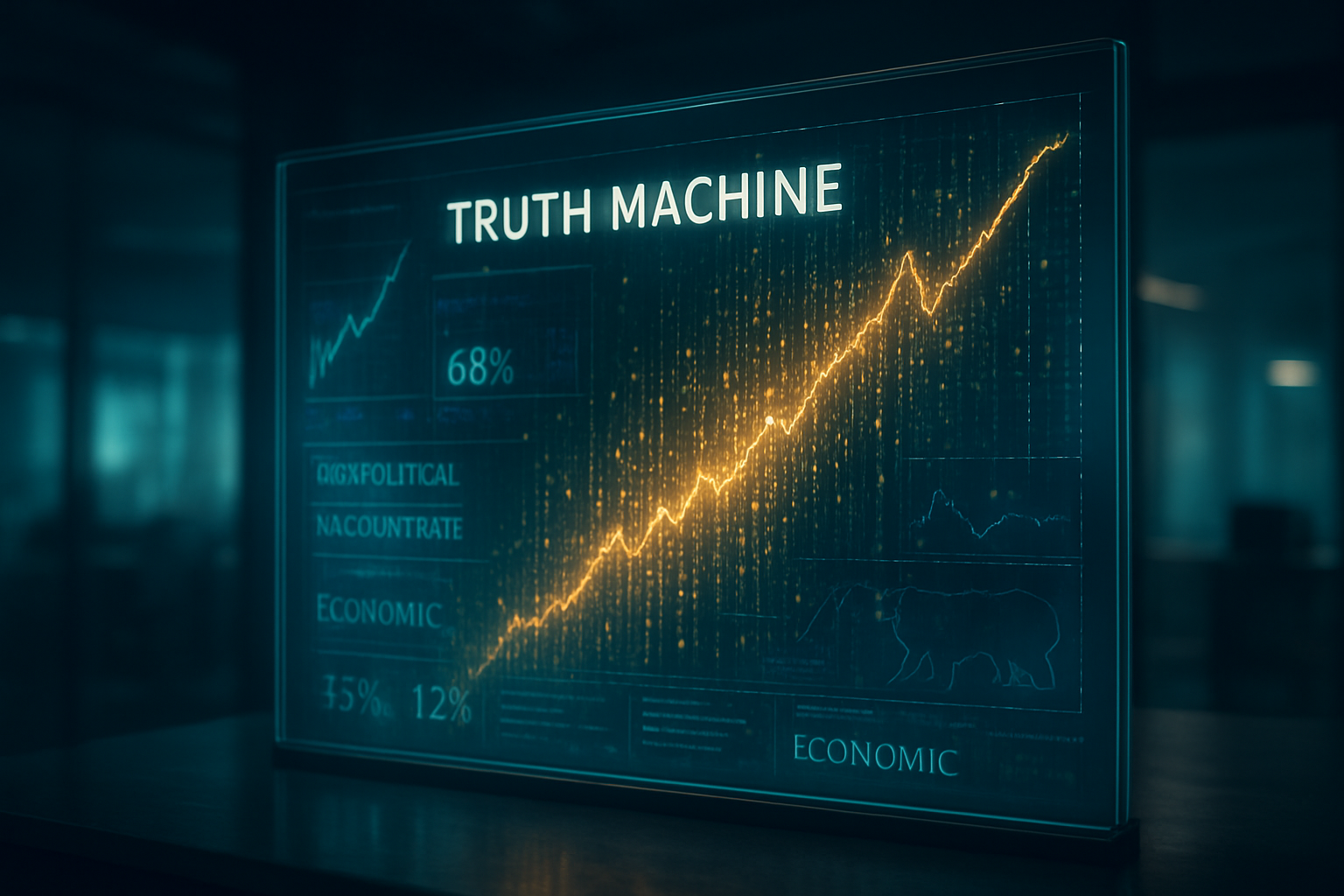
    As of January 30, 2026, the financial landscape has undergone a tectonic shift. What were once dismissed as "speculative casinos" for crypto enthusiasts and political junkies have matured into the world’s most efficient "truth machines." Prediction markets, led by platforms like Polymarket and Kalshi, are no longer just places to bet on who will win an Oscar or a football game; they have become a foundational layer of the global financial infrastructure, institutionalized as a legitimate "Information Asset Class."

    Currently, the collective "Event Contract" market is pricing the probability of a U.S. government shutdown by the January 31 deadline at a staggering 68%, while the odds of a March interest rate cut by the Federal Reserve have plummeted from 45% to 12% in just the last week. This rapid movement isn't driven by retail hysteria, but by sophisticated institutional hedging. In 2026, when the market moves, it isn’t just noise—it’s the sound of the world’s most informed participants putting their capital behind what they know to be true.

    The Market: What's Being Predicted

    The scale of prediction markets in 2026 is unprecedented. Kalshi, a platform regulated by the Commodity Futures Trading Commission (CFTC), reported a staggering $23.8 billion in total volume for 2025, an 1,100% increase over the previous year. Just two weeks ago, on January 14, 2026, the platform hit a record single-day volume of $465.9 million. Meanwhile, Polymarket has successfully re-entered the U.S. market after its strategic acquisition of the licensed exchange QCX, pushing its combined cumulative volume with Kalshi toward the $50 billion mark.

    These platforms are no longer dominated by small-time bettors. The average trade size has ballooned to $4,800, a clear indicator that high-net-worth individuals and algorithmic funds have taken the wheel. The most liquid markets currently focus on macro-economic indicators and geopolitical stability. For instance, the "March 2026 Fed Rate Decision" market on Kalshi has already seen over $120 million in volume, providing a 24/7 real-time probability signal that is often more reactive and accurate than the traditional FedWatch Tool provided by CME Group (NASDAQ:CME).

    Resolution criteria have also become more robust. Markets now utilize a combination of official government data, decentralized oracles, and "trusted witness" protocols to ensure that payouts are indisputable. This maturity has allowed for more complex contracts, such as those predicting the specific percentage of the Consumer Price Index (CPI) or the outcome of specific legislative votes in the 2026 midterms.

    Why Traders Are Betting

    The transition from "gambling" to "Information Finance" has been accelerated by the entry of traditional financial heavyweights. In a landmark move last year, Intercontinental Exchange (NYSE:ICE), the parent company of the New York Stock Exchange, led a $2 billion strategic investment in Polymarket. This wasn't a speculative play; it was a move to own the pipeline of "event-driven data" that is now integrated into every professional trading desk.

    Institutional traders are using these markets for "pure-play hedging." For example, federal contractors and municipal bond holders are currently using Kalshi’s "Government Shutdown" contracts to hedge against the January 31 funding deadline. If the government shuts down, their traditional portfolios may take a hit, but their "Yes" contracts pay out, offsetting the loss. This is a far more precise instrument than buying gold or defensive stocks, which are often subject to unrelated market volatility.

    Perhaps the most dramatic example of this "predictive edge" occurred earlier this month during the "Maduro Trade." On Polymarket, odds for a sudden shift in Venezuelan political stability spiked to 98% hours before the U.S. military announced "Operation Absolute Resolve." This suggests that participants with on-the-ground intelligence are using these markets to monetize their information, effectively turning "insider knowledge" into a public, tradable price signal.

    Broader Context and Implications

    The "Information as an Asset Class" movement marks the definitive end of the polling era. After prediction markets correctly identified the 2024 U.S. Presidential victory in key swing states weeks before traditional pollsters, the public lost faith in the "margin of error." In 2025, this was solidified during the Canadian Federal Election, where markets priced a Liberal minority at 65% while poll-based models were still stuck at an 85% probability of a majority. The markets were right.

    Regulatory clarity has been the final piece of the puzzle. Following Kalshi's landmark legal victory in late 2024, which ruled that political event contracts are not "gambling" under federal law, the CFTC has pivoted. In early January 2026, CFTC Chairman Michael Selig announced a new formal rulebook to support "lawful innovation" in event contracts, effectively ending the era of regulatory uncertainty that previously hampered the industry.

    Furthermore, these markets are now integrated into the standard financial stack. Alphabet Inc. (NASDAQ:GOOGL) now features real-time probability charts from Kalshi and Polymarket directly in Google Finance and Search results. If you search for "recession probability," you are no longer met with op-eds, but with a live, tradable percentage. This has democratized access to institutional-grade sentiment analysis, making it available to any retail investor with a smartphone.

    What to Watch Next

    As we move toward the 2026 U.S. midterm elections, the volume in political event contracts is expected to shatter all previous records. Market analysts are watching for "lead-lag" relationships, where movements in the prediction markets precede shifts in the S&P 500 or the bond market.

    Key dates to monitor include:

    • January 31, 2026: The deadline for the U.S. government funding bill. The market is currently signaling high tension.
    • March 18, 2026: The next Federal Open Market Committee (FOMC) meeting. Prediction markets are currently pricing a "hawkish hold," contrary to some traditional bank analysts.
    • May 2026: The launch of "Climate Event Contracts" on Kalshi, which will allow insurance companies to hedge against specific hurricane and wildfire milestones using binary outcomes.

    Bottom Line

    The narrative has changed. In 2024, people asked if prediction markets were "legal" or "moral." In 2026, the only question being asked is, "What is the market saying?" The shift to "Information Finance" has turned every global event into a tradable asset, creating a world where information is not just power—it is liquidity.

    For the first time in history, we have a real-time, global dashboard of human expectations. Whether it is a corporate merger, a geopolitical conflict, or a central bank decision, prediction markets are providing a level of clarity that traditional media and polling have failed to deliver. As institutional capital continues to pour into these "truth machines," the line between "betting" and "investing" will continue to blur until it disappears entirely.


    This article is for informational purposes only and does not constitute financial or betting advice. Prediction market participation may be subject to legal restrictions in your jurisdiction.

    PredictStreet focuses on covering the latest developments in prediction markets.
    Visit the PredictStreet website at https://www.predictstreet.ai/.
  • The Retail Revolution: Robinhood’s Billion-Dollar Bet on Prediction Markets

    The Retail Revolution: Robinhood’s Billion-Dollar Bet on Prediction Markets

    On January 20, 2026, the landscape of American finance shifted when Robinhood Markets, Inc. (NASDAQ:HOOD) announced it had acquired a 90% majority stake in MIAXdx, a CFTC-regulated derivatives exchange. This move signals more than just a corporate expansion; it marks the moment prediction markets—once a niche interest for crypto enthusiasts and political junkies—officially became a cornerstone of the retail investing experience.

    With over 27 million funded accounts and a history of disrupting traditional brokerages, Robinhood’s aggressive entry into the space is already rattling established giants like Polymarket and Kalshi. As of late January 2026, Robinhood has processed over 11 billion cumulative event contracts, leveraging its massive user base to drive unprecedented liquidity into markets ranging from the outcome of Super Bowl LX to the 2026 U.S. Midterm elections. The "Robinhood Effect," which famously upended the equity markets in 2021, is now recalibrating the odds in the world of binary outcomes.

    The Market: What's Being Predicted

    The current crown jewel of the prediction market world is the Super Bowl LX matchup between the Seattle Seahawks and the New England Patriots, scheduled for February 8, 2026. On the Robinhood platform, which now routes much of its volume through its own MIAXdx-powered infrastructure, the Seahawks are holding steady as the favorites with a 67.7% implied probability of victory.

    While sports are the primary driver of daily retail frequency, the high-stakes "long game" is being played in the 2026 U.S. Midterm Election markets. Traders are currently pricing in a 76% chance of a Democratic takeover of the House of Representatives, while the GOP is favored at 68% to maintain control of the Senate. These markets are no longer just for speculators; they have become essential hedging tools for corporations and institutional investors looking to manage legislative risk.

    Liquidity has reached levels previously thought impossible for event derivatives. In the first three weeks of January 2026 alone, the total notional value traded across Robinhood’s prediction suite exceeded $2.5 billion. This surge in volume has narrowed bid-ask spreads to fractions of a cent, making event contracts a viable alternative to traditional options for short-term retail traders.

    Why Traders Are Betting

    The explosion in betting activity is driven by a combination of regulatory clarity and the "gamification" of macro events. In late 2024, a landmark court victory for Kalshi against the Commodity Futures Trading Commission (CFTC) opened the floodgates for regulated election betting in the U.S. Robinhood capitalized on this immediately, launching its first contracts just days before the 2024 presidential election.

    The current momentum is also fueled by a new generation of "macro-traders" who find event contracts more intuitive than complex Greeks in the options market. For many Robinhood users, betting $10 on a Federal Reserve rate pause (currently trading at a 98% certainty for the March meeting) is simpler and more direct than trading treasury ETFs or bank stocks.

    Furthermore, "whale" activity has become more transparent. Large positions, some exceeding $5 million, have been spotted in the Midterm House control markets, likely placed by political action committees (PACs) or hedge funds using prediction markets as a real-time sentiment gauge that is often more accurate than traditional polling.

    Broader Context and Implications

    Robinhood’s entry has fundamentally reordered the industry hierarchy. Throughout 2024, the crypto-native Polymarket held a near-monopoly on prediction volume. However, by January 2026, the tide has turned. Kalshi, boosted by its partnership with Robinhood and Interactive Brokers Group, Inc. (NASDAQ:IBKR), now commands roughly 66% of the U.S. regulated market share.

    The acquisition of MIAXdx allows Robinhood to move from being a broker to a self-clearing exchange operator. This vertical integration reduces fees and allows for "Custom Combo" bets—parlays on political and economic outcomes that were previously impossible. This move echoes the strategy of traditional giants like Intercontinental Exchange, Inc. (NYSE:ICE), but with a focus on the "everyday" trader.

    Regulators have also softened their stance. The current CFTC leadership, under Chair Michael Selig, has moved away from trying to ban these markets, instead opting for a framework that treats event contracts as a legitimate asset class. This has provided the legal "green light" necessary for institutional capital to enter the fray, further stabilizing these markets against the volatility seen in earlier, unregulated iterations.

    What to Watch Next

    The upcoming month will be a litmus test for Robinhood’s new infrastructure. The Super Bowl LX "flywheel" is expected to generate record-breaking volume on February 8, testing the reliability of the MIAXdx clearing system under extreme load.

    Beyond sports, the focus will shift to the March primary season for the 2026 Midterms. If the House control markets remain lopsided (currently 76% for Democrats), watch for a potential "correction" as Republican-aligned traders begin to hedge against the prevailing narrative. Additionally, the transition of the Federal Reserve Chair in May 2026 is already generating significant "who will it be?" volume, with BlackRock (NYSE:BLK) executive Rick Rieder currently leading the odds at 52%.

    Bottom Line

    Robinhood’s 90% stake in MIAXdx is the final piece of a puzzle that transforms prediction markets from a curiosity into a financial powerhouse. By marrying a 27-million-strong retail army with institutional-grade exchange infrastructure, Robinhood has created a liquidity moat that even the most established prediction platforms will find difficult to cross.

    As we look toward the remainder of 2026, it is clear that prediction markets are the new "social layer" of finance. They provide a more accurate, real-time reflection of public sentiment than polls, and a more accessible hedging tool than traditional derivatives. Whether you are betting on a Super Bowl winner or a shift in Congressional power, the message is clear: the future of forecasting isn't in a crystal ball—it's in the order book.


    This article is for informational purposes only and does not constitute financial or betting advice. Prediction market participation may be subject to legal restrictions in your jurisdiction.

    PredictStreet focuses on covering the latest developments in prediction markets.
    Visit the PredictStreet website at https://www.predictstreet.ai/.
  • The New Wall Street: How Robinhood and Webull Turned Every American Into a Forecaster

    The New Wall Street: How Robinhood and Webull Turned Every American Into a Forecaster

    As of late January 2026, the financial landscape has undergone a tectonic shift that few saw coming just two years ago. The integration of prediction markets into the everyday brokerage accounts of millions has transformed "event contracts" from a niche obsession into a multi-billion dollar pillar of mainstream finance. Today, the ability to trade on the outcome of a Federal Reserve meeting or a geopolitical standoff is as accessible as buying a fractional share of an index fund.

    Currently, the market is bracing for the January 28 Federal Reserve announcement. While traditional futures markets suggest a modest 16% chance of a rate cut, prediction markets on Robinhood Markets, Inc. (NASDAQ: HOOD) and Kalshi are signaling a 96% "certainty" of a pause. This massive divergence is generating unprecedented interest, with over $1.2 billion in notional value changing hands in the last week alone. Traders are increasingly looking to these markets—not as a form of gambling, but as the most accurate "financial weather vane" available in the digital age.

    The Market: What's Being Predicted

    The central engine of this revolution is the "Binary Event Contract"—a simple "Yes/No" proposition that settles at $1.00 if an event occurs and $0.00 if it does not. Through strategic partnerships with Kalshi, a CFTC-regulated exchange, and the recent vertical integration of Robinhood Markets, Inc. (NASDAQ: HOOD) into the exchange space, retail traders now have 24/7 access to hundreds of these markets. These contracts are currently trading on Robinhood, Webull, and Interactive Brokers Group, Inc. (NASDAQ: IBKR) through its ForecastX subsidiary.

    The sheer volume of these markets is staggering. As of January 27, 2026, Robinhood has surpassed 11 billion event contracts traded since its initial pilot launch in late 2024. While political outcomes—such as the 2026 U.S. Midterm elections—remain the "heavyweights" of the platform, high-frequency "hourly" contracts on S&P 500 movements and Bitcoin price targets have become the bread and butter for retail speculators.

    Liquidity has improved dramatically, thanks to the entry of institutional market makers like Susquehanna International Group (SIG). In the past, a $100,000 bet could move a niche prediction market by 10 or 20 points. Today, the "Robinhood effect" ensures that even multi-million dollar positions in major economic contracts experience minimal slippage. This deep liquidity has allowed these platforms to challenge the dominance of offshore, unregulated competitors like Polymarket, which, despite its massive global mindshare, now shares the stage with the U.S.-regulated giants.

    Why Traders Are Betting

    The primary driver of the current "betting fever" is the search for "Alpha"—information that the traditional market hasn't priced in yet. Traders are using prediction markets to hedge real-world risks. For example, a homebuyer might buy "Yes" contracts on a Fed rate hike to offset the cost of their potential mortgage increase. This "financialization of information" has moved beyond speculation into a form of personal insurance.

    Recent "whale" activity has also fueled the fire. In mid-January 2026, a series of high-conviction trades on Venezuelan political stability—dubbed the "Maduro Trade"—saw massive returns for early movers, signaling a major geopolitical shift before traditional news outlets could even confirm the story. This "wisdom of the crowd" often acts as a leading indicator, moving 10 to 15 minutes ahead of the Bloomberg terminal.

    Furthermore, the psychology of the retail trader has evolved. The "gamification" of the 2021 meme-stock era has matured into a more sophisticated "skin in the game" philosophy. Notable retail "whales," some generating over $100,000 in monthly profits by specializing in niche categories like box office results or hyper-local weather patterns, have become influencers in their own right. They argue that prediction markets are the only "honest" markets because they reward accuracy over hype.

    Broader Context and Implications

    The mainstreaming of prediction markets via Robinhood and Webull represents a victory for the "democratization of finance." This shift was largely enabled by the CLARITY Act of 2025, which provided a clear federal regulatory roadmap for event derivatives. However, the road hasn't been entirely smooth. Just this month, regulators in Massachusetts and New York issued cease-and-desist orders against certain sports-related contracts, highlighting a growing tension between federal oversight and state-level gambling concerns.

    Historical data from the 2024 U.S. election proved that prediction markets were significantly more accurate than traditional polling, a fact that has emboldened the industry. This accuracy has led to the emergence of "Information Finance," a sector where firms like Intercontinental Exchange, Inc. (NYSE: ICE) are now investing billions. These companies view prediction market data as a valuable commodity, selling real-time probability feeds to hedge funds and government agencies.

    Perhaps the most significant move in this space occurred on January 21, 2026, when Robinhood completed its acquisition of a 90% stake in MIAXdx. By owning its own exchange and clearinghouse, Robinhood is signaling that it no longer wants to be just a storefront for Kalshi’s products; it wants to be the primary architect of the world's event-trading infrastructure.

    What to Watch Next

    The immediate focus for the market is the January 28 FOMC meeting. If the Fed defies the 96% probability and cuts rates, it could trigger one of the largest "liquidation events" in the history of prediction markets, testing the resilience of the clearinghouses. Beyond the Fed, the upcoming Super Bowl LXI in February is expected to be the largest sports-related prediction event in history, with Webull already offering zero-commission trading for the game.

    Investors should also monitor the legal battles in Massachusetts. A court victory for Kalshi could open the floodgates for more "exotic" contracts across all 50 states, while a loss could force platforms to geofence their most popular products. The evolution of the "Prediction Hub" on these apps is also expected to include more AI-driven sentiment analysis, helping users synthesize thousands of news points into a single "Yes/No" trade.

    Finally, keep an eye on the integration of these markets into retirement accounts. There are already whispers in Washington about a pilot program that would allow 401(k) participants to use event contracts for downside protection against inflation—a move that would truly cement prediction markets as a permanent fixture of the American financial diet.

    Bottom Line

    The integration of prediction markets into the platforms of Robinhood and Webull has fundamentally changed how the public interacts with news and data. What was once a hobby for mathematicians and political junkies is now a legitimate asset class used by millions to hedge risk and express opinions. The "wisdom of the crowd" is no longer a theoretical concept; it is a tradable, liquid, and highly accurate financial instrument.

    This shift tells us that the future of finance is not just about what companies are worth, but about what events are worth. As we look toward the 2026 Midterms and beyond, these markets will likely continue to outperform traditional forecasting methods. While regulatory hurdles remain, the momentum behind "Information Finance" appears unstoppable.

    For the retail trader, the message is clear: the era of being a passive observer of world events is over. In the world of 2026, every headline is a trade, and every prediction has a price.


    This article is for informational purposes only and does not constitute financial or betting advice. Prediction market participation may be subject to legal restrictions in your jurisdiction.

    PredictStreet focuses on covering the latest developments in prediction markets. Visit the PredictStreet website at https://www.predictstreet.ai/.
  • The Age of the Prediction Decacorn: Why Kalshi and Polymarket are Now Worth $20 Billion Combined

    The Age of the Prediction Decacorn: Why Kalshi and Polymarket are Now Worth $20 Billion Combined

    The landscape of global finance has shifted. As of January 23, 2026, the once-niche sector of prediction markets has officially entered its "Decacorn Era." With Kalshi recently commanding an $11 billion valuation and Polymarket following closely at $9 billion, event-based trading is no longer a curiosity for political junkies and crypto enthusiasts—it is a cornerstone of the modern institutional and retail investment ecosystem.

    This explosive growth is fueled by a fundamental change in how the world consumes information. Today, these platforms are trading billions of dollars in volume weekly, outperforming traditional polling and expert analysis in accuracy and speed. With venture capital pouring in at record rates, the rivalry between Kalshi’s regulated, brokerage-integrated model and Polymarket’s global, data-centric approach has set the stage for a $20 billion battle for the future of "Information Finance."

    The Market: What's Being Predicted

    The current valuations are a reflection of staggering liquidity and user adoption that was unthinkable just two years ago. Kalshi, currently valued at $11 billion following a massive $1.1 billion Series E round in December 2025, has successfully positioned itself as the "CME of Event Contracts." The platform is seeing weekly trading volumes between $1.7 billion and $2.3 billion, with an annualized run rate approaching $50 billion. Much of this growth is driven by its "Brokerage-as-a-Service" model, which has embedded event trading directly into the apps of retail giants like Robinhood Markets, Inc. (NASDAQ: HOOD) and Coinbase Global, Inc. (NASDAQ: COIN).

    Polymarket, meanwhile, holds a $9 billion valuation that many analysts consider conservative. Following a landmark $2 billion strategic investment from the Intercontinental Exchange (NYSE: ICE), the parent company of the New York Stock Exchange, Polymarket is reportedly in talks for a new funding round that could push its valuation as high as $15 billion. While it maintains a strong lead in geopolitical and economic markets, its weekly active user base has surged past 335,000, fueled by its pivot into regulated U.S. trading after its acquisition of the CFTC-licensed exchange QCX.

    The core of these valuations lies in the diversification of their "contracts." While politics dominated the 2024 cycle, the 2026 market is defined by high-frequency trading in sports, corporate milestones, and weather events. On Kalshi, sports contracts—structured as binary options—accounted for over 90% of its December volume. On Polymarket, traders are currently betting heavily on the outcome of impending central bank decisions and the stability of global supply chains, with markets often resolving within hours or days rather than months.

    Why Traders Are Betting

    The influx of capital into these platforms is driven by a realization that prediction markets provide something traditional markets cannot: a "pure" price on an outcome without the noise of equity valuations or interest rate sensitivity. Institutional desks are increasingly using these platforms to hedge specific risks. For instance, a logistics firm might use Kalshi’s weather markets to hedge against hurricane disruptions, while hedge funds use Polymarket’s geopolitical odds as a "real-time sentiment factor" to adjust their currency positions.

    The accuracy of these markets has also become their best marketing tool. During the recent volatile primary seasons and economic shifts of late 2025, prediction market odds consistently moved 12 to 24 hours ahead of major news breaks on platforms like CNN or CNBC. This "early warning system" has attracted a new class of professional "info-traders" who treat news as a tradable commodity. Notable "whale" activity has also shifted; rather than just individual speculators, we are now seeing systematic trading firms providing deep liquidity, ensuring that even multi-million dollar positions can be entered and exited with minimal slippage.

    Furthermore, the integration of these markets into mainstream media has created a feedback loop. When a prediction market moves, it becomes the news, which in turn drives more trading volume. Partnerships with organizations like Dow Jones, owned by News Corp (NASDAQ: NWSA), have integrated Polymarket data directly into the terminals of financial professionals, elevating the platform from a betting site to a critical data utility.

    Broader Context and Implications

    The rise of Kalshi and Polymarket represents the birth of "Information Finance." In this new paradigm, the value is not in the asset being traded, but in the information revealed by the trade. This shift has massive implications for regulatory bodies like the CFTC, which has had to evolve quickly. While Kalshi enjoys federal regulatory approval, it is currently embroiled in state-level legal battles in jurisdictions like Massachusetts and Nevada, where officials argue that sports-event contracts overlap too heavily with traditional, state-regulated gambling.

    The venture capital influx also signals a "gold rush" that is attracting traditional players. Giants in the gaming and sports betting world, such as DraftKings Inc. (NASDAQ: DKNG) and Flutter Entertainment (NYSE: FLUT)—the parent company of FanDuel—are aggressively developing their own "exchange-style" prediction products to compete with the 2026 FIFA World Cup on the horizon. The entry of Alphabet Inc. (NASDAQ: GOOGL) via its CapitalG investment in Kalshi further underscores that tech titans see prediction markets as the next evolution of search and discovery.

    However, the rapid growth has not been without controversy. Critics continue to point to the risks of "wash trading" on decentralized platforms and the potential for market manipulation in low-liquidity niche markets. As valuations soar, the pressure on these platforms to maintain market integrity and prevent "insider trading" on upcoming news events has never been higher.

    What to Watch Next

    The next six months will be a trial by fire for these $20 billion valuations. The primary event on the horizon is the 2026 FIFA World Cup, which is expected to be the largest betting event in human history. Both Kalshi and Polymarket are positioning themselves to capture this volume, with Kalshi focusing on its regulated U.S. retail funnel and Polymarket leveraging its global reach and new partnership with sports streaming giant DAZN.

    Investors should also watch the emergence of new, aggressive competitors. "Opinion," a new platform backed by the founders of the world’s largest crypto exchange, reportedly cleared $2 billion in volume in its first few weeks of operation in early 2026. This indicates that despite the lead held by the "Big Two," the market remains far from settled.

    Finally, the full "re-entry" of Polymarket into the U.S. market as a Designated Contract Market (DCM) will be a pivotal moment. If Polymarket can successfully navigate the transition from a crypto-native offshore entity to a fully compliant U.S. exchange, it could challenge Kalshi’s valuation lead by the end of the year.

    Bottom Line

    The $11 billion valuation of Kalshi and the $9 billion valuation of Polymarket are more than just reflections of their current balance sheets; they are bets on the future of how humanity processes uncertainty. We have moved past the era where "expert opinion" is the gold standard. In 2026, the gold standard is the market price.

    As prediction markets become more integrated with traditional brokerages and news organizations, the line between "investing" and "predicting" will continue to blur. Whether you are a retail trader on Robinhood or a portfolio manager at a global macro fund, the odds generated by Kalshi and Polymarket have become an indispensable part of the financial toolkit. The $20 billion collectively assigned to these two platforms is a testament to the belief that, in an increasingly volatile world, there is nothing more valuable than an accurate glimpse into the future.


    This article is for informational purposes only and does not constitute financial or betting advice. Prediction market participation may be subject to legal restrictions in your jurisdiction.

    PredictStreet focuses on covering the latest developments in prediction markets. Visit the PredictStreet website at https://www.predictstreet.ai/.
  • The Massachusetts “Red Line”: Court Labels Kalshi’s Sports Markets Unlicensed Gambling

    The Massachusetts “Red Line”: Court Labels Kalshi’s Sports Markets Unlicensed Gambling

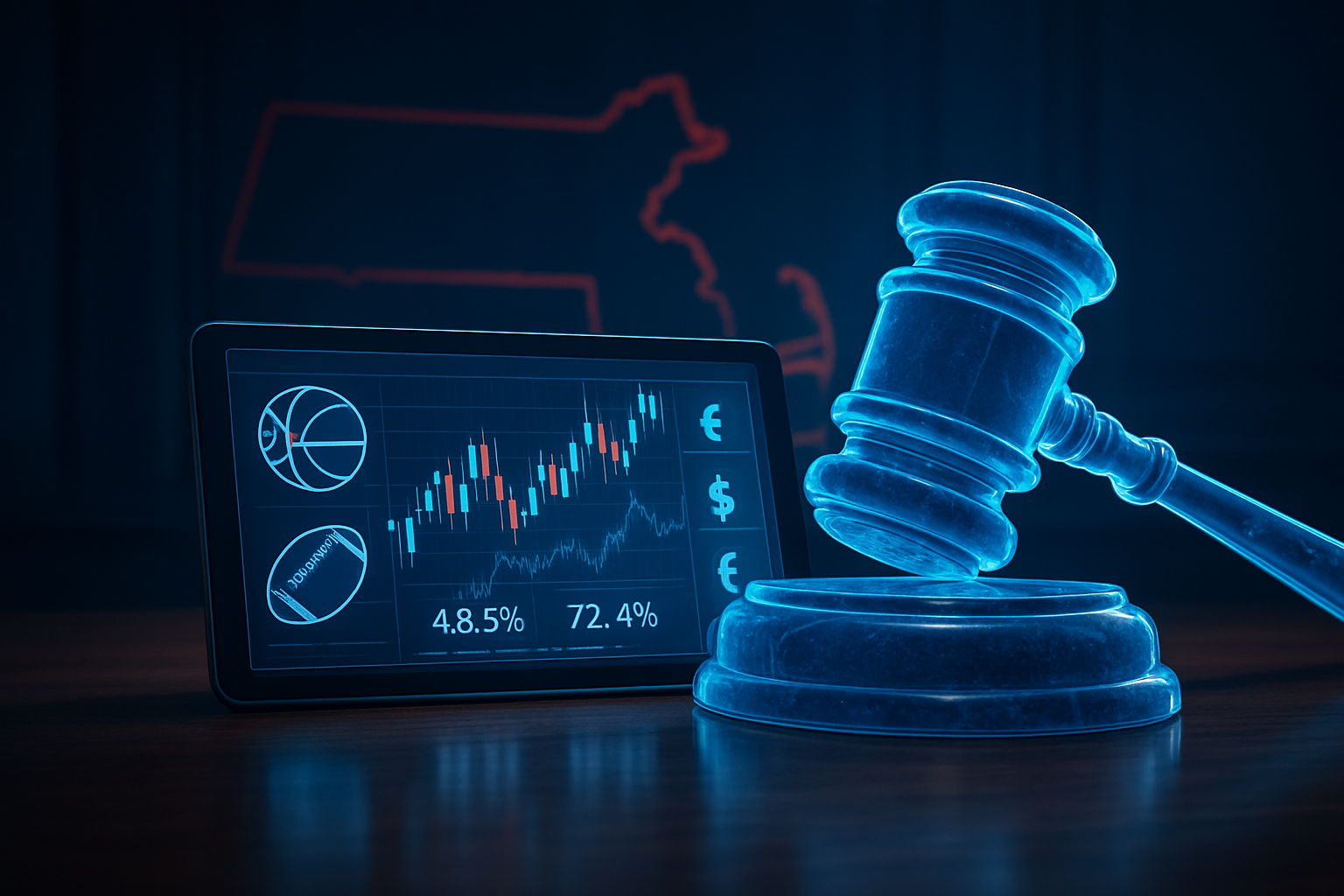
    On January 20, 2026, the legal landscape for prediction markets shifted dramatically when a Massachusetts court delivered a stinging blow to Kalshi, the leading federally regulated exchange. Suffolk County Superior Court Judge Christopher Barry-Smith granted a preliminary injunction requiring the platform to immediately cease offering its popular sports-related "event contracts" to Massachusetts residents without first obtaining a state-sanctioned sports wagering license.

    The ruling, which takes full effect today, January 23, 2026, marks the first time a state court has successfully pierced the "federal preemption" shield that Kalshi has used to expand nationwide. For months, the platform’s sports markets—ranging from NFL point spreads to individual player performances—had been the primary driver of its explosive growth. However, with the court officially categorizing these contracts as unlicensed gambling rather than financial derivatives, the industry now faces an existential crisis regarding state-level regulation.

    The Market: What's Being Predicted

    At the center of this legal firestorm are Kalshi’s sports event contracts. Unlike traditional sportsbooks that offer "odds," Kalshi frames its markets as binary options where the price (between $0.01 and $0.99) represents the market-implied probability of an event occurring. In 2025, Kalshi aggressively expanded its catalog to include high-liquidity markets on game outcomes, "prop" bets on player yardage, and even live in-game trading for major league events.

    As of early January, sports contracts accounted for an estimated 75% of Kalshi’s total trading volume, which has surged into the billions of dollars since the platform’s landmark legal victories against the federal government in 2024. Before the injunction, the probability of "The Home Team winning by 7 or more points" might trade at $0.55, implying a 55% chance of success. Following the ruling, liquidity in these markets has begun to fragment as Massachusetts traders—who represented a significant portion of the platform's New England user base—are forcibly sidelined.

    The court’s resolution criteria are stark: Kalshi must halt all new sports trades for users with Massachusetts IP addresses or residential credentials by 11:59 PM tonight. While existing positions held by Massachusetts residents will be allowed to settle naturally to avoid a "market-clearing catastrophe," no new capital from the state can enter the sports vertical.

    Why Traders Are Betting

    The legal battle has pitted two fundamentally different views of the world against each other. Kalshi argues its contracts are "swaps"—financial instruments intended for risk management and price discovery—regulated exclusively by the federal Commodity Futures Trading Commission (CFTC). To many traders, this was a distinction with a massive difference: Kalshi offered a "cleaner" financial experience without the heavy "vig" or house edge found at traditional sportsbooks like DraftKings Inc. (NASDAQ:DKNG) or FanDuel.

    However, Massachusetts Attorney General Andrea Joy Campbell argued that Kalshi was effectively "masquerading" as a financial exchange while providing an experience indistinguishable from a digital sportsbook. The state’s case focused on three key factors:

    1. Consumer Demographics: Allegations that the platform allowed 18-to-20-year-olds to trade, bypassing the state’s 21+ requirement for sports betting.
    2. Product Design: The introduction of "parlay-style" event bundles that closely mimicked gambling products.
    3. Revenue Models: Court filings revealed that Kalshi’s revenue was no longer coming primarily from economic hedging but from retail speculation on athletic outcomes.

    Whale activity on the platform had recently shifted toward these sports markets, with some institutional traders using Kalshi to hedge large-scale investments in sports media and advertising. The sudden removal of Massachusetts liquidity has caused minor "slippage" in prices for upcoming Super Bowl LIX markets, as professional arbitrageurs adjust to the smaller pool of participants.

    Broader Context and Implications

    The Massachusetts ruling sets a dangerous precedent for what many call the "fragmentation" of prediction markets. For years, the industry operated under the assumption that a single federal license as a Designated Contract Market (DCM) would provide a "golden ticket" to operate across all 50 states. Judge Barry-Smith’s rejection of this "federal preemption" argument suggests that states still maintain "police powers" to regulate gambling, even if the instrument is technically a financial derivative.

    This decision is a significant victory for traditional gambling regulators and a setback for fintech giants like Robinhood Markets, Inc. (NASDAQ:HOOD), which recently integrated Kalshi’s markets into its trading app. If other states follow Massachusetts' lead—and early reports suggest Nevada and New York are already preparing similar filings—prediction markets could be forced into a "patchwork" compliance model. This would require them to pay state taxes (20% in Massachusetts) and abide by varying state-level consumer protection laws, effectively ending the era of the "frictionless" national exchange.

    Furthermore, this ruling highlights the tension between the CFTC and state Attorneys General. While the CFTC has historically been the primary regulator for commodities, the court’s decision suggests that "sports" may not constitute a "commodity" in the eyes of state law, regardless of how the federal government classifies the trade.

    What to Watch Next

    The immediate focus shifts to the federal courts. Robinhood (NASDAQ:HOOD) has already filed a separate federal lawsuit against the Commonwealth of Massachusetts, arguing that state interference in a federally regulated market violates the Supremacy Clause of the U.S. Constitution. A ruling in that case, expected by late February 2026, could potentially override the Massachusetts state court injunction.

    Additionally, industry analysts are watching Nevada. The Silver State has historically been protective of its licensed gambling industry and is rumored to be citing the Massachusetts "Barry-Smith Precedent" in a forthcoming cease-and-desist order against several prediction platforms. If Nevada moves, it could trigger a "domino effect" among other states with established gaming commissions.

    Finally, keep an eye on Kalshi’s internal pivot. To mitigate the loss of sports revenue, the platform is expected to accelerate the rollout of "pure-play" economic and political markets—such as Federal Reserve rate hike probabilities and legislative outcomes—which are less likely to be classified as "sports betting" under state law.

    Bottom Line

    The Massachusetts ruling is a reality check for the prediction market "gold rush." While Kalshi and its partners have successfully argued that betting on elections and economic data is a legitimate financial activity, the attempt to swallow the $100 billion sports betting market has run into a wall of state-level protectionism and regulatory scrutiny.

    This setback tells us that prediction markets are currently in a "hybrid" state: federally accepted as finance, but state-regulated as gambling. For the industry to reach its multi-trillion-dollar potential, it must resolve this identity crisis. Until a higher federal court or the U.S. Supreme Court settles the preemption debate, the "odds" of a unified national prediction market remain highly volatile. For now, the "Red Line" drawn in Massachusetts serves as a stark reminder that in the eyes of the law, a "swap" on a touchdown still looks an awful lot like a bet.


    This article is for informational purposes only and does not constitute financial or betting advice. Prediction market participation may be subject to legal restrictions in your jurisdiction.

    PredictStreet focuses on covering the latest developments in prediction markets.
    Visit the PredictStreet website at https://www.predictstreet.ai/.
  • The $100 Billion Horizon: Why Prediction Markets are the Decade’s Defining Asset Class

    The $100 Billion Horizon: Why Prediction Markets are the Decade’s Defining Asset Class

    As of January 22, 2026, the global financial landscape is undergoing a fundamental transformation. What was once a niche corner of the internet for political junkies and hobbyist forecasters has evolved into a powerhouse of the modern economy. Prediction markets—increasingly rebranded by Wall Street as "event trading"—are no longer just a curiosity; they are becoming the primary tool for price discovery and risk management in an increasingly volatile world.

    The industry is currently riding a wave of unprecedented momentum. Following a series of landmark regulatory victories and a massive surge in retail participation throughout 2025, analysts are now painting a staggeringly bullish picture for the future. Leading the charge is Piper Sandler, which recently released a research note suggesting that the prediction market industry is on track to reach a total addressable market (TAM) of $100 billion within the next decade. With a projected annual growth rate of 47%, the transition from "alternative data" to "mainstream asset" is occurring at a pace that few in traditional finance anticipated.

    The Market: What's Being Predicted

    The focus of prediction markets has shifted from the "big event" cycle to a persistent, high-frequency trading environment. While the 2024 U.S. Presidential Election served as the industry's "Big Bang," the market in early 2026 is defined by its breadth. Traders are no longer just betting on who will win the White House; they are trading contracts on Federal Reserve interest rate hikes, monthly CPI data, Academy Award winners, and—most significantly—daily sports outcomes and micro-economic indicators.

    Currently, the market is dominated by two distinct titans. Kalshi, the primary U.S.-regulated exchange, reached a valuation of $11 billion in late 2025. It currently processes a significant portion of domestic regulated volume, offering everything from climate-related event contracts to "recession" markets. On the decentralized side, Polymarket has seen its valuation climb toward $15 billion after securing strategic investment from the Intercontinental Exchange (NYSE:ICE). Collectively, these platforms and their peers are expected to facilitate the trade of over 445 billion contracts in 2026, representing roughly $222.5 billion in notional volume—a massive leap from the 95 billion contracts recorded in 2025.

    Why Traders Are Betting

    The 47% annual growth rate is being fueled by a "flywheel effect" involving regulatory clarity, technological integration, and the quest for objective truth. A series of federal court rulings in late 2024 and 2025 fundamentally altered the legal landscape by establishing that event contracts are regulated financial swaps rather than gambling products. This distinction has opened the floodgates for institutional capital, which now uses these markets to hedge against "black swan" events that traditional derivatives fail to cover.

    Furthermore, the "sports flywheel" has become the industry's primary volume engine. In 2025, sports-related contracts accounted for over 90% of trade frequency on major platforms, as bettors transitioned from traditional "fixed-odds" sportsbooks to the more transparent, peer-to-peer pricing of prediction markets. Traders are also increasingly utilizing AI-driven tools to filter noise and capitalize on market inefficiencies. This move toward sophisticated trading strategies has attracted a new class of "quant" traders who treat prediction markets with the same rigor as the options or futures markets.

    Broader Context and Implications

    The most significant driver of the $100 billion projection is the "Distribution Unlock"—the integration of prediction markets into mainstream financial and betting applications. Robinhood (NASDAQ:HOOD) has led this charge, with event trading becoming its fastest-growing product line by revenue in early 2026. By acquiring the CFTC-licensed exchange and clearinghouse MIAXdx, Robinhood now allows its millions of users to trade event contracts natively within the same app where they buy stocks and crypto.

    Other major players are following suit. Interactive Brokers (NASDAQ:IBKR) has expanded its "ForecastEx" platform globally, positioning event contracts as essential hedging tools for sophisticated investors. Even traditional news outlets like CNN and financial data providers like Google Finance have begun integrating prediction market tickers into their standard coverage. This shift reflects a growing public sentiment that "crowd-sourced probabilities" are more accurate than traditional polling or expert punditry, especially in a world where data fragmentation makes traditional forecasting difficult.

    What to Watch Next

    As we look toward the remainder of 2026, several key milestones will determine if the industry can maintain its 47% CAGR. The most immediate factor is the continued expansion of event trading into the "everyday" apps used by retail investors. Watch for Coinbase (NASDAQ:COIN) to deepen its integration with Kalshi, potentially offering prediction markets as a core "on-ramp" for its international user base.

    Regulatory developments in Europe and Asia will also be critical. As the U.S. model for regulated event trading proves successful, other jurisdictions are likely to follow, potentially unlocking billions in additional liquidity. Additionally, the development of "negative event" insurance—where businesses use prediction markets to hedge against specific supply chain disruptions or local political instability—could represent the next major frontier for institutional adoption.

    Bottom Line

    The rise of prediction markets represents a shift in how society processes information and manages risk. The Piper Sandler projection of a $100 billion industry is not just a reflection of growing trading volumes; it is a testament to the power of the "wisdom of the crowds" in a digital-first economy. By incentivizing accuracy through financial stakes, these markets provide a level of clarity that traditional media and polling have struggled to maintain.

    For investors and traders, the message is clear: prediction markets have moved from the periphery to the center of the financial world. Whether through the direct trading of event contracts or through the stocks of the companies building this infrastructure—such as Robinhood (NASDAQ:HOOD), Interactive Brokers (NASDAQ:IBKR), and StoneX Group (NASDAQ:SNEX), the owner of FOREX.com—the opportunities for growth are immense. As we move deeper into 2026, the $100 billion horizon looks less like a distant dream and more like an inevitable reality.


    This article is for informational purposes only and does not constitute financial or betting advice. Prediction market participation may be subject to legal restrictions in your jurisdiction.

    PredictStreet focuses on covering the latest developments in prediction markets.
    Visit the PredictStreet website at https://www.predictstreet.ai/.

  • The Gamification of Truth: Robinhood Hits 9 Billion Prediction Contracts as Event Trading Goes Mainstream

    The Gamification of Truth: Robinhood Hits 9 Billion Prediction Contracts as Event Trading Goes Mainstream

    The retail trading landscape has been fundamentally reshaped. As of January 22, 2026, Robinhood Markets (NASDAQ: HOOD) has officially transitioned from a stock-and-crypto powerhouse into the undisputed leader of the prediction market revolution. Following a record-breaking holiday season and a high-stakes NFL playoff run, the platform announced it has surpassed the staggering milestone of 11 billion event contracts traded—a trajectory that saw it roar past the 9 billion mark just two months prior.

    With over one million active customers now betting on everything from Federal Reserve interest rate hikes to the winners of the Academy Awards, prediction markets have become Robinhood’s fastest-growing product line by revenue. This surge in activity represents more than just a new feature; it marks a cultural shift where news consumption and financial speculation have merged into a singular, high-velocity experience. As the platform moves to vertically integrate its operations, the "prediction economy" is no longer a niche curiosity—it is the new retail standard.

    The Market: What's Being Predicted

    Robinhood’s event contract ecosystem has evolved rapidly since its full-scale launch in early 2025. While the platform initially gained traction with high-profile political markets, the current volume is being driven by a diverse array of "Yes/No" binary options. Currently, the most liquid markets on the platform center on the January FOMC meeting, with a 68% probability priced in for a 25-basis-point rate cut, and the upcoming Super Bowl LXI, which has seen over $500 million in notional volume in the last week alone.

    The platform's trading mechanics are designed for the mobile-first generation. Unlike traditional options, which involve complex Greeks and decay, Robinhood’s event contracts trade between $0.01 and $0.99, representing the market’s perceived probability of an event occurring. If the event happens, the contract settles at $1.00; if not, it goes to zero. This simplicity, combined with 24/7 trading availability, has allowed Robinhood to capture a segment of the market that previously found Kalshi or the offshore Polymarket too cumbersome or inaccessible.

    The liquidity on Robinhood has benefited significantly from its strategic partnership with Kalshi, which provided the underlying exchange architecture for much of 2025. However, the market dynamics changed yesterday, January 21, 2026, when Robinhood completed its acquisition of a 90% stake in MIAXdx, a CFTC-regulated exchange. This move allows Robinhood to bypass third parties, listing its own proprietary contracts and offering even tighter spreads to its million-plus user base.

    Why Traders Are Betting

    The explosive growth in prediction trading is driven by a unique intersection of social media, real-time news, and the "gamification" of information. For many of Robinhood's younger users, betting on a news event feels more intuitive than analyzing a corporate balance sheet. "I don't need to know Apple's (NASDAQ: AAPL) P/E ratio to have an opinion on whether the iPhone 17 will be delayed," says one high-volume trader. "I just need to follow the supply chain news."

    This sentiment has been bolstered by the introduction of "Custom Combos," a feature launched following the MIAXdx acquisition. These allow users to create parlays—for example, betting that the Consumer Price Index (CPI) will fall below 2% and that a specific candidate will win a primary election. This cross-pollination of economic data and pop culture has turned every news alert into a potential trade, keeping users engaged with the app far longer than traditional equity markets allow.

    Furthermore, the "accuracy war" has played a role in attracting serious capital. Traders are increasingly viewing prediction markets as a more reliable source of truth than traditional polling or expert pundits. When Robinhood's markets successfully "called" a surprise legislative vote in late 2025 hours before the mainstream media, it cemented the platform's reputation as a leading indicator of public sentiment. This "wisdom of the crowds" effect has attracted "whales"—large-scale traders who use these markets to hedge real-world risks, such as inflation or regulatory changes.

    Broader Context and Implications

    The success of Robinhood's prediction wing is part of a broader institutional embrace of the sector. In late 2025, the Intercontinental Exchange (NYSE: ICE)—the parent company of the New York Stock Exchange—made a landmark $2 billion investment in Polymarket, signaling that the world's largest financial entities now view event contracts as a legitimate asset class. This institutional validation, combined with the federal CLARITY Act of 2025, has provided the regulatory roadmap necessary for mainstream adoption.

    However, the rise of prediction markets has not been without friction. While the CLARITY Act legalized federal oversight for event contracts, a "messy standoff" remains at the state level. Regulators in states like Massachusetts and Connecticut have recently issued cease-and-desist orders, arguing that sports-based event contracts are a form of unlicensed gambling rather than financial derivatives. This legal tug-of-war between the CFTC’s federal authority and state gaming commissions is the primary hurdle standing between the current million users and the next ten million.

    Historically, prediction markets were limited by low liquidity and regulatory "gray zones." The entry of a retail giant like Robinhood has solved the liquidity problem, but it has also raised concerns about market manipulation. Critics argue that "whales" could attempt to influence public perception by taking massive positions in sensitive political or social markets. To combat this, Robinhood has implemented rigorous participant verification and position limits on certain "sensitive" contracts, aiming to preserve the integrity of the data.

    What to Watch Next

    The next three months will be a defining period for the prediction market industry. Investors should closely monitor the integration of MIAXdx into the Robinhood app, as this will likely lead to a flood of new, niche markets that were previously unavailable. Expect to see "micro-events," such as local weather patterns or specific box-office numbers for blockbuster films, becoming tradable assets by mid-2026.

    Key milestones to watch include the legal response to the recent state-level bans. If Robinhood and Kalshi can successfully challenge the Massachusetts cease-and-desist in court, it will set a precedent that could open the floodgates for the remaining "holdout" states. Conversely, an adverse ruling could force these platforms to geofence certain types of contracts, complicating the user experience.

    Additionally, keep an eye on the "Forecasting Accuracy Scores" that Robinhood is expected to launch next month. This feature will rank users based on their historical accuracy, potentially creating a new class of "predictive influencers" whose trades are followed with the same fervor as high-profile hedge fund managers. As these markets become more efficient, they may even start to influence the very events they are predicting, creating a feedback loop between the market and reality.

    Bottom Line

    The milestone of 9 billion—and now 11 billion—contracts on Robinhood is a clear signal that prediction markets have moved from the periphery to the center of the financial world. By stripping away the complexity of traditional derivatives and focusing on the "Yes/No" nature of everyday life, Robinhood has unlocked a massive, untapped demand for information-based trading.

    As we look toward the rest of 2026, the primary challenge for the platform will be navigating the jurisdictional disputes between state and federal regulators. Yet, with the backing of the CLARITY Act and the massive liquidity provided by a million-strong user base, the momentum seems irreversible. Prediction markets are no longer just a way to bet on the future; they are becoming the primary mechanism through which we understand it.

    For the retail investor, the message is clear: the ability to price information is becoming as valuable as the ability to price assets. Whether you are hedging against inflation or simply expressing a view on a movie premiere, the prediction market is now open, and it is here to stay.


    This article is for informational purposes only and does not constitute financial or betting advice. Prediction market participation may be subject to legal restrictions in your jurisdiction.

    PredictStreet focuses on covering the latest developments in prediction markets. Visit the PredictStreet website at https://www.predictstreet.ai/.
  • The Wisdom of the Ticker: How the Dow Jones-Polymarket Alliance is Mainstreaming Market-Based Truth

    The Wisdom of the Ticker: How the Dow Jones-Polymarket Alliance is Mainstreaming Market-Based Truth

    On January 7, 2026, a tectonic shift occurred in the landscape of global media. Dow Jones & Co. (NASDAQ: NWSA), the parent company of The Wall Street Journal, announced an exclusive multi-year partnership with Polymarket, the world’s largest decentralized prediction market. This deal formally integrates real-time, blockchain-based prediction data across the Dow Jones consumer ecosystem, including Barron’s, MarketWatch, and Investor’s Business Daily. By treating prediction market probabilities as a core financial data layer alongside the S&P 500 and Treasury yields, the partnership signals the ultimate graduation of the sector from a crypto-native curiosity to a critical tool for institutional risk assessment.

    Currently, the markets are flashing a clear, albeit complex, signal for the 2026 U.S. Midterm elections. Traders on Polymarket are pricing in a 79% probability of the Democratic Party regaining control of the House of Representatives, while giving the Republican Party a 66% chance of maintaining the Senate. These odds, which have remained remarkably stable despite a flurry of early-year legislative maneuvering, are now being viewed by millions of WSJ readers through embedded real-time widgets—a move that Almar Latour, CEO of Dow Jones, describes as providing "real-time insight into collective beliefs" and a "leading indicator" for global risk.

    The Market: What's Being Predicted

    The partnership focuses on two primary categories of data: geopolitical/electoral outcomes and "market-implied" financial events. On the political front, the 2026 Midterm markets are the primary engine of volume. Traders are betting on the "Balance of Power" in the 110th Congress, with the most likely scenario currently being a "Split Congress" (44% probability). This market has seen its daily volume swell to over $700 million in mid-January alone, as the Dow Jones integration brings a wave of traditional retail and institutional interest to the platform.

    Beyond the ballot box, the integration features a new "Market-Implied Earnings Calendar" on MarketWatch. This tool provides probabilities for upcoming corporate results for companies like Apple (NASDAQ: AAPL) and Nvidia (NASDAQ: NVDA). For instance, as Apple prepares to report its Q1 2026 results on January 29, prediction markets are showing a 100% conviction that the stock will maintain its current support level above $275 through the end of the month, despite an options-implied move of ±4.8%.

    The data isn't just restricted to digital sidebars; it has even begun appearing in the print edition of The Wall Street Journal. Key resolution criteria for these markets are strictly managed by UMA (Universal Market Access) and integrated through Polymarket’s recent U.S. relaunch following its acquisition of the regulated exchange QCEX. This regulatory clearance was the necessary precursor for a legacy firm like News Corp (NASDAQ: NWSA) to bridge the gap between decentralization and the mainstream press.

    Why Traders Are Betting

    The primary driver of the current odds is the "speed gap" between traditional polling and market action. While traditional surveys might take days to reflect the impact of a breaking scandal or an economic report, prediction markets react in seconds. Traders are incentivized by "skin in the game," a concept often cited by Polymarket CEO Shayne Coplan. This financial incentive creates a more accurate filter for truth than sentiment-based polling, which has faced significant accuracy challenges in recent years.

    Institutional adoption is also a massive tailwind. Firms like Goldman Sachs (NYSE: GS) and JPMorgan Chase & Co. (NYSE: JPM) have reportedly begun using Polymarket’s data as a secondary check against their own internal models. For the upcoming March 2026 Federal Reserve meeting, for instance, Barclays (NYSE: BCS) analysts are forecasting a 25 basis point cut, but the Polymarket "No Change" contract is trading at 81%. This divergence suggests that traders see a higher risk of "sticky" inflation from new fiscal policies than the sell-side analysts are currently modeling.

    Furthermore, "whale" activity has become more transparent through the WSJ’s reporting. Large positions—often exceeding $10 million in a single contract—are now tracked like insider trades in a corporate stock. This level of transparency has changed trading strategies, as retail participants often follow the "smart money" moving into specific midterm battleground districts or rate-cut probabilities.

    Broader Context and Implications

    The Dow Jones-Polymarket alliance marks the arrival of "probability-based news." In a world of deepfakes and polarized media, prediction markets provide a neutral, quantitative counterweight to descriptive reporting. This trend isn't isolated; it mirrors similar moves by competitors like Kalshi, which recently partnered with CNN and CNBC to provide electoral data. However, the Dow Jones deal is notably more expansive, embedding these signals directly into the financial tools used by professional traders and retail investors alike.

    This shift has profound implications for the legitimacy of the sector. For years, prediction markets were derided as "gambling for nerds." By integrating them into the WSJ terminal and MarketWatch homepages, they are being rebranded as a sophisticated asset class. This institutionalization is also pushing regulators to provide more clarity. While some states like Tennessee have challenged the platforms, the weight of a Dow Jones partnership suggests that the federal trend is moving toward regulated, exchange-based prediction trading.

    Historically, markets like Polymarket have outperformed traditional polls in every major election cycle since 2020. This track record of accuracy is exactly what the traditional media is seeking to leverage. By offering "market-based truth," outlets like the WSJ are essentially outsourcing their forecasting to the most efficient machine ever built: the global market.

    What to Watch Next

    The next major milestone for the partnership—and the broader sector—will be the January 29 earnings call from Apple (NASDAQ: AAPL). This will be the first "Big Tech" earnings event where the Dow Jones "Market-Implied Earnings Calendar" will be fully operational for its massive subscriber base. Analysts at Evercore ISI (NYSE: EVR) have set high targets for tech in 2026, and any sharp divergence between analyst consensus and Polymarket probabilities will be a key test of the data's utility.

    On the geopolitical front, watchers should monitor the Federal Reserve’s March meeting. If the market’s 81% "No Change" bet holds true against the calls for a rate cut from major investment banks, it will solidify the status of prediction markets as the superior prognosticator for macro events. Any upcoming volatility in the 2026 Midterm markets following the first quarter’s primary filing deadlines will also serve as a barometer for how "sticky" the current Democratic House advantage (79%) really is.

    Bottom Line

    The partnership between Dow Jones and Polymarket is more than just a data-sharing agreement; it is a validation of the "wisdom of the crowd" as a fundamental pillar of modern journalism. By providing real-time, financially incentivized probabilities to the world’s most influential readers, the alliance is effectively ending the era of the "pundit" and ushering in the era of the "price signal."

    As we look toward the 2026 Midterms and the Fed decisions of the first half of the year, the primary takeaway is clear: the most accurate news of the future may not be found in a headline, but in a contract price. While regulatory challenges remain at the state level, the momentum behind prediction markets as a "financialized truth machine" has never been stronger. For investors and readers alike, the ticker is no longer just about where we are—it's about exactly where we’re going.


    This article is for informational purposes only and does not constitute financial or betting advice. Prediction market participation may be subject to legal restrictions in your jurisdiction.

    PredictStreet focuses on covering the latest developments in prediction markets.
    Visit the PredictStreet website at https://www.predictstreet.ai/.