
Tag: Financial News

  • The 11 Billion Contract Explosion: How Robinhood and Interactive Brokers Mainstreamed Prediction Markets

    The 11 Billion Contract Explosion: How Robinhood and Interactive Brokers Mainstreamed Prediction Markets

    In the span of just ten months, prediction markets have transitioned from a niche obsession of political junkies and crypto-enthusiasts to a cornerstone of the modern retail brokerage experience. As of January 18, 2026, the industry is reeling from a staggering milestone: Robinhood Markets, Inc. (NASDAQ: HOOD) has processed over 11 billion contracts through its "Prediction Markets Hub" since its debut in March 2025. This volume represents more than just a successful product launch; it signals a fundamental shift in how the public perceives information, risk, and the "truth" of future events.

    The surge is fueled by a combination of regulatory clarity and the gamification of macroeconomic and climate data. While Robinhood captures the mass retail audience with sports and pop culture "Combos," Interactive Brokers Group, Inc. (NASDAQ: IBKR) has carved out a sophisticated niche with its ForecastEx platform, where businesses are now bypassing traditional insurance to hedge against the increasing volatility of climate change. With current odds on the platform suggesting a 68% probability of a record-breaking 2026 hurricane season, the market has become a real-time barometer for global anxiety and anticipation.

    The Market: What's Being Predicted

    The current landscape is dominated by Robinhood’s "Prediction Markets Hub," which launched on March 17, 2025. What began as a platform for trading the Federal Funds Rate and NCAA tournament outcomes has expanded into a comprehensive "everything-market." Traders are currently placing massive bets on the timing of the next Federal Reserve rate cut (currently trading at a 42% probability for March 2026) and the outcome of the upcoming 2026 midterm elections. The liquidity in these markets is unprecedented; bid-ask spreads on major political and economic events have narrowed to less than a cent, rivaling the efficiency of blue-chip equities.

    On the more specialized front, Interactive Brokers' ForecastEx has become the go-to exchange for "Economic and Environmental Hedging." ForecastEx utilizes a "Yes/No" contract structure that pays out $1 upon resolution. Unlike the more speculative "meme-heavy" trades found elsewhere, ForecastEx features high-volume contracts on hyper-local weather events, such as the probability of a Category 3 hurricane making landfall in Miami-Dade County. This market saw a massive spike in October 2025 during the approach of Hurricane Melissa, with trading volume reaching $500 million in a single week.

    The resolution criteria for these markets have become increasingly standardized. Robinhood recently announced its "Cortex" AI, an assistant that monitors verified data feeds—from NOAA for weather to the Bureau of Labor Statistics for CPI—to ensure near-instantaneous settlement. This speed has turned prediction markets into a high-frequency trading environment, with over 3 billion contracts traded in November 2025 alone.

    Why Traders Are Betting

    The primary driver of the current retail frenzy is the "democratization of the hedge." Traditionally, only large corporations could afford complex derivatives to protect against economic shifts or weather disasters. Today, a small business owner in Florida can use ForecastEx to buy "Yes" contracts on a local hurricane landfall. If the storm hits, the payout provides immediate liquidity to cover damages—often weeks before a traditional insurance claim would be processed. During the Hurricane Melissa event in October 2025, market participants correctly predicted the landfall location in the Bahamas four days before major meteorological models reached a consensus.

    For the Robinhood crowd, the motivation is often a blend of entertainment and "Information Finance." The platform’s introduction of "Custom Combos" in late 2025—which allow users to parlay NFL player statistics with economic indicators—has blurred the lines between sports betting and traditional investing. Analysts note that retail traders are increasingly using prediction markets as a "hedge against their own lives." For instance, someone worried about rising gas prices might buy "Yes" contracts on Brent Crude hitting $100, effectively using the profit to offset their costs at the pump.

    Large "whale" activity has also moved from shadow offshore platforms like Polymarket to these regulated US exchanges. Notable positions have been spotted in the 2026 Midterm "Control of the House" markets, where several anonymous accounts have built eight-figure positions. Unlike traditional polling, which has struggled with declining response rates, these markets are being hailed as the "Truth Machine" because they require participants to put real capital behind their convictions.

    Broader Context and Implications

    The explosion of retail event trading marks a pivotal moment in regulatory history. The formation of the Coalition for Prediction Markets (CPM) in December 2025—led by Kalshi, Robinhood, and Interactive Brokers—has successfully lobbied for a "pro-innovation" framework under the CFTC. With newly confirmed CFTC Chairman Michael Selig taking a permissive stance on "event contracts," the legal clouds that hung over the industry in 2024 have largely dissipated. Prediction markets are now viewed legally as derivatives, rather than gambling, provided they serve a "public interest" or hedging function.

    This shift has profound implications for how the public consumes news. Major media outlets now lead their broadcasts with "Market Probabilities" rather than expert opinions. When the market prices in an event, it creates a feedback loop that can influence real-world behavior. Critics, however, warn about the potential for market manipulation, particularly in low-liquidity "niche" markets, though the massive volume on Robinhood has made "cornering" the market on major events increasingly difficult.

    Historically, the accuracy of these markets has been remarkably high. In the 2024 election cycle, prediction markets were often the first to signal shifts in momentum, a trend that has only accelerated in 2025. By Jan 2026, the consensus among financial historians is that we are witnessing the birth of a "Prediction Market Economy," where the price of every future event is constantly being discovered in real-time.

    What to Watch Next

    The next major catalyst for the sector is the upcoming "YES/NO" summit in February 2026, where Robinhood is rumored to be announcing the finalization of its acquisition of MIAXdx (formerly LedgerX). This move would allow Robinhood to move its entire clearing and execution infrastructure in-house, potentially lowering fees and further increasing trading velocity. Additionally, the industry is bracing for a potential Google ad policy shift that could allow regulated prediction markets to advertise globally, potentially bringing in another wave of retail liquidity.

    On the event side, all eyes are on the March 2026 Federal Reserve meeting. The prediction markets currently show a volatile "flip-flop" between a 25-basis point cut and a "hold" scenario. Given the 11 billion contracts already in the books, the volume surrounding this single economic event is expected to break all previous records for a non-election trade.

    Finally, as we enter the first quarter of 2026, the "Climate Hedging" trend will be tested. If ForecastEx’s hurricane contracts continue to provide more accurate and faster relief than traditional insurance, we may see a massive migration of institutional capital into these markets, further legitimizing the asset class for long-term "risk-linked" returns.

    Bottom Line

    The rise of Robinhood’s Prediction Markets Hub and Interactive Brokers' ForecastEx represents the final bridge being crossed between speculative gambling and sophisticated financial hedging. With 11 billion contracts traded, the sheer scale of participation proves that there is a massive appetite for an "exchange for everything."

    Prediction markets have proven to be more than a novelty; they are an essential tool for price discovery in an increasingly uncertain world. Whether it is a business owner hedging against a hurricane or a retail trader betting on a Fed pivot, the ability to put a price on the future has changed the financial landscape forever. As we move deeper into 2026, the "Truth Machine" is only getting louder, and the markets are suggesting that the volatility—and the opportunity—is just beginning.


    This article is for informational purposes only and does not constitute financial or betting advice. Prediction market participation may be subject to legal restrictions in your jurisdiction.

    PredictStreet focuses on covering the latest developments in prediction markets. Visit the PredictStreet website at https://www.predictstreet.ai/.

  • The End of the Pundit Era: How ‘Information Finance’ Took Over Your News Feed

    The End of the Pundit Era: How ‘Information Finance’ Took Over Your News Feed

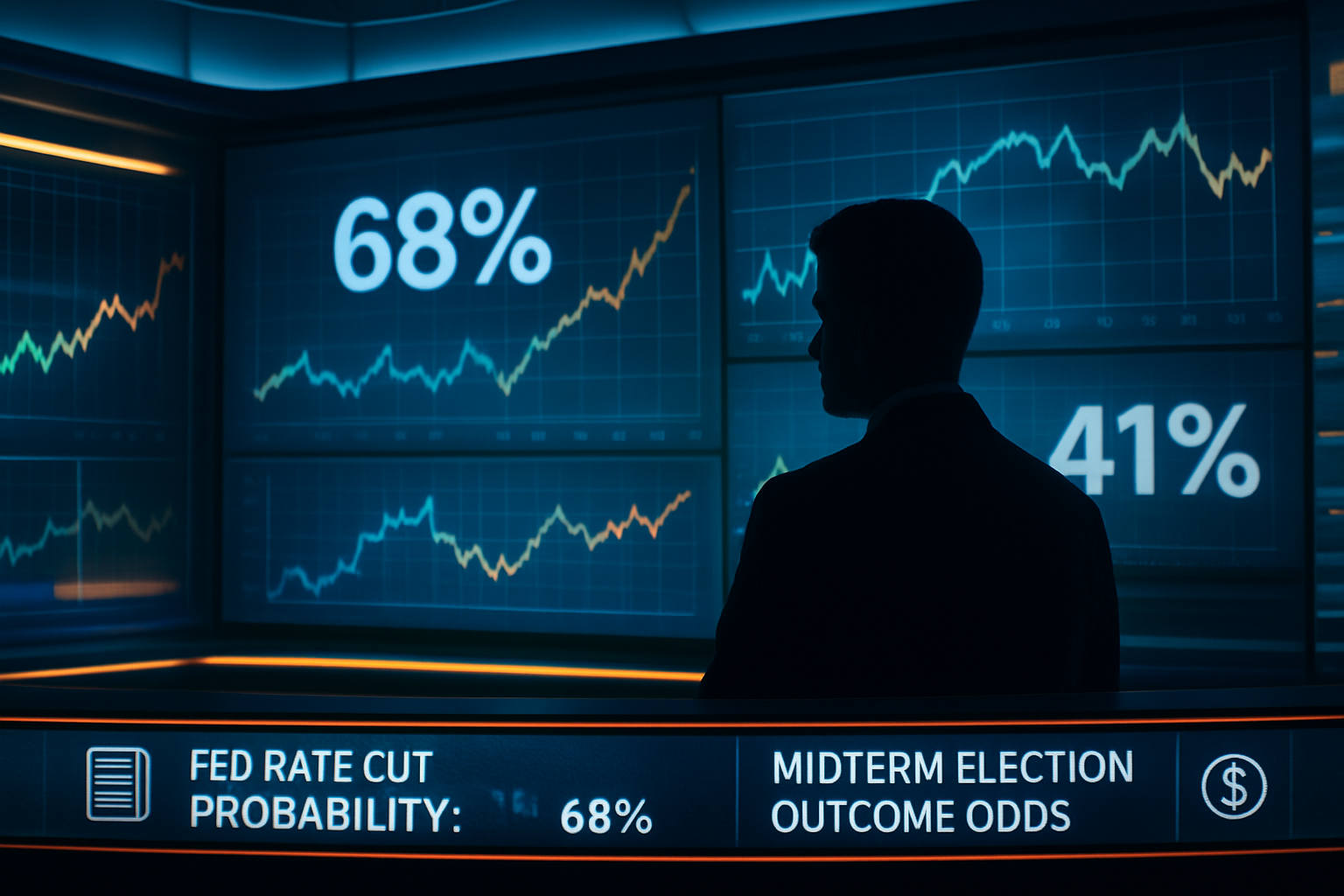
    On any given night in early 2026, a viewer tuning into prime-time news is less likely to see a panel of political consultants arguing over "vibes" and more likely to see a glowing, fluctuating percentage at the bottom of the screen. As of January 16, 2026, the traditional news ticker has been permanently altered. The price of Brent Crude and the S&P 500 now share screen real estate with the "Probability of a Fed Rate Cut in March" and the "Odds of the 2026 Midterm House Flip," powered by real-money prediction markets like Kalshi and Polymarket.

    This seismic shift represents the mainstreaming of "Information Finance"—a term coined to describe the use of financial incentives to aggregate truth. Currently, prediction markets are pricing the likelihood of a major legislative breakthrough on AI regulation at 64%, a figure that has surged 15% in the last 48 hours following a series of closed-door committee meetings. This "market-driven signal" is no longer a fringe curiosity; it has become the definitive barometer for reality, treated by networks with the same institutional weight as the Nielsen ratings or the morning's jobs report.

    The Market: What's Being Predicted

    The integration of prediction market data into mainstream news has reached a fever pitch. In late 2025, CNBC, owned by Comcast (NASDAQ:CMCSA), signed a landmark multi-year deal with Kalshi to serve as its exclusive data provider for on-air prediction widgets. This partnership has birthed the "CNBC Prediction Hub," where viewers can track live probabilities on everything from corporate merger approvals to the likelihood of the next CEO of Apple (NASDAQ:AAPL). These markets are currently seeing record volumes, with the "March Fed Meeting" contract alone regularly exceeding $500 million in open interest.

    Meanwhile, CNN, a subsidiary of Warner Bros. Discovery (NASDAQ:WBD), has completely overhauled its data segments. Chief Data Analyst Harry Enten’s famous "Poll of Polls" has been largely replaced by a segment titled "Market Signals." On these broadcasts, the "price" of an event is treated as the consensus probability. If a contract for a specific candidate to win an election is trading at $0.62, the network reports a "62% probability of victory," providing a real-time, 24/7 pulse that traditional polling—which often takes weeks to conduct and release—simply cannot match.

    The primary platforms driving this data are Kalshi, the first CFTC-regulated prediction market exchange in the U.S., and Polymarket, the decentralized giant that recently secured a $2 billion investment from the Intercontinental Exchange (NYSE:ICE). While Kalshi focuses on U.S.-regulated financial and political events, Polymarket provides a broader look at global geopolitical shifts and cultural milestones. Together, they have created a dual-engine of "Consensus Pricing" that newsrooms now use to fact-check their own reporting.

    Why Traders Are Betting

    The migration of news media toward market data was born out of a crisis of confidence in traditional forecasting. The 2024 election cycle served as the ultimate proof of concept: while traditional pollsters often showed a "dead heat" or slight lead for various candidates, prediction markets consistently priced in a Donald Trump victory with 60%+ confidence throughout October 2024. More importantly, markets called the "swing state sweep" on election night by 10:00 PM ET, hours before network pundits were willing to commit to the data.

    Traders are putting their money where their mouths are because prediction markets reward accuracy and punish "cheap talk." Unlike a pundit who retains their salary regardless of the accuracy of their predictions, a trader on Kalshi or Polymarket faces a direct financial penalty for being wrong. This "skin in the game" creates a high-fidelity signal that filters out noise. Recent surges in the probability of a "Soft Landing" for the U.S. economy, currently trading at 78% on Kalshi, are being driven by institutional desks at firms like Interactive Brokers (NASDAQ:IBKR), which integrated Kalshi's API for its professional clients in 2025.

    Furthermore, the rise of "Information Finance" has attracted a new class of "news-traders." These individuals use advanced sentiment analysis and real-time social media scraping to identify information asymmetries before they hit the wire services. When a major news event breaks—such as the recent Golden Globes, where Polymarket correctly predicted 26 out of 28 winners—the market often moves seconds before the host opens the envelope, providing a "spoiler effect" that has made live prediction trackers must-watch television.

    Broader Context and Implications

    The institutionalization of prediction markets marks the end of the "polling industrial complex" as we knew it. For decades, media organizations relied on statistical sampling that struggled with declining response rates and "shy voter" syndromes. In 2026, the industry has embraced the philosophy that a market of 100,000 incentivized participants is a more accurate "truth engine" than a survey of 1,000 disengaged households. This shift was accelerated by the CFTC’s 2025 legal defeat in the Ninth Circuit Court of Appeals, which permanently legalized election and event betting in the United States, removing the final regulatory shadow over the industry.

    This trend has profound real-world implications for how corporate America operates. Companies like Robinhood (NASDAQ:HOOD) and Coinbase (NASDAQ:COIN) have launched their own "Prediction Hubs," allowing retail investors to hedge against political or economic outcomes. If a trader believes a new tax bill will hurt their tech stocks, they can now "buy" the probability of that bill passing as a form of insurance. Prediction markets have effectively turned the news into a tradable asset class.

    Historically, prediction markets have boasted a significantly lower "Brier Score"—a measure of the accuracy of probabilistic forecasts—than expert panels. As this data becomes more pervasive, it is revealing a new type of public sentiment: one that is pragmatic and forward-looking rather than ideological. However, critics argue that this "commodification of truth" could lead to market manipulation or "prediction loops," where the market's high probability of an event actually helps cause that event to happen.

    What to Watch Next

    As we move deeper into 2026, the next major milestone for the integration of prediction markets into media will be the "Local News Expansion." Several regional news groups are reportedly in talks with Kalshi to launch localized markets on state-level legislation and local mayoral races. This would bring "Information Finance" to the grassroots level, potentially providing a more accurate look at community sentiment than the dwindling number of local political reporters can provide.

    The 2026 Midterm Elections will also serve as the next "Super Bowl" for these platforms. Expect to see networks like CNN and CNBC debut fully interactive "Probability Maps," where viewers can see the live market-cap of each congressional race in real-time. Additionally, the role of AI in these markets is expected to grow. We are already seeing the emergence of "AI Traders" that can process legislative text and court filings in milliseconds, often moving the markets before a human reporter can even finish reading the headline.

    Finally, keep an eye on the potential for a "National Prediction Exchange" ticker to be added to the NYSE floor. With the Intercontinental Exchange’s heavy backing of the sector, the boundary between a "stock" and an "event contract" is blurring. By the end of this year, we may see a world where the "Probability of World Peace" is a standard index listed right next to the Dow Jones Industrial Average.

    Bottom Line

    The transition from traditional punditry to "Information Finance" represents one of the most significant shifts in the history of journalism. By replacing subjective opinions with real-money probabilities, news organizations like CNN and CNBC are attempting to reclaim their role as "arbiters of truth" in a fragmented media landscape. The success of these markets in 2024 and 2025 has proven that when money is on the line, the "wisdom of the crowd" usually outweighs the "wisdom of the expert."

    As a tool, prediction markets are now indispensable for anyone trying to navigate a volatile world. They provide a clear, quantified signal amidst the noise of the 24-hour news cycle. While they are not infallible, their track record for speed and accuracy has made them the gold standard for forecasting the future.

    In this new era, the question for the average news consumer is no longer "What do you think will happen?" but "What does the market say?" As of early 2026, the market is speaking louder than ever, and for the first time, the entire world is finally listening.


    This article is for informational purposes only and does not constitute financial or betting advice. Prediction market participation may be subject to legal restrictions in your jurisdiction.

    PredictStreet focuses on covering the latest developments in prediction markets. Visit the PredictStreet website at https://www.predictstreet.ai/.

  • Paychex (PAYX): Analyzing the PayPal Partnership and Q2 FY2026 Earnings Beat

    Paychex (PAYX): Analyzing the PayPal Partnership and Q2 FY2026 Earnings Beat

    As of January 13, 2026, the landscape of Human Capital Management (HCM) is undergoing a profound transformation driven by artificial intelligence and a shift in how employees access their earnings. At the center of this evolution is Paychex, Inc. (NASDAQ: PAYX), a stalwart of the payroll industry that is currently navigating a pivotal fiscal year. Following a robust Q2 FY2026 earnings beat and the high-profile launch of a strategic partnership with PayPal Holdings, Inc. (NASDAQ: PYPL), Paychex is attempting to redefine itself as a "digital-first" financial wellness powerhouse. This article evaluates the company’s recent performance, the strategic weight of its PayPal alliance, and its ability to maintain growth in an era of fluctuating interest rates and cooling labor markets.

    Historical Background

    Paychex was founded in 1971 by B. Thomas Golisano with just $3,000 and a singular focus: providing payroll services to the often-ignored small business market. Headquartered in Rochester, New York, the company revolutionized the industry by proving that outsourcing payroll could be affordable and efficient for firms with fewer than 200 employees. Paychex went public on the NASDAQ in 1983, and over the following decades, it transformed from a pure-play payroll processor into a comprehensive provider of integrated HCM technology.

    Key milestones include the 2010s pivot toward Software-as-a-Service (SaaS) and the tenure of long-time CEO Martin Mucci, who oversaw a market cap expansion from $10 billion to nearly $50 billion. However, the most significant modern transformation occurred in April 2025, when Paychex completed its $4.1 billion acquisition of Paycor HCM, Inc., a move designed to propel the company into the mid-to-enterprise market and solidify its position against younger, tech-native rivals.

    Business Model

    Paychex operates primarily through a SaaS-driven revenue model, offering a suite of solutions designed to manage the entire employee lifecycle. Its business is segmented into three core pillars:

    1. Management Solutions: This is the company's largest segment, encompassing the flagship Paychex Flex® platform. Revenue is generated through recurring fees for payroll, tax filing, HR services, and retirement (401k) administration.
    2. Professional Employer Organization (PEO) and Insurance Services: In this model, Paychex acts as a co-employer for client businesses. This allows small-to-mid-sized businesses (SMBs) to access large-group benefit rates and comprehensive HR outsourcing.
    3. Interest on Funds Held: A unique feature of the payroll model, Paychex earns interest on the billions of dollars it holds in transition between the time funds are collected from clients and the time they are disbursed to employees and tax authorities (often referred to as "the float").

    Stock Performance Overview

    Over the past decade, Paychex has been a reliable performer for dividend-growth investors, though recent years have introduced significant volatility.

    • 10-Year Performance: The stock has delivered a total return of approximately 140%, showcasing the long-term resilience of its recurring revenue.
    • 5-Year Performance: The return sits at roughly 25%, as the company balanced high-growth investments with a mature business profile.
    • 1-Year Performance: As of January 2026, the stock is down approximately 18% from its June 2025 all-time high of $161.24. Trading currently around $113.77, the decline reflects investor concerns regarding the costs of the Paycor integration and the impact of falling interest rates on float income.

    Financial Performance

    On December 19, 2025, Paychex reported Q2 FY2026 results that exceeded Wall Street expectations.

    • Revenue: Reached $1.56 billion, an 18.3% year-over-year increase, largely bolstered by the Paycor acquisition.
    • Earnings Per Share (EPS): Adjusted Diluted EPS was $1.26, beating the consensus of $1.23.
    • Operating Margins: Despite the integration of a lower-margin acquisition, Paychex maintained an adjusted operating margin of 41.7%, aided by AI-driven efficiencies in customer service.
    • Interest on Funds: Surged 51% to $54.3 million during the quarter, as the company successfully repositioned its portfolio into higher-yielding assets before the anticipated 2026 Fed rate cuts.

    Leadership and Management

    Under the leadership of President and CEO John B. Gibson, who took the helm in 2022, Paychex has accelerated its "digital-first" transformation. Gibson has been the architect of the Paycor acquisition and the push into "agentic AI"—AI systems capable of performing complex HR tasks autonomously. Supporting him is Chairman Martin Mucci, whose institutional knowledge provides a bridge between the company’s legacy success and its technological future. The leadership team is generally well-regarded for its fiscal discipline, though some analysts have questioned the high price paid for Paycor in a tightening credit environment.

    Products, Services, and Innovations

    The crown jewel of Paychex's current strategy is the Paychex Flex® platform, which integrates payroll, benefits, and HR into a single interface. Recent innovations include:

    • Agentic AI Productivity Tools: Automated error detection in payroll and AI-driven chatbots that handle routine employee inquiries, significantly reducing the burden on client HR managers.
    • Retention Insights: A predictive analytics tool that uses machine learning to identify employees at high risk of leaving, allowing managers to intervene proactively.
    • The Paycor Unified Stack: Following the acquisition, Paycor’s talent management and recruiting software are being integrated into the Flex ecosystem to provide a seamless experience for mid-market clients.

    Competitive Landscape

    Paychex operates in a highly crowded and competitive field:

    • ADP (NASDAQ: ADP): The primary incumbent rival. ADP has a larger global footprint and dominates the enterprise market.
    • Paycom Software, Inc. (NYSE: PAYC) and Paylocity Holding Corp. (NASDAQ: PCTY): These "pure-play" tech firms often lead in user experience (UX) and are aggressive in the mid-market.
    • Rippling and Gusto: These private (though often rumored for IPO) competitors target the modern startup ecosystem with unified HR/IT stacks, putting pressure on Paychex to modernize its interface.

    Paychex’s competitive edge lies in its compliance-as-a-service model. With over 200 compliance experts on staff, it offers a level of regulatory protection that younger tech competitors often struggle to match.

    Industry and Market Trends

    The HCM industry in 2026 is defined by three major trends:

    1. The Cooling Labor Market: With the 2026 unemployment rate projected at 4.5%, the frantic hiring seen in previous years has moderated. This places a premium on tools that help with employee retention rather than just recruiting.
    2. Monetary Policy Pivot: After years of high rates, the Federal Reserve is expected to cut rates toward 3% by late 2026. This creates a headwind for the interest income generated by payroll companies.
    3. Financial Wellness: Employees increasingly expect real-time access to their wages. "Earned Wage Access" (EWA) has moved from a perk to a standard requirement.

    Evaluation of the PayPal (PYPL) Partnership

    Announced on January 8, 2026, the Paychex-PayPal partnership is a strategic masterstroke designed to address the "financial wellness" trend.

    • Direct Deposit & Early Access: Employees of Paychex clients can now link their payroll to a PayPal account to receive funds up to two days early.
    • Financial Inclusion: The partnership targets the 5.6 million unbanked U.S. households, offering a digital alternative to traditional banking through the PayPal ecosystem.
    • Flex Perks Integration: PayPal is now a featured provider in the Paychex Flex Perks platform, offering 5% cashback on debit card purchases and competitive APY on savings.
      For Paychex, this partnership adds value to its platform without requiring the company to become a bank itself, increasing "stickiness" for small business clients.

    Risks and Challenges

    Despite the earnings beat, Paychex faces significant risks:

    • Integration Risk: The $4.1 billion Paycor deal is the largest in Paychex history. Successfully merging two distinct tech stacks and corporate cultures is a multi-year challenge.
    • Interest Rate Sensitivity: If the Fed cuts rates faster than anticipated in 2026, the high-margin "float" revenue could decline significantly, putting pressure on overall earnings.
    • Regulatory Friction: New state-level AI laws (e.g., in California and Colorado) require strict auditing of automated hiring tools. Compliance costs are rising even as Paychex uses AI to lower operational costs.

    Opportunities and Catalysts

    • Mid-Market Expansion: The Paycor acquisition provides a massive opportunity to cross-sell Paychex’s superior retirement and insurance products to Paycor’s enterprise-leaning client base.
    • AI Margin Expansion: If Paychex can successfully transition its customer service model to "AI-first," it could see significant long-term margin expansion, potentially reaching 43-45% in the next three years.
    • The SECURE Act 2.0: New retirement compliance rules taking effect in 2026 and 2027 will drive more SMBs to adopt automated 401(k) solutions—a segment where Paychex is already a market leader.

    Investor Sentiment and Analyst Coverage

    Current sentiment on Wall Street is cautious, with a consensus rating of "Hold."

    • Institutional Activity: Major firms like The Vanguard Group increased their positions in late 2025, signaling confidence in the company’s dividend stability. However, firms like Capital International have trimmed stakes, citing valuation concerns.
    • Analyst Views: Analysts from JPMorgan and Wells Fargo have highlighted that while the PayPal partnership is a positive "long-term brand builder," the near-term focus remains on the "messy" financials associated with the Paycor acquisition. The average price target sits at $125.67, suggesting modest upside from current levels.

    Regulatory, Policy, and Geopolitical Factors

    The regulatory environment in 2026 is increasingly complex. The "One Big, Beautiful Bill Act" of 2025 introduced new reporting requirements for tipped and overtime compensation, which has paradoxically benefited Paychex by forcing more SMBs to seek professional help. However, geopolitical risks remain, particularly regarding talent mobility. Proposed changes to the H-1B visa selection process (moving toward a wage-weighted system) have increased the compliance burden for Paychex's tech and healthcare clients. Furthermore, "data sovereignty" laws are making it more expensive for HCM providers to store and process employee data across state lines.

    Conclusion

    Paychex, Inc. (PAYX) is a company in the middle of a high-stakes transition. The Q2 FY2026 earnings beat proves that the company’s core business remains incredibly resilient, and the PayPal partnership represents a forward-thinking move into the financial wellness space. However, the heavy lifting of the Paycor integration and the looming headwind of lower interest rates mean that investors should expect a "show-me" period over the next twelve months.

    For income-focused investors, the current $113 price point may offer an attractive entry for a reliable dividend payer. For growth-oriented investors, the key will be watching whether CEO John Gibson can successfully turn "agentic AI" and the Paycor acquisition into sustained double-digit revenue growth. In 2026, Paychex is no longer just a payroll company; it is a test case for whether a 55-year-old incumbent can lead the digital revolution of the American workforce.


    This content is intended for informational purposes only and is not financial advice. Today’s date: 1/13/2026.

  • The Trillion-Dollar Apothecary: Inside Eli Lilly’s Era of Metabolic Dominance

    The Trillion-Dollar Apothecary: Inside Eli Lilly’s Era of Metabolic Dominance

    As of late 2025, the global pharmaceutical landscape has undergone a tectonic shift, and at its center stands Eli Lilly and Company (NYSE: LLY). Once regarded as a steady, dividend-paying stalwart of the "Big Pharma" old guard, Lilly has transformed into a high-growth juggernaut. In late 2025, the company made history by becoming the first pure-play pharmaceutical firm to cross the $1 trillion market capitalization threshold, a valuation driven by a generational breakthrough in metabolic health and neuroscience.

    The narrative surrounding Lilly today is one of supply chains, weight-loss miracles, and a race to cure Alzheimer’s. With its dual-threat portfolio of tirzepatide (marketed as Mounjaro and Zepbound) and its Alzheimer’s therapy Kisunla, Lilly is no longer just a drug maker; it is a central player in global public health policy and a cornerstone of the modern equity market.

    Historical Background

    Founded in 1876 by Colonel Eli Lilly, a Civil War veteran and pharmaceutical chemist, the company was built on a commitment to quality and scientific rigor in an era of "patent medicines" and snake oil. Based in Indianapolis, Indiana, Lilly’s first major breakthrough came in the 1920s when it became the first company to mass-produce insulin, a feat that defined its identity for the next century as a leader in diabetes care.

    The company's history is marked by pivotal transformations. In the 1980s, the launch of Prozac revolutionized the treatment of clinical depression and ushered in a golden era of neuroscience. In the early 2010s, Lilly faced a daunting "patent cliff" as several blockbusters lost exclusivity. However, under the leadership of David Ricks, who took the helm in 2017, the company aggressively pivoted its R&D toward high-risk, high-reward biologics, setting the stage for the explosive growth witnessed in the 2024–2025 period.

    Business Model

    Eli Lilly operates a research-driven pharmaceutical business model focused on discovering, developing, and manufacturing human medicines. Its revenue is primarily generated from the sale of branded prescription drugs to wholesalers, who then distribute them to pharmacies and healthcare providers globally.

    The company organizes its business into four primary therapeutic pillars:

    1. Metabolic Health: The largest segment, encompassing diabetes (Mounjaro) and obesity (Zepbound).
    2. Oncology: Focused on lung, breast, and various solid tumors (Verzenio, Jaypirca).
    3. Immunology: Targeting autoimmune diseases like psoriasis and ulcerative colitis (Taltz, Omvoh).
    4. Neuroscience: A renewed focus area with the launch of Kisunla for Alzheimer’s disease.

    Lilly’s model increasingly emphasizes "The Medicine Foundry"—a proprietary manufacturing strategy that integrates drug discovery with advanced production capabilities to ensure supply chain resilience for complex injectable biologics.

    Stock Performance Overview

    Lilly’s stock performance over the last decade has been nothing short of extraordinary for a large-cap healthcare company.

    • 1-Year Performance (2025): LLY shares rose approximately 36% in 2025, closing near $1,077.75 by late December. This significantly outperformed the S&P 500’s health care sector.
    • 5-Year Performance: Over the past five years, the stock has appreciated by over 500%, driven by the clinical success and commercial launch of the tirzepatide franchise.
    • 10-Year Performance: Long-term investors have seen a nearly 1,200% return, a figure that rivals the performance of major Silicon Valley technology firms.

    The stock’s momentum in 2025 was catalyzed by consistent earnings beats and the realization that the obesity market was even larger and more durable than analysts had initially projected.

    Financial Performance

    Lilly’s 2025 financial results reflect a company in a hyper-growth phase.

    • Revenue: For the full year 2025, revenue is estimated to reach approximately $63.5 billion, a massive jump from $45 billion in 2024.
    • Margins: Non-GAAP gross margins expanded to 83.6% by Q3 2025, highlighting the immense pricing power and manufacturing efficiencies of its metabolic portfolio.
    • Earnings Per Share (EPS): The 2025 non-GAAP EPS guidance was adjusted upward to roughly $23.70.
    • Valuation: While the company’s P/E ratio remains high relative to traditional pharma peers (trading at over 45x forward earnings), proponents argue that the growth profile justifies the premium.

    Leadership and Management

    CEO David Ricks has been the architect of Lilly’s modern era. Named 2025 "CEO of the Year" by Chief Executive magazine, Ricks has been praised for his long-term vision and capital allocation. Under his tenure, Lilly exited underperforming business units and doubled down on internal R&D rather than over-relying on massive, dilutive M&A.

    Key leadership moves in 2025 included the promotion of Ilya Yuffa to lead the critical U.S. business as President of Lilly USA. The management team is currently focused on an unprecedented $50 billion capital expenditure program to expand manufacturing capacity across the U.S. and Europe.

    Products, Services, and Innovations

    The crown jewels of Lilly’s portfolio are Mounjaro and Zepbound. In 2025, Mounjaro (for Type 2 diabetes) reached quarterly sales of $6.5 billion, while Zepbound (for obesity) generated over $9 billion in the first nine months of the year alone.

    Beyond metabolic health, Kisunla (donanemab) received a critical label update in July 2025, improving its safety profile and cementing its position as the preferred choice for early-stage Alzheimer’s patients due to its limited-duration dosing schedule.

    The Pipeline:

    • Orforglipron: An oral, once-daily GLP-1 pill that completed Phase 3 trials in late 2025. It is expected to revolutionize the market by removing the need for injections.
    • Retatrutide: A "triple agonist" (targeting GLP-1, GIP, and Glucagon) that showed a record-breaking 28.7% mean weight loss in clinical trials, the highest ever recorded for a pharmaceutical intervention.

    Competitive Landscape

    Lilly is currently locked in a "duopoly" with Novo Nordisk (NYSE: NVO). In mid-2025, Lilly successfully overtook Novo Nordisk in U.S. GLP-1 market share, reaching approximately 57%.

    This victory was fueled by the SURMOUNT-5 head-to-head trial, which demonstrated that Zepbound (tirzepatide) offered superior weight loss (20%) compared to Novo’s Wegovy (13.7%). While Pfizer (NYSE: PFE) and Amgen (NASDAQ: AMGN) are developing their own obesity candidates, Lilly’s deep manufacturing moat and established clinical data give it a significant multi-year lead.

    Industry and Market Trends

    The "Metabolic Revolution" is the defining trend of the 2020s. Beyond weight loss, GLP-1 therapies are being studied for sleep apnea, chronic kidney disease, and cardiovascular health. Lilly is at the forefront of this "label expansion" strategy.

    Additionally, the pharmaceutical industry is seeing an shift toward "Bio-Manufacturing," where the ability to produce complex molecules at scale is as important as the discovery of the molecule itself. Lilly’s investment in automated, high-throughput manufacturing plants is a direct response to the global shortages that plagued the industry in 2023 and 2024.

    Risks and Challenges

    Despite its trillion-dollar status, Lilly faces several headwinds:

    • Drug Pricing Legislation: The U.S. Inflation Reduction Act (IRA) allows the government to negotiate prices on top-selling drugs. Lilly’s blockbusters will eventually become targets.
    • Supply Chain Vulnerability: Producing enough injectable pens to meet global demand remains a constant operational struggle.
    • Patent Cliffs: While the metabolic portfolio is young, oncology products like Verzenio will face generic competition later this decade.
    • Safety Scrutiny: As millions more people take GLP-1s, any rare long-term side effects could lead to significant litigation or regulatory setbacks.

    Opportunities and Catalysts

    The primary near-term catalyst is the anticipated FDA approval of Orforglipron (the oral pill) in early 2026. An oral option would open the market to patients who are "needle-phobic" and significantly lower the cost of logistics.

    Furthermore, Lilly is exploring the use of tirzepatide in treating Metabolic Dysfunction-Associated Steatohepatitis (MASH), a liver condition with no current cure. Success in this area would add another multibillion-dollar indication to its portfolio.

    Investor Sentiment and Analyst Coverage

    Wall Street remains overwhelmingly bullish on LLY, though some analysts express caution regarding the "priced for perfection" valuation. Institutional ownership remains high, with major funds like Vanguard and BlackRock holding significant stakes.

    In late 2025, several analysts raised their price targets to $1,200, citing the company's ability to maintain high margins even as it scales. Retail sentiment is also exceptionally high, with Lilly often compared to "the Nvidia of healthcare" due to its dominant market position and technological lead.

    Regulatory, Policy, and Geopolitical Factors

    Geopolitically, Lilly is navigating a complex landscape. In 2025, it announced a $3 billion facility in the Netherlands to diversify its European manufacturing base.

    Domestically, the company is a frequent participant in policy debates regarding the affordability of medicines. Lilly has taken a proactive stance by offering $25-a-month insulin programs, a move that served as a "regulatory olive branch" while it defended the premium pricing of its newer weight-loss therapies.

    Conclusion

    Eli Lilly and Company enters 2026 as a titan of the global economy. Its ascent to a $1 trillion valuation is a testament to the power of breakthrough science and aggressive industrial scaling. While the "GLP-1 wars" are far from over, Lilly has secured a dominant position through superior clinical efficacy and a massive head start in manufacturing capacity.

    For investors, the key will be watching how Lilly navigates the transition from injectable dominance to oral availability, and whether Kisunla can achieve the same market saturation in the Alzheimer's space. Though the valuation is steep, Lilly’s pipeline suggests that its era of metabolic dominance may only be in its early chapters.


    Disclaimer: This content is intended for informational purposes only and is not financial advice. Investing in the stock market involves risk. Always conduct your own research or consult with a qualified financial advisor before making investment decisions.

  • Coinbase Global, Inc. (COIN): The Evolution into a Systemic Financial Pillar (2025 Research Report)

    Coinbase Global, Inc. (COIN): The Evolution into a Systemic Financial Pillar (2025 Research Report)

    Date: December 29, 2025

    Introduction

    As 2025 draws to a close, Coinbase Global, Inc. (NASDAQ: COIN) stands not merely as a cryptocurrency exchange, but as a foundational pillar of the global digital financial system. Once viewed as a volatile proxy for the price of Bitcoin, the company has successfully navigated the "crypto winter" of 2022-2023 and the regulatory "war" of 2024 to emerge as a diversified financial services powerhouse. With its inclusion in the S&P 500 earlier this year and its aggressive expansion into Layer 2 scaling and institutional custody, Coinbase has become the primary bridge between traditional finance (TradFi) and the emerging "on-chain" economy. This report examines the firm's evolution from a Silicon Valley startup to a systemic financial institution.

    Historical Background

    Founded in June 2012 by Brian Armstrong and Fred Ehrsam, Coinbase began with a simple but radical mission: to make Bitcoin easy to buy and sell. Operating out of a shared apartment in San Francisco, the founders joined the Y Combinator accelerator, eventually securing early backing from venture capital giants like Andreessen Horowitz.

    The company’s history is marked by strategic resilience. In 2016, it pivoted to support Ethereum, signaling its belief in a multi-asset future. By 2021, it became the first major crypto exchange to list on a public exchange via a landmark direct listing on the NASDAQ. While the years following the listing were characterized by extreme market volatility and a protracted legal battle with the U.S. Securities and Exchange Commission (SEC), the company’s "compliance-first" philosophy eventually paid off. The dismissal of the SEC lawsuit in early 2025 and the subsequent passage of comprehensive crypto legislation marked the start of Coinbase's current era of institutional dominance.

    Business Model

    Coinbase’s business model has undergone a profound transformation. Historically, over 95% of revenue was derived from retail transaction fees—a volatile and cyclical source. By late 2025, the revenue mix has diversified into three primary segments:

    1. Transaction Revenue: While retail fees remain a high-margin contributor, they now account for approximately 59% of total revenue.
    2. Subscription and Services: This has become the company's "growth engine," encompassing staking rewards, institutional custody fees, and interest income from its partnership with Circle on the USDC stablecoin.
    3. On-Chain Infrastructure: The 2023 launch of "Base," a Layer 2 network, has matured into a significant revenue stream through sequencer fees and developer services, capturing a leading share of the Ethereum scaling market.

    Stock Performance Overview

    The performance of COIN has been a roller coaster for long-term investors. Since its 2021 debut, the stock has experienced massive drawdowns and spectacular recoveries:

    • 1-Year Performance: In 2025, the stock reached an all-time high of $444.64 in July following its inclusion in the S&P 500. It currently trades in the $235–$240 range, reflecting a stabilizing market.
    • 5-Year Performance: Investors who held through the 2022 lows (where the stock dipped near $30) have seen a massive recovery, though the stock remains sensitive to interest rate environments and broader tech sentiment.
    • Notable Moves: The 2025 dismissal of the SEC lawsuit and the $2.9 billion acquisition of the derivatives exchange Deribit were the two most significant catalysts for price action this year.

    Financial Performance

    Financial results for the fiscal year 2025 showcase a company that has reached operational maturity.

    • Revenue: Projected to reach $7.4 billion, up from $6.6 billion in 2024.
    • Margins: Adjusted EBITDA margins have stabilized around 40% as the company maintains disciplined cost management.
    • Cash Position: With over $6 billion in cash and cash equivalents, Coinbase maintains a fortress balance sheet, allowing for the aggressive M&A activity seen throughout 2025.
    • Valuation: Trading at a forward P/E ratio that reflects its status as a high-growth fintech company rather than a speculative tech play.

    Leadership and Management

    CEO Brian Armstrong remains the face of the company, focusing on long-term vision and the "Everything Exchange" strategy. President and COO Emilie Choi is credited with the company’s successful 2025 acquisition spree, while CFO Alesia Haas has been praised by Wall Street for shifting the company’s focus toward recurring revenue streams like USDC interest and staking. The leadership team’s reputation has evolved from "disruptors" to "statespeople" of the industry, particularly following their successful lobbying efforts in Washington D.C.

    Products, Services, and Innovations

    Coinbase's product suite has expanded beyond a simple wallet:

    • Base: Now the #1 Ethereum Layer 2 by volume, Base has onboarded thousands of developers and integrated with major consumer apps.
    • Coinbase Prime: The institutional platform provides custody for the majority of spot Bitcoin ETFs and has recently launched "Coinbase Tokenize" for real-world asset (RWA) tokenization.
    • International Exchange: Following the Deribit acquisition, Coinbase now offers a full suite of perpetual futures and options to non-U.S. clients, rivaling global leaders like Binance.

    Competitive Landscape

    The competitive field has bifurcated. In the crypto-native space, Coinbase competes with Binance (globally) and Kraken (pro-traders). However, the real battleground in 2025 is against traditional giants like Fidelity and JPMorgan, who have integrated crypto trading into their institutional platforms. Coinbase maintains a competitive edge through its vertical integration—offering custody, trading, and on-chain infrastructure (Base) in a single, regulated ecosystem.

    Industry and Market Trends

    Three macro trends dominated 2025:

    1. Institutionalization: The "ETF-ification" of crypto has brought trillions in potential capital toward regulated on-ramps.
    2. Tokenization: Bringing Treasury bills and private equity on-chain has become a standard practice for banks.
    3. Stablecoin Utility: Stablecoins like USDC are increasingly used for cross-border settlements, moving beyond just a "crypto-trading pair."

    Risks and Challenges

    Despite its success, Coinbase faces significant hurdles:

    • Fee Compression: As TradFi enters the space, pressure on retail transaction fees is inevitable.
    • Centralization Risk: The success of Base has led to criticisms regarding the centralization of Layer 2 networks.
    • Interest Rate Sensitivity: A significant portion of "Subscription and Services" revenue is tied to interest rates (via USDC). A rapid decline in rates could pressure earnings.

    Opportunities and Catalysts

    • M&A Potential: With a massive cash pile, Coinbase is positioned to acquire smaller decentralized finance (DeFi) protocols or traditional fintech firms.
    • Global Expansion: Post-MiCA implementation in Europe, Coinbase is poised to capture significant market share in the EU.
    • Prediction Markets: The recent acquisition of "The Clearing Company" allows Coinbase to compete in the burgeoning prediction market space.

    Investor Sentiment and Analyst Coverage

    Wall Street sentiment at the end of 2025 is "Moderately Bullish." Major firms like Bernstein and Goldman Sachs have raised price targets, citing the company's transition to a platform-based model. Institutional ownership has stabilized at roughly 45%, with major stakes held by Vanguard and BlackRock. Retail sentiment remains high, though the "meme-stock" volatility of 2021 has largely been replaced by a focus on long-term infrastructure growth.

    Regulatory, Policy, and Geopolitical Factors

    The regulatory landscape has shifted from a headwind to a tailwind. The GENIUS Act of 2025 established a clear federal framework for stablecoins in the U.S., removing the legal ambiguity that plagued the industry for years. Geopolitically, Coinbase has benefited from the U.S. government’s desire to maintain "digital dollar" dominance via USDC, effectively aligning the company’s interests with national policy.

    Conclusion

    Coinbase ends 2025 as the undisputed leader of the regulated crypto economy. By successfully diversifying its revenue, winning its legal battles, and scaling its Layer 2 network, the company has proved that it is more than just a bitcoin exchange—it is a critical piece of the 21st-century financial stack. For investors, the focus for 2026 will be on how well Coinbase can defend its margins against traditional financial incumbents and whether "Base" can maintain its dominance in the decentralized application ecosystem.


    This content is intended for informational purposes only and is not financial advice.

  • EPAM Systems: Navigating the 2025 Geopolitical and AI Paradigm Shift

    EPAM Systems: Navigating the 2025 Geopolitical and AI Paradigm Shift

    As of December 26, 2025, EPAM Systems, Inc. (NYSE: EPAM) stands at a critical juncture in its thirty-two-year history. Once celebrated as the quintessential high-growth "engineering-first" digital services firm, EPAM has spent the last three years navigating a gauntlet of geopolitical upheaval, macroeconomic headwinds, and a paradigm-shifting technological revolution in Generative AI.

    Having successfully transitioned its delivery core away from its historical centers in Russia and Belarus, EPAM is now positioning itself as a global, AI-native consultancy. The company’s recent leadership transition—the first in its history—and a string of multi-million dollar acquisitions signal the birth of "EPAM 2.0." This article explores whether the firm can recapture its status as a market outperformer or if the structural shifts in the IT services industry have permanently altered its trajectory.

    Historical Background

    EPAM was founded in 1993 by Arkadiy Dobkin and Leo Lozner in New Jersey, with a mission to bridge the gap between Western business needs and the deep engineering talent of Central and Eastern Europe (CEE). Unlike many competitors who focused on low-cost labor arbitrage, EPAM differentiated itself through "Product Development Services" (PDS), treating client projects like software products rather than mere maintenance tasks.

    The company went public on the NYSE in 2012, initiating a decade of explosive growth. For years, EPAM was the "darling" of the IT services sector, consistently delivering 20%+ organic revenue growth. However, the February 2022 invasion of Ukraine by Russia proved to be an existential test. With nearly 60% of its workforce based in Ukraine, Belarus, and Russia at the time, EPAM was forced to undertake a massive, multi-year relocation and diversification effort, eventually exiting Russia entirely and scaling up operations in India, Latin America, and Western Europe.

    Business Model

    EPAM operates as a global provider of digital platform engineering and software development services. Its business model is built on three pillars:

    1. Software Engineering & Product Development: The core engine, focusing on custom software, cloud migration, and data architecture.
    2. Strategy & Experience (EPAM Continuum): A consulting-led arm that helps clients with business model innovation and service design.
    3. Operations & Optimization: Providing managed services and cloud-native operations to ensure long-term stability for digital products.

    The company generates revenue primarily through Time and Materials (T&M) contracts, though it has increasingly moved toward outcome-based and fixed-price engagements as its AI-driven delivery model matures. Its customer base is diversified across industries including Financial Services (the largest segment), Software & Hi-Tech, Travel & Hospitality, and Life Sciences.

    Stock Performance Overview

    EPAM’s stock performance tells a tale of two eras.

    • 10-Year View: Despite recent volatility, EPAM remains a long-term winner, providing a roughly 10% CAGR over the past decade. An investor who entered in late 2015 would have seen their capital more than double, though they would have missed the parabolic peak of 2021.
    • 5-Year View: The 5-year return is approximately -8% CAGR. This reflects the "valuation reset" that occurred after the stock hit an all-time high near $700 in late 2021.
    • 1-Year View (2025): The stock has struggled in 2025, down roughly 14% year-to-date. Investors have been cautious, weighing the costs of EPAM’s aggressive acquisitions and the transition of its delivery model against a backdrop of tepid (though recovering) enterprise IT budgets.

    Financial Performance

    For the fiscal year 2024, EPAM reported revenue of $4.728 billion, a modest 0.8% increase over 2023, reflecting a "treading water" period. However, 2025 has seen a significant top-line expansion.

    • 2025 Guidance: Following the strategic acquisitions of NEORIS and First Derivative, EPAM raised its 2025 revenue outlook to a range of $5.43 billion to $5.445 billion, implying roughly 15% year-over-year growth.
    • Margins: Non-GAAP operating margins for 2025 are projected at 15.0% to 15.3%. This is a compression from the 16-17% levels seen in previous years, driven by the integration of lower-margin acquisitions and heavy R&D investment in Generative AI.
    • Earnings: 2025 Non-GAAP diluted EPS is expected to land between $11.36 and $11.44. The company maintains a strong balance sheet with substantial cash reserves, allowing it to remain aggressive in the M&A market.

    Leadership and Management

    The most significant event of 2025 was the leadership transition effective September 1st. Founder Arkadiy Dobkin, who led the company for over 30 years, moved to the role of Executive Chairman.

    Taking the helm as CEO is Balazs Fejes, formerly the President of Global Business and Chief Revenue Officer. Fejes, known for his aggressive commercial focus, is tasked with evolving EPAM from a "pure engineering" shop into a consulting-heavy, AI-first organization. This shift is seen as essential for competing with the likes of Accenture and McKinsey in the high-stakes "AI Transformation" market.

    Products, Services, and Innovations

    EPAM has pivoted its R&D toward "AI-Native Delivery." Key current offerings include:

    • EPAM DIAL: An open-source enterprise Generative AI orchestration platform. It allows clients to build complex AI agents while maintaining strict data governance.
    • AI/RUN.Transform: A proprietary framework designed to help enterprises move past "AI pilots" into full-scale production, focusing on measurable ROI.
    • EPAM Continuum: Now increasingly focused on "Human-AI Interaction," this segment designs the interfaces and workflows that allow employees to collaborate effectively with AI systems.

    The company’s "competitive edge" continues to be its engineering pedigree; while others focus on AI as a "productivity tool" for coding, EPAM is focusing on building the underlying "AI Infrastructure" for its clients.

    Competitive Landscape

    EPAM competes in a crowded market against various tiers of players:

    • Global Goliaths (Accenture, IBM): These firms have a broader reach in business process outsourcing (BPO) and massive consulting wings. EPAM competes by being more specialized and agile in custom engineering.
    • Digital Natives (Globant, Endava): Globant (NYSE: GLOB) is EPAM’s most direct rival. While Globant has traditionally dominated the Latin American market, EPAM’s 2024 acquisition of NEORIS ($630M) has neutralized that advantage, creating a fierce battle for "nearshore" delivery for North American clients.
    • Legacy Providers (Cognizant, Infosys): EPAM often wins against these firms on high-complexity projects, though legacy providers often underprice EPAM on maintenance-heavy contracts.

    Industry and Market Trends

    The IT services sector in late 2025 is defined by "AI Deflation" fears. There is a growing concern that as AI makes coding faster, the total billable hours (and thus revenue) for services firms will shrink.

    EPAM is countering this trend by shifting toward "outcome-based pricing" and "strategic consulting." The industry is also seeing a massive "nearshoring" wave, as Western companies move operations closer to home (Mexico, Colombia, Poland) to avoid the logistical and geopolitical complexities of the Far East and CEE.

    Risks and Challenges

    1. Geopolitical Exposure: While reduced, EPAM still has significant operations in Ukraine. Any escalation in the conflict or changes in local labor laws could disrupt delivery.
    2. Execution Risk (M&A): The integration of NEORIS and First Derivative is the largest in EPAM's history. Failure to harmonize cultures and sales teams could lead to margin erosion.
    3. AI Cannibalization: If EPAM cannot successfully pivot its pricing model, the efficiency gains from AI could lead to lower total contract values.
    4. Leadership Change: Replacing a founder-CEO always carries risk. The market is watching closely to see if Balazs Fejes can maintain EPAM’s unique corporate culture.

    Opportunities and Catalysts

    • Financial Services Recovery: Through the First Derivative acquisition, EPAM is now a powerhouse in capital markets technology. A recovery in financial sector IT spending in 2026 could be a major catalyst.
    • LatAm Expansion: The NEORIS deal gives EPAM a massive footprint in Mexico and Brazil, regions where demand for digital transformation is currently outpacing supply.
    • Agentic AI: As enterprises move toward "Agentic" workflows (AI that performs tasks autonomously), EPAM’s deep engineering roots make it a preferred partner for building these complex systems.

    Investor Sentiment and Analyst Coverage

    Wall Street remains cautiously optimistic, with a consensus rating of "Moderate Buy."

    • Price Targets: The average price target as of late 2025 sits at approximately $211.00, representing potential upside from current levels.
    • Institutional Sentiment: Large institutions like Vanguard and BlackRock remain the primary holders. Hedge fund activity has been mixed, with some moving into faster-growing mid-cap rivals, while value-oriented funds see EPAM’s 2025 valuation as an attractive entry point for a high-quality asset.

    Regulatory, Policy, and Geopolitical Factors

    EPAM must navigate a complex regulatory environment:

    • EU AI Act: EPAM’s significant presence in the EU means it must ensure all its AI delivery frameworks comply with the world’s first major AI regulation.
    • Visa Policies: Changes in H-1B or L-1 visa policies in the United States could impact EPAM’s ability to bring specialists to client sites, though its decentralized global model provides a natural hedge.
    • Tax Incentives: EPAM has historically benefited from R&D tax credits in CEE. Any shift in these policies as countries look to fund post-war reconstructions could impact net margins.

    Conclusion

    EPAM Systems is a company in the midst of a profound metamorphosis. It has successfully survived a geopolitical crisis that would have bankrupted a lesser firm, and it is now reinventing its business model for the age of Generative AI.

    For investors, the current period represents a "wait and see" moment. The revenue growth is returning, but margins are under pressure as the company integrates its recent acquisitions and invests in the next generation of technology. If Balazs Fejes can successfully merge EPAM’s engineering DNA with a more aggressive, consulting-led commercial strategy, the company is well-positioned to lead the next wave of digital transformation. However, the path is fraught with the challenges of a new leadership era and a rapidly evolving competitive landscape. EPAM remains a "best-in-class" operator, but its days of effortless 20% growth may be a thing of the past, replaced by a more complex, strategic, and globally distributed future.


    This content is intended for informational purposes only and is not financial advice. All stock performance and financial data are current as of December 26, 2025.

  • Electrifying the Future: A Deep-Dive Into GE Vernova (GEV)

    Electrifying the Future: A Deep-Dive Into GE Vernova (GEV)

    Today’s Date: 12/23/2025

    Introduction

    In the grand theater of global industrial history, few names carry the weight of General Electric. However, as of late 2025, the most compelling story in the energy sector is not the conglomerate of old, but its highly focused successor: GE Vernova (NYSE: GEV). Spun off in April 2024 as a pure-play energy titan, GE Vernova has rapidly evolved from a legacy division into a high-growth vanguard of the global energy transition.

    With a mission to "electrify and decarbonize," GEV sits at the nexus of the world's most pressing challenges: the insatiable power demand of Artificial Intelligence (AI) data centers, the aging state of global electrical grids, and the urgent push for net-zero emissions. This article provides a comprehensive deep-dive into GE Vernova's transformation, financial health, and its pivotal role in the "New Energy" era.

    Historical Background

    While the "GE Vernova" name—a portmanteau of Ver (green/verdant) and Nova (new)—is barely two years old, its DNA stretches back to 1878. It was then that Thomas Edison founded the Edison Electric Light Company. In 1892, a merger between Edison’s firm and the Thomson-Houston Electric Company, orchestrated by J.P. Morgan, birthed the original General Electric.

    Throughout the 20th century, GE’s power division was the bedrock of global electrification, from building the first central power plant in the U.S. at Pearl Street Station to developing the massive steam turbines that powered the industrial revolution. However, decades of conglomerate bloat led to a strategic pivot. In November 2021, GE CEO Larry Culp announced a historic three-way split. GE Vernova officially became an independent entity on April 2, 2024, consolidating GE Power, GE Renewable Energy, and GE Digital. Today, it operates the same historic facilities in Schenectady, New York, that served as Edison's headquarters, effectively bridging the 19th-century invention of the lightbulb with 21st-century grid modernization.

    Business Model

    GE Vernova operates a high-moat business model organized into three primary segments that collaborate to manage the "energy trilemma" of reliability, affordability, and sustainability.

    1. Power (Gas, Nuclear, Hydro, Steam): This is the company’s cash cow and largest revenue contributor. It focuses on "dispatchable" power—energy that can be turned on or off to meet demand. Its crown jewel is the HA-class gas turbine, the world’s most efficient.
    2. Wind (Onshore and Offshore): GEV is a global leader in wind energy with an installed base of over 55,000 turbines. While Onshore Wind has become a model of efficiency, the Offshore segment focuses on the Haliade-X platform, though this sub-segment has recently pivoted toward a more selective "leaner" project model.
    3. Electrification (Grid Solutions, Power Conversion, Software): This is currently the fastest-growing arm. It provides the hardware (transformers, switchgear) and software (GridOS) required to modernize aging grids and integrate volatile renewable sources. This segment essentially acts as the "operating system" for the world’s electrical networks.

    Stock Performance Overview

    Since its debut on the New York Stock Exchange in April 2024 at approximately $142 per share, GEV has been one of the standout performers in the industrial sector.

    By late 2025, the stock has undergone a meteoric rise, reaching an all-time high of $723 in early December 2025 before consolidating near the $661 level. This represents a staggering 4.5x return in less than two years. Investors who received shares during the spin-off have seen GEV dramatically outperform its former parent, GE Aerospace, and the broader S&P 500. This rally has been fueled by a "triple tailwind": the resurgence of gas power due to AI energy needs, massive grid infrastructure spending, and the realization of "lean" manufacturing efficiencies.

    Financial Performance

    GE Vernova's financial profile in late 2025 reflects a company that has successfully moved from "turnaround" to "expansion."

    • Order Backlog: As of Q3 2025, the company boasts a record-breaking backlog of $135 billion, providing high visibility for revenue over the next decade.
    • Revenue Growth: In its most recent quarter, GEV reported revenue of $10.0 billion, a 12% year-over-year increase.
    • Profitability: The company has seen significant margin expansion. Adjusted EBITDA margins have climbed to 8.1%, up from the mid-single digits at the time of the spin-off.
    • Cash Flow: Free cash flow (FCF) for 2025 is projected to reach $3.0–$3.5 billion, allowing the company to aggressively pursue acquisitions like the remaining 50% of Prolec GE, a leader in the North American transformer market.

    Leadership and Management

    The architect of GEV’s current success is CEO Scott Strazik. A 20-year GE veteran, Strazik previously led the turnaround of GE’s Gas Power business, taking it from a multi-billion dollar loss-maker to a highly profitable service-driven model.

    Strazik’s management style is defined by "lean" principles—cutting waste, improving safety, and being ruthlessly selective about which contracts to sign. Unlike previous GE regimes that chased market share at any cost, Strazik has been willing to walk away from low-margin offshore wind projects to protect the balance sheet. His leadership team, including executives with deep roots in both industrial manufacturing and digital software, is widely respected for its transparency and disciplined capital allocation.

    Products, Services, and Innovations

    GE Vernova’s competitive edge is rooted in its massive R&D budget and an "all-of-the-above" technology portfolio.

    • HA Gas Turbines: Capable of burning up to 50% hydrogen, these turbines are the "bridge" for utilities transitioning away from coal.
    • GridOS: The industry’s first "grid orchestration" software suite, which uses AI to predict weather patterns and manage the flow of renewable energy across the grid in real-time.
    • Nuclear (SMRs): Through its joint venture GE Hitachi Nuclear Energy, the company is a leader in Small Modular Reactors (BWRX-300). These provide carbon-free baseload power with a smaller footprint and lower cost than traditional nuclear plants.
    • Haliade-X: One of the world’s most powerful offshore wind turbines, capable of powering a home for two days with a single rotation.

    Competitive Landscape

    GE Vernova competes in a global arena against both Western stalwarts and aggressive Eastern manufacturers.

    • Siemens Energy (ETR: ENR): The closest peer. While Siemens has also seen a recovery in its power and grid businesses, it has struggled more significantly with turbine quality issues within its Gamesa unit.
    • Vestas (CPH: VWS): The Danish giant remains the primary rival in wind energy. While Vestas has a larger global wind footprint, GEV’s diversified model (including gas and grid) offers more stability in a high-interest-rate environment.
    • Goldwind and Mingyang: These Chinese manufacturers offer significantly lower prices on wind hardware but are currently hampered in Western markets by trade tariffs and concerns over data security in grid software.

    Industry and Market Trends

    Two macro trends are currently driving GEV’s valuation:

    1. The AI Power Crunch: Data centers are expected to double their electricity consumption by 2030. This has led to a "gold rush" for GEV’s gas turbines and grid equipment, as hyperscalers like Amazon (NASDAQ: AMZN) and Microsoft (NASDAQ: MSFT) seek reliable, 24/7 power.
    2. Grid Modernization: The global shift to EVs and renewables requires a massive overhaul of the electrical "highway." Estimates suggest the world needs to double its grid capacity by 2040, a trend GEV is perfectly positioned to capture.

    Risks and Challenges

    Despite its success, GEV is not without significant risks:

    • Offshore Wind Liabilities: Technical issues, including blade failures at projects like Vineyard Wind in 2024, have led to costly investigations and pauses in installation. This segment remains the most volatile part of the portfolio.
    • Supply Chain & Inflation: As a manufacturer of massive physical goods, GEV is highly sensitive to the prices of copper, steel, and logistical costs.
    • Execution Risk: With a $135 billion backlog, the challenge is no longer finding customers, but delivering high-quality products on time without the cost overruns that plagued the old GE.

    Opportunities and Catalysts

    • The Nuclear Renaissance: As countries seek carbon-free baseload power, the first commercial deployments of GEV’s SMRs in Canada and the U.S. could serve as a massive catalyst for new orders in the late 2020s.
    • M&A Potential: With a strong balance sheet, GEV is expected to acquire smaller software or specialized electrification firms to bolster its GridOS ecosystem.
    • Hydrogen Transition: As the "hydrogen economy" matures, GEV’s ability to retrofit its existing global fleet of gas turbines to burn hydrogen offers a massive recurring revenue stream.

    Investor Sentiment and Analyst Coverage

    Wall Street remains overwhelmingly bullish. In late 2025, Goldman Sachs maintained a "Conviction Buy" rating with a price target of $840, citing the company’s underappreciated earnings power in its electrification segment. JP Morgan and Morgan Stanley also maintain "Overweight" ratings, noting that GEV is a "pure-play" on the most resilient parts of the energy transition. Retail investor sentiment is also high, often viewing GEV as a "backdoor play" on AI—investing in the power that fuels the chips rather than the chips themselves.

    Regulatory, Policy, and Geopolitical Factors

    GE Vernova is a major beneficiary of the U.S. Inflation Reduction Act (IRA). The company has invested over $50 million in its New York facilities to maximize the "Domestic Content" tax credits available for wind and solar equipment.

    Geopolitically, the company faces a complex landscape. While U.S. and European policies favor "onshoring" and GEV’s Western-made equipment, the company maintains a significant footprint in China. Retaliatory tariffs or a breakdown in US-China relations could disrupt its global supply chain, though GEV’s "China+1" strategy is aimed at mitigating these risks by expanding manufacturing in India and the Middle East.

    Conclusion

    GE Vernova represents the successful "rebirth" of an American industrial icon. By shedding the weight of the GE conglomerate, it has emerged as a focused, disciplined, and technologically superior entity.

    For investors, the case for GEV is built on its unique position: it provides the "bridge" (gas power), the "future" (wind and SMRs), and the "connective tissue" (grid and software). While the volatility of the offshore wind sector and the complexity of global supply chains remain risks, the sheer magnitude of its $135 billion backlog suggests that GEV is not just a participant in the energy transition—it is its primary architect. As the world’s appetite for electricity grows, powered by the twin engines of AI and decarbonization, GE Vernova is arguably the most critical company in the global power sector today.


    This content is intended for informational purposes only and is not financial advice.

  • Built to Last: An In-Depth Analysis of Lennar’s (LEN) Dominance in a Shifting Housing Landscape

    Built to Last: An In-Depth Analysis of Lennar’s (LEN) Dominance in a Shifting Housing Landscape

    Today’s Date: December 22, 2025

    Introduction

    Lennar Corporation (NYSE: LEN), one of the largest homebuilders in the United States, stands at a pivotal crossroads as 2025 draws to a close. Despite a year characterized by a significant strategic spin-off and robust delivery volumes, the company’s recent fourth-quarter earnings report, released on December 16, 2025, has sent ripples through the financial markets. Investors are currently weighing Lennar’s massive market share and its "asset-light" manufacturing pivot against the reality of a housing market described by management as "weaker for longer." As mortgage rates hover in the low 6% range and affordability remains a persistent hurdle, Lennar’s performance offers a masterclass in navigating a high-volume, low-margin environment.

    Historical Background

    Founded in 1954 in Miami, Florida, as F&R Builders, the company was co-founded by Gene Fisher and Arnold Rosen. However, the true transformation began when Leonard Miller joined the partnership in 1956, eventually leading the company to go public in 1971 and rebranding it as Lennar (a portmanteau of Leonard and Arnold).

    Over the decades, Lennar grew through aggressive geographic expansion and strategic acquisitions, most notably the 2018 merger with CalAtlantic, which solidified its position as a dominant national player. Throughout its history, Lennar has survived multiple housing cycles by evolving its model—from a traditional builder to a diversified real estate giant, and most recently, into a technology-driven manufacturing firm. The company’s resilience is rooted in its ability to adapt its land acquisition and construction strategies to the prevailing macro-economic climate.

    Business Model

    Lennar operates through three primary segments: Homebuilding, Financial Services, and its newly restructured land-light platform.

    • Homebuilding: This remains the core engine, focused on constructing single-family attached and detached homes. Lennar’s "Everything’s Included" marketing strategy—where luxury features are included in the base price—simplifies the buying process and streamlines construction.
    • Financial Services: By providing mortgage financing, title insurance, and closing services, Lennar captures additional revenue from the homebuying ecosystem while controlling the quality of its backlog.
    • The Asset-Light Shift: In 2025, Lennar completed its transition toward a "just-in-time" land model. By spinning off its land holdings, the company now focuses on the manufacturing of homes rather than the long-term holding of real estate, aiming for higher inventory turns and a more flexible balance sheet.

    Stock Performance Overview

    As of late December 2025, Lennar’s stock performance tells a story of long-term value creation tested by short-term volatility.

    • 1-Year Performance: LEN shares are down approximately 12% over the last 12 months, largely due to the margin compression revealed in the late 2025 earnings reports.
    • 5-Year Performance: Looking back to 2020, Lennar has seen a respectable 65% gain, benefiting from the post-pandemic housing boom and the initial "flight to the suburbs."
    • 10-Year Performance: Over the decade, Lennar has significantly outperformed the S&P 500, with a total return exceeding 240%. This growth reflects the company’s massive scale-up and its ability to capitalize on the structural undersupply of housing in the U.S.

    Financial Performance

    Lennar’s fiscal year 2025 results, concluded in November, highlight a strategic trade-off: volume over price.

    • Revenue & Earnings: The company reported total 2025 revenue of $34.2 billion, a slight dip from 2024. Net earnings fell more sharply to $2.1 billion ($7.98 per share), down from $3.9 billion in the prior year.
    • Margins: The most scrutinized metric was the Q4 gross margin, which dropped to 17.0%. This decline was driven by the company’s decision to offer average sales incentives of 14% to combat high interest rates.
    • Cash Flow & Buybacks: Despite the earnings miss, Lennar’s balance sheet remains a fortress. The company repurchased $2.7 billion in shares during 2025, demonstrating its commitment to returning capital even as it navigates a tighter margin environment.

    Leadership and Management

    A major era in Lennar’s leadership is coming to an end. Long-time Co-CEO and President Jonathan M. Jaffe is set to retire on December 31, 2025. Stuart Miller, the son of the company’s founder and current Executive Chairman, will assume the role of sole CEO.

    Miller is widely regarded as one of the most visionary leaders in the homebuilding industry, having steered the company through the 2008 financial crisis. His focus on "Lennar Digital" and the asset-light strategy has been the cornerstone of the company’s modern identity. The consolidation of leadership under Miller suggests a streamlined decision-making process as the company enters 2026.

    Products, Services, and Innovations

    Lennar has increasingly branded itself as a "manufacturing company" rather than just a builder.

    • Lennar Digital: The company continues to invest heavily in its digital closing platform and lead-generation tools to reduce customer acquisition costs.
    • Industrialized Construction: Lennar has pioneered the use of prefabricated components and standardized floor plans to maintain quality while reducing labor hours per home.
    • Sustainable Living: The 2025 model homes feature increased integration of solar technology and EV charging stations as standard equipment, staying ahead of both consumer demand and regulatory requirements.

    Competitive Landscape

    Lennar maintains its status as the second-largest homebuilder in the U.S., but the competitive landscape is shifting.

    • D.R. Horton (NYSE: DHI): Remains the primary rival and the volume leader. Horton’s aggressive focus on the "entry-level" market has forced Lennar to maintain its high incentive levels to protect market share.
    • PulteGroup (NYSE: PHM): While smaller in volume, Pulte has managed to maintain higher margins by targeting the move-up and active adult segments, providing a contrast to Lennar’s volume-first strategy.
    • International Incursion: The rise of SH Residential Holdings (owned by Japan’s Sekisui House) to the #6 spot in 2025 signals that international capital is increasingly competing for U.S. land and labor.

    Industry and Market Trends

    The U.S. housing market in late 2025 is defined by a "stalemate" between supply and demand.

    • The Locked-In Effect: While easing slightly, many homeowners remain unwilling to trade their 3% mortgages for current 6% rates, keeping resale inventory historically low. This has funneled buyers toward new construction.
    • Demographics: The peak of the Millennial and Gen Z cohorts entering their prime homebuying years continues to provide a "demographic tailwind" that offsets some of the pressure from higher rates.
    • Labor Shortages: A chronic shortage of skilled trades remains the primary bottleneck for the industry, keeping construction cycles longer than historical averages.

    Risks and Challenges

    • Margin Erosion: The ongoing need for deep incentives (14% currently) to attract buyers is the most significant near-term risk. If these incentives must increase further, profitability could be severely compromised.
    • Land Costs: Now that Lennar is land-light, it must buy finished lots at market rates. In a competitive environment, this could squeeze margins from the "bottom up" as land prices stay elevated despite higher rates.
    • Macro Volatility: Any sudden spike in inflation or unemployment would disproportionately affect Lennar's entry-level customer base.

    Opportunities and Catalysts

    • Asset-Light Maturity: As the "Millrose Properties" (NYSE: MRP) spin-off matures, Lennar expects its return on equity (ROE) to improve significantly as it carries fewer non-productive assets.
    • M&A Potential: With a strong cash position, Lennar is well-positioned to acquire smaller, cash-strapped regional builders who may struggle in the current "weaker for longer" environment.
    • Build-to-Rent (BTR): Lennar’s multifamily and BTR initiatives provide a hedge against the slow for-sale market, capturing demand from those who want a home but cannot yet afford to buy.

    Investor Sentiment and Analyst Coverage

    Wall Street's sentiment on Lennar is currently "cautiously optimistic" but with lowered expectations. Following the December 2025 earnings call, several major banks adjusted their price targets downward to reflect the 15-16% gross margin guidance for early 2026. However, many analysts maintain "Buy" ratings based on Lennar's valuation (trading at a discount to book value relative to peers) and its superior scale. Hedge fund interest remains stable, with institutional investors viewing Lennar as a primary vehicle for exposure to the eventual housing market recovery.

    Regulatory, Policy, and Geopolitical Factors

    In late 2025, housing affordability has become a central theme in national policy.

    • Zoning Reform: There is increasing pressure at the state level to relax zoning laws, which could lower the "per-unit" cost of land—a major benefit for a high-volume builder like Lennar.
    • Interest Rate Policy: The Federal Reserve’s "higher for longer" stance throughout 2024 and 2025 has been the primary headwind. Investors are closely watching for any signals of a pivot in early 2026.
    • Environmental Regs: New building codes requiring higher energy efficiency are adding to construction costs, though Lennar’s scale allows it to absorb these costs more effectively than smaller rivals.

    Conclusion

    Lennar Corporation’s journey through 2025 has been one of tactical retreat in margins to protect a strategic advance in volume and structure. By completing its transition to an asset-light model and consolidating its leadership under Stuart Miller, the company has positioned itself as the most streamlined "home manufacturing" machine in the world.

    For investors, the story is one of patience. While the 2026 outlook suggests continued pressure on profits, Lennar’s ability to generate cash and maintain a dominant market position during the toughest housing environment in a decade is a testament to its management's discipline. Those watching the stock should focus on the stabilization of gross margins in early 2026 as the primary indicator that the "low point" has passed.


    This content is intended for informational purposes only and is not financial advice.

  • The Silent Architect: A Deep Dive into Broadcom’s (AVGO) AI Dominance and Profitability Outlook for 2026

    The Silent Architect: A Deep Dive into Broadcom’s (AVGO) AI Dominance and Profitability Outlook for 2026

    Today’s Date: December 22, 2025

    Introduction

    As the final trading days of 2025 approach, Broadcom Inc. (NASDAQ: AVGO) stands as a definitive titan of the silicon age. No longer just a component supplier tucked away in the shadows of the tech giants, Broadcom has transformed into a $1.6 trillion lynchpin of the global Artificial Intelligence (AI) infrastructure. While Nvidia (NASDAQ: NVDA) captured the early headlines of the generative AI boom with its GPUs, Broadcom has built a formidable, high-margin empire around the "plumbing" of the data center: the custom chips and high-speed networking systems that make massive AI models possible.

    The company is currently in sharp focus following its December 11, 2025, earnings report, which highlighted both the staggering growth of its AI division and the complex integration of its $69 billion VMware acquisition. With a stock price that has surged through a 10-for-1 split and survived a recent post-earnings volatility spike, Broadcom represents a unique case study in aggressive mergers, ruthless operational efficiency, and a strategic pivot toward the future of enterprise computing.

    Historical Background

    Broadcom’s history is a masterclass in corporate evolution. The modern Broadcom is the product of Avago Technologies, an HP spin-off that underwent a decade of aggressive expansion under CEO Hock Tan. The pivotal moment came in 2016 when Avago acquired Broadcom Corporation for $37 billion, adopting the name and the AVGO ticker.

    Over the next several years, the company executed a series of "software pivots" that many analysts initially questioned. Acquisitions of CA Technologies in 2018 ($19 billion) and Symantec’s Enterprise Security business in 2019 ($11 billion) signaled Tan’s intent to build a moat around mission-critical enterprise software. The 2023 closing of the VMware merger cemented this strategy, turning Broadcom into a dual-engine powerhouse of semiconductor hardware and cloud infrastructure software. In July 2024, the company executed a 10-for-1 stock split to increase liquidity for a retail investor base that had been priced out by its $1,700-per-share valuation.

    Business Model

    Broadcom operates via two primary segments: Semiconductor Solutions and Infrastructure Software.

    1. Semiconductor Solutions: This segment encompasses the company’s legacy in wireless (supplying Apple with RF filters), broadband, and storage. However, the crown jewel is now AI networking and custom accelerators (ASICs). Broadcom designs specialized chips for hyperscalers like Google and Meta, allowing them to run AI workloads more efficiently than they could on general-purpose GPUs.
    2. Infrastructure Software: Anchored by VMware, this segment focuses on "Private AI" and hybrid cloud environments. Broadcom’s model is based on extreme simplification—reducing thousands of SKUs to a few core subscription offerings—and focusing on the "Global 2000" customers who are deeply embedded in the VMware ecosystem.

    The business is defined by a "fab-lite" model, where Broadcom designs the intellectual property but outsources the capital-intensive manufacturing to foundries like TSMC (NYSE: TSM).

    Stock Performance Overview

    Broadcom has been a generational wealth creator. Over the last 10 years, the stock has delivered a total return exceeding 3,000%, far outperforming the S&P 500 and even many of its high-flying semiconductor peers.

    • 1-Year Performance: In 2025, the stock reached an all-time high of $414.61 in early December.
    • Recent Volatility: Following its Q4 earnings report on December 11, 2025, the stock experienced a ~16% pullback, trading near $340 by mid-December. This was largely a "sell the news" event coupled with concerns over a slight margin compression.
    • Long-Term Horizon: Despite the recent dip, the 5-year and 10-year trajectories remain steeply upward, supported by a dividend that has increased for 15 consecutive years.

    Financial Performance

    Broadcom’s FY2025 financials, reported earlier this month, reflect a company firing on all cylinders.

    • Full-Year Revenue: Reached $63.9 billion, a 24% increase year-over-year.
    • Q4 Highlights: Revenue of $18.02 billion beat estimates, driven by a 74% surge in AI semiconductor sales.
    • Profitability: The company maintained a staggering adjusted EBITDA margin of 68%.
    • Cash Flow: Free cash flow for FY2025 reached $26.9 billion, allowing the company to aggressively pay down debt from the VMware acquisition while simultaneously increasing its quarterly dividend by 10% to $0.65 per share.

    Leadership and Management

    Broadcom’s strategy is synonymous with its CEO, Hock Tan. Known for a "ruthless but effective" management style, Tan focuses on acquiring companies with dominant market shares in "franchise" technologies, cutting non-core costs, and shifting customers to high-margin recurring subscriptions.

    Tan’s governance is often described as "private equity-style management in a public company." While this has occasionally led to friction with customers (particularly during the VMware transition), it has been an undisputed success for shareholders, prioritizing cash flow and capital allocation above all else.

    Products, Services, and Innovations

    Innovation at Broadcom is currently centered on the "AI Rack."

    • Custom ASICs: Broadcom is the world leader in custom AI chips (XPUs). Its collaboration with Google on the TPU (Tensor Processing Unit) and new multi-billion dollar deals with Meta and Anthropic have given it a dominant 70%+ market share in this niche.
    • Networking (Tomahawk & Thor): As AI clusters grow to millions of nodes, the bottleneck is communication between chips. Broadcom’s Tomahawk 5 and 6 Ethernet switches are the industry standard for low-latency, high-bandwidth data movement.
    • VMware Cloud Foundation (VCF): This is the flagship software offering, providing a full-stack private cloud solution that enables enterprises to run AI models on-premise, ensuring data privacy and reducing reliance on expensive public cloud providers.

    Competitive Landscape

    Broadcom operates in a "co-opetition" environment.

    • Nvidia: While Nvidia dominates the GPU market, Broadcom competes in the networking space (Ethernet vs. Nvidia’s InfiniBand) and offers custom alternatives to Nvidia's merchant silicon.
    • Marvell (NASDAQ: MRVL): Marvell is the primary challenger in the custom ASIC and networking space, though Broadcom currently maintains a significant lead in scale and advanced packaging capabilities.
    • Hyperscalers: Amazon (AWS) and Microsoft (Azure) are developing their own internal chips, representing a "make vs. buy" threat to Broadcom’s custom silicon business.

    Industry and Market Trends

    The primary trend for 2026 is the shift from AI Training to AI Inference. While training requires massive clusters of GPUs, inference—the process of actually running an AI model for users—requires chips that are more power-efficient and cost-effective. Broadcom’s custom ASICs are specifically designed for this transition, often offering 50% better power efficiency than general-purpose chips.

    Additionally, the industry is moving toward "Open Networking" via Ethernet, a trend that favors Broadcom over the proprietary InfiniBand systems favored by some competitors.

    Risks and Challenges

    Despite its dominance, Broadcom faces significant hurdles:

    • Margin Compression: In the Q4 2025 report, management warned of a 100-basis-point dip in gross margins for early 2026. This is due to a shift in product mix toward AI hardware, which carries higher component costs (like High Bandwidth Memory) than Broadcom’s software products.
    • VMware Integration: The transition of VMware customers to subscription models has been rocky, with some large enterprises and European cloud providers exploring alternatives due to steep price increases.
    • AI Concentration: With AI now representing 57% of semiconductor sales, Broadcom is increasingly sensitive to any "AI bubble" or a slowdown in data center capex.

    Opportunities and Catalysts

    • The OpenAI Collaboration: Reports of a massive, multi-year deal with OpenAI to build custom accelerators could provide a multi-decade revenue runway.
    • Private AI: As companies seek to keep their proprietary data off public clouds, VMware’s VCF is positioned as the default operating system for the "AI-ready" private data center.
    • Dividend Growth: With free cash flow projected to grow in 2026, Broadcom remains a top pick for dividend-growth investors.

    Investor Sentiment and Analyst Coverage

    Wall Street remains overwhelmingly bullish, though cautious about short-term valuation. Following the December pullback, many analysts have reiterated "Buy" ratings, viewing the $340 price point as a strategic entry. Consensus price targets for 2026 hover around the $460–$500 range. Institutional ownership remains high, with major positions held by Vanguard, BlackRock, and several prominent tech-focused hedge funds.

    Regulatory, Policy, and Geopolitical Factors

    Geopolitics remains a wild card.

    • China Exposure: Broadcom has successfully reduced its revenue exposure to China from 32% to roughly 20% in 2025, mitigating the impact of ongoing trade tensions.
    • CHIPS Act: While Broadcom is not a primary recipient of fabrication grants, it is a key partner in the National Advanced Packaging Manufacturing Program, ensuring it remains at the forefront of U.S.-based semiconductor R&D.
    • Antitrust: EU regulators continue to monitor the VMware merger, with an ongoing appeal from European cloud providers seeking to challenge the deal’s licensing terms.

    Conclusion

    Broadcom (AVGO) enters 2026 as the essential architect of the AI era. By combining a "moat-heavy" software business with a dominant position in the custom silicon and networking markets, Hock Tan has created a cash-flow machine that is difficult for competitors to replicate.

    While the recent post-earnings dip and margin concerns provide a reminder that even the strongest companies are subject to market cycles, the underlying fundamentals—a $73 billion software backlog, a 70% share of the custom AI ASIC market, and industry-leading margins—suggest that Broadcom's story is far from over. For investors, the key will be watching the continued synergy of VMware and the successful ramp-up of next-generation AI clusters for the world's largest hyperscalers.


    This content is intended for informational purposes only and is not financial advice.

  • Paychex (PAYX) Deep-Dive: Navigating the SMB Frontier in 2026

    Paychex (PAYX) Deep-Dive: Navigating the SMB Frontier in 2026

    In the landscape of the American economy, few companies serve as a more precise barometer for the health of small-to-mid-sized businesses (SMBs) than Paychex, Inc. (NASDAQ: PAYX). On this Friday, December 19, 2025, the Rochester-based Human Capital Management (HCM) giant finds itself at a critical crossroads. Following yesterday’s second-quarter fiscal 2026 earnings report, which saw the company beat both top and bottom-line estimates, investors are weighing a potent mix of technological transformation and balance sheet recovery.

    With the dust settling on its massive 2025 acquisition of Paycor, Paychex is no longer just a "payroll company." It is a tech-enabled behemoth attempting to bridge the gap between small-business intimacy and enterprise-level sophistication. This feature explores the narrative and numbers behind a company that pays one out of every 12 private-sector employees in the United States.

    Historical Background

    The Paychex story is a classic piece of American corporate lore. Founded in 1971 by B. Thomas Golisano with a mere $3,000 and a vision to bring payroll services—then the exclusive domain of large corporations—to small businesses, the company revolutionized the "back office" for the entrepreneur. Golisano’s insight was that small firms faced the same regulatory and tax complexities as giants but lacked the resources to manage them.

    After going public on the Nasdaq in 1983, Paychex spent decades as a steady, high-margin dividend aristocrat. The company’s trajectory shifted significantly in 2018 with the $1.2 billion acquisition of Oasis Outsourcing, which solidified its position in the Professional Employer Organization (PEO) space. However, the most defining moment in its recent history occurred in April 2025, when Paychex completed a $4.1 billion acquisition of Paycor HCM. This move was designed to catapult Paychex into the "mid-market" segment, where larger employee counts and more complex HR needs offer higher revenue per client.

    Business Model

    Paychex operates a diversified revenue model that capitalizes on the "stickiness" of HR functions. Once a business integrates its payroll, tax, and benefits with Paychex, the switching costs are high, leading to retention rates that have historically hovered around 82-83%.

    1. Management Solutions: This is the core engine, generating fees from payroll processing, tax administration, and HR technology (Paychex Flex).
    2. Professional Employer Organization (PEO): Under a co-employment model, Paychex becomes the employer of record for tax purposes, allowing SMBs to leverage Paychex’s scale to get better rates on health insurance and workers' compensation.
    3. Interest on Funds (The "Float"): A unique aspect of the payroll business, Paychex collects payroll funds from clients several days before they are disbursed. In a high-interest-rate environment, the interest earned on these billions of dollars represents pure-profit "float" income.
    4. Ancillary Services: This includes 401(k) recordkeeping—where Paychex is a perennial leader by number of plans—and business insurance brokerage.

    Stock Performance Overview

    Paychex has traditionally been viewed as a "defensive" tech stock—less volatile than high-growth SaaS firms but more rewarding than traditional utilities.

    • 10-Year Horizon: Investors have enjoyed consistent compounding, with the stock more than tripling over the past decade, supported by aggressive dividend hikes.
    • 5-Year Horizon: The performance was bolstered by the post-pandemic hiring boom and the "Great Resignation," which forced companies to invest in better HR tech.
    • 1-Year Horizon (2025): The last 12 months have been a rollercoaster. After reaching all-time highs in late 2024, the stock faced a "valuation reset" in early 2025 following the Paycor announcement. The market initially balked at the $4.1 billion price tag and the associated debt. As of today, December 19, 2025, the stock is trading in the $115 range, having recovered slightly from its post-acquisition lows as the Q2 earnings beat suggests the integration is ahead of schedule.

    Financial Performance

    Yesterday's Q2 fiscal 2026 earnings release provided a clear picture of the "New Paychex." The company reported total revenue of $1.56 billion, an 18.3% increase year-over-year. While much of this growth was inorganic—stemming from the Paycor addition—organic growth in the core payroll segment remained resilient at 5%.

    Adjusted earnings per share (EPS) came in at $1.26, beating the consensus estimate of $1.24. Operating margins, however, remain a point of scrutiny. While Paychex has historically maintained industry-leading margins near 40%, the integration costs of Paycor and the shift toward lower-margin PEO services have pressured these figures. The balance sheet now carries roughly $3.5 billion in total debt, a significant jump from its historically conservative leanings, giving the company a debt-to-equity ratio of approximately 1.15.

    Leadership and Management

    Under the leadership of CEO John Gibson, who took the helm in 2022, Paychex has moved aggressively to modernize its stack. Gibson, a veteran of the HR outsourcing industry, has steered the company away from being a "service bureau" toward becoming a "software-plus-service" platform.

    The management team’s current focus is "synergy realization"—proving to Wall Street that the Paycor acquisition was not just a grab for market share, but a technological upgrade. The board remains highly regarded for its shareholder-friendly policies, maintaining a dividend payout ratio near 75-80% of net income, even as it navigates the current debt load.

    Products, Services, and Innovations

    The crown jewel of the company’s current offering is Paychex Flex, a highly scalable cloud platform. In late 2024 and throughout 2025, Paychex introduced several AI-driven features:

    • Recruiting Copilot: An AI talent-search engine that uses machine learning to match candidates to job openings based on internal skill gaps.
    • Agentic AI for Payroll: In 2025, Paychex rolled out "autonomous payroll agents" that can detect and correct anomalies in time-tracking and tax withholding before a human administrator ever sees them.
    • Paycor Integration: The integration has brought Paycor’s superior "Talent Management" and "Performer" modules to Paychex’s larger client base, filling a previous gap in their mid-market offering.

    Competitive Landscape

    The HCM market is a battlefield of three distinct tiers:

    1. The Legacy Giant: Automatic Data Processing (NASDAQ: ADP) remains the primary rival. ADP has a larger global footprint and more R&D muscle, but Paychex often wins on the "human touch" service model for smaller firms.
    2. The Enterprise Elite: Workday, Inc. (NASDAQ: WDAY) and Oracle (NYSE: ORCL) dominate the Fortune 500. Paychex’s acquisition of Paycor is a direct attempt to challenge these players in the "mid-enterprise" (500–5,000 employees) space.
    3. The Cloud Insurgents: Companies like Gusto and Rippling have disrupted the very low end of the market with "silicon-valley" style UX. Paychex has responded by simplifying the Flex interface to match the ease of use of these startups.

    Industry and Market Trends

    Three macro trends are currently shaping the industry in late 2025:

    • Embedded Finance: Payroll is becoming the hub for financial services. Paychex’s "Funding Solutions" (invoice factoring) allows SMBs to manage cash flow gaps, an essential tool during the current period of restrictive credit.
    • The Regulatory Tsunami: With the 2025 legislative cycle introducing new state-level paid-leave mandates and shifting overtime rules, the "compliance burden" has never been higher, making outsourcing a necessity rather than a luxury for SMBs.
    • Workforce Fragmentation: The rise of "fractional" employees and gig workers requires HCM platforms to handle complex multi-state tax filings for single employees, a task Paychex’s AI-enhanced system is built to handle.

    Risks and Challenges

    The most pressing risk for Paychex is macroeconomic sensitivity. If the U.S. economy enters a cooling period in early 2026, SMBs are often the first to feel the pinch. A rise in small business bankruptcies would directly impact Paychex’s client base.

    Furthermore, the leverage risk cannot be ignored. The Paycor acquisition was a bold move, but it has reduced the company's "margin of error." If integration hits a snag or if client attrition increases during the software migration, the debt load could become a drag on future dividend growth. Finally, there is the interest rate risk: as the Federal Reserve begins to signal potential rate cuts for 2026, the lucrative "float" income could diminish.

    Opportunities and Catalysts

    The primary catalyst for 2026 is Paycor Accretion. Management has signaled that the combined entity will begin to see significant cost and revenue synergies by Q4 of this fiscal year. If Paychex can successfully "cross-sell" its robust 401(k) and insurance products to the existing Paycor client base, revenue per client could see a double-digit jump.

    Additionally, the expansion into International Markets remains an untapped frontier. While primarily U.S.-focused, Paychex’s European operations provide a beachhead for a more aggressive global rollout of the Flex platform.

    Investor Sentiment and Analyst Coverage

    Wall Street is currently in a "wait and see" mode. The consensus rating for PAYX as of December 2025 is a Hold. Analysts at major firms like JPMorgan and Morgan Stanley have praised the Q2 beat but remain cautious about the high valuation and the debt-to-equity ratio.

    Institutional ownership remains high, near 70%, with firms like Vanguard and BlackRock holding significant stakes. Among retail investors, the chatter centers on the "dividend safety," as the current yield near 3.2% remains attractive in a volatile market.

    Regulatory, Policy, and Geopolitical Factors

    Paychex operates at the intersection of labor law and tax policy. The company’s "Compliance-as-a-Service" model thrives on complexity. Recent 2025 Department of Labor (DOL) rulings regarding the classification of independent contractors have driven a wave of new clients to Paychex seeking to avoid misclassification penalties.

    Geopolitically, while Paychex is largely domestic, any shifts in U.S. immigration policy or work-visa regulations (H1-B) affect its mid-market and enterprise clients, making its internal compliance-tracking tools a vital competitive advantage.

    Conclusion

    As 2025 draws to a close, Paychex, Inc. stands as a titan in transition. The Q2 earnings beat is a signal of resilience, suggesting that the "Paycor Pivot" is yielding early results. The company has successfully evolved from a traditional service bureau into a sophisticated AI-driven HCM platform, yet it remains tethered to the fundamental health of the American small business.

    For the long-term investor, Paychex remains a high-quality "compounding machine" with a formidable moat built on compliance expertise and client retention. However, the near-term path will be defined by how effectively management can deleverage the balance sheet and whether the AI "agents" currently being deployed can truly drive the next leg of margin expansion. Investors should watch the Q3 retention numbers closely; they will be the ultimate verdict on whether the new tech-heavy Paychex is still the trusted partner for the American entrepreneur.


    This content is intended for informational purposes only and is not financial advice.