Tag: Finance

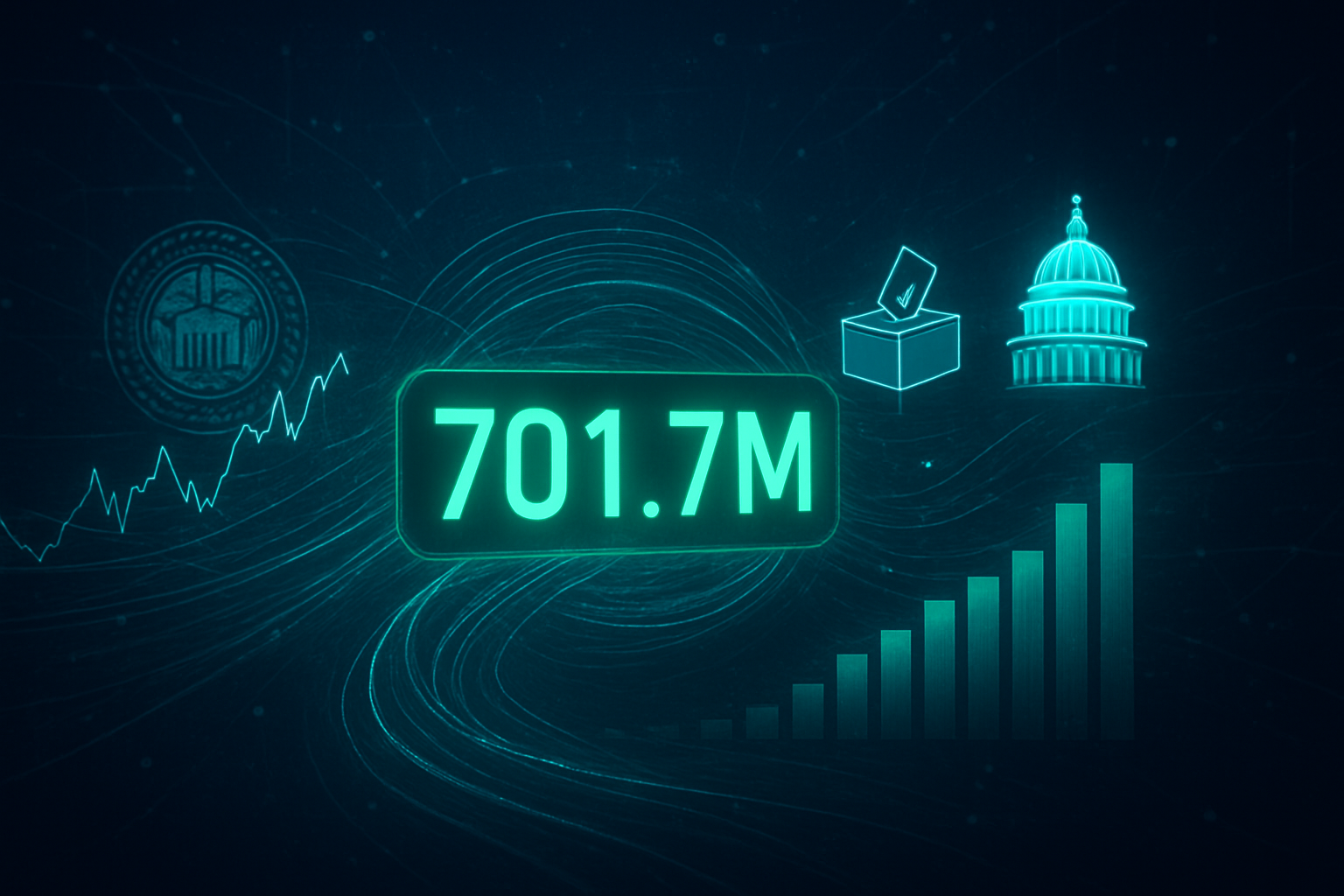
  • The Day of the Truth Engine: Prediction Markets Shatter Records with $701.7 Million Surge

    The Day of the Truth Engine: Prediction Markets Shatter Records with $701.7 Million Surge

    On January 12, 2026, the financial landscape witnessed a seismic shift as daily trading volume in prediction markets hit a staggering $701.7 million, marking the industry's most prolific 24-hour period in history. What was once dismissed as a niche corner of the internet for political hobbyists has officially transitioned into a primary "truth engine" for global finance. The surge was not merely a spike in speculative interest but a calculated migration of capital toward real-time, high-stakes information during a period of intense macroeconomic and geopolitical volatility.

    The record-breaking day saw a dominant performance by Kalshi, which captured a massive 66.4% of the total market share. This explosion in activity was fueled by a "perfect storm" of data: a slowing labor market, an unprecedented constitutional clash between the executive branch and the Federal Reserve, and early-cycle positioning for the 2026 Midterm elections. As institutional giants and retail traders alike flocked to these platforms, the consensus among analysts is clear: prediction markets are no longer about "betting"—they are about "knowing."

    The Market: What's Being Predicted

    The bulk of the $701.7 million volume was concentrated on the CFTC-regulated exchange Kalshi, which processed approximately $465.9 million in trades. A significant portion of this liquidity flowed through retail gateways, particularly Robinhood (NASDAQ: HOOD), which has integrated Kalshi’s event contracts directly into its "Prediction Markets Hub." Other major players, including Coinbase (NASDAQ: COIN) and the crypto-native Polymarket—now backed by a $2 billion investment from the Intercontinental Exchange (NYSE: ICE)—accounted for the remainder of the day's record-setting activity.

    The most active contracts on January 12 revolved around two pillars: central bank policy and political control. Traders poured over $120 million into a single contract on Kalshi: "Will the Fed cut interest rates in March?" Simultaneously, the market for "Who will control the House in 2027?" saw open interest swell to $150 million. These weren't just long-term wagers; they were highly liquid instruments being traded in real-time as news broke, with bid-ask spreads tightening to levels comparable to major equities.

    Beyond traditional macro data, the day was marked by high-velocity "flash markets." Following the sudden news of a U.S. military operation in Venezuela, volume on contracts related to the capture of Nicolás Maduro spiked instantly. Similarly, a "volatility index" for the 2026 election cycle emerged in the form of Trump impeachment odds, which surged to 57% on the back of escalating domestic political tensions.

    Why Traders Are Betting

    The primary driver behind the January 12 surge was a dramatic escalation in the "Fed Independence" narrative. Following reports that the Department of Justice had issued subpoenas to Federal Reserve Chair Jerome Powell, the markets became the only place to find a real-time probability of a constitutional crisis. Traditional forecasting from institutions like JPMorgan Chase (NYSE: JPM) struggled to keep pace with the headlines, leading traders to use prediction markets to hedge against a potentially compromised central bank.

    Market activity was also heavily influenced by the January 9 labor report, which showed a meager addition of 50,000 jobs. This data point, combined with a 4.4% unemployment rate, created a divide in opinion that only a market could resolve. While some analysts predicted a defensive "hold" by the Fed, the prediction markets moved aggressively toward a 25-basis point cut, providing a "source of truth" that anticipated subsequent movements in S&P 500 futures.

    Institutional participation reached a tipping point as well. Firms like Goldman Sachs (NYSE: GS) and Interactive Brokers (NASDAQ: IBKR) have increasingly acknowledged these markets as vital sentiment indicators. The entry of CME Group (NASDAQ: CME) into the event contract space has provided the regulatory "moat" necessary for large-scale capital to enter. On January 12, this institutional liquidity met a wave of retail enthusiasm from the Robinhood and Coinbase ecosystems, creating a liquidity flywheel that shattered all previous records.

    Broader Context and Implications

    The record volume on January 12 highlights the maturation of prediction markets from "betting platforms" to "information aggregators." In an era of fragmented media and polarized polling, these platforms provide an objective, capital-weighted consensus. Brian Armstrong, CEO of Coinbase, noted that these markets are becoming superior to traditional news outlets because participants have "skin in the game," ensuring that the prevailing odds are the most accurate reflection of available data.

    However, this rapid growth has not come without scrutiny. The massive volume on the Maduro capture contracts prompted U.S. Senators Adam Schiff and Alex Padilla to call for a CFTC investigation into potential insider trading. The concern is that prediction markets may be "too good" at uncovering information, potentially incentivizing the leak of sensitive government or corporate data for profit.

    Historically, prediction markets have shown a remarkable ability to outperform pundits. From the 2024 elections to the 2025 inflation pivots, these platforms have consistently bottomed out ahead of the curve. The $701.7 million day suggests that the broader financial world has finally accepted this reality, integrating event contracts into the standard toolkit of risk management alongside options and futures.

    What to Watch Next

    As the dust settles on this record-breaking day, all eyes are on the January 13 CPI release. Prediction markets are currently pricing in a "sticky" headline inflation rate of 2.7%, and any deviation from this will likely trigger another massive volume day as traders recalibrate their Fed expectations. The market’s reaction to this data will be a crucial test of whether the January 12 volume was a one-time anomaly or the new baseline for the industry.

    Furthermore, the legal battle involving the Federal Reserve and the DOJ is expected to generate a series of "binary events"—subpoena responses, grand jury leaks, and potential executive orders—that are tailor-made for prediction market trading. Traders should also monitor the upcoming primary filing deadlines for the 2026 Midterms, which will begin to lock in the field of candidates and drive the next wave of political liquidity.

    Bottom Line

    The events of January 12, 2026, represent a point of no return for the prediction market industry. With $701.7 million in daily volume and Kalshi commanding a dominant 66.4% share, the infrastructure of "knowing" has been firmly established. These platforms are no longer just a mirror of public opinion; they are a driver of it, influencing how major institutions hedge their bets and how the public interprets breaking news.

    Ultimately, the surge in volume tells us that in an increasingly uncertain world, the value of a clear, market-driven probability is worth hundreds of millions of dollars. As prediction markets continue to integrate with mainstream financial platforms and gain institutional legitimacy, the line between "betting" and "investing" will continue to blur, leaving us with a powerful new tool for navigating the complexities of the 21st-century economy.


    This article is for informational purposes only and does not constitute financial or betting advice. Prediction market participation may be subject to legal restrictions in your jurisdiction.

    PredictStreet focuses on covering the latest developments in prediction markets.
    Visit the PredictStreet website at https://www.predictstreet.ai/.

  • The Great Integration: How Robinhood, Coinbase, and Gemini Turned Prediction Markets into a Retail Mainstay

    The Great Integration: How Robinhood, Coinbase, and Gemini Turned Prediction Markets into a Retail Mainstay

    As of January 14, 2026, the financial landscape has undergone a seismic shift. What were once niche "betting" platforms for crypto enthusiasts have matured into a cornerstone of the modern retail brokerage experience. The primary catalyst? A wave of high-profile integrations by Robinhood Markets, Inc. (NASDAQ:HOOD), Coinbase Global, Inc. (NASDAQ:COIN), and Gemini, which have collectively brought event contracts to the fingertips of over 100 million retail investors.

    The movement is no longer experimental. In the first two weeks of 2026, prediction markets have dominated the national conversation, particularly as traders eye the upcoming January 28 Federal Reserve meeting. Current market odds on these platforms show a staggering 96% probability that interest rates will remain unchanged, a level of certainty that has largely silenced traditional financial pundits. This surge in mainstream participation follows a record-breaking day on January 12, 2026, when total daily volume across major U.S. platforms hit an all-time high of $701 million.

    The Market: What’s Being Predicted

    The democratization of prediction markets has moved beyond the "binary" outcomes of election cycles. While the 2026 Midterm Elections are the highest-volume markets currently active—with Democrats showing a 74% probability of retaking the House and Republicans maintaining a 68% chance of Senate control—the variety of available contracts has exploded. Users are now trading on everything from the appointment of the next Federal Reserve Chair to specific geopolitical outcomes, such as the likelihood of U.S. military intervention in Venezuela (currently priced at a 39% "Yes" probability).

    Trading activity is now concentrated across three primary regulated hubs:

    • Robinhood (NASDAQ:HOOD): Following its official "Prediction Markets Hub" launch on March 17, 2025, in partnership with Kalshi, Robinhood has become the retail volume leader. It now accounts for over 50% of Kalshi's total volume, reporting more than 1 million active prediction traders.
    • Coinbase (NASDAQ:COIN): Having integrated prediction markets into its main app in late 2025, Coinbase allows users to settle contracts in both USD and USDC. Its recent acquisition of The Clearing Company in January 2026 signals a move toward internalizing its own clearing operations.
    • Gemini: Taking a "regulation-first" path, Gemini launched "Gemini Predictions" in December 2025 through its own subsidiary, Gemini Titan LLC, which holds a Designated Contract Market (DCM) license from the CFTC.

    Why Traders Are Betting

    The migration to mainstream platforms has fundamentally changed the "who" and "why" of prediction trading. Unlike the 2024 cycle, which was largely driven by political hobbyists and crypto whales, the 2026 market is fueled by retail investors who view event contracts as a superior hedge against market volatility. A Robinhood user holding tech stocks, for instance, might buy "Yes" contracts on a Fed rate hike to offset potential equity losses.

    This "Information Finance" model is increasingly seen as more reliable than traditional polling or expert analysis. "The markets aren't just reflecting news; they are synthesizing it faster than any newsroom can," says one senior analyst at PredictStreet. This was evident during the recent speculation surrounding the next Fed Chair. While traditional media debated several candidates, prediction markets on Coinbase and Gemini correctly identified Kevin Hassett as the frontrunner (currently at 55%) weeks before mainstream financial outlets caught up.

    Furthermore, the integration with established wallets has lowered the barrier to entry. Retail traders are moving away from offshore platforms like Polymarket in favor of the regulated, tax-compliant environments offered by Robinhood and Coinbase. The introduction of aggressive incentives, such as Gemini’s $250 sign-up bonus and fee-free trading for event contracts, has also successfully lured users away from traditional sportsbooks.

    Broader Context and Implications

    The mainstreaming of these markets is the direct result of a landmark legal victory by Kalshi against the Commodity Futures Trading Commission (CFTC) in 2024. That court ruling established that "macro" events—including elections—could be traded on regulated exchanges. This opened the floodgates for institutional "whales" to provide the liquidity necessary for a stable market.

    However, the industry now faces a new regulatory hurdle: a "federal vs. state" jurisdictional battle. In late 2025, a newly formed Coalition for Prediction Markets (CPM)—led by former politicians and executives from Robinhood, Coinbase, and Kalshi—filed lawsuits against regulators in states like Michigan and Nevada. These states have attempted to classify prediction markets as "illegal gambling." The CPM argues that federal CFTC oversight preempts state law, a case that could determine whether these markets remain available nationwide.

    Despite these hurdles, the impact on public sentiment is undeniable. Prediction markets have become the "truth layer" of the internet. When a politician makes a claim about an upcoming economic indicator, the public no longer checks a fact-checker; they check the live odds on Robinhood.

    What to Watch Next

    The immediate focus for the market is the January 28, 2026, Federal Reserve meeting. While the odds of a rate change are low, high-volume contracts are currently being traded on the number of "dissents" within the Federal Open Market Committee (FOMC). A higher-than-expected dissent count could signal future volatility, and the "Dissent" market is often a leading indicator for the bond market.

    Beyond economics, the market for the 2026 Midterm Elections will see its first major liquidity test in the coming months as primary season begins. Traders should watch for "volatility spikes" in key swing states, which often precede major shifts in campaign funding and strategy. Finally, the resolution of the CPM's lawsuits against state regulators remains the most significant tailwind or headwind for the industry. A victory for the coalition would solidify prediction markets as a permanent fixture in every American's financial toolkit.

    Bottom Line

    The integration of prediction markets into Robinhood, Coinbase, and Gemini represents the final step in the evolution of "Information Finance." By treating event contracts as a legitimate asset class, these platforms have provided the public with a tool that is more than just a betting venue; it is a real-time, high-stakes engine for truth.

    As we move further into 2026, the success of these markets suggests that the era of relying solely on pundits and polls is over. The "wisdom of the crowd," backed by the capital of millions of retail traders, has proven to be an incredibly resilient forecaster. Whether you are hedging a portfolio or simply seeking the most accurate data on the future, the prediction markets on your phone are now the most important screen to watch.


    This article is for informational purposes only and does not constitute financial or betting advice. Prediction market participation may be subject to legal restrictions in your jurisdiction.

    PredictStreet focuses on covering the latest developments in prediction markets. Visit the PredictStreet website at https://www.predictstreet.ai/.

  • Decacorn Status: Kalshi’s $11 Billion Valuation and Media Deals Usher in the ‘Prediction Media’ Era

    Decacorn Status: Kalshi’s $11 Billion Valuation and Media Deals Usher in the ‘Prediction Media’ Era

    The landscape of information and finance reached a historic turning point this week as Kalshi, the leading U.S. regulated prediction market, announced a staggering $1 billion Series E funding round, valuing the company at $11 billion. This "decacorn" milestone, finalized in late December 2025, signals a paradigm shift in how global markets and the general public consume information, transitioning from static polls to dynamic, real-time probability markets.

    The funding news coincides with a massive media blitz. Starting in January 2026, Kalshi has officially launched exclusive partnerships with CNN, owned by Warner Bros. Discovery (NASDAQ: WBD), and CNBC, a subsidiary of Comcast (NASDAQ: CMCSA). These deals integrate Kalshi’s live prediction data directly into televised broadcasts and digital platforms, effectively making market-based odds a central pillar of news reporting alongside traditional journalism and financial data.

    The Market: What's Being Predicted

    The scale of the prediction market ecosystem has exploded over the last 12 months. On January 12, 2026, daily trading volume across the industry hit a record-breaking $701.7 million, with Kalshi accounting for nearly two-thirds of that activity. While politics dominated 2024, the "Market of Everything" has now matured. Traders are currently heavily positioned in contracts ranging from the 2026 Midterm Election control to corporate merger outcomes, such as the rumored acquisition of Warner Bros. Discovery by Netflix, Inc. (NASDAQ: NFLX).

    Kalshi’s growth is anchored by its status as a CFTC-regulated exchange, which allows for high-liquidity contracts that were previously unavailable to the American retail public. Currently, the "Who Will Control the House in 2027?" market is one of the most active, with over $150 million in open interest. The odds have seen significant volatility this week following the funding announcement, as institutional "whales" increasingly use these markets to hedge against political and regulatory risks.

    Why Traders Are Betting

    The surge in valuation and volume is driven by a unique convergence of institutional adoption and retail enthusiasm. Following the CFTC’s decision to withdraw its legal appeals against Kalshi in May 2025, major brokerages including Robinhood Markets, Inc. (NASDAQ: HOOD) and Interactive Brokers Group, Inc. (NASDAQ: IBKR) integrated Kalshi’s event contracts into their platforms. This has democratized access to event-based hedging for millions of individual investors.

    Traders are moving away from traditional polling, which many see as lagging and prone to bias. "The market doesn't have an opinion; it has a price," noted one prominent institutional trader. The $1 billion funding round, led by Paradigm with participation from Alphabet Inc. (NASDAQ: GOOGL) via its growth fund CapitalG, provides Kalshi with the war chest needed to maintain deep liquidity. This liquidity attracts "smart money" that views prediction markets as the most accurate "truth machine" for forecasting binary events, from Fed rate hikes to the success of summer blockbusters.

    Broader Context and Implications

    The partnerships with CNN and CNBC represent a fundamental shift in the media landscape. For the first time, prediction market tickers are appearing on flagship shows like CNBC’s Squawk Box and CNN’s political coverage featuring Harry Enten. By presenting "market-implied odds" as a primary metric, these networks are validating the idea that skin-in-the-game data is more reliable than expert punditry.

    This integration serves a dual purpose: it provides a more engaging, data-driven viewer experience while simultaneously driving new users to the prediction platforms. However, the rapid ascent of these markets has not been without friction. While Kalshi won its federal battle with the CFTC, it is now navigating a patchwork of state-level challenges. Regulators in Tennessee and Nevada have recently raised questions about whether sports-related prediction contracts constitute "illegal gambling," leading to a flurry of legal filings as 2026 begins.

    What to Watch Next

    The coming months will be a crucial "stress test" for the newly minted decacorn. All eyes are on the 2026 Midterm Election markets, which are expected to dwarf the volume of the 2024 cycle. The infusion of $1 billion in capital will allow Kalshi to expand its infrastructure to handle the anticipated multi-billion dollar monthly volumes.

    Furthermore, investors are watching for the resolution of the "Third Circuit" case in New Jersey, where a group of state attorneys general is challenging the federal preemption of state gambling laws. A victory for Kalshi here would likely clear the final legal hurdles for a national rollout of its sports and event-based contracts. Additionally, keep an eye on Alphabet Inc. (NASDAQ: GOOGL) and Yahoo Finance, which are rumored to be deepening their own data integrations with Kalshi by mid-2026.

    Bottom Line

    Kalshi’s $11 billion valuation is more than just a corporate milestone; it is a signal that prediction markets have officially entered the mainstream of American finance and culture. By partnering with the biggest names in news, Kalshi is positioning itself as the infrastructure layer for the "Information Economy," where every headline has a price and every forecast can be traded.

    As we move further into 2026, the distinction between a "trader" and a "news consumer" will continue to blur. Whether this leads to a more informed public or a more volatile society remains to be seen, but one thing is clear: the era of the prediction market decacorn is here, and it is reshaping the way we understand the future.


    This article is for informational purposes only and does not constitute financial or betting advice. Prediction market participation may be subject to legal restrictions in your jurisdiction.

    PredictStreet focuses on covering the latest developments in prediction markets.
    Visit the PredictStreet website at https://www.predictstreet.ai/.

  • Prediction Markets Break Records: $700 Million Day Marks New Era as Kalshi Dominates

    Prediction Markets Break Records: $700 Million Day Marks New Era as Kalshi Dominates

    The prediction market industry reached a historic milestone on January 12, 2026, as total daily trading volume across major platforms surged to a staggering $701.7 million. This record-breaking figure represents the highest single-day turnover in the history of the sector, signaling the definitive arrival of event-based trading as a cornerstone of modern finance. At the heart of this surge was Kalshi, which commanded a massive 66.4% of the market share, processing approximately $466 million in trades within a single 24-hour window.

    The explosion in volume comes as traders increasingly pivot away from traditional sentiment indicators and toward the high-stakes "truth engine" of the prediction markets. The flurry of activity on January 12 was driven by a confluence of high-impact events, including critical macroeconomic data releases and early-cycle positioning for the 2026 U.S. Midterm elections. For an industry that was once relegated to the fringes of the crypto world, this $700 million day serves as a powerful validation of its growing utility and liquidity.

    The Market: What’s Being Predicted

    The record-breaking volume of $701.7 million was distributed across a handful of key players, with Kalshi leading the pack by a wide margin. Following behind were Polymarket and the rapidly ascending Opinion Labs (operating as Opinion.trade). While sports and pop culture remain popular, the bulk of the record day’s volume was concentrated in "hard" markets: Federal Reserve interest rate decisions, quarterly GDP prints, and the first major polls of the 2026 election cycle.

    The liquidity on these platforms has reached a point where institutional-sized positions can be entered and exited with minimal slippage. On Kalshi, the "Will the Fed cut rates in March?" contract saw over $120 million in volume alone, with odds fluctuating wildly as new labor data hit the wires. These contracts are legally structured as derivatives, providing a regulated framework that has attracted a new class of professional arbitrageurs and hedge funds.

    Resolution criteria for these markets remain strictly objective. Most high-volume contracts on Kalshi and Opinion rely on government data or verified SEC filings to determine outcomes. This transparency has been critical in building trust among retail investors, many of whom have moved their speculative capital from volatile memecoins to the more "knowable" outcomes of the prediction markets.

    Why Traders Are Betting

    The momentum leading into the January 12 record was built throughout a transformative 2025. Last year, Kalshi secured its position as the market leader through a series of strategic integrations, most notably with Robinhood Markets, Inc. (NASDAQ: HOOD). This partnership allowed millions of retail traders to access event contracts directly from their primary brokerage accounts, effectively democratizing access to "skin in the game" forecasting.

    Furthermore, the legal landscape shifted dramatically in favor of the industry. Following Kalshi's landmark legal victories against the CFTC in 2024 and 2025, the uncertainty surrounding the legality of election and macro-event trading evaporated. This clarity encouraged massive "whale" activity; on January 12, several eight-figure positions were spotted in the 2026 Congressional control markets, as traders sought to hedge against potential policy shifts.

    Traditional forecasting methods, such as political polling and analyst reports, have also seen their influence wane in favor of these markets. Traders are increasingly betting that the financial incentives of a prediction market produce more accurate "signals" than a standard poll. This "wisdom of the crowd" was on full display as the markets correctly anticipated a series of hawkish comments from central bank officials hours before they were delivered, a move that contributed to the day's record-breaking volatility.

    Broader Context and Implications

    The January 12 surge is part of a broader trend that saw global prediction market volume grow from $9 billion in 2024 to over $44 billion by the end of 2025. This rapid scaling has drawn the attention of traditional financial giants. Intercontinental Exchange (NYSE: ICE), the parent company of the New York Stock Exchange, recently made a significant investment in the infrastructure powering these platforms, recognizing that event contracts are becoming a legitimate asset class.

    However, the rise of these markets has not been without controversy. While federal regulators have largely stepped back, state-level opposition is growing. In late 2025, New York introduced the ORACLE Act, a legislative attempt to curb sports and political betting on prediction platforms. Traders are watching these developments closely, as a potential Supreme Court case looms that could decide whether these markets are federally protected derivatives or state-regulated gambling.

    Historically, prediction markets have proven remarkably accurate, often outperforming professional pundits during the 2024 election and subsequent economic pivots. This track record has transformed them into a vital tool for corporate risk management. Companies now use these markets to hedge against specific regulatory outcomes or geopolitical shifts, treating a "No" vote on a specific piece of legislation with the same financial seriousness as a currency hedge.

    What to Watch Next

    As the industry digests the $701.7 million milestone, all eyes are on the upcoming 2026 Midterm election cycle. Analysts project that if current trends hold, single-day volumes could exceed $1 billion by November. The entry of CME Group Inc. (NASDAQ: CME) and Interactive Brokers Group, Inc. (NASDAQ: IBKR) into the event contract space is expected to further institutionalize the market, bringing even more liquidity to high-stakes contracts.

    Key dates to monitor include the upcoming February inflation report and the formal launch of several new "Opinion" markets focused on emerging technology milestones, such as AI safety certifications. These "tech-native" markets are expected to attract a younger demographic of traders who are more interested in the future of Silicon Valley than the halls of Washington.

    The evolution of the "Opinion" platform will also be a major narrative in 2026. By focusing on real-economy indicators and using AI-powered oracles for resolution, Opinion Labs is positioning itself as a high-tech alternative to the more established players. Whether it can continue to eat into Kalshi’s 66% market share remains the biggest question for the year ahead.

    Bottom Line

    The $701.7 million day of January 12, 2026, is more than just a statistical anomaly; it is a signal that prediction markets have reached a state of maturity. Kalshi’s dominant 66.4% share highlights the value that traders place on a regulated, liquid, and user-friendly interface. With the backing of major financial institutions and a growing track record of accuracy, these platforms are no longer just for "betting"—they are for "knowing."

    As we move deeper into 2026, the intersection of finance, data, and public sentiment will only become more integrated. Prediction markets provide a unique window into the collective mind of the global investor, offering a real-time, financially-backed truth that traditional media and polls simply cannot match. For those looking to understand where the world is headed, the odds on the board are now as important as the news on the screen.


    This article is for informational purposes only and does not constitute financial or betting advice. Prediction market participation may be subject to legal restrictions in your jurisdiction.

    PredictStreet focuses on covering the latest developments in prediction markets.
    Visit the PredictStreet website at https://www.predictstreet.ai/.

  • The Ultimate Tail-Risk Hedge: Why Traders Are Betting Millions on the ‘Second Coming’ of Jesus

    The Ultimate Tail-Risk Hedge: Why Traders Are Betting Millions on the ‘Second Coming’ of Jesus

    As the clock struck midnight on January 1, 2026, a niche but high-volume corner of the prediction markets quietly resolved. The contract "Will Jesus Christ return in 2025?" on the decentralized platform Polymarket closed with a definitive "No," providing a modest 5.5% annualized return for the skeptics who had treated the "No" shares as a high-yield savings account. Within hours, a successor contract was born: "Will Jesus Christ return before 2027?"

    Despite the theological and scientific impossibility perceived by many, this market is currently trading at a 3% probability. While that may seem negligible, the contract has already attracted hundreds of thousands of dollars in liquidity in the first two weeks of 2026. This trend highlights a growing fascination with "elusive" or "impossible" contracts—markets that predict events so world-altering that their resolution would arguably make the payout irrelevant. From extraterrestrial disclosure to the total eradication of cancer, these markets are no longer just memes; they are becoming significant financial indicators of public sentiment and tail-risk appetite.

    The Market: What's Being Predicted

    The primary market for the "Second Coming" is hosted on Polymarket, a decentralized prediction platform that has surged in popularity alongside the mainstreaming of crypto-based forecasting. As of January 13, 2026, "Yes" shares are priced at $0.03, while "No" shares sit at $0.97. This pricing indicates that the market views the event as a 33-to-1 long shot for the current calendar year.

    The resolution criteria for such a metaphysical event are surprisingly grounded. According to the contract details, the market resolves to "Yes" only if there is a "consensus of credible global news sources" confirming the event. The contract specifically cites organizations such as the Associated Press, Reuters (London Stock Exchange: LSEG), and The New York Times Company (NYSE: NYT) as primary arbiters. Furthermore, a definitive statement from major international bodies like the United Nations or the Vatican would trigger a "Yes" resolution.

    If no such consensus is reached by 11:59 PM ET on December 31, 2026, the market automatically resolves to "No." This binary clarity has turned the contract into a unique financial instrument, with total volume across the 2025 and 2026 iterations exceeding $3.5 million.

    Why Traders Are Betting

    The motivations behind these bets are as varied as the traders themselves. For many institutional and high-net-worth individuals, the "No" side of the Jesus market functions as a "yield play." By purchasing "No" shares at $0.97, a trader is essentially locking in a 3% return over twelve months. In an era where traditional bond yields from entities like the U.S. Treasury may fluctuate, a 3% "guaranteed" return—predicated on the non-occurrence of an apocalyptic event—is seen by some as an attractive alternative to traditional cash management.

    On the other side of the trade, "Yes" bettors are often driven by a mix of religious conviction, "black swan" hedging, and pure speculation. Buying "Yes" shares at 3 cents offers a 3,333% return if the event occurs. While some critics point out that the global financial system would likely collapse upon such an event—making the payout impossible to collect—believers and tail-risk enthusiasts argue that the "Yes" position is the ultimate hedge against a total change in the human paradigm.

    "It’s an arbitrage of belief," says one frequent Polymarket whale. "If you’re a materialist who thinks the probability is zero, you’re essentially taxing the hope of the believers. But the believers are willing to pay that tax for the 33x payout on the off-chance they are right. It’s the only place in the world where you can put a price tag on the divine."

    Broader Context and Implications

    The "Second Coming" market is part of a broader trend of "existential forecasting" that has taken over platforms like Polymarket and Kalshi. Similar markets have seen explosive growth. For instance, a contract regarding the official U.S. government disclosure of extraterrestrial life saw over $16 million in volume in 2025, with odds frequently spiking based on viral clips on platforms like YouTube, owned by Alphabet Inc. (NASDAQ: GOOGL).

    These markets reveal a fundamental shift in how the public processes "impossible" information. Rather than relying solely on opinion polls, which are often skewed by social desirability bias, prediction markets force participants to "put their money where their mouth is." Data suggests that while 20% of a population might tell a pollster they expect a major religious or cosmic event soon, less than 3% are willing to bet on it occurring within a specific 12-month window.

    However, these markets also raise regulatory and ethical questions. Critics argue that gamifying the end of the world or major catastrophes can desensitize the public to actual global risks. Regulators have historically been wary of "event contracts," though recent legal victories by platforms like Kalshi have opened the door for more diverse—and sometimes bizarre—trading pairs.

    What to Watch Next

    As we move through 2026, several factors could shift the 3% probability. Traders typically watch for "volatility catalysts," which in this market include major religious holidays (such as Easter or Passover), geopolitical escalations in the Middle East, or even unexplained astronomical phenomena reported by NASA.

    History shows that these markets are highly sensitive to "cascading news." In 2025, a false report of a UFO sighting briefly sent the "Aliens" market from 5% to 40% in a matter of minutes. Similar spikes are expected in the "Second Coming" market if any major religious leader makes a cryptic or prophetic announcement.

    Traders should also monitor the liquidity. As the end of the year approaches, the "time decay" on "Yes" shares will accelerate. If we reach November 2026 without a resolution, the "No" shares will likely climb toward $0.99, squeezing out any remaining "Yes" holders who aren't in it for the long haul.

    Bottom Line

    The Polymarket "Second Coming" contract is a fascinating intersection of theology, finance, and human psychology. While it may appear absurd on the surface, its multi-million dollar volume proves that there is a significant appetite for trading on the "untradable." It serves as a stark reminder that in the modern era, everything—even the end of the world as we know it—can be reduced to a ticker symbol and a probability curve.

    Whether viewed as a high-yield savings account for skeptics or a lottery ticket for the faithful, the market provides a more honest look at collective expectations than any poll could offer. As 2026 progresses, the 3% probability will remain a silent, fluctuating metric of our global anxiety and hope.


    This article is for informational purposes only and does not constitute financial or betting advice. Prediction market participation may be subject to legal restrictions in your jurisdiction.

    PredictStreet focuses on covering the latest developments in prediction markets.
    Visit the PredictStreet website at https://www.predictstreet.ai/.

  • The Resilience of a Titan: A 2026 Deep-Dive into Bank of America (NYSE: BAC)

    The Resilience of a Titan: A 2026 Deep-Dive into Bank of America (NYSE: BAC)

    As of January 13, 2026, Bank of America Corporation (NYSE: BAC) stands as a titan of the global financial sector, representing both a bellwether for the American consumer and a sophisticated engine for global capital markets. Following a year of economic recalibration in 2025—marked by a "soft landing" in the United States and a stabilizing interest rate environment—BAC has emerged as a preferred play for investors seeking a blend of defensive stability and high-tech growth. With a market capitalization that consistently places it among the top tier of global financial institutions, the bank is currently in focus due to its massive technology investments, the evolution of its leadership bench, and its ability to navigate a shifting regulatory landscape.

    Historical Background

    The story of Bank of America is a quintessentially American narrative of populism and expansion. It began in 1904 when Amadeo Pietro Giannini founded the Bank of Italy in San Francisco. Giannini’s vision was revolutionary: he sought to serve the "little fellow"—the immigrants and working-class citizens who were largely ignored by the aristocratic banking establishment of the time. The bank’s reputation was forged in the fire of the 1906 San Francisco earthquake; while other banks remained closed, Giannini famously operated from a makeshift desk on the street, lending money to help the city’s residents rebuild.

    Over the next century, the institution underwent several metamorphoses. It became Bank of America in 1930 and eventually transformed into its modern iteration through the landmark 1998 merger between the Charlotte-based NationsBank and the San Francisco-based BankAmerica. This $62 billion deal shifted the power center of American banking to North Carolina. In 2008, at the height of the global financial crisis, the bank acquired both Countrywide Financial and Merrill Lynch, moves that significantly expanded its footprint in mortgages and wealth management but also saddled the firm with years of litigation and regulatory scrutiny. Under current leadership, the bank has spent the last decade shedding that legacy to focus on "Responsible Growth."

    Business Model

    Bank of America operates a highly diversified business model designed to generate consistent returns across various economic cycles. The company is organized into four primary reporting segments:

    1. Consumer Banking: The engine of the firm, serving nearly 70 million consumers and small business clients. This segment generates revenue through traditional deposit-taking, credit card fees, and mortgage lending.
    2. Global Wealth & Investment Management (GWIM): Comprising the legendary Merrill Lynch and Bank of America Private Bank, this segment is one of the world’s largest wealth managers, overseeing more than $3.2 trillion in client balances.
    3. Global Banking: This division provides lending-related products, integrated working capital management, and investment banking services to middle-market and large corporations. It is a major player in debt and equity underwriting and M&A advisory.
    4. Global Markets: Focused on institutional clients, this segment provides sales and trading services across fixed income, currencies, commodities, and equities, acting as a critical hedge during periods of market volatility.

    Stock Performance Overview

    Bank of America’s stock performance leading into 2026 reflects a steady recovery and a growing investor confidence in its domestic-focused strategy.

    • 1-Year Performance: In the past 12 months, BAC has seen a total return of approximately 26.7%, outperforming broader indices as investors rotated into "value" and financial stocks following the Fed’s rate stabilization.
    • 5-Year Performance: On a five-year horizon, the stock is up roughly 90.6%. This period encompasses the post-pandemic boom, the 2023 regional banking jitters (which BAC survived as a "flight to safety" beneficiary), and the high-rate environment of 2024.
    • 10-Year Performance: Long-term investors have seen a total return exceeding 350%. This reflects the bank's successful pivot away from the post-2008 era of litigation toward a highly efficient, technology-first enterprise.

    Financial Performance

    Financial results for the end of 2025 and the beginning of 2026 highlight a "fortress" balance sheet. In Q4 2025, BAC reported revenue of approximately $27.34 billion, an 8% increase year-over-year. Net Interest Income (NII) remains a focal point; as of January 2026, NII has stabilized at an exit rate of roughly $15.5 billion per quarter, with management projecting 5–7% growth in 2026 as loan demand increases.

    The bank's efficiency ratio—a key metric of operational prowess—remains highly competitive, hovering around the 63% mark. Furthermore, its Common Equity Tier 1 (CET1) ratio stands at a strong 11.9%, providing a significant buffer against economic shocks and ample room for capital return to shareholders through dividends and buybacks.

    Leadership and Management

    The institution has been led by CEO Brian Moynihan since 2010. Moynihan’s tenure has been characterized by the mantra of "Responsible Growth," which prioritizes organic expansion and expense discipline over the risky, acquisition-heavy strategies of his predecessors.

    As of early 2026, the market is closely watching the bank's succession planning. In late 2025, Moynihan appointed Dean Athanasia and Jim DeMare as co-presidents, a move widely viewed as the start of a formal "horse race" for the CEO position. While Moynihan has indicated he plans to stay through the end of the decade, the presence of a clear leadership pipeline has reassured institutional investors regarding the bank's long-term strategic continuity.

    Products, Services, and Innovations

    Bank of America is a leader in digital banking, spending approximately $4 billion annually on technology and innovation.

    • Erica: The bank’s AI-powered virtual assistant, Erica, has become a benchmark for the industry, recently surpassing 50 million users and 3 billion total client interactions.
    • CashPro: For corporate clients, the CashPro platform provides sophisticated treasury and payment solutions, now enhanced with predictive AI to help CFOs manage liquidity.
    • Digital Integration: A record 55% of all product sales—from credit cards to mortgages—are now initiated through digital channels. This shift not only improves customer experience but significantly lowers the bank's cost-to-serve.

    Competitive Landscape

    BAC competes in a "Big Four" environment alongside JPMorgan Chase (NYSE: JPM), Wells Fargo (NYSE: WFC), and Citigroup (NYSE: C).

    • vs. JPMorgan Chase: While JPM remains the industry leader in scale and return on equity (ROE), BAC is often viewed as a more "pure-play" on the U.S. consumer and has a more sensitive net interest margin (NIM) profile that some investors prefer during specific interest rate cycles.
    • vs. Wells Fargo: BAC holds a technological and reputational lead, as Wells Fargo has spent the better part of the last decade under regulatory asset caps.
    • vs. Citigroup: BAC’s domestic-heavy focus is often seen as "cleaner" and less complex than Citi’s massive global restructuring efforts.

    Industry and Market Trends

    The banking sector in 2026 is defined by the rapid "digitization of everything." The transition from physical branches to digital hubs is accelerating, though BAC maintains a strategic "high-tech, high-touch" approach by keeping a streamlined but modernized branch network. Additionally, the industry is seeing a "fixed-rate asset repricing" trend; as low-yielding loans from the 2020-2021 era roll off, they are being replaced by higher-yielding assets, providing a tailwind for bank earnings through 2026 and 2027.

    Risks and Challenges

    Despite its strength, Bank of America faces several headwinds:

    • Credit Risk: While the consumer remains resilient, pockets of stress in Commercial Real Estate (CRE), particularly office space in urban centers, remain a concern for the banking industry.
    • Regulatory Uncertainty: Proposed caps on credit card late fees and debit interchange fees by the CFPB could impact non-interest income.
    • Inflationary Pressure: If inflation remains "sticky" (above 2.5%), it may force the Federal Reserve to keep rates higher for longer, which could eventually dampen loan demand and increase the risk of a late-cycle recession.

    Opportunities and Catalysts

    • Basel III Endgame: Recent signals from regulators suggest that the "Basel III Endgame" capital requirements may be dialed back. If this occurs in 2026, BAC could unlock billions of dollars in excess capital currently held on the balance sheet for aggressive share buybacks.
    • Investment Banking Rebound: As the M&A and IPO markets continue their 2025 recovery into 2026, BAC’s Global Banking division is poised for significant fee growth.
    • Wealth Management Expansion: The intergenerational transfer of wealth provides a massive opportunity for Merrill to grow its assets under management.

    Investor Sentiment and Analyst Coverage

    Wall Street maintains a "Moderate Buy" consensus on BAC as of January 2026. Institutional investors, including major pension funds and asset managers, hold nearly 70% of the float, drawn to the bank's consistent dividend and low-risk profile. Price targets for 2026 generally range between $58 and $62, suggesting a roughly 10-12% upside from current levels. Retail sentiment is largely positive, focused on the bank's technological leadership and the potential for increased capital returns.

    Regulatory, Policy, and Geopolitical Factors

    The bank operates in one of the most heavily regulated environments in the world. Key factors in 2026 include:

    • Federal Reserve Stress Tests: The bank’s ability to pass annual stress tests with flying colors remains a prerequisite for its capital return strategy.
    • Geopolitics: While BAC is primarily domestic, its Global Markets and Global Banking divisions are sensitive to trade tensions and geopolitical shifts in Europe and Asia, which can impact market volatility and cross-border M&A.
    • Policy Shifts: The 2026 mid-term election cycle in the U.S. may introduce new debates regarding bank taxation and consumer protection laws.

    Conclusion

    Bank of America enters 2026 as a formidable institution that has successfully wedded its 120-year history of personal service with a modern, AI-driven infrastructure. Its "Responsible Growth" strategy has produced a bank that is safer, more efficient, and more predictable than at any point in its modern history. While regulatory pressures and macro-economic uncertainty in the office-real-estate sector require caution, the bank’s diversified revenue streams and technological edge provide a significant moat. For investors, BAC remains a foundational financial asset, representing a high-quality bet on the continued resilience and digital transformation of the American economy.


    This content is intended for informational purposes only and is not financial advice. Today’s date is January 13, 2026.

  • Premium Moats and Policy Shocks: An In-Depth Research Feature on American Express (AXP) in 2026

    Premium Moats and Policy Shocks: An In-Depth Research Feature on American Express (AXP) in 2026

    As of January 13, 2026, American Express Company (NYSE: AXP) finds itself at a pivotal crossroads between record-breaking financial performance and a sudden shift in the regulatory winds. After a stellar 2025 that saw the stock reach all-time highs, the "Blue Box" is currently navigating a "policy shock" triggered by renewed political focus on credit card interest rates. Despite this, American Express remains the preeminent "premium moat" in the financial services sector, successfully pivoting its brand identity to capture the highly coveted Millennial and Gen Z demographics. This research feature examines whether the company’s closed-loop model and aspirational brand can withstand the headwinds of early 2026.

    Historical Background

    Founded in 1850 in Buffalo, New York, American Express began its life not as a bank, but as an express mail delivery service—a competitor to the U.S. Postal Service. Its founders, Henry Wells, William G. Fargo, and John Butterfield, created a logistics powerhouse that eventually birthed Wells Fargo. By the late 19th century, the company pivoted toward financial services, inventing the Travelers Cheque in 1891 to solve the problems of international travelers.

    The modern era of American Express began in 1958 with the launch of its first charge card. Unlike revolving credit cards, the early Amex cards required payment in full each month, establishing a culture of "spend-centric" rather than "lend-centric" revenue. Over the decades, the company transformed into a global payments network, surviving the transition from paper vouchers to digital wallets, always maintaining its position as a status symbol for the professional elite.

    Business Model

    American Express operates a unique "closed-loop" network. Unlike Visa (NYSE: V) or Mastercard (NYSE: MA), which act primarily as technology rails for other banks' cards, American Express acts as the card issuer, the merchant acquirer, and the payment network simultaneously.

    This integrated model provides several competitive advantages:

    • Direct Merchant Relationships: Amex captures the full "discount rate" (merchant fee) rather than sharing it with multiple intermediaries.
    • Data Superiority: By seeing both sides of the transaction—the cardholder and the merchant—Amex possesses richer data for fraud prevention and targeted marketing.
    • Spend-Centric Revenue: The core business focuses on high-spending individuals who generate significant merchant fees, making the company less dependent on interest income than traditional retail banks like Citigroup (NYSE: C) or Capital One (NYSE: COF).

    The business is divided into three primary segments: U.S. Consumer Services, Commercial Services (serving small to large businesses), and Global Merchant and Network Services.

    Stock Performance Overview

    The performance of AXP has been a masterclass in compounding over the last decade:

    • 1-Year Performance: After peaking at $384.04 in December 2025, the stock has faced a 7% correction in early January 2026, currently trading near $358 due to regulatory uncertainty. However, it remains up approximately 22% over the last 12 months.
    • 5-Year Performance: AXP has significantly outperformed the S&P 500, nearly doubling its valuation since 2021 as it capitalized on the post-pandemic travel and entertainment (T&E) boom.
    • 10-Year Performance: Long-term shareholders have seen substantial gains, driven by aggressive share buybacks and a consistent dividend growth strategy, with the stock price rising over 350% in the last decade.

    Financial Performance

    American Express enters 2026 on a high note, following a record-breaking 2025.

    • Revenue Growth: In Q3 2025, the company reported $18.43 billion in revenue, an 11% increase year-over-year. Full-year 2025 revenue is expected to show 9-10% growth.
    • Earnings Per Share (EPS): 2025 guidance was raised to $15.20–$15.50. Analysts are eagerly awaiting the January 30, 2026, earnings call for final confirmation.
    • Valuation Metrics: Even with the recent dip, AXP trades at a premium P/E ratio relative to its banking peers, reflecting its higher-quality customer base and network fees.
    • Capital Allocation: In early 2025, the board approved a 17% dividend increase to $0.82 per share, supported by a robust Tier 1 Common Equity ratio and strong cash flow.

    Leadership and Management

    Stephen J. Squeri has served as Chairman and CEO since 2018, overseeing a period of immense growth and cultural modernization. Under Squeri, the company has successfully transitioned its marketing focus toward younger consumers.

    In early 2025, the company executed a strategic leadership reshuffle to prepare for the 2026-2030 growth cycle:

    • Howard Grosfield (Group President, U.S. Consumer Services) has been tasked with integrating AI and digital labs into the consumer experience.
    • Christophe Le Caillec (CFO) has maintained a disciplined approach to credit reserves, keeping delinquency rates well below industry averages.
    • Anna Marrs (Group President, Global Merchant and Network Services) continues to lead the international expansion of the Amex merchant network.

    Products, Services, and Innovations

    The "Platinum Refresh" of late 2025 remains the company’s flagship innovation. By raising the annual fee to $895 and introducing a mirrored metal card, Amex doubled down on luxury, adding exclusive dining credits via Resy and wellness partnerships with brands like Lululemon.

    Beyond the consumer space, innovations include:

    • Amex Business Link: A digital B2B ecosystem that automates invoicing and payments for SMEs.
    • Healthcare Provider Payments: A new 2026 initiative targeting the $100 billion market for clinical billing.
    • Nipendo Integration: Following the acquisition of Nipendo, Amex has integrated automated expense management into its "Business Blueprint" platform, moving closer to a "bank-as-a-service" model for corporate clients.

    Competitive Landscape

    American Express competes in a "premium arms race."

    • JPMorgan Chase (NYSE: JPM): The Sapphire Reserve remains the primary challenger. In June 2025, JPM increased its fee to $795, but Amex responded by further elevating its luxury perks to maintain its "prestige gap."
    • Visa and Mastercard: While Amex cannot match the sheer volume of these giants, its closed-loop model allows it to capture a higher percentage of every dollar spent.
    • Fintechs: Startups like Brex and Ramp continue to challenge Amex in the corporate card space, though Amex’s scale and "Membership Rewards" ecosystem remain difficult to replicate.

    Industry and Market Trends

    The "Premiumization of Travel" is the defining trend of 2025-2026. Despite broader inflationary pressures, high-net-worth individuals and "HENRYs" (High Earners, Not Rich Yet) have prioritized experiential spending.

    • Generational Shift: Gen Z and Millennials now account for 60% of new global account acquisitions for Amex.
    • Digital Wallets: The integration of cards into mobile payments has increased transaction frequency, as "tap-to-pay" becomes the global standard.

    Risks and Challenges

    • Policy Shock: The early 2026 proposal by the U.S. administration for a temporary 10% cap on credit card interest rates is the most immediate risk. While legislative passage is debated, the sentiment hit is real.
    • Credit Normalization: While Amex’s affluent base is resilient, a broader economic slowdown could lead to rising write-offs from its younger, less-tenured cardmembers.
    • Market Saturation: With the Platinum fee now at $895, some analysts wonder if the company is reaching the upper limit of consumer price elasticity.

    Opportunities and Catalysts

    • B2B Expansion: The automation of supply chain payments represents a multi-trillion dollar opportunity where Amex is still under-penetrated.
    • International Growth: Merchant acceptance in Europe and Asia has reached record levels, allowing Amex to capture more "cross-border" fee revenue.
    • AI Personalization: Using its closed-loop data, Amex is deploying AI to provide hyper-personalized "concierge" offers, potentially increasing cardholder retention and spend.

    Investor Sentiment and Analyst Coverage

    Wall Street remains generally bullish but cautious about the regulatory environment.

    • Analyst Ratings: The consensus remains a "Moderate Buy," with an average price target of $352.82. Some bulls have price targets as high as $425, citing the Jan 30 earnings as a potential "clearing event."
    • Institutional Moves: Major holders like Berkshire Hathaway (NYSE: BRK.B) continue to view AXP as a cornerstone "moat" investment, providing a floor for the stock price.

    Regulatory, Policy, and Geopolitical Factors

    Two major regulatory deadlines loom in 2026:

    1. CFPB Section 1033: Starting April 1, 2026, "Open Banking" rules will require Amex to allow customers to share their financial data with third-party competitors. This could increase churn but also allows Amex to "poach" high-value data from other banks.
    2. Interchange Pressure: Global regulators, particularly in the EU and Australia, continue to eye merchant fee caps, which could compress the margins of the Global Merchant and Network Services segment.

    Conclusion

    American Express enters 2026 as a financial powerhouse that has successfully reinvented its 175-year-old brand for a new generation. While the current "policy shock" regarding interest rate caps has introduced short-term volatility, the company’s fundamental strength lies in its spend-centric model and its unique closed-loop data. Investors should closely watch the January 30 earnings call for management’s commentary on regulatory headwinds and the resilience of the premium consumer. In a world where "brand" is often fleeting, the "Blue Box" remains one of the most durable assets in the global financial ecosystem.


    This content is intended for informational purposes only and is not financial advice.

  • The Great Simplification: A Deep Dive into Citigroup’s 2026 Resurgence

    The Great Simplification: A Deep Dive into Citigroup’s 2026 Resurgence

    As of January 13, 2026, Citigroup Inc. (NYSE: C) stands at a pivotal junction in its storied history. Once the "troubled child" of the American banking sector, the firm has spent the last three years under the leadership of CEO Jane Fraser undergoing a radical, surgical transformation. For decades, Citigroup was synonymous with complexity—a sprawling global footprint that analysts often criticized as "too big to manage."

    Today, the narrative has shifted. Citigroup is no longer just a "deep value" play for contrarian investors; it has become a focused, leaner, and increasingly efficient global services powerhouse. With a stock price that has surged to levels not seen in years and a simplified structure that has shed layers of bureaucracy, Citi is finally proving that it can compete with its peers, JPMorgan Chase (NYSE: JPM) and Bank of America (NYSE: BAC), on performance rather than just scale.

    Historical Background

    Founded in 1812 as the City Bank of New York, the institution eventually grew into National City Bank, becoming a pioneer in personal loans and overseas expansion. However, the most defining moment in its modern history was the 1998 merger between Citicorp and Travelers Group. This $70 billion union, orchestrated by Sandy Weill and John Reed, birthed the "financial supermarket" model—a concept that promised one-stop shopping for all banking and insurance needs.

    This model famously unraveled during the 2008 Global Financial Crisis. Citigroup, heavily exposed to subprime mortgages, required a $45 billion government bailout and was forced to hive off its non-core assets into "Citi Holdings." For the next 15 years, the bank languished under regulatory scrutiny and a discounted valuation. The appointment of Jane Fraser in 2021 marked a clean break from the past, initiating "Project Bora Bora"—the most aggressive restructuring plan in the bank's history—designed to dismantle the complex legacy of the Weill era.

    Business Model

    Citigroup has transitioned from a fragmented global retail bank into a focused institutional services provider with five core reporting segments:

    1. Services: Often called the "crown jewel," this segment includes Treasury and Trade Solutions (TTS) and Securities Services. It facilitates trillions of dollars in payments daily for multinational corporations and governments.
    2. Markets: A global powerhouse in Fixed Income, Currencies, and Commodities (FICC) and Equities, providing liquidity and trading solutions across 95 countries.
    3. Banking: Comprising Investment Banking and Corporate Banking, this unit focuses on M&A advisory, debt, and equity underwriting.
    4. Wealth: Led by former Merrill Lynch executive Andy Sieg, this segment has recently integrated Citi’s US Retail Banking operations to target affluent and high-net-worth clients more effectively.
    5. US Consumer Cards: A standalone unit (as of late 2025) managing Branded Cards and Retail Services, making Citi one of the largest credit card issuers globally.

    Stock Performance Overview

    The last decade for Citigroup was characterized by stagnation, but the 1-year and 3-year windows show a dramatic reversal.

    • 10-Year View: Until late 2023, Citi’s stock largely underperformed the S&P 500 and the KBW Bank Index, plagued by low returns on equity and regulatory fines.
    • 5-Year View: The performance is a "tale of two halves," with significant downward pressure during the early 2020s followed by a sharp recovery starting in 2024.
    • 1-Year View: As of January 2026, the stock has reached a 52-week high of approximately $124 per share. This represents a nearly 200% gain from the multi-year lows seen in late 2023. More importantly, its Price-to-Tangible Book Value (P/TBV) has expanded from a dismal 0.4x to a more respectable 1.3x, closing much of the "Citi Discount."

    Financial Performance

    In the fiscal year 2025, Citigroup silenced skeptics by reporting revenue of approximately $84.2 billion.

    • Earnings: EPS grew by 26% year-over-year in 2025, driven by a surge in investment banking fees and record-high margins in the Services segment.
    • Efficiency: The efficiency ratio—a measure of how much it costs to generate revenue—has improved to the low 60% range, down from nearly 70% in 2023.
    • ROTCE: The bank’s Return on Tangible Common Equity (ROTCE) reached 9.7% in late 2025, bringing it within striking distance of management's 11% target for 2026.
    • Capital: Citi maintains a robust Common Equity Tier 1 (CET1) capital ratio of 13.5%, allowing it to return $12 billion to shareholders through dividends and buybacks in 2025 alone.

    Leadership and Management

    Jane Fraser’s tenure has been defined by "ruthless simplification." By reducing management layers from 13 to 8 and eliminating over 60 committees, she has accelerated decision-making.

    • Mark Mason: The long-standing CFO, widely respected by Wall Street for his transparency, is transitioning to Executive Vice Chair in March 2026.
    • Gonzalo Luchetti: The incoming CFO is tasked with maintaining the financial discipline established by Mason while driving growth in the restructured segments.
    • Andy Sieg: His leadership in Wealth is viewed as critical to unlocking the high-margin, capital-light revenue streams that investors crave.

    Products, Services, and Innovations

    Innovation at Citi is currently centered on its Global Treasury Network. In 2025, the bank expanded its "Citi Token Services," utilizing private blockchain technology to provide cross-border payments and automated trade finance for institutional clients 24/7.

    Additionally, the bank has invested heavily in AI-driven risk management. After several "fat-finger" trading errors and data reporting issues in 2020-2022, Citi has automated its regulatory reporting and risk assessment tools, a move that recently earned it a partial "thaw" in regulatory scrutiny.

    Competitive Landscape

    Citigroup operates in a hyper-competitive landscape where its global network remains its primary moat.

    • Institutional: It competes with JPMorgan Chase (NYSE: JPM) and HSBC Holdings (NYSE: HSBC). While JPM has a larger domestic presence, Citi’s footprint in emerging markets remains unparalleled.
    • Wealth Management: It faces stiff competition from Morgan Stanley (NYSE: MS) and UBS Group (NYSE: UBS). Citi’s strategy is to pivot from "mass market" retail to "high-net-worth" wealth, mirroring the successful models of its peers.
    • Strengths: Unrivaled geographic reach (95+ countries) and a dominant position in corporate cash management.
    • Weaknesses: Historically lower profitability (ROE) compared to peers and a legacy of higher regulatory costs.

    Industry and Market Trends

    The banking sector in 2026 is navigating a "higher-for-longer" interest rate environment, which has bolstered Net Interest Income (NII) but also raised concerns about loan defaults in commercial real estate.

    • Digitalization: The shift away from physical branches toward digital-first banking is a tailwind for Citi, which has been aggressively divesting its international retail branches.
    • Global Trade Shifts: As multinational corporations shift supply chains from China to "friend-shoring" hubs like Mexico and Vietnam, Citi’s global network is positioned to capture the associated trade finance and FX revenue.

    Risks and Challenges

    Despite the progress, several "red flags" remain:

    1. Regulatory Consent Orders: While the OCC removed a minor amendment in December 2025, the primary 2020 consent orders regarding risk management and data governance remain active. Addressing these is a multi-billion dollar, multi-year endeavor.
    2. Execution Risk: The bank is still in the process of shedding 20,000 jobs. Maintaining morale and operational stability during such a massive headcount reduction is a significant challenge.
    3. Macro Sensitivity: As a global bank, Citi is highly sensitive to geopolitical instability, particularly in Europe and the Middle East, and fluctuations in global trade volumes.

    Opportunities and Catalysts

    • Banamex IPO: The planned IPO of Citi's Mexican retail arm, Banamex, in late 2026 is the largest remaining "de-risking" event. A successful exit would free up significant capital for share buybacks.
    • Investor Day 2026: Scheduled for May 7, 2026, this event is expected to provide the roadmap for the "Post-Transformation Citi," with new, more ambitious ROTCE targets.
    • M&A Rebound: A potential 2026 supercycle in healthcare and AI-related M&A could provide a massive windfall for Citi’s investment banking division.

    Investor Sentiment and Analyst Coverage

    Wall Street sentiment has shifted from skeptical to cautiously optimistic. Influential analysts, such as Wells Fargo’s Mike Mayo, have consistently called Citi a "top pick," citing the "once-in-a-generation" turnaround. Hedge fund interest has also spiked, with institutional ownership increasing as the bank’s valuation approached its tangible book value. The retail "chatter" has moved from discussing a potential dividend cut to debating the pace of share repurchases.

    Regulatory, Policy, and Geopolitical Factors

    Citigroup's global nature makes it a bellwether for geopolitical risk. The "Basel III Endgame" capital requirements remain a point of contention in 2026, with Citi lobbying alongside other big banks for more lenient capital floors to remain competitive with European and Asian rivals. Furthermore, the bank’s exit from Russia, finalized in early 2026, removed a significant source of headline risk and regulatory headache.

    Conclusion

    Citigroup Inc. in 2026 is a vastly different company than it was even three years ago. The "supermarket" is gone, replaced by a specialized global service provider. While the regulatory shadows haven't fully vanished, the bank’s financial trajectory—marked by rising ROTCE and a recovering stock price—suggests that Jane Fraser’s "Bora Bora" transformation is working.

    Investors should watch the May 2026 Investor Day and the Banamex IPO progress as the final indicators of whether Citi can officially shed its "problem child" status and reclaim its place as a top-tier global financial institution. The path is clearer than it has been in decades, but the margin for error remains thin.


    This content is intended for informational purposes only and is not financial advice.

  • Capital One (COF) in 2026: The New King of Credit and the Battle for the Network

    Capital One (COF) in 2026: The New King of Credit and the Battle for the Network

    Date: January 13, 2026

    Introduction

    As of early 2026, Capital One Financial Corporation (NYSE: COF) stands at the pinnacle of the American consumer lending landscape. Following the seismic completion of its acquisition of Discover Financial Services in May 2025, the McLean, Virginia-based firm has transformed from a major credit card issuer into a vertically integrated financial powerhouse. By combining its data-driven lending prowess with a proprietary global payments network, Capital One is no longer merely a bank; it is a direct challenger to the longstanding Visa and Mastercard duopoly. However, this newfound scale comes at a moment of intense regulatory scrutiny and shifting macroeconomic headwinds, making COF one of the most debated tickers on Wall Street today.

    Historical Background

    The Capital One story is one of disruption through data. Founded in 1988 as the credit card division of Signet Financial Corp, the company was spun off in 1994 under the leadership of Richard Fairbank and Nigel Morris. At a time when credit cards were largely "one size fits all" with uniform interest rates, Capital One pioneered the "Information-Based Strategy" (IBS). By using rigorous scientific testing and data analytics, they identified under-served segments of the market and customized credit offers to individual risk profiles.

    Over the next three decades, the company evolved from a monoline credit card company into a diversified bank. Key acquisitions—including Hibernia National Bank in 2005, North Fork Bank in 2006, and ING Direct in 2012—built a massive deposit base. This historical trajectory reached its zenith in May 2025 with the $51.8 billion acquisition of Discover Financial Services, a move that returned the company to its disruptive roots by providing it with its own payment rail.

    Business Model

    Capital One operates through three primary segments, though the lines between them have blurred with the integration of Discover:

    1. Credit Cards: This is the company’s engine, now representing the largest card loan portfolio in the U.S. Following the Discover merger, this segment includes not only the Capital One branded products but also the legacy Discover card base.
    2. Consumer Banking: Leveraging the "Capital One 360" brand and its unique "Café" branch model, this segment focuses on gathering low-cost deposits to fund its lending activities.
    3. Commercial Banking: This division provides lending, treasury management, and depository services to middle-market businesses and the commercial real estate sector.

    The most critical shift in the 2026 business model is the Discover Network. By owning the network, Capital One now captures the interchange fees that it previously paid to external networks, while simultaneously gaining deeper data insights into every transaction on its rails.

    Stock Performance Overview

    Over the past decade, COF has been a barometer for the American consumer’s financial health.

    • 10-Year Horizon: Investors have seen significant wealth creation, though the path has been volatile. The stock benefited from the post-2016 deregulation environment and the massive consumer stimulus of the early 2020s.
    • 5-Year Horizon: Performance was marked by a sharp recovery from the pandemic lows, followed by a period of stagnation in 2023–2024 as interest rates rose and the Discover merger was evaluated.
    • 1-Year Horizon: 2025 was a "V-shaped" year for the stock. After a dip following the closing of the Discover deal due to integration costs and a $4.3 billion Q2 net loss, the stock rallied in late 2025 as the company reported a massive $3.2 billion Q3 net income and demonstrated clear synergies from the merger.

    Financial Performance

    Capital One’s FY 2025 financials reflect a company in a massive state of transition. While the top-line revenue grew to an estimated $28.5 billion, the bottom line was impacted by one-time merger expenses and significant reserve builds.

    Key metrics as of the latest reporting cycle include:

    • Net Interest Margin (NIM): Widened to 8.36% in late 2025, driven by the inclusion of Discover’s high-yield assets.
    • Efficiency Ratio: Currently elevated at approximately 55% due to integration costs, though management targets a return to the low 40s by late 2027.
    • Capital Position: The Common Equity Tier 1 (CET1) ratio remains robust at approximately 12.8%, providing a buffer against potential credit downturns.
    • Valuation: Trading at a Forward P/E of approximately 9.5x, the market remains cautious, pricing in regulatory risks despite the strong earnings recovery in Q3 2025.

    Leadership and Management

    Founder and CEO Richard Fairbank remains the face of the company, holding the reins for over 30 years—a rarity in the banking sector. Fairbank’s strategy has been remarkably consistent: maintain a "tech-first" culture. Under his leadership, Capital One was the first major bank to migrate entirely to the cloud (AWS).

    The current leadership team is focused on the "marathon" integration of Discover. This includes AI Chief Prem Natarajan, who is tasked with utilizing generative AI to streamline the merger of two massive datasets, and CFO Andrew Young, who is navigating the complex financial synergies of the closed-loop network.

    Products, Services, and Innovations

    Capital One has moved beyond basic banking into a lifestyle and technology ecosystem:

    • Capital One Travel & Lounges: A direct challenge to American Express (NYSE: AXP) and Chase (NYSE: JPM), these premium services aim to capture the high-spend traveler segment.
    • Eno: The company’s AI-driven virtual assistant has been significantly upgraded in 2026 with Large Language Models (LLMs) to provide proactive financial advice to customers.
    • Network Migration: A major 2026 initiative is the migration of the Capital One debit card portfolio to the Discover Network, a strategic move to bypass the interchange fee caps imposed on Mastercard and Visa.

    Competitive Landscape

    The competitive field has narrowed into a battle of the giants.

    • JPMorgan Chase (NYSE: JPM): The primary rival for the "mass affluent" segment. JPM’s recent acquisition of the Apple Card portfolio in early 2026 has intensified the fight for digital-native consumers.
    • American Express (NYSE: AXP): While COF and Amex both own their networks, Amex remains the leader in the ultra-premium, spend-centric market. COF’s "Venture X" product line is a direct offensive against the Amex Platinum card.
    • Fintechs: Startups like Chime and SoFi (NASDAQ: SOFI) continue to compete for younger demographics, though Capital One’s "Café" model and superior data scale give it a distinct advantage.

    Industry and Market Trends

    The credit card industry in 2026 is defined by two major trends:

    1. Vertical Integration: The success of the COF-Discover merger has spurred rumors of other banks looking to acquire or build their own payment rails to escape "network rent."
    2. Credit Normalization: After years of historically low delinquencies, the industry has settled into a "new normal" with 30-day delinquency rates for mass-market lenders hovering around 2.5%, requiring more sophisticated AI-driven underwriting.

    Risks and Challenges

    The investment case for COF is not without significant perils:

    • The 10% Interest Rate Cap: The most looming threat is a 2026 legislative proposal for a one-year 10% cap on credit card interest rates. Given that COF serves a significant middle-market and subprime base, such a cap would severely compress margins.
    • Integration Friction: Merging two massive cultures and technology stacks (Capital One and Discover) carries inherent operational risks, including potential system outages or customer attrition.
    • Credit Sensitivity: With a higher exposure to subprime borrowers than JPM or Amex, Capital One is disproportionately vulnerable to any uptick in the national unemployment rate.

    Opportunities and Catalysts

    • The Discover Synergies: Management estimates $2.7 billion in pre-tax synergies by 2027. Any evidence that these are being realized ahead of schedule could serve as a major stock catalyst.
    • National Digital Bank: The merger provides a nationwide platform to cross-sell banking products to Discover’s loyal customer base, potentially lowering the overall cost of funds.
    • Closed-Loop Data: Owning the transaction network allows COF to offer highly targeted merchant marketing services, creating a new, high-margin revenue stream similar to "Amex Offers."

    Investor Sentiment and Analyst Coverage

    Sentiment is currently a "tug-of-war." Sell-side analysts remain generally bullish on the long-term strategic logic of the Discover deal, with several "Buy" ratings predicated on the company’s ability to scale the network. However, institutional investors remain wary of the 2026 regulatory environment and the "execution risk" of the merger integration. Retail chatter on platforms like X and Reddit remains focused on the impact of the interest rate cap proposal and the stability of the consumer.

    Regulatory, Policy, and Geopolitical Factors

    Capital One is currently the "poster child" for regulatory oversight in the banking sector. The Consumer Financial Protection Bureau (CFPB) continues to scrutinize "junk fees," and the antitrust implications of the Discover merger have kept the company in the crosshairs of federal regulators. Furthermore, the 2026 political landscape—marked by populism and a focus on "cost of living"—makes the banking industry a frequent target for restrictive policy proposals regarding late fees and interest rates.

    Conclusion

    Capital One Financial Corporation enters 2026 as a transformed entity. By successfully navigating the acquisition of Discover, Richard Fairbank has achieved his long-term vision of a bank that owns its destiny through technology and network ownership. The company’s scale and data capabilities are unparalleled in the mass-market lending space.

    However, for investors, the story is one of balanced risk. The potential for massive operational synergies and a "closed-loop" network advantage is countered by the immediate threat of punitive interest rate legislation and the messy realities of a multi-year merger integration. Capital One is no longer just a stock; it is a high-stakes bet on the future of American payments and the resilience of the middle-market consumer.


    This content is intended for informational purposes only and is not financial advice.

  • BNY (NYSE: BK): The 240-Year-Old FinTech Titan Redefining Global Finance

    BNY (NYSE: BK): The 240-Year-Old FinTech Titan Redefining Global Finance

    As of January 13, 2026, The Bank of New York Mellon Corporation (NYSE: BK), now operating under the streamlined brand BNY, stands as a titan of the global financial plumbing. Often described as the "bank of banks," BNY has transcended its traditional role as a legacy trust institution to become a dominant, technology-led financial platforms company. With a staggering $59.3 trillion in Assets under Custody and/or Administration (AUC/A) and $2.2 trillion in Assets under Management (AUM) at the close of 2025, the firm is at the epicenter of global capital flows.

    The company is currently in focus due to its recent successful multi-year transformation under CEO Robin Vince, a rebranding effort that has modernized its 240-year-old image, and its aggressive push into digital assets and artificial intelligence. Having reached all-time stock highs in early 2026, BNY represents a unique case study of how a systemically important financial institution (SIFI) can pivot from a slow-moving utility to a high-margin technology provider while maintaining its foundational role as a global safeguard of wealth.

    Historical Background

    BNY holds the distinction of being the oldest banking corporation in the United States. Its history is deeply intertwined with the formation of the American financial system.

    • The Foundation (1784): The Bank of New York was founded by Alexander Hamilton, who drafted the bank's constitution and led it to become the first company listed on the New York Stock Exchange in 1792.
    • The Mellon Legacy (1869): T. Mellon & Sons’ Bank was established in Pittsburgh by Thomas Mellon, eventually becoming Mellon Financial, a powerhouse in asset management and trust services.
    • The Transformative Merger (2007): In July 2007, just on the eve of the global financial crisis, The Bank of New York and Mellon Financial Corporation merged. This $16.5 billion deal created the world’s largest securities servicing company and one of the largest asset managers.
    • Modernization (2022–2025): Under the leadership of Robin Vince, the firm underwent a "platform-centric" overhaul. In mid-2025, the company officially rebranded to "BNY," introducing a new teal-themed visual identity and simplifying its business units (BNY Investments, BNY Wealth, and BNY Pershing) to signal a unified, modern era.

    Business Model

    BNY operates a diversified business model primarily focused on fee-based services, which provides a more stable revenue stream than the credit-heavy models of traditional commercial banks. Its revenue is derived from three main pillars:

    1. Securities Services (Asset Servicing & Issuer Services): This is the engine of the firm, providing global custody, fund accounting, and data analytics. BNY earns fees for "keeping the world's money safe" and facilitating the movement of assets across borders.
    2. Market and Wealth Services (Pershing & Treasury Services): BNY Pershing provides clearing and custody services to thousands of broker-dealers and advisors. This segment also includes the firm’s lucrative Treasury Services, which handles global payments and liquidity management.
    3. Investment and Wealth Management: BNY Investments is a "multi-boutique" asset manager, while BNY Wealth provides high-net-worth individuals and family offices with private banking and investment solutions.

    The core of the 2026 business model is the Platform Operating Model, where BNY provides "Financial Platform-as-a-Service" (FPaaS), allowing clients to outsource their entire back-and-middle-office technology to BNY.

    Stock Performance Overview

    Over the last decade, BNY’s stock has evolved from a defensive, low-volatility play into a significant "quality compounder."

    • 10-Year Horizon (2016–2026): From 2016 to 2019, the stock traded in a steady range between $35 and $55. The 2020 pandemic saw a sharp dip to $33, but the stock proved resilient.
    • 5-Year Horizon (2021–2026): Starting in late 2023, the stock began a powerful ascent, fueled by rising interest rates and improved operating margins.
    • 1-Year Performance: In the trailing 12 months leading to January 2026, BK has surged approximately 61%, significantly outperforming the KBW Bank Index.
    • Current Standing: As of early 2026, BNY is trading near its all-time high of $121.31, with a market capitalization of approximately $87.6 billion. The stock’s breakout is attributed to eight consecutive quarters of positive operating leverage and aggressive share buybacks.

    Financial Performance

    BNY’s fiscal year 2025 was a landmark period characterized by record-breaking top and bottom-line growth.

    • Revenue: Total revenue for 2025 reached a record $20.1 billion, driven by an 11% increase in fee revenue and robust Net Interest Income (NII) from a higher-for-longer interest rate environment.
    • Profitability: Net income for 2025 stood at $5.3 billion, with a Return on Tangible Common Equity (ROTCE) of 26%, a significant increase from 23% in 2024.
    • Earnings Per Share (EPS): Adjusted EPS for 2025 reached $7.50, beating consensus analyst estimates by a wide margin.
    • Valuation: Despite the price surge, BNY trades at a P/E ratio (TTM) of 16.57x. While higher than its historical average, it remains at a discount compared to many pure-play fintech firms, leading many analysts to argue it is still "fairly valued" given its tech-like margins.

    Leadership and Management

    Robin Vince, who became CEO in late 2022, is credited with the bank’s current momentum. A former Goldman Sachs executive, Vince has shifted the culture toward "ownership and efficiency."

    Under his tenure, BNY has moved away from a "conglomerate of subsidiaries" model toward a unified commercial strategy. He appointed the firm's first Chief Commercial Officer and has been ruthless in cutting "siloed" costs. The board is regarded as one of the strongest in the financial sector, with a heavy emphasis on technology and risk management. Vince’s strategy centers on three themes: Efficiency, Connectivity, and Innovation.

    Products, Services, and Innovations

    BNY has transitioned from a back-office utility to a front-office technology partner.

    • Eliza AI: By 2026, BNY’s proprietary AI platform, Eliza, has achieved near-universal employee adoption. It powers over 15,000 internal AI agents that automate complex client reporting and trade reconciliation, drastically reducing operational errors.
    • Tokenized Deposits: In early January 2026, BNY launched a live pilot for Tokenized Deposits, using a private blockchain to allow institutional clients to settle collateral in near real-time, 24/7.
    • Digital Asset Custody: BNY remains the first G-SIB to provide custody for digital assets (including Bitcoin, Ether, and stablecoins like USDC) for institutional clients, positioning itself as the bridge between traditional and decentralized finance.
    • BNY Pershing Wove: A flagship wealth management platform that integrates trading, research, and reporting into a single dashboard, which has seen rapid adoption among Registered Investment Advisors (RIAs).

    Competitive Landscape

    BNY competes in a highly concentrated market where scale is the ultimate barrier to entry.

    • State Street (STT): BNY’s primary rival in global custody. While State Street is a powerhouse in the ETF space (via SPDR), BNY has recently pulled ahead in operating leverage and technological integration.
    • Northern Trust (NTRS): A specialist in wealth management and complex asset servicing for family offices. BNY is significantly larger, and 2025 was marked by recurring rumors that BNY might eventually seek to acquire Northern Trust to further dominate the $60 trillion custody market.
    • JP Morgan (JPM) and Citigroup (C): While these universal banks have massive custody arms, BNY’s "unconflicted" model (it does not compete with its clients in commercial lending to the same extent) remains a key competitive strength.

    Industry and Market Trends

    The custody banking sector in 2026 is being shaped by three macro trends:

    1. Resilience Over Efficiency: Global clients are increasingly prioritizing "safe haven" custodians amid geopolitical instability, benefiting massive U.S. G-SIBs like BNY.
    2. The Multi-Polar Reserve Landscape: As global trade begins to settle in multiple currencies (beyond just the USD), BNY is investing heavily in cross-border FX and settlement capabilities to manage this complexity.
    3. AI Sovereignty: Large institutional investors are demanding that their custodians provide AI-ready data. BNY’s "Data Vault" and AI platforms are designed to meet this "data-as-a-service" demand.

    Risks and Challenges

    • Operational Risk Capital (Basel III): The "Basel III Endgame" remains a headwind. Under proposed rules, custody banks face higher capital charges for operational risk due to their high fee-income models. While 2025 revisions were more favorable than expected, the final 2026 implementation still poses a potential drag on capital returns.
    • Geopolitical Fragmentation: With $59 trillion in assets spread globally, any major breakdown in international settlement systems (e.g., further sanctions or "de-globalization") could increase operational costs.
    • Interest Rate Volatility: While high rates benefit NII, a rapid "hard landing" or a return to zero-interest-rate policy (ZIRP) would compress margins across BNY’s cash management businesses.

    Opportunities and Catalysts

    • Tokenization of Real-World Assets (RWA): As private equity and real estate become tokenized, the need for a "Digital Vault" grows. BNY is perfectly positioned to be the primary custodian for the trillions of dollars expected to migrate to the blockchain by 2030.
    • Wealth Management Expansion: With the massive intergenerational transfer of wealth currently underway, BNY Wealth is aggressively targeting the ultra-high-net-worth (UHNW) segment in emerging markets and the U.S.
    • M&A Potential: BNY’s strong CET1 capital ratio (11.9%) gives it the "dry powder" for strategic acquisitions in fintech or niche asset management boutiques.

    Investor Sentiment and Analyst Coverage

    Sentiment toward BNY is currently Strong Buy/Bullish.

    • Institutional Alignment: Institutional ownership stands at a high 87.2%. In late 2025, major moves by UBS Asset Management and Vanguard showed increasing confidence in the "BNY 2.0" story.
    • Analyst Targets: Wall Street analysts have consistently raised price targets, with some firms like Barclays and TD Cowen projecting the stock to reach $145.00 by year-end 2026.
    • Shareholder Yield: Investors are particularly enamored with BNY’s commitment to returning nearly 100% of earnings to shareholders through dividends and aggressive buybacks, which totaled $5 billion in 2025 alone.

    Regulatory, Policy, and Geopolitical Factors

    BNY is one of the most heavily regulated entities on the planet. Its status as a Global Systemically Important Bank (G-SIB) means it is subject to the most stringent stress tests and capital requirements.

    In 2026, the primary focus is on Method 2 G-SIB Surcharge revisions. The Federal Reserve is looking to adjust how it measures systemic risk, specifically regarding cross-border activity. BNY’s proactive management of its balance sheet has allowed it to maintain a robust buffer, but regulatory shifts remain the most significant "uncontrollable" factor for the company. Furthermore, BNY is navigating the race for "AI Sovereignty," ensuring its use of large language models (LLMs) complies with emerging EU and U.S. AI governance frameworks.

    Conclusion

    BNY (NYSE: BK) has successfully transitioned from a legacy institution into a 21st-century financial technology powerhouse. Under Robin Vince’s leadership, the firm has achieved record financials, launched industry-first digital asset pilots, and consolidated its brand into a unified, formidable presence.

    For investors, BNY offers a compelling "quality" play: it provides the stability and defensive characteristics of a G-SIB with the growth and margin profile of a technology platform. While regulatory hurdles like Basel III and geopolitical fragmentation remain risks to watch, the bank’s dominance in the $60 trillion custody market and its leadership in AI-driven finance suggest that its recent all-time highs may only be the beginning of a new chapter in its 240-year history. Investors should watch for the continued rollout of tokenized services and the bank's ability to maintain positive operating leverage as the definitive markers of its ongoing success.


    This content is intended for informational purposes only and is not financial advice.