Date: 12/11/2025
1. Introduction
FedEx Corporation (FDX/NYSE) stands as a global titan in transportation, e-commerce, and business services, recognized for its expansive logistics network and diverse service offerings. As of December 11, 2025, FedEx is a focal point in the global supply chain narrative, driven by significant strategic transformations, a relentless pursuit of efficiency, and the dynamic shifts within the market. The company, headquartered in Memphis, Tennessee, operates on a multi-layered business model encompassing FedEx Express, FedEx Ground, FedEx Freight, and FedEx Services, all working in concert to deliver time-definite packages and freight across over 220 countries and territories.
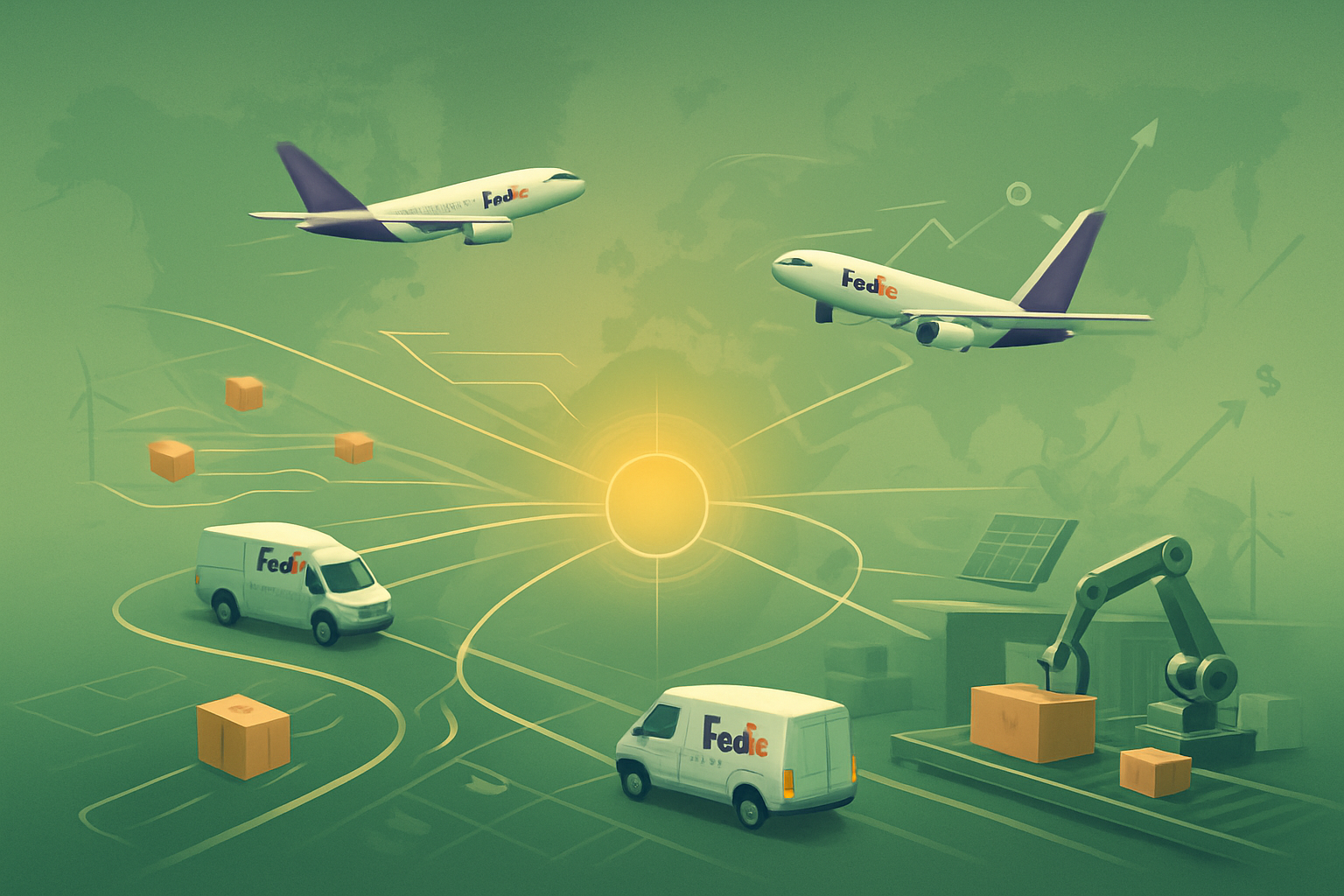
FedEx is currently in focus due to its ambitious multi-year transformation program, "DRIVE," which aims to achieve substantial cost reductions and operational efficiencies. Complementing this is "Network 2.0," an initiative to integrate its air and ground networks. A notable strategic move is the planned separation of FedEx Freight into a distinct, publicly traded entity, expected by June 2026, aimed at unlocking shareholder value. The company's recent financial performance, capital allocation strategies, and continuous investments in technology—including AI and automation—further underscore its relevance. With its Q2 Fiscal Year 2026 earnings report anticipated on December 18, 2025, and the ongoing peak holiday season operations, FedEx remains a critical entity for investors to watch.
2. Historical Background
FedEx's journey began with a visionary idea conceived by Frederick W. Smith in a 1965 Yale economics paper: a centralized "hub-and-spoke" system for urgent, overnight deliveries. Despite initial skepticism, Smith founded Federal Express Corporation in 1971 in Little Rock, Arkansas, later relocating to Memphis, Tennessee, in 1973 due to strategic advantages.
Operations officially commenced on April 17, 1973, with 14 Dassault Falcon 20 jets delivering 186 packages to 25 U.S. cities. The early years were challenging, with the company posting its first profit in 1976. Key milestones included the installation of drop boxes in 1975, the deregulation of air cargo in 1977 enabling larger aircraft purchases, and the company's IPO on the NYSE in 1978. By 1983, Federal Express became the first company to achieve $1 billion in revenues within 10 years without significant M&A.
Transformations over time have been profound. In 1994, Federal Express rebranded to "FedEx," launching fedex.com for online tracking and adopting its iconic logo. The late 1990s saw a major reorganization into FDX Corporation, acquiring Caliber System Inc. to expand into ground and freight services. By 2000, FDX Corporation became FedEx Corporation, unifying all subsidiaries under the FedEx brand. Significant acquisitions, such as Flying Tiger Line in 1988 for global air cargo and TNT Express in 2015 for European expansion, cemented its international presence.
Technological advancements have been continuous, from the SuperTracker® barcode scanner in 1986 to online tracking in 1994, and more recently, the establishment of FedEx Dataworks in 2020 to leverage AI and machine learning for operational optimization. Strategic shifts include the 2019 decision not to renew domestic contracts with Amazon and the current "DRIVE" and "Network 2.0" initiatives focused on cost reduction and network integration. FedEx is also committed to achieving carbon neutrality by 2040, reflecting a broader sustainability drive.
3. Business Model
FedEx (FDX) operates a sophisticated and diversified business model, integrating air express, ground parcel, freight, and comprehensive logistics solutions. This structure caters to a vast spectrum of transportation and e-commerce demands globally, emphasizing speed, reliability, and transparency through its extensive network and advanced technology. For fiscal year 2025, FedEx reported total annual revenue of approximately $87.9 billion.
Revenue Sources and Segments:
- Federal Express Segment (FedEx Express): The largest segment, specializing in time-sensitive, air-ground delivery for domestic and international packages and freight. In FY2025, it accounted for approximately $75.3 billion of revenue.
- FedEx Ground Segment: Provides cost-effective, day-certain delivery services for businesses and residences, primarily in North America.
- FedEx Freight Segment: A leading North American provider of less-than-truckload (LTL) freight services, offering solutions like FedEx Freight Priority and Economy. This segment contributed approximately $8.9 billion to FY2025 revenue.
- FedEx Services Segment: Offers crucial support functions such as sales, marketing, IT, communications, and customer service to the operating companies.
- FedEx Logistics (formerly FedEx Trade Networks): Delivers integrated logistics, including air and ocean cargo transportation, customs brokerage, and supply chain solutions.
- FedEx Office: Provides retail services like copying, digital printing, packing, and shipping.
Geographically, approximately 71.6% of FedEx's revenue ($62.92 billion) comes from the United States, with 28.4% ($25.01 billion) from non-U.S. operations.
Product Lines and Services:
FedEx's extensive portfolio is delivered through its various operating companies:
- FedEx Express: Overnight, 2-Day, and 3-Day services, as well as international priority and economy options.
- FedEx Ground: Business and residential ground package delivery, including FedEx Home Delivery.
- FedEx Freight: LTL services with various speed and cost options, including FedEx Freight Direct.
- FedEx Logistics: Supply chain management, freight forwarding, and customs brokerage.
- FedEx Office: Retail printing, packing, and shipping.
- FedEx Custom Critical: Specialized, expedited, and high-value freight services.
- FedEx Dataworks: Data insights and digital solutions for operational optimization.
Customer Base:
FedEx serves a broad customer base, encompassing both Business-to-Business (B2B) and Business-to-Consumer (B2C) segments. B2B clients include large enterprises, retailers, and manufacturers requiring comprehensive logistics. Small and Medium-Sized Enterprises (SMEs) rely on FedEx for global reach and diverse shipping options. The growing e-commerce sector significantly expands the B2C customer base, with individuals valuing guaranteed delivery, tracking, and flexible options. The company's hub-and-spoke system, with major hubs like Memphis, efficiently manages high shipment volumes and optimizes delivery routes.
4. Stock Performance Overview
FedEx (FDX) has exhibited a varied stock performance across different time horizons leading up to December 11, 2025.
1-Year Stock Performance (December 11, 2024 – December 11, 2025):
Over the past 12 months, FDX has shown a modest increase of 0.13% in price, with a total return of 0.79%. However, some reports indicate a slight negative return of -2.14% for the same period. The stock’s 52-week range has been between $194.30 and $295.24, with its all-time high closing price of $304.84 recorded on July 16, 2024. A notable dip occurred in June 2025 after the company suspended its annual outlook and issued conservative guidance. Recently, the stock has shown strength, rising approximately 10.00% in the past month.
5-Year Stock Performance (December 11, 2020 – December 11, 2025):
Over the last five years, FDX has experienced a price decrease of 3.87%. However, factoring in dividends, the 5-year total return is a positive 0.74%. This period has been marked by significant volatility: a strong gain of +74.27% in 2020, followed by a slight gain in 2021 (+0.72%), a sharp decline in 2022 (-31.64%), and strong rebounds in 2023 (+49.13%) and 2024 (+13.49%). Year-to-date for 2025, the stock is up 0.15%.
10-Year Stock Performance (December 11, 2015 – December 11, 2025):
Long-term investors have seen substantial growth, with FedEx delivering an average annual return of 7.19% over the past decade. The 10-year total return stands at an impressive 116.91%, reflecting the company's ability to create value over time through both price appreciation and reinvested dividends. This long-term performance contrasts with some short-to-medium-term fluctuations, underscoring FedEx's enduring position in the market.
5. Financial Performance
As of December 11, 2025, FedEx (FDX) is preparing for its Q2 FY2026 earnings release on December 18, 2025. The latest actual financial data available pertains to its fiscal Q1 2026, which concluded on August 31, 2025.
Latest Earnings (Q1 FY2026 Results – Reported September 18, 2025):
FedEx commenced fiscal year 2026 strongly, surpassing analyst expectations. Adjusted Earnings Per Share (EPS) reached $3.83, exceeding consensus estimates. Reported net income increased to $824 million ($3.46 per diluted share) from $794 million ($3.21 per share) in Q1 FY2025.
Revenue Growth:
Total revenue for Q1 FY2026 stood at $22.2 billion, representing a 3.1% year-over-year increase and beating analyst estimates. The Federal Express (Express) segment saw a 4% revenue increase to $19.1 billion, with operating income jumping 19%, driven by higher yields, cost savings, and increased U.S. domestic package volume. Conversely, the FedEx Freight segment experienced a 3% decline in revenue to $2.26 billion, with operating income decreasing by 18%.
Profit Margins:
The consolidated operating margin improved to 5.3% in Q1 FY2026 from 5% in the prior year, reflecting successful strategic initiatives. The net margin for FY2025 was 4.65%, and Return on Equity (ROE) was 16.33%.
Debt Levels:
As of the latest information, FedEx's Debt-to-Equity ratio is 0.73, indicating a moderate level of financial leverage.
Cash Flow:
While specific Q1 FY2026 cash flow details are not fully available, FY2025 saw significant capital spending (CapEx) reduction by approximately $1.1 billion to $4.1 billion, the lowest since 1998. FedEx returned about $4.3 billion to stockholders in FY2025 through repurchases and dividends, exceeding its commitment. The company repurchased $500 million in shares in Q1 FY2026 and plans further repurchases. A quarterly dividend of $1.45 per share was recently announced.
Key Valuation Metrics (as of early December 2025):
- Market Capitalization: $67.02 billion
- Trailing P/E Ratio: 16.07
- Forward P/E Ratio: 15.06 (in line with industry average)
- Quick Ratio: 1.21
- Current Ratio: 1.25
- Beta: 1.32
Outlook and Strategic Initiatives:
FedEx reaffirmed its full-year FY2026 guidance, projecting revenue growth of 4% to 6% and adjusted EPS between $17.20 and $19.00. The DRIVE initiative generated $200 million in savings in Q1 FY2026, targeting $1 billion for the full year. The FedEx Freight spin-off remains on track for completion by June 2026.
6. Leadership and Management
FedEx (FDX) is steered by a seasoned executive team and a diverse Board of Directors, ensuring strategic direction, operational excellence, and adherence to robust corporate governance principles.
CEO and Leadership Team:
Raj Subramaniam serves as President and Chief Executive Officer of FedEx Corporation, having assumed the role in June 2022. With over three decades at FedEx, his leadership is focused on global transformation, revitalizing operating strategies, growing e-commerce, and leveraging global supply chain data. The leadership team includes key executives such as Jill Brannon (Chief Sales Officer), Tracy Brightman (Chief People Officer), Brie Carere (Chief Customer Officer), John Dietrich (Chief Financial Officer), and Vishal Talwar (Chief Digital and Information Officer).
Board of Directors:
As of July 2025, the Board comprises 13 members, including CEO Raj Subramaniam, and is chaired by R. Brad Martin. The Board's diverse expertise spans logistics, finance, technology, and government, ensuring comprehensive oversight of management and shareholder interests. Committees, including Audit, Finance, and Governance, oversee specific risk areas.
Strategic Direction:
FedEx's strategic direction is encapsulated in its "2025 Plan," which prioritizes sustainability, customer experience, and operational excellence. Key initiatives include:
- DRIVE Initiative: A multi-year cost-saving program targeting $4 billion in permanent cost reductions by FY2025, with an additional $2 billion from "Network 2.0" by FY2027.
- Sustainability Goals: Aiming for carbon neutrality by 2040, including electric vehicle fleet deployment and sustainable packaging.
- Technology and Automation: Significant investments in AI, blockchain, and robotics to enhance efficiency and customer service.
- FedEx Freight Separation: The planned spin-off of FedEx Freight into an independent public company, expected by June 2026, aims to unlock shareholder value and streamline focus.
- Capital Allocation: Emphasizing shareholder returns through dividends and share repurchases.
The overarching strategy is to compete collectively, operate collaboratively, and innovate digitally to maintain a competitive advantage.
Corporate Governance Reputation:
FedEx maintains a strong corporate governance reputation, earning recognition as one of the "World's Most Ethical Companies" for three consecutive years (including 2025). This is supported by a comprehensive Code of Conduct, robust Board oversight, and transparent political engagement focused on policy impact rather than partisan politics. The company's governance guidelines emphasize Board members' duties of care and loyalty, risk oversight, and annual performance evaluations.
7. Products, Services, and Innovations
FedEx (FDX) maintains its global leadership through a diverse portfolio of offerings, a robust innovation pipeline, significant R&D, a substantial patent library, and a clear competitive edge.
Current Products and Services:
- FedEx Express: Time-sensitive domestic and international air-ground delivery, including overnight and specialized global freight.
- FedEx Ground: Cost-effective, day-definite small package delivery across North America, with FedEx Home Delivery for residential services.
- FedEx Freight: Less-than-truckload (LTL) services for heavy shipments, offering Priority, Economy, and Direct options.
- FedEx Logistics: Integrated supply chain solutions, freight forwarding, and customs brokerage.
- FedEx Office: Retail copying, printing, packing, and shipping services.
- Specialized Services: FedEx SameDay for urgent shipments, various overnight options, and international services for dangerous goods.
Innovation Pipelines and R&D Efforts:
FedEx is committed to digital transformation, leveraging data and advanced technologies:
- AI and Machine Learning: FedEx Dataworks uses AI for predictive analytics, route optimization, and proactive disruption management (FedEx Surround). AI robotics improve package handling.
- Automation and Robotics: Testing and implementing robotics in warehouses, including AI-powered sorting arms.
- Autonomous Vehicles and Drones: Exploring autonomous technology for long-haul (with Nuro and Aurora Innovation) and last-mile deliveries, and drone delivery R&D.
- Sensor-Based Logistics (IoT): SenseAware ID provides real-time precision tracking and condition data for high-value shipments.
- Blockchain Technology: Exploring blockchain for enhanced supply chain transparency and security.
- Sustainability Initiatives: Transitioning to electric delivery vehicles, using sustainable aviation fuel, and aiming for carbon-neutral operations by 2040.
- Digital Platforms: Launched "fdx," a data-driven commerce platform to optimize the customer journey from demand generation to returns.
- FedEx Innovation Lab (FIL): Cultivates and collaborates with early-stage digital startups globally.
Patents:
FedEx holds 951 global patents across 200 unique families, with over 72% active, primarily in the U.S. These cover diverse technologies from administration management to secure shipping container monitoring.
Competitive Edge:
- Global Network and Air Freight Specialization: Extensive global reach with a focus on fast, reliable international air express.
- Technological Leadership: A history of innovation in tracking, AI-driven analytics, and automation provides enhanced visibility and efficiency.
Diverse Service Portfolio: A broad array of services caters to varying customer needs in terms of speed, cost, and package size.
- E-commerce Focus: Strategic investments and tailored solutions for the rapidly growing e-commerce sector.
- Brand Reputation: Recognized for reliability, speed, and customer service.
- Strategic Structure: Multi-unit strategy allows for specialized focus and competitive advantage.
8. Competitive Landscape
FedEx (FDX) operates within a highly competitive and evolving logistics and transportation industry. Its competitive landscape is shaped by major global players, emerging e-commerce giants, and numerous specialized carriers.
Major Industry Rivals:
- UPS (United Parcel Service): FedEx's most direct and formidable competitor, offering a full range of package delivery, air freight, and international shipping services. UPS often holds an edge in domestic ground delivery.
- DHL (DHL Group): A global logistics leader with a strong international presence, particularly in Europe, providing comprehensive courier, package, and express mail services.
- Amazon Logistics: A rapidly growing disruptor leveraging its e-commerce platform for last-mile delivery, with an expanding fleet and infrastructure.
- USPS (United States Postal Service): A key domestic competitor, especially in small parcel and last-mile delivery.
- Other Freight and Logistics Providers: Companies like Kuehne + Nagel, DSV, DB Schenker, XPO Logistics, GXO Logistics, and C.H. Robinson compete in broader logistics and freight forwarding.
- Regional and Specialized Carriers: A growing number of smaller and private fleets are capturing market share in last-mile delivery.
Market Share (U.S. Parcel, 2024):
- By Volume: USPS led with 30-31%, followed by Amazon Logistics (25-28%), UPS (20-23%), and FedEx (14-15%). Amazon is projected to surpass USPS by 2028.
- By Revenue: UPS led with 37% of U.S. courier and local delivery revenue, with FedEx close behind at 33%. USPS held 16%, and Amazon 12%.
- Global Market Share: FedEx holds an estimated 7% of global courier revenue, ranking third behind UPS and DHL. DHL leads the global time-definite international (TDI) express market with over 43% share, compared to FedEx's 27%.
Competitive Strengths of FedEx:
- Extensive Global Network: Unparalleled reach to over 220 countries, supported by a vast fleet of aircraft and vehicles.
- Strong Brand Reputation: Recognized for fast and dependable delivery services.
- History of Innovation: Pioneering innovations in overnight shipping and advanced tracking.
- Diverse Service Portfolio: Wide range of express, ground, freight, and logistics solutions.
- High Entry Barriers: Significant capital investment required to replicate its network.
Competitive Weaknesses of FedEx:
- High Operating Costs: Extensive network and rapid delivery commitment lead to substantial expenses.
- Dependence on Air Cargo: Vulnerability to weather, air traffic, and regulatory disruptions.
- Employee Relations: Challenges with labor disputes and unionization efforts.
- Intense Competition: Fierce rivalry impacting market share and pricing power.
- Perceived High Cost: Some customers view FedEx rates as higher than competitors.
- Fuel Price Volatility: Susceptibility to fluctuating fuel costs.
- U.S. Market Overdependence: Approximately 68% of revenue from the U.S. market.
- Capacity-Demand Management: Inefficient management of fixed assets in uncertain demand.
- Regulatory and Geopolitical Risks: Compliance with complex regulations and exposure to trade policies.
9. Industry and Market Trends
The logistics and shipping industry, a vital component of global commerce, is undergoing significant transformation in 2025. These sector-level trends, macro drivers, global supply chain dynamics, and cyclical effects profoundly impact major players like FedEx (FDX).
Sector-Level Trends:
- Automation and AI: Rapid adoption of warehouse automation (robotics, AMRs, AS/RS) and AI/machine learning for route optimization, demand forecasting, and predictive maintenance. Autonomous vehicles and drones are emerging for last-mile and long-haul.
- Green Logistics and Sustainability: Industry-wide push for carbon footprint reduction through fleet electrification, alternative fuels, and eco-friendly packaging. FedEx is actively pursuing carbon-neutral operations by 2040.
- E-commerce Growth and Last-Mile Optimization: Continued acceleration of e-commerce drives demand for faster, hyperlocal deliveries. Focus on innovations like drones, micro-fulfillment centers, and smart lockers.
- Real-time Visibility and Data Analytics: IoT and advanced data analytics provide real-time tracking, inventory control, and predictive insights, enhancing supply chain agility.
Macro Drivers:
- Global Economic Uncertainty: Slowing global GDP growth (around 2.9% for 2025), persistent inflation, fluctuating oil prices, and rising interest rates create a cautious economic environment.
- Geopolitical Tensions: Escalating US-China trade conflicts and other geopolitical events (e.g., Red Sea crisis) add costs, complexity, and risk to global supply chains. Tariffs are becoming a structural feature of trade.
- Labor Market Tightness and Wage Inflation: Shortages of skilled drivers and warehouse workers, coupled with wage inflation (7.5% in Q2 2025), increase operational costs, pushing towards automation.
Global Supply Chain Dynamics:
- Nearshoring and Friendshoring: Companies are increasingly relocating production closer to consumer markets or to politically stable countries to enhance resilience and reduce dependencies.
- Diversification and Resilience: Investment in technologies and localized models to build adaptive, data-driven, and diversified supply networks.
- Inventory Management: Adoption of improved, AI-supported inventory techniques to optimize stock levels and agility.
Cyclical Effects:
- Freight Recession Recovery: The industry is showing signs of slow recovery after a prolonged downturn, with the market in a period of relative balance. Structural cost pressures and overcapacity persist.
- Economic Fluctuations and Rates: Economic expansion typically drives freight demand and rates, while downturns cause decreases. Rates are expected to gradually increase in 2025 due to supply/demand equilibrium and seasonality.
Impact on FedEx (FDX):
FedEx is actively responding to these trends. Its "Drive" program achieved $2.2 billion in structural cost reductions in FY2025. Network 2.0 optimization is progressing, and CapEx spending was significantly reduced. The company faces challenges in its Freight segment due to industrial economy weakness and is adjusting to the expiration of the USPS contract. Fuel surcharges have been increased to manage costs, and the company is strategically pursuing profitable B2B growth, including in healthcare.
10. Risks and Challenges
FedEx (FDX) faces a multifaceted array of risks and challenges across its operations, regulatory environment, past controversies, and market positioning.
Operational Risks:
- Supply Chain Disruptions: Global trade shifts, geopolitical instability, and bottlenecks can disrupt operations and revenue. Regionalization of supply chains is a response.
- Labor Shortages and Costs: Difficulty in attracting and retaining employees, leading to higher wages, overtime, and reduced productivity. Competitive wage increases by rivals like UPS further pressure expenses.
- Technology and Cybersecurity Risks: Reliance on IT systems for critical functions makes FedEx vulnerable to malfunctions, disruptions, or breaches. Investments in AI and automation also bring risks of workforce displacement.
- Network Integration and Strategic Initiatives: Large-scale transformations like "DRIVE" and "Network 2.0" carry execution risks and substantial business optimization costs. The FedEx Freight spin-off also presents operational challenges.
- Contract Expirations: The loss of major contracts, such as the US Postal Service (USPS) air freight contract, represents significant revenue loss, requiring network optimization to offset.
- Dependence on Key Customers: Reliance on anchor clients poses a risk if a major customer shifts to a competitor.
Regulatory Risks:
- Antitrust and Competition Laws: Exposure to antitrust investigations and fines globally for alleged price-fixing and collusion (e.g., in Europe and India).
- Labor Laws and Misclassification Lawsuits: Ongoing legal scrutiny over the classification of drivers as independent contractors, leading to substantial settlements and new lawsuits alleging overtime violations.
- Data Protection and Cybersecurity Regulations: Compliance costs and operational constraints from evolving global data privacy laws.
- Trade Policies and Tariffs: Exposure to changes in trade policies, tariffs, and trade limitations impacting international volumes and creating financial headwinds.
- Environmental Regulations: Subject to evolving environmental regulations, impacting operations and profitability, especially with its carbon-neutral by 2040 goal.
- Disability Discrimination: Lawsuits from the EEOC alleging failure to provide reasonable accommodations for disabled drivers.
Controversies:
- Worker Safety: Scrutiny over safety records and allegations of prioritizing speed over safety, leading to worker injuries.
- Employee Misclassification: Long-standing legal battles over driver classification, resulting in significant settlements and negative publicity.
- Mishandling of Packages due to Trade Regulations: Past incidents and lawsuits related to enforcing complex trade restrictions (e.g., involving Huawei Technologies).
- Antitrust Allegations: Involvement in antitrust investigations and fines for alleged price collusion.
Market Risks:
- Economic Sensitivity and Downturns: Performance is highly sensitive to the global economy; downturns reduce demand for shipping services, particularly higher-margin B2B volumes.
- Intense Competition: Fierce competition from UPS, DHL, and Amazon Logistics pressures pricing power and market share.
- E-commerce Evolution and Demand Fluctuations: Shifts in e-commerce demand (e.g., post-pandemic correction) can impact profit margins.
- Fuel Price Volatility: Heavy dependence on fuel prices makes operating costs and profitability susceptible to volatility.
- Foreign Exchange and Interest Rate Risks: Exposure to adverse movements in interest rates and exchange rates.
- Dependence on U.S. Market: Significant revenue from the U.S. makes it vulnerable to domestic economic downturns.
- Changing Customer Preferences: Shift towards slower, less costly shipping services may require business model adjustments.
11. Opportunities and Catalysts
FedEx (FDX) is proactively pursuing a multi-faceted strategy to drive growth, enhance profitability, and adapt to the evolving global logistics landscape.
Growth Levers:
- DRIVE Initiative: A foundational cost-reduction program targeting $4 billion in structural cost reductions by FY2025, with an additional $2 billion from Network 2.0 by FY2027, aiming for $6 billion in total savings.
- Network 2.0: Integrating FedEx Express, Ground, and Services into a unified air-ground network to enhance efficiency, consolidate facilities, and optimize routes.
- Technology and E-commerce Integration: Leveraging AI, data analytics, and platforms like FedEx Dataworks and the fdx platform to optimize operations, digitize supply chains, and enhance customer experience.
- Strategic Vertical Prioritization: Focusing on high-value, time-sensitive logistics in sectors like healthcare and automotive, using tools like FedEx Surround for real-time visibility.
- Capital Allocation and Shareholder Returns: Commitment to returning value through consistent dividends and share repurchases.
New Market Opportunities:
- E-commerce Dominance: Strengthening U.S. e-commerce capabilities with Network 2.0 and new services like picture proof of delivery. The fdx platform aims to connect the entire customer journey.
- Healthcare and Automotive Logistics: Expanding presence in these high-margin sectors demanding precise and reliable logistics.
- Cross-Border E-commerce Leadership: Enhancing global network connectivity through smart hubs and expanding in emerging markets.
- Emerging Markets Focus: Bolstering presence in high-growth regions like Southeast Asia and Africa.
- Multi-Facility Operator Model: Partnering with contractors capable of managing multiple locations for scalable operations.
Potential M&A Activity:
- FedEx Freight Spin-off: The intent to separate FedEx Freight into a new, independently traded public company by June 2026 is a significant strategic move to unlock shareholder value.
- Technology-focused Acquisitions: Recent acquisitions like RouteSmart Technologies (route optimization) and Logictransport indicate ongoing interest in technologies that improve efficiency and logistics solutions.
Near-term Catalysts:
- Q2 Fiscal Year 2026 Earnings Report: Scheduled for December 18, 2025, this report will provide crucial insights into performance and strategic progress.
- FedEx Easy Returns Launch: Slated for Summer 2025, this low-cost, box- and label-free returns solution will simplify the process for consumers and merchants.
- Continued Benefits from DRIVE Initiative: Ongoing cost reductions are expected to positively impact profitability and operating margins throughout FY2025 and beyond.
- FedEx Investor Day: Scheduled for February 12, 2026, this event could provide detailed updates on strategic priorities and financial targets.
- fdx Platform Expansion: Continued rollout of new capabilities and expansion of the fdx platform will further strengthen FedEx's e-commerce position.
12. Investor Sentiment and Analyst Coverage
As of December 11, 2025, investor sentiment and analyst coverage for FedEx (FDX) present a generally optimistic outlook, albeit with some fluctuations.
Wall Street Analyst Ratings and Price Targets:
Analysts maintain a consensus "Buy" rating for FedEx, derived from approximately 23 to 30 analysts. The average price target ranges from $273.79 to $285.27, with a high of $345. Recent analyst activity in December 2025 shows firms like Wells Fargo, Susquehanna, Evercore ISI Group, Jefferies Financial Group, Stifel, B of A Securities, Citigroup, and Wolfe Research adjusting and often raising their price targets, indicating growing confidence. The average brokerage recommendation points to an "Outperform" status. The upcoming Q2 FY26 earnings on December 18, 2025, are anticipated to prompt further revisions.
Recent Hedge Fund Activity:
As of Q3 2025 (September 30, 2025), 1610 institutional investors held positions in FedEx, owning 78.0% of outstanding shares. This represents a 1.42% quarterly increase in institutional shares held. During Q3, 654 institutions added to their stakes, while 679 trimmed positions. Top institutional holders include Vanguard Group Inc., BlackRock, Inc., Dodge & Cox, PRIMECAP Management Company, and State Street Global Advisors, Inc. Recent Q4 2025 data shows some hedge funds like Brighton Jones LLC increasing their positions. Overall, 84.47% of the stock is owned by institutional investors and hedge funds.
Institutional Investor Holdings:
As of December 9, 2025, institutional ownership stands at 78.98%. Over the past two years, 1,940 institutional investors and hedge funds have held FDX shares. Key investors include Vanguard, BlackRock, Dodge & Cox, PRIMECAP Management Co. CA, and State Street Corp. Recent purchasers include Sentry LLC, Norges Bank, and Valeo Financial Advisors LLC.
Retail Investor Sentiment and Chatter:
Retail investor sentiment has been volatile throughout 2025. In March 2025, sentiment on Stocktwits plummeted to "extremely bearish" after a lowered forecast, though chatter remained high. By September 2025, sentiment had flipped to "bullish," with high message volume. As of October 2025, sentiment was "bearish," but FDX was mentioned 78 times on Stocktwits, indicating strong interest. The upcoming Q2 FY26 earnings report is expected to drive further retail discussion and sentiment shifts.
13. Regulatory, Policy, and Geopolitical Factors
FedEx (FDX), as a global logistics leader, operates within a complex interplay of regulatory frameworks, legal compliance, and geopolitical dynamics that profoundly influence its operations and strategic decisions.
Regulatory Frameworks, Relevant Laws, and Compliance Requirements:
FedEx must adhere to a vast array of international, national, state, and local regulations:
- Transportation and Shipping: Compliance with guidelines on package size, weight, hazardous materials, and international transport regulations.
- Customs and Trade Laws: Navigating intricate customs clearance, documentation, duties, and taxes. Recent changes like the de minimis exemption suspension increase compliance costs. FedEx provides tools like International Shipping Assist.
- Export Controls and Sanctions: Strict adherence to U.S. and international export controls, trade embargoes, and economic sanctions, including screening for restricted parties. FedEx has suspended services to Russia and Belarus.
- Labor and Employment Laws: Compliance with fair wages, anti-harassment, and non-discrimination policies. FedEx Ground has faced ongoing lawsuits regarding driver misclassification as independent contractors.
- Environmental Regulations: Commitment to reducing its environmental footprint and achieving carbon-neutral operations by 2040, involving investments in vehicle electrification and sustainable energy.
- Data Privacy Laws: Adherence to global data privacy laws (e.g., GDPR, CCPA) through its Global Privacy Policy, ensuring lawful processing and data security.
Government Incentives:
While specific direct government incentives are not extensively detailed, FedEx has historically benefited from lower U.S. corporate tax rates. Its involvement in initiatives like the Electrification Coalition Business Council suggests support for policies promoting electric vehicles, potentially aligning with future government incentives for sustainable transportation. Investments in green technologies for carbon neutrality may also position it to capitalize on emerging environmental incentives.
Geopolitical Risks and Opportunities:
Geopolitical factors present both substantial risks and strategic opportunities:
- Geopolitical Risks:
- Trade Wars and Tariffs: Ongoing US-China trade tensions have significantly impacted operations, leading to revenue headwinds, reduced China-to-U.S. shipment volumes, and increased compliance costs.
- Political Instability and Conflicts: Disruptions in critical maritime routes (e.g., Red Sea) and conflicts (e.g., Russia-Ukraine war) lead to rerouting, impact air freight demand, and increase operational costs. Sanctions result in service suspensions.
- Execution Risk: Large-scale internal transformations (network integration, spin-offs) carry inherent execution risks.
- Labor Disputes and Fuel Volatility: Ongoing labor disputes and fluctuating fuel costs are significant operational risks.
- Geopolitical Opportunities:
- Global Supply Chain Regionalization: Geopolitical risks are driving a shift towards regionalized supply chains. FedEx is adapting by redeploying assets and capacity, seeing increased flows from China to Europe/Latin America, which presents an opportunity to build more resilient networks.
- Strategic Diversification and Expansion: Diversifying into high-margin sectors like healthcare and EV logistics, and expanding into high-growth markets like India and Asia-Pacific.
- Technological Advancement: Investments in automation, AI-driven logistics, and digital twins enhance efficiency, reduce costs, and capitalize on e-commerce growth.
- Sustainability Leadership: Ambitious carbon-neutral goals position FedEx to meet evolving environmental regulations and customer demands for greener logistics.
14. Outlook and Scenarios
As of December 11, 2025, FedEx (FDX) is navigating a transformative period, balancing ambitious strategic initiatives with ongoing economic uncertainties. The company's outlook encompasses both optimistic "bull" and cautious "bear" scenarios, influencing short-term and long-term projections.
Bull Case Scenarios
- Cost Reduction Success: The "DRIVE" program and "Network 2.0" initiatives successfully deliver the targeted $6 billion in structural cost reductions by FY2027, significantly expanding operating margins.
- Strategic Optimization: The FedEx Freight spin-off, completed by June 2026, successfully unlocks shareholder value, allowing FedEx to focus on its core parcel and logistics business, which sees enhanced profitability.
- Market Growth and Digital Leadership: Sustained double-digit annual parcel volume growth, especially from Asia-Pacific and emerging markets, combined with successful digital transformation efforts (AI, automation, fdx platform), drives market share and efficiency.
- Strong Shareholder Returns: Continued robust free cash flow generation supports consistent dividend increases and aggressive share repurchases, signaling management confidence.
- Sustainability Advantage: FedEx's investments in electric vehicles and carbon-neutral operations by 2040 attract ESG-focused investors and create a competitive edge.
Bear Case Scenarios
- Macroeconomic Downturn: A prolonged global economic slowdown, persistent inflation, and weak industrial demand suppress freight volumes and pricing power across all segments, particularly in international and LTL.
- Intensified Competition: Aggressive competition from UPS, DHL, and Amazon Logistics leads to market share erosion and pricing pressure that outpaces FedEx's cost-saving efforts.
- Execution Failures: Delays or inefficiencies in implementing "Network 2.0" or the FedEx Freight spin-off result in operational disruptions, higher-than-expected costs, and a negative impact on investor confidence.
- Uncontrolled Cost Pressures: Despite "DRIVE," rising labor costs, volatile fuel prices, and the impact of contract expirations (e.g., USPS) continue to erode profit margins.
- Geopolitical Instability: Escalating trade wars, new tariffs, or major geopolitical conflicts severely disrupt international trade flows, impacting FedEx's global network and revenue.
- Valuation Concerns: Some analysts argue that current valuation (high P/E relative to near-term growth) implies that much of the optimism is already priced in, leaving little room for upside without exceptional performance.
Short-term Projections (2025-2026)
- Stock Price: Trading around $268-$276 as of December 2025. Analysts project year-end 2025 targets between $261 and $307. Forecasts for H1 2026 range from $328-$339.
- FY2025 Financials (as of July 2025): Revenue slightly increased to $87.926 billion, but operating income decreased by 6% to $5.217 billion due to higher costs.
- FY2026 Guidance: Management forecasts 4-6% revenue growth and adjusted EPS of $17.20-$19.00.
- Cost Savings: Expected $2.2 billion in structural savings for FY2025, moving towards the $4 billion "DRIVE" target.
- FedEx Freight Spin-off: Expected completion by June 2026.
Long-term Projections (2027 onwards)
- Stock Price: Projected to reach $400-$405 by end of 2027. Average price around $308.21 by 2028 (high $365.20). Wide range for 2030 ($299-$555), with some forecasts up to $800 by 2037.
- Earnings and Revenue: Earnings forecast to grow 8.8% per year, revenue by 3.9% per year. FY2027 EPS expected to exceed $20.
- Operational Savings: Combined "DRIVE" and "Network 2.0" savings of $6 billion by 2027.
- Carbon Neutrality: Target of carbon neutrality by 2040.
Potential Strategic Pivots as of 12/11/2025
- Aggressive Network Integration: Full integration of Ground and Express networks (Network 2.0) to create a single, flexible U.S. ground network, diverging from historical separate operations.
- Divestiture for Focus: The FedEx Freight spin-off to streamline operations and enhance focus on core parcel and logistics.
- Accelerated Tech Adoption: Increased investments in AI, automation, and advanced data analytics to improve efficiency, reduce costs, and deliver superior customer experience.
- Global Market Diversification: Continued expansion and focus on high-growth international markets and specialized logistics sectors to mitigate domestic volume reliance.
- Strategic Fleet Optimization: Further streamlining of air and ground fleets, including modernization and transition to sustainable vehicles.
15. Conclusion
FedEx (FDX) is in the midst of a significant strategic transformation, balancing aggressive cost-cutting initiatives with the complexities of a dynamic global logistics market. As of December 11, 2025, the company's fiscal year 2025 results, while showing marginal revenue growth, underscored the effectiveness of its "DRIVE" program in generating substantial cost reductions and stabilizing profitability amidst a challenging freight environment. FedEx maintains a solid financial foundation with manageable debt and strong cash flow, backed by a commitment to shareholder returns through dividends and buybacks.
For investors, a balanced perspective is key. The company's strengths lie in its powerful brand, extensive global network, proven ability to manage costs, and ongoing strategic initiatives like "Network 2.0" and the planned FedEx Freight spin-off, which aim to streamline operations and unlock shareholder value. The focus on higher-margin sectors like healthcare and leveraging AI for network optimization also presents compelling long-term growth avenues.
However, significant weaknesses and risks persist. FedEx remains highly susceptible to macroeconomic headwinds, including global economic slowdowns, inflation, and trade policy uncertainties. Intense competition from established players and emerging e-commerce giants, coupled with execution risks associated with major restructuring, could pressure future performance. Flat revenue growth in the near term and sensitivity to fuel price volatility also warrant caution.
What investors should watch for in the future:
- Successful Execution of Strategic Initiatives: Close monitoring of the "DRIVE" program's continued cost savings and the seamless integration of "Network 2.0" will be paramount for operational efficiency and profitability.
- FedEx Freight Spin-off: The successful execution of the spin-off by mid-2026 and its impact on unlocking shareholder value and creating a more focused core parcel business.
- Macroeconomic Recovery: A sustained rebound in global economic growth, industrial production, and e-commerce volumes is crucial for accelerating revenue growth.
- Revenue Quality and Margin Expansion: Watch for FedEx's ability to grow revenue in higher-margin segments and diversify its service offerings, including leveraging artificial intelligence (AI) to enhance its network.
- Competitive Dynamics: Monitor how FedEx competes with established rivals and emerging players, particularly Amazon's expanding logistics network, and its ability to adapt to industry changes through technological advancements.
- Earnings Performance and Guidance: Upcoming earnings reports (the next being December 18, 2025) and subsequent analyst revisions will provide crucial insights into the company's financial trajectory.
- Capital Allocation Strategy: Observe the company's continued commitment to shareholder returns through dividends and share buybacks, and how it balances these with investments in growth and debt reduction.
In conclusion, FedEx presents a mixed but potentially compelling picture for investors. While facing near-term macroeconomic challenges and the complexities of a major restructuring, its aggressive cost-cutting, strategic initiatives, and commitment to shareholder returns offer a foundation for future value creation. Vigilance, particularly regarding the successful execution of its transformation plans and the broader economic environment for sustained long-term growth.
This content is intended for informational purposes only and is not financial advice