
Tag: Federal Reserve

  • The Rise of the Economic Oracle: Fed Decision Markets Top $360M as Wall Street Pivots to Prediction Odds

    The Rise of the Economic Oracle: Fed Decision Markets Top $360M as Wall Street Pivots to Prediction Odds

    As the Federal Reserve prepares for its first policy meeting of 2026, the global financial community is looking past traditional bank reports and focusing on a new, high-speed indicator: the prediction market. With over $360 million in trading volume now concentrated on the outcome of the January 28, 2026, FOMC meeting, these platforms have officially transitioned from niche betting arenas into what analysts are calling the "Economic Oracle."

    Current market odds reflect a decisive consensus, with a 95.1% probability of a "pause" (no change in rates). This surge in volume and precision comes as hedge funds and institutional liquidity providers increasingly use event-based contracts to hedge against macro volatility. What was once dismissed as a "prediction game" is now a cornerstone of the modern financial infrastructure, providing real-time sentiment that often moves faster than traditional federal funds futures.

    The Market: What's Being Predicted

    The focus of the financial world is currently fixed on the "Fed Decision: January 2026" contract. On Polymarket, the decentralized heavyweight, the specific contract for a rate hold has seen a staggering $363.2 million in volume. Parallel to this, Kalshi—the CFTC-regulated exchange—has reported record-breaking activity, with daily volumes across its broader suite of macro contracts reaching $465.9 million earlier this week.

    Traders are specifically betting on whether the Federal Open Market Committee (FOMC) will maintain the current target rate, cut by 25 basis points, or—in a tail-risk scenario—hike rates. The liquidity in these markets has been bolstered by the entry of major brokerage firms. Interactive Brokers (NASDAQ: IBKR), through its ForecastEx exchange, has played a pivotal role by offering a "yield-enhanced" structure, where participants earn an incentive coupon of up to 3.8% APY on the collateral of their open positions, effectively paying institutions to provide market depth.

    The resolution criteria are straightforward: the market settles based on the official target range announced by the Federal Reserve at the conclusion of its January 28 meeting. Unlike traditional futures, which can be influenced by complex technical factors and term premiums, these binary contracts offer a "pure" expression of probability that is easily digestible for retail and institutional investors alike.

    Why Traders Are Betting

    The primary driver behind the current 95% "pause" consensus is a string of "sticky" economic data released in early January. The December Consumer Price Index (CPI) printed at 2.7%, which, while stable, failed to show the continued cooling that would have justified a fourth consecutive rate cut. Furthermore, the January labor report showed non-farm payrolls adding a modest 66,000 jobs—just enough to keep the Fed from feeling an urgent need to stimulate the economy despite a 4.6% unemployment rate.

    The shift in market participation is also a major factor. Quant-heavy firms such as Susquehanna International Group (SIG) and Jane Street have reportedly established dedicated prediction market desks. These "whales" are not just betting on the Fed; they are performing sophisticated arbitrage between prediction market odds and the CME Group (NASDAQ: CME) FedWatch tool.

    "Prediction markets are the ultimate truth engine," says one macro trader at a Tier-1 hedge fund. "During the Fed's 10-day blackout period, when officials cannot speak to the press, these markets continue to process new global data in real-time. They aren't just predicting the Fed; they are front-running the Fed's own data-dependency."

    Broader Context and Implications

    The emergence of the "Economic Oracle" marks a significant evolution in how public sentiment and institutional risk are measured. Historically, economists relied on surveys or lagged data. Today, the aggregate wisdom of thousands of traders—incentivized by profit and loss—is proving to be a more accurate and responsive barometer.

    This trend has not escaped the eyes of regulators. In New York, the introduction of the ORACLE Act (Oversight and Regulation of Activity for Contracts Linked to Events) represents a milestone in the legitimization of the sector. The bill seeks to formalize the role of these platforms as "utility" engines for the broader financial system, rather than mere gambling sites.

    Furthermore, the historical accuracy of these markets has been impressive. Throughout 2025, prediction markets successfully anticipated three out of three Fed pivots several weeks before the mainstream financial press caught up. This "speed gap" is why firms like Saba Capital Management are now using Kalshi's CPI contracts to hedge inflation directly, bypassing the complexities of bond-market proxies.

    What to Watch Next

    As we approach the January 28 resolution date, volatility is expected to remain low unless a major exogenous shock occurs. However, the market will be hypersensitive to any "leaks" or late-breaking commentary from secondary Fed signals. The key milestone to watch is the January 22nd release of regional manufacturing data, which could provide a last-minute nudge to the odds if the numbers deviate significantly from expectations.

    Beyond the January meeting, traders are already shifting their gaze to the March 2026 outlook. Early betting on Polymarket suggests a return to the "cut" cycle, with a 42% probability of a 25-basis-point reduction currently priced in for the spring. This suggests that while the market expects a pause now, the long-term trend remains focused on normalization.

    Bottom Line

    The $360 million volume in the January Fed market is more than just a number; it is a signal that the financial world has embraced a new way of processing information. Prediction markets have solved the "noise" problem of traditional forecasting by forcing participants to back their opinions with capital.

    For the Federal Reserve, these markets provide a transparent feedback loop. For hedge funds, they provide a surgical tool for hedging macro risks. As we head toward the end of January, the 95% certainty of a pause serves as a testament to the efficiency of the "Economic Oracle." While the Fed remains data-dependent, the market has already crunched that data and rendered its verdict.


    This article is for informational purposes only and does not constitute financial or betting advice. Prediction market participation may be subject to legal restrictions in your jurisdiction.

    PredictStreet focuses on covering the latest developments in prediction markets.
    Visit the PredictStreet website at https://www.predictstreet.ai/.
  • The New Wall Street: Prediction Markets Smash Records with $701.7 Million Day

    The New Wall Street: Prediction Markets Smash Records with $701.7 Million Day

    The world of finance shifted on its axis this week. On Monday, January 12, 2026, prediction markets achieved a staggering, record-breaking $701.7 million in single-day trading volume. This milestone represents more than just a spike in activity; it marks the definitive arrival of "information finance" as a primary pillar of the global economy. For years, skeptics dismissed these platforms as glorified sportsbooks, but as of early 2026, they have transformed into what many are calling the world’s most accurate "truth engines."

    The surge was driven by a perfect storm of constitutional crises, geopolitical shocks, and the institutionalization of retail trading. At the center of the frenzy was a high-stakes standoff between the U.S. Department of Justice (DOJ) and Federal Reserve Chair Jerome Powell, alongside the sudden capture of Venezuelan President Nicolás Maduro. With millions of dollars moving by the second, the probability of a March interest rate cut fluctuated wildly, peaking at 74% as traders digested real-time updates that outpaced traditional news cycles by minutes.

    The Market: What's Being Predicted

    The $701.7 million daily volume was dominated by a "triopoly" of platforms that have spent the last year racing for market share. Kalshi solidified its position as the industry leader, capturing 66.4% of the volume with $465.9 million in trades. Much of this dominance is credited to Kalshi’s deep integration with Robinhood Markets, Inc. (NASDAQ:HOOD), which launched its dedicated "Prediction Markets Hub" last year, putting event contracts into the hands of over 100 million retail investors.

    While Kalshi owned the domestic macro markets, Polymarket and Opinion battled for the remaining share. Polymarket recorded $100.04 million in volume, buoyed by a $2 billion liquidity injection from the Intercontinental Exchange, Inc. (NYSE:ICE). Meanwhile, the relative newcomer Opinion (Opinion Labs) matched that figure with $100 million, specializing in high-frequency, AI-driven macro indicators.

    The most traded contracts on January 12 included:

    • The Federal Reserve Standoff: Contracts on whether Jerome Powell will resign or be removed before the March FOMC meeting.
    • The Maduro Aftermath: Predictions on the stability of a transitional government in Venezuela following Maduro’s capture.
    • NFL Postseason "Combos": A new feature on Kalshi that allows users to parlay economic outcomes with sports results—for instance, "CPI under 2.5% AND the Kansas City Chiefs win."

    Why Traders Are Betting

    The primary driver for this week’s massive volume was the unprecedented constitutional friction involving the Federal Reserve. On the evening of January 11, Chair Jerome Powell revealed that the DOJ had served the Fed with subpoenas regarding a massive headquarters renovation—a move Powell labeled a "pretext" for political interference. This sent traders into a frenzy. On Kalshi, the "Will the Fed cut rates in March?" contract saw over $120 million in volume on Monday alone as institutions used the market to hedge against a potential central bank decapitation.

    Geopolitical "insider" activity also fueled the surge. Following the U.S. military raid that captured Nicolás Maduro, a single anonymous trader on Polymarket turned a $32,000 bet into $400,000. The bet, placed just hours before the news broke, has sparked intense debate about the role of prediction markets in surfacing non-public information. Traders are no longer just betting on what they think will happen; they are betting on what they know is happening in the shadows.

    Furthermore, the "Mainstreet-ing" of these markets through Robinhood (NASDAQ:HOOD) has changed the trader profile. No longer restricted to crypto-enthusiasts, the January 12 record saw a massive influx of traditional retail investors treating "The Fed" or "The Greenland Declaration" as if they were tech stocks.

    Broader Context and Implications

    This record volume occurs against a backdrop of intense regulatory friction. While the federal courts largely cleared the way for election betting in 2025, a new "second front" has opened at the state level. Just this past week, the Tennessee Sports Wagering Council issued cease-and-desist orders to Kalshi and Polymarket, claiming their event contracts infringe on state gambling monopolies. However, on January 15, 2026, a federal judge granted a temporary restraining order (TRO) protecting Kalshi, suggesting that federal Commodity Futures Trading Commission (CFTC) oversight may preempt state law.

    The massive volume is also forcing Congress's hand. On January 9, Rep. Ritchie Torres (D-NY) introduced the "Public Integrity in Financial Prediction Markets Act of 2026." The bill aims to ban federal officials from trading on these platforms to prevent the very "information leakage" seen in the Maduro case.

    Despite these hurdles, the historical accuracy of these markets remains their greatest defense. Throughout the early 2026 geopolitical turmoil, prediction market odds have consistently moved 10 to 15 minutes ahead of major news wires like Bloomberg or Reuters. For many hedge funds, these markets are no longer a side-show—they are the primary signal.

    What to Watch Next

    The immediate focus for traders is the "Powell Pivot." With the DOJ investigation ongoing, any sign of Powell’s resignation will likely trigger another $500 million+ day. Markets are currently pricing a 35% chance of a leadership change at the Fed by February 1.

    On the regulatory front, keep an eye on the Ninth Circuit Court of Appeals. A ruling is expected by early February regarding Nevada’s attempt to shutter prediction market operations. If the court sides with Kalshi, it will effectively create a "green zone" for event contracts across the Western United States. Additionally, the finalization of the ICE (NYSE:ICE)-Polymarket integration is expected to bring a wave of institutional liquidity that could make $700 million days the new normal.

    Bottom Line

    The record-breaking volume of January 12 is a watershed moment for finance. It proves that prediction markets have solved the "liquidity trap" that previously kept them in the shadow of the New York Stock Exchange. By providing a clear, numerical probability for events that traditional markets struggle to price—like constitutional crises or military raids—platforms like Kalshi and Polymarket have become indispensable.

    For investors, the message is clear: the most valuable commodity in 2026 is no longer just data, but the synthesis of that data into tradable odds. As long as the world remains volatile, these "truth engines" will continue to grow, regulatory pressure notwithstanding.


    This article is for informational purposes only and does not constitute financial or betting advice. Prediction market participation may be subject to legal restrictions in your jurisdiction.

    PredictStreet focuses on covering the latest developments in prediction markets.
    Visit the PredictStreet website at https://www.predictstreet.ai/.

  • The $393 Million Signal: How Prediction Markets Nailed the Fed’s December Pivot

    The $393 Million Signal: How Prediction Markets Nailed the Fed’s December Pivot

    The final weeks of 2025 marked a historic turning point for both monetary policy and the burgeoning industry of prediction markets. As the Federal Reserve prepared for its final meeting of the year, a massive wave of capital flooded platforms like Kalshi and Polymarket, correctly forecasting a 25 basis point rate cut that many institutional analysts had doubted just weeks prior. In a stunning display of "wisdom of the crowd," traders pushed the odds of a December cut from a mere 45% in mid-November to over 80% by early December, providing a real-time roadmap for an economy in transition.

    This shift wasn't just a minor adjustment; it was a total recalibration of global economic expectations. At the heart of this movement was an unprecedented level of liquidity, with nearly $393 million wagered on the outcome of the December FOMC meeting. As the dust settles in mid-January 2026, the accuracy of these markets has solidified their status as essential tools for investors, policymakers, and the general public, often moving faster than traditional financial news cycles.

    The Market: What's Being Predicted

    The primary focus of the late-2025 trading frenzy was the Federal Open Market Committee (FOMC) meeting held on December 10–11. While the year had been defined by a "higher for longer" narrative, the narrative began to crumble as inflation data cooled. On Polymarket, the world’s largest decentralized prediction platform, the "Fed Decision: December" market became a titan of liquidity. Total volume on the event reached a staggering $393.9 million, making it one of the most traded non-political events in the platform's history.

    Simultaneously, Kalshi, the first regulated prediction market in the U.S., saw its own surge in activity. The platform's 25 basis point cut contract, which was trading at a sub-45% probability in early November, skyrocketed to an 80% consensus by November 24. These markets required a specific resolution: the target range for the federal funds rate had to be lowered by exactly 0.25 percentage points. Unlike traditional futures, these contracts offered a binary "Yes" or "No" outcome, allowing retail and institutional traders to hedge their portfolios with surgical precision.

    The liquidity was bolstered by the entry of major players. While Polymarket dominated in sheer volume, the price discovery on Kalshi was often cited by analysts as a leading indicator for the CME Group (NASDAQ: CME) FedWatch tool. By the time the Fed entered its traditional "blackout" period before the meeting, prediction market odds had already settled into a high-confidence range of 85% to 92%, effectively front-running the official announcement.

    Why Traders Are Betting

    The sudden shift in sentiment was catalyzed by a "perfect storm" of economic data and shifting rhetoric. In mid-November, the consensus was shaky; a series of robust employment figures had suggested the Fed might "skip" a December cut to prevent the economy from overheating. However, the release of the Personal Consumption Expenditures (PCE) price index—the Fed’s preferred inflation gauge—changed everything. The report showed core inflation cooling to 2.4%, providing the "greater confidence" that Chair Jerome Powell had frequently mentioned as a prerequisite for easing.

    Furthermore, a rise in the unemployment rate to 4.1% signaled a labor market that was "cooling but not collapsing," a scenario that favored a preemptive cut to ensure a soft landing. Traders also had to navigate a unique "data vacuum" caused by a brief government shutdown in late 2025, which delayed several official reports. During this period of uncertainty, prediction markets became the primary source of truth, as "whales" (large-scale traders) utilized alternative data sets—including private-sector payroll estimates and real-time shipping data—to place massive bets before the official numbers were even released.

    Notable activity included several "million-dollar positions" on Polymarket that bet heavily on the "Yes" outcome for a 25 bps cut when the odds were still below 60%. These positions, often suspected to be from sophisticated hedge funds or algorithmic traders, helped drive the price up and forced a realization across broader markets that the Fed’s path was more dovish than previously assumed.

    Broader Context and Implications

    The success of the December rate cut markets represents a milestone for the legitimacy of prediction markets. For years, these platforms were viewed as niche outlets for political junkies or crypto enthusiasts. However, the alignment between prediction markets and the CME Group (NASDAQ: CME) FedWatch tool—which stood at an 87.6% probability for a cut just days before the meeting—shows that these "alternative" venues are now operating at a level of sophistication equal to the multitrillion-dollar futures markets.

    The real-world implications are profound. When prediction markets move the odds of a rate cut from 45% to 80% in a week, it triggers immediate ripples in mortgage rates, corporate bond yields, and the valuation of growth stocks. Companies like Robinhood Markets (NASDAQ: HOOD) and Interactive Brokers (NASDAQ: IBKR) have taken note, increasingly integrating or expanding their exposure to event-based trading as users demand more direct ways to trade on macroeconomic news.

    Furthermore, this event highlighted the regulatory evolution of the space. As Kalshi fought and won key legal battles to offer more diverse markets, the influx of $393 million in volume proved that there is a massive, untapped appetite for regulated, transparent forecasting tools. Historical data from 2024 and 2025 now shows that prediction markets often capture "tail risks" and sudden sentiment shifts more accurately than traditional survey-based economic forecasts.

    What to Watch Next

    With the December cut now a matter of record, the focus has shifted immediately to the first FOMC meeting of 2026, scheduled for January 28. Current markets are currently pricing in a "wait and see" approach, but the volatility seen in December has taught traders not to get comfortable. The next major catalyst will be the upcoming CPI (Consumer Price Index) report and the initial Q4 GDP estimates.

    Traders should also keep a close eye on the "path to neutral" markets. While the December 25 bps cut was a victory for the doves, the debate for 2026 is centered on where the rate-cutting cycle ends. Platforms are already hosting high-volume markets on whether the terminal rate will fall below 3.00% by the end of this year. As of mid-January, these markets are showing a 60% probability of at least two more cuts before June 2026.

    Bottom Line

    The "December Pivot" will likely be remembered as the moment prediction markets truly came of age as a real-time economic sentiment indicator. By successfully processing complex data during a period of high uncertainty and a government data blackout, these platforms provided a clearer signal than many traditional financial institutions. The $393 million wagered on the outcome was not just a bet; it was a massive, decentralized calculation of the American economic future.

    As we move deeper into 2026, the convergence between prediction markets and traditional finance is only accelerating. Whether you are a retail investor looking to hedge against interest rate volatility or a policymaker gauging public expectations, the "wisdom of the crowd" on Kalshi and Polymarket is now a metric that cannot be ignored. The sudden shift from 45% to over 80% was the warning shot; the 25 basis point cut was the confirmation that the crowd was right all along.


    This article is for informational purposes only and does not constitute financial or betting advice. Prediction market participation may be subject to legal restrictions in your jurisdiction.

    PredictStreet focuses on covering the latest developments in prediction markets.
    Visit the PredictStreet website at https://www.predictstreet.ai/.
  • The $120 Million Bet: Why ‘Hard’ Economic Markets are Dominating Kalshi’s Order Books

    The $120 Million Bet: Why ‘Hard’ Economic Markets are Dominating Kalshi’s Order Books

    As of January 15, 2026, the global prediction market landscape has evolved from a speculative niche into a $20 billion pillar of institutional finance. While political elections once provided the primary fuel for these platforms, the focus has shifted decisively toward "hard" macroeconomic data. The centerpiece of this shift is Kalshi’s blockbuster contract, "Will the Fed cut rates in March 2026?", which has just crossed a staggering $120 million in trading volume.

    Currently, the market reflects a cautious consensus. Traders are pricing in a 95% probability that the Federal Reserve will maintain current rates during the upcoming January 28 meeting, but the March contract is where the real battle is being fought. With professional desks and retail investors alike pouring capital into these binary options, prediction markets are no longer just guessing games—they are serving as the "truth engine" for the modern economy.

    The Market: What's Being Predicted

    The headline event for the first quarter of 2026 is the Federal Reserve’s interest rate trajectory. On Kalshi, the flagship "Will the Fed cut rates in March?" contract has become one of the most liquid financial instruments in the event-trading space. Unlike traditional interest rate futures traded on the CME Group (NASDAQ: CME), which involve complex calculations of the effective federal funds rate, Kalshi’s contracts are legally structured binary derivatives. They pay out $1 if the event occurs and $0 if it does not, making the trading price a direct proxy for the market-implied probability.

    The liquidity in this market is unprecedented. The $120 million volume in the March contract is supported by a mix of institutional "whales" and a massive influx of retail traders following the platform's 2025 integration with Robinhood Markets (NASDAQ: HOOD). Resolution is straightforward: the market settles based on the official post-meeting statement from the Federal Open Market Committee (FOMC). If the Fed announces a cut of at least 25 basis points, "Yes" contracts pay out; if they hold or hike, "No" contracts take the pot.

    Why Traders Are Betting

    The surge in volume isn't just driven by retail enthusiasm; it is powered by professional firms like Susquehanna and DRW, alongside hedge funds such as Saba Capital. These entities use Kalshi to hedge "tail risk"—extreme events that traditional bond or equity hedges might fail to cover. For instance, if a portfolio is heavily exposed to high-duration Treasuries, a surprise "no cut" in March could be devastating. By buying "No" contracts on Kalshi, these firms create a direct, linear hedge against a hawkish Fed.

    Furthermore, these markets are proving to be more agile than traditional forecasting. While the Atlanta Fed’s GDPNow model recently estimated Q4 2025 growth at a robust 5.3%, Kalshi’s "GDP Print" markets have consistently traded at a more conservative 45-52% probability for a high-growth outcome. Professional traders are betting on this divergence, using prediction markets to exploit what they see as "model lag" in traditional economic indicators. In 2025, Kalshi traders outperformed Wall Street consensus on inflation data by nearly 40%, cementing the platform's reputation for accuracy during periods of high volatility.

    Broader Context and Implications

    The dominance of "hard" economic markets on Kalshi reflects a broader trend: the institutionalization of prediction markets. Because Kalshi is a CFTC-regulated exchange, its contracts are treated as legally structured derivatives, allowing large-scale asset managers like BNY (NYSE: BK) to participate without the regulatory hurdles associated with offshore or decentralized platforms. This legal clarity has allowed prediction markets to steal market share from the traditional CME FedWatch tool, which many traders now view as slower and more volatile.

    This shift also reveals a fundamental change in how public sentiment is measured. Unlike surveys or "nowcasts," prediction markets require participants to put real capital at risk, filtering out noise and focusing on the most likely outcomes. The historical accuracy of these markets throughout late 2025 has turned them into a primary source of data for newsrooms and policy makers. When the "hard" markets speak, the financial world now listens with the same intensity it once reserved for Bloomberg terminals or Federal Reserve minutes.

    What to Watch Next

    The immediate focus for traders is the January 28 FOMC meeting. While a "pause" is almost entirely priced in, the language used by the Fed Chair will cause immediate, violent swings in the March cut contract. Every word regarding labor market cooling or stubborn service-sector inflation will be instantly reflected in the Kalshi price.

    Additionally, the release of the final Q4 2025 GDP print in late January will be a major catalyst. If the GDP data aligns with the more cautious prediction market view rather than the optimistic "nowcasts," it could trigger a massive migration of capital away from traditional economic models and into event-based derivatives. Traders should also keep an eye on February’s CPI (Consumer Price Index) release, which will serve as the final major data point before the March Fed decision.

    Bottom Line

    The transition of prediction markets from political novelties to essential macroeconomic tools is now complete. The $120 million volume in Kalshi’s March rate cut contract is a testament to the platform's liquidity and its growing role in the global financial infrastructure. By providing a regulated, binary way to trade on the most important economic indicators, Kalshi has effectively democratized sophisticated hedging strategies.

    As we move toward the March decision, these markets will likely remain the most accurate barometer of economic reality. Whether the Fed cuts or holds, the real winner in 2026 is the prediction market itself, which has finally proven that the "wisdom of the crowd"—when backed by $120 million—is a force that even the most established financial institutions can no longer ignore.


    This article is for informational purposes only and does not constitute financial or betting advice. Prediction market participation may be subject to legal restrictions in your jurisdiction.

    PredictStreet focuses on covering the latest developments in prediction markets.
    Visit the PredictStreet website at https://www.predictstreet.ai/.
  • The Battle for the Fed: Warsh and Hassett Neck-and-Neck in High-Stakes Kalshi Race

    The Battle for the Fed: Warsh and Hassett Neck-and-Neck in High-Stakes Kalshi Race

    The transition of power at the Federal Reserve has officially moved from a matter of speculation to a high-stakes duel in the prediction markets. As of January 14, 2026, the race to succeed Jerome Powell as Chair of the Federal Reserve has seen a dramatic shift in momentum. For months, the market had favored a "loyalist" pick, but the tides are turning as political and legal tensions between the White House and the central bank reach a boiling point.

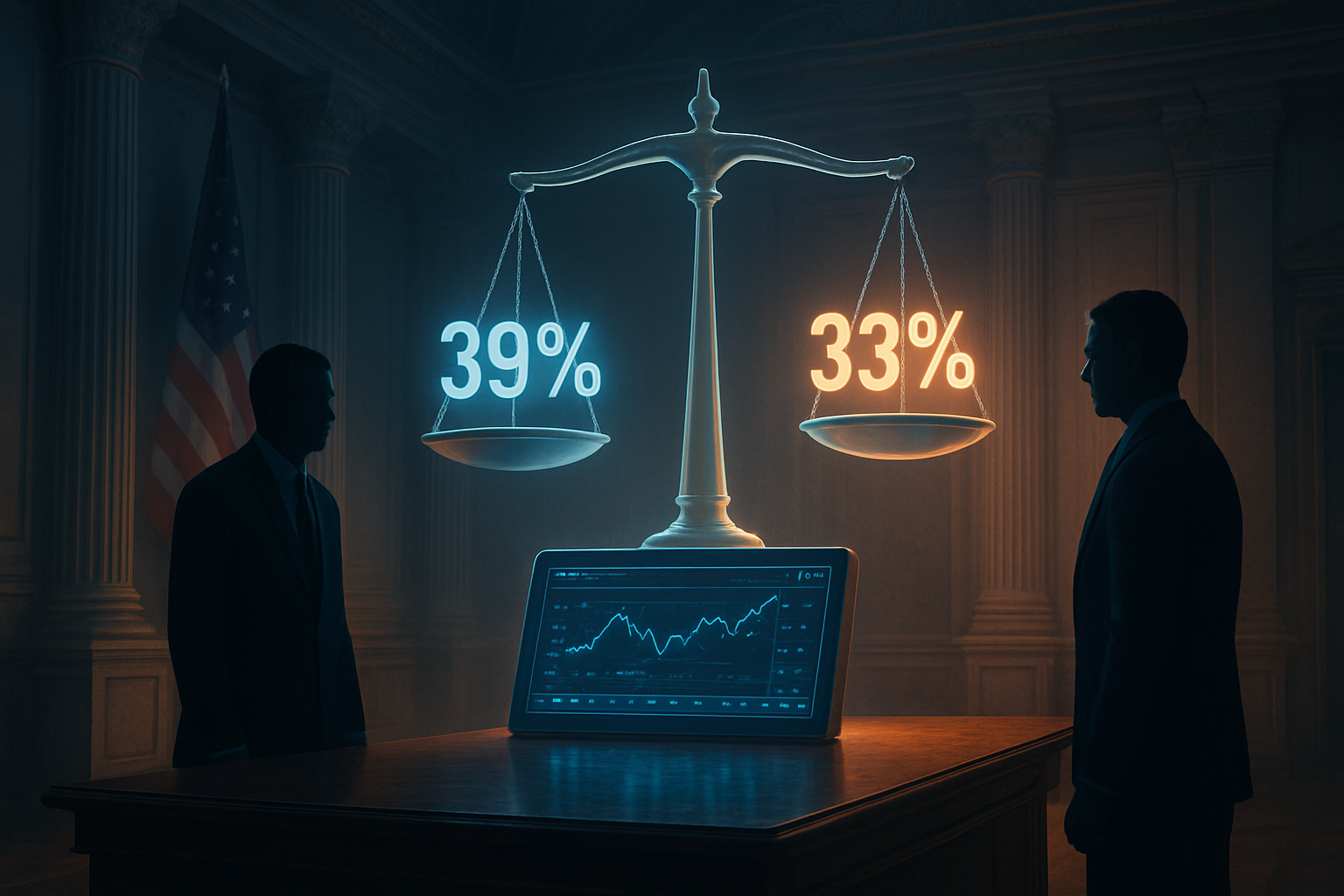
    On the prediction platform Kalshi, a significant "flip" occurred this week: Kevin Warsh has surged to a 39% probability of becoming the next Fed Chair, overtaking former frontrunner Kevin Hassett, who has slipped to 33%. This three-point lead for Warsh marks a sharp reversal from late December, when Hassett held a dominant 58% share of the market. Traders are now pricing in a more complex confirmation process, as the "Two Kevins" represent vastly different visions for the future of American monetary policy and institutional independence.

    The Market: What's Being Predicted

    The Kalshi market for "Next Fed Chair" is currently one of the most liquid and closely watched contracts in the prediction space. The contract asks participants to forecast who will be the individual officially nominated by the President and subsequently confirmed by the Senate to lead the Federal Reserve when Jerome Powell’s term expires in May 2026. While other platforms like Polymarket have seen similar volume, Kalshi’s status as a CFTC-regulated exchange has made it a primary destination for institutional hedgers and political junkies alike.

    The recent volatility in these odds is striking. Just two weeks ago, Kevin Hassett was viewed as a "done deal" by many traders, given his close ties to the current administration and his alignment with the President's public demands for aggressive interest rate cuts. However, as the January 14 data shows, Warsh’s 39% lead reflects a growing consensus that the nomination will not be a simple "coronation." Trading volume has spiked in the last 48 hours, with over $15 million in total position value across the top candidates as the market reacts to every leak from the West Wing and the Senate Banking Committee.

    The resolution criteria for this market are specific: the individual must be the first person to be confirmed by the U.S. Senate for the role. This nuance is critical, as it forces traders to account not just for who the President wants to pick, but who can actually survive the gauntlet of a divided Senate. With the current odds sitting at 39% for Warsh and 33% for Hassett, the market is effectively signaling a "toss-up" with a slight lean toward the candidate perceived as more palatable to institutional gatekeepers.

    Why Traders Are Betting

    The primary driver behind Kevin Warsh’s ascent is the perceived "confirmation risk" associated with Kevin Hassett. While Hassett is viewed as a "growth-oriented dove" who would readily implement the President’s goal of 1% interest rates, his perceived lack of independence has sparked a rebellion among moderate Republicans in the Senate. Senators like Thom Tillis and Lisa Murkowski have recently signaled they might block any nominee viewed as a political "tool," creating a opening for Warsh.

    Warsh, a former Fed Governor and Morgan Stanley (NYSE: MS) investment banker, is seen as the "Wall Street Choice." He has garnered implicit support from major financial leaders, including Jamie Dimon of JPMorgan Chase & Co. (NYSE: JPM). Traders are betting that the administration may eventually pivot to Warsh to avoid a protracted confirmation battle. "Warsh offers a 'regime change' that satisfies the President's desire for a Fed overhaul but keeps the bond market from revolting," noted one prominent trader on the Kalshi Discord.

    Conversely, the decline in Hassett’s odds is directly linked to the burgeoning Department of Justice (DOJ) probe into Jerome Powell. The investigation has turned the Fed Chair succession into a partisan lightning rod. As the White House ramps up its "coercion" of Powell, the risk of a "loyalist" nominee like Hassett being rejected by the Senate has increased. Traders are increasingly using these contracts to hedge against broader market volatility; a Hassett nomination is viewed as "risk-on" for the S&P 500 (NYSEARCA: SPY), while a Warsh nomination is seen as a stabilizing force for the financial sector and banks like Goldman Sachs Group Inc. (NYSE: GS).

    Broader Context and Implications

    This race highlights the growing role of prediction markets as a real-time barometer for political developments that traditional polling and media cannot capture. While cable news outlets are still debating whether Powell will resign early, the Kalshi market has already moved on, pricing in the likelihood of various successors. This "wisdom of the crowd" often identifies shifts in sentiment days before they appear in mainstream headlines, serving as a vital tool for economists and portfolio managers.

    The real-world implications of this choice are staggering. A Kevin Hassett chairmanship would likely signal a period of aggressive monetary easing and a potential challenge to the Fed's traditional independence. This could lead to a massive rally in growth-heavy sectors like Technology (NYSEARCA: XLK). On the other hand, a Kevin Warsh-led Fed would likely focus on "institutional reform" and balance sheet reduction, which could favor the Financials (NYSEARCA: XLF) by normalizing the yield curve and reducing regulatory uncertainty.

    Historically, prediction markets have been remarkably accurate in forecasting high-level appointments. In 2017, markets correctly identified Jerome Powell as the frontrunner months before he was formally chosen. The current 39% to 33% split suggests that we are in the most uncertain phase of the process, where a single tweet or a leaked shortlist could cause a 20-point swing in minutes.

    What to Watch Next

    As we move closer to the expiration of Powell's term, several key milestones will dictate the next moves in the Kalshi market. The most immediate event is the President’s scheduled "Economic Summit" later this month, where he is expected to provide further clarity on his shortlist. Any mention of "institutional stability" would likely see Warsh’s odds climb above 45%, while a renewed call for "radical rate cuts" would likely see Hassett regain his lead.

    Furthermore, keep a close eye on the Senate Banking Committee. If the committee's leadership begins to publicly vet Warsh, it would signal that a "backroom deal" has been struck to ensure a smooth transition. Conversely, any progress in the DOJ's investigation into Powell could delay the nomination process entirely, potentially giving rise to a "dark horse" candidate like Christopher Waller, who currently languishes at 9% odds.

    Finally, the reaction of the bond market will be a leading indicator. If the 10-year Treasury yield begins to spike in anticipation of a "political" Fed Chair, the pressure on the White House to nominate a "market-credible" candidate like Warsh will become immense.

    Bottom Line

    The current flip on Kalshi—Kevin Warsh at 39% and Kevin Hassett at 33%—is more than just a change in numbers; it is a reflection of the deep-seated tension between political ambition and market reality. While Hassett remains the ideological favorite of the administration, Warsh has emerged as the pragmatic choice for a President who cannot afford a failed confirmation or a bond market collapse.

    For participants in prediction markets, this race serves as a masterclass in "event hedging." The closeness of the odds tells us that the outcome is far from decided and that the "Two Kevins" represent a binary path for the U.S. economy. Whether the Fed moves toward a populist, pro-growth model under Hassett or a reformist, institutionalist model under Warsh, the prediction markets will be the first to tell us which way the wind is blowing.

    In the coming weeks, the 6% gap between the two frontrunners will likely expand or contract based on the political temperature in Washington. For now, Kevin Warsh holds the narrowest of leads, but in the world of high-stakes nominations, a 39% probability is a far cry from a victory lap.


    This article is for informational purposes only and does not constitute financial or betting advice. Prediction market participation may be subject to legal restrictions in your jurisdiction.

    PredictStreet focuses on covering the latest developments in prediction markets.
    Visit the PredictStreet website at https://www.predictstreet.ai/.
  • The Battle of the Kevins: Warsh Edges Out Hassett in High-Stakes Race for Fed Chair

    The Battle of the Kevins: Warsh Edges Out Hassett in High-Stakes Race for Fed Chair

    As the countdown to the expiration of Jerome Powell’s term begins, the prediction markets have narrowed the field for the next leader of the Federal Reserve to a two-man sprint. In what traders are calling the "Battle of the Kevins," former Fed Governor Kevin Warsh has narrowly overtaken former Council of Economic Advisers Chairman Kevin Hassett as the favorite to receive Donald Trump’s nomination. On PredictIt, Warsh is currently trading at 43¢, a slim but significant lead over Hassett’s 41¢, marking a dramatic shift in a race that appeared settled just weeks ago.

    This market is drawing unprecedented interest due to its direct impact on global monetary policy and the escalating tensions between the White House and the current Fed leadership. With the Federal Reserve's independence at the center of the 2026 political discourse, prediction markets have become the primary venue for pricing in the "loyalty vs. credibility" debate that characterizes the administration's search for a successor.

    The Market: What’s Being Predicted

    The central prediction market revolves around the identity of the individual who will be confirmed as the next Chair of the Federal Reserve Board of Governors. While the primary action is concentrated on PredictIt, related contracts are trading with high volume on Polymarket (where Warsh leads 41% to 38%) and Kalshi (which shows a tighter 39% to 40% split in favor of Hassett).

    Trading liquidity has spiked in early January 2026, with over $15 million in combined volume across platforms. The resolution criteria for most of these markets require the individual to be officially nominated by the President and confirmed by the Senate. The timeline is fixed by the calendar: Jerome Powell’s term officially expires on May 15, 2026. However, the market also prices in the possibility of an "Acting Chair" scenario should the confirmation process stall—a contingency that has kept odds for darker-horse candidates like Christopher Waller (13¢) from hitting zero.

    Why Traders Are Betting

    The sudden surge for Kevin Warsh can be traced back to a mid-December interview President Trump gave to The Wall Street Journal, owned by News Corp (NASDAQ: NWSA). In the interview, the President explicitly narrowed his shortlist to "Kevin and Kevin," effectively ending the hopes of several other candidates. While Hassett was the initial frontrunner—peaking at nearly 85% on some platforms due to his perceived loyalty—traders began pivoting toward Warsh following reports of a successful 45-minute private meeting between Warsh and the President.

    Traders are increasingly betting that Warsh offers the "Goldilocks" solution for the administration. Having served as a Fed Governor from 2006 to 2011 and holding a background at Morgan Stanley (NYSE: MS), Warsh possesses the "market credibility" that institutional investors demand. Conversely, Hassett’s odds have softened amid concerns that his nomination might face a more difficult path in a Senate wary of installing a Chair perceived as too politically compliant. The "Warsh Trade" is essentially a bet that the administration will prioritize a candidate who can simultaneously appease the President’s desire for lower rates and Wall Street’s need for stability.

    Broader Context and Implications

    The "Battle of the Kevins" is unfolding against a backdrop of extreme institutional friction. Jerome Powell is currently under a Department of Justice investigation regarding alleged cost overruns in the renovation of the Fed’s headquarters, a situation Powell has characterized as political intimidation. Prediction markets are currently pricing a 30% chance that Powell resigns before his May 15 deadline, though his recent public vows to stay on have seen that probability drop from a December high of 70%.

    This market reveals a deep public skepticism regarding the traditional nomination process. By tracking the odds in real-time, we see that the market is currently more influenced by "vibe checks" and reported private meetings than by official White House press releases. Furthermore, the "Shadow Governor" strategy—where Powell might remain on the Board of Governors even after his Chairmanship ends to prevent an additional Trump appointment—has become a key variable that traders are now forced to calculate. This demonstrates how prediction markets have evolved to incorporate complex procedural maneuvering that traditional polling often misses.

    What to Watch Next

    The next major volatility event for this market will be the formal announcement of a nominee, which is expected no later than mid-February to allow for the confirmation process. Key dates to monitor include the resolution of the DOJ’s probe into the Fed's renovation budget; if the investigation is dropped or escalated, the odds for an interim or "Acting" Chair could fluctuate wildly.

    Additionally, watch for public comments from Senator Thom Tillis and other members of the Senate Banking Committee. Tillis has signaled he may block any new nominee until the Powell investigation is concluded. If a legislative "roadblock" becomes the consensus expectation, we could see the odds for both Kevins decline in favor of a "Field" bet or a scenario where the current Vice Chair for Supervision takes the reins temporarily.

    Bottom Line

    The narrow lead held by Kevin Warsh suggests that prediction markets are betting on a "return to normalcy" within the context of a disruptive administration. Traders are signaling that while the President wants a change, the structural need for a Chair with deep ties to the financial establishment—like Warsh’s history at Morgan Stanley (NYSE: MS)—will ultimately outweigh the desire for a more partisan appointment.

    Ultimately, these markets serve as a real-time barometer for the tension between political will and institutional inertia. Whether it is Warsh or Hassett who takes the gavel on May 16, the volatility of these contracts highlights just how much the "independence" of the Federal Reserve is currently being re-priced by the world's most informed speculators.


    This article is for informational purposes only and does not constitute financial or betting advice. Prediction market participation may be subject to legal restrictions in your jurisdiction.

    PredictStreet focuses on covering the latest developments in prediction markets.
    Visit the PredictStreet website at https://www.predictstreet.ai/.

  • Bank of America’s Capital Renaissance: Analyzing the 2025 Stress Test Victory and Shareholder Returns

    Bank of America’s Capital Renaissance: Analyzing the 2025 Stress Test Victory and Shareholder Returns

    As of December 24, 2025, Bank of America (NYSE: BAC) stands at a historic crossroads. After nearly two decades of restructuring following the 2008 financial crisis, the Charlotte-based behemoth has emerged as a leaner, more resilient, and highly profitable institution. In focus today is the bank’s record-breaking capital return program, catalyzed by a stellar performance in the Federal Reserve’s 2025 Stress Test. With a significantly reduced Stress Capital Buffer (SCB) and a newfound regulatory reprieve from the "Basel III Endgame" rules, Bank of America is returning capital to shareholders at a pace not seen in its history. This deep dive explores how the bank transitioned from a crisis-era recovery story to a dominant leader in shareholder yield and operational efficiency.

    Historical Background

    The story of Bank of America is one of relentless expansion followed by a rigorous, decade-long cleanup. Founded in 1904 by Amadeo Peter Giannini as the Bank of Italy in San Francisco, the bank was built on the revolutionary idea of serving the "little fellow." It pioneered branch banking and consumer innovations, eventually evolving into the modern Bank of America through the transformative 1998 merger with NationsBank.

    However, its greatest test came in 2008. The acquisition of Merrill Lynch and Countrywide Financial during the depths of the Great Recession brought the bank to the brink of collapse, necessitating $20 billion in government bailouts. Since Brian Moynihan took over as CEO in 2010, the narrative has been defined by his "Responsible Growth" strategy. This involved shedding over $300 billion in non-core assets, settling billions in litigation, and fundamentally rebuilding the bank's capital foundations. By late 2025, this journey reached a symbolic milestone as the stock finally surpassed its pre-2008 all-time highs.

    Business Model

    Bank of America operates through four primary segments, each contributing to a diversified revenue stream that balances consumer stability with capital markets volatility:

    1. Consumer Banking: The bedrock of the bank, serving over 69 million consumers and small business clients. It is a leader in digital banking and deposit gathering.
    2. Global Wealth & Investment Management (GWIM): Anchored by Merrill Lynch and Bank of America Private Bank, this segment manages over $4 trillion in client balances as of late 2025.
    3. Global Banking: Provides lending-related products, investment banking, and capital markets services to corporations and institutional investors.
    4. Global Markets: Focused on institutional trading and market-making across fixed income, currencies, commodities, and equities.

    Stock Performance Overview

    In 2025, Bank of America’s stock has outperformed the broader S&P 500 Financials Sector. Over the 1-year horizon, BAC has surged 28%, fueled by better-than-expected Net Interest Income (NII) and regulatory clarity. On a 5-year basis, the stock has nearly doubled, reflecting the successful execution of operational leverage. Most notably, the 10-year performance showcases a transformation from a deep-value recovery play to a core holding for institutional portfolios, with total returns exceeding 180% as the bank reclaimed its status as a premier "dividend aristocrat" in the making.

    Financial Performance

    The financial results for the third and fourth quarters of 2025 highlight a bank firing on all cylinders.

    • Net Interest Income: Reached $15.6 billion in Q4 2025, driven by a steepening yield curve and the repricing of its massive fixed-income portfolio.
    • Profitability: Net income for Q3 2025 was $8.5 billion, with a Return on Tangible Common Equity (ROTCE) of 15.4%.
    • Efficiency Ratio: The bank achieved an efficiency ratio of 61.4% in late 2025, a significant improvement from the 64-65% range seen in previous years, as revenue growth outpaced expense growth.
    • Capital Strength: The bank ended the year with a Common Equity Tier 1 (CET1) ratio of 11.6%, well above the 10.0% regulatory minimum.

    Leadership and Management

    CEO Brian Moynihan remains the primary architect of the bank's current success. In a surprising late-2025 announcement, Moynihan confirmed he intends to stay as Chair and CEO until 2030, providing a long-term horizon for his "Responsible Growth" philosophy. However, succession planning is in full swing. The September 2025 appointment of Dean Athanasia and Jim DeMare as Co-Presidents signaled a clear path forward for the next generation of leadership. The management team is highly regarded for its discipline in cost-cutting and risk management, which has restored the bank's reputation with both regulators and investors.

    Products, Services, and Innovations

    Technological innovation is the engine of BAC's efficiency. The bank’s AI assistant, Erica, now handles over 2 million daily interactions, significantly reducing the cost to serve retail clients. In 2025, the bank expanded its digital wealth management tools, integrating Merrill’s advisory capabilities with the core banking app. Furthermore, BAC has maintained its competitive edge in "CashPro," its digital platform for corporate clients, which handles trillions in transaction volume annually and has become a sticky ecosystem for global treasury services.

    Competitive Landscape

    Bank of America remains the second-largest U.S. bank by assets (~$3.4 trillion), trailing only JPMorgan Chase (NYSE: JPM). While JPM continues to lead in overall profitability and investment banking market share, BAC has closed the gap in digital adoption and consumer deposit loyalty. A key development in 2025 was the lifting of the asset cap on Wells Fargo (NYSE: WFC), which has intensified competition for corporate lending and middle-market banking. Despite this, BAC’s diversified model across wealth management and global markets provides a broader earnings base than more retail-heavy peers.

    Industry and Market Trends

    The banking sector in late 2025 is defined by a "normalization" of interest rates. After years of rapid hikes followed by stabilization, the Federal Reserve has maintained a federal funds rate in the 3.50%–3.75% range. This "higher for longer" environment, relative to the 2010s, has been a boon for large banks with massive deposit bases. Additionally, the industry is seeing a significant rebound in M&A and IPO activity, which has revitalized investment banking fees across the sector.

    Risks and Challenges

    Despite its strength, BAC faces several headwinds:

    • Commercial Real Estate (CRE): While BAC’s exposure to office loans is relatively low compared to regional banks (CRE-to-equity ratio of ~36%), the ongoing devaluation of urban office space remains a persistent credit risk.
    • Interest Rate Sensitivity: As a highly asset-sensitive bank, BAC's margins are vulnerable to a faster-than-expected decline in long-term rates, which could compress its Net Interest Margin (NIM).
    • Cybersecurity: As a systemic pillar of the global economy, the bank is a constant target for state-sponsored and criminal cyberattacks, requiring multi-billion dollar annual investments in security.

    Opportunities and Catalysts

    The most significant near-term catalyst is the $40 billion share repurchase program authorized in July 2025. Coupled with an 8% increase in the quarterly dividend to $0.28 per share, the bank is on track to return more than $25 billion to shareholders annually through 2026. Furthermore, the softening of the "Basel III Endgame" capital requirements in late 2025 has freed up billions in capital that were previously earmarked for regulatory reserves, providing a long-term tailwind for further buybacks.

    Investor Sentiment and Analyst Coverage

    Wall Street sentiment is overwhelmingly bullish at the end of 2025. Analysts at major firms like Morgan Stanley and Goldman Sachs have raised price targets for BAC to the $60-$65 range. Institutional ownership remains high, with major positions held by Berkshire Hathaway and Vanguard. Retail sentiment has also shifted positively, as the bank's consistent dividend growth makes it a preferred "bond-proxy" in a fluctuating rate environment.

    Regulatory, Policy, and Geopolitical Factors

    Regulatorily, 2025 was a year of relief. The Federal Reserve’s decision to slash the proposed capital surcharges for global systemically important banks (G-SIBs) from 16% to 9% was a major win for Bank of America. This policy shift reflects a recognition of the banking system's stability. Geopolitically, the bank’s global footprint makes it sensitive to trade tensions, particularly in the Asia-Pacific region, though its primary focus remains the resilient U.S. domestic economy.

    Conclusion

    Bank of America enters 2026 in its strongest position in decades. By successfully navigating the 2025 stress tests and securing a regulatory environment that favors capital distribution, the bank has turned its "Responsible Growth" mantra into a powerful engine for shareholder value. Investors should watch for continued execution in the Global Markets and Wealth Management divisions, as these will be the primary drivers of ROTCE expansion toward the bank's 18% goal. While macro risks like CRE and rate volatility persist, BAC’s fortress balance sheet and disciplined leadership make it a standout leader in the global financial landscape.


    This content is intended for informational purposes only and is not financial advice.