
Tag: F

  • Ford Motor Company (F/NYSE): Navigating the Road Ahead in a Transforming Automotive Landscape

    Ford Motor Company (F/NYSE): Navigating the Road Ahead in a Transforming Automotive Landscape

    Date: 12/12/2025

    1. Introduction

    Ford Motor Company (F/NYSE), a multinational automotive manufacturer headquartered in Dearborn, Michigan, stands at a critical juncture in late 2025. Deeply rooted in American industrial history since its founding by Henry Ford in 1903, Ford is renowned for revolutionizing the automotive industry with the moving assembly line. Today, the company is navigating a complex transition, balancing its historically strong internal combustion engine (ICE) and hybrid vehicle segments with an ambitious, yet financially challenging, pivot to electric vehicles (EVs).

    Under its "Ford+" plan, the company has strategically segmented its operations into three customer-centered business units: Ford Blue (iconic gas-powered and hybrid vehicles), Ford Model e (breakthrough EVs and software), and Ford Pro (commercial vehicles and services). Ford Motor Credit Company also provides financial services. Investors are keenly focused on Ford due to its mixed financial results, the profitability dilemma of its EV division, the robust performance of Ford Pro, its valuation, dividend appeal, and strategic adaptations to quality control issues and evolving market demands.

    2. Historical Background

    Ford Motor Company's history is a testament to continuous innovation and strategic evolution. Founded on June 16, 1903, by Henry Ford and a group of 12 investors in a converted factory in Detroit, the company quickly moved beyond early models to introduce the groundbreaking Model T in 1908. This affordable, reliable vehicle aimed to "put the world on wheels" and became immensely popular.

    A pivotal innovation followed in 1913 with the introduction of the moving assembly line at the Highland Park plant, drastically cutting production time and allowing Ford to lower the Model T's price to as little as $260 by 1925. In 1914, Ford introduced the $5 workday, nearly doubling wages, which reduced worker turnover and helped create a strong middle class capable of affording the cars they built. Ford also began early global expansion, establishing Ford of Canada in 1904 and its first overseas plant in England in 1911.

    Key transformations over time include:

    • 1920s-1930s: The Model T era ended in 1927, replaced by the Model A. Ford acquired the Lincoln Motor Company in 1922 for the luxury market and introduced the first low-priced V8 engine in 1932. The Mercury brand was created in 1939. During World War II, Ford shifted to wartime production.
    • Mid-20th Century: Henry Ford II took the helm, and in 1956, Ford went public with a stock offering. Iconic models like the F-Series trucks (1948) and the Mustang (1964) were introduced. Ford Credit Corporation was formed in 1959.
    • Late 20th Century: A period of globalization and diversification saw acquisitions of brands like Aston Martin, Volvo, and Land Rover (many later divested).
    • 21st Century: Ford navigated the 2008 financial crisis without a government bailout. A major strategic shift has been the aggressive pursuit of electric vehicles, exemplified by models like the Mustang Mach-E and F-150 Lightning, and the establishment of "BlueOval City" for EV manufacturing. The company's "Ford+" plan, announced in 2020, outlines a strategy focused on revitalizing growth through electrification, environmental objectives, and enhanced safety, aiming for carbon neutrality by 2050.

    3. Business Model

    Ford Motor Company operates a diversified business model primarily centered on automotive manufacturing and financial services, strategically segmented to cater to distinct customer bases and market trends.

    Main Revenue Sources:
    Ford's revenue largely stems from its Automotive segment (over 93%), which includes vehicle sales, parts, and accessories. The remainder is generated by Ford Credit, its financial services arm. Increasingly, revenue is also derived from software and connected services, particularly within Ford Pro.

    Product Lines: Ford and Lincoln:

    • Ford: Offers a comprehensive portfolio of trucks (F-Series, Ranger), SUVs (Bronco, Explorer, Escape, Expedition), commercial vans (Transit), and cars (Mustang). The EV lineup includes the F-150 Lightning and Mustang Mach-E.
    • Lincoln: Ford's luxury division, providing upscale SUVs and crossovers (Navigator, Aviator, Nautilus, Corsair), with an increasing focus on hybrid and plug-in hybrid options, and fully-electric vehicles expected in 2025.

    Services:

    • Ford Credit: Provides automotive financing, leasing, and insurance products to dealers and retail customers, facilitating vehicle sales and offering commercial lending solutions.
    • Ford Pro: A dedicated commercial vehicle and services arm offering a holistic ecosystem for businesses. This includes a range of work-ready vehicles, integrated software (e.g., Ford Pro Telematics for real-time data), charging solutions, and comprehensive fleet maintenance services.

    Key Operating Segments (Under Ford+ Plan):

    1. Ford Blue: Focuses on iconic internal combustion engine (ICE) and hybrid vehicles for retail customers, providing foundational revenue and manufacturing capabilities. It also supports Ford Model e and Ford Pro with hardware engineering.
    2. Ford Model e: Dedicated to the development, manufacturing, and sales of all-electric vehicles, advanced battery technology, and digital vehicle software. This segment represents Ford's significant investment in its electric future, currently incurring substantial losses due to heavy R&D and manufacturing costs.
    3. Ford Pro: The growth engine for commercial customers, providing vehicles, software, charging, and service solutions to maximize uptime and reduce operating costs. It is currently the primary profit driver for Ford, with high margins and growing recurring software revenue.

    Interaction and Contribution:
    Ford Pro is the most profitable segment, driven by strong commercial vehicle sales and recurring software subscriptions, which helps to offset the significant losses from Ford Model e. Ford Blue provides a stable revenue stream from its popular ICE and hybrid models, contributing to the overall financial health that enables investments in electrification. Ford Credit supports all segments by facilitating vehicle purchases. This segmented approach under the Ford+ plan aims to sharpen focus, accelerate decision-making, and enhance accountability for sustainable growth.

    4. Stock Performance Overview

    As of December 12, 2025, Ford Motor Company (F/NYSE) has exhibited varied stock performance across different time horizons, reflecting the company's strategic transformation, market shifts, and macroeconomic factors. Ford's closing stock price on December 11, 2025, was $13.63.

    1-Year Performance (December 2024 – December 2025):
    Ford's stock has shown positive returns, with a total return of approximately 31.01% over the past 12 months, and a year-to-date gain of 40.27% in 2025. This performance significantly outpaced the S&P 500.

    • 52-Week High: $13.97 (October 24, 2025).
    • 52-Week Low: $8.44 (April 9, 2025).
    • Key Influences: Better-than-expected Q4 2024 and Q1 2025 financial results, strong EV manufacturing initiatives and partnerships, record global revenue in 2024 driven by F-Series and Ranger, and robust Q3 2025 U.S. vehicle sales (up 8.2% year-over-year, with electrified vehicle sales up 19.8%). The highly profitable Ford Pro commercial division has been a significant positive. However, challenges included CEO Jim Farley's warning about reduced EV sales due to expiring federal incentives, production setbacks from an aluminum plant fire impacting F-150, significant recalls, and new tariffs on trucks. Ford's 5.1% dividend yield in 2025 also appealed to income investors.

    5-Year Performance (December 2020 – December 2025):
    Over this period, Ford delivered a total return of 85.2% (or approximately 133% including dividends as of October 2025).

    • All-Time High: $19.43 (January 14, 2022).
    • COVID-19 Low: $3.96 (March 23, 2020) at the pandemic's onset.
    • Volatile Annual Returns: 2021 saw a strong 145.01% return, followed by a significant decline of -44.84% in 2022. 2023 rebounded with 15.32%, 2024 saw a -12.89% decrease, and 2025 (YTD) shows a strong recovery with 47.55%.
    • Key Influences: Renewed focus on EV investments (committing $50 billion through 2026) and new EV launches (Mustang Mach-E, F-150 Lightning) drove initial enthusiasm. However, global supply chain disruptions (semiconductor shortages), intense competition, and rising interest rates posed challenges. Ford's strategic pivot to balance EV development with profitable ICE/hybrid segments defined this period.

    10-Year Performance (December 2015 – December 2025):
    Over the past decade, Ford's stock generated a total return of 60%, or an annualized return of 4.8%.

    • Historical Highs and Lows: The all-time high of $19.43 (January 2022) and the COVID-19 low of $3.96 (March 2020) both fall within this period.
    • Annual Returns (2015-2020): This period saw more subdued or negative returns (e.g., -4.54% in 2015, -35.23% in 2018), with some recovery in 2019 (25.54%).
    • Key Influences: The decade was marked by a significant shift in the automotive industry towards electrification, global economic fluctuations, and the impact of the COVID-19 pandemic. Ford made substantial investments in autonomous driving, connectivity, and EVs, which began to influence performance more significantly in the latter half of the decade. Despite strategic initiatives, automotive revenue growth was challenging, growing at a compound annual rate of only 2.8% from Q3 2015 to Q3 2025.

    5. Financial Performance

    Ford Motor Company (F/NYSE) reported robust financial results for the third quarter of 2025, demonstrating strong revenue growth and healthy cash flow, though challenges persist in its electric vehicle segment. The Q3 2025 earnings report was released on October 23, 2025.

    Q3 2025 Financial Highlights:

    • Revenue Growth: Total revenue reached $50.5 billion, a 9% increase year-over-year, surpassing analyst expectations.
    • Net Income and EPS: Net income was $2.4 billion, with adjusted EBIT at $2.6 billion. Adjusted EPS was $0.45, beating the forecasted $0.35. Reported net income attributable to Ford was $2.45 billion ($0.60 per share), significantly up from $892 million ($0.22 per share) in Q3 2024.
    • Gross and Operating Margins: Adjusted EBIT margin improved to 7.8% in Q3 2025, driven by cost efficiencies and focus on profitable segments. The trailing twelve months (TTM) operating margin as of December 2025 stands at 3.90%. Ford Pro achieved an impressive 12.4% EBIT margin, but Ford Model e (EV arm) reported a $1.4 billion EBIT loss, offsetting overall profitability.
      • Industry Comparison: Ford's Q3 2025 adjusted EBIT margin of 7.8% is broadly in line with or slightly below the automotive industry average (often around 7.5% to 8%). However, its TTM operating margin of 3.90% is lower than the industry average of around 8.09%.
    • Debt Levels: As of Q3 2025, long-term debt was approximately $104 billion, with total debt at $160.86 billion. The debt-to-equity ratio is 2.20.
    • Cash Flow from Operations: Ford generated strong cash flow from operations of $7.4 billion in Q3 2025, with adjusted free cash flow of $4.3 billion. The company ended the quarter with nearly $33 billion in cash and $54 billion in total liquidity.
    • Capital Expenditures: Anticipated capital expenditures for the full year 2025 are about $9 billion. TTM capital expenditures ending September 30, 2025, were -$8.529 billion.
    • Key Valuation Metrics:
      • Price-to-Earnings (P/E) Ratio: Ford's P/E ratio was 11.36 as of December 10, 2025 (TTM).
        • Industry Comparison: This is at the lower end or below some broad industry averages, which can range widely (e.g., 7.97 to 110x for "Auto Manufacturers"), potentially suggesting undervaluation compared to certain market segments or historical trends.
      • Enterprise Value to EBITDA (EV/EBITDA): While specific Q3 2025 EV/EBITDA was not available, the industry median for "Auto & Truck Manufacturers" was 10.14 as of July 2025.

    In summary, Ford's Q3 2025 results show strong top-line growth and cash generation, especially from Ford Pro. However, the substantial investments and losses in Ford Model e continue to impact overall profitability and margins. The company's debt levels are considerable, and its valuation metrics suggest a potentially cautious investor sentiment.

    6. Leadership and Management

    As of December 12, 2025, Ford Motor Company is undergoing a significant transformation under the leadership of James "Jim" D. Farley, Jr., who serves as President and CEO, a role he assumed on October 1, 2020. Farley is also President of Ford Model e and a board member. His leadership is centered on the ambitious "Ford+" plan, aiming to establish Ford as a leader in the digital and electric vehicle revolution, despite facing challenges in quality control and EV profitability.

    Key Leadership Team Members:

    • William Clay Ford Jr. – Executive Chair, providing strategic direction.
    • Sherry House – Chief Financial Officer, overseeing financial operations.
    • John Lawler – Vice Chair, focusing on strategy, partnerships, and corporate development.
    • Kumar Galhotra – Chief Operating Officer, responsible for global industrial operations.
    • Marin Gjaja – Chief Strategy Officer, shaping long-term growth initiatives.
    • Jim Baumbick – President of Ford Europe (appointed October 2025).
    • Andrew Frick – Leads all global retail business units (Ford Blue, Model e, Lincoln).

    Board of Directors:
    The Board includes William Clay Ford Jr. (Executive Chairman), Jim Farley, and a diverse group of independent directors, with John L. Thornton serving as Lead Independent Director.

    Strategic Vision: The Ford+ Plan:
    This overarching strategy aims for growth and value creation by reorganizing the company into three distinct segments:

    • Ford Blue: Focuses on iconic gasoline and hybrid vehicles.
    • Ford Model e: Dedicated to breakthrough EVs and digital platforms.
    • Ford Pro: Aims to help commercial customers with work-ready vehicles and services.
      The plan emphasizes leading the digital and electric revolution, building a resilient company, and fostering "always-on" customer relationships. In Europe, the strategy involves strengthening Ford Pro, expanding electrified passenger vehicles, and optimizing industrial efficiency, including a new strategic partnership with Renault Group.

    Governance Practices:
    Ford maintains robust corporate governance, with annual election of all directors by majority vote, a majority-independent board, a Lead Independent Director, and independent board committees. The roles of Chair and CEO are separated, and independent directors meet regularly without management. The company adheres to strict Codes of Conduct and Ethics.

    Notable Reputation or Challenges Related to Management:

    • Recall Crisis: Ford has faced a "record-setting" recall crisis in 2025, issuing 109 recalls in the U.S. alone, affecting millions of vehicles due to various critical issues. This has led to increased warranty costs, impacted brand reputation, and raised concerns about quality control. CEO Jim Farley has publicly acknowledged quality improvement as a top priority.
    • Electric Vehicle (EV) Segment Performance: The Model e division continues to report significant losses, projected at $5.0 billion to $5.5 billion for 2025. Management is adjusting its EV strategy to focus on profitability, cost efficiencies, and a slower rollout of EVs, with a greater emphasis on hybrids.
    • Geopolitical Headwinds: Operations in Europe and China face challenges from strict emissions rules, intense price wars from Chinese EV manufacturers, and fluctuating market conditions. Ford's management is actively pursuing partnerships and realignments to enhance competitiveness in these regions.

    Despite these challenges, Ford's management is actively pursuing strategic realignments and partnerships to enhance competitiveness and efficiency, while maintaining a commitment to sustainability and carbon neutrality by 2050.

    7. Products, Services, and Innovations

    As of December 12, 2025, Ford Motor Company is aggressively advancing its product offerings, services, and innovation pipeline across its Ford and Lincoln brands, with a strategic focus on electrification, software integration, and commercial solutions.

    Current Product Offerings:

    • Ford Brand:
      • ICE Models: F-150, Explorer, Escape, Expedition, Bronco, Ranger, Mustang.
      • Hybrid Models: F-150 PowerBoost Hybrid, Maverick Hybrid (best-selling hybrid in the U.S.), Escape Hybrid/PHEV, Explorer Hybrid. Ford plans hybrid variants for all ICE models by 2030.
      • EV Models: F-150 Lightning, Mustang Mach-E (best quarter since launch in Q3 2025), E-Transit van. New designs for 2025 Expedition and Edge with advanced digital displays.
    • Lincoln Brand:
      • SUV Models: Corsair, Nautilus (available as hybrid across all trims), Aviator, Navigator (featuring a 48-inch panoramic display and "Rejuvenate" system).
      • Hybrid & PHEV Models: Nautilus Hybrid, Corsair Grand Touring PHEV. First three fully-electric Lincoln vehicles expected in 2025.

    Key Services:

    • Ford Credit: Focusing on technology advancements for personalized credit assessments and improved customer service, with a new platform launching in 2025.
    • Ford Pro: Offers telematics and fleet management (real-time data, asset tracking, geofencing), electrification advisory services (helped over 17,000 businesses), Vehicle Integration System 2.0 for upfitters, and year-end software upgrades for enhanced vehicle oversight.

    Innovation Pipelines & R&D Investments:
    Ford's innovation strategy is deeply integrated across vehicle development, manufacturing, and software.

    • Software-Defined Vehicles (SDVs): Evolving its FNV3 platform to FNV3.X for flexible architecture, enabling over-the-air (OTA) updates (over 63 million delivered), BlueCruise hands-free driving, and the Ford and Lincoln Digital Experience (panoramic screens, SYNC system) across gas, hybrid, and electric models.
    • Advanced Battery Technology: Developing next-generation EV batteries, scaling lithium-manganese-rich (LMR) cell chemistry, and investing heavily in cheaper, more stable lithium iron phosphate (LFP) batteries (used in 2025 Mustang Mach-E, produced at BlueOval Battery Park Michigan from 2026).
    • Manufacturing Innovations: "Smart Manufacturing" with advanced robotics, AI, and data analytics. "Assembly tree" production system aims for 15% speed improvement, and "unicastings" for reduced parts. Developing Ford Freeform Fabrication Technology (F3T) for sheet metal parts.
    • Advanced Driver-Assistance Systems (ADAS) and Autonomous Driving: Expanding BlueCruise hands-free driving (over 6 million cumulative hours), developing Level 3 autonomous driving in-house (via Latitude AI, targeting 2026 rollout), and integrating comprehensive ADAS features (Pre-Collision Assist, Adaptive Cruise Control, BLIS).
    • Sustainability: Aiming for carbon neutrality by 2050 and 100% renewable energy in manufacturing by 2035.

    R&D Investments: Ford's R&D spending reached $8.0 billion in fiscal year 2024, significantly higher than some pure-play EV competitors, reflecting its aggressive innovation push.

    Patents: Ford holds 94,600 patents globally, with 56,871 active, covering autonomous vehicle technologies, display and environmental controls, manufacturing processes, powertrain systems, and even data-driven advertising.

    Competitive Edge in Technology and Design:

    • Democratization of Technology: Integrating advanced digital features and software across its entire lineup (gas, hybrid, electric), making technologies like BlueCruise and SYNC 4A accessible to a wider customer base.
    • Hybrid and EV Versatility: Offering a diverse range of hybrid and EV models tailored to various needs, providing "power of choice" across powertrains.
    • Integrated Commercial Solutions: Ford Pro offers a comprehensive ecosystem for commercial clients, leveraging its 40-year leadership in commercial vehicles.
    • Sustainable Innovation: Commitment to carbon-neutral manufacturing and investments in advanced battery technologies.
    • Manufacturing Efficiency: Innovations like "unicastings" and the "assembly tree" production system aim to reduce costs and improve quality.
    • In-house ADAS Development: Developing Level 3 autonomous driving in-house for safety, reliability, and cost-effectiveness.

    8. Competitive Landscape

    Ford Motor Company (F/NYSE) operates in a highly competitive and rapidly evolving automotive landscape as of December 12, 2025. The company balances its strong position in traditional segments with strategic expansion into hybrid and electric vehicles.

    Overall Market Position (Q3 2025):
    Ford's U.S. sales grew 8.2% year-over-year in Q3 2025, marking seven consecutive months of growth. Electrified vehicles (hybrids, PHEVs, EVs) accounted for 15.7% of total sales, up 19.8% year-over-year. Ford claims to be outselling GM and Stellantis in combined electrified vehicle sales year-to-date 2025. Through November 2025, Ford's market share grew by 0.5 percentage points to 13.2%.

    Main Industry Rivals by Segment:

    1. Internal Combustion Engine (ICE) Vehicles:

      • Rivals: Chevrolet (GM Silverado), Ram (Stellantis Ram 1500), Toyota (Tundra), GMC (Sierra 1500).
      • Ford's Standing: The F-Series captured a 36% market share in the U.S. full-size pickup segment in Q2 2025 and is on track for its 49th consecutive year as America's best-selling truck. Ford's F-150 offers a hybrid powertrain and Pro Power Onboard, giving it an edge.
    2. Hybrid Vehicles:

      • Rivals: Toyota (market leader with 70% share in 2023), GM, Stellantis, various Asian automakers.
      • Ford's Standing: The Ford Maverick hybrid truck is the best-selling hybrid in the U.S. Ford's hybrid sales reached a record 55,177 units in Q3 2025.
    3. Electric Vehicles (EVs):

      • Global Rivals: BYD Auto Group (leading with 19.9% global market share), Tesla (13% global share), Geely, Volkswagen Group, SAIC, Xpeng, Leap Motor.
      • U.S. Rivals: Tesla (41% U.S. EV market share in Q3 2025), General Motors (Chevy Equinox EV, Silverado EV), Hyundai, Kia, Honda.
      • Ford's Standing: Ford delivered 30,612 EVs in Q3 2025, up 30.2% year-over-year. Mustang Mach-E had its best quarter, and the F-150 Lightning is America's best-selling electric pickup. Ford's strategy is shifting towards more affordable EVs, with new electric commercial vans (2026) and pickup trucks (2027) planned.
    4. Commercial Vehicles:

      • Rivals: Ram ProMaster (Stellantis), Mercedes-Benz Sprinter, Chevrolet Express, GM Savana.
      • Ford's Standing: Ford is the #1 brand in commercial and police vehicles, with the Transit remaining America's best-selling van. Ford holds a dominant 43% share in Class 1-7 trucks and vans. Ford Pro is a significant profit engine, boosted by growing software subscriptions and telematics.

    Ford's Competitive Strengths:

    • Strong brand recognition and global presence.
    • Dominance in lucrative truck and commercial vehicle segments.
    • Successful hybrid vehicle offerings.
    • Significant investments in innovation, electrification, and connected vehicle technologies.
    • Extensive dealer network and manufacturing expertise.
    • Strategic partnerships (e.g., Google, Renault).

    Ford's Competitive Weaknesses:

    • Financial strain from its EV pivot, with Model e incurring significant losses.
    • Persistent quality control issues and a high volume of recalls impacting reputation and warranty costs.
    • High production costs leading to declining profit margins.
    • Over-reliance on the North American market.
    • Brand perception challenges due to quality issues.
    • Challenges in EV market and charging infrastructure rollout.

    Emerging Threats:

    • New EV Startups: Agile startups challenging incumbents with innovative designs and business models.
    • Aggressive Chinese EV Manufacturers: Companies like BYD rapidly expanding globally with competitive pricing and advanced technology.
    • Software-Defined Vehicles (SDVs) and AI: The industry shift towards SDVs requires significant software integration and brings cybersecurity challenges.
    • Autonomous Driving Technologies: Continuous R&D and integration demands.
    • Raw Material Costs: Fluctuations in critical raw material prices.
    • Regulatory and Trade Policy Headwinds: Tariffs and geopolitical tensions impacting supply chains.

    9. Industry and Market Trends

    As of December 12, 2025, Ford Motor Company and the broader automotive industry are profoundly impacted by a confluence of technological, macroeconomic, and geopolitical trends.

    1. Sector-Level Trends:

    • Electrification: The shift to EVs continues, but with evolving dynamics. While global BEV sales grow, the U.S. saw a decline in October 2025 after federal tax credit expiration, boosting interest in ICE and hybrid vehicles. Ford is responding with a "multi-energy" approach, emphasizing hybrids and affordable EVs, and forming partnerships (e.g., Renault in Europe) to meet CO2 targets and diverse consumer needs.
    • Autonomous Driving: Development continues, with Ford's BlueCruise hands-free system surpassing 6 million cumulative hours of use. Consumer concerns about autonomy persist.
    • Software-Defined Vehicles (SDVs): The industry is moving towards SDVs with over-the-air (OTA) updates and advanced digital experiences. Ford recently discontinued its centralized FNV4 SDV program, adopting a more modular FNV3.X approach to integrate software features across its diverse lineup, aiming to democratize access to new technologies.

    2. Macro Drivers:

    • Interest Rates: Elevated interest rates have increased loan payments and deterred buyers. While rates showed signs of easing in late 2024, anticipated Fed rate cuts in 2025 could stimulate demand.
    • Economic Growth & Consumer Spending: Global automotive sales are projected for modest growth in 2025 (2.7% to 98.7 million units). However, "price fatigue" due to high vehicle prices and interest rates is evident. Ford has capitalized on this by focusing on affordability, with entry-level trims seeing significant sales increases in November 2025, helping grow its market share. Consumer sentiment is improving, but real spending on vehicle maintenance has generally fallen.

    3. Supply Chain Dynamics:

    • Semiconductor: While initial inventory challenges eased, a potential shortage in mature nodes (40nm+) is anticipated in late 2025 or 2026. Automotive semiconductor demand is expected to recover gradually.
    • Battery Materials: High demand for EVs strains the lithium-ion battery supply chain, with potential bottlenecks from 2025. Critical raw materials (lithium, nickel, cobalt) face demand surges and geopolitical risks due to concentrated sourcing (China dominates 80% of global battery cell production). Ford is pursuing vertical integration, and sodium-ion batteries are emerging as a cheaper alternative.

    4. Cyclical Effects on the Automotive Industry:

    • Tariffs and Trade Volatility: New U.S. tariffs (25%) on imported vehicles and upcoming auto parts tariffs are expected to increase production costs and prices, potentially reducing sales. This fuels a "nearshoring" trend for localized supply chains.
    • Affordability and Inventory: Improved supply chains are leading to swelling inventories, which may prompt increased incentives. Consumer demand is shifting towards more affordable vehicles and hybrids.
    • Policy Shifts: Government policies on CO2 emissions and EV incentives heavily influence market dynamics. Ford advocates for CO2 targets to align with market realities in Europe and supports "multi-energy" options.

    In summary, Ford is adapting to a cautiously electrifying market, a revised software strategy, and a consumer base sensitive to affordability. Its resilience hinges on navigating these complex trends, macroeconomic headwinds, supply chain challenges, and the cyclical nature of vehicle demand.

    10. Risks and Challenges

    Ford Motor Company (F/NYSE) faces a multitude of risks and challenges as of December 12, 2025, that could impact its financial health and strategic objectives. These include operational hurdles, regulatory pressures, market shifts, and escalating geopolitical tensions.

    Operational Risks:

    • Supply Chain Disruptions: A fire at a Novelis aluminum plant, a key supplier, significantly disrupted Ford's F-Series Super Duty truck and SUV production, potentially reducing FY25 EBIT by up to $1 billion. Global supply chains remain vulnerable to trade tensions, labor shortages, and climate events.
    • Quality Control and Recalls: Ford has experienced a "record-setting" year for recalls in 2025, issuing 109 recalls affecting over 4 million vehicles. These cover diverse issues from rearview cameras to loose seat bolts, raising concerns about systemic quality problems, increasing warranty costs, and impacting consumer trust.
    • Manufacturing and Production: The transition to new EV models and battery production requires substantial investment and complex capacity planning, posing inherent manufacturing risks.

    Regulatory Risks:

    • Emissions and Safety Standards: Stricter global emissions standards (e.g., EU Euro 7) necessitate significant investment in cleaner technologies. Changes in EV tax credit policies (e.g., expiration of federal credits in the U.S. in September 2025) could impact EV strategy. Evolving safety regulations (e.g., EU GSR2, US FMVSS No. 127) demand continuous ADAS integration and compliance.
    • Tariffs and Trade Policies: New U.S. tariffs (25%) on imported vehicles and auto parts, initially estimated at a $2.5 billion impact for 2025, increase input costs and may lead to higher consumer prices. Ford suspended its FY25 guidance due to this uncertainty.

    Controversies:

    • Persistent Recalls: The high volume and severity of recalls in 2025 have become a major controversy, leading to questions about Ford's quality commitment and increasing financial liabilities.
    • Shareholder Investigations: Past shareholder investigations related to EV strategy shifts and recalls underscore investor concerns regarding management's handling of these challenges.

    Market Risks:

    • EV Market Slowdown and Profitability: Ford's Model e division is projected to incur $5.0 billion to $5.5 billion in losses in 2025. EV sales have experienced declines, driven by consumer hesitancy (price, charging infrastructure, range anxiety) and intense competition from Tesla and new entrants. The expiration of federal EV incentives further impacts demand.
    • Competition and Consumer Demand: Intense competition across all segments, coupled with consumer "price fatigue" and a search for more economical vehicles, leads to pricing pressure. Ford anticipates a 2% industry-wide pricing drop in 2025, leading to price reductions on key models.
    • Interest Rates: Sustained high interest rates contribute to higher vehicle prices and economic uncertainty, dampening consumer purchasing power.

    Geopolitical Risks:

    • U.S.-China Trade Tensions: The ongoing trade war has forced Ford to halt exports of high-margin vehicles to China due to retaliatory tariffs, resulting in estimated profit losses. China's new export controls on rare earth materials, critical for EVs, have caused supply chain disruptions, though some licenses have been streamlined. Ford's significant exposure to China makes it vulnerable to trade disruptions.
    • Regional Conflicts and Supply Chain Disruptions: Escalating conflicts (e.g., Middle East) impact global energy markets and shipping routes (e.g., Red Sea), leading to increased costs and delays. The concentration of critical mineral supply chains (e.g., cobalt from DRC, LFP components from China) exposes Ford to supply shocks.
    • Ford-SK On Battery Venture: The recent termination of the Ford-SK On EV battery joint venture will require Ford to reassess its U.S. battery manufacturing and supply chain strategy.

    In conclusion, Ford faces a multifaceted and challenging environment. Addressing quality issues, achieving EV profitability, adapting to volatile trade policies, and building resilient supply chains will be crucial for its long-term success.

    11. Opportunities and Catalysts

    Ford Motor Company (F/NYSE) is actively pursuing several opportunities and strategic catalysts to drive growth and improve performance as of December 12, 2025, focusing on electrification, commercial vehicle strength, technological advancements, and strategic partnerships.

    Opportunities and Growth Levers:

    1. Electrification and Product Expansion:

      • Broadening EV Portfolio: Ford plans a new digitally advanced commercial van in 2026 and two new advanced electric pickup trucks in 2027, including an affordable mid-sized electric pickup.
      • Hybrid Strategy: Ford intends to offer hybrid variants for all its ICE models by 2030, including the next-generation F-Series, recognizing their role as a transitional technology.
      • Multi-Energy Vehicles in Europe: A new generation of affordable multi-energy passenger cars and commercial vehicles will launch in Europe starting 2028.
      • New Model Introductions (2026): Anticipated launches include the Ford Rancherero (subcompact pickup), a revived Ford Taurus sedan, the off-road Mustang Raptor, potential returns of the Fiesta and Focus, the Ranger Lightning (affordable mid-size electric pickup), a redesigned next-generation Explorer, and a revived heavy-duty Ford Excursion.
    2. Technological Advancements:

      • Autonomous Driving: Ford CEO Jim Farley stated that Level 3 autonomous driving technology could be offered in some vehicles as early as 2026.
      • Battery Technology and Manufacturing: The BlueOval SK battery plant in Tennessee is slated to begin production in late 2025, crucial for developing lower-cost battery solutions and improving EV range/efficiency.
      • Smart Connectivity and AI: Integration of smart connectivity and AI for improved quality control and operational efficiency.
    3. Ford Pro Commercial Segment:

      • Continued Dominance: Ford Pro remains a significant driver of growth and profitability, consistently delivering strong revenue and EBIT.
      • Expanding Services: Growth in paid software subscriptions and services (e.g., Ford Liive Uptime system) enhances customer loyalty and operational efficiency for commercial clients.
    4. International Market Expansion:

      • Strategic Market Entries: Active pursuit of global expansion, adapting to local needs, and building plants in key markets.
      • European Transformation: The new European strategy, including the Renault Group partnership, aims to strengthen Ford Pro, expand electrified passenger cars, and optimize industrial operations.
      • China Market: Establishing a new subsidiary in China could help re-establish and grow Ford's presence in this crucial market.

    M&A Potential:
    While specific M&A targets were not identified, Ford's strategy heavily emphasizes strategic partnerships (e.g., with Renault, Volkswagen) for shared development and cost efficiencies, serving as an alternative to M&A for achieving growth and competitive advantage.

    Near-Term Events and Catalysts (as of December 12, 2025):

    1. Upcoming Earnings Reports:

      • Q4 2025 Earnings: Projected for early February 2026. Investors will watch for recovery from the Novelis aluminum plant fire impact and the profitability of Model e. Ford expects to recover at least $1 billion of the Q4 impact in 2026.
      • Q1 2026 Earnings: Projected for late April 2026. Ford anticipates recovering roughly half of the Q4 2025 EBIT loss in 2026, benefiting from a more favorable regulatory environment and potentially lower warranty costs. Analysts project adjusted EBIT of $8.5 billion to $10.5 billion in 2026.
    2. Product Launches and Production Milestones:

      • BlueOval SK Battery Plant: Production commencement in late 2025.
      • 2026 Model Year Launches: Debut of new or revived models, including the electric commercial van, Rancherero, Taurus, Mustang Raptor, Fiesta, Focus, Ranger Lightning, next-gen Explorer, next-gen F-Series (including Super Duty Hybrid), and Excursion.
      • Level 3 Autonomous Driving: Expected introduction in some 2026 vehicles.
    3. Strategic Partnerships:

      • Renault Group Partnership (Announced Dec 9, 2025): This significant collaboration aims to accelerate Ford's European strategy by jointly developing affordable Ford-branded EVs on Renault's Ampere platform (expected 2028) and exploring joint light commercial vehicle development. This leverages shared architecture and scale for efficiency and competitiveness against Chinese EVs.

    In conclusion, Ford's growth is expected to be driven by its pragmatic electrification approach, leveraging its strong commercial division, introducing advanced technologies, and expanding its global market presence through new products and key partnerships. Near-term financial performance and the successful execution of these strategies will be closely watched.

    12. Investor Sentiment and Analyst Coverage

    As of December 12, 2025, investor sentiment for Ford Motor Company (F/NYSE) is cautiously optimistic, reflected in a consensus "Hold" rating from Wall Street analysts. The stock has experienced a significant rally in 2025, outperforming the S&P 500, but ongoing challenges in the EV market and broader macroeconomic factors temper enthusiasm.

    Wall Street Analyst Ratings and Price Targets:

    • Consensus Rating: The majority of analysts recommend a "Hold." Out of 17 analysts, 3 rate it "Buy," 12 "Hold," and 2 "Sell." Another view from 13 analysts shows 8% "Strong Buy," 8% "Buy," 69% "Hold," and 15% "Sell."
    • Average Price Target: The average twelve-month price target ranges from $12.04 to $12.82, implying a potential downside of 6.5% to 11.63% from the current price of $13.62. High targets reach $15.50-$20.00, while lows are $7.00.
    • Recent Actions: Analysts from Morgan Stanley, Evercore ISI, UBS Group, Piper Sandler, and Goldman Sachs Group have recently maintained "Equal-Weight" or "Neutral" ratings while generally raising their price targets, indicating a slight improvement in outlook but not a strong conviction for a "Buy."

    Consensus Views:
    The "Hold" consensus is largely driven by Ford's Q3 2025 earnings beat, but concerns persist regarding the continued losses in its EV division (Model e) and potential macroeconomic pressures. Analysts are waiting for more definitive signs of sustained profitability from the EV segment.

    Hedge Fund Activity:
    Hedge fund activity in Q3 2025 showed mixed signals:

    • Renaissance Technologies and Squarepoint Ops LLC significantly decreased their holdings.
    • Paul Tudor Jones' Tudor Investment initiated a new position.
    • Dimensional Fund Advisors LP slightly reduced holdings.
      Looking back to Q2 2025, there was more buying than selling, with 755 institutional investors adding shares compared to 721 decreasing positions.

    Institutional Investor Holdings:
    Institutional investors hold a significant portion of Ford's shares, around 62.78% to 64.26% as of September 30, 2025.

    • Major holders include Vanguard Group Inc., BlackRock, Inc., State Street Corp, Charles Schwab Investment Management Inc., and Newport Trust Co.
    • Vanguard Group Inc., Norges Bank, and Pacer Advisors Inc. were among the largest purchasers over the last 24 months.
      In total, 2280 institutional owners hold over 2.77 billion shares.

    Retail Investor Chatter or Trends:
    Retail investor sentiment appears cautiously optimistic, primarily due to:

    • Strong 2025 Performance: The stock's significant gains in 2025.
    • Dividend Yield: An attractive dividend yield of around 4.4% (quarterly $0.15) appeals to income-focused investors.
    • Strategic Moves: Optimism surrounding strategic pivots like the partnership with Renault Group for affordable EVs in Europe, which is seen as a way to share costs and reduce risk.
      However, some retail investors acknowledge Ford's long-term underperformance compared to the broader market. Concerns about persistent EV division losses (nearly $4 billion in losses over the last nine months for Model e) and a 61% year-over-year decline in EV sales in early December 2025 temper enthusiasm, although Ford is actively adjusting its EV strategy. Online discussions show ongoing interest in technical forecasts and potential price movements.

    13. Regulatory, Policy, and Geopolitical Factors

    As of December 12, 2025, Ford Motor Company's global operations are significantly shaped by an intricate web of regulatory, policy, and geopolitical dynamics. These factors influence everything from vehicle design to supply chain resilience and market access.

    Regulatory Factors

    1. Emissions and Fuel Economy Standards:

      • European Union (EU): Ford faces increasingly stringent CO2 emission targets (Euro 7) and RDE tests. The current EV adoption rate in Europe (16.1%) is below the 25% target for 2025, prompting Ford to advocate for policies that align with market realities and support "multi-energy" options.
      • China: The Chinese government continues to push for New Energy Vehicles (NEVs), mandating they account for 48% of sales by 2026 and 58% by 2027, requiring Ford to prioritize its EV offerings in the region.
      • United States (US): Regulations heavily emphasize local EV manufacturing and battery sourcing to qualify for incentives.
    2. Safety Regulations:

      • EU: UNECE regulations for 2025 mandate new Advanced Driver Assistance Systems (ADAS), including Automatic Emergency Braking (AEBS) and enhanced Lane Keeping Assist (LKA). The General Safety Regulation II (GSR2) is phasing in features like intelligent speed assistance and driver-drowsiness alerts.
      • US: FMVSS No. 127 requires new vehicles to avoid or mitigate crashes at higher speeds, and NCAP updates evaluate active safety technologies.

    Policy Initiatives

    1. Electric Vehicle (EV) Incentives:

      • US Federal Incentives: The federal tax credit (up to $7,500 for new EVs) is set to expire on September 30, 2025, under the "One Big Beautiful Bill Act." Eligibility requires strict North American assembly and sourcing, excluding "foreign entities of concern."
      • China EV Incentives: China extended its vehicle trade-in subsidy scheme into 2025, offering up to RMB 20,000 for new EV purchases, and purchase tax exemptions for NEVs continue through 2027.
    2. Infrastructure Spending:

      • China: A three-year action plan aims to significantly expand EV charging infrastructure, targeting 28 million chargers nationwide by the end of 2027.
    3. Supply Chain Resilience Policies:

      • US: Government initiatives, like a Section 232 investigation into critical mineral dependence and the MINAC collaboration, aim to boost domestic mineral production. Ford is also expanding North American manufacturing to reduce import reliance.

    Geopolitical Factors

    1. US-China Relations and Trade Wars:

      • Trade Tensions and Tariffs: The US imposed a 25% tariff on imported vehicles and auto parts not manufactured in the U.S. in early 2025, with China retaliating. While a trade truce was extended for one year in late 2025, with some tariff and export control suspensions, the 25% U.S. tariff remains. Ford has halted high-margin vehicle exports to China due to retaliatory tariffs.
      • Critical Mineral Dependence: China's dominance in rare earth elements and other critical minerals (gallium, germanium) poses a strategic risk. Export restrictions imposed by China in April 2025 caused disruptions, with Ford temporarily halting production due to rare earth magnet shortages, though streamlined export licenses have since been approved.
      • Competition and National Security: U.S. automakers, including Ford, advocate preventing Chinese government-backed auto and battery manufacturers from establishing U.S. plants, citing threats of oversupply and national security concerns. Ford is highly exposed to China's market and supply chains.
    2. European Political and Economic Landscape:

      • Ford's European strategy must navigate evolving CO2 regulations and calls for policy alignment supporting multi-energy options. The EU is also exploring initiatives for "Small Affordable Cars."
    3. Regional Conflicts and Global Supply Chain Disruptions:

      • Middle East Conflicts: Escalating conflicts impact global energy markets, leading to oil price surges and increased raw material costs. Disruptions to key maritime routes (Red Sea/Suez Canal) increase shipping costs and lead times, impacting production.
      • Critical Raw Material Access: Beyond China, the DRC's suspension of cobalt exports highlights supply chain vulnerabilities. Concentration of supply chains for LFP batteries (heavy reliance on China for phosphoric acid) increases risk.
      • Ford-SK On Battery Venture: The recent termination of this EV battery joint venture will necessitate a reassessment of Ford's U.S. battery manufacturing strategy.

    In essence, Ford operates in a highly regulated and geopolitically sensitive environment, demanding strategic agility in managing supply chains, adapting to evolving standards, and navigating complex international trade relations to ensure sustained profitability.

    14. Outlook and Scenarios

    As of December 12, 2025, Ford Motor Company (F/NYSE) is undergoing a critical transformation, balancing its heritage in internal combustion engine (ICE) vehicles with an aggressive, yet evolving, pivot toward electrification and commercial solutions. Its future outlook is shaped by strategic pivots aimed at cost efficiency, market segment optimization, and a cautious but determined push into electric vehicles (EVs).

    Overall Future Outlook:
    Ford is reinventing itself to balance EV investments with the strong performance of its established ICE and commercial vehicle segments. Market sentiment has shown a positive shift, with the stock experiencing substantial year-to-date gains in 2025 (ranging from +33.47% to over +42%) and maintaining a healthy dividend yield. However, this optimism is tempered by ongoing concerns regarding product quality, a notable increase in recalls during 2025, and a projected weaker profit for the full year compared to 2024.

    Short-Term Projections (2025-2026):

    • Financials: Q3 2025 showed strong revenue ($50.5 billion), but Ford forecasts a weaker adjusted EBIT for FY25 ($7.0 billion-$8.5 billion, down from $10.2 billion in 2024). The Model e division is expected to incur $5.0 billion-$5.5 billion in losses for 2025, with breakeven projected by 2026.
    • Strategic Initiatives: Ford is refining its EV strategy, emphasizing hybrids and lower-cost EVs due to softer BEV demand. A strategic partnership with Renault Group in Europe aims to jointly develop affordable Ford-branded EVs (target launch early 2028). LFP battery production at BlueOval Battery Park Michigan is set for 2026, and the BlueOval SK battery plant in late 2025.
    • Product Launches: New models like the Mustang GTD, Maverick, F-150, and Mustang Mach-E are scheduled for 2025. An all-new electric commercial van for Ford Pro is planned for 2026, alongside an expansion of hybrid options across the Ford Blue lineup.

    Long-Term Projections (2027-2030 and Beyond):

    • Electrification Targets: Ford aims for 40% of its revenue from EVs by 2030. A new "universal EV platform" will underpin a family of EVs, starting with an affordable $30,000 mid-sized pickup truck in 2027. Two new advanced electric pickup trucks are also anticipated in 2027. The launch of new three-row electric vehicles in Oakville, Ontario, has been rescheduled from 2025 to 2027, and the successor to the F-150 Lightning is now expected in mid-2028.
    • Stock Forecasts: Analyst price targets vary, but many suggest continued upside potential for Ford's stock through 2025-2026. Average price targets for 2027 range from $19.15 to $20.27. Some long-term forecasts predict the stock could reach $20.22 by December 2030 and potentially $26.98 by 2050. Ford's current P/E ratio is often viewed as modest and potentially undervalued compared to its peers and historical averages. The company's consistent dividend policy also provides valuation support.
    • Broader Vision: Ford is committed to achieving global carbon neutrality by 2050. Its long-term strategy involves balancing its strong legacy in ICE vehicles, particularly trucks and commercial segments, with continuous innovation in EVs, connected car technology, and software-defined vehicles.

    Strategic Pivots as of December 2025:

    1. Refined EV Strategy: Ford is shifting from electrifying its largest, most expensive models to developing lower-cost, more affordable EVs. This is a direct response to weaker-than-expected BEV demand and intense competition from Chinese manufacturers in the affordable EV segment.
    2. Hybrid Emphasis: A greater focus on gas-electric hybrids in the short to medium term serves as a transitional technology to meet diverse consumer needs and regulatory landscapes.
    3. European Re-structuring: Ford's European strategy centers on strengthening its Ford Pro commercial vehicle division, expanding its passenger car lineup with new electrified options, and optimizing its industrial operations for efficiency. The partnership with Renault Group is a cornerstone of this approach.
    4. Cost Efficiency and Manufacturing Innovation: Key investments include a new "universal EV platform" designed for faster and cheaper EV production, and a focus on Lithium Iron Phosphate (LFP) batteries for cost reduction. The company is also streamlining production processes and consolidating body styles to achieve greater efficiency.
    5. Quality Improvement: Despite a record number of recalls in 2025, Ford's CEO has reiterated that improving quality is a top priority, with ongoing efforts to enhance product reliability and integrate advanced technologies.

    Bull Scenario and Key Driving Factors
    A bullish scenario for Ford would see its strategic pivots delivering stronger-than-expected results:

    • Accelerated EV Profitability: The Model e division could narrow losses and achieve profitability ahead of the 2026 target, driven by strong consumer adoption of new, affordable EV models (e.g., the $30,000 mid-sized pickup in 2027) and effective cost reductions in battery and manufacturing processes.
    • Dominant Ford Pro Performance: Continued robust growth in revenue, EBIT, and software subscriptions from Ford Pro, establishing it as a consistent and significant profit engine for the company.
    • Resilient ICE and Hybrid Sales: Ford's core F-Series trucks and Maverick hybrid maintain market leadership and profitability, providing a stable revenue base and critical cash flow to fund EV investments.
    • Effective Cost Management and Innovation: Successful implementation of the new universal EV platform and BlueOval battery production, leading to substantial cost efficiencies and a competitive advantage.
    • Favorable Market Re-rating: The market could re-evaluate Ford's stock, recognizing its strategic transformation and potential for long-term value, leading to a higher valuation multiples.
    • Successful Partnerships: The collaboration with Renault in Europe and other technology partnerships yield significant benefits in product development, cost sharing, and market reach.
    • Supportive Regulatory Environment: Policy alignments, particularly in Europe regarding CO2 targets, could create a more predictable and supportive environment for Ford's EV transition.

    Bear Scenario and Key Driving Factors
    A bearish scenario for Ford would involve ongoing challenges and underperformance in its key strategic areas:

    • Persistent EV Losses and Weak Demand: The Model e division continues to incur substantial losses beyond 2026, as EV demand (even for affordable models) remains soft, or intense competition from Chinese manufacturers prevents Ford from gaining significant market share.
    • Unresolved Quality Issues: A continued high volume of vehicle recalls and warranty claims could erode brand reputation, increase costs, and lead to declining customer trust and sales.
    • Supply Chain Disruptions: Ongoing issues with critical components like semiconductors, or unforeseen events such as the Novelis aluminum supplier fire, could continue to disrupt production and negatively impact financial guidance.
    • Economic Downturn and Interest Rate Hikes: A significant economic slowdown or further increases in federal interest rates could reduce consumer purchasing power and demand for new vehicles, including Ford's profitable trucks and SUVs.
    • Intensified Competition: Aggressive pricing and rapid innovation from existing rivals and new entrants, particularly low-cost Chinese EV manufacturers, could severely impact Ford's market share and profitability across segments.
    • Adverse Regulatory Changes: Unfavorable trade policies (e.g., new tariffs on imports from Mexico and Canada) or stringent, unachievable environmental regulations could significantly increase costs and disrupt manufacturing strategies.
    • Rising Input Costs: Significant inflation in battery materials, labor costs (e.g., from UAW negotiations), or other raw materials could squeeze profit margins across all vehicle segments.

    15. Conclusion

    As of December 12, 2025, Ford Motor Company (F/NYSE) is a company in the midst of a profound transformation, balancing its enduring legacy with an ambitious, yet challenging, future. The company's strengths lie in its highly profitable Ford Pro commercial vehicle division and the continued dominance of its iconic F-Series trucks and successful hybrid models like the Maverick. These segments provide crucial revenue and cash flow, underpinning Ford's ability to invest in its future.

    However, Ford faces significant headwinds. The Ford Model e (EV division) continues to incur substantial losses, posing a major drag on overall profitability. Persistent quality control issues and a record number of recalls in 2025 threaten brand reputation and increase warranty costs. Furthermore, high debt levels and market volatility add layers of financial risk. The competitive landscape is intensifying, particularly from aggressive Chinese EV manufacturers, and global macroeconomic factors like interest rates and tariffs continue to create uncertainty.

    Looking ahead, Ford's future prospects hinge on the successful execution of its strategic pivots. The company is recalibrating its EV strategy to focus on more affordable models and expanding its hybrid offerings, recognizing the evolving pace of electrification. Partnerships, such as the recent collaboration with Renault Group in Europe, are critical for sharing costs and accelerating development. Ford's commitment to cost reduction, manufacturing innovation, and addressing quality concerns are essential for long-term sustainable growth.

    What Investors Should Watch:

    Investors should closely monitor several key areas:

    1. EV Division Profitability (Model e): This is the most critical watchpoint. Tangible progress in reducing losses and achieving profitability in the EV segment will be a primary indicator of success.
    2. Execution of New EV Strategy: Track the development, launch, and market reception of new, affordable EV models and the effectiveness of international partnerships.
    3. Cost Efficiency and Quality: Observe trends in warranty costs and the frequency of recalls. A sustained improvement in product quality and manufacturing efficiency is paramount.
    4. Ford Pro Performance: The continued robust growth and profitability of the commercial vehicle division are vital for offsetting EV losses.
    5. Global Economic Conditions and Trade Policies: Pay close attention to interest rate movements, consumer demand for vehicles (both ICE and EV), and any new tariffs or trade restrictions that could impact supply chains and raw material costs.
    6. Hybrid Sales Growth: Monitor the sales trajectory of hybrid vehicles, as Ford increasingly positions them as a key part of its multi-energy strategy, especially in regions like Europe.
    7. Financial Health Indicators: Keep a close eye on operating margins, free cash flow generation, and debt levels for signs of improving financial stability.

    Ford Motor Company is in a challenging but transformative period. Its ability to effectively manage the transition to an electrified future while maintaining its traditional strengths and addressing operational challenges will determine its long-term success and investor returns.


    This content is intended for informational purposes only and is not financial advice
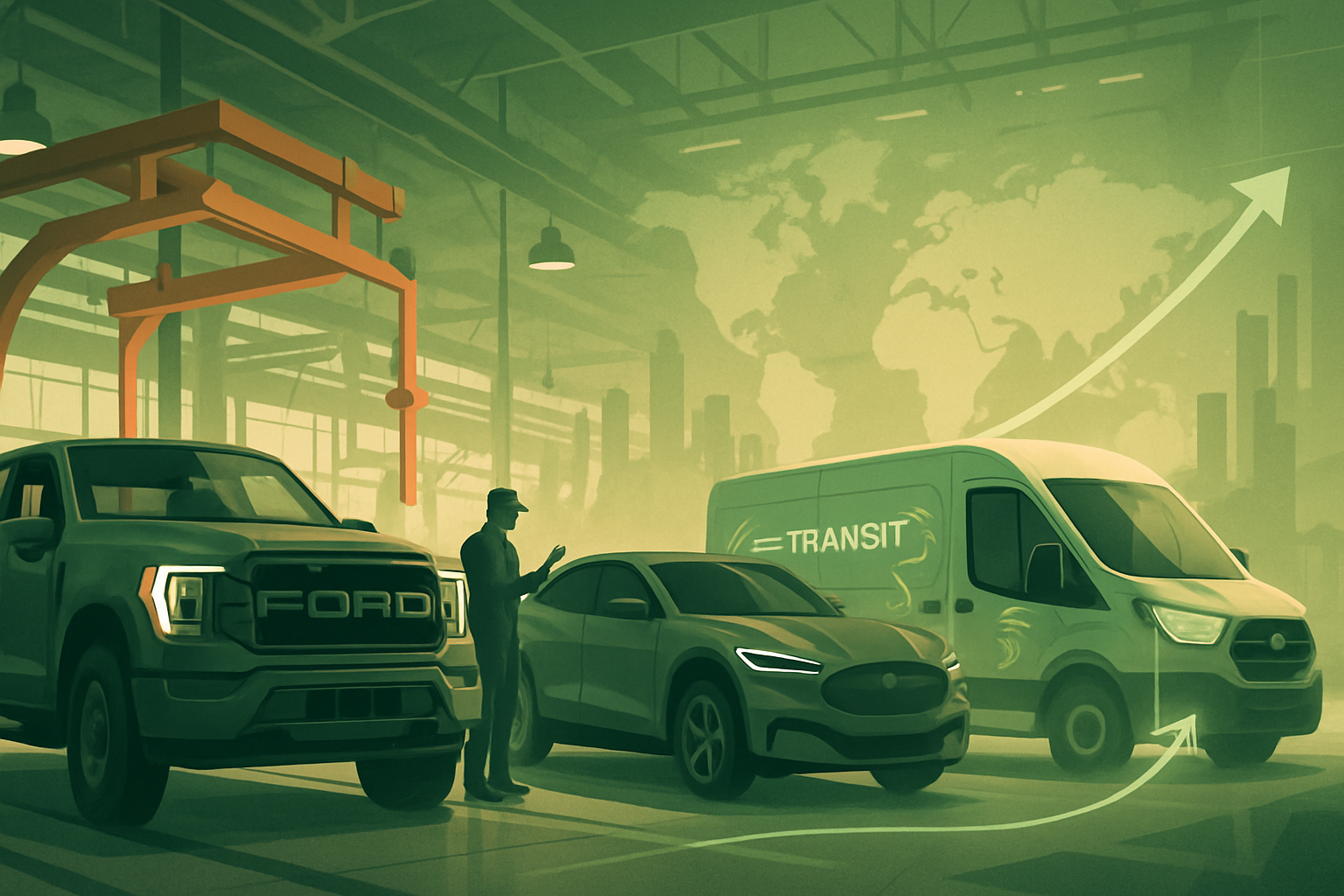
  • Ford Motor Company (NYSE: F): Navigating the Road Ahead in a Transforming Auto Industry

    Ford Motor Company (NYSE: F): Navigating the Road Ahead in a Transforming Auto Industry

    As of October 4, 2025, Ford Motor Company (NYSE: F), the multinational automotive giant headquartered in Dearborn, Michigan, remains a pivotal player in the global automotive industry. Founded by Henry Ford on June 16, 1903, the company revolutionized manufacturing with the moving assembly line and has since diversified its offerings under the Ford and Lincoln brands. Today, Ford stands as the sixth-largest automaker globally by vehicle production in 2022 and the second-largest American-based automaker, behind General Motors.

    Ford is currently undergoing a significant strategic transformation, encapsulated in its "Ford+" plan. This initiative reorganizes its operations into three distinct units: Ford Blue (internal combustion engine vehicles), Ford Model e (electric vehicles), and Ford Pro (commercial vehicles and services). This restructuring aims to accelerate innovation, enhance customer experience, and optimize profitability across its diverse product lines.

    For investors, Ford presents a complex but compelling narrative. The company's stock often trades at a lower price-to-earnings (P/E) ratio compared to pure-play EV competitors, appealing to value investors, and offers an enticing dividend yield exceeding 6%. The robust and consistently profitable Ford Pro commercial segment is a major draw, providing a stable and expanding revenue stream. However, the substantial and ongoing losses in the Ford Model e division (projected up to $5.5 billion in 2025), coupled with a relatively high debt-to-equity ratio and a low net margin, present notable concerns. Analysts currently hold a mixed sentiment, with a consensus rating of "Reduce" or "Hold," suggesting potential downside from current stock prices. This article will delve into Ford's multifaceted operations, financial health, strategic direction, and market position to provide a comprehensive analysis for investors.

    2. Historical Background

    The story of Ford Motor Company is synonymous with the dawn of the automotive age and the advent of modern manufacturing. Henry Ford, a visionary born in 1863, harbored an early passion for mechanics, culminating in the completion of his first experimental car, the "Quadricycle," in 1896. After initial unsuccessful ventures, Ford, alongside coal dealer Alexander Y. Malcomson and other investors, officially incorporated the Ford Motor Company on June 16, 1903, in a converted factory in Detroit, Michigan.

    The company's early years saw a range of models, but it was the Model T, introduced in October 1908, that truly revolutionized transportation. Designed to be simple, sturdy, and, crucially, affordable, the Model T became known as "the car for the masses." To meet overwhelming demand, Henry Ford pioneered the moving assembly line on December 1, 1913, at the Highland Park factory. This innovation drastically cut production time from over 12 hours to just one hour and 33 minutes, a method that became globally known as "Fordism." By 1914, Ford was producing more cars than all other automakers combined, and the price of a Model T plummeted from $850 to less than $300 by 1925, making car ownership accessible to millions. In 1914, Ford also introduced the revolutionary $5-a-day wage for an eight-hour workday, doubling existing rates and boosting the purchasing power of its workers.

    Ford's global expansion began early with Ford of Canada in 1904 and its first overseas branch in Paris by 1908. The company further expanded its portfolio by acquiring the Lincoln Motor Company in 1922, entering the luxury market. After selling over 15 million units, Model T production ceased in 1927, making way for the Model A. In 1938, the Mercury brand was established to fill the gap between Ford and Lincoln.

    A pivotal transformation occurred in 1956 when Ford Motor Company went public, listing its common stock on the NYSE on March 7, 1956. This was the largest IPO in American history at the time, driven by the need to diversify the Ford Foundation's portfolio. Despite public ownership, the Ford family retained significant control through special Class B shares, holding 40% of the voting rights, a structure that persists today.

    Under Henry Ford II, the company modernized and introduced iconic models like the Thunderbird (1954) and the Mustang (1964). Ford diversified through acquisitions like Jaguar (1989), Land Rover (2000), and Volvo (1999). However, the 2008-2010 automotive crisis led to a major restructuring under CEO Alan Mulally's "One Ford Plan." This involved divesting luxury brands and refocusing on core Ford and Lincoln brands, emphasizing product development and efficiency.

    More recently, Ford has made a significant strategic shift towards electrification and sustainable mobility. In 2018, the company announced it would largely cease passenger car production in North America, except for the Mustang, to focus on trucks, SUVs, and crossovers. Today, with substantial investments in EVs like the Mustang Mach-E and F-150 Lightning, Ford is committed to adapting to evolving consumer preferences and global market demands, including enhancing its digital sales platforms and integrating mobility services.

    3. Business Model

    As of October 4, 2025, Ford Motor Company operates with a dynamic business model, strategically segmented into three distinct, yet interconnected, operational units: Ford Blue, Model e, and Ford Pro. This structure, central to Ford's "Ford+" plan, aims to foster innovation, enhance customer engagement, and optimize profitability across its diverse product lines and services.

    Revenue Sources

    Ford's primary revenue streams are derived from:

    • Automotive Manufacturing and Sales: This encompasses the sale of a comprehensive range of vehicles, including traditional internal combustion engine (ICE) cars, trucks, SUVs, commercial vehicles, and an expanding portfolio of electric vehicles (EVs) and hybrids. The truck and commercial segments, particularly Ford Pro, are significant drivers of revenue growth.
    • Financial Services: Through Ford Motor Credit Company, Ford provides financing, leasing, and insurance solutions to a vast customer base, representing a growing and strategically important revenue stream. In Q1 2025, Ford Credit contributed $1.7 billion in earnings before taxes.
    • Software and Connected Services: Particularly within Ford Pro, the company is generating increasing revenue from paid software subscriptions and integrated digital services. Ford Pro Intelligence paid software subscriptions grew by approximately 30% year-over-year in Q3 2025, reaching about 815,000 active subscriptions.

    Primary Product Lines

    Ford's business is organized around three customer-centric segments:

    1. Ford Blue: This division focuses on strengthening Ford's iconic ICE and hybrid vehicle portfolio. It aims to drive growth and profitability from established models such as the F-Series, Ranger, Maverick, Bronco, Explorer, and Mustang, while also delivering new, connected driving experiences. Ford Blue is considered the "profit engine" of Ford, generating significant earnings to fund future innovations. In Q1 2025, Ford Blue generated $21 billion in revenue.

    2. Model e: Dedicated to inventing and scaling breakthrough electric vehicles and developing embedded software that defines always-on digital experiences for all customers. Model e leads innovation in EV platforms, batteries, e-motors, inverters, charging solutions, and recycling capabilities. This division is also responsible for creating a new, simplified shopping, buying, and ownership experience for EV customers. While Model e's revenue more than doubled year-over-year to $2.4 billion in Q2 2025, it reported a $1.3 billion loss in the same quarter, with projected annual deficits up to $5.5 billion for 2025, reflecting heavy investment in next-generation EVs and battery technology.

    3. Ford Pro: This global business unit serves commercial customers, including small businesses, fleet operators, and government agencies, by providing a "one-stop shop" for vehicles, software, charging, service, and financing solutions. Ford Pro offers a full lineup of commercial vehicles, encompassing ICE, hybrid, and electric models like the Ford E-Transit and Ford F-150 Lightning Pro. This division is a strong performer, generating $18.8 billion in revenue in Q2 2025, an 11% increase year-over-year, with an impressive EBIT margin of 12.3%.

    Services

    Beyond vehicle sales, Ford offers a comprehensive suite of services:

    • Connected Vehicle Services: Through platforms like FordPass, customers access features such as Phone-as-Key, remote lock/unlock, and remote start/stop. Paid add-on services like BlueCruise, offering hands-free highway driving, are also available, surpassing 7 million cumulative hours of use by Q3 2025.
    • Maintenance and Repair Services: Traditional dealership services, including oil changes, brake inspections, tire rotations, and warranty repairs.
    • Convenience Services: Ford Service Pick-Up and Delivery and Mobile Service bring technicians to the customer for routine maintenance, with the U.S. Mobile Service fleet growing to over 4,200 units in Q3 2025.
    • Charging Solutions: Robust charging solutions for EV owners, including hardware and software for public, depot, and home charging.
    • Fleet Management: Ford Pro offers digital services (Ford Pro Intelligence) to optimize fleets for efficiency and productivity.
    • Financing: Ford Motor Credit Company provides various financing options, including competitive lease programs for EVs.

    Customer Base

    Ford targets a broad customer base, including individual consumers (B2C) and businesses (B2B).

    • Individual Consumers (B2C): This segment includes practical, hardworking consumers who value reliability, performance, and affordability. Many are loyalists to the F-Series trucks, while others seek SUVs and crossovers for family and professional use. A growing segment of eco-conscious and tech-savvy buyers are drawn to Ford's hybrid and electric models.
    • Commercial Customers (B2B): Ford Pro targets small businesses, fleet operators, and government agencies requiring tailored vehicle solutions, fleet management tools, and comprehensive support services.

    4. Stock Performance Overview

    Ford Motor Company (NYSE: F) has experienced a varied trajectory in its stock performance across the 1-year, 5-year, and 10-year horizons leading up to October 4, 2025. These movements have been heavily influenced by Ford's strategic pivot towards electric vehicles (EVs), ongoing supply chain challenges, and broader macroeconomic factors. As of October 3, 2025, Ford's stock closed at $12.67.

    1-Year Performance (October 2024 – October 2025)

    Over the past 12 months, Ford's stock has shown positive returns, increasing by approximately 17.00% to 21.71%, with a year-to-date total return of 29.49%. The 52-week high was $12.67, and the 52-week low was $8.44.

    Notable Moves and Influencing Factors:

    • Positive Momentum (March-April 2025): The stock saw boosts following better-than-expected Q4 2024 and Q1 2025 financial results. Strong EV manufacturing initiatives, strategic partnerships, and potential reductions in EU tariffs on U.S. car imports contributed to market confidence. Robust electrified vehicle sales, particularly hybrids, despite a slight dip in traditional vehicle sales, also supported the stock.
    • Challenges and Downturns (Early to Mid-2025): Earlier in 2025, concerns over declining EV sales momentum and broader economic slowdown fears led to a downturn. Ford also faced an unprecedented number of safety recalls, totaling 88 by mid-year and 116 by October 2025, significantly impacting its safety reputation and incurring substantial warranty costs. Supply chain vulnerabilities, such as rare earth magnet shortages, caused temporary plant shutdowns. Muted 2025 outlook due to "Ford-specific" issues like plant launch costs and unprofitable EV sales also put pressure on shares.

    5-Year Performance (October 2020 – October 2025)

    Over this five-year period, Ford's stock demonstrated a significant increase of approximately 77.29% to 77.36%. Including dividends, the total return was around 133%, meaning a $1,000 investment would be worth approximately $2,330.04 today.

    Notable Moves and Influencing Factors:

    • Peak in Early 2022: Ford reached an all-time high closing price of $19.43 on January 14, 2022.
    • Volatile Annual Returns:
      • 2021: Strong year with a 137.50% total return, driven by renewed focus on EV investments.
      • 2022: Significant decline (-42.17% total return) due to market downturns and initial EV scaling challenges.
      • 2023: Recovery with a 15.81% total return.
      • 2024: Another decline with a -13.10% total return.
      • 2025 (YTD): Strong performance with a 29.49% total return.
    • Key Influencing Factors: This period was marked by Ford's aggressive $50 billion investment in EVs and autonomous driving. Persistent supply chain disruptions (semiconductor shortages), escalating warranty costs, and frequent safety recalls were recurring financial burdens. Global economic conditions, including inflation and interest rates, also played a role.

    10-Year Performance (October 2015 – October 2025)

    Over the decade, Ford Motor Company's stock delivered a total return of 52.63% (price total return adjusted for dividends and splits). However, as of January 2025, the stock had declined 35% over the past 10 years based on price appreciation only, significantly underperforming the S&P 500's 186% gain.

    Notable Moves and Influencing Factors:

    • Early Period Volatility: After peaking around $16.30 in early 2015, the stock experienced a general downward trend, settling between $8 and $13 in subsequent years.
    • Long-term Trends and Challenges: The dominant theme was the long-term shift towards electrification, requiring substantial capital investment and posing challenges in scaling profitable EV production. Geopolitical and economic headwinds, including U.S.-China tariffs and fluctuating global market conditions, impacted sales and profitability. Increasing stringent emissions and safety regulations necessitated significant R&D. Intense competition from both established and new EV players, along with rising warranty costs, also contributed to the mixed long-term performance.

    5. Financial Performance

    Ford Motor Company's latest financial performance, as of October 4, 2025, is primarily informed by its Second Quarter (Q2) 2025 earnings report, released on July 30, 2025. The Third Quarter (Q3) 2025 earnings are anticipated on October 23, 2025.

    Latest Earnings Report (Q2 2025 Highlights):
    Ford reported a record second-quarter revenue of $50.2 billion, a 5% increase year-over-year. Despite this growth, the company incurred a net loss of $36 million, mainly due to special charges, including a field service action, the cancellation of an EV program, and $800 million in adverse net tariff-related impacts. Adjusted Earnings Before Interest and Taxes (EBIT) stood at $2.1 billion, with an adjusted EBIT margin of 4.3%, a 1.5 percentage point decline from the prior year. Adjusted earnings per share (EPS) were $0.37, surpassing consensus estimates but down from $0.47 in Q2 2024.

    Revenue Growth:

    • Total Revenue (Q2 2025): $50.2 billion, up 5% year-over-year.
    • Automotive Revenue (Q2 2025): $46.94 billion, an increase from $44.81 billion in Q2 2024.
    • Ford Credit Revenue (Q2 2025): $3.24 billion, an 8.3% increase year-over-year.

    Profit Margins:

    • Net Income/Loss (Q2 2025): Net loss of $36 million, resulting in a net income margin of -0.1%.
    • Adjusted EBIT Margin (Q2 2025): 4.3%.

    Segment Performance (Q2 2025):
    Ford's financial results are segmented into Ford Blue, Model e, and Ford Pro.

    • Ford Blue: Reported $25.8 billion in revenue (3% decline year-over-year) and generated $661 million in EBIT, with a 2.6% EBIT margin.
    • Ford Model e: Revenue doubled year-over-year to $2.4 billion. However, it reported an EBIT loss of $1.3 billion, wider than Q2 2024, attributed to tariff-related costs, strategic investments, and new battery facility expenses. Its EBIT margin improved to -56.4% from -99.9% in Q2 2024.
    • Ford Pro: A strong performer, generating $18.8 billion in revenue (11% increase year-over-year) and $2.3 billion in EBIT with a robust 12.3% EBIT margin. Software and physical services contributed 17% of Ford Pro's EBIT.

    Debt Levels:
    As of Q2 2025:

    • Total debt (excluding Ford Credit): $20.3 billion.
    • Long-term debt for the company: Approximately $100 billion.
    • Total liabilities: $240.34 billion, with long-term debt increasing to $105.36 billion by end of 2024.
    • Debt-to-equity ratio: 2.24 as of September 27, 2025.
    • Net debt: $137.93 billion, with a net debt to EBITDA ratio of 10.43x by end of 2024.

    Cash Flow:

    • Cash Flow from Operations (Q2 2025): $6.3 billion.
    • Adjusted Free Cash Flow (Q2 2025): $2.8 billion.
    • Cash and Cash Equivalents (Q2 2025 end): $28.4 billion.
    • Liquidity (Q2 2025 end): $46.6 billion.
    • Full-Year 2025 Adjusted Free Cash Flow Guidance: $3.5 billion to $4.5 billion.

    Key Valuation Metrics (as of early October 2025):

    • Market Capitalization: Approximately $50.42 billion.
    • Price-to-Earnings (P/E) Ratio: 15.50.
    • Enterprise Value (EV): $182.38 billion.
    • EV/EBITDA (TTM ended June 2025): 15.29.
    • Diluted Earnings Per Share (TTM ended June 2025): $0.780.

    Ford has reinstated its full-year 2025 guidance, projecting adjusted EBIT of $6.5 billion to $7.5 billion, which includes an estimated $2 billion net tariff-related headwind. Capital expenditures are projected to be around $9 billion.

    6. Leadership and Management

    As of October 4, 2025, Ford Motor Company is undergoing a significant strategic transformation under the guidance of its President and CEO, Jim Farley. The company's leadership is focused on steering Ford through the digital and electric revolution in the automotive industry, supported by a robust Board of Directors and a commitment to strong corporate governance.

    Current CEO
    James D. "Jim" Farley, Jr. assumed the role of President and Chief Executive Officer on October 1, 2020. In March 2022, he also took on the additional responsibility of President of Ford Model e, one of the company's distinct automotive segments. Farley is the architect behind Ford's ambitious "Ford+" plan, a customer-centric strategy aimed at transforming the company. Under his leadership, Ford has committed over $50 billion to electric vehicle investments.

    Key Leadership Team Members
    Working alongside Jim Farley, Ford's executive leadership team includes:

    • William Clay Ford Jr. – Executive Chair
    • Kumar Galhotra – Chief Operating Officer (COO)
    • John Lawler – Vice Chair (strategy, partnerships, corporate development)
    • Sherry House – Chief Financial Officer (CFO)
    • Marin Gjaja – Chief Strategy Officer
    • Doug Field – Chief Advanced Product Development & Technology Officer
    • Ted Cannis – CEO, Ford Pro (commercial vehicle business)
    • Andrew Frick – President, Ford Blue and Ford Model e

    Board of Directors
    As of January 2025, Ford's Board of Directors comprises 15 voting members, including executive and independent directors. Key members include Executive Chairman William Clay Ford Jr., President and CEO Jim Farley, and Independent Lead Director John L. Thornton. The Board is elected annually by shareholders and oversees the company's long-term value creation, with the roles of Chair and CEO being separated. The Ford family maintains influence through its Class B shares, ensuring family values contribute to the company's direction.

    Strategic Vision (Ford+ Plan)
    The "Ford+" plan aims to position Ford as a leader in the automotive industry's digital and electric transformation. Its key pillars include:

    • Reorganization into Three Business Units: Ford Blue (gas and hybrid), Ford Model e (EVs and software), and Ford Pro (commercial vehicles and services).
    • Electrification and Connected Vehicles: Over $50 billion investment in EVs, targeting 600,000 EVs by end of 2024 and 2 million globally by end of 2026. This includes developing a Universal EV Platform for future affordable EVs and enhancing digital and connected services.
    • Customer-Centricity and Software: Emphasizing seamless user experiences, subscription services, and software innovation.
    • Operational Excellence: Focus on cost reductions, agility, and efficiency across global production.
    • Sustainability: Commitment to carbon neutrality by 2040 and sustainable materials.

    While committed to EVs, CEO Jim Farley recently noted that the U.S. EV market might be "way smaller than we thought" in the short term, especially if tax credits are eliminated, suggesting a pragmatic approach that continues to invest in hybrids.

    Company's Governance Reputation
    Ford maintains a strong reputation for corporate governance, continuously reviewing and updating practices to align with regulatory environments and shareholder interests. This includes:

    • Transparency and Accountability: Adherence to principles that ensure operations are in the best interest of stakeholders.
    • Board Structure: Clearly defined charters for its committees (Audit, Compensation, Sustainability, etc.), with all directors elected annually.
    • Ford Family Influence: The family's Class B shares provide control, blending traditional and modern governance.
    • Ethical Conduct: A Code of Conduct Handbook and Codes of Ethics for all personnel, supported by a "Speakup" program.
    • ESG Focus: Integration of environmental, social, and governance goals into its strategy, reflecting a commitment to sustainable practices and community engagement.

    7. Products, Services, and Innovations

    Ford Motor Company, as of October 4, 2025, is strategically advancing its product offerings, services, and innovation pipeline, with a pronounced emphasis on electrification, advanced technology, and comprehensive support for both retail and commercial customers. The company's commitment to research and development (R&D) and intellectual property is central to its competitive strategy.

    Current Product Offerings

    Ford's 2025 lineup is diverse, spanning traditional internal combustion engine (ICE) models, hybrids, plug-in hybrids (PHEVs), and a growing portfolio of all-electric vehicles.

    Key Models:

    • Trucks: The 2025 Ford F-150 continues its reign as America's best-selling truck, featuring updated styling, enhanced capabilities, and available hybrid and electric options. The F-Series Super Duty remains a robust offering in heavy-duty trucks. The compact Ford Maverick pickup continues to offer hybrid configurations. A new, smaller unibody pickup, potentially named "Rancherero," is anticipated for affordability.
    • SUVs: Ford's SUV lineup includes the 2025 Ford Escape, Explorer, Expedition, Bronco, and Edge. The Explorer and Escape received generational redesigns for 2025, boasting improved handling and updated infotainment.
    • Cars: The 2025 Ford Mustang continues its legacy with EcoBoost and V8 engine options. A four-door "Mach-4" Mustang sedan is being teased for a 2026 prototype launch. The 2025 Ford Taurus is expected to return to the U.S. market with various powertrain options, including a hybrid.
    • Vans: The Ford Transit remains a key commercial vehicle.

    EV Initiatives:
    Ford is aggressively pursuing electrification, aiming for 40% of global sales to be electric by 2030. Its 2025 EV lineup includes:

    • Ford F-150 Lightning: All-electric truck with improved range (up to 400 miles) and advanced bidirectional charging.
    • Ford Mustang Mach-E: Sporty electric SUV with an EPA-estimated range of up to 320 miles.
    • Ford E-Transit: Practical electric cargo van with up to 159 miles of range and Pro Power Onboard.
    • Ford Explorer EV: New, spacious three-row electric SUV with an estimated range of up to 350 miles.
    • Ford Capri EV: Introduced in 2025, this new subcompact crossover targets the affordable EV market.
    • Hybrid and Plug-in Hybrid Options: The F-150 Hybrid (PowerBoost system), Maverick Hybrid, and Escape Plug-In Hybrid offer strong fuel efficiency and electric range.

    Services

    Ford provides a range of services, with a significant focus on commercial customers through Ford Pro.

    • Ford Pro: Offers a comprehensive suite of vehicles, software, charging, financing, and service solutions for commercial clients. This includes advanced fleet management software (Ford Pro Intelligence) with Google Maps integration, real-time telematics, and vehicle health monitoring. Ford Pro has invested $2 billion in Elite Commercial Service Centers, aiming for 125 centers by 2027, and offers Mobile Service.
    • Ford Credit: The financing arm, offering competitive lease programs for EVs, including passing on federal tax credits to lessees.
    • FordPass App & Ford Pickup & Delivery: Enhancing customer convenience with remote access and maintenance services.

    Innovation Pipeline & R&D Investments

    Ford is heavily investing in future mobility:

    • BlueOval City (Tennessee) & BlueOval SK Battery Park (Kentucky): Massive EV and battery manufacturing campuses. While battery production for the new electric commercial van is slated for late 2025, next-gen F-150 EV production at BlueOval City has been pushed to 2028.
    • Affordable Electric Vehicle Platform: Targeted for launch in 2027, with an EV "skunkworks" project developing a clean-sheet software and electrical architecture.
    • R&D Investments: Ford reported $8 billion in R&D expenses for the latest twelve months ending June 30, 2025.
    • Sustainability Goals: Commitment to carbon neutrality by 2040 and expanding recycled materials use.

    Patents

    Ford holds a significant global patent portfolio of 94,600 patents (56,871 active), indicating innovation in:

    • Quality Control: Exterior quality evaluation system (published July 2025).
    • Advanced Vehicle Functionality: Autonomous vehicle configurable for passenger and cargo (granted April 2025).
    • EV Technology: Cooling systems for fuel cells/batteries, varnish applicators for electric motors.
    • User Experience: Display light compensation (granted April 2025).
    • Unique Features: Vehicle water filtering hub (published September 2025).

    Software Developments

    Ford is heavily investing in software:

    • Next-Generation SYNC: Evolving infotainment systems with larger touchscreens, wireless connectivity, cloud-based services, and advanced voice recognition, integrating Google's Android Automotive OS.
    • Over-the-Air (OTA) Updates: Critical for introducing new features, improving functionalities, and providing remote fixes.
    • Google Services Integration: Seamless integration of Google Maps and Google Assistant.
    • Ford Co-Pilot360 & BlueCruise: Expanding suite of advanced driver-assist technologies and Level 2 hands-free highway driving.
    • Common Software Architecture: Moving towards a converged software and electrical architecture across all powertrains.
    • Ford Pro Software: Robust fleet management solutions with telematics, vehicle health tracking, and charger health alerts.

    Competitive Edge

    Ford's competitive edge in October 2025 stems from:

    • Strong Electrification Push: A compelling lineup of EVs and a growing hybrid portfolio, coupled with access to America's largest public charging network (including Tesla Superchargers).
    • Dominance in Commercial & Truck Segments: Ford Pro offers a holistic ecosystem for commercial fleets, with specialized service centers.
    • Integrated Technology and Software: Commitment to next-gen SYNC, Google integration, OTA updates, and BlueCruise.
    • Manufacturing and Supply Chain Investments: BlueOval City and BlueOval SK Battery Parks aim to reduce costs and secure supply.
    • Brand Loyalty and Diversified Portfolio: Leveraging long-standing brand recognition and a diverse product lineup.
    • Strategic Financial Practices: Ford Credit's ability to offer competitive EV lease incentives.
    • Commitment to Quality: Ongoing focus on improving vehicle quality, evidenced by recent patent filings.

    8. Competitive Landscape

    Ford Motor Company operates within a highly dynamic and intensely competitive global automotive landscape as of October 4, 2025. It faces significant rivals across all its major segments: Internal Combustion Engine (ICE) vehicles, hybrids, and Electric Vehicles (EVs).

    Major Industry Rivals:

    • ICE Vehicles: Ford's primary competitors in the traditional ICE market include global automotive giants such as General Motors (GM), Toyota, Volkswagen, and Stellantis (brands like Ram, Jeep, and Chrysler). These companies offer diverse lineups that directly compete with Ford's profitable trucks, SUVs, and commercial vehicles. In the U.S., Ford's F-Series trucks maintain a dominant position, significantly outselling its nearest competitor.
    • Hybrid Vehicles: In the hybrid segment, Ford competes with established players like Toyota (e.g., Prius, RAV4 Hybrid) and Honda (e.g., CR-V Hybrid, Accord Hybrid), as well as General Motors. Ford differentiates itself by emphasizing performance and utility in its hybrids, particularly with models like the F-150 Hybrid and Maverick Hybrid, which offer substantial towing and payload capabilities. Ford's hybrid sales reached a Q3 record of 55,177 vehicles in 2025.
    • EV Vehicles: The EV market is exceptionally competitive. Tesla remains a dominant force, though its U.S. market share has declined from 70% to 43.4% in Q1 2025. Other key EV competitors include General Motors (Chevrolet, GMC, Cadillac), Hyundai, Rivian (especially in electric trucks and SUVs), and Volkswagen. Ford's Mustang Mach-E and F-150 Lightning directly compete with offerings from these brands. New entrants and Chinese manufacturers like BYD are also rapidly gaining market share globally.

    Market Share (as of Q3 2025, primarily U.S. data):

    • Overall U.S. Sales: Ford Motor Company's total U.S. sales in Q3 2025 increased by 8.2% year-over-year, reaching 545,522 vehicles, marking seven consecutive months of sales gains.
    • Global Market Share: As of August 2025 (YTD), Ford Group ranked 7th globally with a 4.3% share, showing gains in America (+7.6%) but losses in Asia (-9.7%). Toyota Group led with 12.4%, followed by Volkswagen Group (9.6%) and Hyundai-Kia (8.1%).
    • U.S. Automotive Market Share (Q2 2025): Ford accounted for 15.6% of vehicles on U.S. roads, ranking second behind General Motors (20.3%) and ahead of Toyota (15.2%).
    • Electrified Vehicles (Hybrids, PHEVs, BEVs): Ford achieved a record 85,789 electrified vehicle sales in Q3 2025, a 19.8% increase year-over-year, representing 15.7% of Ford's total Q3 sales.
      • EV Sales: Ford electric vehicles set a new quarterly sales record in Q3 2025 with 30,612 sales (+30.2%). The Mustang Mach-E had its best quarter ever (+50.7%), and the F-150 Lightning recorded 10,005 units (+39.7%), making it America's best-selling electric pickup.
      • Hybrid Sales: Hybrid sales hit a Q3 record at 55,177 vehicles. The F-150 Hybrid remained America's best-selling full-size hybrid pickup, and Maverick Hybrid sales climbed significantly.

    Competitive Strengths:

    • Strong Brand Recognition and Loyalty: Ford benefits from a long history and loyal customer base, particularly in the U.S. truck and SUV markets.
    • Diversified Product Lineup: A wide range of ICE, hybrid, and EV models, including popular F-Series trucks, SUVs, and commercial vans, caters to diverse customer needs.
    • Dominance in Trucks and Commercial Vehicles: The F-Series' consistent leadership and Ford Pro's strength in commercial vehicles provide a significant competitive advantage and profit driver.
    • Significant Investment in Electrification and R&D: Ford's active investment in EV technologies, new platforms, and hybrid expansion, along with R&D for efficiency and safety, positions it for future growth.
    • Strategic Adaptability: The company's willingness to adjust its EV strategy, focusing on hybrids and lower-cost EVs, demonstrates flexibility in a rapidly changing market.
    • Extensive Dealer Network: A vast global network of approximately 9,611 dealers provides broad distribution and customer service reach.
    • Performance and Utility in Hybrids: Ford differentiates its hybrids by emphasizing capability, towing capacity, and innovative features.

    Competitive Weaknesses:

    • High Production Costs and Quality Issues: Ford faces challenges with elevated production costs and has experienced a record number of recalls in 2025, impacting reputation and incurring substantial warranty expenses.
    • Slower EV Transition/Profitability Challenges: While gaining momentum, Ford has been perceived as slower in its EV transition compared to some pure-play competitors. The Model e division continues to incur significant losses, and achieving profitability remains a key challenge.
    • Dependence on U.S. and North American Markets: Over-reliance on these markets makes Ford vulnerable to regional economic downturns or shifts in consumer preferences.
    • Weak Foothold in Emerging Markets: Limited presence and struggles in some emerging markets like India.
    • Legacy Costs: High legacy pension and healthcare costs pose an ongoing financial burden.
    • Cybersecurity Risks: As connected vehicle technologies advance, the risk of cybersecurity breaches increases.

    In conclusion, Ford is a resilient and adaptable player, demonstrating strong performance in its traditional and growing electrified segments. However, it must continuously navigate challenges related to high production costs, intense competition across all segments, and the complex, evolving transition to electric vehicles.

    9. Industry and Market Trends

    As of October 4, 2025, Ford Motor Company and the broader automotive industry are navigating a period of profound transformation, shaped by evolving market trends, significant macroeconomic pressures, persistent supply chain challenges, and inherent cyclical effects.

    Automotive Industry and Market Trends

    The global push towards electric vehicles (EVs) remains a central theme, though its trajectory and profitability are undergoing recalibration. Ford's electrified vehicle sales (hybrids, plug-ins, all-electrics) reached 85,789 units in Q3 2025, a 19.8% year-over-year increase, representing 15.7% of its total sales. The Mustang Mach-E and F-150 Lightning continue to perform well. However, the EV market is experiencing a "recalibration," with a slowdown in investment and consumer demand in key regions. Ford CEO Jim Farley suggests U.S. EV sales could fall to 5% of the market if tax credits expire and emissions rules relax. In response, Ford is adjusting its EV strategy to focus on lower-cost vehicles and a new universal EV platform, while prioritizing commercial vehicles, pickup trucks, and SUVs, and realigning battery sourcing to reduce costs.

    Beyond electrification, Ford is heavily invested in autonomous driving technology, focusing on Level 3 systems through Latitude AI. Connected car technologies and digital services, such as Ford Pro Intelligence (815,000 active subscribers, up 30% year-over-year) and BlueCruise hands-free driving (exceeding 7 million cumulative hours), are significant growth areas.

    Ford's traditional strengths in trucks and SUVs continue to drive sales. The F-Series remains America's best-selling truck, with strong sales in Q3 2025. Models like the Expedition and Bronco also posted robust sales. Ford's overall U.S. sales increased by 8.2% year-over-year in Q3 2025, marking seven consecutive months of gains.

    Macro Drivers

    Several macroeconomic factors are impacting Ford:

    • Interest Rates and Inflation: Rising interest rates increase borrowing costs for Ford and impact consumer financing, potentially dampening vehicle demand. High inflation also increases Ford's production costs and reduces consumer purchasing power.
    • Tariffs and Trade Policy: The U.S. government's 25% tariff on foreign-made vehicles and components is a critical issue for Ford in 2025, potentially increasing production costs by an estimated $3,000 per new car. Ford anticipates a full-year net hit of about $1.5 billion in adjusted operating earnings due to tariffs. The company is mitigating this by reshoring production and diversifying suppliers.
    • Economic Growth and Consumer Spending: Global vehicle sales growth is forecasted to be weak (2.7% in 2025) due to economic pressures. Economic downturns and high unemployment negatively impact Ford's sales. However, Ford's inventory data suggests robust underlying demand.
    • Regulatory Changes: Evolving emissions policies and environmental regulations continue to push the industry towards electrification, requiring significant investment from Ford.

    Supply Chain Issues

    Supply chain disruptions remain a critical challenge:

    • Semiconductor Shortages: A potential shortage in mature nodes is anticipated in late 2025 or 2026, as investment shifts to advanced nodes. The overall shortage is expected to persist for three to five years.
    • Raw Material Availability and Costs: Volatility in raw material prices and availability, particularly for rare earth magnets, has impacted Ford's production, leading to plant shutdowns (e.g., Chicago Assembly plant for 2025 Ford Explorer). Rising energy costs also increase manufacturing expenses.
    • Logistics and Diversification: Geopolitical tensions and natural disasters exacerbate problems. Ford is diversifying its supplier network to reduce reliance on single regions.
    • Labor Shortages: A persistent shortage of skilled labor in the automotive supply chain hinders production.

    Cyclical Effects

    The automotive industry is inherently cyclical:

    • Industry Position: As of Q3 2025, Ford is performing strongly with seven consecutive months of U.S. sales gains.
    • Economic Sensitivity: Ford's financial health is sensitive to economic downturns. Analysts note a significant decline in profitability of Ford's conventional car segment in 2025 due to inventory stocking.
    • EV Market Influence: The expected slowdown in EV adoption and expiration of federal tax credits could negatively influence the market in the short term.
    • Inventory Levels: New car inventory is gradually normalizing, which can stabilize prices, though supply chain pressures might still delay certain models.

    Overall, Ford is demonstrating resilience through growing sales in its traditional and electrified segments. However, it faces significant headwinds from macroeconomic pressures, tariffs, persistent supply chain vulnerabilities, and the uncertain trajectory of the EV market. Strategic adjustments in its EV portfolio and supply chain management are crucial for navigating these complex trends.

    10. Risks and Challenges

    Ford Motor Company, as of October 4, 2025, is confronting a multifaceted array of operational, regulatory, and market risks, compounded by ongoing controversies. The company's ambitious pivot towards electric vehicles (EVs) is a central theme, presenting both opportunities and significant financial and operational hurdles.

    Operational Risks

    Supply Chain Issues:
    Ford continues to grapple with supply chain disruptions. Outdated IT systems among some suppliers contribute to miscommunications and increased costs. The highly globalized supply chain for vehicles like the F-150 makes it vulnerable to external shocks, with only a third of its components manufactured in the U.S. or Canada. A critical shortage of rare earth magnets, for instance, led to a seven-day shutdown of the Chicago Assembly plant in June 2025, impacting 2025 Ford Explorer production. Ford is actively working to streamline supply chains and leverage economies of scale.

    Recalls and Quality Control:
    Ford is experiencing a significant "quality crisis," with a record number of recalls in 2025. By mid-September 2025, Ford had issued 88 safety recalls, surpassing its total for all of 2024, and reaching 116 recalls by October 2025, making it the highest number of recalls in a single year by a major automaker. These recalls cover a wide range of issues, from electronic and mechanical defects to software-related problems. For example, a recall of 355,656 F-Series trucks was due to a "memory protection fault" in the instrument cluster software. These quality issues are costly, estimated at upwards of $4.8 billion annually, or approximately $6.5 billion CAD. Ford's CEO, Jim Farley, has acknowledged that fixing quality is a top priority but will take several years. The company has implemented measures such as delaying model launches for extra quality checks, hiring specialists, and benchmarking Toyota's processes.

    Regulatory Risks

    Tariffs and Trade Policies:
    The potential introduction of 25% tariffs on imports from Mexico and Canada poses a significant threat to Ford's supply chain and profitability, as these regions are crucial for North American production. These tariffs could add approximately $400 to the production cost of each F-150. Ford anticipates a net negative impact of about $1.5 billion on its adjusted EBIT in 2025 due to tariffs, even after mitigation efforts. Persisting tariff impacts would necessitate "major strategy shifts." Broader U.S. tariffs on imports and China's export restrictions on critical minerals further complicate sourcing and increase costs.

    Emissions and Safety Regulations:
    Government regulations related to environmental improvements and public safety are a constant threat. Ford must continuously comply with new regulations, which often require significant investment in new technologies. Shifting emissions policies also create long-term planning challenges.

    Labor Relations:
    Strong labor unions represent a potential risk for Ford, as labor negotiations and strikes can significantly disrupt operations and increase costs.

    Controversies

    Shareholder Investigation:
    An ongoing shareholder investigation poses potential legal and financial risks for Ford, demanding transparent management.

    Legal Issues from Recalls:
    The current surge in recalls could lead to further civil lawsuits and fines, as Ford has previously been penalized for not recalling vehicles swiftly enough.

    Market Risks

    EV Profitability Challenges:
    Ford's "Model e" electric vehicle division is a major drag on the company's overall financial performance, with significant and anticipated ongoing losses (projected $5-5.5 billion in 2025). These losses are attributed to high development and manufacturing costs, aggressive pricing strategies in the EV market, and expensive battery components. Ford's "Gen 1" EVs are not yet profitable. While Ford is adjusting its EV strategy to focus on cost-cutting and lower-cost vehicles, achieving breakeven by 2026 is viewed as increasingly optimistic by some.

    Competition:
    Ford faces fierce competition from both traditional automakers (GM, Toyota) and new EV players (Tesla, Rivian, Chinese manufacturers). This intense competition contributes to pricing pressures and challenges Ford's ability to maintain its innovative position.

    Economic Slowdown and Interest Rates:
    Sluggish consumer sentiment and economic slowdowns pose a risk to Ford's sales and market share. Rising interest rates make car loans more expensive. While auto loan rates have seen some decline, a significant drop needed to spur the market is unlikely. Ford has offered aggressive financing deals, but critics warn that offering lower rates to subprime borrowers could lead to higher default risks.

    Declining EV Demand (Post-Incentive):
    Ford CEO Jim Farley predicts a significant decline in demand for fully electric vehicles in the U.S. due to the cessation of federal incentives, potentially halving the EV sector's market share. This creates uncertainty for Ford's factories and battery plants built for higher demand. In response, Ford is pivoting its strategy towards hybrid models, which are currently outperforming EVs in profitability.

    Inventory Management:
    Ford faced high inventory levels of 2024 model year vehicles in early 2025, leading to 100 to 130 days of inventory by mid-2025. This overcorrection in production necessitates incentives and discounts to clear older inventory.

    In conclusion, Ford is at a critical juncture, balancing its EV transition with persistent quality issues, complex supply chain vulnerabilities, and a highly competitive market. The profitability of its EV segment remains a significant concern, while the high frequency and cost of recalls continue to strain its financial health and brand reputation. Regulatory changes, particularly tariffs and the winding down of EV incentives, further complicate its strategic planning and market outlook.

    11. Opportunities and Catalysts

    Ford Motor Company is actively pursuing growth and managing challenges through a dynamic strategy as of October 4, 2025, characterized by adjustments in its electric vehicle (EV) approach, significant growth in its commercial division (Ford Pro), and comprehensive cost efficiency initiatives.

    Growth Levers

    Ford's growth strategy for late 2024 and 2025 is diversified, leveraging its strong traditional and hybrid vehicle segments while refining its EV portfolio. The company achieved a record global revenue of $185 billion in 2024, maintaining four consecutive years of growth, primarily fueled by the robust performance of its F-Series and Ranger models.

    Key Growth Drivers:

    • Hybrid Vehicles: Ford is heavily investing in and expanding its hybrid lineup, viewing these models as a crucial transition technology. Hybrid sales saw a 40% surge in 2024, totaling 187,426 units, with the F-150 Hybrid and Maverick Hybrid commanding a 76% share of the hybrid truck market. This momentum is expected to continue through 2025.
    • Trucks and SUVs: The F-Series continues to be a cornerstone of Ford's sales, with 207,732 units sold in Q3 2025, outpacing its closest competitor by an estimated 170,000 trucks year-to-date. The Maverick also set a Q3 record with 34,848 sales, attracting a significant number of new Ford buyers. SUVs such as the Expedition and Bronco also experienced substantial sales increases in Q3 2025.
    • Commercial Vehicles (Ford Pro): Ford Pro remains a powerful growth engine, consistently delivering strong EBIT and expanding its software and services offerings. Ford holds the leading position in commercial vehicles, with its Class 1-7 truck and van market share reaching 43% by July 2025.
    • Software and Services: Ford is actively developing recurring revenue streams through advanced software and services. Ford Pro Intelligence software subscriptions grew by approximately 30% year-over-year, reaching 815,000 active subscribers in Q3 2025. The BlueCruise hands-free driving system has accumulated over 7 million hours of use.

    New Markets and M&A Potential:
    Ford maintains a global presence across various markets. While specific major new geographic market expansions were not extensively detailed in recent reports, Ford is focusing on enhancing its position in China's EV market despite intense competition from local manufacturers. To broaden customer accessibility, Ford is offering lower financing rates on its F-150 pickups. Regarding M&A, Ford has completed 11 acquisitions to date, with its most recent being AMP, an energy and battery management services provider, in November 2023. As of September 2025, no new acquisitions have been reported for the current calendar year.

    EV Strategy Adjustments

    Ford is making significant adjustments to its EV strategy to prioritize profitability and capital efficiency, responding to evolving market dynamics and the expiration of federal tax credits.

    Key Strategic Shifts:

    • Resource Reallocation: The company is reallocating resources to bolster its gasoline and hybrid vehicle production, scaling back pure EV manufacturing, and delaying some new EV model introductions. The proportion of annual capital expenditures dedicated to pure EVs is projected to decrease from about 40% to 30%.
    • Profitability Focus: Ford's Model e division (EV business) reported substantial losses of $5.1 billion in 2024 and anticipates losses between $5 billion and $5.5 billion for 2025. The company's goal is to achieve breakeven for its EV division by 2026.
    • Battery Sourcing and Cost Reduction: Ford is optimizing its battery sourcing strategy to improve cost efficiency and maximize production capacity. This includes relocating some Mustang Mach-E battery production from Poland to Michigan in 2025 to qualify for Inflation Reduction Act (IRA) benefits. The BlueOval SK joint venture's Kentucky 1 plant is slated to begin manufacturing battery cells for the E-Transit and F-150 Lightning by mid-2025. Ford is also developing a new, affordable EV platform.
    • New EV Launches: Despite some delays, Ford plans to roll out an all-new commercial van in 2026, followed by two advanced electric pickup trucks in 2027. Additionally, a new family of electrified three-row SUVs featuring hybrid technologies is in development.

    Ford Pro

    Ford Pro continues to be a highly successful and profitable segment, serving as a significant growth engine for the company.

    • Strong Financial Performance: In Q2 2025, Ford Pro generated $2.3 billion in EBIT with a healthy margin of 12.3% on $18.8 billion in revenue. For 2024, Ford Pro's revenue increased by 15% to $67 billion.
    • Subscription Growth: Paid software subscriptions for Ford Pro demonstrated strong growth, increasing by 24% year-over-year to 757,000 in Q2 2025. Ford Pro Intelligence software subscriptions further rose by approximately 30% year-over-year, reaching 815,000 active subscribers in Q3 2025.
    • Strategic Partnerships: Ford Pro has formed a partnership with ServiceTitan to offer fleet management solutions.
    • Market Leadership: Ford maintains its leadership in the commercial vehicle sector, with its market share for Class 1-7 trucks and vans expanding to 43% through July 2025.

    Cost Efficiencies

    Ford is aggressively implementing a range of cost-cutting measures and streamlining operations to enhance efficiency and bolster overall performance.

    • Targeted Cost Reductions: The company anticipates $1 billion in net cost reductions for 2025, primarily stemming from warranty and material expense savings.
    • Workforce Optimization: In February 2025, Ford announced a reduction in stock bonuses for approximately half of its middle managers, an initiative projected to save the company around $1 billion in expenses for 2025. This move is part of CEO Jim Farley's strategy to reduce costs and cultivate a high-performance culture, linking management bonuses to quality metrics.
    • Supply Chain Resilience: Ford is actively working to mitigate the impact of supply chain disruptions by diversifying its supplier base and investing in technologies to improve visibility.
    • Manufacturing Adjustments: To counteract the effects of tariffs, Ford is implementing manufacturing adjustments, targeted cost initiatives, and consistent pricing strategies. The company has invested $50 billion in U.S. production since 2020.
    • Quality Improvement Initiatives: Despite ongoing challenges with high warranty expenses, Ford is prioritizing quality enhancements, aiming for a greater than 10% improvement in repairs per 10,000 vehicles.

    Near-Term Catalysts (as of 10/4/2025)

    Earnings:

    • Ford is expected to release its Q3 2025 earnings report between October 21st and October 27th, 2025. The consensus EPS forecast for Q3 2025 is projected to be between $0.35 and $0.38.
    • Ford's adjusted EBIT outlook for 2025 has been revised to a range of $6.5 billion to $7.5 billion, a reduction from earlier projections, primarily due to an anticipated $2 billion impact from net tariffs.

    Launches:

    • Late 2025: Ford is scheduled to begin shipping the Explorer Tremor and F-150 Lobo in the fourth quarter of 2025.
    • Early 2026 Models (already arriving): Select dealerships have already announced the early arrival of 2026 Ford models, including updated versions of the Ford Escape, Transit, Flex, F-250, and F-350.
    • Future 2026 Models: Ford CEO Jim Farley has announced several new 2026 models, including a Mustang Raptor, a subcompact pickup truck named Rancherero, and the reintroduction of the Taurus sedan to the North American market.

    Partnerships:

    • Workforce Development: Ford and Ford Philanthropy have announced new investments exceeding $5 million for 2025-2026 in workforce development, aiming to benefit over 100,000 students and educators.
    • EV Charging Infrastructure: Ford is expanding its EV charging network, with more than 320 dealership DC fast chargers now accessible to all EV drivers. Ford is also collaborating with General Motors on dealer programs to help EVs qualify for tax credits.
    • Technology Collaborations: Ford continues its strategic collaborations with technology companies like Google for connected vehicle platforms.

    12. Investor Sentiment and Analyst Coverage

    As of October 4, 2025, Ford Motor Company (NYSE: F) is experiencing a divergence in investor sentiment, with Wall Street analysts generally maintaining a cautious stance while options trading and retail investor chatter signal a more bullish outlook. Despite recent stock price increases, analysts' average price targets suggest a potential downside.

    Wall Street Analyst Ratings and Price Targets

    Wall Street analysts currently hold a consensus rating of "Reduce" or "Hold" on Ford (F) stock. Across approximately seventeen research firms, the breakdown typically shows:

    • Sell ratings: 3 analysts
    • Hold ratings: 11-12 analysts
    • Buy ratings: 2-4 analysts

    The average twelve-month price objective among brokers ranges from approximately $10.57 to $11.00. This average target implies a potential downside of 10.0% to 15.94% from Ford's current trading price, which was around $12.22-$12.28 in early October.

    Recent individual analyst updates reflect this mixed perspective:

    • Wells Fargo maintained "Underweight" but raised target from $8.00 to $10.00 (Oct 3, 2025).
    • Goldman Sachs maintained "Neutral" and increased target from $11.00 to $12.00 (Sep 29, 2025).
    • Jefferies Financial Group maintained "Underperform" (Sell), raising target from $8.00 to $9.00 (Aug 11, 2025).
    • J.P. Morgan maintained "Overweight" (Buy), boosting target from $12.00 to $13.00 (Jul 21, 2025).

    The highest observed price target is $16.00, while the lowest is $7.00.

    Hedge Fund Activities and Institutional Investor Sentiment

    Institutional investors and hedge funds collectively own a significant portion of Ford's stock, approximately 58.74% to 61.62%. Recent activities indicate active interest, though with mixed signals:

    • In Q3 2025, several financial firms made new investments in Ford stock. Churchill Management Corp, for instance, acquired a $10.3 million stake in Q2 2025.
    • In Q1 2025, there was substantial hedge fund activity with 756 institutional investors adding shares and 786 decreasing their positions. Notable increases included Vanguard Group Inc., Pacer Advisors, Inc., and Blackrock, Inc.
    • While institutional ownership is strong, Ford's valuation metrics, such as a P/E ratio near its 2-year high and a P/S ratio suggesting potential overvaluation, lead some to a "Hold" position. The Altman Z-Score also places Ford in a "distress zone," suggesting potential financial instability.

    Retail Investor Chatter and Sentiment

    Retail investor sentiment, particularly in options trading, appears notably more bullish compared to the cautious stance of many Wall Street analysts.

    • There has been a "dramatic surge" in call options volume, a direct indicator of bullish bets, with a recent jump of 154% above the daily average. This suggests a segment of the market is positioning for a significant near-term rally.
    • On September 26, 2025, Ford saw a significant increase in options trading, with call volume dominating over put volume, leading to a low put/call ratio and highlighting stronger demand for call options.
    • On platforms like Stocktwits, sentiment remained "bullish" with a surge in message volume following a stronger-than-expected Q4 2024 report. Many retail investors "cheered the earnings beat," hoping the stock would climb past $10.
    • Overall, technical indicators and short-selling analysis also present a positive outlook from some retail-focused analyses, categorizing Ford as a "Strong Buy candidate" based on technical signals and decreasing short-sell activity.

    In summary, while professional analysts exhibit caution with a "Reduce" or "Hold" consensus and average price targets suggesting a slight downside, institutional investors show significant ownership and some recent buying, and retail investors, particularly in the options market, are displaying a notably bullish sentiment for Ford Motor Company as of October 4, 2025.

    13. Regulatory, Policy, and Geopolitical Factors

    Ford Motor Company is operating within a complex and rapidly shifting landscape of regulatory changes, government policies, and significant geopolitical dynamics as of October 4, 2025. These factors profoundly influence the company's electric vehicle (EV) strategy, supply chains, and international trade operations, particularly regarding tariffs and global trade policies.

    Regulatory Environment and Policy Changes

    Electric Vehicle (EV) Regulations and Incentives:

    • United States:
      • Federal EV Tax Credit (Section 30D): The popular $7,500 federal EV tax credit was officially set to expire on September 30, 2025. However, Ford, along with General Motors, has implemented workarounds through leasing programs. These programs allow their financing units to acquire eligible EVs before the deadline and then lease them to customers, effectively extending the tax credit's benefit through at least December 31, 2025.
      • New Tax Deduction: A new policy, effective October 1, 2025, introduces an annual tax deduction of up to $10,000 for auto loan interest on financed, U.S.-assembled electric vehicles.
      • Inflation Reduction Act (IRA) Sourcing Requirements: The IRA continues to tighten eligibility for EV tax credits based on critical mineral and battery component sourcing. For 2025, 60% of the value of critical minerals in an EV battery must be extracted or processed in the U.S. or a free trade agreement country, or be recycled in North America, to qualify for the full credit. Crucially, starting in 2025, eligible clean vehicles cannot contain any critical minerals that were extracted, processed, or recycled by a "foreign entity of concern" (FEOC). This poses a significant challenge given China's dominance in midstream processing of these minerals. Currently, only select Ford F-150 Lightning trims (Flash, Lariat, and XLT) are eligible for the $7,500 federal tax credit, provided they meet MSRP and income thresholds. Other Ford EV models like the Mustang Mach-E and Escape PHEV are largely ineligible due to battery sourcing laws.
      • Market Impact: Ford's CEO, Jim Farley, has expressed concerns about the impact of these changes, predicting that U.S. EV sales could potentially fall by half after the expiration of the current federal tax credit, particularly for higher-priced models, even with EPA orders to roll back some greenhouse gas emissions targets.
    • European Union:
      • CO2 Emission Standards: From January 1, 2025, stricter CO2 emission performance standards take effect. New cars and vans registered in the EU must emit 15% less CO2 on average compared to 2021 targets, equating to 93.6 g CO2/km for cars and 153.9 g CO2/km for vans.
      • Compliance Flexibility: The European Commission introduced a temporary flexibility measure in April 2025, allowing manufacturers to meet CO2 targets for 2025-2027 based on a three-year average, rather than annually. This provides some leeway for compliance, with financial penalties for non-adherence.
      • Incentives for ZLEVs: To encourage the transition, manufacturers receive emission credits if zero- and low-emission vehicles (ZLEVs) constitute more than 25% of their total sales.
      • Euro 7 Emissions Standard: The new Euro 7 emissions regulation is scheduled to come into force in 2025, replacing the existing Euro 6 standards.

    Tariffs and International Trade Policies

    • U.S. Tariffs:
      • Automotive Tariffs: As of May 2025, a 25% tariff on imported cars and auto parts not manufactured in the U.S. remains fully enforced, in addition to a standard 2.5% base tariff for modern vehicles. This policy, enacted under Section 232 of the Trade Expansion Act by President Trump, aims to bolster domestic manufacturing.
      • Broader Import Tariffs: A universal 10% tariff on almost all U.S. imports took effect on April 5, 2025. Following a retaliatory spiral, U.S. tariffs on many Chinese goods escalated to 145%, with China imposing duties as high as 125% on American imports by April 2025.
      • Steel, Aluminum, and Copper Tariffs: Tariffs on these materials were raised to 50%.
      • Impact on Ford: Ford anticipates a net negative impact of approximately $1.5 billion on its adjusted earnings before interest and taxes (EBIT) in 2025 due to these tariffs, even after implementing strategic measures like using "bonded transportation" and recalibrating import strategies to offset $1 billion. The company ceased U.S. exports to China to manage these logistics. Ford, like other major U.S. automakers, has largely absorbed tariff costs on imported steel, aluminum, and auto parts to maintain production and sales volumes, impacting profitability.
      • North American Trade: In January 2025, President Trump announced broad tariffs on Canada and Mexico, which threaten the highly integrated North American auto supply chain. Ford, General Motors, and Stellantis have lobbied for exemptions, warning that these tariffs could harm American companies.
    • China's Export Restrictions: China has imposed and expanded export restrictions on critical minerals and high-tech materials crucial for EV components, including rare earth metals (samarium, gadolinium, terbium, dysprosium, lutetium, scandium, yttrium), permanent magnets, gallium, germanium, antimony, and graphite. These restrictions create supply chain bottlenecks, increase material costs, and could delay EV production globally.

    Geopolitical Risks and Opportunities

    • US-China Rivalry and EV Supply Chains: The geopolitical rivalry between the U.S. and China has intensified, directly impacting the EV industry's supply chains. U.S. regulations now deny EV tax credits for vehicles containing critical minerals processed or recycled by Chinese-controlled entities starting in 2025. This forces U.S. automakers like Ford to re-evaluate their supply chains and reduce dependence on China, which dominates midstream processing of these critical materials. Ford's licensing models with Chinese battery giants like CATL will require strict legal and operational separation to comply.
    • Middle East Conflict: An escalating conflict involving Iran, Israel, and the United States as of June 2025 has led to significant disruptions in global energy markets. Oil prices have surged, raising concerns about increased gasoline costs and higher raw material prices for vehicle manufacturing, which could lead to higher production costs and potential supply chain bottlenecks for Ford.
    • Shift to Regional Manufacturing Hubs:
      • Mexico: Mexico presents a significant opportunity as a growing hub for automotive production, particularly for electric and hybrid models. Companies like Ford are increasing production in Mexican plants, leveraging a skilled labor force, competitive logistics, and a developing supplier ecosystem. This helps embed Mexico into global electrification efforts and can serve as a strategy to navigate tariffs.
      • Southeast Asia: Countries like Thailand and Malaysia are emerging as anchors for EV supply chains, attracting investment in battery and EV manufacturing, which could provide alternative sourcing for non-Chinese components.
    • UK Regulatory Impact on Exports: A specific policy change in the UK in April 2025, reclassifying double-cab pickups (like Ford's Ranger) from commercial vans to passenger cars, has sharply increased ownership costs. This led to a significant drop in demand for the South African-assembled Ranger exports to Europe, resulting in Ford cutting nearly 500 jobs in South Africa. This highlights how localized policy changes can have global reverberations for Ford's export markets.
    • Ford's Strategic Response: Ford is making strategic adjustments to adapt to these geopolitical challenges. This includes investments in next-generation EV platforms to achieve cost parity with Chinese rivals by 2027 and expanding its manufacturing footprint in China to compete in that market, which is projected to account for 80% of global EV sales by 2030. Simultaneously, Ford announced a $2 billion shift from planned all-electric SUVs to hybrid models in August 2024, reflecting a pragmatic approach to balancing consumer preferences with the economic realities of intense global EV competition. The company is also focused on boosting domestic sourcing for EVs, including battery manufacturing, to mitigate tariff impacts and build more resilient supply chains. The overall unpredictability driven by geopolitical tensions and fluctuating consumer incentives is pushing the industry, including Ford, towards more flexible production systems that can adapt rapidly to market shifts and policy changes.

    14. Outlook and Scenarios

    Ford Motor Company is navigating a transformative period, balancing its legacy internal combustion engine (ICE) business with a significant pivot towards electrification and software-driven services. As of October 4, 2025, the company's outlook presents a mix of strategic opportunities and persistent challenges, reflected in both optimistic (bull) and pessimistic (bear) scenarios for its future.

    Short-Term Outlook (2025-2026)

    Financial Projections:
    For the full year 2025, Ford expects an adjusted EBIT between $6.5 billion and $7.5 billion, with adjusted free cash flow projected between $3.5 billion and $4.5 billion. Capital expenditures are anticipated to be around $9 billion. This guidance was updated during the Q2 2025 earnings call, reflecting underlying strong first-half performance and continued cost improvement.

    In Q2 2025, Ford reported a record revenue of $50 billion and an adjusted EBIT of $2.1 billion. Q3 2025 U.S. sales surged by 8.2% year-over-year, reaching 545,522 vehicles, marking seven consecutive months of sales growth. The company also reported Q3 2025 record electrified vehicle sales (hybrids, plug-ins, and all-electrics) of 85,789 units, a 19.8% increase year-over-year, accounting for 15.7% of total sales.

    Market Share:
    Ford maintained strong market positions in key segments. The F-Series remains a primary profit engine, contributing 58% of earnings from 43% of revenue. Expedition sales saw a significant boost of 47.4% in Q3 2025, raising its segment share to 23% between April and August. Ford Pro Intelligence software subscriptions grew approximately 30% year-over-year, reaching 815,000 active subscribers, demonstrating strength in its commercial vehicle segment. Ford holds nearly 13% market share in the U.S., about 10% in the UK, and under 2% in China.

    EV Profitability:
    Ford's Model e (EV) division continues to face profitability challenges. The segment reported an EBIT loss of $1.2 billion in Q3 2025, narrowing slightly from a $1.3 billion loss in Q2 2025. For the full year 2025, Ford expects Model e to incur losses between $5 billion and $5.5 billion, consistent with previous guidance. The company projects achieving EV profitability by 2026, targeting an 8% profit margin on EVs, driven by increasing sales, reduced battery costs, and improved research and design. However, some analysts view this timeline as increasingly optimistic given current market conditions. EV products currently yield 17% lower margins than traditional vehicles.

    Long-Term Projections (2027-2030 and beyond)

    Financial Projections:
    Ford aims for a revenue mix by 2026-2030 of 40% full EV, 30% hybrid, and 30% efficient ICE vehicles, all built on a unified digital backbone. Subscription-based advanced driver-assistance systems (ADAS), fleet analytics, and energy management services are projected to generate over $20 billion in annual high-margin revenue by this period. Some analysts forecast a 56% upside potential for Ford's stock by 2030. Annual revenue could reach between $180 billion and $220 billion by 2030, representing 3-5% annual growth.

    Market Share:
    Ford is targeting 12-15% of the global EV market by 2030. Its dominant 43% commercial vehicle market share in North America is expected to be maintained.

    EV Profitability:
    The long-term profitability of the Model e division hinges on scaling production, reducing battery costs, and leveraging new platforms. Ford expects its next-generation EVs to be profitable, affordable, and high-volume. The company is prioritizing small and medium-sized trucks and utility vehicles in its EV strategy, which require "much lower-cost batteries." However, larger retail electric utility vehicles are seen as having "unresolvable economics" due to high battery costs and customer resistance to paying a premium.

    Bull Case Scenarios

    The bull case for Ford is predicated on several key factors:

    • Strong Performance in Legacy and Hybrid Segments: Robust demand for profitable ICE vehicles, especially trucks (F-Series) and SUVs (Expedition, Bronco), provides a crucial cash flow buffer to fund EV transition. Ford's hybrid vehicle sales are growing rapidly (record 55,177 units in Q3 2025), offering a profitable hedge against volatile battery electric vehicle (BEV) demand and outperforming EVs in profitability.
    • Successful EV Re-platforming and Affordability: The new Universal EV Platform, a $5 billion investment, aims to significantly reduce parts by 20% and assembly time by 15%, leading to more cost-competitive EVs. The planned launch of a $30,000 midsize electric pickup in 2027 is a critical step towards high-volume, affordable EVs, potentially expanding market reach.
    • Ford Pro Growth and Software Services: The Ford Pro commercial division continues to show strong earnings and growth in high-margin software subscriptions, transforming commercial vehicles into a platform for predictable service revenue. This segment provides a consistent revenue stream and strengthens the overall financial health of the company.
    • Narrowing EV Losses and Path to Profitability: Despite current losses, the Model e segment has shown some signs of narrowing losses (Q1 2025). Achieving the targeted EV profitability by 2026 would significantly de-risk the transition and boost investor confidence.
    • Strategic Partnerships and Supply Chain: Partnerships for LFP batteries with SK On and CATL aim to secure domestic supply chains and reduce costs, positioning Ford to compete in the affordable EV market.

    Bear Case Scenarios

    Conversely, the bear case highlights significant risks and challenges:

    • Persistent EV Losses and Delayed Profitability: The Model e division is still incurring substantial losses (projected $5-5.5 billion for 2025), and the timeline for EV profitability by 2026 is increasingly viewed as optimistic by some analysts. Continued heavy investment in EVs without commensurate returns could strain overall finances.
    • Volatile EV Demand and Policy Shifts: CEO Jim Farley has indicated that U.S. EV demand could decline sharply, potentially halving from 10% to 5% of the domestic market, due to the expiration of federal EV tax credits and other policy changes. This could lead to inventory issues and further pricing pressure.
    • Cost Pressures and Tariffs: Ford faces persistent cost pressures from tariffs, with an $800 million impact in Q2 2025 and an expected $3 billion hit by year-end. Global supply chain shifts and regulatory risks further exacerbate these cost headwinds.
    • Declining Profitability in Conventional Segment: While Ford Blue has been a cash cow, the conventional car segment experienced a significant decline in profitability in the first half of 2025, attributed to inventory stocking. This could reduce the financial buffer available for EV investments.
    • Financial Health Indicators: A high debt-to-equity ratio (3.56) and an Altman Z-Score of 1.01 (indicating a "distress zone") signal potential financial instability, raising concerns about leverage. Some analysts also project very low revenue growth (0.25% CAGR between 2024-2027) and consistently low operating margins (1.9% average over five years).
    • Quality and Recall Issues: Recent recalls affecting over 115,000 trucks (steering column defect) and 2020-2021 Expedition/Navigator SUVs (electrical short) could impact brand reputation and incur significant warranty costs.

    Strategic Pivots as of 10/4/2025

    Ford is actively implementing several strategic pivots to navigate the evolving automotive landscape:

    1. Rebalancing Electrification Strategy: Ford is broadening its electrification strategy to include a wider range of hybrid options, acknowledging cooling demand for pure EVs in some segments. CEO Jim Farley stated that "partial electrification, such as hybrids, are easier for customers to accept." This includes a substantial investment in hybrid advancements and new assembly techniques, targeting cost reductions of 20%.
    2. Affordable EV Focus: The company is aggressively pursuing an affordable, high-volume EV strategy. A $2 billion investment in Kentucky's Louisville Assembly Plant is dedicated to producing a 2027 midsize electric pickup truck with a targeted MSRP of around $30,000, built on a new "Universal EV Platform" designed for efficiency and scalability. This platform aims to reduce parts by 20% and assembly time by 15%.
    3. Commercial Vehicle Dominance (Ford Pro): Ford is strengthening its Ford Pro commercial segment, focusing on recurring revenue streams through software and services. Subscriptions for Ford Pro Intelligence grew by 30% year-over-year. The company will prioritize the introduction of a new digitally advanced commercial van in 2026.
    4. Cost Reduction and Manufacturing Efficiency: Ford is committed to closing competitive cost gaps through operational efficiencies and inventory management, targeting $1 billion in annual cost savings. This includes streamlining product offerings and optimizing production processes. The company is also realigning battery sourcing to be more efficient and contribute to lower overall costs in its EV portfolio.
    5. Global Market Expansion and Local Adaptation: Ford is establishing a new subsidiary in China to manage marketing, sales, and service, aiming to strengthen its presence in this critical market. In Europe, while facing challenges with EV uptake, Ford is also developing "multi-energy" models, including new ICE-powered SUVs and hybrid options, to cater to diverse customer preferences.
    6. Software and Services Integration: The "Ford+" plan emphasizes an interconnected hardware, software, and services ecosystem. This includes continued development of features like BlueCruise hands-free driving, which has surpassed 7 million hours of use, and expanding mobile service capabilities. The goal is to generate high-margin recurring revenue from these digital offerings.

    These strategic pivots collectively aim to balance current profitability from traditional and hybrid vehicles with future growth in cost-effective, high-volume EVs and value-added software services.

    15. Conclusion

    Ford Motor Company (NYSE: F) presents a complex but evolving picture for investors as of October 4, 2025. While the company demonstrates resilience in its traditional and electrified vehicle sales, significant challenges remain, particularly in achieving profitability within its electric vehicle (EV) segment. Investors are advised to balance the company's established strengths with ongoing risks and monitor key developments in the near and long term.

    Summary of Key Findings (as of 10/4/2025):

    Ford reported strong U.S. vehicle sales in the third quarter of 2025, with an overall increase of 8.2% year-over-year. Electrified vehicle sales, encompassing hybrids, plug-in hybrids, and battery electric vehicles (BEVs), saw a significant rise of 19.8%, accounting for 15.7% of total sales and outpacing some competitors. Truck and SUV sales also grew, with the popular F-Series up 7% and Mustang Mach-E sales increasing by over 50%.

    Financially, the first half of 2025 reportedly saw a significant decline in net income, dropping to $435 million from $3.16 billion in 2024. The company's Q3 2025 financial results are scheduled to be released on October 23, 2025.

    Ford's Model e (EV) division continues to incur substantial losses, losing over $5 billion in 2024 and on track for slightly less, but still significant, losses in 2025. While these losses are narrowing, profitability is still considered years away. The company is strategically shifting towards a new, lower-cost universal EV platform to enhance affordability and improve future profitability. Conventional vehicle profitability has also declined, largely attributed to inventory builds, which Ford views as transitory.

    Debt levels remain manageable, with interest costs under 1% of revenue, although the debt-to-equity ratio of 3.56 indicates a high level of leverage. Ford offers an attractive dividend yield, with current earnings covering the payout, but future investment needs for the EV segment could pressure its sustainability.

    Analyst sentiment is mixed, with a consensus "Reduce" rating from seventeen research firms (3 sell, 12 hold, 2 buy) and an average twelve-month price target below the current stock price. Some analysts suggest the stock might be overvalued given its P/E ratio, while others see it as attractively valued. Recent recalls of over 115,000 trucks due to steering column defects and an expansion of a recall for certain Expedition and Navigator SUVs due to fire risks highlight ongoing quality control challenges.


    Balanced Perspective for Investors:

    Strengths:

    • Strong Core Business: Ford maintains a dominant position in the profitable truck and SUV segments in the U.S., with robust sales of models like the F-Series, Expedition, Bronco, and Explorer.
    • Growing Electrified Sales: The company is successfully growing its electrified vehicle sales, outperforming some rivals and demonstrating increasing consumer demand for its hybrid and BEV offerings.
    • Ford Pro Momentum: The commercial vehicle division, Ford Pro, is performing strongly, with increasing software subscriptions, offering a source of recurring revenue and a comprehensive ecosystem for commercial customers.
    • Strategic Adaptability: Ford is demonstrating a proactive approach to the EV transition by developing a new, lower-cost universal EV platform and expanding digital services.
    • Resilient Capital Structure: Debt, excluding Ford Credit, is manageable, and the company has a track record of strong cash flow from its core operations.

    Challenges:

    • EV Segment Losses: The most significant challenge is the substantial and ongoing losses in the Model e division, which continue to drag down overall profitability, with a clear path to profitability still uncertain and potentially years away.
    • Profitability Pressure: Ford's operating and net margins are relatively low, indicating difficulties in consistently converting revenue into profit.
    • High Leverage: The company's high debt-to-equity ratio signals a reliance on debt financing, which could pose risks in a rising interest rate environment or economic downturn.
    • Tariff Headwinds: Tariffs, including a projected $2 billion hit in 2025, create cost pressures and market uncertainty.
    • Market Slowdown Concerns: Forecasts for a slowing U.S. auto market from Q4 2025 into 2026 could impact sales volumes and pricing power.
    • Product Recalls: Persistent vehicle recalls impact brand reputation, incur costs, and reflect potential quality control issues.
    • Global Market Struggles: Ford faces declining sales in key international markets such as China and ongoing difficulties in the European market.

    Opportunities:

    • EV Market Penetration: The shift to a lower-cost EV platform could unlock greater market share and accelerate the path to profitability for the Model e division, especially as EV demand grows.
    • Ford Pro Growth: Further expansion of Ford Pro's integrated solutions and software services offers a significant avenue for high-margin, recurring revenue growth.
    • New Product Launches: Upcoming vehicle launches, such as the Explorer Tremor and F-150 Lobo street truck, have the potential to boost sales and market excitement.
    • Hybrid Vehicle Demand: Continued strong performance and growth in hybrid sales can act as a bridge to full EV adoption and diversify powertrain offerings.
    • International Market Revitalization: Strategic moves like establishing a new subsidiary in China could help re-establish and grow Ford's presence in crucial global markets.

    Risks:

    • Uncertain EV Profitability: The primary risk remains the long and uncertain road to profitability for the EV segment, which could continue to drain resources and depress overall financial performance.
    • Economic Downturn: As a cyclical industry, a significant economic downturn or prolonged high interest rates could severely impact vehicle sales and profitability.
    • Intense Competition: Ford faces fierce competition from both established automakers and new entrants in both the traditional and EV markets, which could pressure pricing and market share.
    • Regulatory & Policy Shifts: Changes in government incentives for EVs, emissions standards, or tariff policies can significantly impact manufacturing costs and consumer demand.
    • Supply Chain Disruptions: Ongoing vulnerabilities in global supply chains, particularly for semiconductors and battery materials, could disrupt production and increase costs.
    • Brand and Reputation Damage: Ongoing recalls or quality issues could erode consumer trust and harm brand perception.

    What Investors Should Watch For:

    Near Term (next 6-12 months):

    • Q3 2025 Earnings Release (October 23, 2025): The upcoming earnings report will provide crucial insights into Ford's latest financial health, the performance of its Model e division, and the profitability of its conventional business.
    • EV Segment Progress: Monitor the extent to which Model e losses continue to narrow and for any updates on the development and deployment of the new lower-cost EV platform.
    • Sales Momentum and Market Outlook: Observe if the positive Q3 sales growth, especially in electrified and truck/SUV segments, can be sustained into Q4 and early 2026, particularly given forecasts for a potentially slowing U.S. auto market.
    • Tariff Developments: Any clarity or changes in tariff policies, especially regarding U.S. auto production or imports from Mexico/Canada, will be critical.
    • Dividend Outlook: While the dividend yield is attractive, investors should watch for any signals regarding its sustainability as Ford continues to invest heavily in its future.

    Long Term (1-5+ years):

    • EV Profitability and Scale: Ford's ultimate success hinges on its ability to transition its EV division from a significant loss-maker to a profitable and scalable business, driven by its new platform strategy and battery technology advancements.
    • Ford+ Plan Execution: Assess the long-term impact of the Ford+ plan, particularly the sustained growth and profitability of Ford Pro, and the overall efficiency improvements across the company.
    • Competitive Landscape: Ford's ability to maintain its competitive edge in key segments while effectively challenging rivals in the rapidly evolving EV market will be vital.
    • Financial Health Metrics: Look for improvements in profitability margins, a reduction in the debt-to-equity ratio, and stronger financial health indicators.
    • Global Market Performance: Evidence of a successful turnaround and sustained growth in challenging international markets like China and Europe will indicate broader global competitiveness.

    This content is intended for informational purposes only and is not financial advice