Tag: Event Trading

  • The Age of the Prediction Decacorn: Why Kalshi and Polymarket are Now Worth $20 Billion Combined

    The Age of the Prediction Decacorn: Why Kalshi and Polymarket are Now Worth $20 Billion Combined

    The landscape of global finance has shifted. As of January 23, 2026, the once-niche sector of prediction markets has officially entered its "Decacorn Era." With Kalshi recently commanding an $11 billion valuation and Polymarket following closely at $9 billion, event-based trading is no longer a curiosity for political junkies and crypto enthusiasts—it is a cornerstone of the modern institutional and retail investment ecosystem.

    This explosive growth is fueled by a fundamental change in how the world consumes information. Today, these platforms are trading billions of dollars in volume weekly, outperforming traditional polling and expert analysis in accuracy and speed. With venture capital pouring in at record rates, the rivalry between Kalshi’s regulated, brokerage-integrated model and Polymarket’s global, data-centric approach has set the stage for a $20 billion battle for the future of "Information Finance."

    The Market: What's Being Predicted

    The current valuations are a reflection of staggering liquidity and user adoption that was unthinkable just two years ago. Kalshi, currently valued at $11 billion following a massive $1.1 billion Series E round in December 2025, has successfully positioned itself as the "CME of Event Contracts." The platform is seeing weekly trading volumes between $1.7 billion and $2.3 billion, with an annualized run rate approaching $50 billion. Much of this growth is driven by its "Brokerage-as-a-Service" model, which has embedded event trading directly into the apps of retail giants like Robinhood Markets, Inc. (NASDAQ: HOOD) and Coinbase Global, Inc. (NASDAQ: COIN).

    Polymarket, meanwhile, holds a $9 billion valuation that many analysts consider conservative. Following a landmark $2 billion strategic investment from the Intercontinental Exchange (NYSE: ICE), the parent company of the New York Stock Exchange, Polymarket is reportedly in talks for a new funding round that could push its valuation as high as $15 billion. While it maintains a strong lead in geopolitical and economic markets, its weekly active user base has surged past 335,000, fueled by its pivot into regulated U.S. trading after its acquisition of the CFTC-licensed exchange QCX.

    The core of these valuations lies in the diversification of their "contracts." While politics dominated the 2024 cycle, the 2026 market is defined by high-frequency trading in sports, corporate milestones, and weather events. On Kalshi, sports contracts—structured as binary options—accounted for over 90% of its December volume. On Polymarket, traders are currently betting heavily on the outcome of impending central bank decisions and the stability of global supply chains, with markets often resolving within hours or days rather than months.

    Why Traders Are Betting

    The influx of capital into these platforms is driven by a realization that prediction markets provide something traditional markets cannot: a "pure" price on an outcome without the noise of equity valuations or interest rate sensitivity. Institutional desks are increasingly using these platforms to hedge specific risks. For instance, a logistics firm might use Kalshi’s weather markets to hedge against hurricane disruptions, while hedge funds use Polymarket’s geopolitical odds as a "real-time sentiment factor" to adjust their currency positions.

    The accuracy of these markets has also become their best marketing tool. During the recent volatile primary seasons and economic shifts of late 2025, prediction market odds consistently moved 12 to 24 hours ahead of major news breaks on platforms like CNN or CNBC. This "early warning system" has attracted a new class of professional "info-traders" who treat news as a tradable commodity. Notable "whale" activity has also shifted; rather than just individual speculators, we are now seeing systematic trading firms providing deep liquidity, ensuring that even multi-million dollar positions can be entered and exited with minimal slippage.

    Furthermore, the integration of these markets into mainstream media has created a feedback loop. When a prediction market moves, it becomes the news, which in turn drives more trading volume. Partnerships with organizations like Dow Jones, owned by News Corp (NASDAQ: NWSA), have integrated Polymarket data directly into the terminals of financial professionals, elevating the platform from a betting site to a critical data utility.

    Broader Context and Implications

    The rise of Kalshi and Polymarket represents the birth of "Information Finance." In this new paradigm, the value is not in the asset being traded, but in the information revealed by the trade. This shift has massive implications for regulatory bodies like the CFTC, which has had to evolve quickly. While Kalshi enjoys federal regulatory approval, it is currently embroiled in state-level legal battles in jurisdictions like Massachusetts and Nevada, where officials argue that sports-event contracts overlap too heavily with traditional, state-regulated gambling.

    The venture capital influx also signals a "gold rush" that is attracting traditional players. Giants in the gaming and sports betting world, such as DraftKings Inc. (NASDAQ: DKNG) and Flutter Entertainment (NYSE: FLUT)—the parent company of FanDuel—are aggressively developing their own "exchange-style" prediction products to compete with the 2026 FIFA World Cup on the horizon. The entry of Alphabet Inc. (NASDAQ: GOOGL) via its CapitalG investment in Kalshi further underscores that tech titans see prediction markets as the next evolution of search and discovery.

    However, the rapid growth has not been without controversy. Critics continue to point to the risks of "wash trading" on decentralized platforms and the potential for market manipulation in low-liquidity niche markets. As valuations soar, the pressure on these platforms to maintain market integrity and prevent "insider trading" on upcoming news events has never been higher.

    What to Watch Next

    The next six months will be a trial by fire for these $20 billion valuations. The primary event on the horizon is the 2026 FIFA World Cup, which is expected to be the largest betting event in human history. Both Kalshi and Polymarket are positioning themselves to capture this volume, with Kalshi focusing on its regulated U.S. retail funnel and Polymarket leveraging its global reach and new partnership with sports streaming giant DAZN.

    Investors should also watch the emergence of new, aggressive competitors. "Opinion," a new platform backed by the founders of the world’s largest crypto exchange, reportedly cleared $2 billion in volume in its first few weeks of operation in early 2026. This indicates that despite the lead held by the "Big Two," the market remains far from settled.

    Finally, the full "re-entry" of Polymarket into the U.S. market as a Designated Contract Market (DCM) will be a pivotal moment. If Polymarket can successfully navigate the transition from a crypto-native offshore entity to a fully compliant U.S. exchange, it could challenge Kalshi’s valuation lead by the end of the year.

    Bottom Line

    The $11 billion valuation of Kalshi and the $9 billion valuation of Polymarket are more than just reflections of their current balance sheets; they are bets on the future of how humanity processes uncertainty. We have moved past the era where "expert opinion" is the gold standard. In 2026, the gold standard is the market price.

    As prediction markets become more integrated with traditional brokerages and news organizations, the line between "investing" and "predicting" will continue to blur. Whether you are a retail trader on Robinhood or a portfolio manager at a global macro fund, the odds generated by Kalshi and Polymarket have become an indispensable part of the financial toolkit. The $20 billion collectively assigned to these two platforms is a testament to the belief that, in an increasingly volatile world, there is nothing more valuable than an accurate glimpse into the future.


    This article is for informational purposes only and does not constitute financial or betting advice. Prediction market participation may be subject to legal restrictions in your jurisdiction.

    PredictStreet focuses on covering the latest developments in prediction markets. Visit the PredictStreet website at https://www.predictstreet.ai/.
  • Beyond the Ballot: The Rise of Niche Event Contracts

    Beyond the Ballot: The Rise of Niche Event Contracts

    In the wake of the high-stakes 2024 election cycle, many analysts expected a "prediction market hangover"—a period of cooling interest and declining volumes as the political fever broke. Instead, as of January 22, 2026, the opposite has occurred. Prediction markets have evolved from election-centric novelties into high-velocity "truth engines" for every corner of culture and commerce.

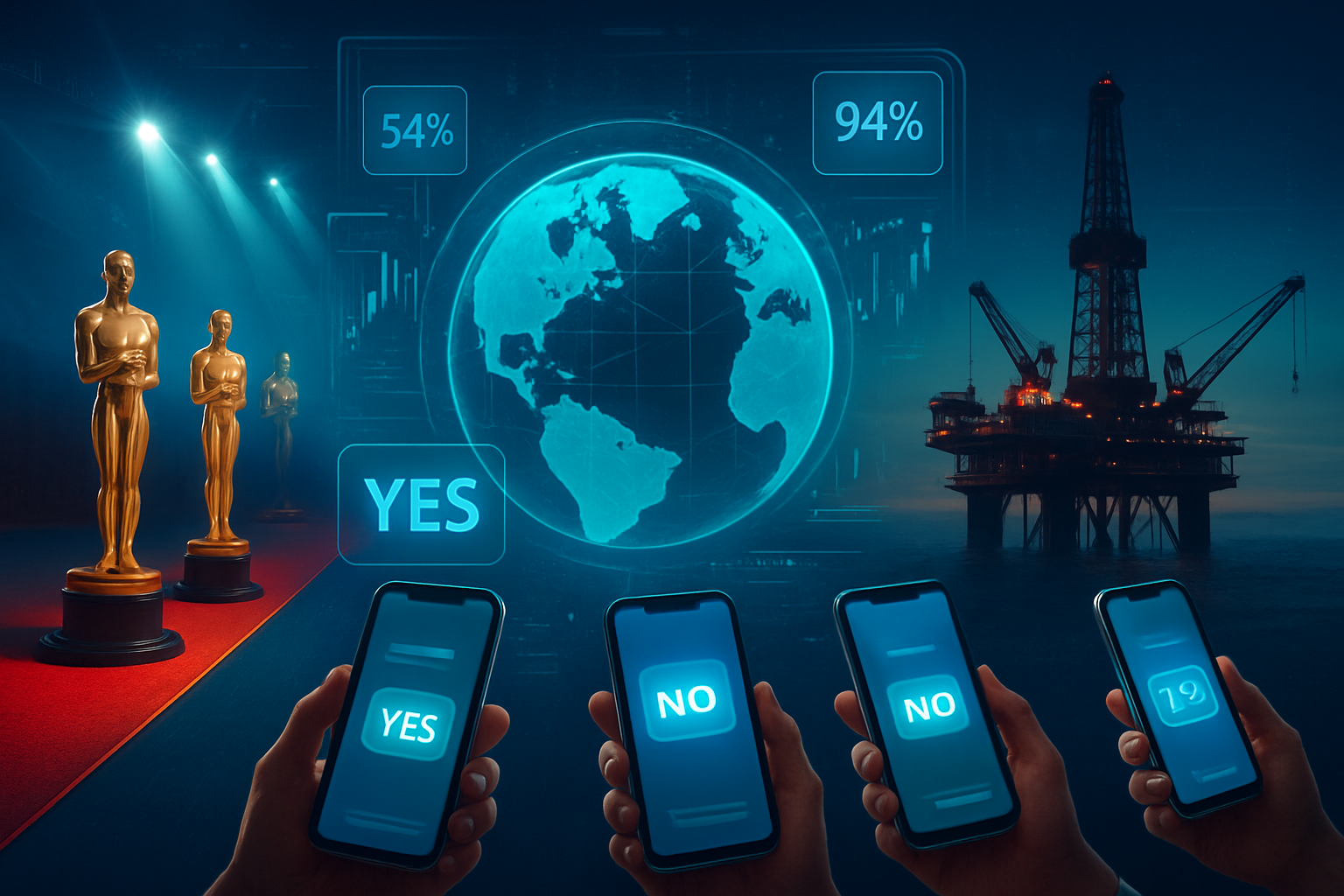
    Traders are no longer just betting on who will lead the country; they are wagering on whether President Trump will utter his signature catchphrase "Drill, Baby, Drill" during his Davos address (currently sitting at a 54% probability) or if the word "Greenland" will appear in the 2026 State of the Union (a near-certainty at 94%). These niche event contracts are driving record volumes, with monthly turnovers on major exchanges hitting the $10 billion mark in late 2025, fueled by a new demographic of retail traders and AI-driven bots.

    The Market: What's Being Predicted

    The landscape of prediction markets has shifted from macro-politics to micro-events. On platforms like Kalshi and Polymarket, "rhetoric markets"—contracts based on the specific vocabulary used by public figures—have become the new gold rush. The most liquid of these, centered on President Trump’s 2026 World Economic Forum appearance, saw over $1.5 billion in weekly volume as traders debated the likelihood of specific policy signals.

    Beyond rhetoric, the "Time Person of the Year 2025" market became a defining moment for the industry. When Time selected "The Architects of AI"—a group featuring Nvidia Corp. (NASDAQ: NVDA) CEO Jensen Huang and OpenAI’s Sam Altman—it triggered a massive "resolution crisis." Traders on Robinhood Markets, Inc. (NASDAQ: HOOD), which now powers event trading through its "Prediction Markets Hub," were split on whether the award constituted a "Yes" for individual candidates or a "No" because it was a group title.

    Current high-liquidity markets as of late January 2026 include:

    • Oscars 2026 Best Picture: Paul Thomas Anderson’s One Battle After Another is the overwhelming favorite at 78¢ (78% probability).
    • The Federal Reserve: Odds of a "Sound Money" mention in the State of the Union are at 42%, serving as a proxy for the official appointment of a Fed hawk.
    • State of the Union Mentions: "Greenland" is trading at 94¢, following reports of renewed diplomatic interest in the island’s resources.

    Why Traders Are Betting

    The surge in niche contracts is driven by a unique confluence of "vibe trading" and sophisticated algorithmic participation. According to recent market data, nearly 40% of the volume in rhetoric markets is now driven by AI agents that can execute trades in the milliseconds between a public figure speaking a word and the audio reaching a human ear.

    For the retail crowd on Robinhood, these contracts represent a simplified alternative to the complex options Greeks found in traditional equity markets. "It’s the ultimate binary bet," says one active trader. "I don't need to understand a balance sheet to have an opinion on whether a movie will win an Oscar or if the President will mention Bitcoin."

    On the institutional side, Interactive Brokers Group, Inc. (NASDAQ: IBKR) has seen its ForecastEx platform flourish by targeting "serious" hedging. Businesses are increasingly using niche contracts to hedge against specific risks, such as hurricane landfall probabilities or precise CPI targets. Unlike more speculative platforms, ForecastEx offers zero commissions and pays an incentive coupon of roughly 3.14% on the value of held contracts, attracting capital that might otherwise sit in money market funds.

    Broader Context and Implications

    The "niche-ification" of prediction markets marks a pivotal shift in how the public consumes news. These platforms provide a real-time, financialized "consensus reality" that often proves more accurate than traditional punditry. The 2025 legal resolution between the CFTC and Kalshi—where the regulator dropped its appeal against cultural and political contracts—formally recognized that these events are not "gaming" or "gambling," but rather a legitimate form of information discovery.

    However, a new regulatory front has opened in 2026. Tribal Gaming authorities and states like Nevada and New Jersey are currently challenging the federal preemption of these markets, arguing that cultural contracts compete directly with regulated sportsbooks. This "clash of the titans" between federal commodity law and state gaming law will likely define the industry's trajectory for the rest of the decade.

    The rise of the platform "Opinion," which captures market share by offering "yield-bearing bets," also points to a future where prediction markets are fully integrated with decentralized finance (DeFi). In this ecosystem, your capital earns interest while you wait for the Academy Awards or a Fed announcement, effectively turning a "bet" into a high-yield savings account with an "event-driven" bonus.

    What to Watch Next

    The immediate focus for the market is the February 2026 State of the Union address. Beyond the high-probability "Greenland" and "Drill, Baby, Drill" bets, traders are closely watching for "Sound Money" and "Bitcoin Reserve" mentions. If these phrases appear, it could trigger massive volatility in both the prediction markets and the broader crypto and equity sectors.

    Key dates to monitor:

    • February 3, 2026: Scheduled date for the State of the Union.
    • March 15, 2026: The 98th Academy Awards, which will resolve the current $2 billion "Best Picture" market.
    • Q2 2026: A likely ruling in the Kalshi vs. State Gaming Authorities lawsuit, which could restrict or expand the availability of these markets in several U.S. states.

    Bottom Line

    Prediction markets have successfully moved "Beyond the Ballot." The record volumes seen in niche event contracts prove that the public’s appetite for forecasting isn't tied to the four-year election cycle, but to a deeper desire for clarity in an increasingly complex cultural and economic landscape.

    While political outcomes will always be the "headline" events, the future of the industry lies in the granular—the speeches, the awards, and the micro-shocks of daily life. As these platforms become more integrated with traditional brokerages like Robinhood and Interactive Brokers, event trading is poised to become as ubiquitous as stock trading, providing a financial incentive for the truth in an era of uncertainty.


    This article is for informational purposes only and does not constitute financial or betting advice. Prediction market participation may be subject to legal restrictions in your jurisdiction.

    PredictStreet focuses on covering the latest developments in prediction markets.
    Visit the PredictStreet website at https://www.predictstreet.ai/.
  • The 100-Hour Hustle: How Logan Sudeith Became the Face of the $100,000-a-Month Prediction Market Elite

    The 100-Hour Hustle: How Logan Sudeith Became the Face of the $100,000-a-Month Prediction Market Elite

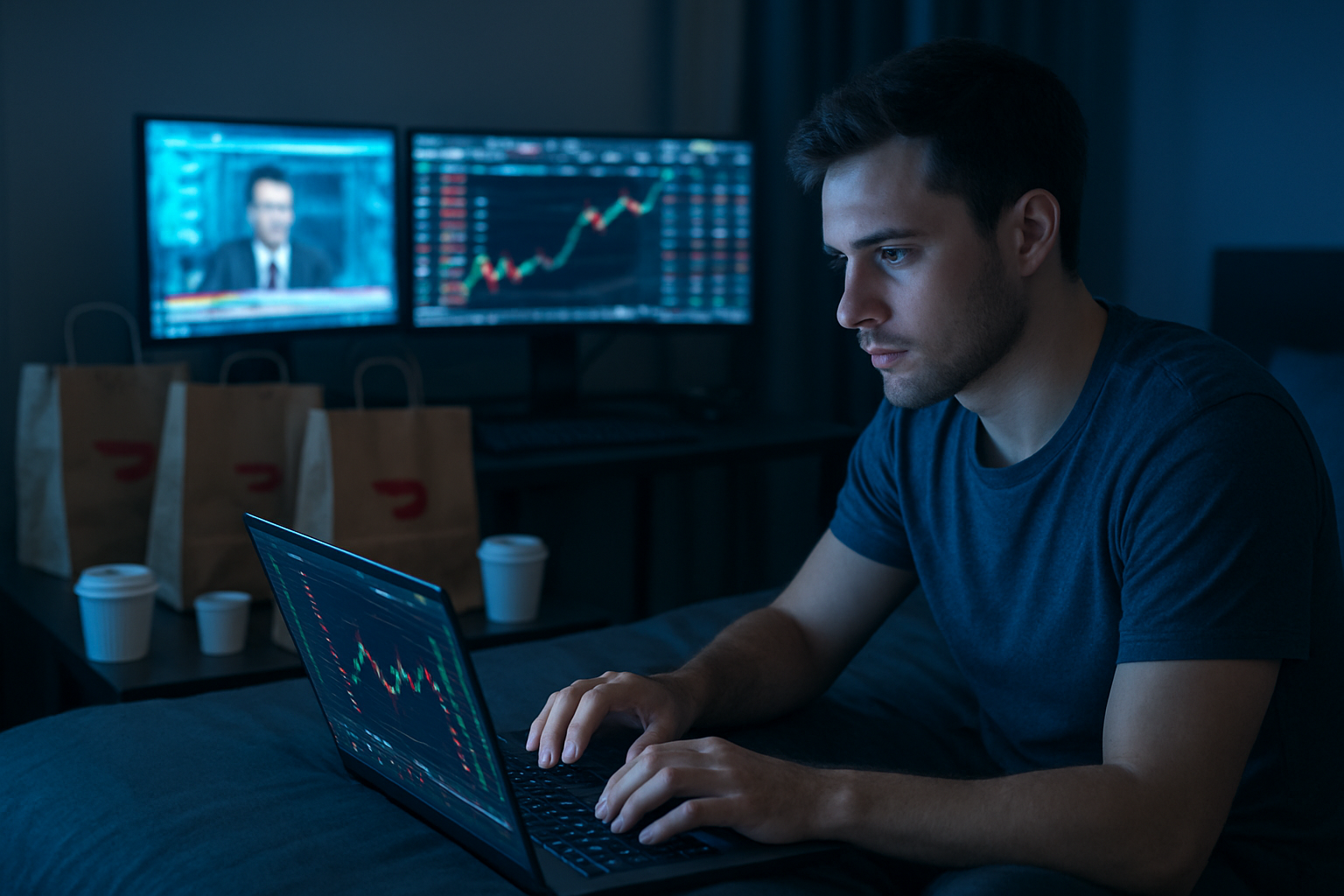
    As of January 2026, the image of the "professional trader" has undergone a radical transformation. Gone are the days when high-stakes finance was solely the province of Wall Street floor traders or quantitative hedge fund analysts staring at Bloomberg terminals. Today, the new face of alpha is Logan Sudeith, a 25-year-old former risk analyst from Atlanta, Georgia, who famously resigned from a stable $75,000-a-year job to trade the "scoreboard of reality" full-time.

    Sudeith represents a burgeoning class of "Professional Event Traders" (PMTs) who have turned prediction markets like Kalshi and Polymarket into their personal ATM machines. While many retail investors were still learning the ropes of "Information Finance" in late 2024, Sudeith was already scaling a lifestyle that defies traditional labor norms: working 100-hour weeks, "bed-lounging" with a laptop, and DoorDashing every meal to ensure he never misses a live market ticker. The results have been staggering, culminating in a recent milestone that has sent shockwaves through the community—a single $100,000 profit month.

    The Market: What’s Being Predicted

    The markets Sudeith and his peers navigate are far more granular than the broad indices of the traditional stock market. While a typical investor might buy shares in Apple Inc. (NASDAQ: AAPL) or Tesla, Inc. (NASDAQ: TSLA) based on quarterly earnings, Sudeith trades on the specificities of daily life. These "event contracts" allow traders to buy and sell shares in the probability of a specific outcome, ranging from Federal Reserve interest rate hikes to the specific phrasing used by political figures in press conferences.

    The primary arenas for this activity are Kalshi and Polymarket. By early 2026, Kalshi has seen its valuation surge to a reported $11 billion, with weekly volumes frequently exceeding $2 billion. Meanwhile, Polymarket has completed a massive re-entry into the U.S. market following its acquisition of a CFTC-licensed exchange. These platforms offer thousands of niche markets, such as whether a certain bill will pass the Senate by Friday, the exact number of times a sports commentator will say "air ball," or the winner of the New York City mayoral race—a trade that netted Sudeith over $7,400 in profit.

    Why Traders Are Betting

    For Sudeith, the "edge" isn't found in guessing the future, but in identifying "mispriced probabilities." His strategy involves a blend of high-speed data mining and obsessive monitoring of live events. To win $40,236 on the Time Magazine Person of the Year contract, Sudeith didn't just guess; he meticulously analyzed historical selection patterns and tracked late-breaking media signals that the broader market had ignored.

    "Professional event trading is about being faster and more informed than the person on the other side of the contract," says one peer in Sudeith's "Crypto Inner Circle" Discord. Traders now use institutional-grade tools like API integrations for millisecond execution and order flow analysis software to spot "insidered" activity—outlier bets that suggest a trader has non-public information, such as the exact release date of a new AI model. Sudeith’s 100-hour work week is dedicated to this information gathering, often focusing on high-volatility events like Donald Trump's speeches, where a single keyword—like "drill baby drill"—can move half a million dollars in a matter of seconds.

    Broader Context and Implications

    The rise of traders like Logan Sudeith signals a broader shift toward "Information Finance," a term popularized in 2025 to describe the use of markets to aggregate truth. Major brokerages like Robinhood Markets, Inc. (NASDAQ: HOOD) have leaned into this trend, now offering regulated event contracts to their millions of retail customers. In late 2025, Robinhood reported that its users traded over 2.5 billion event contracts, treating questions about Fed rate cuts with the same seriousness as blue-chip stocks.

    This mainstreaming has been bolstered by a shifting regulatory environment. While previous administrations viewed prediction markets with skepticism, the current 2026 landscape treats them as vital forecasting tools. News networks like CNN and CNBC now display "Kalshi Tickers" alongside traditional stock prices, acknowledging that these markets are often more accurate than traditional polling or expert punditry. The "sober boom" of prediction markets has turned what was once a "gray market" into a fundamental pillar of the American financial system.

    What to Watch Next

    As the industry matures, the focus is shifting toward the institutionalization of event trading. We are likely to see the emergence of "Event Hedge Funds" that utilize the same high-frequency strategies Sudeith pioneered, potentially squeezing out solo retail traders. The next major milestone to monitor will be the launch of "Macro-Event ETFs," which would allow investors to hedge against broad geopolitical risks—like the outbreak of a trade war or a global pandemic—through a single diversified product.

    Furthermore, keep an eye on the "rulescucks"—a slang term for traders who win on the technical wording of contracts. As the stakes rise, the precision of contract language is becoming a legal battleground. The resolution of high-profile disputes in early 2026 will set the precedent for how these markets are governed for the next decade.

    Bottom Line

    Logan Sudeith’s journey from a $75,000-a-year analyst to a six-figure-a-month event trader is the quintessential success story of the Information Finance era. It proves that in a world of infinite data, the ability to accurately price probability is one of the most valuable skills in the modern economy. Sudeith isn't just betting; he is participating in a global machine that rewards truth and punishes noise.

    As prediction markets continue to integrate with traditional finance through platforms like Robinhood Markets, Inc. (NASDAQ: HOOD), the line between "gambling" and "investing" continues to blur. For Sudeith and the new class of PMTs, the world is no longer just a series of events—it is a series of tradeable opportunities, provided you are willing to put in the 100 hours a week to find them.


    This article is for informational purposes only and does not constitute financial or betting advice. Prediction market participation may be subject to legal restrictions in your jurisdiction.

    PredictStreet focuses on covering the latest developments in prediction markets.
    Visit the PredictStreet website at https://www.predictstreet.ai/.
  • The 11 Billion Contract Explosion: How Robinhood and Interactive Brokers Mainstreamed Prediction Markets

    The 11 Billion Contract Explosion: How Robinhood and Interactive Brokers Mainstreamed Prediction Markets

    In the span of just ten months, prediction markets have transitioned from a niche obsession of political junkies and crypto-enthusiasts to a cornerstone of the modern retail brokerage experience. As of January 18, 2026, the industry is reeling from a staggering milestone: Robinhood Markets, Inc. (NASDAQ: HOOD) has processed over 11 billion contracts through its "Prediction Markets Hub" since its debut in March 2025. This volume represents more than just a successful product launch; it signals a fundamental shift in how the public perceives information, risk, and the "truth" of future events.

    The surge is fueled by a combination of regulatory clarity and the gamification of macroeconomic and climate data. While Robinhood captures the mass retail audience with sports and pop culture "Combos," Interactive Brokers Group, Inc. (NASDAQ: IBKR) has carved out a sophisticated niche with its ForecastEx platform, where businesses are now bypassing traditional insurance to hedge against the increasing volatility of climate change. With current odds on the platform suggesting a 68% probability of a record-breaking 2026 hurricane season, the market has become a real-time barometer for global anxiety and anticipation.

    The Market: What's Being Predicted

    The current landscape is dominated by Robinhood’s "Prediction Markets Hub," which launched on March 17, 2025. What began as a platform for trading the Federal Funds Rate and NCAA tournament outcomes has expanded into a comprehensive "everything-market." Traders are currently placing massive bets on the timing of the next Federal Reserve rate cut (currently trading at a 42% probability for March 2026) and the outcome of the upcoming 2026 midterm elections. The liquidity in these markets is unprecedented; bid-ask spreads on major political and economic events have narrowed to less than a cent, rivaling the efficiency of blue-chip equities.

    On the more specialized front, Interactive Brokers' ForecastEx has become the go-to exchange for "Economic and Environmental Hedging." ForecastEx utilizes a "Yes/No" contract structure that pays out $1 upon resolution. Unlike the more speculative "meme-heavy" trades found elsewhere, ForecastEx features high-volume contracts on hyper-local weather events, such as the probability of a Category 3 hurricane making landfall in Miami-Dade County. This market saw a massive spike in October 2025 during the approach of Hurricane Melissa, with trading volume reaching $500 million in a single week.

    The resolution criteria for these markets have become increasingly standardized. Robinhood recently announced its "Cortex" AI, an assistant that monitors verified data feeds—from NOAA for weather to the Bureau of Labor Statistics for CPI—to ensure near-instantaneous settlement. This speed has turned prediction markets into a high-frequency trading environment, with over 3 billion contracts traded in November 2025 alone.

    Why Traders Are Betting

    The primary driver of the current retail frenzy is the "democratization of the hedge." Traditionally, only large corporations could afford complex derivatives to protect against economic shifts or weather disasters. Today, a small business owner in Florida can use ForecastEx to buy "Yes" contracts on a local hurricane landfall. If the storm hits, the payout provides immediate liquidity to cover damages—often weeks before a traditional insurance claim would be processed. During the Hurricane Melissa event in October 2025, market participants correctly predicted the landfall location in the Bahamas four days before major meteorological models reached a consensus.

    For the Robinhood crowd, the motivation is often a blend of entertainment and "Information Finance." The platform’s introduction of "Custom Combos" in late 2025—which allow users to parlay NFL player statistics with economic indicators—has blurred the lines between sports betting and traditional investing. Analysts note that retail traders are increasingly using prediction markets as a "hedge against their own lives." For instance, someone worried about rising gas prices might buy "Yes" contracts on Brent Crude hitting $100, effectively using the profit to offset their costs at the pump.

    Large "whale" activity has also moved from shadow offshore platforms like Polymarket to these regulated US exchanges. Notable positions have been spotted in the 2026 Midterm "Control of the House" markets, where several anonymous accounts have built eight-figure positions. Unlike traditional polling, which has struggled with declining response rates, these markets are being hailed as the "Truth Machine" because they require participants to put real capital behind their convictions.

    Broader Context and Implications

    The explosion of retail event trading marks a pivotal moment in regulatory history. The formation of the Coalition for Prediction Markets (CPM) in December 2025—led by Kalshi, Robinhood, and Interactive Brokers—has successfully lobbied for a "pro-innovation" framework under the CFTC. With newly confirmed CFTC Chairman Michael Selig taking a permissive stance on "event contracts," the legal clouds that hung over the industry in 2024 have largely dissipated. Prediction markets are now viewed legally as derivatives, rather than gambling, provided they serve a "public interest" or hedging function.

    This shift has profound implications for how the public consumes news. Major media outlets now lead their broadcasts with "Market Probabilities" rather than expert opinions. When the market prices in an event, it creates a feedback loop that can influence real-world behavior. Critics, however, warn about the potential for market manipulation, particularly in low-liquidity "niche" markets, though the massive volume on Robinhood has made "cornering" the market on major events increasingly difficult.

    Historically, the accuracy of these markets has been remarkably high. In the 2024 election cycle, prediction markets were often the first to signal shifts in momentum, a trend that has only accelerated in 2025. By Jan 2026, the consensus among financial historians is that we are witnessing the birth of a "Prediction Market Economy," where the price of every future event is constantly being discovered in real-time.

    What to Watch Next

    The next major catalyst for the sector is the upcoming "YES/NO" summit in February 2026, where Robinhood is rumored to be announcing the finalization of its acquisition of MIAXdx (formerly LedgerX). This move would allow Robinhood to move its entire clearing and execution infrastructure in-house, potentially lowering fees and further increasing trading velocity. Additionally, the industry is bracing for a potential Google ad policy shift that could allow regulated prediction markets to advertise globally, potentially bringing in another wave of retail liquidity.

    On the event side, all eyes are on the March 2026 Federal Reserve meeting. The prediction markets currently show a volatile "flip-flop" between a 25-basis point cut and a "hold" scenario. Given the 11 billion contracts already in the books, the volume surrounding this single economic event is expected to break all previous records for a non-election trade.

    Finally, as we enter the first quarter of 2026, the "Climate Hedging" trend will be tested. If ForecastEx’s hurricane contracts continue to provide more accurate and faster relief than traditional insurance, we may see a massive migration of institutional capital into these markets, further legitimizing the asset class for long-term "risk-linked" returns.

    Bottom Line

    The rise of Robinhood’s Prediction Markets Hub and Interactive Brokers' ForecastEx represents the final bridge being crossed between speculative gambling and sophisticated financial hedging. With 11 billion contracts traded, the sheer scale of participation proves that there is a massive appetite for an "exchange for everything."

    Prediction markets have proven to be more than a novelty; they are an essential tool for price discovery in an increasingly uncertain world. Whether it is a business owner hedging against a hurricane or a retail trader betting on a Fed pivot, the ability to put a price on the future has changed the financial landscape forever. As we move deeper into 2026, the "Truth Machine" is only getting louder, and the markets are suggesting that the volatility—and the opportunity—is just beginning.


    This article is for informational purposes only and does not constitute financial or betting advice. Prediction market participation may be subject to legal restrictions in your jurisdiction.

    PredictStreet focuses on covering the latest developments in prediction markets. Visit the PredictStreet website at https://www.predictstreet.ai/.

  • The Death of the Pundit: Kalshi’s Media Deals Turn Prediction Markets into Newsroom ‘Truth Engines’

    The Death of the Pundit: Kalshi’s Media Deals Turn Prediction Markets into Newsroom ‘Truth Engines’

    As of mid-January 2026, the landscape of broadcast journalism has fundamentally shifted. For decades, viewers tuned into news networks for opinions, expert "hot takes," and statistical polling that often lagged behind reality. That era ended this month. With the full-scale launch of landmark media partnerships between the regulated exchange Kalshi and news giants CNN (NASDAQ: WBD) and CNBC (NASDAQ: CMCSA), prediction market data has moved from the financial fringe to the center of the television screen.

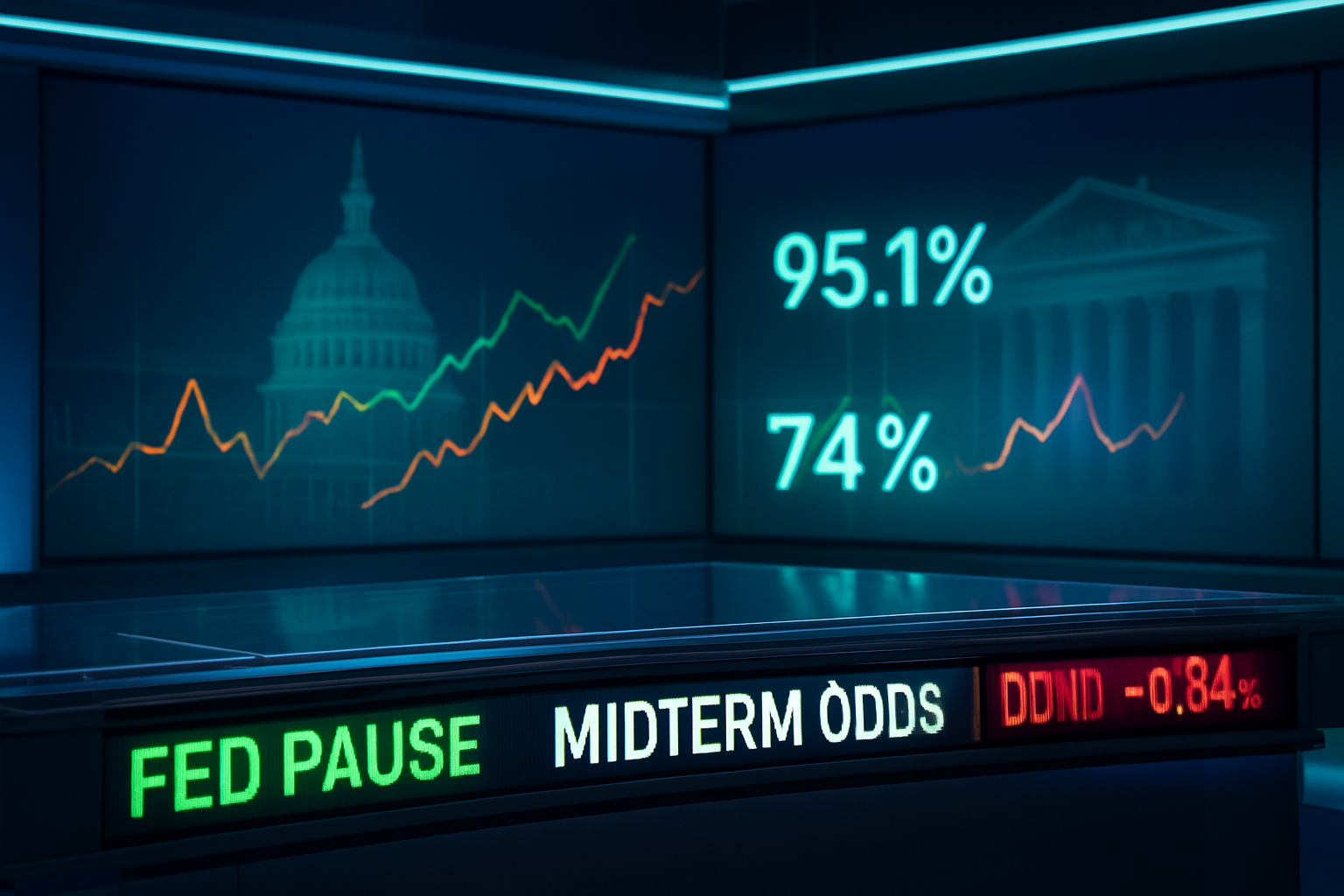
    Today, if you tune into "Squawk Box" or "The Lead," you won't just hear a pundit's guess on the next Federal Reserve move or a legislative vote. Instead, you'll see a live, ticker-tape stream of real-money probabilities. As of January 16, 2026, these markets show a staggering 95.1% probability that the Fed will pause interest rate hikes at its upcoming meeting on January 28. This isn't just a survey; it’s the collective "hive mind" of thousands of traders who have hundreds of millions of dollars on the line.

    The Market: What’s Being Predicted

    The integration of Kalshi data into mainstream media is powered by an explosion in trading volume. In the first full week of January 2026, Kalshi recorded over $2 billion in weekly notional volume, capturing approximately 66% of the U.S. regulated event-trading market. While Polymarket—recently bolstered by a $2 billion investment from the Intercontinental Exchange (NYSE: ICE)—continues to lead in global decentralized markets, Kalshi has become the "official scoreboard" for American domestic affairs.

    The specific "Information Finance" contracts being broadcast to millions of households cover a vast array of topics:

    • Monetary Policy: Real-time odds on Fed rate cuts, inflation benchmarks, and employment numbers.
    • Political Shifts: Probability of the Democrats reclaiming the House (currently 74%) vs. Republicans retaining the Senate (66%) in the 2026 Midterm elections.
    • Corporate Events: Likelihood of specific mergers passing regulatory hurdles and CEO transitions.
    • Cultural Milestones: From the winner of Super Bowl LX (the Los Angeles Rams currently lead at 14%) to the probability of 2026 becoming the hottest year on record (38%).

    These contracts are settled based on verifiable real-world outcomes, and their prices, ranging from $0.01 to $0.99, serve as a direct proxy for the percentage chance of an event occurring.

    Why Traders Are Betting

    The surge in market participation is driven by a radical "skin in the game" philosophy. Unlike traditional pollsters, who face little consequence for being wrong, prediction market participants are financially incentivized to be right. This has attracted a new class of "truth-seekers," including high-frequency trading (HFT) firms like Jane Street and Susquehanna (SIG), which now act as designated market makers, providing deep liquidity and razor-thin spreads.

    Traders are increasingly moving away from traditional forecasting methods. The 2024 and 2025 election cycles proved that polling often fails to capture "shy" voters or rapid sentiment shifts. In contrast, prediction markets reacted in real-time to breaking news, such as the 2025 court rulings that legalized election betting in the U.S. This legal clarity, following Kalshi’s victory over the CFTC, has allowed retail platforms like Robinhood (NASDAQ: HOOD) and Interactive Brokers (NASDAQ: IBKR) to offer event contracts to their millions of users, further deepening the pool of intelligence.

    Broader Context and Implications

    The deals with CNN and CNBC signal the birth of a new era: the "Information Finance" age. CNN’s Chief Data Analyst, Harry Enten, has largely replaced his traditional "Poll of Polls" segments with "Market-Driven Signals," arguing that a market of incentivized traders is a more reliable filter for truth than a panel of consultants. CNBC has even launched a "Prediction Hub," allowing viewers to see live probabilities directly on the CNBC Pro app.

    This shift has profound implications for public discourse. By providing a cold, hard number for the probability of an event, prediction markets help to de-polarize news. It is difficult to argue with a market where people are betting their own money against your bias. Historically, these markets have proven more accurate than experts in predicting everything from Supreme Court decisions to the timing of recessionary dips.

    However, the rapid growth has not been without controversy. Legislative battles are currently raging in states like New York, where the "ORACLE Act" (Assembly Bill A9251) seeks to limit political event contracts. Kalshi’s market currently prices the probability of that ban passing at a modest 22%, suggesting that the "truth engine" believes it will ultimately prevail in the courts.

    What to Watch Next

    As we move deeper into 2026, several key milestones will test the robustness of this new media-market alliance:

    1. The FOMC Meeting (Jan 27–28): This will be the first major test of the CNBC-Kalshi ticker during a period of high economic volatility.
    2. The 2026 Primary Season: Watch for how CNN utilizes Kalshi data to forecast primary upsets, potentially influencing donor behavior and campaign strategies in real-time.
    3. The "Super Bowl Signal": On February 8, the massive liquidity flowing into Super Bowl LX contracts will demonstrate Kalshi's ability to handle high-frequency, mass-market sports data alongside its "serious" economic contracts.

    Bottom Line

    The 2026 media deals between Kalshi, CNN, and CNBC mark the moment prediction markets ceased being a "sideshow" and became the "truth engine" for the public. By moving probability data from the trading floor to the living room, these platforms are providing a more objective, faster, and more accurate way for the world to understand the future.

    In an age of deepfakes and extreme partisanship, "Information Finance" offers a rare commodity: a scoreboard for reality. Whether the event is a rate hike or a presidential primary, the question is no longer "What do the experts think?" but rather "What does the market say?"


    This article is for informational purposes only and does not constitute financial or betting advice. Prediction market participation may be subject to legal restrictions in your jurisdiction.

    PredictStreet focuses on covering the latest developments in prediction markets.
    Visit the PredictStreet website at https://www.predictstreet.ai/.