Date: 12/10/2025
1. Introduction
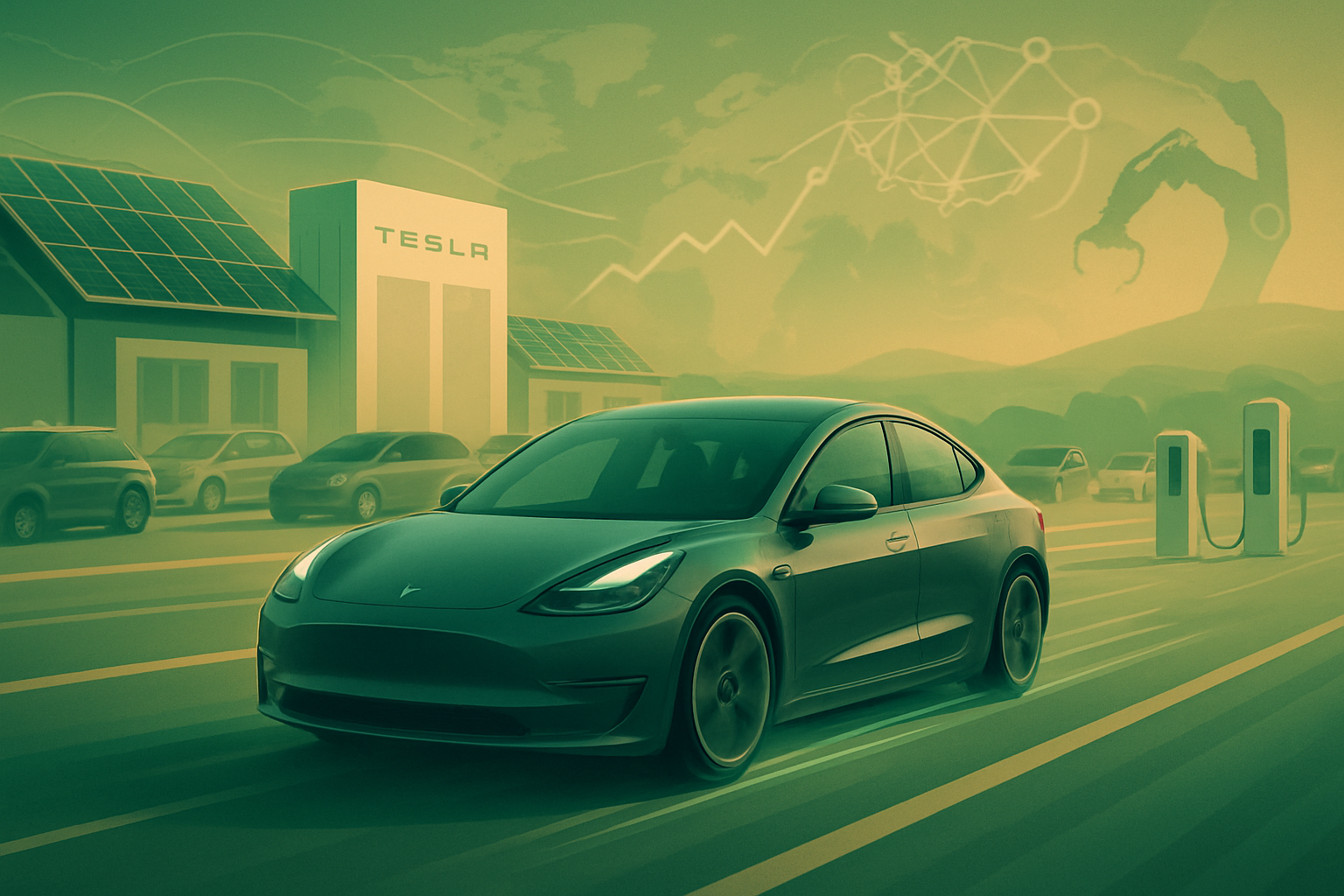
As of December 10, 2025, Tesla Inc. (NASDAQ: TSLA) remains a company of intense focus and significant global relevance, transcending its origins as an electric vehicle (EV) manufacturer to become a pivotal player in artificial intelligence (AI), robotics, and sustainable energy solutions. Headquartered in Austin, Texas, Tesla’s multifaceted operations span the design, manufacture, and sale of battery electric vehicles, stationary battery energy storage, solar panels, and solar shingles.
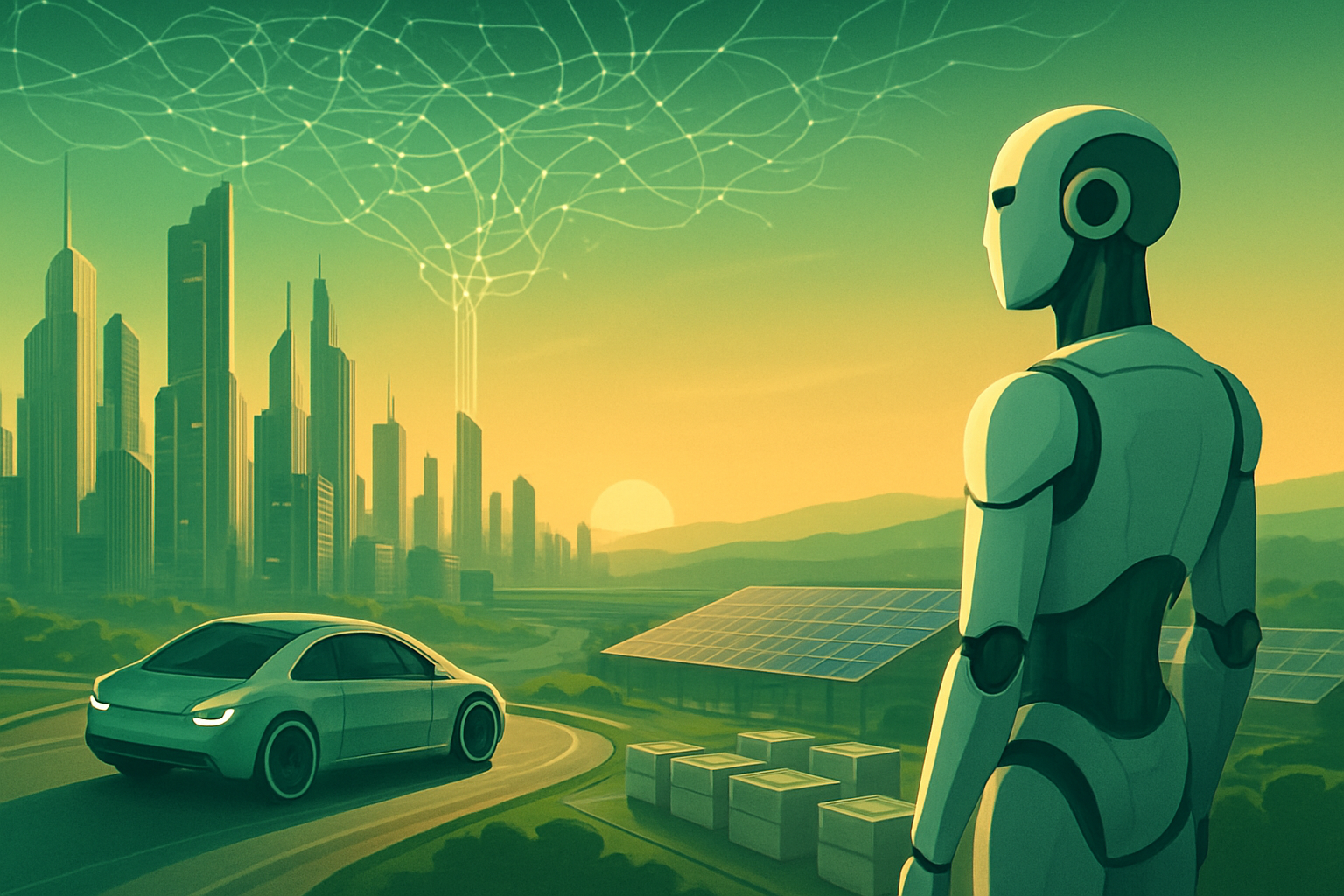
Under the leadership of CEO Elon Musk, Tesla’s direct-to-consumer sales model, bolstered by its extensive Supercharger network, has reshaped the automotive industry. The company is currently in the spotlight due to ambitious new product launches like the Cybertruck and the anticipated affordable EV (potentially "Model 2" or "Model Q"), alongside significant strides in autonomous driving with its Robotaxi service and the Optimus humanoid robot. While maintaining a strong position in the EV market, Tesla faces escalating competition, particularly from Chinese manufacturers, and navigates ongoing supply chain complexities and macroeconomic shifts. Its valuation increasingly hinges on the successful execution of its futuristic AI and robotics ventures, making it a compelling, albeit volatile, investment case.
2. Historical Background
Tesla Motors, Inc. was founded on July 1, 2003, by engineers Martin Eberhard and Marc Tarpenning, with the vision of building a technology company focused on battery and electric motor expertise. Elon Musk joined in February 2004, leading the initial funding round and becoming chairman. He assumed the CEO role in October 2008.
Early milestones included the unveiling of the all-electric Roadster prototype in 2006, followed by its production launch in 2008, establishing Tesla as a pioneer in high-performance EVs. Critical investments from Daimler AG and a $465 million loan from the U.S. Department of Energy bolstered its early growth. In June 2010, Tesla went public on NASDAQ, raising $226 million. The launch of the Model S in 2012, alongside the rollout of the Supercharger fast-charging network, solidified its market presence. By 2015, Tesla expanded into energy storage with Powerwall and Powerpack.
Key transformations include the 2016 acquisition of SolarCity, rebranding to Tesla, Inc. in 2017 to reflect its broader clean energy focus. The introduction of mass-market vehicles like the Model 3 (2017) and Model Y (2020) propelled significant volume growth. Tesla embarked on a global manufacturing expansion with Gigafactories in Nevada, Shanghai (producing its four millionth vehicle by December 2025), Berlin, and Texas, where its corporate headquarters relocated in 2021. Further diversification saw the unveiling of the Tesla Semi (2017) and Cybertruck (2019). Financially, Tesla became the world's largest automaker by market capitalization in 2020 and joined the S&P 500, reaching a $1 trillion valuation by 2021. Recent developments include updates to existing models, the anticipated next-generation Roadster (unveiling April 2026), and ongoing executive changes, shaping its trajectory as a technology and manufacturing powerhouse.
3. Business Model
As of December 10, 2025, Tesla Inc. (NASDAQ: TSLA) operates a vertically integrated, direct-to-consumer business model that extends beyond electric vehicles into comprehensive energy solutions and advanced AI-driven technologies.
Revenue Sources:
- Automotive Sales: The primary revenue driver, comprising sales of new EVs, generated an estimated 74% of total revenues for FY2025, approximately $77 billion. Q3 2025 saw record vehicle deliveries contributing to $28.1 billion in revenue for the quarter, though automotive gross margins faced pressure, falling to around 16%.
- Regulatory Credits: Tesla earns revenue by selling emission credits to other automakers, forecasted to reach $3 billion in 2025.
- Energy Generation and Storage: This segment, including solar panels, Solar Roof, Powerwall, Megapack, and the new Megablock, is rapidly growing. Energy storage deployments hit a record 12.5 GWh in Q3 2025 (81% YoY increase), accounting for over 12% of total revenue.
- Services and Other: This category includes Supercharging fees, vehicle service and maintenance, FSD software subscriptions, and merchandise sales, showing a 25% YoY increase in Q3 2025.
Product Lines:
- Electric Vehicles: Model S, Model 3, Model X, Model Y (including new Standard RWD and Performance variants), Cybertruck, and Tesla Semi.
- Upcoming Vehicles: An affordable EV (potentially "Model Q" or "Model 2"), expected in H1 2025, targeting a $25,000 price point. The Cybercab (Robotaxi) is planned for production before 2027, and the next-generation Roadster is slated for an April 2026 unveiling.
- Energy Products: Powerwall, Megapack (including Megapack 3 and Megablock), Solar Panels, and Solar Roof.
- Robotics: Optimus humanoid robot, with external deliveries expected in late 2025 and production ramping up to 1,000 units per month.
Services:
- Supercharger Network: Expanding globally, with NACS becoming the industry standard, ensuring recurring revenue.
- Full Self-Driving (FSD) Software: FSD (Supervised) is expanding internationally, with plans for a fully autonomous Robotaxi service launch in Austin by June 2025.
- Vehicle Maintenance and Service: Offering "as-needed" service and extended warranty options.
- Insurance and Financing: Tesla provides its own insurance and financing solutions.
- Software Updates: Over-the-air updates deliver new features and improvements, such as the 2025 Holiday Update with Grok AI integration.
Segments:
Tesla primarily reports across two segments:
- Automotive: Design, development, manufacturing, sales, and leasing of EVs, plus regulatory credits.
- Energy Generation and Storage: Design, manufacture, installation, sales, and leasing of solar and energy storage products.
- Services and Other: After-sales vehicle services, used vehicle sales, merchandise, and Supercharger access.
Customer Base:
Tesla's customer base is evolving from affluent, tech-savvy early adopters to a broader demographic, driven by more accessible models. The median age of owners is 48, with an average household income of approximately $144,341. Customers prioritize sustainability, advanced technology, and innovative design. The U.S. remains the largest market, followed by China and Europe, with active expansion into emerging markets.
4. Stock Performance Overview
As of December 10, 2025, Tesla Inc. (NASDAQ: TSLA) has demonstrated a highly dynamic stock performance over the past decade, characterized by periods of explosive growth, significant volatility, and a strong correlation with its technological advancements and market sentiment. The stock has undergone two splits: a 5-for-1 split on August 31, 2020, and a 3-for-1 split on August 25, 2022. All performance figures are split-adjusted.
1-Year Stock Performance (December 10, 2024 – December 10, 2025):
TSLA has delivered a total return of 12.77% over the past year, with its price at approximately $445.17 as of December 9, 2025. The year-to-date return for 2025 is 8.85%.
- Early 2025 Decline: The stock initially fell by about 30% by March 2025 due to intensifying EV competition (especially from Chinese rivals), production challenges, macroeconomic pressures, and concerns over Elon Musk’s increasing political involvement. Q1 2025 deliveries were the weakest in nearly three years, with revenue decreasing by 9%.
- Mid-2025 Volatility: Continued volatility saw revenue growth slow, operating margins decline (to 5.8% in Q3 2025), and inventory concerns rise in the U.S.
- Late 2025 Rebound: A recent surge was driven by optimism surrounding breakthroughs in Full Self-Driving (FSD) software, with Piper Sandler reporting a 20x improvement in disengagement metrics. This fueled hopes for software monetization and Tesla's transition into an AI and robotics leader. However, some analysts, like Morgan Stanley, downgraded the stock, believing the "Robotaxi Premium" was fully priced in.
5-Year Stock Performance (December 10, 2020 – December 10, 2025):
Over the past five years, TSLA has delivered an impressive total return of 102.92%.
- 2020-2021 Surge: Massive growth (743.44% in 2020, 49.76% in 2021) was driven by consistent profitability, S&P 500 inclusion, rising global EV demand, and the 2020 stock split.
- 2022 Slump: A significant decline (-65.03%) was attributed to a restrictive economic environment, rising interest rates, increased competition, and concerns over Elon Musk's acquisition of Twitter.
- 2023 Recovery: The stock rebounded strongly (101.72%) due to price cuts, increased production, and improved profitability, alongside the 2022 stock split.
- 2024 Performance: Achieved a 62.52% return, fueled by strong delivery numbers, record energy storage deployments, and bullish analyst coverage.
- 2025 Challenges and Hopes: A mixed year with initial declines followed by a rebound driven by FSD developments, as detailed above.
10-Year Stock Performance (December 10, 2015 – December 10, 2025):
TSLA has delivered an extraordinary total return of 2,808.31% over the past decade.
- Early Growth (2015-2019): Tesla established itself as a leading EV manufacturer, expanding its product line (Model S, X, 3, Y) and initiating Gigafactory deployments, fueled by growing EV demand and government incentives.
- Exponential Growth (2020-2021): The period of phenomenal surge driven by market penetration, profitability, S&P 500 inclusion, and stock splits.
- Increased Volatility and Maturation (2022-2025): Tesla transitioned from a pure growth stock to a company facing heightened competition, macroeconomic headwinds, and complexities of scaling global operations. While production expanded, challenges intensified from new EV entrants, particularly in China and Europe, impacting market share and margins. Elon Musk's public statements also introduced volatility. Towards 2025, valuation increasingly depended on non-automotive segments like energy storage and future technologies such as FSD, Optimus, and Robotaxi.
In summary, Tesla's stock performance reflects its journey from EV pioneer to a diversified technology giant, with recent movements increasingly influenced by its AI and robotics ambitions in a competitive and evolving market.
5. Financial Performance
As of December 10, 2025, Tesla Inc. (NASDAQ: TSLA) has demonstrated a mixed financial performance, with strong top-line growth often accompanied by margin pressures and a high valuation that anticipates future technological breakthroughs. The latest available full results are for Q3 2025, which concluded on September 30, 2025.
Latest Earnings (Q3 2025):
- GAAP Earnings Per Share (EPS): $0.39.
- Non-GAAP Earnings Per Share (EPS): $0.50, missing the analyst consensus of $0.54-$0.56.
- GAAP Net Income: $1.37 billion.
- Non-GAAP Net Income: $1.8 billion.
- Operating Income: $1.6 billion, a 40% year-over-year (YoY) decrease.
Revenue Growth (Q3 2025):
- Total Revenue: $28.095 billion, surpassing analyst expectations.
- Year-over-Year Revenue Growth: 12% compared to Q3 2024.
- Automotive Revenue: $21.2 billion, a 6% YoY increase.
- Energy Generation and Storage Revenue: $3.4 billion, surging 44% YoY, accounting for over 12% of total revenue.
- Services and Other Revenue: Grew 25% YoY to $3.5 billion.
Margins (Q3 2025):
- GAAP Gross Margin: 18.0%, down from 19.8% in the prior-year period. Automotive gross margin fell to around 16%. This decline is attributed to lower fixed cost absorption, increased tariffs, and sales mix shifts, partially offset by lower raw material costs.
- Operating Margin: 5.8%, a significant decrease from 10.8% in Q3 2024, reflecting higher operating expenses and stock-based compensation.
- Net Profit Margin: 4.89%, less than half of its 2022 peak.
- Adjusted EBITDA Margin: 15.0%.
Debt (as of Q3 2025):
- Short-Term Debt: $1.852 billion.
- Long-Term Debt: $5.609 billion.
- Total Debt: Approximately $13.79 billion (trailing twelve months).
- Net Debt Issuance: $490 million for Q3 2025, a 370.72% increase YoY.
Cash Flow (Q3 2025):
- Operating Cash Flow: $6.2 billion.
- Free Cash Flow: Nearly $4.0 billion, a record for the company.
- Cash, Cash Equivalents, and Investments: $41.6 billion at the end of Q3, a sequential increase of $4.9 billion, primarily driven by strong free cash flow. The company maintains a net cash position of $27.86 billion.
Valuation Metrics (as of 12/10/2025):
- Market Capitalization: Approximately $1.48 trillion.
- Stock Price: Around $445.17 per share (December 9, 2025).
- Trailing P/E Ratio: 291.51, reflecting high investor expectations despite some earnings contraction.
- Forward P/E Ratio: 217.36.
- P/S Ratio: 15.61 (Q3 2025).
- P/BV Ratio: 18.67 (Q3 2025).
- Analyst Ratings and Price Targets: Consensus "Hold" rating with a median one-year price target of $383.54, though targets vary widely from $19.05 to $600.0.
Despite strong revenue growth from record vehicle deliveries and energy storage deployments, Tesla faced profitability challenges in Q3 2025 due to ongoing price cuts, increased operating expenses, and reduced regulatory credit revenue. The company's valuation remains heavily influenced by its strategic focus on AI, autonomous driving (Robotaxi), and robotics (Optimus), which are perceived as key long-term growth drivers.
6. Leadership and Management
As of December 10, 2025, Tesla Inc. (NASDAQ: TSLA) continues to be steered by its charismatic and often controversial CEO, Elon Musk, whose vision heavily influences the company's strategic direction towards autonomous driving, artificial intelligence, and sustainable energy.
CEO: Elon Musk
Elon Musk remains the Chief Executive Officer and a Director. He has publicly committed to leading Tesla for at least the next five years, despite his extensive involvement in other ventures and recent political activities. His leadership is characterized by ambitious technological goals and a relentless pursuit of innovation.
Leadership Team
Tesla's executive leadership team, while dynamic, has experienced significant changes throughout 2025, raising concerns about stability.
- Vaibhav Taneja: Chief Financial Officer, overseeing financial strategy.
- Andrew Baglino: Senior Vice President of Powertrain and Energy Engineering (though reports of his departure exist, highlighting a broader executive exodus).
- Tom Zhu: Senior Vice President of Automotive.
- Lars Moravy: Vice President of Vehicle Engineering.
The company has seen notable executive departures in 2025, including Omead Afshar (North America and Europe sales), Troy Jones (North American sales), Jenna Ferrua (HR director), Milan Kovac (lead Optimus engineer), and Vineet Mehta (battery architecture head). These departures have been linked to internal tensions and Musk's management style.
Board of Directors
The Tesla Board of Directors is chaired by Robyn Denholm (Independent Director) and includes:
- Elon Musk (CEO and Director)
- Kimbal Musk (Director)
- Ira Ehrenpreis (Independent Director)
- James Murdoch (Independent Director)
- Kathleen Wilson-Thompson (Independent Director)
- Joe Gebbia (Independent Director)
- JB Straubel (Director)
- Jack Hartung (joined June 2025, also on audit committee)
In November 2025, shareholders re-elected Ehrenpreis, Gebbia, and Wilson-Thompson to three-year terms.
Strategy
Tesla's strategy for late 2025 and beyond is heavily focused on:
- Autonomous Driving (Robotaxi/Cybercab): Aiming to launch unsupervised robotaxi services in Austin by December 2025, with plans for a dedicated "Cybercab" by 2026.
- Artificial Intelligence and Robotics: Investing heavily in FSD technology and the Optimus humanoid robot, with external deliveries of Optimus expected in late 2025.
- Electric Vehicles: Launching an affordable "Model Q" (under $30,000) in H1 2025 to boost volume and expanding the Cybertruck's global debut.
- Energy Storage and Supercharger Network: Scaling energy storage production with new factories and expanding the Supercharger network.
Governance Reputation
Tesla's corporate governance reputation remains contentious. Elon Musk's substantial $56 billion pay package was rejected twice by a Delaware court due to governance flaws and conflicts of interest, though shareholders approved a new performance award in November 2025. Shareholder activists continue to push for improved governance and board independence. Musk's political activities have also drawn criticism, reportedly impacting Tesla's stock and sales in Europe. The executive exodus throughout 2025 further highlights concerns about operational stability and the execution of Tesla's ambitious vision.
7. Products, Services, and Innovations
As of December 10, 2025, Tesla Inc. (NASDAQ: TSLA) maintains its competitive edge through a relentless pursuit of innovation across its electric vehicle, energy, and artificial intelligence ecosystems.
Current Product and Service Offerings:
- Vehicle Lineup:
- Sedans: Model S and Model 3 (including 2025 Standard RWD, Long Range RWD/AWD, and Performance AWD variants). The Model 3 Standard RWD is Tesla's most affordable at $36,990 (EPA-estimated 321 miles range).
- SUVs: Model X and Model Y (including 2025 Long Range RWD/AWD, Performance, and a new Standard RWD variant at $39,990 with 321 miles range). A longer wheelbase, six-seat Model Y L is available in China.
- Trucks: Cybertruck (Dual Motor and Beast configurations, deliveries began late 2024) and Tesla Semi.
- Energy Products: Solar panels, Solar Roof, Powerwall (home battery storage), and Megapack (utility-scale battery storage), including the new Megapack 3 and integrated "Megablock" system (unveiled September 2025).
- Charging Infrastructure: Global Supercharger network (7,377 stations, 70,228 connectors by Q2 2025). The North American Charging System (NACS) is becoming the industry standard, opening Tesla's network to other EVs.
- Software and Services:
- Full Self-Driving (FSD): FSD (Supervised) with features like Navigate on Autopilot, Traffic and Stop Sign Control. FSD v14 integrates Robotaxi FSD elements.
- Robotaxi Service: Ride-hailing service launched in Bay Area (Q3 2025), with unsupervised, fully autonomous services planned for Austin by June 2025.
- Vehicle Services: "As-needed" service, "Fast Pass" policy, and loaner vehicles.
- Software Updates: Over-the-air updates, including the 2025 Holiday Update with Grok AI integration for navigation.
Innovation Pipelines and R&D Efforts:
Tesla's R&D (7% of revenue in Q2 2025) focuses on:
- Next-Generation Vehicles: Affordable EV ("Model Q"/"Redwood") expected H1 2025 (under $30,000). Next-gen Roadster unveiling April 2026 (production mid-2027). Cybercab (robotaxi) expected 2026, Robovan/Robus 2028, new Tesla Semi 2026.
- Autonomous Driving and AI: Aiming for Level 5 autonomy by 2025, continuously refining FSD through neural networks. Exploring FSD licensing to other automakers.
- Robotics: Ramping up Optimus humanoid robot production to 1,000 units/month in 2025, with external deliveries late 2025.
- Battery Technology and Manufacturing: New patent for "Gen 2" dry-cathode fabrication for 4680 cells (lower costs). Lithium refinery in Texas (Q4 2025 production), LFP lines in Nevada (Q1 2026). Implementing "unboxed process" and Gigacasting for efficiency. Manufacturing advanced AI semiconductors with Samsung.
Patents:
Tesla holds 4060 patents globally (3028 active). Recent patents in late 2024 and 2025 cover:
- Battery Technology: Integrated energy storage systems, prelithiated hybridized energy storage, grill portions for battery enclosures, and the "Gen 2" dry-cathode process.
- Autonomous Driving: Enhanced object detection, autonomous vehicle summon, and Vehicle-to-Everything (V2X) communication.
- Manufacturing and Charging: Liquid-cooled charging connectors, pulsed spray quench for extruded objects, and manifolds.
- Energy Ecosystems: Renewable-powered charging ecosystems integrating solar, storage, and charging.
Competitive Edge:
Tesla's competitive advantages stem from:
- Technological Leadership: Advanced battery technology, proprietary BMS, and leading FSD.
- Extensive Charging Infrastructure: Vast and reliable Supercharger network (NACS standard).
- Vertical Integration & Manufacturing Innovation: In-house battery production, Gigacasting, powertrain integration.
- Direct-to-Consumer Sales Model: Control over pricing and customer relationships.
- Brand Recognition & Innovation Culture: Strong brand and reputation for pushing boundaries.
- Diversified Business Model: Growing energy generation/storage and commercial robotics.
However, intensifying competition and pressure on margins necessitate continuous execution in cost reduction and delivering on ambitious technological innovations.
8. Competitive Landscape
As of December 10, 2025, Tesla Inc. (NASDAQ: TSLA) operates within an intensely competitive and rapidly evolving global landscape, facing significant challenges from both established automotive giants and aggressive new entrants, particularly from China.
Competitive Landscape Overview:
The global EV market is experiencing exponential growth but also increasing price sensitivity. Tesla is navigating a pivotal period where its automotive market share is being challenged, while simultaneously investing heavily in AI, autonomous driving, and robotics to diversify its future revenue streams. Regulatory shifts and macroeconomic factors, such as the expiration of U.S. tax credits and high interest rates, are further influencing market dynamics.
Industry Rivals:
- Global EV Market Leaders: BYD Auto Group is the undisputed global leader in Battery Electric Vehicles (BEVs), with significant sales growth. Geely Holding Group also holds a substantial global share. Other key Chinese rivals include SAIC, Changan, Chery, and emerging players like Xiaomi Corp.
- Traditional Automakers (U.S. & Europe): In the U.S., Ford and General Motors (GM) are increasingly competitive with both EVs and hybrids. Hyundai and Volkswagen Group (whose Skoda Enyaq SUV surpassed the Model Y as Europe's best-selling EV in October 2025) are also strong contenders.
- Autonomous Driving and AI: Waymo is considered ahead of Tesla in fully driverless robotaxi services, requiring less human intervention. Rivian is also advancing AI-driven manufacturing and practical highway autonomy.
Market Share (as of late 2025):
- Global BEV Market Share (Q3 2025): Tesla ranked second globally with over 13% market share (7% YoY sales increase), behind BYD (33% YoY increase). Geely was third with 10%.
- Global EV Market Share (Jan-Aug 2025): BYD led with 19.9%, followed by Geely (10.2%), and Tesla in third (7.7%), with Tesla's deliveries declining 11% annually in this period.
- U.S. EV Market Share (Q3 2025): Tesla's U.S. market share dropped to 41%, hitting an eight-year low of 38% in August 2025.
- China Market: China remains strong, with Tesla's China-made EV sales growing 10% YoY in November 2025. Over half of new cars sold in China are now electric.
- Europe Market: Tesla's European sales struggled in November 2025, with significant drops in France and Denmark, though the refreshed Model Y was Europe's best-selling car in September 2025.
Competitive Strengths:
- Strong Brand Value and Market Capitalization: Recognizable as an EV pioneer with high market capitalization.
- Technological Leadership in AI and Autonomous Driving: FSD is a "crown jewel," leveraging a vast data-generating fleet.
- Integrated Ecosystem: Comprehensive energy solutions (Powerwall, Megapack, solar) and extensive Supercharging Network.
- Product Appeal: Model Y and Model 3 remain global best-sellers, with plans for more affordable EVs.
Competitive Weaknesses:
- Softening Demand and Declining Sales: Declining sales and demand in key markets (e.g., U.S. deliveries in November 2025 were the lowest for the year).
- Intensifying Price Competition and Margin Pressure: Aggressive pricing from Chinese rivals erodes margins, especially in China.
- Regulatory and Geopolitical Headwinds: Regulatory uncertainties and the cessation of U.S. tax credits impact demand. Elon Musk's political activities may affect brand perception.
- Profitability Concerns: Net income plunged 36.82% in Q3 2025, and operating income slipped YoY.
- Oversupply Risk: Notable inventory of unsold vehicles in the U.S. as of early December 2025.
- Challenges in Autonomous Driving Deployment: FSD faces reliability concerns and lags Waymo in fully driverless robotaxi deployments.
- Overly Ambitious Targets and Production Challenges: Criticism for unmet targets and manufacturing delays.
Tesla's ability to navigate these competitive pressures, while successfully executing on its AI and robotics ambitions, will be crucial for its future market position.
9. Industry and Market Trends
As of December 10, 2025, Tesla Inc. (NASDAQ: TSLA) operates within a dynamic and complex industry landscape, shaped by accelerating EV adoption, fierce competition, persistent supply chain challenges, and influential macroeconomic and geopolitical factors.
1. Sector-Level Trends (Electric Vehicle Industry):
- Overall Growth and Adoption: The global EV market continues its robust expansion, projected to exceed 20 million units in 2025, representing over a quarter of all cars sold. Emerging markets are driving significant growth.
- Intensifying Competition: Tesla faces increasing rivalry from both established automakers (e.g., Volkswagen, Ford, GM) and rapidly growing Chinese EV manufacturers (e.g., BYD), which offer more affordable models, pressuring Tesla's market share in China and Europe.
- Technological Advancements: Innovation in battery technology leads to improved range and charging times. Tesla's focus on autonomous driving (FSD) and robotaxis is a critical future growth area. Next-generation battery technologies (solid-state, sodium-ion) are emerging.
- Rise of Hybrids: Plug-in Hybrid Electric Vehicles (PHEVs) are gaining popularity due to affordability and range anxiety concerns.
- Charging Infrastructure: Expansion of global EV charging infrastructure is accelerating, supported by government and private investment.
- Sustainable Manufacturing: Growing emphasis on renewable energy, circular manufacturing, and battery recycling within the industry.
2. Macro Drivers:
- Government Policies and Incentives: Incentives remain crucial, though their landscape is shifting. Some regions, like China, are expanding subsidies, while others, particularly in Europe, have reduced or phased them out, leading to varied growth rates. Potential changes in U.S. EV incentives under a new administration could slow EV transition.
- Trade Policies and Tariffs: Geopolitical tensions, especially U.S.-China tariffs, significantly impact production costs and necessitate localized production strategies. U.S. tariffs (25% on imported vehicles/parts from certain regions as of April 2025) aim to reduce reliance on Chinese suppliers.
- Economic Conditions: Inflation, interest rates, and consumer spending influence the broader automotive market. Economic uncertainty and rising rates may deter large purchases like new EVs.
- Consumer Preferences: Growing demand for environmentally friendly, sustainable transportation, advanced safety, and connected features continues to benefit Tesla.
3. Supply Chains:
- Persistent Disruptions: Ongoing semiconductor shortages and logistical bottlenecks (e.g., port congestion) continue to challenge Tesla's production and delivery timelines.
- Battery Material Constraints and Diversification: Demand for critical battery materials (lithium, nickel, cobalt) is creating bottlenecks. China dominates global battery production. Tesla is diversifying suppliers and localizing production through its Gigafactories and investments in direct lithium extraction.
- Semiconductor Industry Dynamics: The automotive semiconductor market is growing but faces fragility, high costs, and geopolitical influences. Tesla has adapted by designing vehicles to use available chip supplies.
- Vertical Integration: Tesla's vertical integration in battery manufacturing provides control but also amplifies the impact of internal bottlenecks.
4. Cyclical Effects:
- Impact of Economic Cycles: Economic downturns and reduced consumer spending can dampen EV demand.
- Sales Fluctuations and Inventory: While global EV sales are increasing, some regions show slowdowns (e.g., U.S. and German sales declines in 2025), leading to inventory concerns.
- Policy-Driven Swings: Changes in government incentives and regulatory targets (e.g., eased EU CO2 emission rules) can introduce cyclical demand shifts.
- Pricing and Affordability: The market is seeking a "new normal" where EVs are more broadly affordable, moving beyond affluent early adopters.
In conclusion, Tesla is navigating a complex environment where its core EV business faces margin pressure and intense competition. Its future growth is increasingly tied to advancements in autonomous driving, energy storage, and robotics. Supply chain resilience and adaptation to evolving policies and macroeconomic conditions are critical for its continued leadership.
10. Risks and Challenges
As of December 10, 2025, Tesla Inc. (NASDAQ: TSLA) confronts a complex array of operational, regulatory, controversial, and market risks that could significantly impact its growth trajectory and profitability.
Operational Risks:
- Fluctuating Demand and Oversupply: While Q3 2025 deliveries globally increased, U.S. deliveries in November 2025 were the lowest for the year, leading to a potential oversupply of ~10,799 vehicles. European sales also struggled significantly in November 2025 (e.g., 58% drop in France). This necessitates price cuts and production adjustments.
- Quality Control and Reliability: Tesla ranked last in reliability for used cars (Consumer Reports). The Cybertruck has faced multiple recalls (ten in its first two years) related to issues like detaching body panels and power loss.
- Production Scalability: Despite Gigafactory Shanghai producing its four millionth vehicle, unprecedented demand for models like the Model 3 Performance AWD in China raises questions about the scalability of production for new models and managing supply chain constraints for components like AI5 chips.
Regulatory Risks:
- Autonomous Driving Scrutiny: The National Highway Traffic Safety Administration (NHTSA) in the U.S. is investigating FSD for performance issues and driver-assistance errors. Shareholders have also filed lawsuits alleging misleading claims and concealed safety risks. In Europe, the EU's proposed Artificial Intelligence Act classifies autonomous driving as "high-risk," requiring extensive testing, potentially delaying full FSD availability until 2028. UNECE regulations demand stricter safety protocols, and GDPR impacts data collection.
- Robotaxi Hurdles: The planned "Cybercab" robotaxi service for 2026 faces complex regulatory hurdles. Shareholders have filed lawsuits alleging misleading claims about robotaxi capabilities and concealed safety risks, with test videos reportedly showing traffic violations. European regulatory approvals for supervised self-driving have also been prematurely announced.
- Environmental and Data Regulations: Compliance with evolving global environmental regulations (e.g., EU battery recycling targets, China's stringent GB 38031-2025 battery safety standard) and data privacy laws (GDPR in Europe) adds complexity and cost.
Controversies:
- Elon Musk's Influence: Musk's political involvement and controversial public statements have generated significant backlash, particularly in Europe, impacting sales and brand image. Protests and surveys indicate a negative consumer perception due to his comments.
- FSD Safety and Marketing: Ongoing criticisms regarding past accidents, driver complacency, and the company's communication of FSD limitations persist, with France accusing Tesla of misleading marketing.
Market Risks:
- Weakening EV Demand: Global EV demand growth is not as rapid as previously anticipated, with an "electric vehicle winter" expected through 2026.
- Intensifying Competition and Pricing Pressure: Tesla faces fierce competition from Chinese automakers (BYD), which offer cheaper models, and hybrid vehicles from Ford and GM, leading to aggressive price cuts that compress profit margins.
- Loss of Incentives: The elimination of U.S. EV tax credits has created a demand vacuum.
- Overvaluation: Morgan Stanley downgraded TSLA, suggesting high expectations for AI and robotics are "fully priced in." The stock's high forward earnings multiple (over 190x) relies on software margins surpassing hardware, making it vulnerable to "multiple compression" if robotaxi services face delays.
- Macroeconomic Headwinds: Inflation, interest rate adjustments, and geopolitical tensions contribute to broader market apprehension and could further slow consumer demand.
Tesla's ability to effectively address these multifaceted risks, while delivering on its ambitious technological promises, will be crucial for its sustained growth and investor confidence.
11. Opportunities and Catalysts
As of December 10, 2025, Tesla Inc. (NASDAQ: TSLA) is positioned for significant growth, with several key opportunities and catalytic events on the horizon across its diverse business segments.
Growth Levers:
- Affordable Electric Vehicles (Model Q / $25,000 EV): The anticipated launch of a more affordable EV, potentially priced under $30,000, in the first half of 2025 is a major volume driver. This model aims to broaden Tesla's market reach, particularly in price-sensitive regions like China.
- Full Self-Driving (FSD) Software and Robotaxi Network: Successful widespread deployment of its autonomous ride-hailing service (Robotaxi/Cybercab) is a significant catalyst. Tesla aims to launch unsupervised, fully autonomous driving services in Austin, Texas, by the end of December 2025, with expansion to other U.S. cities planned. Licensing FSD technology to other automakers is also a potential revenue stream.
- Energy Generation and Storage: The energy segment (Powerwall, Megapack) is projected for substantial growth, with Tesla forecasting at least 50% growth in 2025. The Shanghai "megafactory" for energy storage batteries (started production February 2025) and plans for a third gigafactory underscore this segment's importance as a stable, long-term income source.
- Optimus Humanoid Robot: Tesla plans to ramp up production of its Optimus humanoid robot to 1,000 units per month in 2025, with external deliveries expected in late 2025, marking its entry into the commercial robotics market.
- Refreshed and Expanded Vehicle Lineup: The updated Model Y launched in North America (January 2025) and a six-seat Model Y L in China (August 2025). A new, lower-priced Model 3 variant was launched in Europe (December 2025) to counter competition.
New Markets:
- Geographical Expansion: Beyond established markets, Tesla is targeting emerging markets like India (where Model Y deliveries began), Southeast Asia, and Latin America.
- Product Markets:
- Commercial Robotics: Optimus signifies entry into this market.
- Autonomous Ride-Hailing: Robotaxi deployment creates a new market for fully autonomous services.
- Mass Market EVs: Upcoming affordable models target a wider customer demographic.
- Future Vehicles: Cybercab (purpose-built Robotaxi), Robovan/Robus, and a new Tesla Semi are expected around 2026. The next-generation Roadster unveiling is slated for April 2026.
M&A Potential:
Tesla's M&A strategy focuses on vertical integration and acquiring technologies that enhance innovation, production efficiency, and market reach, particularly in AI, automation, and renewable energy. In February 2025, Tesla acquired assets of German automation systems supplier Manz AG to boost automation capacity. While no other significant new M&A targets have been disclosed, past acquisitions (e.g., Wiferion, DeepScale, Maxwell Technologies) show a pattern of strategic tech integration.
Near-term Events (Earnings, Launches) as of 12/10/2025):
- Q3 2025 Earnings: Reported October 23, 2025, exceeding EPS and revenue estimates.
- Q4 2025 Earnings: Estimated around January 28, 2026, or February 4, 2026.
- Fully Driverless Robotaxi Launch (Austin): Elon Musk announced fully driverless Robotaxis will begin operating in Austin by the end of December 2025.
- Low-Cost Model 3 in Europe: Launched December 5, 2025, with deliveries expected Q1 2026.
- Model Q / Affordable EV Production: Expected to commence in H1 2025.
- Optimus Robot Deliveries: External deliveries expected late 2025.
- Cybertruck Production and Deliveries: Full-scale production ramp-up ongoing through 2025, aiming for mass production in 2026. A recall affecting 46,096 Cybertrucks produced until February 2025 was issued in March 2025.
- New FSD Model: A significantly larger FSD model is scheduled for release in January or February 2026.
- Roadster Unveiling: Tentatively slated for April 1, 2026.
- Giga Mexico: Delayed until late 2026.
These opportunities and catalysts highlight Tesla's aggressive strategy to leverage its technological prowess and market position to drive future growth and solidify its standing as a leader in multiple transformative industries.
12. Investor Sentiment and Analyst Coverage
As of December 10, 2025, investor sentiment for Tesla Inc. (NASDAQ: TSLA) is a dynamic blend of fervent optimism regarding its AI and robotics ambitions, tempered by persistent concerns over its core automotive business and market competition. This duality is reflected in the diverse opinions of Wall Street analysts, fluctuating hedge fund activity, and robust institutional investor interest.
Investor Sentiment:
Sentiment is highly polarized. On one hand, social media buzz surrounding Tesla's Full Self-Driving (FSD), robotaxi developments, and the Optimus humanoid robot fuels considerable excitement, with long-term investors viewing these as "crown jewels" offering attractive risk-reward.
On the other hand, concerns persist regarding weakening EV sales, factory shutdowns in China, intense global competition, and the impact of Elon Musk's political activities on brand perception. The stock's inherent volatility is a frequent discussion point. Short interest in TSLA has fluctuated, with a significant surge to 81 million shares (20% of public float) by April 2025, generating substantial profits for short sellers as the stock declined. However, by November 2025, short interest saw a slight decrease to 71.19 million shares (2.67% of float).
Wall Street Analyst Ratings:
The consensus rating from 26 analysts is "Hold," with an average price target of $379.08 (MarketBeat reports $399.33). GuruFocus indicates an average target of $375.71 from 44 analysts, suggesting potential downside from the current price of approximately $445.17.
Recent analyst actions in late 2025 include:
- Morgan Stanley: Downgraded from "Overweight" to "Equal-weight" on December 8, 2025, while raising target to $425 from $410, citing that AI expectations are "fully priced in" and anticipating a "choppy" trading environment.
- Piper Sandler: Reiterated "Overweight" with a $500 target on December 9, 2025.
- Mizuho: Maintained "Outperform" but adjusted target from $485 to $475 on November 25, 2025.
- Stifel: Maintained "Buy" and increased target from $483 to $508 on November 17, 2025.
- Wedbush: Reiterated "Outperform" with an unchanged target of $600 on November 7 and 5, 2025.
Overall, among 11 firms issuing recent ratings, 11 issued "buy" ratings and 4 issued "sell" ratings.
Hedge Fund Moves:
Hedge fund activity has been mixed. Tesla reappeared on Goldman Sachs' "VIP" list of hedge fund favorites in Q2 2025. However, Q3 2025 data shows significant reductions by funds like KINGSTONE CAPITAL PARTNERS TEXAS, LLC and VALEO FINANCIAL ADVISORS, LLC, while FMR LLC increased its holdings by 20.7%. Several hedge funds still hold substantial portions of their portfolios in TSLA.
Institutional Investor Activity:
Institutional investors have generally shown a bullish stance. Q4 2025 early filings indicate over 620 institutional holders increased their total shares by 44% compared to Q3, with 54% being net buyers. As of December 8, 2025, 5,394 institutional owners held 1.78 billion shares. Major holders include Vanguard Group Inc, BlackRock, Inc., and State Street Corp. Institutions collectively purchased over 303 million shares in the last 24 months, valued at approximately $106.13 billion. However, some, like Bank of America Corp and Barclays PLC, decreased holdings in Q3 2025.
In essence, while institutional confidence remains strong, the market is grappling with Tesla's evolving narrative, weighing current automotive challenges against its ambitious long-term AI and robotics potential, leading to a highly debated valuation.
13. Regulatory, Policy, and Geopolitical Factors
As of December 10, 2025, Tesla Inc. (NASDAQ: TSLA) operates within a complex and dynamic global environment, where regulatory frameworks, government policies, and geopolitical tensions significantly influence its operations, market access, and competitive position.
Regulatory Landscape: Laws and Compliance
- Autonomous Driving (FSD/Robotaxi): Tesla's FSD and robotaxi ambitions face intense scrutiny. The National Highway Traffic Safety Administration (NHTSA) in the U.S. is investigating FSD for performance issues and driver-assistance errors. Shareholders have also filed lawsuits alleging misleading claims and concealed safety risks. In Europe, the EU's proposed Artificial Intelligence Act classifies autonomous driving as "high-risk," requiring extensive testing, potentially delaying full FSD availability until 2028. UNECE regulations demand stricter safety protocols, and GDPR impacts data collection.
- Environmental and Battery Regulations: New EU mandates require specific targets for battery recycling efficiency, recycled material content (e.g., 6% lithium by 2030), and lifecycle CO2 emission disclosures. China's updated GB 38031-2025 standard (effective July 1, 2026) significantly raises the global benchmark for EV battery fire safety, requiring no fire/explosion for two hours after thermal runaway.
- Charging Infrastructure Mandates: The EU mandates at least one EV charging point for non-residential buildings with over 20 parking spaces and one 150 kW fast charger every 60 km on core highways by 2025 (AFIR).
- Emissions Standards: The European Commission has eased CO2 emission rules, giving automakers until 2027 to comply with 2025 targets, potentially slowing EV adoption.
- Local Compliance and Litigation: Tesla successfully opposed stricter environmental regulations in Nevada but faces a lawsuit from 25 California counties over alleged hazardous waste mishandling.
Policy: Government Incentives
- United States: The Inflation Reduction Act (IRA) previously offered up to $7,500 tax credits for new EVs, but the "One Big Beautiful Bill Act" (OBBBA), signed July 4, 2025, terminates most consumer EV tax credits after September 30, 2025. Eligibility for remaining credits requires North American final assembly and strict battery component/critical mineral sourcing, excluding "foreign entities of concern." Commercial clean vehicle credits (§45W) remain available through 2032. Federal funding for EV charging infrastructure continues, though revised NEVI guidance aims to streamline applications. Tesla benefits from selling regulatory credits to other automakers.
- Europe: A patchwork of incentives exists, including purchase grants, VAT/duty exemptions, and reduced taxes. Norway offers full VAT exemption. Germany provides subsidies up to €6,750. France offers bonuses up to €7,000, though these are projected to decrease in 2025. Spain's MOVES III subsidy program is expiring. The EU is developing a new "E car" category for compact EVs to enhance price competitiveness.
- China: National purchase subsidies ended in 2022, but purchase tax exemptions for New Energy Vehicles (NEVs) extend through 2027. China renewed its car trade-in subsidy scheme for 2025 (up to RMB20,000). China plans to phase out remaining government support for its EV industry, signaling a transition to market-driven growth.
Geopolitical Risks and Opportunities
- US-China Relations and Trade Wars: Tensions pose a major threat to the global EV revolution. From April 2025, the U.S. imposed a 25% tariff on imported vehicles and parts, including batteries, from certain regions, aiming to reduce dependence on Chinese suppliers. The EU is also considering anti-subsidy duties on Chinese EVs.
- Supply Chain Vulnerabilities: The EV supply chain is highly exposed to foreign dependencies for critical battery materials (lithium, nickel, cobalt). China dominates global battery production.
- Regionalization of Supply Chains: Major economies are pushing for localized production, leading to three primary EV battery supply chain hubs (Americas, Europe, East Asia). However, re-shoring incurs higher costs, reliant on continued subsidies.
- Competitive Landscape: Tesla faces intensifying competition from Chinese automakers like BYD, which are rapidly gaining global market share. China's new stringent battery safety standard is seen as a strategic move to give Chinese OEMs a competitive edge.
- Tesla's Geopolitical Positioning: Tesla's Shanghai Gigafactory remains critical despite local protectionism. Elon Musk's public statements have strained Tesla's reputation in Europe.
Tesla's ability to adapt to these evolving regulatory and geopolitical factors, alongside intensifying competition, will be critical to maintaining its market leadership and achieving its sustainability goals.
14. Outlook and Scenarios
As of December 10, 2025, Tesla Inc. (NASDAQ: TSLA) faces a highly divergent future outlook, driven by its ambitious technological bets in AI and robotics, juxtaposed with increasing headwinds in its core electric vehicle (EV) business. Analyst projections for TSLA's stock span a wide range, reflecting both significant upside potential and considerable risks.
Current Landscape (December 2025):
Tesla's stock has seen a 7-16% increase year-to-date in 2025, despite its core EV business facing challenges, including an annual decline in deliveries in 2024 and a further slowdown in H1 2025. This is largely due to intensified competition and market share erosion in key regions. Investor perception is increasingly shifting, viewing Tesla as an AI and robotics firm, with its future growth tied to robotaxis (Cybercab) and humanoid robots (Optimus).
Short-Term Projections (2025-2026):
- 2025: Price predictions range from a bearish $399-$442 to a bullish $786, with averages around $440-$485.
- 2026: Projections range from a very bearish $18.63 to highly optimistic figures exceeding $1,000-$1,200. Deutsche Bank considers Tesla a top pick for 2026, driven by AI.
- Catalysts: Mass production of Cybercab robotaxi and Optimus humanoid robot slated for 2026.
- Challenges: Continued weakness in EV sales, intense competition, and unfavorable regulatory environment. Some analysts foresee a decline to $350-$400 in 2026 due to the removal of EV tax credits and slower-than-expected progress in driverless tech.
Long-Term Projections (2027-2030 and Beyond):
- 2027-2029: Projections range from conservative $140-$371 to optimistic targets of $1,486-$1,813 by 2028. Many forecast $500-$700 by 2029.
- 2030: Bearish scenarios place the stock between $200-$421, base cases around $300-$520. Bullish predictions range from $520-$650+ to as high as $1,611 or even $3,100-$3,601.
- Beyond 2030: Highly optimistic analysts project $1,657 by 2035 and $2,180-$5,879 by 2040-2050, primarily driven by robotaxi and AI success.
Bull Case Scenarios:
- Robotaxi Network (Cybercab) and FSD: Successful, widespread deployment could add $1 trillion to market cap and generate $10 trillion in revenue for the robot business by 2050. Elon Musk envisions over a million robotaxis by end of 2026.
- Humanoid Robots (Optimus): Mass production could significantly decouple Tesla's valuation from traditional automotive risks. Morgan Stanley estimates the humanoid robot market could exceed $5 trillion by 2050.
- Energy Storage and Generation: Rapid growth in this segment could become a substantial and stable revenue source, potentially surpassing the automotive division.
- Global EV Market Expansion: Continued long-term EV adoption, especially if Tesla successfully introduces a competitively priced mass-market EV (e.g., a sub-$25,000 car by mid-decade).
- Operational Efficiency and Innovation: Tesla's ability to scale production efficiently and continuously innovate.
- Strong Financials: Robust free cash flow and healthy quick ratio.
Bear Case Scenarios:
- Slowing EV Demand and Intense Competition: Increasing pressure from rivals (BYD, etc.) leading to declining market share.
- Margin Pressure: Falling automotive gross margins and constrained profitability if revenue mix doesn't shift to higher-margin software/energy.
- Execution Risks in Autonomous Driving and Robotics: Regulatory hurdles, production delays, and failure to meet ambitious deployment timelines for FSD, robotaxis, and Optimus could severely impact valuations.
- Overvaluation: Some analyses suggest that Tesla's stock is significantly overvalued relative to its current business fundamentals. A discounted cash flow analysis indicated it might be 230% above its estimated fair value.
- Elon Musk's Influence: The close association with Elon Musk means his political alignments and controversies could negatively affect consumer perception and market sentiment.
- Regulatory and Geopolitical Risks: Changes in government incentives (e.g., expiration of EV tax credits), supply chain bottlenecks, and geopolitical factors like U.S.-China tariffs could negatively impact profitability.
- Production and Supply Chain Challenges: Difficulties in scaling manufacturing capacity, potential battery shortages, and the capital-intensive nature of expansion pose ongoing risks.
Strategic Pivots:
Tesla's strategic pivots involve a clear shift towards being a leader in AI and robotics, leveraging its automotive platform as a data collection and deployment mechanism. The success of its next-generation vehicle platform, Gigafactory expansion, and battery technology advancements are crucial for both bull and bear outcomes.
In conclusion, Tesla's outlook as of December 2025 is characterized by extreme divergence in expert opinions. While its core EV business faces mounting competition and slowing growth, the company's valuation is increasingly tied to its long-term potential in AI, robotics, and energy solutions. The successful execution and scaling of its robotaxi (Cybercab) and humanoid robot (Optimus) initiatives are critical for realizing bullish projections. Conversely, failure to overcome competitive pressures, manage execution risks, navigate regulatory hurdles, or justify its premium valuation could lead to more bearish outcomes. Investors are advised to consider the high volatility and speculative nature of TSLA, weighing its ambitious technological bets against significant operational and market challenges.
15. Conclusion
As of December 10, 2025, Tesla Inc. (NASDAQ: TSLA) stands at a critical inflection point, striving to maintain its pioneering spirit in the electric vehicle (EV) industry while aggressively expanding into the transformative realms of artificial intelligence (AI) and robotics. The company's journey, from an audacious startup to a global technology behemoth, has been marked by unparalleled innovation and market disruption. However, its path forward is characterized by a delicate balance of immense opportunity and significant headwinds.
Summary of Key Findings
Tesla’s financial performance presents a mixed bag, with strong revenue growth in Q3 2025 driven by record deliveries and a burgeoning energy segment, yet tempered by declining automotive gross margins and an earnings per share miss. The automotive division faces an increasingly competitive landscape, particularly from Chinese EV manufacturers, leading to market share erosion in key regions like the U.S. and Europe. To counter this, Tesla is strategically launching more affordable EV models in early 2025 and ramping up Cybertruck production.
Beyond vehicles, Tesla’s future narrative is increasingly tied to its AI and robotics ventures. Significant advancements in Full Self-Driving (FSD) software, the imminent launch of unsupervised Robotaxi services in Austin, and the planned external deliveries of the Optimus humanoid robot in late 2025 are central to its long-term vision. The energy generation and storage business continues its rapid growth, providing a diversifying and stable revenue stream. However, these ambitious projects are not without risk, facing intense regulatory scrutiny, particularly for FSD, and the inherent challenges of commercializing nascent technologies.
Balanced Perspective
Tesla's Strengths lie in its unparalleled technological innovation, particularly in battery technology, AI-driven autonomous systems, and its vertically integrated manufacturing approach. The strong brand recognition, extensive Supercharger network (now an industry standard), and a growing ecosystem of products and services provide a formidable competitive moat. The diversification into energy storage and robotics offers substantial long-term growth potential, potentially decoupling its valuation from traditional automotive cycles.
However, Tesla's Weaknesses and Challenges are equally significant. The intensifying global EV competition, coupled with softening demand in some markets, is exerting considerable pressure on automotive sales and profit margins. The high valuation of TSLA stock already prices in substantial future growth and the success of its AI and robotics ambitions, leaving little room for error. Regulatory hurdles for FSD, persistent quality control concerns (e.g., Cybertruck recalls), and the potential for oversupply in key markets pose operational risks. Furthermore, the strong influence and sometimes controversial public commentary of CEO Elon Musk introduce an element of volatility and potential brand damage.
What Investors Should Watch
Investors considering Tesla (NASDAQ: TSLA) should closely monitor several critical factors:
- Q4 2025 Earnings and 2026 Guidance: The upcoming earnings report will provide crucial insights into profitability, delivery forecasts, and cost reduction strategies amidst a competitive environment.
- FSD and Robotaxi Deployment: The successful, widespread, and unsupervised rollout of Robotaxi services, particularly in new cities and internationally, will be a significant catalyst for software revenue and overall valuation. Regulatory approvals will be paramount.
- Optimus Humanoid Robot Progress: Track the development, production ramp-up, and initial external deliveries of Optimus. Its commercial viability could fundamentally alter Tesla's long-term value proposition.
- Affordable EV Launch: The market reception and sales volume of the new, more affordable EV models in 2025 will be key to revitalizing delivery growth and expanding market share.
- Competitive Dynamics: Observe how Tesla fares against the aggressive strategies of established automakers and new EV players, especially in China and Europe.
- Energy Storage Growth: Continued robust performance in the energy generation and storage business will underscore its role as a stable and growing revenue stream.
- Macroeconomic and Regulatory Shifts: Pay attention to global economic conditions, interest rate trends, and potential changes in EV incentives, as these directly impact consumer demand and market sentiment.
- Cybertruck Production and Deliveries: The ability to scale Cybertruck production efficiently and address any lingering quality issues will be important for this high-profile vehicle.
In conclusion, Tesla Inc. is a company defined by its audacious vision and relentless pursuit of innovation. While its core EV business faces a maturing and competitive landscape, its future hinges on the successful execution of its ambitious AI and robotics projects. Investors must carefully weigh the company's significant growth potential against the inherent risks and high valuation, recognizing that the narrative around Tesla is increasingly about its role as a multi-faceted technology powerhouse rather than solely an automaker. The coming years will be pivotal in determining whether Tesla can fully realize its transformative aspirations.
This content is intended for informational purposes only and is not financial advice