Date: December 19, 2025
Introduction
As the trading week closes on December 19, 2025, investors in the industrial sector are closely scrutinizing Enerpac Tool Group (NYSE: EPAC). Once a darling of the "pure-play" industrial transformation narrative, the Wisconsin-based leader in high-pressure hydraulics has faced a turbulent 48 hours. Following the release of its fiscal first-quarter 2026 earnings on December 17, the company’s stock suffered a sharp 7% decline, touching 52-week lows in the mid-$35 range.
The sell-off was triggered by a rare revenue miss and a startling contraction in its service segment, overshadowing the company's otherwise resilient product margins. As the market grapples with a complex global macro environment, the question for investors is whether this dip represents a broken thesis or a strategic entry point into a company with an almost unrivaled competitive moat in specialized heavy lifting.
Historical Background
Enerpac’s story is one of radical corporate evolution. Founded in 1910 as American Grinder and Manufacturing in Milwaukee, the company spent much of the 20th century as a diversified conglomerate under the names Applied Power and later Actuant Corporation. For decades, Actuant was a sprawling entity with interests ranging from automotive components to offshore energy services and medical textiles.
However, the conglomerate discount weighed heavily on the stock. Under pressure to unlock value, the board initiated a massive restructuring between 2018 and 2019. The company divested its Engineered Components & Systems (EC&S) segment and rebranded entirely as Enerpac Tool Group in early 2020. This transition centered the business around its strongest brand—Enerpac—which had been the industry standard for hydraulic cylinders and bolting tools since 1958. Since then, the company has operated as a leaner, high-margin, specialized industrial player.
Business Model
Enerpac’s business model is built on "high-pressure hydraulic tools and controlled-force products." The company operates primarily through its Industrial Tools & Services (IT&S) segment, which accounts for approximately 97% of total revenue.
The revenue streams are divided into three core areas:
- Standard Products: The "bread and butter" of the business, including hydraulic cylinders, pumps, and specialized bolting tools used in construction and manufacturing.
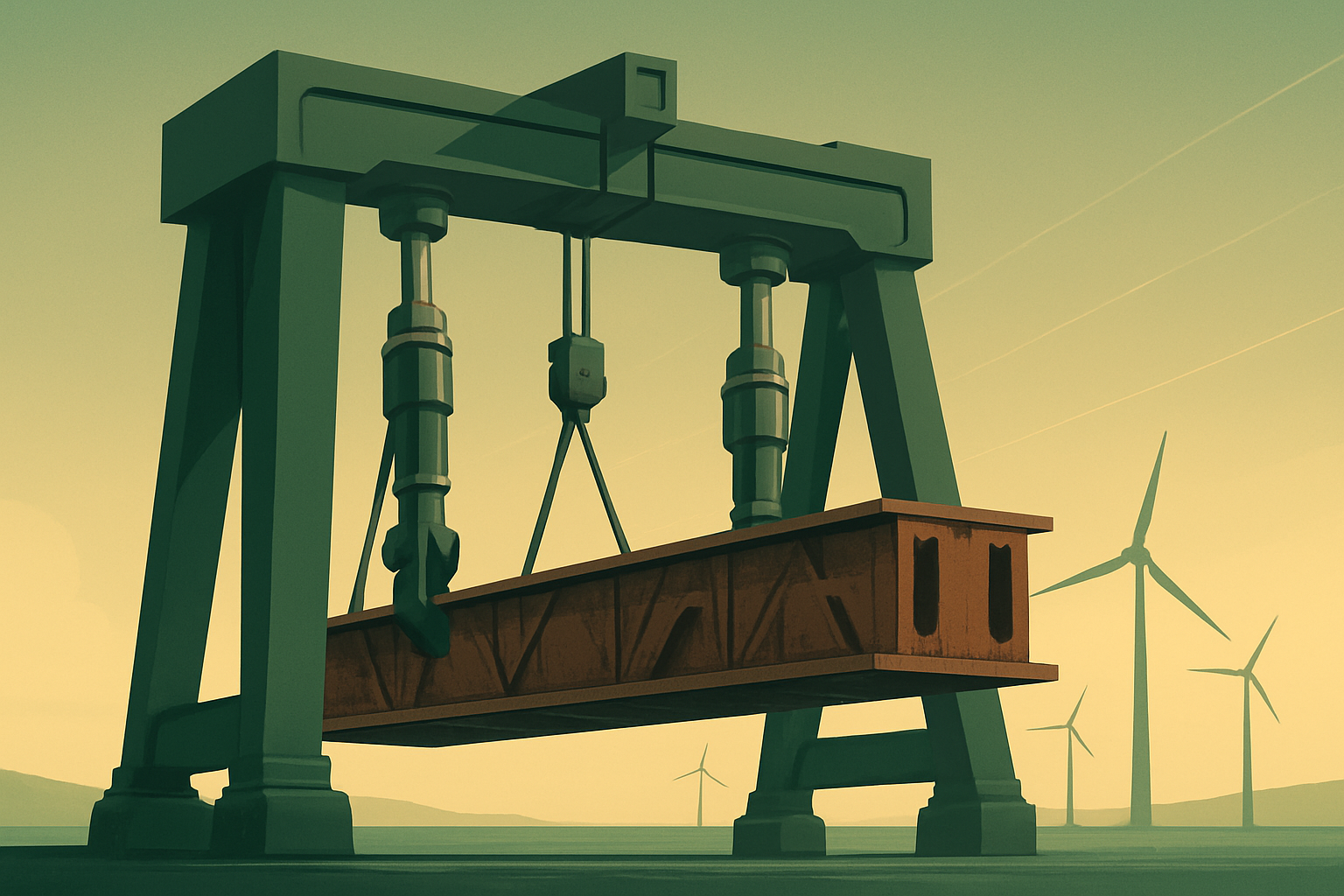
- Heavy Lifting Technology (HLT): Large-scale systems like strand jacks and gantry systems designed for moving massive structures, such as bridge spans and wind turbine components.
- Services: On-site maintenance, rental tools, and technical training.
The company also maintains a small, high-growth niche called Cortland Biomedical, which leverages the company’s expertise in engineered textiles to produce synthetic fibers for medical implants and surgical devices.
Stock Performance Overview
Over the last decade, Enerpac’s stock has reflected its structural shifts.
- 10-Year Horizon: The performance is marred by the legacy of the Actuant era, where the stock struggled to break out of a range due to the complexity of the conglomerate.
- 5-Year Horizon: Following the 2020 rebranding, the stock saw a strong recovery as margins expanded and the company returned capital to shareholders. However, performance has been cyclical, heavily influenced by global infrastructure spending.
- 1-Year Horizon: Heading into late 2025, the stock had been performing steadily until the recent Q1 2026 earnings report, which erased nearly six months of gains, bringing the year-to-date return into negative territory.
Financial Performance
The Q1 2026 earnings report (released Dec 17, 2025) was the primary catalyst for the recent decline. The company reported revenue of $144.2 million, missing analyst expectations of $146 million. Adjusted Earnings Per Share (EPS) came in at $0.36, a decline from the $0.40 seen in the same quarter last year.
The primary culprit was the Services segment, which saw a 26% revenue plunge. Management attributed this to softness in the UK oil and gas sector and a strategic decision to exit lower-margin contracts. Conversely, standard product sales showed strength, growing 4% organically. Despite the miss, Enerpac maintained its full-year 2026 guidance, projecting sales between $635 million and $655 million, signaling confidence that the service-sector weakness is a temporary realignment rather than a systemic failure.
Leadership and Management
Since October 2021, Enerpac has been led by President and CEO Paul Sternlieb. Sternlieb’s tenure has been defined by the "ASCEND" strategy, which concluded in 2024, focusing on operational excellence and SKU rationalization.
Following ASCEND, the leadership team transitioned to the "Powering Enerpac Performance" (PEP) program. This strategy emphasizes "continuous improvement" and higher-growth markets. Sternlieb’s reputation among investors is that of a disciplined operator who has successfully deleveraged the balance sheet to a net debt/EBITDA ratio of just 0.3x, providing the company with a "fortress" balance sheet to weather economic downturns.
Products, Services, and Innovations
Enerpac's competitive edge lies in its R&D and specialized engineering. In 2025, the company has doubled down on electrification. The launch of the XC-Series battery-powered hydraulic pumps has been a significant driver, allowing technicians to use heavy-duty tools in remote locations without tethering to a power grid or air compressor.
Innovation also extends to "Smart Hydraulics," where IoT sensors are integrated into tools to provide real-time data on pressure and load, enhancing safety and enabling predictive maintenance. The late 2024 acquisition of DTA has also integrated automated horizontal movement technology into Enerpac’s portfolio, positioning them as a leader in autonomous heavy lifting for the "Factory of the Future."
Competitive Landscape
Enerpac occupies a dominant position in the high-pressure hydraulics market, estimated to hold a market share nearly triple that of its nearest direct competitor. However, it faces indirect competition from broader industrial tool manufacturers:
- Columbus McKinnon (NASDAQ: CMCO): A key rival in the lifting and motion control space. While CMCO has broader reach in material handling, Enerpac maintains a specialty in high-force hydraulics.
- Kennametal (NYSE: KMT): Competes for share in the broader industrial tooling market, though focusing more on metal cutting and wear-resistant solutions.
- Parker Hannifin (NYSE: PH): A much larger player that competes in the hydraulic space, though with a less specialized focus on the extreme-heavy-lifting niche that Enerpac dominates.
Industry and Market Trends
The industrial tools market in 2025 is being shaped by two macro forces: The Energy Transition and Infrastructure Renewal.
- Wind Energy: Enerpac has become a critical supplier for the offshore wind industry, where its heavy lifting systems are used to install massive turbine foundations.
- Infrastructure: Global government spending on bridge repairs and highway expansion (particularly in the U.S. and EMEA) continues to provide a "tail" for tool demand.
- Supply Chain Localization: In response to shifting geopolitical tensions in 2024-2025, Enerpac has moved toward regional manufacturing hubs, reducing its reliance on trans-Pacific shipping and mitigating the impact of new trade tariffs.
Risks and Challenges
Despite its market dominance, Enerpac faces significant headwinds:
- Macro-Cyclicality: As a provider of tools for construction and energy, Enerpac is highly sensitive to global GDP growth. A slowdown in industrial production directly impacts their bottom line.
- Service Segment Volatility: The 26% drop in service revenue this quarter highlights the volatility of on-site contracts, particularly in the shifting European energy landscape.
- Currency Risks: With a significant portion of revenue coming from EMEA and APAC, a strong U.S. Dollar continues to act as a headwind for reported earnings.
Opportunities and Catalysts
The current stock decline may be a "clearing event" for several upcoming catalysts:
- $200 Million Buyback: In October 2025, the board authorized a fresh $200 million share repurchase program. At the current depressed stock price, these buybacks will be highly accretive to EPS.
- M&A Integration: The integration of DTA and other potential "bolt-on" acquisitions in the automation space could provide non-organic growth.
- Operating Leverage: As the PEP program matures, analysts expect margin expansion to continue, potentially pushing EBITDA margins toward the 25% mark.
Investor Sentiment and Analyst Coverage
Wall Street remains divided but leaning toward "cautiously bullish." Following the Q1 miss, firms like Roth Capital and Argus have maintained their "Buy" ratings, albeit with slightly adjusted price targets. The consensus price target currently sits near $52.00, suggesting significant upside from the current $35 level.
Institutional ownership remains high, with major funds seeing the company as a "quality-at-a-reasonable-price" (QARP) play. However, retail sentiment has soured slightly due to the earnings volatility, leading to the current "oversold" conditions noted by technical analysts.
Regulatory, Policy, and Geopolitical Factors
Enerpac is subject to stringent safety and environmental regulations. In 2025, the focus has been on carbon footprint transparency in the supply chain. The company’s move toward battery-powered tools aligns with global "Green Jobs" initiatives and infrastructure bills that favor carbon-neutral construction equipment. Additionally, the recent 2025 trade policy shifts have forced Enerpac to navigate complex tariff structures, though its regionalized supply chain has provided more resilience than some of its peers.
Conclusion
Enerpac Tool Group finds itself at a crossroads as we end 2025. The Q1 2026 earnings miss was undoubtedly a setback, driven primarily by a recalibration of its service segment. However, the core of the business—high-margin, market-leading hydraulic products—remains robust.
With a fortress balance sheet, a aggressive buyback program, and a leadership team focused on operational discipline through the PEP program, Enerpac is well-positioned for a recovery. Investors should watch the next two quarters closely for a stabilization in service revenue; if management can prove the Q1 miss was an anomaly, the current "discount" in the stock may prove to be a fleeting opportunity in a high-quality industrial leader.
This content is intended for informational purposes only and is not financial advice.