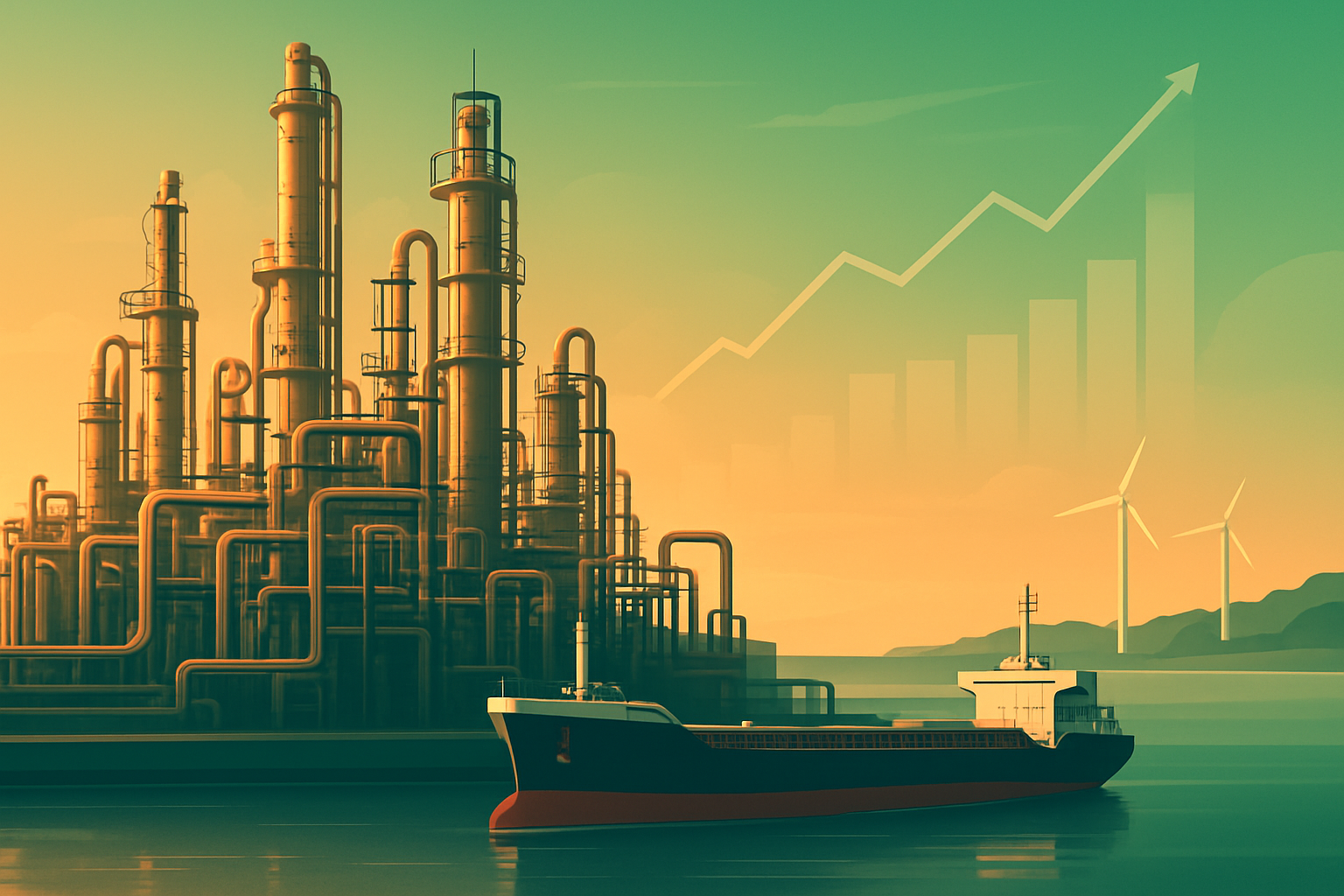
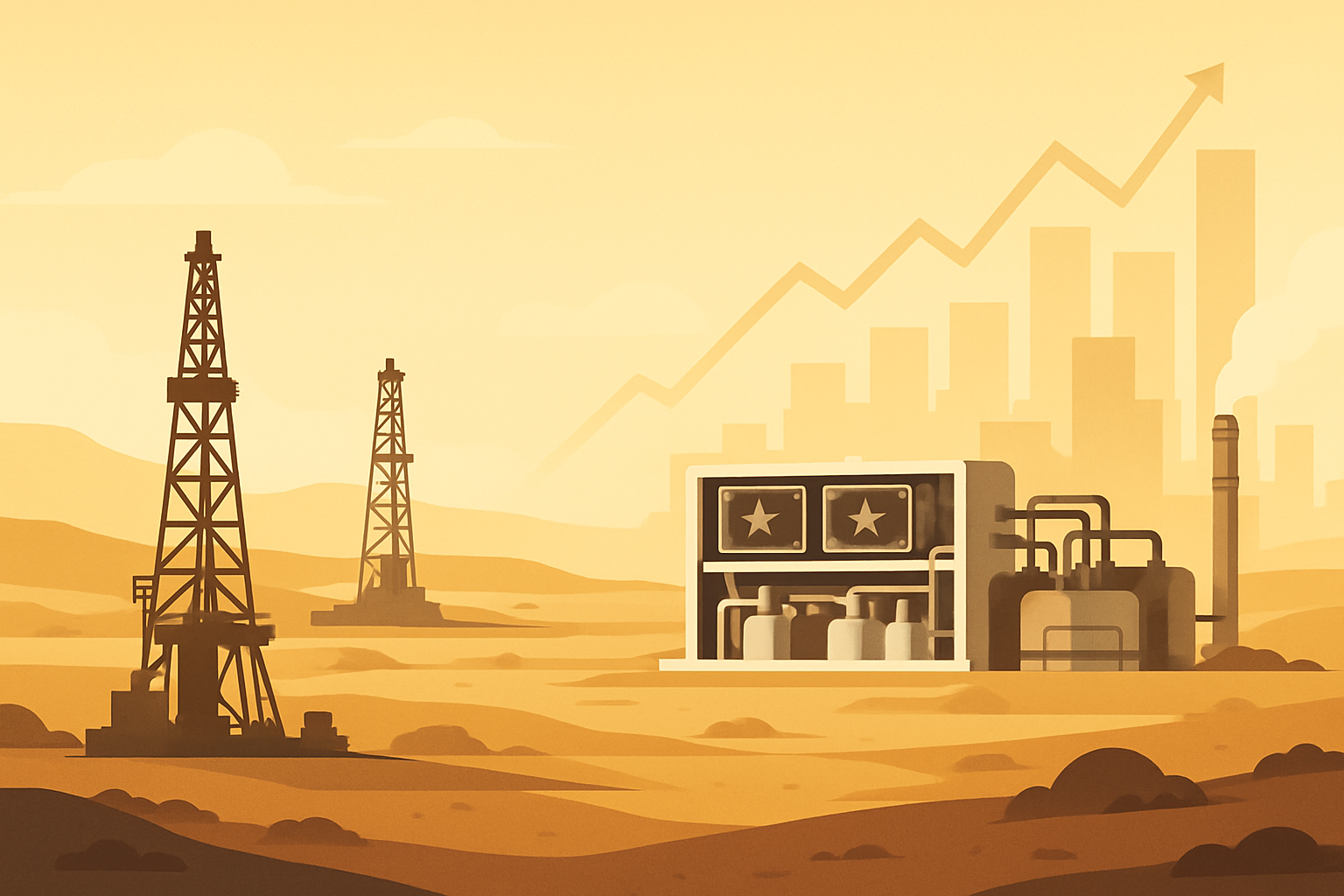
Chevron Corporation (NYSE: CVX) is a multinational energy corporation with a rich history and a significant presence in the global energy sector. Its ticker is CVX and it trades on the New York Stock Exchange (NYSE). Headquartered in San Ramon, California, Chevron is one of the largest integrated energy companies globally and the second-largest oil company in the United States.
Founded in 1879, Chevron operates across the entire energy value chain, categorized into two main segments: Upstream (exploration, development, production, and transportation of crude oil and natural gas) and Downstream (refining crude oil into various products and manufacturing/selling lubricants and petrochemicals). The company also has interests in chemical and polymer manufacturing, coal and mineral mining, and geothermal energy. As of 2023, Chevron had approximately 44,000 employees and produced over 3.1 million oil-equivalent barrels per day.
Chevron remains a dominant player in the traditional fossil fuel industry, essential for meeting global energy demand. Its integrated business model provides diversification that helps mitigate the inherent volatility of the energy sector. In response to the evolving energy landscape, Chevron is also strategically investing in lower-carbon initiatives, with aspirations for net-zero emissions by 2050 and plans to spend $10 billion through 2028 on renewable fuels, hydrogen, carbon capture, and lithium extraction. The acquisition of Renewable Energy Group (REG) in June 2022 made Chevron a major producer of biofuels in the U.S.
A key development for Chevron’s future relevance is its acquisition of Hess Corporation (expected to close in 2025), which is anticipated to significantly enhance its resource base and extend its production and free cash flow growth into the 2030s, particularly through access to Guyana’s vast oil production potential. This move solidifies its position amidst competitors like ExxonMobil, with both companies controlling over 20% of the global oil and gas integrated operations market.
Chevron is a focus for investors today for several compelling reasons: its financial strength and robust dividends (a 38-year streak of annual dividend increases), its integrated business model that mitigates risk, strategic growth through acquisitions like Hess Corporation, a positive outlook on natural gas demand, and an attractive valuation. The company's ability to maintain profitability even during periods of lower oil prices, with a breakeven level at around $30 per barrel, further enhances its appeal.
2. Historical Background
Chevron Corporation boasts a rich history spanning over a century, marked by its origins as a California-based oil producer, significant expansions, and a series of transformative mergers and acquisitions.
Chevron’s roots trace back to Pacific Coast Oil Company (PCO), which was incorporated in San Francisco on September 10, 1879. PCO acquired the assets of California Star Oil Works, a company that had successfully struck oil in Pico No. 4 well in Pico Canyon in 1876, marking California’s first commercial oil discovery. In 1900, Standard Oil Company acquired PCO. Six years later, in 1906, Standard Oil merged PCO with another firm, including its West Coast marketing operations and Standard Oil Company of Iowa, to create the Standard Oil Company (California), often referred to as Socal.
Following its formation, Standard Oil Company (California) rapidly established itself with several key early achievements. PCO built its first refinery at Alameda Point, California, in 1880, later replaced by the larger Richmond Refinery in 1902. In the late 1880s, the company laid California’s first oil pipeline from Pico Canyon to Elayon. In 1895, it built the "George Loomis," California’s first steel-hulled tanker. A pivotal moment occurred in 1911 when the U.S. Supreme Court ordered the dissolution of the Standard Oil Trust. As a result, Standard Oil (California) became an independent and autonomous entity. By 1926, through acquisition and organic growth, it was the largest oil company in California. The 1930s marked a new era of international expansion with significant oil discoveries in Bahrain (1932) and Saudi Arabia (1938), leading to the formation of the California Arabian Standard Oil Company (Casoc).
Chevron’s history is characterized by strategic mergers and acquisitions that transformed its size, scope, and global presence. In 1931, Socal introduced the chevron-shaped hallmark logo. In 1961, Socal merged with Standard Oil of Kentucky (KYSO). The most monumental merger occurred in 1984, when Standard Oil Company of California merged with Gulf Oil Corporation, nearly doubling its oil and natural gas reserves. Following this, Socal officially rebranded as Chevron Corporation to establish a global identity. In 2001, Chevron merged with Texaco in a $45 billion acquisition, forming ChevronTexaco Corporation, making it the second-largest U.S.-based energy company. In 2005, ChevronTexaco acquired Unocal Corporation for $18.4 billion and concurrently reverted its name to Chevron Corporation. More recently, Chevron acquired Noble Energy in 2020, Renewable Energy Group (REG) in 2022, and announced an all-stock deal to acquire Hess Corporation for $53 billion in 2023, significantly expanding its oil and gas assets, particularly in oil-rich Guyana. Through these foundational steps and strategic transformations, Chevron has evolved from a regional oil producer into one of the world’s largest integrated energy companies.
3. Business Model
Chevron Corporation (NYSE: CVX) operates a comprehensive and vertically integrated business model, encompassing the entire energy value chain from exploration to the end consumer. This integrated approach allows Chevron to maximize efficiency, mitigate risks, and adapt to evolving energy market demands.
Chevron primarily operates through two main business segments: Upstream and Downstream. Historically, chemicals were often a distinct segment or handled through joint ventures, but the company has consolidated its Oil, Products & Gas organization, with Midstream and Chemicals being integrated into the Downstream segment.
1. Upstream Operations:
This segment is responsible for the exploration, development, production, and transportation of crude oil and natural gas. Chevron's key production areas include the Permian Basin (U.S.), DJ Basin (U.S.), Gulf of Mexico, Australia, Nigeria, Angola, and Kazakhstan. The company is involved in processing, liquefaction, transportation, and regasification of liquefied natural gas (LNG), and the transportation, storage, and marketing of natural gas. Chevron aims to produce 1 million barrels of oil-equivalent (BOE) per day from the Permian by 2025 and 300,000 net BOE per day from the Gulf of Mexico by 2026.
2. Downstream, Midstream & Chemicals Operations:
This segment handles the refining of crude oil into petroleum products, marketing, and transportation of these products, as well as chemical manufacturing and sales. Chevron operates refineries that process crude oil into a wide array of refined products, selling them directly to consumers through Chevron-branded service stations and to businesses. As of 2010, Chevron operated approximately 19,550 retail sites in 84 countries, including those under its Texaco and Caltex brands.
- Product Lines (Downstream):
- Fuels: Gasoline, diesel, jet fuel, marine fuels, and aviation fuels, as well as asphalt and road oil, distillate fuel oil, and fuel ethanol.
- Lubricants & Additives: A comprehensive range of engine oils, greases, and coolants under brands like Delo®, Havoline®, Techron®, and others. Chevron Global Marine Lubricants is a major supplier of marine lubricants.
- Petrochemicals: Through its joint venture, Chevron Phillips Chemical Company LLC (CPChem), Chevron manufactures basic olefins, polyolefins, and specialty chemicals crucial for various industries.
- Services: Lubricant management systems like eWave for online ordering and tracking.
- Geographical Presence: Significant downstream operations are concentrated in Western North America, the U.S. Gulf Coast, Southeast Asia, South Korea, Australia, and South Africa.
Chevron’s revenue model is diversified, drawing income from various streams across its integrated operations:
- Sale of Crude Oil and Natural Gas: This constitutes the primary source of Chevron’s revenue from its exploration and production activities.
- Refining and Marketing: Sales of refined petroleum products like gasoline, diesel, and jet fuel contribute significantly.
- Sale of Chemicals: Revenue is generated from the sale of petrochemical products through CPChem, contributing approximately $15 billion in 2022.
- Power Generation: Chevron also generates and sells electricity, often to utility companies.
- Renewable Energy Investments: While still a smaller portion, investments in renewable energy technologies such as biofuels, solar, wind, and hydrogen power are emerging revenue streams, aligning with a focus on a lower-carbon future.
For fiscal year 2023, Upstream Operations accounted for 55.6% of total revenue ($131.4 billion), while Downstream Operations contributed 35.6% ($84.2 billion), and Midstream Operations accounted for 8.8% ($20.8 billion).
Chevron serves a diverse global customer base, including individual consumers who purchase fuels at its branded service stations, industrial clients and commercial entities requiring bulk fuels, lubricants, and chemicals, airlines for jet fuel, government entities, utility companies, and other third parties who purchase crude oil, natural gas, and natural gas liquids in the open market.
4. Stock Performance Overview
As of today, October 3, 2025, Chevron Corporation (NYSE: CVX) has demonstrated a complex stock performance over various time horizons, heavily influenced by fluctuating oil prices, strategic acquisitions, and a consistent focus on shareholder returns.
1-Year Performance (October 3, 2024 – October 3, 2025)
Over the past year, Chevron's stock has navigated a volatile energy market. As of October 1, 2025, CVX closed at $154.58. The stock's 52-week range saw a high of $168.96 and a low of $132.04, with an average price of $151.39.
Notable Stock Price Movements: In the first quarter of 2025, Chevron reported a decline in earnings compared to the previous year, primarily due to lower oil prices and reduced refined product margins. This led to a temporary slowdown in the company's share repurchase program. Despite an initial rally at the start of 2025, the stock experienced a decline of approximately 5% by May 2025. Towards the end of the period, around September 2025, news of potential increased crude production by OPEC+ exerted downward pressure on oil prices and, consequently, on Chevron's stock.
Key Drivers:
- Oil Price Volatility: Chevron's stock performance maintains a strong correlation with crude oil prices. Declining oil prices in parts of 2025 directly impacted earnings and cash flow, influencing share buyback decisions.
- Hess Acquisition: The acquisition of Hess Corporation, valued at $53 billion, significantly strengthened Chevron's presence in the Permian Basin and Guyana's Stabroek field. The deal, which closed in mid-July 2025, is projected to enhance production and free cash flow, although it faced legal challenges from ExxonMobil.
- Shareholder Returns: Chevron continued its commitment to shareholder returns, announcing a quarterly dividend of $1.71 per share in August 2025, representing a 4.5% annualized yield. The company has an exceptional dividend history, with 38 consecutive years of growth.
- Production Growth: The company focused on developing assets in the Permian and DJ basins, contributing to strong domestic production growth. Chevron projected a 6%-8% increase in fossil fuel production for 2025.
Comparisons to Benchmarks:
- S&P 500 (SPY): As of October 1, 2025, the S&P 500 (SPY) showed a 1-year total return of 18.99%. Chevron underperformed the S&P 500 during much of this period, with one report indicating a -1% performance versus the S&P 500's +15% over the prior 12 months as of August 2025.
- Energy Select Sector SPDR Fund (XLE): The Energy Select Sector SPDR Fund (XLE), representing the broader energy sector, had a 1-year annualized return of -3.91% as of June 30, 2025. Chevron's performance, despite challenges, showed resilience within a generally struggling energy sector during this specific timeframe.
5-Year Performance (October 3, 2020 – October 3, 2025)
This five-year period encapsulates the dramatic recovery of the energy sector following the severe downturn caused by the COVID-19 pandemic.
Notable Stock Price Movements: The period began shortly after the historic oil price crash of 2020. Chevron's stock has seen a significant recovery since then, with its value increasing by 80% from April 2020 to May 2025. The company achieved record free cash flows between 2021 and 2023. However, towards the latter part of this period, concerns regarding peak Permian production and potential cash flow pressures emerged as headwinds.
Key Drivers:
- Oil Price Rebound: The substantial recovery in oil prices from the 2020 lows was a primary catalyst for Chevron's strong performance through much of this period.
- Strategic Acquisitions and Investments: Chevron strategically acquired assets like Noble Energy in 2020 and PDC Energy in 2023, enhancing its proven oil and gas reserves and resources. The Hess acquisition further solidified its asset base.
- Cost Management and Free Cash Flow: Chevron focused on operational efficiencies and cost reductions, aiming for $2 billion to $3 billion in cost savings by 2026, contributing to robust free cash flow generation.
Comparisons to Benchmarks:
- S&P 500 (SPY): The 5-year total return for SPY as of October 1, 2025, was 112.74%.
- Energy Select Sector SPDR Fund (XLE): As of September 2025, XLE delivered a strong annualized return of 26.38% over the past 5 years. Chevron likely contributed significantly to this sector-wide outperformance during the energy market's strong recovery phases.
10-Year Performance (October 3, 2015 – October 3, 2025)
This decade witnessed multiple commodity cycles, significant geopolitical events, and an evolving energy landscape.
Notable Stock Price Movements: The period encompasses the oil market downturn of 2014-2016, the extreme volatility of 2020, and the subsequent recovery. Chevron's stock demonstrated considerable price swings throughout these cycles. Its all-time high closing price of $167.40 was reached on January 26, 2023.
Key Drivers:
- Long-Term Commodity Price Cycles: As a large-cap integrated energy company, Chevron's performance is intrinsically linked to the long-term trends and cyclical nature of global oil and gas prices. The company's low breakeven level of approximately $30 per barrel for 2025 highlights its operational resilience.
- Resilient Portfolio and Shareholder Returns: Chevron has consistently focused on building a resilient upstream portfolio through acquisitions and investments in cost-efficient projects. Its unbroken record of dividend payments for 113 years and 37 consecutive years of dividend growth underscore its commitment to shareholder value through various market conditions.
- Geopolitical and Macroeconomic Factors: Geopolitical tensions, OPEC+ production decisions, and global economic growth or slowdowns have all played a crucial role in shaping oil demand and prices, thereby impacting Chevron's stock.
Comparisons to Benchmarks:
- S&P 500 (SPY): Between September 30, 2015, and September 30, 2025, the SPY ETF generated a total return of 312.6%. As of October 1, 2025, its 10-year total return was 311.73%.
- Energy Select Sector SPDR Fund (XLE): The XLE ETF had a 10-year annualized return of 5.37% as of June 30, 2025. Chevron's performance over this long horizon would show periods of both outperformance and underperformance relative to the broader market, largely dictated by the specific phase of the energy commodity cycle. While the S&P 500 generally delivered higher returns over this decade, the energy sector, including Chevron, experienced significant growth during the commodity boom periods within this timeframe.
5. Financial Performance
As of today, October 3, 2025, Chevron Corporation (NYSE: CVX) has demonstrated a mixed financial performance in its recent reports, with strong cash flow generation and strategic acquisitions amidst fluctuating earnings and revenue influenced by global energy prices. The company's latest reported earnings are for the second quarter of 2025, with the third quarter 2025 earnings scheduled for release on October 31, 2025.
Latest Earnings Report: Q2 2025 Highlights
For the second quarter of 2025, Chevron reported:
- Reported Earnings: $2.5 billion, or $1.45 per diluted share. This is a significant decrease compared to $4.4 billion, or $2.43 per diluted share, in Q2 2024.
- Adjusted Earnings: $3.1 billion, or $1.77 per diluted share, which surpassed Wall Street profit expectations. This is down from $4.7 billion, or $2.55 per diluted share, in Q2 2024.
- Revenue: Total revenues and other income reached $44.82 billion, falling short of analyst forecasts and representing a decline from $51.18 billion in the year-ago quarter (Q2 2024).
- Production: Chevron achieved record U.S. and worldwide oil and gas production, totaling 3.396 million barrels of oil equivalent per day. Production in the Permian Basin notably reached 1 million barrels of oil equivalent per day.
- Strategic Move: The acquisition of Hess Corporation was completed in July 2025.
The decline in Q2 2025 earnings and revenue was primarily attributed to sharply lower oil prices, which outpaced gains from record production volumes.
Revenue Growth Trends
Chevron's revenue has shown volatility in recent periods:
- Q2 2025: $44.82 billion, a decrease from $51.18 billion in Q2 2024.
- Q1 2025: $47.6 billion, missing analyst expectations.
- Q4 2024: $52.2 billion, an 11% increase year-over-year from Q4 2023.
- Annual Revenue 2024: $202.79 billion, a modest 0.92% increase compared to 2023.
- Annual Revenue 2023: $200.95 billion, an 18.4% decrease from 2022.
- Annual Revenue 2022: $246.25 billion, a significant 51.57% increase from 2021.
- Trailing Twelve Months (TTM) Revenue: For the twelve months ending June 30, 2025, revenue was $189.27 billion, reflecting a 3.06% year-over-year decrease.
Overall, while 2021 and 2022 saw strong revenue growth, 2023 experienced a decline, and the first half of 2025 indicates continued revenue pressure due to lower commodity prices.
Profit Margins
Chevron's profit margins have also fluctuated with market conditions:
- Latest Twelve Months Gross Profit Margin: 39.2%.
- Gross Profit Margin (Annual): Averaged 40.7% from 2020 to 2024, with 39.5% in 2024 and 39.3% in 2023.
- Net Profit Margin (Q2 2025): 5.68%.
- Net Profit Margin (Trailing Twelve Months, as of September 2025): Approximately 7.2% to 7.31%.
- Net Profit Margin (Annual): 7.0% in 2024, 12.76% in 2023, and 13.33% in 2022.
The net profit margin in Q2 2025 reflects the impact of lower earnings, resulting in a decline from previous periods.
Debt Levels
Chevron maintains a manageable debt profile:
- Total Debt (June 2025): $29.46 billion.
- Net Debt (June 2025): Approximately $25.4 billion, after offsetting with $4.07 billion in cash.
- Debt-to-Equity Ratio: 20%, a reduction from 25.3% over the past five years, indicating improved financial leverage.
- Net Debt-to-Equity Ratio: 17.2%, considered satisfactory.
- Debt Coverage: The company's debt is well covered by its operating cash flow (109.1%).
- Interest Coverage: Chevron's EBIT covers its interest expenses by 22.9 times, demonstrating strong ability to service its debt.
- Net Debt to EBITDA (September 2025): 0.69, suggesting a low debt load relative to its earnings power.
Chevron has shown a consistent reduction in total debt from $44.315 billion in 2020 to $20.836 billion in 2023, although it saw a slight increase to $24.541 billion in 2024, driven by a rise in short-term debt.
Cash Flow Generation
Chevron is a strong generator of cash flow:
- Cash Flow From Operations (CFFO) Q2 2025: $8.6 billion.
- Cash Flow From Operations (CFFO) YTD 2025: $13.8 billion ($5.2 billion in Q1 2025 and $8.6 billion in Q2 2025).
- Free Cash Flow (FCF) Q2 2025: $4.86 billion.
- CFFO Excluding Working Capital Q1 2025: $7.6 billion.
- Annual Cash Flow From Operations 2024: $31.492 billion, a decrease from $35.609 billion in 2023 and a peak of $49.602 billion in 2022.
- Annual Free Cash Flow (Latest TTM): $16.10 billion.
The company has consistently returned cash to shareholders, with $5.5 billion returned in Q2 2025, including $2.6 billion in share repurchases and $2.9 billion in dividends. In 2024, Chevron returned a record $27 billion cash to shareholders.
Key Valuation Metrics
As of late September 2025:
- P/E Ratio (Trailing): Ranges from 19.74 to 20.11. Specifically, as of September 30, 2025, the P/E ratio was 19.91.
- Forward P/E Ratio: Ranges from 14.23 to 18.29.
- EV/EBITDA (Trailing): Approximately 8.73 to 9.19. As of September 26, 2025, Chevron's EV/EBITDA was 8.73.
The current P/E ratio is lower than its historical average of 26.44 over the last ten years.
Conclusion
Chevron Corporation's financial performance in the most recent quarters reflects the dynamic nature of the energy sector, particularly the impact of fluctuating commodity prices. While Q2 2025 saw a dip in earnings and revenue due to lower oil prices, the company demonstrated strong operational efficiency with record production. Chevron maintains a robust balance sheet with manageable debt levels, excellent interest coverage, and strong cash flow generation, enabling consistent shareholder returns. The completion of the Hess Corporation acquisition in July 2025 is a significant strategic move that could impact future financial performance. Investors will be closely watching the Q3 2025 earnings report for further insights into the company's trajectory amidst evolving market conditions.
6. Leadership and Management
Chevron Corporation (NYSE: CVX) is an integrated energy company guided by a well-defined leadership structure, a strategic vision balancing traditional energy with lower-carbon initiatives, and a reputation continuously evolving with its governance and sustainability efforts.
Current CEO
Michael K. (Mike) Wirth serves as the Chairman of the Board and Chief Executive Officer of Chevron Corporation, roles he assumed on February 1, 2018. Wirth joined Chevron in 1982 as a design engineer and has progressed through various leadership positions, including executive vice president of Downstream & Chemicals and president of Global Supply and Trading. In a significant move in July 2023, Chevron's board waived the mandatory retirement age of 65 for Wirth, allowing him to continue in his role indefinitely. As part of operational adjustments, Wirth oversaw the relocation of Chevron's corporate headquarters to Houston, Texas, in 2024.
Key Leadership Team Members
Chevron's executive leadership team, under Mike Wirth, includes several key individuals responsible for driving the company's strategic priorities. These include Mark Nelson as Vice Chairman and Executive Vice President, Oil, Products & Gas; Eimear Bonner as Vice President and Chief Financial Officer (succeeding Pierre Breber in March 2024); Clay Neff as President, Upstream (effective July 1, 2025); Bruce Niemeyer as President, Shale & Tight (effective July 1, 2025); and Andy Walz as President, Downstream, Midstream & Chemicals. Other key leaders include Ryder Booth (VP, Technology, Projects & Execution), Balaji Krishnamurthy (President, Australia), Mary A. Francis (Chief Governance Officer and Corporate Secretary), R. Hewitt Pate (Vice President and General Counsel), and Molly T. Laegeler (VP, Strategy & Sustainability). These leadership changes, announced in February 2025, aim to improve operational efficiency and competitiveness by consolidating the Oil, Products & Gas organization into two segments: Upstream and Downstream, Midstream & Chemicals.
Board of Directors
Chevron's Board of Directors is composed of twelve members, with Michael K. Wirth also serving as the Chairman. The board is committed to sound corporate governance and oversees the company's strategic direction, corporate performance, financial controls, legal compliance, and risk management programs. Notable independent directors include Wanda M. Austin, John B. Frank, Alice P. Gast, Enrique Hernandez Jr., Marillyn A. Hewson, Jon M. Huntsman Jr., Charles W. Moorman, Dambisa F. Moyo, Debra Reed-Klages, D. James Umpleby III, and Cynthia J. Warner. John B. Hess also joined the board on July 29, 2025. The Board dedicates at least one meeting annually to strategic planning and has participated in expanded offsite strategy sessions that included presentations by third-party experts on global energy transition issues. In May 2025, stockholders approved amendments to Chevron's Restated Certificate of Incorporation, providing officer exculpation to limit the monetary liability of certain officers, reinforcing protection measures for top executives.
Overall Corporate Strategy
Chevron's corporate strategy, as of October 2025, is centered on leveraging its strengths to "safely deliver lower carbon energy to a growing world." The objective is to deliver higher returns, lower carbon, and superior shareholder value across various business environments. This strategy is multi-faceted:
- Optimizing Core Oil and Gas Assets: Chevron focuses on boosting efficiency in key basins like the Permian, targeting 1 million barrels of oil equivalent per day (BOE/day) production through at least 2040. Production in the Gulf of Mexico is also projected to increase from 200,000 to 300,000 barrels per day by the end of 2026.
- Strategic Acquisitions and Growth: A cornerstone of its 2025 strategy was the completion of the $53 billion acquisition of Hess Corporation in July 2025. This acquisition integrated Hess's 30% stake in Guyana's Stabroek Block and U.S. Bakken shale assets, significantly bolstering Chevron's production and free cash flow.
- Lower Carbon Initiatives: Chevron is committed to lowering the carbon intensity of its operations and growing new businesses in renewable fuels, carbon capture and offsets, hydrogen, power generation for data centers, and emerging technologies. The company aims to reduce methane emissions intensity by 50% from a 2016 baseline by 2030, end routine flaring by 2030, and achieve 100,000 barrels per day renewable fuels production capacity by 2030.
- Diversification into Critical Minerals: Chevron is pivoting into critical minerals by acquiring 125,000 net acres in Arkansas and Texas to target lithium-rich brines in the Smackover Formation, aiming for an initial production capacity of around 22,500 tonnes annually by 2028. This move supports its New Energies division.
- Operational Efficiency and Cost Management: The company is implementing a global restructuring plan to reduce structural costs by $2–$3 billion by 2026, which includes divesting mature assets and workforce reductions of 15–20% globally.
Reputation Regarding Governance and Sustainability Initiatives
Governance: Chevron emphasizes strong corporate governance, with its Board of Directors actively overseeing company performance, financial integrity, and risk management. The Board regularly engages with stockholders on corporate governance and sustainability issues. The unanimous election of director nominees for one-year terms and the 94% advisory approval of Chevron's executive compensation program at the May 2025 Annual Meeting reflect solid shareholder confidence. The recent approval of officer exculpation amendments further signals a robust framework for executive protection. However, the acquisition of Hess Corporation faced an arbitration battle with ExxonMobil, creating some governance challenges that were ultimately resolved.
Sustainability Initiatives: Chevron publicly states its commitment to a lower-carbon future, aiming to reduce the carbon intensity of its operations and invest in new lower-carbon businesses. The company has set specific goals, including a 50% reduction in methane emissions intensity by 2030 (from a 2016 baseline) and ending routine flaring by the same year. Chevron allocated $10 billion to lower carbon projects through 2028 and has made strategic investments, such as a $500 million venture capital fund for lower-carbon technologies and leading a $45 million Series A funding round for carbon capture company ION Clean Energy. It completed abatement projects from 2021 to 2024 designed to reduce 1.2 million tonnes of carbon dioxide equivalent (CO2e) emissions annually and installed over 250 facility retrofits to reduce methane emissions in Colorado.
Despite these efforts, Chevron's reputation regarding sustainability initiatives has faced scrutiny. In December 2024, the company announced a 25% cut in its low-carbon investments, reducing its budget for green initiatives from $2 billion to $1.5 billion. This decision, driven by a strategy to prioritize profitability, has raised questions about Chevron's long-term sustainability commitments and its public image. Furthermore, Chevron has been criticized for "greenwashing tactics" and was found by a Federal Trade Commission to be misleading customers about its efforts to reduce greenhouse gas emissions. This indicates a complex balancing act between financial pressures and environmental responsibilities, which continues to shape public perception of Chevron's sustainability efforts.
7. Products, Services, and Innovations
Chevron Corporation (NYSE: CVX) is a global energy giant with a diversified portfolio spanning traditional hydrocarbon operations and an increasingly prominent focus on lower-carbon energy solutions. As of today, October 3, 2025, the company maintains robust upstream and downstream segments while aggressively expanding its innovation pipeline, research and development (R&D) efforts, and patent portfolio, which collectively contribute to its key competitive advantages.
Current Products and Services
Chevron's operations are broadly categorized into upstream, downstream, and chemicals, with a significant and growing component in new energy ventures:
- Upstream Operations: This segment focuses on the exploration, development, production, and transportation of crude oil and natural gas. Chevron's key production areas include the Permian Basin (U.S.), DJ Basin (U.S.), Gulf of Mexico, Australia, Nigeria, Angola, and Kazakhstan. The company is involved in processing, liquefaction, transportation, and regasification of liquefied natural gas (LNG), and the transportation, storage, and marketing of natural gas. Chevron aims to produce 1 million barrels of oil-equivalent (BOE) per day from the Permian by 2025 and 300,000 net BOE per day from the Gulf of Mexico by 2026.
- Downstream Operations: Chevron refines crude oil into a wide array of petroleum products, including gasoline, diesel, and jet fuel. These products are marketed and distributed globally through an extensive network of retail sites operating under brands such as Chevron, Texaco, and Caltex. Significant downstream operations are located on the West Coast of North America, the U.S. Gulf Coast, Southeast Asia, South Korea, Australia, and South Africa.
- Chemicals: Chevron produces petrochemicals that are essential components for various industrial applications.
- Renewable Fuels: The company is significantly expanding its renewable fuels business. Its renewable diesel plant in Geismar, Louisiana, saw a capacity upgrade, increasing output from 7,000 to 22,000 barrels per day. Chevron is actively involved in sustainable aviation fuel (SAF), bio-based diesel, and renewable natural gas (RNG). The company aims to grow its renewable fuels capacity to 100,000 barrels per day by 2030 and increase renewable natural gas production tenfold by 2025 compared to 2020.
Innovation Pipelines and Research & Development (R&D) Efforts
Chevron has established "Chevron New Energies" as its dedicated division for low-carbon businesses, signaling a strategic shift with a substantial capital allocation of $10 billion for lower carbon projects between 2021 and 2028. Their innovation pipeline and R&D efforts are concentrated on several key areas:
- Hydrogen: Chevron is making decisive moves into the hydrogen economy with several high-impact projects, including Project Labrador (a natural gas-fueled hydrogen production facility in Texas), a California Solar-to-Hydrogen Project (expected to produce 2.2 tons of low carbon intensity hydrogen per day starting in 2025), and a majority stake in the Advanced Clean Energy Storage (ACES) Project in Utah. They are also collaborating with companies like Caterpillar and Cummins for hydrogen transportation solutions and with Iwatani for hydrogen fueling stations.
- Carbon Capture, Utilization, and Storage (CCUS): This is a critical component of Chevron's decarbonization strategy. Key projects include the Bayou Bend CCS Project in Southeast Texas (a joint venture positioned to be one of the largest carbon storage hubs in the U.S.), the Gorgon Project in Australia (one of the world's largest integrated CCS projects), and the Pascagoula CCS Project (expected operational in 2025). Chevron is also piloting Svante carbon capture technology and has invested in ION Clean Energy.
- Lithium Extraction: To support the growing electric vehicle (EV) and battery storage markets, Chevron has acquired approximately 125,000 net acres in the Smackover Formation across Northeast Texas and Southwest Arkansas, targeting lithium-rich brines for direct lithium extraction (DLE) technologies.
- Lower Carbon Power Generation: Chevron is partnering with Engine No. 1 and GE Vernova to develop up to 4 gigawatts of natural gas power solutions for U.S. data centers, with flexibility to integrate carbon capture and storage.
- Emerging Technologies and Digital Transformation: Through its venture arm, Chevron Technology Ventures, the company launched the Future Energy Fund III with $500 million to invest in breakthrough lower-carbon technologies such as fusion, direct air capture, and advanced battery solutions. Chevron also integrates advanced digital tools and AI into its operations to optimize exploration, drilling, safety protocols, and overall efficiency. The company is a sustaining member of the MIT Energy Initiative.
Patents
Chevron is a leading patent holder in the energy industry, demonstrating a strong commitment to intellectual property. The company holds over 4,400 active granted patents worldwide, with more than 3,200 additional patents currently pending. Globally, Chevron has a total of 15,864 patents, with 7,927 currently active. A significant portion of Chevron's patent portfolio is related to climate change, emissions reduction, and renewable energy. The United States is a primary focus for Chevron's patenting activity. Recent patent grants include innovations in fluid modeling, waste treatment, detection of drill bit heat, Germanosilicate compositions, carbon dioxide sequestration, and hydrogen production systems.
Key Competitive Advantages
Chevron's competitive advantages stem from a combination of strategic assets, operational excellence, and a forward-looking approach to the evolving energy landscape:
- Integrated Business Model: Chevron's vertical integration across the entire energy value chain enables optimized operational efficiencies, risk mitigation, and rapid responses to market dynamics.
- Extensive Global Presence and Diversified Asset Portfolio: Operating in over 180 countries, Chevron possesses a vast and diverse portfolio of oil and gas reserves, which helps mitigate risks associated with regional market fluctuations and geopolitical challenges.
- Strong Financial Position: Consistent robust earnings and strong cash flow provide Chevron with financial flexibility, enabling it to weather market volatility, pursue growth opportunities, and make significant investments in innovation and infrastructure.
- Technological Expertise and R&D Leadership: Chevron's continuous and substantial investment in R&D allows it to improve extraction techniques, enhance refining processes, develop new products, and reduce its carbon footprint. Its extensive patent portfolio is a testament to its innovation-driven approach.
- Commitment to Energy Transition and Sustainability: The company's strategic pivot towards lowering carbon intensity and actively growing new lower-carbon businesses positions it favorably with environmentally conscious consumers and investors.
- Operational Excellence and Efficiency: Chevron focuses on optimizing operational efficiencies through advanced technologies and process improvements, such as triple-frac completions, longer laterals, and automation in the Permian Basin.
- Strategic Partnerships and Collaborations: Chevron actively forms partnerships across various sectors to accelerate the development and deployment of innovative and scalable solutions, enhancing its capabilities and market reach in rapidly evolving energy markets.
8. Competitive Landscape
Chevron Corporation (NYSE: CVX) operates within a highly competitive global energy landscape, primarily contending with other international oil supermajors and a growing number of influential national oil companies (NOCs). The company's strategy, market position, and financial performance are continuously shaped by these rivals, dynamic energy markets, and the ongoing energy transition.
Primary Industry Rivals
Chevron's primary competitors fall into two main categories:
-
Other Supermajors (International Oil Companies – IOCs): These are large, publicly traded, integrated oil and gas companies with global operations across the entire value chain. Chevron's key supermajor rivals include:
- ExxonMobil (XOM): Often considered Chevron's most direct peer due to similar scale, integrated business model, and significant presence in exploration, production, refining, and marketing globally. ExxonMobil generally has a larger market capitalization and has shown a stronger balance sheet with a lower debt-to-capital ratio.
- Shell (SHEL) and BP (BP): These European supermajors tend to have a more diversified portfolio, including a heavier emphasis on downstream operations and more significant investments and stated commitments toward low-carbon and renewable energy solutions compared to Chevron's more traditional "molecules" strategy. Both are generally more leveraged than Chevron and ExxonMobil.
- TotalEnergies (TTE): A significant global player, aggressively expanding its LNG portfolio with a target for natural gas to constitute 50% of its energy mix by 2030.
- ConocoPhillips (COP): Primarily focused on upstream exploration and production after spinning off its downstream operations.
-
National Oil Companies (NOCs): NOCs play a dominant role in the global energy market, controlling approximately 88% of the world's oil and gas reserves. Key NOCs that compete with or influence Chevron include Saudi Aramco (Saudi Arabia), PetroChina (China), Sinopec (China), Gazprom (Russia), Petronas (Malaysia), and Petrobras (Brazil). These companies leverage state ownership to secure vast resource bases and often pursue strategic objectives that may differ from purely profit-driven IOCs. They have increasingly evolved into active international competitors, engaging in mergers and acquisitions (M&A) and expanding their upstream and downstream operations globally.
Market Share in Key Segments (Up to Q2 2025)
Chevron operates across the entire energy value chain, but its revenue composition highlights a significant downstream presence:
- Overall Market Capitalization: As of October 2025, Chevron's market capitalization stands at approximately $309.01 billion USD, making it the 38th most valuable company globally.
- Revenue Breakdown (Fiscal Year 2024): Downstream operations generated $146.43 billion, representing 75.71% of Chevron's total revenue, while Upstream operations accounted for $46.85 billion, or 24.22%. This indicates a substantial reliance on its refining, marketing, and transportation segments for overall revenue.
- Upstream Production: In 2024, Chevron achieved a record worldwide production of 3.3 million net oil-equivalent barrels per day (BOED), a 7% increase primarily driven by record production in the Permian Basin. The company targets 1 million barrels per day of oil in the Permian basin in 2025.
- Downstream Market Share (US): In the United States, Chevron holds an estimated 3.8% of the total industry revenue in Petroleum Refining, indicating a notable, though not dominant, position.
- Recent Performance (Q2 2025): Chevron's revenue decreased by -12.42% year-on-year in Q2 2025, a faster decline than its competitors' average decrease of -7.08%. Similarly, its net income in Q2 2025 fell by -43.39% year-on-year, while most competitors experienced a contraction of -27.53%. Despite this, Chevron achieved a higher net margin of 5.61% compared to its competitors in Q2 2025.
Competitive Strengths and Weaknesses Relative to Competitors
Competitive Strengths:
- Global Presence and Diversified Portfolio: Chevron operates in numerous countries, providing market reach and asset diversification across upstream, downstream, and midstream operations, mitigating risks from market fluctuations and geopolitical challenges.
- Strong Financial Performance and Shareholder Returns: The company consistently delivers robust financial results, including strong free cash flow generation and a solid balance sheet. Chevron has a long history of consistent dividend growth and engages in substantial share buyback programs. Its leverage is generally lower than that of some European supermajors.
- Technological Expertise: Chevron is recognized for its technological advancements, such as the deepwater Anchor project, which started production in 2024, utilizing an industry-first 20,000 pounds per square inch (psi) technology.
- Consistent, Focused Strategy: Chevron has maintained a clear "molecules" strategy, focusing on its core oil and gas business while also pursuing lower-carbon solutions, which has contributed to its superior performance among supermajors.
- Strategic Acquisitions: Recent major acquisitions, such as PDC Energy and the completed acquisition of Hess Corporation (July 2025), are expected to enhance its portfolio, drive production growth, and increase free cash flow, particularly by adding world-class assets like Hess's stake in Guyana.
- Operational Efficiency and Production Growth: Chevron achieved record worldwide production in 2024, with significant growth in key basins like the Permian and DJ, emphasizing doing "more with less" from its assets.
Competitive Weaknesses:
- Exposure to Market Volatility and Oil Prices: Chevron's profitability is highly dependent on volatile crude oil and natural gas prices, with its upstream segment particularly vulnerable.
- Limited Renewable Energy Presence: While investing in lower-carbon solutions, Chevron's overall presence and stated focus in the renewable energy sector are less pronounced compared to European rivals, which could be a long-term vulnerability.
- High Capital Expenditures: Chevron's operations require substantial capital investments. However, the company is reducing its 2025 capital expenditure guidance by $2 billion, focusing on upstream and free cash flow generation rather than aggressive Permian expansion.
- Recent Financial Performance Declines: In Q2 2025, Chevron reported a faster year-on-year revenue and net income decrease compared to its competitors, indicating potential short-term operational or market challenges.
- Legal and Regulatory Risks (Hess Acquisition): The acquisition of Hess Corporation faced an arbitration challenge with ExxonMobil regarding Guyana assets, introducing legal and timing uncertainties and potential significant legal expenses.
- Permian Production Plateau Concerns: While Permian production has been a key growth driver, there are questions about the long-term sustainability of this growth and whether the basin's productivity might plateau.
In conclusion, Chevron Corporation maintains a robust competitive position among supermajors, primarily due to its focused "molecules" strategy, strong financial discipline, technological prowess, and strategic asset acquisitions. However, it faces challenges from market volatility, the ongoing energy transition's demand for cleaner energy, and the increasing influence of national oil companies. Its ability to navigate these complexities while sustaining its core business and cautiously expanding into lower-carbon solutions will define its competitive standing in the coming years.
9. Industry and Market Trends
As of today, October 3, 2025, Chevron Corporation (NYSE: CVX) is currently navigating a multifaceted and dynamic energy landscape, shaped by evolving industry-level trends, significant macroeconomic forces, complex supply chain dynamics, and the inherent cyclical nature of the oil and gas sector. The company's strategic direction emphasizes a balance between robust hydrocarbon production and a purposeful pivot towards lower-carbon solutions and operational efficiency.
Current Industry-Level Trends in the Oil and Gas Sector
The oil and gas industry is undergoing a notable transformation, characterized by technological advancements, a strategic re-evaluation of portfolios, and a growing emphasis on sustainability:
- Digitalization and AI Integration: The sector is increasingly adopting advanced digital technologies, including Artificial Intelligence (AI) and Machine Learning (ML), to optimize upstream operations, enhance exploration and production efficiency, interpret geological data, and predict maintenance needs in real-time. This drive for digitalization also extends to the Industrial Internet of Things (IIoT), cloud computing, and digital twins, aiming for improved safety and operational workflows. Global investments in AI for the oil and gas industry are projected to reach $13 billion by 2034.
- Energy Transition and Diversification: While fossil fuels remain critical, the industry is pivoting towards a "carbon-conscious" future. Companies are expanding into renewable energy, hydrogen production (particularly blue hydrogen with carbon capture), and energy storage solutions, often leveraging existing infrastructure. Carbon Capture, Utilization, and Storage (CCUS) is gaining significant traction, and some oil fields are even integrating renewable energy sources.
- Capital Discipline and Strategic M&A: A key trend is a heightened focus on capital discipline, prioritizing margin resilience and high-return investments over sheer production volume. Strategic mergers and acquisitions (M&A) are prevalent, leading to consolidation aimed at achieving economies of scale and enhancing operational efficiency, notably in areas like the Permian Basin. Chevron itself completed a significant $53 billion acquisition of Hess Corporation in July 2025, bolstering its position in Guyana's Stabroek Block and the U.S. Bakken shale.
- Permian Basin Dynamics: The Permian Basin continues to be a crucial area for U.S. oil and gas production, with companies focusing on consolidating acquired assets, leveraging new technologies, and exploring less conventional acreage to sustain profitable growth. However, there are ongoing discussions regarding the long-term sustainability and potential plateauing of production growth in this region.
- Refining and Marketing Challenges: The refining and marketing sector faces modest long-term growth projections for traditional fuels and profitability challenges in new renewable fuel segments. Companies are focusing on optimizing hydrocarbon value chains and integrating low-carbon technologies.
Broader Macroeconomic Drivers Affecting Chevron
Chevron's operations are deeply intertwined with global macroeconomic trends and geopolitical stability:
- Global Economic Outlook: The global economy in 2025 presents a mixed picture, with stronger-than-expected activity but narrowing growth drivers, particularly a weakening U.S. labor market. Heightened trade tensions and general uncertainty are impacting global economic growth, which in turn influences oil demand. Lower oil prices, potentially driven by an oversupplied market and increased OPEC+ output, could stimulate demand in emerging markets. World oil demand is forecast to increase by 720 kb/d in 2025, but 2026 growth may be constrained by economic challenges and the adoption of clean energy.
- Interest Rates: Anticipated interest rate cuts by the U.S. Federal Reserve in 2025 and 2026 (a total of 150 basis points across 2025-2026, with the first cut in September 2025) are expected to clarify monetary policy uncertainty, potentially supporting economic activity and influencing investment decisions in capital-intensive industries.
- Geopolitical Events: Geopolitical instability remains a paramount factor influencing oil markets in 2025. Ongoing conflicts (e.g., Russia-Ukraine), tensions in the Middle East, and international sanctions continue to disrupt supply chains, impact production flows, and contribute to significant price volatility. These events necessitate constant monitoring for risk management and opportunity identification.
- OPEC+ Policies: Decisions by OPEC+ (Organization of the Petroleum Exporting Countries and its allies) regarding production cuts and restorations directly impact global oil supply. While OPEC+ has reduced output significantly, plans to restore approximately 2.2 MMbbl/d in 2025, coupled with increased non-OPEC+ supply, suggest a well-supplied market and potential for oil inventory builds.
- Government Policies and Regulations: The political and regulatory landscape, particularly following the 2024 US elections, is a critical macroeconomic driver. A shift in administration could lead to eased environmental regulations and a push for increased production. Simultaneously, global climate policies, carbon pricing mechanisms, and renewable energy mandates continue to shape operational strategies, creating both cost pressures and market opportunities for companies like Chevron.
Supply Chain Dynamics
The oil and gas industry's supply chains are characterized by increasing complexity, ongoing vulnerabilities, and a concerted effort toward resilience and sustainability:
- Vulnerabilities and Resilience: Supply chain fragilities, including unexpected refinery outages, shipping constraints, and infrastructure limitations, continue to create bottlenecks and price volatility. Geopolitical tensions and extreme weather events further expose vulnerabilities in energy infrastructure and critical mineral supply chains. In response, companies are shifting from "just-in-time" to "just-in-case" inventory strategies, stockpiling critical spares, and diversifying suppliers. Chevron is actively bolstering domestic sourcing for shale projects to mitigate reliance on imported materials.
- Technological Advancement: The integration of AI for predicting supply chain shortages, digital platforms for agility, and the convergence of IT and Operational Technology (OT) are enhancing efficiency and remote operations, though this also introduces cybersecurity risks.
- Energy Reliability: Energy reliability has emerged as a critical supply chain concern, with many companies experiencing disruptions from price volatility and weather-related outages. There's a growing demand for sites with reliable energy infrastructure.
- Regionalization and Decarbonization: There's an accelerating trend towards more localized and regionalized supply chains. Decarbonization of supply chains, particularly addressing Scope 3 emissions (which represent 70-90% of a company's footprint), is a major focus. Resilient supply chains are inherently becoming low-carbon, driven by regulatory pressures, investor demands, and the need to mitigate climate risks.
Cyclical Effects Relevant to Chevron's Business Model
The oil and gas industry's long-standing boom-bust cycle significantly impacts Chevron's financial performance, investment strategies, and operational planning:
- Inherent Cyclicality: The industry's cyclical nature stems from the capital-intensive character of projects and the multi-year lag between investment decisions and production outcomes. This cycle typically moves from excess supply and low prices (under-investment) to growing demand and rising prices (increased investment), eventually leading to overproduction, price collapse, and industry contraction.
- Chevron's Strategic Approach: Chevron actively manages this cyclicality through capital discipline and a focus on balance sheet strength to deliver consistent shareholder returns. The company aims to generate free cash flow growth and offers a differentiated value proposition across various commodity price environments.
- Impact on Segments: Lower crude oil prices can negatively affect Chevron's upstream earnings but can also benefit its downstream operations by reducing input costs, providing a partial offset. However, refining margins are currently under pressure from new global capacity.
- Investment and Production Planning: Chevron's long-term investments from 2010 to 2025 show continued capital deployment. The company is strategically investing in advantaged assets in regions like the Permian Basin, Gulf of Mexico, and Kazakhstan, targeting annual production growth of over 3% through 2027. Its recent acquisition of Hess Corporation further enhances its asset base, with a focus on delivering robust free cash flow and double-digit returns on capital employed.
- Shareholder Returns Focus: Current market sentiment increasingly rewards companies that prioritize shareholder distributions, stable cash flow, and strong balance sheets. Chevron's strategy aligns with this by focusing on profitable growth over volume expansion, with significant share buyback programs and a healthy dividend yield, positioning it as a leader in a low-growth oil market.
In conclusion, Chevron Corporation is adapting to a rapidly evolving energy landscape by leveraging technology, diversifying its energy portfolio, maintaining strict capital discipline, and strategically optimizing its asset base. These actions are crucial for navigating persistent macroeconomic uncertainties, managing supply chain vulnerabilities, and mitigating the inherent cyclical risks of the oil and gas industry, all while aiming to deliver consistent shareholder value up to and beyond October 2025.
10. Risks and Challenges
Chevron Corporation (NYSE: CVX) faces a multifaceted landscape of risks and challenges extending into late 2025, encompassing operational vulnerabilities, an evolving regulatory environment, ongoing controversies, and inherent market volatilities.
Operational Risks
Chevron's operations are subject to inherent risks including accidents, project delays, and infrastructure integrity issues, which can impact profitability and reputation.
- Accidents and Safety Incidents: A fatal fire on Chevron's Angola oil platform on May 20, 2025, tragically resulted in three deaths and 17 injuries. This incident, following a previous accident in 2024 and internal warnings from CEO Mike Wirth in April 2025 about increasing safety "near-misses," has intensified scrutiny on the company's safety culture. The company's decision in February 2025 to lay off up to 20% of its workforce, aimed at cost reduction, has raised concerns about its potential impact on safety protocols. Historically, Chevron has faced other worker fatalities in its offshore operations.
- Refining Disruptions and Quality Issues: In July 2025, Chevron reported significant refining disruptions due to the contamination of Mars crude oil, a critical feedstock for its U.S. Gulf Coast refineries. The contamination, primarily from zinc, can poison refinery catalysts, leading to increased maintenance costs and operational downtime.
- Planned and Unplanned Downtime: Chevron experienced a reduction in Q2 2025 refining capacity due to both an unplanned 15-day shutdown at its Richmond Refinery in California and a planned three-week maintenance shutdown at its Pascagoula Refinery in Mississippi. The company projects full production recovery by Q3 2025.
Regulatory Risks
The regulatory landscape for energy companies like Chevron is becoming increasingly complex and stringent, particularly concerning environmental policies and climate change.
- Impact of "Chevron Deference" Overturn: A significant development occurred on June 28, 2024, when the U.S. Supreme Court overturned the 40-year-old legal precedent known as "Chevron deference." This ruling shifts the power of interpreting ambiguous statutes from federal agencies to the courts, potentially leading to increased regulatory uncertainty and a surge of litigation challenging thousands of federal regulations, including those related to environmental protection and climate policy. For Chevron, this could result in a more unpredictable and costly legal environment.
- Environmental Policies and Fines:
- California Oil Spills: In March 2024, Chevron agreed to pay a record-setting $13 million in fines to two California agencies for past oil spills in Kern County, some ongoing for over 21 years, resulting in significant environmental damage.
- Air Quality Regulations: A new California law, signed on September 20, 2024, triples the penalty ceilings for air quality violations at refineries and other large industrial facilities, allowing for fines up to $300,000 per violation and up to $3 million in cases resulting in death.
- Bay Area Emissions: In February 2024, Chevron reached an agreement with the Bay Area Air Quality Management District, settling litigation and agreeing to unprecedented penalties of up to $138 million for non-compliance with new particulate matter (PM) emission limits at its Richmond refinery.
- Carbon Taxes and Climate Initiatives: The energy sector faces increasing regulatory pressures related to greenhouse gas (GHG) emissions and climate change, necessitating substantial investments from Chevron in new technologies and compliance measures. Chevron's 2023 Climate Change Resilience Report acknowledges that over 50% of its equity direct emissions in 2022 were in regions with existing or developing carbon-pricing policies.
- Geopolitical Sanctions: Chevron's international operations expose it to geopolitical challenges, including potential sanctions, particularly related to its activities in regions like Venezuela.
Controversies
Chevron has been involved in several high-profile disputes and faces ongoing challenges to its public image.
- Legal Disputes – Hess Acquisition: Chevron's $53 billion acquisition of Hess Corporation is facing significant legal hurdles. ExxonMobil is contesting the deal, asserting alleged right-of-first-refusal claims on Guyana assets. This arbitration process could extend into late 2025, introducing considerable uncertainty regarding Chevron's ability to secure these valuable assets.
- Public Perception and Environmental Record: The record fines for oil spills in California and the ongoing nature of some of these spills have drawn negative public attention to Chevron's environmental stewardship. The fatal incident on the Angola platform in May 2025 also raises concerns about its safety record, impacting its ESG credentials and investor confidence. General claims of pollution from indigenous communities in South America also contribute to public perception challenges.
- Litigious Environment: The overturning of "Chevron deference" may lead to a more litigious environment, as courts will now independently interpret statutes, potentially increasing the number of challenges to regulatory decisions impacting Chevron.
Market Risks
Chevron operates in a global energy market characterized by significant volatility and long-term structural shifts.
- Commodity Price Volatility: Fluctuations in crude oil and natural gas prices remain a primary market risk, directly impacting Chevron's profitability. Lower oil prices can significantly strain earnings, as demonstrated by a 30% drop in net income in Q1 2025, largely due to an 18% year-to-date fall in crude oil prices by May 2025. While Chevron aims for a $10 billion free cash flow increase by 2026 based on Brent crude around $70 per barrel, this projection is sensitive to price deviations.
- Demand Shifts and Energy Transition: The global shift towards lower-carbon energy sources presents a long-term threat to demand for traditional fossil fuels. While Chevron is investing in lower-carbon initiatives, these represent a smaller portion (approximately 10% in 2025) of its total capital expenditure, indicating a strategic balancing act between traditional and new energy businesses.
- Geopolitical Instability: Chevron's extensive international operations expose it to various geopolitical risks, including regional conflicts, trade restrictions, and political instability in key operating areas such as Kazakhstan, Venezuela, and the Middle East.
- Market Competition: The energy market is highly competitive, with Chevron facing rivalry from both established oil and gas companies and new entrants in the renewable energy sector.
- Production Growth Challenges: Despite a rebound in Permian Basin productivity in 2024 and early 2025, concerns remain about the long-term sustainability and potential plateauing of production growth in this critical region.
- Economic Headwinds: Broader macroeconomic factors like stubborn global inflation can impact overall consumption and industrial production, subsequently affecting oil demand. Tariffs and trade conflicts also pose a risk by potentially slowing global economic growth.
- Shareholder Returns and Stock Performance: In 2024, Chevron's stock saw a modest 0.1% gain, significantly underperforming the S&P 500's 27.7% surge. Lower profits in Q1 2025 led to a scaled-back share buyback program, which could impact investor sentiment.
11. Opportunities and Catalysts
Chevron Corporation (NYSE: CVX) is strategically positioning itself for sustained growth and resilience in a dynamic energy landscape, emphasizing capital efficiency, strategic acquisitions, and a pivot towards lower-carbon energy solutions. As of today, October 3, 2025, the company's growth levers, market expansions, M&A strategies, and both near-term and long-term opportunities are well-defined.
Growth Levers
Chevron's growth strategy is multifaceted, leveraging both traditional upstream strengths and emerging energy sectors:
- Hess Corporation Acquisition: A cornerstone of Chevron's 2025 strategy was the finalization of its $53 billion acquisition of Hess Corporation in July 2025. This transformative deal significantly bolsters Chevron's production capabilities and free cash flow by integrating Hess's 30% stake in Guyana's prolific Stabroek Block, which holds over 11 billion barrels of oil equivalent in discovered resources and is projected to reach 1.2 million barrels per day by 2027. The acquisition also added significant U.S. Bakken shale assets, strengthening Chevron's position as a premier integrated energy player and extending its growth trajectory through the 2030s. The integration is expected to generate $1 billion in annual cost synergies by the end of 2025.
- Permian Basin Optimization: Chevron is shifting its Permian Basin strategy from aggressive production expansion to "drill smarter," focusing on capital efficiency. This involves advanced techniques such as triple-frac completions, longer laterals, and AI-driven optimization, which have led to a 12% production increase in Q1 2025 despite a 24% year-over-year reduction in rig activity. The company achieved a historic 1 million barrels of oil equivalent per day (BOE/day) in the Permian Basin in Q2 2025, emphasizing sustained cash generation.
- Tengizchevroil (TCO) Expansion (Kazakhstan): The Future Growth Project at the Tengiz oil field is a key international growth driver, projected to achieve "first oil" in the first half of 2025 and targeting 1 million BOE/day.
- Gulf of Mexico Development: New project start-ups, notably the Ballymore field, which began production in April 2025, are anticipated to increase regional output by 50% to 300,000 BOE/day by 2026.
- Capital Discipline and Cost Reduction: Chevron announced a $2 billion reduction in its 2025 capital spending compared to 2024, aiming for a range of $14.5 to $15.5 billion. This is part of a broader initiative to achieve $2 to $3 billion in structural cost reductions by the end of 2026, prioritizing profitability and shareholder returns.
- Shareholder Returns: The company continues to prioritize returning value to shareholders through robust dividends and share buybacks, having returned $5.5 billion in cash to shareholders in Q2 2025, marking 13 consecutive quarters of exceeding $5 billion in returns.
Potential New Markets
Chevron is actively diversifying its portfolio beyond traditional oil and gas to tap into emerging energy markets:
- Lithium Extraction: The company is entering the critical minerals sector by acquiring 125,000 net acres in Arkansas and Texas to target lithium-rich brines in the Smackover Formation, supporting the growth of its New Energies division and the electric vehicle market.
- U.S. LNG Exports: Chevron is scaling up its commitment to liquefied natural gas (LNG) exports, expanding its offtake to 3.0 million tonnes per annum (mtpa) at Energy Transfer's proposed Lake Charles LNG terminal. A long-term Sale and Purchase Agreement (SPA) through 2045 underscores its bullish outlook on U.S. natural gas as a critical component of global energy security.
- Powering AI Data Centers: Chevron is exploring an emerging high-demand market by partnering with GE Vernova and Engine No. 1 to develop behind-the-meter natural gas power plants to supply hyperscale AI data centers, with the first turbines expected to be operational by 2027.
- Hydrogen and Carbon Capture: As part of its low-carbon strategy, Chevron is investing $1.5 billion in projects in 2025, including efforts in hydrogen production (targeting 150k tons/year) and carbon capture and storage (CCS). The company projects $5 billion in carbon capture investments by 2030, including ventures like the Bayou Bend joint venture for CCS in Texas and exploring Direct Air Capture (DAC) plants.
- Eastern Mediterranean Gas Hub: Chevron is involved in the Nitzana pipeline project, a $610 million initiative connecting Israel's Leviathan gas field to Egypt, aiming to enhance regional energy security. A Final Investment Decision for Leviathan Phase 1B development is expected in Q4 2025.
M&A Potential Beyond Current Announced Deals
Following the significant Hess acquisition, Chevron's M&A strategy appears focused on portfolio optimization rather than immediate large-scale new acquisitions.
- Asset Divestitures: Chevron expects to execute $10-15 billion in asset sales, including the planned sale of its 50% stake in a Singapore refinery, valued at approximately $1 billion, by the end of 2026. This reflects a commitment to streamlining its portfolio and concentrating on higher-return core assets.
- Bakken Portfolio Adjustment: As part of its post-Hess integration, Chevron plans to reduce its rig count in the Bakken from four to three starting in Q4 2025, signaling a strategic pivot away from aggressive growth in mature areas towards efficiency and cash generation.
- Market Trends: While global upstream M&A activity saw a 39% drop in early 2025, Chevron's "strategic reinvention" for 2025 emphasizes cash generation, which could lead to exploring specific asset plays in basins like Haynesville for natural gas or offshore Gulf of Mexico, balancing its portfolio without necessarily pursuing another mega-merger.
Near-Term Catalysts (up to October 3, 2025)
Several events are expected to influence Chevron's performance and market perception in the immediate future:
- Q3 2025 Earnings Report: The upcoming Q3 2025 earnings release is a key near-term event, with analysts expecting $1.72 per share. Chevron's historical tendency to beat estimates suggests potential for upside.
- Hess Acquisition Returns: The financial benefits and synergies from the Hess acquisition, finalized in July 2025, are anticipated to be realized in the upcoming quarters.
- Project Start-ups and Progress: The Tengiz Future Growth Project in Kazakhstan is projected to achieve first oil in the first half of 2025. The Ballymore field in the Gulf of Mexico began production in April 2025. A Final Investment Decision (FID) for Leviathan Phase 1B development is expected in Q4 2025.
- Refinery Incident: On October 2, 2025, a fire broke out at Chevron's El Segundo refinery in Los Angeles. The fire was contained by the morning of October 3, with no injuries reported. While the immediate impact on oil prices was observed, ongoing investigations or potential short-term operational disruptions could be a factor.
- Bakken Rig Count Reduction: The planned reduction in Bakken rig count by Q4 2025 is expected to affect Hess Midstream's growth outlook.
Long-Term Strategic Opportunities
Chevron's long-term vision centers on sustainable value creation, balancing its core oil and gas business with a proactive stance on the energy transition:
- Guyana's Stabroek Block: This asset is paramount for Chevron's long-term growth, providing ultra-low-cost production that is expected to extend the company's competitive advantage into the 2030s.
- Energy Transition Leadership: Chevron aims to redefine itself as a leading energy company by strategically investing in lower-carbon solutions. This includes substantial investments in renewable diesel, hydrogen production, and advanced carbon capture technologies. The company's $1.5 billion allocation to low-carbon projects in 2025 and a projected $10 billion by 2030 demonstrate a commitment to diversifying its earnings.
- Integrated Energy Model: By leveraging its robust asset base and disciplined financial management, Chevron is positioning itself as an integrated energy player capable of navigating market volatility while building new growth platforms in both traditional and emerging energy sectors.
- High Shareholder Returns and Dividend Growth: With a robust dividend yield and a 38-year streak of increasing dividends, Chevron is seen as a strong candidate for future "Dividend King" status, appealing to long-term income investors.
- Digital and AI Integration: Beyond direct energy supply, Chevron's move into powering AI data centers with natural gas highlights a strategic opportunity to connect its core capabilities with the rapidly growing digital infrastructure market.
In summary, Chevron Corporation is executing a disciplined strategy of optimizing its high-return traditional assets, integrating the transformative Hess acquisition to secure long-term production, and aggressively pursuing diversification into new energy markets like lithium, LNG, hydrogen, and carbon capture. This comprehensive approach, combined with a strong focus on capital efficiency and shareholder returns, positions Chevron for resilient growth and continued value creation through the remainder of 2025 and well into the next decade.
12. Investor Sentiment and Analyst Coverage
As of today, October 3, 2025, investor sentiment surrounding Chevron Corporation (NYSE: CVX) presents a nuanced picture, characterized by a prevailing "Buy" consensus among Wall Street analysts, alongside mixed institutional investor activity and ongoing discussions among retail investors regarding the company's strategic moves and market positioning.
Wall Street Analyst Ratings and Price Targets
Wall Street analysts largely maintain a positive outlook on Chevron. According to 15 analysts, Chevron holds a "Buy" consensus rating as of October 2, 2025, with 20% recommending a "Strong Buy," 40% a "Buy," 33% a "Hold," and 7% a "Strong Sell." Another report, encompassing 22 analysts, indicates a "Hold" consensus, comprising 11 "Buy," 8 "Hold," and 3 "Sell" ratings over the past 12 months. A broader assessment from 30 analysts also points to a "Buy" consensus.
Price targets for CVX vary, with an average target of $169.80 from 15 analysts, suggesting a potential 10.71% upside from current levels over the next year. The lowest target stands at $124.00, while the highest reaches $197.00. A slightly different average price target of $165.05 is cited by 22 analysts, with the same high and low targets, implying a 7.50% upside from a stock price of $153.53. Another source, referencing 24 analysts, provides a consensus price target of $172.59, with a high of $201.00 and a low of $124.00.
Recent analyst adjustments include:
- Mizuho revised its price target from $192.00 to $191.00 while maintaining an "outperform" rating on September 15, 2025.
- UBS Group increased its target price from $186.00 to $197.00 and reiterated a "buy" rating on August 20, 2025.
- Melius Research initiated coverage with a "hold" rating and a $155.00 price target on August 20, 2025.
- TD Cowen raised its price target to $160.00 from $155.00, maintaining a "Hold" rating on September 29, 2025.
Current Investor Sentiment
Overall investor sentiment towards Chevron is mixed. The stock experienced a 0.78% decline on October 2, 2025, reflecting uncertainty ahead of potential earnings or sector-wide adjustments.
Bullish indicators include:
- Strategic Growth: Chevron's acquisition of Hess Corporation, completed in mid-July 2025, and its expansion in Guyana are viewed as strong drivers for sustained growth.
- Natural Gas Demand: Projections for a colder-than-average winter in the U.S. during 2025 and 2026 are expected to increase natural gas demand, positively impacting Chevron's profits.
- Financial Performance: The company reported Q2 2025 earnings per share (EPS) of $1.77, exceeding analyst expectations of $1.58, despite a 12.4% year-over-year revenue decrease.
- Shareholder Returns: Chevron demonstrates robust liquidity and returned $5.5 billion cash to shareholders in Q2 2025, including $2.9 billion in dividends. The company recently declared a quarterly dividend of $1.71 per share, translating to an annual yield of 4.5%. It has maintained 37 consecutive years of dividend increases.
Bearish considerations include:
- Commodity Price Volatility: Anticipated Brent crude price of $50 per barrel by 2026 poses a negative outlook, potentially impacting earnings from downstream operations. Crude prices recently dipped below $60 a barrel, a threshold for peak profitability.
- Regulatory Scrutiny: Increased focus on environmental risks associated with fossil fuels could lead to declining demand for traditional oil and gas products.
- Workforce Reduction: Chevron plans to reduce its workforce by 20% through 2026.
- Short Interest: Chevron's short interest as a percentage of float increased by 8.99% since its last report, indicating some bearish sentiment, though it remains lower than most peers.
- Q3 2025 Earnings Impact: Transaction and severance expenses related to the Hess acquisition are expected to negatively impact Chevron’s Q3 2025 GAAP earnings by $200 million to $400 million.
Recent Hedge Fund Activity
Hedge fund activity for CVX in Q2 2025 and Q3 2024 showed mixed movements:
- Notable Sells: Cullen Capital Management, LLC reduced its Chevron position by 521,323 shares in Q2 2025, valued at an estimated $73.71 million. Brookmont Capital Management cut its stake by 47.7% in Q2 2025. In Q3 2024, AMUNDI removed 4.9 million shares, and Bank of America Corp /DE/ reduced its holdings by 4.6 million shares. Pathway Financial Advisers, LLC significantly reduced its position by 99.3% in Q4 2024.
- Notable Buys: Trinity Legacy Partners LLC increased its stake by 4.7% in Q2 2025. Signet Financial Management LLC boosted its holdings by 1,093.9% in Q2 2025. CHARLES SCHWAB INVESTMENT MANAGEMENT INC added 3.2 million shares in Q3 2024.
- Overall, in the most recent quarter, 1,553 institutional investors added CVX shares, while 1,650 decreased their positions. Berkshire Hathaway, managed by Warren Buffett, held 122.06 million shares as of June 30, 2025, valued at $17.48 billion.
Institutional Investor Positions
Chevron is a widely held stock among institutional investors, with 5,046 institutional owners and shareholders filing 13D/G or 13F forms as of Q2 2025, holding a total of 1.59 billion shares. The institutional holding percentage is substantial at 80.99%.
Top institutional holders as of June 30, 2025, include:
- Vanguard Group: 155.83 million shares (9.00% ownership, $22.31 billion value).
- State Street Corp: 139.82 million shares (8.07% ownership, $20.02 billion value).
- Berkshire Hathaway Inc.: 122.06 million shares (7.05% ownership, $17.48 billion value).
- BlackRock, Inc.: 118.99 million shares (6.87% ownership, $17.04 billion value).
Recent filings indicate 1,823 institutions increased their positions, 1,909 decreased them, and 360 held their positions.
Relevant Retail Investor Chatter or Trends
Retail investor sentiment is less directly quantifiable but can be inferred from available data:
- The attractive dividend yield of 4.3% to 4.5% and Chevron's status as a "Dividend Aristocrat" are likely appealing to income-focused retail investors.
- Discussions surrounding the Hess acquisition, expansion into Guyana, and the anticipated boost in natural gas demand due to weather forecasts are likely generating interest among growth-oriented retail investors.
- The generally positive analyst consensus may provide a degree of confidence for retail investors seeking external validation.
- Increased short interest, while relatively low, suggests some retail traders or smaller investors are betting against the stock, indicating a divergence in sentiment.
In conclusion, Chevron Corporation faces a mixed but generally optimistic investor environment. Strong fundamentals and strategic acquisitions underpin positive analyst ratings and institutional interest, while concerns over commodity price fluctuations and regulatory pressures introduce a degree of caution. Retail investors appear to be balancing income potential and growth catalysts against these broader market headwinds.
13. Regulatory, Policy, and Geopolitical Factors
Chevron Corporation (NYSE: CVX) operates within a complex web of regulatory frameworks, government policies, and geopolitical factors that significantly influence its operations and financial performance. As of today, October 3, 2025, key areas of impact include evolving climate policies, the expanding landscape of carbon pricing, the implications of international trade agreements, and regional political stability, particularly in Venezuela, Angola, and the Eastern Mediterranean.
Regulatory Frameworks and Government Policies
Overruling of Chevron Deference: A major development impacting Chevron's regulatory environment is the U.S. Supreme Court's decision on June 28, 2024, to overturn the nearly 40-year-old "Chevron deference" doctrine. This doctrine previously mandated federal courts to defer to administrative agencies' reasonable interpretations of ambiguous statutes. The overturning means federal courts must now exercise independent judgment in interpreting laws, potentially leading to increased regulatory uncertainty and a surge of litigation challenging agency actions across various policy domains, including environmental protection and climate policy. This new legal landscape could empower regulated entities, including Chevron, to more effectively challenge regulations, but it also creates a less predictable environment for long-term strategic planning. Chevron will need to update its enterprise risk assessment and regulatory strategy to navigate this shift.
Chevron's Approach to Regulation: Chevron integrates climate-related issues into its strategic planning, capital investment reviews, and risk management processes. The Public Policy and Sustainability Committee (PPSC) of Chevron's Board of Directors plays a crucial role in identifying, monitoring, and evaluating potential climate risks, policies, and trends.
Climate Policies and Carbon Pricing
Chevron's Climate Commitments and Strategy: Chevron acknowledges that the future of energy is lower carbon and supports the global ambitions of the Paris Agreement, aiming for net-zero emissions from its operations (Scope 1 and 2) by 2050. The company has set targets to reduce its carbon emissions intensities by 2028. To achieve these goals, Chevron is investing in Carbon Capture and Storage (CCUS) technologies, renewable energy sources such as biofuels, geothermal energy, and hydrogen, and has specific targets to reduce methane emissions. Despite these commitments, critics argue that Chevron's efforts are insufficient, primarily because its core business remains heavily reliant on fossil fuels, and its climate objectives often do not fully account for Scope 3 emissions.
Carbon Pricing Mechanisms: Chevron actively supports the implementation of a consistent, global carbon pricing system, viewing it as a crucial incentive to drive low-carbon investments and accelerate energy transition technologies. The company integrates carbon prices and derived carbon costs into its business planning and investment decisions. In 2022, over 50% of Chevron's equity direct emissions were in regions with existing or developing carbon-pricing policies. Globally, carbon pricing mechanisms are expanding, with 80 operational carbon pricing instruments worldwide covering approximately 28% of global greenhouse gas emissions. Key developments include the European Union Emissions Trading System (EU ETS) and China's expanded national ETS. However, most current carbon prices are below the $40–80 per ton range recommended for achieving Paris Agreement goals.
International Trade Agreements
The overturning of the Chevron deference doctrine is expected to have significant implications for international trade, likely leading to an increase in litigation challenging determinations made by the U.S. Department of Commerce and the U.S. International Trade Commission (ITC) in anti-dumping and countervailing duty cases. Furthermore, it will affect challenges to trade remedy cases heard by binational panels under the United States-Mexico-Canada Agreement (USMCA). For Chevron, these changes could introduce greater uncertainty into the regulatory landscape governing its international trade operations, potentially requiring the company to adjust its global compliance strategies.
Regional Political Stability and Geopolitical Risks & Opportunities
Geopolitical factors continue to be a dominant force shaping Chevron's operations and financial performance, with notable developments in Venezuela, Angola, and the Eastern Mediterranean up to October 2025.
Venezuela: Venezuela remains a high-risk, high-reward region for Chevron. Under General License 41 (GL 41), Chevron maintains a 25% stake in Venezuela's oil production through joint ventures with state oil company PDVSA, exporting 250,000 barrels per day to U.S. refineries. This offers access to heavy crude at low production costs and aids in the recovery of billions in outstanding debts from PDVSA. However, U.S. policy shifts, ongoing tensions between Washington and Caracas, and the deteriorated state of Venezuela's oil infrastructure pose significant risks. Venezuela's ongoing border dispute with Guyana also presents a significant geopolitical risk, potentially jeopardizing Chevron's planned acquisition of Hess, which has substantial operations in Guyana.
Angola: Chevron is strategically expanding its involvement in Angola's offshore energy sector, securing Risk Service Contracts for ultra-deepwater Blocks 49 and 50 in 2024. Chevron is also collaborating with the Angolan government on lower-carbon initiatives, aligning with Angola's goal to achieve 70% renewable energy capacity by 2025. However, risks include aging infrastructure, as evidenced by a platform fire in May 2025, which could lead to stricter safety regulations and increased costs.
Eastern Mediterranean: Chevron is actively pursuing strategic initiatives in the Eastern Mediterranean. In October 2025, Chevron finalized a $610 million pipeline deal with Israel for Egyptian gas supply, with the pipeline expected to be operational by 2028. This project aims to enhance regional stability and potentially allow Israeli gas to reach European markets via Egypt's LNG facilities. However, the region is fraught with complex political and security risks, including ongoing Israeli-Palestinian tensions and broader regional instability, which could lead to regulatory hurdles and security threats.
Russia-Ukraine War: While geopolitical events like the Russia-Ukraine war can cause significant short-term fluctuations in energy markets and stock prices, the impact on Chevron's stock price tends to diminish over time as the market adjusts to a wider range of factors. The conflict led to disruptions in global energy supply chains and Western sanctions on Russian energy exports, affecting the broader energy sector.
In summary, Chevron navigates a dynamic environment where regulatory shifts, particularly the overturning of Chevron deference, introduce legal uncertainties. The company is actively responding to climate policies through investments in lower-carbon technologies and supports carbon pricing mechanisms, despite facing criticism for its continued reliance on fossil fuels. Geopolitical stability remains paramount, with significant opportunities and risks tied to its operations in Venezuela, Angola, and the Eastern Mediterranean, requiring constant adaptation to evolving political landscapes and international relations.
14. Outlook and Scenarios
Chevron Corporation (NYSE: CVX) is navigating a dynamic energy landscape in 2025, characterized by strategic restructuring, significant acquisitions, and a focused approach to both traditional energy and lower-carbon initiatives. The company's future outlook is shaped by its operational efficiency, capital discipline, and its response to evolving market conditions and the broader energy transition.
Future Outlook
Chevron's outlook for the coming years centers on generating strong free cash flow, returning value to shareholders, and strategically investing in both its core oil and gas business and emerging lower-carbon opportunities. The company aims for industry-leading free cash flow growth by 2026, driven by its disciplined capital and cost management.
Short-Term Projections (2025-2026)
In the short term, Chevron's financial performance in 2025 has seen some headwinds. For Q1 2025, Chevron reported earnings of $3.5 billion ($2.00 per share diluted), a decrease from $5.5 billion in Q1 2024. Adjusted earnings were $3.8 billion ($2.18 per share diluted). Q2 2025 reported earnings were $2.5 billion ($1.45 per share diluted), down from $4.4 billion in Q2 2024, with adjusted earnings of $3.1 billion ($1.77 per share diluted). These declines were partly attributed to legal reserves, tax charges, fair value measurement of Hess Corporation shares, and foreign currency effects.
Despite these factors, Chevron achieved record production, including 1 million barrels of oil equivalent per day (BOE/day) in the Permian Basin in Q2 2025, and record U.S. and worldwide production of 3,396 thousand BOED. The company returned $6.9 billion to shareholders in Q1 and $5.5 billion in Q2, marking 13 consecutive quarters of over $5 billion in cash returns.
Analysts project Chevron's earnings per share (EPS) to be around $8.03 for fiscal year 2025 and $9.61 for fiscal year 2026. The consensus EPS forecast for Q3 2025 is $1.96. Stock price forecasts vary, with an average target for the next 12 months ranging from $165.05 to $169.80, suggesting a potential increase of 7.50% to 10.71% from current levels. Some short-term forecasts for late 2025 predict the stock to trade between $152.73 and $168.07.
Long-Term Projections (Beyond 2026)
Longer-term, Chevron anticipates significant free cash flow (FCF) inflection, projecting $12.5 billion by 2026, assuming oil prices around $70 per barrel. This includes an estimated $2.5 billion from its partnership with Hess Corporation. The company has a strong dividend yield (around 4.3-4.4%) and a history of 37 consecutive years of dividend growth, making it attractive to income-focused investors.
Several forecasts suggest continued stock price appreciation, with some predicting CVX could reach $200 by the end of 2027 and potentially $250 by mid-2030. Analysts expect the average price target for Chevron to be $186.07 in 2027, with a high forecast of $227.14.
Strategic Pivots and Major Shifts in Direction
Chevron is undergoing significant strategic changes to enhance efficiency and adapt to the evolving energy landscape:
- Hess Corporation Acquisition: The acquisition of Hess Corporation was completed in July 2025. This deal is crucial, positioning Chevron as the largest leaseholder in the Gulf of America and adding significant production potential, particularly from Guyana's Stabroek Block. The integration is expected to deliver $1 billion in annual run-rate synergies ahead of schedule and be cash flow accretive in Q4 2025.
- Organizational Restructuring and Cost Reduction: Chevron announced a major restructuring plan to simplify its organizational structure, consolidate its Oil, Products & Gas divisions into Upstream and Downstream, Midstream & Chemicals, and improve operational efficiency. This initiative aims to reduce structural costs by $2-3 billion by the end of 2026 and includes a global workforce reduction of 15-20% (approximately 7,000 to 9,000 employees).
- Capital Discipline and Shareholder Returns: The company is prioritizing financial discipline and maximizing free cash flow and shareholder returns over aggressive production expansion. While short-term share buybacks have been reduced, Chevron remains committed to its long-term buyback plan of $10-20 billion.
- Energy Transition Investments: Chevron is strategically investing in lower-carbon businesses and technologies. Approximately 10% of its $15 billion budget through 2030 is allocated to renewable fuels, carbon capture and offsets, hydrogen, power generation for data centers, and emerging technologies like lithium acquisitions.
- Asset Portfolio Adjustment: The company has been active in adjusting its asset portfolio, including the sale of certain non-operated U.S. pipeline assets and a significant transaction involving the sale of 70% of its natural gas assets in East Texas.
Bull Case Scenarios
- Successful Hess Integration & Guyana Growth: The seamless integration of Hess and the realization of anticipated synergies, particularly from the low-cost, high-potential Stabroek Block in Guyana, could significantly boost production and cash flows.
- Sustained Higher Oil Prices: A rebound in crude oil prices, potentially trending towards $90-$100 per barrel due to OPEC+ production cuts, increased seasonal refinery demand, or geopolitical events leading to supply disruptions, would significantly enhance Chevron's profitability.
- Operational Efficiency & Cost Savings: The successful execution of its restructuring plan and achievement of the targeted $2-3 billion in structural cost savings by 2026 would strengthen margins and improve overall financial health.
- Diversified Portfolio & Energy Transition Success: Strong performance from its international LNG operations in Australia, coupled with successful advancement and profitability of its lower-carbon ventures (e.g., hydrogen, lithium, carbon capture), could provide stable and growing cash flows, diversifying revenue streams beyond traditional oil and gas.
- Shareholder Returns: Continued strong dividend growth and consistent share buybacks would attract and retain investors, underscoring the company's commitment to returning value.
- Attractive Valuation: Analysts noting Chevron's low valuation relative to peers and its historical average suggest potential for capital appreciation as the market recognizes its intrinsic value and strategic progress.
Bear Case Scenarios
- Prolonged Low Oil Prices: A sustained period of low crude oil prices, particularly below the $70 per barrel mark, could significantly impact Chevron's revenue, earnings, and free cash flow, making drilling less attractive and pressuring profitability.
- Integration Challenges with Hess: Difficulties in fully integrating Hess Corporation, unexpected costs, or ongoing arbitration issues regarding the Stabroek Block could hinder anticipated production growth and synergy realization.
- Operational Interruptions: Unforeseen interruptions to international operations (e.g., geopolitical tensions, accidents, natural disasters) could lead to decreased production volumes, higher operational costs, and reduced efficiency.
- Regulatory & Environmental Pressures: Stricter environmental regulations, increased carbon taxes, or slower-than-expected progress in lower-carbon initiatives could lead to higher compliance costs and stranded asset risks.
- Economic Downturn: A global economic slowdown could lead to reduced energy demand, further impacting oil and gas prices and Chevron's downstream margins.
- Liquidity Concerns: While generally financially healthy, older analyses have sometimes flagged liquidity challenges with a quick ratio of 0.74, which could become a concern in a severe downturn.
- Overvaluation Concerns: Despite some analysts pointing to undervaluation, other perspectives suggest that a P/E ratio of 20.61 might indicate the stock is overvalued relative to its earnings, potentially deterring value-focused investors.
15. Conclusion
Chevron Corporation (NYSE: CVX) stands as a prominent global integrated energy company, navigating a complex and evolving energy landscape up to October 3, 2025. This conclusion summarizes the key findings about Chevron, offers a balanced perspective on its investment potential, and highlights critical factors for investors to monitor in the future.
Summary of Key Findings About Chevron
Financial Performance: Chevron reported adjusted earnings of $3.8 billion ($2.18 per diluted share) for Q1 2025 and $3.1 billion ($1.77 per share) for Q2 2025, a decrease from the prior year largely attributed to lower crude oil prices and unfavorable foreign currency effects. Despite these headwinds, the company demonstrated robust cash generation, returning $6.9 billion to shareholders in Q1 2025 ($3.9 billion in share repurchases, $3.0 billion in dividends) and $5.5 billion in Q2 2025 ($2.6 billion in share repurchases, $2.9 billion in dividends), marking the 13th consecutive quarter of returning over $5 billion to shareholders. Chevron expects to deliver an impressive $12.5 billion in incremental annual free cash flow by 2026, even with a slight rise in oil prices. Analysts currently forecast earnings per share (EPS) of $10.79 for Chevron for the current year.
Operational Strengths and Strategic Growth: Operationally, Chevron achieved record production levels in Q2 2025, exceeding 1 million barrels of oil equivalent per day (BOE/d) in the Permian Basin and reaching a total net oil-equivalent production of 3.4 million BOE/d, a 3% year-over-year increase. The company commenced production from the Ballymore field in the Gulf of Mexico in April 2025 and anticipates increasing Gulf of America production to 300,000 net BOE/d by 2026. A significant strategic move was the successful closure of the Hess Corporation acquisition, following a favorable arbitration ruling. This acquisition significantly bolsters Chevron's long-term production profile, especially through high-quality assets in Guyana's Stabroek block, the U.S. Bakken, and the Gulf of America, and is projected to yield $1 billion in annual run-rate synergies by year-end 2025, becoming cash flow accretive per share in Q4 2025. Chevron maintains one of the lowest breakeven levels in the industry, estimated at approximately $30 per barrel for 2025. The company also recently finalized a $610 million pipeline deal with Israel to supply natural gas to Egypt from the Leviathan gas field, with a Final Investment Decision (FID) for the Leviathan Phase 1B expansion expected in Q4 2025.
Energy Transition and Diversification: Chevron is actively diversifying its portfolio and transforming its business model to lower carbon intensity. The company is strategically investing in renewable fuels, carbon capture and offsets (CCS), hydrogen, and other emerging technologies. It has set ambitious goals to produce 150,000 tons of hydrogen annually and offset 25 million tons of carbon by 2030, allocating approximately 10% of its $15 billion budget through 2030 to lower-carbon opportunities. Notably, Chevron has invested $2.5 billion in low-carbon hydrogen projects. In a significant step towards supporting electric vehicle growth, Chevron entered the U.S. lithium sector by acquiring approximately 125,000 net acres in the Smackover Formation for direct lithium extraction (DLE). Furthermore, its renewable diesel plant in Geismar, Louisiana, has increased its capacity from 7,000 to 22,000 barrels per day.
Balanced Perspective on Investment Potential
Opportunities:
- Robust Shareholder Returns: Chevron's consistent free cash flow generation underpins its commitment to shareholders, evidenced by 38 consecutive years of dividend increases, a current yield of 4.38%, and a substantial $75 billion share repurchase program. This makes it an attractive option for income-focused investors.
- Enhanced Long-Term Growth Profile: The Hess acquisition is a game-changer, providing access to world-class, low-cost assets in Guyana and extending Chevron's production and free cash flow growth trajectory well into the next decade.
- Strategic Diversification: Investments in lithium, hydrogen, renewable fuels, and CCS provide Chevron with exposure to future energy markets and align with global decarbonization efforts, potentially mitigating long-term risks associated with fossil fuels.
- Operational Efficiency and Financial Strength: The company's drive for $2-3 billion in structural cost savings by the end of 2026 and its strong balance sheet with a low debt-to-equity ratio of 0.16 provide financial resilience in a volatile market.
- Strong Natural Gas Outlook: While oil prices face pressure, the natural gas sector, particularly LNG, is experiencing robust growth driven by global demand, with U.S. LNG exports projected to reach 14.6 Bcf/d in 2025 and 16.0 Bcf/d in 2026. A colder-than-average winter forecast for 2025-2026 in the U.S. could further boost natural gas demand and prices, directly benefiting Chevron's profits.
- Analyst Confidence: The consensus "Buy" rating from analysts, with an average price target of $169.80, suggests optimism about Chevron's future performance.
Risks:
- Commodity Price Volatility: The immediate future for oil points to continued downward pressure, with Brent crude projected to average around $59/b in Q4 2025 and potentially dipping to $50/b in early 2026 due to anticipated oversupply and sluggish demand. Such price declines could significantly impact Chevron's upstream earnings.
- Geopolitical Instability: Ongoing international conflicts, tensions in the Middle East, and maritime disputes pose risks to energy supply chains, production, and market stability. Operational challenges, such as workforce demobilization at major projects like Tengiz, alongside risks from OPEC output quotas, could further constrain the company's production capacity.
- Energy Transition Execution Risk: While committed, the profitability and scalability of Chevron's lower-carbon ventures are still developing. Rapid technological shifts or more aggressive regulatory policies could impact the value of its traditional hydrocarbon assets or challenge the economic viability of its new energy investments.
- Operational Disruptions: Unplanned downtime, such as the recent fire at Chevron's El Segundo refinery in October 2025, or scheduled maintenance can temporarily reduce refining capacity and impact near-term earnings.
- Permian Basin Production Sustainability: Concerns exist regarding the long-term sustainability of production growth in the Permian Basin, which needs continuous monitoring despite Chevron's current strong performance.
What Investors Should Watch in the Future
Investors in Chevron Corporation should closely monitor several key areas to gauge its performance and future trajectory:
- Global Oil and Gas Prices: Given the forecasts for potential downward pressure on crude oil prices in late 2025 and into 2026, the actual trajectory of Brent and WTI prices will be paramount. Investors should watch for OPEC+ decisions on production quotas and global demand trends, particularly from major economies.
- Execution of Growth Projects and Synergies: The successful integration of Hess assets and the ramp-up of production in Guyana, along with the expected $1 billion in annual synergies, are critical for realizing the full value of the acquisition. Progress on the Leviathan Phase 1B expansion and other major projects should also be tracked.
- Energy Transition Progress and Profitability: Investors should assess the tangible results and profitability of Chevron's investments in lower-carbon businesses, including hydrogen, lithium extraction, renewable fuels, and carbon capture technologies. Success in these areas is vital for long-term growth and resilience.
- Cost Management and Capital Discipline: The company's ability to achieve its targeted structural cost reductions of $2-3 billion by the end of 2026 will be crucial for maintaining strong free cash flow and shareholder returns.
- Shareholder Return Policy: Continued commitment to dividend growth and the execution of the share repurchase program will be important indicators of management's confidence and focus on shareholder value, especially in varying commodity price environments.
- Geopolitical Developments: The stability of regions where Chevron has significant operations and strategic interests, such as the Eastern Mediterranean and South America, could impact project execution and profitability.
In conclusion, Chevron Corporation presents a compelling investment case, characterized by robust cash flow, a steadfast commitment to shareholder returns, and a strategic pivot towards a lower-carbon future through diversified investments and significant acquisitions like Hess. While the near-term outlook for oil prices suggests potential headwinds, Chevron's disciplined capital allocation, operational efficiencies, and expanding natural gas portfolio position it to navigate market volatility. Its foray into critical minerals like lithium further underscores its proactive approach to the energy transition. For long-term investors seeking a balanced blend of income, growth, and exposure to the evolving energy landscape, Chevron offers a compelling proposition, provided they closely monitor commodity markets, project execution, and the successful integration of its new energy strategies.
This content is intended for informational purposes only and is not financial advice