Tag: Election Forecasting

  • The “Volume Trap”: Why PredictIt’s 93% Accuracy Is Shaking the Prediction Market Foundation

    The “Volume Trap”: Why PredictIt’s 93% Accuracy Is Shaking the Prediction Market Foundation

    A landmark study from Vanderbilt University has sent shockwaves through the burgeoning prediction market industry, delivering a rigorous autopsy of the 2024 election cycle that fundamentally challenges the "liquidity equals truth" dogma of modern finance. As of January 17, 2026, the findings are reshaping how institutional investors, political strategists, and retail traders view the reliability of real-time forecasting platforms.

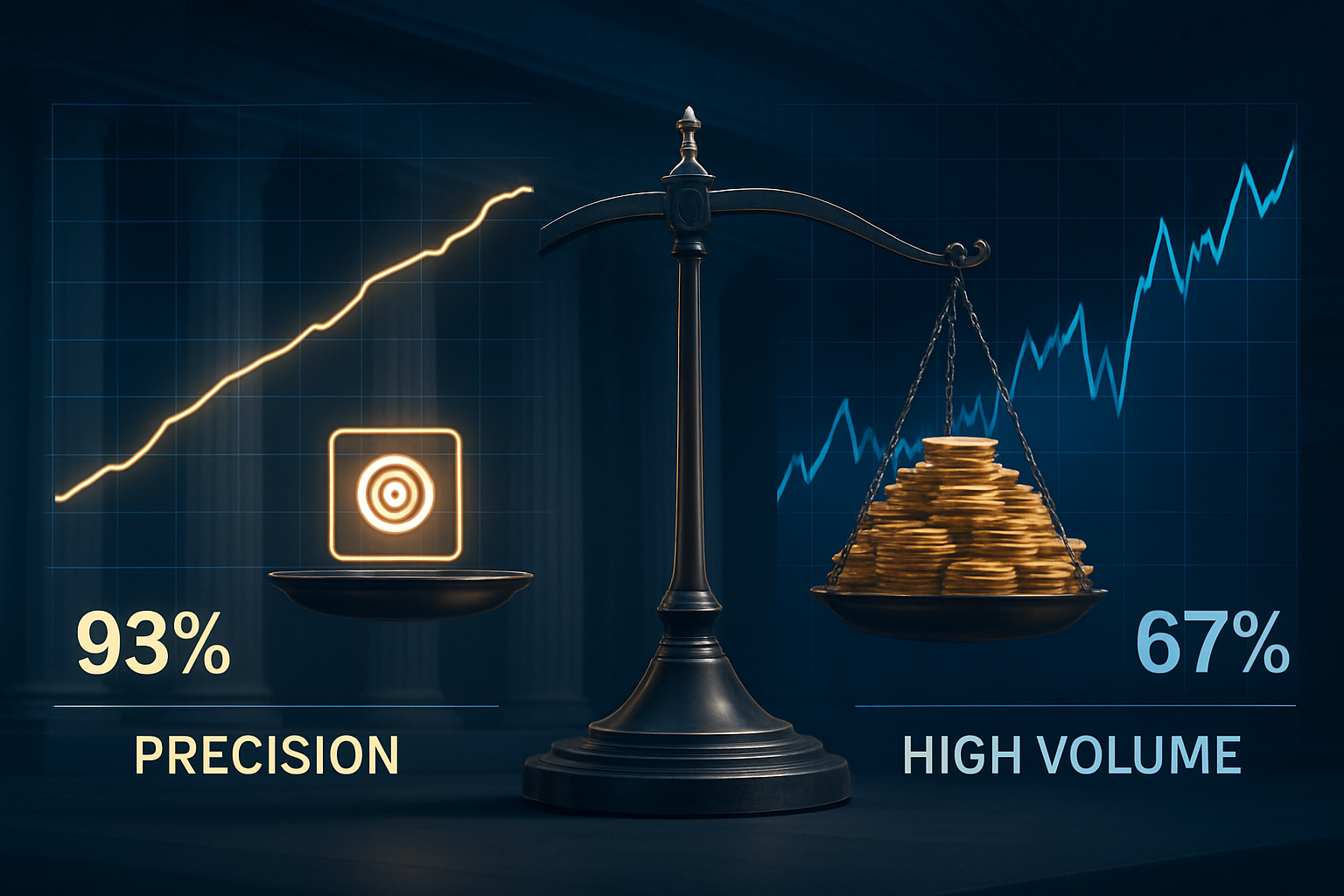
    The study, titled "Prediction Markets? The Accuracy and Efficiency of $2.4 Billion in the 2024 Presidential Election," revealed a surprising hierarchy of precision: PredictIt, the oldest and most restricted of the major platforms, achieved a staggering 93% accuracy rate in correctly forecasting election outcomes. Meanwhile, the regulated U.S. exchange Kalshi (NYSE: KLS) trailed at 78%, and the crypto-native heavyweight Polymarket—despite processing billions in volume—languished at a 67% accuracy rate. This data has sparked a heated debate over the "Volume Trap," a phenomenon where massive liquidity may actually degrade the quality of the information signal.

    The Market: What's Being Predicted

    The Vanderbilt researchers, led by Professor Joshua D. Clinton and TzuFeng Huang, analyzed more than 2,500 political contracts spanning the 2024 U.S. election cycle. The focus was not merely on the top-line Presidential winner but also on a granular level: battleground state margins, House and Senate control, and down-ballot races. While all three platforms—PredictIt, Kalshi, and Polymarket—traded identical outcomes, their price discovery mechanisms behaved in fundamentally different ways.

    PredictIt, which has historically operated under a Commodity Futures Trading Commission (CFTC) no-action letter with strict $850-per-contract limits (raised to $3,500 by late 2025), showed the highest resilience to volatility. In contrast, Kalshi, a federally regulated exchange, and Polymarket, which operates on the Polygon blockchain, saw massive influxes of "whale" capital. Polymarket, in particular, recorded a historic $2.4 billion handle for the 2024 election, yet its prices frequently diverged from the eventual reality, especially in state-level contests.

    The study used "log-loss" and Brier scores to measure how "confidently wrong" markets were. A Brier score rewards markets that are 90% certain of an outcome that occurs, while heavily penalizing those that are 90% certain of an outcome that fails. The results showed that while Polymarket had the most liquidity, it suffered from "mutual exclusivity errors," where the sum of probabilities for competing outcomes often exceeded 100%, indicating a lack of internal logic among its high-volume traders.

    Why Traders Are Betting

    The disparity in accuracy between these platforms can be attributed to the type of traders each platform attracts and the incentives created by their respective architectures. According to the Vanderbilt study, PredictIt’s success is a direct result of its restrictive "retail-only" model. Because no single trader can bet millions of dollars to "move the needle," the price is driven by a diverse crowd of "super-forecasters"—political staffers, data scientists, and wonks who trade on nuanced information rather than momentum.

    Conversely, the "Volume Trap" identified in the study describes a feedback loop seen on high-volume platforms like Polymarket. When high-net-worth "whales"—such as the widely reported "Théo" account that bet over $30 million on a Trump victory—place massive positions, it creates a "narrative gravitational pull." Smaller traders often follow the price movement (herding) rather than the underlying polling data or ground-game metrics. This creates "artificial confidence," where the market price reflects the conviction of a few wealthy individuals rather than the collective intelligence of the crowd.

    Institutional players are now taking notice of these findings. Companies like Interactive Brokers Group, Inc. (Nasdaq: IBKR), through their ForecastEx exchange, and Robinhood Markets, Inc. (Nasdaq: HOOD) have begun refining their contract offerings to prioritize "cleaner" data signals. Traders on these platforms are increasingly looking for ways to arbitrage the gap between the "pure" signal of PredictIt and the "noisy" sentiment of crypto-driven markets.

    Broader Context and Implications

    The Vanderbilt study arrives at a critical juncture for the industry. For years, proponents of prediction markets argued that the more money at stake, the more accurate the forecast would be. The 2024 data suggests the opposite may be true for political events: that concentrated capital can act as a pollutant to price discovery. This has significant regulatory implications, as the CFTC has long expressed concerns that high-stakes political betting could be used to manipulate public perception.

    PredictIt’s 93% accuracy provides a powerful defense for the "limited-stake" model, suggesting that such markets function more like a refined intelligence tool than a gambling venue. This distinction is vital as prediction markets move toward becoming a mainstream financial asset class. If the market's primary value is its "signal" for decision-makers, then accuracy—not volume—is the most valuable metric.

    Furthermore, the study highlights a "State-Level Disconnect." While Polymarket was highly accurate on the national "binary" outcome (who wins the Presidency), it was notably poor at predicting the specific electoral college math. This suggests that global speculators (the "whales") are good at broad sentiment but lack the "on-the-ground" knowledge that smaller, regional traders on PredictIt possess.

    What to Watch Next

    As we enter the 2026 Midterm election cycle, the industry is pivoting. Watch for a "flight to quality" among professional bettors. We are likely to see the emergence of "Aggregator Platforms" that weight prices based on the Vanderbilt accuracy rankings—giving a 93% weight to PredictIt signals and a lower weight to high-volume, low-accuracy sources.

    Key dates to monitor include the upcoming CFTC hearings on contract limits, where the Vanderbilt study is expected to be cited as "Exhibit A" for maintaining position caps. Additionally, look for the performance of new "Expert-Only" markets being developed by traditional financial firms that aim to replicate PredictIt’s success by restricting participation to verified domain experts rather than the highest bidder.

    The next major test for these platforms will be the 2026 Congressional primaries. If the "Volume Trap" holds true, we should expect to see Polymarket prices swing wildly based on social media trends, while PredictIt remains a more boring, but ultimately more accurate, barometer of political reality.

    Bottom Line

    The Vanderbilt University study has shattered the myth that the biggest market is always the smartest market. In the world of political forecasting, it appears that "less is more." PredictIt’s 93% accuracy rate proves that a well-regulated, capped-limit market can outperform a multi-billion dollar crypto giant by filtering out noise and focusing on high-quality, diverse information sources.

    For the prediction market industry, this is a "growing pain" moment. It forces a realization that liquidity is a double-edged sword. While volume provides the profit that sustains exchanges, it can simultaneously degrade the very "wisdom of the crowd" that makes these markets valuable to society in the first place.

    Ultimately, the Vanderbilt findings suggest that for those looking to see the future of American politics, the smartest move isn't to follow the money—it’s to follow the signal. As the 2026 Midterms loom, the "PredictIt Model" stands as the gold standard for anyone who values truth over hype.


    This article is for informational purposes only and does not constitute financial or betting advice. Prediction market participation may be subject to legal restrictions in your jurisdiction.

    PredictStreet focuses on covering the latest developments in prediction markets.
    Visit the PredictStreet website at https://www.predictstreet.ai/.
  • The Accuracy Paradox: New Vanderbilt Study Shines a Light on the Reliability of Prediction Markets

    The Accuracy Paradox: New Vanderbilt Study Shines a Light on the Reliability of Prediction Markets

    The long-debated question of whether massive trading volume leads to superior forecasting accuracy has finally been answered with a treasure trove of data. A groundbreaking study from Vanderbilt University, titled "Prediction Markets? The Accuracy and Efficiency of $2.4 Billion in the 2024 Presidential Election," has sent shockwaves through the financial and political communities. The study analyzed over 2,500 individual prediction markets to determine which platform truly provides the most reliable signal amidst the noise of a high-stakes election cycle.

    The findings have upended the conventional wisdom that the highest liquidity produces the "truth." While the decentralized giant Polymarket dominated headlines and volume, the study revealed a significant performance gap: PredictIt led the pack with a staggering 93% accuracy rate in its contracts, while Polymarket lagged behind at just 67%. As of January 14, 2026, these results are forcing institutional investors and political strategists to rethink how they use these platforms as forecasting tools in an increasingly volatile global landscape.

    The Market: What's Being Predicted

    The Vanderbilt study, led by Professor Joshua D. Clinton and PhD student TzuFeng Huang, represents the most comprehensive post-mortem of the 2024 election cycle’s prediction market performance. Researchers tracked every available political contract across four major platforms: PredictIt, Polymarket, Kalshi, and the Iowa Electronic Markets (IEM). By analyzing the implied probabilities against actual outcomes, the study sought to determine if "the wisdom of the crowd" was actually wise or merely loud.

    PredictIt emerged as the gold standard for accuracy. Despite its historically smaller footprint and regulatory constraints, it correctly predicted the outcome of 93% of the analyzed markets. Kalshi, which has rapidly expanded its presence through data-sharing partnerships with major media outlets like CNBC (Nasdaq: CMCSA) and CNN (Nasdaq: WBD), followed with a respectable 78% accuracy rate. Polymarket, the crypto-native platform that processed billions in volume, fell to the bottom with a 67% accuracy rate across its thousands of niche and down-ballot contracts.

    The disparity is particularly striking when considering the volume. Polymarket was the undisputed "whale" of the 2024 cycle, handling over $2 billion in trades. However, the study suggests that this massive liquidity often acted as a double-edged sword, attracting speculative "noise" and irrational herd behavior that distorted the true odds of many electoral outcomes.

    Why Traders Are Betting

    The research highlights a fundamental tension in prediction markets: the difference between "sober" analysis and "speculative" momentum. PredictIt’s success is attributed in part to its unique structure. For years, the platform operated under a $850 cap on individual bets (a limit that has since been increased to $3,500 following its 2025 settlement with the CFTC). This cap discouraged the massive, market-moving "whale" positions seen on Polymarket, instead favoring a larger number of smaller, more deliberate participants who were often deeply informed about specific local or niche races.

    In contrast, Polymarket’s lack of betting limits allowed for significant price manipulation and "irrational movements." The Vanderbilt study noted instances where mutually exclusive outcomes—such as the probability of a Republican sweep versus a Democratic sweep—moved in the same direction simultaneously. This suggests that many traders were not processing information rationally but were instead reacting to social media trends or platform-wide sentiment.

    Current market dynamics in early 2026 reflect these findings. On January 12, 2026, the industry hit a historic daily trading volume of $701.7 million, with Kalshi commanding a 66.4% market share. Traders are increasingly flocking to regulated platforms like Kalshi and PredictIt, seeking the "cleaner" data that comes from oversight and internal controls against insider trading.

    Broader Context and Implications

    The Vanderbilt study arrives at a critical juncture for the industry. Just last week, Polymarket was embroiled in a major controversy over its resolution of a contract regarding a U.S. mission in Venezuela. When U.S. forces captured Nicolás Maduro, Polymarket initially hesitated to pay out "Yes" bets, sparking accusations of arbitrariness in its role as an "arbiter of truth." This incident, combined with the Vanderbilt findings, has fueled a narrative that decentralized, high-volume markets may be more prone to systemic failure than their regulated counterparts.

    Furthermore, the study's revelation about the lack of "market efficiency" has drawn the eye of federal and state regulators. The researchers found that arbitrage opportunities—the ability to profit by betting on both sides of an event across different platforms—actually peaked in the final weeks of the 2024 campaign. This indicates that information was not being synthesized across the ecosystem, a hallmark of an immature or inefficient market.

    In response, New York lawmakers and federal regulators are currently drafting the "Public Integrity in Financial Prediction Markets Act of 2026." This legislation aims to formalize rules against insider trading, especially as more government officials and corporate insiders are suspected of using these markets to hedge against or profit from non-public information.

    What to Watch Next

    As we move deeper into 2026, the focus will shift to how these platforms adapt to the "accuracy over volume" mandate. PredictIt, now operating as a fully regulated CFTC exchange and clearinghouse as of September 2025, has removed its 5,000-trader cap while raising wager limits to $3,500. This expansion will test whether the platform can maintain its 93% accuracy rate as its liquidity begins to rival that of its larger competitors.

    Kalshi, meanwhile, is fighting a series of "preemption battles" in state courts. Just yesterday, on January 13, 2026, a U.S. District Judge in Tennessee granted Kalshi a Temporary Restraining Order against the Tennessee Sports Wagering Council. The outcome of these state-level legal battles will determine whether prediction markets can legally offer "event contracts" that overlap with traditional sports betting, a move that could potentially triple the industry's total addressable market by the end of the year.

    Investors should also watch for the integration of prediction market data into the broader financial ecosystem. Tech giants like Meta Platforms, Inc. (Nasdaq: META) and Amazon.com, Inc. (Nasdaq: AMZN) are reportedly exploring the use of internal prediction markets to guide project timelines and product launches, further validating the technology as a corporate forecasting tool.

    Bottom Line

    The Vanderbilt study serves as a definitive debunking of the "liquidity equals accuracy" myth. While Polymarket succeeded in creating a global macro-indicator and a massive speculative venue, it was PredictIt’s more constrained, sober environment that consistently provided the more accurate forecast. For those using prediction markets as a "crystal ball" for future events, the message is clear: the most expensive market is not always the most correct.

    As we look toward the 2026 midterms and beyond, the industry is maturing. The transition of PredictIt into a fully regulated powerhouse and Kalshi’s dominance in the regulated daily volume space suggest a future where transparency and oversight are the primary drivers of market trust. Prediction markets remain a powerful tool for aggregating information, but as the Vanderbilt researchers have proven, the quality of the crowd matters just as much as its size.


    This article is for informational purposes only and does not constitute financial or betting advice. Prediction market participation may be subject to legal restrictions in your jurisdiction.

    PredictStreet focuses on covering the latest developments in prediction markets.
    Visit the PredictStreet website at https://www.predictstreet.ai/.