Tag: Donald Trump

  • The “Warsh Shock”: Prediction Markets Signal 94.8% Certainty for the Next Fed Chair

    The “Warsh Shock”: Prediction Markets Signal 94.8% Certainty for the Next Fed Chair

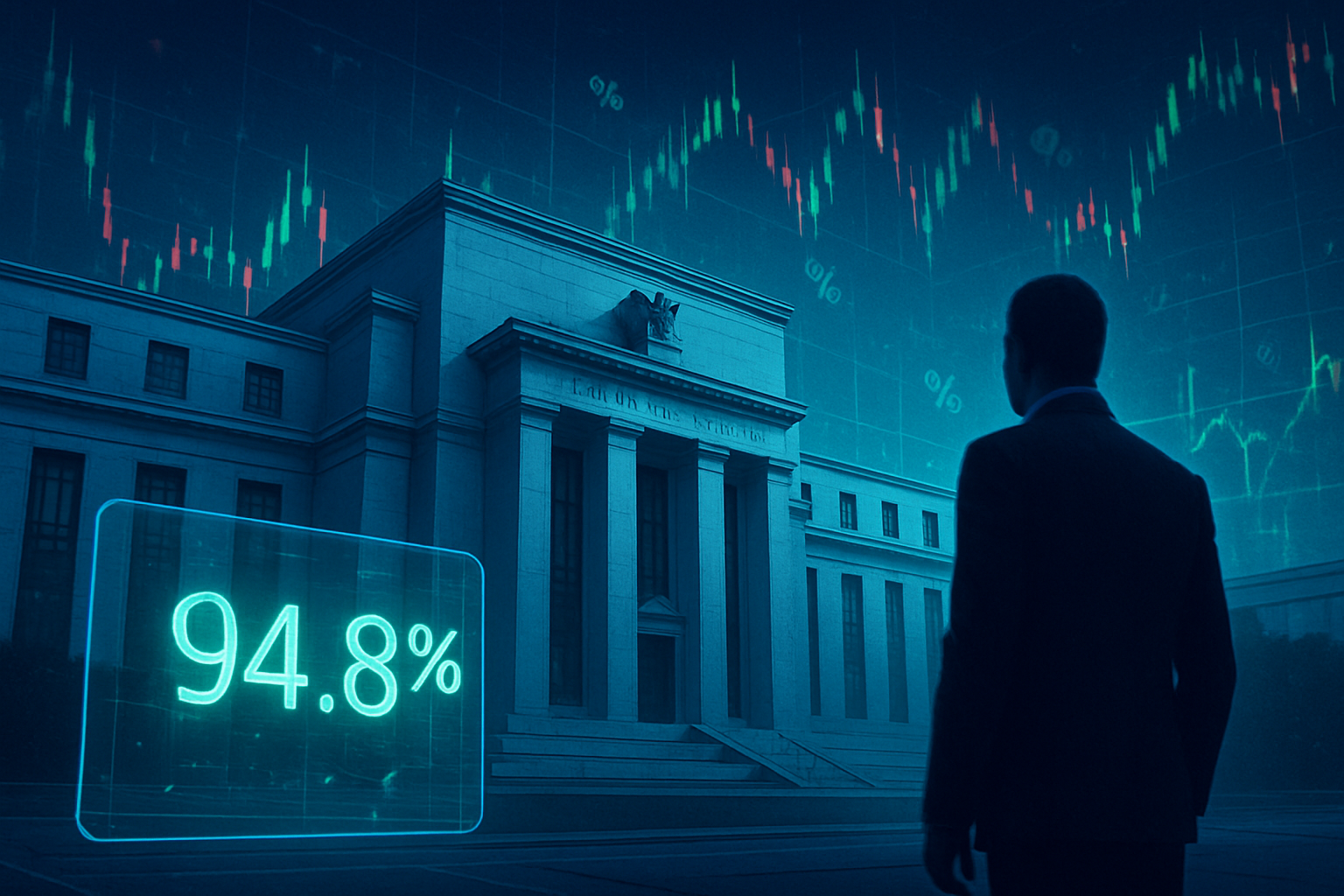
    As the countdown to the end of Jerome Powell’s tenure at the Federal Reserve begins, prediction markets have reached a state of near-unanimity. Kevin Warsh, the former Fed Governor and long-time favorite of the Republican establishment, has emerged as the overwhelming frontrunner to be the next Chair of the Federal Reserve. According to data from Polymarket and CoinMarketCap, Warsh currently holds a commanding 94.8% probability of being nominated by President Donald Trump to lead the world’s most powerful central bank.

    This market, which has seen hundreds of millions of dollars in trading volume, is generating intense interest because it signals more than just a personnel change; it represents a fundamental shift in the "Shadow Fed" strategy being deployed by the White House. With Powell’s term set to expire in May 2026, the market’s conviction suggests that the "Warsh era" has effectively begun months ahead of schedule, creating a unique "dual chair" dynamic that is already rippling through global bond and equity markets.

    The Market: What's Being Predicted

    The prediction market for the next Federal Reserve Chair has become one of the most liquid political events of the 2026 calendar. On Polymarket, the primary hub for crypto-native forecasting, the contract "Who will Trump nominate as Fed Chair?" has surpassed $432 million in total trading volume. Kevin Warsh’s "Yes" shares are currently trading at approximately 95 cents, mirroring the 94.8% figure seen on other aggregators.

    While Polymarket dominates the retail and international space, Kalshi, the CFTC-regulated exchange, has seen a massive influx of institutional activity. Kalshi reported record-breaking participation in January 2026, with the Fed Chair contract maintaining a probability as high as 98%. The market is also seeing new liquidity from the Jupiter platform on the Solana blockchain, which recently integrated prediction market tools, allowing a wider range of retail traders to bet on the "Warsh Shock."

    The resolution criteria for these markets are strictly defined: the market pays out once a formal nomination is sent to the U.S. Senate. While Trump announced his intention to nominate Warsh on January 30, 2026, the markets remain active as traders hedge against potential Senate confirmation hurdles or last-minute shifts in the President’s preference.

    Why Traders Are Betting

    The 94.8% probability isn't just a reflection of rumors; it is backed by a sequence of tactical moves from the White House. Traders shifted heavily toward Warsh after the President pivoted away from other high-profile candidates like Kevin Hassett, who was recently tapped to remain at the White House as Director of the National Economic Council, and Marc Rowan, the CEO of Apollo Global Management (NYSE: APO). While Rowan was a favorite for his "titan of industry" profile, prediction markets correctly sniffed out that his private equity ties might create too many conflict-of-interest hurdles in a closely divided Senate.

    Notable "whale" activity has also solidified the odds. On-chain data has identified several multi-million dollar positions, including a legendary "French high-roller" on Polymarket and a strategic "insider" address on the Hyperliquid platform that realized significant gains by front-running the official announcement in late January.

    Furthermore, traditional forecasting tools like the CME FedWatch tool from CME Group (NASDAQ: CME) have indirectly supported the Warsh narrative. As expectations for aggressive rate cuts in late 2026 grew to 94.8% in early January, traders deduced that Trump would want a Chair who—while historically hawkish—is perceived as more "market-sensitive" and "central casting" than the incumbent Powell.

    Broader Context and Implications

    The rise of Kevin Warsh is being interpreted by Wall Street as the beginning of a "Shadow Chair" period. Analysts at Goldman Sachs (NYSE: GS) and JPMorgan Chase (NYSE: JPM) have noted that a 95% market certainty effectively neuters Jerome Powell’s influence for the remainder of his term. JPMorgan (NYSE: JPM) has labeled this a "Shadow Policy Shift," arguing that the FOMC’s voting behavior may begin to tilt toward Warsh’s known preferences—specifically a more aggressive stance on balance sheet reduction—even before he takes the gavel.

    This market also highlights the maturing of prediction markets as a geopolitical tool. Unlike 2020 or 2024, where these markets were often dismissed as "crypto-niche," the 2026 Fed Chair market has been cited by major financial news outlets as a primary source of truth. The high accuracy of these markets in predicting the Rowan-to-Warsh pivot has given them new-found legitimacy among institutional hedgers.

    However, the real-world implications are stark. The "Warsh Shock" has already caused a "Great Metal Flush," with gold and silver prices retreating as investors price in a Fed that might prioritize price stability and a stronger dollar more aggressively than the Powell administration.

    What to Watch Next

    While the 94.8% probability suggests the race is over, two key factors could still inject volatility. First is the ongoing Department of Justice investigation into internal Fed operations. Some Republican Senators, including Thom Tillis, have hinted that Warsh’s confirmation could be delayed until the cloud over the current Fed leadership is cleared. If the confirmation process hits a snag, we could see Warsh’s odds dip back into the 80s as the market considers a "re-opening" of the shortlist.

    Second, the market is closely watching the official Senate Banking Committee hearing schedule. Key dates in late February and early March will be critical milestones. Any sign of friction during the "vettings and greetings" phase on Capitol Hill will be immediately reflected in the contract prices. Traders should also monitor the Interactive Brokers (NASDAQ: IBKR) ForecastEx markets, which often attract the most conservative, professional-grade bets on regulatory outcomes.

    Bottom Line

    The prediction markets have spoken: the "Warsh Era" is no longer a question of "if," but "when." With a 94.8% probability, the markets are effectively treating the nomination as a settled fact, leaving only the logistics of confirmation and the timing of Jerome Powell’s exit to be determined.

    This event serves as a masterclass in how prediction markets can serve as a leading indicator for institutional shifts. By the time traditional media outlets were reporting on the shortlist, Polymarket and Kalshi traders had already moved the needle, pricing in the transition weeks in advance. For investors, the takeaway is clear: the Fed is about to change its "aesthetic authority," and the markets are already trading the reality of a Kevin Warsh-led central bank.


    This article is for informational purposes only and does not constitute financial or betting advice. Prediction market participation may be subject to legal restrictions in your jurisdiction.

    PredictStreet focuses on covering the latest developments in prediction markets.
    Visit the PredictStreet website at https://www.predictstreet.ai/.

  • Arctic Real Estate: How the ‘Greenland Framework’ is Shaking Up Prediction Markets

    Arctic Real Estate: How the ‘Greenland Framework’ is Shaking Up Prediction Markets

    The "Greenland Framework," a diplomatic and strategic pivot announced by President Donald Trump at the World Economic Forum in Davos on January 21, 2026, has sent shockwaves through geopolitical prediction markets. After weeks of escalating tensions that some dubbed the "Arctic Missile Crisis," the market is now pricing in a sophisticated compromise: the transition from an outright purchase of the world's largest island to a "sovereign lease" model.

    As of late January 2026, the probability of the United States establishing a permanent, sovereign-controlled presence in Greenland by the end of President Trump’s term has surged. Traders are no longer betting on a simple real estate transaction, but on a complex geopolitical architecture that integrates Greenland into the U.S. "Golden Dome" missile defense system. This shift has triggered record volume on platforms like Polymarket and Kalshi, as participants weigh the likelihood of a "Cyprus-style" arrangement over the next three years.

    The Market: What's Being Predicted

    The betting landscape for Greenland has matured significantly since the initial rumors surfaced in 2019. On Polymarket, the contract for "U.S. acquires Greenland by end of 2026" is currently trading at 23%, a significant bounce from the 5% lows seen in mid-2025. However, the real action is in the longer-dated markets. On Kalshi, the probability that the U.S. will achieve "sovereign control or title" over any part of Greenland by January 20, 2029, is currently sitting at 43%, with total trading volume across Greenland-related contracts nearing $20 million.

    The resolution criteria for these markets have become increasingly granular. Most platforms now specify that "acquisition" includes the creation of Sovereign Base Areas (SBAs), similar to the British territories in Cyprus. This allows for a "Yes" resolution even if the entire island does not become the 51st state, provided the U.S. gains "right, title, and ownership" over strategic zones like the Pituffik Space Base. This nuance has allowed liquidity to pool in "partial acquisition" contracts, which are currently trading at a premium compared to "total annexation" scenarios.

    Why Traders Are Betting

    The primary driver of the recent market volatility was the "Greenland Crisis" of early January 2026. After Deputy Chief of Staff Stephen Miller declined to rule out military force to secure the island’s rare earth minerals, odds for a forced takeover spiked to nearly 40%. However, the unveiling of the "Greenland Framework" in Davos provided a diplomatic off-ramp. Traders are now betting that the Trump administration will use 25% tariffs on European goods—specifically targeting Denmark and its neighbors—as a "hammer" to force a lease agreement rather than a sale.

    Strategic interests are also fueling the "Yes" side of the trade. The integration of Greenland into the "Golden Dome" (NYSE:RTX)—the space-based missile defense constellation—is seen by defense analysts as a non-negotiable for the Pentagon. Reports of a $2 billion contract for SpaceX to provide a 600-satellite "Starshield" constellation have led traders to believe the U.S. will not stop until its "ground station bridge" in Greenland is fully secured. Additionally, the U.S. Commerce Department's $1.6 billion investment in companies like USA Rare Earth (Nasdaq:USAR) signals a long-term commitment to bypassing Chinese supply chains via Greenlandic minerals.

    Broader Context and Implications

    This market represents a new era for prediction platforms, which are increasingly being used as "real-time sentiment gauges" for high-stakes diplomacy. Unlike traditional polling, which struggled to capture the rapid shift in Danish-U.S. relations, prediction markets reacted instantly to the appointment of Louisiana Governor Jeff Landry as Special Envoy to Greenland. Traders recognized Landry’s "culinary diplomacy"—involving high-profile fishing trips with Greenlandic officials—as a signal that the administration was moving toward a "hearts and minds" economic approach rather than a purely hostile one.

    The real-world implications are immense. If the "Greenland Framework" succeeds, it could redefine national sovereignty in the 21st century, creating a precedent for "sovereign economic zones" in strategic territories. For investors, the "Greenland Trade" has extended beyond the prediction platforms and into the equities of mining firms. Amaroq Minerals (TSXV:AMRQ), which holds significant gold and strategic metal assets in South Greenland, has seen its stock price correlate closely with the "Yes" odds on Kalshi, serving as a secondary vehicle for those looking to play the Greenland narrative.

    What to Watch Next

    The next major catalyst for this market will be the scheduled "Operation Arctic Endurance" in mid-2026. This NATO-led exercise will test the security of the proposed Greenland corridor and serve as a "stress test" for the Framework. If Denmark or the Greenlandic Parliament (Inatsisartut) refuses to participate or blocks U.S. access during the exercise, expect the "Yes" odds for 2026 to plummet while the "forced acquisition" contracts on decentralized platforms may see a speculative spike.

    Traders should also monitor the U.S. Treasury’s implementation of the 10% "Greenland Tariff" on European nations currently opposing the Framework. Any signs of a "thaw" in Copenhagen—perhaps prompted by economic pressure or a promise of shared mineral royalties—would likely send the odds of a 2029 acquisition toward the 60% mark. Conversely, a victory for the opposition in the upcoming Danish snap elections could freeze negotiations entirely.

    Bottom Line

    The Greenland Framework has transformed a fringe geopolitical meme into a multi-million dollar prediction market. By moving from a "purchase" to a "sovereign lease" model, the Trump administration has created a viable, albeit controversial, path forward that markets are beginning to take seriously. The current 43% probability on Kalshi suggests that while the deal is far from certain, it is no longer being treated as a fantasy.

    Prediction markets have proven to be an invaluable tool in this saga, cutting through the noise of diplomatic "no's" to reveal a underlying belief that economic and security pressures will eventually lead to a U.S. foothold on the island. As we move deeper into 2026, the intersection of missile defense, rare earth mining, and aggressive trade policy will continue to make the Greenland market one of the most volatile and closely watched sectors in the forecasting world.


    This article is for informational purposes only and does not constitute financial or betting advice. Prediction market participation may be subject to legal restrictions in your jurisdiction.

    PredictStreet focuses on covering the latest developments in prediction markets.
    Visit the PredictStreet website at https://www.predictstreet.ai/.
  • Rick Rieder Surges to 60% Odds as Trump’s Preference for Next Fed Chair Crystallizes

    Rick Rieder Surges to 60% Odds as Trump’s Preference for Next Fed Chair Crystallizes

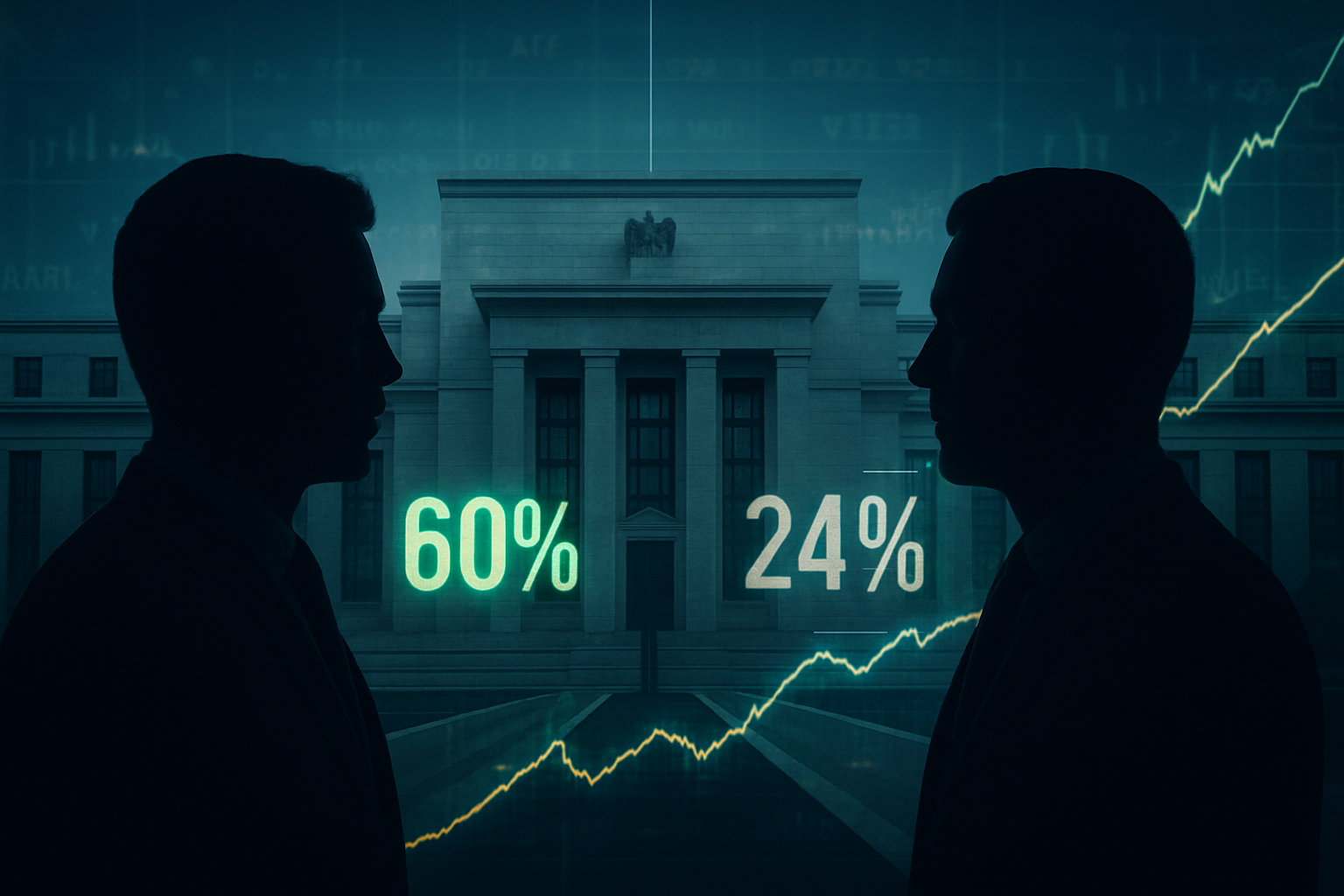
    The race to lead the world’s most powerful central bank has reached a fever pitch in prediction markets, with a decisive shift in sentiment favoring Wall Street veteran Rick Rieder. As of January 24, 2026, Rieder, the Chief Investment Officer of Global Fixed Income at BlackRock Inc. (NYSE: BLK), has emerged as the clear frontrunner to succeed Jerome Powell, whose term is set to expire in May. While the race was previously a dead heat between various conservative economists, Rieder now commands a dominant 60% probability on major forecasting platforms, leaving former Federal Reserve Governor Kevin Warsh trailing in a distant second.

    This market movement reflects more than just speculation; it is the culmination of high-stakes political signaling from the White House. The surge in Rieder’s odds coincides with a massive influx of capital into these markets, as traders scramble to position themselves ahead of a formal announcement. With over $300 million in combined volume between decentralized and regulated platforms, the "Next Fed Chair" market has become the focal point of global macro trading in early 2026.

    The Market: What's Being Predicted

    The prediction markets for the next Federal Reserve Chair have seen unprecedented liquidity this cycle. On Polymarket, the leading decentralized prediction platform, total volume for the Fed Chair contract has surpassed $250 million. Simultaneously, Kalshi, the U.S.-regulated exchange, has seen its volume climb to $55 million. The sheer scale of these markets suggests that institutional players and professional "political hunters" are using these contracts to hedge against potential shifts in monetary policy.

    Current odds across both platforms are remarkably aligned:

    • Rick Rieder: 60%
    • Kevin Warsh: 23-24%
    • Christopher Waller: 10%
    • Kevin Hassett: 5-7%

    The contract resolution is tied specifically to the official nomination by President Trump and subsequent confirmation or a formal announcement designated as the "intended nominee." Historically, these markets have traded with high volatility, but the recent consolidation around Rieder represents the first time a single candidate has held a supermajority probability since the speculation began in late 2025.

    Why Traders Are Betting

    The primary catalyst for the "Rieder Rally" was a strategic pivot by President Trump regarding his economic team. For much of late 2025, Kevin Hassett, the Director of the National Economic Council (NEC), was the betting favorite. However, Trump’s public insistence that Hassett is "too good on television" to be moved from the NEC essentially eliminated him from the running.

    Traders jumped on this "Hassett Pivot" to find the President's next preferred candidate. While Kevin Warsh briefly surged to 60% odds last week, the momentum shifted toward Rieder following a series of high-profile signals:

    1. Trump’s CNBC Endorsement: In a mid-January interview, the President praised Rieder’s "market-based judgment" and labeled him a "reformer" who understands the "true cost of debt."
    2. The Housing Factor: Rieder has been vocal about the need for the Fed to aggressively target mortgage rates to stimulate housing affordability—a key pillar of the current administration’s economic rhetoric.
    3. Hassett’s "Kingmaker" Move: Kevin Hassett himself recently described Rieder as "the best bond guy in the world," signaling that the President’s inner circle has reached a consensus.

    Whale activity on Polymarket suggests that several large-scale bettors moved seven-figure positions out of Warsh and into Rieder following these endorsements, viewing Rieder as the "outsider" candidate that Trump typically favors over "Washington insiders" like Warsh or Waller.

    Broader Context and Implications

    The dominance of Rick Rieder in these markets marks a potential shift in the Federal Reserve’s philosophy. Unlike previous chairs, Rieder would come directly from the heart of the private sector, specifically from BlackRock Inc. (NYSE: BLK), rather than from academia or a long-standing legal career. Prediction market participants are effectively betting that the Fed under Rieder would be more reactive to market conditions and perhaps more aggressive in cutting rates to accommodate fiscal expansion.

    Furthermore, this market highlights the increasing utility of prediction platforms like Kalshi and Polymarket as real-time barometers for political appointments. Traditional news outlets have been slower to catch the shift, often still reporting Warsh as the "likely" pick based on 2017-era precedents. However, the "wisdom of the crowd" in prediction markets has proven highly sensitive to the specific populist and market-driven rhetoric emerging from the Trump administration in 2026.

    The legal and regulatory backdrop also looms large. As Kalshi and other platforms fight to maintain their status in the U.S. regulatory landscape, the high volume and accuracy of the Fed Chair market serve as a powerful case study for their role in price discovery for political risk.

    What to Watch Next

    The window for a formal nomination is narrowing. With Jerome Powell’s term ending in May, President Trump is expected to make an announcement by the end of January or early February to allow for a smooth Senate confirmation process. Traders should keep a close eye on any "trial balloon" tweets or comments regarding the ongoing DOJ investigations into the Fed’s internal operations, which Trump has used as a justification for an early transition.

    A sudden drop in Rieder’s odds would likely only occur if a "dark horse" candidate—such as a surprise pick from a different major financial institution—emerges during one of the President's weekend meetings at Mar-a-Lago. Conversely, if the administration confirms that Rieder has met with the Senate Finance Committee, his odds could easily climb toward 80% or 90% before the official press release.

    Bottom Line

    As of January 24, 2026, the prediction markets have spoken: the "Warsh Era" that many expected has been eclipsed by the "Rieder Surge." With 60% odds and massive volume backing him, Rick Rieder is the clear market favorite to become the next Chair of the Federal Reserve.

    This shift tells us that traders are prioritizing "outsider" status and market expertise over traditional central banking credentials. While Kevin Warsh remains a viable backup at 24%, the alignment of Trump’s public praise and Hassett’s endorsement has created a powerful narrative that Rieder is the intended nominee. For those watching the future of American monetary policy, the prediction markets aren't just reflecting reality—they are increasingly the most reliable signal we have.


    This article is for informational purposes only and does not constitute financial or betting advice. Prediction market participation may be subject to legal restrictions in your jurisdiction.

    PredictStreet focuses on covering the latest developments in prediction markets.
    Visit the PredictStreet website at https://www.predictstreet.ai/.
  • The Rhetoric Jackpot: Inside the Multi-Billion Dollar Culture of Betting on the Trump Dialect

    The Rhetoric Jackpot: Inside the Multi-Billion Dollar Culture of Betting on the Trump Dialect

    WASHINGTON, D.C. — January 20, 2026 — Exactly one year after Donald Trump was sworn in as the 47th President of the United States, a new kind of ticker tape is dominating the financial landscape. It isn't tracking the S&P 500 or the price of gold, but rather the specific syllables spoken by the Commander-in-Chief. As President Trump arrives in Davos, Switzerland, today for the World Economic Forum, thousands of traders are glued to their screens, wagering millions on whether he will utter his signature catchphrase: "drill, baby, drill."

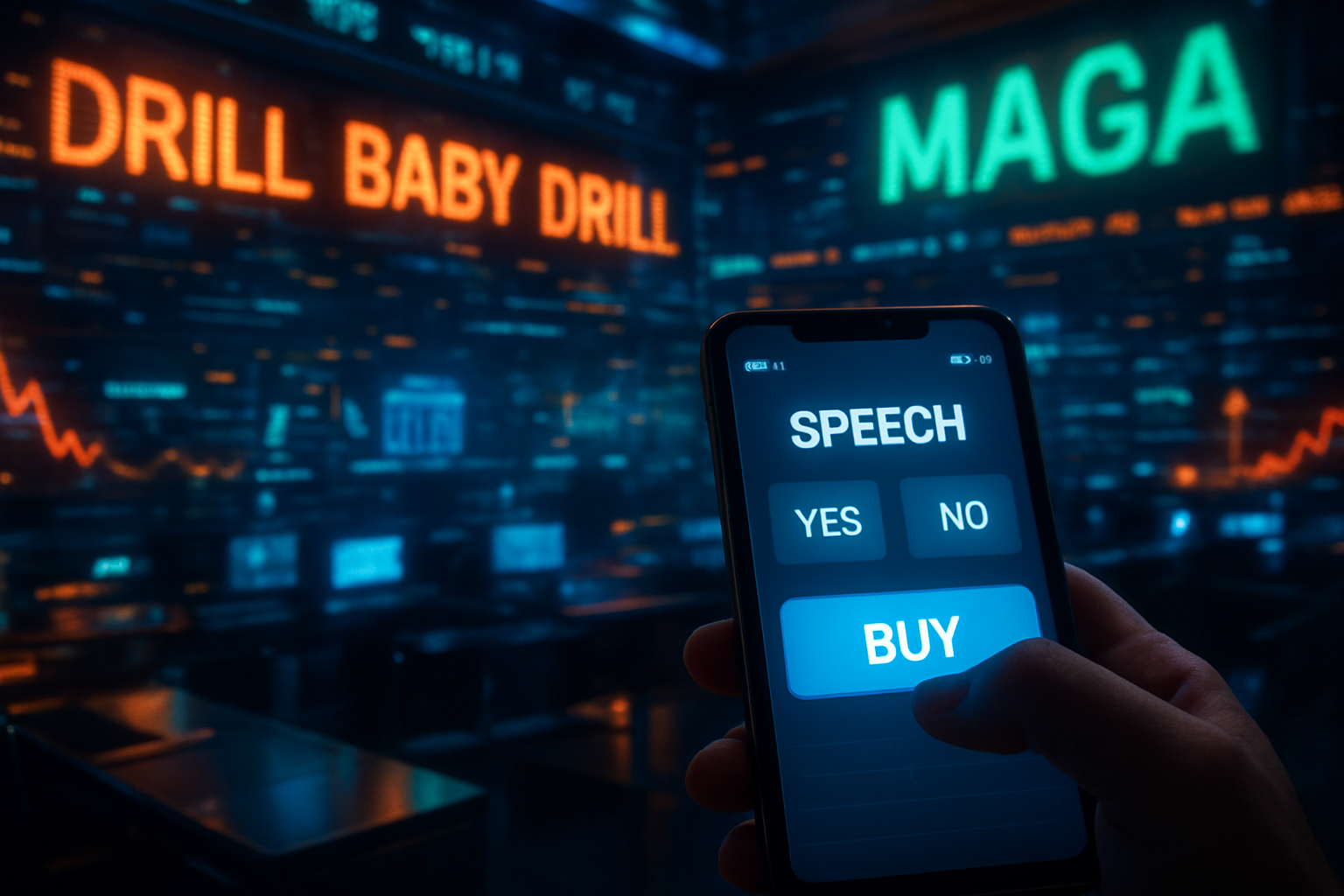
    On leading prediction platforms like Polymarket and Kalshi, these "rhetoric markets" have evolved from niche political curiosities into high-volume financial instruments. As of this morning, the probability of Trump saying "drill, baby, drill" during his Davos address tomorrow stands at a steady 54%, while more aggressive bets on his first-year anniversary comments have seen nearly $1.5 billion in weekly volume. What started as a "prop bet" culture has transformed into a sophisticated ecosystem where linguistic patterns are traded with the same intensity as tech stocks.

    The Market: What’s Being Predicted

    The mechanics of betting on presidential speech have become remarkably granular. While traditional markets focus on policy outcomes—such as the likelihood of a Fed Chair appointment—the "mention markets" track the specific vocabulary used in public addresses, tweets (now officially integrated into Truth Social and X), and press conferences. These contracts are typically structured as binary "Yes/No" outcomes: “Will Trump say ‘Drill Baby Drill’ by Jan 31?”

    Currently, the epicenter of this activity is Kalshi, which has seen its total volume skyrocket to over $23.8 billion in 2025 following a landmark regulatory year. For the upcoming 2026 State of the Union, the "Drill Baby Drill" contract is one of the most liquid on the platform, attracting professional market makers and retail "vibe traders" alike. These markets are joined by other high-stakes linguistic wagers, including the odds of Trump mentioning "Bitcoin" (currently 53%) or using the term "Trump Derangement Syndrome" (trading at 47%).

    The resolution criteria for these bets are handled with judicial precision. Platforms employ dedicated verification teams to scan official White House transcripts and high-fidelity audio recordings. On Polymarket, which recently normalized its U.S. operations through a partnership with a CFTC-licensed exchange, these contracts often resolve within minutes of a speech's conclusion, triggering massive liquidity flows.

    Why Traders Are Betting

    The surge in rhetoric betting is driven by the unique predictability of Donald Trump’s linguistic "greatest hits." Unlike traditional politicians whose speeches are vetted by committees of speechwriters for nuance, Trump’s reliance on branding and repetition—what some analysts call "The Billboard Effect"—makes him the perfect subject for event contracts.

    "It’s about sentiment analysis and pattern recognition," says Logan Sudeith, a professional trader who has reportedly earned six figures annually by tracking the President's frequency of specific adjectives. Traders are not just guessing; they are using sophisticated AI tools, often powered by Alphabet Inc. (NASDAQ: GOOGL) and other tech giants, to analyze the President's recent Truth Social posts as leading indicators for his verbal speeches. If "drill" appears in a 3:00 AM post, the "Yes" contracts on Kalshi usually see a 10-15% bump by dawn.

    There is also a significant "whale" presence in these markets. Famous accounts like "Freddy9999," who netted an estimated $50 million during the 2024 election cycle, continue to move the needle. These large-scale positions often act as a hedge; energy sector investors may buy "Yes" contracts on "drill, baby, drill" to offset potential volatility in oil prices, using the President's rhetoric as a proxy for upcoming deregulation.

    Broader Context and Implications

    The institutionalization of these markets marks a paradigm shift in how the public consumes political news. Major media outlets like CNBC, owned by Comcast Corp. (NASDAQ: CMCSA), and CNN now incorporate prediction market odds directly into their chyrons, viewing the "wisdom of the crowd" as a more accurate "truth signal" than traditional polling or punditry.

    The entry of retail powerhouses like Robinhood Markets, Inc. (NASDAQ: HOOD) and Interactive Brokers Group, Inc. (NASDAQ: IBKR) into the event-contract space has further democratized this "culture of the bet." Even the Intercontinental Exchange, Inc. (NYSE: ICE), the parent company of the New York Stock Exchange, has moved into the infrastructure of these markets, reflecting a belief that event-based hedging is the next frontier of finance.

    However, this trend raises significant questions about the "gamification" of governance. Critics argue that when millions of dollars are riding on a single phrase, it creates an incentive for the President to intentionally move markets—or for staff to leak speech drafts to favored traders. Despite these concerns, the CFTC has largely pivoted toward a "regulated expansion" model, acknowledging that these markets provide valuable data on public expectations.

    What to Watch Next

    The immediate focus is the President's Davos address on Wednesday, January 21, 2026. While "drill, baby, drill" is the legacy bet, "Greenland" has become the dark horse of the week. Following reports of renewed interest in the island’s natural resources, "mention markets" for the word "Greenland" have climbed to near 100% certainty for the Davos trip.

    Beyond the vocabulary, the market is awaiting the nomination of the next Federal Reserve Chair. Currently, Kevin Warsh leads the prediction pools with a 61% probability, and traders are listening for specific keywords—like "sound money" or "interest rate cuts"—that might signal his official appointment during tomorrow's speech.

    Investors should also monitor the growing influence of AI trading agents. By early 2026, an estimated 40% of the volume in rhetoric markets is driven by bots that execute trades faster than human speech can be processed by the ear. This "high-frequency linguistics" is expected to create extreme volatility in the seconds after the President approaches a microphone.

    Bottom Line

    The culture of betting on "drill, baby, drill" is more than just a political gimmick; it is the birth of a new asset class. By turning presidential rhetoric into a tradable commodity, prediction markets have provided a real-time, financially-backed sentiment gauge that traditional media can no longer ignore.

    As we cross the one-year mark of the 47th presidency, the lesson for investors is clear: in the modern era, a politician's words are no longer just "talk"—they are a price point. Whether this leads to a more informed electorate or simply a more volatile one remains to be seen, but for now, the markets are waiting with bated breath for the next "drill."


    This article is for informational purposes only and does not constitute financial or betting advice. Prediction market participation may be subject to legal restrictions in your jurisdiction.

    PredictStreet focuses on covering the latest developments in prediction markets. Visit the PredictStreet website at https://www.predictstreet.ai/.
  • The $2 Billion Milestone: How Polymarket’s 2024 Election Surge Redefined Political Forecasting

    The $2 Billion Milestone: How Polymarket’s 2024 Election Surge Redefined Political Forecasting

    In a historic shift for the world of decentralized finance and political forecasting, Polymarket has officially surpassed $2 billion in total trading volume for its "Presidential Election Winner 2024" market. This staggering milestone comes as the platform experiences a parabolic surge in activity, cementing its status as the world’s largest prediction market and a primary competitor to traditional polling institutions.

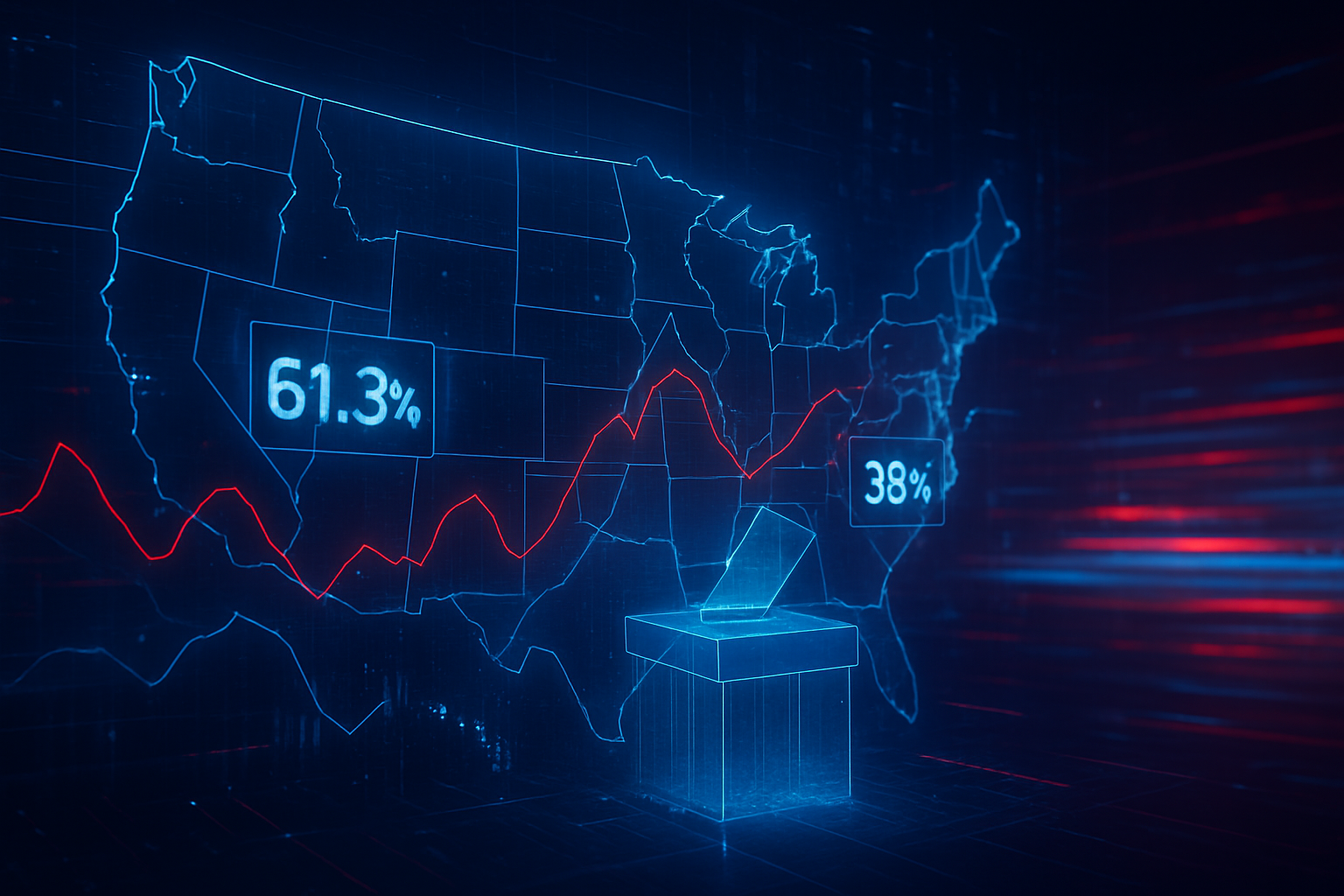
    As of this week, the market consensus has shifted significantly. Republican candidate Donald Trump now holds a commanding 61.3% chance of victory, while Vice President Kamala Harris trails at 38%. This widening gap has captivated traders, political analysts, and the broader public, as the market’s odds diverge sharply from traditional "toss-up" polling data. With nearly $1 billion in volume generated in October alone, the platform is no longer a niche crypto experiment—it is a global financial engine for political sentiment.

    The Market: What's Being Predicted

    The primary driver of this activity is Polymarket’s "Presidential Election Winner 2024" contract. This binary market allows participants to buy "Yes" or "No" shares for a candidate, with each share paying out $1 if the prediction is correct and $0 if it is not. The current price of a Trump "Yes" share stands at roughly 61.3 cents, reflecting a 61.3% probability of him returning to the White House.

    The platform's growth has been nothing short of explosive. After taking years to reach its first $1 billion in total volume, the election market added its second billion in just 24 days during the month of October. This liquidity surge is largely hosted on the Polygon blockchain, utilizing the USDC stablecoin issued by Circle. While Polymarket remains the dominant force, the rise of prediction markets has also prompted legacy fintech firms to enter the fray. For example, Robinhood Markets, Inc. (NASDAQ: HOOD) and Interactive Brokers Group, Inc. (NASDAQ: IBKR) have recently moved to offer event-based trading, seeking to capture the retail enthusiasm that Polymarket pioneered.

    The resolution criteria for the market are strictly tied to the official certification of the election results. Unlike polls, which are snapshots of sentiment with varying margins of error, Polymarket functions as a real-time, 24/7 clearinghouse for information. If a candidate experiences a boost in a swing state or a major endorsement, the price reflects it within seconds, providing a level of "price discovery" for politics that was previously impossible.

    Why Traders Are Betting

    The divergence between Polymarket’s 61.3% odds for Trump and the neck-and-neck figures seen in national polls has sparked a fierce debate over the "wisdom of the crowd." Analysts suggest several factors are driving this pro-Trump tilt. Chief among them is the "skin in the game" factor; traders are incentivized to be right, not to provide a socially acceptable answer to a pollster. This often results in markets picking up on "quiet" shifts in momentum, such as early voting data or high-profile endorsements from tech leaders, before they are reflected in traditional data sets.

    However, the market has also been influenced by significant "whale" activity. Investigative reports and on-chain data have highlighted a single French national, operating under the pseudonym "Théo," who has reportedly bet over $45 million on a Trump victory across multiple accounts. While Polymarket has stated that these positions are purely directional bets and not market manipulation, such massive wagers naturally put upward pressure on the odds.

    Furthermore, the demographic of the platform plays a role. Polymarket’s user base is predominantly tech-savvy, male, and crypto-native—a group that has historically leaned toward the Republican platform’s recent pro-digital asset stance. This "selection bias" is a frequent criticism from skeptics, though proponents argue that the presence of arbitrageurs and institutional traders should theoretically balance out any ideological leanings if the price becomes "wrong."

    Broader Context and Implications

    The rise of Polymarket represents a watershed moment for the "Information Finance" era. According to data from Dune Analytics, the platform’s monthly active users have nearly reached 100,000, a milestone that underscores the mainstreaming of prediction markets. This growth has not gone unnoticed by regulators. The Commodity Futures Trading Commission (CFTC) has engaged in ongoing legal battles with platforms like Kalshi and Polymarket over the legality of election betting in the U.S., with the courts currently leaning toward allowing these markets to operate under specific conditions.

    Historically, prediction markets have often proved more accurate than experts or polls. In previous cycles, platforms like the Iowa Electronic Markets often anticipated shifts in voter sentiment weeks ahead of the media. The $2 billion volume in 2024 suggests that we are witnessing the institutionalization of this tool. If Polymarket accurately predicts the outcome while polls remain deadlocked, it could permanently change how political campaigns, hedge funds, and news organizations allocate resources and trust data.

    From a sociological perspective, these markets reveal a public that is increasingly skeptical of traditional media and polling. By turning political outcomes into a tradable asset, Polymarket has created a new form of "synthetic truth" where the collective financial risk of participants outweighs the individual opinions of pundits.

    What to Watch Next

    As we head into the final weeks of the election cycle, all eyes are on the liquidity of the "swing state" markets. While the national "Winner" market is the headline-grabber, the real action is happening in state-specific contracts for Pennsylvania, Michigan, and Wisconsin. These "Blue Wall" states are currently trading at much tighter margins than the national average, and any sudden movement there will likely trigger a massive shift in the overall 61.3% probability.

    Investors should also monitor the potential for a "liquidity crunch" or extreme volatility on election night. With $2 billion on the line, the platform will face its ultimate stress test. If the results are delayed or contested, the "Presidential Election Winner" contract could see unprecedented swings, testing the platform's decentralized resolution mechanisms.

    Finally, the post-election regulatory landscape will be critical. A Trump victory—currently favored by the market—might lead to a more permissive regulatory environment for crypto-native platforms. Conversely, a Harris victory could see a renewed push for restrictions on event-based betting. Regardless of the outcome, the 100,000 active users currently trading on Polymarket represent a new constituency that is unlikely to go away quietly.

    Bottom Line

    The $2 billion volume reached by Polymarket is more than just a number; it is a testament to the growing power of decentralized prediction markets. With Donald Trump holding a significant lead in the betting odds at 61.3%, the market is effectively betting against the "toss-up" narrative of mainstream polling. Whether this represents superior foresight or a demographic bubble remains to be seen, but the sheer scale of the participation is undeniable.

    As a tool for sentiment analysis, prediction markets have officially arrived. They offer a high-stakes alternative to traditional forecasting, driven by real-time data and massive financial incentives. While risks like "whale" influence and demographic bias remain, the "wisdom of the crowd" has never had a larger or more liquid stage than it does today on Polymarket.


    This article is for informational purposes only and does not constitute financial or betting advice. Prediction market participation may be subject to legal restrictions in your jurisdiction.

    PredictStreet focuses on covering the latest developments in prediction markets.
    Visit the PredictStreet website at https://www.predictstreet.ai/.
  • The Battle of the Kevins: Warsh Edges Out Hassett in High-Stakes Race for Fed Chair

    The Battle of the Kevins: Warsh Edges Out Hassett in High-Stakes Race for Fed Chair

    As the countdown to the expiration of Jerome Powell’s term begins, the prediction markets have narrowed the field for the next leader of the Federal Reserve to a two-man sprint. In what traders are calling the "Battle of the Kevins," former Fed Governor Kevin Warsh has narrowly overtaken former Council of Economic Advisers Chairman Kevin Hassett as the favorite to receive Donald Trump’s nomination. On PredictIt, Warsh is currently trading at 43¢, a slim but significant lead over Hassett’s 41¢, marking a dramatic shift in a race that appeared settled just weeks ago.

    This market is drawing unprecedented interest due to its direct impact on global monetary policy and the escalating tensions between the White House and the current Fed leadership. With the Federal Reserve's independence at the center of the 2026 political discourse, prediction markets have become the primary venue for pricing in the "loyalty vs. credibility" debate that characterizes the administration's search for a successor.

    The Market: What’s Being Predicted

    The central prediction market revolves around the identity of the individual who will be confirmed as the next Chair of the Federal Reserve Board of Governors. While the primary action is concentrated on PredictIt, related contracts are trading with high volume on Polymarket (where Warsh leads 41% to 38%) and Kalshi (which shows a tighter 39% to 40% split in favor of Hassett).

    Trading liquidity has spiked in early January 2026, with over $15 million in combined volume across platforms. The resolution criteria for most of these markets require the individual to be officially nominated by the President and confirmed by the Senate. The timeline is fixed by the calendar: Jerome Powell’s term officially expires on May 15, 2026. However, the market also prices in the possibility of an "Acting Chair" scenario should the confirmation process stall—a contingency that has kept odds for darker-horse candidates like Christopher Waller (13¢) from hitting zero.

    Why Traders Are Betting

    The sudden surge for Kevin Warsh can be traced back to a mid-December interview President Trump gave to The Wall Street Journal, owned by News Corp (NASDAQ: NWSA). In the interview, the President explicitly narrowed his shortlist to "Kevin and Kevin," effectively ending the hopes of several other candidates. While Hassett was the initial frontrunner—peaking at nearly 85% on some platforms due to his perceived loyalty—traders began pivoting toward Warsh following reports of a successful 45-minute private meeting between Warsh and the President.

    Traders are increasingly betting that Warsh offers the "Goldilocks" solution for the administration. Having served as a Fed Governor from 2006 to 2011 and holding a background at Morgan Stanley (NYSE: MS), Warsh possesses the "market credibility" that institutional investors demand. Conversely, Hassett’s odds have softened amid concerns that his nomination might face a more difficult path in a Senate wary of installing a Chair perceived as too politically compliant. The "Warsh Trade" is essentially a bet that the administration will prioritize a candidate who can simultaneously appease the President’s desire for lower rates and Wall Street’s need for stability.

    Broader Context and Implications

    The "Battle of the Kevins" is unfolding against a backdrop of extreme institutional friction. Jerome Powell is currently under a Department of Justice investigation regarding alleged cost overruns in the renovation of the Fed’s headquarters, a situation Powell has characterized as political intimidation. Prediction markets are currently pricing a 30% chance that Powell resigns before his May 15 deadline, though his recent public vows to stay on have seen that probability drop from a December high of 70%.

    This market reveals a deep public skepticism regarding the traditional nomination process. By tracking the odds in real-time, we see that the market is currently more influenced by "vibe checks" and reported private meetings than by official White House press releases. Furthermore, the "Shadow Governor" strategy—where Powell might remain on the Board of Governors even after his Chairmanship ends to prevent an additional Trump appointment—has become a key variable that traders are now forced to calculate. This demonstrates how prediction markets have evolved to incorporate complex procedural maneuvering that traditional polling often misses.

    What to Watch Next

    The next major volatility event for this market will be the formal announcement of a nominee, which is expected no later than mid-February to allow for the confirmation process. Key dates to monitor include the resolution of the DOJ’s probe into the Fed's renovation budget; if the investigation is dropped or escalated, the odds for an interim or "Acting" Chair could fluctuate wildly.

    Additionally, watch for public comments from Senator Thom Tillis and other members of the Senate Banking Committee. Tillis has signaled he may block any new nominee until the Powell investigation is concluded. If a legislative "roadblock" becomes the consensus expectation, we could see the odds for both Kevins decline in favor of a "Field" bet or a scenario where the current Vice Chair for Supervision takes the reins temporarily.

    Bottom Line

    The narrow lead held by Kevin Warsh suggests that prediction markets are betting on a "return to normalcy" within the context of a disruptive administration. Traders are signaling that while the President wants a change, the structural need for a Chair with deep ties to the financial establishment—like Warsh’s history at Morgan Stanley (NYSE: MS)—will ultimately outweigh the desire for a more partisan appointment.

    Ultimately, these markets serve as a real-time barometer for the tension between political will and institutional inertia. Whether it is Warsh or Hassett who takes the gavel on May 16, the volatility of these contracts highlights just how much the "independence" of the Federal Reserve is currently being re-priced by the world's most informed speculators.


    This article is for informational purposes only and does not constitute financial or betting advice. Prediction market participation may be subject to legal restrictions in your jurisdiction.

    PredictStreet focuses on covering the latest developments in prediction markets.
    Visit the PredictStreet website at https://www.predictstreet.ai/.