
Tag: Dividends

  • ZIM Integrated Shipping: Modernizing the Fleet Amid a Takeover Tug-of-War

    ZIM Integrated Shipping: Modernizing the Fleet Amid a Takeover Tug-of-War

    As of December 24, 2025, ZIM Integrated Shipping Services Ltd. (NYSE: ZIM) remains one of the most volatile and debated stocks on the New York Stock Exchange. Known for its massive dividend payouts and its "global niche" strategy, ZIM has recently captured investor attention with a notable 5.8% single-day price jump and a renewed focus on its fleet acquisition strategy. While the broader shipping industry faces a transition toward decarbonization and the normalization of freight rates, ZIM has positioned itself as a high-leverage player capable of extracting outsized profits from geopolitical disruptions. This article explores the company’s recent strategic moves, its financial standing, and why it has become the center of takeover speculation as we head into 2026.

    Historical Background

    Founded in 1945, ZIM has evolved from a national carrier for the nascent state of Israel into a premier global container shipping company. Originally established by the Jewish Agency, the Histadrut labor federation, and the Maritime League, its early mission was to transport immigrants and essential goods. Over the decades, ZIM privatized and expanded, navigating the treacherous waters of the global shipping cycles.

    The most transformative era for ZIM began in 2017 under the leadership of CEO Eli Glickman, who transitioned the company toward an "asset-light" model. Rather than owning its fleet—a capital-intensive endeavor—ZIM moved toward chartering vessels, allowing for greater operational flexibility. Its 2021 IPO on the NYSE was a watershed moment, coinciding with the post-pandemic shipping boom that turned ZIM into a multi-billion-dollar profit engine and one of the world's highest-yielding dividend stocks.

    Business Model

    ZIM’s business model is distinct among the "Top 10" global ocean carriers. While rivals like Maersk and MSC own a majority of their fleets, ZIM charters approximately 90% of its capacity. This allows the company to rapidly scale its fleet size up or down based on market demand.

    Key Revenue Sources:

    • Trans-Pacific Trade: ZIM’s strongest market, connecting Asia to the U.S. East Coast and Gulf.
    • Intra-Asia and Cross-Atlantic: Niche routes where ZIM leverages its digital tools to optimize cargo loads.
    • ZIMonitor: A high-margin premium service for temperature-controlled (reefer) cargo, catering to pharmaceutical and food industries.

    The company focuses on "active capacity management," shifting vessels to the most profitable routes in real-time. This strategy is supported by a heavy reliance on the spot market, which allows ZIM to capture immediate pricing spikes during periods of supply chain distress.

    Stock Performance Overview

    Over the past five years, ZIM’s stock performance has been a roller coaster. After debuting at $15 in 2021, the stock soared to over $90 in 2022 during the supply chain crisis, only to retreat as freight rates normalized.

    • 1-Year Performance (2025): The stock has seen a recovery from its 2023 lows, driven by the Red Sea crisis and the subsequent rerouting of ships around the Cape of Good Hope.
    • Recent 5.8% Jump: This specific move was triggered by a combination of a significant earnings beat in late 2024 and a massive special dividend announcement. Furthermore, rumors of a management-led buyout and interest from Mediterranean Shipping Company (MSC) have provided a "takeover floor" for the share price.
    • 10-Year Context: Though ZIM has only been public for four years, its pre-IPO history was marked by several debt restructurings, a reminder of the industry's extreme cyclicality.

    Financial Performance

    ZIM’s financial health in 2025 is characterized by strong cash reserves but declining year-over-year margins compared to the 2021-2022 peak.

    • Earnings: In its most recent filings for 2025, ZIM reported an Adjusted EBITDA margin of approximately 32%, a healthy figure though lower than the 44% seen in 2024.
    • Dividends: ZIM remains committed to returning 30-50% of annual net income to shareholders. In late 2024, the company distributed a combined regular and special dividend of $3.65 per share, attracting yield-hungry investors.
    • Cash Position: As of late 2025, ZIM maintains a cash pile of over $2.8 billion. This liquidity is a double-edged sword; it provides a buffer against downturns but has also made the company an attractive target for acquisition.

    Leadership and Management

    CEO Eli Glickman has been the architect of ZIM's modern strategy. His focus on digitalization and the "asset-light" chartering model has been largely credited with the company's survival and subsequent prosperity. However, 2025 has brought leadership into the spotlight for different reasons.

    Glickman, alongside shipping magnate Rami Ungar, reportedly explored a management-led buyout in late 2025 to take the company private at $20 per share. While the board rejected the offer as "undervaluing" the company’s massive cash position and new LNG fleet, the move signaled management's extreme confidence in the company's long-term value despite market skepticism.

    Products, Services, and Innovations

    ZIM’s "innovation pipeline" is centered on two pillars: Sustainability and Digitalization.

    • LNG Fleet Renewal: ZIM has successfully integrated 28 new LNG-powered vessels into its fleet as of 2025. These ships are more fuel-efficient and meet the stringent IMO 2023/2024 carbon intensity regulations, giving ZIM a competitive edge in "green shipping."
    • ZIMark: A partnership utilizing AI and big data to optimize logistics and container tracking.
    • Digital Freight Forwarding: ZIM has invested heavily in digital platforms that allow small and medium-sized enterprises (SMEs) to book shipping space as easily as an airline ticket, bypassing traditional freight forwarders.

    Competitive Landscape

    ZIM is the 9th or 10th largest carrier globally, competing against giants like MSC, A.P. Moller – Maersk (CPH: MAERSK-B), and Hapag-Lloyd (ETR: HLAG).

    • The Advantage: ZIM’s smaller size and "niche" focus allow it to be more agile. It can enter and exit specific trade lanes faster than its larger peers.
    • The Vulnerability: Without the massive economies of scale enjoyed by MSC or Maersk, ZIM’s unit costs can be higher during periods of low freight rates.
    • Strategic Ties: ZIM maintains a long-standing cooperation agreement with the 2M Alliance (though the alliance itself is evolving), allowing it to share vessel space on key trans-Pacific routes.

    Industry and Market Trends

    The shipping industry in 2025 is navigating a "perfect storm" of conflicting trends:

    1. Overcapacity: A massive wave of new-build ships ordered in 2021-2022 is finally entering the market, threatening to depress freight rates.
    2. Geopolitical Risk: The Red Sea crisis has persisted longer than many expected, forcing ships to take the long route around Africa. This effectively "absorbs" the overcapacity by increasing the time ships are at sea.
    3. Decarbonization: Carbon taxes (like the EU ETS) are becoming a reality, favoring companies like ZIM that have shifted toward LNG and more efficient hull designs.

    Risks and Challenges

    Investing in ZIM is not for the faint of heart. The primary risks include:

    • Cyclicality: Shipping is a boom-and-bust industry. If global trade slows or the Red Sea crisis resolves suddenly, freight rates could collapse.
    • Charter Rates: Because ZIM charters most of its ships, it is vulnerable to rising charter costs. If the cost to rent ships rises faster than the price it charges customers, margins will be squeezed.
    • Geopolitical Sensitivity: As an Israeli company, ZIM faces unique security risks and potential political boycotts in certain regions, particularly during times of heightened Middle East tension.

    Opportunities and Catalysts

    • The Takeover Play: With ZIM’s stock trading significantly below its book value (which includes its massive cash pile and new fleet), the company is a prime acquisition target. A bidding war between MSC and Hapag-Lloyd remains a major catalyst for the stock.
    • Acquisition Strategy: ZIM’s recent $2.3 billion charter agreement for ten 11,500 TEU LNG vessels ensures it has the modern, "green" capacity needed to compete through 2030.
    • Dividends: Any spike in freight rates (due to weather, labor strikes, or further conflict) translates almost immediately into higher special dividends for ZIM shareholders.

    Investor Sentiment and Analyst Coverage

    Wall Street remains divided on ZIM. Institutional analysts generally maintain "Sell" or "Neutral" ratings, citing the risk of industry-wide overcapacity in 2026. However, retail sentiment is markedly different. On social media and retail trading platforms, ZIM is often viewed as a "dividend king" and a high-conviction play on continued global instability. Hedge funds have also shown increased interest, with some taking positions to play the "arbitrage" between ZIM's market cap and its higher liquidation value.

    Regulatory, Policy, and Geopolitical Factors

    The regulatory environment is tightening. The International Maritime Organization (IMO) and the European Union are pushing for zero-emission shipping. ZIM’s decision to move toward LNG puts it ahead of many competitors who are still reliant on heavy fuel oil. Additionally, U.S. trade policy remains a critical factor; any intensification of trade wars with China could directly impact ZIM’s primary trans-Pacific revenue stream.

    Conclusion

    As of Christmas Eve 2025, ZIM Integrated Shipping remains a high-octane bet on the future of global trade. The company’s recent 5.8% price jump reflects a market that is beginning to price in either a permanent floor for freight rates or a likely acquisition of the company. With its modernized LNG fleet and a management team that has proven its ability to navigate crises, ZIM is no longer the "distressed" carrier it was a decade ago. Investors should watch for the board's reaction to future buyout offers and the upcoming 2026 guidance, which will reveal whether the "asset-light" gamble has truly paid off in a post-disruption world.


    This content is intended for informational purposes only and is not financial advice.

  • The Costco Dividend Watch: A Deep Dive into Membership Growth and 2026 Catalysts

    The Costco Dividend Watch: A Deep Dive into Membership Growth and 2026 Catalysts

    Date: December 24, 2025

    Introduction

    As the final trading days of 2025 approach, Costco Wholesale Corporation (NASDAQ: COST) stands at a fascinating crossroads of operational strength and stock market valuation. While the broader retail sector spent much of 2025 navigating shifting consumer sentiment and high interest rates, Costco has remained a beacon of stability. However, the narrative for 2025 has been one of a "valuation reset." After a blistering 2024 that saw the stock gain nearly 40%, Costco has underperformed the S&P 500 this year, as investors grapple with its premium price tag. Despite this, two major themes dominate the discourse in corporate boardrooms and retail investment circles: the company's aggressive digital transformation (the "Netflix-style" membership crackdown) and the looming question of when—not if—the next massive special dividend will be announced.

    Historical Background

    The Costco story is one of the most celebrated in retail history, beginning with a simple premise: high volume and low markups. The company’s roots trace back to 1976, when Sol Price and his son Robert opened the first Price Club in a converted airplane hangar in San Diego. It was the world's first membership warehouse club, originally serving only small businesses.

    In 1983, James Sinegal and Jeffrey Brotman opened the first Costco warehouse in Seattle, modeling it after the Price Club concept. Ten years later, in 1993, the two companies merged to form PriceCostco. Under the leadership of Sinegal, who served as CEO until 2012, Costco developed a legendary corporate culture centered on worker retention, thin profit margins on goods, and a "no-frills" shopping experience. This ethos transformed Costco from a regional experiment into a global powerhouse, maintaining a unique identity that prioritizes membership fees over traditional retail markups.

    Business Model

    Costco operates on a subscription-based model that fundamentally differs from traditional retailers like Target Corporation (NYSE: TGT) or Walmart Inc. (NYSE: WMT). Its revenue is generated from two primary streams:

    1. Membership Fees: Accounting for the vast majority of the company's operating income, these fees provide high-margin, recurring revenue that allows Costco to sell goods at near-cost.
    2. Merchandise Sales: Costco maintains ultra-efficient operations by carrying only ~4,000 Stock Keeping Units (SKUs) compared to 30,000+ at a typical supermarket. This massive volume per SKU grants Costco immense bargaining power with suppliers.

    The crown jewel of the model is Kirkland Signature, a private-label brand that now generates over $60 billion in annual sales. By controlling the quality and supply chain of these products, Costco provides value to members while maintaining better margins than national brands.

    Stock Performance Overview

    The year 2025 has been a period of consolidation for COST. After peaking near the end of 2024, the stock entered a "reset" phase.

    • 1-Year Performance (2025): The stock is down approximately 4% year-to-date as of December 24, significantly underperforming the S&P 500's ~16% gain. This is largely attributed to a contraction in its Price-to-Earnings (P/E) multiple, which had reached historic highs.
    • 5-Year Performance: Despite the 2025 lull, long-term investors have seen returns of over 180%, fueled by the pandemic-era shopping surge and consistent membership growth.
    • 10-Year Performance: Costco remains a "compounder," with the stock up over 450% since 2015, outstripping almost all of its traditional brick-and-mortar peers.

    Financial Performance

    In its latest Q1 FY2026 earnings report (released December 11, 2025), Costco demonstrated why its balance sheet is considered one of the safest in the world.

    • Revenue: Total revenue for the quarter rose 7.1% year-over-year, driven by a 14% jump in membership fee income following the September 2024 fee hike.
    • Cash Position: As of late December 2025, Costco sits on a record $17.18 billion in cash and cash equivalents.
    • Margins: Operating margins remain thin but stable at around 3.5%, while net income continues to grow alongside membership expansion.
    • Valuation: The stock currently trades at roughly 44x forward earnings. While lower than its 58x peak in 2024, it remains a steep premium compared to Walmart's ~32x or Target's ~17x.

    Leadership and Management

    The year 2025 marked the first full year under the leadership duo of CEO Ron Vachris and CFO Gary Millerchip. Vachris, a Costco veteran who started as a forklift driver, has emphasized continuity, yet he has notably increased the company's "pace of play." Under his tenure, the target for new warehouse openings has shifted from 25 per year to a more aggressive 30+.

    Millerchip, formerly of Kroger Co. (NYSE: KR), has brought a disciplined approach to the balance sheet, particularly in navigating the 2025 tariff environment. The duo is widely praised for successfully avoiding a major Teamsters strike in early 2025 and for modernizing Costco’s digital infrastructure.

    Products, Services, and Innovations

    Costco’s innovation strategy in 2025 has focused on "frictionless membership."

    • Entrance Scanners: A nationwide rollout of scanners at warehouse entrances has largely eliminated membership card sharing, boosting new sign-ups in 2025.
    • AI Implementation: Costco is now using AI for predictive inventory management. This technology has reportedly improved pharmacy in-stock rates to 98% and optimized rotisserie chicken production to minimize waste.
    • Digital Growth: The company has finally embraced a robust mobile app experience, allowing for real-time warehouse inventory checking and "click-and-collect" for high-ticket items like electronics.

    Competitive Landscape

    Costco faces a two-front war. On one side, Walmart's Sam's Club has made major strides in digital integration and scan-and-go technology. On the other, Amazon.com Inc. (NASDAQ: AMZN) continues to dominate the convenience-driven household essentials market.

    However, Costco’s moat remains its high-income demographic. The average Costco member has a higher household income than the typical Walmart or Target shopper, making the company more resilient to inflationary pressures. Furthermore, Costco's international strength, particularly in Asia, provides a geographical diversification that competitors like BJ’s Wholesale Club (NYSE: BJ) lack.

    Industry and Market Trends

    Three major trends shaped the retail landscape in 2025:

    1. Retail Media: Costco has begun monetizing its first-party member data through an advertising network, creating a high-margin revenue stream that mimics the success of Amazon Advertising.
    2. Local Sourcing: To hedge against global trade volatility, Costco has shifted toward sourcing more Kirkland Signature items locally in international markets like Japan and China.
    3. The "Middle-Income Squeeze": As middle-class consumers sought value in 2025, the warehouse club model gained market share at the expense of traditional grocery stores.

    Risks and Challenges

    Despite its strengths, Costco is not without risks:

    • Valuation Sensitivity: At 44x earnings, any slight miss in comparable-store sales or membership growth could lead to a sharp sell-off.
    • Labor Costs: While the 2025 Teamsters agreement averted a strike, top-scale wages exceeding $30/hour put pressure on the company’s famously thin retail margins.
    • Tariff Exposure: Costco’s legal challenge against "emergency" tariffs in late 2025 highlights the company's sensitivity to trade policy, particularly for its non-food merchandise.

    Opportunities and Catalysts

    The most anticipated catalyst for 2026 is the Special Dividend. Having last paid $15.00 per share in January 2024, and with a cash pile of over $17 billion, analysts believe Costco is primed for another payout in the $12–$15 range.

    Other growth levers include:

    • International Expansion: With only seven warehouses in China as of late 2025, the runway for growth in Asia remains enormous.
    • Membership Tier Optimization: Management has hinted at potential new membership tiers or "digital-only" options to capture younger demographics.

    Investor Sentiment and Analyst Coverage

    Wall Street remains largely bullish on COST, though "Buy" ratings are often accompanied by a "wait for a dip" caveat due to the current valuation. Hedge fund ownership remained stable through 2025, and institutional investors like The Vanguard Group and BlackRock Inc. (NYSE: BLK) remain the largest shareholders. Retail sentiment is buoyed by the brand’s cult-like status, though the "scanner crackdown" at entrances caused some social media friction in the summer of 2025.

    Regulatory, Policy, and Geopolitical Factors

    In December 2025, Costco made a bold move by filing a lawsuit in the U.S. Court of International Trade against the federal government, challenging the legality of certain executive-imposed tariffs. This reflects a broader corporate trend of pushing back against trade volatility. Additionally, the company has pivoted its ESG strategy, including anti-ESG proposals in its proxy statements to align with shifting regulatory climates in Washington, while simultaneously expanding its massive solar-and-battery storage projects at distribution centers.

    Conclusion

    Costco enters 2026 as a defensive powerhouse with a fortress balance sheet. While 2025 was a year of stock price stagnation, it was also a year of vital operational strengthening. The "Netflix-style" membership verification has provided a new tailwind for fee income, and the company's massive cash reserves make it a prime candidate for a massive special dividend in the coming year. For investors, the question remains whether they are willing to pay the premium for what is arguably the most disciplined operator in global retail. Watch for the special dividend announcement and international growth metrics as the key indicators of Costco's next leg up.


    This content is intended for informational purposes only and is not financial advice.

  • Bank of America’s Capital Renaissance: Analyzing the 2025 Stress Test Victory and Shareholder Returns

    Bank of America’s Capital Renaissance: Analyzing the 2025 Stress Test Victory and Shareholder Returns

    As of December 24, 2025, Bank of America (NYSE: BAC) stands at a historic crossroads. After nearly two decades of restructuring following the 2008 financial crisis, the Charlotte-based behemoth has emerged as a leaner, more resilient, and highly profitable institution. In focus today is the bank’s record-breaking capital return program, catalyzed by a stellar performance in the Federal Reserve’s 2025 Stress Test. With a significantly reduced Stress Capital Buffer (SCB) and a newfound regulatory reprieve from the "Basel III Endgame" rules, Bank of America is returning capital to shareholders at a pace not seen in its history. This deep dive explores how the bank transitioned from a crisis-era recovery story to a dominant leader in shareholder yield and operational efficiency.

    Historical Background

    The story of Bank of America is one of relentless expansion followed by a rigorous, decade-long cleanup. Founded in 1904 by Amadeo Peter Giannini as the Bank of Italy in San Francisco, the bank was built on the revolutionary idea of serving the "little fellow." It pioneered branch banking and consumer innovations, eventually evolving into the modern Bank of America through the transformative 1998 merger with NationsBank.

    However, its greatest test came in 2008. The acquisition of Merrill Lynch and Countrywide Financial during the depths of the Great Recession brought the bank to the brink of collapse, necessitating $20 billion in government bailouts. Since Brian Moynihan took over as CEO in 2010, the narrative has been defined by his "Responsible Growth" strategy. This involved shedding over $300 billion in non-core assets, settling billions in litigation, and fundamentally rebuilding the bank's capital foundations. By late 2025, this journey reached a symbolic milestone as the stock finally surpassed its pre-2008 all-time highs.

    Business Model

    Bank of America operates through four primary segments, each contributing to a diversified revenue stream that balances consumer stability with capital markets volatility:

    1. Consumer Banking: The bedrock of the bank, serving over 69 million consumers and small business clients. It is a leader in digital banking and deposit gathering.
    2. Global Wealth & Investment Management (GWIM): Anchored by Merrill Lynch and Bank of America Private Bank, this segment manages over $4 trillion in client balances as of late 2025.
    3. Global Banking: Provides lending-related products, investment banking, and capital markets services to corporations and institutional investors.
    4. Global Markets: Focused on institutional trading and market-making across fixed income, currencies, commodities, and equities.

    Stock Performance Overview

    In 2025, Bank of America’s stock has outperformed the broader S&P 500 Financials Sector. Over the 1-year horizon, BAC has surged 28%, fueled by better-than-expected Net Interest Income (NII) and regulatory clarity. On a 5-year basis, the stock has nearly doubled, reflecting the successful execution of operational leverage. Most notably, the 10-year performance showcases a transformation from a deep-value recovery play to a core holding for institutional portfolios, with total returns exceeding 180% as the bank reclaimed its status as a premier "dividend aristocrat" in the making.

    Financial Performance

    The financial results for the third and fourth quarters of 2025 highlight a bank firing on all cylinders.

    • Net Interest Income: Reached $15.6 billion in Q4 2025, driven by a steepening yield curve and the repricing of its massive fixed-income portfolio.
    • Profitability: Net income for Q3 2025 was $8.5 billion, with a Return on Tangible Common Equity (ROTCE) of 15.4%.
    • Efficiency Ratio: The bank achieved an efficiency ratio of 61.4% in late 2025, a significant improvement from the 64-65% range seen in previous years, as revenue growth outpaced expense growth.
    • Capital Strength: The bank ended the year with a Common Equity Tier 1 (CET1) ratio of 11.6%, well above the 10.0% regulatory minimum.

    Leadership and Management

    CEO Brian Moynihan remains the primary architect of the bank's current success. In a surprising late-2025 announcement, Moynihan confirmed he intends to stay as Chair and CEO until 2030, providing a long-term horizon for his "Responsible Growth" philosophy. However, succession planning is in full swing. The September 2025 appointment of Dean Athanasia and Jim DeMare as Co-Presidents signaled a clear path forward for the next generation of leadership. The management team is highly regarded for its discipline in cost-cutting and risk management, which has restored the bank's reputation with both regulators and investors.

    Products, Services, and Innovations

    Technological innovation is the engine of BAC's efficiency. The bank’s AI assistant, Erica, now handles over 2 million daily interactions, significantly reducing the cost to serve retail clients. In 2025, the bank expanded its digital wealth management tools, integrating Merrill’s advisory capabilities with the core banking app. Furthermore, BAC has maintained its competitive edge in "CashPro," its digital platform for corporate clients, which handles trillions in transaction volume annually and has become a sticky ecosystem for global treasury services.

    Competitive Landscape

    Bank of America remains the second-largest U.S. bank by assets (~$3.4 trillion), trailing only JPMorgan Chase (NYSE: JPM). While JPM continues to lead in overall profitability and investment banking market share, BAC has closed the gap in digital adoption and consumer deposit loyalty. A key development in 2025 was the lifting of the asset cap on Wells Fargo (NYSE: WFC), which has intensified competition for corporate lending and middle-market banking. Despite this, BAC’s diversified model across wealth management and global markets provides a broader earnings base than more retail-heavy peers.

    Industry and Market Trends

    The banking sector in late 2025 is defined by a "normalization" of interest rates. After years of rapid hikes followed by stabilization, the Federal Reserve has maintained a federal funds rate in the 3.50%–3.75% range. This "higher for longer" environment, relative to the 2010s, has been a boon for large banks with massive deposit bases. Additionally, the industry is seeing a significant rebound in M&A and IPO activity, which has revitalized investment banking fees across the sector.

    Risks and Challenges

    Despite its strength, BAC faces several headwinds:

    • Commercial Real Estate (CRE): While BAC’s exposure to office loans is relatively low compared to regional banks (CRE-to-equity ratio of ~36%), the ongoing devaluation of urban office space remains a persistent credit risk.
    • Interest Rate Sensitivity: As a highly asset-sensitive bank, BAC's margins are vulnerable to a faster-than-expected decline in long-term rates, which could compress its Net Interest Margin (NIM).
    • Cybersecurity: As a systemic pillar of the global economy, the bank is a constant target for state-sponsored and criminal cyberattacks, requiring multi-billion dollar annual investments in security.

    Opportunities and Catalysts

    The most significant near-term catalyst is the $40 billion share repurchase program authorized in July 2025. Coupled with an 8% increase in the quarterly dividend to $0.28 per share, the bank is on track to return more than $25 billion to shareholders annually through 2026. Furthermore, the softening of the "Basel III Endgame" capital requirements in late 2025 has freed up billions in capital that were previously earmarked for regulatory reserves, providing a long-term tailwind for further buybacks.

    Investor Sentiment and Analyst Coverage

    Wall Street sentiment is overwhelmingly bullish at the end of 2025. Analysts at major firms like Morgan Stanley and Goldman Sachs have raised price targets for BAC to the $60-$65 range. Institutional ownership remains high, with major positions held by Berkshire Hathaway and Vanguard. Retail sentiment has also shifted positively, as the bank's consistent dividend growth makes it a preferred "bond-proxy" in a fluctuating rate environment.

    Regulatory, Policy, and Geopolitical Factors

    Regulatorily, 2025 was a year of relief. The Federal Reserve’s decision to slash the proposed capital surcharges for global systemically important banks (G-SIBs) from 16% to 9% was a major win for Bank of America. This policy shift reflects a recognition of the banking system's stability. Geopolitically, the bank’s global footprint makes it sensitive to trade tensions, particularly in the Asia-Pacific region, though its primary focus remains the resilient U.S. domestic economy.

    Conclusion

    Bank of America enters 2026 in its strongest position in decades. By successfully navigating the 2025 stress tests and securing a regulatory environment that favors capital distribution, the bank has turned its "Responsible Growth" mantra into a powerful engine for shareholder value. Investors should watch for continued execution in the Global Markets and Wealth Management divisions, as these will be the primary drivers of ROTCE expansion toward the bank's 18% goal. While macro risks like CRE and rate volatility persist, BAC’s fortress balance sheet and disciplined leadership make it a standout leader in the global financial landscape.


    This content is intended for informational purposes only and is not financial advice.
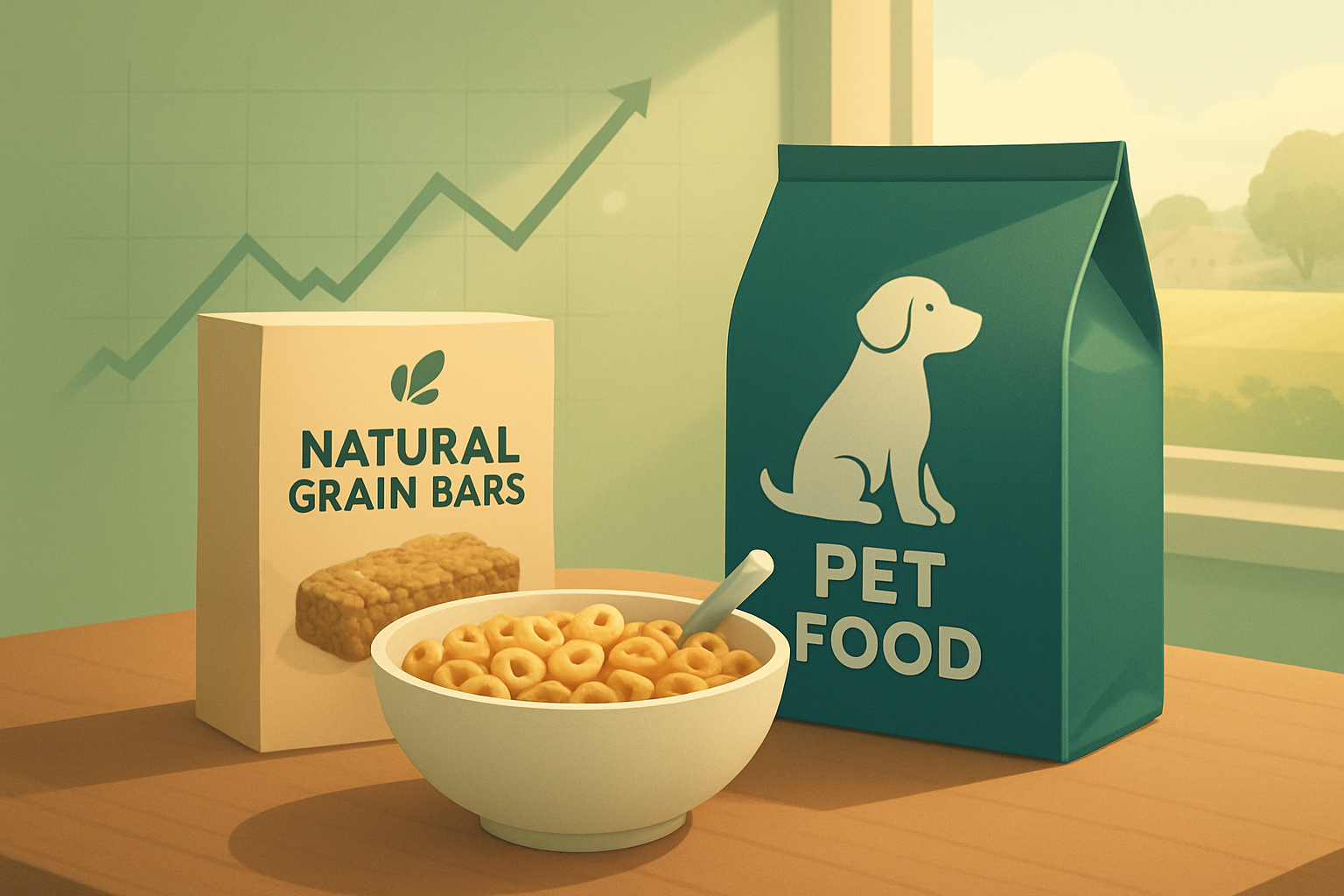
  • Pantry Powerhouse: A Deep-Dive into General Mills (GIS) in the Age of GLP-1 and Pet Humanization

    Pantry Powerhouse: A Deep-Dive into General Mills (GIS) in the Age of GLP-1 and Pet Humanization

    Today’s Date: 12/22/2025

    Introduction

    General Mills (NYSE: GIS) stands at a fascinating crossroads in late 2025. As one of the world's most recognizable consumer packaged goods (CPG) giants, it is currently navigating a marketplace defined by two diametrically opposed forces: the "frugal consumer" looking for value amidst sticky inflation, and the "premium consumer" seeking high-protein, health-oriented products. With its recent fiscal 2026 second-quarter earnings report surprising Wall Street, General Mills has proven that even a 150-year-old flour miller can adapt to the age of GLP-1 weight-loss drugs and the "humanization" of pet food. This article provides a deep-dive into the company’s current standing, its strategic pivot away from traditional dairy, and its future as a diversified nutrition powerhouse.

    Historical Background

    General Mills traces its lineage back to 1866, when Cadwallader Washburn opened a flour mill in Minneapolis, Minnesota. The company’s early history was defined by the rivalry between the Washburn-Crosby Company and the Pillsbury Company, which spurred massive innovation in milling technology. In 1928, General Mills was officially formed through the merger of Washburn-Crosby and 26 other regional mills.

    The 20th century saw the company diversify into icons of the American pantry: the launch of "Cheerioats" (now Cheerios) in 1941, the introduction of the Pillsbury Doughboy in 1965, and the 2001 acquisition of Pillsbury, which effectively doubled the company's scale. However, the most pivotal modern transformation occurred in 2018 with the $8 billion acquisition of Blue Buffalo. This move signaled a shift from being a "cereal company" to a "brand builder" in high-growth, high-margin categories like pet nutrition.

    Business Model

    General Mills operates a sophisticated, brand-led business model centered on four primary segments:

    1. North America Retail: The largest segment, encompassing cereal (Cheerios, Lucky Charms), meals (Progresso, Old El Paso), and snacks (Nature Valley, Totino’s).
    2. Pet: Focused on the Blue Buffalo brand, which emphasizes natural, high-quality ingredients.
    3. North America Foodservice: Providing products to schools, hotels, and restaurants.
    4. International: Covering established markets in Europe and emerging markets in Asia and Latin America.

    The company generates revenue primarily through the sale of branded food products to retail chains, wholesalers, and foodservice operators. Its strategy relies on "HMM" (Holistic Margin Management)—a disciplined productivity program that targets 5% of cost of goods sold (COGS) in savings annually to fuel marketing and innovation.

    Stock Performance Overview

    As of late December 2025, General Mills' stock is undergoing a recovery phase.

    • 1-Year Performance: The stock has seen a volatile year, dipping to 52-week lows near $48 in Q3 2025 due to concerns over private-label competition. However, following the Dec 17 earnings beat, it has stabilized in the $47–$51 range.
    • 5-Year Performance: Over the last five years, GIS has provided a total return (including dividends) that has generally tracked with the consumer staples sector, though it trailed the broader S&P 500 during the 2023-2024 tech surge.
    • 10-Year Performance: Long-term shareholders have benefited from GIS’s "Dividend Aristocrat" qualities. The stock has provided steady, albeit slow, capital appreciation, but its true value has been in the compounding of a dividend yield that has averaged between 3% and 5% over the last decade.

    Financial Performance

    In its Q2 FY2026 report (released Dec 17, 2025), General Mills demonstrated significant operational resilience:

    • Earnings: Adjusted EPS came in at $1.10, beating the $1.02 consensus.
    • Revenue: Net sales were $4.9 billion, down 7% year-over-year. However, this was largely due to the divestiture of the North American yogurt business (Yoplait), which removed a significant but low-margin revenue stream.
    • Organic Growth: Organic net sales declined by only 1%, showing improvement from earlier in the year. Crucially, organic volumes in the North American Retail segment turned positive for the first time in several quarters.
    • Margins: Adjusted operating profit margin remains healthy, supported by the disposal of the lower-margin yogurt segment and robust pricing power in the Pet segment.
    • Valuation: Trading at roughly 11x-13x forward earnings, GIS is currently priced at a discount compared to its historical 10-year average and peer group.

    Leadership and Management

    CEO Jeff Harmening, who took the helm in 2017, has been the architect of the "Accelerate" strategy. His tenure has been marked by a ruthless focus on portfolio reshaping. By selling off the yogurt business in late 2024 and acquiring high-growth brands like Whitebridge Pet Brands (Tiki Pets) in 2025, Harmening has leaned into high-growth "Global Platforms."

    The management team is generally well-regarded for its transparency and fiscal discipline. The board has maintained a strong commitment to returning cash to shareholders, evidenced by over 120 years of uninterrupted dividend payments.

    Products, Services, and Innovations

    General Mills is currently using innovation to fight the "GLP-1 headwind." Rather than fearing weight-loss drugs, GIS has launched a "Leaner Consumer" initiative.

    • Innovation Pipeline: Products like Cheerios Protein and Nature Valley Protein Bars are being marketed directly to consumers who are eating less but seeking higher nutrient density.
    • Pet Innovation: The national rollout of Blue Buffalo "Love Made Fresh" (refrigerated pet food) is a major play for the $10 billion fresh-pet-food market.
    • Digital Transformation: The company has invested heavily in first-party data, allowing for hyper-targeted marketing that has seen ROI on media spend increase significantly since 2021.

    Competitive Landscape

    The competitive environment shifted dramatically in 2025 following the Mars acquisition of Kellanova. With Pringles and Cheez-It now part of a massive private entity, General Mills faces a consolidated snacking rival.

    • Vs. Kraft Heinz (NYSE: KHC): GIS currently holds a valuation premium over Kraft Heinz due to its stronger position in the Pet category, while KHC remains focused on condiments and turnaround efforts.
    • Vs. Private Label: This remains the biggest threat. In categories like basic cereal and baking mixes, store brands (Great Value, Kirkland) have gained market share as consumers look to save money. GIS counters this with "Remarkability"—investing in product quality that private labels struggle to match.

    Industry and Market Trends

    Three macro trends are currently defining the sector:

    1. GLP-1 Impact: While analysts initially feared a 10% drop in snacking, data in late 2025 suggests consumers are switching to high-protein snacks rather than quitting snacks entirely.
    2. Pet Humanization: People are spending more on "fresh" and "wet" pet food, which carries higher margins for GIS.
    3. Value-Seeking Behavior: The "middle class" consumer is increasingly shopping at club stores (Costco) and discounters (Aldi), forcing GIS to offer larger pack sizes and more competitive pricing.

    Risks and Challenges

    • Commodity Volatility: While supply chains have normalized since 2022, spikes in the price of oats, sugar, and aluminum can still compress margins.
    • Regulatory Scrutiny: Increased FDA focus on "Healthy" labeling and front-of-pack nutrition warnings could force reformulations of sugary cereals.
    • Private Label Erosion: If General Mills cannot maintain its "Remarkability" gap, consumers may permanently switch to cheaper store brands.

    Opportunities and Catalysts

    • M&A: Following the yogurt divestiture, GIS has a war chest of cash. Analysts expect further acquisitions in the "natural and organic" or "pet health" spaces.
    • Fresh Pet Food: The Blue Buffalo fresh line is in its early innings and could provide a multi-year growth runway.
    • International Scaling: Brands like Old El Paso have significant growth potential in Europe and Asia, where Mexican cuisine is gaining popularity.

    Investor Sentiment and Analyst Coverage

    Sentiment on Wall Street is cautiously optimistic as of December 2025.

    • Analyst Ratings: The consensus is currently a "Hold" to "Moderate Buy." Analysts appreciate the 5% dividend yield and the yogurt divestiture, which cleans up the balance sheet.
    • Institutional Moves: Several large "Value" and "Income" funds have increased their positions in Q4 2025, viewing the sub-$50 price point as an attractive entry for a defensive asset.

    Regulatory, Policy, and Geopolitical Factors

    Geopolitically, General Mills is less exposed to China than many tech or fashion brands, as the vast majority of its revenue is North American-based. However, domestic policy remains a factor. The 2025 Farm Bill and discussions around sugar taxes are ongoing concerns that could impact the cost of raw materials and the marketing of children's cereals.

    Conclusion

    General Mills (GIS) in late 2025 is a company that has successfully traded "breadth for depth." By exiting the slow-growth yogurt category and doubling down on Pet and high-protein human snacks, the company has insulated itself against the rise of weight-loss drugs and the volatility of the global economy. For the investor, GIS represents a classic defensive play: it offers a robust 5.0% dividend yield, a discounted valuation, and a management team that has proven it can grow volumes even when consumers are feeling the pinch. While it may not offer the explosive growth of a tech stock, its recent earnings beat suggests that the "Big G" still has plenty of momentum left in its tank.


    This content is intended for informational purposes only and is not financial advice.