
Tag: Delta Air Lines

  • The Centennial Titan: A Comprehensive Research Report on Delta Air Lines (DAL)

    The Centennial Titan: A Comprehensive Research Report on Delta Air Lines (DAL)

    As of January 13, 2026, Delta Air Lines (NYSE: DAL) stands at a historic crossroads. Having just celebrated its centennial anniversary in 2025, the Atlanta-based carrier has transformed itself from a traditional legacy airline into what management describes as a "premium-first lifestyle brand." Today, Delta is in sharp focus following its Q4 2025 earnings release, which showed record-breaking annual revenue but also highlighted the mounting pressures of labor costs and geopolitical shifts. While the stock hit an all-time high of $73.16 earlier this month, a recent ~5% pullback in mid-January has investors questioning whether the "premiumization" of air travel has reached its peak or if Delta remains the gold standard for industrial growth in a post-pandemic world.

    Historical Background

    Delta’s journey began in 1925 as Huff Daland Dusters, a humble crop-dusting operation in Macon, Georgia, aimed at combating the boll weevil. Under the leadership of Collett E. Woolman, the company transitioned to passenger service in 1929, eventually moving its headquarters to Atlanta—a move that would define its strategic identity for the next century.

    The modern Delta was truly forged in the fires of the 2008 financial crisis. Following a period of bankruptcy restructuring, Delta executed a transformative merger with Northwest Airlines. This merger was a masterstroke of network engineering, providing Delta with a massive transpacific gateway in Tokyo and "fortress hubs" in Detroit and Minneapolis. Over the last decade, Delta has focused on vertical integration and equity partnerships with international carriers like Air France-KLM and LATAM, cementing its status as a global powerhouse rather than just a domestic operator.

    Business Model

    Delta’s business model is built on three pillars that differentiate it from competitors like United Airlines (NASDAQ: UAL) and American Airlines (NASDAQ: AAL):

    1. High-Moat Hub Strategy: Delta dominates its primary hubs, particularly Atlanta (ATL), the world’s busiest airport. This "fortress" approach allows for high pricing power and operational efficiency.
    2. Revenue Diversification: Unlike low-cost carriers, Delta has shifted its focus away from "selling seats" to "selling experiences." Nearly 60% of its revenue now comes from premium cabins (Delta One, Premium Select), loyalty program remuneration, and its Maintenance, Repair, and Overhaul (MRO) business.
    3. The Amex Engine: A cornerstone of the business is its exclusive partnership with American Express (NYSE: AXP). This high-margin revenue stream is largely insulated from the cyclicality of jet fuel prices and provides a steady cash flow that underpins the company’s valuation.

    Stock Performance Overview

    Delta’s stock performance over the last decade has been a story of resilience and strategic divergence.

    • 1-Year Performance: DAL has been a market leader in the industrial sector, gaining roughly 20% over the past twelve months, significantly outperforming the broader S&P 500 airline index.
    • 5-Year Performance: Looking back to 2021, the stock has undergone a massive recovery. After trading in the $30-$45 range during the post-pandemic rebuilding phase, Delta broke out in 2024 and 2025 as corporate travel returned and premium demand surged.
    • 10-Year Performance: Over the long horizon, Delta has outperformed its peers AAL and Southwest Airlines (NYSE: LUV), driven by superior capital allocation and the reinstatement of dividends and share buybacks, which were paused during the COVID-19 era.

    Financial Performance

    In its most recent fiscal year (2025), Delta reported a record operating revenue of $63.4 billion. While top-line growth remains robust, margins have faced slight compression, ending the year at 9.2%. This was primarily due to a landmark pilot contract and rising ground staff wages.

    However, Delta's balance sheet is arguably the strongest in the industry. By the end of 2025, the company achieved investment-grade status across all major rating agencies, having reduced its total debt to approximately $14.1 billion. With free cash flow (FCF) projected between $3 billion and $4 billion for 2026, Delta is well-positioned to fund its ambitious fleet renewal program while continuing to return value to shareholders.

    Leadership and Management

    CEO Ed Bastian has become the face of modern aviation leadership. Since taking the helm in 2016, Bastian has championed a "people-first" culture, famously stating that if you take care of the employees, they will take care of the customers, who will in turn take care of the shareholders.

    The management team’s reputation for operational reliability remains their greatest asset. However, 2026 marks a period of transition; the retirement of long-time President Glen Hauenstein in February 2026 leaves a significant hole in the company’s network planning department. Investors are watching closely to see if the internal successors can maintain Hauenstein’s disciplined approach to capacity and pricing.

    Products, Services, and Innovations

    Innovation at Delta is currently centered on the "connected cabin." The airline has completed its rollout of fast, free Wi-Fi across its entire global fleet, a move that has significantly boosted SkyMiles enrollment.

    On the hardware side, Delta recently made headlines in early 2026 with a landmark order for thirty Boeing (NYSE: BA) 787-10 Dreamliners. This fleet modernization is critical for long-haul efficiency and environmental targets. Furthermore, Delta’s "Sync" platform is utilizing AI to provide personalized travel recommendations and seamless gate-to-gate biometrics, aiming to remove the friction of the airport experience for high-value travelers.

    Competitive Landscape

    The U.S. airline industry has become a game of three tiers.

    • The Premium Leaders: Delta and United are locked in a fierce battle for the business traveler. While United (UAL) has the larger international network, Delta maintains a higher brand loyalty and superior domestic reliability.
    • The Strugglers: American Airlines (AAL) continues to struggle with lower margins and a more fractured hub strategy.
    • The Low-Cost Crisis: The bankruptcy of Spirit Airlines in late 2025 has dramatically altered the landscape. With less "ultra-low-cost" capacity in the market, Delta has been able to maintain higher "yields" (revenue per passenger mile) even in the main cabin, as the price floor for the entire industry has risen.

    Industry and Market Trends

    Three major trends are currently shaping the market in 2026:

    1. Premiumization: Travelers are increasingly willing to pay for extra legroom and luxury. This "unbundling" of the cabin has been a massive tailwind for Delta.
    2. Sustainability: The industry is under intense pressure to decarbonize. Delta’s ownership of the Trainer refinery (Monroe Energy) has given it a unique advantage here, as the facility is being repurposed to produce Sustainable Aviation Fuel (SAF).
    3. Capacity Discipline: After years of oversupply, the major carriers are finally showing restraint, keeping ticket prices high despite fluctuating fuel costs.

    Risks and Challenges

    Despite its strengths, Delta faces several headwinds:

    • Labor Inflation: The 2024-2025 labor deals have reset the cost base. If the U.S. economy enters a meaningful recession in 2026, these fixed costs will be difficult to manage.
    • Supply Chain Volatility: Ongoing issues at Boeing and engine manufacturers like Pratt & Whitney have delayed aircraft deliveries, forcing Delta to fly older, less fuel-efficient planes longer than intended.
    • Geopolitical Sensitivity: With significant exposure to European and Asian markets, any escalation in global conflicts or trade wars could sharply curtail high-margin international demand.

    Opportunities and Catalysts

    • The $10 Billion Amex Goal: Delta is on track to reach $10 billion in annual remuneration from American Express by the late 2020s. Reaching intermediate milestones in 2026 could serve as a major catalyst for the stock.
    • Latin American Expansion: Through its partnership with LATAM, Delta is capturing the lion's share of the growing trade and tourism between the U.S. and South America.
    • Dividend Growth: With debt levels now manageable, there is significant room for Delta to increase its quarterly dividend in late 2026, attracting a new class of income-focused investors.

    Investor Sentiment and Analyst Coverage

    Wall Street remains largely "Bullish" on DAL. As of January 2026, approximately 85% of analysts covering the stock maintain a "Buy" or "Strong Buy" rating. Institutional ownership remains high, with major funds viewing Delta as a "quality" play within a traditionally "junk" sector. Retail sentiment is more mixed, often reacting to headline-grabbing events like the 2025 government shutdown, but the long-term consensus is that Delta is the best-run airline in the world.

    Regulatory, Policy, and Geopolitical Factors

    The regulatory environment in 2026 is focused on consumer protections and environmental mandates. New Department of Transportation (DOT) rules regarding automatic refunds have increased operational complexity. Furthermore, the 2025-2026 trade policies have introduced new tariffs on aircraft parts, which could marginally increase maintenance costs for the Delta TechOps division. However, Delta’s lobbying strength in Washington remains formidable, often allowing it to navigate these shifts more effectively than its smaller rivals.

    Conclusion

    Delta Air Lines enters the second week of 2026 as a structurally different company than it was a decade ago. It has successfully decoupled its valuation from the boom-and-bust cycles of the past by leaning into premium services and its lucrative American Express partnership. While the recent 5% stock dip reflects cautiousness regarding 2026 guidance and labor costs, the fundamental story of Delta remains one of industrial excellence. For investors, the key will be watching whether the airline can maintain its record-breaking revenue in the face of macro-economic uncertainty. As long as the "premium" consumer continues to spend, Delta is likely to remain the leader of the skies.


    This content is intended for informational purposes only and is not financial advice. Data as of 1/13/2026.
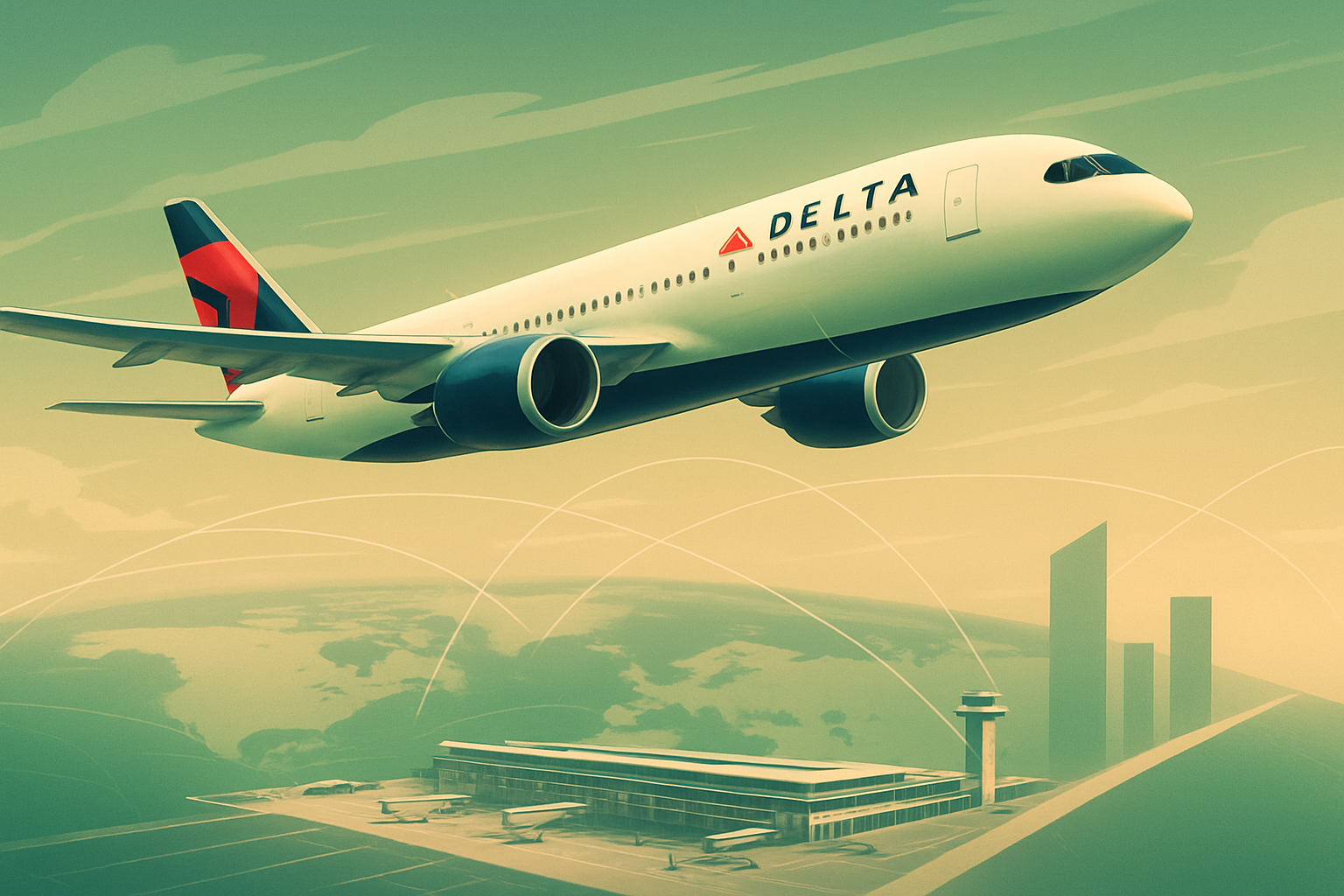
  • The Centennial Titan: A Comprehensive Research Report on Delta Air Lines (DAL)

    The Centennial Titan: A Comprehensive Research Report on Delta Air Lines (DAL)

    As we enter the first day of 2026, Delta Air Lines (NYSE: DAL) stands at a historic crossroads. Celebrating its centennial year of operation, the Atlanta-based carrier has transitioned from a humble crop-dusting operation into the world’s most financially formidable airline. While the broader aviation industry has spent the last five years grappling with post-pandemic volatility, labor unrest, and supply chain bottlenecks, Delta has carved out a unique identity as a "premium-first" transport giant.

    Today, Delta is more than an airline; it is a high-margin consumer loyalty engine powered by a multi-billion-dollar partnership with American Express and a fleet strategy that prioritizes reliability and luxury over cut-throat fare wars. With the stock recently touching all-time highs in late 2025, investors are looking to see if the "Delta Difference" can sustain its momentum in an era of shifting regulatory landscapes and evolving global travel patterns.

    Historical Background

    Delta’s journey began in 1925 as Huff Daland Dusters, the world’s first aerial crop-dusting operation in Macon, Georgia. It officially moved to Monroe, Louisiana, and then to Atlanta in 1941, evolving through the mid-20th century via strategic acquisitions of Chicago and Southern Air Lines and Northeast Airlines.

    The most transformative moment in Delta’s modern history was its 2008 merger with Northwest Airlines. This acquisition provided Delta with a massive transpacific gateway and a dominant hub in Minneapolis-St. Paul, effectively creating the blueprint for the modern global mega-carrier. Following its successful navigation of the Great Recession and a Chapter 11 reorganization earlier that decade, Delta emerged with a renewed focus on operational excellence. Under the leadership of former CEO Richard Anderson and current CEO Ed Bastian, the company shifted its philosophy toward "fortress hubs" and vertical integration, famously purchasing the Trainer oil refinery in 2012 to hedge fuel costs—a move once mocked by analysts that has since proven to be a strategic masterstroke.

    Business Model

    Delta operates a hub-and-spoke business model centered on key domestic fortresses: Atlanta (the world’s busiest airport), Detroit, Minneapolis-St. Paul, New York (JFK and LaGuardia), Salt Lake City, Seattle, and Los Angeles.

    However, its revenue sources have diversified significantly beyond seat sales:

    • Premium Products: Delta has aggressively shifted its cabin mix. Revenue from Delta One, Premium Select, and First Class now accounts for a significantly higher portion of total revenue than standard main cabin fares.
    • Loyalty and Credit Cards: The SkyMiles program is a juggernaut. Through its exclusive partnership with American Express, Delta receives billions in annual payments for miles purchased by the bank. By the end of 2025, this partnership generated over $7 billion in high-margin revenue.
    • Delta TechOps: One of the world’s largest Maintenance, Repair, and Overhaul (MRO) providers, TechOps services not only Delta’s fleet but also dozens of other global airlines, providing a counter-cyclical revenue stream.
    • Refinery Operations: The Monroe Energy subsidiary operates the Trainer refinery, providing Delta with a unique internal hedge against jet fuel price volatility.

    Stock Performance Overview

    Over the last decade, DAL has consistently outperformed its "Big Three" peers, United Airlines (NASDAQ: UAL) and American Airlines (NASDAQ: AAL).

    • 1-Year Performance: In 2025, DAL shares surged nearly 30%, finishing the year at approximately $69.40. This rally was fueled by record summer travel demand and a significant deleveraging of the balance sheet.
    • 5-Year Performance: Looking back to 2021, the stock has undergone a massive recovery. From the depths of the pandemic-era travel slump, Delta has more than doubled its valuation, outstripping the S&P 500’s airline index.
    • 10-Year Performance: Long-term shareholders have seen substantial capital appreciation and the reinstatement of a healthy dividend, which was briefly suspended during the COVID-19 crisis but returned to growth in 2024 and 2025.

    Notable moves in 2025 included a sharp spike in December as the company hit an all-time high of $72.06, reflecting investor confidence in the 2026 outlook.

    Financial Performance

    Delta’s financial results for the fiscal year 2025 have solidified its position as the industry’s "blue chip" stock.

    • Revenue and Earnings: Total revenue for 2025 exceeded $65 billion, a record for the company. Adjusted Earnings Per Share (EPS) landed at a robust $7.35, significantly higher than the $6.16 reported in 2024.
    • Margins: Operating margins remained in the double digits (approx. 11.5%), driven by high-yield premium traffic and the cooling of jet fuel prices in the latter half of the year.
    • Debt and Cash Flow: Delta’s "crusade against debt" reached a milestone in late 2025, with net debt falling to approximately $15.3 billion. Free cash flow for the year exceeded $4 billion, allowing the company to accelerate share buybacks and debt retirement simultaneously.
    • Valuation: Despite the price appreciation, DAL trades at a forward P/E ratio of roughly 9.4x, which many analysts argue is still a discount given the quality of its earnings compared to its peers.

    Leadership and Management

    CEO Ed Bastian has become the elder statesman of the U.S. aviation industry. His tenure is defined by a "people-first" culture, famously sharing 10% or more of annual profits with employees.

    As of January 1, 2026, the leadership team is navigating a critical succession phase:

    • Ed Bastian (CEO): Remains committed to the role but has begun grooming the next generation of leaders.
    • Glen Hauenstein (President): The architect of Delta’s network and revenue strategy, Hauenstein is set to retire in February 2026. His departure marks the end of an era, but his successor, Joe Esposito, is a 35-year veteran expected to maintain the "Hauenstein" network philosophy.
    • Dan Janki (CFO): Formerly of GE, Janki is credited with the disciplined capital allocation strategy that has restored Delta’s investment-grade balance sheet.

    Products, Services, and Innovations

    Delta’s competitive edge lies in its obsession with the "customer experience" as a tech-enabled journey.

    • Fleet Modernization: Delta is currently integrating the Airbus A350-1000, which serves as its long-haul flagship. These aircraft offer superior fuel efficiency and a higher density of premium suites.
    • Delta Sync: Introduced in 2023 and perfected by 2025, this platform offers personalized entertainment and free, fast Wi-Fi across the entire fleet, creating a "living room in the sky" experience that encourages SkyMiles sign-ups.
    • Sustainability: The company has invested heavily in Sustainable Aviation Fuel (SAF) and is a leader in the "First Movers Coalition," aiming for net-zero emissions by 2050.

    Competitive Landscape

    The U.S. airline market has bifurcated into two tiers: the premium-focused legacy carriers and the struggling low-cost carriers (LCCs).

    • Vs. United Airlines: United is Delta’s most competent rival, particularly in international markets. While United has a larger global footprint, Delta consistently maintains higher domestic reliability and customer satisfaction scores.
    • Vs. American Airlines: Delta has significantly outperformed American in terms of profitability. American’s focus on smaller, regional hubs has struggled to compete with Delta’s dominance in high-yield corporate centers like New York and London.
    • Vs. Southwest Airlines (NYSE: LUV): Southwest’s recent move to assigned seating and "premium-lite" offerings in late 2025 is a direct response to the market share Delta has captured from middle-class travelers who now value comfort over the lowest possible fare.

    Industry and Market Trends

    The "Front of the Plane" economy is the defining trend of 2026. Data shows that premium leisure travel—travelers willing to pay for Business or Premium Economy for personal trips—has become a permanent fixture of the market, decoupling airline profits from the traditional corporate travel cycle.

    Macro-drivers include:

    • Remote Work Flexibility: "Bleisure" (combining business and leisure) travel has smoothed out traditional seasonal troughs.
    • Supply Constraints: Ongoing delays at Boeing (NYSE: BA) have limited industry capacity, allowing Delta (which leans heavily on Airbus) to maintain high "load factors" and pricing power.

    Risks and Challenges

    Despite the stellar performance, Delta faces several headwinds:

    • Labor Costs: Following record-breaking pilot and flight attendant contracts in 2024 and 2025, labor is now Delta’s largest expense. Maintaining margins while paying top-tier wages is a delicate balancing act.
    • Boeing 737 MAX 10 Delays: While Delta is "Airbus-heavy," it still has significant orders for the Boeing MAX 10. Continued certification delays could hamper domestic growth plans for late 2026.
    • Geopolitical Instability: Fluctuations in the Middle East and Eastern Europe continue to pose risks to fuel prices and international route viability.

    Opportunities and Catalysts

    • The 2026 FIFA World Cup: With the tournament being held in North America, Delta’s massive hubs in Atlanta, Seattle, and New York are expected to see unprecedented traffic volumes.
    • International Expansion: Delta’s joint ventures with LATAM in South America and Air France-KLM in Europe are yielding higher returns as global connectivity reaches new peaks.
    • Investment Grade Dividends: Analysts expect a significant dividend hike in mid-2026, which could attract a new class of conservative, income-oriented institutional investors.

    Investor Sentiment and Analyst Coverage

    Wall Street is overwhelmingly bullish on DAL. As of January 2026, the consensus rating is a "Strong Buy," with an average price target of $82.00.

    • Institutional Moves: Major funds like Vanguard and BlackRock have increased their stakes, citing Delta’s "fortress balance sheet."
    • Retail Chatter: On platforms like Reddit’s r/stocks, Delta is often cited as the only airline "safe" for long-term holding, a testament to its brand equity.

    Regulatory, Policy, and Geopolitical Factors

    The regulatory environment shifted in late 2025 toward a more industry-friendly, deregulatory stance. The Department of Transportation (DOT) recently eased several proposed rules regarding delay compensation, providing carriers with more operational flexibility.

    However, scrutiny remains over "junk fees" and carbon emissions. Delta’s proactive approach to sustainability and transparent pricing has largely shielded it from the harshest political attacks, though antitrust regulators continue to monitor its dominant position in key hubs.

    Conclusion

    Delta Air Lines enters 2026 as the undisputed champion of the U.S. skies. By pivoting toward the premium traveler and leveraging its lucrative American Express partnership, the company has transformed from a cyclical transport provider into a high-performance consumer brand.

    For investors, the key will be watching the leadership transition following Glen Hauenstein’s retirement and the airline’s ability to manage labor costs in a high-inflation environment. While risks remain in the form of aircraft delivery delays and global volatility, Delta’s financial discipline and operational excellence make it the benchmark for the aviation industry. As it begins its second century of flight, Delta appears well-positioned to maintain its altitude.


    This content is intended for informational purposes only and is not financial advice.