
Tag: Consumer Staples

  • The Blue Chip Standard: Navigating the Shifting Tides of Procter & Gamble

    The Blue Chip Standard: Navigating the Shifting Tides of Procter & Gamble

    As we enter the second week of 2026, the global consumer goods landscape is facing a pivotal transformation. At the center of this evolution is The Procter & Gamble Company (NYSE: PG), a titan of industry that has become synonymous with "defensive investing." For decades, P&G has served as the bedrock of conservative portfolios, prized for its relentless dividend growth and its portfolio of essential brands. However, as of January 13, 2026, the company finds itself at a unique crossroads.

    Trading near its 52-week low after a volatile 2025, P&G is navigating a leadership transition at the CEO level, intensifying competition from private labels, and a complex new regulatory environment in Europe. This article provides a comprehensive deep dive into the state of P&G, examining whether the "Dividend King" can maintain its crown in an era of digital disruption and shifting consumer loyalties.

    Historical Background

    Founded in 1837 by William Procter and James Gamble—originally as a humble candle and soap shop in Cincinnati—P&G has survived every American economic crisis for nearly two centuries. The company’s trajectory has been defined by its ability to industrialize the concept of "branding."

    The 20th century saw P&G pioneer modern marketing techniques, creating "soap operas" to sell cleaning products and establishing a research-driven approach to product development. However, the most significant modern transformation occurred between 2014 and 2016. Recognizing that the company had become too bloated, management executed a radical portfolio restructuring. P&G divested over 100 brands, including iconic names like Pringles (sold to Kellogg’s), Duracell (sold to Berkshire Hathaway), and a massive beauty portfolio (sold to Coty).

    This strategic "slimming down" left the company with 65 core brands across 10 categories—a leaner, more profitable engine focused on high-margin daily-use products where performance superiority justifies a premium price.

    Business Model

    P&G’s business model is built on the concept of "Irresistible Superiority." The company operates through five key segments:

    1. Fabric & Home Care (36% of sales): Home to Tide, Ariel, and Downy. This is the company's largest and most vital engine.
    2. Baby, Feminine & Family Care (24% of sales): Includes Pampers, Always, and Bounty.
    3. Beauty (18% of sales): Includes Head & Shoulders, Pantene, and the prestige skin care brand SK-II.
    4. Health Care (13% of sales): Leading with Oral-B and Crest, alongside the Vicks respiratory franchise.
    5. Grooming (9% of sales): Dominated by the global Gillette and Venus franchises.

    P&G doesn't just sell products; it sells "solutions" that consumers use multiple times a day. Their revenue is geographically diversified, with North America accounting for roughly 50% of sales, while high-growth enterprise markets in Asia and Latin America provide a long-term volume tailwind.

    Stock Performance Overview

    Over the last decade, PG has been a paragon of stability, though recent price action has tested investor patience.

    • 10-Year Performance: P&G has delivered steady capital appreciation, significantly outperforming many of its consumer staple peers when factoring in reinvested dividends.
    • 5-Year Performance: The stock saw a massive run during the 2020-2022 inflationary period as it successfully passed on costs to consumers. However, growth has moderated since 2024.
    • 1-Year Performance: As of January 13, 2026, the stock is trading around $143, down from its March 2025 high of $179.99. The stock recently touched a 52-week low of $137.62 earlier this month.

    The recent decline reflects investor concerns over "pricing fatigue"—the idea that P&G has pushed price hikes as far as they can go without causing significant volume declines.

    Financial Performance

    For the first quarter of fiscal year 2026 (reported late 2025), P&G demonstrated its characteristic resilience:

    • Net Sales: $22.4 billion, a 3% year-over-year increase.
    • Organic Sales: Grew 2%, split evenly between price increases and product mix.
    • Earnings Per Share (EPS): Core EPS of $1.99, beating analyst estimates.
    • Cash Flow: The company remains a cash machine, projecting to return $15 billion to shareholders in FY 2026 through $10 billion in dividends and $5 billion in share buybacks.

    P&G is a "Dividend King," having increased its dividend for 69 consecutive years (as of 2025). With a payout ratio comfortably below 70% of earnings, the dividend remains one of the safest in the S&P 500.

    Leadership and Management

    The most significant recent development is the leadership transition that occurred on January 1, 2026.

    Shailesh Jejurikar has officially assumed the role of President and CEO, succeeding Jon Moeller, who remains as Executive Chairman. Jejurikar, formerly the COO, is the first CEO of Indian heritage to lead the company. He is credited with the turnaround of the Fabric & Home Care division and is expected to double down on "Supply Chain 3.0"—a digital-first manufacturing strategy designed to shave billions in costs while increasing speed to market.

    The management team is widely regarded as one of the deepest "talent benches" in corporate America, with a culture of internal promotion that ensures strategic continuity.

    Products, Services, and Innovations

    Innovation is P&G’s primary defense against lower-priced rivals. In 2025 and 2026, the company has leaned into "sustainable premiumization":

    • Tide EVO: A fiber-based detergent tile that is entirely plastic-free, launched to capture the eco-conscious consumer.
    • SK-II Rejuvenation: A massive restaging of the prestige skincare brand in China to regain market share from local competitors.
    • Pampers Swaddlers Upgrade: Using proprietary "pH-balancing" technology to maintain a performance gap over private-label diapers.

    The company spends approximately $2 billion annually on R&D, more than any of its direct competitors, ensuring a "moat" of patents and proprietary formulations.

    Competitive Landscape

    P&G competes in a "clash of the titans" against other multi-national giants:

    • Unilever (NYSE: UL): P&G’s fiercest global rival. While Unilever has better exposure to emerging markets, P&G generally maintains higher margins and better pricing power in the US.
    • Kimberly-Clark (NYSE: KMB): A direct threat in the paper and diaper categories. KMB’s recent acquisition of Kenvue’s consumer health assets in 2026 has intensified the battle in personal care.
    • Church & Dwight (NYSE: CHD): A smaller, nimbler competitor that has gained share with value-priced brands like Arm & Hammer during the recent inflationary cycle.
    • Private Label: The "quiet threat." Store brands (like Costco’s Kirkland or Amazon Basics) now account for over 21% of US market share in some categories, forcing P&G to constantly justify its premium.

    Industry and Market Trends

    Three macro trends are currently shaping P&G’s future:

    1. Digital Commerce: E-commerce now accounts for 19% of P&G’s total sales. The shift toward "click-and-collect" and subscription models favors P&G’s large, recognizable brands.
    2. Supply Chain Regionalization: Moving away from global hubs toward local manufacturing to mitigate geopolitical risks and shipping costs.
    3. The "Barbell" Economy: While mid-tier consumers are trading down to private labels, the "prestige" end of the market (luxury skincare and high-end grooming) remains robust, a trend P&G is exploiting with its Beauty and Grooming segments.

    Risks and Challenges

    No investment is without risk, and P&G faces several headwinds in 2026:

    • Tariff Headwinds: Management has estimated a $400 million to $500 million after-tax headwind from new trade tariffs in FY 2026, which may require further price increases.
    • Commodity Volatility: Rising costs for chemicals, paper pulp, and energy continue to squeeze margins.
    • Volume Stagnation: If P&G continues to raise prices to offset costs, it risks "alienating" the value-conscious consumer, leading to declining unit volumes.
    • Geopolitical Exposure: As a truly global company, P&G is sensitive to FX (Foreign Exchange) volatility and political instability, particularly in China and Eastern Europe.

    Opportunities and Catalysts

    • Supply Chain 3.0: If Jejurikar can successfully implement his productivity program, P&G could see significant margin expansion even if revenue growth remains in the low single digits.
    • Emerging Market Recovery: A rebound in consumption in Greater China and India could provide a much-needed volume boost.
    • M&A Potential: With a pristine balance sheet, P&G is well-positioned to acquire high-growth "digital-native" brands in the skincare or wellness space.

    Investor Sentiment and Analyst Coverage

    Wall Street currently holds a "Moderate Buy" consensus on PG.

    • Price Targets: Most analysts have price targets ranging from $165 to $172, suggesting a potential upside of 15-20% from current levels.
    • Institutional Sentiment: Large funds, including Vanguard and BlackRock, remain heavily overweight in PG, viewing it as a necessary "volatility dampener" for diversified portfolios.
    • Retail Sentiment: While some retail investors are frustrated by the stock’s recent lackluster performance compared to tech, the high dividend yield (currently around 2.8%) remains a major draw for income-focused investors.

    Regulatory, Policy, and Geopolitical Factors

    The regulatory landscape has become significantly more challenging. The EU Packaging and Packaging Waste Regulation (PPWR), which becomes fully binding in August 2026, is a major focus.

    P&G must ensure that all packaging is "recyclable by design" and significantly reduce virgin plastic use. Additionally, the ban on "forever chemicals" (PFAS) in certain packaging categories is forcing a massive R&D shift. While these regulations increase costs, P&G’s scale allows it to absorb these compliance costs more easily than smaller competitors, potentially turning a regulatory burden into a competitive advantage.

    Conclusion

    As of January 2026, Procter & Gamble remains the gold standard for consumer staple investing, but it is a company in transition. The "easy" growth from price hikes is over; the next phase of P&G’s story will be told through volume growth, digital efficiency, and product innovation.

    For the conservative investor, the recent dip to the $140 range represents an attractive entry point for a company that effectively "owns" the American household. However, the market will be watching CEO Shailesh Jejurikar closely to see if he can navigate the $1 billion in tariff and commodity headwinds expected this year. P&G is not a "get rich quick" stock; it is a "stay rich" stock, and its current valuation suggests that while the tides are shifting, the ship remains remarkably steady.


    This content is intended for informational purposes only and is not financial advice.
  • Pantry Powerhouse: A Deep-Dive into General Mills (GIS) in the Age of GLP-1 and Pet Humanization

    Pantry Powerhouse: A Deep-Dive into General Mills (GIS) in the Age of GLP-1 and Pet Humanization

    Today’s Date: 12/22/2025

    Introduction

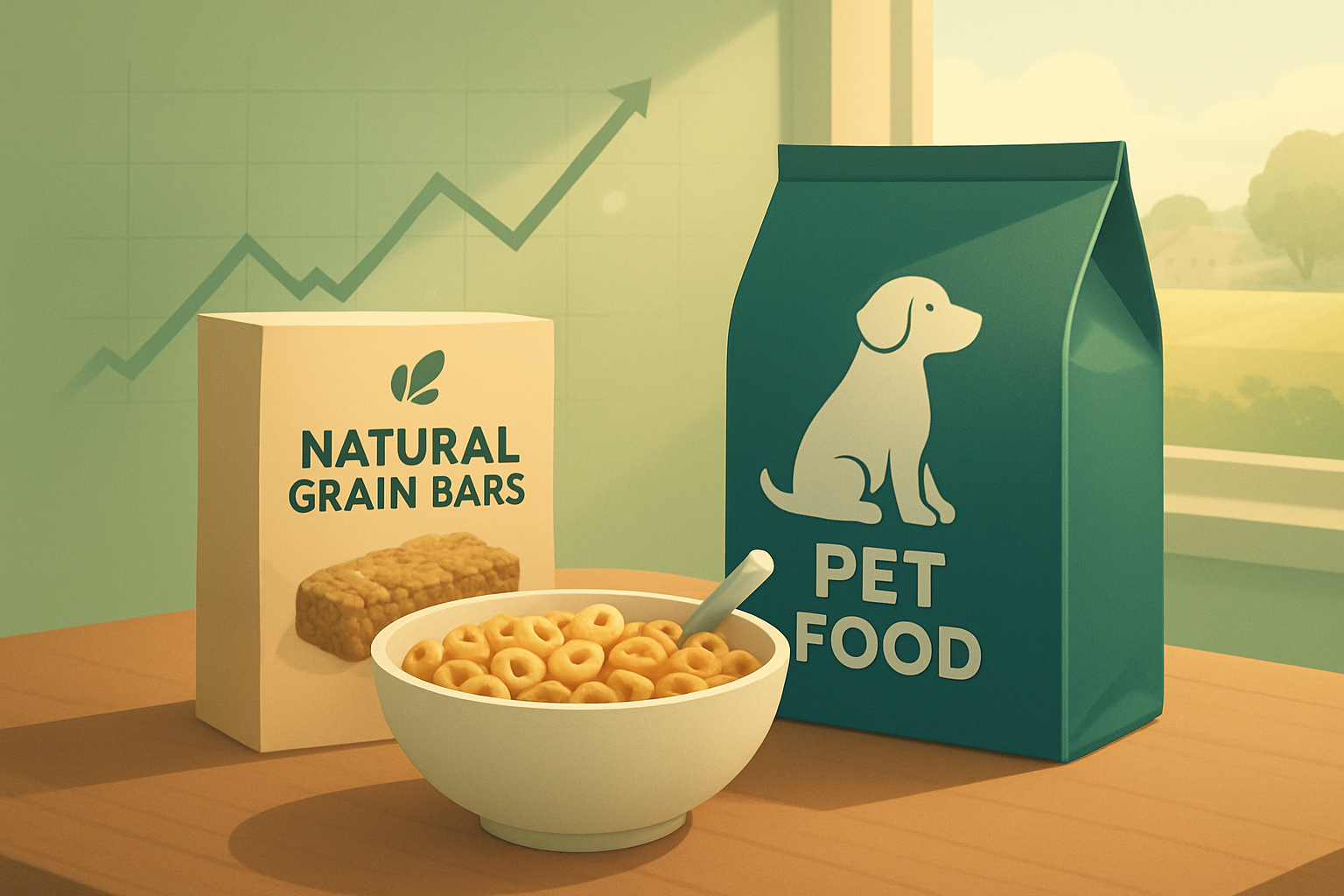
    General Mills (NYSE: GIS) stands at a fascinating crossroads in late 2025. As one of the world's most recognizable consumer packaged goods (CPG) giants, it is currently navigating a marketplace defined by two diametrically opposed forces: the "frugal consumer" looking for value amidst sticky inflation, and the "premium consumer" seeking high-protein, health-oriented products. With its recent fiscal 2026 second-quarter earnings report surprising Wall Street, General Mills has proven that even a 150-year-old flour miller can adapt to the age of GLP-1 weight-loss drugs and the "humanization" of pet food. This article provides a deep-dive into the company’s current standing, its strategic pivot away from traditional dairy, and its future as a diversified nutrition powerhouse.

    Historical Background

    General Mills traces its lineage back to 1866, when Cadwallader Washburn opened a flour mill in Minneapolis, Minnesota. The company’s early history was defined by the rivalry between the Washburn-Crosby Company and the Pillsbury Company, which spurred massive innovation in milling technology. In 1928, General Mills was officially formed through the merger of Washburn-Crosby and 26 other regional mills.

    The 20th century saw the company diversify into icons of the American pantry: the launch of "Cheerioats" (now Cheerios) in 1941, the introduction of the Pillsbury Doughboy in 1965, and the 2001 acquisition of Pillsbury, which effectively doubled the company's scale. However, the most pivotal modern transformation occurred in 2018 with the $8 billion acquisition of Blue Buffalo. This move signaled a shift from being a "cereal company" to a "brand builder" in high-growth, high-margin categories like pet nutrition.

    Business Model

    General Mills operates a sophisticated, brand-led business model centered on four primary segments:

    1. North America Retail: The largest segment, encompassing cereal (Cheerios, Lucky Charms), meals (Progresso, Old El Paso), and snacks (Nature Valley, Totino’s).
    2. Pet: Focused on the Blue Buffalo brand, which emphasizes natural, high-quality ingredients.
    3. North America Foodservice: Providing products to schools, hotels, and restaurants.
    4. International: Covering established markets in Europe and emerging markets in Asia and Latin America.

    The company generates revenue primarily through the sale of branded food products to retail chains, wholesalers, and foodservice operators. Its strategy relies on "HMM" (Holistic Margin Management)—a disciplined productivity program that targets 5% of cost of goods sold (COGS) in savings annually to fuel marketing and innovation.

    Stock Performance Overview

    As of late December 2025, General Mills' stock is undergoing a recovery phase.

    • 1-Year Performance: The stock has seen a volatile year, dipping to 52-week lows near $48 in Q3 2025 due to concerns over private-label competition. However, following the Dec 17 earnings beat, it has stabilized in the $47–$51 range.
    • 5-Year Performance: Over the last five years, GIS has provided a total return (including dividends) that has generally tracked with the consumer staples sector, though it trailed the broader S&P 500 during the 2023-2024 tech surge.
    • 10-Year Performance: Long-term shareholders have benefited from GIS’s "Dividend Aristocrat" qualities. The stock has provided steady, albeit slow, capital appreciation, but its true value has been in the compounding of a dividend yield that has averaged between 3% and 5% over the last decade.

    Financial Performance

    In its Q2 FY2026 report (released Dec 17, 2025), General Mills demonstrated significant operational resilience:

    • Earnings: Adjusted EPS came in at $1.10, beating the $1.02 consensus.
    • Revenue: Net sales were $4.9 billion, down 7% year-over-year. However, this was largely due to the divestiture of the North American yogurt business (Yoplait), which removed a significant but low-margin revenue stream.
    • Organic Growth: Organic net sales declined by only 1%, showing improvement from earlier in the year. Crucially, organic volumes in the North American Retail segment turned positive for the first time in several quarters.
    • Margins: Adjusted operating profit margin remains healthy, supported by the disposal of the lower-margin yogurt segment and robust pricing power in the Pet segment.
    • Valuation: Trading at roughly 11x-13x forward earnings, GIS is currently priced at a discount compared to its historical 10-year average and peer group.

    Leadership and Management

    CEO Jeff Harmening, who took the helm in 2017, has been the architect of the "Accelerate" strategy. His tenure has been marked by a ruthless focus on portfolio reshaping. By selling off the yogurt business in late 2024 and acquiring high-growth brands like Whitebridge Pet Brands (Tiki Pets) in 2025, Harmening has leaned into high-growth "Global Platforms."

    The management team is generally well-regarded for its transparency and fiscal discipline. The board has maintained a strong commitment to returning cash to shareholders, evidenced by over 120 years of uninterrupted dividend payments.

    Products, Services, and Innovations

    General Mills is currently using innovation to fight the "GLP-1 headwind." Rather than fearing weight-loss drugs, GIS has launched a "Leaner Consumer" initiative.

    • Innovation Pipeline: Products like Cheerios Protein and Nature Valley Protein Bars are being marketed directly to consumers who are eating less but seeking higher nutrient density.
    • Pet Innovation: The national rollout of Blue Buffalo "Love Made Fresh" (refrigerated pet food) is a major play for the $10 billion fresh-pet-food market.
    • Digital Transformation: The company has invested heavily in first-party data, allowing for hyper-targeted marketing that has seen ROI on media spend increase significantly since 2021.

    Competitive Landscape

    The competitive environment shifted dramatically in 2025 following the Mars acquisition of Kellanova. With Pringles and Cheez-It now part of a massive private entity, General Mills faces a consolidated snacking rival.

    • Vs. Kraft Heinz (NYSE: KHC): GIS currently holds a valuation premium over Kraft Heinz due to its stronger position in the Pet category, while KHC remains focused on condiments and turnaround efforts.
    • Vs. Private Label: This remains the biggest threat. In categories like basic cereal and baking mixes, store brands (Great Value, Kirkland) have gained market share as consumers look to save money. GIS counters this with "Remarkability"—investing in product quality that private labels struggle to match.

    Industry and Market Trends

    Three macro trends are currently defining the sector:

    1. GLP-1 Impact: While analysts initially feared a 10% drop in snacking, data in late 2025 suggests consumers are switching to high-protein snacks rather than quitting snacks entirely.
    2. Pet Humanization: People are spending more on "fresh" and "wet" pet food, which carries higher margins for GIS.
    3. Value-Seeking Behavior: The "middle class" consumer is increasingly shopping at club stores (Costco) and discounters (Aldi), forcing GIS to offer larger pack sizes and more competitive pricing.

    Risks and Challenges

    • Commodity Volatility: While supply chains have normalized since 2022, spikes in the price of oats, sugar, and aluminum can still compress margins.
    • Regulatory Scrutiny: Increased FDA focus on "Healthy" labeling and front-of-pack nutrition warnings could force reformulations of sugary cereals.
    • Private Label Erosion: If General Mills cannot maintain its "Remarkability" gap, consumers may permanently switch to cheaper store brands.

    Opportunities and Catalysts

    • M&A: Following the yogurt divestiture, GIS has a war chest of cash. Analysts expect further acquisitions in the "natural and organic" or "pet health" spaces.
    • Fresh Pet Food: The Blue Buffalo fresh line is in its early innings and could provide a multi-year growth runway.
    • International Scaling: Brands like Old El Paso have significant growth potential in Europe and Asia, where Mexican cuisine is gaining popularity.

    Investor Sentiment and Analyst Coverage

    Sentiment on Wall Street is cautiously optimistic as of December 2025.

    • Analyst Ratings: The consensus is currently a "Hold" to "Moderate Buy." Analysts appreciate the 5% dividend yield and the yogurt divestiture, which cleans up the balance sheet.
    • Institutional Moves: Several large "Value" and "Income" funds have increased their positions in Q4 2025, viewing the sub-$50 price point as an attractive entry for a defensive asset.

    Regulatory, Policy, and Geopolitical Factors

    Geopolitically, General Mills is less exposed to China than many tech or fashion brands, as the vast majority of its revenue is North American-based. However, domestic policy remains a factor. The 2025 Farm Bill and discussions around sugar taxes are ongoing concerns that could impact the cost of raw materials and the marketing of children's cereals.

    Conclusion

    General Mills (GIS) in late 2025 is a company that has successfully traded "breadth for depth." By exiting the slow-growth yogurt category and doubling down on Pet and high-protein human snacks, the company has insulated itself against the rise of weight-loss drugs and the volatility of the global economy. For the investor, GIS represents a classic defensive play: it offers a robust 5.0% dividend yield, a discounted valuation, and a management team that has proven it can grow volumes even when consumers are feeling the pinch. While it may not offer the explosive growth of a tech stock, its recent earnings beat suggests that the "Big G" still has plenty of momentum left in its tank.


    This content is intended for informational purposes only and is not financial advice.
  • Walmart (WMT) Stock Research: How America’s Biggest Retailer Is Repricing Itself as a Tech-and-Services Compounder (12/15/2025)

    Walmart (WMT) Stock Research: How America’s Biggest Retailer Is Repricing Itself as a Tech-and-Services Compounder (12/15/2025)

    As of 12/15/2025, Walmart Inc. (WMT/Nasdaq) sits in a deceptively unusual spot in U.S. equities: it is simultaneously a classic “defensive” staple retailer (a grocery-led traffic machine) and an increasingly digital, data-rich platform trying to earn a higher multiple through higher-margin profit pools—advertising, marketplace services, fulfillment, and memberships.

    Walmart’s relevance in late 2025 is tied to three overlapping forces:

    • A consumer that still wants value. Walmart’s “Everyday Low Price” DNA positions it well when households are cautious, when credit is tighter, or when inflation has altered shopping habits.
    • A store network that doubles as a logistics advantage. Roughly 90% of Americans live within 10 miles of a Walmart store, an unmatched “last-mile” asset in an era where same-day delivery is becoming table stakes.
    • A profit mix that is quietly shifting. Walmart’s leadership has emphasized that advertising and membership income together contribute a meaningful share of operating income in recent quarters—an “Amazon-like flywheel” investors are increasingly willing to pay up for.

    Scale remains staggering: ~$681B in FY2025 revenue, 10,750+ stores globally across 19 countries, and roughly 2.1 million employees. The story investors are debating is not whether Walmart will remain important—it’s whether the market is right to price Walmart less like a mature retailer and more like a durable “retail-tech” compounder.

    2. Historical Background

    Walmart’s story begins with Sam Walton, who believed discount retail could thrive in smaller American towns that bigger chains ignored. The first Wal-Mart Discount City opened in Rogers, Arkansas in 1962. Walton’s early advantage wasn’t just low prices; it was an operating system: disciplined expense control, relentless vendor negotiation, and a distribution model that would become legendary.

    Key milestones that reshaped the company:

    • 1970–1972: going public and scaling. Walmart incorporated in 1969, went public in 1970, and listed on the NYSE in 1972—unlocking capital for hyper-growth.
    • 1983: Sam’s Club launches, expanding into the membership warehouse format.
    • 1988: the first Supercenter arrives—marrying discount general merchandise with a full grocery business and changing American shopping behavior.
    • 1990s–2000s: international expansion (Mexico, Canada, China, the U.K. via Asda), plus rapid technology adoption (barcodes, early data systems).
    • 1996 onward: e-commerce arrives (Walmart.com). The company’s later push to catch up in digital accelerated after the 2010s.
    • 2016: Jet.com acquisition (~$3.3B), a symbolic escalation in the battle with Amazon.
    • 2018: Flipkart majority stake (~$16B), a major bet on India’s long-term digital commerce growth.
    • 2024: Vizio acquisition (~$2.3B), aimed at boosting Walmart’s advertising and connected-TV reach.

    In short: Walmart has repeatedly used its scale to enter adjacent profit pools—first groceries, then membership, then global retail, and now digital services.

    3. Business Model

    Walmart’s economic engine is high-volume retailing built on cost leadership and a promise to “save people money so they can live better.” The twist in 2025 is that management is trying to graft higher-margin, recurring, and data-driven revenue streams onto that engine.

    Walmart reports three primary segments:

    1. Walmart U.S.

      • Largest segment and the core omnichannel platform.
      • Mix: grocery (nearly 60% of U.S. net sales), general merchandise, and health & wellness.
      • Profit levers: store productivity, supply chain efficiency, shrink management, and growing digital attach.
    2. Walmart International

      • Operations in 19 countries, increasingly oriented toward digital growth (notably in markets like Mexico, China, and through Flipkart in India).
    3. Sam’s Club U.S.

      • A membership-based warehouse model with attractive renewal economics.
      • Membership fees are a structurally higher-margin income stream relative to retail gross profit.

    Beyond product sales, investors increasingly focus on four “platform-like” revenue sources:

    • Advertising (Walmart Connect): monetizing on-site and in-store traffic using first-party shopper data.
    • Marketplace: third-party sellers expand assortment; Walmart earns fees and can cross-sell ads and fulfillment.
    • Fulfillment services (WFS): logistics and 3PL-like services for marketplace sellers.
    • Membership (Walmart+ and Sam’s Club): recurring income plus higher customer lifetime value.

    The customer base is broad—value-seeking households remain core, but Walmart has been gaining share among higher-income shoppers (>$100k) during periods of price sensitivity.

    4. Stock Performance Overview

    Walmart’s stock performance over the past decade reflects two identities: a defensive retailer during macro stress and, more recently, a “platform narrative” beneficiary as advertising and digital services scale.

    As of mid-December 2025:

    • 1-year: approximately +24% to +26% total return; shares reached all-time highs (reported high around $116.79 on 12/15/2025).
    • 5-year: roughly +140% to +157% total return.
    • 10-year: reported ~+596% total return, with annual returns outpacing the broad market in several comparisons.

    Notable moves and catalysts:

    • Inflation shock in 2022 triggered a meaningful drawdown as costs surged and retail margins were questioned.
    • Earnings beats and guidance raises repeatedly drove rallies (e.g., sharp pops following strong quarters and improved outlooks).
    • Walmart’s “defensive” status often attracts flows during uncertain growth backdrops.

    Relative performance:

    • Over multiple horizons, Walmart has generally outperformed the S&P 500 and many traditional retail peers—helped by groceries, operational scale, and the perception of a growing digital profit mix.

    5. Financial Performance

    Walmart’s recent financials show steady top-line growth, incremental margin improvement, and increasing contribution from higher-margin businesses.

    FY2025 (ended 1/31/2025)

    • Revenue: $681.0B (up ~5%).
    • Operating income: $29.3B (up ~9%).
    • Net income: $20.2B; diluted EPS: $2.41.
    • Operating cash flow: $36.4B.
    • Free cash flow: reported ~$13.1B (down year-over-year).
    • Capex: $23.8B focused on automation, technology, and store modernization.

    Q3 FY2026 (ended 10/31/2025)

    • Revenue: $179.5B (+5.8% YoY; +6.0% constant currency).
    • Adjusted operating income: $7.2B (+8.0% constant currency).
    • GAAP EPS: $0.77 (+35% YoY); adjusted EPS: $0.62 (+6.9% YoY).
    • Gross profit rate: ~24.2% (stable).

    Balance sheet & capital return

    • Cash (Q3 FY2026): ~$10.6B; total debt: ~$53.1B.
    • Q3 FY2026 shareholder returns: $2.7B (dividends + buybacks).
    • Dividend: Walmart raised its annual dividend to $0.94/share for FY2026, marking 50+ consecutive years of increases.

    Valuation (late 2025)

    • P/E: various estimates place Walmart around ~40–45x trailing earnings, with mid-to-high 30s forward P/E in some snapshots.
    • EV/EBITDA: around ~22–23x, notably above longer-term averages.

    The key question: can Walmart expand margins enough—through advertising, membership, marketplace, and automation—to justify a multiple that looks more like a quality compounder than a low-margin retailer?

    6. Leadership and Management

    Walmart is led by Doug McMillon (CEO), a long-time Walmart executive who has overseen the company’s shift toward omnichannel and technology investment. Key operating leaders include John Furner (Walmart U.S.), Kathryn McLay (Walmart International), and Chris Nicholas (Sam’s Club), with John David Rainey (CFO) overseeing capital allocation and investor communications.

    Strategic priorities under current leadership:

    • Omnichannel excellence: faster pickup/delivery and better digital-to-store integration.
    • Technology and automation: AI-driven demand forecasting, fulfillment center automation, and store modernization.
    • Profit mix upgrade: scale advertising (Walmart Connect), memberships, and marketplace services.

    Governance considerations:

    • The Walton family remains influential through significant ownership.
    • Walmart’s history includes governance scrutiny (notably past foreign bribery allegations). Investors typically weigh this against the company’s operational consistency and improving compliance and disclosure frameworks.

    7. Products, Services, and Innovations

    Walmart’s innovation agenda is pragmatic: use technology to lower unit costs, improve speed, and monetize its customer relationships.

    Key initiatives:

    • Walmart+: membership benefits including delivery/shipping perks, fuel discounts, and streaming bundles (Paramount+/Peacock options).
    • InHome delivery: higher-trust delivery into garages or refrigerators, designed to increase retention and share of wallet.
    • Automation in fulfillment: robotics and automated distribution are targeted to reduce handling costs and improve throughput.
    • Store modernization (“Store of the Future”): remodels and tech integration to connect physical aisles with digital assortment.
    • Walmart Connect: expanding on-site ads, in-store digital signage, and—via Vizio—more connected-TV reach.
    • Marketplace expansion: now 200,000+ active sellers (mid-2025), with services like WFS and seller financing.
    • Financial services (One fintech): debit, early wage access, installment loans/BNPL, aiming at underbanked customers.

    Healthcare is a more complex chapter. Walmart closed its Walmart Health clinics in 2024 due to profitability challenges, but it still operates a massive pharmacy and vision footprint and continues to explore health-adjacent services.

    8. Competitive Landscape

    Walmart competes across multiple retail battlegrounds:

    • Amazon.com (AMZN/Nasdaq): the core e-commerce rival; Amazon’s logistics and Prime ecosystem set the bar.
    • Costco Wholesale (COST/Nasdaq): a membership juggernaut with strong renewal economics.
    • Target (TGT/NYSE): stronger brand curation; competes in general merchandise and omnichannel.
    • Kroger (KR/NYSE): grocery-focused; private label and regional strength.
    • Dollar General (DG/NYSE) and Aldi/Lidl: value and convenience competitors.

    Walmart’s enduring moats:

    • Scale purchasing power and cost discipline.
    • Physical proximity enabling last-mile advantages.
    • Grocery gravity that drives frequency.

    Key weaknesses:

    • Thin core retail margins, especially in grocery-heavy mix.
    • Execution complexity across stores, digital, and services.
    • Reputational and labor controversies that periodically re-emerge.

    9. Industry and Market Trends

    Big-box retail in 2025 is being reshaped by:

    • Trade-down behavior: even higher-income consumers chase value when budgets feel tight.
    • Last-mile economics: delivery is expensive; retailers must optimize route density, pickup, and store fulfillment.
    • AI and automation: forecasting, dynamic pricing, shrink prevention, and warehouse robotics are moving from experiments to necessities.
    • Retail media networks: advertising monetization is one of the clearest profit opportunities in modern retail.
    • Supply chain resilience: post-pandemic playbooks emphasize flexibility, nearshoring, and tighter inventory discipline.

    Walmart is arguably positioned near the center of these trends: high-frequency grocery demand + data scale + stores as fulfillment hubs.

    10. Risks and Challenges

    A rigorous Walmart thesis must include the downsides.

    Key risks:

    • Valuation risk: with an elevated P/E and EV/EBITDA, the stock is more vulnerable to “multiple compression” if growth slows.
    • Margin pressure: wage inflation, price investment, and mix shifts toward grocery can cap profitability.
    • Shrink/theft: a persistent, multi-billion-dollar headwind; mitigation can require capex and can degrade customer experience.
    • E-commerce economics: delivery costs and promotional intensity can pressure profitability despite progress.
    • Labor and unionization: longstanding reputational risk and potential regulatory/legal exposure.
    • Cybersecurity and data privacy: multiple incidents across the retail industry—and Walmart’s own history—raise ongoing operational and legal risk.
    • International exposure: FX volatility and policy changes can swing reported results.

    11. Opportunities and Catalysts

    Walmart’s opportunity set is unusually broad for a mature retailer.

    Key upside levers:

    • Advertising: Walmart Connect growth remains fast, and Vizio expands reach into connected TV.
    • Marketplace flywheel: more sellers → broader assortment → more traffic → more ad inventory.
    • Membership scaling: Walmart+ and Sam’s Club membership income is high-margin and supports retention.
    • Automation-driven margin expansion: management expects major portions of fulfillment and store servicing to be supported by automation by ~2026.
    • International growth: Flipkart, Mexico, and China can provide faster-growing digital exposure.

    Near-term catalysts:

    • Earnings (next major report expected 2/19/2026).
    • Holiday and promotional performance: e-commerce penetration and marketplace conversion metrics.
    • Advertising updates: growth rates and monetization efficacy (on-site + in-store + CTV).

    12. Investor Sentiment and Analyst Coverage

    Analyst sentiment into late 2025 is broadly positive.

    • Many rating summaries show Walmart with a “Strong Buy” / “Buy” skew, with average targets often clustered around ~$117–$122, and high-end targets in the $130s.

    Common bull arguments:

    • Walmart is gaining share in groceries and online grocery.
    • Advertising and membership profit pools can lift margins structurally.
    • The company has demonstrated execution capability and resilience.

    Common bear arguments:

    • The stock’s valuation assumes continued margin expansion.
    • Wage/shrink and delivery economics remain structural pressures.
    • A normalization of inflation tailwinds could expose more modest volume growth.

    Institutional ownership is significant, with large holders including Vanguard and BlackRock, and multiple data sources showing active accumulation in recent periods.

    13. Regulatory, Policy, and Geopolitical Factors

    Walmart’s scale makes it a recurring subject of policy scrutiny.

    Key areas:

    • Labor regulation and minimum wage: changes can increase cost structure; union-related disputes can create legal and reputational exposure.
    • Antitrust: especially in international markets where supplier practices may draw regulator attention.
    • Food safety: tightening traceability requirements (e.g., FSMA 204) increase compliance demands but can also favor scale players that can invest.
    • Pharmacy regulation and opioid litigation: ongoing compliance burdens and legal risks.
    • Data privacy: breach risks meet stricter consumer protection expectations.
    • Tariffs and trade policy: shifting tariff regimes force sourcing diversification; nearshoring can reduce risk but may change cost dynamics.

    Geopolitical disruptions (shipping lanes, regional instability, deglobalization) can ripple through costs, availability, and inventory planning.

    14. Outlook and Scenarios

    Over the next 2–5 years, Walmart’s trajectory will likely hinge on whether it can keep core retail strong while scaling higher-margin “services” fast enough to lift consolidated profitability.

    Bull case

    • Revenue growth: ~5.5%–7.5% annually.
    • Margin expansion toward ~3.8%–4.5% net margin as advertising, membership, and automation scale.
    • The market sustains or expands Walmart’s premium multiple as it looks more “platform-like.”

    Base case

    • Revenue growth: ~3.5%–5.0% annually.
    • Net margin creeps toward ~3.3%–3.7%; continued investment partially offsets mix benefits.
    • Valuation stabilizes; returns track steady EPS growth and dividends.

    Bear case

    • Revenue growth: ~1.0%–3.0%.
    • Net margin pressured to ~2.5%–3.0% from wage/shrink, promotion, and delivery costs.
    • Multiple compresses meaningfully, even if Walmart remains operationally sound.

    KPIs to track

    • Walmart U.S. comp sales
    • E-commerce growth and profitability
    • Walmart Connect advertising growth
    • Walmart+ / Sam’s Club membership income growth and retention
    • Gross margin, operating margin, and shrink metrics
    • Inventory discipline and free cash flow

    15. Conclusion

    Walmart Inc. (WMT/Nasdaq) is still the country’s most powerful scale retailer, but the more important investment debate in 12/15/2025 markets is whether Walmart is becoming a structurally different earnings machine.

    The bullish view is coherent: Walmart’s store network is a logistics edge that can support faster delivery at better economics than many rivals, while advertising, membership, marketplace fees, and fulfillment services gradually lift margins and reduce dependence on low-margin grocery.

    The bearish view is equally real: the stock is priced for execution, and retail remains a brutally competitive, cost-pressured business where shrink, wages, and delivery can quickly eat “platform” upside.

    For investors, the watchlist is clear: ad and membership growth, e-commerce profitability, automation savings, and shrink control. If those levers keep improving, Walmart’s premium valuation can remain durable. If they stall, the company may still be a high-quality defensive retailer—but the stock could behave more like one, too.


    This content is intended for informational purposes only and is not financial advice