Published: December 19, 2025
Introduction
On December 19, 2025, Bharat Petroleum Corporation Limited (NSE: BPCL / BOM: 532488) stands at a pivotal crossroads between its legacy as an oil refining titan and its future as a diversified energy major. The company has dominated headlines this week following its Board’s formal approval on December 18 to establish a landmark joint venture (JV) with Coal India Limited (NSE: COALINDIA / BOM: 533278). This partnership, focused on a massive surface coal gasification project in Maharashtra, represents one of India’s most ambitious bets on energy security and technology-driven carbon mitigation. As the global energy landscape shifts toward decarbonization, BPCL’s move to convert "dirty" coal into "clean" synthetic natural gas (SNG) is being watched by analysts as a litmus test for the viability of traditional energy giants in a Net-Zero world.
Historical Background
BPCL’s lineage traces back to the 1860s during the oil exploration boom in Upper Assam and Burma. However, its modern identity was forged in 1976 when the Government of India nationalized Burmah Shell through the "Burmah Shell (Acquisition of Undertakings in India) Act." Over the decades, BPCL evolved from a purely refining and marketing entity into a 'Maharatna' PSU (Public Sector Undertaking), a status granted in 2017 that affords it significant financial and operational autonomy.
Key milestones include the commissioning of the Kochi Refinery in 1966 and the Bina Refinery in 2011. The company has survived several privatization attempts over the last decade, eventually emerging as a state-led champion of India’s "Energy Independence" mission. By 2025, BPCL has successfully pivoted from being a "Refining and Marketing" (R&M) firm to an integrated energy provider with a stated goal of achieving Net Zero emissions by 2040.
Business Model
BPCL operates a vertically integrated model across the hydrocarbon value chain:
- Refining: Managing major refineries in Mumbai, Kochi, and Bina with a combined capacity exceeding 35 MMTPA (Million Metric Tonnes Per Annum).
- Marketing: A sprawling network of over 21,000 retail outlets (fuel stations), commanding a nearly 25% market share in India’s fuel retailing.
- Upstream (E&P): Exploration and production assets in Russia, Brazil, Mozambique, and the UAE through its subsidiary, Bharat PetroResources Limited (BPRL).
- Petrochemicals: A growing segment aimed at de-risking the business from fossil fuel volatility, highlighted by the ₹49,000 crore ethylene cracker project at Bina.
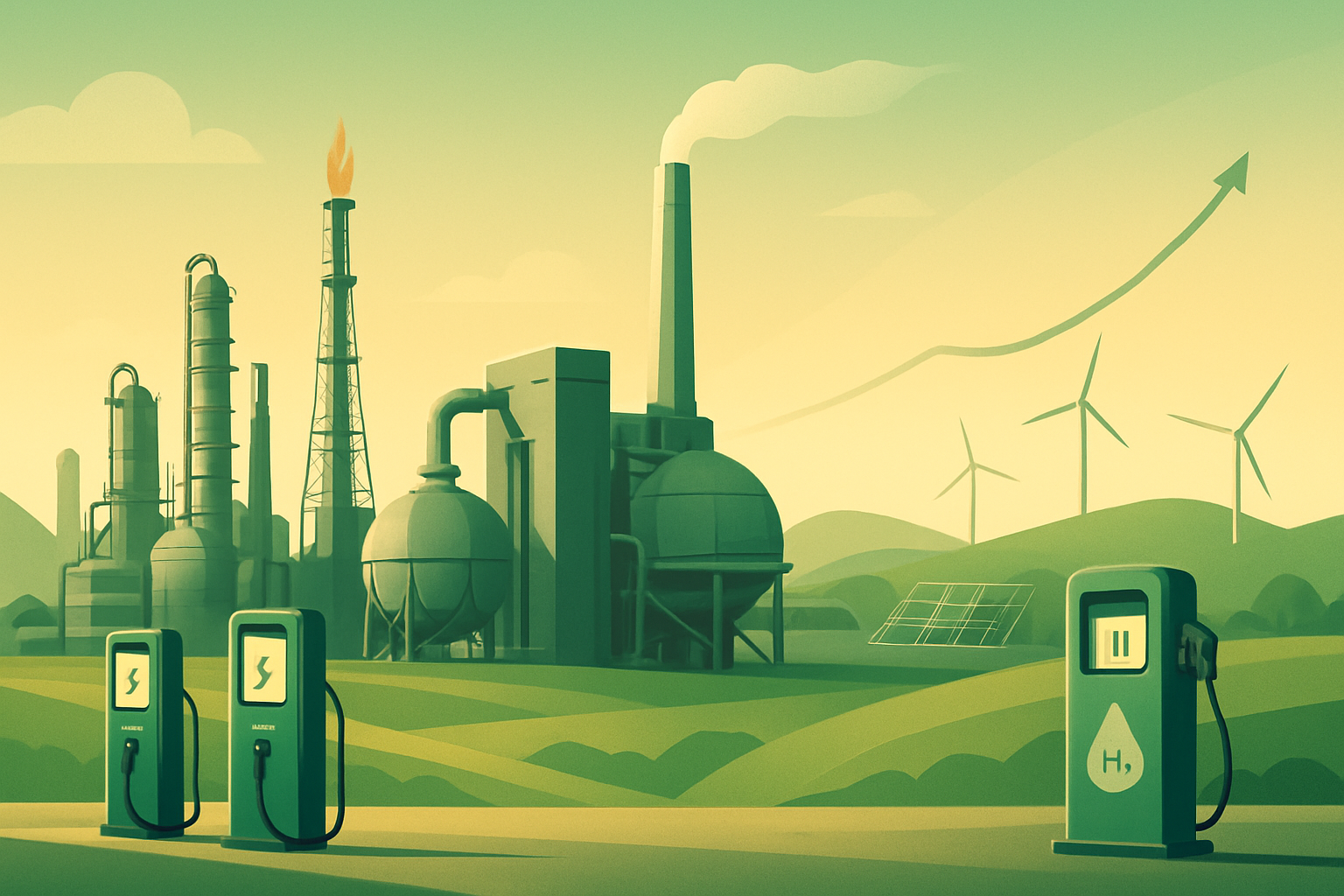
- Renewables and New Energy: The newest vertical, focused on green hydrogen, solar, wind, and now, coal gasification.
Stock Performance Overview
As of late 2025, BPCL has been a standout performer in the Nifty 50.
- 1-Year Performance: The stock has delivered a robust ~25% return in 2025, outperforming the broader Nifty Index which grew by roughly 9% in the same period.
- 5-Year Performance: Looking back to 2020, the stock has nearly doubled in value, aided by consistent dividend payouts and a recovery in gross refining margins (GRMs) post-pandemic.
- 10-Year Performance: Long-term investors have seen steady growth, though the stock faced "privatization overhang" between 2019 and 2022, which caused significant volatility before the government shelved the sale in favor of internal restructuring.
Financial Performance
Financial results for the first half of FY2025-26 have been exceptional.
- Profitability: For Q2 FY26, BPCL reported a net profit of ₹6,443 crore, a staggering 168.7% increase year-over-year. This was driven by stable crude prices and high marketing margins on petrol and diesel.
- Revenue: Quarterly revenue remains consistently above ₹1.25 lakh crore.
- Margins: Operating margins soared to 6.32% in 2025, compared to sub-3% levels in 2023, largely due to efficient inventory management and a reduction in the domestic LPG subsidy burden.
- Valuation: Despite the rally, BPCL trades at a P/E ratio of approximately 10.5x, which remains attractive compared to global peers, especially given its 6-7% dividend yield.
Leadership and Management
Under the leadership of Chairman and Managing Director G. Krishnakumar, BPCL has adopted a "Project Aspire" strategy—a ₹1.70 lakh crore, 15-year capex plan. The management is regarded as one of the most proactive among Indian PSUs, frequently engaging with tech partners for green energy. The board’s recent decision to partner with Coal India showcases a strategic alignment with the Prime Minister's "Gati Shakti" and "Aatmanirbhar Bharat" (Self-Reliant India) initiatives.
Products, Services, and Innovations
The December 2025 JV with Coal India is the crown jewel of BPCL’s current innovation pipeline.
- Coal Gasification: The project in Chandrapur, Maharashtra, aims to produce 1.83 million standard cubic meters per day (MMSCMD) of Synthetic Natural Gas (SNG). By gasifying coal rather than burning it, the project reduces the carbon footprint compared to traditional coal power.
- Green Hydrogen: BPCL recently commissioned a green hydrogen refueling station in Kochi and is finalizing a 5 MW electrolyzer plant at the Bina Refinery.
- EV Ecosystem: With 3,100 charging stations already operational, BPCL is well on its way to its 7,000-station target.
Competitive Landscape
BPCL competes primarily with:
- Indian Oil Corporation (IOCL): The market leader in volume but often with lower refining complexity.
- Hindustan Petroleum (HPCL): A close rival in retail, though BPCL currently holds a slight edge in profitability margins.
- Reliance Industries (RIL): The private sector giant which maintains higher technology benchmarks but lacks the vast, subsidized retail penetration of the PSUs.
BPCL’s competitive advantage lies in its strategically located refineries (especially Kochi and Mumbai) and its superior marketing efficiency.
Industry and Market Trends
In 2025, the energy sector is defined by the "Energy Trilemma": balancing security, equity, and sustainability. India's rising energy demand (projected to grow at 5% annually) necessitates a continued reliance on fossil fuels even as green capacity ramps up. The shift toward Coal-to-Chemicals and Coal-to-Gas is a macro trend aimed at reducing India’s heavy reliance on imported LNG, which has been prone to geopolitical shocks.
Risks and Challenges
- Project Execution: Large-scale coal gasification is technically complex and capital-intensive. Delays in the Chandrapur project could lead to cost overruns.
- Regulatory Shifts: Any change in the government’s ethanol blending mandates or EV subsidy structures could impact BPCL’s retail margins.
- Commodity Volatility: While 2025 has seen stable crude, any sudden spike in global Brent prices could squeeze marketing margins if retail prices remain frozen for political reasons.
Opportunities and Catalysts
- Coal-to-SNG Commercialization: Successful implementation of the CIL JV could lead to a massive domestic supply of SNG, replacing expensive imports.
- Bina Refinery Expansion: The ₹49,000 crore expansion into petrochemicals will diversify revenue streams away from transportation fuels by 2027-2028.
- Viability Gap Funding (VGF): The government's ₹1,350 crore incentive for the gasification project significantly de-risks the initial equity investment for BPCL.
Investor Sentiment and Analyst Coverage
The sentiment is overwhelmingly bullish. Analysts from major firms like Morgan Stanley and ICICI Securities have maintained "Strong Buy" ratings throughout late 2025. The consensus 12-month target price ranges between ₹390 and ₹410. Institutional investors are particularly attracted to BPCL’s "Green Transition" story, which makes it an acceptable inclusion in ESG-themed portfolios that would otherwise shun pure-play oil companies.
Regulatory, Policy, and Geopolitical Factors
The Indian government’s National Coal Gasification Mission aims to gasify 100 million tonnes of coal by 2030. BPCL’s JV is a direct beneficiary of this policy. Geopolitically, the move toward SNG reduces India’s vulnerability to supply chain disruptions in the Middle East and Russia, aligning BPCL with national security objectives.
Conclusion
As we look at BPCL on December 19, 2025, the company is no longer just a "petrol pump" operator. The joint venture with Coal India marks a sophisticated technological pivot designed to squeeze value from India's vast coal reserves while adhering to carbon-reduction commitments. For investors, the combination of record-breaking quarterly profits, a high dividend yield, and a clear roadmap to 2040 makes BPCL a compelling defensive-growth play. The key to the next five years will be the "execution of the unconventional"—turning syngas and green hydrogen into the new profit centers of the Indian energy giant.
This content is intended for informational purposes only and is not financial advice.