The race for artificial intelligence supremacy is entering its most volatile phase of the decade. As of February 9, 2026, all eyes are on Anthropic, the San Francisco-based AI safety and research lab, as traders on Polymarket and other prediction platforms scramble to price in the arrival of Claude 5. Currently, a highly active market on Polymarket—the world’s largest decentralized prediction platform—gives a 56% probability that Anthropic will release its next-generation model by the end of March 2026.
This surge in betting interest isn't just a result of idle speculation. It follows a series of technical breadcrumbs, including a recent "leak" of model identifiers in the cloud logs of Alphabet Inc. (NASDAQ: GOOGL), and a backdrop of intensifying competition from OpenAI and Microsoft Corp. (NASDAQ: MSFT). For prediction market participants, the question isn't just about whether the model is ready, but whether Anthropic can maintain its traditional release cadence in an era of unprecedented developmental speed.
The Market: What's Being Predicted
The focal point of the current speculation is the "Claude 5 Released by March 31, 2026" contract on Polymarket. This market has seen its volume swell over the last 48 hours, reflecting a broader trend of "event-driven" trading in the tech sector. While the 56% odds suggest a coin-flip scenario, the distribution of bets reveals a market that is hyper-sensitive to any signal from Anthropic’s headquarters.
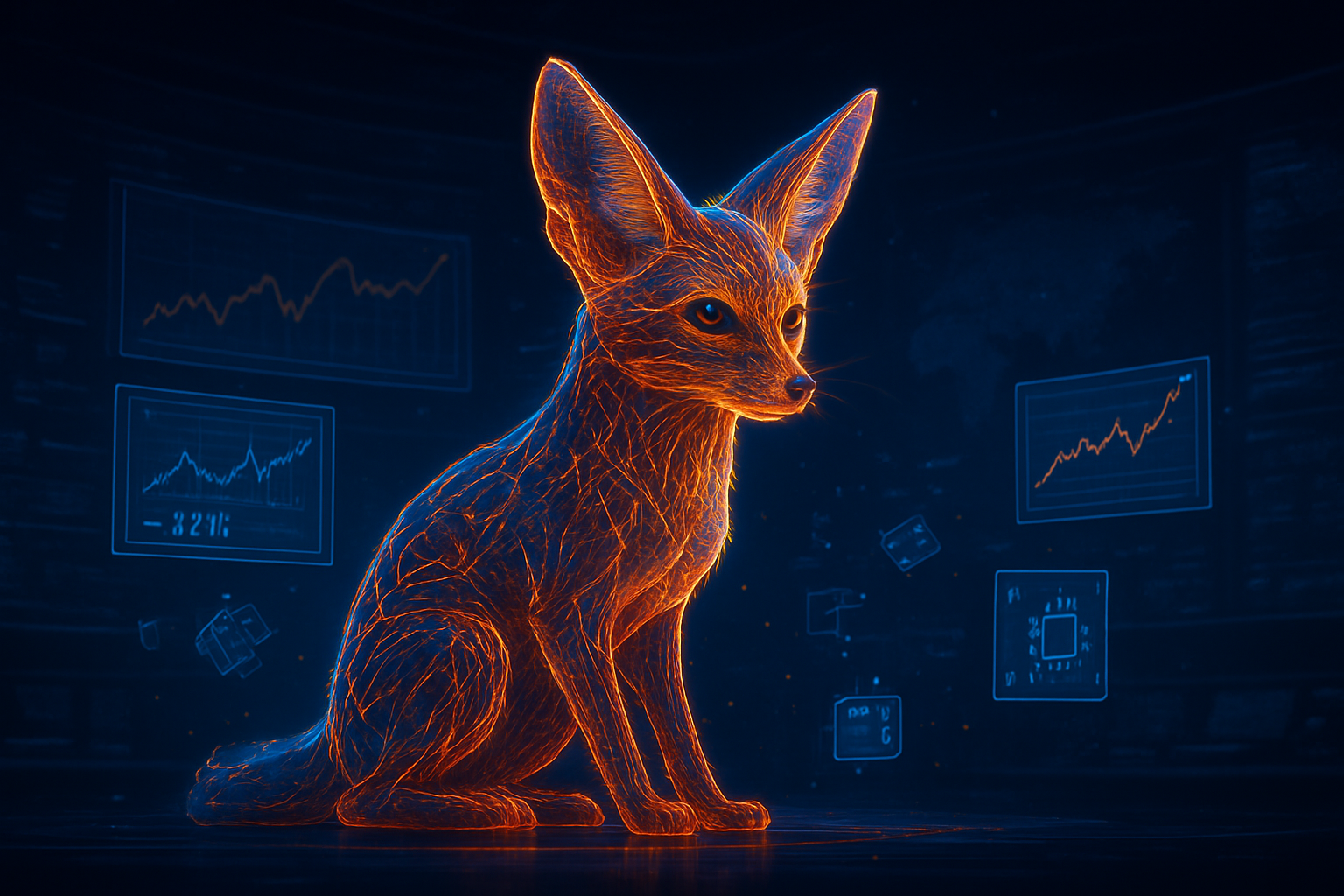
Resolution for these contracts typically requires a public announcement from Anthropic or the availability of the model via its official API or the Claude.ai interface. Traders are specifically looking for the "Sonnet" or "Opus" variants of the fifth generation. Historically, Anthropic has favored a tiered release strategy, and most bettors are wagering that at least one flagship model—codenamed "Fennec" according to recent rumors—will be accessible to developers before the Q1 2026 deadline.
Comparatively, similar markets on Kalshi and the community-driven platform Manifold are showing slightly more bullish sentiment, with some contracts touching the 60% range. This discrepancy is often attributed to the differing liquidity pools and the demographic of traders; Polymarket typically attracts larger institutional "whales," while Manifold is often viewed as a sentiment gauge for the Silicon Valley developer community.
Why Traders Are Betting
The primary driver behind the current 56% odds is a technical leak discovered on February 3, 2026. Developers using Google Vertex AI—the machine learning platform from Alphabet Inc. (NASDAQ: GOOGL)—spotted a previously unseen model ID: claude-sonnet-5@20260203. In the world of prediction markets, such "breadcrumb" evidence often moves the needle more than official corporate PR.
Beyond the leaks, several other factors are fueling the "Yes" side of the trade:
- The March Anniversary: Anthropic famously released Claude 3 in March 2024. Traders often look for "anniversary effects" in tech releases, assuming companies like to maintain a consistent annual or semi-annual rhythm for major version jumps.
- The "Agentic" Pressure: With OpenAI recently transitioning its flagship models to the GPT-5.3 iteration, which features advanced autonomous "agentic" capabilities, the market believes Anthropic must respond quickly to prevent developer churn.
- CEO Signaling: In a January 2026 essay titled "The Adolescence of Technology," Anthropic CEO Dario Amodei hinted that the transition to more powerful, multi-modal reasoning systems was "accelerating beyond our mid-2025 projections."
Conversely, the 44% of "No" bettors point to the recent launch of Claude 4.6 Opus on February 5, 2026. These skeptics argue that Anthropic would not want to "cannibalize" its newest release so quickly, suggesting that Claude 5 might be held back until the NVIDIA (NASDAQ: NVDA) GTC conference in mid-March, or even pushed to Q2 to ensure safety alignment protocols are fully met.
Broader Context and Implications
The use of prediction markets to forecast tech launches marks a significant shift in how the public consumes industry news. Traditionally, users relied on tech journalists and "leakers" on social media. Today, platforms like Polymarket provide a real-time, financially incentivized consensus that is often more accurate than traditional punditry.
"Prediction markets are effectively the world's most efficient bullshit detectors," says one prominent trader on the platform. "When a company says 'soon,' the market looks at their API logs, their hiring patterns, and their cloud spend with Amazon.com Inc. (NASDAQ: AMZN) to put a real number on that 'soon.'"
This trend also has real-world implications for the "AI race." As these markets grow in liquidity, their odds are being watched by venture capitalists and enterprise buyers to decide when to lock in software contracts. If a 56% probability jumps to 90%, it could trigger a wave of migration from competing platforms as businesses prepare for the next leap in capability. However, this also raises regulatory eyebrows, as internal employees with non-public knowledge of release dates could theoretically use these markets for "insider betting," a grey area that regulators like the CFTC are currently scrutinizing.
What to Watch Next
As we approach the end of February, several key milestones could swing the odds dramatically. The first is the Gartner Data & Analytics Summit (March 9–11), where Anthropic executives are scheduled to speak. Any mention of "next-generation benchmarks" or "upcoming architecture" could see the 56% odds rocket upward.
The second major event is the NVIDIA (NASDAQ: NVDA) GTC 2026 conference, starting March 16. If Anthropic is planning a major launch, it would likely be timed to coincide with Jensen Huang’s keynote, especially if Claude 5 is optimized for NVIDIA's latest "Rubin" architecture.
Finally, traders are monitoring the LMSYS Chatbot Arena. Historically, "mystery models" often appear on the leaderboard under pseudonyms shortly before an official launch. If a model named "Sus-Fennec" or similar starts topping the charts in early March, expect the Polymarket contract to move toward a 90% "Yes" certainty almost instantly.
Bottom Line
The current 56% odds for a Claude 5 release by the end of March 2026 reflect a market in "wait-and-see" mode. While the technical leaks provide a strong foundation for a "Yes" bet, the recent success of the Claude 4.6 series gives Anthropic the luxury of timing. Traders are essentially betting on whether Anthropic will prioritize market momentum or product polish.
This market highlights the evolving role of prediction markets as a vital tool for the tech industry. By aggregating diverse data points—from cloud logs to CEO essays—into a single probability, they offer a level of clarity that corporate marketing departments often obscure.
Whether Claude 5 arrives on March 31 or June 30, the volatility of this market demonstrates that in the AI era, timing is the most valuable currency. Investors and enthusiasts should keep a close eye on the $1.50 and $0.50 price points on Polymarket; in this high-stakes game of digital chess, the next move is Anthropic’s to make.
This article is for informational purposes only and does not constitute financial or betting advice. Prediction market participation may be subject to legal restrictions in your jurisdiction.
PredictStreet focuses on covering the latest developments in prediction markets.
Visit the PredictStreet website at https://www.predictstreet.ai/.