
Tag: CFTC

  • The Great Unlocking: How Kalshi’s Courtroom Triumph Rewrote the Rules of American Democracy

    The Great Unlocking: How Kalshi’s Courtroom Triumph Rewrote the Rules of American Democracy

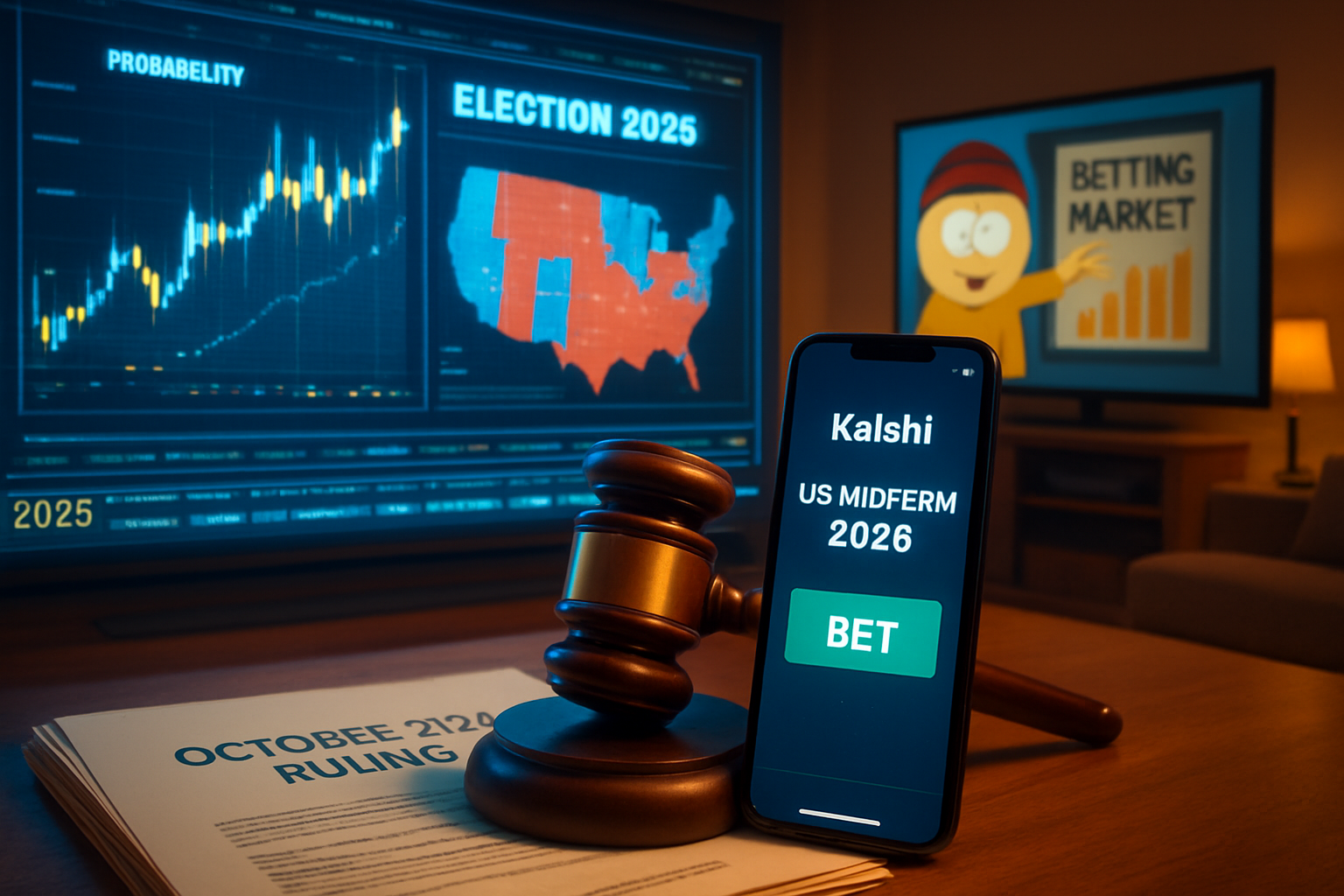
    The era of "underground" political wagering officially ended not with a whimper, but with a gavel. As we move into the first quarter of 2026, the ripple effects of Kalshi’s landmark legal victory over the Commodity Futures Trading Commission (CFTC) have transformed the U.S. financial landscape. What began as a niche legal challenge in late 2024 has blossomed into a multi-billion-dollar industry, where trading on the 2026 Midterm elections has already eclipsed the total volume of several mid-cap equity sectors.

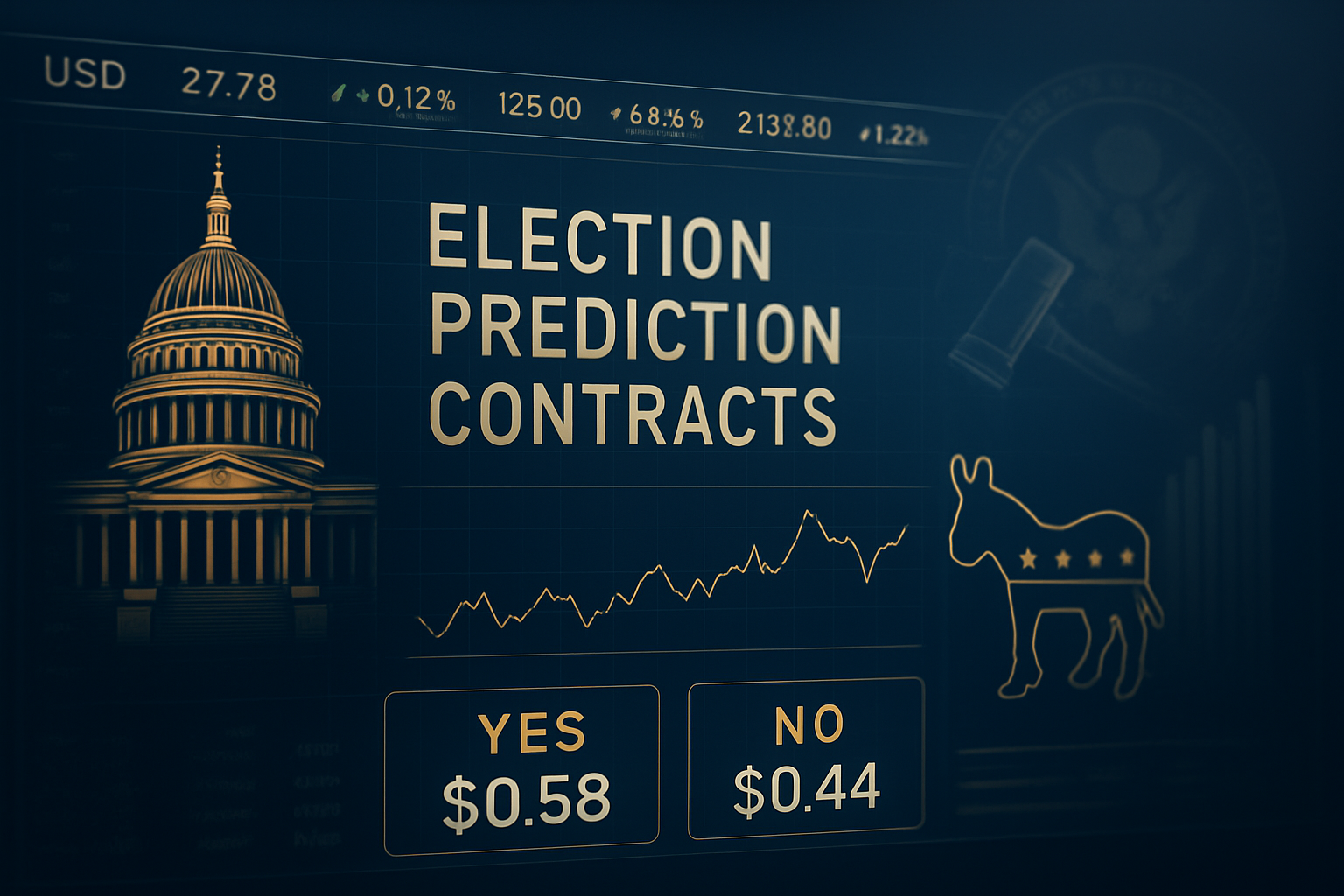
    Currently, markets on Kalshi are pricing a 58% probability that the Republican Party retains control of the House in the upcoming November elections, a figure that has seen massive volatility following recent fiscal policy shifts. This high-velocity trading environment was unthinkable just eighteen months ago. Before October 2024, American prediction markets were largely stifled by regulatory red tape, forcing retail traders toward offshore platforms like Polymarket. Today, the "unfreezing" of the U.S. market has integrated political forecasting directly into the brokerage accounts of millions, fundamentally changing how the public consumes and hedges against political risk.

    The Market: What's Being Predicted

    The central market currently captivating traders is the "Congressional Control" suite of contracts. Unlike the speculative fervor of 2024, today’s markets on Kalshi and Interactive Brokers (NASDAQ: IBKR) are characterized by deep liquidity and institutional participation. On Kalshi alone, notional volume for 2025 exceeded $23 billion, a staggering jump from the platform's early days. The resolution criteria are razor-sharp: contracts payout based on the official certification of election results, providing a binary outcome that serves as a definitive "price" for political power.

    The path to this liquidity was paved in October 2024 when Judge Jia Cobb of the U.S. District Court for the District of Columbia ruled that the CFTC had overstepped its authority by banning Kalshi’s election contracts. Judge Cobb famously clarified that speculating on elections did not constitute "gaming" under the Commodity Exchange Act. This ruling effectively categorized political forecasting as a legitimate form of economic hedging rather than illicit gambling. By May 2025, the CFTC, under new leadership, dropped its appeal, cementing the legality of these markets at the federal level.

    This regulatory clarity has allowed for an explosion of secondary markets. Traders are no longer just betting on who wins; they are trading on the margin of victory, the timing of Supreme Court vacancies, and even the probability of specific legislative packages passing before the 2026 recess. The timeline for these markets has also stretched; while the 2024 election was a "sprint" following the court's October stay denial, the 2026 cycle is a "marathon," with markets opening nearly two years in advance.

    Why Traders Are Betting

    The primary driver of current market activity is the realization that prediction markets are often "faster" than traditional polling. During the 2024 election cycle, prediction markets famously signaled shifts in key battleground states hours—and sometimes days—before major networks or polling aggregates like 538 could catch up. This "price discovery" mechanism has turned traders into amateur analysts, utilizing high-frequency data to hedge their traditional portfolios.

    Furthermore, the integration of event contracts into mainstream platforms like Robinhood (NASDAQ: HOOD) has democratized the asset class. Retail investors now use prediction markets to hedge against "policy shocks." For instance, a trader heavily invested in renewable energy stocks might buy "Democratic Senate Control" contracts as a hedge; if the party loses and subsidies are threatened, the payout from the prediction market offsets the loss in their equity portfolio. This "hedging utility" has moved the conversation away from moral objections toward financial pragmatism.

    Recent whale activity has also underscored the institutionalization of the space. In late 2025, several prominent hedge funds were identified as taking massive positions in "Federal Reserve Rate Cut" and "Debt Ceiling Resolution" markets. These players aren't "gambling" in the traditional sense; they are using Kalshi as a transparent venue to offset macro risks that were previously difficult to price. The consensus among traders is that the market's collective intelligence, backed by real capital, provides a more accurate "truth" than the punditry seen on cable news.

    Broader Context and Implications

    Despite the federal green light, a new front has opened in the battle for prediction markets: the "Social Harm" doctrine. Leading the charge is New York with its Oversight and Regulation of Activity for Contracts Linked to Events (ORACLE) Act. Introduced in late 2025, the ORACLE Act represents a significant counter-offensive by state-level regulators who view certain markets—specifically those tied to "social harm"—as unethical.

    The ORACLE Act seeks to ban New York residents from trading on outcomes involving mass shootings, natural disasters, or wars. Proponents of the bill argue that profiting from tragedy creates "perverse incentives" and degrades the moral fabric of the financial system. This has sparked a fierce debate over the limits of information markets. Should a trader be allowed to profit from a predicted famine in a conflict zone? While platforms argue that these markets provide vital data for NGOs and insurance companies to allocate resources, critics see them as a "death pool" for the digital age.

    This tension highlights a growing divide between federal preemption and state sovereignty. While the 2024 Kalshi ruling protected election markets from the CFTC, it did not necessarily shield them from state-level consumer protection or gambling laws. As of January 2026, the industry is watching a critical case in Nevada, where Kalshi is fighting to prevent the state from classifying its contracts as "unlicensed gambling." The outcome of these state battles will determine whether the U.S. becomes a unified market or a fragmented "checkerboard" of varying restrictions.

    What to Watch Next

    The immediate focus for the industry is the Public Integrity in Financial Prediction Markets Act of 2026, introduced in Congress earlier this month. This bipartisan bill seeks to codify the legality of election markets at the federal level while simultaneously banning government officials and their immediate families from trading on them. If passed, it would provide the "gold standard" of legitimacy the industry craves, potentially overriding state-level bans like New York’s ORACLE Act through federal preemption.

    On the judicial front, the Ninth Circuit Court of Appeals is expected to issue a ruling in February 2026 regarding Nevada's attempt to ban election betting. A victory for Kalshi there would likely stifle other states from pursuing similar bans, while a loss could embolden New York and California to move forward with their own restrictive legislation. Traders should also keep a close eye on the "Social Harm" markets; if a major platform launches a high-profile market on a controversial global conflict, it could provide the political ammunition necessary for the ORACLE Act to pass the New York Senate.

    Finally, the 2026 Midterm cycle will be the first "full-cycle" test of these markets. We will see if the liquidity remains stable during the summer doldrums or if it requires the "high-stakes" atmosphere of a presidential year to thrive. Watch for Robinhood (NASDAQ: HOOD) to expand its offerings, potentially including "Local Election" contracts, which would further test the limits of state-level oversight.

    Bottom Line

    The October 2024 Kalshi victory was the "Big Bang" for American prediction markets, proving that the demand for real-time, capital-backed forecasting is insatiable. We have moved past the question of whether these markets should exist and into the much more complex territory of how they should be governed. The transition from a "gaming" prohibited by the CFTC to a "derivative" traded on major exchanges is nearly complete.

    However, the "Social Harm" debate suggests that the industry’s greatest challenge is no longer legal, but reputational. While election markets have gained a measure of respectability as "civic sensors," markets tied to tragedy remain a lightning rod for controversy. The success of the ORACLE Act in New York will serve as a bellwether for whether the public is ready to accept the cold, hard logic of prediction markets when the subject matter turns grim.

    As we look toward the 2026 Midterms, one thing is certain: the "wisdom of the crowd" has been weaponized. For the first time in history, the most accurate pulse of the American electorate isn't found in a pollster’s spreadsheet, but on a trading floor. Whether this makes for a more informed democracy or a more volatile one remains the most important prediction of all.


    This article is for informational purposes only and does not constitute financial or betting advice. Prediction market participation may be subject to legal restrictions in your jurisdiction.

    PredictStreet focuses on covering the latest developments in prediction markets. Visit the PredictStreet website at https://www.predictstreet.ai/.
  • From Courtroom to Living Room: How Kalshi’s 2024 Victory Built the $40 Billion Prediction Economy of 2026

    From Courtroom to Living Room: How Kalshi’s 2024 Victory Built the $40 Billion Prediction Economy of 2026

    As we cross the midpoint of January 2026, the landscape of American finance and political discourse has been fundamentally rewritten. What was once a niche corner of the internet for statistics nerds and high-stakes contrarians has become the primary lens through which the public views reality. Today, "market-implied probability" is no longer just a metric; it is the headline.

    The 2026 Midterm elections are already seeing unprecedented volume, with over $8 billion positioned across various House and Senate control markets. This "marquee year" for prediction markets didn't happen by accident. It is the direct result of a legal domino effect that began in October 2024, when a federal court order shattered the regulatory shackles holding back Kalshi and the broader industry. Looking back, that court victory was the "Big Bang" for what we now call Information Finance.

    The Market: What’s Being Predicted

    Currently, the primary focus for traders is the "2026 Midterm Power Balance" markets on Kalshi. Traders are currently pricing in a 68% probability that the GOP retains control of the House, while the Senate remains a toss-up at 51% for Democratic retention. Unlike the 2024 cycle, where liquidity was often fragmented, these markets now boast deep order books and institutional-grade stability.

    Kalshi, the only U.S.-regulated exchange of its kind, has seen its daily active user base grow by 400% since January 2025. Alongside it, Polymarket continues to dominate global volume, though Kalshi’s integration into mainstream retail platforms has given it a distinct edge in "Main Street" participation. The current total value locked (TVL) across political markets has crossed the $12 billion mark this month, with resolution criteria for the Midterms set for the first Tuesday of November 2026.

    The timeline for these markets has also shifted. In previous years, trading only heated up weeks before an election. In 2026, the markets are live and liquid two years out, providing a real-time "fear and greed" index for political sentiment that traditional polling—now largely relegated to a secondary data point—simply cannot match.

    Why Traders Are Betting

    The explosion in betting volume is driven by the formalization of "Information Finance." Investors no longer view these bets as mere gambling; they are increasingly used as a hedge against policy shifts. For instance, institutional traders are using House control markets to hedge against potential changes in corporate tax law, while retail investors are betting on Federal Reserve rate cuts to offset their mortgage concerns.

    This shift was accelerated by the integration of prediction markets into major brokerage apps. After Kalshi’s legal win, Robinhood Markets, Inc. (NASDAQ: HOOD) and Interactive Brokers Group, Inc. (NASDAQ: IBKR) moved quickly to offer event contracts to their millions of users. This provided a "firehose" of liquidity that permanently moved the needle on market accuracy.

    The cultural mainstreaming of the industry was perhaps best captured in late 2025, when the long-running animated series South Park aired the episode "Conflict of Interest" (Season 27, Episode 5). The plot, which featured the townspeople betting on everything from school board meetings to the lunch menu, satirized the "betting on everything" culture that Kalshi helped create. In a meta-twist that only 2026 could produce, Kalshi actually hosted a market on how many times the word "prediction" would be uttered in the episode, with over $500,000 traded on the outcome.

    Broader Context and Implications

    To understand why 2026 is a "marquee year," one must look back to October 2, 2024. On that day, the D.C. Circuit Court of Appeals denied the Commodity Futures Trading Commission (CFTC) an emergency stay, effectively legalizing election trading in the United States. Judge Jia Cobb’s earlier ruling—which argued that the CFTC had exceeded its authority by labeling elections as "gaming"—became the "Magna Carta" of prediction markets.

    By mid-2025, the CFTC officially dropped its remaining appeals, signaling a "white flag" moment that allowed for permanent regulatory clarity. This legal peace led to a massive influx of venture capital and the entry of traditional sports betting giants like DraftKings Inc. (NASDAQ: DKNG) and Flutter Entertainment PLC (NYSE: FLUT), the parent company of FanDuel, into the event-contract space.

    The implications for public sentiment are profound. We have moved from an era of "manufactured consensus" via polls to "skin-in-the-game" reality. When a market moves today, people pay attention because money is changing hands. This has created a more resilient information ecosystem, where rumors are quickly "priced out" by those with better information, making the 2026 markets the most efficient we have ever seen.

    What to Watch Next

    As we head deeper into 2026, the next major catalysts for the market will be the primary season debates. Traditionally, these were television events; now, they are high-frequency trading sessions. Watch for "candidate survival" markets to fluctuate wildly as the first debates of the 2026 cycle begin this summer.

    Furthermore, keep an eye on the "Regulatory Harmonization Act" currently being debated in Congress. This proposed legislation aims to create a unified federal framework for all event contracts, potentially merging the oversight duties of the CFTC and the SEC for this asset class. If passed, it would likely trigger another massive wave of institutional adoption.

    Finally, the evolution of "Social Betting"—where users can create their own private markets for friends and communities—is expected to be the next big feature release from Kalshi. This could turn the 2026 Midterms into a localized experience, with neighbors betting on local city council races and school board seats with the same ease they trade the S&P 500.

    Bottom Line

    The retrospective on Kalshi’s 2024 victory reveals a simple truth: the genie is out of the bottle. What was once dismissed as a legal longshot has transformed into a $40 billion industry that has fundamentally changed how we process news and risk. 2026 is the year prediction markets became the "source of truth" for a world weary of partisan polling and media spin.

    The "marquee year" is characterized by a fusion of entertainment, finance, and democracy. Whether it’s through a South Park parody or a Robinhood notification, prediction markets are now part of the American fabric. As we look toward the 2026 Midterms, the odds don't just tell us what might happen—they tell us what the world knows will happen.


    This article is for informational purposes only and does not constitute financial or betting advice. Prediction market participation may be subject to legal restrictions in your jurisdiction.

    PredictStreet focuses on covering the latest developments in prediction markets.
    Visit the PredictStreet website at https://www.predictstreet.ai/.
  • The Resurrection of PredictIt: Inside the Push to Become the ‘Gold Standard’ for Regulated Forecasting

    The Resurrection of PredictIt: Inside the Push to Become the ‘Gold Standard’ for Regulated Forecasting

    The "Little Market That Could" has finally grown up. As of January 16, 2026, the prediction market landscape looks radically different than it did just eighteen months ago. The most significant shift has not come from the arrival of new crypto-based giants, but from the rebirth of an industry pioneer: PredictIt. Following a grueling three-year legal battle with federal regulators, PredictIt has emerged from its "No-Action" limbo to become a fully regulated exchange and clearinghouse under the Commodity Futures Trading Commission (CFTC).

    The transition, finalized in late 2025, has effectively removed the "training wheels" that once held the platform back. With the elimination of the 5,000-trader-per-contract cap and a significant jump in individual wager limits from $850 to $3,500, PredictIt is no longer just an academic curiosity—it is a high-stakes arena for political intelligence. Traders are now pouring millions into markets ranging from the 2026 Midterm control to the next Supreme Court vacancy, testing whether PredictIt’s reputation for "wisdom of the crowd" accuracy holds up when the volume is turned to ten.

    The Market: What's Being Predicted

    The "New PredictIt" operates under a radically different set of rules than its predecessor. Since late 2025, the platform has transitioned its operations to a Designated Contract Market (DCM) and Derivatives Clearing Organization (DCO) framework, a status it shares with established financial institutions like Interactive Brokers Group (NASDAQ: IBKR) and its ForecastEx exchange.

    Currently, the primary focus of the market is the 2026 Congressional Midterms. Unlike previous cycles where the 5,000-trader cap led to "bottlenecking"—where a contract would reach its limit and prices would stagnate regardless of new information—the current market for "GOP Control of the House" is seeing unprecedented liquidity. At the time of writing, the odds of Republicans maintaining their majority sit at 58%, while the Democratic path to the Senate gavel is priced at 44 cents (a 44% probability).

    Trading volume on PredictIt has surged by over 400% since the removal of the trader cap. Previously, large events like the 2024 Presidential Election were hampered by the $850 limit, which often allowed "fan bias" or low-information retail traders to move the needle. Now, the $3,500 limit—deliberately indexed to match federal individual campaign contribution limits—allows more sophisticated actors to enter the fray, providing a deeper pool of capital and more stable pricing.

    Why Traders Are Betting

    The move to full regulation has fundamentally changed who is trading. The $3,500 limit is the primary driver. While still modest compared to the uncapped offshore markets like Polymarket, the 4x increase in the wager cap has attracted a new class of "professionalized" political junkies and small-scale hedge fund analysts.

    "The old $850 limit was essentially a hobbyist's cap," says one high-volume trader who has been active on the platform since 2016. "With $3,500, you can actually build a meaningful position that rewards the hours of research we put into precinct-level data. It’s enough money to make the signal drown out the noise."

    Furthermore, the legal certainty provided by the 2025 settlement—stemming from the Clarke v. CFTC lawsuit—has eliminated the "platform risk" that plagued the exchange for years. Traders no longer fear that their funds will be frozen or that the market will be shuttered by a regulatory whim. This has led to a "flight to quality," where traders who prefer the legal protections of a U.S.-regulated exchange are moving away from decentralized platforms and back to PredictIt’s refined interface.

    Broader Context and Implications

    PredictIt’s evolution is part of a broader "mainstreaming" of prediction markets that accelerated throughout 2025. The entry of Robinhood Markets (NASDAQ: HOOD) into the event contract space and the growth of CME Group (NASDAQ: CME)'s event derivatives have forced PredictIt to adapt or die. By securing its status as a fully regulated exchange, PredictIt has managed to maintain its niche as the "gold standard" for political data—a reputation built on a decade of providing more accurate forecasts than traditional polling.

    The regulatory shift also highlights a major change in the CFTC’s philosophy. After years of resisting election-based betting, the Commission, influenced by court losses and a shifting legislative tide, has pivoted toward a "regulated expansion" model. This model acknowledges that prediction markets provide a public good by aggregating information that polls often miss.

    However, this expansion is a double-edged sword for PredictIt's accuracy. Some critics argue that the "wisdom of the crowds" relied on the platform's high density of small-dollar, highly informed academic and political observers. There is a fear that by raising limits to $3,500, the market may become more susceptible to "whales" or manipulative attempts by political campaigns to shift public perception—though supporters argue that higher limits actually make manipulation more expensive and therefore less likely.

    What to Watch Next

    The immediate test for the New PredictIt will be the upcoming primary season for the 2026 Midterms. Watch for the "liquidity test" in high-profile Senate races in Pennsylvania and Georgia. If these markets can handle tens of thousands of traders and multi-million dollar pools without the price volatility seen in the "old" PredictIt, it will prove that the platform can scale.

    Additionally, keep an eye on the competitive response from Cboe Global Markets (NASDAQ: CBOE). While Cboe has traditionally focused on financial indicators, there are rumors that they may partner with data providers to launch their own suite of political contracts to compete with PredictIt’s new DCM status.

    Finally, the relationship between PredictIt and the Prediction Market Research Consortium (PMRC)—the non-profit entity now overseeing its research mission—will be critical. How they balance the "for-profit" needs of a regulated exchange with the "pro-social" mission of academic data collection will define the platform's identity in the years to face.

    Bottom Line

    The transition of PredictIt into a fully regulated, high-capacity exchange marks the end of the "wild west" era of U.S. prediction markets and the beginning of their institutionalization. By removing the 5,000-trader cap and nearly quadrupling wager limits, PredictIt is effectively betting that more money and more people will lead to more truth.

    If the 2026 Midterm cycle proves that PredictIt can maintain its "gold standard" accuracy under these new conditions, it will cement the platform's place not just as a betting site, but as a critical piece of the American democratic infrastructure. For the first time in history, the "wisdom of the crowd" has the regulatory backing and the financial depth to truly challenge the dominance of traditional political punditry.


    This article is for informational purposes only and does not constitute financial or betting advice. Prediction market participation may be subject to legal restrictions in your jurisdiction.

    PredictStreet focuses on covering the latest developments in prediction markets. Visit the PredictStreet website at https://www.predictstreet.ai/.

  • PredictIt: The ‘Gold Standard’ of Politics Holds Its Ground Against Crypto Giants and Retail Powerhouses

    PredictIt: The ‘Gold Standard’ of Politics Holds Its Ground Against Crypto Giants and Retail Powerhouses

    In the fast-evolving landscape of 2026 prediction markets, the conversation is often dominated by the massive volumes of crypto-native platforms or the retail explosion of regulated exchanges. Yet, as the primary season for the 2026 Midterm elections heats up, one name remains the essential dashboard for political professionals and junkies alike: PredictIt. Despite a decade of regulatory hurdles and the arrival of well-funded competitors, the "little exchange that could" has cemented its status as the most trusted signal in political forecasting.

    Currently, PredictIt’s markets for the 2026 Midterms show a divided government as the most likely outcome, with Democrats trading at 78¢ to retake the House of Representatives and Republicans holding a 69¢ lead to retain the Senate. While larger competitors like Polymarket and Kalshi boast higher total trading volumes, PredictIt's prices are frequently cited by cable news networks and political strategists as the definitive "market view," a testament to its unique market architecture and historical accuracy.

    The Market: What's Being Predicted

    PredictIt’s current board is dominated by two massive cycles: the 2026 Midterms and the 2028 Presidential Election. On the 2026 front, traders are closely watching the "GOP Senate Seats" contract, which suggests a narrow majority of 51-52 seats is the most probable scenario. Meanwhile, the 2028 Presidential Winner market has already seen over $15 million in shares traded, with Vice President JD Vance leading the Republican field at 28¢ and California Governor Gavin Newsom fronting the Democrats at 23¢.

    The platform's survival into 2026 is a story of legal resilience. Following a landmark victory in the case of Clarke v. CFTC, the platform’s operator, Aristotle International, successfully transitioned PredictIt into a fully regulated Designated Contract Market (DCM). While it now operates under the expanded "Aristotle Exchange" banner with a higher per-contract limit of $3,500, it still pales in comparison to the "no-limit" environment of Polymarket or the institutional scale of Kalshi. However, this smaller footprint is precisely what traders say makes its data more reliable; the high "signal-to-noise" ratio remains PredictIt's greatest competitive advantage.

    Why Traders Are Betting

    The enduring appeal of PredictIt lies in its "anti-whale" design. For years, the platform was capped by a strict $850 individual investment limit per contract. While that limit was recently raised to $3,500 under its new regulatory status, the DNA of the platform remains geared toward the "wisdom of the crowd" rather than the "influence of the wealthy." On larger platforms like Polymarket, a single "whale" with a $10 million position can move the odds significantly, creating a price that reflects one person's conviction rather than a broad consensus.

    Traders on PredictIt are often "super-forecasters"—political staffers, data scientists, and policy wonks—who treat the platform more like an intellectual hobby than a get-rich-quick scheme. This has created a market environment where prices are less susceptible to sudden, irrational spikes caused by social media hype. Recent news, such as shifting polling data in key battleground states like Pennsylvania and Arizona, tends to be priced into PredictIt hours before it reflects on more volatile, high-volume platforms.

    Broader Context and Implications

    The platform’s resilience is increasingly backed by academic data. A 2025 study from Vanderbilt University, which analyzed over $2 billion in betting volume across the 2024 election cycle, found that PredictIt achieved a 93% accuracy rate in predicting state-level outcomes, significantly outperforming Kalshi (78%) and the crypto-giant Polymarket (67%). The study concluded that PredictIt’s position limits prevented market manipulation and ensured that prices were driven by a diverse array of independent information sources.

    This accuracy has kept PredictIt at the center of the regulatory conversation. While Kalshi has found success through a high-profile integration with Robinhood Markets (NASDAQ: HOOD), and Polymarket has scaled via a strategic partnership with Intercontinental Exchange (NYSE: ICE), PredictIt has leaned into its academic roots. Originally launched as a research project by Victoria University of Wellington, it continues to provide anonymized data to over 200 universities worldwide, making it the most studied prediction market in history.

    What to Watch Next

    As we move toward the 2026 Midterm filing deadlines in March, PredictIt's "Candidate Entry" markets will be the primary focus. Traders are currently eyeing several "Will They Run?" contracts for high-profile Senate seats that could swing the balance of power. Any movement in these contracts often serves as a precursor to formal announcements, as "insider" sentiment often leaks into the market via small, incrementally trades.

    Furthermore, the integration of Aristotle Exchange’s new derivatives clearing capabilities will be a major milestone to watch in mid-2026. This move is expected to introduce more complex "bracket" contracts, allowing traders to bet on the exact margin of victory in the House and Senate. The question for the market is whether PredictIt can maintain its "gold standard" accuracy as it scales up to compete with the sheer financial gravity of its larger rivals.

    Bottom Line

    PredictIt’s position in 2026 proves that in the world of forecasting, bigger is not always better. By prioritizing a broad base of small-stakes traders over a narrow base of high-rolling speculators, the platform has created a unique ecosystem where information is valued over capital. It remains the "purist's market," a place where the collective intelligence of thousands of political junkies outweighs the massive liquidity of the crypto world.

    As the 2026 election cycle intensifies, PredictIt will likely remain the primary reference point for those seeking the "true" probability of political events. While other platforms may offer more excitement and higher stakes, PredictIt’s decade of data and academic rigor have made it the indispensable "North Star" of the prediction market industry.


    This article is for informational purposes only and does not constitute financial or betting advice. Prediction market participation may be subject to legal restrictions in your jurisdiction.

    PredictStreet focuses on covering the latest developments in prediction markets.
    Visit the PredictStreet website at https://www.predictstreet.ai/.
  • From Elections to End Zones: How Kalshi’s ‘Sports Trading’ is Disrupting the $120 Billion Betting Industry

    From Elections to End Zones: How Kalshi’s ‘Sports Trading’ is Disrupting the $120 Billion Betting Industry

    As the NFL enters the Divisional Round of the playoffs, a quiet revolution is taking place in how fans engage with the gridiron. While traditional sportsbooks are flooded with standard wagers, a new breed of market participant is flocking to Kalshi, the federally regulated event contract exchange. Since its aggressive expansion into sports in early 2025, Kalshi has effectively rebranded sports betting as "sports trading," turning every touchdown and turnover into a liquid financial asset.

    Currently, the market for the Super Bowl LX champion has seen massive volume, with the Seattle Seahawks holding a 25% probability of victory as of January 16, 2026. This shift is more than just a change in terminology; it represents a fundamental move away from the "house-banked" model of traditional gambling toward a peer-to-peer exchange model. In just one year, sports contracts have grown to account for over 85% of Kalshi’s total trading volume, generating hundreds of millions in revenue and challenging the dominance of established giants like DraftKings Inc. (NASDAQ: DKNG).

    The Market: What's Being Predicted

    The core of Kalshi’s sports offering is the "event contract." Unlike a traditional bet at a sportsbook like FanDuel—owned by Flutter Entertainment plc (NYSE: FLUT)—where a bettor faces off against a bookmaker's "vig" or margin, Kalshi users trade directly with one another. Each contract is structured as a binary "Yes" or "No" outcome, where the price ranges from $0.01 to $0.99. A price of $0.25 implies a 25% market-implied probability that the event will occur. If the prediction is correct, the contract pays out exactly $1.00.

    Trading is currently concentrated on the road to Super Bowl LX. The liquidity in these markets has reached unprecedented levels for a prediction platform. During the 2026 NFL Wild Card weekend, a single matchup between the Chicago Bears and Green Bay Packers saw over $112 million in notional volume. Traders aren't just betting on winners; they are trading contracts for "Total Points," "Passing Yards," and even "First Touchdown Scorer" in real-time. Because these are exchange-traded products, the "odds" (or prices) are determined entirely by supply and demand on the order book, often resulting in tighter spreads than those found at traditional sportsbooks.

    Why Traders Are Betting

    The migration of "sharps"—professional and highly successful bettors—from traditional books to Kalshi is driven by one major factor: the exchange doesn't ban winners. Traditional sportsbooks are notorious for limiting or outright banning accounts that consistently turn a profit. On Kalshi, high-volume traders provide liquidity, and the platform profits from small transaction fees regardless of who wins, creating a hospitable environment for sophisticated mathematical models.

    Additionally, the tax implications are a significant draw. Many traders are treating these contracts as financial derivatives rather than gambling winnings. In many cases, these trades are reported via 1099-B forms, allowing for more favorable capital gains treatment compared to the W-2G forms issued by casinos. Furthermore, Kalshi’s introduction of "Combos" in late 2025—a peer-to-peer version of a parlay—allows traders to request quotes for custom, multi-leg outcomes, bringing the complexity of Wall Street "structured products" to the Sunday afternoon football slate.

    Broader Context and Implications

    Kalshi’s expansion into sports is the direct result of a landmark legal battle. Following the KalshiEX LLC v. CFTC decision in late 2024, the platform secured a ruling that election and event contracts do not constitute "gaming" under the Commodity Exchange Act. This established a federal precedent that has allowed Kalshi to operate as a Designated Contract Market (DCM) regulated by the Commodity Futures Trading Commission (CFTC). This federal oversight provides a layer of institutional trust that offshore or state-regulated sites struggle to match.

    The success of these markets also signals a shift in public sentiment toward "Information Finance." The prices on Kalshi are increasingly being used by sports analysts as the "true" probability of an event, free from the bias of bookmaker-adjusted lines. However, the move has not been without controversy. The NCAA has recently petitioned the CFTC to halt trading on collegiate sports, arguing that the high-stakes environment of an exchange could compromise the integrity of student-athletes.

    What to Watch Next

    The immediate focus is the Super Bowl LX champion market. With the Seattle Seahawks (25%) and the Los Angeles Rams (21%) leading the pack, the NFC West is currently viewed as the powerhouse of the league. However, the Buffalo Bills (15%) and New England Patriots (14%) remain high-volume favorites in the AFC. Any injury reports or practice updates during the upcoming Divisional Round are expected to cause immediate, sharp volatility in these prices.

    Beyond the current season, the industry is watching for Kalshi’s potential move into "Micro-Trading." There are rumors that the platform may soon launch play-by-play contracts—allowing traders to buy or sell the probability of a specific third-down conversion being successful. This would require ultra-low latency technology and could potentially push Kalshi’s daily volume into the billions, firmly placing it alongside the largest financial exchanges in the world.

    Bottom Line

    Kalshi has successfully bridged the gap between the trading floor and the stadium. By stripping away the "house" and replacing it with a transparent, regulated order book, they have fundamentally changed the incentives of sports forecasting. The fact that sports now dominate their revenue proves that there is a massive appetite for a financialized approach to athletic competition.

    As we move toward the Super Bowl in February, these markets will serve as the ultimate test of the "wisdom of the crowd." For the average fan, Kalshi offers a fairer price and a more flexible way to engage with the game. For the broader financial world, it is the clearest evidence yet that prediction markets are no longer a niche hobby—they are a core pillar of the modern data economy.


    This article is for informational purposes only and does not constitute financial or betting advice. Prediction market participation may be subject to legal restrictions in your jurisdiction.

    PredictStreet focuses on covering the latest developments in prediction markets.
    Visit the PredictStreet website at https://www.predictstreet.ai/.

  • The 81% Gamble: Prediction Markets Fight for Survival Under Federal Shield

    The 81% Gamble: Prediction Markets Fight for Survival Under Federal Shield

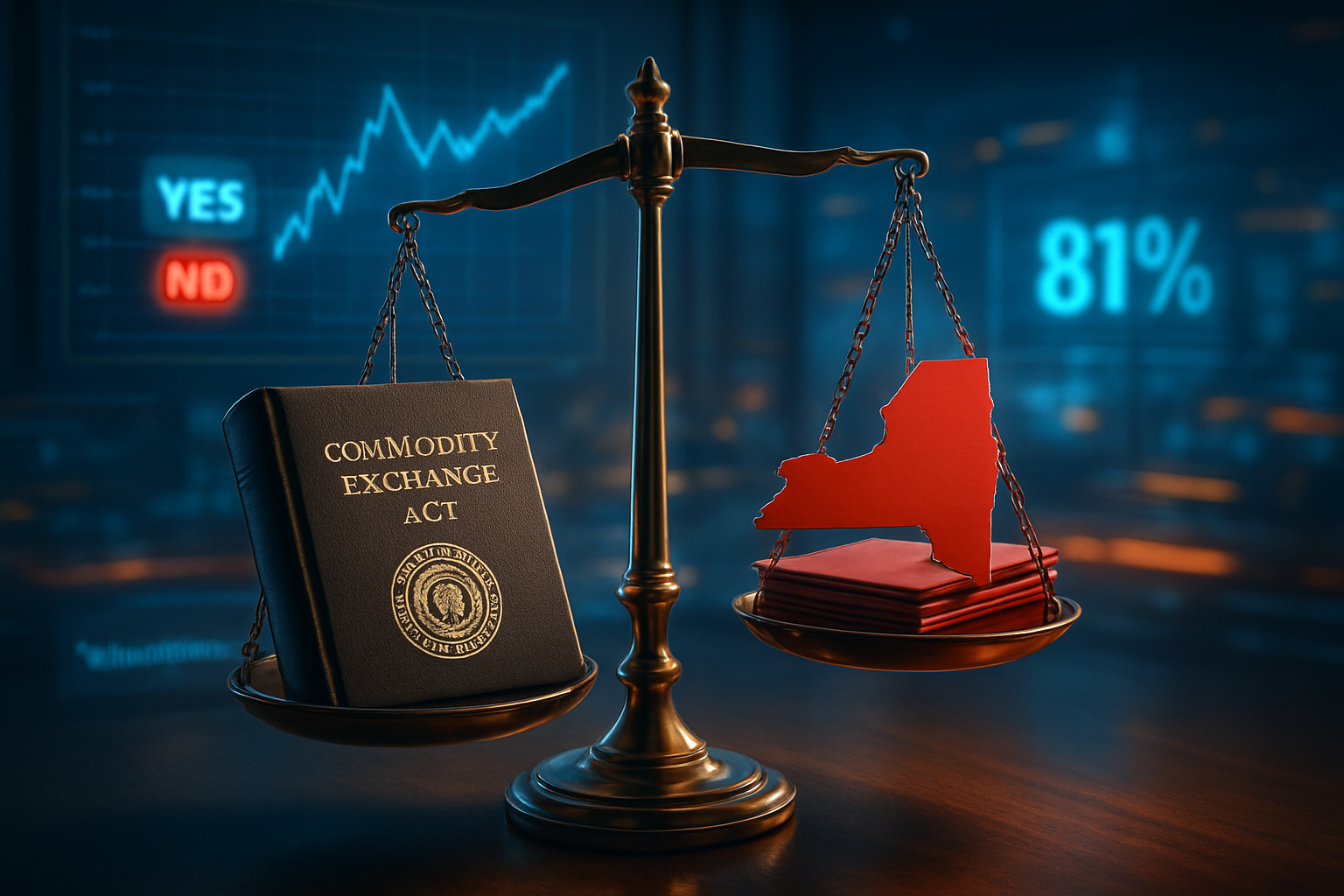
    As the prediction market industry enters a pivotal 2026, a high-stakes legal battle is unfolding that will determine whether these platforms are treated as sophisticated financial exchanges or local gambling dens. At the heart of the conflict is a strategy known as "Federal Preemption," where platforms argue that federal oversight by the Commodity Futures Trading Commission (CFTC) overrides the power of individual states to shut them down.

    Currently, decentralized forecasting platform Manifold shows that professional predictors are heavily favoring the industry's legal defenses. Traders have pushed the probability of federal preemption succeeding to a commanding 81%, reflecting a belief that the momentum of institutional adoption and federal law will eventually crush state-level bans. This surge in confidence comes despite a legislative assault from states like New York, making the upcoming judicial rulings some of the most anticipated events in the history of decentralized finance.

    The Market: What’s Being Predicted

    The central question facing traders on Manifold and other platforms is whether the federal Commodity Exchange Act (CEA) grants the CFTC "exclusive jurisdiction" over event contracts. Platforms like Kalshi and Interactive Brokers (Nasdaq: IBKR) argue that because they are registered as Designated Contract Markets (DCMs), their "yes/no" contracts are financial derivatives—not wagers.

    On Manifold, the contract titled "Will Federal Preemption Protect DCMs from State Bans by End of 2026?" has seen its volume spike in early January. The 81% probability currently assigned to a "Yes" outcome suggests that the market views state-level interference as a temporary hurdle rather than a permanent barrier. This odds-on favorite status has remained resilient even as New York moves forward with its controversial "ORACLE Act," which seeks to impose fines of up to $1 million per day on platforms offering contracts on elections or government actions.

    Resolution for these markets is tied to a series of pending court cases, most notably a motion for a preliminary injunction in the Southern District of New York. A final ruling, expected by late February 2026, will likely serve as the primary catalyst for these odds to either move toward 100% or collapse into uncertainty.

    Why Traders Are Betting

    The bullishness among traders regarding federal preemption is driven by several key factors. First is the "institutionalization" of the asset class. Major players like Robinhood Markets (Nasdaq: HOOD) and Goldman Sachs (NYSE: GS) have signaled significant interest in "yes/no" derivatives, with Robinhood already integrating event contracts into its core app. Traders believe that as these markets become more intertwined with the traditional financial system, courts will be increasingly hesitant to allow a "checkerboard" of state laws to dismantle a federally regulated exchange.

    Furthermore, the introduction of the "Public Integrity in Financial Prediction Markets Act" by Representative Ritchie Torres has provided a legislative North Star. This bill seeks to codify federal protections for prediction markets while adding strict insider-trading guardrails. Traders are betting that the existence of this bill—and the broader success of prediction markets in forecasting the 2024 and 2025 economic shifts—proves their social utility, making them "too big to ban."

    There is also a strategic legal perspective: the CEA has historically been interpreted to provide a uniform national market for commodities and futures. If a state like New York can ban a CFTC-approved contract, it sets a precedent that could allow states to interfere with traditional oil, gold, or interest rate futures—a scenario that many legal experts believe the federal judiciary will work hard to avoid.

    Broader Context and Implications

    The fight for federal preemption is more than a legal technicality; it is a battle against a "regulatory domino effect." If states like New York successfully classify prediction markets as gambling, the industry faces an existential threat. A state-by-state licensing model—similar to the one used by DraftKings (Nasdaq: DKNG) and Flutter Entertainment (NYSE: FLUT) for sports betting—would require platforms to "geofence" their users, effectively splitting a single national market into 50 tiny, illiquid pools.

    For a prediction market to be accurate, it requires deep liquidity. If a New Yorker cannot trade against a Californian on the outcome of a federal election, the market’s predictive power diminishes. Moreover, a "gambling" classification would subject these platforms to higher tax rates and prevent institutional firms from using them for hedging, as many corporate charters prohibit participation in "gaming" but allow "derivatives."

    We are also seeing a shift in corporate alliances. MSG Sports Corp (NYSE: MSGS) recently signed a marketing partnership with Polymarket, signaling that even traditional sports and entertainment giants are betting on the long-term legality of these exchanges. This broader acceptance suggests that the public and corporate sentiment has already shifted toward viewing these as information tools rather than casinos.

    What to Watch Next

    The immediate horizon is dominated by the New York judicial system. By late February 2026, the Southern District of New York is expected to rule on whether the New York Gaming Commission can enforce its proposed bans. A victory for Kalshi or its allies in this venue would likely send the Manifold odds into the 90% range.

    Additionally, industry watchers are keeping a close eye on the "Cooney Bill" (SB S8889) in the New York State Senate. This rival legislation offers a middle ground, proposing that prediction markets be regulated by the Department of Financial Services (DFS) as financial products rather than by the Gaming Commission. If this industry-friendly bill gains traction, it could provide a legislative "off-ramp" that resolves the preemption conflict without a Supreme Court showdown.

    Finally, the activity of Interactive Brokers (Nasdaq: IBKR) and their ForecastEx exchange remains a key bellwether. As one of the most conservative and regulated firms in the space, their continued expansion into event contracts serves as a "real-money" bet that federal law will ultimately prevail over state-level objections.

    Bottom Line

    The 81% probability of federal preemption succeeding is a testament to the industry's growing confidence that prediction markets have crossed the Rubicon into mainstream finance. The Commodity Exchange Act was designed to prevent a patchwork of state laws from disrupting national commerce, and platforms are betting their entire business models on that protection holding firm.

    If the 19% "tail risk" materializes and states win the right to ban these markets, the industry will likely be forced into a costly and fragmented sports-betting style model. However, for now, the smart money is betting that the federal government—not the states—will remain the sole arbiter of this new financial frontier. As we approach the critical February rulings, the stakes for the "ORACLE" of the markets have never been higher.


    This article is for informational purposes only and does not constitute financial or betting advice. Prediction market participation may be subject to legal restrictions in your jurisdiction.

    PredictStreet focuses on covering the latest developments in prediction markets.
    Visit the PredictStreet website at https://www.predictstreet.ai/.
  • The Regulated Giant: Kalshi Commands 66% of Market Share as Sports Betting Explosion Dethrones Polymarket

    The Regulated Giant: Kalshi Commands 66% of Market Share as Sports Betting Explosion Dethrones Polymarket

    In a seismic shift for the prediction market landscape, Kalshi has officially overtaken Polymarket as the dominant force in the industry. As of early January 2026, Kalshi handled approximately 66.4% of total global trades, a staggering reversal from the crypto-native era of 2024. The surge has been fueled by a combination of federal regulatory approval, a massive integration with retail powerhouse Robinhood Markets Inc. (NASDAQ:HOOD), and a pivot toward high-frequency sports betting that has fundamentally changed the platform's DNA.

    The momentum culminated in a historic milestone during the week ending January 11, 2026, when Kalshi recorded over $2 billion in weekly notional volume for the first time. For the millions of retail investors now treating event contracts like stocks, the distinction between "betting" and "trading" has all but vanished. This explosion in volume reflects a broader trend: the mainstreaming of prediction markets as a legitimate asset class, underpinned by the safety of U.S. regulation.

    The Market: What's Being Predicted

    While Kalshi initially built its reputation on economic indicators like CPI prints and Fed interest rate decisions, its recent dominance is almost entirely driven by the "financialization of sports." In the first week of January 2026, a remarkable 91.1% of Kalshi's total volume was concentrated in sports markets. The platform’s entry into NFL, NBA, and NHL contracts has transformed it from a niche intellectual tool into a high-octane trading floor.

    The most significant driver of this volume has been the launch of "Combos"—Kalshi’s peer-to-peer version of a sports parlay. Unlike traditional sportsbooks like DraftKings Inc. (NASDAQ:DKNG) or FanDuel, which is owned by Flutter Entertainment plc (NYSE:FLUT), Kalshi operates as a pure exchange. This means users trade against each other rather than a house, often resulting in better odds and higher transparency. During the NFL Wild Card weekend in early January, Kalshi processed a record $466 million in a single day, with "Combos" alone generating over $100 million in weekly volume.

    This shift has left the previous market leader, Polymarket, in an unfamiliar second place. While Polymarket continues to dominate global geopolitical and crypto-centric forecasting, it captured only about $1.5 billion in volume during Kalshi’s $2 billion week. The gap is widening as Kalshi’s liquidity in U.S. sports becomes an insurmountable "moat," drawing in liquidity that used to reside in offshore betting markets.

    Why Traders Are Betting

    The primary catalyst for Kalshi’s volume surge is its deep integration with Robinhood Markets Inc. (NASDAQ:HOOD). Since the late 2025 launch of the "Prediction Markets Hub" within the Robinhood app, more than 50% of Kalshi's total betting volume has originated from Robinhood users. By allowing millions of retail traders to buy and sell event contracts directly from their existing brokerage accounts, Kalshi effectively removed the friction of crypto wallets and "gas fees" that define the Polymarket experience.

    Beyond ease of use, the psychological shift toward "legalized trading" has been a powerful motivator. Because Kalshi is a Commodity Futures Trading Commission (CFTC)-regulated exchange, traders can move money in and out via standard USD bank transfers with full federal oversight. In contrast, Polymarket’s reliance on the USDC stablecoin and the Polygon blockchain remains a barrier for the average American retail investor who is wary of crypto-related regulatory hurdles.

    Whale activity has also shifted. Large-scale institutional "event traders" are increasingly favoring Kalshi for its regulatory certainty. These traders are not just betting on who wins a game; they are using sports contracts as a hedge against broader market volatility or as a high-liquidity alternative to traditional options. The ability to trade these contracts in a regulated environment provides a level of institutional trust that unregulated or offshore platforms simply cannot match.

    Broader Context and Implications

    The current battle between Kalshi and Polymarket represents a fork in the road for the future of prediction markets. Kalshi’s 66.4% trade share suggests that the "Regulated Model" is winning the battle for the masses. By adhering to CFTC rules, Kalshi has gained access to the pipes of the traditional financial system, allowing it to scale in a way that decentralized, crypto-native platforms have struggled to do within U.S. borders.

    This dominance has real-world implications for how we view public sentiment. With $2 billion flowing through these markets weekly, the prices of these contracts are becoming more accurate than traditional polling or sports analyst projections. When Kalshi’s "Super Bowl Winner" contract moves, it moves because of massive capital flows, not just opinion. This is turning prediction markets into a "truth machine" for everything from championship games to legislative outcomes.

    However, the regulatory landscape remains a double-edged sword. While Kalshi enjoys its current edge, its growth is limited to the types of contracts the CFTC permits. Polymarket, operating globally and often outside U.S. jurisdiction, can offer markets on a wider—and sometimes more controversial—range of international topics. Yet, for now, the sheer scale of the U.S. consumer market means that whoever wins the American retail trader wins the crown.

    What to Watch Next

    As we move deeper into 2026, the key question is whether Polymarket will find a way to re-enter the U.S. market in a compliant manner to regain its lost share. Rumors of a "Polymarket USA" brokerage model have circulated, but the platform currently faces stiff competition and a massive head start from Kalshi. If Polymarket cannot find a way to integrate with a major domestic financial platform to match the "Robinhood Effect," Kalshi’s dominance may become permanent.

    Upcoming milestones include the 2026 FIFA World Cup and the mid-term election cycle. These events will serve as the ultimate test for whether Kalshi can maintain its 90%+ sports-driven volume while simultaneously scaling its political and economic markets. Traders should also watch for Kalshi’s potential expansion into other asset classes, such as real estate price contracts or even weather-based derivatives, which could further diversify its $2 billion-a-week liquidity pool.

    Bottom Line

    The rise of Kalshi to a 66.4% market share is more than just a victory for one platform; it is a coming-of-age moment for the prediction market industry. By leveraging the distribution power of Robinhood and the safety of CFTC regulation, Kalshi has successfully transitioned event betting from a niche hobby for crypto enthusiasts into a mainstream financial product for millions of Americans.

    The lesson for the industry is clear: accessibility and regulation are the ultimate drivers of volume. While the decentralized world of Polymarket offers a vision of a global, borderless future, Kalshi has proven that the path to $2 billion weeks lies in the structured, USD-native world of traditional finance. As 2026 unfolds, the prediction market is no longer just predicting the future—it is becoming a fundamental part of the global financial infrastructure.


    This article is for informational purposes only and does not constitute financial or betting advice. Prediction market participation may be subject to legal restrictions in your jurisdiction.

    PredictStreet focuses on covering the latest developments in prediction markets.
    Visit the PredictStreet website at https://www.predictstreet.ai/.
  • The Gavel Falls for Prediction Markets: How Kalshi’s Legal Victory Rewrote the Rules for 2026

    The Gavel Falls for Prediction Markets: How Kalshi’s Legal Victory Rewrote the Rules for 2026

    The landscape of American elections changed forever not at a ballot box, but in a federal courtroom. Following a historic legal triumph over the Commodity Futures Trading Commission (CFTC), Kalshi has transitioned from an embattled startup to the vanguard of a multi-billion dollar industry. Today, as of January 16, 2026, the platform’s "Congressional Control" markets are the primary pulse-check for the upcoming midterm elections, boasting record-breaking liquidity and institutional participation that was unthinkable just two years ago.

    The shift began when the U.S. Court of Appeals denied the CFTC's motion to block Kalshi from offering election contracts, a move that effectively dismantled the agency's decade-long blockade against political derivatives. Current market data shows a "Blue Wave" in the House is now priced at a staggering 75% probability, while Republicans maintain a 67% grip on the Senate. This divergence has turned prediction markets into the most scrutinized data source in Washington, overshadowing traditional polling which continues to struggle with representative sampling.

    The Market: What's Being Predicted

    The current crown jewel of the prediction world is the 2026 "Congressional Control" suite on Kalshi. Unlike the fragmented markets of the past, these contracts are now fully integrated into the broader financial ecosystem, with retail giants like Robinhood Markets, Inc. (NASDAQ: HOOD) and Interactive Brokers Group, Inc. (NASDAQ: IBKR) offering direct or indirect exposure to these event-clearing instruments.

    As of mid-January 2026, the House of Representatives market has seen over $450 million in volume. Traders are currently pricing a Democratic takeover of the House at 74-76 cents on the dollar, reflecting a strong consensus that the incumbent administration will face a classic midterm correction. Conversely, the Senate remains a Republican stronghold in the eyes of the market, with the GOP trading at a 66% chance to retain control, largely due to a favorable 2026 map that forces Democrats to defend several vulnerable seats in deep-red states.

    The resolution criteria are strictly tied to the official results of the November 2026 elections. A "Democratic House" contract pays out $1 if the Democratic Party secures at least 218 seats, and $0 otherwise. This binary simplicity, combined with the legal certainty provided by the courts, has invited massive liquidity, with "whale" positions exceeding $10 million now appearing regularly in the order books.

    Why Traders Are Betting

    The primary driver behind the current betting frenzy is the legal clarity established by Judge Jia Cobb’s landmark 2024 ruling. The court famously determined that "gaming" does not apply to election contracts, reasoning that elections are a "civic process" rather than a "game" like a sporting event or a casino match. This distinction stripped the CFTC of its ability to block contracts based on "public interest" concerns, as the agency's jurisdiction over "gaming" was found not to extend to the democratic process.

    Traders are also reacting to the "Midterm Slump" narrative, a historical trend where the president's party almost always loses seats. However, the 2026 markets are being specifically moved by a surge in "Impeachment Odds." Kalshi’s contract on "Will Donald Trump be impeached in 2026?" has climbed to 57%, a sentiment that directly correlates with the 75% odds of a Democratic House. Markets are effectively betting that a new House majority will move immediately toward oversight and impeachment proceedings.

    The integration of "Combos"—parlay-style contracts—has further fueled activity. Professional traders are now hedging macro risks by betting on outcomes like "Democrats win the House AND the Federal Reserve cuts interest rates in September." This intersection of political and economic forecasting has drawn in hedge funds that previously viewed election betting as a novelty.

    Broader Context and Implications

    The Kalshi victory was a watershed moment for the "Loper Bright" era of administrative law. By applying the Supreme Court's decision to end Chevron deference, the courts signaled that federal agencies can no longer "invent" definitions for terms like "gaming" to expand their regulatory reach. This has opened the door for a host of other event markets, including climate milestones, Supreme Court rulings, and even geopolitical conflicts, all trading under the same regulated framework.

    Real-world implications are already being felt in political strategy. Campaign consultants now use Kalshi prices as a more reliable indicator than private internal polling. If a candidate’s "Win Probability" drops 10 points in an afternoon, it often signals a localized scandal or a shift in donor sentiment before it hits the news cycle. This "truth machine" effect has brought a level of brutal transparency to the 2026 midterms that wasn't present in 2022 or 2024.

    Furthermore, the "irreparable harm" argument used by the CFTC—that election markets would undermine democracy—has largely been debunked by the 2024 experience. Instead of causing chaos, the markets provided a stabilizing influence during the 2024 vote count, offering a cold, hard look at the probabilities when partisan rhetoric was at its peak. The markets proved to be a "ballast" against misinformation, a fact that has softened Congressional opposition to the industry.

    What to Watch Next

    The next major milestone for the markets will be the "Primary Season High," expected in late Spring 2026. Key Senate races in Georgia and Ohio are currently the most volatile. In Georgia, Senator Jon Ossoff (D) is a 75% favorite, but any entry of a high-profile Republican challenger could see those odds collapse overnight. Traders should keep a close eye on the "Candidate Filing" deadlines, as these dates often trigger the largest single-day movements in individual race markets.

    Beyond the candidates, the CFTC’s ongoing regulatory posture remains a factor. While they voluntarily dismissed their appeal in May 2025, the agency is expected to propose new "conduct rules" later this year to prevent market manipulation by political insiders. Any news regarding "Insiders Betting Bans" could temporarily dry up liquidity or shift the odds as certain participants are forced to exit their positions.

    Finally, the "Combos" markets for Q3 2026 will be critical. As we approach the heat of the campaign, the correlation between election odds and inflation data will likely tighten. If inflation remains sticky, expect the "Democratic House" odds to soften as the "economic pain" narrative takes hold of the betting public.

    Bottom Line

    The Kalshi legal victory didn't just win a court case; it birthed a new era of the American information economy. By defeating the "gaming" label, Kalshi ensured that prediction markets would be treated as legitimate financial tools rather than fringe gambling. As we head into the 2026 midterms, the market is no longer wondering if these platforms are legal, but rather how they will transform our understanding of political power.

    Prediction markets have proven to be the most efficient aggregator of public and private information in existence. While polls offer a snapshot of what people say, Kalshi offers a snapshot of what people know—or at least, what they are willing to bet on. As the 2026 cycle heats up, the odds will continue to shift, but the house that Kalshi built on a foundation of legal victory is here to stay.


    This article is for informational purposes only and does not constitute financial or betting advice. Prediction market participation may be subject to legal restrictions in your jurisdiction.

    PredictStreet focuses on covering the latest developments in prediction markets.
    Visit the PredictStreet website at https://www.predictstreet.ai/.
  • Polymarket’s $112 Million Gambit: The QCEX Acquisition and the High-Stakes Battle for the U.S. Market

    Polymarket’s $112 Million Gambit: The QCEX Acquisition and the High-Stakes Battle for the U.S. Market

    As of January 15, 2026, the prediction market landscape has been fundamentally reshaped by what insiders are calling the "regulatory heist of the decade." Following years of operating in a state of "regulatory exile" from the United States, Polymarket has successfully completed its strategic acquisition of QCEX, a CFTC-licensed exchange. The $112 million deal, finalized in late 2025, has paved the way for Polymarket’s official domestic relaunch, bringing the world’s most liquid prediction platform directly into competition with the incumbent heavyweight, Kalshi.

    The move has sent shockwaves through the industry. For years, American traders were forced to watch from the sidelines or use complex workarounds to access Polymarket’s deep liquidity pools. Now, with the acquisition of QCEX’s Designated Contract Market (DCM) and Derivatives Clearing Organization (DCO) licenses, Polymarket is no longer an offshore outsider. The platform is currently in a high-stakes race to onboard millions of American retail users, with trading volumes across the industry hitting a record-shattering $700 million daily this month.

    The Market: What's Being Predicted

    The focus of prediction market enthusiasts has shifted from if Polymarket would return to the U.S., to how fast it can seize market share from Kalshi. Currently, secondary markets on various platforms are tracking "Polymarket U.S. Volume vs. Kalshi" for the first half of 2026. While Kalshi currently commands approximately 66% of the daily U.S. regulated volume—thanks to its deep integration with platforms like Robinhood Markets, Inc. (NASDAQ: HOOD)—Polymarket’s "waitlist-only" U.S. app has already seen over 500,000 sign-ups since its December rollout.

    Liquidity remains the primary metric. Traders are closely monitoring the "Total Value Locked" (TVL) in Polymarket’s new U.S.-compliant silos. Unlike its international version, which operates on the Polygon blockchain using USDC, the U.S. version is a hybrid model designed to appease federal regulators while maintaining the fast-paced, high-liquidity environment that defined the platform during the 2024 election cycle. The resolution of these "market share" contracts is set for July 1, 2026, and the odds have been swinging wildly as Polymarket clears new regulatory hurdles.

    Why Traders Are Betting

    The primary driver of the current market volatility is the sheer scale of institutional backing Polymarket has secured. In the wake of the QCEX deal, the Intercontinental Exchange (NYSE: ICE), the parent company of the New York Stock Exchange, finalized a landmark $2 billion investment in Polymarket. This partnership integrates Polymarket’s real-time data into ICE’s professional financial terminals, effectively treating prediction market odds as a legitimate new asset class for institutional desks.

    However, the path hasn't been entirely smooth. Traders are currently processing the fallout from the "Venezuela Controversy." Earlier this month, a $10.5 million market regarding the capture of Nicolás Maduro led to widespread outrage when Polymarket’s decentralized oracle initially hesitated to pay out, citing technicalities in the "invasion" definition. This has created a "trust gap" that Kalshi is actively exploiting in its marketing, positioning itself as the "cleaner" and more legally robust alternative.

    Whale activity has been notable on the "U.S. Market Dominance" contracts. Several large positions were recently taken by decentralized finance (DeFi) hedge funds betting that Polymarket's "culture-first" approach—focusing on viral news and sports contracts—will eventually overwhelm Kalshi’s more "academic" focus on macroeconomic data and interest rate pivots.

    Broader Context and Implications

    The acquisition of QCEX represents a "regulatory reset" that many thought impossible after the CFTC’s 2022 enforcement action against Polymarket. By purchasing an existing licensed entity (previously owned by Quadcode Group), Polymarket bypassed the standard multi-year federal registration process. This "M&A-first" strategy for regulatory compliance is now being studied by other international crypto firms looking to re-enter the U.S.

    The real-world implications of this battle are significant. The surge in prediction market volume has caught the eye of Washington D.C., leading to the introduction of the Public Integrity in Financial Prediction Markets Act of 2026. This proposed legislation aims to curb "insider trading" by government officials on markets where they may have non-public knowledge—such as upcoming regulatory decisions or military actions. The accuracy of these markets has reached a point where they are frequently cited on major news networks like CNN and CNBC as more reliable than traditional polling or expert analysis.

    Furthermore, the competition is forcing a technological evolution. We are seeing the "Robinhood-ification" of prediction markets, where complex derivatives are being packaged into user-friendly mobile interfaces that appeal to the same demographic that fueled the 2021 meme-stock craze.

    What to Watch Next

    The immediate milestone to watch is the full public launch of the Polymarket U.S. app, currently slated for late February 2026. Until now, the platform has been restricted to a slow waitlist rollout. A successful "unveiling" could see a massive migration of liquidity. Additionally, keep a close eye on the ongoing state-level legal battles. States like Tennessee and Connecticut have issued cease-and-desist orders, arguing that "event contracts" are a form of unlicensed sports betting. How Polymarket and Kalshi navigate these state vs. federal jurisdictional conflicts will determine the industry's ceiling.

    Another key event is the upcoming "Predictive Data Summit" in March, where ICE is expected to reveal how it will package Polymarket data for high-frequency trading firms. If institutional "market makers" begin providing deep liquidity to these markets, the bid-ask spreads will tighten significantly, making prediction markets a viable hedging tool for traditional corporations.

    Bottom Line

    The QCEX acquisition was more than just a business deal; it was a declaration of war for the future of the "Information Economy." By moving into the U.S. market with federal licenses in hand, Polymarket has transformed from a crypto-native underdog into a systemic financial player. The competition with Kalshi is no longer just about who has the better interface, but about who can maintain the delicate balance between high-octane trading and the stringent requirements of the CFTC.

    Prediction markets are finally graduating from the fringes of the internet to the center of the financial world. Whether Polymarket’s liquidity can overcome Kalshi’s institutional trust remains the biggest bet of 2026. One thing is certain: the era of "betting on the news" has officially arrived in America, and the stakes have never been higher.


    This article is for informational purposes only and does not constitute financial or betting advice. Prediction market participation may be subject to legal restrictions in your jurisdiction.

    PredictStreet focuses on covering the latest developments in prediction markets.
    Visit the PredictStreet website at https://www.predictstreet.ai/.

  • The Year the ‘Truth Machine’ Won: How Kalshi’s Legal Victory Remade US Finance

    The Year the ‘Truth Machine’ Won: How Kalshi’s Legal Victory Remade US Finance

    As we enter 2026, the American financial landscape has been permanently altered by a revolution that didn't happen on Wall Street, but in a federal courtroom in Washington D.C. Late 2024 marked the "Big Bang" for prediction markets, spearheaded by Kalshi’s landmark legal victory against the Commodity Futures Trading Commission (CFTC). The fallout from that decision has been nothing short of explosive, with Kalshi reporting a staggering 1,680% surge in transaction volume throughout 2025.

    Currently, the probability of prediction markets becoming a standard feature in major retail brokerage apps stands at nearly 100%, following the successful integration of Kalshi's order book into platforms like Robinhood Markets, Inc. (NASDAQ: HOOD). Traders are no longer just betting on stocks; they are "hedging their lives" by trading on everything from the 2026 midterm elections to the Federal Reserve's next interest rate hike, with liquidity reaching levels that rival traditional mid-cap equity markets.

    The Market: What's Being Predicted

    The core of this transformation was the "Congressional Control Contract," a derivative product that allows traders to speculate on which political party will hold the gavel in the U.S. House and Senate. While offshore, crypto-based platforms like Polymarket had long offered similar products to non-U.S. residents, Kalshi became the first U.S.-regulated exchange to bring these "event contracts" to the domestic mainstream.

    Trading volume on Kalshi reached a fever pitch in late 2024, with over $1 billion flowing through election-related contracts in just a few weeks. By the end of 2025, the exchange had recorded over 97 million transactions and a total notional trading volume of $23.8 billion. The resolution criteria for these markets are strict: for Congressional control, the result is determined by the official certification of election results, ensuring a "hard" settlement that eliminates the ambiguity often found in traditional political polling.

    The market has since evolved far beyond simple "Red vs. Blue" binaries. Today, Kalshi offers hundreds of granular contracts on specific legislative outcomes, judicial appointments, and even the performance of specific news segments on networks like CNN, owned by Warner Bros. Discovery, Inc. (NASDAQ: WBD), and CNBC, owned by Comcast Corporation (NASDAQ: CMCSA).

    Why Traders Are Betting

    The 1,680% volume surge in 2025 was driven by a fundamental shift in how Americans perceive "betting." Traders are increasingly using prediction markets as a superior form of news and insurance. For instance, small business owners in 2025 used Congressional control contracts to hedge against potential changes in corporate tax rates, while tech investors traded on the probability of specific AI regulations passing the Senate.

    The factors driving the current odds are no longer just public opinion polls, which many traders now view as lagging indicators. Instead, the market responds in real-time to "whale" activity—large institutional positions from hedge funds that use Kalshi as a proxy for political risk. Notable shifts in volume are often seen minutes before major news breaks, as the "truth machine" aggregates private information into a public price.

    Strategic shifts have also played a role. By Q4 2025, sports prediction contracts accounted for nearly 90% of Kalshi's weekly volume during the NFL season. This move into sports allowed the platform to maintain the momentum it gained during the 2024 election cycle, converting "political junkies" into year-round event traders who prefer the transparent, exchange-cleared nature of Kalshi over traditional sportsbooks.

    Broader Context and Implications

    The catalyst for this entire movement was Judge Jia Cobb’s September 2024 ruling. In a decision that stunned the CFTC, Cobb ruled that "gaming" should be defined as playing a game, not the act of wagering on a real-world event. This legal distinction effectively neutered the CFTC’s primary argument that election betting was "contrary to the public interest."

    Furthermore, the ruling was one of the first to apply the Supreme Court’s Loper Bright precedent, which ended "Chevron deference." This prevented the CFTC from simply inventing its own definitions of "public interest" to block new financial products. The regulatory clarity was so profound that by May 2025, the CFTC officially withdrew its appeal, acknowledging that regulated prediction markets are here to stay.

    This shift has profound real-world implications. Prediction markets are now widely cited as "The Truth Machine" by major news outlets. When a market gives a candidate an 80% chance of winning, it carries more weight in the 2026 political discourse than a dozen pundit opinions. This has forced traditional pollsters to adapt or face irrelevance in a world where "putting your money where your mouth is" is the ultimate metric of confidence.

    What to Watch Next

    As we look toward the remainder of 2026, the primary focus is the 2026 Midterm Election cycle. Markets for the "2026 Senate Majority" are already showing significant liquidity, with traders beginning to price in the historical "midterm slump" for the incumbent party. We are also seeing the emergence of more complex "conditional markets"—for example, betting on the price of gold if a specific party wins a specific number of seats.

    Key dates to monitor include the upcoming quarterly earnings reports from Robinhood and other retail brokers who have integrated Kalshi's API. Their transaction fees from event contracts are expected to be a major growth driver in 2026. Additionally, watch for any legislative attempts to "codify" the CFTC's oversight power in a way that might circumvent Judge Cobb’s ruling, though current political appetite for such a move appears low.

    Finally, keep an eye on the potential for "Cross-Exchange Arbitrage" between Kalshi and the now-expanding prediction market arms of traditional players like Interactive Brokers Group, Inc. (NASDAQ: IBKR). As more institutions enter the space, we expect spreads to tighten and liquidity to rival the S&P 500 E-mini futures.

    Bottom Line

    The 2024 legal victory was more than just a win for one company; it was the birth of a new asset class. Kalshi’s ability to withstand federal scrutiny and subsequently deliver a 1,680% growth rate in 2025 proves that there is a massive, untapped demand for regulated "truth markets" in the United States.

    What this tells us is that prediction markets are no longer a niche curiosity for mathematicians and political nerds. They are a core pillar of the modern financial system, providing a unique combination of risk management and high-fidelity information. As we move deeper into 2026, the question is no longer whether prediction markets are legal, but how long it will take for them to become the primary way the world anticipates the future.

    The odds of a reversal in this trend are currently trading near zero. The "Truth Machine" is on, and it isn't turning off anytime soon.


    This article is for informational purposes only and does not constitute financial or betting advice. Prediction market participation may be subject to legal restrictions in your jurisdiction.

    PredictStreet focuses on covering the latest developments in prediction markets.
    Visit the PredictStreet website at https://www.predictstreet.ai/.