Tag: CFTC

  • The Death of the Poll: How Google and Meta are Turning Prediction Markets into the Global Truth Engine

    The Death of the Poll: How Google and Meta are Turning Prediction Markets into the Global Truth Engine

    As of February 6, 2026, the digital landscape has undergone a tectonic shift. Once relegated to the fringes of the internet and dismissed as "speculative casinos," prediction markets have officially entered the mainstream. This transformation is crystallized by the recent, sweeping policy updates from Alphabet (NASDAQ: GOOGL) and Meta (NASDAQ: META), which have moved to treat prediction markets not as gambling, but as vital financial and information tools.

    The current probability of prediction markets becoming the primary source for real-time news verification—a concept now widely known as "Information Finance" or InfoFi—sits at an all-time high. Markets tracking the efficacy of traditional polling versus prediction market accuracy for the upcoming 2026 U.S. Midterms show a staggering 85% confidence level that markets will outperform traditional data sets. This surge in interest is driven by a series of regulatory victories and a fundamental change in how the world's largest advertising platforms categorize "event-based" trading.

    The Market: What’s Being Predicted

    The "market" for prediction markets itself has exploded. Leading platforms like Kalshi and Polymarket are no longer niche startups; they are billion-dollar infrastructure plays. In early 2026, Kalshi reached an estimated valuation of $11 billion, while Polymarket, following its successful U.S. pivot, is trailing closely at $9.5 billion. The sheer volume of trade is the most telling metric: industry analysts project notional trading volume for event contracts to reach between $120 billion and $150 billion by the end of this year.

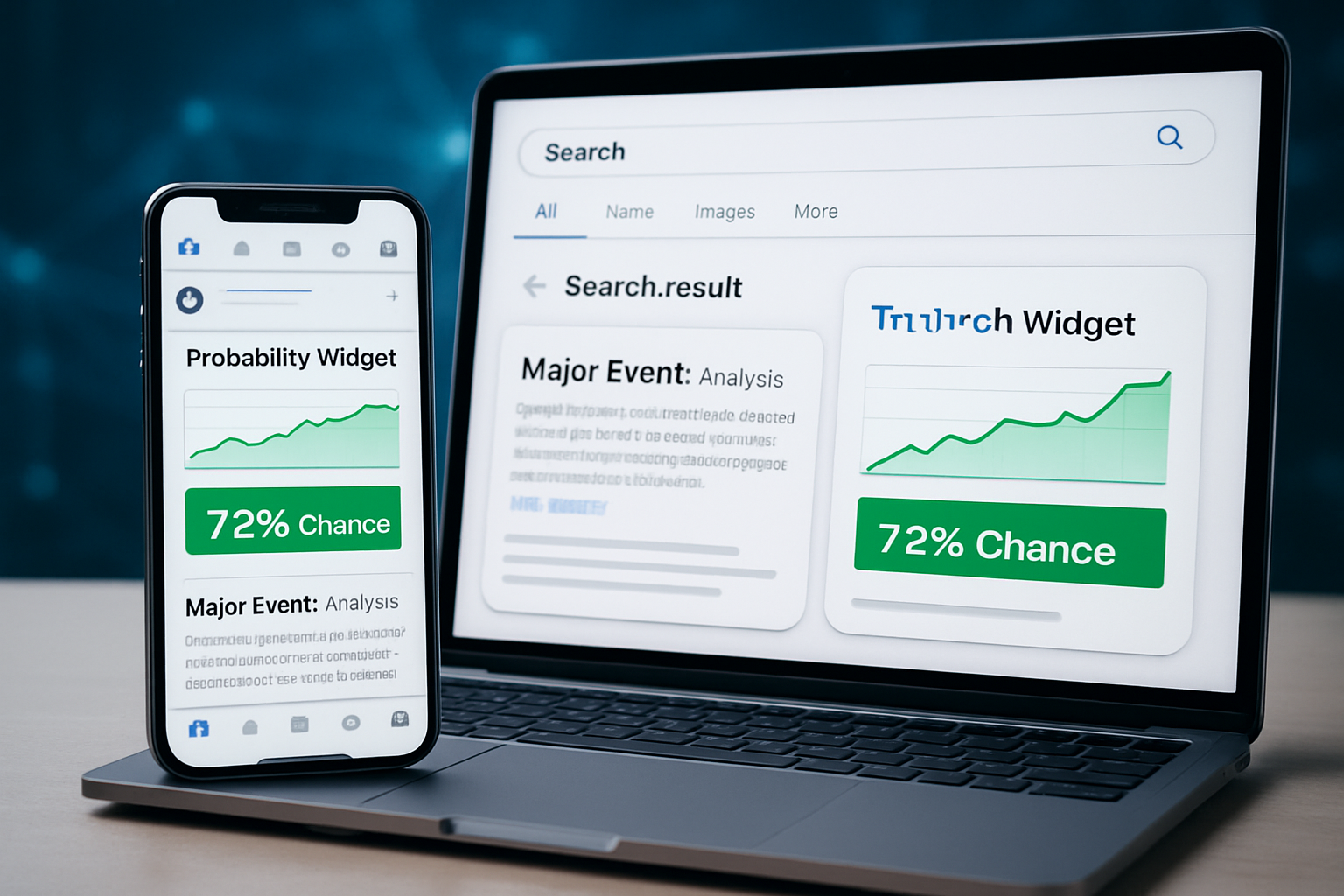
    This growth is being funneled through highly visible integrations. Google has recently embedded "Probability Widgets" directly into Google Finance and Search results. Users searching for "Fed interest rate hike" or "2026 World Cup winner" are now presented with a live odds-based widget sourced from CFTC-regulated exchanges. Meanwhile, Robinhood (NASDAQ: HOOD) has fully integrated election and economic contracts into its primary retail app, making "trading the news" as accessible as buying a fractional share of an ETF.

    The key resolution criteria for this shift rest on the "mainstreaming" of these platforms. When Google updated its ads policy on January 21, 2026, it specifically opened the gates for Commodity Futures Trading Commission (CFTC)-authorized markets to run search ads. This move ended a decade of "shadow-banning" for the industry, effectively legitimizing prediction markets as regulated financial instruments rather than offshore betting sites.

    Why Traders Are Betting

    The primary driver for the current betting frenzy is the proven accuracy of these markets during the 2024 election cycle. While traditional polls were mired in margin-of-error debates, prediction markets provided a stable, real-time barometer of voter sentiment that correctly signaled key pivots weeks in advance. Traders aren't just betting on outcomes; they are betting on the superiority of the mechanism.

    Recent movements have been fueled by the concept of "Information Finance," a term popularized by thinkers like Vitalik Buterin. The logic is simple: when people put their money where their mouth is, the resulting data is "correct by construction." This has led to the rise of institutional "alpha seekers"—hedge funds and market makers—who now provide deep liquidity to these markets. They treat event contracts as legitimate hedges against geopolitical and economic risks, such as sudden shifts in trade policy or central bank decisions.

    Furthermore, the introduction of interactive "Truth Widgets" on Meta platforms like Facebook and Instagram has created a new class of "social predictors." Meta’s pilot program allows users to see real-time market odds alongside controversial news stories. This serves as a market-based counter-narrative to misinformation, shifting the public perception from "gambling for profit" to "participating in truth discovery."

    Broader Context and Implications

    The mainstreaming of InfoFi represents a massive regulatory and cultural pivot. The 2024 landmark legal victory of Kalshi over the CFTC acted as a catalyst, stripping the agency of its power to unilaterally ban political event contracts. Under the leadership of the current CFTC Chairman, Michael Selig, the agency has performed a "Regulatory Reset," withdrawing previous bans and asserting exclusive federal jurisdiction over these markets. This has effectively pre-empted the patchwork of state-level gambling laws that previously stifled growth.

    This shift reveals a growing public hunger for objective truth in an era of AI-generated content and fragmented media. Prediction markets offer a decentralized, incentive-aligned alternative to the "expert class." Historically, these markets have shown a remarkable ability to process complex information faster than traditional newsrooms, accurately predicting everything from the resolution of the Hollywood strikes to the exact timing of tech layoffs.

    However, the "InfoFi" revolution is not without friction. Some platforms, including X (formerly Twitter), have faced challenges with "market spam"—automated accounts designed to manipulate odds or farm rewards. This has led to a technological arms race, where platforms are deploying advanced verification and anti-manipulation algorithms to ensure that the market signal remains pure.

    What to Watch Next

    The most immediate milestone to monitor is the full-scale rollout of Meta’s prediction widgets across its global news feeds. If successful, this will integrate market data into the daily social experience of billions, potentially making "checking the odds" as common as checking the weather. Additionally, the 2026 FIFA World Cup, hosted in North America, is expected to be the largest non-political event in prediction market history, providing a massive liquidity test for platforms like DraftKings (NASDAQ: DKNG) and Fanatics, which are increasingly eyeing the event-contract space.

    Investors should also watch for the potential launch of a "Prediction Market ETF." With the industry's valuation soaring, rumors of a structured product that allows investors to gain exposure to a basket of event-contract platforms are intensifying. The regulatory path for such a product seems clearer now than ever before, following the CFTC’s shift toward a pro-innovation stance.

    Bottom Line

    The mainstreaming of prediction markets marks the end of the "speculative casino" era and the beginning of the "Information Finance" age. By allowing these markets to advertise and integrating their data into core products, Alphabet and Meta have effectively deputized prediction markets as the internet’s "Source of Truth." This is not just about betting on the future; it is about creating a more accurate, incentive-driven way to understand the present.

    As we move deeper into 2026, the distinction between a "trader" and a "news consumer" is blurring. In a world where information is the most valuable commodity, the platforms that can most accurately price that information are the ones that will win. Prediction markets have evolved from a niche hobby into the foundational infrastructure of the modern information economy, and the "Big Tech" seal of approval is the final hurdle they needed to clear.


    This article is for informational purposes only and does not constitute financial or betting advice. Prediction market participation may be subject to legal restrictions in your jurisdiction.

    PredictStreet focuses on covering the latest developments in prediction markets.
    Visit the PredictStreet website at https://www.predictstreet.ai/.

  • The ‘Gaming’ Gambit: Kalshi Fights 19 Lawsuits to Redefine Prediction Markets as Finance

    The ‘Gaming’ Gambit: Kalshi Fights 19 Lawsuits to Redefine Prediction Markets as Finance

    As of February 6, 2026, the prediction market industry is no longer just a niche playground for political junkies; it is the front line of a massive constitutional and regulatory war. At the center of this storm is Kalshi, the federally regulated exchange that has spent the last year oscillating between landmark legal victories and existential threats. The core of the conflict rests on a single, deceptively simple question: Is a prediction market a sophisticated financial instrument for hedging risk, or is it just a high-tech sportsbook?

    The stakes have reached a fever pitch as Kalshi and its peers grapple with 19 active federal lawsuits that threaten to fragment the U.S. market into a patchwork of geofenced jurisdictions. While a 2024 D.C. federal court ruling famously declared that election betting does not constitute "gaming," new and conflicting decisions from Maryland and Massachusetts have cast a long shadow over the industry. With sports event contracts now accounting for more than 90% of Kalshi’s total trading volume, the company’s ability to convince judges that these are financial derivatives—not gambling—will determine whether the multi-billion dollar prediction market industry survives in its current form.

    The Market: What's Being Predicted

    The "market" currently under the most intense scrutiny isn't an election or a sporting event, but the legal status of the industry itself. Traders across platforms like Polymarket and Kalshi are closely monitoring the "judicial climate," as the 19 pending federal lawsuits are categorized into three distinct fronts. There are six "offensive" suits where Kalshi has sued regulators in states like New York, Michigan, and Illinois, arguing that the Commodity Exchange Act (CEA) grants the Commodity Futures Trading Commission (CFTC) exclusive jurisdiction over their operations.

    Conversely, eight "defensive" suits have been launched by state gaming commissions and tribal entities, such as the Ho-Chunk Nation, alleging that Kalshi is operating as an unlicensed sportsbook. The final five cases are consumer-led class actions focusing on gambling addiction. This legal sprawl has created a volatile environment where liquidity is often tied to the latest courtroom transcript. On Kalshi, the volume for sports-related event contracts hit an estimated $9.1 billion monthly in January 2026, representing a staggering 91.1% of the platform's activity. The resolution of these cases will dictate whether this liquidity remains centralized or is throttled by state-level "police powers."

    Why Traders Are Betting

    The divergence in judicial opinion has turned legal analysis into a primary trading strategy. In Washington D.C., Judge Jia Cobb’s "Rocket-Booster" precedent remains the industry's North Star. Her ruling that "politics is not a game" effectively stripped the CFTC of its power to block election markets, arguing that the term "gaming" in the CEA refers to traditional games of chance like poker, not solemn public processes. This gave traders confidence that federal law favored the expansion of event contracts.

    However, that confidence has been shaken by more recent rulings. In August 2025, Judge Adam Abelson of the Maryland Federal Court rejected Kalshi's attempt to block state regulators, ruling that sports contracts are "indistinguishable" from traditional sports wagering. This was followed by a January 2026 bombshell in Massachusetts, where Judge Christopher Barry-Smith ordered Kalshi to geofence the state, noting that the platform's user interface "mirrors other digital gambling experiences." Traders are now forced to weigh the "exclusive jurisdiction" argument against the 10th Amendment rights of states to regulate gambling—a conflict that many believe is destined for the Supreme Court.

    Broader Context and Implications

    This legal battle represents a fundamental shift in how the U.S. views risk. Kalshi argues that its sports contracts are essential financial tools. For example, a small business owner in a college town might use a "home team loss" contract to hedge against the drop in foot traffic and revenue that follows a losing season. In this view, prediction markets are more akin to the CME Group (NASDAQ: CME) or Interactive Brokers (NASDAQ: IBKR) ForecastEx than to a casino.

    However, the CFTC, under new Chairman Michael Selig, is navigating a delicate path. While Selig has begun withdrawing the more restrictive "Event Contracts" proposals from 2024, the commission is still pressured by states and anti-gambling advocates. The broader implication is the potential "fragmentation" of the U.S. economy. If a financial instrument is legal in D.C. but "illegal gambling" in Massachusetts, the efficiency of prediction markets as a forecasting tool is severely diminished. The industry's historical accuracy—which famously outperformed traditional polling during the 2024 cycle—relies on deep, nationwide liquidity pools that state geofencing would destroy.

    What to Watch Next

    The next three to six months will be pivotal. The "Blue Lake Rancheria v. Kalshi" case in California, which Kalshi won in late 2025 on federal preemption grounds, is currently being appealed. A win for Kalshi in the Ninth Circuit would create a powerful counterweight to the Massachusetts and Maryland decisions, potentially forcing a Supreme Court intervention.

    Additionally, investors should watch for the CFTC's upcoming "durable standards" memo, expected in the second quarter of 2026. Chairman Selig has hinted at a framework that would solidify the "financial instrument" status for event contracts while requiring more robust consumer protections. Key dates in April will also see hearings for the class-action suits in Michigan, which could determine if Kalshi is liable for "gambling losses" under state statutes—a ruling that would be catastrophic for the platform's revenue model.

    Bottom Line

    The legal war facing Kalshi is a battle for the soul of the "Information Age" economy. If Kalshi succeeds in proving that sports and political events are economic variables rather than "games," it will open the floodgates for a new era of decentralized finance and risk management. If the "gaming" definition holds in state courts, the industry may be forced into a permanent defensive crouch, operating as a glorified, geofenced sportsbook rather than a global revolutionary exchange.

    For now, the data is clear: the public wants to trade these markets. With over $9 billion in monthly volume moving through sports contracts alone, the market has already "voted" on the utility of these instruments. The question remains whether the 19 federal lawsuits will catch up to the reality of the 21st-century trader.


    This article is for informational purposes only and does not constitute financial or betting advice. Prediction market participation may be subject to legal restrictions in your jurisdiction.

    PredictStreet focuses on covering the latest developments in prediction markets.
    Visit the PredictStreet website at https://www.predictstreet.ai/.
  • The “New Animal” War: Kalshi’s 19 Federal Lawsuits and the Battle for the Future of Financial Trading

    The “New Animal” War: Kalshi’s 19 Federal Lawsuits and the Battle for the Future of Financial Trading

    The legal boundary between a "hedge" and a "bet" has reached a breaking point. As of February 5, 2026, the prediction market industry is locked in what experts are calling a "jurisdictional civil war," pitting the federally regulated exchange Kalshi against a phalanx of state regulators. At the heart of the storm is a question with billion-dollar implications: Are event contracts—ranging from Oscar winners to NBA scores—legitimate financial derivatives protected by federal law, or are they merely high-tech gambling?

    Currently, the markets themselves are betting on the outcome of their own survival. On decentralized platforms, the probability that federal preemption will ultimately shield exchanges like Kalshi from state bans by the end of 2026 is trading at a robust 81%. However, in the trenches of state legislatures, the outlook is more volatile; the odds of New York passing a permanent ban on event contracts (the "ORACLE Act") have fluctuated wildly, currently sitting at 38% as rival, industry-friendly legislation begins to gain traction.

    The Market: What's Being Predicted

    The most consequential "market" in the industry right now isn't the price of oil or the winner of the next election; it is the legal status of the platforms themselves. Traders are actively wagering on the outcome of Kalshi’s unprecedented legal offensive. By early 2026, Kalshi has initiated or is defending a total of 19 federal lawsuits across the United States. These include "offensive" suits against regulators in New York, Ohio, and Nevada, seeking to prove that the federal Commodity Exchange Act (CEA) preempts state gambling laws.

    On platforms like Manifold Markets and Polymarket, these legal milestones have become high-volume assets. The "Federal Preemption Protects DCMs" contract has seen over 1.5 million in play-money volume, while a Polymarket contract on whether the U.S. Supreme Court will hear a sports-contract case has attracted over $856,000 in liquidity. Meanwhile, ForecastEx, the prediction market venture launched by Interactive Brokers (NASDAQ: IBKR), has become a secondary hub for institutional traders hedging against a potential New York ban.

    The resolution criteria for these markets are tied to specific judicial dates. A critical hearing in Connecticut on February 12, 2026, and a ruling on a preliminary injunction in the Southern District of New York expected by the end of the month, are the primary triggers for current price movements.

    Why Traders Are Betting

    The bullish sentiment regarding federal preemption (the 81% "Yes" odds) is driven by the legal precedent set in late 2024 when Kalshi successfully sued the Commodity Futures Trading Commission (CFTC). That victory established that the CFTC did not have the authority to blanket-ban election markets. Traders are now betting that this federal "blessing" extends to sports and social events, rendering state-level cease-and-desist letters legally toothless under the Supremacy Clause of the U.S. Constitution.

    However, recent setbacks have introduced significant "geofencing" risk. In January 2026, a Massachusetts court issued a preliminary injunction forcing Kalshi to block users in the state, causing a momentary dip in the platform’s perceived dominance. This has fueled the "Great Prediction War" market, where Polymarket currently holds a 47% probability of being the top platform by volume in 2026, compared to Kalshi’s 34%. Traders are wary that Kalshi’s heavy regulatory footprint in the U.S. might allow offshore or decentralized competitors to capture the market while Kalshi is tied up in court.

    Large "whale" positions have also been noted in markets surrounding New York’s ORACLE Act. The odds of a ban dropped from 65% to 38% following the introduction of Senate Bill S8889, a rival bill that would classify prediction markets as financial products. This legislative pivot suggests that lobbyists are successfully framing these markets as sophisticated data tools rather than "digital casinos."

    Broader Context and Implications

    The tension between state and federal oversight reached a fever pitch in October 2025, when the New York State Gaming Commission (NYSGC) issued a formal cease-and-desist letter to Kalshi. The Commission alleged that Kalshi was running an "unlicensed mobile sports wagering platform," citing New York Penal Law § 225.00. This move was a direct challenge to the CFTC’s authority, essentially arguing that a federal license to trade derivatives does not grant a "get out of jail free" card regarding state gambling prohibitions.

    New York Assemblymember Clyde Vanel, a key figure in the debate, summarized the challenge during a January 2026 hearing: "We’re dealing with a new animal." Vanel’s quote captures the regulatory anxiety: if a bet on a football game is wrapped in the terminology of "hedging" and "event contracts," does it bypass the taxes and consumer protections required of traditional sportsbooks like FanDuel (NYSE: FLUT) or DraftKings (NASDAQ: DKNG)?

    The real-world implications are massive. If state regulators win, the U.S. prediction market landscape will become a fractured mosaic of geofenced territories, killing the liquidity that makes these markets useful for forecasting. If Kalshi wins its 19 lawsuits, it could effectively deregulate "betting" nationwide by rebranding it as "trading," a move that would fundamentally disrupt the multi-billion dollar domestic gaming industry.

    What to Watch Next

    The next 30 days are perhaps the most critical in the history of the industry. On February 11, 2026, a Nevada court will hold a hearing on a permanent injunction against Polymarket. Just one day later, on February 12, a Connecticut court will hear arguments on whether the state's cease-and-desist order against Kalshi violates federal law.

    Market participants should also monitor the progress of the ORACLE Act in the New York legislature. If Assemblymember Vanel’s bill gains momentum, expect the "New York Ban" contracts on ForecastEx and Kalshi to spike. Conversely, a victory for Kalshi in the Southern District of New York could lead to a rapid collapse in the probability of state-level bans, as other governors may realize their legal standing is on shaky ground.

    Finally, keep an eye on the "jurisdictional discount." Currently, spreads on Kalshi are wider for users in litigated states. If a major appeals court rules in favor of federal preemption, we could see a massive "liquidity convergence" event, where national volume floods back into a unified market.

    Bottom Line

    The legal battle for prediction markets is no longer about whether you can bet on the presidency; it is a fundamental test of the U.S. financial regulatory system. Kalshi’s "19-front war" is an aggressive gamble that the federal government—specifically the CFTC—is the sole arbiter of what constitutes a "market." By challenging states like New York and Massachusetts, Kalshi is attempting to build a national infrastructure that treats human events as tradable commodities.

    As the "New Animal" quote suggests, regulators are struggling to categorize a product that looks like a sportsbook but acts like a stock exchange. For traders, the high probability of federal preemption winning out suggests a belief that technology and federal law will eventually steamroll state-level resistance. However, the "geofencing" reality of 2026 shows that, for now, the map is as important as the math.

    If these markets are eventually fully vindicated in court, they will become the most powerful data-aggregation tools in history. If they fail, they will be remembered as a brief, high-stakes attempt to disrupt the ancient laws of the wagering world.


    This article is for informational purposes only and does not constitute financial or betting advice. Prediction market participation may be subject to legal restrictions in your jurisdiction.

    PredictStreet focuses on covering the latest developments in prediction markets.
    Visit the PredictStreet website at https://www.predictstreet.ai/.
  • The Maduro Whale: Inside the $400,000 Trade That Sparked a Washington Firestorm

    The Maduro Whale: Inside the $400,000 Trade That Sparked a Washington Firestorm

    The capture of Venezuelan leader Nicolás Maduro by U.S. special operations forces on January 3, 2026, was a geopolitical earthquake that few saw coming. But for one anonymous trader on the decentralized prediction platform Polymarket, the event was more than a headline—it was a $400,000 windfall. Hours before President Donald Trump took to Truth Social, owned by Trump Media & Technology Group Corp. (NASDAQ: TMTG), to announce that "Operation Absolute Resolve" had successfully taken Maduro into custody, a series of aggressive bets were placed that have now triggered a federal investigation and a legislative firestorm in Washington.

    At the time the trades were executed, the market-implied probability of Maduro’s downfall by the end of January sat at a measly 7%. The sudden, massive influx of capital from a single account, just as the raid was commencing in Caracas, has forced a reckoning for the prediction market industry. Critics argue the trade is the "smoking gun" of insider trading on decentralized platforms, while proponents claim the market performed exactly as intended: by surfacing truth before the rest of the world caught up.

    The Market: What's Being Predicted

    The controversy centers on a specific contract on Polymarket: "Will Nicolás Maduro be out of power by January 31, 2026?" For much of late 2025, this was a low-liquidity "longshot" market. Traders viewed Maduro’s grip on power as firm, despite escalating rhetoric from the White House. Trading volume hovered in the low tens of thousands of dollars, and the "Yes" shares were trading at roughly 8 cents, implying an 8% chance of success.

    On the morning of January 3, 2026, the market dynamics shifted violently. An account using the handle "Burdensome-Mix" began vacuuming up "Yes" shares. According to on-chain data, the user deployed approximately $32,537 across several hours. By the time the trade was completed, the sudden demand had pushed the odds up to 15%, though most of the general public remained unaware of the military operation unfolding in real-time.

    The contract was structured to resolve based on a consensus of major news outlets or an official government statement. When President Trump’s announcement went live at 4:21 AM EST, the "Yes" shares immediately hit $1.00. The "Burdensome-Mix" account cashed out shortly after, realizing a profit of over $403,000—a staggering 1,240% return on investment in under 24 hours.

    Why Traders Are Betting

    The "too-perfect" timing of the "Burdensome-Mix" trade is the primary driver of the current controversy. Financial watchdogs, including experts at Better Markets, have noted that the account was funded and the positions established just as U.S. forces were descending on Maduro’s compound in Caracas. This suggests the bettor may have had access to classified details of the raid’s timing or its authorization.

    While most traders were reacting to public news cycles and historical precedent, the "Maduro Whale" appeared to be trading on a certainty that didn't exist in the public record. This has reignited the debate over "information leakage" in high-stakes geopolitics. In a decentralized environment like Polymarket, which operates on the Polygon blockchain, users are often shielded by pseudonymity. This makes it difficult to determine if the trader was a government official, a military contractor, or an associate of a political appointee with direct knowledge of Operation Absolute Resolve.

    Beyond the "Burdensome-Mix" account, other "whales" have entered the fray, betting on secondary contracts related to the fallout, such as whether a U.S.-backed transition government will be installed by March. The market for "Will the U.S. invade Venezuela?" also saw a massive spike in volume, though it led to a secondary dispute: Polymarket’s decentralized oracle initially hesitated to rule the capture of a leader as an "invasion," leading to a $10.5 million liquidity deadlock that frustrated many institutional participants.

    Broader Context and Implications

    This incident has provided the ultimate ammunition for lawmakers who have long been skeptical of event-based wagering. On January 9, 2026, Representative Ritchie Torres (D-NY) introduced the Public Integrity in Financial Prediction Markets Act of 2026. The bill aims to strictly prohibit federal officials and those with access to classified information from participating in markets that overlap with their official duties. The legislation has gained rapid, high-profile co-sponsorship from veteran lawmakers including Nancy Pelosi and Brad Sherman.

    The regulatory response has been swift. Michael S. Selig, the recently appointed Chairman of the Commodity Futures Trading Commission (CFTC), announced that the agency is moving to establish a formal framework for "Event Contracts." While the CFTC has historically been hostile toward political betting, the Maduro incident has shifted the focus toward anti-manipulation and insider trading rules rather than outright bans.

    Competitors in the regulated space, such as Kalshi and the prediction wings of Coinbase Global, Inc. (NASDAQ: COIN) and Robinhood Markets, Inc. (NASDAQ: HOOD), have moved to distance themselves from Polymarket. These platforms, which operate under U.S. regulatory umbrellas, have joined a newly formed Coalition for Prediction Markets to lobby for a clear federal framework that would mandate "Know Your Customer" (KYC) protocols for all large-scale event traders—a move that could fundamentally change the "permissionless" nature of decentralized betting.

    What to Watch Next

    The immediate focus for the market is the resolution of the "Invasion" contract. The dispute over whether a "snatch-and-extract" operation constitutes an invasion is currently being adjudicated by UMA, the decentralized oracle used by Polymarket. The outcome of this dispute will serve as a litmus test for whether decentralized governance can handle the nuances of international law and military terminology, or if centralized oversight is inevitable.

    In Washington, all eyes are on the progress of the Torres bill. If it passes, it would mark the first time prediction markets are explicitly named in U.S. federal code as a venue for potential insider trading. Such a development could lead to a massive migration of "smart money" away from offshore platforms and toward regulated U.S. exchanges that offer better legal protections, albeit with more transparency.

    Finally, keep an eye on the "Burdensome-Mix" wallet. If the U.S. Department of Justice moves to freeze the assets or subpoena the exchange that served as the wallet's ramp, it will signal a new era of enforcement where "code is law" no longer protects traders from the reach of federal investigators.

    Bottom Line

    The Maduro trade has proven that prediction markets are a double-edged sword. On one hand, they functioned as a "truth machine," moving the odds of a regime change in Venezuela hours before the world’s media caught wind of the story. On the other hand, the $400,000 profit for a perfectly timed, anonymous bet has exposed the systemic vulnerabilities of platforms that operate outside traditional financial oversight.

    As prediction markets continue to mature into a multi-billion dollar industry, the "Maduro Whale" will likely be remembered as the catalyst for the industry's "Great Regulation." Whether these markets can survive the transition from the "Wild West" of decentralized finance to the strictly governed corridors of federal oversight remains the biggest bet of all. For now, the Maduro trade serves as a stark reminder: in the world of prediction markets, information is the most valuable currency—and sometimes, it’s too valuable for the law to ignore.


    This article is for informational purposes only and does not constitute financial or betting advice. Prediction market participation may be subject to legal restrictions in your jurisdiction.

    PredictStreet focuses on covering the latest developments in prediction markets. Visit the PredictStreet website at https://www.predictstreet.ai/.
  • PredictIt’s ‘Grand Relaunch’: Higher Stakes, No Caps, and the Return of the ‘Cadillac’ of Politics

    PredictIt’s ‘Grand Relaunch’: Higher Stakes, No Caps, and the Return of the ‘Cadillac’ of Politics

    As the 2026 midterm election cycle kicks into high gear, the political prediction landscape has been fundamentally reshaped by the official relaunch of PredictIt. Long considered the "academic gold standard" for political forecasting, the platform has emerged from years of regulatory limbo with a massive upgrade that many are calling the "New Era" of information finance. Following its late 2025 transition into a fully regulated exchange, PredictIt is no longer just a research experiment; it is a high-octane venue for price discovery that is already challenging the dominance of rivals like Kalshi and Polymarket.

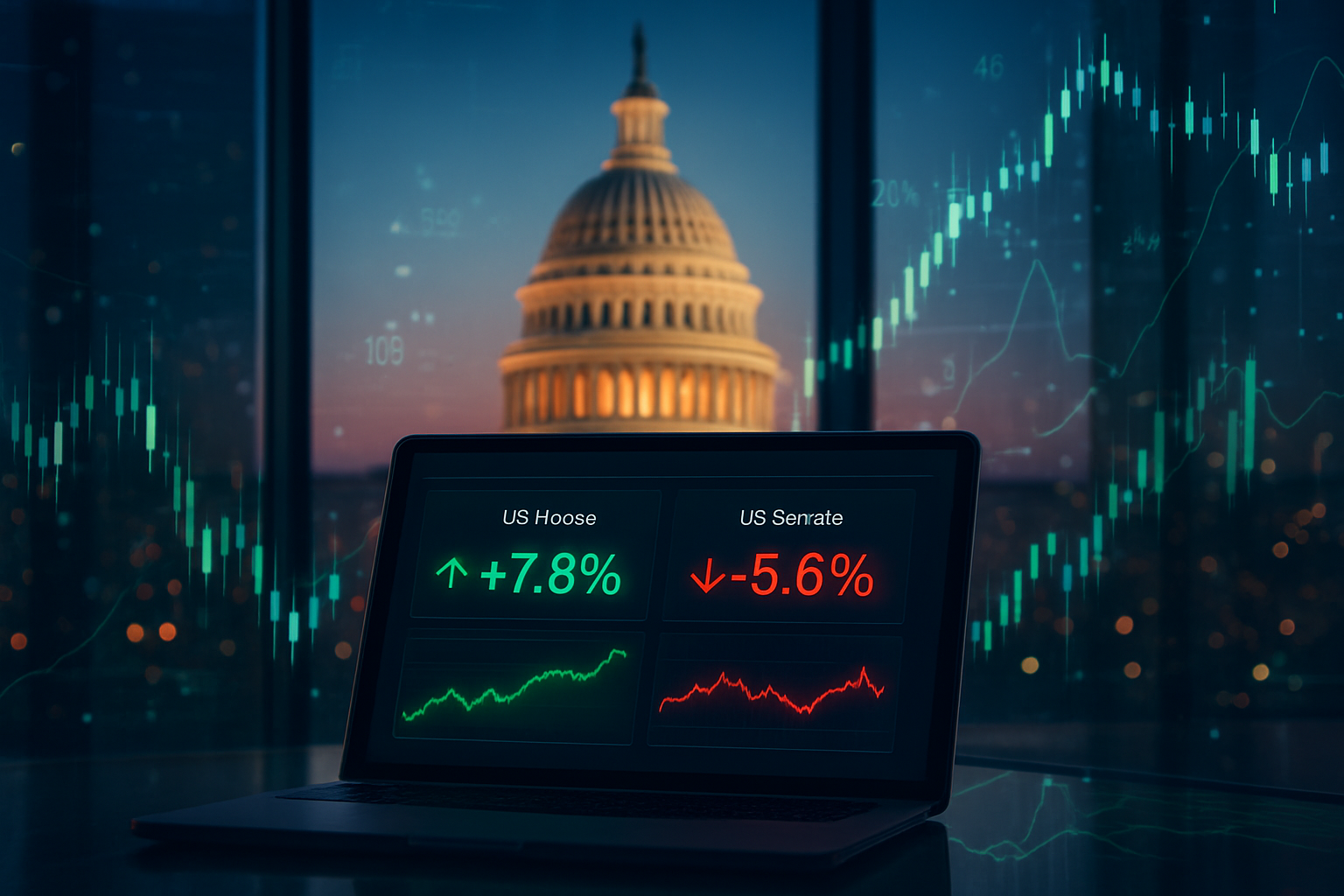
    Currently, the markets are flashing a clear signal for the November 2026 contests. PredictIt traders are pricing in a 78% probability of a Democratic House and a 65% probability of a Republican Senate, suggesting a return to divided government. This surge in activity is driven by the platform's new $3,500 individual investment limit and the total removal of the 5,000-trader cap—changes that have fundamentally altered the liquidity profile of political contracts and restored PredictIt’s status as a top-tier destination for serious political handicappers.

    The Market: What's Being Predicted

    The "New PredictIt," now operating as a fully registered Designated Contract Market (DCM) under the Aristotle Exchange, has moved beyond its humble beginnings as an academic project at Victoria University of Wellington. The platform now trades with a legal status comparable to institutional giants like Interactive Brokers Group (NASDAQ: IBKR) and the CME Group (NASDAQ: CME). For the first time, traders can take positions up to $3,500 in a single contract, a 411% increase from the previous $850 cap.

    More importantly, the removal of the 5,000-trader limit has solved the platform’s historical "liquidity desert" problem. Previously, popular markets would frequently "sell out," causing PredictIt prices to disconnect from the broader market. Today, the 2026 "Balance of Power" contracts are seeing millions of shares traded daily. The current consensus across PredictIt and its competitors shows a narrowing path for a "Trifecta" for either party, with a Democratic House/Republican Senate split trading as the most likely outcome at 45%.

    Why Traders Are Betting

    The influx of capital into PredictIt is driven by three main factors: regulatory certainty, higher limits, and its reputation for "smart money" data. By pegging the new $3,500 limit to the federal individual campaign contribution cap, PredictIt has created a psychological and financial link to the real world of political finance. Traders are no longer just "gaming" a small-cap market; they are deploying significant capital that reflects deeper political insights.

    Bettors are currently reacting to the typical midterm "pendulum effect," where the party in power (Republicans) faces headwinds in the House due to legislative gridlock and historical trends. However, the Senate map for 2026 heavily favors Republican incumbents, which explains the high 65-68% odds for a GOP hold in the upper chamber. Unlike the whale-driven volatility often seen on crypto-based platforms like Polymarket, PredictIt’s capped limit (even at $3,500) filters out massive market manipulation while still allowing for a sophisticated class of "super-forecasters" to move the needle.

    Broader Context and Implications

    The relaunch of PredictIt marks a turning point in the "Information Finance" wars. For years, PredictIt was the "Cadillac" of prediction markets—esteemed for its data but limited by its engine. Now, with the engine rebuilt by Aristotle International and oversight from the Nasdaq, Inc. (NASDAQ: NDAQ) Eqlipse Clearing technology, it is competing directly for the retail trader's attention. This shift is part of a larger trend where prediction markets are becoming mainstream financial tools, integrated into the apps of brokers like Robinhood Markets, Inc. (NASDAQ: HOOD) and backed by the clearing power of the Intercontinental Exchange (NYSE: ICE).

    The regulatory settlement that allowed this relaunch (Clarke vs. CFTC) has provided a blueprint for other platforms. By graduating from a "no-action letter" to a DCM, PredictIt has proven that prediction markets can coexist with traditional financial regulation. The real-world implication is that political campaigns and corporate strategy offices now look at PredictIt’s $3,500-limit data as more reliable than traditional polling, which has struggled with response rates and demographic weighting in recent years.

    What to Watch Next

    As we move toward the summer of 2026, keep a close eye on the "Statewide Control" markets. These are often the first to react to local scandals or shifts in economic sentiment that haven't hit the national polls yet. Additionally, the 2028 Presidential Primary markets on PredictIt are already seeing significant volume. Because the platform has abolished trader caps, these long-dated contracts are providing a much clearer picture of "who is the frontrunner" than was possible in the 2020 or 2024 cycles.

    Key dates to monitor include the June 2026 primary season. If Democrats overperform in "purple" districts, expect the 78% House odds to hit the 85-90% range, potentially triggering a sell-off in Republican-aligned equities. Conversely, any shift in the Senate odds—currently a Republican stronghold—would signal a total collapse of the GOP's 2026 defensive strategy.

    Bottom Line

    The return of PredictIt as a fully functional, high-limit exchange is a victory for data transparency and market efficiency. By positioning itself as the "Cadillac"—reliable, regulated, and academically backed—it offers a unique middle ground between the "Wild West" of uncapped crypto markets and the rigid macro-focus of traditional commodities exchanges.

    For the 2026 and 2028 cycles, the increased liquidity means that the "PredictIt Price" is once again the most important number in politics. As more retail investors migrate from platforms like Coinbase Global, Inc. (NASDAQ: COIN) into specialized political event contracts, the accuracy of these markets is likely to reach all-time highs. Whether you are a trader looking for an edge or a voter looking for the truth, the "New PredictIt" is officially the place to watch.


    This article is for informational purposes only and does not constitute financial or betting advice. Prediction market participation may be subject to legal restrictions in your jurisdiction.

    PredictStreet focuses on covering the latest developments in prediction markets.
    Visit the PredictStreet website at https://www.predictstreet.ai/.

  • The Selig Revolution: CFTC Reclaims the Prediction Market Frontier

    The Selig Revolution: CFTC Reclaims the Prediction Market Frontier

    The landscape of American financial forecasting shifted fundamentally on January 29, 2026. In a move that market participants are calling a "regulatory ceasefire," Commodity Futures Trading Commission (CFTC) Chairman Michael Selig formally withdrew the proposed ban on political and sports event contracts—a relic of the Rostin Behnam era that had throttled the industry for nearly two years. Selig’s directive doesn't just allow these markets to exist; it actively "plants the flag," asserting exclusive federal jurisdiction over event contracts and effectively daring state-level regulators to challenge the agency’s authority.

    As of February 1, 2026, the impact on the markets has been immediate and profound. Trading volumes on domestic exchanges have surged to record highs, with the 2026 Midterm Election markets now serving as the primary "information engine" for political analysts. Current odds across major platforms suggest a 76% probability of Democrats reclaiming the House, while Republicans maintain a 67% chance of holding the Senate. The "Selig Shift" has transformed prediction markets from a legal battleground into a cornerstone of the broader financial ecosystem.

    The Market: What's Being Predicted

    The focus of the trading world has centered on two massive pillars: the 2026 Midterm Elections and the impending Super Bowl LX. Following the CFTC’s policy pivot, Kalshi has seen a localized explosion in volume, processing a record $403 million on January 4 alone. The primary contract currently being traded is the "Control of Congress" parlay, which has seen its bid-ask spreads compress by nearly 20% since Selig took office, a direct result of increased market-maker confidence.

    Meanwhile, Polymarket—despite its decentralized roots—has solidified its role as a global liquidity hub, particularly for international sports and geopolitical events. The "World Cup 2026 Winner" market is already drawing tens of millions in "early-bird" liquidity, with Spain currently priced as the favorite at 18%. On the regulated side, ForecastEx—the exchange operated by Interactive Brokers (NASDAQ: IBKR)—is dominating the macro-economic space. Their "US Recession by Q1 2026" contract currently holds over 128,000 open positions, providing a real-time gauge of institutional sentiment that many argue is more accurate than traditional consensus surveys.

    Why Traders Are Betting

    The surge in activity is driven by a newfound sense of legal permanence. For years, the threat of a sudden federal ban or a patchwork of state-level "gaming" lawsuits kept institutional capital on the sidelines. Selig’s "Clear Standards" framework has changed the calculus. By categorizing event contracts as vital tools for "price discovery" and "information aggregation" rather than gambling, the CFTC has given the green light to major financial players.

    Recent activity from "whales"—large-scale traders—indicates a shift toward high-conviction information trades. For instance, a controversial $400,000 payout on Polymarket regarding the capture of a foreign head of state in early 2026 has highlighted the market’s ability to front-run traditional news cycles. Furthermore, the entry of retail giants like Robinhood (NASDAQ: HOOD), which recently acquired a 90% stake in the exchange now known as Rothera, has brought a flood of new participants who view event trading as a natural extension of their equity and crypto portfolios.

    Broader Context and Implications

    This "New Era of Regulation" represents a strategic victory for federal preemption. Selig has made it clear that the CFTC views prediction markets as commodity derivatives under the Commodity Exchange Act (CEA). This stance is designed to shield exchanges from the aggressive cease-and-desist orders issued by states like Michigan and New York in late 2025. By "planting the flag," the CFTC is centralizing oversight, ensuring that a trader in California and a trader in Florida are operating under the same set of rules.

    However, Selig’s vision is not a "Wild West" scenario. The "Clear Standards" initiative introduces rigorous anti-manipulation and anti-fraud protections, specifically targeting "insider trading" within event markets. This institutionalization is a double-edged sword: while it brings the liquidity and stability required for prediction markets to be taken seriously by policymakers, it also introduces a level of surveillance and reporting that may alienate some of the industry’s early, privacy-focused adopters.

    What to Watch Next

    The immediate focus for the market is a high-stakes federal hearing scheduled for February 12, 2026. This case will determine whether the CFTC’s assertion of federal authority can legally override state gaming bans. Traders are already betting on the outcome, with a "Federal Preemption Success" contract currently trading at 0.62—indicating a 62% market confidence that the CFTC will prevail in court.

    Furthermore, the launch of Robinhood’s proprietary exchange in Q2 2026 is expected to be a liquidity "Big Bang" for the industry. If the current regulatory trajectory holds, we may see the first-ever "Event Derivatives" ETFs filed by the end of the year, further blurring the lines between traditional finance and the prediction economy.

    Bottom Line

    The transition from Rostin Behnam’s restrictive stance to Michael Selig’s "Future-Proof" framework marks the end of the prediction market’s infancy. By embracing political and sports contracts as legitimate financial instruments, the CFTC has finally aligned its regulatory posture with the reality of the 21st-century information economy.

    Predictive markets are no longer just a niche hobby for "pundits and punters"; they have become an essential piece of national infrastructure. While challenges regarding state-level jurisdiction and market integrity remain, the "Selig Revolution" has provided the one thing every trader craves: clarity. As we move closer to the 2026 Midterms, the signals generated by these markets will likely be the most watched—and most accurate—metrics in the world.


    This article is for informational purposes only and does not constitute financial or betting advice. Prediction market participation may be subject to legal restrictions in your jurisdiction.

    PredictStreet focuses on covering the latest developments in prediction markets.
    Visit the PredictStreet website at https://www.predictstreet.ai/.

  • The Maduro Capture Windfall: How a $33,000 Bet Sparked an Insider Trading Scandal

    The Maduro Capture Windfall: How a $33,000 Bet Sparked an Insider Trading Scandal

    The predawn hours of January 3, 2026, will be remembered for one of the most audacious military operations in modern history: "Operation Absolute Resolve." As U.S. special operations forces descended on Caracas to extract Venezuelan President Nicolás Maduro, the geopolitical landscape shifted in an instant. But while the world watched the tactical execution of the raid, a different kind of drama was unfolding on the digital ledgers of Polymarket, where an anonymous trader turned a modest $32,537 into a staggering $436,760 windfall.

    The trade—executed just hours before the first F-35 fighter jets, manufactured by Lockheed Martin (NYSE: LMT), crossed into Venezuelan airspace—has become the flashpoint for a heated national debate. With the "Maduro Out of Office" contract spiking from a mere 7% probability to near-certainty in a matter of minutes, the "Burdensome-Mix" trader’s suspiciously well-timed bet has prompted federal investigations, new legislation, and a fundamental questioning of whether prediction markets are a "truth machine" or a playground for insiders with access to classified military intelligence.

    The Market: What's Being Predicted

    The primary vehicle for this financial phenomenon was a Polymarket contract titled "Will Nicolás Maduro be out of power by January 31, 2026?" Throughout late 2025, the market had been relatively stagnant, reflecting a skepticism that any U.S. administration would risk a direct kinetic intervention. For months, the odds hovered between 3% and 10%, with trading volumes picking up only slightly as diplomatic tensions rose.

    By the time the operation was launched, the total volume across Maduro-related contracts had swelled to an unprecedented $64.3 million. Polymarket commanded the lion's share of this liquidity, hosting $56.6 million in total wagers. Other platforms, including Kalshi and Interactive Brokers (NASDAQ: IBKR), also saw significant action, as retail and institutional traders sought to hedge against the potential for a localized energy crisis or regional instability.

    The resolution criteria for the Polymarket contract were stringent: Maduro had to be removed from the presidency or effectively unable to exercise power by the end of the month. When news broke at 4:30 a.m. EST that Maduro was in custody and being transported to New York to face narco-terrorism charges, the contract hit its ceiling. For the "Burdensome-Mix" trader, whose final "Yes" shares were purchased at a deep discount, the payout was nearly 13 times their initial investment.

    Why Traders Are Betting

    The surge in betting activity wasn't just driven by geopolitical enthusiasts. In the weeks leading up to the raid, sophisticated traders were monitoring "on-chain" activity and physical movement of military assets. Lockheed Martin (NYSE: LMT) and other defense contractors had seen an uptick in maintenance contracts and logistics deployments, a signal that many "whale" accounts on prediction markets interpreted as a precursor to action.

    However, the "Burdensome-Mix" trade was different. Unlike the gradual accumulation of positions seen by institutional hedgers on platforms like Interactive Brokers (NASDAQ: IBKR), this specific user placed a concentrated series of bets in a six-hour window before the operation was public knowledge. This "information asymmetry" is what separates a smart macro play from a suspected leak. Analysts noted that the odds shifted significantly enough to suggest that someone, somewhere, knew the "go-order" had been given.

    Moreover, the integration of prediction market data into mainstream platforms has changed the betting psychology. Alphabet (NASDAQ: GOOGL) and Meta (NASDAQ: META) have recently begun embedding real-time "Probability Widgets" into search results and social feeds. This democratization of data meant that as soon as the "Burdensome-Mix" whale moved the needle, thousands of retail traders on Robinhood (NASDAQ: HOOD) followed suit, creating a feedback loop that accelerated the price movement before the first official press release from the White House.

    Broader Context and Implications

    The Maduro windfall has effectively ended the "wild west" era of prediction markets. On January 9, 2026, Representative Ritchie Torres (D-NY) introduced the Public Integrity in Financial Prediction Markets Act, a bill designed to extend the insider-trading prohibitions of the STOCK Act to event contracts. The logic is clear: if it is illegal for a Senator to trade stocks based on a classified briefing, it should be equally illegal to bet on the outcome of a military raid they helped oversee.

    The Commodity Futures Trading Commission (CFTC), under the leadership of Chairman Michael S. Selig, has taken a nuanced stance. Rather than banning political contracts—a move the agency considered in 2024—Selig has opted to "plant the flag" as the definitive regulator. The agency is now drafting standards for "market integrity" that would require platforms like Polymarket to implement more robust Know Your Customer (KYC) protocols and report "suspiciously timed" trades directly to federal investigators.

    The event has also highlighted a growing rift in how these platforms settle disputes. While the "Maduro Out" contracts were paid out smoothly, a secondary contract on "U.S. Invasion of Venezuela" remains in a $10.5 million legal limbo. Polymarket’s decentralized oracle initially ruled that a "snatch-and-extract" capture did not qualify as an "invasion," leading to an outcry from traders who argued the spirit of the bet was fulfilled. This dispute highlights the "contract risk" that remains a major hurdle for prediction markets seeking institutional legitimacy.

    What to Watch Next

    The immediate focus for the markets now shifts to the legal proceedings in New York. Prediction markets are already active on whether Maduro will be convicted before the end of 2026 and whether a new Venezuelan election will be held by the fourth quarter. These markets are currently trading at a 65% probability for a conviction, though legal experts warn that the discovery process could be lengthy.

    Investors should also keep a close eye on the legislative progress of the Torres Bill. If it passes, we could see a massive "de-risking" event where government-adjacent traders exit the markets, potentially leading to a temporary drop in liquidity across high-stakes political contracts. Furthermore, the CFTC’s upcoming "integrity standards" will likely dictate whether mainstream brokers like Robinhood (NASDAQ: HOOD) continue to expand their event contract offerings or pull back due to compliance costs.

    Finally, the resolution of the $10.5 million "Invasion" dispute on Polymarket will be a landmark moment for the industry. If the platform's decentralized governance cannot reach a consensus that satisfies the majority of participants, it may accelerate the migration of serious capital toward more traditionally regulated exchanges like Kalshi or those offered by Interactive Brokers (NASDAQ: IBKR).

    Bottom Line

    The "Maduro Capture" windfall is a double-edged sword for the prediction market industry. On one hand, the markets successfully "predicted" the event by showing a massive, albeit suspicious, move in probability hours before the media could report it. This reinforces the idea of prediction markets as the world’s most efficient "truth machine," aggregating information from those with the highest conviction.

    On the other hand, the $436,000 profit for a single anonymous user has laid bare the vulnerabilities of these platforms to insider trading. If prediction markets are to become a permanent fixture of the global financial system—used by companies like Lockheed Martin (NYSE: LMT) to gauge geopolitical risk or by Alphabet (NASDAQ: GOOGL) to verify news—they must survive the regulatory firestorm currently brewing in Washington.

    As Maduro awaits trial, the prediction market for his ultimate fate remains the most liquid geopolitical contract in history. Whether these markets represent the future of intelligence or a new frontier for corruption remains the $64 million question.


    This article is for informational purposes only and does not constitute financial or betting advice. Prediction market participation may be subject to legal restrictions in your jurisdiction.

    PredictStreet focuses on covering the latest developments in prediction markets. Visit the PredictStreet website at https://www.predictstreet.ai/.
  • The California End-Run: How Kalshi is Disrupting the Super Bowl LX Betting Map

    The California End-Run: How Kalshi is Disrupting the Super Bowl LX Betting Map

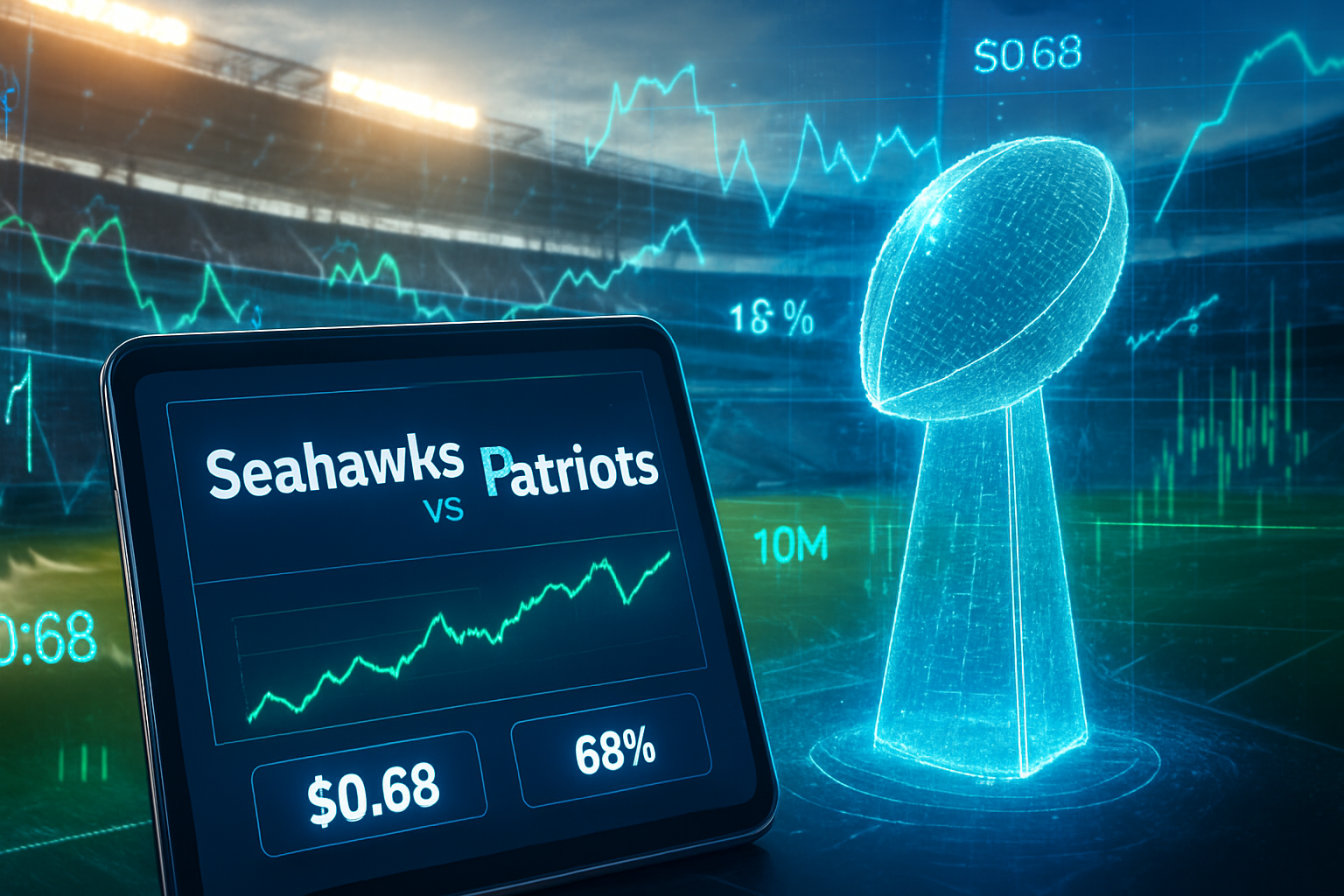
    As the Seattle Seahawks and New England Patriots prepare to take the field for Super Bowl LX at Levi’s Stadium in Santa Clara, California, a quiet financial revolution is unfolding in the stands and across the Golden State. Despite California’s long-standing and contentious ban on traditional sports betting, residents are currently pouring millions of dollars into a "legal loophole" that the state’s powerful gambling interests never saw coming.

    The focal point of this activity is Kalshi, a federally regulated prediction market that has effectively bypassed state prohibitions by offering "event contracts" rather than traditional wagers. As of February 1, 2026, market data shows the Seahawks favored with a 68% probability of victory, with shares trading at approximately $0.68. This market isn't just a niche hobby; it has become a massive financial engine, signaling a paradigm shift in how Americans interact with sporting outcomes in states where sportsbooks remain illegal.

    The Market: What's Being Predicted

    The headline event on Kalshi is the "Winner of Super Bowl LX" contract, which has seen its liquidity explode over the final weeks of the postseason. Trading volume for the Seahawks vs. Patriots matchup has officially surpassed $150 million, a staggering 450% increase from the volume recorded during Super Bowl LIX just one year ago. Unlike traditional sportsbooks like DraftKings Inc. (NASDAQ: DKNG) or Flutter Entertainment plc (NYSE: FLUT)—which are geofenced out of California—Kalshi’s status as a Designated Contract Market (DCM) allows it to operate under the oversight of the Commodity Futures Trading Commission (CFTC).

    The market functions as a binary "Yes/No" proposition: will the Seattle Seahawks win? If a trader buys a "Yes" share at $0.68 and the Seahawks win, the contract pays out $1.00. If they lose, the contract expires at $0.00. Beyond the game-winner, the platform has expanded into hyper-specific prop markets, including:

    • Super Bowl MVP: Significant volume has shifted toward Seahawks quarterback Sam Darnold and Patriots rookie sensation Drake Maye.
    • Halftime Show Logistics: Markets are currently trading on whether Bad Bunny will perform specific hits or bring out unannounced guests.
    • Economic Impact: Contracts predicting the local tax revenue generated for the city of Santa Clara and the stock performance of stadium sponsor Levi Strauss & Co. (NYSE: LEVI) on the Monday following the game.

    Why Traders Are Betting

    The surge in betting activity is driven by a unique confluence of fan enthusiasm and sophisticated hedging strategies. Because these are technically "derivatives" rather than "bets," they have attracted a different class of market participant. Institutional traders and "whales" are using the Seahawks-Patriots market to hedge against economic shifts related to the NFL’s $13 billion annual revenue stream.

    The current odds—giving the Seahawks a clear edge—are being influenced by Seattle’s dominant defensive metrics and the "home-coast advantage." However, the Patriots' odds saw a 5% jump last week following news of a minor injury to Seattle’s starting left tackle. For Californians, the appeal is simpler: Kalshi represents the only legal, regulated avenue to have "skin in the game" without turning to offshore black-market sites or driving across the border to Arizona or Nevada. This "gray window" has turned prediction markets into a primary source of truth for real-time sentiment, often reacting faster to injury news than traditional sports media outlets.

    Broader Context and Implications

    The "California Loophole" is the result of a landmark shift in federal regulatory policy. Historically, the CFTC fought to keep sports out of prediction markets, but the tide turned in early 2026 under the leadership of newly appointed CFTC Chairman Michael Selig. Selig’s decision to withdraw proposed bans on sports event contracts has effectively signaled a "hands-off" approach from the federal government, arguing that the Commodity Exchange Act (CEA) grants the CFTC exclusive jurisdiction that preempts state gambling laws.

    This has infuriated both state lawmakers and the NFL. The league, which has long guarded its intellectual property and integrity standards, has officially banned Kalshi and its competitor Polymarket from purchasing ad space during the Super Bowl LX broadcast on Comcast Corporation's (NASDAQ: CMCSA) NBC. Representative Salud Carbajal (D-CA) has been a vocal critic, arguing that these markets undermine California's sovereignty and lack the consumer protections mandated by state-regulated gaming commissions. Furthermore, California’s influential gaming tribes have filed multiple lawsuits, alleging that Kalshi is infringing on their exclusive rights to offer gaming in the state—a legal battle that is currently winding its way through the appellate courts.

    What to Watch Next

    All eyes are now on the 9th Circuit Court of Appeals, which is scheduled to hear a pivotal case regarding "federal preemption" in April 2026. This ruling will determine if California has the right to shut down Kalshi's operations despite its federal DCM status. If the court rules in favor of the state, the $150 million Seahawks-Patriots market could be the last of its kind in California. If it rules for Kalshi, it could force California to finally legalize and tax traditional sports betting to compete with the "federal loophole."

    In the immediate term, traders should monitor the "Super Bowl MVP" markets. Historically, these markets are highly volatile in the 48 hours preceding kickoff as "insider" sentiment regarding game plans begins to leak. Additionally, any late-breaking news regarding the Levi’s Stadium turf conditions—a recurring theme in Santa Clara—could cause a 2-3% swing in the win-probability contracts.

    Bottom Line

    The $150 million pouring into the Seahawks vs. Patriots market is more than just a series of wagers; it is a live-fire test of the American regulatory framework. Kalshi has successfully utilized its federal status to crack open one of the most protected markets in the world, proving that where there is a demand for forecasting, capital will find a way to flow.

    While the NFL and California lawmakers remain in a defensive crouch, the sheer volume of participation suggests that the public has already voted with their wallets. Whether Super Bowl LX ends with a Seahawks victory or a Patriots upset, the real winner may be the prediction market industry, which has finally moved from the fringes of political "election betting" into the heart of the American cultural mainstream.


    This article is for informational purposes only and does not constitute financial or betting advice. Prediction market participation may be subject to legal restrictions in your jurisdiction.

    PredictStreet focuses on covering the latest developments in prediction markets.
    Visit the PredictStreet website at https://www.predictstreet.ai/.
  • State Gaming Boards vs. Silicon Valley: The High-Stakes Legal Battle Threatening Kalshi’s $200 Billion Ambitions

    State Gaming Boards vs. Silicon Valley: The High-Stakes Legal Battle Threatening Kalshi’s $200 Billion Ambitions

    As of January 30, 2026, the meteoric rise of prediction markets faces its most existential threat yet: a "jurisdictional civil war" between federal regulators and state gaming authorities. While platforms like Kalshi have successfully argued their case before the Commodity Futures Trading Commission (CFTC) and federal courts, a new wave of state-level cease-and-desist orders is threatening to fragment the market. The core of the dispute centers on whether a contract predicting a sports outcome is a sophisticated financial derivative or simply an unlicensed bet.

    Market participants are currently pricing in a high degree of uncertainty regarding Kalshi's geographic reach. While the platform processed a staggering $23.8 billion in notional volume in 2025, recent legal setbacks in Massachusetts and looming hearings in Connecticut have forced traders to consider a future where prediction markets are geofenced state-by-state. This "regulatory design problem" has become the primary driver of market sentiment, as the industry waits to see if federal preemption will shield these exchanges from the heavy hand of state gambling commissions.

    The Market: What's Being Predicted

    The current focus of the prediction market community isn't just on the outcomes of the events themselves, but on the survival of the markets that host them. On Kalshi and competing platforms like Polymarket, the most liquid contracts currently involve high-stakes sports events, including the upcoming Super Bowl LX and the 2026 NBA playoffs. For instance, the market for "Will the Kansas City Chiefs win Super Bowl LX?" is seeing massive liquidity, with shares trading at $0.34 (implying a 34% probability), despite the legal clouds gathering over the platform's right to host such contracts.

    Kalshi, which operates as a CFTC-regulated Designated Contract Market (DCM), has seen its weekly trading volume surge to over $2.3 billion this month. However, the platform's liquidity is increasingly bifurcated by geography. Following a preliminary injunction in Massachusetts on January 20, 2026, and a cease-and-desist in Tennessee, traders in those states have been sidelined. This has created a "phantom liquidity" scenario where national price discovery is hampered by the sudden exit of users from key markets, leading to wider spreads on certain state-contested contracts.

    The resolution criteria for these legal battles are clear: a federal court hearing in Connecticut scheduled for February 12, 2026, is expected to determine whether the "federal preemption" defense holds water. If Kalshi loses this round, the platform may be forced to exit up to 15 states by the end of the year, a move that would drastically alter the volume outlook for 2026.

    Why Traders Are Betting

    Traders are flocking to Kalshi’s sports-event contracts primarily because of the "vig" gap. Traditional sportsbooks, managed by giants like DraftKings (NASDAQ: DKNG) and Flutter Entertainment (NYSE: FLUT), typically charge a significant house edge, often between 5% and 10%. In contrast, Kalshi’s peer-to-peer exchange model allows for much tighter spreads, often effectively reducing the cost of a "bet" to a fraction of a percent. This has attracted high-frequency traders and institutional "whales" who view these contracts as efficient hedging tools rather than mere gambling.

    The narrative driving current positions is one of "hedging vs. consumption." Proponents argue that a contract on the price of a touchdown is no different than a contract on the price of corn; both provide a "truth signal" and allow parties to manage risk. For example, a local business in a host city might buy "No" contracts on a home team's victory to hedge against the loss of local economic activity that follows a playoff exit. This sophisticated financial logic is what traders are betting will eventually win over federal judges.

    However, the opposition is equally motivated. State gaming boards in Nevada and Connecticut argue that Kalshi is exploiting a "regulatory design problem." By structuring bets as $0 or $1 binary options, Kalshi is accused of "engineering preemption"—deliberately designing gambling products to look like commodities to bypass state taxes and consumer protection laws. Large positions are being taken by speculators who believe a "federal legislative solution" is the only way out, betting that the current administration will favor a "future-proof" regulatory framework for fintech.

    Broader Context and Implications

    This conflict highlights a significant shift in the prediction market landscape. In 2024 and 2025, the industry's biggest hurdle was scaling user demand; in 2026, the problem is one of legal architecture. If states like Massachusetts and Nevada succeed in classifying these markets as "gaming," the regulatory burden could become insurmountable. Traditional sportsbooks are currently taxed at rates as high as 51% in some jurisdictions, a cost that would destroy the low-margin exchange model Kalshi relies on.

    The real-world implications are profound. Prediction markets have historically been more accurate than polls or pundits, offering real-time data on everything from inflation to election outcomes. If these markets are geofenced or shut down, the world loses a critical "truth engine." Furthermore, the entry of traditional finance players like Robinhood (NASDAQ: HOOD) into the space—following their own legal skirmishes in Connecticut—suggests that the "financialization of everything" is a trend that state regulators may be unable to stop, only delay.

    Historically, the CFTC has had a complicated relationship with event contracts. While the agency under Chairman Michael Selig has signaled a more permissive approach, the "Gaming Clause" of the Commodity Exchange Act remains a potent weapon for states. The outcome of this struggle will decide if the United States maintains a unified national market for information or a fragmented patchwork of state-regulated betting shops.

    What to Watch Next

    The immediate milestone for every trader in this space is February 12, 2026. The hearing in the Connecticut Department of Consumer Protection case will be the first major test of whether the federal pause on state enforcement will hold. A victory for Kalshi there would likely lead to a "legal rally," where liquidity returns to the platform as traders gain confidence in its nationwide longevity. Conversely, a defeat would likely trigger a wave of geofencing across the Northeast.

    Additionally, keep a close eye on the "Massachusetts model." If other states adopt the logic that event contracts are "substantively indistinguishable" from wagering, we may see a mass exodus of prediction market startups to offshore jurisdictions or decentralized protocols. Investors should also watch for any movement from the Tennessee Sports Wagering Council, which has ordered a cease-operations deadline for the end of this month.

    Finally, the total notional volume projections for 2026—estimated by analysts at Piper Sandler to reach $222.5 billion—hinge entirely on these court dates. Any sign of a Supreme Court petition regarding federal preemption could send shockwaves through the industry, as it would represent the final word on the legality of the "regulatory design" Kalshi has pioneered.

    Bottom Line

    The battle over Kalshi’s sports-event contracts is about more than just football or basketball; it is a fundamental test of the United States' regulatory agility in the face of financial innovation. Kalshi has proven that there is a massive, multi-billion dollar appetite for low-cost, transparent event contracts. However, the "regulatory design problem" has created a friction point where state-level police powers meet federal commodity oversight.

    As of early 2026, the market remains in a state of "cautious expansion." While the volume numbers are record-breaking, the legal foundation is at its most precarious. For prediction markets to fulfill their potential as a global utility for price discovery, they must first survive a domestic gauntlet of gaming regulators who see them not as the future of finance, but as a threat to the established order of the betting industry.

    The next few months will determine if Kalshi remains a nationwide powerhouse or becomes a niche platform serving only a handful of "permissive" states. For now, the odds favor a prolonged legal stalemate, with the ultimate resolution likely requiring an act of Congress to finally bridge the gap between "hedging" and "gaming."


    This article is for informational purposes only and does not constitute financial or betting advice. Prediction market participation may be subject to legal restrictions in your jurisdiction.

    PredictStreet focuses on covering the latest developments in prediction markets.
    Visit the PredictStreet website at https://www.predictstreet.ai/.
  • The $100 Million Play: How Kalshi’s Regulated Sports Markets are Rewriting the Playbook for Institutional Bettors

    The $100 Million Play: How Kalshi’s Regulated Sports Markets are Rewriting the Playbook for Institutional Bettors

    In the week following the NCAA Football Championship, the dust is settling on more than just the gridiron. On January 20, 2026, the championship game did more than crown a college football king; it solidified Kalshi as a financial juggernaut. The platform recorded a staggering $111 million in trading volume for the single event, a figure that signals a tectonic shift in how Americans—and increasingly, Wall Street—engage with sports.

    Currently, the markets for the upcoming Super Bowl LX are already seeing nearly $150 million in open interest, with odds fluctuating as professional trading desks move multi-million dollar positions. This is no longer just "betting" in the traditional sense; it is the financialization of sports outcomes through federally regulated event contracts. Driven by a landmark regulatory victory and integration into major retail brokerages, Kalshi has transformed sports results into a legitimate asset class, attracting institutional-scale liquidity that was previously confined to offshore exchanges or private bookmakers.

    The Market: What's Being Predicted

    The core of Kalshi’s explosion lies in its "event contracts," which are binary options that pay out $1 if an event occurs and $0 if it does not. Unlike traditional sportsbooks where you "place a bet" against the house, Kalshi operates a peer-to-peer exchange where traders buy and sell contracts from one another. In the lead-up to the 2025-2026 NFL playoffs, this model allowed for unprecedented liquidity. For instance, the final day of the NFL regular season on January 4, 2026, saw a single-day volume record of $403 million.

    While Polymarket continues to dominate the decentralized, crypto-native space, Kalshi has carved out a massive lead in the regulated U.S. domestic market. By the third week of January 2026, total trading volume for the NFL playoffs reached nearly $2 billion. The resolution criteria for these markets are strictly defined by official league data, ensuring that contracts settle instantly upon the final whistle. This transparency has allowed Kalshi to list complex derivatives, including point spreads and player performance metrics, all under the watchful eye of federal regulators.

    Why Traders Are Betting

    The migration of capital toward Kalshi is driven by one primary factor: regulatory certainty. Following the 2024 court victory in KalshiEX LLC v. CFTC, and the subsequent decision by the Commodity Futures Trading Commission (CFTC) to drop its appeal in May 2025, Kalshi’s status as a Designated Contract Market (DCM) became unassailable. This regulatory "seal of approval" has opened the floodgates for institutional participants.

    Unlike traditional sportsbooks—which are notorious for limiting or banning "sharp" bettors who win too consistently—Kalshi’s exchange model welcomes winners. Large-scale proprietary trading firms and hedge funds now treat touchdowns and game wins as "Zero Days to Expiration" (0DTE) derivatives. They use these contracts to hedge macro risks or to capitalize on high-frequency data models that traditional books cannot accommodate. Furthermore, the integration of Kalshi markets into platforms like Robinhood (NASDAQ: HOOD) and Coinbase (NASDAQ: COIN) has brought institutional-level liquidity into the hands of over 24 million retail users, creating a deeper, more stable market than any sportsbook could offer.

    Broader Context and Implications

    The success of Kalshi represents a pivotal moment in the "Prediction Market vs. Gambling" debate. By framing sports outcomes as event contracts under the Commodity Exchange Act (CEA), Kalshi has managed a feat that traditional sports betting apps like DraftKings or FanDuel could not: federal preemption. Recent rulings in federal courts have suggested that the CEA preempts state-level gaming restrictions, allowing Kalshi to legally offer sports trading in all 50 U.S. states, including major markets like California and Texas where traditional online sports betting remains prohibited.

    This shift reveals a growing public appetite for transparent, low-fee alternatives to the "vig-heavy" model of traditional gambling. It also highlights a change in public sentiment; sports are increasingly viewed through the lens of data and probability rather than just loyalty and luck. However, this growth has not come without friction. The NCAA has voiced significant concerns regarding the integrity of college sports, particularly around "player prop" markets. In response, Kalshi has had to balance its aggressive expansion with "market design" concessions, such as pulling controversial transfer portal markets in late 2025 to maintain its standing with federal regulators.

    What to Watch Next

    All eyes are now turned toward Super Bowl LX on February 8, 2026. Early trading suggests the championship winner market could surpass $300 million in volume before kickoff. This will be the ultimate test of Kalshi’s infrastructure and its ability to handle "Black Swan" events or massive late-game volatility without the "suspension of play" issues that often plague traditional sportsbooks during high-volume periods.

    Beyond the Super Bowl, the next major milestone is March Madness 2026. Following the $350 million trading week in mid-January for NCAA basketball, analysts expect the tournament to break all previous records for prediction market engagement. Traders will be watching closely for any new regulatory guidance from the CFTC regarding "micro-trading" or live in-game contracts, which represent the next frontier for the platform.

    Bottom Line

    Kalshi’s rise marks the end of the era where sports betting was a sidelined, "sin-taxed" activity and the beginning of its life as a legitimate financial instrument. The $111 million NCAA Championship volume is not an outlier; it is the new baseline for a world where sports data is as tradable as oil or gold.

    For the broader prediction market ecosystem, Kalshi’s success proves that regulation, rather than being a hindrance, can be a massive catalyst for liquidity when paired with a superior exchange model. As institutional capital continues to pour into these markets, the line between "trader" and "fan" will continue to blur, forever changing the landscape of both Wall Street and the stadium.


    This article is for informational purposes only and does not constitute financial or betting advice. Prediction market participation may be subject to legal restrictions in your jurisdiction.

    PredictStreet focuses on covering the latest developments in prediction markets.
    Visit the PredictStreet website at https://www.predictstreet.ai/.