
Tag: Big Tech

  • The Death of the Poll: How Google and Meta are Turning Prediction Markets into the Global Truth Engine

    The Death of the Poll: How Google and Meta are Turning Prediction Markets into the Global Truth Engine

    As of February 6, 2026, the digital landscape has undergone a tectonic shift. Once relegated to the fringes of the internet and dismissed as "speculative casinos," prediction markets have officially entered the mainstream. This transformation is crystallized by the recent, sweeping policy updates from Alphabet (NASDAQ: GOOGL) and Meta (NASDAQ: META), which have moved to treat prediction markets not as gambling, but as vital financial and information tools.

    The current probability of prediction markets becoming the primary source for real-time news verification—a concept now widely known as "Information Finance" or InfoFi—sits at an all-time high. Markets tracking the efficacy of traditional polling versus prediction market accuracy for the upcoming 2026 U.S. Midterms show a staggering 85% confidence level that markets will outperform traditional data sets. This surge in interest is driven by a series of regulatory victories and a fundamental change in how the world's largest advertising platforms categorize "event-based" trading.

    The Market: What’s Being Predicted

    The "market" for prediction markets itself has exploded. Leading platforms like Kalshi and Polymarket are no longer niche startups; they are billion-dollar infrastructure plays. In early 2026, Kalshi reached an estimated valuation of $11 billion, while Polymarket, following its successful U.S. pivot, is trailing closely at $9.5 billion. The sheer volume of trade is the most telling metric: industry analysts project notional trading volume for event contracts to reach between $120 billion and $150 billion by the end of this year.

    This growth is being funneled through highly visible integrations. Google has recently embedded "Probability Widgets" directly into Google Finance and Search results. Users searching for "Fed interest rate hike" or "2026 World Cup winner" are now presented with a live odds-based widget sourced from CFTC-regulated exchanges. Meanwhile, Robinhood (NASDAQ: HOOD) has fully integrated election and economic contracts into its primary retail app, making "trading the news" as accessible as buying a fractional share of an ETF.

    The key resolution criteria for this shift rest on the "mainstreaming" of these platforms. When Google updated its ads policy on January 21, 2026, it specifically opened the gates for Commodity Futures Trading Commission (CFTC)-authorized markets to run search ads. This move ended a decade of "shadow-banning" for the industry, effectively legitimizing prediction markets as regulated financial instruments rather than offshore betting sites.

    Why Traders Are Betting

    The primary driver for the current betting frenzy is the proven accuracy of these markets during the 2024 election cycle. While traditional polls were mired in margin-of-error debates, prediction markets provided a stable, real-time barometer of voter sentiment that correctly signaled key pivots weeks in advance. Traders aren't just betting on outcomes; they are betting on the superiority of the mechanism.

    Recent movements have been fueled by the concept of "Information Finance," a term popularized by thinkers like Vitalik Buterin. The logic is simple: when people put their money where their mouth is, the resulting data is "correct by construction." This has led to the rise of institutional "alpha seekers"—hedge funds and market makers—who now provide deep liquidity to these markets. They treat event contracts as legitimate hedges against geopolitical and economic risks, such as sudden shifts in trade policy or central bank decisions.

    Furthermore, the introduction of interactive "Truth Widgets" on Meta platforms like Facebook and Instagram has created a new class of "social predictors." Meta’s pilot program allows users to see real-time market odds alongside controversial news stories. This serves as a market-based counter-narrative to misinformation, shifting the public perception from "gambling for profit" to "participating in truth discovery."

    Broader Context and Implications

    The mainstreaming of InfoFi represents a massive regulatory and cultural pivot. The 2024 landmark legal victory of Kalshi over the CFTC acted as a catalyst, stripping the agency of its power to unilaterally ban political event contracts. Under the leadership of the current CFTC Chairman, Michael Selig, the agency has performed a "Regulatory Reset," withdrawing previous bans and asserting exclusive federal jurisdiction over these markets. This has effectively pre-empted the patchwork of state-level gambling laws that previously stifled growth.

    This shift reveals a growing public hunger for objective truth in an era of AI-generated content and fragmented media. Prediction markets offer a decentralized, incentive-aligned alternative to the "expert class." Historically, these markets have shown a remarkable ability to process complex information faster than traditional newsrooms, accurately predicting everything from the resolution of the Hollywood strikes to the exact timing of tech layoffs.

    However, the "InfoFi" revolution is not without friction. Some platforms, including X (formerly Twitter), have faced challenges with "market spam"—automated accounts designed to manipulate odds or farm rewards. This has led to a technological arms race, where platforms are deploying advanced verification and anti-manipulation algorithms to ensure that the market signal remains pure.

    What to Watch Next

    The most immediate milestone to monitor is the full-scale rollout of Meta’s prediction widgets across its global news feeds. If successful, this will integrate market data into the daily social experience of billions, potentially making "checking the odds" as common as checking the weather. Additionally, the 2026 FIFA World Cup, hosted in North America, is expected to be the largest non-political event in prediction market history, providing a massive liquidity test for platforms like DraftKings (NASDAQ: DKNG) and Fanatics, which are increasingly eyeing the event-contract space.

    Investors should also watch for the potential launch of a "Prediction Market ETF." With the industry's valuation soaring, rumors of a structured product that allows investors to gain exposure to a basket of event-contract platforms are intensifying. The regulatory path for such a product seems clearer now than ever before, following the CFTC’s shift toward a pro-innovation stance.

    Bottom Line

    The mainstreaming of prediction markets marks the end of the "speculative casino" era and the beginning of the "Information Finance" age. By allowing these markets to advertise and integrating their data into core products, Alphabet and Meta have effectively deputized prediction markets as the internet’s "Source of Truth." This is not just about betting on the future; it is about creating a more accurate, incentive-driven way to understand the present.

    As we move deeper into 2026, the distinction between a "trader" and a "news consumer" is blurring. In a world where information is the most valuable commodity, the platforms that can most accurately price that information are the ones that will win. Prediction markets have evolved from a niche hobby into the foundational infrastructure of the modern information economy, and the "Big Tech" seal of approval is the final hurdle they needed to clear.


    This article is for informational purposes only and does not constitute financial or betting advice. Prediction market participation may be subject to legal restrictions in your jurisdiction.

    PredictStreet focuses on covering the latest developments in prediction markets.
    Visit the PredictStreet website at https://www.predictstreet.ai/.
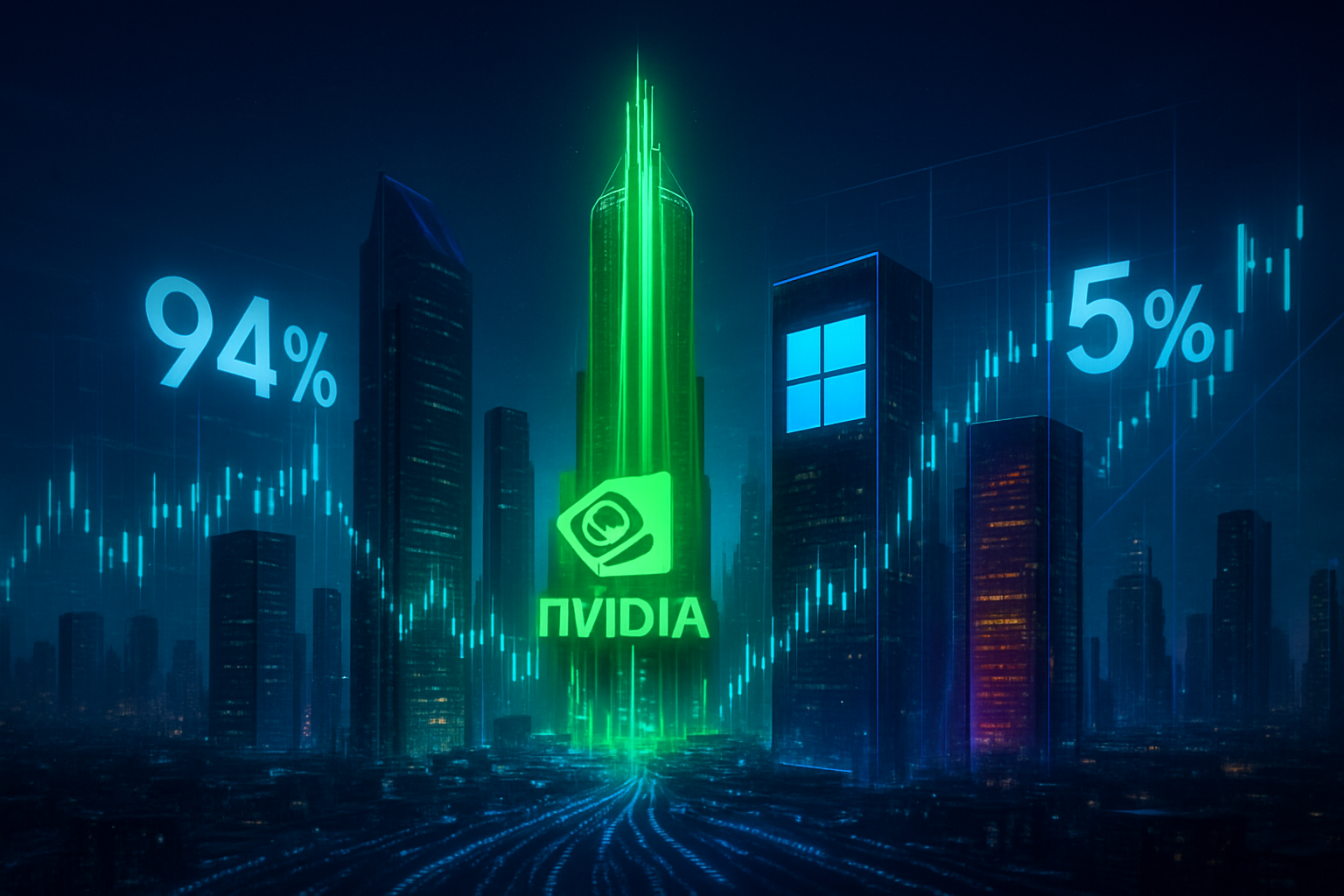
  • Nvidia’s Crown on the Line: Polymarket Traders Bet $10M on the World’s Most Valuable Company Race

    Nvidia’s Crown on the Line: Polymarket Traders Bet $10M on the World’s Most Valuable Company Race

    As the first month of 2026 reaches its crescendo, a high-stakes financial battle is playing out not just on the trading floors of Wall Street, but in the digital arenas of prediction markets. On Polymarket, the world’s largest decentralized prediction platform, a market titled "Largest Company by Market Cap at end of January?" has surpassed $10 million in trading volume. Traders are putting millions on the line to forecast whether Nvidia (NASDAQ: NVDA) can maintain its status as the world’s most valuable company through the end of the month.

    Currently, the odds are heavily skewed in favor of the semiconductor giant, with "Yes" shares for Nvidia trading at roughly 94 cents—implying a 94% probability of dominance. Despite the commanding lead, the market has seen a flurry of activity as competitors like Alphabet Inc. (NASDAQ: GOOGL) surge in value, creating a rare window of volatility that has captured the attention of both retail speculators and institutional hedgers.

    The Market: What's Being Predicted

    The specific market on Polymarket asks a straightforward but high-consequence question: Which company will have the highest market capitalization as of the close of business on January 31, 2026? While the contract includes options for perennial heavyweights like Apple Inc. (NASDAQ: AAPL) and Microsoft Corp. (NASDAQ: MSFT), the primary action is centered on Nvidia’s ability to defend its title.

    As of January 19, 2026, the market caps stand in a hierarchy that would have seemed unthinkable just two years ago:

    • Nvidia (NVDA): ~$4.55 Trillion (94% odds)
    • Alphabet (GOOGL): ~$4.02 Trillion (5% odds)
    • Apple (AAPL): ~$3.79 Trillion (<1% odds)
    • Microsoft (MSFT): ~$3.42 Trillion (<1% odds)

    The liquidity in this market is exceptionally high for a short-term corporate event, with over $10.2 million in total volume. Resolution is tied to verified closing data from major financial aggregators, such as CompaniesMarketCap or Bloomberg. The market has seen significant shifts over the last two weeks; earlier in January, Alphabet’s odds were virtually non-existent, but a sudden rally sparked by a landmark AI integration deal saw "Yes" shares for Google’s parent company spike briefly to 15% before settling.

    Why Traders Are Betting

    The primary driver for the current betting frenzy is the stark contrast between Nvidia’s stable trajectory and the upcoming "Magnificent Seven" earnings gauntlet. Analysts from firms like Wolfe Research remain aggressively bullish on Nvidia, citing the transition to the "Rubin" chip architecture as a catalyst that could push the stock toward a $6 trillion valuation by late 2026. However, prediction market traders are focused on a much tighter window.

    The "whale" activity in this market suggests a sophisticated hedging strategy. Because Nvidia is not scheduled to report its own earnings until February 25, 2026, its market cap is perceived as less susceptible to a sudden idiosyncratic crash in the next 12 days. Conversely, Microsoft and Apple are both slated to report earnings on January 28 and January 29, respectively.

    "Traders are essentially betting on the 'earnings gap,'" says one high-volume Polymarket participant. "If Microsoft or Apple were to report a massive beat, they could theoretically close a $500 billion gap in a single session. But at a 94% probability, the market is signaling that Nvidia’s $700 billion lead over Apple is an insurmountable 'moat' for the month of January."

    Broader Context and Implications

    This $10 million market is a microcosm of a larger trend: the "financialization" of market sentiment. Traditional analyst predictions often focus on 12-month price targets and fundamental ratios, which can be slow to react to daily momentum. Prediction markets, however, provide a real-time "probability scoreboard" that incorporates macro risks, technical levels, and even geopolitical rumors.

    The rise of Alphabet to the #2 spot, overtaking Apple earlier this month, was reflected in Polymarket odds hours before many traditional brokerages updated their morning notes. This reveals a "wisdom of the crowd" effect where prediction markets act as a leading indicator for sentiment shifts among tech investors.

    Furthermore, the focus on "Market Cap King" status has real-world implications for passive investment flows. When a company holds the #1 spot, it often commands a larger weight in S&P 500 and Nasdaq-100 indices, forcing institutional buying. Polymarket traders are, in effect, betting on the direction of these massive, automated capital flows.

    What to Watch Next

    The next 12 days will be critical for the resolution of this market. While Nvidia holds a massive lead, two specific events could flip the odds:

    1. January 28 – Microsoft Earnings: If Microsoft reports a breakthrough in Azure AI margins that triggers a 15-20% rally, the gap between it and Nvidia could shrink overnight, though it currently remains the "dark horse" of the group.
    2. January 29 – Apple Earnings: As the former #1, Apple has the most historical volatility around its earnings reports. A "monster" quarter fueled by AI-integrated iPhone sales could see it leapfrog Alphabet and challenge Nvidia.

    However, the most likely scenario remains a "Nvidia Walkover." With no earnings report to act as a negative catalyst, Nvidia would likely only lose its top spot if a broader macro-economic shock hit the semiconductor sector specifically—a scenario that currently has low probability according to broader options market data.

    Bottom Line

    The $10 million Polymarket battle over the world’s largest company highlights a shift in how we measure corporate success. While analysts are debating where Nvidia will be in 2027, prediction market traders are ruthlessly calculating the probability of its dominance over the next 288 hours.

    The current 94% odds for Nvidia suggest that the "AI King" is safe for now, but the 5-6% odds for Alphabet represent a "non-zero" chance that the recent shuffling in the tech hierarchy isn't over. For investors, these markets offer a unique window into the "tail risks" that traditional research might overlook. As the month draws to a close, all eyes will be on whether the semiconductor giant can hold its $4.5 trillion throne against the impending earnings-season volatility.


    This article is for informational purposes only and does not constitute financial or betting advice. Prediction market participation may be subject to legal restrictions in your jurisdiction.

    PredictStreet focuses on covering the latest developments in prediction markets.
    Visit the PredictStreet website at https://www.predictstreet.ai/.

  • The Open Intelligence Giant: A Deep Dive into Meta Platforms (META) Heading into 2026

    The Open Intelligence Giant: A Deep Dive into Meta Platforms (META) Heading into 2026

    As of January 2, 2026, Meta Platforms, Inc. (NASDAQ: META) has transitioned from being perceived primarily as a social media conglomerate to a titan of global artificial intelligence (AI) infrastructure. Following a transformative 2025, Meta sits at the vanguard of the "Open Intelligence" movement, leveraging its massive user base of nearly 4 billion people to deploy AI at a scale rivaled only by a handful of entities globally.

    The company enters 2026 as a dominant force in both digital advertising and frontier AI development. While the "Year of Efficiency" in 2023 repaired its balance sheet, 2024 and 2025 were defined by a massive "AI-first" pivot. Today, Meta is no longer just the "Facebook company"; it is a provider of the world’s most widely adopted open-weights AI models and a pioneer in AI-integrated wearable technology.

    Historical Background

    Founded in 2004 as "TheFacebook" by Mark Zuckerberg and his Harvard roommates, the company initially revolutionized the way people connect online. Its history is marked by aggressive acquisitions, notably Instagram in 2012 for $1 billion and WhatsApp in 2014 for $19 billion—moves that cemented its social media dominance but drew long-term regulatory scrutiny.

    The most significant pivot in the company's history occurred in October 2021, when Facebook, Inc. rebranded as Meta Platforms to signal a focus on the "metaverse." However, after a difficult 2022 characterized by a plummeting stock price and rising competition from TikTok, the company pivoted again. Under the 2023 "Year of Efficiency" banner, Meta laid off over 20,000 employees and streamlined its operations. This lean period paved the way for the massive AI infrastructure investments of 2024 and 2025, which have since become the bedrock of the company's current valuation.

    Business Model

    Meta’s business model operates through two primary reporting segments:

    1. Family of Apps (FoA): This remains the core profit engine, encompassing Facebook, Instagram, Messenger, and WhatsApp. Revenue is almost entirely derived from digital advertising. By late 2025, the integration of generative AI ad tools has significantly increased the average revenue per user (ARPU) by automating creative processes and optimizing ad targeting.
    2. Reality Labs (RL): This segment focuses on hardware, software, and content related to augmented and virtual reality (AR/VR). While historically loss-making, RL transitioned its strategy in 2025 toward "AI Wearables," focusing on smart glasses that integrate the Llama AI assistant, creating a new consumer hardware revenue stream alongside its Quest headsets.

    Stock Performance Overview

    Meta’s stock performance over the last decade has been a study in volatility and resilience.

    • 10-Year Horizon: Investors who held through the "Cambridge Analytica" scandal and the 2022 crash have been handsomely rewarded, with the stock significantly outperforming the S&P 500.
    • 5-Year Horizon: The stock underwent a massive "V-shaped" recovery from its 2022 lows (sub-$90) to its current position at the start of 2026.
    • 1-Year Horizon (2025): Throughout 2025, Meta’s stock surged as investors gained confidence in its AI roadmap. From approximately $470 in early 2024 to a range of $830–$850 by January 2026, Meta has consistently beaten earnings expectations, fueled by Reels monetization and a favorable antitrust ruling in late 2025.

    Financial Performance

    Meta’s fiscal 2025 was a record-breaking year. Revenue growth was sustained in the mid-to-high teens, bolstered by Instagram’s transition to a "video-first" platform.

    • CapEx: The company spent a staggering $70–$72 billion on capital expenditures in 2025, primarily on H100 and Blackwell GPU clusters.
    • Margins: Despite the heavy spending, operating margins remained healthy (above 30%) due to the continued efficiencies gained from AI-automated internal workflows.
    • Reality Labs Losses: The division continued to operate at an annual loss of approximately $18–$19 billion, though management has announced a 30% budget reduction for 2026 to focus on high-margin wearables.

    Leadership and Management

    Mark Zuckerberg remains the controlling force of the company as CEO and Chairman, holding majority voting power. His reputation has shifted from a controversial figure to a respected "Product CEO" who successfully navigated two major pivots (Mobile and AI).

    Key leadership includes:

    • Susan Li (CFO): Highly regarded for her disciplined financial management during the high-CapEx AI build-out.
    • Javier Olivan (COO): The architect behind Meta’s global operations and growth strategies.
    • Alexandr Wang: Leading the newly formed Meta Superintelligence Labs (MSL), Wang is central to Meta’s goal of achieving Artificial General Intelligence (AGI).

    Products, Services, and Innovations

    The technological centerpiece of Meta in 2026 is the Llama 4 model family. Released in 2025, Llama 4 "Maverick" (400B) has become the industry standard for open-weights AI, allowing developers to build sophisticated applications without the costs associated with closed-source rivals.

    Innovations in 2025 included:

    • The "Behemoth" (2T) Model: A 2-trillion parameter model designed for complex multi-step reasoning, slated for full deployment in 2026.
    • Ray-Ban Meta Glasses: The "Hypernova" edition, launched late in 2025, features an in-lens display and a neural wrist-band controller, marking Meta's first major hit in the wearable market.
    • Threads: Now boasting 400 million monthly active users (MAUs), Threads has successfully integrated ads and is projected to contribute significant revenue in the 2026 fiscal year.

    Competitive Landscape

    Meta competes on multiple fronts:

    • Social Media: ByteDance's TikTok remains the primary rival for attention, though Meta’s Reels has achieved parity in monetization efficiency.
    • Artificial Intelligence: Meta competes with Alphabet Inc. (NASDAQ: GOOGL), Microsoft Corp. (NASDAQ: MSFT), and OpenAI. Meta’s "Open Weights" strategy is its primary differentiator, attracting a massive developer ecosystem that the closed-model providers lack.
    • Digital Ads: Amazon.com, Inc. (NASDAQ: AMZN) and Google remain the primary rivals for ad budgets, but Meta’s AI-driven "Advantage+" tools have given it a technical edge in conversion lift.

    Industry and Market Trends

    The dominant trend in 2026 is the "Industrialization of AI." This involves a shift from experimental chatbots to deep infrastructure integration. Meta is a primary beneficiary of the "compute moat" trend—where companies with the most processing power (GPUs) can iterate faster than the competition. Additionally, the regulatory headwinds facing TikTok in the U.S. have provided a persistent tailwind for Meta’s engagement metrics.

    Risks and Challenges

    • CapEx Fatigue: There is a lingering concern that Meta’s massive $70B+ annual infrastructure spend may eventually outpace revenue growth, leading to margin compression.
    • Hardware Adoption: While smart glasses are trending upward, the "Quest" VR headsets have seen softer demand, raising questions about the long-term ROI of the metaverse vision.
    • EU Regulation: The European Union’s Digital Markets Act (DMA) continues to squeeze Meta’s data-gathering capabilities, requiring costly compliance and potential fines.

    Opportunities and Catalysts

    • Threads Monetization: The full-scale rollout of advertising on Threads in 2026 could provide a multi-billion dollar revenue bump.
    • AI-Agents: The 2026 launch of "Meta AI Agents" for small businesses could revolutionize customer service on WhatsApp and Messenger, opening a new B2B revenue stream.
    • WhatsApp Monetization: Beyond simple messaging, WhatsApp is increasingly becoming a commerce platform in markets like India and Brazil.

    Investor Sentiment and Analyst Coverage

    Wall Street enters 2026 with a "Strong Buy" consensus on META. Analysts at major firms like Goldman Sachs and Morgan Stanley have set price targets as high as $1,100, citing Meta’s valuation (P/E ratio) which remains attractive compared to other Mag-7 peers like Microsoft or Nvidia. Institutional ownership remains high, with hedge funds increasingly viewing Meta as a "core" AI infrastructure play.

    Regulatory, Policy, and Geopolitical Factors

    A pivotal moment occurred on November 18, 2025, when Judge James Boasberg ruled in favor of Meta in the FTC’s long-running antitrust case. The ruling found the FTC failed to prove a monopoly, effectively ending the immediate threat of a forced divestiture of Instagram or WhatsApp. This legal "clearing of the decks" has been a major factor in the stock's late-2025 rally.

    However, geopolitical risks remain, particularly regarding the supply chain for the advanced chips (Nvidia/TSMC) that power Meta’s data centers. Any escalation in the Taiwan Strait remains the "black swan" risk for the entire AI sector.

    Conclusion

    Meta Platforms enters 2026 in its strongest position in years. By successfully navigating the transition from a social media company to an AI infrastructure giant, Mark Zuckerberg has future-proofed the organization. With a massive "compute moat," a dominant position in the open-weights AI ecosystem, and a core advertising business that is more efficient than ever, Meta is well-positioned for the next decade of computing.

    Investors should monitor the 2026 CapEx guidance and the actual revenue contribution from the "Behemoth" model. While the costs of building AGI are astronomical, Meta’s ability to monetize that intelligence across 4 billion users remains its most formidable competitive advantage.


    This content is intended for informational purposes only and is not financial advice. Information is accurate as of the projected date of January 2, 2026.

  • Meta Platforms: The AI Titan Navigating the Metaverse Frontier (2025 Research Feature)

    Meta Platforms: The AI Titan Navigating the Metaverse Frontier (2025 Research Feature)

    As of late 2025, Meta Platforms, Inc. (NASDAQ: META) stands at a pivotal junction in its corporate history. Once defined primarily as a social media conglomerate, the company has successfully transitioned into a premier global powerhouse of artificial intelligence (AI) and spatial computing. Following the "Year of Efficiency" in 2023 and the subsequent "Year of AI Execution" in 2024, Meta has silenced many of its skeptics by proving that its massive investments in data centers and proprietary silicon can yield tangible returns. Today, the company is not just a platform for connection but a foundational infrastructure layer for the next generation of digital interaction.

    Historical Background

    Founded in a Harvard dormitory in 2004 as "TheFacebook," the company underwent several transformative eras before reaching its current state. The initial "Desktop Era" (2004–2011) was defined by rapid user growth and the conquest of the college demographic. This was followed by the high-stakes "Mobile Pivot" (2012–2016), during which CEO Mark Zuckerberg famously refocused the entire engineering staff on mobile development, culminating in the blockbuster acquisitions of Instagram and WhatsApp.

    In October 2021, the company rebranded from Facebook, Inc. to Meta Platforms, signaling a long-term commitment to the "metaverse." However, this transition initially met with extreme market volatility. In 2022, Meta’s market capitalization plummeted amid concerns over Apple’s (NASDAQ: AAPL) privacy changes and the ballooning costs of Reality Labs. The company’s recovery began in 2023 with a series of layoffs and a strategic pivot toward generative AI, which laid the groundwork for the record-breaking performance seen throughout 2024 and 2025.

    Business Model

    Meta operates through two primary reporting segments:

    1. Family of Apps (FoA): This includes Facebook, Instagram, Messenger, and WhatsApp. The primary revenue driver is digital advertising, powered by an AI-driven recommendation engine that matches billions of users with relevant content and products. By 2025, WhatsApp has also emerged as a significant revenue contributor through business messaging and click-to-message ads.
    2. Reality Labs (RL): This segment focuses on augmented reality (AR), virtual reality (VR), and AI hardware. While traditionally loss-making, it represents Meta’s attempt to own the next computing platform, reducing its reliance on third-party mobile operating systems like iOS and Android.

    Meta’s unique business model in 2025 is increasingly "verticalized," as it designs its own AI chips (Meta Training and Inference Accelerator, or MTIA) to lower the costs of running its massive Llama language models.

    Stock Performance Overview

    • 1-Year Performance (2025): Meta has seen a year-to-date gain of approximately 13%. While the stock hit an all-time high of $796.25 in August 2025, it has recently consolidated around the $667 level due to increased capital expenditure guidance for 2026.
    • 5-Year Performance: Since the 2022 lows (where the stock dipped below $90), Meta has staged one of the most significant recoveries in the history of the S&P 500, with shares up over 350% in the last five years.
    • 10-Year Performance: Long-term investors have seen Meta grow into a trillion-dollar entity, significantly outperforming broader tech indices despite periods of intense regulatory scrutiny and shifting consumer habits.

    Financial Performance

    In the third quarter of 2025, Meta reported revenue of $51.24 billion, a 26% year-over-year increase. While GAAP earnings were temporarily suppressed by a one-time $15.93 billion non-cash tax charge related to federal legislation, the company’s normalized EPS of $7.25 blew past analyst estimates.

    Operational discipline remains high in the Family of Apps segment, maintaining margins above 40%. However, Reality Labs continues to burn through cash, reporting an operating loss of $4.4 billion in Q3 2025 alone. The company’s balance sheet remains fortress-like, with tens of billions in cash and equivalents, allowing for aggressive stock buybacks and continued AI infrastructure investment.

    Leadership and Management

    Mark Zuckerberg remains the central figure and controlling shareholder, holding approximately 60% of the voting power through dual-class shares. His leadership style has evolved from "move fast and break things" to a more disciplined, long-term visionary approach.

    Key lieutenants include:

    • Susan Li (CFO): Credited with maintaining fiscal discipline and managing the company’s massive capital expenditure cycles.
    • Andrew "Boz" Bosworth (CTO): The architect of the hardware strategy and the company's leading voice on spatial computing.
    • Chris Cox (Chief Product Officer): The steady hand overseeing the integration of AI across the social ecosystem.

    Products, Services, and Innovations

    The year 2025 has been defined by the release of Llama 4, Meta’s most advanced multimodal AI family.

    • Llama 4 Scout & Maverick: These models now power the Meta AI assistant, which is integrated across every app in the portfolio. Llama 4 is natively multimodal, capable of processing video and audio in real-time, making it a direct competitor to Google’s Gemini and OpenAI’s GPT-5.
    • Ray-Ban Meta Glasses: This product has become a surprise consumer hit, with over 2 million units sold. The late-2025 "Meta Ray-Ban Display" model includes a subtle heads-up display (HUD), bringing AR to the masses in a stylish, wearable form factor.
    • Project Orion: While still a prototype, Meta’s "true" AR glasses were demonstrated at Meta Connect 2025, showcasing a vision of the future where digital holograms are overlaid seamlessly onto the physical world.

    Competitive Landscape

    Meta faces a multi-front war with some of the world’s most powerful entities:

    • Alphabet (NASDAQ: GOOGL): A constant rival in the digital advertising market and a primary competitor in the race for AI supremacy.
    • TikTok (ByteDance): While Meta’s "Reels" has successfully blunted TikTok’s growth, the short-form video space remains highly competitive for Gen Z attention.
    • Apple (NASDAQ: AAPL): Though the Vision Pro has struggled to gain mass-market traction, Apple remains a formidable threat in the premium hardware and operating system space.
    • Amazon (NASDAQ: AMZN): A growing threat in retail-media advertising, competing for the same performance-marketing dollars as Meta.

    Industry and Market Trends

    Three macro trends are currently favoring Meta’s long-term strategy:

    1. AI-Driven Recommendation: The shift from social-graph-based feeds to interest-based AI recommendations (the "TikTok-ification" of social media) has increased user time-spent by nearly 8% in 2025.
    2. The Rise of Business Messaging: In markets like India and Brazil, WhatsApp is becoming the primary interface for commerce, a trend Meta is now successfully exporting to the US and Europe.
    3. Wearable Tech Inflection: As consumer fatigue with screens increases, "smart audio" and "light AR" glasses are beginning to replace smartphones for basic tasks like navigation, messaging, and photography.

    Risks and Challenges

    Despite its dominance, Meta faces several structural risks:

    • CapEx Burn: Meta is projected to spend $70 billion to $72 billion on capital expenditures in 2025. If AI revenue (through better ad targeting) does not scale at a similar rate, investors may sour on the "spend at all costs" strategy.
    • Reality Labs Losses: With cumulative losses surpassing $70 billion since 2020, the metaverse remains a high-stakes gamble with no clear timeline for profitability.
    • Data Sovereignty: Tightening regulations in the EU and emerging markets could limit Meta’s ability to train its AI models on user data, potentially eroding its competitive edge against more closed-loop ecosystems.

    Opportunities and Catalysts

    • Llama 4 Monetization: As Meta begins to license its high-end models (like "Behemoth") to enterprise customers, it could unlock a new multi-billion dollar SaaS-like revenue stream.
    • Unified AI Assistant: The potential for Meta AI to become the "universal interface" for billions of users provides a massive opportunity to capture high-intent search data, challenging Google’s core business.
    • M&A Potential: With the FTC antitrust case effectively settled in late 2025, Meta may have more breathing room to acquire smaller AI startups to bolster its research talent.

    Investor Sentiment and Analyst Coverage

    Wall Street sentiment is overwhelmingly positive, with a consensus "Strong Buy" rating. Analysts point to the "FTC win" in November 2025—which ended the legal threat of a forced breakup of Instagram and WhatsApp—as a massive de-risking event. Median price targets for late 2026 hover around the $850 mark, with some bulls looking toward $1,000 if the "wearables" segment continues its double-digit growth.

    Regulatory, Policy, and Geopolitical Factors

    In a landmark ruling on November 18, 2025, U.S. District Judge James Boasberg ruled in favor of Meta in its long-standing antitrust battle with the FTC. This victory has largely cleared the regulatory overhang in the United States. However, the company continues to battle the European Commission over the Digital Markets Act (DMA) and the "pay-or-consent" model for ad-free tiers. Geopolitically, Meta remains at the center of the US-China "AI Arms Race," with its open-source Llama models being used as a tool for American soft power globally.

    Conclusion

    Meta Platforms enters 2026 as a radically different company than it was a decade ago. By successfully wedding its massive social graphs to a world-class AI research organization, it has built a moat that is increasingly difficult for competitors to breach. While the Reality Labs division remains a financial drain and capital expenditures are reaching eye-watering levels, the core Family of Apps business is more profitable than ever. For investors, Meta represents a high-conviction play on the future of AI and the inevitability of the next computing platform, managed by a leadership team that has proven its ability to pivot under pressure.


    This content is intended for informational purposes only and is not financial advice. All figures and projections reflect the market landscape as of December 26, 2025.

  • Meta Platforms 2025: From Social Network to AI Infrastructure Titan

    Meta Platforms 2025: From Social Network to AI Infrastructure Titan

    Date: December 26, 2025
    Author: Financial Research Desk
    Company Focus: Meta Platforms, Inc. (NASDAQ: META)


    Introduction

    As we close out 2025, Meta Platforms, Inc. (NASDAQ: META) stands at a historic crossroads. Once defined solely by the blue-and-white interface of a social network, the company has successfully rebranded itself—not just in name, but in utility—as a global leader in artificial intelligence (AI) and wearable computing.

    In a year marked by aggressive infrastructure spending and a major legal victory against the U.S. Federal Trade Commission (FTC), Meta has proven to be one of the most resilient and ambitious players in Big Tech. With a market capitalization that has flirted with the $2 trillion mark throughout the year, Meta remains a focal point for investors seeking exposure to the next phase of the digital economy: the era of "Superintelligence" and ubiquitous AI hardware. This report examines Meta’s evolution, financial health, and the strategic road ahead as of late December 2025.

    Historical Background

    Meta’s journey began in 2004 in a Harvard dorm room, but its modern identity was forged in two distinct transformations. The first was the mobile pivot of 2012, which followed its IPO and established Facebook as the dominant force in mobile advertising. The second, more controversial transformation occurred in October 2021, when Mark Zuckerberg rebranded the company as Meta Platforms, signaling a shift toward the "Metaverse."

    The path was not linear. 2022 saw a catastrophic loss of nearly 75% of the company's market value due to rising competition from TikTok and privacy changes by Apple. However, the "Year of Efficiency" in 2023, characterized by significant layoffs and a focus on AI-driven recommendation engines, laid the groundwork for the massive recovery of 2024 and 2025. Today, Meta is no longer viewed as a "legacy" social media firm but as an integrated AI and hardware powerhouse.

    Business Model

    Meta’s business model is a two-engine system:

    1. Family of Apps (FoA): Comprising Facebook, Instagram, WhatsApp, and Messenger. This segment generates nearly 98% of Meta’s revenue, primarily through highly targeted advertising. In 2025, this engine has been supercharged by AI, which now handles nearly all ad creative generation and placement optimization.
    2. Reality Labs (RL): This is the high-stakes R&D arm focused on the Metaverse and Wearables. While still loss-making on a GAAP basis, Reality Labs achieved a "product-market fit" breakthrough in 2025 with its smart glasses line.
    3. AI as a Service / Ecosystem: With the Llama series of Large Language Models (LLMs), Meta has adopted an "open-weights" strategy, making Llama the industry standard for developers and creating a vast ecosystem that indirectly feeds back into Meta’s infrastructure efficiency.

    Stock Performance Overview

    Meta’s stock performance in 2025 has been a story of "valuation resilience" amidst heavy spending.

    • 1-Year Performance: YTD, META is up approximately 13%, trading near $667. The stock hit an all-time high of $796.25 in August 2025, fueled by the launch of the Llama 4 family.
    • 5-Year Performance: Over the last five years, Meta has significantly outperformed the S&P 500, recovering from its $90 lows in late 2022 to reach its current levels—a nearly 600% gain from the 2022 trough.
    • 10-Year Performance: Long-term investors have seen Meta grow from a $100 stock in 2015 to its current heights, representing a compounded annual growth rate (CAGR) that remains the envy of the tech sector.

    Financial Performance

    The Q3 2025 earnings report, released in late October, provided a complex but optimistic picture.

    • Revenue: Reached $51.24 billion, a 26% year-over-year increase.
    • Net Income: GAAP net income was reported at $2.71 billion, though this was heavily distorted by a one-time non-cash tax charge of $15.93 billion related to the U.S. "One Big Beautiful Bill Act" (OBBB).
    • Normalized EPS: Excluding this one-time charge, Meta earned $7.25 per share, comfortably beating Wall Street estimates.
    • Margins: Operating margins remained robust at 40%, despite a massive Capital Expenditure (CapEx) budget of $70–72 billion for the full year. This spending is almost entirely dedicated to securing Nvidia H100 and B200 GPU clusters.

    Leadership and Management

    Mark Zuckerberg remains the undisputed leader, holding a controlling voting interest through dual-class shares. His reputation has evolved from a "social media wunderkind" to a "long-term visionary" who survived multiple calls for his resignation in 2022.
    Supporting him are key figures like CFO Susan Li, who has gained investor trust through disciplined financial forecasting, and Andrew "Boz" Bosworth, the CTO driving the Reality Labs division. The board of directors has been bolstered recently by experts in semiconductor design and international policy, reflecting the company’s new priorities.

    Products, Services, and Innovations

    2025 was the year Meta’s hardware finally caught up to its software.

    • Ray-Ban Meta Glasses: Sales tripled in the first half of 2025. The new Ray-Ban Display glasses ($799), featuring a monocular heads-up display and a Neural Wristband, have become the first "must-have" wearable since the Apple Watch.
    • Llama 4: The release of Llama 4 "Scout" and "Maverick" in early 2025 introduced a 10-million-token context window, allowing the AI to "remember" entire libraries of user data for hyper-personalized assistance.
    • Quest 4: The latest VR headset has found a niche in industrial training and high-end gaming, though it remains secondary to the glasses in terms of consumer volume.

    Competitive Landscape

    Meta operates in a hyper-competitive environment across three fronts:

    • Advertising: Google (Alphabet) remains the primary rival, but Meta’s "Advantage+" AI ad tools have allowed it to gain market share in the SMB (small and medium business) segment.
    • Short-Form Video: TikTok continues to compete for attention, but Meta’s Reels has achieved parity in monetization rates as of late 2025.
    • AI Models: Meta competes with OpenAI and Google. While OpenAI maintains a slight edge in "reasoning" with GPT-5, Meta’s Llama has become the "Linux of AI," dominant in the developer community.

    Industry and Market Trends

    The "Year of AI Implementation" (2025) has seen brands shift from experimenting with AI to relying on it for entire supply chains. Meta has benefited from the trend of "Edge AI," where processing happens on the device (like smart glasses) rather than the cloud, reducing latency and increasing privacy. Furthermore, the "Spatial Web" is slowly becoming a reality, as digital overlays on physical objects (AR) begin to replace traditional smartphone interactions for quick tasks.

    Risks and Challenges

    Despite its strengths, Meta faces significant hurdles:

    • CapEx Fatigue: Some investors are concerned that the $70B+ annual spend on AI infrastructure may not yield an immediate ROI if AI scaling hits a "plateau."
    • Hardware Execution: Scaling manufacturing for high-end AR glasses is notoriously difficult, as seen in the delays of the "Llama 4 Behemoth" model.
    • Data Privacy: While Meta has improved its image, its reliance on user data for AI training remains a point of friction with privacy advocates.

    Opportunities and Catalysts

    • WhatsApp Monetization: WhatsApp Pay and Business Messaging are still in the early innings. A successful global rollout could add billions to the bottom line.
    • The "Behemoth" Launch: The delayed Llama 4 Behemoth model (expected early 2026) could serve as a major catalyst if it proves to be the world's most capable open-source reasoning model.
    • M&A Potential: With the FTC case now behind them, Meta may look to acquire smaller AI startups to bolster its "Superintelligence" roadmap.

    Investor Sentiment and Analyst Coverage

    Wall Street sentiment is currently "Cautiously Bullish."

    • Analyst Ratings: Roughly 85% of analysts covering META have a "Buy" or "Strong Buy" rating.
    • Institutional Moves: Major hedge funds have maintained their positions, viewing the infrastructure spend as a necessary "entry fee" for the AI era.
    • Retail Sentiment: Retail investors have been particularly enthusiastic about the Ray-Ban Meta glasses, which has helped sustain the stock's "cool factor" during periods of volatility.

    Regulatory, Policy, and Geopolitical Factors

    The regulatory landscape reached a fever pitch in late 2025:

    • The US Victory: On November 18, 2025, Judge James Boasberg dismissed the FTC’s antitrust case against Meta, ruling that the agency failed to prove a monopoly in social networking. This effectively ended the threat of a forced breakup of Instagram and WhatsApp.
    • EU Headwinds: The European Commission remains aggressive, investigating Meta for alleged "anti-competitive API access" on WhatsApp and demanding "less personalized" ad tiers under the Digital Markets Act (DMA).
    • India: Meta’s largest market by users continues to be a challenge, with local courts restricting data sharing between apps, forcing Meta to build "localized" AI silos.

    Conclusion

    As we look toward 2026, Meta Platforms has successfully transitioned from a social media company to an AI infrastructure and hardware titan. The "Metaverse" vision has been grounded by the practical success of AI-integrated glasses and the dominance of the Llama ecosystem.

    While the massive $70 billion annual investment in GPUs is a staggering risk, the company’s ability to generate nearly $50 billion in quarterly revenue while maintaining 40% operating margins gives it a cushion that few competitors can match. Investors should watch for the full release of Llama 4 Behemoth and the adoption rates of the Neural Wristband in 2026. Meta is no longer just a "platform"—it is becoming the very interface through which we interact with the digital world.


    This content is intended for informational purposes only and is not financial advice.

  • Meta Platforms (META): The AI Pivot and the Wearables Renaissance

    Meta Platforms (META): The AI Pivot and the Wearables Renaissance

    As of late 2025, Meta Platforms (NASDAQ: META) stands at a pivotal crossroads in its twenty-one-year history. No longer just a social media conglomerate, the company has spent the last two years aggressively reinventing itself as a leader in generative artificial intelligence and consumer wearables. Today, December 23, 2025, Meta is characterized by a "dual-engine" strategy: a massive, highly profitable advertising business powered by the "Family of Apps" (Facebook, Instagram, Messenger, and WhatsApp) and a high-stakes, capital-intensive bet on the future of "Agentic AI" and spatial computing.

    While the "Metaverse" remains a long-term and controversial vision, the immediate success of Meta’s AI integration and its Ray-Ban smart glasses has restored investor confidence that was severely shaken just three years ago. With its stock hovering near historic highs, Meta is a case study in corporate resilience, technical execution, and the challenges of navigating a global regulatory minefield.

    Historical Background

    Meta’s journey began in a Harvard dorm room in 2004, but its transformation into a global hegemon was fueled by two of the most successful acquisitions in tech history: Instagram in 2012 ($1 billion) and WhatsApp in 2014 ($19 billion). For much of the 2010s, the company—then Facebook Inc.—was defined by explosive growth and a "move fast and break things" ethos.

    However, the 2020s brought existential challenges. In 2021, Mark Zuckerberg rebranded the company as Meta Platforms, signaling a shift toward the "metaverse." This pivot was followed by the disastrous 2022 "Metaverse Valley," where shares plummeted over 60% due to Apple’s (NASDAQ: AAPL) privacy changes and runaway spending in the Reality Labs division.

    In 2023, Zuckerberg declared the "Year of Efficiency," implementing massive layoffs and a leaner operational structure. This discipline, combined with a fortuitous and rapid pivot to AI following the rise of ChatGPT, set the stage for the company’s current status as an AI powerhouse. By 2024 and 2025, Meta had shifted its narrative from virtual reality to "open-source AI" and "smart wearables," regaining its spot as a trillion-dollar company.

    Business Model

    Meta’s business model remains centered on the "attention economy," but its revenue streams are diversifying.

    1. Family of Apps (FoA): This segment generates over 98% of revenue, primarily through digital advertising. Meta leverages a sophisticated AI-driven ad auction system to target nearly 4 billion monthly active users across its platforms.
    2. WhatsApp Business: After years of experimentation, Meta has successfully monetized WhatsApp through "Click-to-WhatsApp" ads and a newly refined "per-message" pricing model for businesses. In 2025, this has become a multi-billion-dollar revenue driver, particularly in emerging markets like India and Brazil.
    3. Reality Labs: This segment develops hardware (Quest headsets, Ray-Ban Meta glasses) and software (Horizon OS). While hardware sales have grown, particularly for wearables, this segment remains heavily subsidized by the advertising business.
    4. AI Services (Llama): While Meta offers its Llama models as "open weights," it monetizes the ecosystem by ensuring its own apps are the premier platforms for AI interaction and by licensing the models to cloud providers like Microsoft (NASDAQ: MSFT) and Amazon (NASDAQ: AMZN).

    Stock Performance Overview

    The last decade of META stock has been a rollercoaster of volatility and eventual triumph:

    • 10-Year Performance: Investors who bought in 2015 have seen gains exceeding 700%. Despite the 2022 crash, the stock has outperformed the S&P 500 significantly over the long term.
    • 5-Year Performance: This period includes the 2021 peak, the 2022 collapse, and the 2023–2025 "AI Rebound." From its 2022 low of approximately $90, the stock has surged to a range of $650–$680 as of late 2025, representing one of the most significant recoveries in large-cap tech history.
    • 1-Year Performance: Over the course of 2025, the stock hit an all-time high of $796.25 in August. Currently, it is consolidating gains as investors weigh the impact of massive AI capital expenditures against steady advertising growth.

    Financial Performance

    Meta’s Q3 2025 earnings showcased a company with incredible scale but intensifying costs.

    • Revenue: Q3 revenue hit $51.24 billion, a 26% increase year-over-year, driven by AI-optimized ad placements and the growth of Instagram Reels.
    • Margins: Operating margins, which once hovered near 40%, have contracted to approximately 31% due to the "AI Arms Race."
    • Capital Expenditures (CAPEX): This is the most scrutinized metric on Meta’s balance sheet. For 2025, Meta projected CAPEX between $66 billion and $72 billion—most of which is directed toward H100 and B200 GPU clusters and the "Hyperion" supercomputer project.
    • Valuation: Despite the high stock price, Meta’s Forward P/E ratio remains relatively grounded (around 22x-25x), as earnings growth has largely kept pace with price appreciation.

    Leadership and Management

    Mark Zuckerberg remains the undisputed leader of Meta, controlling the majority of voting power through Class B shares. His leadership style has evolved from the "disruptor" of his 20s to a disciplined "wartime CEO" who prioritized efficiency in 2023, and now to a "visionary technologist" focused on AI.

    Key members of his inner circle include:

    • Susan Li (CFO): Highly regarded for her disciplined approach to CAPEX and communication with Wall Street.
    • Andrew "Boz" Bosworth (CTO): The architect of the Reality Labs division and a key proponent of the shift toward smart glasses.
    • Nick Clegg (President, Global Affairs): Responsible for navigating the company’s complex relationship with global regulators.

    The board remains supportive of Zuckerberg’s long-term bets, though institutional investors continue to push for more transparency regarding the "terminal value" of Reality Labs spending.

    Products, Services, and Innovations

    Meta’s product portfolio in late 2025 is more diverse than ever:

    • Llama 4 & 5: Meta’s Large Language Models (LLMs) are the backbone of its AI strategy. Llama 4 (released in early 2025) introduced sophisticated "reasoning" capabilities, while Llama 5 is currently in development with a focus on autonomous "agentic" behavior.
    • Ray-Ban Meta Smart Glasses: These have become a surprise hit, with sales exceeding 3 million units in 2025. They serve as the "eyes and ears" for Meta AI, allowing users to interact with the digital world hands-free.
    • Quest 4 & Quest Pro 2: Meta remains the leader in the VR/MR market, though these devices are increasingly seen as specialized tools compared to the mass-market appeal of smart glasses.
    • Threads: Since its launch in 2023, Threads has matured into a stable alternative to X (formerly Twitter), claiming over 300 million monthly active users and beginning its first experiments with monetization in late 2025.

    Competitive Landscape

    Meta faces a "war on three fronts":

    1. The Ad War: Google (NASDAQ: GOOGL) and Amazon remain fierce rivals. Amazon’s retail media business continues to eat into digital ad share, while Google remains the king of search.
    2. The AI War: Meta competes directly with OpenAI and Microsoft. However, Meta’s "open-weights" strategy has successfully built a developer ecosystem that rivals the proprietary models of its competitors.
    3. The Short-Form Video War: TikTok continues to be Meta’s primary rival for teen and Gen Z attention. However, a November 2025 US court ruling that Meta is "not a monopolist" highlighted the intense competition Meta faces from TikTok and YouTube, providing the company with a significant legal shield against antitrust break-up efforts.

    Industry and Market Trends

    The tech sector in 2025 is dominated by the transition from "Generative AI" (chatbots) to "Agentic AI" (AI that performs tasks). Meta is well-positioned for this trend, as its apps provide the perfect "surface area" for AI agents to operate—ordering groceries on WhatsApp, scheduling appointments via Messenger, or editing photos on Instagram.

    Another major trend is the "Post-Smartphone" era. While the phone remains central, Meta’s investment in wearables suggests a belief that the next major platform will be worn on the face, not held in the hand.

    Risks and Challenges

    • Reality Labs Burn: The division has lost an estimated $73 billion since the 2021 rebrand. If hardware adoption stalls, these losses could become unsustainable.
    • Regulatory Fines: The European Union’s Digital Markets Act (DMA) remains a major threat. Meta was fined nearly €1 billion in late 2024 and 2025 for various compliance issues.
    • AI Safety and Ethics: As Meta AI becomes more integrated into daily life, the risks of hallucination, bias, and data privacy breaches increase.
    • Demographic Shifts: While Instagram is thriving, Facebook’s aging user base in Western markets remains a long-term concern for ad growth.

    Opportunities and Catalysts

    • WhatsApp Monetization: The transition to a "per-message" business model is in its early innings and could provide a massive second act for Meta’s revenue.
    • AI Ad Efficiency: Meta’s AI tools (Advantage+) are significantly lowering the cost of customer acquisition for advertisers, which should drive higher ad spend even in a cooling economy.
    • AR Glasses: The rumored launch of Meta’s first "true" AR glasses (internally known as Orion) in 2026/2027 could be a major catalyst for the stock.

    Investor Sentiment and Analyst Coverage

    Wall Street is currently "cautiously bullish" on Meta. Most analysts maintain a "Buy" or "Outperform" rating, citing the company’s dominant position in social media and its leadership in open-source AI.

    Institutional ownership remains high, with giants like Vanguard and BlackRock holding significant stakes. However, some hedge funds have voiced concerns about the "Capex Cliff"—the risk that Meta is over-investing in data centers that may not see a return on investment for years. Retail sentiment is generally positive, fueled by the popularity of the Ray-Ban Meta glasses and the stock’s impressive recovery.

    Regulatory, Policy, and Geopolitical Factors

    The regulatory environment remains a "perpetual headwind." In the US, the 2025 political landscape has been mixed; while Meta won a major antitrust case in November, it still faces scrutiny over teen safety and Section 230 protections.

    Geopolitically, Meta is caught in the US-China "Tech Cold War." While Meta doesn't operate its apps in China, it relies heavily on Chinese supply chains for its Quest and Ray-Ban hardware. Furthermore, any US-led restrictions on AI exports could affect Meta's ability to distribute its Llama models globally.

    Conclusion

    Meta Platforms enters 2026 as a leaner, smarter, and more focused version of its former self. By surviving the "Metaverse Valley" of 2022 and pivoting successfully to AI, Mark Zuckerberg has proven that his company can adapt to radical shifts in the technological landscape.

    The investment thesis for Meta today is a balance of two realities: the company is a cash-generating machine through its social media apps, but it is also a high-risk venture capital bet on the future of AI and wearables. For investors, the key metrics to watch in 2026 will be the continued monetization of WhatsApp, the sales trajectory of smart glasses, and whether the massive AI investments finally start to improve the bottom line through higher ad pricing and efficiency.


    Disclaimer: This content is intended for informational purposes only and is not financial advice. Today's date is 12/23/2025.

  • The AI Utility: A Deep-Dive into Alphabet Inc. (GOOGL) in 2025

    The AI Utility: A Deep-Dive into Alphabet Inc. (GOOGL) in 2025

    As we approach the end of 2025, Alphabet Inc. (NASDAQ: GOOGL) stands at a historic crossroads. Today, December 23, 2025, the Mountain View giant is no longer just the "Search company" it was a decade ago; it has successfully transitioned into an "AI-first" conglomerate that has redefined the boundaries of computation, transportation, and cloud services. Despite a relentless barrage of antitrust challenges from the U.S. Department of Justice (DOJ) and the European Commission, Alphabet’s market capitalization has surged toward a staggering $3.8 trillion. This year has been defined by the successful integration of the Gemini 3 generative AI model into nearly every facet of the Google ecosystem, proving that the incumbent could indeed dance as fast as the startups that briefly threatened its dominance.

    Historical Background

    Alphabet’s journey began in 1996 as a research project by Larry Page and Sergey Brin at Stanford University. Originally named "BackRub," the search engine was renamed Google—a play on the mathematical term "googol"—and incorporated in 1998. The company’s 2004 Initial Public Offering (IPO) was a landmark event, but the most significant structural shift occurred in August 2015. Under the leadership of Larry Page, Google reorganized into Alphabet Inc., a holding company designed to separate the highly profitable core "Google" business (Search, YouTube, Android) from its speculative "Other Bets" (Waymo, Verily, Calico). This structure allowed for greater transparency and gave the core business the focus needed to navigate the mobile and eventually the AI revolution.

    Business Model

    Alphabet’s business model is a powerhouse of diversified digital services, categorized into three primary segments:

    • Google Services: This remains the engine of the company, encompassing Search, YouTube, the Play Store, and Hardware (Pixel). The vast majority of revenue still stems from advertising—specifically Google Search and YouTube ads—which benefit from an unparalleled data advantage.
    • Google Cloud: In 2025, this segment has moved from a growth experiment to a significant profit driver. It provides infrastructure (GCP) and productivity tools (Google Workspace) to enterprises, with a specific focus on AI-as-a-Service (AIaaS).
    • Other Bets: This includes "moonshot" ventures. While most remain pre-revenue or loss-making, Waymo has emerged as the clear leader in this category, transitioning into a legitimate commercial entity in late 2025.

    Stock Performance Overview

    The last five years have been a volatile but ultimately rewarding journey for shareholders.

    • 1-Year Performance: In 2025 alone, GOOGL has rallied over 65%, driven by the market's realization that AI would enhance, not destroy, Alphabet's margins.
    • 5-Year Performance: Since 2020, the stock has weathered the 2022 tech correction (a nearly 40% decline) and surged back to all-time highs. An investor who bought at the 2020 lows has seen nearly a 4x return.
    • 10-Year Performance: Looking back a decade, Alphabet has consistently outperformed the S&P 500, fueled by the relentless growth of mobile search and the scaling of YouTube into the world’s most-watched video platform.

    Financial Performance

    Alphabet’s 2025 financials reflect a company operating at peak efficiency.

    • Revenue: Projected to exceed $385 billion for the full year 2025, a 16% increase over 2024.
    • Profitability: For the trailing twelve months ending September 30, 2025, net income reached a record $124.25 billion.
    • Margins: Operating margins have stabilized in the 30-32% range, despite massive investments in hardware.
    • Cash Position: Alphabet maintains one of the strongest balance sheets in corporate history, with over $110 billion in cash and marketable securities, allowing for aggressive share buybacks and R&D.
    • CapEx: A notable figure for 2025 is the $90 billion spent on capital expenditures, primarily directed toward the Nvidia (NASDAQ: NVDA) H200/Blackwell clusters and Alphabet's own TPU (Tensor Processing Unit) infrastructure.

    Leadership and Management

    Sundar Pichai, CEO of Alphabet and Google, has led the company through its most challenging regulatory and technological transition. While criticized in 2023 for being "slow" to respond to ChatGPT, Pichai’s methodical approach culminated in the successful "Gemini" era.

    • Key Transitions: 2025 saw the full integration of Anat Ashkenazi as CFO, who replaced the legendary Ruth Porat (now President and CIO). Ashkenazi has been credited with the "frugal AI" initiative, which used Google’s own AI tools to automate internal coding and administrative tasks, significantly boosting per-employee productivity.
    • Technical Reorganization: Demis Hassabis, head of Google DeepMind, now oversees all AI research, centralizing the company’s intellectual firepower.

    Products, Services, and Innovations

    Innovation in 2025 is centered on the Gemini 3 model.

    • Search Generative Experience (SGE): Now known simply as "AI Mode," it has become the default for 80% of global queries. It provides synthesized answers that cite sources, maintaining the ad-driven ecosystem while improving user utility.
    • Hardware: The Pixel 10 Pro, launched in late 2025, features the Tensor G5 chip, the first to be fully designed in-house by Google (moving away from Samsung's foundation), allowing for desktop-class AI performance on-device.
    • YouTube: AI-driven "Dream Track" features have revolutionized content creation, allowing creators to use licensed AI clones of popular artists, creating a new revenue-sharing model with the music industry.

    Competitive Landscape

    Alphabet faces intense competition across all fronts:

    • AI & Search: Microsoft (NASDAQ: MSFT) and OpenAI remain the primary threats in the generative search space. However, Google’s integration with the Android ecosystem (3 billion+ devices) has provided a formidable moat.
    • Cloud: Google Cloud (13% market share) continues to chase Amazon (NASDAQ: AMZN) and Microsoft. It has differentiated itself by becoming the "open" AI cloud, hosting a variety of third-party models alongside Gemini.
    • Social Video: ByteDance’s TikTok continues to compete for Gen Z’s attention, though YouTube Shorts has successfully reached 2.5 billion monthly logged-in users.

    Industry and Market Trends

    The "Compute Supercycle" is the dominant trend of 2025. Enterprises are shifting from traditional software-as-a-service (SaaS) to AI-integrated workflows. Alphabet is a primary beneficiary of this trend, as companies require the massive compute power and specialized AI models that only "Hyperscalers" can provide. Additionally, the shift toward "Agentic AI"—AI that can perform tasks like booking travel or managing calendars—has moved from concept to reality, with Google's "Project Astra" leading the way.

    Risks and Challenges

    Despite the stock’s performance, Alphabet is not without significant risks:

    • Legal Fragmentation: While a total "breakup" of the company was avoided in the 2025 DOJ Search ruling, the loss of exclusive default status on the Apple (NASDAQ: AAPL) iPhone remains a long-term headwind for traffic acquisition costs.
    • AdTech Divestiture: The December 2025 ruling in the AdTech case suggests Alphabet may be forced to sell off Google Ad Manager and AdX in 2026, which could disrupt the programmatic advertising stack that powers millions of third-party websites.
    • Model Collapse/Accuracy: As AI-generated content floods the web, maintaining the quality and "truthfulness" of search results remains a critical operational risk.

    Opportunities and Catalysts

    • Waymo's Inflection Point: With 450,000 paid rides per week across five major U.S. cities, Waymo is no longer a science project. A potential IPO or a massive external funding round at a $100 billion valuation in early 2026 could unlock significant shareholder value.
    • YouTube Monetization: The rollout of AI-assisted shopping directly within YouTube videos represents a multi-billion dollar opportunity to challenge Amazon in social commerce.
    • Cloud Margin Expansion: As the initial heavy investment in AI infrastructure begins to depreciate, Google Cloud's operating margins are expected to climb toward the 30% range, mirroring its more mature competitors.

    Investor Sentiment and Analyst Coverage

    Wall Street remains overwhelmingly "Bullish" on GOOGL. As of December 2025, over 85% of analysts covering the stock have a "Buy" or "Strong Buy" rating. Institutional ownership remains high, with Vanguard and BlackRock (NYSE: BLK) continuing to be the largest stakeholders. Retail sentiment, as tracked on platforms like X and Reddit, has shifted from "Google is falling behind" in 2023 to "Google is the AI utility" in late 2025. The current forward P/E ratio sits at 24x, which many analysts argue is "cheap" relative to its projected double-digit earnings growth.

    Regulatory, Policy, and Geopolitical Factors

    Geopolitics has become a front-and-center issue for Alphabet in late 2025.

    • EU Conflict: The European Union's Digital Markets Act (DMA) continues to squeeze Google’s margins in Europe through "self-preferencing" fines.
    • US-EU Trade Tension: In a surprising twist, the U.S. administration in late 2025 threatened retaliatory measures against the EU, defending Google and other tech giants against what it termed "regulatory protectionism."
    • Sovereign AI: Alphabet is increasingly partnering with nations (notably in the Middle East and Southeast Asia) to build "Sovereign AI" clouds, ensuring compliance with local data residency laws while expanding its global footprint.

    Conclusion

    As we look toward 2026, Alphabet Inc. has successfully navigated the most tumultuous period in its history. By defending its search moat with aggressive AI integration and turning Google Cloud and Waymo into legitimate pillars of growth, the company has silenced critics who labeled it a "legacy" tech giant. However, the shadow of the DOJ’s AdTech divestiture order and the rising costs of the AI arms race will require disciplined execution. For investors, Alphabet remains the quintessential "core" technology holding: a company with a near-monopoly on the world's information, a burgeoning transportation empire, and the financial muscle to build the future of intelligence.


    This content is intended for informational purposes only and is not financial advice. Note: Today’s date is 12/23/2025.

  • The Amazon Flywheel in the Age of Intelligence: A 2025 Comprehensive Analysis

    The Amazon Flywheel in the Age of Intelligence: A 2025 Comprehensive Analysis

    By Financial Research Desk | December 23, 2025

    Introduction

    As 2025 draws to a close, Amazon.com, Inc. (NASDAQ: AMZN) stands at a critical juncture. Once a simple online bookstore, the company has evolved into a sprawling global conglomerate that dominates e-commerce, cloud computing, and digital advertising. Today, the central narrative has shifted from mere scale to technological sophistication. In a year defined by the rapid maturation of Generative AI and a renewed focus on corporate efficiency, Amazon has managed to maintain its leadership position while navigating a landscape of intense regulatory scrutiny and fierce competition from both legacy retail giants and Big Tech peers. This deep dive explores the state of the "Everything Store" as it approaches a new era of automated commerce and satellite-driven connectivity.

    Historical Background

    Founded in 1994 by Jeff Bezos in a Bellevue, Washington garage, Amazon’s journey is the quintessential story of the internet age. From its 1997 IPO to its survival of the dot-com bubble, the company’s history is defined by a relentless focus on the long term. Key transformations include the 2005 launch of Amazon Prime—which revolutionized consumer expectations for delivery—and the 2006 internal development of Amazon Web Services (AWS), which effectively created the modern cloud industry. Over the last decade, Amazon has transitioned from a pure-play retailer into a high-margin services provider, acquiring Whole Foods Market in 2017 to anchor its physical grocery presence and expanding into healthcare with the 2023 acquisition of One Medical. Under the leadership of Andy Jassy, who succeeded Bezos in 2021, the company has spent the last four years refining its operational footprint to maximize profitability without sacrificing its "Day One" innovation spirit.

    Business Model

    Amazon’s business model is built on the "Flywheel" effect: lowering prices and increasing selection leads to a better customer experience, which drives traffic, attracts third-party sellers, and ultimately lowers the cost structure through scale. This model now operates across several distinct but synergistic segments:

    • Online Stores & Third-Party Seller Services: The core retail engine, where third-party sellers now account for over 60% of units sold.
    • Amazon Web Services (AWS): The industry-leading cloud platform that provides the bulk of the company’s operating income.
    • Advertising: A high-margin segment that leverages Amazon’s vast first-party shopper data.
    • Subscription Services: Primarily driven by the 200-million-plus Prime member base.
    • Physical Stores: Centered on Whole Foods Market and Amazon Fresh locations.

    Stock Performance Overview

    As of late December 2025, AMZN is trading at approximately $228.35, having achieved a new all-time high of $258.60 earlier in November.

    • 1-Year Performance: The stock has seen a modest gain of approximately 4.1% over the past twelve months. While the first half of 2025 saw a massive surge driven by AI optimism, the latter half featured a period of consolidation as investors digested the company's massive capital expenditure plans.
    • 5-Year Performance: Investors have seen a total return of ~42.5%. This period included the post-pandemic correction of 2022 and the subsequent multi-year recovery as Amazon optimized its logistics network.
    • 10-Year Performance: Amazon remains a standout performer with a ~585% return over the decade, vastly outperforming the S&P 500.

    Financial Performance

    Financial results for 2025 highlight a company that is successfully harvesting the investments made during the pandemic era.

    • Revenue & Earnings: In Q3 2025, Amazon reported revenue of $180.2 billion, up 13% year-over-year. Net income for the quarter reached a robust $21.2 billion, despite a $2.5 billion regulatory settlement. The company is on track to exceed $700 billion in annual revenue for the full year 2025.
    • AWS Growth: AWS remains a powerhouse, maintaining an annualized revenue run rate of $132 billion.
    • Margins: Operating margins have expanded significantly in 2025, reaching nearly 12% as the company benefited from management layoffs and the regionalization of its fulfillment network.
    • Capital Expenditures: In a signal of long-term ambition, Amazon’s 2025 Capex budget reached $92 billion, primarily dedicated to AI infrastructure and the expansion of the Amazon Leo (formerly Project Kuiper) satellite constellation.

    Leadership and Management

    CEO Andy Jassy has firmly established his own leadership style, moving away from the visionary architecture of Bezos toward a more disciplined, execution-oriented approach. In 2025, Jassy spearheaded a "scrappy" mandate, reducing management layers by 15% to accelerate decision-making and enforcing a rigorous return-to-office policy. The "S-team"—Amazon’s senior leadership circle—remains relatively stable, though the company has seen some churn in its retail leadership as it pivots toward more automation. Jassy’s governance has been focused on cutting underperforming projects (like certain Alexa-enabled devices) and doubling down on high-growth areas like AWS AI and logistics robotics.

    Products, Services, and Innovations

    In 2025, innovation at Amazon is synonymous with Generative AI and space technology.

    • Amazon Bedrock & Nova: At the recent re:Invent conference, AWS launched the Nova family of AI models, which compete directly with offerings from OpenAI and Google (NASDAQ: GOOGL) by providing specialized performance for enterprise tasks at a lower cost.
    • Rufus: The AI shopping assistant, Rufus, has become a cornerstone of the retail experience. In 2025, it was used by over 250 million customers, driving an estimated $10 billion in incremental sales by guiding shoppers through complex buying decisions.
    • Amazon Leo: Formerly Project Kuiper, this satellite internet initiative successfully launched its enterprise preview in late 2025. With 180 satellites currently in orbit, it represents Amazon's play to provide global connectivity and compete with SpaceX’s Starlink.
    • Robotics: The integration of the "Proteus" autonomous mobile robots has helped reduce fulfillment costs by an estimated 20% in upgraded warehouses.

    Competitive Landscape

    Amazon faces a multi-front war in 2025:

    • Cloud: While AWS holds a 30% market share, it faces stiff competition from Microsoft (NASDAQ: MSFT) Azure, which has leveraged its OpenAI partnership to gain ground in the enterprise sector. Google Cloud also remains a threat with its superior TPU (Tensor Processing Unit) infrastructure.
    • Retail: Walmart Inc. (NYSE: WMT) has successfully integrated its physical and digital operations, presenting a formidable challenge in the grocery and general merchandise space. Meanwhile, discount platforms like Temu and Shein continue to pressure Amazon’s low-end apparel and electronics segments.
    • Advertising: Amazon’s ad business is now a legitimate third pillar alongside Google and Meta Platforms (NASDAQ: META), benefiting from the shift toward "retail media" where ads appear at the point of purchase.

    Industry and Market Trends

    The broader market in 2025 is defined by "The Great AI Migration." Enterprises are moving from experimental AI projects to full-scale production, a shift that benefits AWS's infrastructure. Simultaneously, the e-commerce sector is moving toward "hyper-personalization," where AI agents (like Rufus) manage the entire shopping journey. Supply chain regionalization—a trend sparked by the 2020 pandemic—has fully matured, with Amazon now operating eight distinct regions in the U.S. to ensure same-day delivery for the majority of the population.

    Risks and Challenges

    Despite its dominance, Amazon faces several head-winds:

    • Regulatory Risk: The most significant threat remains the FTC’s ongoing antitrust litigation. While Amazon settled a $2.5 billion claim regarding Prime enrollment in 2025, the core "monopoly" trial involving Project Nessie is scheduled for late 2026.
    • Labor Relations: Pressure to unionize fulfillment centers continues, and rising labor costs could squeeze retail margins if automation does not keep pace.
    • AI Monetization: The $92 billion in Capex has raised questions among some investors about the timeframe for a meaningful return on investment for Generative AI infrastructure.

    Opportunities and Catalysts

    • Prime Video Ad-Tier: The maturation of the ad-supported tier for Prime Video represents a multi-billion dollar opportunity as it captures traditional TV ad budgets.
    • International Expansion: High-growth markets in Southeast Asia and Africa provide a long runway for retail growth as local middle classes expand.
    • Healthcare Integration: If Amazon can successfully integrate One Medical and its pharmacy services into the Prime ecosystem, it could disrupt the trillion-dollar healthcare sector.
    • Satellite Commercialization: A full residential rollout of Amazon Leo in 2026 could open a massive recurring revenue stream from underserved rural markets.

    Investor Sentiment and Analyst Coverage

    Wall Street remains largely bullish on AMZN, with a majority of analysts maintaining "Buy" or "Strong Buy" ratings. The consensus view is that Amazon’s diversified revenue streams provide a safety net that pure-play retailers or tech companies lack. Institutional ownership remains high, though some hedge funds have trimmed positions in late 2025 to lock in gains after the stock's run to its all-time high. Retail sentiment is generally positive, fueled by the popularity of the Rufus AI assistant and the continued ubiquity of Prime.

    Regulatory, Policy, and Geopolitical Factors

    Amazon is navigating a complex global regulatory environment. In the EU, the Digital Markets Act (DMA) has forced changes to how Amazon displays search results and manages third-party data. Geopolitically, the company remains sensitive to U.S.-China relations due to its reliance on Chinese manufacturing for many private-label products. Furthermore, the 2025 U.S. policy environment has seen a heightened focus on AI safety and data privacy, which could lead to new compliance costs for AWS.

    Conclusion

    In December 2025, Amazon is no longer just a retailer; it is the fundamental infrastructure for both the physical and digital world. Through a combination of aggressive AI integration, disciplined cost management, and bold bets on space technology, the company has successfully transitioned into its next phase of growth. While significant regulatory hurdles loom in 2026, the strength of the Amazon Flywheel—now powered by generative intelligence—remains the most compelling narrative for long-term investors. The key for the coming year will be whether the massive investments in AI and satellites can translate into the high-margin bottom-line growth that Wall Street now demands.


    This content is intended for informational purposes only and is not financial advice.

  • The Great Pivot: Meta Platforms and the 2025 Mega-Cap Tech Rotation

    The Great Pivot: Meta Platforms and the 2025 Mega-Cap Tech Rotation

    As we approach the end of 2025, Meta Platforms (NASDAQ: META) stands as one of the most resilient and debated components of the modern equity landscape. Once written off during the "Metaverse winter" of 2022, the company has undergone a staggering transformation, evolving from a traditional social media conglomerate into an AI-first infrastructure giant. In December 2025, Meta finds itself at the heart of a significant "mega-cap tech rotation." While other members of the "Magnificent 7" have faced slowing growth or valuation ceilings, Meta has navigated 2025 by balancing aggressive capital expenditures in artificial intelligence with a disciplined "Year of Efficiency" philosophy that has become part of its permanent corporate DNA. This article explores Meta’s current market standing, its role in the shifting tides of institutional capital, and the technological catalysts driving its next decade.

    Historical Background

    The Meta story is one of relentless adaptation and controversial expansion. Founded in a Harvard dorm room in 2004 by Mark Zuckerberg, the company—then Facebook—disrupted the early social networking landscape, eventually going public in May 2012. Over the following decade, Meta executed some of the most consequential acquisitions in tech history, including Instagram ($1 billion in 2012) and WhatsApp ($19 billion in 2014), securing its dominance in global communications.

    In October 2021, the company rebranded from Facebook Inc. to Meta Platforms, signaling a pivot toward the "metaverse." This transition was initially met with skepticism, as the stock plummeted throughout 2022 amidst multi-billion-dollar losses in its Reality Labs division. However, 2023 and 2024 marked a "Great Pivot" where the company redirected its massive compute resources toward Generative AI, using its vast data stores to train the Llama series of models. By 2025, Meta has successfully integrated these histories, using its social legacy to fuel its AI future.

    Business Model

    Meta’s revenue model remains overwhelmingly anchored in digital advertising, though the nature of those ads has fundamentally changed. The business is split into two primary segments:

    1. Family of Apps (FoA): This includes Facebook, Instagram, Messenger, and WhatsApp. Revenue is generated by selling ad placements to millions of businesses worldwide. In 2025, the primary driver is "Agentic AI" advertising, where Meta’s AI automatically generates, tests, and optimizes ad creative for small businesses, significantly increasing conversion rates and Average Revenue Per User (ARPU).
    2. Reality Labs (RL): This segment focuses on augmented and virtual reality (AR/VR) hardware and software. While still a cost center, 2025 saw a shift toward "wearable AI," with the Ray-Ban Meta glasses becoming a surprise revenue contributor, bridging the gap between social media and the physical world.

    Meta’s customer base is unmatched, with over 3.3 billion Daily Active People (DAP) across its ecosystem, providing a moat of first-party data that protects the company against changes in third-party tracking (such as Apple's App Tracking Transparency).

    Stock Performance Overview

    Meta’s stock performance over the last decade has been a rollercoaster of high-beta volatility and massive compounding.

    • 10-Year Horizon: Investors who held through the 2015-2025 period have seen Meta outperform the broader S&P 500, despite the 2022 drawdown.
    • 5-Year Horizon: The 5-year chart shows a "U-shaped" recovery, with the stock bottoming near $90 in late 2022 and surging to an all-time high of $788.82 in August 2025.
    • 1-Year Horizon: 2025 was a year of "valuation resilience." After starting the year with a 26% rally, the stock faced a "Mag 7 Splintering" event in mid-year. As of December 22, 2025, Meta trades around $658.77, reflecting a year-to-date gain of approximately 15%, trailing Nvidia (NASDAQ: NVDA) but outperforming many legacy software peers.

    Financial Performance

    The latest financial results for Q3 2025 highlight a company with immense cash-generation power, even amidst heavy investment. Meta reported revenue of $51.24 billion, a 26% year-over-year increase that surprised analysts.

    However, the bottom line was clouded by a one-time $15.93 billion non-cash tax charge related to the "One Big Beautiful Bill Act" (OBBB), which caused GAAP EPS to drop to $1.05. Stripping out this anomaly, Normalized EPS stood at $7.25, beating the $6.67 consensus. The company’s operating margin remains healthy at 40%, supported by high-margin ad revenue and offset by massive CapEx for AI data centers. With $10.6 billion in free cash flow (FCF) generated in the last quarter alone, Meta continues to fund its $50 billion share buyback program, providing a floor for the stock price.

    Leadership and Management

    Mark Zuckerberg remains the undisputed architect of Meta’s strategy. His dual-class share structure gives him 100% control, a fact that has historically polarized investors but is now viewed as a competitive advantage in the AI race, allowing Meta to invest for the long term without the quarterly pressure felt by CEOs with less autonomy.

    Supporting Zuckerberg is CFO Susan Li, who has earned Wall Street’s trust by maintaining strict cost controls outside of core AI spending. CTO Andrew Bosworth continues to lead the Reality Labs and AI hardware initiatives. The governance reputation of the company has improved since the 2018-2022 era of constant PR crises, as the focus has shifted from political content to technical utility.

    Products, Services, and Innovations

    The year 2025 belongs to Llama 4. Meta’s decision to release its flagship AI models as open-weights has established Llama as the "Linux of AI."

    • Llama 4 Maverick: This multimodal model, released in mid-2025, allows users to interact with Meta AI via video and audio in real-time, rivaling GPT-4o and Gemini.
    • Meta AI Integration: AI "Agents" are now ubiquitous on WhatsApp and Instagram, handling everything from restaurant bookings to personalized shopping advice.
    • Ray-Ban Meta Glasses: Now in their third generation, these glasses have become a cornerstone of "Ambient AI," using cameras to describe the world to the user and translate signs in real-time.

    Competitive Landscape

    Meta’s competitive position has strengthened in 2025. While TikTok remains a formidable rival for attention, Meta’s "Reels" has achieved parity in monetization and engagement. In the AI sphere, Meta competes with Alphabet (NASDAQ: GOOGL) and Microsoft (NASDAQ: MSFT), but its "open-source" strategy has carved out a unique niche, making it the preferred partner for developers worldwide.

    A major competitive headwind was removed in November 2025, when Meta won a decisive victory in the FTC antitrust case. The U.S. District Court ruled that the FTC failed to prove Meta held a monopoly in the current social media market, effectively ending the immediate threat of a forced divestiture of Instagram or WhatsApp.

    Industry and Market Trends

    The dominant market trend of 2025 is the "Great Rotation." Institutional investors are moving away from the monolithic "Magnificent 7" trade. Instead of buying the group as a whole, capital is rotating into specific winners based on valuation and FCF.

    Meta has benefitted from this because it often trades at a lower P/E ratio (~24-29x) than Nvidia or Amazon (NASDAQ: AMZN). Furthermore, the shift toward "Agentic AI"—where AI does more than just chat, but actually executes tasks—is the defining macro driver of 2025, and Meta’s messaging platforms (WhatsApp/Messenger) are the natural interfaces for these agents.

    Risks and Challenges

    Despite its strengths, Meta faces several critical risks:

    1. Reality Labs Burn: The division lost over $13 billion in the first nine months of 2025. While Zuckerberg has signaled potential budget cuts for 2026, the drain on capital remains significant.
    2. Compute Costs: The training of Llama 4 reportedly required 10 times the compute power of Llama 3, leading to skyrocketing CapEx that could eventually weigh on margins if ad revenue growth slows.
    3. European Regulation: The EU’s Digital Markets Act (DMA) continues to be a thorn in Meta’s side, with frequent fines and investigations into Meta’s "pay or consent" models and AI assistant integration.

    Opportunities and Catalysts

    The primary catalyst for 2026 and beyond is the monetization of Business Messaging. WhatsApp is increasingly becoming the primary customer service channel for businesses in India, Brazil, and parts of Europe. As Meta integrates Llama 4 agents into these chats, the company can charge businesses for successful "conversions" (e.g., a flight booked or a shirt sold via AI chat), creating a massive new revenue stream that is less sensitive to the cyclicality of the display ad market.

    Investor Sentiment and Analyst Coverage

    Sentiment on the "Street" is cautiously optimistic. Meta remains a "Strong Buy" for most analysts, though institutional net buying pressure has eased compared to 2024.

    • Dollar Volume Activity: In 2025, Meta’s average daily dollar volume has hovered around $8.25 billion. While this is high, it ranks roughly 6th or 7th in the U.S. market, often trailing the massive liquidity of Nvidia and Apple.
    • Retail Chatter: Retail interest remains high, particularly focused on the Ray-Ban Meta glasses and the potential for a "special dividend" in 2026, similar to the one Meta initiated in early 2024.

    Regulatory, Policy, and Geopolitical Factors

    The geopolitical landscape for Meta is a mix of domestic relief and international friction. Domestically, the 2025 FTC victory was a watershed moment, suggesting that the U.S. judiciary is wary of breaking up big tech in the middle of a global AI arms race with China.

    Internationally, the "One Big Beautiful Bill Act" in the U.S. has led to complex tax implications for multi-nationals, as seen in Meta's Q3 charge. Geopolitically, Meta's open-source Llama models have become a tool for "soft power," as developers in emerging markets adopt Meta's architecture over proprietary models from OpenAI or Google.

    Conclusion

    As 2025 draws to a close, Meta Platforms remains a titan in transition. It is no longer just a social media company; it is an AI utility and a hardware innovator. Its role in the current mega-cap tech rotation is that of a "rationalized growth" play—a company with high AI exposure but also robust, cash-rich fundamentals that justify its valuation.

    Investors should watch for two things in 2026: the pace of Reality Labs cost-cutting and the first signs of direct revenue from WhatsApp AI agents. While the path forward is expensive and fraught with regulatory hurdles, Meta’s ability to turn billions of users into an AI-ready workforce for advertisers remains its most potent weapon.


    This content is intended for informational purposes only and is not financial advice. As of 12/22/2025.