Tag: Anthropic

  • The “Fennec” Factor: Why Prediction Markets Are Betting on a March Claude 5 Launch

    The “Fennec” Factor: Why Prediction Markets Are Betting on a March Claude 5 Launch

    The race for artificial intelligence supremacy is entering its most volatile phase of the decade. As of February 9, 2026, all eyes are on Anthropic, the San Francisco-based AI safety and research lab, as traders on Polymarket and other prediction platforms scramble to price in the arrival of Claude 5. Currently, a highly active market on Polymarket—the world’s largest decentralized prediction platform—gives a 56% probability that Anthropic will release its next-generation model by the end of March 2026.

    This surge in betting interest isn't just a result of idle speculation. It follows a series of technical breadcrumbs, including a recent "leak" of model identifiers in the cloud logs of Alphabet Inc. (NASDAQ: GOOGL), and a backdrop of intensifying competition from OpenAI and Microsoft Corp. (NASDAQ: MSFT). For prediction market participants, the question isn't just about whether the model is ready, but whether Anthropic can maintain its traditional release cadence in an era of unprecedented developmental speed.

    The Market: What's Being Predicted

    The focal point of the current speculation is the "Claude 5 Released by March 31, 2026" contract on Polymarket. This market has seen its volume swell over the last 48 hours, reflecting a broader trend of "event-driven" trading in the tech sector. While the 56% odds suggest a coin-flip scenario, the distribution of bets reveals a market that is hyper-sensitive to any signal from Anthropic’s headquarters.

    Resolution for these contracts typically requires a public announcement from Anthropic or the availability of the model via its official API or the Claude.ai interface. Traders are specifically looking for the "Sonnet" or "Opus" variants of the fifth generation. Historically, Anthropic has favored a tiered release strategy, and most bettors are wagering that at least one flagship model—codenamed "Fennec" according to recent rumors—will be accessible to developers before the Q1 2026 deadline.

    Comparatively, similar markets on Kalshi and the community-driven platform Manifold are showing slightly more bullish sentiment, with some contracts touching the 60% range. This discrepancy is often attributed to the differing liquidity pools and the demographic of traders; Polymarket typically attracts larger institutional "whales," while Manifold is often viewed as a sentiment gauge for the Silicon Valley developer community.

    Why Traders Are Betting

    The primary driver behind the current 56% odds is a technical leak discovered on February 3, 2026. Developers using Google Vertex AI—the machine learning platform from Alphabet Inc. (NASDAQ: GOOGL)—spotted a previously unseen model ID: claude-sonnet-5@20260203. In the world of prediction markets, such "breadcrumb" evidence often moves the needle more than official corporate PR.

    Beyond the leaks, several other factors are fueling the "Yes" side of the trade:

    • The March Anniversary: Anthropic famously released Claude 3 in March 2024. Traders often look for "anniversary effects" in tech releases, assuming companies like to maintain a consistent annual or semi-annual rhythm for major version jumps.
    • The "Agentic" Pressure: With OpenAI recently transitioning its flagship models to the GPT-5.3 iteration, which features advanced autonomous "agentic" capabilities, the market believes Anthropic must respond quickly to prevent developer churn.
    • CEO Signaling: In a January 2026 essay titled "The Adolescence of Technology," Anthropic CEO Dario Amodei hinted that the transition to more powerful, multi-modal reasoning systems was "accelerating beyond our mid-2025 projections."

    Conversely, the 44% of "No" bettors point to the recent launch of Claude 4.6 Opus on February 5, 2026. These skeptics argue that Anthropic would not want to "cannibalize" its newest release so quickly, suggesting that Claude 5 might be held back until the NVIDIA (NASDAQ: NVDA) GTC conference in mid-March, or even pushed to Q2 to ensure safety alignment protocols are fully met.

    Broader Context and Implications

    The use of prediction markets to forecast tech launches marks a significant shift in how the public consumes industry news. Traditionally, users relied on tech journalists and "leakers" on social media. Today, platforms like Polymarket provide a real-time, financially incentivized consensus that is often more accurate than traditional punditry.

    "Prediction markets are effectively the world's most efficient bullshit detectors," says one prominent trader on the platform. "When a company says 'soon,' the market looks at their API logs, their hiring patterns, and their cloud spend with Amazon.com Inc. (NASDAQ: AMZN) to put a real number on that 'soon.'"

    This trend also has real-world implications for the "AI race." As these markets grow in liquidity, their odds are being watched by venture capitalists and enterprise buyers to decide when to lock in software contracts. If a 56% probability jumps to 90%, it could trigger a wave of migration from competing platforms as businesses prepare for the next leap in capability. However, this also raises regulatory eyebrows, as internal employees with non-public knowledge of release dates could theoretically use these markets for "insider betting," a grey area that regulators like the CFTC are currently scrutinizing.

    What to Watch Next

    As we approach the end of February, several key milestones could swing the odds dramatically. The first is the Gartner Data & Analytics Summit (March 9–11), where Anthropic executives are scheduled to speak. Any mention of "next-generation benchmarks" or "upcoming architecture" could see the 56% odds rocket upward.

    The second major event is the NVIDIA (NASDAQ: NVDA) GTC 2026 conference, starting March 16. If Anthropic is planning a major launch, it would likely be timed to coincide with Jensen Huang’s keynote, especially if Claude 5 is optimized for NVIDIA's latest "Rubin" architecture.

    Finally, traders are monitoring the LMSYS Chatbot Arena. Historically, "mystery models" often appear on the leaderboard under pseudonyms shortly before an official launch. If a model named "Sus-Fennec" or similar starts topping the charts in early March, expect the Polymarket contract to move toward a 90% "Yes" certainty almost instantly.

    Bottom Line

    The current 56% odds for a Claude 5 release by the end of March 2026 reflect a market in "wait-and-see" mode. While the technical leaks provide a strong foundation for a "Yes" bet, the recent success of the Claude 4.6 series gives Anthropic the luxury of timing. Traders are essentially betting on whether Anthropic will prioritize market momentum or product polish.

    This market highlights the evolving role of prediction markets as a vital tool for the tech industry. By aggregating diverse data points—from cloud logs to CEO essays—into a single probability, they offer a level of clarity that corporate marketing departments often obscure.

    Whether Claude 5 arrives on March 31 or June 30, the volatility of this market demonstrates that in the AI era, timing is the most valuable currency. Investors and enthusiasts should keep a close eye on the $1.50 and $0.50 price points on Polymarket; in this high-stakes game of digital chess, the next move is Anthropic’s to make.


    This article is for informational purposes only and does not constitute financial or betting advice. Prediction market participation may be subject to legal restrictions in your jurisdiction.

    PredictStreet focuses on covering the latest developments in prediction markets.
    Visit the PredictStreet website at https://www.predictstreet.ai/.
  • Anthropic’s ‘Coup’: Claude 4.6 Dominates AI Prediction Markets with 68% Odds

    Anthropic’s ‘Coup’: Claude 4.6 Dominates AI Prediction Markets with 68% Odds

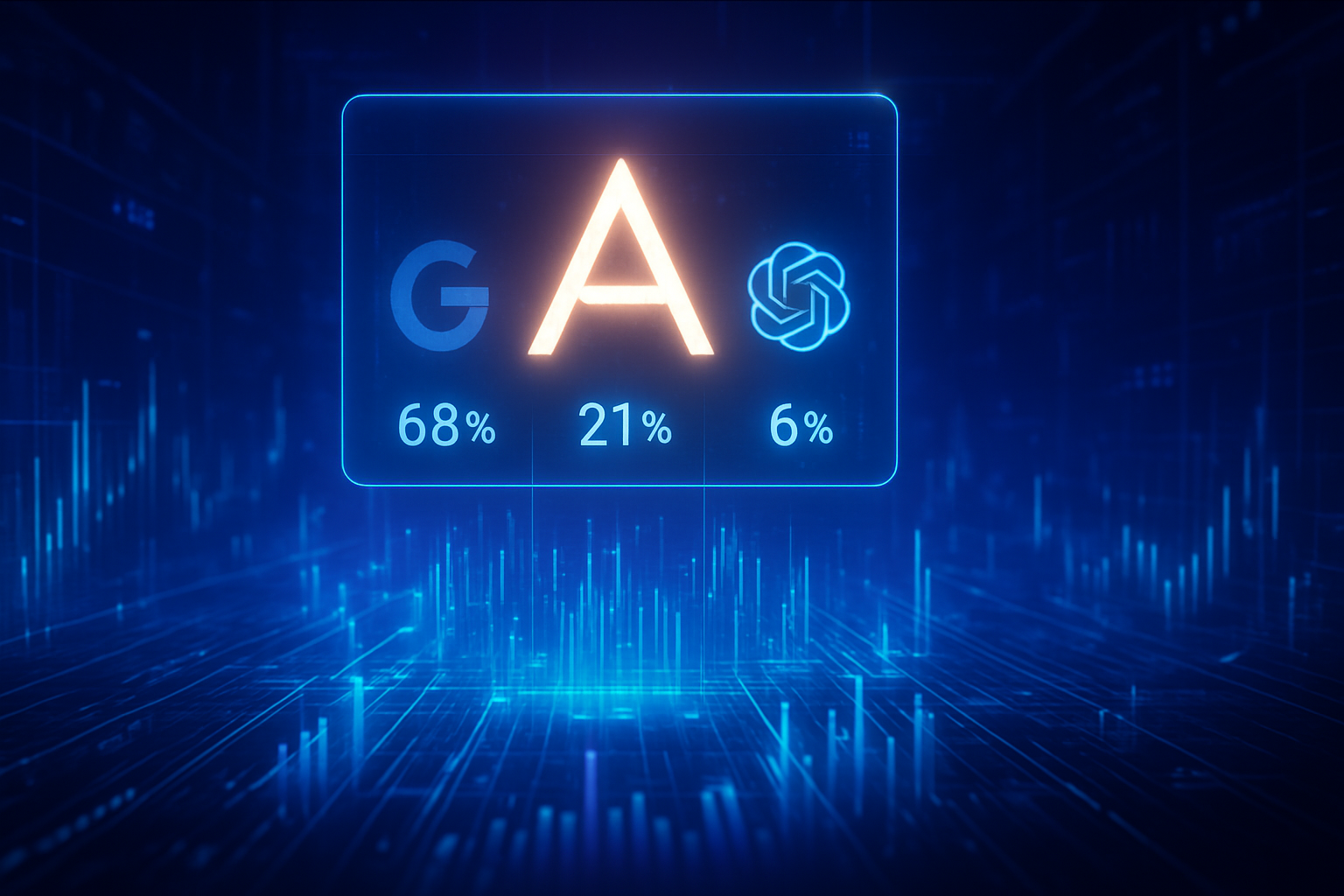
    As of February 9, 2026, the race for artificial intelligence supremacy has reached a fever pitch, but prediction market bettors believe the winner is already clear. Anthropic, the San Francisco-based AI safety and research company, has surged to a commanding 68% probability of holding the title of "Best AI Model" by the end of the month. This represents a staggering lead over long-time industry titans Google and OpenAI, which currently sit at 21% and 6% respectively.

    The market shifted violently last week following a series of high-stakes product launches. While OpenAI was once the undisputed king of the sector, the current sentiment on platforms like Polymarket and Kalshi suggests a regime change. Traders are no longer betting on brand recognition; they are betting on the raw technical performance reflected in the industry’s most respected benchmarks.

    The Market: What's Being Predicted

    The primary vehicle for this speculation is the "Best AI Model by March 2026" contract, which has seen heavy trading volume exceeding $3.6 million on Polymarket alone. Similar contracts are active on Kalshi and Manifold, drawing in thousands of participants ranging from retail enthusiasts to specialized institutional desks.

    The resolution criteria for these markets are remarkably specific, typically tethered to the LMSYS Chatbot Arena Leaderboard. To win, a model must secure the #1 rank in the "Rank (UB)" column on the leaderboard as of February 28, 2026, at 11:59 PM ET. Most markets require the "Style Control" filters to be active, ensuring that the ranking reflects true reasoning capabilities rather than just "vibes" or verbosity.

    In early January, the market was a dead heat, with Google (NASDAQ: GOOGL) and Anthropic both hovering around 35%. However, the launch of Claude Opus 4.6 on February 5 sent Anthropic’s odds skyrocketing from 40% to 68% in a matter of hours. Conversely, OpenAI’s position has collapsed to a mere 6%, its lowest point since the debut of GPT-4 years ago.

    Why Traders Are Betting

    The catalyst for Anthropic’s dominance is the overwhelming reception of Claude Opus 4.6. The model introduced a breakthrough "Agent Teams" architecture, allowing a single prompt to orchestrate multiple specialized sub-agents to complete complex software engineering and research tasks. Currently, Claude 4.6 sits at an Elo score of 1496 on the LMSYS Arena, the highest ever recorded.

    Traders are backing Anthropic—supported by massive investments from Amazon.com Inc (NASDAQ: AMZN) and Microsoft Corp (NASDAQ: MSFT)—because of its perceived "quality over quantity" approach. While Google’s Gemini 3 Pro held the top spot for most of late 2025, it has struggled to maintain its lead against the superior reasoning capabilities of the new Opus variant.

    "The smart money is looking at the 'vibes' vs. 'math' divide," says one high-volume Polymarket trader. "OpenAI's latest release, GPT-5.3-Codex, was incredibly fast, but it didn't move the needle on general-purpose reasoning. Anthropic’s 4.6 isn’t just faster; it’s smarter. That’s why the odds have decoupled from the OpenAI hype machine."

    Furthermore, OpenAI’s strategy of fragmenting its models—releasing specialized versions for coding, reasoning, and creativity—has confused the leaderboard rankings, whereas Anthropic’s unified Opus model provides a single, high-performing target for bettors to rally behind.

    Broader Context and Implications

    This market reflects a broader trend in the 2026 AI landscape: the erosion of first-mover advantage. OpenAI’s early dominance with GPT-4 created a moat that many thought was unassailable. However, the prediction markets are now signaling that the moat has dried up. The 68% vs. 6% spread is a clear indictment of OpenAI’s recent "incremental" update cycle compared to Anthropic’s "generational" leaps.

    The real-world implications of these odds are significant. Companies choosing which API to integrate into their enterprise stacks often look to these markets as a "wisdom of the crowds" indicator of which technology is likely to lead for the coming quarter. For Alphabet Inc. (NASDAQ: GOOGL), the 21% odds represent a resilient but stagnant second place, suggesting that while their data advantage is massive, their model tuning hasn't quite captured the "pro-user" market in the same way Anthropic has.

    Historically, prediction markets have been more accurate at forecasting AI milestones than traditional tech analysts. During the "Gemini 1.5 vs GPT-4 Turbo" wars of 2024, markets correctly anticipated the flip weeks before it was reflected in mainstream tech journalism.

    What to Watch Next

    With only three weeks left in February, the focus shifts to potential "October Surprises" (or in this case, late-February surprises). Rumors are circulating of a "Gemini 3.5 Ultra" update that Google may rush to release before the month ends to reclaim its title. If such a release occurs, Anthropic’s 68% could evaporate instantly.

    Additionally, industry watchers are monitoring the "Vera Rubin" chip platform from Nvidia Corp (NASDAQ: NVDA). As these new chips begin to power the training clusters for the next generation of models, the latency and cost-efficiency of these models could shift, potentially influencing "vibes-based" voting on the Chatbot Arena.

    The key date to watch is February 20. Historically, if a model hasn't appeared on the leaderboard by the 20th of the month, the lag in user voting makes it nearly impossible to reach the #1 spot by the end of the month. If Google or OpenAI doesn't drop a major update within the next 10 days, Anthropic's 68% odds will likely climb into the 80s or 90s.

    Bottom Line

    The current state of the "Best AI Model" market is a testament to the volatility of the frontier AI sector. Anthropic’s Claude 4.6 has currently "broken the scale," convincing bettors that it is the superior intelligence of the moment. The 68% probability represents a high level of confidence in Claude's technical superiority and its ability to maintain that lead through the end of the month.

    This market proves that prediction markets are becoming the definitive scoreboard for the AI arms race. While marketing campaigns and keynote speeches attempt to influence public perception, the cold, hard capital of bettors is flowing toward the model that actually delivers the best results.

    For now, the crown belongs to Anthropic. But in a world where a new model can be trained and deployed in weeks, no lead is ever truly safe.


    This article is for informational purposes only and does not constitute financial or betting advice. Prediction market participation may be subject to legal restrictions in your jurisdiction.

    PredictStreet focuses on covering the latest developments in prediction markets.
    Visit the PredictStreet website at https://www.predictstreet.ai/.

  • The Agentic Spring: Why Prediction Markets Are Betting Big on Claude 5 and the AI Agent Revolution

    The Agentic Spring: Why Prediction Markets Are Betting Big on Claude 5 and the AI Agent Revolution

    As of February 8, 2026, the artificial intelligence sector is moving at a pace that traditional tech journalism can barely track. On Manifold Markets, a leading prediction platform known for its real-time crowdsourced intelligence, a feverish surge of betting activity has centered on the "Agentic Spring." The most watched contract on the site currently gives an 82% probability that Anthropic will release Claude 5 (Sonnet) before the end of March 2026. This surge follows a chaotic first week of February that saw major product launches from both OpenAI and Anthropic, signaling a definitive shift in the industry from passive chatbots to autonomous agentic systems.

    The interest isn't just academic; it’s a reflection of a high-stakes arms race among the "Big Three"—Anthropic, Meta (NASDAQ: META), and OpenAI. While markets for a unified "Agent App" release in February remain cautiously priced at 27%, recent maneuvers by these companies have already begun to fulfill the spirit of these predictions. With traders reacting to technical leaks and internal platform logs, prediction markets have become the de facto front-runner for identifying the next major shift in the AI landscape.

    The Market: What's Being Predicted

    The primary focus for traders right now is the "Claude 5 Release" market on Manifold. Unlike traditional binary options, this market operates as a play-money forecasting tool that has historically sniffed out Anthropic’s product cycles with uncanny accuracy. The odds for a Claude Sonnet 5 release before March 1st skyrocketed from 45% in late January to its current 82% peak. This movement has been accompanied by high trading volume, with thousands of unique participants betting on various granular outcomes, including the model’s performance on software engineering benchmarks.

    Specifically, the resolution criteria for the lead market require an official announcement or public API availability of a model branded as "Claude 5" or "Claude 5 Sonnet." A secondary market is tracking the likelihood of an "Agent App" from the major players, currently at a 43% probability for a launch before the end of Q1. These markets are heavily influenced by recent activity on developer platforms like Alphabet’s (NASDAQ: GOOGL) Google Vertex AI, where traders monitor for new model identifiers.

    Why Traders Are Betting

    The 82% confidence in an imminent Claude 5 release is not based on vibes alone. On February 3, 2026, a technical leak on a cloud provider's error log revealed a model identifier: claude-sonnet-5@20260203. Codenamed "Fennec" internally, this model is rumored to be the successor to the highly successful Claude 4 line. Traders are betting that Anthropic is preparing a "spoiler" release to counter the momentum of Microsoft-backed (NASDAQ: MSFT) OpenAI, which just launched its Frontier platform on February 5.

    Furthermore, the competitive pressure is immense. OpenAI’s recent release of GPT-5.3 Codex—optimized for long-running agentic tasks—has set a new bar for what "AI Agents" should be able to do. Anthropic’s response has already begun with the February 5th rollout of Claude Opus 4.6, which introduced "Agent Teams." Traders are viewing Sonnet 5 as the "efficiency play"—a model that can match the reasoning of the heavyweights while being significantly cheaper to run, making it the perfect engine for mass-market autonomous agents.

    Broader Context and Implications

    This surge in Manifold activity highlights how prediction markets are evolving into an essential tool for the tech sector. While traditional analysts wait for press releases, prediction markets synthesize rumors, GitHub commits, and cloud log leaks into a single, tradable probability. This "real-time gauge" is particularly valuable during the current shift toward the Agentic Era, where the goal is no longer just generating text but performing complex, multi-step actions like managing a legal review or building a full software application autonomously.

    The implications of an 82% probability for Claude 5 are significant for the broader economy. If Anthropic delivers on these expectations, it signals that the cost of "reasoning" is dropping faster than anticipated. This trend is mirrored in Meta’s strategy; Mark Zuckerberg recently highlighted "agentic commerce" as a core pillar of Meta’s 2026 roadmap, aiming to integrate autonomous shopping concierges into WhatsApp and Instagram. Prediction markets are essentially forecasting the death of the "chat box" and the birth of the "AI employee."

    What to Watch Next

    The next three weeks are critical for these markets. The most significant upcoming milestone is the rumored release of Meta’s Llama 4 "Behemoth" in late February. If Meta releases a flagship open-weights model that rivals Claude 5, it could force Anthropic to accelerate its rollout, potentially pushing the March 1st release odds even higher. Traders are also closely watching for any "o-series" updates from OpenAI, specifically an o2 full-scale reasoning engine that could serve as the backbone for more advanced agents.

    Investors and tech enthusiasts should also keep an eye on performance benchmarks. A key Manifold market is currently trading at a 79% chance that Sonnet 5 will outperform the current Opus 4.6 in coding tasks. If early developer previews of Sonnet 5 (under NDAs) begin to leak, expect these odds to consolidate toward 95% or higher. Conversely, if February ends without an Anthropic announcement, we could see one of the largest "market crashes" in recent AI forecasting history.

    Bottom Line

    The 82% odds on Manifold Markets for a Claude 5 release by March suggest that the AI industry is entering its most aggressive competitive phase yet. These markets have moved beyond mere speculation, acting as a sophisticated processing unit for disparate pieces of technical data. Whether it is the "Fennec" leak or the competitive pressure from OpenAI's Frontier, the signal is clear: the wait for the next generation of AI is nearly over.

    As prediction markets continue to outperform traditional forecasting in the tech space, they provide a vital service for those trying to navigate the "Agentic Spring." If the crowd is right, the next few weeks will redefine our relationship with AI—from tools we talk to, to agents that work for us.


    This article is for informational purposes only and does not constitute financial or betting advice. Prediction market participation may be subject to legal restrictions in your jurisdiction.

    PredictStreet focuses on covering the latest developments in prediction markets.
    Visit the PredictStreet website at https://www.predictstreet.ai/.