
Tag: AI

  • Tesla in 2025: From Electric Vehicles to an AI and Robotics Powerhouse

    Tesla in 2025: From Electric Vehicles to an AI and Robotics Powerhouse

    As of December 29, 2025, Tesla, Inc. (NASDAQ: TSLA) occupies a unique and often polarizing position in the global capital markets. No longer viewed strictly as an automotive manufacturer, Tesla has spent the last year aggressively rebranding itself as a diversified artificial intelligence (AI) and robotics conglomerate. With a market capitalization fluctuating near $1.6 trillion, the company finds itself at a critical juncture: the transition from selling high-end electric vehicles (EVs) to deploying autonomous fleets and humanoid robots at scale. This year has been defined by the successful pilot of the "Cybercab" in Texas and a massive surge in the company’s energy storage division, making TSLA one of the most-watched and highly valued companies on the Nasdaq.

    Historical Background

    Founded in 2003 by Martin Eberhard and Marc Tarpenning, Tesla was born from the vision of proving that electric vehicles could be better, quicker, and more fun to drive than gasoline cars. Elon Musk joined shortly after as the primary series-A investor and took over as CEO in 2008, a year that saw the release of the company’s first product, the Roadster.

    Tesla’s history is a series of "bet-the-company" moments. The 2012 launch of the Model S redefined the luxury sedan, while the 2017 introduction of the Model 3 brought the company to the brink of bankruptcy during "production hell." However, the successful ramp-up of the Model 3 and Model Y—now the best-selling vehicle globally—transformed Tesla into a profitable giant. By 2020, Tesla joined the S&P 500, signaling its arrival as a cornerstone of the modern industrial economy. The 2023–2025 period has focused on scaling the Cybertruck and laying the groundwork for the AI-driven "Master Plan Part 3."

    Business Model

    Tesla’s business model is vertically integrated, controlling everything from software and chip design to battery manufacturing and direct-to-consumer sales. Its revenue streams are currently divided into three primary pillars:

    1. Automotive: Sales of Model S, 3, X, Y, and Cybertruck. This includes revenue from "Supervised" Full Self-Driving (FSD) software and regulatory credits sold to other automakers.
    2. Energy Generation and Storage: The fastest-growing segment in 2025, involving the sale of Powerwalls for homes and Megapacks for utility-scale grid stabilization.
    3. Services and Other: Includes Supercharging network fees, vehicle insurance, and aftermarket repairs.

    In late 2025, a fourth pillar is emerging: AI and Robotics, which encompasses the licensing of FSD to other OEMs and the initial internal deployment of the Optimus humanoid robot.

    Stock Performance Overview

    Tesla’s stock performance in 2025 has been a story of a dramatic recovery.

    • 1-Year Performance: TSLA has returned approximately 45% over the past 12 months, driven by the resolution of 2024’s "EV winter" and the hype surrounding the Cybercab.
    • 5-Year Performance: For long-term holders, the stock remains a juggernaut, having grown by over 600% since late 2020, despite several major drawdowns of 40% or more.
    • 10-Year Performance: From a split-adjusted perspective, Tesla has delivered a staggering 2,500%+ return over the last decade, outperforming virtually every other large-cap stock in the S&P 500.
    • Notable Moves: The stock hit an all-time intraday high of $498.83 on December 22, 2025, before settling near $485 as year-end profit-taking commenced.

    Financial Performance

    Tesla’s 2025 financial results have quieted many skeptics who feared declining margins.

    • Revenue: In Q3 2025, Tesla reported record revenue of $28.1 billion.
    • Margins: While automotive gross margins have stabilized around 18-19% following the 2023-2024 price wars, the Energy Storage segment achieved gross margins exceeding 30%.
    • Cash Flow: Tesla remains a cash-flow machine, ending the third quarter of 2025 with over $30 billion in cash and short-term investments, providing a significant cushion for the R&D required for Optimus and the Robotaxi network.
    • Debt: The company maintains a negligible debt-to-equity ratio, having paid down most of its traditional debt years ago.

    Leadership and Management

    Elon Musk remains the singular, defining force behind Tesla. His leadership style is characterized by "hardcore" engineering focus and a tolerance for high risk. However, 2025 saw a stabilizing of the executive suite. Tom Zhu, often cited as a potential successor, has solidified his role as a key operations leader, while Ashok Elluswamy (AI) and Lars Moravy (Engineering) have become more prominent in public-facing roles.

    Despite Musk’s controversial public persona and his responsibilities at X (formerly Twitter) and SpaceX, his focus returned heavily to Tesla in 2025 following the approval of his historic compensation package. Governance remains a point of contention for some institutional investors, who continue to push for a more independent board.

    Products, Services, and Innovations

    Tesla’s current portfolio is evolving rapidly:

    • Cybercab (Robotaxi): The flagship innovation of 2025. This dedicated autonomous vehicle is currently in pilot testing in Austin. Tesla targets full mass production by April 2026.
    • Optimus Gen 2.5: These humanoid robots are now performing repetitive tasks in Tesla’s Fremont factory. Musk has teased the debut of "Gen 3" with a revolutionary hand design by early 2026.
    • FSD v14.2.2.2: The latest software update has moved the needle closer to "Unsupervised" FSD, with dramatically improved performance in complex urban environments.
    • Energy Storage: The Shanghai Megafactory is now fully operational, doubling Tesla’s global Megapack capacity to support 100 GWh of annual deployment by 2027.

    Competitive Landscape

    Tesla faces a "two-front war" in the competitive landscape:

    • Legacy OEMs: Ford (NYSE: F) and General Motors (NYSE: GM) have retreated slightly from their aggressive EV targets, inadvertently giving Tesla more breathing room in the North American market.
    • China Rivals: BYD (HKG: 1211) and Xiaomi (HKG: 1810) remain Tesla’s most formidable competitors. In 2025, BYD briefly overtook Tesla in global EV volume, though Tesla maintains a significant lead in software revenue and total profitability per vehicle.
    • AI Entrants: Waymo (owned by Alphabet, NASDAQ: GOOGL) is the primary rival in the autonomous space, currently holding the lead in "miles driven without a safety driver," though Tesla argues its vision-only approach is more scalable.

    Industry and Market Trends

    The "EV adoption curve" hit a plateau in 2024 but re-accelerated in late 2025 as charging infrastructure improved and battery costs dropped. Key trends include:

    • The Battery Pivot: A global shift toward Lithium Iron Phosphate (LFP) batteries for mass-market vehicles to reduce costs.
    • AI Integration: Vehicles are increasingly viewed as "computers on wheels," shifting the value proposition from hardware to software subscriptions.
    • Grid Modernization: As renewable energy sources increase, the demand for utility-scale storage (Tesla’s Megapack) is exploding.

    Risks and Challenges

    Tesla is not without significant risks:

    • Execution Risk: The 2026 timeline for the Cybercab is ambitious. Any delays could severely deflate the current "AI premium" in the stock price.
    • Regulatory Scrutiny: The National Highway Traffic Safety Administration (NHTSA) continues to monitor FSD performance closely, and any high-profile accidents could lead to forced recalls or software limitations.
    • Key Person Risk: The company’s valuation is intrinsically tied to Elon Musk. Any change in his status or focus remains a primary concern for the "bull case."
    • Geopolitics: Trade tensions between the US and China pose a threat to Giga Shanghai, which remains Tesla’s most productive factory.

    Opportunities and Catalysts

    • FSD Licensing: Several major automakers are reportedly in talks to license Tesla’s FSD software, a move that would provide high-margin recurring revenue without the capital expense of building cars.
    • Robotaxi Fleet Launch: The transition from a pilot program in Austin to a commercial network in multiple cities would represent a fundamental shift in Tesla’s valuation model.
    • Gen 3 Optimus: The commercial sale of humanoid robots to third-party manufacturers could eventually exceed the automotive business in total addressable market (TAM).

    Investor Sentiment and Analyst Coverage

    Wall Street remains a house divided.

    • The Bulls: Dan Ives of Wedbush has a $600 price target, calling Tesla "the most undervalued AI play in the market." High retail ownership continues to provide a "floor" for the stock price during volatility.
    • The Bears: Skeptics argue that Tesla is a "grossly overvalued car company" and that the Robotaxi and Optimus projects are "vaporware" designed to distract from slowing vehicle sales growth.
    • Institutional Shift: In late 2025, several large hedge funds increased their positions, citing the Energy division's profitability as a reason to hold the stock even if FSD takes longer to achieve full autonomy.

    Regulatory, Policy, and Geopolitical Factors

    The regulatory landscape is a tailwind in some regions and a headwind in others. The U.S. Inflation Reduction Act (IRA) continues to subsidize Tesla’s battery production, while the European Union’s tariffs on Chinese-made EVs have inadvertently helped Tesla's Giga Berlin maintain market share. In China, Tesla has worked closely with local regulators to secure FSD approval, which is expected to be granted in early 2026, marking a massive milestone for the company’s global software expansion.

    Conclusion

    As 2025 draws to a close, Tesla stands as a hybrid of a manufacturing giant and a cutting-edge AI lab. For investors, the company represents a high-beta bet on the future of robotics and autonomy. While the "easy money" of the early EV transition has been made, the potential for Tesla to dominate the next era of industrial AI remains high. However, the path is fraught with regulatory hurdles and the immense technical challenge of solving "unsupervised" autonomy. Investors should watch for the April 2026 Cybercab production ramp and FSD's regulatory progress in China as the primary catalysts for the year ahead.


    This content is intended for informational purposes only and is not financial advice.

  • Apple Inc. (AAPL) 2025 Deep Dive: Navigating the AI Supercycle and the Regulatory Storm

    Apple Inc. (AAPL) 2025 Deep Dive: Navigating the AI Supercycle and the Regulatory Storm

    As of December 29, 2025, Apple Inc. (NASDAQ: AAPL) remains the quintessential benchmark for the intersection of technology, luxury, and capital markets. While the tech industry spent much of the early 2020s in a feverish race to define the "Generative AI" era, Apple has spent 2025 proving that the ultimate winner is the company that can best integrate these tools into the pockets of billions. With a market capitalization flirting with the $4 trillion mark and a newly matured "Apple Intelligence" ecosystem, the Cupertino giant is navigating a transition point as profound as the shift from the iPod to the iPhone. Yet, this dominance is being tested by unprecedented regulatory scrutiny and the looming question of leadership succession.

    Historical Background

    Founded in a California garage in 1976 by Steve Jobs, Steve Wozniak, and Ronald Wayne, Apple’s journey is one of the most storied in corporate history. From the revolutionary Apple II and the original Macintosh in 1984 to the company's near-collapse in the late 1990s, the narrative has always been one of "thinking different."

    The return of Steve Jobs in 1997 sparked an era of unparalleled innovation, producing the iMac, iPod, and eventually the 2007 iPhone, which redefined the modern smartphone. Since Tim Cook took the helm in 2011, the company has transformed from a hardware-centric innovator into a diversified services powerhouse. The late 2010s and early 2020s saw Apple successfully transition its Mac lineup to in-house silicon (M-series) and build a services business larger than most Fortune 500 companies. By late 2025, the company has officially entered its "AI and Spatial" era, attempting to repeat its historical success with the Vision Pro and Apple Intelligence.

    Business Model

    Apple’s business model is built on a "virtuous cycle" of hardware, software, and services. The core strategy is to control the entire stack, ensuring a seamless user experience that fosters deep brand loyalty and high switching costs—often referred to as the "Walled Garden."

    • iPhone: Remains the primary revenue driver, contributing roughly 50% of total sales.
    • Services: Includes the App Store, Apple Music, iCloud, Apple Pay, and Apple TV+. This segment is critical for margin expansion, as it carries significantly higher gross margins (~75%) than hardware.
    • Wearables, Home, and Accessories: Features the Apple Watch and AirPods, which dominate their respective categories.
    • Mac and iPad: Specialized productivity segments that have seen renewed growth following the transition to Apple Silicon.

    Apple’s customer base is increasingly global, with a massive focus on emerging markets like India, which has become both a critical manufacturing hub and a top-five market for the company by late 2025.

    Stock Performance Overview

    Apple has historically been a cornerstone of institutional and retail portfolios. Over the last decade, the stock has delivered exceptional returns, largely outperforming the S&P 500.

    • 10-Year Performance: AAPL has seen a total return exceeding 850%, driven by massive share buybacks and the expansion of the Services segment.
    • 5-Year Performance: The stock roughly tripled during this period, weathering the 2022 tech sell-off and surging in late 2024 and 2025 as the "AI Supercycle" took hold.
    • 1-Year Performance (2025): The stock has risen approximately 28% in 2025, largely due to the successful launch of the iPhone 17 Air and the stabilization of Apple Intelligence features.

    Financial Performance

    For the fiscal year ending September 2025, Apple reported blockbuster results that silenced many critics of its early-year AI rollout.

    • Revenue: Reached an all-time high of $416.16 billion (up 6.43% year-over-year).
    • Net Income: Stood at $112.01 billion, a nearly 20% jump from 2024, reflecting improved operational efficiencies and a shift toward high-margin Pro models.
    • Margins: Gross margin held steady at 46.2%, a testament to Apple’s pricing power despite inflationary pressures.
    • Cash Flow & Buybacks: Apple generated over $110 billion in free cash flow in 2025 and continued its aggressive capital return program, maintaining its status as one of the world's largest purchasers of its own stock.

    Leadership and Management

    Tim Cook’s tenure as CEO is widely regarded as one of the most successful in business history. However, as of late 2025, succession chatter has reached a fever pitch. Cook, now 65, has hinted at a future beyond Apple, and the Board of Directors has reportedly identified John Ternus, Senior Vice President of Hardware Engineering, as the likely successor.

    Ternus has become the face of the "new Apple," leading the development of the M-series chips and the sleek iPhone 17 Air. Other key leaders include Jeff Williams (COO), who oversees Apple Watch and health initiatives, and Luca Maestri (CFO), who has masterfully managed Apple’s balance sheet. The leadership team is known for its discipline and "steady hand" approach, which remains a key draw for long-term investors.

    Products, Services, and Innovations

    Innovation in 2025 is dominated by Apple Intelligence. Unlike the cloud-first AI models of rivals, Apple’s "Private Cloud Compute" ensures that Siri 2.0 can handle complex, personal tasks while maintaining user privacy. By late 2025, Siri has evolved into an "agentic" assistant, capable of cross-app task execution.

    The hardware highlight of the year was the iPhone 17 Air, an ultra-thin (5.6mm) device that successfully replaced the "Plus" model. While the Vision Pro remains a high-end niche product (shipping roughly 420,000 units in 2025), it serves as a platform for "Spatial Intelligence," where Apple is building the foundation for the next decade of computing.

    Competitive Landscape

    Apple faces fierce competition across all segments:

    • Samsung Electronics (KOSPI: 005930): Remains the primary rival in the premium smartphone space, particularly with its foldable lineup.
    • Microsoft (NASDAQ: MSFT) and Google (NASDAQ: GOOGL): Both are ahead in pure Generative AI capabilities, forcing Apple to play catch-up with its ecosystem-integrated AI.
    • Huawei: Re-emerged as a major threat in China, capturing significant market share in the premium segment and challenging Apple’s growth in the region.
    • Meta Platforms (NASDAQ: META): A direct competitor in the VR/AR (Spatial Computing) space with its more affordable Quest lineup.

    Apple’s primary competitive edge remains its integrated ecosystem and the "stickiness" of iMessage, iCloud, and the Apple Watch.

    Industry and Market Trends

    The consumer electronics industry in late 2025 is defined by the "AI Supercycle." Consumers are no longer upgrading for better cameras alone; they are upgrading for hardware capable of running on-device large language models (LLMs). Additionally, the trend of "de-globalization" has forced Apple to diversify its supply chain, moving significant production capacity from China to India and Vietnam to mitigate geopolitical risks.

    Risks and Challenges

    • Regulatory Scrutiny: Apple is currently embroiled in a massive antitrust lawsuit with the US Department of Justice (DOJ), which reached a critical discovery phase in mid-2025.
    • EU Compliance: The Digital Markets Act (DMA) has forced Apple to open iOS to third-party app stores and payment systems in Europe, potentially eroding its lucrative 30% commission (the "Apple Tax").
    • Innovation Saturation: The Vision Pro has yet to find a mass-market use case, leading to concerns that Apple’s "next big thing" may be years away from contributing to the bottom line.
    • China Dependency: Despite diversification efforts, China remains both a vital manufacturing hub and a top-three market, leaving Apple vulnerable to US-China trade tensions.

    Opportunities and Catalysts

    • India Expansion: Apple is on track to manufacture 25% of all iPhones in India by 2026, while retail expansion in the country offers a massive demographic tailwind.
    • Health Tech: Rumors of non-invasive glucose monitoring in the 2026/2027 Apple Watch could revolutionize the healthcare sector.
    • AI Monetization: While Apple Intelligence is currently free for users, analysts anticipate a "Siri Premium" or "AI+ Service" subscription model by late 2026.
    • Automotive/Car Play: The "Apple Car" project may be dead, but the next-generation CarPlay (deeply integrated into vehicle systems) offers a new path into the lucrative automotive software market.

    Investor Sentiment and Analyst Coverage

    Wall Street sentiment remains largely "Bullish" toward Apple. Analysts emphasize that Apple’s massive installed base (over 2.2 billion active devices) provides a floor for the stock.

    • Average Price Target: $288.62.
    • Institutional Holdings: Apple remains the top holding for many of the world's largest ETFs and pension funds.
    • Retail Sentiment: Remains high, though some "value" investors point to Apple’s Forward P/E ratio of ~31x as being historically stretched.

    Regulatory, Policy, and Geopolitical Factors

    The geopolitical landscape is perhaps Apple's greatest external threat. The ongoing US-China "Chip War" limits Apple’s ability to utilize certain advanced manufacturing technologies in China. Meanwhile, the EU’s aggressive stance on "gatekeeper" platforms continues to force Apple to dismantle pieces of its walled garden. In late 2025, the company has had to allow third-party wearables (like Samsung and Garmin watches) to have better interoperability with the iPhone to satisfy EU regulators.

    Conclusion

    Apple Inc. enters 2026 as a titan that has successfully pivoted to the AI era without sacrificing its core values of privacy and design. The success of the iPhone 17 Air and the steady rollout of Apple Intelligence have provided a robust growth catalyst that justified its premium valuation throughout 2025.

    However, the "Walled Garden" is under siege from regulators in both Washington and Brussels. Investors should watch three key things in the coming year: the outcome of the DOJ antitrust case, the potential announcement of a Tim Cook succession timeline, and the first signs of meaningful consumer adoption of spatial computing (Vision Pro). Apple’s ability to navigate these hurdles while maintaining its unmatched cash-generation capabilities will determine if it can sustain its position at the pinnacle of the global economy.


    This content is intended for informational purposes only and is not financial advice.

  • The AI Investment House: A Comprehensive Research Feature on SoftBank Group Corp (SFTBY) in 2025

    The AI Investment House: A Comprehensive Research Feature on SoftBank Group Corp (SFTBY) in 2025

    As of December 29, 2025, SoftBank Group Corp (OTC: SFTBY) stands at a pivotal juncture in its four-decade history. Once viewed primarily as a telecommunications giant and subsequently as a scattergun venture capital investor, SoftBank has successfully rebranded itself as the world’s preeminent "AI Investment House." This transformation has been validated by a record-breaking 2025, during which the company’s net asset value soared to all-time highs, driven by the explosive growth of its chip-design subsidiary and strategic bets on generative AI leaders.

    SoftBank is currently in focus not just for its financial recovery—rebounding from deep losses in 2022 and 2023—but for its audacious "Artificial Super Intelligence" (ASI) strategy. Led by its iconic founder Masayoshi Son, the firm is no longer just investing in software startups; it is financing the physical infrastructure of the AI revolution, positioning itself as a central player in the global race for computational dominance.

    Historical Background

    Founded in 1981 by Masayoshi Son as a wholesale distributor of PC software, SoftBank’s history is a testament to radical evolution. In the 1990s, the company pivoted toward the burgeoning internet sector, most notably making a $20 million investment in a young Chinese e-commerce company called Alibaba Group (NYSE: BABA) in 2000—an investment that would eventually become one of the most successful in venture capital history, peaking at a valuation of over $150 billion.

    The 2000s and early 2010s saw SoftBank dominate the Japanese telecommunications market through the acquisitions of Vodafone Japan and the American carrier Sprint. However, the most significant shift occurred in 2017 with the launch of the $100 billion Vision Fund, the largest private equity fund in history. While the Vision Fund era was marked by high-profile successes and equally high-profile controversies—such as the collapse of WeWork—it set the stage for the company’s current obsession: the total integration of AI across all sectors of the global economy.

    Business Model

    SoftBank Group Corp operates as a strategic holding company with a "cluster" approach to its portfolio. Its revenue and valuation are derived from four primary segments:

    1. Arm Holdings (NASDAQ: ARM): The "crown jewel" of the portfolio. SoftBank owns approximately 90% of Arm, which designs the architecture for nearly all global smartphone chips and is rapidly expanding into data centers and automotive AI.
    2. SoftBank Vision Funds (SVF1 & SVF2): These funds manage hundreds of billions of dollars across hundreds of tech startups. While SVF1 focuses on established late-stage leaders, SVF2 is increasingly targeting "Physical AI" and robotics.
    3. SoftBank Corp (TSE: 9434): The Japanese telecommunications unit, which provides steady cash flow and dividends to the parent company, supporting its aggressive investment maneuvers.
    4. Strategic AI Holdings: This includes direct stakes in OpenAI and newly acquired hardware firms like Graphcore and Ampere Computing, aimed at creating a vertically integrated AI stack.

    Stock Performance Overview

    The stock performance of SFTBY throughout 2025 has been nothing short of meteoric, albeit characterized by the high volatility typical of Masayoshi Son’s ventures.

    • 1-Year Performance: SFTBY has gained approximately 125% year-to-date as of late December 2025. This was fueled by the tripling of Arm Holdings’ share price and a massive valuation markup for OpenAI.
    • 5-Year Performance: Over a five-year horizon, the stock has undergone a "U-shaped" recovery. After crashing during the 2022 tech sell-off, the stock surpassed its 2021 highs in mid-2025, reflecting a fundamental shift from speculative growth to high-conviction AI infrastructure.
    • 10-Year Performance: Long-term shareholders have seen significant capital appreciation, though the ride has been marred by massive drawdowns. The 10-year CAGR remains robust, outperforming the Nikkei 225 but trailing the Nasdaq 100 due to the heavy losses sustained during the "tech winter" of 2022.

    Notable moves in 2025 included a record-breaking surge in October following the announcement of "Project Stargate" and a subsequent 15% pullback in December as investors took profits ahead of the upcoming 4-for-1 stock split scheduled for January 2026.

    Financial Performance

    SoftBank’s financial health has improved dramatically in 2025. For the second quarter of the 2025 fiscal year (ending September 30), the company reported a staggering net profit of ¥2.5 trillion (approx. $16.5 billion), crushing analyst expectations.

    • Revenue Growth: While traditional revenue from the telco unit remains stable, the "gain on investments" line item has become the primary driver of the bottom line.
    • Net Asset Value (NAV): NAV reached a record ¥36.2 trillion in late 2025, providing a significant cushion against market volatility.
    • Loan-to-Value (LTV) Ratio: The LTV ratio—SoftBank’s key metric for financial stability—stands at a conservative 16.5%, well below the company’s 25% safety threshold.
    • Debt and Liquidity: SoftBank maintains a cash pile of roughly ¥4.2 trillion ($27.2 billion), giving it the "dry powder" needed to close its final $22.5 billion tranche of the OpenAI investment in December 2025.

    Leadership and Management

    Masayoshi Son remains the undisputed visionary and driving force behind SoftBank. At 68, Son has shown no signs of slowing down, recently telling shareholders that his "life's purpose" is to usher in the era of Artificial Super Intelligence.

    While Son provides the vision, the 2025 leadership structure has been bolstered by Junichi Miyakawa, CEO of the telecom unit, who has been identified as a key internal successor. The board of directors has also been refreshed to include more technical expertise in semiconductors and AI ethics. Despite past criticisms regarding governance and "key person risk" surrounding Son, the company’s recent financial discipline and transparent NAV reporting have partially mended its reputation with institutional investors.

    Products, Services, and Innovations

    SoftBank is no longer just a financier; it is becoming a builder. The most significant innovations in 2025 include:

    • Arm’s AI Data Center Chips: Moving beyond licensing, Arm has begun designing its own high-performance silicon to compete directly with industry leaders like NVIDIA (NASDAQ: NVDA).
    • Project Stargate: A $500 billion joint venture with OpenAI and Oracle (NYSE: ORCL) to build the world’s largest AI superclusters. SoftBank is providing the specialized financing and power infrastructure for these data centers.
    • Robotics Integration: Through its investments in Boston Dynamics and various SVF2 startups, SoftBank is working to integrate Arm-based "brains" into humanoid robots, a field Son refers to as "Physical AI."

    Competitive Landscape

    SoftBank occupies a unique niche, sitting between traditional venture capital firms like Sequoia Capital and massive tech conglomerates like Alphabet (NASDAQ: GOOGL).

    • Venture Capital Rivals: While firms like Andreessen Horowitz compete for early-stage AI deals, they lack SoftBank’s ability to write $30 billion checks or leverage a subsidiary like Arm.
    • Strategic Weaknesses: SoftBank’s primary weakness is its extreme concentration. With Arm representing over 55% of its equity value, any downturn in the semiconductor cycle or a shift away from Arm’s architecture would be catastrophic for SFTBY’s valuation.
    • Competitive Strengths: Its "first-call" status for massive AI infrastructure projects and its deep ties to the Japanese government and Middle Eastern sovereign wealth funds provide a moat that few other private entities can match.

    Industry and Market Trends

    The macro environment in 2025 is dominated by the "Compute Supercycle." As AI models grow exponentially larger, the demand for power, cooling, and specialized silicon has outpaced supply. SoftBank has positioned itself at the center of this trend by focusing on the hardware and energy infrastructure required to sustain the AI boom. Additionally, the trend toward "sovereign AI"—where nations build their own domestic AI capabilities—has benefited SoftBank’s diverse geographic portfolio.

    Risks and Challenges

    Despite the recent triumphs, SoftBank is not without significant risks:

    1. AI Bubble Concerns: Market skeptics argue that the valuations for companies like OpenAI and Arm are built on "hype" rather than sustainable cash flows. A correction in AI sentiment would hit SoftBank harder than almost any other stock.
    2. Geopolitical Friction: As a major investor in both Western and (formerly) Eastern tech, SoftBank must navigate the increasingly complex trade relations between the U.S., Japan, and China, particularly regarding semiconductor export controls.
    3. Interest Rate Sensitivity: SoftBank’s business model relies on cheap credit and high valuations for its private portfolio. A sustained high-interest-rate environment would increase the cost of its massive debt load and suppress the IPO market for its Vision Fund companies.

    Opportunities and Catalysts

    • The OpenAI Finalization: The completion of the final investment tranche in OpenAI (expected late December 2025) could serve as a major catalyst for the stock if the valuation implies significant upside.
    • Arm’s Data Center Revenue: As Arm’s data center chips begin to ship in volume in early 2026, the potential for margin expansion is significant.
    • Share Buybacks: Given the current LTV of 16.5%, analysts expect SoftBank to announce a new ¥1 trillion share buyback program in early 2026 to further narrow the discount between its market cap and its NAV.

    Investor Sentiment and Analyst Coverage

    Wall Street sentiment on SFTBY is currently "Cautiously Bullish." Analysts at major firms like Goldman Sachs and Morgan Stanley have raised their price targets, citing the massive hidden value in Arm and the disciplined LTV management. However, retail sentiment remains polarized; while many "Masa-faithfuls" see him as the ultimate AI visionary, more conservative investors remain wary of the company’s history of high-stakes gambling. Institutional ownership has increased in 2025, as SoftBank has shifted from a "VC fund" to an "AI infrastructure play," attracting more stable capital.

    Regulatory, Policy, and Geopolitical Factors

    SoftBank’s 2025 operations are heavily influenced by global AI governance. The Japanese government has been highly supportive, viewing SoftBank as a national champion in the race for AI sovereignty. Conversely, in the U.S., SoftBank’s involvement in "Project Stargate" has faced scrutiny from regulators concerned about the concentration of AI power. The company has proactively engaged with global policymakers to establish AI safety standards, a move seen as necessary to protect its massive investments in the sector.

    Conclusion

    SoftBank Group Corp has successfully navigated its way out of the tech doldrums of the early 2020s to emerge as a central titan of the AI era. By leveraging the immense value of Arm Holdings and doubling down on the "ASI" vision, Masayoshi Son has once again defied his critics.

    However, an investment in SFTBY remains a high-beta bet on the future of intelligence itself. While the company’s record profits and low LTV provide a margin of safety, the concentration in AI and semiconductors means that SoftBank will rise or fall with the success of the AI revolution. Investors should closely monitor the integration of "Project Stargate" and the upcoming stock split in January 2026 as indicators of the company’s next chapter.


    This content is intended for informational purposes only and is not financial advice. Today's date is 12/29/2025.

  • The Architecture of Intelligence: An In-Depth Research Feature on NVIDIA (NVDA) as 2026 Approaches

    The Architecture of Intelligence: An In-Depth Research Feature on NVIDIA (NVDA) as 2026 Approaches

    As of December 29, 2025, NVIDIA Corporation (NASDAQ: NVDA) stands not merely as a semiconductor company, but as the foundational architect of the global intelligence economy. In a year defined by the massive rollout of its Blackwell architecture and an unprecedented push into "Sovereign AI," NVIDIA has cemented its status as the world’s most consequential technology firm. While 2024 was the year of the AI "hype cycle," 2025 has been the year of industrial-scale implementation, with NVIDIA at the center of a capital expenditure super-cycle that has reshaped the S&P 500 and the global geopolitical landscape.

    Historical Background

    Founded in 1993 by Jensen Huang, Chris Malachowsky, and Curtis Priem in a Denny’s restaurant, NVIDIA’s journey began with a focus on PC graphics and gaming. The company’s first major success came with the RIVA TNT in 1998, followed by the GeForce 256 in 1999, which NVIDIA marketed as the world’s first "GPU" (Graphics Processing Unit).

    The most pivotal moment in the company’s history, however, was the 2006 launch of CUDA (Compute Unified Device Architecture). By allowing researchers to use GPUs for general-purpose parallel processing, Jensen Huang effectively bet the company on a market that didn’t yet exist. This foresight laid the groundwork for the deep learning revolution of the 2010s, positioning NVIDIA to capture the explosive demand for AI computing that began with AlexNet in 2012 and culminated in the generative AI boom triggered by ChatGPT in late 2022.

    Business Model

    NVIDIA’s business model has undergone a radical transformation from selling individual chips to providing full-stack data center systems. The company operates through four primary segments:

    1. Data Center: The undisputed crown jewel, now representing nearly 90% of total revenue. This includes the sale of high-performance GPUs (H100, H200, Blackwell), networking hardware (Mellanox InfiniBand and Spectrum-X), and the CUDA software layer.
    2. Gaming: The legacy core, providing GeForce GPUs for PCs and laptops. While overshadowed by the data center, it remains a multi-billion dollar business driven by the RTX 50-series and cloud gaming (GeForce NOW).
    3. Professional Visualization: Catering to architects, engineers, and digital artists using RTX workstations and the Omniverse platform for digital twins.
    4. Automotive and Robotics: Focused on the DRIVE platform for autonomous vehicles and the Isaac platform for industrial robotics and "humanoid" AI.

    The company’s "moat" is increasingly software-defined, as the millions of developers trained on CUDA create a virtuous cycle that makes switching to rival hardware both difficult and expensive.

    Stock Performance Overview

    NVIDIA has delivered what many analysts consider the greatest decade of wealth creation in stock market history. Following a high-profile 10-for-1 stock split in June 2024, the shares continued their meteoric rise through 2025.

    • 1-Year Performance: In 2025, NVDA shares have risen approximately 65%, weathering a significant period of volatility in early Q1 when a $600 billion one-day market cap loss—the largest in U.S. history—occurred following news of expanded export restrictions.
    • 5-Year Performance: Investors who held NVDA since late 2020 have seen returns exceeding 1,200%, as the company transitioned from a $300 billion market cap to briefly touching $5 trillion in late 2025.
    • 10-Year Performance: Over a decade, the stock has returned nearly 35,000%, transforming a modest investment into a fortune and making Jensen Huang one of the world's wealthiest individuals.

    Financial Performance

    The financial results for the 2025 fiscal year (which ended in January 2025) and the subsequent 2026 fiscal year have defied traditional semiconductor cyclicality.

    • Revenue: NVIDIA closed FY2025 with $130.5 billion in revenue, up 114% year-over-year. As of late 2025, quarterly revenue has stabilized at roughly $57 billion.
    • Margins: The company maintains legendary gross margins of 74% to 76%, reflecting its immense pricing power and the high value-add of its integrated systems (DGX and GB200).
    • Profitability: Net income for the most recent trailing twelve months exceeds $80 billion, providing the company with a massive cash pile of nearly $50 billion for R&D and strategic investments.
    • Valuation: Despite the price appreciation, NVDA’s forward P/E ratio has often fluctuated between 35x and 45x throughout 2025, as earnings growth has largely kept pace with the stock price.

    Leadership and Management

    Jensen Huang remains the visionary CEO and face of NVIDIA. His management style is unique in Silicon Valley; he famously eschews traditional corporate hierarchy, maintaining a flat structure with over 60 direct reports and no formal one-on-one meetings. This "un-structured" approach is designed to foster agility and rapid information flow.

    The leadership team, including CFO Colette Kress, has been lauded for its disciplined capital allocation and ability to manage a complex global supply chain through the Blackwell ramp-up. The board is a mix of tech veterans and deep-industry experts, maintaining a reputation for long-term strategic focus over short-term quarterly gains.

    Products, Services, and Innovations

    The story of 2025 has been the Blackwell platform. After a brief design-related delay in mid-2024, Blackwell GPUs reached high-volume production in early 2025. The GB200 NVL72—a liquid-cooled rack containing 72 Blackwell GPUs—has become the standard "unit of compute" for massive AI clusters.

    Looking forward, NVIDIA has accelerated its roadmap:

    • Rubin Architecture: Announced for a 2027 release, promising a 4x leap in efficiency.
    • Ethernet for AI: The Spectrum-X networking platform is gaining ground against traditional InfiniBand, opening up the massive enterprise Ethernet market.
    • NVIDIA AI Enterprise: A software suite that has moved from a "nice-to-have" to a significant recurring revenue stream as corporations seek to deploy proprietary AI models securely.

    Competitive Landscape

    NVIDIA currently holds an estimated 85% share of the AI accelerator market, but the competitive walls are rising:

    • Advanced Micro Devices (AMD: NASDAQ): The MI325X and MI350 series have emerged as credible alternatives, particularly for inference workloads. AMD has captured approximately 8% of the market by late 2025, positioning itself as the "second source" for hyperscalers.
    • Custom Silicon: Meta (META: NASDAQ), Google (GOOGL: NASDAQ), and Amazon (AMZN: NASDAQ) are increasingly deploying their own AI chips (Maia, TPU, Trainium) for internal workloads to reduce the "NVIDIA tax."
    • Intel (INTC: NASDAQ): While struggling financially, Intel’s Gaudi 3 has found a niche in the mid-market where total cost of ownership is the primary driver.

    Industry and Market Trends

    Three macro trends are currently driving the NVIDIA narrative:

    1. Sovereign AI: Nations (including Saudi Arabia, Japan, and France) are investing billions in domestic AI clouds to ensure data sovereignty and economic competitiveness, decoupled from U.S. hyperscalers.
    2. Physical AI: The transition from chatbots to robotics. 2025 has seen a surge in demand for NVIDIA’s Isaac platform as humanoid robots and autonomous factory systems begin moving from lab prototypes to factory floors.
    3. Inference vs. Training: As models move from being "trained" to being "used," the industry is shifting toward inference. NVIDIA’s software stack remains dominant here, though this is where competition is most fierce.

    Risks and Challenges

    NVIDIA is not without significant risks:

    • Concentration Risk: A small number of hyperscale customers (Microsoft, Meta, Google, AWS) represent nearly 50% of revenue. Any reduction in their AI Capex would be catastrophic.
    • China Exposure: Tightened U.S. export controls in April 2025 effectively banned the H20 chip, leading to an estimated $15 billion in lost revenue from the Chinese market.
    • Cycle Fatigue: There are persistent fears that the massive investment in AI infrastructure has yet to show a clear Return on Investment (ROI) for many enterprises, which could lead to a "digestion period" in 2026.

    Opportunities and Catalysts

    • The "Rubin" Cycle: As Blackwell demand eventually peaks, the anticipation for the Rubin architecture (2027) will begin to drive forward-looking sentiment.
    • Edge AI: The integration of specialized AI cores into smartphones and PCs (AI PCs) opens a massive hardware refresh cycle.
    • Healthcare and Drug Discovery: NVIDIA’s BioNeMo platform is being integrated into major pharmaceutical pipelines, potentially creating a multi-billion dollar vertical in generative biology.

    Investor Sentiment and Analyst Coverage

    Wall Street remains overwhelmingly bullish on NVIDIA, though price targets vary wildly. Institutional ownership is at record highs, with major hedge funds using NVDA as a proxy for the entire AI economy. Retail sentiment, fueled by the 2024 split, remains strong, though the "get rich quick" euphoria has been replaced by a more sober assessment of the company’s role as a long-term utility for the AI era. Short interest remains low, as "betting against Jensen" has proven to be a losing strategy for over a decade.

    Regulatory, Policy, and Geopolitical Factors

    Geopolitics is NVIDIA’s biggest "X-factor." The U.S. Department of Justice (DOJ) and the EU have launched antitrust probes into NVIDIA’s bundling of networking gear and GPUs, as well as its alleged pressure on customers to avoid rival chips. Simultaneously, the U.S. government views NVIDIA’s technology as a strategic asset, leading to a complex relationship where the company must balance global sales with national security mandates.

    Conclusion

    As we conclude 2025, NVIDIA remains the undisputed champion of the silicon world. It has successfully navigated the Blackwell launch, survived a historic one-day market cap crash, and expanded its footprint into the sovereign and physical AI sectors. While risks regarding China and the potential for an AI spending "cooling-off" period are real, NVIDIA’s deep software moat and relentless innovation cycle make it the benchmark against which all other technology companies are measured. For investors, the question is no longer whether NVIDIA is a "gaming company" or a "chip company," but whether it can sustain its role as the operating system of the 21st-century economy.


    This content is intended for informational purposes only and is not financial advice.

  • The Silicon Architect: A Comprehensive Deep-Dive into AMD’s 2025 Dominance

    The Silicon Architect: A Comprehensive Deep-Dive into AMD’s 2025 Dominance

    In the fast-moving world of semiconductor technology, few stories are as compelling as the resurgence of Advanced Micro Devices, Inc. (NASDAQ: AMD). Once a struggling secondary player in the shadow of giants, AMD has spent the last decade executing one of the most significant turnarounds in corporate history. As of December 26, 2025, AMD stands not just as a survivor of the "silicon wars," but as a primary architect of the global artificial intelligence (AI) infrastructure.

    With its stock reaching new heights and its product roadmap now rivaling the most advanced offerings in the industry, the company is at a critical juncture. This research feature examines AMD’s current standing, its financial health, and its strategic positioning in an era where compute capacity has become the world’s most valuable commodity.

    Historical Background

    Founded in 1969 by Jerry Sanders and seven colleagues from Fairchild Semiconductor, AMD spent decades as a "second-source" manufacturer for Intel’s designs. The company’s history is marked by extreme volatility. In the early 2000s, AMD briefly took the performance lead with the Athlon 64, but by 2012, the company was near bankruptcy, burdened by debt and underperforming architectures like "Bulldozer."

    The turning point arrived in 2014 when Dr. Lisa Su was appointed CEO. Under her leadership, AMD made two pivotal bets: the "Zen" CPU architecture and a "chiplet" design strategy. Zen restored AMD’s competitiveness in the PC and server markets, while the chiplet approach allowed for higher yields and lower costs than traditional monolithic designs. The 2022 acquisition of Xilinx further diversified the company into the embedded and adaptive computing markets, setting the stage for its current AI-centric strategy.

    Business Model

    AMD operates through four primary segments, each contributing to a diversified but increasingly integrated ecosystem:

    • Data Center: The current growth engine, encompassing EPYC server CPUs and Instinct AI accelerators. This segment serves hyperscalers like Microsoft, Meta, and AWS.
    • Client: Focuses on Ryzen processors for desktop and laptop computers. AMD has focused on the premium and gaming segments here to maximize margins.
    • Gaming: Includes Radeon graphics cards and semi-custom chips for consoles like the Sony PlayStation 5 and Microsoft Xbox Series X/S.
    • Embedded: Following the Xilinx acquisition, this segment serves industrial, automotive, and telecommunications customers with FPGA (Field Programmable Gate Array) and adaptive SoC technology.

    Stock Performance Overview

    As of late 2025, AMD’s stock performance has been a testament to its operational execution.

    • 1-Year: AMD saw a breakout in 2025, with shares surging over 110% year-to-date, peaking at an all-time high of $267 in October 2025.
    • 5-Year: Investors who held AMD through the early 2020s have seen gains exceeding 350%, driven by the relentless gain of data center market share.
    • 10-Year: The long-term view is staggering; in late 2015, AMD traded for less than $3 per share. A decade later, it is a $300 billion+ market cap titan, representing one of the greatest wealth-creation stories in the tech sector.

    Financial Performance

    AMD’s fiscal year 2025 has been defined by high-margin growth.

    • Revenue: The company is on track to finish 2025 with approximately $35 billion in annual revenue, a massive jump from the $22.7 billion reported in 2023.
    • Margins: Non-GAAP gross margins have expanded to 55%, fueled by the high selling prices of the MI350 series AI chips.
    • Profitability: Earnings per share (EPS) have seen significant expansion as the "operating leverage" of the data center business kicks in. AMD’s cash flow remains robust, allowing for the $4.9 billion acquisition of ZT Systems and continued share buybacks.
    • Valuation: While trading at a premium P/E ratio compared to legacy chipmakers, AMD’s PEG (Price/Earnings to Growth) ratio remains attractive to growth investors who see 30%+ annual growth continuing through 2027.

    Leadership and Management

    Dr. Lisa Su remains one of the most respected CEOs in the technology world, credited with a "product-first" culture that prioritizes engineering excellence. Supporting her is a deep bench including Victor Peng (formerly of Xilinx), who leads the AI and embedded strategy, and Jean Hu, CFO, who has maintained a disciplined balance sheet. The management team’s reputation for "under-promising and over-delivering" has earned high marks for corporate governance and investor trust.

    Products, Services, and Innovations

    AMD’s current product stack is its strongest ever.

    • Instinct MI350/355 Series: Built on the 3nm "CDNA 4" architecture, these AI accelerators have achieved performance parity with the industry standard, offering massive memory capacity (HBM3E) essential for large language model (LLM) training and inference.
    • EPYC "Turin" (Zen 5): These server CPUs have pushed AMD’s market share in the data center to over 30%, offering superior energy efficiency—a critical factor for power-constrained data centers.
    • ROCm Software: AMD has heavily invested in its open-source software stack to compete with NVIDIA’s proprietary CUDA platform, significantly reducing the "moat" that previously kept developers locked into rival ecosystems.

    Competitive Landscape

    AMD operates in a "land of giants":

    • Vs. NVIDIA: NVIDIA remains the dominant force in AI (70%+ market share), but AMD has successfully positioned itself as the "best alternative," especially for companies like Meta and Microsoft who want to avoid vendor lock-in.
    • Vs. Intel: AMD continues to gain ground as Intel struggles with its manufacturing transition (18A process). AMD’s reliance on TSMC (NYSE: TSM) for leading-edge nodes has given it a consistent architectural advantage.
    • Vs. Custom Silicon: Companies like Google and Amazon are designing their own chips (TPUs/Trainium). AMD counters this by offering more flexible, high-performance hardware that can be deployed across any cloud environment.

    Industry and Market Trends

    The "AI Supercycle" is the dominant trend of 2025. Data centers are transitioning from traditional CPU-based computing to accelerated computing. Furthermore, the "Edge AI" trend—putting AI capabilities into laptops and industrial machines—plays directly into AMD’s strength in combining Xilinx's adaptive tech with Ryzen processors. Supply chains have stabilized, though competition for high-bandwidth memory (HBM) remains a bottleneck for the entire industry.

    Risks and Challenges

    Despite its success, AMD faces significant hurdles:

    • Geopolitical Risk: AMD is heavily reliant on TSMC in Taiwan. Any conflict or disruption in the Taiwan Strait would be catastrophic.
    • Concentration Risk: A significant portion of AI revenue comes from a handful of "Magnificent Seven" hyperscalers. If these companies cut back on capex, AMD would feel the impact immediately.
    • Execution Risk: Moving to a yearly product release cycle (MI300 to MI325 to MI350) leaves no room for error in design or manufacturing.

    Opportunities and Catalysts

    • ZT Systems Integration: By acquiring ZT Systems, AMD can now design and sell entire server racks, not just chips, allowing it to capture more of the total data center spend.
    • Sovereign AI: Partnerships with nations like Saudi Arabia provide a new revenue stream outside of the traditional US tech giants.
    • PC Refresh: The launch of "AI PCs" (laptops with built-in NPUs) could trigger a massive upgrade cycle in the Client segment in late 2025 and 2026.

    Investor Sentiment and Analyst Coverage

    Wall Street sentiment on AMD is overwhelmingly bullish, with a consensus "Strong Buy" rating. Analysts point to AMD’s increasing "AI mix" as the primary driver for multiple expansion. Institutional ownership remains high, with major funds viewing AMD as a diversified way to play the AI revolution without the "bubble" pricing sometimes associated with pure-play AI startups.

    Regulatory, Policy, and Geopolitical Factors

    AMD is a major beneficiary of the U.S. CHIPS Act, which aims to bring semiconductor manufacturing back to North America. However, export controls on high-end AI chips to China remain a headwind. AMD has navigated this by developing "China-compliant" chips, but tightening regulations remain a constant threat to its revenue in the Asian market.

    Conclusion

    As we close 2025, AMD has successfully transitioned from a scrappy underdog to a global semiconductor powerhouse. Its mastery of the chiplet architecture, the strategic brilliance of the Xilinx merger, and its rapid ascent in the AI accelerator market have made it a cornerstone of the modern tech portfolio. While risks regarding geopolitical stability and market concentration remain, AMD’s roadmap suggests it is well-positioned to remain at the forefront of the silicon industry for the remainder of the decade. Investors should keep a close eye on the volume ramp of the MI350 series and the company's progress in eroding the CUDA software moat.


    This content is intended for informational purposes only and is not financial advice.

  • Broadcom Inc. (AVGO): The AI Backbone and Software Juggernaut of 2025

    Broadcom Inc. (AVGO): The AI Backbone and Software Juggernaut of 2025

    As of December 26, 2025, Broadcom Inc. (NASDAQ: AVGO) stands as a titan of the modern technological landscape, having successfully transformed from a pure-play semiconductor manufacturer into a diversified infrastructure software and artificial intelligence (AI) powerhouse.

    Introduction

    In the closing days of 2025, Broadcom Inc. (NASDAQ: AVGO) has cemented its status as one of the most critical companies in the global technology ecosystem. Often described as the "invisible backbone" of the digital world, Broadcom’s influence spans from the internal circuitry of high-end smartphones to the sprawling data centers powering the generative AI revolution. Following its landmark $69 billion acquisition of VMware, the company has undergone a radical strategic shift, emerging as a dual-engine growth machine. With a market capitalization that has seen explosive growth over the last 24 months, Broadcom is no longer just a chipmaker; it is an essential partner for hyperscalers like Google, Meta, and OpenAI, and a dominant force in the private cloud software market.

    Historical Background

    Broadcom’s journey is one of aggressive consolidation and operational ruthlessness. The modern iteration of the company was forged in 2016 when Avago Technologies, led by the prolific dealmaker Hock Tan, acquired the original Broadcom Corp. for $37 billion. Avago itself was a 2005 spin-off from Agilent Technologies, tracing its roots back to Hewlett-Packard’s semiconductor division.

    Since the 2016 merger, Hock Tan has executed a "string of pearls" acquisition strategy, targeting high-moat, mission-critical technology franchises with high margins. This led to the acquisitions of CA Technologies in 2018 ($18.9 billion) and Symantec’s enterprise security business in 2019 ($10.7 billion). The defining moment of the current era, however, was the November 2023 closing of the VMware acquisition. Despite significant regulatory hurdles in China and the EU, Broadcom successfully integrated the virtualization giant, marking its complete transition into a hybrid semiconductor and software juggernaut.

    Business Model

    Broadcom operates through two primary reporting segments: Semiconductor Solutions and Infrastructure Software.

    1. Semiconductor Solutions (~60% of Revenue): This segment designs and provides a wide range of semiconductor devices. The focus is on "franchises"—products where Broadcom holds a #1 or #2 market position. Key sub-sectors include networking (switches and routers), wireless (Wi-Fi and RF components), broadband, and storage. Crucially, this segment now houses the company’s "Custom AI Accelerator" (ASIC) business.
    2. Infrastructure Software (~40% of Revenue): Following the VMware integration, this segment has become a massive recurring revenue engine. It includes VMware Cloud Foundation (VCF), CA Technologies’ mainframe software, and Symantec’s cybersecurity solutions. Broadcom’s model here is focused on the "Top 10,000" global customers, moving them toward high-value, long-term subscription bundles.

    Stock Performance Overview

    Broadcom has been a premier wealth generator for investors over the past decade.

    • 1-Year Performance: In 2025, AVGO shares surged approximately 52%, fueled by the "AI Crossover" where Ethernet networking began to outpace proprietary standards in AI data centers.
    • 5-Year Performance: The stock has significantly outpaced the S&P 500 and the Philadelphia Semiconductor Index (SOXX), driven by the 10-for-1 stock split in July 2024 which enhanced retail liquidity.
    • 10-Year Performance: On a total return basis (including dividends), Broadcom has delivered over 2,900% returns to shareholders, making it one of the top ten performers in the S&P 500 over that horizon.

    Financial Performance

    The fiscal year 2025 has been a record-breaker for Broadcom. The company reported annual revenue of approximately $64 billion, a 24% increase year-over-year. This growth was driven by a $20 billion contribution from AI-related hardware and the rapid accretion of VMware’s high-margin software subscriptions.

    Profitability remains Broadcom’s hallmark. The company achieved an adjusted EBITDA margin of 68% in 2025. Free cash flow (FCF) reached $26.9 billion—roughly 42% of revenue. This massive cash generation has allowed Broadcom to aggressively deleverage, paying down nearly $15 billion of the debt incurred from the VMware acquisition while simultaneously maintaining a robust dividend policy.

    Leadership and Management

    CEO Hock Tan is widely regarded as one of the most effective, albeit controversial, leaders in the technology sector. His strategy focuses on radical efficiency: identifying "non-core" assets within acquired companies, divesting them, and aggressively raising prices and R&D focus on the most profitable "core" products.

    Supporting Tan is CFO Kirsten Spears, who has been instrumental in managing the company's complex capital structure, and Charlie Kawwas, President of the Semiconductor Solutions Group, who has overseen the crucial design wins with Google for the TPU v6 and Meta for the MTIA (Meta Training and Inference Accelerator).

    Products, Services, and Innovations

    Broadcom’s product roadmap is currently dominated by two pillars:

    1. Networking for AI: The launch of the Tomahawk 6 switch chip in late 2025, capable of 102.4 Tbps bandwidth, has set the gold standard for connecting massive clusters of GPUs. Their Jericho3-AI fabric allows for the scaling of AI backends to over 32,000 GPUs in a single cluster.
    2. Custom ASICs: Broadcom is the undisputed leader in custom AI accelerators. In 2025, the company secured major contracts with OpenAI and Anthropic to design specialized chips optimized for large language model (LLM) inference, reducing their dependence on general-purpose GPUs.
    3. VMware Cloud Foundation (VCF): On the software side, VCF is being positioned as the "operating system for the private cloud," allowing enterprises to run their AI workloads locally with the same efficiency as a public cloud.

    Competitive Landscape

    Broadcom faces distinct competitors across its various markets:

    • Networking: Its chief rival is Marvell Technology (NASDAQ: MRVL). While Marvell has won custom silicon business with Amazon and Microsoft, Broadcom maintains a significantly larger revenue base and a broader portfolio in high-end Ethernet switching.
    • AI Accelerators: While Nvidia (NASDAQ: NVDA) dominates the GPU market, Broadcom competes in the "custom" space. Hyperscalers are increasingly moving toward Broadcom-designed custom ASICs to lower their Total Cost of Ownership (TCO) compared to expensive Nvidia H100/B200 chips.
    • Software: VMware competes with Microsoft (NASDAQ: MSFT) Azure Stack and Nutanix (NASDAQ: NTNX) in the virtualization and hybrid cloud space.

    Industry and Market Trends

    The dominant trend in 2025 is the transition of AI data centers from InfiniBand (Nvidia’s proprietary networking) to Ethernet (Broadcom’s open standard). As AI clusters grow to unprecedented sizes, the industry is gravitating toward the reliability and scale of Ethernet.

    Additionally, there is a clear trend toward "Sovereign AI" and private clouds. Enterprises are increasingly wary of the costs and data privacy risks of the public cloud, leading to a resurgence in on-premise infrastructure—a tailwind for the VMware business model.

    Risks and Challenges

    Despite its dominance, Broadcom faces significant risks:

    • Customer Concentration: Apple (NASDAQ: AAPL) historically accounts for a large portion of Broadcom’s wireless revenue. As Apple continues to move toward in-house Wi-Fi and Bluetooth chips, Broadcom faces a slow but steady "Apple cliff."
    • China Exposure: Approximately 20% of Broadcom’s revenue is tied to China. Escalating export controls on high-end networking equipment or retaliatory tariffs remain a persistent threat to the top line.
    • Regulatory Backlash: Broadcom’s aggressive pricing and licensing changes for VMware have drawn the ire of European cloud providers (via CISPE), leading to ongoing antitrust scrutiny and potential fines.

    Opportunities and Catalysts

    The primary catalyst for Broadcom in 2026 and beyond is the "Second Wave" of AI: Inference. While the first wave was about training (dominated by Nvidia), the second wave is about running models efficiently. Broadcom’s custom ASICs are tailor-made for high-efficiency inference.

    Another major opportunity lies in the "Edge." As AI moves into industrial IoT and consumer devices, Broadcom’s Wi-Fi 7 and 5G foundational patents provide a long-term royalty and component revenue stream.

    Investor Sentiment and Analyst Coverage

    Wall Street remains overwhelmingly bullish on AVGO. Most analysts maintain "Buy" or "Strong Buy" ratings, viewing the company as the "safest" way to play the AI infrastructure boom due to its diversified revenue streams and high free cash flow. Institutional ownership remains high, with major positions held by Vanguard, BlackRock, and Capital Research Global Investors. Retail sentiment, bolstered by the 2024 stock split, remains strong, particularly among dividend growth investors.

    Regulatory, Policy, and Geopolitical Factors

    Broadcom operates in a heavily regulated environment. The U.S. CHIPS Act has provided indirect benefits by incentivizing domestic semiconductor ecosystems, but export restrictions on 3nm and 2nm technologies to China limit Broadcom's "best-in-class" sales in that region. Geopolitically, the company has successfully moved much of its supply chain to diverse regions, including Malaysia and the U.S., mitigating the risks of a Taiwan-centric manufacturing base.

    Conclusion

    Broadcom Inc. enters 2026 as a formidable hybrid of high-growth hardware and high-margin software. By positioning itself at the intersection of AI networking and the private cloud, it has created a "moat" that few companies can challenge. While risks regarding China and Apple remain, the company’s massive free cash flow and dominant position in the custom silicon market make it a central pillar of the technology sector. For investors, Broadcom represents a rare combination of a "dividend aristocrat in the making" and an aggressive AI growth stock.


    This content is intended for informational purposes only and is not financial advice.
  • Tesla in 2025: The Great AI Metamorphosis and the Bridge to Autonomy

    Tesla in 2025: The Great AI Metamorphosis and the Bridge to Autonomy

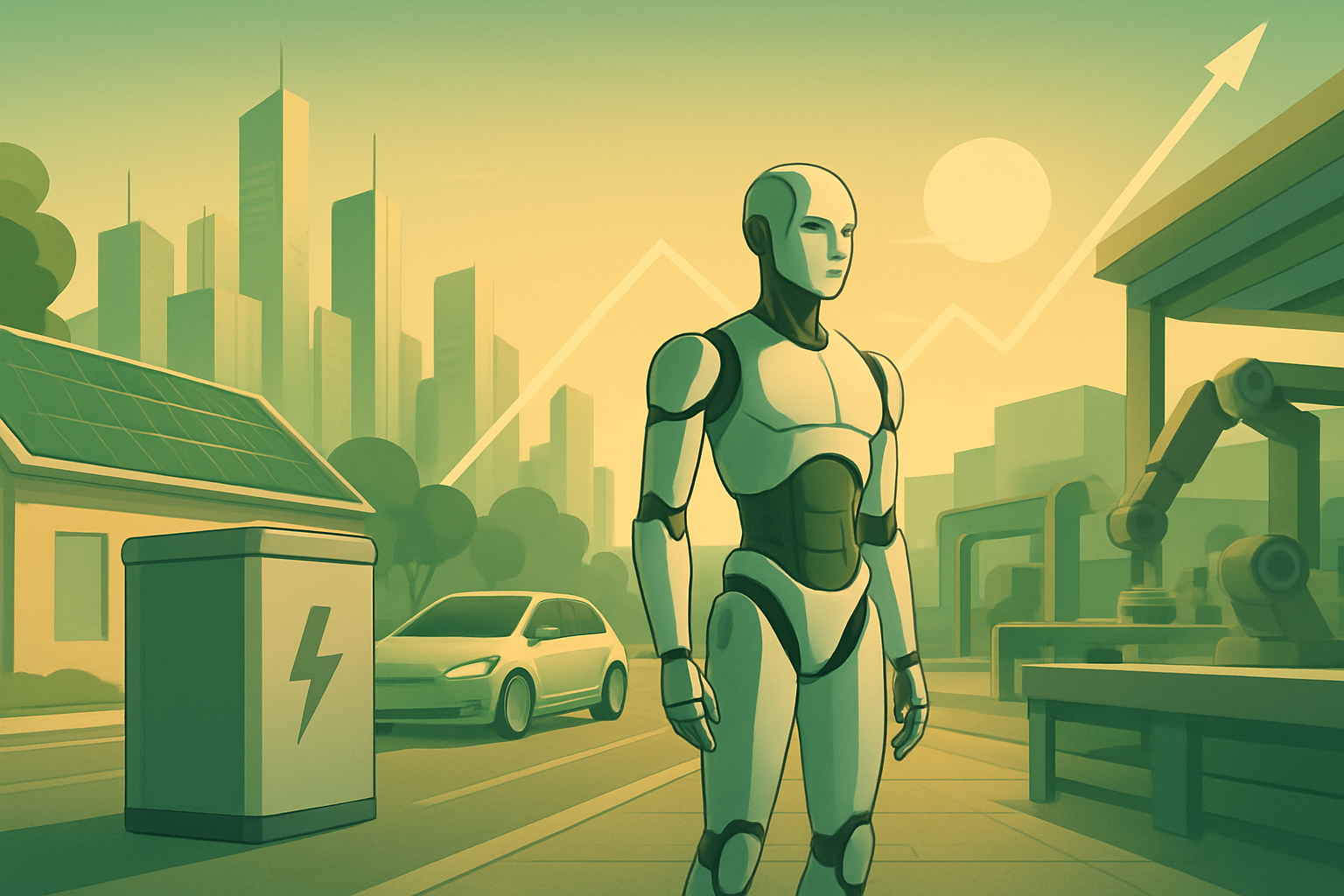
    As of December 26, 2025, Tesla, Inc. (NASDAQ: TSLA) stands at one of the most significant crossroads in its twenty-two-year history. Once viewed primarily as a disruptive force in the automotive industry, Tesla has spent the last year aggressively rebranding itself as an artificial intelligence and robotics powerhouse. With a market capitalization hovering around $1.6 trillion, the company remains the world’s most valuable automaker, though its valuation is increasingly untethered from traditional automotive metrics. Investors are currently weighing a "bridge year" of slowing vehicle deliveries against the massive, speculative potential of autonomous driving and humanoid robots.

    Historical Background

    Founded in 2003 by Martin Eberhard and Marc Tarpenning, with Elon Musk joining as a lead investor shortly after, Tesla’s mission was to prove that electric vehicles (EVs) could be better, quicker, and more fun to drive than gasoline cars. The 2008 release of the Roadster broke the "golf cart" stereotype of EVs, but it was the Model S in 2012 that established Tesla as a luxury heavyweight.

    The company nearly collapsed during the "production hell" of the Model 3 ramp-up in 2017–2018, a period Musk described as excruciating. However, the successful scaling of the Model 3 and later the Model Y transformed Tesla into a mass-market leader. By the early 2020s, Tesla had opened Gigafactories in Shanghai, Berlin, and Texas, cementing its global footprint. Today, the narrative has shifted from how many cars Tesla can build to what those cars can do without a human driver.

    Business Model

    Tesla operates a vertically integrated business model that spans three primary segments:

    1. Automotive: The core driver of revenue, involving the sale and leasing of the Model S, X, 3, Y, and Cybertruck. This segment also includes "Regulatory Credits," where Tesla sells carbon offsets to other automakers.
    2. Energy Generation and Storage: This includes the Powerwall (home storage), Megapack (utility-scale storage), and solar products. By late 2025, this segment has become a major growth engine, contributing nearly 25% of total revenue.
    3. Services and AI: This includes the Supercharging network—now an industry standard—along with insurance, maintenance, and the high-margin Full Self-Driving (FSD) software subscriptions. Looking forward, the "Tesla Network" (Robotaxis) and Optimus (Humanoid Robots) are designed to eventually eclipse automotive sales in the company’s long-term revenue mix.

    Stock Performance Overview

    Tesla’s stock performance has been a roller coaster defined by high beta and intense retail interest.

    • 10-Year View: An investment in TSLA a decade ago would have yielded astronomical returns, far outperforming the S&P 500 as the company moved from a niche player to a trillion-dollar entity.
    • 5-Year View: The stock saw a massive surge in 2020-2021, followed by a sharp correction in 2022. It has since traded in a wide range, recovering significantly throughout late 2024 and 2025.
    • 1-Year View (2025): TSLA rallied approximately 20.2% in 2025. After starting the year with concerns over EV demand, the stock reached a record intraday high of $498.83 in late December, fueled by optimism surrounding the first "unsupervised" FSD trials in Texas.

    Financial Performance

    The fiscal year 2025 has been a story of margin resilience amid price wars.

    • Revenue: Estimated at $98 billion for 2025, representing a stabilization after a flat 2024.
    • Margins: Automotive gross margins have compressed from the 24%+ levels of 2023 to approximately 17.0%–18.0% in late 2025. This contraction reflects the aggressive pricing strategy used to maintain market share against Chinese competitors like BYD (OTC: BYDDF).
    • Profitability: Operating margins have settled in the 5%–7% range, pressured by heavy R&D spending on the Dojo supercomputer and the Optimus robot project.
    • Cash Flow: Despite high CapEx, Tesla maintains a robust cash balance, allowing it to self-fund its massive AI infrastructure and upcoming "Redwood" platform factories.

    Leadership and Management

    Elon Musk remains the central, and often polarizing, figure at Tesla. As of late 2025, his leadership is characterized by a "hardcore" focus on AI. While his involvement in other ventures (X, SpaceX, xAI) has drawn criticism from some institutional investors regarding "key man risk," the board, led by Chair Robyn Denholm, has largely remained supportive. CFO Vaibhav Taneja has been credited with maintaining financial discipline during the margin-squeeze of 2024-2025. However, concerns regarding governance and succession planning persist, particularly as Musk leans further into political and cultural spheres.

    Products, Services, and Innovations

    • Cybertruck: Still in the ramp-up phase as of December 2025, with mass production targets shifted to 2026. Deliveries for 2025 are estimated at roughly 20,000 units.
    • The "Redwood" Project: Tesla’s highly anticipated $25,000 next-generation vehicle is currently in pilot production at Giga Texas. It is seen as the key to unlocking the next wave of mass adoption.
    • Full Self-Driving (FSD): Tesla began its first unsupervised FSD trials in Austin, Texas, this month. The software (v13/v14) now relies heavily on end-to-end neural networks.
    • Optimus (Tesla Bot): The Gen 3 prototype was recently showcased, demonstrating advanced dexterity. Tesla aims for limited internal use of the robot in its factories by late 2026.

    Competitive Landscape

    The competitive landscape has bifurcated:

    1. Legacy OEMs: Companies like Ford (NYSE: F) and General Motors (NYSE: GM) have pulled back on aggressive EV targets, pivoting toward hybrids, which has ironically left Tesla with a larger share of the pure EV market in the US.
    2. Chinese Powerhouses: BYD remains Tesla’s most formidable rival globally. With a more diversified price range and a vertical battery supply chain, BYD frequently rivals Tesla in quarterly unit volume.
    3. Luxury/Tech Rivals: Rivian (NASDAQ: RIVN) and Lucid (NASDAQ: LCID) continue to compete in the high-end segment, though they struggle with the scale and profitability that Tesla has already mastered.

    Industry and Market Trends

    The "EV slowdown" narrative of 2024 has evolved into a "bridge year" in 2025. While global EV adoption continues, it has shifted toward a slower, more deliberate growth phase. High interest rates in early 2025 hampered consumer financing, though recent rate cuts have begun to stimulate demand. A major trend is the integration of "Physical AI"—the application of LLM-like intelligence into robotic bodies and vehicles—which is where Tesla is betting its entire future.

    Risks and Challenges

    • Model Aging: The Model 3 and Model Y, while still best-sellers, are aging. Without a refreshed lineup or the $25k car in high-volume production, Tesla faces "fatigue" in mature markets.
    • Regulatory Scrutiny: NHTSA continues to investigate FSD safety, particularly regarding its performance in complex urban environments and near railroad crossings.
    • Geopolitical Tension: Tesla’s heavy reliance on Giga Shanghai makes it vulnerable to shifts in US-China trade policy and potential tariffs on EV components.

    Opportunities and Catalysts

    • FSD Licensing: Musk has hinted at ongoing discussions to license FSD to other major automakers. A deal here would provide high-margin, recurring software revenue without the overhead of manufacturing.
    • Energy Arbitrage: As power grids become more volatile, Tesla’s Megapack and "Virtual Power Plant" software present a massive utility-scale opportunity.
    • Robotaxi Reveal: A formal launch of a dedicated Robotaxi vehicle (without a steering wheel) is expected to be a major stock catalyst in mid-2026.

    Investor Sentiment and Analyst Coverage

    Sentiment is sharply divided. Bulls, like Dan Ives of Wedbush, view Tesla as "the most undervalued AI play in the market," focusing on the potential $3 trillion valuation by 2027. Conversely, bears point to the declining deliveries and margin compression, arguing that Tesla is being valued as a software company while still having the capital intensity of a car company. Retail sentiment remains overwhelmingly positive, with Tesla continuing to be the most "held" stock among individual investors.

    Regulatory, Policy, and Geopolitical Factors

    In 2025, Tesla has navigated a complex regulatory environment. In the United States, the debate over the "Big Beautiful Bill" and the potential phasing out of the $7,500 EV tax credit created significant market volatility. In Europe, Tesla is currently working with the Dutch regulator (RDW) to gain approval for Supervised FSD across the EU by early 2026. Furthermore, Tesla’s ability to navigate the 100% tariffs on Chinese-made EVs in the US and similar measures in the EU has highlighted the strategic importance of its localized manufacturing in Texas and Berlin.

    Conclusion

    Tesla enters 2026 as a company in the midst of a profound metamorphosis. It has successfully weathered the initial storm of global competition and shifting consumer preferences, but it is now tasked with proving that its vision of an autonomous, robotic future is more than just a billionaire’s dream. For investors, Tesla remains a high-stakes bet on the convergence of energy, transportation, and artificial intelligence. While the automotive margins may be under pressure, the company’s lead in real-world data and AI compute (Dojo) provides a moat that few, if any, traditional automakers can cross. The coming 12 to 18 months—specifically the ramp-up of the "Redwood" platform and the first commercial Robotaxi deployments—will likely determine if Tesla can reclaim its mantle as the undisputed king of the "Magnificent Seven."


    This content is intended for informational purposes only and is not financial advice. Data as of December 26, 2025.

  • The Alphabet Era: Resilience, Regulation, and the $3 Trillion AI Frontier

    The Alphabet Era: Resilience, Regulation, and the $3 Trillion AI Frontier

    As of late 2025, Alphabet Inc. (NASDAQ: GOOGL / GOOG) has solidified its position as one of the most resilient and high-performing entities in the global economy. In a year that many predicted would be defined by regulatory fragmentation and AI disruption, Alphabet instead crossed a historic $3 trillion market capitalization milestone on September 15, 2025. Today, on December 26, 2025, the company stands at a pivotal juncture: it has successfully integrated generative AI across its multibillion-user ecosystem while navigating the most significant antitrust rulings in the history of the internet. With its flagship Google Search proving its durability and Google Cloud emerging as a high-margin profit engine, Alphabet is no longer just a "search engine company" but a comprehensive AI infrastructure and services giant.

    Historical Background

    Alphabet’s journey began in 1998 when Larry Page and Sergey Brin incorporated Google in a California garage with the mission to "organize the world's information." Following its 2004 IPO, the company rapidly expanded beyond search, acquiring YouTube in 2006 and developing the Android operating system to dominate the mobile era.

    A defining transformation occurred in 2015 when the company restructured into Alphabet Inc., a holding company designed to separate its core Google business (Search, YouTube, Maps, Ads) from its "Other Bets"—ambitious, long-term ventures like Waymo (autonomous driving) and Verily (life sciences). This structure allowed for greater financial transparency and operational focus, a strategy that has proven vital as the company shifted its entire focus toward becoming "AI-first" starting in 2016.

    Business Model

    Alphabet’s revenue engine remains the most powerful advertising ecosystem in history, but it has diversified significantly over the last 24 months.

    • Google Search & Other: Still the crown jewel, generating the majority of revenue through intent-based advertising.
    • YouTube: A dual-threat platform that earns from both high-margin advertising and a rapidly growing subscription base (YouTube Premium and YouTube TV).
    • Google Cloud: Provides infrastructure (GCP) and platform services (Workspace). In 2025, this segment matured into a top-tier contributor to Alphabet’s bottom line, fueled by enterprise AI demand.
    • Subscriptions, Platforms, and Devices: Includes Play Store fees, hardware (Pixel devices), and Gemini AI subscription tiers.
    • Other Bets: High-risk, high-reward ventures. Waymo is the standout here, transitioning from a research project to a commercially viable ride-hailing service.

    Stock Performance Overview

    Alphabet’s stock performance in 2025 has been nothing short of remarkable, rewarding patient investors who looked past early "AI anxiety."

    • 1-Year Performance: GOOGL shares have surged approximately 60% year-to-date in 2025, significantly outperforming the S&P 500. After starting the year around $195, the stock reached an all-time high of $329 in November before stabilizing near $314 as of late December.
    • 5-Year Performance: Over the last five years, the stock has more than tripled, driven by the post-pandemic digital ad boom and the subsequent AI-led re-rating.
    • 10-Year Performance: A decade-long view shows a staggering gain of over 700%, reflecting Alphabet's ability to compound earnings despite increasing size and regulatory scrutiny.

    Financial Performance

    Alphabet’s financial health in 2025 is characterized by massive scale and improving efficiency.

    • Revenue Growth: The company reported its first-ever $100 billion revenue quarter in Q3 2025 ($102.35 billion, up 16% YoY).
    • Margins: Operating margins have remained robust at roughly 31–34% (on a non-GAAP basis), despite a massive capital expenditure (CapEx) cycle.
    • Net Income & EPS: FY 2024 saw net income reach $100.12 billion ($8.04 EPS). For 2025, consensus estimates suggest EPS will approach $11.00 as AI-driven efficiencies take hold.
    • Cash Flow & Buybacks: Alphabet continues to generate immense free cash flow, supporting a record $85 billion share repurchase program in 2025.
    • Valuation: The stock currently trades at a forward P/E of approximately 28x, a premium to its historical average but considered reasonable by analysts given the 30%+ growth in the Cloud segment.

    Leadership and Management

    Under CEO Sundar Pichai, Alphabet has transitioned from a period of "restructuring" to "aggressive execution."

    • Sundar Pichai (CEO): Has successfully steered the company through the "AI race," integrating Gemini into core products while maintaining search market share.
    • Anat Ashkenazi (CFO): Since joining in July 2024, Ashkenazi has brought a reputation for fiscal discipline, helping the company manage its $90B+ annual CapEx budget.
    • Ruth Porat (President & CIO): Transitioned from the CFO role to oversee the "Other Bets" portfolio and global infrastructure, providing a steady hand for the company's long-term investments.
    • Governance: While the founders (Page and Brin) remain on the board and retain majority voting power via Class B shares, the current management team has been given wide latitude to navigate the company's AI pivot.

    Products, Services, and Innovations

    The "Gemini" era is now in full swing across Alphabet’s product suite.

    • Gemini AI: The Gemini app reached 650 million monthly active users in 2025. The introduction of "AI Ultra" for enterprise users has created a new high-margin subscription stream.
    • AI Overviews (SGE): Now used by 1.5 billion people monthly. Rather than cannibalizing search, these AI-generated summaries have increased user engagement and query volume.
    • Google Cloud Vertex AI: The platform of choice for developers building custom AI models, contributing to Cloud's 34% revenue growth.
    • Waymo: Now operating in six major U.S. cities (SF, LA, Phoenix, Austin, Atlanta, Miami) with over 450,000 paid weekly trips, Waymo is the undisputed leader in autonomous mobility.

    Competitive Landscape

    Alphabet faces a multi-front war, but its "moats" remain wide.

    • Search: Microsoft (NASDAQ: MSFT) and OpenAI have challenged Google, but Search’s market share remains above 90% as of late 2025.
    • Cloud: Google Cloud continues to chase Amazon (NASDAQ: AMZN) Web Services and Microsoft Azure, but is now growing faster than both on a percentage basis.
    • Social & Video: YouTube remains the dominant video platform, successfully fending off TikTok via "YouTube Shorts" and premium live sports content (NFL Sunday Ticket).
    • AI Models: Competitors like Meta Platforms (NASDAQ: META) and various startups (Anthropic, Perplexity) provide fierce competition, but Alphabet’s integrated hardware-software stack (using its custom TPU chips) gives it a cost advantage.

    Industry and Market Trends

    The broader technology sector in 2025 is dominated by two themes: the "Compute Supercycle" and "Agentic AI."

    • AI Capex: Hyperscalers are spending hundreds of billions on data centers. Alphabet's vertical integration—designing its own chips and owning its data centers—is a key trend that helps it protect margins.
    • Regulatory Maturation: Governments are moving from "investigating" to "implementing" AI and antitrust rules.
    • Monetization Shift: The industry is moving from "click-based" advertising to "task-based" AI assistance, a shift Alphabet is leading via its Gemini integrations.

    Risks and Challenges

    Despite its $3T valuation, Alphabet faces significant headwinds.

    • Regulatory Remedies: While the courts did not mandate a breakup of the company in late 2025, the forced sharing of search data with rivals and the ban on exclusive search deals (like the Apple deal) could pressure long-term search margins.
    • AdTech Divestiture: The DOJ's ongoing effort to force the sale of Google's Ad Manager remains a looming threat that could disrupt the "Network" side of the business.
    • Capex Pressure: Spending $90B+ a year on infrastructure is a high-stakes bet. If AI revenue growth slows, the stock could face a sharp de-rating.
    • AI Accuracy: "Hallucinations" and the potential for AI-generated misinformation remain persistent reputational and operational risks.

    Opportunities and Catalysts

    • Waymo Monetization: Analysts believe a Waymo IPO or spinoff could unlock $100B+ in shareholder value by 2026.
    • AI-Native Search Ads: New ad formats within AI Overviews are showing higher conversion rates, potentially increasing Revenue Per Search (RPS).
    • YouTube Subscriptions: The shift from cable TV to YouTube TV continues to provide a stable, recurring revenue base.
    • Enterprise Cloud: As more companies move their "data moats" to the cloud to train AI, Google Cloud’s backlog (currently $155B) is expected to grow.

    Investor Sentiment and Analyst Coverage

    Wall Street remains overwhelmingly bullish on GOOGL.

    • Ratings: Approximately 85% of covering analysts maintain a "Buy" or "Strong Buy" rating.
    • Institutional Moves: Major hedge funds and pension funds increased their weightings in late 2025 as the "no-breakup" ruling removed the worst-case scenario.
    • Retail Sentiment: Retail investors have become particularly enthusiastic about Waymo's expansion, often viewing Alphabet as the "safest" way to play the autonomous vehicle revolution.

    Regulatory, Policy, and Geopolitical Factors

    Alphabet's global operations make it a frequent target for regulators.

    • U.S. DOJ: The search monopoly remedy finalized in December 2025 requires Google to open its data to competitors—a "soft" remedy that avoids a breakup but increases competition.
    • European Union: The Digital Markets Act (DMA) and the AI Act continue to impose strict compliance costs and potential fines (like the $3.5B fine seen in 2025).
    • Geopolitics: Trade tensions with China affect Alphabet’s supply chain for its Tensor chips and Pixel hardware. However, the company’s limited direct exposure to the Chinese consumer market acts as a partial hedge against local economic volatility.

    Conclusion

    Alphabet Inc. enters 2026 as a titan that has successfully navigated its most perilous chapter. By aggressively pivoting to AI while defending its core search monopoly through both innovation and legal resilience, the company has silenced skeptics. While regulatory "death by a thousand cuts" remains a concern and the CapEx burden is heavy, Alphabet’s diversified revenue streams—now including a highly profitable Cloud business and a burgeoning autonomous ride-hailing leader—suggest that its $3 trillion valuation is backed by fundamental strength rather than mere speculation. Investors should watch the execution of the DOJ's data-sharing mandates and the continued scaling of Waymo as the primary indicators of Alphabet’s trajectory in the coming year.


    This content is intended for informational purposes only and is not financial advice.

  • Apple in 2025: The $4 Trillion AI Powerhouse – A Comprehensive Research Report

    Apple in 2025: The $4 Trillion AI Powerhouse – A Comprehensive Research Report

    As of December 26, 2025, Apple Inc. (NASDAQ: AAPL) stands at a historic crossroads. After a year that saw the company’s market capitalization cross the $4 trillion threshold, the tech giant is no longer just a hardware manufacturer; it has successfully pivoted into a full-scale artificial intelligence (AI) and services powerhouse. The narrative surrounding Apple in late 2025 is dominated by the success of the iPhone 17 "super-cycle" and the rapid adoption of "Apple Intelligence," the company’s proprietary generative AI ecosystem. Despite regulatory pressures in Europe and the United States, Apple continues to demonstrate an unparalleled ability to monetize its massive installed base of over 2.2 billion active devices.

    Historical Background

    Founded in 1976 by Steve Jobs, Steve Wozniak, and Ronald Wayne, Apple’s journey is one of the most storied in corporate history. From the early success of the Apple II to the Macintosh, the company defined the personal computing era. However, it was the "Second Coming" of Steve Jobs in 1997 that truly transformed the firm. The subsequent decade brought a string of revolutionary products: the iMac (1998), the iPod (2001), and most significantly, the iPhone (2007).

    Under the leadership of Tim Cook, who took the helm in 2011, Apple transitioned from a visionary product shop into an operational juggernaut. Cook oversaw the expansion into wearables (Apple Watch, AirPods) and a massive shift toward Services (App Store, Music, iCloud). By 2025, the company has evolved into an ecosystem company where hardware serves as the gateway to a lifetime of high-margin recurring revenue.

    Business Model

    Apple’s business model is built on the concept of the "Walled Garden"—a seamless integration of hardware, software, and services that creates high switching costs for users. The model is categorized into two primary pillars:

    1. Product Segments: The iPhone remains the primary revenue driver, complemented by the Mac, iPad, and a robust "Wearables, Home, and Accessories" category. These products act as the "entry point" for the ecosystem.
    2. Services Segment: This is Apple’s high-growth, high-margin engine. It includes the App Store, Apple Pay, Apple Music, and the newly launched Apple Intelligence Pro. By late 2025, Services have reached a staggering 75% gross margin, contributing over $100 billion in annual revenue.

    The brilliance of the model lies in its "flywheel" effect: every new device sold increases the demand for services, and every service integrated into a user’s life makes them more likely to purchase their next hardware upgrade from Apple.

    Stock Performance Overview

    Apple remains one of the greatest wealth-creation machines in market history. As of December 2025, the stock is trading near $275, having hit an all-time high earlier in the month.

    • 1-Year Performance: AAPL has returned approximately 38% in 2025, fueled by the reacceleration of iPhone growth and the clarity of its AI strategy.
    • 5-Year Performance: Long-term shareholders have seen gains of over 210%, significantly outperforming the broader tech sector.
    • 10-Year Performance: Over the past decade, Apple has delivered a legendary 1,020% total return, meaning a $10,000 investment in late 2015 would be worth over $112,000 today (accounting for dividends and splits).

    The stock's resilience is often attributed to its massive buyback programs, with Apple typically retiring $80–$100 billion of its own shares annually.

    Financial Performance

    Apple’s Fiscal Year 2025 (ending September) was a record-breaking period for the company.

    • Revenue: FY2025 revenue reached $416.2 billion, up 6.4% from the previous year.
    • Net Income: The company posted a record net income of $112.0 billion.
    • Margins: Gross margins have expanded to the 46.5% range, largely due to the "premiumization" of the iPhone lineup (with Pro models dominating the mix) and the growth of Services.
    • Cash Flow: Apple’s free cash flow remains the envy of the corporate world, allowing for a healthy dividend and the industry's most aggressive share repurchase program.

    Leadership and Management

    Apple is currently navigating a period of significant leadership transition. While Tim Cook remains CEO, the company is clearly preparing for the next generation.

    • CEO Succession: John Ternus, Senior VP of Hardware Engineering, has emerged as the clear frontrunner to succeed Cook, who turned 65 in 2025. Ternus is widely respected for his role in the transition to Apple Silicon (M-series chips).
    • CFO Transition: Kevan Parekh has successfully taken over the CFO role from the legendary Luca Maestri, ensuring continuity in Apple’s disciplined capital allocation strategy.
    • Strategy: The current leadership focus is twofold: maintaining the iPhone's dominance through AI integration and diversifying the supply chain away from China.

    Products, Services, and Innovations

    The 2025 product cycle has been defined by Apple Intelligence. Unlike competitors who focused on standalone chatbots, Apple integrated generative AI directly into the operating system.

    • iPhone 17 Series: The standout performer of 2025. The inclusion of the M5-based A19 Pro chip has allowed for sophisticated on-device AI tasks, such as automated cross-app workflow execution (e.g., "Find the flight details in my email and add them to my calendar while booking an Uber").
    • Apple Intelligence Pro: A new $9.99/month subscription tier launched in 2025, offering advanced "Agentic AI" features and professional-grade creative tools.
    • Vision Pro: While technically a marvel, the first-generation Vision Pro remained a niche product in 2025 due to its $3,499 price tag. Apple has pivoted toward a more affordable "Vision" headset and AR smart glasses slated for 2026.

    Competitive Landscape

    Apple competes in several highly saturated markets but maintains a unique edge through its vertically integrated stack.

    • Smartphone Rivals: Samsung and Google have launched competitive AI-enabled phones, but Apple’s "walled garden" prevents significant churn. In China, Apple faces stiff competition from a resurgent Huawei and Xiaomi, though its "Pro" models continue to appeal to the affluent demographic.
    • AI Landscape: While Microsoft and Google had an early lead in cloud-based AI, Apple’s focus on "Privacy-First, On-Device AI" has resonated with consumers concerned about data security.
    • Services: Apple Music and Apple TV+ continue to battle Spotify and Netflix, respectively, serving more as retention tools than standalone profit centers.

    Industry and Market Trends

    Three macro trends are currently shaping Apple’s trajectory:

    1. The Shift to Edge AI: Processing AI on the device rather than the cloud reduces latency and improves privacy. Apple’s custom silicon gives it a multi-year lead in this space.
    2. Supply Chain Diversification: Apple has made significant strides in its "China Plus One" strategy. In 2025, India now accounts for 20% of all iPhone production, including high-end Pro models.
    3. Premiumization: Consumers are increasingly willing to pay more for devices that last longer and have better features. This trend has pushed Apple’s Average Selling Price (ASP) to record levels.

    Risks and Challenges

    Despite its dominance, Apple faces three significant headwinds:

    • Antitrust Litigation: The U.S. Department of Justice (DOJ) case regarding Apple’s alleged smartphone monopoly remains a major overhang. A trial is expected in the 2026–2027 window.
    • China Geopolitics: China remains both a critical manufacturing hub and a massive market. Any escalation in trade tensions or nationalist consumer boycotts could severely impact Apple's bottom line.
    • Innovation Fatigue: There is constant pressure on Apple to find the "Next Big Thing." If the Vision Pro line or the rumored AR glasses fail to reach mass-market adoption, Apple could be seen as a "legacy" tech company.

    Opportunities and Catalysts

    • AI Monetization: The success of "Apple Intelligence Pro" suggests that Apple can successfully charge for AI features, creating a massive new high-margin revenue stream.
    • Health Technology: Apple continues to integrate sophisticated health sensors (glucose monitoring, sleep apnea detection) into the Apple Watch, positioning itself as a central player in the multi-trillion-dollar healthcare industry.
    • Enterprise Adoption: As AI becomes more integrated into the Mac and iPad, Apple has an opportunity to gain more market share in the corporate enterprise space, which has historically been dominated by Windows.

    Investor Sentiment and Analyst Coverage

    Wall Street remains broadly bullish on AAPL. The consensus rating is a "Moderate Buy," with a price target averaging around $282.

    • Institutional Ownership: Large institutions like Vanguard and BlackRock remain the largest holders.
    • The Buffett Factor: Berkshire Hathaway continues to hold Apple as its largest equity position, though Warren Buffett has trimmed the position slightly in 2025 for tax and diversification purposes. This "trimming" is generally viewed as portfolio management rather than a lack of confidence in Apple’s fundamentals.
    • Retail Sentiment: Apple remains the "gold standard" for retail investors, often viewed as a "safe haven" during periods of broader market volatility.

    Regulatory, Policy, and Geopolitical Factors

    The regulatory environment is Apple’s most complex challenge.

    • European Union (DMA): The Digital Markets Act has forced Apple to allow third-party app stores in Europe. While this has not yet significantly dented revenue, it sets a precedent that other nations may follow.
    • US Policy: Potential changes in US trade policy and tariffs (particularly concerning imports from China) are a constant source of concern for the hardware supply chain.
    • Data Privacy Laws: Increasingly stringent global privacy laws generally favor Apple, as its business model does not rely on selling user data, unlike many of its peers.

    Conclusion

    By late 2025, Apple has proved its doubters wrong by successfully navigating the transition into the AI era. While the Vision Pro has yet to become the "iPhone of spatial computing," the integration of Apple Intelligence into the iPhone 17 has secured the company’s near-term growth.

    For investors, Apple remains a "compounder"—a company that combines steady growth with massive capital returns. The key factors to watch over the next 12 months will be the progress of the DOJ antitrust case, the first full year of AI subscription revenue, and the official announcement of Tim Cook’s retirement timeline. In a tech landscape increasingly defined by volatility, Apple’s ecosystem continues to be the most formidable moat in the global economy.


    This content is intended for informational purposes only and is not financial advice.
  • Micron’s AI Renaissance: A 2025 Deep Dive into the Backbone of Intelligence

    Micron’s AI Renaissance: A 2025 Deep Dive into the Backbone of Intelligence

    Today’s Date: December 26, 2025

    The semiconductor landscape of 2025 has been defined by a single, inescapable reality: artificial intelligence (AI) is only as powerful as the memory that feeds it. At the epicenter of this technological shift is Micron Technology, Inc. (NASDAQ: MU), a company that has spent the last year transforming from a cyclical commodity manufacturer into an indispensable pillar of the global AI infrastructure. As the only major U.S.-based DRAM manufacturer, Micron’s strategic pivot has not only rewarded shareholders but has also positioned the company as a critical asset in the West’s pursuit of semiconductor sovereignty. This research feature examines how Micron navigated the "AI Supercycle" of 2025 to reach record-shattering heights.

    Historical Background

    Founded in 1978 in the unlikely setting of a dentist’s office basement in Boise, Idaho, Micron Technology began as a semiconductor design firm. By 1981, the company had pivoted to manufacturing, producing its first 64K DRAM chips. Throughout the 1990s and 2000s, Micron became a survivor of the "memory wars," a period of brutal price competition and consolidation that saw many of its American peers exit the industry.

    Strategic acquisitions—most notably the purchase of Texas Instruments’ memory business in 1998 and Elpida Memory in 2013—allowed Micron to scale and compete globally. Over the last decade, under the leadership of CEO Sanjay Mehrotra, the company moved away from its reputation as a "low-cost follower." Instead, it emerged as a leader in process technology, often beating its South Korean rivals to market with the latest manufacturing nodes. By late 2025, Micron is no longer just a "memory company"; it is a high-bandwidth powerhouse.

    Business Model

    Micron’s business model revolves around the design and fabrication of two primary categories of volatile and non-volatile memory:

    • DRAM (Dynamic Random Access Memory): Accounted for approximately 78% of fiscal 2025 revenue. DRAM is the "working memory" of a computer. In 2025, the focus shifted heavily toward High-Bandwidth Memory (HBM), which is stacked vertically to provide the massive data speeds required by AI processors.
    • NAND (Flash Memory): Comprises roughly 21% of revenue. Used for long-term storage in Solid State Drives (SSDs). While traditionally a lower-margin business, the rise of enterprise SSDs for AI "data lakes" has improved profitability in this segment.
    • NOR and Specialized Memory: A smaller portion of the business focused on automotive and industrial applications where reliability is paramount.

    In 2025, Micron reorganized its reporting to highlight its Cloud Memory Business Unit (CMBU), reflecting a strategic decision to prioritize data center clients over the volatile consumer PC and smartphone markets.

    Stock Performance Overview

    The performance of MU shares over the last decade has been a study in cyclical volatility followed by exponential growth.

    • 1-Year Performance: As of late December 2025, MU has been the "NVIDIA of the memory space," returning roughly 220% year-to-date. The stock surged from approximately $83 in late 2024 to an all-time high of $294.50.
    • 5-Year Performance: With a 280% return, the stock has significantly outperformed the S&P 500 and the Philadelphia Semiconductor Index (SOX). The recovery from the 2022 inventory correction served as the launchpad for the current AI-driven rally.
    • 10-Year Performance: Long-term investors have seen a nearly 1,800% return. A stock that traded in the mid-teens in 2015 is now a large-cap heavyweight with a market capitalization reflecting its systemic importance.

    Financial Performance

    Micron’s fiscal year 2025 was a record-breaking triumph. The company reported total revenue of $37.38 billion, a 50% increase year-over-year. The primary driver was the pricing power afforded by the global shortage of HBM.

    Profitability metrics reached historic highs. Non-GAAP gross margins expanded to 41% for the full year, peaking at 45.7% in the final quarter. This margin expansion was fueled by a favorable product mix, as HBM3E (high-bandwidth memory) carries significantly higher ASPs (Average Selling Prices) than traditional DDR4 or DDR5. Non-GAAP EPS (Earnings Per Share) came in at $8.29, a staggering 538% increase over the previous year. While capital expenditures remained high at $13.80 billion, the company’s strong cash flow from operations has allowed it to maintain a healthy balance sheet while funding massive domestic expansion.

    Leadership and Management

    Sanjay Mehrotra, who took over as CEO in 2017, has been the primary architect of Micron's technical leadership. In January 2025, Mehrotra further solidified his influence by assuming the role of Chairman of the Board. Under his tenure, Micron has consistently achieved "first-to-market" status on critical memory nodes, a feat that was once thought impossible against the giants of Seoul.

    The board of directors saw a major addition in March 2025 with the appointment of Mark Liu, the former Executive Chairman of TSMC. Liu’s expertise in advanced packaging has been invaluable as Micron ramps up its HBM production, which requires sophisticated 3D-stacking techniques similar to those used in logic foundries. The management team is widely regarded for its disciplined approach to supply management, helping to mitigate the "boom-bust" cycles that historically plagued the sector.

    Products, Services, and Innovations

    Micron’s competitive edge in 2025 is built on its 1-gamma (1γ) DRAM node and its HBM3E technology.

    • HBM3E (12-High Stacks): Micron’s 36GB 12-high HBM3E modules have become the industry standard for NVIDIA’s Blackwell Ultra and AMD’s Instinct GPU architectures. These modules offer 30% better power efficiency than rival products, a critical factor for data centers struggling with energy costs.
    • 1-Gamma (1γ) Node: Micron is the first to achieve mature yields on this node using EUV (Extreme Ultraviolet) lithography. This provides a 40% improvement in bit density, allowing for more memory to be produced on a single wafer.
    • LP5X and DDR5: In the mobile and client space, Micron continues to lead in low-power DDR5 (LPDDR5X), which is essential for "AI PCs" and "AI Smartphones" that require high-speed local processing.

    Competitive Landscape

    The memory market is an oligopoly dominated by three players: Samsung Electronics, SK Hynix, and Micron.

    • SK Hynix: Traditionally the leader in HBM, SK Hynix maintained its #1 market share in 2025 (~60%), but its lead has narrowed.
    • Samsung: Samsung faced a difficult 2025, struggling with yield issues on its 12-high HBM3E stacks. This allowed Micron to leapfrog Samsung to become the #2 provider of HBM by volume and revenue.
    • Competitive Dynamics: The "3-to-1" wafer capacity squeeze—where HBM requires three times the wafer capacity of standard DRAM—has effectively removed significant supply from the commodity market. This has benefited all three players by driving up prices for standard memory, though Micron’s superior execution in 2025 has given it the strongest margin profile of the trio.

    Industry and Market Trends

    The most significant trend of 2025 is the "Decoupling of Memory." Historically, memory prices were tied to PC and smartphone demand. However, the AI server market has become such a massive consumer of high-value bits that it now dictates the market cycle.

    Furthermore, we are witnessing a structural supply constraint. Because HBM is physically larger and more complex to manufacture, it consumes a disproportionate amount of factory capacity. As long as AI demand remains robust, the industry is likely to face a chronic shortage of standard DRAM, a phenomenon that has sustained high prices throughout 2025 and into the 2026 forecast.

    Risks and Challenges

    Despite the stellar performance, Micron faces distinct risks:

    1. China Trade Decoupling: Following the 2023 CAC (Cyberspace Administration of China) ban, Micron effectively exited the Chinese server market by late 2025. While this reduces its vulnerability to future Chinese regulatory action, it removes a once-significant growth engine.
    2. Cyclicality: The memory industry remains capital-intensive. If AI investment were to cool—or if hyperscalers like Amazon or Google significantly delayed their chip orders—Micron could be left with billions in high fixed costs.
    3. Execution Risk: The transition to 1-gamma nodes and 12-high stacks is technically difficult. Any yield regressions could allow Samsung or SK Hynix to reclaim lost ground.

    Opportunities and Catalysts

    The primary catalyst for 2026 is the full ramp of Micron’s domestic manufacturing. Supported by the U.S. CHIPS Act, Micron’s new fab in Boise, Idaho, is expected to begin DRAM production in late 2026, followed by a "mega-fab" in Clay, New York. These facilities will allow Micron to offer "Made in America" memory, a significant selling point for U.S. government and defense contractors.

    Additionally, the rollout of "AI-enabled" edge devices—laptops and phones with dedicated NPUs (Neural Processing Units)—is expected to double the memory requirements per device, providing a second growth engine beyond the data center.

    Investor Sentiment and Analyst Coverage

    Wall Street remains overwhelmingly bullish on Micron. The consensus rating is a "Strong Buy," with top analysts from HSBC and Piper Sandler raising price targets to the $330–$500 range toward the end of 2025. Institutional ownership has climbed as the stock transitioned from a value play to a core growth holding. Many investors now view Micron as a "toll booth" on the AI highway; regardless of which company wins the AI software race, they will all need Micron’s memory.

    Regulatory, Policy, and Geopolitical Factors

    Micron is the "star pupil" of the U.S. CHIPS and Science Act. The company secured between $6.1 and $6.4 billion in direct grants to repatriate advanced memory manufacturing. While the U.S. political transition in early 2025 led to increased scrutiny over the terms of these grants—including discussions on "upside sharing" with the government—Micron’s importance to national security has ensured that its funding and political support remain rock-solid. Geopolitically, the company remains a central figure in the tech-trade war, acting as a barometer for U.S.-China semiconductor tensions.

    Conclusion

    As we look toward 2026, Micron Technology stands at the pinnacle of its 47-year history. By successfully executing its transition into the high-bandwidth memory market, the company has shed its "commodity" label and embraced its role as an AI enabler. While the cyclical nature of the semiconductor industry will always loom, the current AI supercycle—combined with historic domestic investment—has provided Micron with a tailwind unlike any it has experienced before. For investors, the focus remains on whether Micron can maintain its yield advantages and successfully navigate the massive capital requirements of its New York expansion. In the high-stakes game of AI dominance, Micron has proved that memory is no longer an afterthought—it is the mission-critical foundation.


    This content is intended for informational purposes only and is not financial advice.