
Tag: AI

  • The Architect of the Intelligence Age: A Deep Dive into NVIDIA (NVDA)

    The Architect of the Intelligence Age: A Deep Dive into NVIDIA (NVDA)

    Published: January 2, 2026

    Introduction

    As we enter 2026, NVIDIA Corporation (NASDAQ: NVDA) remains the gravitational center of the global technology landscape. No longer viewed simply as a "chipmaker," NVIDIA has successfully rebranded itself as the full-stack infrastructure provider for what CEO Jensen Huang calls the "Fourth Industrial Revolution." With a market capitalization hovering near $4.5 trillion, the company is the primary arbiter of the generative AI era. After a blockbuster 2025 characterized by the successful deployment of the Blackwell architecture and the strategic acquisition of inference specialist Groq, NVIDIA enters the new year transitioning toward its next major milestone: the Rubin architecture.

    Historical Background

    Founded in 1993 by Jensen Huang, Chris Malachowsky, and Curtis Priem, NVIDIA’s journey began with a vision to bring 3D graphics to the gaming and multimedia markets. Its first major success, the RIVA 128, launched in 1997, but the defining moment came in 1999 with the release of the GeForce 256—the world’s first GPU (Graphics Processing Unit).

    While gaming fueled its early growth, the pivotal turn occurred in 2006 with the introduction of CUDA (Compute Unified Device Architecture). By opening its GPUs to general-purpose computing, NVIDIA enabled researchers to use massive parallel processing for complex scientific calculations. This foresight laid the groundwork for the modern AI boom. By the mid-2010s, deep learning researchers discovered that NVIDIA’s hardware was uniquely suited for neural networks, transforming the company from a PC component manufacturer into the backbone of the global data center.

    Business Model

    NVIDIA’s business model is a "full-stack" approach encompassing hardware, software, and networking. Its revenue is categorized into four primary segments:

    1. Data Center: The crown jewel, accounting for over 85% of total revenue as of early 2026. This includes AI training and inference GPUs (H100, B200), the Grace CPUs, and the Mellanox-derived networking business (InfiniBand and Spectrum-X).
    2. Gaming: Once the core business, it now serves as a high-margin cash cow. NVIDIA remains the dominant player in discrete GPUs for PCs, with its RTX line pushing the boundaries of ray tracing and DLSS (Deep Learning Super Sampling).
    3. Professional Visualization: Catering to architects, engineers, and designers through the RTX workstation lineup and the Omniverse platform for digital twins.
    4. Automotive and Robotics: A long-term growth engine focused on autonomous driving systems (DRIVE) and industrial robotics (Isaac).

    The company’s true "moat" is its software ecosystem. With millions of developers locked into the CUDA framework, switching to rival hardware remains a prohibitively expensive and complex task for most enterprises.

    Stock Performance Overview

    NVIDIA has been one of the greatest wealth-creation engines in market history.

    • 1-Year Performance: Over the course of 2025, NVDA shares rose approximately 65%, driven by the flawless ramp-up of Blackwell and a major capital return program.
    • 5-Year Performance: Since 2021, the stock has split multiple times and seen a total return exceeding 1,200%, outperforming every other member of the "Magnificent Seven."
    • 10-Year Performance: On a decade-long horizon, NVIDIA’s growth is legendary, with returns exceeding 35,000% as it transitioned from a $20 billion mid-cap to the world's most valuable corporation.

    While the stock has experienced periods of intense volatility (most notably in late 2024 during Blackwell design revisions), it has consistently hit new all-time highs as earnings growth has outpaced even the most aggressive analyst estimates.

    Financial Performance

    NVIDIA’s financial results for the fiscal year ending in late 2025 (FY2026) were nothing short of historic.

    • Revenue: The company reported annual revenue of approximately $130.5 billion, a staggering leap from the $60.9 billion reported just two years prior.
    • Margins: Non-GAAP gross margins have stabilized between 74% and 76%. Despite the immense complexity of its liquid-cooled rack systems, NVIDIA’s pricing power remains absolute.
    • Cash Flow & Balance Sheet: The company generated over $60 billion in free cash flow in 2025, ending the year with a cash pile that has allowed for massive R&D spending and the $20 billion acquisition of Groq.
    • Valuation: As of January 2, 2026, NVDA trades at a forward P/E ratio of roughly 32x. While high by traditional standards, bulls argue it is "cheap" relative to its 50%+ earnings growth rate.

    Leadership and Management

    The identity of NVIDIA is inseparable from its co-founder and CEO, Jensen Huang. Known for his signature black leather jacket and a "flat" management style that avoids traditional hierarchy, Huang is widely considered one of the most effective strategic thinkers in tech history.

    In 2025, Huang’s leadership was characterized by a push toward "Sovereign AI"—convincing nation-states to build their own domestic AI compute capacity rather than relying on US or Chinese cloud providers. This strategy has diversified NVIDIA’s customer base beyond just the "Big Tech" hyperscalers. The executive team, including CFO Colette Kress, is lauded for high-level execution and maintaining supply chain agility during periods of intense geopolitical tension.

    Products, Services, and Innovations

    NVIDIA’s product roadmap is currently in a state of rapid transition:

    • Blackwell Ultra (B300): The current workhorse of AI data centers. It features 288GB of HBM3e memory and is the first architecture to be sold primarily as a full-rack solution (the NVL72), rather than individual cards.
    • Rubin Architecture (R100): Entering trial production in early 2026. The Rubin platform utilizes TSMC’s 3nm process and introduces HBM4 memory, promising a 4x efficiency gain over Blackwell.
    • The Vera CPU: A new ARM-based processor designed to work in tandem with Rubin GPUs, further reducing NVIDIA’s reliance on third-party CPUs from Intel or AMD.
    • NVIDIA NIMs (Inference Microservices): A growing software business that provides pre-optimized "containers" for AI models, allowing enterprises to deploy AI in minutes rather than months.

    Competitive Landscape

    NVIDIA faces a "pincer movement" of competition, yet its market share in AI training remains above 90%.

    • Merchant Silicon: Advanced Micro Devices (NASDAQ: AMD) has emerged as the most viable alternative with its Instinct MI350 series, which offers competitive memory capacity.
    • Hyperscaler Custom Silicon: Google (Trillium TPUs) and Amazon (Trainium3) are increasingly moving internal workloads to their own chips to save costs. However, these chips lack the versatility and developer ecosystem of NVIDIA’s CUDA.
    • The Groq Advantage: By acquiring Groq in late 2025, NVIDIA neutralized its biggest threat in the "inference" market—chips designed specifically to run AI models at high speed and low cost.

    Industry and Market Trends

    Three macro trends are defining NVIDIA’s trajectory in 2026:

    1. Physical AI & Robotics: The focus is shifting from "Chatbots" to "Physical AI." NVIDIA’s Isaac platform is being integrated into humanoid robots for manufacturing, a sector Huang believes will eventually dwarf the digital AI market.
    2. Edge AI: As AI models become more efficient (and through the use of Groq’s technology), compute is moving from massive data centers to "the edge"—on-device AI in cars, factories, and premium PCs.
    3. The Cooling Revolution: The shift to liquid cooling is a major trend. NVIDIA’s GB200 systems have forced a complete redesign of data center architecture, making NVIDIA a key partner in global energy infrastructure planning.

    Risks and Challenges

    Despite its dominance, NVIDIA is not without significant risks:

    • Revenue Concentration: A significant portion of revenue still comes from a handful of customers (Microsoft, Meta, Google, Amazon). Any reduction in their CapEx spending would be felt immediately.
    • Cyclicality: Historically, the semiconductor industry is highly cyclical. There is a persistent fear that the "AI build-out" could reach a saturation point, leading to a massive inventory correction.
    • Execution Risk: The transition to the 3nm Rubin architecture is technically fraught. Any delay in TSMC’s production or packaging (CoWoS) could stifle growth.

    Opportunities and Catalysts

    • The Rubin Ramp: The formal launch and volume shipping of the Rubin R100 GPUs in late 2026 is the most anticipated catalyst for the stock.
    • Sovereign AI Revenue: Orders from national governments (Japan, UAE, France) are expected to accelerate in 2026 as countries race to achieve "AI Independence."
    • Software Monetization: Investors are looking for NVIDIA’s software revenue (NIMs, Omniverse) to become a multi-billion dollar recurring stream, providing a higher-margin buffer against hardware cycles.

    Investor Sentiment and Analyst Coverage

    Wall Street remains overwhelmingly bullish, though the "easy money" phase of the trade is widely considered over. Analyst consensus currently sits at a "Strong Buy," with price targets suggesting a path toward a $5 trillion valuation by year-end.

    Institutional ownership remains high, with major hedge funds maintaining core positions. However, retail sentiment has become more cautious, with "valuation fatigue" cited as a reason for more modest gains compared to the explosive 2023-2024 period. Short interest remains at historic lows, as "betting against Jensen" has proven to be a losing strategy for nearly a decade.

    Regulatory, Policy, and Geopolitical Factors

    This is arguably NVIDIA’s greatest area of uncertainty:

    • US Export Controls: Strict limits on shipping high-end chips to China remain in place. While NVIDIA has created "compliant" chips, the performance gap is widening, potentially ceding the Chinese market to domestic players like Huawei.
    • Antitrust Scrutiny: In 2025, the US Department of Justice (DOJ) intensified its probe into NVIDIA’s bundling practices and its dominant position in AI networking (InfiniBand).
    • Taiwan Geopolitics: Because NVIDIA is entirely dependent on TSMC in Taiwan for its high-end manufacturing, any escalation in cross-strait tensions represents an existential threat to the company.

    Conclusion

    NVIDIA enters 2026 in a position of unprecedented strength. It has successfully navigated the transition from H100s to Blackwell and has its next "world-beater" (Rubin) already in the wings. By acquiring Groq, the company has signaled its intent to own not just the training of AI, but the trillion-dollar inference market that follows.

    While the "AI bubble" remains a constant topic of debate, NVIDIA’s financials tell a different story—one of massive demand and unparalleled pricing power. Investors must balance the company’s staggering growth against the very real risks of geopolitical instability and regulatory headwinds. As 2026 unfolds, the key metric to watch will be the speed of Rubin’s rollout and whether the "Sovereign AI" movement can offset any potential slowdown in Silicon Valley spending.


    This content is intended for informational purposes only and is not financial advice.

  • Alphabet’s Golden Year: Inside the 2025 Rally and the Future of the AI Giant

    Alphabet’s Golden Year: Inside the 2025 Rally and the Future of the AI Giant

    As we enter 2026, the narrative surrounding the world’s most dominant information gateway has shifted from one of existential threat to unprecedented strength. Alphabet Inc. (NASDAQ: GOOGL / GOOG) has just closed the books on 2025, a year that Wall Street is heralding as its most successful since the post-recession rebound of 2009. While the "AI panic" of 2023 and 2024 cast shadows over the company’s search dominance, 2025 served as a definitive answer to critics. Through a masterclass in "Inference Economics" and a wholesale reimagining of the Search experience, Alphabet has reclaimed its mantle as the leader of the Magnificent Seven.

    Historical Background

    Alphabet’s journey began in 1998 in a Stanford dorm room, where Larry Page and Sergey Brin developed a superior algorithm to organize the world’s information. From its 2004 IPO at a split-adjusted price of roughly $2.70, the company transformed from a simple search engine into a global conglomerate.

    The 2015 restructuring into Alphabet was a pivotal moment, separating core Google services from "Other Bets" like Waymo and Verily. This structure allowed the company to maintain its cash-cow advertising business while aggressively pursuing high-risk, high-reward ventures. Historically, 2009 stood as the benchmark year for shareholders, as the stock nearly doubled during the recovery from the financial crisis. It has taken sixteen years of growth, diversification, and a generational shift into Artificial Intelligence for the company to replicate that level of annual outperformance.

    Business Model

    Alphabet’s business model is a multi-layered ecosystem powered by data and machine learning. Its primary revenue streams include:

    • Google Services: This comprises Search, YouTube, Android, and Chrome. Search remains the crown jewel, generating the vast majority of the company's high-margin advertising revenue.
    • Google Cloud: A rapidly expanding segment providing infrastructure-as-a-service (IaaS) and platform-as-a-service (PaaS). In 2025, Cloud transitioned from a growth story to a major profit contributor.
    • Subscriptions and Hardware: Revenue from YouTube Premium, YouTube TV, NFL Sunday Ticket, and the Pixel device ecosystem.
    • Other Bets: Moonshot projects focused on self-driving technology (Waymo) and life sciences, which represent long-term optionality.

    Stock Performance Overview

    Alphabet’s stock performance in 2025 was nothing short of spectacular, with the share price surging approximately 65%. This rally was catalyzed by a mid-year realization among institutional investors that Google’s "Search Generative Experience" (SGE) was not cannibalizing ad clicks but rather increasing user engagement time.

    Looking at the longer horizon:

    • 1-Year (2025): +65%, outperforming the S&P 500 and most of its Big Tech peers.
    • 5-Year: The stock has seen a cumulative gain of over 180%, driven by the transition to Cloud profitability.
    • 10-Year: Alphabet has returned over 500%, cementing its status as a foundational holding for growth investors.

    Financial Performance

    In 2025, Alphabet achieved a milestone that once seemed impossible: its first-ever $100 billion revenue quarter in Q3. Total annual revenue is projected to exceed $395 billion for the full year.

    The company’s financial health is characterized by:

    • Operating Margins: Stabilized between 30.5% and 33.9%, even as the company ramped up Capital Expenditure (CapEx) to nearly $92 billion for AI data center infrastructure.
    • Cash Reserves: Alphabet ended 2025 with $98.5 billion in cash and marketable securities.
    • Capital Allocation: Under new CFO Anat Ashkenazi, the company has emphasized disciplined spending, while continuing to return value through aggressive share buybacks and a recently initiated dividend policy.

    Leadership and Management

    CEO Sundar Pichai has overseen what internal memos called "The AI Reset." His leadership in 2025 focused on moving Alphabet from "AI-first" to "AI-operational."

    Key management moves in 2025 included:

    • Anat Ashkenazi (CFO): Recruited from Eli Lilly, she has been credited with instilling a "margin-first" culture and streamlining "Other Bets."
    • Ruth Porat (President & CIO): Transitioned to a role focusing on global infrastructure and energy, notably securing deals for Small Modular Reactors (SMRs) to power the next generation of AI clusters.

    Products, Services, and Innovations

    The launch of Gemini 3 in late 2025 marked a turning point in consumer AI. Unlike earlier versions, Gemini 3 introduced "agentic" capabilities—the ability to not just answer questions but to execute tasks like booking complex travel itineraries and managing cross-app workflows.

    AI Mode has replaced traditional search for millions of users, synthesizing information into a research environment rather than a list of blue links. Meanwhile, Waymo expanded its commercial operations to three new major cities in 2025, reaching a milestone of 150,000 paid rides per week, signaling that the "moonshot" is finally nearing commercial maturity.

    Competitive Landscape

    Alphabet faces a landscape of titan-level rivals. In the AI space, it competes with Microsoft (NASDAQ: MSFT) and OpenAI. In the cloud, it trails Amazon (NASDAQ: AMZN) and Microsoft but is gaining market share, reaching 13% of the global market in 2025.

    Alphabet’s competitive edge lies in its integrated stack. By designing its own AI chips (TPU v6), owning the most-used operating system (Android), and the world’s two largest search engines (Google and YouTube), it controls the entire "inference" pipeline, allowing it to serve AI answers more cheaply than any competitor.

    Industry and Market Trends

    The dominant trend of 2025 was "Inference Economics." While 2024 was about the cost of training models, 2025 was about the cost of running them. Alphabet’s early lead in custom silicon (TPUs) has allowed it to scale AI services to billions of users while maintaining high margins—a feat that has pressured competitors reliant on expensive third-party GPUs.

    Additionally, the shift toward "Sovereign Cloud" has benefited Google, as governments increasingly require data to be stored and processed within national borders using highly secure, AI-capable infrastructure.

    Risks and Challenges

    Despite the stellar performance, Alphabet is not without risks:

    • Regulatory Scrutiny: The company remains under the microscope of the U.S. Department of Justice (DOJ) and the European Commission.
    • AI Hallucinations: The shift to an "AI-first" search engine carries reputational risks if the engine provides inaccurate or harmful information at scale.
    • Data Center Costs: The $90B+ annual CapEx is a double-edged sword; while it builds a moat, it also raises the break-even bar for new AI products.

    Opportunities and Catalysts

    The most significant near-term catalyst is the monetization of YouTube Shorts. In 2025, Shorts reached parity with TikTok in terms of ad-revenue efficiency per minute viewed.

    Furthermore, the expansion of YouTube TV into genre-specific packages (such as standalone sports plans) offers a massive opportunity to capture the remaining "cord-cutters." Finally, the potential for a "Waymo IPO" or spin-off remains a frequent topic of discussion among analysts looking to unlock hidden value within the "Other Bets" portfolio.

    Investor Sentiment and Analyst Coverage

    Entering 2026, sentiment on Alphabet is overwhelmingly positive. Wall Street has "re-rated" the stock, moving away from viewing it as a legacy search business and toward seeing it as an AI utility.

    • Consensus Rating: "Strong Buy."
    • Price Targets: Major firms like J.P. Morgan and Goldman Sachs have set targets ranging from $317 to $385.
    • Institutional Activity: We have seen significant accumulation by large-cap growth funds that were previously underweight Alphabet during the 2023-2024 AI transition period.

    Regulatory, Policy, and Geopolitical Factors

    The regulatory landscape reached a fever pitch in late 2025. In a landmark decision, Judge Amit Mehta ruled on the Search antitrust case. While the judge mandated a ban on exclusive default search contracts (ending the multibillion-dollar deal with Apple), he stopped short of forcing a sale of Chrome or Android.

    In the EU, the Digital Markets Act (DMA) continues to force Alphabet to open its ecosystem to third-party app stores and search engines. Geopolitically, the race for AI supremacy between the U.S. and China has positioned Alphabet as a "national champion," occasionally granting it more favorable treatment in domestic policy discussions.

    Conclusion

    Alphabet’s 2025 performance has redefined the company for the AI era. By successfully integrating generative AI into its core products without destroying its profit margins, Alphabet has proved the resilience of its ecosystem. While regulatory hurdles remain a permanent fixture of its operating environment, the company’s "Inference Economics" and its dominance in video and cloud suggest a robust trajectory for 2026.

    For investors, Alphabet represents a unique combination: the safety of a global utility, the growth of a startup, and a valuation that—despite the 2025 rally—remains reasonable compared to the more speculative corners of the AI market. The key to the next twelve months will be the continued scaling of agentic AI and the defense of its search market share against a new generation of conversational competitors.


    This content is intended for informational purposes only and is not financial advice.

  • The Storage Supercycle: How Seagate Technology is Powering the AI Data Revolution

    The Storage Supercycle: How Seagate Technology is Powering the AI Data Revolution

    The digital world is currently in the midst of a silent but massive physical expansion. While the headlines of the last two years have been dominated by the blistering speed of AI processors and the software breakthroughs of generative models, a second, more structural challenge has emerged: where to put the trillions of gigabytes being generated by these machines. On the front lines of this infrastructure surge is Seagate Technology Holdings PLC (NASDAQ: STX).

    Seagate’s stock recently notched a 1.68% gain, continuing a momentum streak that mirrors its peer Western Digital Corporation (NASDAQ: WDC). Both companies are beneficiaries of a fundamental shift in the technology landscape. As of early 2026, the market has realized that AI is not just a compute problem; it is a storage problem. With shares trading near all-time highs and a technological lead in high-capacity drives, Seagate has transitioned from a legacy hardware manufacturer into a critical gatekeeper of the AI era.

    Historical Background

    The story of Seagate is essentially the story of the hard disk drive (HDD) itself. Founded in 1979 by industry legends Al Shugart and Finis Conner, the company (originally Shugart Technology) revolutionized the personal computing world by introducing the 5.25-inch HDD. This innovation moved data storage out of refrigerator-sized cabinets and onto the desktop, effectively enabling the PC revolution of the 1980s.

    Over the decades, Seagate navigated the brutal consolidation of the storage industry. What was once a field of over 200 competitors eventually narrowed to a triopoly. Throughout the 1990s and 2000s, Seagate survived by focusing on vertical integration—manufacturing its own heads and media. However, by the mid-2010s, the company faced an existential threat: the rise of Solid State Drives (SSDs). While many predicted the "death of the spinning disk," Seagate pivoted, doubling down on "Mass Capacity" storage for the burgeoning cloud market, a bet that is paying off spectacularly in 2026.

    Business Model

    Seagate operates a high-volume, technology-intensive business model focused on maximizing "areal density"—the amount of data that can be stored on a single disk platter. As of 2026, its revenue is heavily weighted toward the Mass Capacity segment, which accounts for approximately 80% to 90% of its total turnover. This segment serves hyperscale cloud providers (like Amazon, Google, and Microsoft) and large-scale enterprises.

    A key evolution in Seagate’s model has been the shift toward Build-to-Order (BTO) and long-term volume agreements. Historically, the HDD market was plagued by volatile price swings and inventory gluts. By securing multi-year contracts with major cloud players, Seagate has stabilized its production cycles and gained significant pricing power. Additionally, the company has expanded into software-defined storage through its Lyve Cloud platform, offering "Storage-as-a-Service" to help customers manage data across edge and cloud environments.

    Stock Performance Overview

    Investors who held Seagate through the "boring" years of the late 2010s have been handsomely rewarded. As of early January 2026, STX is trading at approximately $275.39, a staggering climb from the ~$20–$25 range seen a decade ago in 2016.

    • 1-Year Performance: The last 12 months have been the most explosive in the company's history. Beginning 2025 at roughly $86.60, the stock surged over 218% as the market began pricing in the "AI Storage Supercycle."
    • 5-Year Performance: From January 2021 to 2026, the stock has grown more than fourfold, reflecting the successful transition from consumer-grade drives to enterprise-grade cloud dominance.
    • 10-Year Performance: Over the decade, STX has transformed from a cyclical dividend play into a high-growth infrastructure staple, delivering a total return that significantly outpaces the S&P 500 and the broader tech sector.

    Financial Performance

    Seagate’s financial results in late 2025 have silenced skeptics who doubted the profitability of hardware manufacturing. In its Q1 Fiscal 2026 report (ending October 2025), the company posted:

    • Revenue: $2.63 billion, a 21% year-over-year increase.
    • Gross Margins: A record-breaking 40.1% (Non-GAAP), driven by the lower manufacturing costs of its high-density HAMR drives.
    • Earnings Per Share (EPS): $2.61, comfortably beating analyst consensus.

    The company's balance sheet has also strengthened. While it carries significant debt typical of capital-intensive industries, CFO Gianluca Romano has focused on high free cash flow ($427 million in the most recent quarter) to fund a dividend that currently sits at $0.74 per share, alongside aggressive share buybacks.

    Leadership and Management

    The architect of Seagate's current success is Dr. Dave Mosley, who has served as CEO since 2017 and was appointed Board Chair in late 2025. A physicist by training, Mosley’s "technology-first" approach has been a departure from the purely financial management of previous eras.

    Mosley’s decision to bypass several incremental storage technologies to focus entirely on Heat-Assisted Magnetic Recording (HAMR) was a high-stakes gamble that has now become the company's primary competitive moat. His leadership is generally viewed by analysts as disciplined and operationally excellent, with a focus on "returns over volume."

    Products, Services, and Innovations

    Seagate’s flagship innovation is the Mozaic 3+ platform, which utilizes HAMR technology. By using a tiny laser to heat the disk surface to over 400°C for a nanosecond, Seagate can write data to much smaller areas than previously possible.

    • Current Offerings: Seagate is currently shipping 30TB and 36TB drives in volume. These drives are the "gold standard" for AI data lakes, where petabytes of training data must be stored at the lowest possible cost per terabyte.
    • Innovation Pipeline: The company is currently sampling 40TB+ drives with volume production expected in the first half of 2026. A roadmap to 50TB by late 2026 or early 2027 is already in place.
    • Edge Portfolio: Through its LaCie and FireCuda brands, Seagate remains a leader in high-performance external storage for creative professionals and gamers, though this is a shrinking portion of the overall revenue mix compared to the cloud.

    Competitive Landscape

    The HDD market is a global triopoly, but the power dynamics are shifting:

    1. Seagate (STX): The technology leader in areal density. By shipping more terabytes per platter, Seagate achieves higher margins than its rivals.
    2. Western Digital (WDC): The largest player by total exabytes shipped. WDC has a more diversified business including Flash/SSD technology, which some investors prefer, though it is currently in the process of separating its HDD and Flash businesses.
    3. Toshiba: A distant third, focusing largely on the traditional enterprise and consumer markets without the aggressive HAMR roadmap seen at Seagate.

    In 2026, the competition has shifted from a price war to a "density war." Hyperscalers are space-constrained; they would rather buy one 36TB drive than two 18TB drives to save on power, cooling, and rack space. Currently, Seagate holds a 1–2 year lead in this specific high-density tier.

    Industry and Market Trends

    The dominant trend of 2026 is the AI Data Lake. While AI training (the "thinking" phase) happens on expensive HBM memory and SSDs, the "learning" data and the "output" logs are stored on HDDs.

    • Cost Gap: Enterprise HDDs remain roughly 6 to 8 times cheaper per terabyte than enterprise SSDs. This cost delta is expected to persist through the end of the decade, ensuring HDDs remain the backbone of the "cold" and "warm" storage tiers.
    • Sustainability: Data centers are under immense pressure to reduce carbon footprints. Higher-density drives (more TB per watt) are a primary way for cloud providers to meet ESG goals.

    Risks and Challenges

    Despite the current rally, Seagate faces significant headwinds:

    • Cyclicality: Historically, the storage industry has been prone to "boom and bust" cycles. While BTO contracts mitigate this, a macro-economic slowdown could still lead to a "digestion period" where cloud providers pause their expansion.
    • SSD Encroachment: While HDDs are cheaper today, the cost of Flash storage continues to fall. If a technological breakthrough significantly closes the price gap, the long-term terminal value of HDD manufacturing could be questioned.
    • Geopolitical Risk: A significant portion of Seagate's manufacturing and customer base is in Asia. Any escalation in trade tensions between the U.S. and China poses a direct threat to supply chains.

    Opportunities and Catalysts

    • AI Inference Growth: As text-to-video and multimodal AI become mainstream, the amount of data generated will grow exponentially, requiring a massive "storage refresh" in existing data centers.
    • Margin Expansion: If Seagate successfully ramps its 40TB drives in 2026, analysts believe gross margins could approach 50%, a level traditionally reserved for software companies.
    • M&A Potential: With the storage industry consolidating further, Seagate’s Lyve Cloud could be an attractive acquisition target for a larger cloud or networking firm, or Seagate itself could look to acquire niche AI-data management firms.

    Investor Sentiment and Analyst Coverage

    Wall Street is currently "Overweight" on STX. Institutional ownership is exceptionally high at over 93%, indicating that the "smart money" sees Seagate as a core infrastructure play rather than a speculative tech stock.

    Analyst price targets for 2026 range from $330 to $350. The prevailing sentiment is that the market is finally valuing Seagate not as a "hardware maker," but as a "utility for the AI economy." However, some retail sentiment has turned cautious, with chatter on social platforms suggesting the stock may be "overextended" after its 200%+ run in 2025.

    Regulatory, Policy, and Geopolitical Factors

    The U.S. Bureau of Industry and Security (BIS) remains a constant shadow over Seagate. Following a $300 million settlement in 2023 regarding sales to Huawei, Seagate has implemented some of the most stringent export compliance programs in the industry.

    As of early 2026, new U.S. restrictions on high-capacity storage for Chinese AI projects have increased the compliance burden. However, Seagate’s progress in environmental sustainability—aiming for 100% renewable energy by 2030—has made it a favorite for ESG-focused institutional funds, providing a stable floor for the stock price.

    Conclusion

    Seagate Technology is no longer the "spinning disk" company of the 20th century. By the dawn of 2026, it has successfully rebranded itself as the warehouse of the AI era. With Dr. Dave Mosley at the helm and a clear technological advantage in HAMR-enabled density, Seagate is positioned to capture the lion's share of the massive data expansion required by the next generation of artificial intelligence.

    Investors should watch for the volume ramp of 40TB drives in mid-2026 and any shifts in the SSD-to-HDD price ratio. While the stock has seen a historic run-up, the structural demand for mass-capacity storage suggests that Seagate's role in the global tech stack has never been more vital.


    This content is intended for informational purposes only and is not financial advice.

  • Microsoft (MSFT) Deep-Dive 2026: Moving from AI Hype to Utility

    Microsoft (MSFT) Deep-Dive 2026: Moving from AI Hype to Utility

    Date: January 2, 2026

    Introduction

    As we enter 2026, the tech industry has reached a pivotal inflection point. The speculative fervor that defined the early "Generative AI" era has given way to a more sober, pragmatic demand for tangible results. At the center of this transition stands Microsoft Corp. (NASDAQ: MSFT), a company that has successfully navigated the shift from "AI hype" to "AI utility."

    CEO Satya Nadella recently underscored this shift in a widely circulated blog post, declaring 2026 as the year AI becomes "truly useful in everyday life." His message was clear: the era of demonstrating what AI could do is over; we are now in the era of what AI is doing for the bottom line. With a market capitalization hovering near $3.6 trillion, Microsoft remains the bellwether for the global digital economy, transforming itself from a legacy software provider into the backbone of the decentralized, AI-driven enterprise.

    Historical Background

    Founded in 1975 by Bill Gates and Paul Allen, Microsoft’s history is a three-act play of dominance, stagnation, and rebirth. The first act was defined by the "PC on every desk" mission, which saw the Windows operating system become the global standard. This era established Microsoft as a monopoly power but eventually led to the antitrust battles of the late 1990s.

    The second act, under Steve Ballmer, was a period of financial growth but strategic missed opportunities, particularly in mobile and search. However, the appointment of Satya Nadella in 2014 initiated the third and most lucrative act. Nadella pivoted the company toward a "Cloud-First, Mobile-First" strategy, moving Office to a subscription model and turning Azure into a formidable challenger to Amazon’s dominance. By 2023, Microsoft’s early $13 billion investment in OpenAI repositioned the company as the primary architect of the artificial intelligence age, a position it has only strengthened leading into 2026.

    Business Model

    Microsoft operates a diversified, high-margin business model categorized into three primary segments:

    1. Intelligent Cloud: This is the company's powerhouse, centered around Azure. It operates on a consumption-based model where enterprises pay for computing power and AI processing. As of 2026, this segment accounts for the largest share of revenue, driven by "Sovereign Cloud" initiatives and specialized AI hardware.
    2. Productivity and Business Processes: This includes the Office 365 suite (now rebranded as Microsoft 365 with Copilot), LinkedIn, and Dynamics 365. The model has shifted from traditional SaaS to an "AI-augmented SaaS," where the $30/month Copilot premium acts as a significant margin expander.
    3. More Personal Computing: This segment covers Windows, Xbox, and Surface devices. Following the 2024 acquisition of Activision Blizzard, Microsoft has become a gaming giant, utilizing a "Game Pass" subscription model that mimics the recurring revenue success of its enterprise software.

    Stock Performance Overview

    Microsoft has been one of the most consistent wealth-generating assets of the last decade.

    • 1-Year Performance: Over the past 12 months, MSFT has seen a steady 15% climb, outperforming the S&P 500 as investors rewarded the company for its disciplined AI monetization.
    • 5-Year Performance: Looking back to 2021, the stock has nearly doubled, weathering the 2022 tech bear market and surging during the 2023–2024 AI boom.
    • 10-Year Performance: For long-term shareholders, the results are staggering. Since 2016, Microsoft has delivered a total return exceeding 800%, driven by the massive expansion of Azure and the successful integration of AI across its entire product stack.

    Financial Performance

    In its most recent fiscal year (FY2025), Microsoft reported a record $281.7 billion in revenue, a 15% increase year-over-year. The "crown jewel" remains Azure, which entered 2026 with growth rates accelerating toward 40%, fueled by massive demand for AI inference.

    Profitability remains industry-leading, with operating margins holding steady at approximately 43%. The company’s ability to generate massive free cash flow—exceeding $70 billion annually—allows it to simultaneously fund aggressive R&D, pay a growing dividend, and buy back shares, all while maintaining a pristine AAA credit rating. Its forward P/E ratio currently sits at 29x, reflecting a "quality premium" that investors are willing to pay for its defensive yet high-growth profile.

    Leadership and Management

    Satya Nadella’s leadership is often cited as the gold standard for corporate transformation. In early 2026, Nadella is reportedly operating in "Founder Mode," a high-urgency management style aimed at ensuring Microsoft does not fall into the "innovator's dilemma."

    He is supported by a deep bench of executives, including Judson Althoff, who was recently promoted to CEO of Commercial Business to streamline global sales, and Mustafa Suleyman, the DeepMind co-founder who now leads Microsoft AI. This leadership structure balances legacy operational excellence with aggressive, "frontier-tech" engineering.

    Products, Services, and Innovations

    The 2026 product lineup is dominated by Copilot Everywhere. Microsoft has moved beyond simple chatbots to "AI Agents" that can autonomously complete complex workflows across Excel, Outlook, and Teams.

    On the hardware side, Microsoft’s "Maia" and "Cobalt" custom silicon chips are now in their second generation, reducing the company’s reliance on third-party GPU providers and lowering the cost of running large language models (LLMs). Furthermore, the integration of Activision Blizzard’s IP into the Microsoft ecosystem has made Xbox Cloud Gaming a dominant force in the consumer entertainment sector.

    Competitive Landscape

    Microsoft competes on multiple fronts:

    • Cloud: Azure continues to gain ground on Amazon (NASDAQ: AMZN) Web Services (AWS), which still holds a larger market share (31% vs Azure's ~25%) but has seen slower growth.
    • AI: Google (NASDAQ: GOOGL) remains the primary challenger in search and developer tools, with its Gemini 3.0 models providing a viable alternative to the OpenAI/Microsoft stack.
    • Enterprise: Salesforce (NYSE: CRM) and Oracle (NYSE: ORCL) compete with Dynamics 365, though Microsoft’s "bundle" advantage (Teams + Office + Azure) makes it difficult for rivals to displace.

    Industry and Market Trends

    The macro trend of 2026 is the "Democratization of the Agentic AI." Enterprises are moving away from massive, general-purpose models toward smaller, specialized models that offer higher accuracy and lower latency. Microsoft has capitalized on this by offering "Model-as-a-Service" (MaaS), allowing developers to choose from a library of open-source and proprietary models hosted on Azure. Additionally, the rise of "Sovereign AI" has forced Microsoft to build localized data centers to satisfy the data residency requirements of governments in Europe and the Middle East.

    Risks and Challenges

    Despite its dominance, Microsoft faces several headwinds:

    • Concentration Risk: The heavy reliance on OpenAI’s technology is a potential single point of failure. Any internal instability at OpenAI or a divergence in strategic goals could disrupt Microsoft’s AI roadmap.
    • Valuation: At 29x forward earnings, the stock has little room for error. Any sign of a slowdown in Azure growth could trigger a significant valuation reset.
    • AI Ethics and Safety: As AI becomes more "useful" and autonomous, the risks of hallucination or algorithmic bias in critical business processes could lead to liability issues.

    Opportunities and Catalysts

    The most significant near-term catalyst is the "ROI Reality Check." As more enterprises report tangible productivity gains from Copilot, a secondary wave of adoption is expected among mid-market firms that were previously hesitant. Furthermore, the 2026 rollout of "AI PCs"—laptops with dedicated neural processing units (NPUs)—is expected to trigger a major Windows refresh cycle, boosting the More Personal Computing segment.

    Investor Sentiment and Analyst Coverage

    Wall Street remains overwhelmingly bullish on Microsoft. Out of 55 major analysts covering the stock, 52 maintain "Buy" or "Strong Buy" ratings. Institutional ownership remains high at over 70%, with major hedge funds viewing MSFT as a "core perpetual holding." Retail sentiment, while slightly more cautious due to the high share price, remains positive, bolstered by the company’s consistent dividend growth.

    Regulatory, Policy, and Geopolitical Factors

    The regulatory environment is Microsoft’s most complex hurdle. In early 2026, the FTC continues to investigate Microsoft’s cloud licensing practices, specifically whether the company uses its dominant software position to "lock in" Azure customers.

    In Europe, the EU AI Act reaches full applicability in August 2026, necessitating strict transparency for high-risk AI applications. Geopolitically, the ongoing "chip wars" between the US and China continue to impact supply chains, though Microsoft’s investment in domestic silicon (Maia) serves as a strategic hedge against these tensions.

    Conclusion

    Microsoft enters 2026 not just as a software company, but as the indispensable utility of the AI era. By shifting the narrative from "hype" to "utility," Satya Nadella has positioned the company to capture the most valuable part of the AI value chain: the application layer.

    While regulatory scrutiny and high valuations represent genuine risks, the company’s massive cash flow, strategic partnerships, and aggressive innovation in custom silicon provide a robust defense. For investors, Microsoft remains the ultimate "compounder"—a rare entity that offers both the stability of a legacy titan and the growth profile of a frontier tech pioneer. As AI becomes truly useful in 2026, Microsoft appears best positioned to collect the rent on the global digital economy.


    This content is intended for informational purposes only and is not financial advice.

  • The Linchpin of the AI Era: A Deep-Dive Stock Research Report on ASML (ASML)

    The Linchpin of the AI Era: A Deep-Dive Stock Research Report on ASML (ASML)

    As of January 2, 2026, the global semiconductor landscape remains inextricably tied to a single company based in Veldhoven, Netherlands. ASML Holding N.V. (NASDAQ: ASML), the world’s sole provider of extreme ultraviolet (EUV) lithography systems, is back in the spotlight following a major analyst upgrade that sent shares surging 5% in early trading today. The upgrade by Aletheia Capital, moving from a "Sell" to a "Buy," underscores a shifting narrative: the "transition year" of 2024-2025 is over, and the era of AI-driven factory expansions and High-NA EUV dominance has begun. ASML is no longer just a chip-equipment maker; it is the gatekeeper of Moore's Law.

    Historical Background

    ASML’s journey began in 1984 as a joint venture between the electronics giant Philips and Advanced Semiconductor Materials International (ASMI). In its early years, the company operated out of a makeshift office near a Philips factory, often described as a "leaky shed." Throughout the 1990s and 2000s, ASML relentlessly focused on lithography—the process of using light to print circuit patterns onto silicon wafers.

    The company's defining moment was its two-decade, multibillion-euro "moonshot" bet on Extreme Ultraviolet (EUV) technology. While competitors like Nikon and Canon deemed EUV too expensive and physically complex, ASML persisted with the backing of its largest customers—Intel, Samsung, and TSMC. By the mid-2010s, ASML had successfully commercialized EUV, effectively securing a monopoly on the most advanced segment of the semiconductor equipment market.

    Business Model

    ASML’s business model is built on two primary pillars: System Sales and Installed Base Management (IBM).

    1. System Sales: This includes the sale of Deep Ultraviolet (DUV) immersion and dry systems, as well as the flagship EUV systems. These machines are massive, costing between $150 million (Standard EUV) and $380 million (High-NA EUV) each.
    2. Installed Base Management (IBM): ASML generates approximately 20-25% of its revenue from servicing, maintaining, and upgrading its massive fleet of machines already in the field. This "razor and blade" strategy provides high-margin, recurring revenue that acts as a buffer during cyclical downturns in the chip industry.

    The customer base is highly concentrated, consisting of the world's leading logic and memory manufacturers, including Taiwan Semiconductor Manufacturing Co. (NYSE: TSM), Intel Corp (NASDAQ: INTC), and Samsung Electronics.

    Stock Performance Overview

    Over the last decade, ASML has been one of the top-performing large-cap technology stocks globally.

    • 10-Year Performance: Investors have seen returns exceeding 1,000%, as the company transitioned from a niche lithography player to a critical infrastructure monopoly.
    • 5-Year Performance: The stock surged during the 2020-2022 chip shortage, reaching record highs before entering a period of consolidation in 2024 as the market digested post-pandemic overcapacity.
    • 1-Year Performance: 2025 was characterized by a steady recovery. Entering 2026, the stock has broken out of its recent range, buoyed by the 5% jump today. Analysts are now eyeing the $1,200-$1,500 range as the next frontier for the share price.

    Financial Performance

    ASML’s financials for the full year 2025 reflect a company entering a new growth super-cycle.

    • Revenue: Total 2025 net sales reached approximately €32.5 billion, a 15% increase over 2024.
    • Margins: Gross margins have stabilized at a healthy 52%, driven by the higher pricing power of the NXE:3800E EUV systems and the first revenue recognitions from High-NA EUV.
    • Guidance for 2026: Management has signaled that 2026 will be a year of significant expansion. Despite a reduction in revenue share from China (expected to drop from nearly 50% in 2024 to roughly 20-25% in 2026), demand from Western and Taiwanese fabs is more than offsetting the loss.

    Leadership and Management

    In April 2024, Christophe Fouquet took over as CEO from long-time leader Peter Wennink. Fouquet, an ASML veteran of 15 years, has successfully navigated his first full year at the helm. His leadership style is characterized by a "focus on execution" rather than just "innovation for innovation's sake."

    Fouquet has been instrumental in managing the delicate relationship with the Dutch and U.S. governments regarding export restrictions. Furthermore, he has steered the company toward integrating AI within its own operations, partnering with Mistral AI to use generative models for predictive maintenance of ASML’s complex machinery.

    Products, Services, and Innovations

    The crown jewel of ASML’s current portfolio is High-NA (Numerical Aperture) EUV, specifically the EXE:5200 series.

    • High-NA EUV: These machines allow chipmakers to print features as small as 8nm in a single exposure, a 60% improvement in productivity over standard EUV. Intel has already taken delivery of its first High-NA fleet for its "14A" node production.
    • Standard EUV (NXE:3800E): This remains the workhorse for 3nm and 2nm production, offering higher throughput than previous generations.
    • Holistic Lithography: ASML integrates metrology and inspection tools that work in tandem with their lithography machines to maximize yield, an area where AI is increasingly being used to correct errors in real-time.

    Competitive Landscape

    In the realm of EUV, ASML has no competitors. This monopoly is unique in the technology world.

    • DUV Market: In the older Deep Ultraviolet (DUV) market, ASML competes with Nikon (TYO: 7731) and Canon (TYO: 7751). However, ASML still maintains a dominant market share (over 80%) in the advanced immersion DUV segment.
    • Internal Competition: The primary threat to ASML's growth isn't a rival's machine, but rather "customer self-reliance." Companies like TSMC occasionally find ways to extend the life of older machines through multi-patterning, though this is becoming prohibitively expensive compared to buying new EUV systems.

    Industry and Market Trends

    Three primary trends are driving ASML’s 2026 outlook:

    1. The AI Infrastructure Boom: The massive demand for NVIDIA (NASDAQ: NVDA) and AMD GPUs requires advanced logic and High Bandwidth Memory (HBM). Both require EUV lithography to achieve the necessary transistor density.
    2. Sovereign Semiconductor Capability: Governments in the U.S., EU, and Japan are subsidizing "home-grown" fabs (e.g., the U.S. CHIPS Act). This leads to more distributed factory footprints, requiring more ASML machines than a centralized model would.
    3. 2nm Migration: 2026 marks the year when major foundries move into high-volume manufacturing for 2nm nodes, a transition that fundamentally requires more EUV "layers" per chip.

    Risks and Challenges

    • Geopolitical Export Controls: Stricter Dutch and U.S. rules have limited ASML’s ability to sell advanced DUV and any EUV systems to China. China was a major source of revenue in 2023-2024, and the full "normalization" of this market is a headwind.
    • Supply Chain Complexity: An ASML machine contains over 100,000 parts from thousands of suppliers. Any disruption at a key supplier (like Zeiss for lenses) can stall production.
    • China's Domestic Efforts: Reports surfaced in late 2025 of a domestic Chinese "Manhattan Project" for lithography. While a functional EUV competitor is likely years away, it represents a long-term risk to ASML’s monopoly.

    Opportunities and Catalysts

    • Project Beethoven: ASML has confirmed a €2.5 billion investment to expand its Veldhoven campus, ensuring it has the capacity to build dozens of High-NA machines per year by 2027-2028.
    • Memory Recovery: The memory sector (DRAM) is seeing a surge in EUV adoption for HBM4 production. Aletheia Capital’s upgrade specifically highlighted that memory makers are increasing EUV layer counts faster than previously anticipated.
    • TSMC's 2027 Roadmap: Analysts predict TSMC will significantly ramp up EUV installations in 2027 to prepare for its A14 node, providing a multi-year visibility for ASML's order book.

    Investor Sentiment and Analyst Coverage

    Sentiment has turned decidedly bullish at the start of 2026. After a period of "wait-and-see" during the CEO transition and China export news, Wall Street is refocusing on the fundamental undersupply of advanced chips.

    • Aletheia Capital's Upgrade: The firm doubled its price target to $1,500, citing the underappreciated demand from the memory sector and the strength of the High-NA roadmap.
    • Institutional Ownership: Major institutions like Vanguard and BlackRock remain the largest shareholders, with many hedge funds increasing positions in Q4 2025 as the semi-cycle bottomed out.

    Regulatory, Policy, and Geopolitical Factors

    ASML sits at the center of the "Chip War" between the U.S. and China. The Dutch government, under pressure from Washington, has implemented a licensing regime that effectively bars ASML from servicing certain machines already located in China. However, the Dutch government is also providing massive support for ASML’s local expansion (Project Beethoven) to ensure the company remains in the Netherlands, providing €2.5 billion in infrastructure and education funding to support ASML’s growth.

    Conclusion

    As we look ahead through 2026, ASML Holding N.V. appears more indispensable than ever. While geopolitical headwinds in China remain a persistent risk, the structural demand for AI-optimized silicon and the rollout of High-NA EUV technology are powerful counter-forces. Today’s 5% surge following the Aletheia Capital upgrade is a signal that the market is finally pricing in the "AI-driven super-cycle." For investors, ASML represents a unique play: a company with a 100% market share in a critical technology, serving an industry that is projected to reach $1 trillion by 2030. The "linchpin" of the digital age is showing no signs of slowing down.


    This content is intended for informational purposes only and is not financial advice.

  • Baidu (BIDU): Unlocking Value through the Kunlunxin AI Chip Spin-off

    Baidu (BIDU): Unlocking Value through the Kunlunxin AI Chip Spin-off

    On the morning of January 2, 2026, the financial markets in Asia and New York reacted with a surge of optimism as Baidu, Inc. (NASDAQ: BIDU; HKEX: 9888) confirmed a long-rumored strategic move: the confidential filing for a Hong Kong initial public offering (IPO) of its artificial intelligence chip subsidiary, Kunlunxin. The news sent Baidu’s shares climbing by over 12%, a move that analysts characterize as a pivotal "value-unlocking event."

    Long regarded as the "Google of China," Baidu has spent the better part of the last decade struggling to escape the shadow of its legacy search engine business. However, as the global semiconductor race intensifies and China doubles down on technological self-sufficiency, Baidu has repositioned itself at the epicenter of the AI hardware and software revolution. The spin-off of Kunlunxin is not merely a corporate restructuring; it is a calculated bet on China’s sovereign computing future.

    Historical Background

    Founded in January 2000 by Robin Li and Eric Xu, Baidu rose to prominence as the dominant search engine in mainland China, particularly after Google (NASDAQ: GOOGL) exited the market in 2010. For the next decade, Baidu’s "Baidu Core" business—powered by its search engine and later its mobile ecosystem—became a cash-flow juggernaut, capturing the lion's share of China’s digital advertising market.

    However, the company faced a crossroads in the mid-2010s. While rivals like Alibaba Group Holding Ltd. (NYSE: BABA) and Tencent Holdings Ltd. (OTC: TCEHY) diversified into e-commerce, gaming, and payments, Baidu’s growth stalled. In 2017, the company underwent a radical transformation under the "AI First" banner. It divested non-core assets, such as its food delivery service, and poured billions into its Apollo autonomous driving project and its Ernie large language model (LLM). This pivot was initially met with skepticism by investors who grew weary of high R&D spending with delayed returns.

    Business Model

    Baidu’s business model is currently a tripartite structure in the midst of a transition from advertising-dependent to technology-driven:

    1. Mobile Ecosystem: This remains the company's primary cash cow, consisting of the Baidu App, Haokan (short video), and Baidu Post. Revenue is primarily generated through performance-based marketing services.
    2. AI Cloud: This is the company’s fastest-growing segment. It provides infrastructure-as-a-service (IaaS), platform-as-a-service (PaaS), and software-as-a-service (SaaS) tailored for AI tasks. By late 2025, Baidu’s Cloud has increasingly focused on "Model-as-a-Service" (MaaS), allowing enterprises to build custom applications on top of the Ernie Bot architecture.
    3. Intelligent Driving and Other Growth Initiatives: This includes Apollo Go, the world’s largest robotaxi service by ride volume, and Kunlunxin, the specialized chip unit now slated for a public listing.
    4. iQIYI (NASDAQ: IQ): Baidu remains the majority shareholder of this long-form video streaming platform, which operates as an independent subsidiary.

    Stock Performance Overview

    Baidu’s stock performance has been a story of resilience following a multi-year slump.

    • 1-Year Performance (2025): The stock rallied roughly 51% through 2025, ending the year near $130 per share. This was driven by the operational success of Ernie Bot 4.0 and the expansion of Apollo Go into international markets.
    • 5-Year Performance: Despite the recent rally, the stock remains down approximately 35% from its February 2021 peak. The five-year horizon reflects the scars of China’s regulatory "rectification" period (2021-2023) and the high costs associated with its AI transition.
    • 10-Year Performance: Over a decade, Baidu has seen a total return of approximately -46%. This underscores the significant value destruction that occurred as its legacy search moat was eroded by short-video rivals like ByteDance Ltd. (TikTok/Douyin) before the AI-led recovery began.

    Financial Performance

    As of the fiscal year ending 2025, Baidu has shown signs of a stabilizing top line with improving margins.

    • Revenue: For FY 2025, Baidu is estimated to report revenue of approximately 137.3 billion RMB ($18.5 billion), a 3.1% year-over-year increase. While search advertising faced headwinds from AI-integrated search results, AI Cloud revenue surged by an estimated 33% in the third quarter of 2025 alone.
    • Profitability: Net income for 2025 is projected between 17 and 19 billion RMB. A key focus for management has been operational efficiency, particularly reducing the cost-per-mile for its robotaxi fleet and optimizing the inference costs of its LLMs.
    • Valuation: Even with the 12% jump following the Kunlunxin news, Baidu trades at a forward P/E ratio of approximately 11x, which many analysts consider undervalued compared to its U.S. "Magnificent Seven" peers.

    Leadership and Management

    Robin Li remains the Chairman and CEO, serving as the primary architect of Baidu’s AI vision. Li’s management style is often described as "technocrat-first," prioritizing engineering excellence over aggressive marketing.

    In recent years, the leadership team has been strengthened by a new generation of AI-focused executives, including Dr. Haifeng Wang, who oversees the AI Group. The board of directors has also become increasingly focused on navigating the complex regulatory environment between Beijing and Washington, emphasizing data security and ethical AI development.

    Products, Services, and Innovations

    Baidu’s current innovation pipeline is focused on three pillars:

    • Ernie Bot (LLM): By the end of 2025, Baidu launched Ernie 4.5 and the logic-specialized Ernie X1. These models are now integrated into every corner of the Baidu ecosystem, moving beyond simple chat to "AI Agents" that can perform complex tasks like travel booking and financial analysis.
    • Apollo Go: The RT6, Baidu’s 6th-generation robotaxi, features a removable steering wheel and is built on a specialized EV platform. By January 2026, Apollo Go had surpassed 10 million total rides across China and started trial operations in Switzerland and Turkey.
    • Kunlunxin Chips: The Kunlunxin P800, built on a domestic architecture, has become a vital alternative for Chinese enterprises unable to access high-end GPUs from Nvidia (NASDAQ: NVDA) due to U.S. export controls.

    Competitive Landscape

    The competitive environment in China is arguably the most intense in the world.

    • Cloud & Infrastructure: Baidu trails Alibaba (NASDAQ: BABA) in total cloud market share but holds a leading position in the specific "AI Cloud" segment.
    • Generative AI: ByteDance has emerged as a formidable rival; its Doubao chatbot boasts higher monthly active users (MAUs) than Ernie Bot. Furthermore, new entrants like DeepSeek have triggered a "price war," forcing Baidu to make many of its LLM services free for developers.
    • Autonomous Driving: Baidu faces competition from EV makers like Tesla (NASDAQ: TSLA), which is pushing its Full Self-Driving (FSD) software into the Chinese market, and Huawei, which provides smart-driving systems to various domestic automakers.

    Industry and Market Trends

    The "AI chip famine" in China is the most significant macro driver for Baidu. With the U.S. Department of Commerce tightening restrictions on advanced semiconductor exports, Chinese tech giants are forced to develop local alternatives. This creates a "captive market" for Kunlunxin. Additionally, the Chinese government’s "East Data, West Computing" initiative—a massive plan to build national data center hubs—provides a steady stream of state contracts for Baidu’s AI Cloud.

    Risks and Challenges

    • Geopolitical Risk: As of January 2, 2026, U.S. regulations require annual export licenses for many chip technologies. Any further tightening could hamper Baidu’s ability to maintain its own data centers if domestic alternatives like Kunlunxin cannot scale fast enough.
    • Ad-Revenue Cannibalization: As Baidu transforms search into an "answer engine," it risks reducing the number of clicks on sponsored links, potentially hurting its high-margin advertising business before AI monetization fully matures.
    • Regulatory Scrutiny: China’s Cyberspace Administration (CAC) maintains strict oversight over AI-generated content. Compliance costs remain high, and any content infraction could lead to service suspensions.

    Opportunities and Catalysts

    • Kunlunxin IPO: The Hong Kong listing will provide Kunlunxin with the capital needed for R&D while allowing Baidu to demonstrate the high valuation of its sub-units. Analysts estimate the unit could be valued at $5 billion to $7 billion as a standalone entity.
    • Robotaxi Profitability: Management expects Apollo Go to reach unit-economic break-even in several Chinese cities by the end of 2026. Transitioning from a "cash burn" phase to a profitable business would be a massive catalyst for the stock.
    • Enterprise AI: The transition from consumer chatbots to enterprise-grade AI agents offers a path to higher-margin, recurring software revenue.

    Investor Sentiment and Analyst Coverage

    Sentiment toward Baidu has shifted from "cautious" to "constructive" in the last 12 months. Most Wall Street analysts carry a "Buy" or "Strong Buy" rating on the stock, citing its low valuation relative to its AI assets. However, institutional ownership remains sensitive to the broader "China Risk" premium. The 12% jump on the Kunlunxin news suggests that investors are increasingly rewarding Baidu for its "sum-of-the-parts" potential rather than just its core search earnings.

    Regulatory, Policy, and Geopolitical Factors

    Baidu is currently a beneficiary of China's "Self-Reliance" policy. The government’s mandate for state-owned enterprises (SOEs) to transition to domestic hardware and software is a tailwind for both Kunlunxin and Baidu Cloud. Conversely, the U.S. "Annual Export License" regime remains a constant threat to the supply of high-end manufacturing equipment needed for future generations of Kunlunxin chips.

    Conclusion

    Baidu (NASDAQ: BIDU) stands at a defining moment in its 26-year history. The planned spin-off of Kunlunxin is a masterstroke in financial engineering that highlights the company’s evolution from a search engine to a fundamental layer of the global AI stack.

    While the "War of a Thousand LLMs" in China continues to squeeze margins and U.S. export controls loom large, Baidu’s diversified portfolio—spanning from the logic of Ernie Bot to the hardware of Kunlunxin and the physical presence of Apollo Go—gives it a multi-faceted defense against market volatility. For investors, Baidu represents a high-beta play on the future of Chinese technology: risky, deeply complex, but currently priced at a significant discount to its technological potential.


    This content is intended for informational purposes only and is not financial advice.
  • Amazon 2026: Navigating the Efficiency Era and the AI Frontier (AMZN Research)

    Amazon 2026: Navigating the Efficiency Era and the AI Frontier (AMZN Research)

    Date: January 1, 2026

    Introduction

    As we enter 2026, Amazon.com, Inc. (NASDAQ: AMZN) stands at a pivotal crossroads. No longer just an "everything store," the Seattle-based titan has transformed into a diversified technology and infrastructure powerhouse. Under the leadership of CEO Andy Jassy, Amazon has spent the last two years pivoting from a post-pandemic expansion hangover toward a lean, AI-centric "Efficiency Era." With its cloud computing division reaccelerating and its advertising business becoming a dominant market force, Amazon remains a core focus for institutional and retail investors alike. However, as it navigates a landmark year involving satellite launches and a high-stakes federal antitrust trial, the company’s ability to maintain its "Day 1" culture is being tested like never before.

    Historical Background

    Founded in 1994 by Jeff Bezos in a Bellevue garage, Amazon began as an online bookstore. Its early years were defined by a relentless focus on customer obsession and a willingness to incur massive losses to build scale. Key milestones—the launch of Prime in 2005, the acquisition of Whole Foods in 2017, and the 2006 birth of Amazon Web Services (AWS)—turned a niche retailer into the backbone of the internet and global logistics. Over three decades, Amazon has survived the dot-com bubble, the 2008 financial crisis, and a global pandemic, consistently reinventing itself. The transition from Bezos to Jassy in 2021 marked the beginning of a shift toward operational optimization and the aggressive integration of Generative AI.

    Business Model

    Amazon operates a multi-layered business model designed around a "flywheel" effect, where each segment reinforces the others:

    • AWS (Cloud Computing): The company’s primary profit engine, providing compute, storage, and AI services to enterprises.
    • Retail (1P & 3P): Direct sales (First-party) and a massive Marketplace (Third-party) for independent sellers.
    • Advertising: Monetizing the massive search intent on its retail platform and Prime Video streaming services.
    • Subscription Services: Prime memberships, which drive customer loyalty and recurring revenue through shipping, video, and music benefits.
    • Physical Stores: Primarily Whole Foods and Amazon Fresh, serving as a beachhead in the grocery market.

    Stock Performance Overview

    As of January 1, 2026, Amazon’s stock performance reflects a company that has successfully matured:

    • 1-Year Performance: AMZN ended 2025 at approximately $230.82, a modest gain of roughly 10% for the year, trailing the broader S&P 500 but stabilizing after the volatility of 2024.
    • 5-Year Performance: Investors who held from early 2021 have seen a rollercoaster, but the stock has roughly doubled as the company digested its massive 2020-2022 capex cycle.
    • 10-Year Performance: A decade-long hold has been transformative, with the stock delivering over 600% returns, vastly outperforming traditional market benchmarks.
      The stock reached an all-time high of $258.60 in November 2025 before a year-end consolidation.

    Financial Performance

    In the 2025 fiscal year, Amazon demonstrated the power of its high-margin segments.

    • Revenue: Total revenue is estimated to have crossed $650 billion, driven by 18-20% growth in AWS and nearly 25% growth in advertising.
    • AWS Margins: AWS operating margins expanded toward 40% in late 2025, buoyed by the adoption of custom Trainium2 and Inferentia chips.
    • Retail Margins: Logistics regionalization helped push North American retail margins to a record 12% in Q4 2025.
    • Valuation: The stock currently trades at a forward P/E of roughly 30x 2026 earnings, which many analysts consider attractive given the growth in high-margin cash flow.

    Leadership and Management

    CEO Andy Jassy has successfully steered the company through a period of intense cost-cutting. In late 2025, Jassy executed a major organizational flattening, reducing the manager-to-individual contributor ratio by 15% and removing roughly 14,000 corporate roles to speed up decision-making. The implementation of a mandatory 5-day in-office policy in January 2025 remains a point of internal contention but underscores the leadership's commitment to returning to a high-intensity, "Day 1" startup culture.

    Products, Services, and Innovations

    Innovation in 2025 was dominated by "Amazon Nova," a suite of multimodal AI models that compete directly with the industry's best.

    • Generative AI: Amazon Q, an AI assistant for businesses, has seen mass adoption for "agentic" workflows.
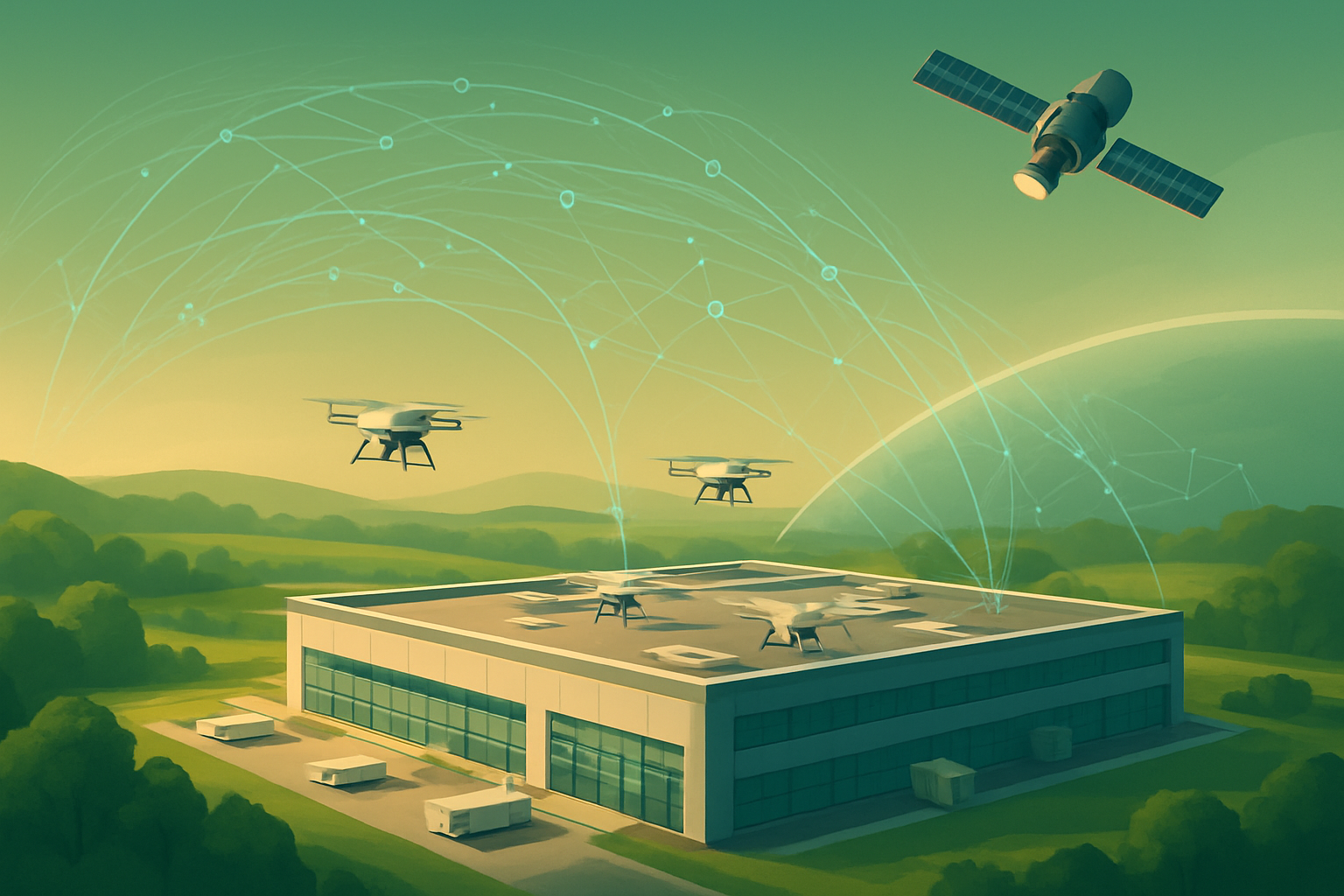
    • Amazon Leo (formerly Project Kuiper): Amazon’s low-earth orbit satellite network began production launches in mid-2025. With roughly 150 satellites currently in orbit, it aims to provide global broadband and challenge SpaceX's Starlink.
    • Logistics AI: New AI systems now predict regional demand with such accuracy that Amazon can pre-position inventory before orders are even placed, drastically reducing shipping costs.

    Competitive Landscape

    Amazon faces a multi-front war:

    • Cloud: Microsoft (NASDAQ: MSFT) and Alphabet (NASDAQ: GOOGL) continue to challenge AWS, particularly in AI-specific workloads. AWS remains the leader with a ~31% market share.
    • Retail: Walmart (NYSE: WMT) has seen its e-commerce market share grow to 7% in 2025, leveraging its physical store network for grocery delivery.
    • Low-Cost Competitors: The rise of Temu and Shein forced Amazon to launch a specialized "low-cost storefront" in 2025 to retain budget-conscious consumers in the $20-and-under category.

    Industry and Market Trends

    The "Amazonification" of logistics continues as the industry moves toward same-day and sub-same-day delivery as the standard. In the tech sector, the transition from GenAI "chatbots" to autonomous "agents" is the defining trend of 2026. Amazon’s deep integration into enterprise data through AWS places it in a prime position to capitalize on these autonomous systems.

    Risks and Challenges

    The most significant cloud over the stock is the upcoming FTC Antitrust Trial, scheduled for October 2026. The government alleges Amazon uses monopoly power to squeeze third-party sellers. Structural remedies, including a potential breakup, are low-probability but high-impact risks. Additionally, the massive capital expenditure required for AI infrastructure (estimated at $75B+ for 2025) has put pressure on free cash flow growth.

    Opportunities and Catalysts

    • Advertising Maturation: Prime Video ads are expected to contribute over $5 billion in high-margin revenue in 2026.
    • Satellite Connectivity: If Amazon can meet its July 2026 FCC deadline for satellite deployment, "Amazon Leo" could open a multi-billion dollar recurring revenue stream from government and enterprise contracts.
    • Healthcare: Further integration of One Medical and pharmacy services into the Prime ecosystem remains an untapped growth lever.

    Investor Sentiment and Analyst Coverage

    Wall Street enters 2026 with a "Strong Buy" consensus on AMZN. Analysts highlight the "earnings power story," suggesting that as AWS and Advertising become a larger percentage of the total revenue mix, the company's consolidated margins will continue to rise. Major institutional holders like Vanguard and BlackRock have increased their positions in late 2025, citing the company’s disciplined approach to AI spending compared to its peers.

    Regulatory, Policy, and Geopolitical Factors

    Regulatory pressure is intensifying globally. In September 2025, Amazon settled a $2.5 billion case with the FTC regarding "dark patterns" in Prime cancellations. In the EU, the Digital Markets Act (DMA) continues to force Amazon to open its platform to more competition. Geopolitically, the company is diversifying its supply chain away from China toward India and Southeast Asia to mitigate trade tensions and potential tariffs.

    Conclusion

    As of January 1, 2026, Amazon is a leaner, more focused version of its former self. By successfully navigating the "Efficiency Era," Andy Jassy has proven that the company can grow profits even when top-line growth in retail slows. For investors, the bull case rests on the dominance of AWS in an AI-driven world and the expansion of its advertising empire. However, the looming antitrust trial and the execution risks of the "Amazon Leo" satellite project demand a cautious, long-term perspective. Amazon remains the ultimate "flywheel" business, but in 2026, the friction of regulation and competition is greater than ever before.


    Disclaimer: This content is intended for informational purposes only and is not financial advice. The author has no position in the mentioned securities at the time of writing.

  • Meta in 2026: From Social Giant to AI Agent Powerhouse

    Meta in 2026: From Social Giant to AI Agent Powerhouse

    As of January 1, 2026, Meta Platforms, Inc. (NASDAQ: META) stands at a pivotal crossroads in its twenty-two-year history. After a transformative 2025, the company has shed its former reputation as a pure-play social media giant and emerged as a leading force in the "AI Agent" era. With its stock trading near all-time highs and a major regulatory cloud recently lifted by a landmark court victory, Meta is arguably the most influential player in the open-source artificial intelligence movement. This feature explores the narrative of Meta’s resilience, its massive capital expenditure on AI infrastructure, and the strategic bets that have repositioned the company for the second half of the decade.

    Historical Background

    Founded in 2004 as a Harvard networking site, Facebook’s evolution has been defined by radical pivots. From the desktop-to-mobile shift in 2012 to the controversial acquisitions of Instagram and WhatsApp (which cost a then-staggering $1 billion and $19 billion respectively), the company has always prioritized scale and future-proofing.

    The 2021 rebrand to "Meta" signaled a move away from the "Facebook" identity, initially focusing on the metaverse—a bet that initially cost the company billions in market value as investors grew wary of heavy spending without immediate returns. However, the "Year of Efficiency" in 2023, characterized by aggressive layoffs and cost-cutting, restored market confidence. By late 2024 and throughout 2025, the narrative shifted again: Meta used its efficiency gains to fund a colossal pivot toward Generative AI and open-source Large Language Models (LLMs), a move that has now become its core strategic pillar.

    Business Model

    Meta’s business model remains a tale of two distinct segments: Family of Apps (FoA) and Reality Labs (RL).

    • Family of Apps (FoA): This is the company's financial engine, encompassing Facebook, Instagram, Messenger, and WhatsApp. Revenue is almost entirely derived from digital advertising. In 2025, Meta significantly enhanced this model by integrating "Advantage+" AI tools, which automate ad creation and targeting, leading to a massive boost in advertiser ROI and a $60 billion annual run-rate for AI-driven ads alone.
    • Reality Labs (RL): This segment develops the hardware and software for augmented and virtual reality. While it continues to operate at a quarterly loss of approximately $4.5 billion to $4.9 billion, the focus has shifted from "virtual worlds" to "AI interfaces."
    • AI Agents & Services: A new vertical is emerging. With the late 2025 acquisition of Singapore-based Manus AI, Meta is transitioning from a service that shows content to a service that performs tasks. Integrating autonomous AI agents into WhatsApp and Instagram enables a new transactional revenue stream beyond simple ads.

    Stock Performance Overview

    Meta’s stock performance has been a roller coaster for long-term investors. Over the 10-year horizon, the stock has vastly outperformed the S&P 500, buoyed by the growth of Instagram. However, the 5-year window captures the dramatic "metaverse crater" of 2022, where shares plummeted below $100, followed by a historic recovery.

    In the last 12 months (2025), the stock reached an all-time high of $796.25 in August before stabilizing in the $710–$730 range. The 2025 rally was driven by the release of the Llama 4 model and the surprising retail success of the Ray-Ban Meta glasses. Despite a late-year correction due to high capital expenditure concerns, the stock ended 2025 as one of the top performers in the "Magnificent Seven," competing with Nvidia (NASDAQ: NVDA) and Alphabet (NASDAQ: GOOGL) for market leadership.

    Financial Performance

    Meta’s Q3 2025 earnings report highlighted its massive scale and fiscal complexity.

    • Revenue: $51.24 billion for the quarter, a 26% year-over-year increase.
    • Net Income: Impacted by a one-time non-cash tax charge of $15.93 billion due to the "One Big Beautiful Bill Act" of 2025, resulting in a GAAP EPS of $1.05. However, normalized EPS was $7.25, beating analyst expectations.
    • Capital Expenditure (CapEx): Meta is spending at a historic rate, with 2025 guidance raised to $70–$72 billion. This capital is flowing directly into "Prometheus" and "Hyperion" data centers to house the H100 and Blackwell GPU clusters from Nvidia.
    • User Growth: Family Daily Active People (DAP) reached 3.54 billion, proving that despite its age, Meta’s ecosystem remains the most engaged on the planet.

    Leadership and Management

    Mark Zuckerberg remains the undisputed leader, holding majority voting control through a dual-class share structure. In 2025, his strategy shifted toward "Superintelligence." He recently formed Meta Superintelligence Labs (MSL), aiming to create "world models" capable of reasoning.

    Key support comes from CFO Susan Li, who has been credited with maintaining financial discipline amid the AI arms race, and Andrew "Boz" Bosworth, the CTO overseeing the successful pivot of Reality Labs toward AI-integrated wearables. The board’s reputation has stabilized following years of privacy scandals, as the focus has moved to technical innovation and competing with OpenAI and Microsoft (NASDAQ: MSFT).

    Products, Services, and Innovations

    Meta’s product roadmap is now defined by the synergy between software and hardware:

    • Llama 4: Released in early 2025, Llama 4 has become the industry standard for open-source AI. Its "Maverick" (400B) variant is widely used by developers globally, allowing Meta to control the ecosystem without charging for the model itself.
    • Ray-Ban Meta Glasses: This has been the "dark horse" hit of 2025. Sales tripled year-over-year as users adopted the glasses as their primary AI interface—asking the AI to identify objects, translate signs, or send messages via voice.
    • Quest 4: Internal leaks suggest two variants of the Quest 4 (codenamed "Pismo") are slated for a late 2026 release, promising a more compact design to better compete with Apple’s (NASDAQ: AAPL) Vision Pro.
    • Threads: Now a permanent fixture in the social media landscape, Threads reached 250 million monthly active users in 2025, successfully capturing the "microblogging" market share from X (formerly Twitter).

    Competitive Landscape

    Meta faces a multi-front war:

    • The AI Race: Meta’s open-source strategy directly challenges the closed-garden approach of OpenAI and Microsoft. By making Llama free, Meta commoditizes its rivals' primary product.
    • Social & Video: TikTok (ByteDance) remains the primary threat to Instagram Reels and Facebook's attention share. However, the rise of YouTube (NASDAQ: GOOGL) as a long-form and short-form video powerhouse is a growing concern for Meta’s ad revenue.
    • Hardware: In the premium headset market, Meta is currently losing to Apple in terms of brand prestige but winning on volume and price. The 2026 launch of Quest 4 will be a critical test of whether Meta can bridge the gap in "spatial computing" quality.

    Industry and Market Trends

    The broader tech industry is currently navigating the shift from "Generative AI" (generating content) to "Agentic AI" (executing actions). Meta’s acquisition of Manus AI positions them at the forefront of this trend. Additionally, the "Wearables Revolution" is gaining steam as consumers show a preference for smart glasses over heavy VR headsets. Macro-economically, the high interest rate environment of 2024–2025 has favored "Big Tech" firms like Meta that possess massive cash reserves and can self-fund their AI infrastructure.

    Risks and Challenges

    • CapEx Fatigue: Investors are increasingly nervous about the $70B+ annual spend on data centers. If AI-driven revenue does not continue to scale, Meta could face a significant valuation correction.
    • European Regulation: The EU’s Digital Markets Act (DMA) continues to be a thorn in Meta’s side. A €200 million fine in late 2025 regarding the "pay or consent" model suggests that European ad revenue may be suppressed in 2026 as Meta is forced to offer less-personalized ad options.
    • AI Safety and Hallucinations: As Meta integrates AI agents into transactional services (like WhatsApp shopping), the legal liability of an AI agent making a mistake (e.g., booking the wrong flight or providing incorrect financial advice) remains an unresolved risk.

    Opportunities and Catalysts

    • WhatsApp Monetization: For years, WhatsApp was the "sleeping giant" of Meta’s portfolio. With the integration of AI Agents, WhatsApp is becoming a "super-app" similar to WeChat, handling everything from customer support to payments, which could unlock tens of billions in new revenue.
    • Llama 4 "Behemoth": The upcoming 2-trillion parameter model scheduled for 2026 could provide a massive leap in reasoning capabilities, potentially making Meta the leader in AGI (Artificial General Intelligence).
    • The Boasberg Ruling: The November 18, 2025, court victory against the FTC has essentially removed the threat of a breakup for the foreseeable future, allowing Meta to acquire smaller AI startups with less regulatory scrutiny.

    Investor Sentiment and Analyst Coverage

    The consensus on Wall Street is a "Strong Buy."

    • Price Targets: Average targets hover around $822, with bull-case scenarios from firms like Morgan Stanley and Goldman Sachs (NYSE: GS) pointing toward $1,100 by the end of 2026.
    • Institutional Sentiment: Large hedge funds have increased their positions in Meta, viewing it as the "cheapest" way to play the AI revolution relative to its P/E ratio, especially when compared to the higher valuations of Microsoft or Amazon (NASDAQ: AMZN).

    Regulatory, Policy, and Geopolitical Factors

    The regulatory landscape has shifted significantly. In the U.S., the focus has moved from "Antitrust" to "AI Sovereignty." The federal government is now incentivizing companies like Meta to keep their AI models open and competitive against Chinese firms. However, geopolitical tensions remain a risk, particularly regarding the supply chain for advanced chips. Any escalation in the Taiwan Strait would immediately cripple Meta’s ability to build the data centers required for Llama 5 and beyond.

    Conclusion

    Entering 2026, Meta Platforms is no longer just a social media company; it is an AI infrastructure and hardware powerhouse. The transition from the "Year of Efficiency" to the "Year of AI" has been remarkably successful, evidenced by robust revenue growth and a dominant position in the open-source community.

    Investors should keep a close eye on two things in the coming months: the actual utility and adoption of AI Agents in the "Family of Apps," and the continued scaling of Reality Labs revenue through smart glasses. While the capital expenditure is undeniably high, Meta’s ability to generate cash from its 3.5 billion users provides a safety net that few companies in history have ever enjoyed. In the high-stakes game of 2026 tech, Meta is holding a very strong hand.


    This content is intended for informational purposes only and is not financial advice.

  • Tesla 2026: From Automaker to AI Powerhouse—A Comprehensive Research Deep Dive

    Tesla 2026: From Automaker to AI Powerhouse—A Comprehensive Research Deep Dive

    As of January 1, 2026, Tesla, Inc. (NASDAQ: TSLA) stands at a critical juncture, having spent the last two years aggressively pivoting from a high-growth electric vehicle (EV) manufacturer to a diversified artificial intelligence and robotics powerhouse. For investors, the narrative surrounding the Austin-based company has shifted from "How many cars can they deliver?" to "How quickly can they monetize autonomy and energy storage?"

    While 2024 was defined by a brutal "EV winter" and contracting margins, 2025 proved to be a year of redemption. The successful pilot production of the "Redwood" platform—Tesla’s long-awaited $25,000 vehicle—and the rapid expansion of the Tesla Energy segment have repositioned the company as a structural pillar of the global energy transition. However, with global competition from Chinese giants reaching a fever pitch, Tesla’s premium valuation remains a subject of intense debate among Wall Street analysts and retail enthusiasts alike.

    Historical Background

    Founded in 2003 by Martin Eberhard and Marc Tarpenning, and famously led by Elon Musk shortly thereafter, Tesla’s journey is one of the most storied in corporate history. The 2008 release of the Roadster proved that electric cars could be high-performance, but it was the 2012 launch of the Model S that truly disrupted the automotive establishment.

    Key milestones include the "production hell" of the Model 3 in 2017-2018, which nearly bankrupted the company before propelling it to profitability. In 2020, Tesla’s inclusion in the S&P 500 marked its arrival as a blue-chip entity. By the early 2020s, the company had established a global manufacturing footprint with Gigafactories in Nevada, New York, Shanghai, Berlin, and Texas. The mid-2020s (2024–2025) will likely be remembered as the era of the "AI Pivot," where Tesla shifted focus toward Full Self-Driving (FSD) and the Optimus humanoid robot.

    Business Model

    Tesla’s business model is vertically integrated and split into four primary pillars:

    1. Automotive: Sales and leasing of the Model S, 3, X, Y, and Cybertruck. This remains the largest revenue contributor, though its relative share is shrinking as other segments grow.
    2. Energy Generation and Storage: The Megapack (for utilities) and Powerwall (for homes). This segment has become the company's highest-margin division as of late 2025.
    3. Services and Other: Revenue from the Supercharger network (now a multi-brand standard in North America), insurance, and after-sales service.
    4. Software and AI: High-margin recurring revenue from FSD subscriptions, and the burgeoning "Cybercab" autonomous ride-hailing pilot programs.

    Stock Performance Overview

    Tesla’s stock performance has been a roller coaster for long-term holders:

    • 1-Year Performance (2025): TSLA outperformed the broader market, returning over 60% as shares surged from the $170 range in early 2024 to nearly $500 by late 2025. This was fueled by the resolution of Elon Musk’s compensation legal battle and breakthroughs in FSD v14.
    • 5-Year Performance: Since 1/1/2021, the stock has seen massive volatility, including a 2022 crash and a 2025 recovery, ultimately rewarding patient investors who looked past quarterly delivery misses.
    • 10-Year Performance: Tesla remains one of the greatest wealth generators of the decade, with a stock price increase exceeding 1,500% as it transformed from a niche luxury carmaker to a $1.5 trillion+ market cap leader.

    Financial Performance

    In its most recent Q3 2025 earnings report, Tesla reported record quarterly revenue of $28.1 billion. While automotive gross margins hovered around 18% (down from their 2022 peaks due to pricing competition), the Energy segment posted margins exceeding 30%, significantly boosting the bottom line.

    Free cash flow remained robust, allowing Tesla to end 2025 with a "war chest" of $41.6 billion in cash and short-term investments. This liquidity is earmarked for the massive 2026 ramp-up of the "Redwood" vehicle and the expansion of Megafactory Shanghai. Despite heavy R&D spending on AI, Tesla’s debt-to-equity ratio remains among the lowest in the automotive industry.

    Leadership and Management

    Elon Musk remains the dominant figure at Tesla, serving as CEO and the primary architect of its long-term strategy. The late 2025 resolution of his 2018 compensation package—reinstated by the Delaware Supreme Court—removed a major overhang of leadership uncertainty.

    The executive team, including CFO Vaibhav Taneja and Automotive VP Tom Zhu, has focused on operational efficiency and manufacturing innovation. However, governance concerns occasionally surface regarding Musk’s involvement in other ventures like xAI, SpaceX, and X (formerly Twitter), leading some institutional investors to call for a more independent board.

    Products, Services, and Innovations

    Tesla’s current lineup is led by the Model Y (the world’s best-selling vehicle in 2024) and the increasingly common Cybertruck, which reached a 250,000-unit annual run rate by December 2025.

    Innovations to watch include:

    • FSD v14: Launched in October 2025, this version introduced "end-to-end" neural networking that handles complex urban environments with minimal human intervention.
    • Project Redwood: The $25,000 "next-gen" vehicle began pilot production in late 2025, utilizing the "unboxed" manufacturing method to slash costs.
    • Optimus Gen-2: Humanoid robots are now being used internally at Giga Texas for simple logistics tasks, with a commercial pilot expected in 2027.

    Competitive Landscape

    Tesla no longer enjoys a monopoly on the "cool factor" of EVs.

    • BYD (SZSE: 002594): In 2025, BYD solidified its position as the world's largest BEV producer by volume, leveraging its massive internal battery supply chain.
    • Traditional OEMs: Companies like Ford (NYSE: F) and Volkswagen (OTC: VWAGY) have pivoted toward hybrids to sustain profitability, leaving Tesla to compete more directly with high-end Chinese brands like Xiaomi and Li Auto.
    • Autonomous Rivals: Alphabet’s (NASDAQ: GOOGL) Waymo remains the gold standard for Level 4 autonomy, though Tesla’s "vision-only" approach is vastly more scalable.

    Industry and Market Trends

    The "EV hype" of 2020 has matured into a more nuanced market. Global EV adoption continues to grow, but at a slower pace in the U.S. due to charging infrastructure gaps and political shifts. Conversely, the Energy Storage sector is experiencing a "supercycle" as aging power grids globally require massive battery backups to integrate renewable energy. Tesla’s Megapack is currently the dominant solution in this $100 billion+ addressable market.

    Risks and Challenges

    • Margin Erosion: Continued price wars in China could force Tesla to sacrifice more profitability for market share.
    • Regulatory Scrutiny: FSD remains under the microscope of the NHTSA. Any major accident attributed to the software could lead to costly recalls or bans.
    • Key Man Risk: Tesla’s valuation is intrinsically tied to Elon Musk. Any change in his status or focus remains the primary risk for many shareholders.
    • Geopolitical Friction: Increasing tariffs on Chinese-made components could disrupt Tesla’s supply chain, particularly for battery minerals.

    Opportunities and Catalysts

    • Robotaxi Launch: The expected 2026 launch of the "Cybercab" dedicated autonomous vehicle could unlock a trillion-dollar high-margin software business.
    • Licensing FSD: Rumors of a major legacy automaker (likely in North America) licensing Tesla's FSD software could provide a high-margin recurring revenue stream.
    • Energy Scaling: The completion of Megafactory Shanghai will double Tesla's energy storage capacity, potentially making the Energy segment equal to the Auto segment in profit within three years.

    Investor Sentiment and Analyst Coverage

    Wall Street remains divided. "Bulls" see Tesla as an AI company and maintain price targets in the $500–$600 range, citing the optionality of robotics and FSD. "Bears" view Tesla as an overvalued car company facing a "commoditization" of its core product, with price targets closer to $150. As of January 2026, institutional ownership remains high, though many hedge funds have shifted to a "wait and see" approach regarding the mass-market Redwood launch.

    Regulatory, Policy, and Geopolitical Factors

    Following the 2024 U.S. election, Tesla has navigated a complex policy landscape. Changes to federal tax credits for EVs have impacted domestic demand, while the EU’s tariffs on Chinese EVs have actually benefited Tesla’s Giga Berlin production. Furthermore, Tesla’s heavy reliance on its Shanghai factory makes it sensitive to any escalation in U.S.-China trade tensions.

    Conclusion

    As we enter 2026, Tesla is a more mature, multifaceted company than it was during its 2020-2021 hyper-growth phase. It has successfully navigated the "trough of disillusionment" in the EV market by diversifying into high-margin energy storage and doubling down on AI.

    For the investor, the core thesis rests on whether Tesla can successfully transition from pilot production to mass-market volume with its $25,000 vehicle while maintaining its lead in autonomous software. While the risks of competition and regulatory hurdles are real, Tesla’s industry-leading cash position and manufacturing prowess give it a formidable "moat" as it attempts to lead the world into a robotic, sustainable future.


    This content is intended for informational purposes only and is not financial advice.

  • NVIDIA (NVDA) 2026 Research Feature: The Architect of the Intelligence Age

    NVIDIA (NVDA) 2026 Research Feature: The Architect of the Intelligence Age

    As we enter 2026, NVIDIA Corporation (NASDAQ: NVDA) stands not merely as a semiconductor designer, but as the undisputed architect of the global "Intelligence Age." Following a two-year period of unprecedented hyper-growth, NVIDIA’s influence now stretches across every sector of the modern economy, from autonomous vehicles to the sovereign AI clouds of world governments. Today, Jan 1, 2026, the company finds itself at a critical juncture: transitioning from its wildly successful Blackwell architecture to the next frontier, the Rubin platform, while navigating an increasingly complex web of geopolitical trade barriers and rising competition from custom silicon.

    Historical Background

    NVIDIA’s ascent is one of Silicon Valley’s most storied "comeback" narratives. Founded on April 5, 1993, by Jensen Huang, Chris Malachowsky, and Curtis Priem, the company’s first "office" was a booth at a San Jose Denny’s. The name, derived from the Latin invidia (envy), reflected the founders’ ambition to make competitors "green with envy."

    The journey was nearly cut short in 1996. After the commercial failure of its first chip, the NV1, NVIDIA was weeks away from bankruptcy. A critical $5 million investment from Sega’s CEO, who chose to support the struggling startup despite its inability to deliver a promised console chip, allowed NVIDIA to survive and develop the RIVA 128. However, the most pivotal moment in its history occurred in 2006 with the launch of CUDA (Compute Unified Device Architecture). By investing billions into a software layer that allowed GPUs to perform general-purpose computing, Huang placed a decade-long bet that parallel processing would eventually supersede traditional CPUs in advanced workloads—a bet that paid off spectacularly with the rise of deep learning and generative AI.

    Business Model

    NVIDIA operates a high-margin, "fabless" business model, focusing on the design and software integration of advanced chips while outsourcing physical manufacturing to partners like Taiwan Semiconductor Manufacturing Company (TSMC). Its revenue is categorized into four primary segments:

    • Data Center: Currently the company's "crown jewel," accounting for approximately 90% of total revenue. This includes the H200 and Blackwell series GPUs, Networking (Mellanox), and AI software.
    • Gaming: Once the core business, it now serves as a steady cash generator, driven by the RTX 50-series Blackwell consumer GPUs.
    • Professional Visualization: Focused on high-end workstations and the "Omniverse" platform for industrial digital twins.
    • Automotive: A high-growth segment centered on the NVIDIA DRIVE Thor platform, targeting autonomous driving and in-car AI.

    Stock Performance Overview

    NVIDIA's stock performance over the last decade has redefined "outperformance."

    • 10-Year Horizon: Investors who held NVDA from 2016 to 2026 witnessed a total return exceeding 15,000%, a compound annual growth rate (CAGR) that remains unrivaled among large-cap tech companies.
    • 5-Year Horizon: Propelled by the AI gold rush that began in late 2022, the stock climbed from a split-adjusted $13 in 2021 to over $140 by the end of 2025.
    • 1-Year Horizon: Throughout 2025, the stock remained volatile but resilient, trading in a range between $115 and $155 as the market digested the massive "Blackwell" ramp-up and monitored geopolitical tensions.

    Financial Performance

    In its most recent fiscal reports for 2025, NVIDIA showcased financial strength that defies traditional scaling laws.

    • Revenue: For the fiscal year 2026 (calendar 2025), NVIDIA is projected to report total revenue of approximately $212.8 billion, nearly double the previous year.
    • Margins: Non-GAAP gross margins have stabilized at an industry-leading 75%, despite early-year headwinds from high production costs of the GB200 NVL72 rack systems.
    • Cash Flow & Debt: The company maintains a massive cash pile of over $40 billion with minimal debt, allowing for aggressive R&D spending and opportunistic share buybacks.
    • Valuation: While its P/E ratio remains high relative to the S&P 500, analysts argue it is justified by a forward PEG (Price/Earnings to Growth) ratio that suggests the stock is reasonably valued given its triple-digit earnings growth.

    Leadership and Management

    NVIDIA’s culture is inextricably linked to its co-founder and CEO, Jensen Huang. Known for his "flat" organizational structure—where dozens of direct reports allow him to stay close to the engineering pulse—Huang has earned a reputation as one of the most visionary leaders in tech history.

    Supporting him are key executives like Colette Kress (EVP and CFO), who has been the financial architect of the company’s scaling since 2013, and Ian Buck (VP of Hyperscale and HPC), widely regarded as the "Father of CUDA." This leadership team has remained remarkably stable, a rarity in the high-turnover environment of Silicon Valley.

    Products, Services, and Innovations

    The year 2025 was defined by the Blackwell rollout. The GB200 "superchip" and its associated NVL72 liquid-cooled racks represent the pinnacle of current computing, offering up to 30x the performance of the previous H100 generation for LLM inference workloads.

    However, NVIDIA is already looking toward the Rubin architecture, scheduled for 2026. Rubin is expected to utilize 3nm process technology and HBM4 (High Bandwidth Memory), further widening the gap between NVIDIA and its competitors. Beyond hardware, the NVIDIA AI Enterprise software suite is becoming a crucial "moat," providing the operating system for companies to deploy AI models securely.

    Competitive Landscape

    While NVIDIA maintains an estimated 85-90% market share in AI accelerators, the "moat" is being tested from two sides:

    1. Merchant Silicon Rivals: Advanced Micro Devices (NASDAQ: AMD) has made significant strides with its MI325 and MI350 series, positioning itself as the primary alternative for cost-conscious buyers. Intel (NASDAQ: INTC) continues to target the mid-range market with its Gaudi platforms.
    2. Hyperscaler Custom Chips: The "Big Three" cloud providers—Amazon (NASDAQ: AMZN), Google (NASDAQ: GOOGL), and Microsoft (NASDAQ: MSFT)—are increasingly deploying their own in-house AI chips (Trainium, TPU, and Maia) to reduce their reliance on NVIDIA’s premium pricing.

    Industry and Market Trends

    A significant shift occurred in late 2025: the transition from "AI Training" to "AI Inference." As models like GPT-5 and its successors move from development to mass-market usage, the demand for chips that can run these models efficiently is skyrocketing. Additionally, the concept of Sovereign AI has emerged as a major macro driver, with nations like Japan, France, and Saudi Arabia investing billions to build domestic AI infrastructure to ensure data and technological sovereignty.

    Risks and Challenges

    NVIDIA’s dominance is not without significant risks:

    • Customer Concentration: A handful of hyperscale cloud providers account for nearly 50% of NVIDIA’s data center revenue. Any slowdown in their capital expenditure (CapEx) could have a whip-lash effect.
    • Supply Chain Complexity: The Blackwell architecture is notoriously difficult to manufacture, relying on TSMC’s advanced "CoWoS" packaging and high-bandwidth memory from SK Hynix and Micron. Any disruption in this fragile chain could stall growth.
    • Cyclicality: Historically, the semiconductor industry is highly cyclical. There is a persistent fear that the current "build-out phase" of AI will eventually lead to an oversupply of computing power.

    Opportunities and Catalysts

    • The Rubin Ramp: The 2026 launch of the Rubin platform serves as the next major catalyst, likely triggering a new upgrade cycle for data centers.
    • Physical AI and Robotics: Through its Isaac platform, NVIDIA is positioning itself as the brain of the next generation of humanoid robots and autonomous industrial systems.
    • Software Recurring Revenue: As more enterprises move from experimentation to production, NVIDIA’s high-margin software subscriptions (AI Enterprise) could become a larger percentage of the revenue mix.

    Investor Sentiment and Analyst Coverage

    Wall Street remains overwhelmingly bullish on NVIDIA. As of January 2026, the consensus rating is a "Strong Buy," with average price targets hovering around $255. Institutional ownership remains at record highs, though some "value-tilted" hedge funds have trimmed positions, citing the stock’s extreme concentration in the S&P 500 index. Retail sentiment, measured through social media and retail brokerage data, remains exuberant, often viewing NVIDIA as the "safe haven" of the tech sector.

    Regulatory, Policy, and Geopolitical Factors

    Geopolitics remains NVIDIA’s most volatile variable. The U.S. Bureau of Industry and Security (BIS) has continuously updated export controls to prevent the sale of top-tier AI chips to China.

    • The Transactional Model: In late 2025, reports surfaced of a new "licensing framework" where NVIDIA could sell slightly de-tuned Blackwell chips to certain Chinese entities in exchange for a fee paid directly to the U.S. Treasury—a move aimed at balancing national security with American commercial interests.
    • The SAFE Chips Act: Proposed in December 2025, this bipartisan legislation seeks to further restrict the export of "foundational AI hardware" to adversarial nations, creating a cloud of uncertainty over NVIDIA’s long-term revenue from the Chinese market.

    Conclusion

    As we look at NVIDIA at the start of 2026, the company resembles a "natural monopoly" of the AI era. It has successfully navigated the transition to Blackwell, maintained staggering margins, and has a clear roadmap through the end of the decade. However, for investors, the 2026 story will not be about whether NVIDIA can build the best chips—it clearly can. The story will be whether the global economy can continue to absorb and monetize this massive influx of computing power, and whether NVIDIA can navigate the increasingly treacherous geopolitical waters between Washington and Beijing. For those watching NVDA, the next twelve months will be a test of whether "The Envy of the World" can maintain its vertical trajectory or if it is finally approaching a mature, cyclical plateau.


    This content is intended for informational purposes only and is not financial advice.