
Tag: AI Memory

  • The Memory Supercycle: A Deep Dive into Micron Technology (MU) in 2026

    The Memory Supercycle: A Deep Dive into Micron Technology (MU) in 2026

    The narrative surrounding Micron Technology, Inc. (NASDAQ: MU) has undergone a fundamental transformation over the last 24 months. Once viewed as a cyclical commodity play—a stock that investors bought at the bottom of the memory "bust" and sold at the peak of the "boom"—Micron has reinvented itself as a structural pillar of the artificial intelligence era. As of today, January 9, 2026, the company finds itself at a curious crossroads. Despite a massive price target increase to $400 from Piper Sandler earlier this week, Micron shares dropped 3.7% in a session characterized by broader semiconductor sector rotation and profit-taking. This article explores the internal and external forces driving the Idaho-based giant, examining whether the current dip is a mere "cooling off" period or a warning sign of a shift in the AI-memory supercycle.

    Historical Background

    Founded in 1978 in the unlikely setting of a Boise, Idaho, basement, Micron Technology began as a four-person semiconductor design firm. Backed by local investors like J.R. Simplot (the "Potato King"), the company survived the brutal "memory wars" of the 1980s that wiped out dozens of American competitors. While giants like Intel eventually exited the DRAM space to focus on CPUs, Micron persevered through sheer operational efficiency and a dogged refusal to quit.

    Over the decades, Micron transformed through strategic acquisitions, including the purchase of Texas Instruments’ memory business in 1998 and Elpida Memory in 2013. These moves solidified its position as the only major U.S.-based DRAM manufacturer. Historically, Micron’s story was one of survival in a boom-bust industry. However, under the current leadership, the company has pivoted from a follower to a technology leader, often beating South Korean rivals to the market with advanced lithography nodes.

    Business Model

    Micron’s business model revolves around the design and manufacture of memory and storage technologies. Its revenue is primarily derived from two major categories:

    1. DRAM (Dynamic Random Access Memory): Accounting for roughly 70-75% of revenue, DRAM is the high-speed "short-term" memory used in everything from smartphones to AI servers.
    2. NAND Flash: Providing long-term data storage, NAND makes up most of the remaining revenue, serving the SSD (Solid State Drive) market.

    Crucially, the company has segmented its business into four units:

    • Compute & Networking Business Unit (CNBU): Includes memory for data centers and client PCs.
    • Mobile Business Unit (MBU): Serves the smartphone industry.
    • Embedded Business Unit (EBU): Focuses on automotive and industrial markets.
    • Storage Business Unit (SBU): Covers consumer and enterprise SSDs.

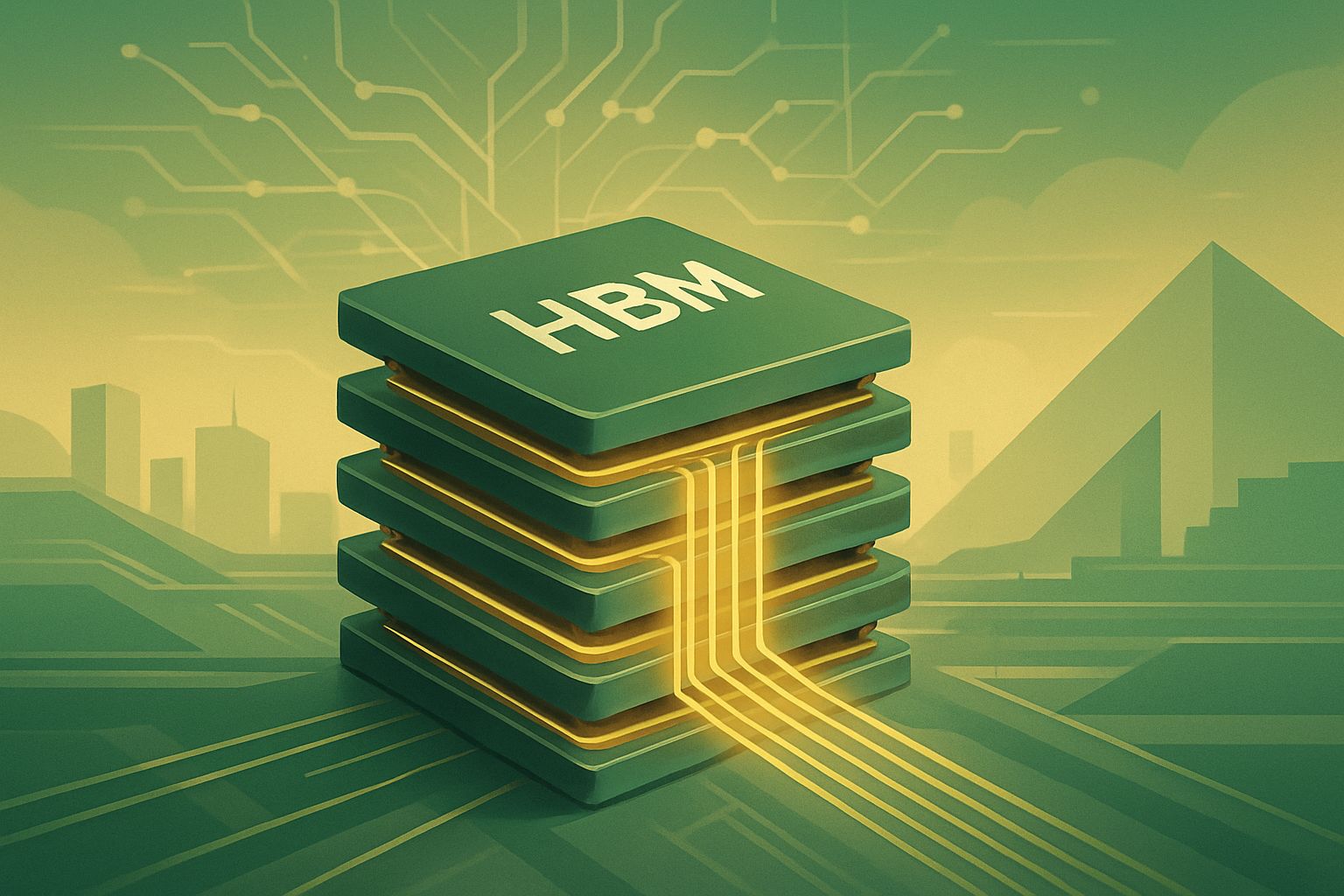
    The most significant shift in the model recently has been the transition to High Bandwidth Memory (HBM), a specialized DRAM stack that is essential for AI accelerators like NVIDIA's (NASDAQ: NVDA) Blackwell GPUs. HBM is sold through long-term, high-margin contracts rather than the traditional commodity-style spot market.

    Stock Performance Overview

    Micron has been one of the standout performers of the mid-2020s.

    • 1-Year Performance: In 2025, MU shares surged a staggering 239%, fueled by the "AI Supercycle."
    • 5-Year Performance: The stock has outperformed the S&P 500 significantly, as investors rerated the company from a "cyclical" to a "growth" multiple.
    • 10-Year Performance: Long-term holders have seen a return of over 1,500%, reflecting Micron’s successful navigation of the post-2016 memory downturn and its emergence as a key AI beneficiary.

    The 3.7% drop on January 9, 2026, represents a minor retracement following an overbought period. PredictStreet data suggests that such pullbacks have historically been consolidation phases during structural bull markets.

    Financial Performance

    Micron’s fiscal 2025 was a record-breaking year. The company reported annual revenue of $37.38 billion, a massive leap from $25.11 billion in FY 2024. In the most recent FQ1 2026 results (reported in December 2025), Micron shattered expectations with $13.64 billion in quarterly revenue.

    • Margins: Gross margins have expanded to near-record levels of 65%+, driven by the high-ASP (Average Selling Price) of HBM3E.
    • Earnings per Share: Non-GAAP EPS for the latest quarter reached $4.78.
    • Cash Flow: Operating cash flow remains robust, allowing Micron to fund massive capital expenditures ($12B+ annually) for its New York and Idaho mega-fabs without significantly stressing its balance sheet.
    • Valuation: While the nominal price is high, on a forward P/E basis relative to projected 2026 earnings of ~$33.00, the stock remains arguably more attractive than some of its peers in the AI hardware space.

    Leadership and Management

    CEO Sanjay Mehrotra, who took the helm in 2017 after a storied career at SanDisk, is widely credited with Micron’s current technological dominance. Mehrotra’s strategy focused on "disciplined capital expenditure" and technology leadership. Under his watch, Micron was the first to reach the 1-alpha and 1-beta DRAM nodes, leapfrogging competitors who were traditionally ahead.

    The management team is regarded as one of the most stable in the semiconductor industry. Their decision to skip early generations of HBM to focus exclusively on the 1-beta and 1-gamma nodes for HBM3E and HBM4 is now viewed as a masterstroke that allowed Micron to deliver 30% better power efficiency than its closest rivals.

    Products, Services, and Innovations

    The crown jewel of Micron’s current lineup is HBM3E, specifically the 12-high stack qualified for NVIDIA's Blackwell platform. Looking ahead to mid-2026, the company is preparing to ramp HBM4, which utilizes a 2048-bit interface to double the bandwidth of previous generations.

    Beyond HBM, Micron is innovating in:

    • LPCAMM2: A new form factor for mobile memory that significantly reduces power consumption in AI-capable laptops.
    • 1-Gamma Node: Utilizing Extreme Ultraviolet (EUV) lithography to drive further density and efficiency in DRAM.
    • Enterprise SSDs: High-capacity (65TB+) drives designed specifically for AI training datasets.

    Competitive Landscape

    The memory market is a "triopoly" consisting of Micron, Samsung Electronics, and SK Hynix.

    • SK Hynix: Currently the leader in HBM market share, having been the first to partner closely with NVIDIA.
    • Samsung: The largest overall memory producer, though it has struggled recently to qualify its HBM3E for top-tier AI applications.
    • Micron: While it has the smallest overall market share of the three, it currently holds the "efficiency crown" and has successfully captured roughly 21% of the HBM market as of late 2025.

    Micron’s advantage lies in its specialized focus and U.S.-based manufacturing, which is increasingly becoming a strategic asset for Western cloud providers.

    Industry and Market Trends

    The "AI Supercycle" is driven by a phenomenon known as the "Die Penalty." HBM requires approximately three times the wafer area of standard DDR5 memory. This means that even as demand for AI memory explodes, the supply of regular memory is being squeezed because fabrication plants are prioritizing HBM. This has led to a structural shortage in the general DRAM market, pushing prices up for PCs and traditional servers—a "rising tide" that lifts all of Micron's revenue streams.

    Risks and Challenges

    Despite the optimism, several risks persist:

    • Overcapacity: Historically, the memory industry always overbuilds. While 2026 looks "sold out," the massive CapEx from all three players could lead to a glut by late 2027.
    • Technical Execution: Any delay in the HBM4 ramp-up could allow Samsung or SK Hynix to steal market share.
    • Macro Sensitivity: Memory remains a high-beta industry. A global recession or a slowdown in AI spending by hyperscalers (Microsoft, Google, Meta) would hit Micron harder than more diversified tech giants.

    Opportunities and Catalysts

    • HBM4 Transition: The transition to HBM4 in 2026 is expected to be a major margin expander.
    • Edge AI: As smartphones and PCs begin to run large language models (LLMs) locally, the DRAM requirement per device is expected to double, creating a second wave of demand beyond the data center.
    • M&A Potential: While antitrust concerns are high, Micron could look to acquire specialized packaging or chiplet design firms to further its HBM lead.

    Investor Sentiment and Analyst Coverage

    Sentiment remains overwhelmingly bullish, though today’s 3.7% dip shows a hint of "peak cycle" anxiety. Piper Sandler’s $400 target reflects a belief that Micron is no longer a cyclical stock but a structural growth play. Institutional ownership remains high, with major positions held by Vanguard, BlackRock, and State Street.

    PredictStreet's proprietary sentiment analysis shows that while retail chatter is volatile, institutional "strong hand" buying has consistently occurred on pullbacks toward the 50-day moving average.

    Regulatory, Policy, and Geopolitical Factors

    Micron is at the heart of the U.S.-China technology rift.

    • CHIPS Act: Micron is a primary beneficiary, receiving billions in grants for its New York and Idaho fabs. This helps mitigate the cost of domestic manufacturing.
    • China Restrictions: The U.S. has effectively banned the export of HBM to China. While this limits Micron's market, the "West-only" supply chain for high-end AI has solidified Micron’s relationship with NVIDIA and AMD.
    • Tariff Risks: New 2026 trade policies and potential 100% tariffs on various Chinese electronics could disrupt global supply chains, though Micron’s domestic footprint offers some protection.

    Conclusion

    Micron Technology is no longer the "boom-bust" company of the 2010s. It has evolved into a sophisticated, high-margin leader of the AI revolution. Today's 3.7% decline, occurring in the face of a $400 price target, highlights the tension between spectacular long-term fundamentals and short-term technical exhaustion.

    Investors should watch the HBM4 qualification timeline and the quarterly "bit shipment" growth as key indicators. While cyclical risks never fully disappear in semiconductors, the "die penalty" and the insatiable appetite for AI compute have fundamentally reset the floor for memory pricing. Micron remains a high-conviction play for those betting on the permanence of the AI era, provided they can stomach the volatility that comes with being at the cutting edge of Silicon Valley’s most important supply chain.


    This content is intended for informational purposes only and is not financial advice. Today's date: 1/9/2026.
  • The Flash Resurrection: SanDisk’s Strategic Spinoff and the AI Memory Supercycle

    The Flash Resurrection: SanDisk’s Strategic Spinoff and the AI Memory Supercycle

    Today’s Date: January 7, 2026

    Introduction

    In the rapidly shifting landscape of semiconductor technology, few stories are as compelling as the resurrection of SanDisk (NASDAQ: SNDK). Once a household name in consumer storage, the company has reinvented itself following its high-profile spinoff from Western Digital (NASDAQ: WDC) in early 2025. Now operating as a standalone, pure-play flash memory titan, SanDisk is at the epicenter of the "AI Data Cycle." As artificial intelligence transitions from model training to large-scale inference, the demand for low-latency, high-capacity flash storage has skyrocketed, turning what was once a cyclical commodity business into a high-margin growth engine. This article explores SanDisk's strategic pivot, its financial resurgence, and the technological innovations that have made it a favorite among institutional investors in 2026.

    Historical Background

    Founded in 1988 by Eli Harari and Sanjay Mehrotra, SanDisk was a pioneer in the flash memory industry, commercializing the world’s first solid-state drive (SSD) in 1991. For decades, it dominated the consumer market with SD cards and USB drives. In 2016, the company was acquired by Western Digital for $19 billion, a move intended to create a storage powerhouse combining hard disk drives (HDD) and flash.

    However, the "synergies" proved difficult to realize as the two technologies diverged in market dynamics. After years of pressure from activist investors and a clear valuation disconnect, Western Digital announced in late 2023 its intention to split. The separation was finalized in February 2025, spinning off the flash business into the "new" SanDisk Corporation. This move allowed the management team to focus exclusively on NAND flash and SSD technology, just as the AI revolution began to demand unprecedented levels of high-speed data storage.

    Business Model

    SanDisk operates as a pure-play NAND flash manufacturer and designer. Its revenue is derived from three primary segments:

    • Enterprise and Data Center SSDs: This is the company’s fastest-growing segment, providing high-capacity drives for hyperscalers like Amazon (NASDAQ: AMZN) and Microsoft (NASDAQ: MSFT).
    • Client SSDs: Storage solutions for personal computers and laptops, increasingly focused on "AI PCs" that require higher local processing speeds.
    • Consumer Storage: The legacy business of memory cards and portable drives, which now serves as a steady cash cow to fund R&D for more advanced technologies.

    The company maintains a critical Joint Venture (JV) with Kioxia (formerly Toshiba Memory), which allows SanDisk to share the massive capital expenditures required for NAND fabrication while benefiting from shared technological breakthroughs.

    Stock Performance Overview

    Since its public re-listing in February 2025 at an initial price of approximately $38.00, SNDK has been one of the top performers in the semiconductor sector.

    • 1-Year Performance: The stock has surged over 840%, reaching an all-time high of $357.84 in early January 2026.
    • 5-Year Horizon: While the 5-year view is complicated by the Western Digital merger period, the standalone entity has effectively recaptured and exceeded the valuation peaks of the original SanDisk.
    • Comparison: SNDK has significantly outperformed the Philadelphia Semiconductor Index (SOX) over the past 12 months, driven by its specialized exposure to AI-optimized storage compared to more diversified peers.

    Financial Performance

    SanDisk’s financial turnaround in 2025 was nothing short of historic. For Fiscal Year 2025, the company reported revenue of $7.4 billion. However, the momentum accelerated into the first quarter of fiscal 2026 (ending September 2025), where the company posted revenue of $2.31 billion, a 23% sequential increase.

    • Margins: Gross margins expanded from 22% in early 2024 to 36% by late 2025. This expansion is attributed to the shift toward higher-density enterprise drives.
    • Earnings: Net income for the most recent quarter reached $112 million, with an earnings per share (EPS) of $1.22.
    • Guidance: Management has signaled a gross margin target of 41%–43% for early 2026, suggesting that the company is moving toward a "software-like" margin profile in its high-end enterprise segment.

    Leadership and Management

    The company is led by David V. Goeckeler, the former CEO of Western Digital, who chose to lead the SanDisk spinoff. Goeckeler’s tenure has been marked by a rigorous focus on operational efficiency and a pivot toward "high-value" segments. The leadership team includes veterans from both the original SanDisk and Western Digital, providing a balance of institutional knowledge and fresh strategic perspective. The board is frequently praised for its corporate governance and its decisive move to unlock value through the spinoff, which has clearly paid off for shareholders.

    Products, Services, and Innovations

    SanDisk's competitive edge lies in its BiCS8 3D NAND technology, which utilizes over 300 layers to pack more data into smaller spaces. Key recent innovations include:

    • 256TB UltraQLC SSD: A industry-leading enterprise drive designed specifically for AI inference, allowing data centers to store massive datasets with lower power consumption.
    • Stargate Controller: A proprietary internal controller that optimizes data flow, reducing latency for real-time AI applications.
    • High-Bandwidth Flash (HBF): A new architecture that bridges the gap between traditional NAND and expensive HBM (High Bandwidth Memory), offering a middle ground for AI systems that need both speed and capacity.

    Competitive Landscape

    The NAND market is a global oligopoly. As of 1/7/2026, SanDisk holds approximately 12% of the global market share, positioned as follows:

    1. Samsung Electronics: ~32.3%
    2. SK Group (SK Hynix/Solidigm): ~21.1%
    3. Kioxia: ~14.0%
    4. Micron Technology (NASDAQ: MU): ~13.3%
    5. SanDisk (NASDAQ: SNDK): ~12.0%

    While SanDisk is smaller in total market share than Samsung, it is increasingly viewed as the "purest" play for investors seeking exposure to the specific niche of AI-integrated enterprise flash.

    Industry and Market Trends

    The "AI Data Cycle" is the primary macro driver. In 2024, the focus was on GPUs for training models. In 2025 and 2026, the focus has shifted to the storage required to serve those models to users (inference). This requires massive amounts of flash memory that can stay powered on 24/7 with minimal energy use. Furthermore, the rise of "Edge AI"—running AI models locally on phones and PCs—is creating a second wave of demand for high-performance consumer flash.

    Risks and Challenges

    Despite the current euphoria, SanDisk faces significant risks:

    • Cyclicality: The memory market is notoriously "boom and bust." Any oversupply in 2027 could lead to a sharp collapse in ASPs (Average Selling Prices).
    • JV Dependency: SanDisk’s reliance on its joint venture with Kioxia means its manufacturing roadmap is tied to another company's financial health and strategic goals.
    • Geopolitical Friction: With a significant portion of the supply chain in Asia, any escalation in US-China tensions or instability in the Taiwan Strait could disrupt production.

    Opportunities and Catalysts

    • Hyperscale Adoption: Continued qualifications of SanDisk's 256TB drives by major cloud providers act as a significant near-term catalyst.
    • M&A Potential: Now that it is a standalone entity, SanDisk itself could be an acquisition target for a larger diversified semiconductor firm looking to bolster its AI storage portfolio.
    • Inclusion in Indices: Having recently joined the S&P 500, the stock continues to benefit from passive inflow and increased institutional visibility.

    Investor Sentiment and Analyst Coverage

    Wall Street sentiment is overwhelmingly "Bullish," though some analysts have issued "Hold" ratings due to valuation concerns after the 800% run. High-profile firms like Goldman Sachs and Morgan Stanley have price targets ranging from $380 to $410. Institutional ownership has climbed to over 85%, with major stakes held by Vanguard and BlackRock. On retail platforms, SanDisk is often cited as "the Nvidia of storage," reflecting a high level of enthusiasm for its AI narrative.

    Regulatory, Policy, and Geopolitical Factors

    SanDisk has benefited from the U.S. CHIPS and Science Act, receiving grants for its R&D facilities in California. However, it must navigate stringent export controls on high-end SSD technology to China. The rise of Chinese domestic competitor YMTC (Yangtze Memory Technologies) is also a factor, as the Chinese government subsidizes local flash production to achieve self-sufficiency, potentially leading to future price wars in the low-end market.

    Conclusion

    SanDisk’s journey from a subsidiary within Western Digital to a standalone AI storage leader is a textbook example of how corporate restructuring can unlock immense value. By shedding the slower-growth HDD business, SanDisk has been able to ride the AI wave with agility. While the risks of memory market cyclicality and high valuation remain, the company’s technological lead in High-Bandwidth Flash and high-density enterprise SSDs makes it a pivotal player in the digital infrastructure of 2026. Investors should watch for the sustainability of gross margins in the coming quarters and any signs of industry-wide capacity expansion that could signal the end of the current upcycle.


    This content is intended for informational purposes only and is not financial advice.

  • The Memory Backbone: How Micron Technology Captured the AI Supercycle

    The Memory Backbone: How Micron Technology Captured the AI Supercycle

    By [Your Name], Senior Financial Correspondent
    December 25, 2025

    Introduction

    As we close out 2025, the global technology landscape has been irrevocably altered by the generative AI revolution. While NVIDIA (NASDAQ: NVDA) remains the face of this movement, a shift in the investment narrative has occurred over the last 18 months: the realization that the "intelligence" of the modern data center is only as fast as the memory that feeds it. At the heart of this realization sits Micron Technology, Inc. (NASDAQ: MU).

    Once regarded as a cyclical commodity manufacturer prone to the "boom and bust" cycles of the PC and smartphone markets, Micron has successfully pivoted to become a top-tier provider of High-Bandwidth Memory (HBM). In 2025, Micron’s stock has outperformed major indices as the company transitioned from a secondary player in HBM to a formidable rival to South Korean giants. With its HBM3E production capacity sold out through 2026, Micron is no longer just a memory maker; it is the critical infrastructure partner for the world’s most advanced AI workloads.

    Historical Background

    Founded in 1978 in the basement of a dental office in Boise, Idaho, Micron Technology’s journey is one of survival and relentless cost optimization. In its early decades, the company survived the "Memory Wars" of the 1980s and 90s, where dozens of Japanese and American firms were forced out of the DRAM market due to intense price competition.

    Micron’s modern era began in earnest in 2017 when Sanjay Mehrotra, the co-founder of SanDisk, took the helm as CEO. Mehrotra shifted the company’s focus from mere volume to "technology leadership." Under his tenure, Micron achieved several "industry firsts," including the first 176-layer and 232-layer NAND and the early adoption of Extreme Ultraviolet (EUV) lithography in DRAM. This technical prowess laid the groundwork for Micron to enter the AI era not as a follower, but as a leader in power efficiency and performance.

    Business Model

    Micron operates through four primary business segments, primarily centered around DRAM (Dynamic Random Access Memory) and NAND (Flash storage):

    1. Compute and Networking Business Unit (CNBU): Includes memory for cloud servers, enterprise data centers, and client PCs. This is currently the largest growth driver due to HBM demand.
    2. Mobile Business Unit (MBU): Provides low-power DRAM and NAND for smartphones.
    3. Storage Business Unit (SBU): Focused on SSDs for consumer and enterprise markets.
    4. Embedded Business Unit (EBU): Tailored memory solutions for automotive, industrial, and "Edge" AI applications.

    The fundamental shift in 2025 has been the "HBM-ization" of the business model. HBM is a specialized DRAM where memory chips are stacked vertically and linked via Through-Silicon Vias (TSVs). Because HBM requires three times the wafer capacity of standard DDR5 memory, its production has significantly tightened the overall supply of DRAM, giving Micron unprecedented pricing power.

    Stock Performance Overview

    Micron’s stock performance over the last decade illustrates a transformation from a cyclical laggard to a high-growth tech titan:

    • 1-Year Performance (2025): The stock has surged approximately 65% year-to-date, driven by consecutive quarterly earnings beats and upward revisions in HBM market share.
    • 5-Year Performance: Looking back to 2020, MU has appreciated nearly 280%. While it faced a brutal downturn in 2023 during the post-pandemic "inventory correction," the rebound starting in early 2024 has been one of the most aggressive in the semiconductor sector.
    • 10-Year Performance: Over a 10-year horizon, Micron has outperformed the S&P 500 significantly, though with much higher volatility. Investors who held through the 2015-2016 and 2022-2023 troughs have seen massive multi-bagger returns as the company's "trough" earnings levels have consistently risen.

    Financial Performance

    The fiscal year 2025 (ended August 2025) was a watershed moment for Micron’s balance sheet.

    • Revenue: Micron reported FY2025 revenue of $37.38 billion, a 49% increase year-over-year.
    • Profitability: Gross margins, which were negative during parts of 2023, expanded to over 45% by late 2025. This was driven by the high ASP (Average Selling Price) of HBM3E products, which command margins significantly higher than traditional DRAM.
    • Earnings Per Share (EPS): For the most recent quarter (Q1 FY2026, ending Nov 2025), Micron delivered record EPS, with analysts projecting a full-year FY2026 EPS range of $30.00 to $36.00.
    • Capital Expenditure: To meet demand, Micron’s CapEx for 2025 exceeded $12 billion, focused on HBM packaging and the expansion of its Boise, Idaho fabrication facility.

    Leadership and Management

    CEO Sanjay Mehrotra remains the architect of Micron’s current success. His strategy has been characterized by "disciplined supply management"—refusing to overproduce even when prices are high, to avoid the gluts of the past.

    Supporting him is Manish Bhatia, EVP of Global Operations, who has been instrumental in navigating the complex ramp-up of HBM3E 12-Hi production. The leadership team’s reputation among institutional investors is currently at an all-time high, praised for their transparency regarding "yield" challenges and their success in securing long-term supply agreements with major CSPs (Cloud Service Providers).

    Products, Services, and Innovations

    Micron’s product roadmap is currently the envy of the memory industry:

    • HBM3E (High-Bandwidth Memory): Micron’s flagship HBM3E provides 30% lower power consumption than its nearest competitor. In early 2025, Micron moved into volume production of its 12-Hi (36GB) stacks, which have become the standard for NVIDIA’s latest Blackwell-series GPUs.
    • HBM4: In late 2025, Micron began sampling HBM4, which utilizes a 2048-bit interface. This next-generation memory is expected to enter mass production in 2026, promising a 60% increase in bandwidth.
    • LPCAMM2: A revolutionary modular memory form factor for laptops that delivers the power efficiency of soldered LPDDR5X with the serviceability of a module—critical for "AI PCs" that require massive amounts of local RAM.

    Competitive Landscape

    The DRAM market remains an oligopoly, dominated by three players:

    1. SK Hynix: The early leader in HBM. As of late 2025, they still hold approximately 60% of the HBM market, though their lead is being chipped away.
    2. Micron (MU): Now firmly entrenched as the #2 or #3 player depending on the month. In Q2 2025, Micron briefly overtook Samsung in HBM market share, currently sitting at roughly 21-22%.
    3. Samsung Electronics: Despite its massive scale, Samsung struggled with HBM3E yields throughout 2024 and early 2025. However, a late-2025 recovery has seen Samsung reclaim some ground, keeping the "Big Three" in a fierce technological arms race.

    Micron’s competitive edge lies in its power efficiency and its U.S.-based manufacturing footprint, which appeals to Western customers concerned about supply chain resilience.

    Industry and Market Trends

    Three macro trends are defining Micron’s trajectory:

    • The 3-to-1 Wafer Trade Ratio: Producing one bit of HBM takes roughly three times the wafer capacity of one bit of standard DDR5. This "wafer cannibalization" has created a structural shortage in the memory market, leading to rising prices across all DRAM categories.
    • AI at the Edge: 2025 has seen the rise of "AI PCs" and "AI Smartphones" (like the iPhone 17 Pro). These devices require 2x to 3x the RAM of previous generations to run LLMs locally, providing a huge tailwind for Micron’s Mobile and Client business units.
    • Server Refresh Cycle: Beyond AI, traditional data center servers are being upgraded to DDR5, which carries higher margins than the aging DDR4 standard.

    Risks and Challenges

    Despite the optimism, Micron faces significant headwinds:

    • Geopolitical Friction: Micron remains a "political football" in the US-China trade war. While the 2023 CAC ban in China has been partially mitigated, further restrictions on equipment or sales remain a constant threat.
    • Yield Risks: HBM is notoriously difficult to manufacture. Any "hiccup" in the assembly of 12-Hi or 16-Hi stacks could lead to massive write-offs and margin compression.
    • Cyclicality: While many argue "this time is different," the memory industry has never permanently escaped its cyclical nature. A sudden slowdown in AI capital expenditure by the "Magnificent Seven" would leave Micron with massive, expensive excess capacity.

    Opportunities and Catalysts

    • HBM4 Transition: Micron’s early progress in HBM4 could allow it to capture market share from SK Hynix in 2026.
    • Stock Buybacks: With free cash flow reaching record levels in late 2025, management has hinted at a massive increase in its share repurchase program for 2026.
    • Automotive AI: As Level 3 and Level 4 autonomous driving become more common, cars are essentially becoming "data centers on wheels," requiring gigabytes of high-performance DRAM.

    Investor Sentiment and Analyst Coverage

    Wall Street sentiment on Micron is overwhelmingly "Bullish." As of December 2025:

    • Price Targets: Major banks like Goldman Sachs and Morgan Stanley have raised their targets to the $180 – $210 range.
    • Institutional Ownership: Large hedge funds have increased their positions in MU, treating it as a "pure play" on the AI infrastructure layer with a lower valuation (P/E ratio) than NVIDIA or AMD.
    • Retail Sentiment: On social platforms, Micron is frequently cited as the "best value" in the semiconductor space.

    Regulatory, Policy, and Geopolitical Factors

    Micron is a primary beneficiary of the U.S. CHIPS and Science Act.

    • In December 2024, the government finalized a $6.14 billion grant for Micron.
    • Boise Expansion: Micron has accelerated the construction of its Boise "ID2" fab, with first wafer output expected by mid-2027.
    • New York Mega-Fab: While the Clay, NY project faced some environmental delays in 2025, it remains the largest private investment in New York history, intended to ensure U.S. memory sovereignty through 2045.

    Conclusion

    As we look toward 2026, Micron Technology stands at the pinnacle of its 47-year history. The company has successfully shed its image as a commodity vendor, proving it can compete at the highest levels of semiconductor engineering.

    For investors, the case for Micron is built on the "scarcity" of memory. In a world where AI models are growing exponentially, memory is the bottleneck. While the inherent cyclicality of the chip industry remains a risk, the structural shift toward HBM and Edge AI provides a floor for earnings that didn't exist five years ago. Micron is no longer just a participant in the tech industry; it is the vital, high-speed foundation upon which the future of artificial intelligence is being built.


    This content is intended for informational purposes only and is not financial advice.

  • Micron (MU) Fiscal Q1 2026 Deep Dive: The AI Memory Supercycle Takes Flight

    Micron (MU) Fiscal Q1 2026 Deep Dive: The AI Memory Supercycle Takes Flight

    On December 17, 2025, Micron Technology, Inc. (NASDAQ: MU) released a fiscal first-quarter 2026 earnings report that did more than just beat analyst estimates—it redefined the ceiling for the semiconductor memory industry. Reporting a staggering $13.64 billion in revenue and a non-GAAP EPS of $4.78, Micron has solidified its position as a primary beneficiary of the generative AI infrastructure build-out.

    The story of Micron today is no longer just about the cyclical commodity price of RAM in your laptop; it is about High Bandwidth Memory (HBM3E), the essential "oxygen" for Nvidia’s AI GPUs. As the global economy enters a new phase of digital transformation, Micron stands at the intersection of supply-side discipline and unprecedented demand, marking what many analysts are calling the "AI Memory Supercycle."

    Historical Background

    Founded in 1978 in the unlikely tech hub of Boise, Idaho, Micron Technology began as a four-person semiconductor design consulting firm. Over the next four decades, it survived more than a dozen industry downturns that wiped out nearly all of its domestic competitors. By the early 2000s, Micron had emerged as one of the "Big Three" global memory producers, alongside South Korean giants Samsung and SK Hynix.

    Micron’s history is defined by strategic acquisitions—notably Texas Instruments’ memory business in 1998 and Elpida Memory in 2013—and a relentless focus on manufacturing efficiency. Historically, the company was viewed as a high-beta play on the PC and smartphone cycles. However, the 2023-2024 AI pivot marked the most significant transformation in its history, shifting its focus from low-margin commodity DRAM to high-value, vertically integrated AI stacks.

    Business Model

    Micron operates through four primary business units:

    1. Compute & Networking (CNBU): Includes DRAM sold to data center, client (PC), and networking markets. This is currently the largest growth driver due to AI server demand.
    2. Mobile (MBU): Provides low-power DRAM (LPDDR) and NAND for the smartphone industry.
    3. Embedded (EBU): Services automotive and industrial markets, focusing on long-lifecycle memory.
    4. Storage (SBU): Encompasses SSDs for both enterprise and consumer use.

    The core of the current business model is the transition to HBM3E (High Bandwidth Memory). HBM is essentially a vertical stack of DRAM chips that provides the massive data throughput required by AI processors. Because HBM requires approximately 3x the wafer capacity of standard DDR5 DRAM to produce the same number of bits, it creates a structural supply constraint that supports higher average selling prices (ASPs) across the entire industry.

    Stock Performance Overview

    As of December 17, 2025, Micron (MU) has seen significant volatility followed by an aggressive upward trajectory.

    • 1-Year Performance: Up approximately 64%, driven by the qualification of HBM3E with major GPU vendors.
    • 5-Year Performance: Up over 180%, significantly outperforming the S&P 500 but trailing the specialized AI chip designers like Nvidia.
    • 10-Year Performance: A nearly 700% return, illustrating the long-term rewards of surviving the consolidation of the memory industry.

    The stock's recent performance has been characterized by sharp "gap-ups" following earnings reports, as the market consistently underestimates the margin expansion possible when HBM becomes a double-digit percentage of the revenue mix.

    Financial Performance

    The FQ1 2026 results released today represent a historic peak for the company:

    • Revenue: $13.64 billion (Actual) vs. $12.84 billion (Estimate).
    • EPS (Non-GAAP): $4.78 (Actual) vs. $3.95 (Estimate).
    • Gross Margin: 56.8%, a massive expansion from the 20% range seen just 18 months ago.
    • Operating Cash Flow: $8.41 billion.

    Guidance for FQ2 2026: Management stunned the market by guiding for revenue of $18.7 billion at the midpoint, nearly $4.5 billion ahead of previous consensus. This suggests that the "ramp phase" of their new Idaho and Syracuse fabs, combined with HBM3E throughput, is accelerating faster than anticipated.

    Leadership and Management

    CEO Sanjay Mehrotra, who took the helm in 2017 after co-founding SanDisk, is credited with Micron’s "high-value" strategy. Under his leadership, Micron has moved from being a technology follower to a technology leader, often beating Samsung to the latest manufacturing "nodes" (such as the 1-beta DRAM node).

    The management team’s reputation is one of conservative guidance and aggressive execution. However, the recent scale of "beat and raise" cycles has led some to question if they are intentionally lowballing figures to manage market expectations. Governance remains strong, though high executive compensation linked to stock performance remains a point of discussion for institutional shareholders.

    Products, Services, and Innovations

    Micron’s competitive edge currently rests on three pillars:

    1. HBM3E 12-High: Micron’s 12-layer HBM3E provides 36GB of capacity with 30% lower power consumption than competitors.
    2. 1-Beta & 1-Gamma Nodes: These represent the cutting edge of lithography in memory, allowing for higher density and lower power.
    3. LPDDR5X: Critical for "AI PCs" and "AI Smartphones," which require high-speed local memory to run Large Language Models (LLMs) on-device.

    Micron’s R&D spend has pivoted heavily toward "advanced packaging," as the bottleneck for AI is no longer just the chip logic, but how fast data can move from memory to the processor.

    Competitive Landscape

    The "Big Three" oligopoly remains intact, but the hierarchy is shifting:

    • SK Hynix: The current HBM leader (~61% market share). They remain Nvidia's preferred partner but are facing capacity constraints.
    • Micron: Now the #2 player in HBM (~25.7% share), having successfully leapfrogged Samsung in technical qualification for 2025/2026.
    • Samsung: Historically the largest, Samsung (~17% HBM share) has struggled with yields on 12-high HBM3E. While they are a formidable threat due to their massive scale, they are currently in a "catch-up" phase.

    Micron’s advantage lies in its power efficiency, which is a critical metric for massive data centers trying to manage heat and electricity costs.

    Industry and Market Trends

    The "AI-Driven Memory Supercycle" is the dominant trend. Analysts note three distinct waves:

    1. Wave 1: AI Servers (current) – High demand for HBM.
    2. Wave 2: Enterprise Storage – Replacing HDDs with high-capacity NAND SSDs for AI training data.
    3. Wave 3: Edge AI (starting 2026) – The refresh cycle for PCs and phones that need 16GB-32GB of RAM as a baseline to run AI features.

    Risks and Challenges

    Despite the stellar earnings, risks remain:

    • Cyclicality: Historically, every memory boom ends in an oversupply-driven bust. While HBM is harder to manufacture, the risk of a "supply glut" in 2027 remains.
    • China Exposure: Micron still faces regulatory hurdles in China, and any escalation in trade wars could impact their assembly and test facilities.
    • CAPEX Intensity: Micron plans to spend $18B-$20B in FY2026. This high "burn rate" means if demand softens even slightly, free cash flow can turn negative quickly.

    Opportunities and Catalysts

    • HBM4 Transition: The move to HBM4 in late 2026 will be a major catalyst. If Micron can maintain its power-efficiency lead, it could take more share from SK Hynix.
    • CHIPS Act Funding: Federal grants for the Syracuse and Boise "Mega-Fabs" will subsidize a large portion of their long-term expansion, reducing the burden on shareholders.

    Investor Sentiment and Analyst Coverage

    Wall Street is overwhelmingly bullish. Following the Dec 17 report:

    • Average Price Target: $195.00 (implied 25% upside).
    • Ratings: 92% "Buy" or "Strong Buy."
    • Institutional Activity: While some "profit taking" occurred in late 2025 by firms like Capital Research, the massive FQ2 guidance is expected to trigger a new wave of institutional inflows.

    Regulatory, Policy, and Geopolitical Factors

    Micron is a "national champion" for U.S. semiconductor policy. Under the CHIPS and Science Act, Micron is receiving billions in grants and tax credits to bring leading-edge memory manufacturing back to American soil. This gives Micron a unique "geopolitical moat" compared to its South Korean rivals, particularly in the eyes of U.S. government and defense contractors.

    AI-Driven Earnings Forecast Model (FY2026)

    Scenario Revenue Est. EPS Est. Rationale
    Bull $65.0B $16.50 HBM4 ramp exceeds expectations; PC/Mobile refresh cycle accelerates.
    Base $58.5B $13.20 Steady HBM3E demand; pricing remains firm; consistent execution.
    Bear $48.0B $9.10 Overcapacity in standard DRAM; Samsung clears yield hurdles; AI spend slows.

    Valuation Analysis:

    • Forward P/E: 14.2x (Base Case).
    • EV/EBITDA: 7.8x.
    • DCF Analysis: Using a 10.0% WACC and a 3% terminal growth rate, our fair value estimate sits at $188.40, suggesting the stock is currently undervalued relative to its AI growth profile.

    Conclusion

    Micron Technology is no longer a "commodity" company; it is an AI infrastructure powerhouse. The fiscal Q1 2026 results confirm that the demand for high-performance memory is outstripping supply, giving Micron unprecedented pricing power. While the cyclical nature of the industry and high CAPEX requirements demand caution, the structural shift toward AI makes Micron a core holding for any technology-focused portfolio. Investors should monitor HBM4 development and the pace of the Syracuse fab construction as the next major indicators of long-term value.


    This content is intended for informational purposes only and is not financial advice.