
Tag: 2026 Trends

  • Forecasting the Forecasters: Manifold’s Meta-Markets Signal a 2026 Industry Shakeup

    Forecasting the Forecasters: Manifold’s Meta-Markets Signal a 2026 Industry Shakeup

    As the prediction market industry enters its most ambitious year to date, a single contract on Manifold Markets has emerged as the definitive "North Star" for traders, regulators, and venture capitalists alike. The contract—"Which Prediction Market will have the highest total USD-equivalent trading volume in 2026?"—is currently trading with Polymarket as the 47% favorite, followed closely by Kalshi at 34%.

    This "meta-contract" has become more than a simple wager; it is a live barometer for the "Information Finance" (InfoFi) era. With the industry coming off a record-breaking 2025 that saw over $40 billion in total notional volume, the 2026 race represents a battle for total dominance between crypto-native platforms, regulated U.S. exchanges, and traditional brokerage giants that have finally entered the fray.

    The Market: What's Being Predicted

    The Manifold Markets contract is a winner-take-all prediction on which platform will facilitate the most trading volume by the end of the 2026 calendar year. Unlike typical markets that track elections or weather, this is a meta-market—a forecast about the industry itself. While Manifold is the primary venue for this specific "play money" meta-prediction, the implications are being tracked by high-stakes desks across the globe.

    As of January 30, 2026, the odds are stratified into four primary contenders:

    • Polymarket (47%): The global, crypto-native leader continues to hold the pole position, bolstered by its reputation as the world's premier "truth engine."
    • Kalshi (34%): The CFTC-regulated heavyweight is the primary challenger, benefiting from deep integration with domestic financial news networks.
    • ForecastEx (12%): The platform owned by Interactive Brokers (NASDAQ: IBKR) has seen its odds triple since November 2025, following a surge in institutional macro-hedging.
    • Robinhood (7%): Since its 2025 expansion into event contracts, Robinhood Markets, Inc. (NASDAQ: HOOD) has become the dark horse of retail volume.

    The resolution criteria for the contract are strict, requiring audited or publicly verifiable volume data. Total volume is calculated as the USD-equivalent of all trades made across all categories, including politics, economics, and sports, through December 31, 2026.

    Why Traders Are Betting

    The volatility in this meta-contract is being driven by a fundamental shift in how the world consumes information. In the wake of the 2024 U.S. election—frequently cited as the "Netscape moment" for prediction markets—traders are no longer just betting on outcomes; they are betting on which infrastructure will capture the most liquidity.

    Institutional players like Susquehanna International Group and Jane Street are reportedly using these meta-contracts to hedge their platform-specific exposure. For example, if a trader is heavily positioned in Kalshi’s recession markets, they might buy "Polymarket" shares on the meta-contract as a hedge against a potential regulatory squeeze on Kalshi's operations.

    Furthermore, the recent $2 billion investment by Intercontinental Exchange (NYSE: ICE)—the parent company of the New York Stock Exchange—into Polymarket has fundamentally altered the math. Traders are betting that this massive capital injection will allow Polymarket to scale its liquidity to levels previously unthinkable, potentially moving the platform from a "prediction market" to a core global financial utility.

    Broader Context and Implications

    The rise of the meta-contract reflects the maturing of the prediction market industry into a legitimate asset class. In 2025, the sector proved it could survive and thrive without a U.S. Presidential election to anchor it. By pivoting to "perpetual" markets—tracking Federal Reserve interest rate decisions, corporate M&A, and high-stakes sporting events—platforms have seen monthly volumes consistently top $5 billion in early 2026.

    This trend is also a reflection of public sentiment regarding traditional media. As trust in conventional polling continues to erode, the "wisdom of the crowd" as expressed through liquid markets has become the primary source of truth for major corporations. Alphabet Inc. (NASDAQ: GOOGL) and other tech giants have even begun integrating these market probabilities directly into their search and AI results, further driving retail volume toward the platforms that win the meta-race.

    However, regulatory friction remains the "X-factor." A recent January 2026 ruling in a Massachusetts court regarding Kalshi’s sports-related contracts has temporarily slowed its momentum, a move that was immediately reflected by a 5% drop in its Manifold odds. These meta-contracts effectively price in the risk of regulatory "whack-a-mole" across different jurisdictions.

    What to Watch Next

    The coming months feature several catalysts that could dramatically shift the odds in the 2026 volume race. First and foremost is the expected launch of a native prediction market product from Coinbase Global, Inc. (NASDAQ: COIN) in late Q1 2026. Should Coinbase successfully integrate event contracts into its existing app for its 100+ million users, it could leapfrog the current leaders in retail volume overnight.

    Investors are also closely watching the monthly "Volume Prints" from ForecastEx. If Interactive Brokers (NASDAQ: IBKR) continues to see double-digit month-over-month growth in its institutional macro-contracts, the market may begin to price in a "Wall Street takeover" of the prediction space, potentially dethroning the crypto-native incumbents.

    Key dates to monitor include the mid-year regulatory review by the CFTC and the performance of these markets during the upcoming 2026 World Cup, which many analysts predict will be the single highest-volume event in the history of the industry.

    Bottom Line

    The "Top 1 Prediction Market by Volume in 2026" contract is more than just a contest of numbers; it is a forecast of the future of information itself. Manifold’s meta-contracts show us that the market believes the industry is no longer in a "niche" phase. We are seeing a consolidation where the winner will likely become a permanent fixture of the global financial landscape.

    As of today, the battle is a toss-up between Polymarket’s global reach and Kalshi’s regulatory compliance. But with retail giants like Robinhood (NASDAQ: HOOD) and Interactive Brokers (NASDAQ: IBKR) scaling rapidly, the 2026 volume crown is far from decided. For the prediction market enthusiast, the meta-contract remains the best way to watch the world’s most exciting financial race in real-time.


    This article is for informational purposes only and does not constitute financial or betting advice. Prediction market participation may be subject to legal restrictions in your jurisdiction.

    PredictStreet focuses on covering the latest developments in prediction markets.
    Visit the PredictStreet website at https://www.predictstreet.ai/.
  • The $44 Billion Prediction War: How Kalshi and Polymarket Redefined the Truth in 2026

    The $44 Billion Prediction War: How Kalshi and Polymarket Redefined the Truth in 2026

    As of January 27, 2026, the global financial landscape has been permanently altered by what analysts are calling the "Great Prediction War." This isn't a conflict of weapons, but of data, liquidity, and "truth pricing." For the first time in history, the collective intelligence of the crowd is outperforming traditional polling, expert analysis, and even some institutional intelligence services. At the center of this revolution are two titans: the regulated, sports-heavy Kalshi and the geopolitical "truth engine" Polymarket.

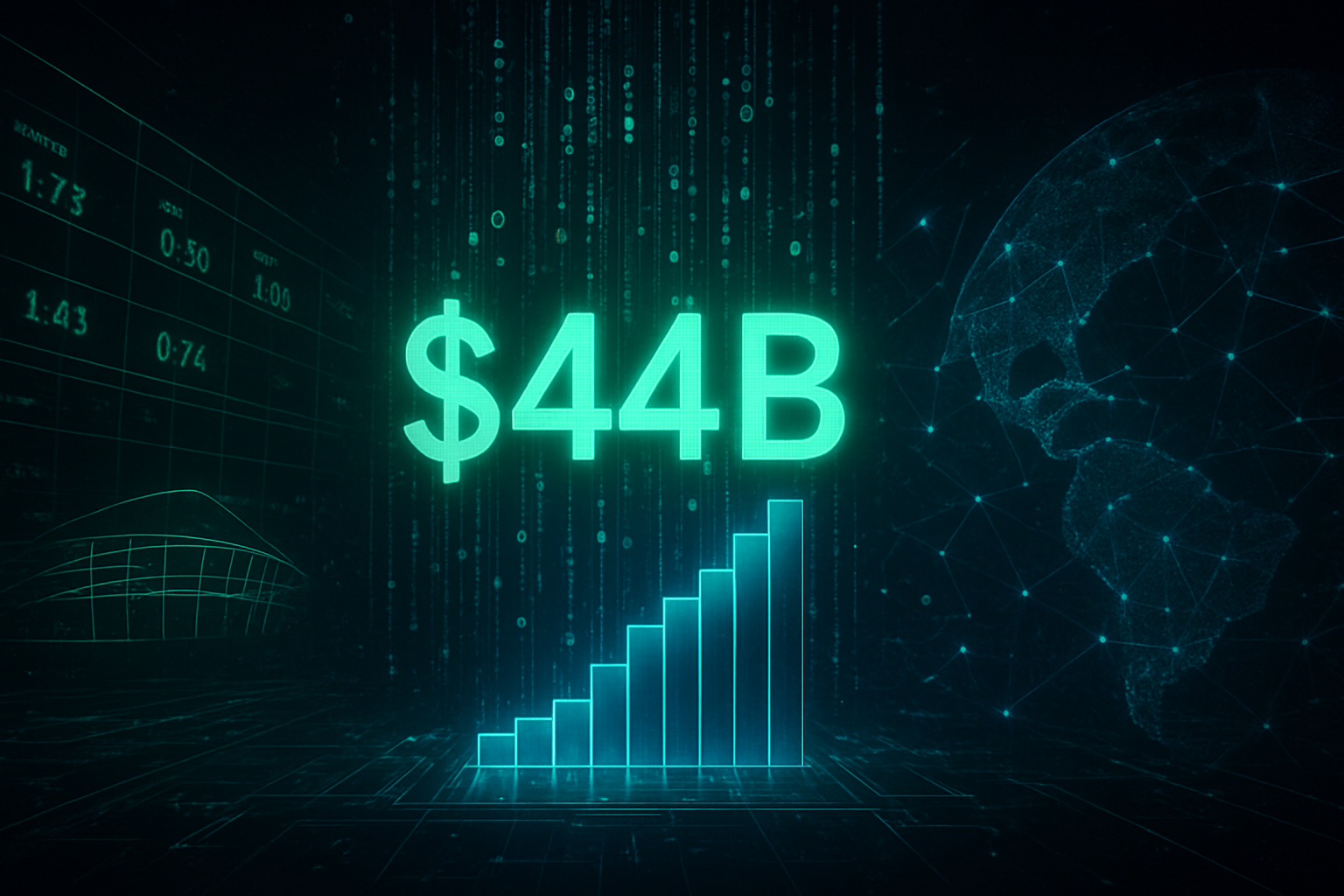
    The industry has just capped off a historic 2025, with total notional volume reaching a staggering $44 billion—a figure that has transformed prediction markets from a niche corner of the internet into a foundational pillar of modern finance. While the probabilities on major events shift by the second, the underlying message is clear: "Information Finance" has arrived, and it is here to stay.

    The Market: What's Being Predicted

    The competition between Kalshi and Polymarket has created a duopoly that mirrors the legendary rivalries of the New York Stock Exchange (NYSE) and the Nasdaq. In 2025, Kalshi reported a record-breaking $43.1 billion in notional trading volume, a meteoric 2,100% rise from the previous year. This volume is largely driven by its "sports flywheel," with 91.1% of its contracts tied to athletic outcomes. Kalshi’s dominance in the sports sector has been cemented by its integration with retail giants like Robinhood (NASDAQ: HOOD) and partnerships with major leagues such as the NHL.

    Conversely, Polymarket has captured the global "mindshare" for geopolitical and macroeconomic forecasting. While its 2025 volume of $33.4 billion trails Kalshi in raw numbers, its cultural and political impact is arguably greater. Polymarket’s odds on the Russia-Ukraine ceasefire, Iranian political stability, and Federal Reserve interest rate hikes are now cited as "the source of truth" by newsrooms and algorithmic trading desks globally. The platform’s liquidity in these high-stakes markets has become so deep that the Intercontinental Exchange (NYSE: ICE)—the parent company of the New York Stock Exchange—recently finalized a landmark $2 billion investment in the platform to bridge the gap between traditional finance and decentralized forecasting.

    Why Traders Are Betting

    The surge in trading volume isn't just about gambling; it's about the search for accurate information in an era of deepfakes and media polarization. Traders are increasingly using these platforms to hedge against real-world risks. For example, the "Maduro Trade" on January 3, 2026, became the stuff of legend when a Polymarket user turned a $32,000 position into $436,000 by betting on the capture of Venezuelan leader Nicolás Maduro by U.S. forces (Operation Absolute Resolve) just hours before it was officially announced.

    This event sparked a firestorm of debate regarding insider trading in prediction markets. It also highlighted why traders prefer these markets over traditional methods: they are reactive in real-time. While cable news was still debating rumors, the "Maduro capture" contract on Polymarket had already spiked to a 98% probability, providing a signal that was far ahead of any official press release.

    Furthermore, the entry of institutional "whales" on January 2nd, 2026, saw multi-million dollar trades on U.S. economic policy contracts, signaling that hedge funds are now using prediction markets as a legitimate alternative to Treasury futures or the VIX (CBOE Volatility Index). This shift is being supported by the regulatory legitimacy of Kalshi's CFTC-regulated model, which offers a safe harbor for institutional capital that requires strict compliance.

    Broader Context and Implications

    The "Great Prediction War" reflects a broader trend toward the "gamification of truth." As the industry approaches the projected $44 billion milestone, it is facing unprecedented regulatory scrutiny. In response to the Maduro Trade, Rep. Ritchie Torres introduced the "Public Integrity in Financial Prediction Markets Act of 2026," which aims to ban federal employees from trading on markets where they may have material non-public information. This mirrors the SEC's oversight of the stock market and suggests that prediction markets are now viewed as a legitimate financial asset class.

    Historically, prediction markets have proven more accurate than traditional polling. During the 2024 election cycle, these platforms correctly signaled shifts in battleground states days before pollsters adjusted their numbers. However, the rise of sports contracts on Kalshi has invited a different kind of regulation. Courts in Massachusetts and Connecticut have recently issued injunctions against certain sports-related contracts, arguing they overlap with unlicensed gambling. The resolution of these legal battles will determine whether prediction markets can continue to scale as a hybrid of finance and entertainment.

    What to Watch Next

    The next major milestone for the industry is the 2026 U.S. Midterm Elections. Early high-intent volume is already flowing into "Control of the House" and "Control of the Senate" markets as corporations look to hedge against potential tax code changes. These markets are currently showing a high degree of volatility, reflecting the polarized political climate.

    Additionally, the upcoming 2026 FIFA World Cup, hosted in North America, is expected to be the largest betting event in human history. Both Kalshi and Polymarket are reportedly in a bidding war to secure exclusive "prediction data partnerships" with FIFA and major broadcast networks. If Kalshi successfully integrates World Cup markets into the Robinhood app, analysts predict their 2026 volume could exceed $100 billion.

    Investors should also watch for the official U.S. relaunch of Polymarket. After acquiring the CFTC-licensed exchange QCEX, Polymarket is set to challenge Kalshi on its home turf with a fully regulated U.S. offering, potentially ending the "offshore" stigma that has historically followed decentralized platforms.

    Bottom Line

    The battle between Kalshi and Polymarket is no longer just about which platform has more users; it is a competition over who will provide the world’s "Source of Truth." Kalshi has won the battle for volume through its aggressive expansion into sports and its "Wall Street" regulatory approach. Polymarket, meanwhile, has won the battle for mindshare, becoming the essential dashboard for anyone trying to navigate the complexities of global politics and macroeconomics.

    As the industry crosses the $44 billion threshold, the ultimate winner is the public's access to better information. Whether you are a hedge fund manager hedging against a "black swan" event or a retail investor looking for a more accurate weather forecast, prediction markets have become an indispensable tool. The "Great Prediction War" of 2026 isn't just a financial story—it's the story of how humanity finally found a way to put a price on the future.


    This article is for informational purposes only and does not constitute financial or betting advice. Prediction market participation may be subject to legal restrictions in your jurisdiction.

    PredictStreet focuses on covering the latest developments in prediction markets.
    Visit the PredictStreet website at https://www.predictstreet.ai/.
  • The New Newsroom: Why Real-Time Prediction Odds Are Replacing Traditional Punditry

    The New Newsroom: Why Real-Time Prediction Odds Are Replacing Traditional Punditry

    The landscape of American news has undergone a radical transformation over the past twelve months. As of January 15, 2026, the once-sharp divide between financial speculation and civic journalism has effectively collapsed. Today, when viewers tune into major news networks, they are no longer just seeing poll results or expert opinions; they are seeing live, fluctuating probabilities powered by real-money prediction markets.

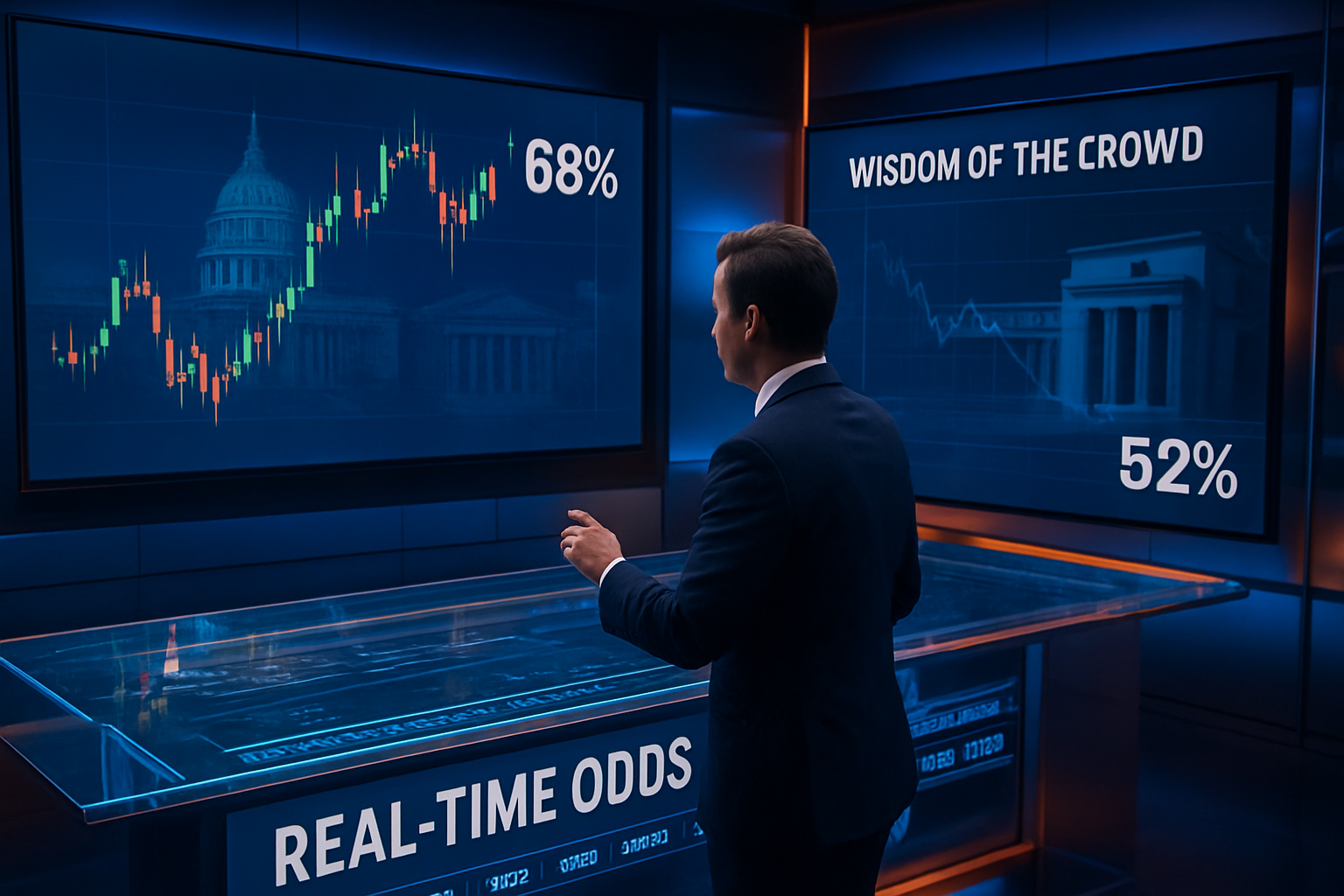
    At the center of this shift is the "Information Finance" revolution. Currently, major market-implied probabilities—such as the 68% chance of a federal interest rate cut in March or the 52% probability of a specific legislative package passing the Senate—are being treated with more gravity than traditional surveys. This shift is driven by the massive success of prediction markets during the 2024 election cycle and a series of landmark regulatory victories that have rebranded "gambling" as "the ultimate data-driven insight."

    The Market: What's Being Predicted

    The primary vehicle for this integration has been Kalshi, the first federally regulated prediction market in the U.S. Throughout 2025, Kalshi moved aggressively to colonize the mainstream media landscape. In December 2025, Kalshi announced a historic partnership with CNN, owned by Warner Bros. Discovery (NASDAQ: WBD), establishing the exchange as the network's "Official Prediction Market Partner." This deal introduced a live on-screen ticker during prime-time broadcasts, providing viewers with "market-driven signals" on everything from geopolitical conflicts to domestic policy shifts.

    Simultaneously, CNBC, a subsidiary of Comcast Corporation (NASDAQ: CMCSA), fully integrated Kalshi’s data API into its financial news suite. This wasn't merely a citation of odds; it was a structural integration. CNBC launched a dedicated "Prediction Hub" where viewers could watch a segment on Squawk Box and immediately click through to trade on the outcome being discussed. By the end of 2025, Kalshi reported that its weekly trading volume had eclipsed $1 billion, fueled largely by these mainstream media funnels and the high liquidity of its event contracts.

    The resolution criteria for these markets are strictly defined by verifiable real-world outcomes. Whether it is a Bureau of Labor Statistics report or a confirmed vote in the House of Representatives, the binary nature of these contracts—paying out $1 if the event occurs and $0 if it does not—creates a transparent probability that is updated in micro-seconds as new information hits the wire.

    Why Traders Are Betting

    The migration of traders to these platforms is fueled by a growing distrust in traditional forecasting methods. The 2024 U.S. Presidential Election served as a watershed moment; while many traditional polls suggested a "dead heat" until the final days, prediction markets on Kalshi and other platforms like Polymarket consistently maintained a 55% to 60% probability for the eventual winner weeks in advance.

    Traders are not just "betting"; they are participating in a decentralized intelligence gathering process. The core philosophy driving this activity is the "Incentive to be Right." Unlike a political pundit who faces little personal cost for a wrong prediction, a trader on Kalshi loses capital. This financial accountability creates a more rigorous filter for information.

    Recent activity in January 2026 shows a heavy concentration of volume in "Policy Pivot" markets. As the new administration settles in, traders are aggressively positioning themselves in contracts related to trade tariffs and regulatory rollbacks. The sheer volume of these trades provides a "wisdom of the crowd" effect that news networks are now leveraging to provide context that traditional reporting often misses.

    Broader Context and Implications

    The transition of prediction markets from the fringes of the internet to the center of CNN’s "Election Center" is the result of a hard-fought legal battle. In late 2024, a federal court ruling by Judge Jia Cobb stripped away the Commodity Futures Trading Commission's (CFTC) ability to block election markets, a decision the agency officially stopped appealing in May 2025. This legal clarity opened the floodgates for institutional participation.

    This shift reveals a significant change in public sentiment. The term "gambling" is rapidly being replaced in the public lexicon by "Information Finance." This terminology highlights the belief that prediction markets are a way of pricing the future, much like the stock market prices the value of a company.

    Historically, prediction markets have proven more accurate than experts in various fields, from Oscar winners to scientific breakthroughs. By 2026, this historical accuracy has finally been institutionalized. The implications are profound: when the "market" says an event has a 90% chance of happening, it changes how corporations plan their budgets, how politicians frame their speeches, and how the public perceives the inevitability of change.

    What to Watch Next

    The coming weeks represent another potential leap forward for the industry. Rumors are circulating that Alphabet Inc. (NASDAQ: GOOGL) is prepared to update its global advertising policies as early as next week, potentially allowing federally regulated prediction markets to advertise across its entire network. Such a move would allow Kalshi and its peers to reach billions of users directly, further democratizing access to event trading.

    Key dates to monitor include the upcoming Federal Reserve meeting in late January and the rollout of several high-stakes "Supreme Court Ruling" contracts on Kalshi. These markets are expected to see record liquidity as the CNN and CNBC integrations continue to mature, bringing in a new wave of retail participants who see these markets as a more reliable news source than the articles they are reading.

    The industry is also bracing for potential new legislation. With the 2024 "proof of concept" complete, some lawmakers are calling for a formal "Prediction Market Act" to provide a permanent regulatory framework, ensuring that these markets remain transparent and free from manipulation as they become a core part of the American information diet.

    Bottom Line

    The integration of prediction market data into mainstream news marks the end of the era of the "opinion-based" news cycle. By 2026, the data has won. The partnerships between Kalshi, CNN, and CNBC have validated a new form of journalism—one that prioritizes skin-in-the-game probabilities over speculative punditry.

    Prediction markets are no longer viewed as a "side show" for enthusiasts; they are the scoreboard for reality. As the $1 billion weekly volume suggests, the public is increasingly willing to vote with their wallets on what they believe the future holds. While risks regarding market manipulation and volatility remain, the sheer transparency of a price-discovery mechanism for truth is a tool that the 2026 newsroom simply cannot live without.


    This article is for informational purposes only and does not constitute financial or betting advice. Prediction market participation may be subject to legal restrictions in your jurisdiction.

    PredictStreet focuses on covering the latest developments in prediction markets.
    Visit the PredictStreet website at https://www.predictstreet.ai/.