Tag: 2026 Midterms

  • The Return of the King: PredictIt’s ‘Grand Relaunch’ and the $3,500 Revolution

    The Return of the King: PredictIt’s ‘Grand Relaunch’ and the $3,500 Revolution

    The landscape of political forecasting has shifted beneath the feet of Washington insiders and retail traders alike. As of February 2026, the "Grand Relaunch" of PredictIt has officially transformed the platform from an embattled academic experiment into a fully regulated powerhouse known as the Aristotle Exchange. By shedding its restrictive "no-action" status and adopting a Designated Contract Market (DCM) framework, PredictIt has effectively reset the terms of engagement for political handicappers heading into the critical 2026 midterms.

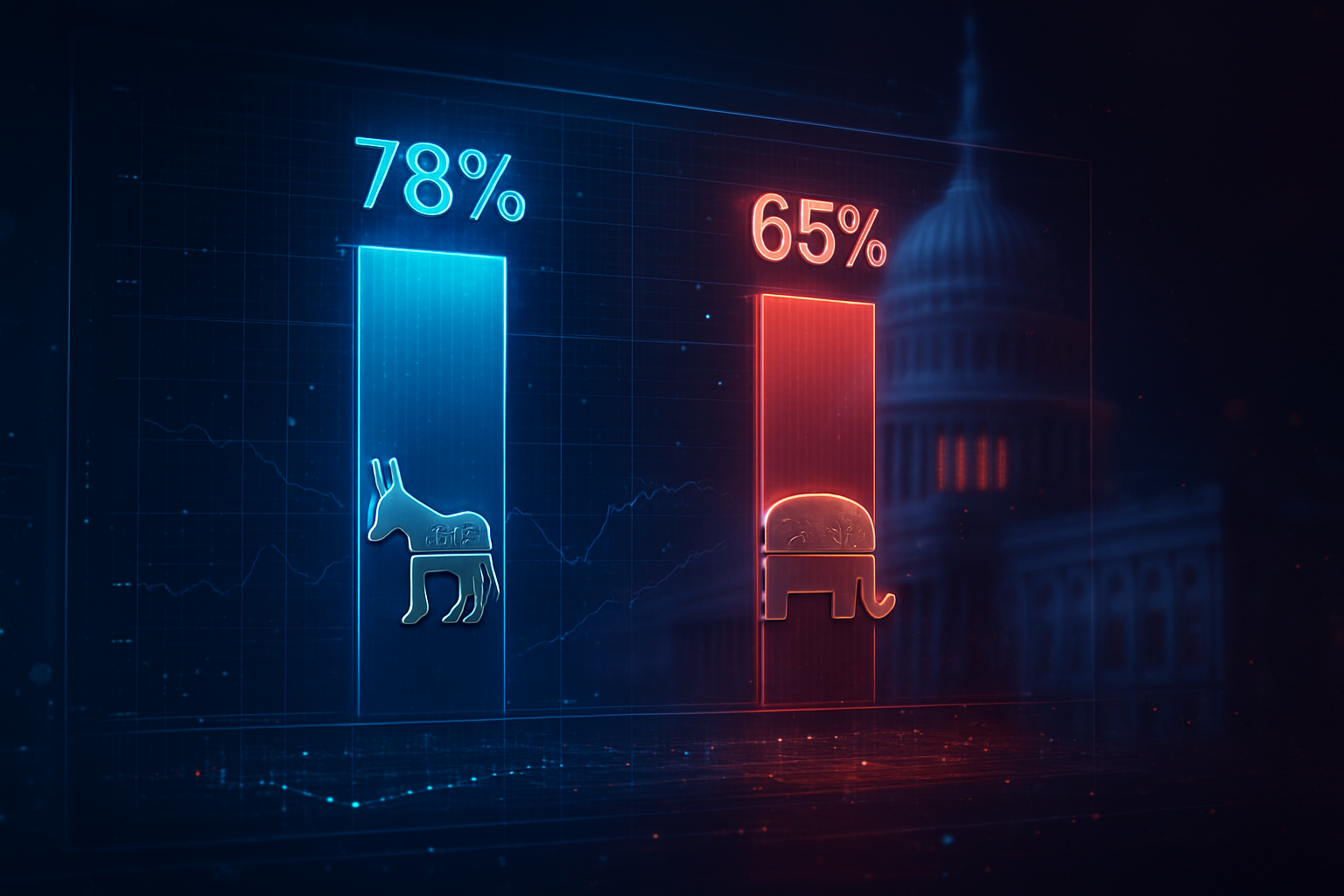
    Currently, the markets are flashing a clear, if divided, signal for the upcoming elections: a 78% probability that Democrats will reclaim the House of Representatives, contrasted with a 65% chance that Republicans will maintain their grip on the Senate. This divergence is driving record-breaking volume to the newly revamped platform, as traders move quickly to capitalize on the highest investment limits in PredictIt’s history. The platform’s transition marks a new era where political sentiment is not just polled, but priced with professional-grade precision.

    The Market: What's Being Predicted

    The centerpiece of the "Grand Relaunch" is the move to the Aristotle Exchange, a transition that has fundamentally altered the mechanics of political betting. For years, PredictIt was hamstrung by an $850 individual investment limit and a 5,000-trader cap per contract—rules that often led to "sold out" markets and distorted prices. Under the new DCM status, the investment limit has been quadrupled to $3,500, and the trader cap has been abolished entirely. This allows for deeper liquidity and ensures that prices more accurately reflect the aggregate wisdom of the crowd rather than just the first few thousand people to the gate.

    To handle this influx of capital, the exchange has integrated the Eqlipse Clearing technology from Nasdaq (NASDAQ: NDAQ), providing a level of institutional reliability previously unseen in the political prediction space. The 2026 midterm contracts are the first major test of this infrastructure. Currently, the "Party Control of the House" market is trading at 78 cents for Democratic control, while the "Senate Majority" market remains more competitive, with Republican shares hovering at 65 cents. These contracts are set to resolve following the certification of the November 2026 election results, providing a multi-billion dollar real-time barometer of the national mood.

    Why Traders Are Betting

    The surge in activity is driven by a combination of regulatory certainty and the historic stakes of the 2026 cycle. Previously, many large-scale traders avoided PredictIt due to the legal "gray area" created by its long-running battle with the CFTC. Now, with a permanent license in hand, "whales" who previously occupied the shadows are entering the fray. The $3,500 limit, while still retail-focused compared to traditional futures markets, is enough to allow sophisticated handicappers to build meaningful positions across dozens of individual race markets.

    Traders are currently leaning heavily into the "House Flip" narrative, largely based on the historical precedent that the president's party almost always faces setbacks in the first midterm of a second term (or the second midterm of a long tenure). However, the 65% odds for a Republican Senate suggest that the "GOP Firewall" in key states like Texas and Iowa remains formidable. Strategists are using these markets to hedge against potential policy shifts, as a divided government would likely stall any major legislative agendas regarding tax reform or climate spending through 2028.

    Broader Context and Implications

    PredictIt’s evolution is part of a broader "Prediction Market Arms Race." While PredictIt has captured the traditionalist and academic crowd, it faces stiff competition from Kalshi, which has marketed itself as the "Wall Street" of events, and Polymarket, which recently secured a massive $2 billion investment from the Intercontinental Exchange (NYSE: ICE). The fact that the parent company of the New York Stock Exchange is now backing a primary competitor highlights how mainstream this asset class has become.

    Beyond the numbers, these markets reveal a deepening skepticism toward traditional polling. In the 2024 cycle, prediction markets famously front-ran polling shifts in swing states, a trend that traders expect to continue in 2026. The move to a DCM model also brings PredictIt under stricter oversight, requiring enhanced transparency and anti-manipulation protocols. This regulatory "clean-up" is essential for the industry's survival, as it positions prediction markets as a legitimate financial tool rather than a niche gambling product.

    What to Watch Next

    As we move deeper into the 2026 primary season, several key milestones will likely trigger volatility in the House and Senate markets. First, the filing deadlines in March and April will clarify the candidate fields, particularly in "toss-up" districts where incumbent retirements could cause double-digit swings in the odds. Any movement in the 78% House probability will likely be tied to these candidate quality assessments.

    Furthermore, economic indicators—specifically inflation data and consumer sentiment—will serve as the primary "macro" drivers for the midterm markets. If the Federal Reserve continues its current path of interest rate stabilization, the 65% Republican Senate lead may soften as the "incumbent penalty" decreases. Conversely, any economic shock would likely solidify the Democratic House advantage. Traders should also watch for the launch of "Individual Seat" markets, which will offer the granular data that professional political consultants now rely on more than internal polling.

    Bottom Line

    The "Grand Relaunch" has successfully reclaimed PredictIt’s position at the top of the political forecasting hierarchy. By increasing limits and professionalizing its backend through the Aristotle Exchange, the platform has solved the liquidity issues that plagued its previous iteration. The current 78/65 split for the House and Senate provides a fascinating roadmap for the next two years of American governance, suggesting a return to the "gridlock" that markets often prefer.

    Ultimately, the transformation of PredictIt into a regulated financial exchange is a win for the entire "Information Finance" sector. It proves that there is a sustainable, legal path for event-based trading in the United States. Whether the 78% Democratic House probability holds or fails, the real winner is the market itself, which has finally found a way to turn political uncertainty into a transparent, tradable, and highly accurate forecasting engine.


    This article is for informational purposes only and does not constitute financial or betting advice. Prediction market participation may be subject to legal restrictions in your jurisdiction.

    PredictStreet focuses on covering the latest developments in prediction markets.
    Visit the PredictStreet website at https://www.predictstreet.ai/.
  • Midterm Mania: Why the 2026 Elections are Set to Break Prediction Market Records

    Midterm Mania: Why the 2026 Elections are Set to Break Prediction Market Records

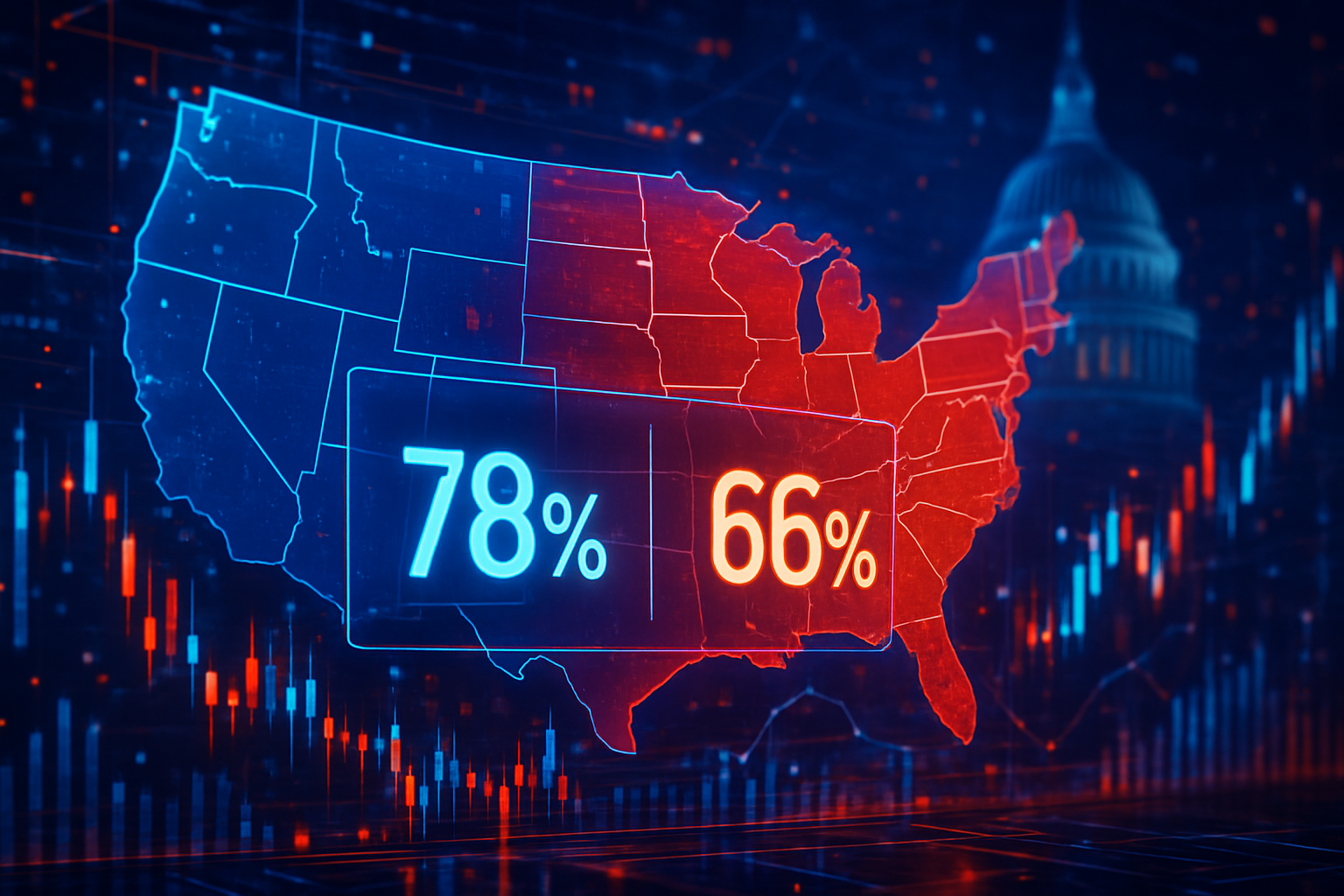
    As the calendar turns to February 2026, the United States is bracing for a political showdown that promises to be as much a financial event as a democratic one. The 2026 U.S. Midterm Elections are already generating unprecedented activity in the prediction market space, with traders pouring billions of dollars into contracts determining the future control of the 119th Congress. Currently, the "Balance of Power" markets show a high probability of a divided government, with Democrats holding a commanding 78% chance of flipping the House of Representatives, while Republicans maintain a 66–68% lead to keep the Senate.

    This surge in interest is more than just political speculation; it represents the maturation of "Information Finance," or InfoFi. For the first time, prediction markets are not just side-bets for political junkies but are functioning as a primary source of real-time probability data for news networks and institutional investors alike. Weekly notional volume across major platforms recently hit a staggering $6.32 billion, signaling that the 2026 midterms will likely be the highest-volume event in the history of the industry.

    The Market: What's Being Predicted

    The core of the 2026 prediction frenzy revolves around the control of the two legislative chambers. On Kalshi, the first fully regulated U.S. exchange for such contracts, the "Democratic House Control" contract is trading at 78¢, implying a near-certainty among traders of a "midterm correction." Meanwhile, Polymarket, the decentralized heavyweight that recently secured a massive $2 billion investment from the Intercontinental Exchange, Inc. (NYSE: ICE), shows a more contested but still favorable outlook for a Democratic House.

    The Senate remains the primary battleground for Republican defense. On PredictIt—which recently underwent a "Grand Relaunch" under the Aristotle Exchange with higher investment limits—Republican Senate control is priced at 67¢. This divergence between the House and Senate forecasts suggests that traders expect a legislative stalemate starting in 2027. Liquidity has never been higher; individual contracts for the "Balance of Power" have already surpassed $500,000 in volume on Kalshi, while the total open interest across all political markets is approaching record highs.

    Why Traders Are Betting

    The massive volume is being driven by a combination of retail enthusiasm and sophisticated institutional hedging. Many traders are using these markets to protect their portfolios against potential shifts in tax policy and regulatory oversight that would accompany a change in House leadership. The entry of Interactive Brokers Group, Inc. (NASDAQ: IBKR) through its ForecastEx platform has provided a bridge for institutional players to enter the space, capturing roughly 12% of the institutional market share by early 2026.

    Beyond hedging, the "InfoFi" movement has turned political outcomes into a new asset class. Notable "whale" activity has been spotted on Polymarket, where large positions are being taken on specific swing-state Senate races. These traders are often betting against traditional polling, which many in the prediction community view as slower and more prone to bias than a market with "skin in the game." The decentralized nature of Polymarket allows it to tap into global liquidity, providing a broader, perhaps less American-centric, perspective on U.S. political stability, which often contrasts with the more domestic-focused sentiment on Kalshi.

    Broader Context and Implications

    The 2026 cycle marks a turning point in the regulatory landscape. Newly appointed CFTC Chairman Michael Selig recently launched the "Future-Proof Initiative," which aimed to eliminate the regulatory uncertainty that plagued the industry during the 2024 cycle. By withdrawing old proposals to ban political betting, the federal government has effectively signaled that prediction markets are here to stay. This has paved the way for Robinhood Markets, Inc. (NASDAQ: HOOD) to dominate the retail sector, processing over 3.0 billion event contracts in late 2025 alone.

    However, the rise of these markets has not been without friction. While federal regulators are leaning toward acceptance, state-level conflicts are intensifying. Nevada and Massachusetts have both recently challenged the legality of these platforms under state gambling laws. This ongoing tug-of-war between federal preemption and state enforcement remains a key risk factor for the industry. Despite these hurdles, the historical accuracy of these markets—which famously outperformed polls in several 2024 battlegrounds—has given them a level of credibility that is now attracting interest from even the most traditional financial institutions.

    What to Watch Next

    As we move deeper into the 2026 primary season, several key milestones will likely shift the current odds. The first major data point will be the fundraising totals for the first quarter of 2026, which often serve as a proxy for candidate viability. Additionally, traders are keeping a close eye on a pending court ruling in Nevada that could determine whether decentralized platforms like Polymarket can continue to operate through U.S.-licensed intermediaries without interference from state gaming commissions.

    Market participants should also watch for the expected launch of a native prediction platform by Coinbase Global, Inc. (NASDAQ: COIN) later this year. A Coinbase entry would likely bring a fresh wave of crypto-native liquidity to the midterms, potentially challenging the current dominance of Kalshi and Polymarket. Any significant shifts in inflation data or unemployment figures will also immediately reflect in the House control markets, as economic sentiment remains the strongest historical indicator of midterm results.

    Bottom Line

    The 2026 Midterm Elections are cementing prediction markets as the ultimate "truth machine" for political forecasting. With $6 billion in weekly volume and the backing of major financial entities like ICE and Interactive Brokers, these platforms have moved beyond the fringes and into the heart of the American financial system. The current consensus of a Democratic House flip and a Republican Senate hold reflects a market that is pricing in a return to legislative gridlock.

    Ultimately, the success of these markets in 2026 will tell us whether "InfoFi" is a permanent fixture of the global economy or a temporary bubble. If the markets continue to provide more accurate and timely data than traditional polls, they will likely become the standard by which all future political events are measured. For now, the message from the traders is clear: the political pendulum is swinging, and the smart money is already positioned for the impact.


    This article is for informational purposes only and does not constitute financial or betting advice. Prediction market participation may be subject to legal restrictions in your jurisdiction.

    PredictStreet focuses on covering the latest developments in prediction markets.
    Visit the PredictStreet website at https://www.predictstreet.ai/.
  • PredictIt’s ‘Grand Relaunch’: Higher Stakes, No Caps, and the Return of the ‘Cadillac’ of Politics

    PredictIt’s ‘Grand Relaunch’: Higher Stakes, No Caps, and the Return of the ‘Cadillac’ of Politics

    As the 2026 midterm election cycle kicks into high gear, the political prediction landscape has been fundamentally reshaped by the official relaunch of PredictIt. Long considered the "academic gold standard" for political forecasting, the platform has emerged from years of regulatory limbo with a massive upgrade that many are calling the "New Era" of information finance. Following its late 2025 transition into a fully regulated exchange, PredictIt is no longer just a research experiment; it is a high-octane venue for price discovery that is already challenging the dominance of rivals like Kalshi and Polymarket.

    Currently, the markets are flashing a clear signal for the November 2026 contests. PredictIt traders are pricing in a 78% probability of a Democratic House and a 65% probability of a Republican Senate, suggesting a return to divided government. This surge in activity is driven by the platform's new $3,500 individual investment limit and the total removal of the 5,000-trader cap—changes that have fundamentally altered the liquidity profile of political contracts and restored PredictIt’s status as a top-tier destination for serious political handicappers.

    The Market: What's Being Predicted

    The "New PredictIt," now operating as a fully registered Designated Contract Market (DCM) under the Aristotle Exchange, has moved beyond its humble beginnings as an academic project at Victoria University of Wellington. The platform now trades with a legal status comparable to institutional giants like Interactive Brokers Group (NASDAQ: IBKR) and the CME Group (NASDAQ: CME). For the first time, traders can take positions up to $3,500 in a single contract, a 411% increase from the previous $850 cap.

    More importantly, the removal of the 5,000-trader limit has solved the platform’s historical "liquidity desert" problem. Previously, popular markets would frequently "sell out," causing PredictIt prices to disconnect from the broader market. Today, the 2026 "Balance of Power" contracts are seeing millions of shares traded daily. The current consensus across PredictIt and its competitors shows a narrowing path for a "Trifecta" for either party, with a Democratic House/Republican Senate split trading as the most likely outcome at 45%.

    Why Traders Are Betting

    The influx of capital into PredictIt is driven by three main factors: regulatory certainty, higher limits, and its reputation for "smart money" data. By pegging the new $3,500 limit to the federal individual campaign contribution cap, PredictIt has created a psychological and financial link to the real world of political finance. Traders are no longer just "gaming" a small-cap market; they are deploying significant capital that reflects deeper political insights.

    Bettors are currently reacting to the typical midterm "pendulum effect," where the party in power (Republicans) faces headwinds in the House due to legislative gridlock and historical trends. However, the Senate map for 2026 heavily favors Republican incumbents, which explains the high 65-68% odds for a GOP hold in the upper chamber. Unlike the whale-driven volatility often seen on crypto-based platforms like Polymarket, PredictIt’s capped limit (even at $3,500) filters out massive market manipulation while still allowing for a sophisticated class of "super-forecasters" to move the needle.

    Broader Context and Implications

    The relaunch of PredictIt marks a turning point in the "Information Finance" wars. For years, PredictIt was the "Cadillac" of prediction markets—esteemed for its data but limited by its engine. Now, with the engine rebuilt by Aristotle International and oversight from the Nasdaq, Inc. (NASDAQ: NDAQ) Eqlipse Clearing technology, it is competing directly for the retail trader's attention. This shift is part of a larger trend where prediction markets are becoming mainstream financial tools, integrated into the apps of brokers like Robinhood Markets, Inc. (NASDAQ: HOOD) and backed by the clearing power of the Intercontinental Exchange (NYSE: ICE).

    The regulatory settlement that allowed this relaunch (Clarke vs. CFTC) has provided a blueprint for other platforms. By graduating from a "no-action letter" to a DCM, PredictIt has proven that prediction markets can coexist with traditional financial regulation. The real-world implication is that political campaigns and corporate strategy offices now look at PredictIt’s $3,500-limit data as more reliable than traditional polling, which has struggled with response rates and demographic weighting in recent years.

    What to Watch Next

    As we move toward the summer of 2026, keep a close eye on the "Statewide Control" markets. These are often the first to react to local scandals or shifts in economic sentiment that haven't hit the national polls yet. Additionally, the 2028 Presidential Primary markets on PredictIt are already seeing significant volume. Because the platform has abolished trader caps, these long-dated contracts are providing a much clearer picture of "who is the frontrunner" than was possible in the 2020 or 2024 cycles.

    Key dates to monitor include the June 2026 primary season. If Democrats overperform in "purple" districts, expect the 78% House odds to hit the 85-90% range, potentially triggering a sell-off in Republican-aligned equities. Conversely, any shift in the Senate odds—currently a Republican stronghold—would signal a total collapse of the GOP's 2026 defensive strategy.

    Bottom Line

    The return of PredictIt as a fully functional, high-limit exchange is a victory for data transparency and market efficiency. By positioning itself as the "Cadillac"—reliable, regulated, and academically backed—it offers a unique middle ground between the "Wild West" of uncapped crypto markets and the rigid macro-focus of traditional commodities exchanges.

    For the 2026 and 2028 cycles, the increased liquidity means that the "PredictIt Price" is once again the most important number in politics. As more retail investors migrate from platforms like Coinbase Global, Inc. (NASDAQ: COIN) into specialized political event contracts, the accuracy of these markets is likely to reach all-time highs. Whether you are a trader looking for an edge or a voter looking for the truth, the "New PredictIt" is officially the place to watch.


    This article is for informational purposes only and does not constitute financial or betting advice. Prediction market participation may be subject to legal restrictions in your jurisdiction.

    PredictStreet focuses on covering the latest developments in prediction markets.
    Visit the PredictStreet website at https://www.predictstreet.ai/.

  • PredictIt’s ‘New Era’: Regulated, Uncapped, and Ready for the 2026 Midterm Surge

    PredictIt’s ‘New Era’: Regulated, Uncapped, and Ready for the 2026 Midterm Surge

    The landscape of American political forecasting has fundamentally shifted. For over a decade, PredictIt was the "little engine that could"—a research project operating under the restrictive constraints of an academic "No-Action" letter from federal regulators. Today, January 26, 2026, those training wheels are officially gone. PredictIt has completed its transformation into a fully regulated Designated Contract Market (DCM) and Derivatives Clearing Organization (DCO) under the Commodity Futures Trading Commission (CFTC).

    The result is a "New Era" for the platform, characterized by the removal of the infamous 5,000-trader cap and a quadrupling of individual investment limits. As the 2026 Midterm Elections approach, these changes have already triggered a massive influx of liquidity. Currently, PredictIt traders are pricing a 78% chance ($0.78) that Democrats will retake the House of Representatives, while giving Republicans a 65% chance ($0.65) to maintain their grip on the Senate. This divergence—suggesting a return to divided government—is generating record-breaking volume as the platform finally competes on a level playing field with institutional giants.

    The Market: What's Being Predicted

    The "New" PredictIt, now officially operated by the parent company Aristotle International, Inc., is no longer just a place for $850 bets and "sold out" contracts. Under its new DCM status, the platform has listed hundreds of contracts for the 2026 cycle. The most active markets currently center on the 2026 Midterm Control, where the "Balance of Power" contract is the crown jewel of the exchange.

    On PredictIt, the market for a "Democratic House / Republican Senate" split is currently trading at 46¢, the consensus favorite among the three major US-facing platforms. Unlike the "Old" PredictIt, where high-interest markets would hit the 5,000-trader limit months before an election, the new "unlimited" capacity has allowed these contracts to absorb millions in trade volume.

    The liquidity is bolstered by a significant regulatory win: the individual investment limit per contract has been raised from a mere $850 to $3,500. This figure was strategically chosen to mirror the Federal Election Campaign Act (FECA) individual contribution limit, allowing traders to back their convictions with meaningful capital without opening the door to the "market-moving" whale activity often seen on offshore crypto platforms like Polymarket.

    Why Traders Are Betting

    The surge in PredictIt’s activity is driven by a unique blend of high-conviction political quants and a regulatory framework that emphasizes accuracy over pure speculation. While the platform has modernized, it has retained its reputation for precision. A 2025 Vanderbilt University study noted that PredictIt's capped-investment model (even at $3,500) achieved a 93% accuracy rate in down-ballot races during the 2024 cycle, outperforming more "liquid" competitors.

    Traders are currently reacting to several early-2026 catalysts:

    • Geopolitical Volatility: Recent administrative friction regarding Greenland and military shifts in South America have made GOP "Sweep" contracts (21¢) feel like a risky bet.
    • The "Core Four" Senate Races: Markets for critical seats in Ohio, Alaska, Maine, and North Carolina are seeing intense action. PredictIt traders are notably more bullish on Senator Susan Collins (R-ME) holding her seat (66¢) compared to the more volatile pricing on Polymarket.
    • The Power of the Purse: Sentiment suggests that voters are seeking a "check" on the executive branch, a historical pattern that PredictIt’s sophisticated trader base is pricing as a near-certainty for the House.

    Broader Context and Implications

    This transition marks the end of the "wild west" era for US prediction markets. For years, the industry was a binary choice: the restricted academic environment of PredictIt or the regulated, yet non-political, markets of Kalshi. In late 2024 and throughout 2025, a series of legal victories—most notably Clarke v. CFTC—cleared the path for political event contracts to be treated as legitimate financial instruments rather than "gambling."

    The mainstreaming of these markets is evident in the involvement of major public companies. Robinhood Markets (NASDAQ: HOOD) has successfully integrated event-contract trading for its millions of users via a partnership with Kalshi, while Interactive Brokers (NASDAQ: IBKR) has expanded its ForecastEx subsidiary to compete directly for institutional flow. Even heavyweights like CME Group (NASDAQ: CME) and Goldman Sachs (NYSE: GS) have begun exploring the clearing and settlement of event-based derivatives.

    PredictIt’s new DCM/DCO status means it is no longer an "exception" to the rule; it is a core pillar of the new financial infrastructure. This regulatory clarity has narrowed the bid-ask spreads on major contracts to as little as a single penny, providing a "wisdom of the crowd" data point that is often more reliable than traditional polling.

    What to Watch Next

    As we move toward the 2026 primary season, the "New Era" PredictIt will face its first major stress test. Watch for the following milestones:

    1. The $10 Million Milestone: Analysts expect the "House Control" market to be the first in PredictIt history to reach $10 million in total volume before the summer, thanks to the removed trader caps.
    2. State-Level Challenges: While federal regulators are now on board, several states, including Massachusetts and Nevada, are currently embroiled in legal battles over whether "prop-style" event contracts violate state gaming laws.
    3. The Polymarket US Rollout: Polymarket’s recent acquisition of a CFTC-licensed exchange (QCX) means it will soon exit its beta phase. The "liquidity war" between PredictIt’s accuracy and Polymarket’s volume will be the defining story of the 2026 election.

    Bottom Line

    PredictIt’s evolution from a university research project to a fully-fledged, CFTC-regulated exchange is the most significant development in the prediction market space this decade. By removing the 5,000-trader cap and raising investment limits to $3,500, the platform has successfully professionalized without losing the "distributed intelligence" that made its forecasts so accurate in the past.

    For the average trader, this means a more robust, liquid, and legally secure way to hedge against political outcomes or profit from unique insights. For the broader public, it provides a high-fidelity signal of the nation's political trajectory. As of January 2026, the signal is clear: the markets are betting on a divided Washington, but the real winner is the legitimacy of the prediction market itself.


    This article is for informational purposes only and does not constitute financial or betting advice. Prediction market participation may be subject to legal restrictions in your jurisdiction.

    PredictStreet focuses on covering the latest developments in prediction markets. Visit the PredictStreet website at https://www.predictstreet.ai/.


  • The New Oracle: Prediction Markets Emerge as Global ‘Early Warning Systems’

    The New Oracle: Prediction Markets Emerge as Global ‘Early Warning Systems’

    As we move into early 2026, the global information landscape has undergone a radical transformation. No longer are political analysts and corporate strategists solely reliant on slow-moving surveys or expert panels to gauge the future. Instead, they are turning to the real-time, high-stakes data of prediction markets. These platforms, once viewed as niche betting hubs, have matured into what many are now calling the world’s most accurate "Early Warning Systems" (EWS).

    In January 2026, the evidence of this shift is undeniable. While traditional polling data often lags behind reality by days or even weeks, prediction markets are responding to geopolitical tremors and economic shifts in mere seconds. From the capture of international fugitives to the timing of Federal Reserve interest rate cuts, these markets are providing a level of foresight that traditional media is struggling to match.

    The Market: What's Being Predicted

    The scope of what can be traded on prediction markets has expanded dramatically since the landmark 2024 election cycle. Platforms like Polymarket and Kalshi have moved far beyond simple "Who will win the presidency?" contracts. Today, traders are betting on everything from the success of SpaceX's Starship Flight 12 to the number of confirmed measles cases in specific Texas counties.

    The scale of these markets is equally impressive. In late 2025, total weekly notional volume across major platforms frequently exceeded $5 billion. Kalshi alone recorded its highest-ever weekly volume of $1.98 billion in the first week of January 2026, largely driven by NFL-related event contracts. Meanwhile, Polymarket, following its successful U.S. relaunch via the acquisition of a CFTC-licensed exchange, reported over $21.5 billion in total nominal volume through December 2025.

    These platforms rely on binary outcome contracts—where a share pays out $1 if the event occurs and $0 if it doesn't—providing a clear, percentage-based probability for any given event. This "price discovery" for future events has become an essential tool for institutional investors and news organizations alike.

    Why Traders Are Betting

    The 2024 U.S. Presidential Election was the ultimate proof of concept for the "Early Warning" theory. Throughout October 2024, traditional pollsters like The New York Times (NYSE: NYT) and 538 described the race as a "dead heat." However, prediction markets told a different story. By late October, the price of a Donald Trump "win" share on Polymarket and Kalshi had moved decisively toward 67%, signaling a shift in momentum that polls didn't capture until it was too late.

    Traders are driven by the "financial incentive for accuracy." Unlike a survey respondent who may give a socially desirable answer, or a television pundit who faces no financial penalty for a wrong prediction, prediction market participants must put capital at risk. This filters out noise and prioritizes "hidden" information.

    A prime example occurred in early January 2026. Hours before the Trump administration announced the capture of Venezuelan leader Nicolás Maduro, a single trader on Polymarket placed a $32,000 bet on his downfall, eventually netting a $400,000 profit. This instance of "information finance" sparked debates about insider information, but it also proved that markets can act as a sensor for events long before they hit the headlines.

    Broader Context and Implications

    The evolution of these markets has been bolstered by significant regulatory victories. Following the CFTC vs. Kalshi legal battle, which concluded in May 2025 when the government dropped its appeal, political event contracts are now legally traded on federally regulated exchanges in the U.S. This has cleared the path for mainstream integration, with Warner Bros. Discovery (NASDAQ: WBD) and its subsidiary CNN, as well as Comcast’s (NASDAQ: CMCSA) CNBC, now featuring live prediction market odds as a standard part of their election and economic coverage.

    Furthermore, traditional finance players like Robinhood Markets, Inc. (NASDAQ: HOOD) and Interactive Brokers Group, Inc. (NASDAQ: IBKR) have integrated these markets into their platforms, bringing prediction contracts to millions of retail investors. This influx of liquidity has reduced the influence of "whales" and increased the "wisdom of crowds," making the signals more stable and reliable.

    Historically, prediction markets have shown a remarkable ability to process complex news faster than experts. In 2025, economic contracts on the CME Group (NASDAQ: CME) FedWatch tool and Kalshi correctly priced in a June rate cut months in advance, even as many bank analysts remained skeptical of a cooling labor market.

    What to Watch Next

    As we look toward the remainder of 2026, the 2026 Midterm Elections (November 3, 2026) are already the highest-liquidity markets in the world. Currently, markets are pricing a 79% probability of a Democratic House takeover and a 67% chance of the GOP maintaining control of the Senate. These odds are expected to shift rapidly as the primary season begins in March.

    Outside of politics, the 2026 Winter Olympics in Milan-Cortina (February 6–22) and the 2026 FIFA World Cup in June will provide massive volume for sports-related event contracts. In the tech sector, all eyes are on the anticipated IPO of SpaceX. Rumors of a mid-2026 public offering have already created a highly active market, with traders currently betting on a debut valuation exceeding $1 trillion.

    Bottom Line

    The rise of prediction markets as "Early Warning Systems" represents a fundamental shift in how we perceive and process the future. By attaching a financial value to truth, these platforms have successfully bypassed the biases of traditional polling and the lag of institutional reporting. They are no longer just betting platforms; they are the new infrastructure of information.

    As we head into the 2026 midterms and beyond, the most important signal won't be found in a pundit's monologue or a "margin of error" poll—it will be found in the fluctuating price of a contract on an exchange. For the first time in history, the collective wisdom of the crowd isn't just a theory; it’s a tradable asset.


    This article is for informational purposes only and does not constitute financial or betting advice. Prediction market participation may be subject to legal restrictions in your jurisdiction.

    PredictStreet focuses on covering the latest developments in prediction markets.
    Visit the PredictStreet website at https://www.predictstreet.ai/.

  • The David of Data: Why Political Quants Still Bet on PredictIt Over the Polymarket ‘Whale’ Waves

    The David of Data: Why Political Quants Still Bet on PredictIt Over the Polymarket ‘Whale’ Waves

    As the 2026 midterm election cycle enters its first high-stakes primary season this January, the prediction market landscape looks radically different than it did during the 2024 presidential frenzy. While the crypto-fueled giants like Polymarket continue to draw billions in volume from international speculators, a quieter, more academic battle is being waged on PredictIt. Despite the entry of institutional heavyweights like Interactive Brokers Group (NASDAQ: IBKR) and Robinhood Markets (NASDAQ: HOOD) into the forecasting space, seasoned political quants and "small-cap" traders are doubling down on PredictIt as the only platform capable of filtering out the "whale-driven" noise that has increasingly distorted uncapped markets.

    Currently, PredictIt’s 2026 "Balance of Power" markets show a nuanced picture: Republican odds of holding the House have softened to 58%, while the Democratic "Blue Wave" scenario—the party regaining control of both chambers—is trading at a steady 32 cents. These prices have remained remarkably stable compared to the volatile swings seen on decentralized platforms, where single six-figure trades frequently send "win" probabilities oscillating by 5 to 10 percentage points in a matter of hours. For the data-driven trader, this stability is not a lack of liquidity; it is a feature of the market’s design.

    The Market: What’s Being Predicted

    The central focus of PredictIt’s 2026 portfolio is the fight for the 120th Congress. Unlike the "wild west" era of 2022, PredictIt enters 2026 as a fully regulated Designated Contract Market (DCM), having survived a grueling three-year legal battle with the Commodity Futures Trading Commission (CFTC). The platform’s "relaunch" in late 2025 brought significant structural upgrades: the historical $850 individual investment limit was raised to $3,500, and the 5,000-trader-per-contract cap was abolished entirely.

    Despite these increases, PredictIt remains a "small-stakes" environment compared to the uncapped millions flowing through Polymarket or the institutional-grade ForecastEx exchange operated by Interactive Brokers. As of January 23, 2026, PredictIt’s most active contracts involve individual Senate races in battleground states like Pennsylvania and Arizona, where "Yes" shares for incumbents are trading between 45 and 55 cents. The resolution criteria remain strictly tied to official certification by state and federal authorities, with most 2026 markets scheduled to settle by mid-November.

    Why Traders Are Betting

    The primary driver for the continued loyalty to PredictIt is the "Whale Effect"—a phenomenon that reached its zenith during the 2024 election. Analysts point to the "Théo" incident on Polymarket, where a single French trader used four accounts (including "Fredi9999") to bet over $30 million on a Donald Trump victory. While Théo’s bet was ultimately profitable, it created what quants call an "informational cascade," where the market price reflected one wealthy individual's private conviction rather than the collective intelligence of the crowd.

    Political quants argue that PredictIt’s $3,500 limit acts as a "signal filter." To move a price on PredictIt, a candidate needs the consensus of thousands of unique individuals rather than one deep-pocketed "whale." This distributed model prevents the "narrative capture" that occurs when a billionaire or a crypto-fund "buys the tape" to influence public perception or social media sentiment.

    "PredictIt is the 'small-cap' market of politics," says one veteran quantitative trader who moved their activity back to the platform in late 2025. "On Polymarket, you're trading against the ego of a whale. On PredictIt, you're trading against the collective research of 10,000 political junkies who are reading local precinct reports. The latter is a much purer signal of what’s actually happening on the ground."

    Broader Context and Implications

    The debate over market design is backed by recent academic data. A 2025 study from Vanderbilt University analyzed over 2,500 political contracts from the 2024 cycle and found that PredictIt achieved a staggering 93% accuracy rate in predicting down-ballot winners, compared to 67% for Polymarket and 78% for Kalshi. Researchers concluded that the capped-investment model effectively prioritized "distributed knowledge" over "speculative capital."

    This accuracy gap has significant real-world implications for how media organizations and campaigns use these markets. While Robinhood Markets (NASDAQ: HOOD) has successfully "mainstreamed" prediction markets for the retail masses—reporting over 11 billion contracts processed by January 2026—PredictIt remains the "academic gold standard." The platform's transition to a non-profit management structure under the Prediction Market Research Consortium (PMRC) has further solidified its role as a tool for political science research rather than just a venue for high-stakes gambling.

    Furthermore, the regulatory landscape has stabilized. Following the landmark 2024 legal victory by Kalshi against the CFTC, and PredictIt’s subsequent 2025 win in the Western District of Texas, prediction markets are now recognized as legitimate hedging tools. This has allowed PredictIt to coexist with massive brokerages like Interactive Brokers Group (NASDAQ: IBKR), which focuses on macro-hedging (like inflation and climate), leaving PredictIt to dominate the niche of high-conviction retail political forecasting.

    What to Watch Next

    As we move toward the summer of 2026, several key milestones will test the "Signal vs. Whale" theory. The first is the wave of Republican primaries in the Sun Belt, where PredictIt's prices currently diverge from Polymarket by as much as 400 basis points. Quants are watching to see if PredictIt’s "small-cap" traders correctly identify insurgent candidates before the large-scale liquidity on other platforms catches up.

    Additionally, the potential for a "Black Swan" event—such as a major Supreme Court ruling or a shift in Federal Reserve policy—will likely see Polymarket prices react violently as whales hedge their portfolios. In contrast, PredictIt’s $3,500 cap is expected to keep prices more grounded, reflecting the slower, more deliberate shift in voter sentiment.

    Bottom Line

    PredictIt’s unique position in the 2026 landscape proves that in the world of forecasting, bigger is not always better. By maintaining a capped-investment structure, the platform has preserved its status as a sanctuary for those who value the "wisdom of crowds" over the "power of the purse." For political quants, the platform offers a "clean" data set that is remarkably resistant to the manipulation and volatility that plague uncapped, crypto-native markets.

    As the 2026 midterms approach, the "Accuracy War" will likely intensify. While the billions in volume may reside on Polymarket and Robinhood, the most reliable signal of the next Speaker of the House may well be found in the $3,500-limit trenches of PredictIt. For the savvy trader, the message is clear: watch the volume for the excitement, but watch the "small-caps" for the truth.


    This article is for informational purposes only and does not constitute financial or betting advice. Prediction market participation may be subject to legal restrictions in your jurisdiction.

    PredictStreet focuses on covering the latest developments in prediction markets.
    Visit the PredictStreet website at https://www.predictstreet.ai/.
  • The Financialization of Truth: Why Prediction Markets Are the New Gold Standard for Forecasting

    The Financialization of Truth: Why Prediction Markets Are the New Gold Standard for Forecasting

    As we cross into 2026, the global information landscape has undergone a radical transformation. The era of relying solely on traditional polling—often criticized for its slow response times and methodological lag—is being eclipsed by the rise of prediction markets. Following their standout performance during the 2024 US Presidential Election, these platforms are no longer viewed as niche betting hubs; they have become the "new gold standard" for real-time data, drawing in billions of dollars from retail and institutional investors alike.

    Currently, the markets are hyper-focused on the 2026 US Midterm elections and the upcoming January FOMC meeting. With daily trading volumes recently surpassing $700 million across major platforms, the "wisdom of the crowd" is being priced into the global economy with unprecedented precision. On Polymarket, traders are currently pricing in a 79% probability of a Democratic takeover of the House of Representatives, while the Senate remains leaning GOP at 67%. These are not just guesses; they are financial positions held by thousands of participants with "skin in the game."

    The Market: What's Being Predicted

    The current landscape is dominated by a "triopoly" of major platforms: the US-regulated exchange Kalshi, the decentralized giant Polymarket, and the rapidly scaling Opinion Labs. Unlike the early days of event wagering, the markets in January 2026 cover a granular spectrum of outcomes. In the political sphere, the "Balance of Power" contracts for the November 2026 Midterms are seeing massive liquidity. Institutional traders are aggressively hedging against a "Divided Government," a scenario that historically leads to market gridlock—often a favorable outcome for equities.

    Beyond politics, macro-economic markets have become essential tools for treasury departments. The January 28 Federal Reserve meeting is currently priced at a near-certain 98% probability of a rate pause. However, the true intrigue lies in the March 2026 meeting, where markets are pricing a 74% chance of a rate cut. These odds have moved significantly in the last 48 hours following rumors of a leadership shift at the Fed.

    The volume and liquidity in these markets are staggering. Robinhood Markets, Inc. (NASDAQ: HOOD) reported that its integrated "Prediction Markets Hub" facilitated over 2.5 billion contracts in late 2025 alone. Similarly, Interactive Brokers Group, Inc. (NASDAQ: IBKR) has seen its ForecastEx affiliate volume explode, treating these contracts more like standardized financial derivatives than speculative bets.

    Why Traders Are Betting

    The shift toward prediction markets as a primary forecasting tool stems from their remarkable accuracy during the 2024 election cycle. While traditional polls and models like FiveThirtyEight struggled to capture the momentum of "low-propensity" voters, Polymarket called the 2024 race with 95% certainty for Donald Trump hours before major news networks. In a world where news travels at the speed of social media, the 14-day lag typical of a high-quality poll is an eternity.

    Traders are betting because markets react to news instantly. During the June 2024 presidential debate, prediction market odds for the Democratic ticket began a vertical descent within 15 minutes of the opening statements. It took traditional polling outfits nearly two weeks to confirm the same sentiment shift. This real-time adaptability is why institutional investors are increasingly looking at market prices rather than survey data.

    Furthermore, the "Wisdom of the Crowd" theory suggests that a diverse group of individuals, each with their own private information and financial incentives, will collectively produce a more accurate forecast than any single expert. When a trader places a $100,000 bet on a SpaceX IPO date, they are incentivized to be right, not to provide a socially desirable answer to a pollster.

    Broader Context and Implications

    The "Financialization of Information" has significant implications for how the public consumes news. We are moving toward a "Truth Layer" where the most probable version of reality is reflected in a price ticker. This trend was solidified in late 2025 when the Intercontinental Exchange, Inc. (NYSE: ICE)—the parent company of the New York Stock Exchange—made a landmark $2 billion investment in Polymarket, valuing the platform at roughly $9 billion.

    Regulatory hurdles that once stifled the industry are also falling. The landmark Kalshi vs. CFTC rulings provided the legal "green light" for US-based political contracts, essentially arguing that these markets do not constitute "gaming" but rather vital economic tools for hedging political risk. The subsequent passage of the Digital Asset Market CLARITY Act of 2025 further legitimized the space by classifying many event contracts as digital commodities under CFTC oversight.

    However, the rapid growth has brought new challenges. In January 2026, Rep. Ritchie Torres introduced the Public Integrity in Financial Prediction Markets Act (H.R. 7004), aimed at preventing "insider trading" by government officials. This followed a controversial surge in volume on a Venezuelan leadership contract just hours before a major US diplomatic announcement, raising questions about who has access to the information moving these markets.

    What to Watch Next

    As we move toward the spring of 2026, several key milestones will determine if prediction markets can maintain their "gold standard" status. The primary focus will be the upcoming US Midterm primaries. If the markets can accurately predict the "unpredictable" primary upsets that often baffle pollsters, their credibility will only strengthen.

    Investors should also watch the "SpaceX IPO" market on Kalshi. Currently, there is a 58% probability that an IPO will be announced before July 1, 2026. Given the massive valuation of SpaceX, this market serves as a proxy for broader sentiment on the private tech sector and interest rate environments.

    Lastly, the ongoing legal battle between the "Coalition for Prediction Markets"—which includes Coinbase Global, Inc. (NASDAQ: COIN) and Robinhood—and several state regulators in Nevada and Tennessee will be critical. A victory for the coalition would likely lead to a unified national standard, potentially opening the door for prediction markets to be included in retirement accounts and traditional portfolios.

    Bottom Line

    Prediction markets have fundamentally changed how we forecast the future. By attaching a price tag to truth, they have created a more resilient, faster, and often more accurate data source than traditional polling could ever hope to be. The 2024 election was the proof of concept; the massive institutional adoption of 2025 and 2026 is the expansion phase.

    For the average observer, these markets offer a clear, un-biased view of what the world actually thinks is going to happen, stripped of partisan spin. As long as participants have "skin in the game," the price will remain one of the most honest indicators we have. Whether you are a retail trader on Robinhood or a hedge fund manager at ICE, prediction markets are no longer a side show—they are the main event.


    This article is for informational purposes only and does not constitute financial or betting advice. Prediction market participation may be subject to legal restrictions in your jurisdiction.

    PredictStreet focuses on covering the latest developments in prediction markets.
    Visit the PredictStreet website at https://www.predictstreet.ai/.
  • The Titans Have Arrived: FanDuel and DraftKings Disrupt the Prediction Market Arena

    The Titans Have Arrived: FanDuel and DraftKings Disrupt the Prediction Market Arena

    The landscape of American forecasting shifted fundamentally this winter as the industry's two largest heavyweights, FanDuel and DraftKings, officially entered the prediction market space. Moving beyond point spreads and over-unders, these legacy sportsbooks have launched dedicated "event contract" platforms—FanDuel Predicts and DraftKings Predictions—to capture a share of the exploding interest in political and economic wagering.

    The entry comes as the 2026 midterm election cycle begins to heat up, with markets for House and Senate control already seeing tens of millions in liquidity. While Polymarket dominated the 2024 cycle from offshore and Kalshi fought the legal battles to domesticate the industry, the arrival of the sports betting giants represents a "mass-market moment." Traders are currently pricing the probability of a Republican-held House after the 2026 midterms at roughly 54% on FanDuel Predicts, a figure that has seen a sharp 4% uptick in volatility over the last 48 hours following recent economic data releases.

    The Market: What's Being Predicted

    The primary products on offer are CFTC-regulated event contracts. Unlike traditional sports bets, which are governed by state-level gaming boards, these markets are structured as financial derivatives. FanDuel, owned by Flutter Entertainment (NYSE: FLUT), launched its platform on December 22, 2025, through a strategic partnership with the CME Group. Meanwhile, DraftKings (Nasdaq: DKNG) fast-tracked its entry by acquiring Railbird Technologies, a CFTC-licensed exchange, for $250 million in late 2025.

    These platforms are currently listing a wide array of "Yes/No" binary contracts. While political outcomes—such as the 2026 midterms and early 2028 presidential nominees—are the headline grabbers, the volume is surprisingly high in non-political sectors. Currently, traders are active in markets regarding the Federal Reserve’s March interest rate decision, monthly CPI prints, and even cultural events like the 2026 Academy Award winners.

    The liquidity on these platforms is growing at an unprecedented rate. DraftKings Predictions reported a trading volume of over $120 million in its first month, largely due to its integration with the existing DraftKings ecosystem. This allows millions of casual users to shift their "sports bankroll" into event contracts with a single tap. The resolution criteria are strictly tied to verified data sources, such as official government reports or certified election results, ensuring a level of transparency that mirrors traditional financial markets.

    Why Traders Are Betting

    The sudden migration of capital toward these legacy platforms is driven by a "Trojan horse" strategy. Because event contracts are regulated as derivatives by the Commodity Futures Trading Commission (CFTC), FanDuel and DraftKings are now able to offer "sports-themed" contracts in states where traditional sports betting remains illegal, most notably California and Texas. Traders in these states are flocking to "Predictive Sports" contracts—financial derivatives based on seasonal outcomes rather than individual game lines—which are legally distinct from gambling.

    Institutional players and "whales" are also beginning to favor these legacy platforms over crypto-native alternatives like Polymarket due to the ease of fiat on-ramps and the security of US-based regulation. Analysts note that large-scale positions are being taken by hedge funds using these markets as a hedge against political instability. For example, a significant buy-wall has emerged on FanDuel Predicts for "No" on the passage of a controversial federal tax bill, serving as an insurance policy for corporate entities that would be adversely affected by the legislation.

    This shift marks a departure from traditional polling and forecasting methods. While legacy pollsters struggled with accuracy in the 2024 cycle, prediction markets provided real-time, skin-in-the-game data that proved more resilient. The sportsbooks are capitalizing on this by marketing their platforms as "The Pulse of the Nation," attracting users who view themselves as armchair analysts rather than gamblers.

    Broader Context and Implications

    The entry of legacy sportsbooks is a direct result of the legal precedent set by Kalshi in 2024. After Kalshi successfully sued the CFTC to allow election markets, the floodgates opened for any regulated exchange to follow suit. This has led to a major regulatory evolution under the new market-friendly leadership at the CFTC in early 2026, which has pivoted from trying to ban these markets to establishing a robust framework for their operation.

    However, this expansion has not been without friction. The ability of FanDuel and DraftKings to operate in California and Texas via the "event contract" loophole has sparked intense legal battles with California gaming tribes. These tribes argue that the sportsbooks are bypassing tribal sovereignty by offering what is functionally gambling under the guise of financial trading. The outcome of these challenges could define the future of the industry for decades.

    Historically, the entry of major incumbents into a disruptive space often leads to the "institutionalization" of the asset class. Just as the launch of Bitcoin ETFs by major asset managers signaled a new era for crypto, the entry of Flutter Entertainment and DraftKings has legitimized prediction markets as a mainstream financial tool. This has forced early pioneers like Polymarket to refine their offerings, focusing more on global, decentralized markets that legacy US-regulated firms cannot touch.

    What to Watch Next

    The most immediate milestone to monitor is the "Super Tuesday" of event markets: the 2026 Midterm Primary season. As candidates are finalized, the volatility in "Control of the House" contracts is expected to spike. If the legacy sportsbooks can maintain high liquidity during this period, it will prove their dominance over the niche, retail-heavy platforms that came before them.

    Additionally, keep a close eye on the "2028 Presidential Nomination" markets. Unlike the 2024 cycle, which saw massive volume only in the months leading up to the election, the 2028 markets are already seeing millions in "early bird" trades. DraftKings has hinted at launching a "Candidate Index," a basket of contracts that allows traders to bet on the overall direction of a political party's momentum.

    The legal front also remains critical. A pending decision in the California Supreme Court regarding the "Event Contract vs. Gambling" distinction is expected by late spring 2026. A ruling in favor of the sportsbooks could cement their presence in California indefinitely, while an adverse ruling might force a messy withdrawal from one of the world's largest economies.

    Bottom Line

    The arrival of FanDuel and DraftKings into the prediction market space is the final signal that "betting on the news" has moved from the fringes of the internet to the center of the American economy. By leveraging their massive existing user bases and navigating the complex CFTC regulatory environment, these companies are effectively democratizing sophisticated financial hedging for the average person.

    This evolution confirms that prediction markets are more than just a novelty; they are an essential tool for price discovery in an increasingly volatile world. As liquidity continues to pool into these regulated exchanges, the "wisdom of the crowd" becomes more accurate, providing a real-time sentiment gauge that no poll or pundit can match.

    For the investor and the trader, the takeaway is clear: the distinction between "sports betting" and "financial trading" is blurring. Whether the market is the final score of a game or the final tally of an election, the underlying mechanism is the same—and the giants of the industry are now the ones setting the odds.


    This article is for informational purposes only and does not constitute financial or betting advice. Prediction market participation may be subject to legal restrictions in your jurisdiction.

    PredictStreet focuses on covering the latest developments in prediction markets.
    Visit the PredictStreet website at https://www.predictstreet.ai/.
  • The Accuracy War: PredictIt vs. Kalshi vs. Polymarket

    The Accuracy War: PredictIt vs. Kalshi vs. Polymarket

    The 2024 U.S. Presidential election served as a high-stakes laboratory for the burgeoning world of prediction markets, pitting established academic platforms against crypto-native giants and regulated newcomers. As of January 19, 2026, the dust has finally settled on the post-election post-mortems, revealing a surprising "Accuracy War" where the most liquid markets weren’t necessarily the most correct. While all major platforms eventually signaled a Republican victory, the path they took—and the volatility they experienced—highlighted deep structural divides in how we forecast the future.

    Currently, the market is shifting its focus to the 2026 Midterms, with "control of the House" contracts already seeing significant early action. On Kalshi, the probability of a Democratic "Blue Wave" in 2026 is currently hovering at 42%, while PredictIt traders are more cautious at 38%. This 400-basis-point spread is a direct result of the different participant bases and fee structures that define these platforms. The divergence is generating intense interest among arbitrageurs who are looking to exploit the lingering "accuracy gap" that defined the 2024 cycle.

    The Market: What's Being Predicted

    The core of the "Accuracy War" centers on how PredictIt, Kalshi, and Polymarket processed the 2024 election data compared to their current handling of the 2026 legislative outlook. During the 2024 cycle, Polymarket dominated the headlines with over $3.3 billion in total volume, while the regulated U.S. exchange Kalshi struggled initially after a late legal entry in October 2024. PredictIt, the long-standing academic project, operated under a cloud of regulatory uncertainty that was only resolved in mid-2025.

    A landmark study from Vanderbilt University released in late 2025 found that PredictIt achieved a staggering 93% accuracy rate across 2,500 individual contracts, compared to 78% for Kalshi and just 67% for Polymarket. This disparity has fundamentally changed how traders view these platforms. While Polymarket offers the highest liquidity and the "wisdom of the global crowd," its signals were often distorted by massive "whale" positions, such as the famous $30 million bet by a French trader that skewed Republican odds for weeks.

    Today, the resolution criteria for 2026 markets have become more standardized thanks to the 2025 CLARITY Act, which provided a federal framework for event contracts. Kalshi has surged to a dominant position, claiming a 66.4% share of daily volume as of mid-January 2026. Polymarket, meanwhile, has successfully pivoted into the U.S. market, launching a regulated domestic arm in December 2025 to compete directly with Kalshi and PredictIt on American soil.

    Why Traders Are Betting

    The primary driver of the odds today is the varying "friction" created by fee structures. PredictIt remains the most expensive venue, charging a 10% fee on all gross profits and a 5% fee on withdrawals. This creates a "PredictIt Premium," where a contract might trade at 55 cents when the "true" probability is closer to 50%, simply because traders need a higher margin to cover the fees. In contrast, the newly launched Polymarket US (DCM) has introduced a hyper-competitive 0.10% fee to lure traders away from Kalshi’s probability-weighted fee model, which averages around 1.2% per trade.

    Participant demographics also play a crucial role. PredictIt’s $3,500 trading limit (raised from $850 in July 2025) ensures that the market represents a "crowd of peers" rather than a "market of whales." This "enforced diversity" is credited with its high accuracy in 2024; it was essentially a massive survey of informed U.S. voters with skin in the game. On the other hand, the international nature of Polymarket Global often leads to "sentiment-driven" spikes, where global crypto-traders bet on "narratives" rather than granular U.S. state-level polling or legislative nuances.

    Recent news has also influenced the 2026 odds. Following the partnership between Kalshi and Warner Bros. Discovery (NASDAQ: WBD)'s CNN to integrate live odds into political broadcasts, a surge of "retail" money has entered the market. This influx of less-experienced traders often creates "noise" that savvy pros—many of whom utilize institutional tools from Comcast (NASDAQ: CMCSA)'s CNBC—are quick to capitalize on through mean-reversion strategies.

    Broader Context and Implications

    The "Accuracy War" has broader implications for how prediction markets are integrated into the global financial system. The 2025 CLARITY Act was a watershed moment, finally clarifying that event contracts are legitimate financial tools for hedging real-world risks. This has allowed major news organizations, including News Corp (NASDAQ: NWS)'s Dow Jones and The Wall Street Journal, to treat prediction market prices with the same reverence as the S&P 500 or Treasury yields.

    Furthermore, the 2024 results debunked the "Liquidity Equals Accuracy" myth. The fact that the highest-volume market (Polymarket) was the least accurate in its price discovery suggested that "whales" can, in fact, move the needle and create misleading signals. This has led to a renewed interest in the "PredictIt model" of capping individual stakes to ensure a broader, more representative sample of opinions. It suggests that for political events, the "wisdom of the crowd" works best when the crowd isn't dominated by a few deep-pocketed individuals.

    The regulatory environment has also matured. The CFTC’s shift from an adversarial to a collaborative stance with platforms like PredictIt has encouraged more academic research into how these markets can serve as "early warning systems" for geopolitical instability or economic shifts. Prediction markets are no longer seen as "gambling" but as a vital layer of the information economy.

    What to Watch Next

    As we approach the 2026 Midterms, all eyes are on the performance of Polymarket’s new U.S.-regulated exchange. If it can maintain its low fee structure while attracting the high-quality, domestic participant base that PredictIt enjoys, it could theoretically combine the best of both worlds: high liquidity and high accuracy. Traders should watch for any shifts in the "spread" between PredictIt and Kalshi prices; a narrowing gap would indicate that the markets are becoming more efficient at cross-platform arbitrage.

    Key dates to monitor include the upcoming "State of the Union" in February 2026, which historically triggers massive volume and price swings in legislative control contracts. Additionally, the first major "test" of the CLARITY Act’s enforcement provisions is expected this spring, as several platforms attempt to launch "economic indicator" contracts tied to sensitive data like the Consumer Price Index (CPI) before they are officially released.

    Bottom Line

    The competition between PredictIt, Kalshi, and Polymarket has evolved into a sophisticated ecosystem where "accuracy" is the ultimate currency. While Polymarket won the battle for volume in 2024, PredictIt won the battle for precision. In 2026, the playing field is leveling as Kalshi dominates the regulated U.S. space and Polymarket enters the domestic arena with a competitive edge.

    The key takeaway for any market observer is that prediction markets are not a monolith. The "odds" on one platform are a reflection of its specific rules, its fees, and its people. As we head into a new election cycle, the "Accuracy War" continues, and the winners will be the platforms that can best balance the need for deep liquidity with the necessity of a diverse, informed participant base.

    Ultimately, prediction markets have proved their worth as a superior alternative to traditional polling. In an era of fragmented media and partisan bubbles, the cold, hard numbers of a trading screen offer the most honest look at where the world is actually heading.


    This article is for informational purposes only and does not constitute financial or betting advice. Prediction market participation may be subject to legal restrictions in your jurisdiction.

    PredictStreet focuses on covering the latest developments in prediction markets.
    Visit the PredictStreet website at https://www.predictstreet.ai/.
  • Prediction Markets Shatter Records: $700 Million Trading Day Signals a New Era for Global Finance

    Prediction Markets Shatter Records: $700 Million Trading Day Signals a New Era for Global Finance

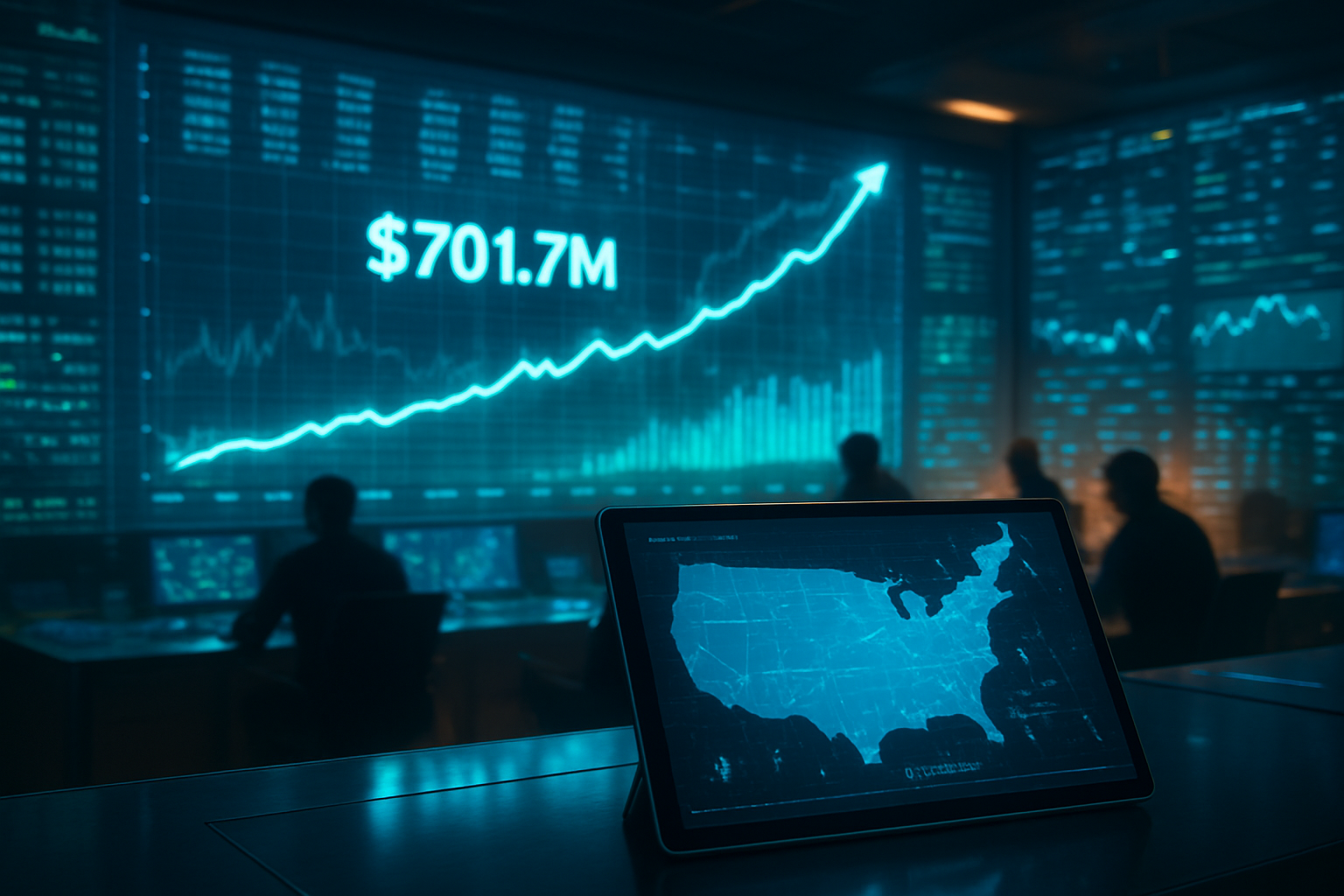
    On January 12, 2026, the prediction market industry reached a historic milestone, processing a staggering $701.7 million in a single 24-hour trading session. This unprecedented volume represents a watershed moment for the sector, effectively transitioning event-based contracts from a niche curiosity into a primary "truth engine" for institutional and retail investors alike. The surge was fueled by a volatile combination of macroeconomic uncertainty, high-stakes political maneuvering, and a geopolitical shock in South America, proving that markets can price real-world outcomes with more agility than traditional polling or economic forecasting.

    Leading the charge was Kalshi, which commanded a dominant 66.4% of the market share, facilitating over $465.9 million in trades. The record-breaking day was not merely a fluke of liquidity but the result of a "perfect storm" of events: a high-stakes standoff between the Department of Justice and the Federal Reserve, an aggressive early-cycle positioning for the 2026 U.S. Midterm Elections, and the sudden capture of Venezuelan President Nicolás Maduro. As traders recalibrated their portfolios in real-time, the day's activity cemented prediction markets as the go-to destination for hedging against systemic risk.

    The Market: What's Being Predicted

    The bulk of the day's record volume was concentrated on high-impact economic and political outcomes. On Kalshi, the regulated leader in the U.S. market, the most liquid contracts centered on Federal Reserve policy and the 2026 Midterm Election landscape. Specifically, traders were obsessively pricing the odds of a March 2026 interest rate cut, which fluctuated wildly throughout the day, peaking at a 74% probability. This was complemented by the platform's "Combos" feature, which allowed users to bet on multi-layered outcomes—such as the simultaneous occurrence of a "sticky" CPI print and a specific Fed reaction—generating over $100 million in positioning alone.

    While Kalshi dominated the U.S. domestic scene, Polymarket and Opinion Labs each processed approximately $100 million in volume, focusing on global geopolitical stability. Polymarket’s liquidity was driven by its "Operation Iron Strike" contracts regarding Middle Eastern military outcomes and the immediate aftermath of the capture of Nicolás Maduro. This event created a massive liquidity vacuum, with one savvy trader reportedly turning a $30,000 bet into a $400,000 windfall in just hours. These markets are no longer just binary "yes/no" propositions; they have evolved into complex instruments with deep liquidity, often resolving within hours of major news breaks.

    Why Traders Are Betting

    The record volume was catalyzed by a breakdown in traditional institutional trust and a series of high-stakes domestic developments. Tensions between the U.S. Department of Justice (DOJ) and Federal Reserve Chair Jerome Powell reached a boiling point on January 12. Reports surfaced that the DOJ had issued grand jury subpoenas to Powell regarding renovations at the Fed’s headquarters, a move interpreted by many as an assault on the central bank’s independence. This constitutional friction sent traders to prediction markets to hedge against a potential leadership crisis at the Fed, driving massive volume into "Fed Chair Stability" and "Interest Rate" contracts.

    Further driving the frenzy was a tactical move by the executive branch. President Trump’s directive for Fannie Mae and Freddie Mac to purchase $200 billion in mortgage bonds was seen as a direct attempt to stimulate the housing market outside the purview of the Federal Reserve. This "fiscal-monetary decoupling" led to intense positioning on the January 13 CPI (Inflation) release. Simultaneously, the 2026 Midterms moved into the spotlight as institutional traders began placing heavy bets on a "Split Congress" outcome. Current odds on Kalshi suggest a 66–68% probability that Republicans will retain control of the Senate, while the House remains a toss-up, forcing hedge funds to use these markets to price in future legislative gridlock.

    Broader Context and Implications

    The January 12 record is a testament to the successful integration of prediction markets into the broader financial ecosystem. A significant portion of Kalshi’s volume was facilitated through its deep integration with Robinhood Markets (NASDAQ: HOOD), which gave over 24 million retail traders direct access to event contracts through its "Prediction Markets Hub." This democratization of access has allowed retail sentiment to collide with institutional hedging, creating a more robust and accurate pricing mechanism. Additionally, the Intercontinental Exchange (NYSE: ICE) has fueled the sector's growth by providing a $2 billion liquidity injection into platforms like Polymarket, signaling that the traditional financial establishment now views these markets as a legitimate asset class.

    Historically, prediction markets have often been more accurate than pundits or polls. A Vanderbilt University study released on the same day noted that PredictIt—despite its regulatory size limits—maintained a 93% accuracy rate on political outcomes compared to traditional forecasting. This "wisdom of the crowd" effect is now being scaled to hundreds of millions of dollars. As these platforms grow, they are also facing increased regulatory scrutiny, yet their ability to provide real-time, incentivized data makes them indispensable for policy makers and investors trying to navigate an increasingly unpredictable global landscape.

    What to Watch Next

    The immediate focus for traders is the fallout from the January 13 CPI release and the escalating legal drama surrounding the Federal Reserve. If the CPI print comes in higher than the anticipated 2.7%, expect the probability of a March rate cut to plummet, potentially triggering another high-volume day as traders unwind their positions. Furthermore, the capture of Maduro has opened up a vacuum in South American political markets, with new contracts already appearing on the future of Venezuelan governance and oil production quotas.

    In the political arena, the 2026 Midterm markets are just beginning to heat up. Watch for the first major primary challenges in late Q1 2026, which will likely shift the "Split Congress" odds. As more public companies begin to report Q4 2025 earnings in the coming weeks, we may also see a surge in "Earnings Triple-Play" contracts, where traders bet on a company’s revenue, EPS, and guidance simultaneously.

    Bottom Line

    The $701.7 million trading day on January 12, 2026, marks the end of the experimental phase for prediction markets. With Kalshi’s $466 million performance proving the viability of regulated U.S. exchanges and Polymarket’s dominance in global geopolitics, the industry has reached a level of maturity that demands the attention of every serious investor. These markets are no longer just for "betting" on the news; they are becoming the news themselves, providing the most accurate, real-time data available on everything from inflation to international coups.

    As the intersection of finance, politics, and technology continues to blur, prediction markets will likely become the primary venue for price discovery in the 21st century. The ability to hedge against a constitutional crisis or a missed jobs report with the click of a button—aided by giants like Robinhood Markets (NASDAQ: HOOD)—has changed the rules of the game. For those watching the numbers, January 12 was not just a record day; it was a glimpse into the future of global markets.


    This article is for informational purposes only and does not constitute financial or betting advice. Prediction market participation may be subject to legal restrictions in your jurisdiction.

    PredictStreet focuses on covering the latest developments in prediction markets.
    Visit the PredictStreet website at https://www.predictstreet.ai/.