
Tag: 2025 Outlook

  • Deep Dive: Is Home Depot (HD) the Ultimate ‘Recovery Play’ for 2026?

    Deep Dive: Is Home Depot (HD) the Ultimate ‘Recovery Play’ for 2026?

    As we close out 2025, The Home Depot, Inc. (NYSE: HD) remains the undisputed titan of the home improvement industry, yet it finds itself at a critical strategic crossroads. For decades, the Atlanta-based giant thrived on the "do-it-yourself" (DIY) spirit of the American homeowner. However, the economic landscape of 12/23/2025—marked by persistent mortgage rates near 7% and a stagnant housing turnover market—has forced a radical evolution.

    Home Depot is no longer just a place to buy a gallon of paint or a new lawnmower; it has transformed into a sophisticated industrial distributor. Through the massive $18.25 billion acquisition of SRS Distribution and the subsequent $5.5 billion purchase of GMS Inc., Home Depot has pivoted aggressively toward the "Complex Pro"—the roofing, drywall, and pool contractors who manage multi-million dollar projects. This deep dive explores how Home Depot is navigating a "maintenance economy," leveraging artificial intelligence to serve professionals, and why its stock remains a foundational, albeit currently pressured, pillar of the retail sector.

    Historical Background

    Founded in 1978 by Bernie Marcus, Arthur Blank, Ron Brill, and Pat Farrah, Home Depot was born from a vision of "one-stop shopping" for the DIYer. The first two stores opened in Atlanta, Georgia, in 1979, famously stocked with empty boxes to give the illusion of massive inventory. The concept was revolutionary: warehouse-sized stores with low prices and highly trained staff who could teach customers how to fix their own homes.

    The company went public in 1981 and experienced explosive growth through the 1990s, expanding into Canada and Mexico. Under CEO Bob Nardelli in the early 2000s, the company centralized operations but faced criticism for eroding the customer-centric culture. This led to the tenure of Frank Blake (2007–2014), who is credited with restoring "orange-blooded" service and investing in the digital transformation that saved the company during the Great Recession. Today, under Ted Decker, the company is undergoing its most significant structural shift since its founding, moving from a retail-centric model to a dual retail-and-specialty distribution powerhouse.

    Business Model

    Home Depot’s business model is currently split between two primary customer segments: the DIYer and the Professional (Pro).

    1. DIY Customer: This segment includes homeowners completing small-to-medium projects. While high-interest rates have softened "discretionary" spending (e.g., luxury kitchen remodels), the "necessity" repair segment—HVAC, plumbing, and electrical—remains a stable revenue stream.
    2. The Pro Segment: Now accounting for approximately 50% of total revenue, the Pro segment is the company's growth engine. Home Depot categorizes Pros into "Pro-lite" (handymen) and "Complex Pros" (general contractors and specialists). The acquisition of SRS Distribution and GMS Inc. has allowed Home Depot to capture the latter, providing specialized job-site delivery and credit terms that a standard retail store cannot offer.

    The company earns revenue through the sale of building materials, home improvement products, lawn and garden packages, and décor. Additionally, it offers services such as tool and equipment rental, as well as installation services for floors, roofs, and windows.

    Stock Performance Overview

    As of late 2025, Home Depot’s stock performance reflects the broader struggle of the interest-rate-sensitive housing sector.

    • 1-Year Performance: Down approximately 12%. The "higher-for-longer" mortgage rate environment has kept housing turnover at multi-decade lows, reducing the immediate need for "move-in" renovations.
    • 5-Year Performance: A total return of ~45%. While respectable, it has lagged the S&P 500's tech-heavy rally, as investors favored growth stocks over cyclical retail during the post-pandemic era.
    • 10-Year Performance: A staggering ~233% total return. Over the long term, Home Depot has been a "dividend aristocrat" favorite, consistently increasing payouts and utilizing aggressive share buybacks to drive shareholder value.

    The stock remains a "proxy for the American home," often moving in inverse correlation with the 10-year Treasury yield.

    Financial Performance

    In the third quarter of fiscal 2025, Home Depot reported sales of $41.4 billion, a 2.8% increase year-over-year. Most importantly, comparable sales turned positive at +0.2%, breaking a streak of declines that began in late 2023.

    • Profitability: Net earnings for Q3 2025 stood at $3.6 billion, with an adjusted EPS of $3.74. Operating margins have seen slight compression (around 13.5%) due to the integration of the SRS and GMS acquisitions and the higher cost of debt.
    • Debt and Liquidity: To fund its $23 billion acquisition spree in 2024-2025, Home Depot took on significant long-term debt. However, its cash-flow generation remains robust, with free cash flow (FCF) expected to normalize as acquisition synergies take hold in 2026.
    • Valuation: HD currently trades at a forward P/E ratio of approximately 21x, which is slightly above its 10-year historical average, suggesting that the market is already pricing in a housing recovery.

    Leadership and Management

    Ted Decker, who became CEO in 2022, is the architect of the "Pro-First" strategy. Decker, a long-time Home Depot veteran, has balanced the need for digital innovation with a fierce commitment to the company's "inverted pyramid" management philosophy (where the CEO is at the bottom, supporting the frontline associates).

    In late 2024, Decker made headlines by mandating that all corporate employees work one 8-hour retail shift per quarter. This "back-to-the-floor" initiative was designed to ensure that the engineers building AI tools for the company understand the physical realities of moving 80-pound bags of concrete. The management team is highly regarded for its disciplined capital allocation, even if the recent large acquisitions have increased the company's risk profile.

    Products, Services, and Innovations

    Innovation at Home Depot in 2025 is focused on "frictionless" commerce for the Pro.

    • AI Blueprint Takeoff Tool: Launched in 2025, this tool allows contractors to upload digital blueprints to the Home Depot app. The AI automatically calculates the necessary materials—down to the last box of nails—and provides an instant quote and delivery schedule.
    • Supply Chain Expansion: Home Depot has opened over 100 new distribution centers specifically designed for flatbed delivery. This allows the company to deliver lumber and shingles directly to a job site, bypassing the crowded parking lots of retail stores.
    • Interconnected Retail: Roughly 50% of online orders are still picked up in-store, proving the lasting value of the company’s 2,300+ physical locations.

    Competitive Landscape

    Home Depot operates in a fragmented $1 trillion market.

    • Lowe’s Companies, Inc. (NYSE: LOW): The primary rival. While Home Depot has dominated the Pro market, Lowe’s has focused on the "Total Home" strategy, catering more heavily to DIYers and the aesthetic-focused "millennial homeowner."
    • Specialty Distributors: With the SRS and GMS acquisitions, Home Depot is now competing directly with specialized firms like Beacon Roofing Supply (NASDAQ: BECN) and BlueLinx (NYSE: BXC).
    • Amazon (NASDAQ: AMZN): While Amazon dominates small-parcel home goods, it struggles with the "heavy and bulky" category (lumber, appliances) where Home Depot’s physical footprint and specialized delivery fleet provide a significant moat.

    Industry and Market Trends

    Two dominant trends are shaping Home Depot’s 2025 environment:

    1. The Aging Housing Stock: The median age of a U.S. home is now over 40 years. This creates a "maintenance floor" of demand for roofing, HVAC, and plumbing that is independent of the housing market's volatility.
    2. The "Lock-In" Effect: Homeowners with 3% mortgage rates are unwilling to move and take on a 7% rate. Instead of moving to a larger house, they are choosing to renovate their existing ones—a phenomenon that benefits Home Depot’s high-margin remodeling categories.

    Risks and Challenges

    • Interest Rate Sensitivity: If mortgage rates remain at 7% or rise higher into 2026, the recovery in "big-ticket" discretionary spending could be delayed further.
    • Integration Risk: Integrating $23 billion worth of acquisitions (SRS and GMS) is a massive undertaking. Failure to realize synergies or a clash in corporate cultures could drag on earnings.
    • Labor Shortage: The shortage of skilled tradespeople (plumbers, electricians, roofers) limits the capacity of Home Depot’s Pro customers to take on more work, indirectly capping Home Depot’s sales growth.

    Opportunities and Catalysts

    • The $1 Trillion TAM: By expanding into specialized distribution, Home Depot has nearly doubled its Total Addressable Market.
    • The "Great Unlocking": Any meaningful cut to the Federal Funds Rate by the SEC/Fed in 2026 would likely spark a surge in home sales, creating an immediate catalyst for "move-in" renovation spending.
    • Shareholder Returns: Home Depot has a long history of returning capital to shareholders. Once the debt from the SRS acquisition is paid down, investors expect a return to aggressive share buybacks and dividend hikes.

    Investor Sentiment and Analyst Coverage

    Wall Street maintains a "Moderate Buy" consensus on HD as of December 2025.

    • Bulls argue that the company is a "coiled spring" ready to pop as soon as interest rates decline, citing its improved Pro capabilities as a long-term competitive advantage.
    • Bears point to the increased leverage on the balance sheet and the continued weakness in the DIY consumer segment.
      Institutional ownership remains high (over 70%), with firms like Vanguard and BlackRock holding significant positions, viewing HD as a core "blue-chip" holding for long-term portfolios.

    Regulatory, Policy, and Geopolitical Factors

    • Trade Policy: As of late 2025, trade tensions have impacted the cost of imported lumber and steel. Home Depot’s massive scale allows it to negotiate better than smaller rivals, but sustained tariffs remain an inflationary pressure on material costs.
    • Sustainability & ESG: Home Depot has committed to reaching 100% renewable energy for its facilities by 2030. Regulatory shifts toward "green building" codes are also driving demand for energy-efficient appliances and sustainable insulation materials, categories where Home Depot is expanding its "Eco Options" line.

    Conclusion

    The Home Depot of late 2025 is a more complex, more industrial, and more technologically advanced company than it was just three years ago. By pivoting toward the professional contractor while maintaining its retail dominance, it has insulated itself against the worst effects of a stagnant housing market.

    For investors, HD represents a "wait-and-see" play on the housing cycle. The company has done the heavy lifting of acquiring growth through SRS and GMS; now, it must prove it can integrate these giants while waiting for the macro environment to soften. While the stock may face short-term volatility as interest rates stabilize, its dominant market position, aging U.S. infrastructure, and AI-driven efficiency make it a formidable force for the decade ahead. Investors should watch for the Q4 2025 earnings report in February for updates on the SRS integration and 2026 guidance.


    This content is intended for informational purposes only and is not financial advice.

  • The Pfizer Pivot: A Deep-Dive into PFE’s 2025 Financial Recovery and Strategic Rebirth

    The Pfizer Pivot: A Deep-Dive into PFE’s 2025 Financial Recovery and Strategic Rebirth

    As of today, December 22, 2025, Pfizer Inc. (NYSE: PFE) stands as a case study in corporate reinvention and the brutal reality of the post-pandemic "hangover." Once the darling of the global healthcare sector during the peak of the COVID-19 crisis, the pharmaceutical giant is currently navigating one of the most challenging chapters in its 176-year history. With a stock price that has struggled to reclaim its former glory and a pipeline undergoing a massive strategic pivot, the Pfizer of late 2025 is a company defined by high-stakes acquisitions and aggressive cost-cutting.

    Historical Background

    Founded in 1849 by cousins Charles Pfizer and Charles Erhart in Brooklyn, New York, Pfizer began as a manufacturer of fine chemicals. Its early success was rooted in santonin, an antiparasitic, followed by a major expansion into citric acid production. The company’s trajectory changed forever during World War II when it became a pioneer in the mass production of penicillin, saving countless lives and establishing Pfizer as a leader in antibiotic research.

    The late 20th century saw Pfizer transform into a marketing powerhouse, launching iconic "blockbuster" drugs like the cholesterol-lowering Lipitor, the erectile dysfunction treatment Viagra, and the antidepressant Zoloft. This era was characterized by massive scale and strategic mergers, including the acquisitions of Warner-Lambert, Pharmacia, and Wyeth. However, nothing compared to the 2020-2022 period, where Pfizer’s partnership with BioNTech (NASDAQ: BNTX) produced Comirnaty, the world’s first authorized mRNA vaccine, generating tens of billions in revenue and turning the company into a household name once again.

    Business Model

    Pfizer operates as a research-based global biopharmaceutical company. Its business model has shifted significantly in 2025, moving away from a heavy reliance on primary care and vaccines toward specialized medicine and high-growth therapeutic areas. The company is organized into several key segments:

    • Oncology: Now the crown jewel following the $43 billion Seagen acquisition. This segment focuses on antibody-drug conjugates (ADCs) and next-generation cancer treatments.
    • Specialty Care: Focuses on rare diseases, inflammation, and immunology.
    • Primary Care: Includes the legacy vaccine business (Prevnar), cardiovascular health (Eliquis), and the remnants of the COVID-19 franchise (Paxlovid).
    • Vaccines: Encompasses both mRNA technology and traditional vaccine platforms for respiratory and meningococcal diseases.

    Revenue is primarily derived from direct sales to wholesalers, retailers, hospitals, and government agencies. In 2025, a growing portion of revenue is being shielded by the integration of Seagen’s proprietary technology, which commands higher margins and longer patent protection than traditional small-molecule drugs.

    Stock Performance Overview

    The performance of PFE stock has been a point of frustration for long-term shareholders. Over a 10-year horizon, the stock has largely traded sideways, failing to match the gains of the broader S&P 500.

    • 5-Year Performance: The stock is down approximately 45% to 50% from its December 2021 peak of over $60. The 2023-2024 period saw a steady decline as COVID-19 product sales plummeted faster than analysts expected.
    • 1-Year Performance (2025): 2025 has been a year of "bottoming out." As of December 22, the stock is trading around $25.50. While the downward momentum has slowed, the stock remains vulnerable, recently dipping slightly after the company issued a cautious 2026 outlook.

    Despite the capital depreciation, Pfizer remains a favorite for income-seeking investors, boasting a dividend yield that has climbed toward 6.7% as the share price remained depressed.

    Financial Performance

    Pfizer’s financial health in late 2025 reflects a company in the middle of a massive "Cost Realignment Program."

    • 2025 Guidance: Management recently revised its 2025 revenue outlook to approximately $62 billion, the lower end of its previous range. Adjusted diluted EPS is expected to land between $3.00 and $3.15.
    • Cost Management: Pfizer is on track to achieve $4.5 billion in net cost savings by the end of 2025, with an expanded goal of $7.7 billion by 2027.
    • Debt and Cash Flow: The company carries significant debt from the Seagen acquisition, but robust cash flows from its legacy portfolio continue to fund the dividend and R&D.
    • Valuation: Trading at roughly 8x forward earnings, Pfizer appears "cheap" by historical standards, but the market is pricing in the "patent cliff" risks looming later this decade.

    Leadership and Management

    CEO Dr. Albert Bourla has remained at the helm through the pandemic's peaks and the subsequent valleys. However, his tenure in 2025 was marked by intense pressure from activist investor Starboard Value, led by Jeff Smith. The activist campaign, which criticized Pfizer’s capital allocation and R&D productivity, eventually led to significant management reshuffling.

    In a key strategic move, long-time Chief Scientific Officer Mikael Dolsten departed, replaced by Dr. Chris Boshoff, who also leads the Oncology division. This transition signaled a formal pivot toward a "pipeline first" strategy. While Starboard Value exited its position in late 2025, the shadow of their intervention remains, keeping management focused on operational discipline and shareholder returns.

    Products, Services, and Innovations

    Innovation at Pfizer is currently a tale of two cities: Oncology and Obesity.

    • Oncology: The integration of Seagen has given Pfizer a dominant position in ADCs—"guided missiles" for cancer. Drugs like Padcev and Adcetris are performing exceptionally well, with Padcev reaching blockbuster status in bladder cancer.
    • The Obesity Pivot: 2025 was the year Pfizer admitted defeat on its internal oral GLP-1 candidate, danuglipron, following safety concerns. To stay in the "weight loss gold rush," Pfizer spent late 2025 acquiring Metsera ($7 billion) and licensing assets from YaoPharma. These new assets represent Pfizer's "Plan B" to compete with leaders like Eli Lilly and Novo Nordisk.
    • Vaccines: The company continues to roll out next-generation pneumococcal and flu vaccines, though competition in this space is intensifying.

    Competitive Landscape

    Pfizer faces fierce competition on multiple fronts:

    • Obesity: Eli Lilly (NYSE: LLY) and Novo Nordisk (NYSE: NVO) have a massive head start. Pfizer is currently a distant third, playing catch-up through M&A.
    • Oncology: Merck (NYSE: MRK) remains a formidable rival with Keytruda, while AstraZeneca (NASDAQ: AZN) is also heavy into the ADC space.
    • Vaccines: GSK (NYSE: GSK) and Moderna (NASDAQ: MRNA) are challenging Pfizer’s mRNA and respiratory syncytial virus (RSV) market shares.

    Pfizer’s competitive edge lies in its massive manufacturing scale and its newly acquired ADC technology, which is difficult for smaller rivals to replicate.

    Industry and Market Trends

    The pharmaceutical industry in 2025 is dominated by three major themes:

    1. The GLP-1 Supercycle: Every major pharma player is trying to enter the weight-loss market, which is projected to exceed $100 billion by 2030.
    2. ADC "Gold Rush": Following Pfizer’s Seagen deal, there has been a wave of consolidation in the cancer biologics space.
    3. The Post-Pandemic Normal: Companies are finally stripping out the "noise" of COVID-19 revenues to reveal their core growth rates.

    Risks and Challenges

    The "Bear Case" for Pfizer centers on the "Patent Cliff." Between 2026 and 2028, several of Pfizer’s top earners—including the blood thinner Eliquis and the breast cancer drug Ibrance—will lose patent protection. This represents roughly $17 billion in annual revenue that must be replaced by new launches.

    Furthermore, the Inflation Reduction Act (IRA) is beginning to bite. As one of the drugs selected for Medicare price negotiations, Eliquis is seeing margin pressure that will likely intensify through 2026 and 2027.

    Opportunities and Catalysts

    The "Bull Case" rests on two primary catalysts:

    1. The Oncology Engine: If the Seagen assets continue to outperform, they could fill the revenue gap left by patent expirations.
    2. Obesity Clinical Trials: Data readouts from the newly acquired Metsera assets in 2026 could serve as major positive catalysts if they prove safer and more effective than Pfizer’s failed internal drugs.
    3. Valuation Mean Reversion: At current levels, much of the "bad news" is priced in. Any surprise beat in earnings or a successful pipeline update could trigger a sharp rally.

    Investor Sentiment and Analyst Coverage

    Wall Street sentiment remains "Cautiously Bearish" to "Neutral." Most analysts carry a Hold rating on PFE. While the 6.7% dividend yield provides a floor for the stock, institutional investors are waiting for proof that the new obesity strategy will yield results. The exit of Starboard Value removed some near-term volatility, but it also removed a potential catalyst for more radical corporate change (such as a breakup of the company).

    Regulatory, Policy, and Geopolitical Factors

    Pfizer remains highly sensitive to U.S. healthcare policy. The implementation of the IRA’s drug pricing provisions is the single largest regulatory headwind. Geopolitically, Pfizer’s global supply chain remains robust, though it faces increasing competition from domestic pharmaceutical companies in the Chinese market, as evidenced by its recent licensing deal with YaoPharma to secure a foothold there.

    Conclusion

    As we close out 2025, Pfizer Inc. is a titan in transition. It has used its pandemic-era wealth to buy a future in oncology, yet it has stumbled in the lucrative obesity market. For the patient value investor, the current share price offers a massive dividend and a seat at the table for a potential oncology-led recovery. However, the looming patent cliffs and the long road to obesity drug commercialization suggest that the "Pfizer Phoenix" may still be a few years away from its full ascent. Investors should keep a close eye on Phase 2 data from the Metsera assets in early 2026, as this will likely determine if Pfizer can reclaim its status as a growth engine or remain a high-yield value trap.


    This content is intended for informational purposes only and is not financial advice.

  • Tesla (TSLA) Deep Dive: The AI and Robotics Inflection Point (December 2025)

    Tesla (TSLA) Deep Dive: The AI and Robotics Inflection Point (December 2025)

    Today’s Date: December 19, 2025

    Introduction

    As we approach the end of 2025, Tesla, Inc. (NASDAQ: TSLA) stands at a pivotal crossroads that few analysts could have accurately predicted just two years ago. No longer viewed by the market as a "mere" automotive manufacturer, Tesla has successfully pivoted its narrative toward becoming the world’s preeminent AI and robotics powerhouse. With its market capitalization surging past the $1.5 trillion mark this quarter, the company has silenced many skeptics who argued that the era of hyper-growth was over. Today, Tesla is in focus not just for its delivery numbers, but for the tangible progress of its Full Self-Driving (FSD) software, the deployment of humanoid robots in its factories, and an energy business that is growing at twice the rate of its automotive segment.

    Historical Background

    Founded in 2003 by Martin Eberhard and Marc Tarpenning, and later steered into the global spotlight by Elon Musk, Tesla’s journey has been defined by "production hell" and near-death experiences. From the niche Roadster in 2008 to the mass-market Model 3 and Model Y, Tesla revolutionized the global perception of electric vehicles (EVs). Key milestones include the 2012 launch of the Model S, which proved EVs could be high-performance luxury machines, and the 2019 opening of Giga Shanghai, which solidified Tesla's global manufacturing footprint. Over the last three years, the company has transitioned through "Master Plan Part 3," focusing on sustainable energy at scale and the "endgame" of autonomy.

    Business Model

    Tesla’s business model is a multi-pronged ecosystem centered on vertical integration.

    • Automotive: Designing and manufacturing EVs, including the Model S, 3, X, Y, and the polarizing Cybertruck. Revenue is driven by vehicle sales, leasing, and regulatory credits.
    • Energy Generation and Storage: A rapidly expanding segment comprising Powerwall (residential), Megapack (utility-scale), and solar products.
    • Services and Other: This includes the Supercharger network, in-app software purchases, Tesla Insurance, and the lucrative FSD subscription model.
    • AI and Robotics (Emerging): Revenue from licensing FSD to other OEMs and the future commercialization of the Optimus humanoid robot.

    Stock Performance Overview

    Tesla's stock performance over the last decade has been nothing short of legendary, though characterized by extreme volatility.

    • 10-Year View: Investors who held through the 2010s have seen returns exceeding 1,500%, despite numerous drawdowns.
    • 5-Year View: The stock navigated the post-pandemic boom, a sharp correction in 2022-2023 due to rising interest rates, and a subsequent "AI-driven" recovery starting in late 2024.
    • 1-Year View: 2025 has been a banner year for TSLA. After starting the year around $250, the stock hit a new all-time high of $490 earlier this month, a nearly 100% gain within twelve months, fueled by the "unsupervised" FSD breakthroughs and the Trump administration’s deregulatory stance on autonomous driving.

    Financial Performance

    In its latest quarterly report, Tesla demonstrated why it remains the gold standard of EV profitability.

    • Revenue: Fiscal Year 2025 revenue is projected to exceed $110 billion.
    • Margins: While automotive gross margins faced pressure (hovering around 18-19%) due to competitive pricing and the ramp-up of the "Next-Gen" vehicle, the Energy segment reached record gross margins of 32%.
    • Cash Flow: Tesla continues to maintain a fortress balance sheet with over $35 billion in cash and short-term investments, allowing it to fund the massive R&D required for the Dojo supercomputer and Optimus development without seeking external capital.
    • Valuation: Trading at a forward P/E of approximately 75x, the valuation remains rich compared to peers like Toyota (NYSE: TM), reflecting the market’s belief in Tesla’s software-as-a-service (SaaS) future.

    Leadership and Management

    Elon Musk remains the visionary and polarizing face of the company. Despite concerns regarding his split attention between X (formerly Twitter), SpaceX, and xAI, the 2024 re-approval of his massive pay package by shareholders signaled deep institutional trust in his leadership. Beneath Musk, CFO Vaibhav Taneja and VP of Engineering Lars Moravy have emerged as steady hands, managing the intricate logistics of global manufacturing. The board, while often criticized for being "Musk-friendly," has successfully overseen the transition from a growth-at-all-costs model to a focus on operational efficiency and AI implementation.

    Products, Services, and Innovations

    As of late 2025, the product pipeline is more diverse than ever:

    • FSD v14.2: The latest software iteration utilizes high-resolution video processing and a "native AI4" architecture, significantly reducing disengagements.
    • The "Cybercab": A dedicated robotaxi with no steering wheel, currently undergoing pilot testing in Austin and San Francisco.
    • Optimus Gen 3: Tesla’s humanoid robot is now deployed in "thousands" across Giga Texas and Giga Berlin, performing repetitive logistics tasks and proving the hardware's viability for external sale in 2026.
    • Next-Gen Vehicle: Often called the "Model 2," this $25,000 platform began pre-volume production this year, aimed at capturing the mass-market segment.

    Competitive Landscape

    Tesla continues to lead the US EV market, though its share has stabilized around 48%. In China, it faces fierce competition from BYD (OTC: BYDDF), which rivals Tesla in pure volume. However, Tesla’s "moat" is no longer just the car—it is the data. With billions of miles of real-world driving data fed into its Dojo supercomputer, Tesla holds a multi-year lead in AI-based computer vision over rivals like Rivian (NASDAQ: RIVN) and legacy players like Ford (NYSE: F) and General Motors (NYSE: GM), who have largely pivoted back toward hybrids.

    Industry and Market Trends

    The "EV Winter" of 2024 has thawed, replaced by a "Software-Defined Vehicle" (SDV) era. The global trend toward decarbonization remains a tailwind, but the focus has shifted toward cost-efficiency. Additionally, the utility-scale battery storage market is experiencing a "super-cycle," with Tesla’s Megapack leading the transition from gas-peaker plants to renewable grids.

    Risks and Challenges

    • Execution Risk: The timeline for the "Model 2" and mass-market Robotaxis is ambitious; any delay could lead to a sharp valuation correction.
    • Key Man Risk: Tesla’s valuation is inextricably linked to Elon Musk. His political involvements and multi-company responsibilities remain a primary concern for institutional investors.
    • Margin Compression: Continuous price cuts to maintain market share in a crowded EV space could erode the very profitability that justifies its premium multiple.

    Opportunities and Catalysts

    • FSD Licensing: A single licensing deal with a major global OEM (such as Ford or Volkswagen) would be a massive revenue catalyst.
    • Federal Autonomous Standards: The expected 2026 rollout of a unified US federal standard for Level 4 autonomy would remove the "regulatory patchwork" that currently hinders the Cybercab's national rollout.
    • Optimus Commercialization: Moving the robot from the factory floor to the open market represents a potential multi-trillion-dollar long-term opportunity.

    Investor Sentiment and Analyst Coverage

    Sentiment is currently "Max Bullish" among retail investors, while Wall Street remains divided.

    • Dan Ives (Wedbush): Maintains an "Outperform" rating with a $600 price target, calling the current era "Tesla's iPhone moment."
    • Goldman Sachs: Remains neutral, citing concerns over the scalability of robotaxis and the impact of lower-cost Chinese competition on global margins.
    • Hedge Fund Moves: We have seen significant accumulation from AI-focused funds throughout 2025, as Tesla is increasingly classified as an AI/Robotics play rather than an "Auto" stock.

    Regulatory, Policy, and Geopolitical Factors

    The geopolitical landscape in late 2025 is favorable yet complex. In the US, the current administration’s push for deregulation has benefited Tesla’s autonomous testing. However, the "Data Great Wall" in China remains a hurdle; Tesla must navigate strict data residency laws to deploy FSD in the world’s largest EV market. Furthermore, potential trade tensions and tariffs on battery minerals continue to pose a risk to the global supply chain.

    Conclusion

    Tesla in December 2025 is a company that has successfully reinvented itself. By leaning into AI, robotics, and energy storage, it has escaped the "commodity car manufacturer" trap that many predicted would be its downfall. While the $490 share price reflects high expectations, the company’s ability to execute on its autonomous vision will determine if this is a peak or just the beginning of a new ascent. Investors should keep a close eye on the "Model 2" production ramp in 2026 and the first "unsupervised" public rides in the Cybercab—these will be the true tests of the Tesla thesis.


    This content is intended for informational purposes only and is not financial advice.
  • Costco Wholesale (COST:NASDAQ) – Comprehensive Stock Research & 2025 Outlook

    Costco Wholesale (COST:NASDAQ) – Comprehensive Stock Research & 2025 Outlook

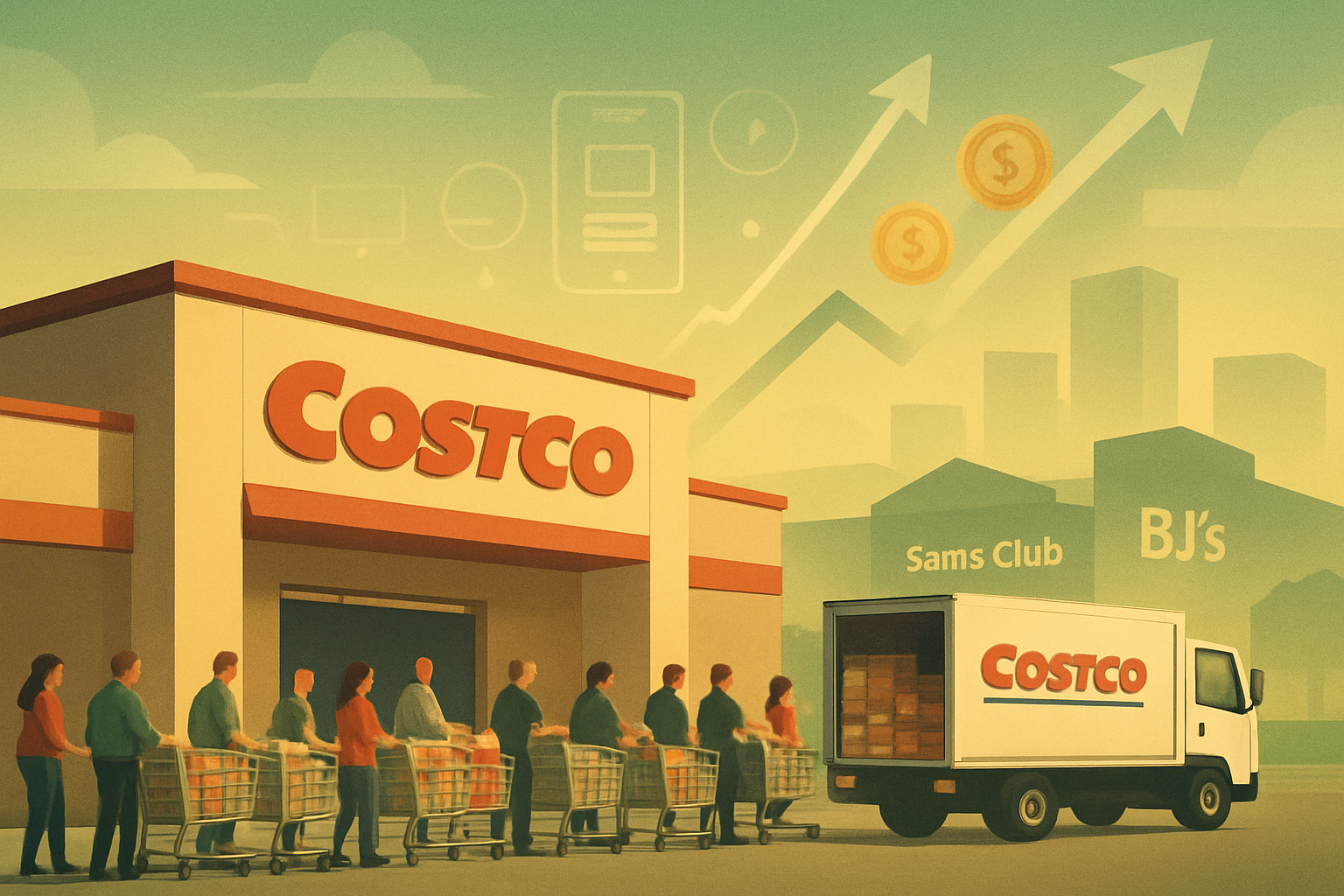
    Costco Wholesale Corporation (COST:NASDAQ) stands out as a bellwether in the retail landscape due to its unique membership-based warehouse model, consistent financial outperformance, and enduring consumer loyalty. In December 2025, Costco occupies the spotlight for investors and analysts alike amid robust financial reports, aggressive global expansion, rapid digital growth, and persistent questions regarding its premium valuation and the impact of macroeconomic uncertainties. This article delivers a long-form, rigorous exploration of Costco, dissecting its historical context, business model, leadership, financial health, and industry positioning, and balances both bullish and bearish viewpoints to offer a holistic investment perspective.

    2. Historical Background

    Costco’s origins begin with two innovators: Sol Price, founder of Price Club in 1976, and Jim Sinegal and Jeffrey Brotman, who opened the first Costco in 1983. The landmark 1993 merger of Price Club and Costco birthed a retail powerhouse focused on low margins, high volume, and membership-driven economics. Key strategic pivots over four decades include the launch of the Kirkland Signature private label, international expansion, the evolution of a limited SKU “treasure hunt” format, and more recently, the digitalization of operations and a shift toward fresh and organic foods. Costco today operates 923 warehouses in multiple continents, consistently drives high membership renewal rates, and remains committed to the core tenants established in its founding years.

    3. Business Model

    Costco is defined by its membership-only, bulk-wholesale retail model. Revenue streams are split primarily between:

    • Membership Fees: The linchpin of profitability, accounting for a large fraction of net income thanks to high renewal rates (92% U.S./Canada in 2025).
    • Product Sales: Bulk sales across groceries, fresh food, household goods, non-foods, and gasoline.
    • Ancillary Services: Travel, insurance, optical, and automotive services.
      The model is further segmented geographically (U.S., Canada, International) and by consumer type, notably serving both value-driven households and small businesses through dedicated Business Centers. The Kirkland Signature private label drives around a third of revenue, cementing loyalty via quality and price.

    4. Stock Performance Overview

    • 1-Year: COST shares lagged the S&P 500, down roughly 3.5% YTD (vs. S&P’s +16.1%) as valuation concerns and softer membership growth weighed on sentiment, despite strong operating results.
    • 5-Year: The stock returned 149.7%, vastly outperforming the market and exemplifying resilience through multiple cycles.
    • 10-Year: Long-term investors enjoyed over 595% total return, placing Costco in the absolute top echelons for both retail and Consumer Staples sectors.
      Significant moves included a peak of $1,072 in February 2025 followed by a correction and a rare “sell” downgrade from Roth Capital late in the year.

    5. Financial Performance

    • FY2025 Sales: Net sales rose 8.1% to $269.9B; net income reached $8.1B ($18.21/diluted share).
    • Q1 FY2026: Net income $2.0B ($4.50/sh), revenue $67.3B, with notable 8.2% sales and 14% membership income growth.
    • Margins: Operating at 3.8%, net at 2.9%, gross at 11.1%. High efficiency and disciplined cost control offset inflationary pressures.
    • Debt & Cash: Modest long-term debt ($5.7B), strong operating cash flow ($13.3B, up 17.6% YoY), and robust free cash flow ($7.8B, up 18.2%).
    • Valuation: Trading at 47-49x earnings, well above sector averages, and with a 1.4x P/S ratio. Analysts debate whether this premium is sustainable given growth expectations.

    6. Leadership and Management

    CEO Ron Vachris—a company veteran who started as a Price Club forklift driver—took the helm from Craig Jelinek in 2024, guiding Costco through digital transformation and continued expansion. CFO Gary Millerchip replaced long-time exec Richard Galanti in 2024. Costco’s 12-member board, led by Hamilton E. James, emphasizes diversity and independence. The company is praised for governance rigor and internal advancement, though recent shareholder proposals spotlight DEI practices and membership rule enforcement. Management continues to prioritize an employee- and member-centric culture, underpinning operational strength.

    7. Products, Services, and Innovations

    Costco’s 2025 catalog spans groceries, household essentials, apparel, electronics, jewelry, and more, with Kirkland Signature now comprising roughly a third of sales. Service expansions include insurance, travel, optical, pharmacy, and home improvement. Innovations center on digital upgrades (app, digital card, AI-powered inventory), enhanced e-commerce (site/app revamp, personalized marketing), and operational technology (AI for pharmacy/gas inventory). While R&D spend is low by tech standards, investments in IT, digital infrastructure, and proprietary supply chain systems fuel Costco’s edge.

    8. Competitive Landscape

    Costco’s main rivals are Sam’s Club (Walmart), BJ’s Wholesale, Walmart, Amazon, Target, Aldi, Lidl, and other discounters. Costco is third globally by retail revenue and leads the warehouse club market. Competitive edges include membership economics, the Kirkland Signature line, world-class supply chain, and high loyalty rates. Weaknesses involve limited SKUs, slower e-commerce relative to Amazon/Walmart, and a heavy reliance on North America. The aging customer base and selective bulk model also present future headwinds.

    9. Industry and Market Trends

    Key 2025 trends impacting Costco include:

    • Heightened consumer price sensitivity amid lingering inflation and elevated rates.
    • Digital integration, AI/automation, and real-time inventory tracking.
    • Rising logistics and labor costs, supply chain resilience.
    • Private label expansion and focus on value offerings.
    • Ongoing tariff/trade uncertainty, sustainability requirements, and evolving data/privacy laws.
      Warehouse clubs benefit from value-shopping trends but face digital disruption. Costco’s scale and supply chain offer a defensive edge as the sector adapts to rapid change.

    10. Risks and Challenges

    • Labor Relations: Ongoing union negotiations and risks of strikes (18,000 Teamsters authorized a strike in early 2025).
    • Supply Chain/Costs: Tariffs, regulatory shifts, and inflation drive up costs; recent litigation targets U.S. tariffs.
    • Tech/E-commerce: Need to keep pace digitally with e-commerce leaders and upgrade in-store technology.
    • Membership Enforcement: Tighter controls spawn member/customer backlash.
    • Privacy & Compliance: Data privacy lawsuits (Meta Pixel tracking), animal welfare critiques, shifting regulatory frameworks.
    • Market Risks: High valuation, rising competition, evolving consumer habits, and macroeconomic headwinds all pose ongoing monitoring needs.

    11. Opportunities and Catalysts

    • International Growth: Major warehouse expansion planned across Europe, Asia, and Latin America—with creative real estate strategies in play.
    • E-commerce Momentum: Double-digit online sales growth, new app/AI tools, and personalization.
    • Kirkland Expansion: Growth in private label penetration elevates margins and loyalty.
    • AI Adoption: Operational AI in pharmacy, gas, and digital offering incremental efficiencies.
    • Member/Service Upsell: Early access for Executive members and enhanced loyalty programs.
    • Strong Balance Sheet: Ample cash ($16.2B+) supports possible special dividends—a historical favorite for investors.

    12. Investor Sentiment and Analyst Coverage

    Wall Street consensus: “Moderate Buy,” with nearly two-thirds of analysts rating COST a buy/outperform, although a rare “sell” call came from Roth Capital over valuation and slowing membership. Price targets center near $992–1,046, with bullish cases stretching higher. Institutional ownership remains robust (>66%), but notable trimming occurred in Q3. Retail chatter oscillates between confidence in Costco’s “forever stock” merits and concern over lofty multiples. Analyst tone remains positive amid strong digital results and balance sheet.

    13. Regulatory, Policy, and Geopolitical Factors

    Costco must navigate a complex patchwork of U.S. state privacy laws, international GDPR, environmental and packaging regulations, and surging labor compliance demands as of 2025. The company recently sued the U.S. government to recover China tariff costs and is adapting supply chains to shift production where possible. Internal changes to membership/early access and fees have drawn scrutiny. Growing regulatory requirements (data, accessibility, packaging sustainability, labor safety) will require sustained vigilance—and investment—across all markets.

    14. Outlook and Scenarios

    Bull case: Costco leverages new fee increases, robust global warehouse growth, accelerating digital sales, and enduring loyalty to generate double-digit EPS growth and justifies its premium multiple. International and digital prove to be high-growth levers.
    Bear case: Membership growth slows, digital lag catches up, cost pressures squeeze margins, and stock corrects to more normal valuation multiples. Competition from digital-first and deep-discounter rivals heats up.
    Long-term, if Costco delivers on omnichannel, global expansion, and leverages analytics/AI while retaining membership loyalty, upside remains.

    15. Conclusion

    Costco in December 2025 is financially strong, highly efficient, and remains a retail innovator. It faces challenges from labor, supply chain, digital competition, and valuation, yet its strong membership income, loyal base, aggressive international strategy, and operational rigor underpin its investment resilience. Investors should closely monitor membership trends, e-commerce share, global expansion progress, and the evolving regulatory environment. With a clear, defensible value proposition, Costco remains a powerful player, but vigilance on competitive and operational fronts is essential.


    This content is intended for informational purposes only and is not financial advice.

    Date: December 15, 2025