
Blog

  • Apple (AAPL) in the AI Era: Analyzing the Giant’s Descent to the #3 Market Cap Spot

    Apple (AAPL) in the AI Era: Analyzing the Giant’s Descent to the #3 Market Cap Spot

    Date: January 8, 2026

    Introduction

    For over a decade, Apple Inc. (NASDAQ: AAPL) stood as the undisputed titan of the global equity markets, a symbol of consumer dominance and financial engineering. However, as of early 2026, the landscape of Silicon Valley’s hierarchy has undergone a seismic shift. Apple now finds itself in the unaccustomed position of the world’s third-most valuable company, trailing the semiconductor powerhouse Nvidia (NASDAQ: NVDA) and locked in a fierce battle with Alphabet (NASDAQ: GOOGL) and Microsoft (NASDAQ: MSFT) for the runner-up spot. This transition marks the end of the "Mobile Era" and the definitive dawn of the "Intelligence Era," where hardware serves merely as the vessel for sophisticated agentic AI. This deep dive explores whether Apple is a maturing giant losing its step or a coiled spring preparing for an AI-led "supercycle" that could reclaim its throne.

    Historical Background

    Founded in 1976 by Steve Jobs, Steve Wozniak, and Ronald Wayne, Apple’s journey is the stuff of corporate legend. From the garage-born Apple I to the near-bankruptcy of the late 1990s, the company’s trajectory changed forever with the 1997 return of Steve Jobs and the subsequent launch of the iMac, iPod, and, most crucially, the iPhone in 2007. Under Tim Cook’s leadership since 2011, Apple transformed from a product-centric visionary into an operational juggernaut. Cook oversaw the expansion into wearables with the Apple Watch and AirPods, and the pivot toward Services, which turned Apple’s massive install base into a recurring revenue engine. By late 2024 and throughout 2025, the narrative shifted again as the market began valuing generative AI capabilities over historical hardware consistency.

    Business Model

    Apple’s business model is centered on a "walled garden" ecosystem that prioritizes hardware-software integration. Its revenue is derived from five primary segments:

    • iPhone: Still the primary engine, representing roughly 50% of total revenue.
    • Services: Including the App Store, iCloud, Apple Music, and the newly launched "Apple Intelligence Pro" subscription. This segment boasts margins exceeding 75%.
    • Wearables, Home, and Accessories: Featuring the Apple Watch, AirPods, and the Vision Pro spatial computing line.
    • Mac and iPad: Mature segments that provide stable productivity tools for the ecosystem.
      The "lock-in" effect—where users find it difficult to leave due to iMessage, iCloud, and interconnected device functionality—remains Apple’s greatest competitive moat.

    Stock Performance Overview

    Apple’s stock performance in 2025 was a tale of two halves. While the broader S&P 500 climbed 16% and Nvidia surged to the top of the market cap rankings, AAPL ended 2025 with a more modest 9% gain.

    • 1-Year: AAPL has faced "AI laggard" accusations for much of the past 12 months, though a late-2025 rally driven by iPhone 17 demand helped recover early losses.
    • 5-Year: The stock has delivered strong triple-digit returns, largely fueled by aggressive share buybacks and the expansion of the Services division.
    • 10-Year: Apple remains one of the greatest wealth-creation machines in history, though its 2025 performance suggests it is now being viewed by many as a "value" or "defensive" tech play rather than a hyper-growth AI stock.

    Financial Performance

    Apple’s fiscal year 2025 results were record-breaking, despite the market cap slip. The company reported total revenue of approximately $416 billion and a net income of $112 billion.

    • Margins: Gross margins hit a multi-year high of nearly 48% in late 2025, buoyed by the high-margin Services segment.
    • Cash Flow: Apple continues to generate over $100 billion in free cash flow annually, facilitating its legendary capital return program.
    • Valuation: Trading at a forward P/E of roughly 30x, Apple is more expensive than its historical average but looks "cheap" compared to the 40x+ multiples seen in some AI-pure plays.

    Leadership and Management

    The 2025-2026 period is a time of transition for Apple’s C-suite. Tim Cook remains at the helm, but succession planning has become a central focus for investors.

    • New CFO: Kevan Parekh officially took the reins from Luca Maestri on January 1, 2025, maintaining a "neutral" cash position strategy.
    • COO Change: Following Jeff Williams' retirement in 2025, Sabih Khan has taken over global operations, navigating the complex diversification of the supply chain.
    • The Heir Apparent: John Ternus, SVP of Hardware Engineering, is widely viewed by analysts as the most likely successor to Cook, representing a "product-first" leadership style for the next decade.

    Products, Services, and Innovations

    The launch of the iPhone 17 in late 2025 served as a critical catalyst.

    • iPhone 17 Air: This ultra-thin model replaced the "Plus" variant, reinvigorating the premium design language.
    • Apple Intelligence (Siri 2.0): Apple’s "Agentic AI" allows Siri to perform complex, multi-app tasks, such as cross-referencing an email with a calendar and booking an Uber automatically.
    • Vision Pro 2: Rumors of a more affordable "Apple Vision" headset in early 2026 suggest Apple is not giving up on its spatial computing ambitions, despite slow initial adoption.
    • Innovation Pipeline: Patents suggest a growing interest in "Liquid Glass" designs and health-tech sensors that could move the Apple Watch into medical-grade diagnostic territory.

    Competitive Landscape

    Apple faces intense competition across all fronts:

    • AI Superiority: Nvidia (NASDAQ: NVDA) has eclipsed Apple in valuation by providing the "shovels" for the AI gold rush. Microsoft and Alphabet have leveraged their cloud infrastructure to lead in LLM development.
    • Smartphones: Samsung (KSE: 005930) and Chinese OEMs like Huawei are challenging Apple with aggressive AI hardware integration.
    • Ecosystem: Google’s Android remains the only global scale rival, with Alphabet’s recent market cap surge highlighting the market’s preference for search-integrated AI.

    Industry and Market Trends

    The technology sector is currently defined by the transition from Mobile-First to Intelligence-First.

    • On-Device AI (Edge AI): Unlike competitors who rely heavily on the cloud, Apple is betting on "private" on-device processing.
    • Hardware-as-a-Service: There is an industry-wide trend toward subscription-based hardware cycles, which Apple is testing via its Apple Intelligence Pro bundles.
    • Supply Chain Diversification: "China Plus One" remains the dominant strategy, with Apple rapidly expanding production in India and Vietnam.

    Risks and Challenges

    • Regulatory Headwinds: The U.S. Department of Justice (DOJ) antitrust lawsuit entered its discovery phase in 2025, creating a multi-year legal overhang.
    • China Exposure: Geopolitical tensions and a resurgence of domestic Chinese brands continue to threaten Apple’s most important international market.
    • AI Perception: If Siri 2.0 fails to meet consumer expectations, Apple risks being permanently labeled an "AI laggard" in an era where software intelligence dictates hardware sales.

    Opportunities and Catalysts

    • AI Monetization: The $9.99/month Apple Intelligence Pro subscription represents a massive new revenue stream that could significantly boost Services revenue.
    • The India Opportunity: As India’s middle class expands, Apple is seeing double-digit growth in a market that could eventually rival China in scale.
    • Health Tech: Integrating non-invasive glucose monitoring or advanced heart-health tracking into the Apple Watch remains a "holy grail" opportunity.

    Investor Sentiment and Analyst Coverage

    Wall Street remains divided. Dan Ives of Wedbush remains a staunch bull, with a $350 price target, arguing that Apple is on the verge of a "$5 trillion valuation." Conversely, firms like Raymond James have downgraded the stock to "Market Perform," citing valuation concerns and a lack of "explosive" growth catalysts. Interestingly, late 2025 saw a "rotation trade" where hedge funds like Thiel Macro began shifting capital from volatile AI chip stocks like Nvidia into the perceived safety of Apple’s diversified cash flows.

    Regulatory, Policy, and Geopolitical Factors

    Apple is navigating a minefield of international regulation:

    • EU Digital Markets Act (DMA): Apple has been forced to open its ecosystem to third-party app stores and payment systems in Europe, though it has maintained profitability through new fee structures.
    • Geopolitics: Trade restrictions between the U.S. and China remain the largest macro risk, potentially impacting both the supply chain and demand in the Greater China region.

    Conclusion

    Apple’s fall to the #3 spot in global market cap is not necessarily a sign of decline, but rather a reflection of a market currently intoxicated by the infrastructure of AI. While Nvidia provides the chips and Microsoft provides the enterprise software, Apple remains the ultimate gateway to the consumer. With record-high margins, a burgeoning AI subscription model, and the iPhone 17 supercycle in full swing, Apple is playing a long game focused on privacy and ecosystem integration. For investors, the question is whether they want the high-octane growth of a chipmaker or the steady, compounding resilience of the world’s most powerful consumer brand. As we move further into 2026, Apple’s ability to turn "Siri" into a truly indispensable personal assistant will likely determine if it can reclaim the top spot.


    This content is intended for informational purposes only and is not financial advice.

  • The Great Tech Re-Alignment: How Alphabet Reclaimed the Throne

    The Great Tech Re-Alignment: How Alphabet Reclaimed the Throne

    The technology landscape witnessed a historic tectonic shift yesterday. On January 7, 2026, Alphabet Inc. (NASDAQ: GOOGL) officially surpassed Apple Inc. (NASDAQ: AAPL) in market capitalization, reaching a valuation of $3.89 trillion. This milestone marks the first time since 2019 that the Google parent company has held the title of the world’s most valuable public entity. The "re-rating" of Alphabet comes on the heels of its successful transition from a legacy search engine into a vertically integrated "AI-first utility." While Apple has grappled with plateauing hardware cycles, Alphabet has leveraged its proprietary silicon, vast data moats, and a surging Cloud division to convince investors that it is the primary architect of the "Agentic AI" era.

    Historical Background

    Founded in a garage in 1998 by Larry Page and Sergey Brin, Google’s journey began with a simple mission: to organize the world’s information. The company’s 2004 IPO set the stage for two decades of dominance, punctuated by the high-conviction acquisitions of YouTube (2006) and DoubleClick (2007). In 2015, the company restructured as Alphabet Inc., a move designed to separate its core "Alphabet" (Google, Search, YouTube) from its "Other Bets" (Waymo, Verily, X).

    For much of the 2010s, Alphabet was viewed as a high-growth advertising play. However, the 2022-2023 "AI panic"—triggered by the rise of OpenAI—forced a transformation. Under CEO Sundar Pichai, the company merged its Brain and DeepMind units in 2023, accelerating its research-to-product pipeline and setting the stage for the market cap surge of 2025.

    Business Model

    Alphabet’s business model in 2026 is a sophisticated flywheel of advertising, enterprise infrastructure, and autonomous systems. Its revenue is broadly categorized into:

    • Google Services: Including Search, YouTube, and the Play Store. Despite the rise of AI-driven answers, advertising remains the core engine, now supplemented by "AI Overview" integrated ads.
    • Google Cloud (GCP): Once a distant third to Amazon (NASDAQ: AMZN) and Microsoft (NASDAQ: MSFT), GCP has pivoted toward "AI-native" computing, providing the Vertex AI platform and custom TPU instances to enterprises.
    • Other Bets: This segment is led by Waymo, which transitioned from an R&D project to a commercial powerhouse, now operating robotaxi fleets in 20 major global cities.

    Stock Performance Overview

    Alphabet's stock performance over the last decade has reflected its evolving narrative:

    • 1-Year (2025): A meteoric +65% rise, driven by the rollout of Gemini 3 and the profitability of Google Cloud.
    • 5-Year: Alphabet has returned approximately 268%, significantly outperforming the S&P 500 (70%) and Apple (113%) in the same period.
    • 10-Year: Investors have seen a ~775% return, turning Alphabet into one of the most successful wealth-creation vehicles in history.

    The stock, currently trading near $322 (GOOGL), has benefited from a lower P/E ratio relative to its peers for much of the early 2020s, allowing for a massive "catch-up" trade as its AI strategy solidified.

    Financial Performance

    In Q3 2025, Alphabet achieved a historic milestone: its first-ever $100 billion revenue quarter, reporting $102.35 billion (up 16% YoY).

    • Net Income: $26.3 billion, with a diluted EPS of $2.87.
    • Margins: Operating margins for Google Cloud stabilized at an impressive 24%, while the core Services margin remained robust at 35% despite increased R&D costs.
    • Balance Sheet: Alphabet holds over $110 billion in cash and marketable securities. Under CFO Anat Ashkenazi, the company has maintained a $70 billion annual share buyback program and introduced a quarterly dividend in 2024.

    Leadership and Management

    The current leadership team is characterized by "disciplined scaling."

    • Sundar Pichai (CEO): Has successfully navigated the company through the "AI Wars," focusing on hardware-software vertical integration.
    • Anat Ashkenazi (CFO): Credited with tightening capital expenditures and improving ROI on massive data center builds.
    • Thomas Kurian (CEO, Google Cloud): The architect of GCP's enterprise success.
    • Ruth Porat (President & CIO): Oversees the "Other Bets" and long-term infrastructure, including the company's recent push into nuclear and geothermal energy to power its AI clusters.

    Products, Services, and Innovations

    Alphabet’s 2026 product roadmap is dominated by three pillars:

    1. Gemini 3: A multimodal AI ecosystem that powers "Gemini Deep Think," a reasoning-capable model that handles complex engineering and legal tasks.
    2. TPU v7 ("Ironwood"): Alphabet’s custom-designed AI silicon. Unlike rivals who rely on Nvidia (NASDAQ: NVDA), Alphabet’s Ironwood chips allow it to run AI at 1/4th the energy cost of competitors.
    3. Aluminium OS: The highly anticipated 2026 merger of Android and ChromeOS, creating a unified operating system designed specifically for the "Agentic AI" era on both mobile and desktop.

    Competitive Landscape

    Alphabet competes on multiple fronts:

    • Vs. Microsoft/OpenAI: Alphabet's advantage is its "full-stack" control. While Microsoft depends on OpenAI for models and Nvidia for chips, Alphabet builds its own models (Gemini) and its own chips (TPUs).
    • Vs. Amazon: Google Cloud is currently growing at 36% YoY, outpacing AWS’s 20% growth, as enterprises flock to Google for its superior data-handling capabilities.
    • Vs. Meta (NASDAQ: META): In a surprising 2025 shift, Alphabet began renting its TPU capacity to Meta, effectively becoming a silicon provider to its largest social media rival.

    Industry and Market Trends

    The "Agentic AI" trend is the primary macro driver. In 2026, AI is no longer just "chatting"; it is "acting"—autonomously booking travel, managing supply chains, and writing code. This shift favors Alphabet, whose Workspace (Docs, Sheets, Gmail) provides the perfect environment for these agents to operate. Additionally, "Energy Sovereignty" has become a sector-wide trend, with Alphabet leading the charge by securing long-term nuclear power contracts to mitigate the power-hungry nature of modern data centers.

    Risks and Challenges

    Despite its dominance, Alphabet faces significant headwinds:

    • Monetization Cannibalization: "AI Overviews" provide direct answers to users, potentially reducing the number of clicks on traditional ads. Managing this transition without hurting revenue is a delicate balance.
    • Execution Risk: The consolidation of hardware and software units (Pixel and Android) under Rick Osterloh must yield a true Apple-rivaling ecosystem to justify the high R&D spend.
    • Talent Wars: Competition for top-tier AI researchers remains fierce, with startups and rivals offering massive compensation packages.

    Opportunities and Catalysts

    • Waymo Commercialization: Analysts believe Waymo could be spun off or valued as a $200B+ entity by late 2026 as it expands into international markets like London and Tokyo.
    • Enterprise Vertex AI: The "backlog" for Google Cloud reached a record $155 billion in early 2026, representing a massive pipeline of future high-margin revenue.
    • Sovereign AI: Governments are increasingly looking for localized AI infrastructure, a demand Alphabet is meeting through its "Global Cloud Regions" initiative.

    Investor Sentiment and Analyst Coverage

    Wall Street is currently "Overweight" on GOOGL.

    • Consensus: "Strong Buy."
    • Price Targets: Major firms like JP Morgan and Goldman Sachs have set 12-month targets ranging from $317 to $400.
    • Institutional Sentiment: Large hedge funds have increased their positions in Alphabet, viewing it as a "safe-haven AI play" compared to the volatility of smaller AI hardware stocks.

    Regulatory, Policy, and Geopolitical Factors

    2026 is the year of the "Remedy Phase." Following the landmark United States v. Google antitrust ruling, Alphabet is now prohibited from paying for exclusive "default" status on browsers and devices. While this was initially feared, it has actually improved Alphabet's margins by reducing the billions previously paid to Apple and Samsung. However, the EU AI Act and ongoing ad-tech litigation in Europe remain persistent threats that could lead to structural divestitures by 2027.

    Conclusion

    Alphabet Inc.’s ascent to the top of the market cap leaderboard is a testament to its successful "AI Reset." By moving vertically into silicon, horizontally into autonomous vehicles, and deep into the enterprise cloud, the company has diversified its revenue streams far beyond the search bar. While regulatory shadows and the transition to an AI-first ad model present risks, Alphabet enters 2026 with the most complete technological stack in the world. For investors, the focus will remain on whether Alphabet can maintain its "efficiency moat" as it battles Microsoft and Amazon for the soul of the next computing era.


    This content is intended for informational purposes only and is not financial advice.

  • Massive $1.5 Trillion Defense Budget: Why Kratos Defense (KTOS) Is the Tactical Heart of the New Military Era

    Massive $1.5 Trillion Defense Budget: Why Kratos Defense (KTOS) Is the Tactical Heart of the New Military Era

    On January 8, 2026, the global defense landscape shifted as the U.S. government announced a monumental $1.5 trillion defense budget proposal, an unprecedented figure aimed at accelerating military modernization and countering emerging peer-level threats. At the epicenter of this financial surge sits Kratos Defense & Security Solutions (NASDAQ: KTOS). Once a mid-tier niche player, Kratos has evolved into the standard-bearer for "attritable mass"—the strategic shift toward low-cost, high-performance, and expendable robotic systems. As the Pentagon moves away from its historical reliance on a handful of high-cost "exquisite" platforms, Kratos stands uniquely positioned to capture the influx of capital directed toward the drones and satellite systems of the future.

    Historical Background

    Kratos’ journey is a case study in corporate transformation. Founded in 1994 as Wireless Facilities Incorporated (WFI), the company was initially a telecommunications infrastructure provider. However, the post-9/11 world and the subsequent cyclicality of the telecom market prompted a radical pivot. Under the leadership of Eric DeMarco, who took the helm in 2004, the company began a methodical acquisition-led transition into the federal defense space.

    By 2007, the company rebranded as Kratos Defense & Security Solutions, signaling its departure from commercial wireless. Over the next decade, Kratos acquired key assets in satellite communications (Integral Systems) and propulsion (Florida Turbine Technologies), allowing it to control the vertical integration of its products. This historical foresight allowed Kratos to transition from a service-oriented sub-contractor to a prime manufacturer of jet-powered unmanned aircraft, just as the Department of Defense (DoD) began seeking cheaper alternatives to manned fighter jets.

    Business Model

    Kratos operates a diversified, high-tech business model focused on five primary pillars: Unmanned Systems, Space and Satellite Communications, Microwave Electronics, Cybersecurity/C5ISR, and Turbine Technologies.

    Unlike traditional "Prime" contractors (like Boeing or Lockheed Martin) that rely heavily on government-funded Research & Development (R&D), Kratos often utilizes a "self-funding" model. They design, build, and fly prototypes using their own capital to prove the concept before seeking government contracts. This allows them to move faster than the traditional defense acquisition cycle. Their revenue is increasingly shifting from low-margin services to high-margin product sales, particularly as their drone programs move from the testing phase to full-rate production.

    Stock Performance Overview

    Over the past decade, KTOS has been a "battleground stock" for investors. However, as of January 2026, the performance tells a story of significant re-rating.

    • 1-Year Performance: Following a breakout in 2025, the stock has gained nearly 120%, buoyed by the formal adoption of the XQ-58A Valkyrie by the U.S. Marine Corps.
    • 5-Year Performance: Investors who held through the volatile "testing" years of the early 2020s have seen returns exceeding 300% as the company's "attritable" concept gained mainstream military acceptance.
    • 10-Year Performance: From a small-cap player trading in the single digits in the mid-2010s, Kratos has grown its market capitalization into the multi-billion dollar range, rewarding long-term believers in the unmanned systems revolution.

    Financial Performance

    Kratos entered 2026 with its strongest balance sheet in company history. For the full year 2025, the company reported approximately $1.33 billion in revenue, a 26% year-over-year increase. More importantly, Kratos is currently operating with zero long-term debt, a rarity in the capital-intensive aerospace sector.

    The company's focus has shifted toward margin expansion. While historical margins were weighed down by high R&D spending, the transition to production-rate manufacturing for its "Zeus" rocket motors and "Valkyrie" drones has led to a 100-basis-point expansion in Adjusted EBITDA margins. With the new $1.5 trillion budget proposal, analysts expect Kratos to provide aggressive 2026 guidance, potentially targeting 20% organic revenue growth.

    Leadership and Management

    CEO Eric DeMarco remains the architect of Kratos’ strategy. His tenure has been defined by a "contrarian" and "readiness-first" philosophy. DeMarco is notable for his public stance against stock buybacks, arguing instead that capital should be reinvested into technological superiority and manufacturing capacity—a view that has aligned him closely with current DoD leadership.

    Supporting DeMarco is a team of industry veterans from traditional "Primes," giving Kratos the institutional knowledge to compete for large-scale contracts while maintaining the agility of a technology startup. The governance reputation of the company is characterized by transparency regarding program milestones, though the management is famously tight-lipped about "black program" (classified) revenue, which is rumored to be a significant and growing portion of their portfolio.

    Products, Services, and Innovations

    The crown jewel of Kratos’ portfolio is the XQ-58A Valkyrie. A jet-powered, stealthy Unmanned Combat Aerial Vehicle (UCAV), the Valkyrie is designed to fly alongside manned fighters (like the F-35) as a "Loyal Wingman." Its innovation lies in its cost: at roughly $4 million to $10 million per unit, it is "attritable," meaning it can be lost in combat without a devastating financial or strategic blow to the U.S. military.

    Beyond the Valkyrie, Kratos dominates the target drone market, providing the supersonic drones that the military uses for live-fire training. Their Space & Satellite segment provides the EPOCH Command and Control software, which is the industry standard for managing large satellite constellations. In 2025, the company also integrated its Zeus hypersonic motors, positioning itself as a leader in the race for high-speed missile technology.

    Competitive Landscape

    Kratos occupies a unique "Middle Tier" position. It competes against:

    • The Primes (Lockheed Martin, Boeing, Northrop Grumman): While these giants build the $100 million manned jets, Kratos is often a partner, providing the cheaper unmanned companions. However, Kratos is increasingly winning contracts that might have once gone to the Primes' "Skunk Works" or "Phantom Works" divisions.
    • Tech-Forward Disruptors (AeroVironment, Anduril): While AeroVironment (NASDAQ: AVAV) dominates the small, hand-launched drone and loitering munition market, Kratos focuses on high-performance, jet-powered tactical drones.
    • Market Share: Kratos holds a near-monopoly on high-performance jet targets and is currently the first-mover in the official Collaborative Combat Aircraft (CCA) production space.

    Industry and Market Trends

    The "Distributed Lethality" trend is the primary driver for Kratos. The DoD has recognized that a small number of expensive ships and planes are vulnerable to "swarming" tactics by adversaries. The solution is to flood the battlespace with "mass"—hundreds or thousands of lower-cost, capable systems.

    Furthermore, the "Tactical Edge" trend—bringing data and AI to the battlefield—benefits Kratos' satellite ground station business. As the U.S. builds out its Proliferated Warfighter Space Architecture (PWSA), the demand for Kratos' software-defined satellite ground systems has reached record levels.

    Risks and Challenges

    Despite the tailwinds, Kratos is not without risk:

    1. Concentration Risk: The U.S. government is Kratos’ primary customer. Any significant shift in political priorities or a return to "Budget Sequestration" could stall growth.
    2. Execution Risk: Moving from prototype to mass production is notoriously difficult in aerospace. Scaling the Valkyrie production line to hundreds of units per year will test Kratos’ manufacturing discipline.
    3. Competition from Primes: Seeing the success of the Valkyrie, giants like Boeing (with the MQ-28 Ghost Bat) are aggressively entering the CCA space, potentially squeezing Kratos out of future multi-billion dollar "Program of Record" awards.

    Opportunities and Catalysts

    The $1.5 trillion budget proposal is the ultimate catalyst. Specifically, the budget includes a massive 22% increase in weapons procurement, with nearly $1 billion earmarked specifically for Collaborative Combat Aircraft.

    • International Sales: In late 2025, Kratos received clearance to begin marketing "export versions" of its tactical drones to allied nations in Europe and the Indo-Pacific, opening a massive new Total Addressable Market (TAM).
    • M&A Potential: With a "fortress" balance sheet and zero debt, Kratos is positioned to acquire smaller AI or sensor-tech companies to further enhance its "Loyal Wingman" capabilities.

    Investor Sentiment and Analyst Coverage

    Wall Street is increasingly bullish on KTOS. In January 2026, several major firms, including Jones Trading, initiated or reiterated "Buy" ratings, with price targets reaching as high as $130 per share. Institutional ownership has risen to over 85%, with major funds viewing Kratos as a "pure-play" on the modernization of the U.S. military. Retail sentiment is also high, often comparing Kratos to a "Tesla for Defense" due to its disruptive approach and charismatic leadership.

    Regulatory, Policy, and Geopolitical Factors

    The geopolitical environment in 2026—marked by continued tensions in the Indo-Pacific and the ongoing reconstruction of European security architectures—favors Kratos’ product mix. Policy-wise, the current Pentagon leadership has explicitly prioritized "attritable mass."

    Regulatory hurdles, such as ITAR (International Traffic in Arms Regulations), remain a challenge for international expansion, but the U.S. government’s desire to equip allies with "non-exquisite" (meaning less sensitive) drone technology has led to faster approval cycles for Kratos than for high-end stealth fighters.

    Conclusion

    Kratos Defense & Security Solutions represents a rare intersection of a proven defense contractor and a high-growth technology disruptor. The announcement of a $1.5 trillion defense budget is more than just a fiscal update; it is a validation of the "Kratos Thesis." By betting early on low-cost, jet-powered drones and satellite software, Kratos has positioned itself ahead of the traditional defense giants.

    While the stock carries a "tech-like" valuation premium, the combination of zero debt, accelerating revenue from the Valkyrie program, and a favorable geopolitical backdrop makes KTOS a central player in the modern defense portfolio. For investors, the key will be watching Kratos' ability to scale production to meet the immense demand promised by the 2026 budget.


    This content is intended for informational purposes only and is not financial advice.
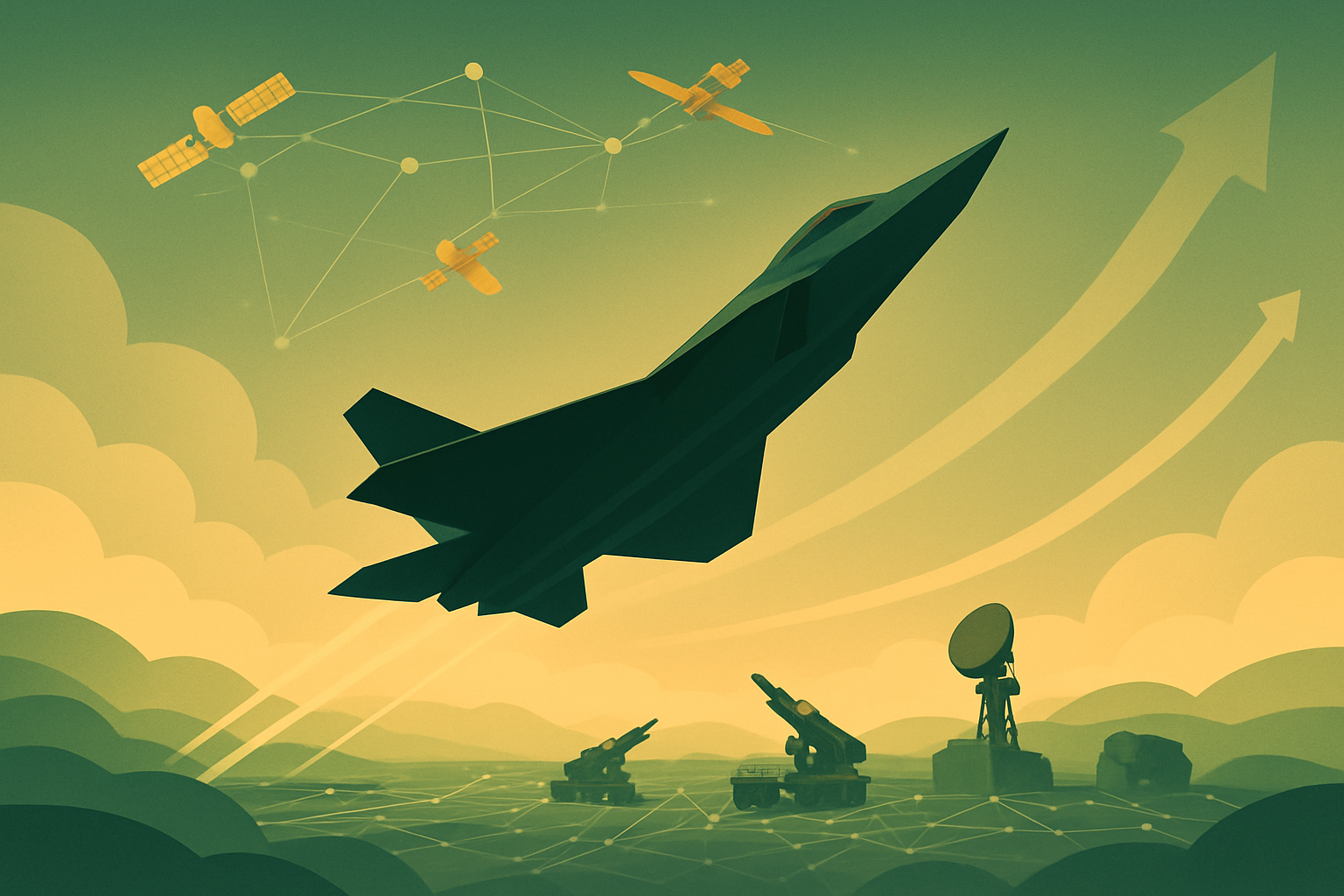
  • Lockheed Martin (LMT): A Deep Dive into the $1.5 Trillion Defense Frontier

    Lockheed Martin (LMT): A Deep Dive into the $1.5 Trillion Defense Frontier

    Today, January 8, 2026, the aerospace and defense sector was sent into a frenzy following the formal proposal of a staggering $1.5 trillion United States defense budget. At the heart of this tectonic shift in national security spending is Lockheed Martin (NYSE: LMT), the world’s largest defense contractor. With a portfolio that spans from the depths of the ocean to the outer reaches of the atmosphere, Lockheed Martin finds itself at a critical juncture: a dominant incumbent poised to benefit from unprecedented spending, yet facing a new era of political scrutiny regarding executive compensation and corporate buybacks. This deep dive explores the financial, operational, and strategic landscape of a company that is no longer just a hardware manufacturer, but a software-driven titan of "21st Century Security."

    Historical Background

    The modern Lockheed Martin Corporation was forged in the "Last Supper" era of defense consolidation. In 1995, the merger of Lockheed Corporation and Martin Marietta created a behemoth with unparalleled reach. Lockheed, famous for its "Skunk Works" division that produced the U-2 and SR-71 Blackbird, combined its aeronautics prowess with Martin Marietta’s strength in electronics and space systems.

    Over the decades, the company has navigated the end of the Cold War, the War on Terror, and the recent pivot toward "Great Power Competition." Key transformations include the acquisition of Sikorsky Aircraft in 2015, which solidified its dominance in military rotorcraft, and its ongoing transition from traditional kinetic platforms to networked, digital-first defense ecosystems.

    Business Model

    Lockheed Martin operates through four primary business segments, each serving a unique pillar of the defense landscape:

    1. Aeronautics (~40% of revenue): Dominated by the F-35 Lightning II program, the most expensive weapons system in history. It also produces the C-130 Hercules and the F-16 Fighting Falcon.
    2. Missiles and Fire Control (MFC): Responsible for high-demand systems like the PAC-3 (Patriot) missiles, HIMARS, and the Javelin anti-tank missile. This segment has seen exponential demand due to the ongoing conflict in Ukraine and tensions in the Indo-Pacific.
    3. Rotary and Mission Systems (RMS): Primarily Sikorsky helicopters (Black Hawk, Seahawk) and naval combat systems like the Aegis Combat System.
    4. Space: Focuses on satellite production, strategic missiles (Trident II), and the Orion spacecraft for NASA’s Artemis missions.

    The company’s primary customer is the U.S. government (73% of sales), followed by international military sales (26%), often facilitated through the Foreign Military Sales (FMS) program.

    Stock Performance Overview

    As of early January 2026, Lockheed Martin has proven to be a resilient "safe haven" for investors, though it has experienced volatility:

    • 1-Year Performance: Up approximately 13.02%. The stock saw a late-2025 rally as F-35 delivery hurdles were cleared and budget optimism took hold.
    • 5-Year Performance: Up roughly 68.27%. This reflects a steady compounding of returns as the F-35 program matured and global defense budgets surged following the 2022 invasion of Ukraine.
    • 10-Year Performance: A robust ~206.15%. Long-term shareholders have benefited from the lifecycle of the F-35 and consistent dividend growth.

    Following yesterday's $1.5 trillion budget news, LMT shares spiked nearly 6% in after-hours trading, reflecting the market's appetite for the massive modernization programs included in the proposal.

    Financial Performance

    Lockheed Martin entered 2026 with a historic $179 billion backlog, representing more than 2.5 years of production capacity.

    • 2025 Revenue: Reached approximately $74.5 billion, a record high.
    • Earnings Per Share (EPS): Estimated at $22.25 for 2025, recovering from a one-time $1.6 billion pre-tax loss on a classified program in the second quarter.
    • Dividends: A "Dividend Aristocrat" in the making, LMT recently raised its quarterly payout to $3.45 per share, yielding approximately 2.78%.
    • Valuation: Trading at a Forward P/E of roughly 17x, the stock remains reasonably priced compared to historical averages, especially given the anticipated revenue tailwinds from the new budget.

    Leadership and Management

    CEO Jim Taiclet, who took the helm in 2020, has fundamentally changed the company’s strategic DNA. Drawing on his experience in the telecommunications sector, Taiclet has implemented a "21st Century Security" strategy.

    His vision emphasizes the "Internet of Military Things" (IoMT), shifting the focus toward software-defined networking, AI, and 5G connectivity. Taiclet is credited with repairing the company’s relationship with the Department of Defense (DoD) after the TR-3 software delays and has been a vocal advocate for "anti-fragile" supply chains. His leadership team is increasingly populated by tech-sector veterans, reflecting the shift away from pure heavy industry.

    Products, Services, and Innovations

    Lockheed Martin’s innovation pipeline is currently focused on three high-growth areas:

    • The Manned-Unmanned Teaming: Successful 2025 tests of the F-35 operating alongside the XQ-58A Valkyrie drone have paved the way for "loyal wingman" programs.
    • Hypersonics: LMT is the prime contractor for several hypersonic missile programs, including the Conventional Prompt Strike (CPS).
    • JADC2 (Joint All-Domain Command and Control): Through partnerships with Microsoft (NASDAQ: MSFT) and NVIDIA (NASDAQ: NVDA), Lockheed is building the "brain" of future warfare—a system that allows every sensor on the battlefield to communicate in real-time.

    Competitive Landscape

    Lockheed Martin remains the undisputed leader in market share (~14% globally), but it faces stiff competition from a consolidating "Big Five":

    • RTX Corporation (NYSE: RTX): Competes heavily in missile defense and engines.
    • Northrop Grumman (NYSE: NOC): Dominates the stealth bomber (B-21 Raider) and space-based sensing markets.
    • General Dynamics (NYSE: GD): A major rival in land systems and submarines.
    • The Boeing Company (NYSE: BA): While struggling in its commercial division, Boeing remains a major competitor in helicopters (Apache) and the F-15EX program.

    Lockheed’s competitive edge lies in the sheer scale of the F-35 program, which provides a decades-long "moat" of sustainment and upgrade revenue.

    Industry and Market Trends

    The defense industry is currently moving away from "monolithic" platforms toward distributed systems. Key trends include:

    • Digital Twins: Lockheed now builds every aircraft digitally before it touches the factory floor, significantly reducing production errors.
    • Space as a Combat Domain: The rapid militarization of Low Earth Orbit (LEO) has turned the Space segment from a niche research area into a vital national security priority.
    • Speed-to-Market: The DoD is demanding faster "prototyping-to-fielding" cycles, favoring companies that can integrate commercial technology rapidly.

    Risks and Challenges

    Despite the $1.5 trillion budget tailwind, Lockheed faces significant headwinds:

    • Political Stringency: The proposed budget includes threats to cap executive pay and restrict stock buybacks for contractors that fail to meet delivery deadlines.
    • Fixed-Price Contracts: The company has suffered losses on classified programs due to fixed-price structures in an inflationary environment.
    • Supply Chain Fragility: Shortages of microelectronics and specialized chemicals remain a bottleneck for missile production.
    • Concentration Risk: The F-35 accounts for nearly 27% of total revenue. Any systemic grounding or major technical failure of the fleet would be catastrophic for the stock.

    Opportunities and Catalysts

    The primary catalyst is the $1.5 trillion budget proposal, which includes a massive "Dream Military" modernization fund.

    • International Expansion: With NATO countries aiming to spend 3% of GDP on defense, and nations like Germany and Poland ordering F-35s in record numbers, international sales are a major growth lever.
    • AUKUS and Indo-Pacific: New security pacts are driving demand for Lockheed’s naval and missile systems in Australia and Japan.
    • Near-term Catalyst: The upcoming Q4 2025 earnings call (expected late Jan 2026) will provide critical guidance on how much of the $1.5T budget Lockheed expects to capture in "Lots 20 & 21" of the F-35 program.

    Investor Sentiment and Analyst Coverage

    Wall Street remains "Overweight" on LMT, though with caution regarding the political landscape.

    • Institutional Holdings: Major firms like Vanguard and BlackRock remain the largest shareholders, viewing LMT as a core "value" play.
    • Hedge Fund Moves: Recent filings show an uptick in "defensive" positioning within LMT as macro uncertainty persists.
    • Retail Sentiment: Often focused on the ethical implications of defense, yet attracted to the 23-year streak of dividend increases.

    Regulatory, Policy, and Geopolitical Factors

    The $1.5 trillion budget is currently tied to a controversial "Tariff-for-Defense" funding model. If legal challenges to the current administration's tariff policies succeed in the Supreme Court, the funding for these expanded defense contracts could evaporate. Furthermore, heightened tensions over Taiwan and the ongoing conflict in Ukraine make the regulatory environment for export licenses more complex than ever.

    Conclusion

    Lockheed Martin (LMT) stands at a paradoxical moment. It is financially stronger than ever, with a record backlog and a technological lead in hypersonics and 5G-enabled warfare. The prospect of a $1.5 trillion defense budget offers a growth horizon that was unthinkable only three years ago. However, investors must weigh this against a shifting political climate that views large defense contractors with increasing skepticism regarding profit margins and executive compensation.

    For the long-term investor, Lockheed Martin remains a dominant, cash-generating machine with a clear "moat." However, the "new rules of engagement" in Washington mean that the path to $600 per share may be paved with more regulatory hurdles than the previous decade.


    This content is intended for informational purposes only and is not financial advice.

  • Defense Super-Cycle: A Deep Dive into General Dynamics (GD) Amid the $1.5 Trillion Budget Era

    Defense Super-Cycle: A Deep Dive into General Dynamics (GD) Amid the $1.5 Trillion Budget Era

    As of January 8, 2026, the global defense landscape has been jolted by the announcement of a proposed $1.5 trillion U.S. defense budget—a figure that represents a historic shift in American military spending and long-term strategic posturing. At the epicenter of this financial surge is General Dynamics (NYSE: GD), a titan of the defense industrial base whose diversified portfolio of nuclear submarines, next-generation battle tanks, and elite business jets makes it a primary beneficiary of this "super-cycle."

    General Dynamics is currently in focus not just because of its size, but because of its critical role in the "Nuclear Triad" and the modernization of the U.S. Army. With a record-high backlog and a pivoting aerospace division, the company stands as a bellwether for both geopolitical stability and industrial efficiency in an increasingly volatile world.

    Historical Background

    General Dynamics traces its roots back to the late 19th century through the Electric Boat Company, which delivered the first commissioned submarine to the U.S. Navy in 1900. However, the modern iteration of General Dynamics was officially incorporated in 1952, following a series of strategic acquisitions including the aircraft manufacturer Canadair and later, Convair.

    The company’s history is defined by periods of massive expansion followed by surgical contraction. During the 1990s, following the end of the Cold War, General Dynamics famously divested many of its aerospace and missile units (including the F-16 program to Lockheed Martin) to focus on a "back-to-basics" strategy centered on tanks and submarines. It returned to the aerospace market in 1999 with the acquisition of Gulfstream Aerospace, a move that created the "four-pillar" business model—Marine, Combat Systems, Technologies, and Aerospace—that defines the company today.

    Business Model

    General Dynamics operates through four distinct segments, each catering to different cycles of the economy and government procurement:

    • Marine Systems: The backbone of the company, focusing on the design and construction of nuclear-powered submarines and surface combatants. This segment is dominated by Electric Boat and Bath Iron Works.
    • Aerospace: Led by the iconic Gulfstream brand, this segment produces the world’s most advanced business jets. It provides a commercial counterbalance to government-funded defense programs.
    • Combat Systems: The premier provider of land combat platforms, including the M1 Abrams main battle tank, the Stryker armored vehicle, and various munitions and ordnance.
    • Technologies: Comprising General Dynamics Information Technology (GDIT) and Mission Systems (GDMS), this segment provides high-end IT services, cybersecurity, and "C4ISR" systems that integrate data across all military domains.

    The company’s primary customer is the U.S. Department of Defense (DoD), but it maintains a significant international footprint through foreign military sales and its global Gulfstream client base.

    Stock Performance Overview

    Over the past decade, General Dynamics has been a paragon of steady growth and capital return.

    • 1-Year Performance: In the last 12 months, GD shares have outpaced the S&P 500, rising approximately 18% as the market priced in the ramp-up of the G700 and G800 jet deliveries and the early whispers of the $1.5 trillion budget proposal.
    • 5-Year Performance: Investors have seen a total return of roughly 85%, driven by the post-pandemic recovery in business travel and the onset of the Russia-Ukraine and Middle East conflicts, which renewed focus on heavy armor and munitions.
    • 10-Year Performance: Since 2016, GD has nearly doubled its market capitalization. As of early 2026, the stock trades near $360, benefiting from its status as a "Dividend Aristocrat" with over 30 consecutive years of dividend increases.

    Financial Performance

    In its most recent fiscal reporting for 2025, General Dynamics reported annual revenue of approximately $53.5 billion, a significant jump from the $42 billion seen just a few years prior.

    • Margins: Operating margins in the Aerospace segment have expanded to 15.5% as the G700 program reached industrial maturity. Marine margins remain steady at around 8%, reflecting the low-risk, steady-fee nature of long-term government contracts.
    • Backlog: The company’s total backlog sits at a record $112 billion. This "mountain of work" provides nearly five years of revenue visibility, a rarity in most industrial sectors.
    • Cash Flow: Free Cash Flow (FCF) conversion remains high, at nearly 100% of net income, allowing the company to aggressively buy back shares and sustain its dividend growth.

    Leadership and Management

    General Dynamics is led by Chairman and CEO Phebe Novakovic, who has held the helm since 2013. Known for her "disciplined realism," Novakovic has avoided the "trophy acquisitions" that often plague the defense industry, focusing instead on internal execution and margin protection.

    In late 2025, the company promoted Danny Deep to the role of President, a move widely viewed by analysts as the beginning of a stable succession plan. The leadership team is praised for its "operational focus," particularly in the Marine segment, where managing the complex supply chain of the Columbia-class submarine program requires unparalleled precision.

    Products, Services, and Innovations

    Innovation at General Dynamics is currently concentrated in three high-stakes areas:

    1. Columbia-Class Submarines: The largest and most complex project in the company's history. These ballistic missile submarines are the top priority for the U.S. Nuclear Triad.
    2. The M1E3 Abrams: In response to lessons learned from modern drone warfare, GD is developing the M1E3, a lighter, more survivable tank featuring hybrid power and modular armor, with prototypes currently in field testing as of early 2026.
    3. Gulfstream G800: The world’s longest-range business jet, capable of flying 8,000 nautical miles. The G800’s entry into service in 2025 has cemented GD’s dominance in the ultra-long-range aerospace market.

    Competitive Landscape

    General Dynamics faces formidable rivals across its segments:

    • Marine: Its primary competitor (and frequent partner) is Huntington Ingalls Industries (NYSE: HII), the only other company capable of building nuclear-powered vessels for the Navy.
    • Combat: It competes with BAE Systems (LON: BA) and Rheinmetall (ETR: RHM) in the global armored vehicle market.
    • Aerospace: Gulfstream’s main rivals are Bombardier (TSE: BBD.B) and Dassault Aviation (EPA: AM).
    • Technologies: GDIT competes with Lockheed Martin (NYSE: LMT), Northrop Grumman (NYSE: NOC), and Leidos (NYSE: LDOS) for massive government IT contracts.

    GD’s competitive edge lies in its "prime" status on the Navy's submarine programs—a moat that is virtually impossible for a new entrant to cross.

    Industry and Market Trends

    The defense industry in 2026 is defined by "The Great Rearmament." NATO allies are finally meeting or exceeding the 2% GDP spending target, and the U.S. is pivoting toward "Integrated Deterrence" in the Indo-Pacific.

    • Digitization: There is a massive shift toward "Software-Defined Defense," where GDIT’s AI and cloud capabilities are being integrated directly into hardware like tanks and ships.
    • Sustainability: Even in defense, there is a push for "Green Logistics," with GD investigating hybrid-electric propulsion for ground vehicles.

    Risks and Challenges

    Despite the bullish outlook, General Dynamics faces several headwinds:

    • Labor Shortages: The specialized welding and engineering talent required for nuclear submarines is in critically short supply, threatening delivery schedules.
    • Supply Chain Fragility: Critical components, such as large castings and forgings for submarine hulls, still face bottlenecks inherited from the post-2020 era.
    • Budget Execution: While a $1.5 trillion budget is proposed, the actual appropriation depends on a fractured U.S. Congress, risking "Continuing Resolutions" that can stall new program starts.

    Opportunities and Catalysts

    • AUKUS Pact: The trilateral security partnership between the U.S., UK, and Australia is a massive tailwind. General Dynamics is expected to play a central role in providing Virginia-class submarines to Australia and assisting in their domestic industrial build-up.
    • The M1E3 Pivot: If the Army accelerates the M1E3 program under the new budget, GD could see a multi-billion dollar production ramp-up starting as early as 2027.
    • G400 Launch: The upcoming entry into service of the smaller Gulfstream G400 will allow the company to capture the mid-to-large cabin market, further diversifying aerospace revenue.

    Investor Sentiment and Analyst Coverage

    Wall Street remains largely "Overweight" on GD. Analysts point to the "de-risking" of the Aerospace segment as the G700 and G800 flight tests are complete. Institutional ownership remains high, at over 85%, with major positions held by Vanguard, BlackRock, and Newport Trust. Retail sentiment is generally positive, viewing the stock as a "defensive" hedge against geopolitical instability.

    Regulatory, Policy, and Geopolitical Factors

    The $1.5 trillion budget proposal is the primary policy driver today. This budget includes nearly $15 billion in dedicated "Submarine Industrial Base" (SIB) funding designed specifically to help GD expand its facilities and train its workforce.
    Geopolitically, the "Pacific Pivot" is the company’s largest tailwind. As the U.S. seeks to counter naval expansion in the South China Sea, the demand for GD’s undersea platforms (submarines) and surface destroyers has become a matter of national security, ensuring long-term funding stability regardless of the political party in power.

    Conclusion

    General Dynamics enters 2026 in its strongest position in decades. The convergence of a $1.5 trillion defense budget, the successful rollout of the new Gulfstream fleet, and a record $112 billion backlog creates a compelling narrative for investors. While labor shortages and supply chain constraints remain the primary hurdles, the company’s "disciplined realism" and focus on critical national security assets make it a foundational holding for those seeking exposure to the global defense super-cycle. Investors should watch for the M1E3 prototype results and the quarterly cadence of G800 deliveries as key indicators of near-term performance.


    This content is intended for informational purposes only and is not financial advice.

  • RTX Deep Dive: Navigating the $1.5 Trillion Defense Frontier and the Buyback Ultimatum

    RTX Deep Dive: Navigating the $1.5 Trillion Defense Frontier and the Buyback Ultimatum

    As of January 8, 2026, RTX Corporation (NYSE: RTX) finds itself at the epicenter of a geopolitical and fiscal storm that could redefine the American defense industry for a generation. On the heels of a historic $1.5 trillion defense budget proposal for fiscal year 2027—a staggering 50% increase over recent baselines—RTX has become the primary subject of a high-stakes tug-of-war between federal ambition and corporate strategy.

    While the headline figure of $1.5 trillion suggests a gold rush for defense contractors, the proposal arrived with an unprecedented ultimatum from the White House: a demand that major primes like RTX halt stock buybacks and pivot profits into massive capital expenditures to accelerate weapons production. This "production-first" policy has sent tremors through Wall Street, causing RTX shares to experience heightened volatility as investors weigh a record $251 billion backlog against the prospect of restricted capital returns. Today, RTX stands as a proxy for the broader industrial base—essential to national security, yet under intense scrutiny to deliver more, faster, and more efficiently.

    Historical Background

    The RTX we recognize today is the product of one of the largest industrial mergers in history. Formed in April 2020 through the "merger of equals" between Raytheon Company and United Technologies Corporation (UTC), the entity was designed to be a balanced aerospace and defense powerhouse.

    The history of its components is legendary. Raytheon, founded in 1922, pioneered the cavity magnetron (crucial for radar) and became the world leader in missile defense. United Technologies brought with it Pratt & Whitney (founded in 1925), the engine maker that powered the Allied victory in WWII, and Collins Aerospace, a leader in avionics.

    The merger's timing was uniquely challenging, closing just as the COVID-19 pandemic decimated commercial aviation. However, the strategic rationale—combining UTC’s commercial aerospace cash flows with Raytheon’s stable defense contracts—has proven resilient. Over the last six years, the company has streamlined its structure, moving from four segments to three in 2023, and survived a major technical crisis involving its Geared Turbofan (GTF) engines to emerge as a consolidated global leader.

    Business Model

    RTX operates a diversified business model that spans the entire lifecycle of aerospace and defense, from basic research to aftermarket services. Its revenue is roughly balanced between commercial and government customers, providing a natural hedge against sector-specific downturns. The company is organized into three primary segments:

    • Collins Aerospace: The world's most technologically advanced provider of aerospace systems. Collins provides everything from flight controls and avionics to interiors and power systems. It is a major player in the commercial aftermarket, where high-margin spare parts and repairs drive significant cash flow.
    • Pratt & Whitney: A "Big Three" global engine manufacturer. It powers the F-35 Lightning II (the world’s most advanced fighter) and thousands of commercial aircraft via the GTF engine family. Its business model relies heavily on long-term service agreements (LTSAs) that generate recurring revenue over decades.
    • Raytheon: The defense-focused arm, specializing in integrated air and missile defense, electronic warfare, and space systems. Raytheon is the prime contractor for the Patriot missile system and the NASAMS (National Advanced Surface-to-Air Missile System), both of which have seen surging demand due to conflicts in Eastern Europe and the Middle East.

    Stock Performance Overview

    Over the last decade, RTX (and its predecessor UTC) has delivered significant value, though the journey has been marked by distinct phases.

    • 1-Year Performance: RTX has been a standout performer, up approximately 61% since early 2025. This rally reflects the market's relief as the "powder metal" crisis (which grounded hundreds of Airbus A320neo jets) was finally contained and costed out.
    • 5-Year Performance: The stock is up approximately 174% from its early 2021 lows of ~$70. This period represents the successful integration of the Raytheon-UTC merger and the realization of cost synergies exceeding $1 billion.
    • 10-Year & Long-Term: Adjusted for the 2020 merger and spin-offs of Otis and Carrier, long-term shareholders have seen the company transform from a sprawling conglomerate into a focused aerospace pure-play. As of January 8, 2026, RTX trades near $185.73, just off its all-time high of $190.40.

    Financial Performance

    RTX entered 2026 with a robust balance sheet and a record-breaking pipeline. In its most recent Q3 2025 reporting, the company posted sales of $22.5 billion, a 12% year-over-year increase.

    Key financial metrics include:

    • Backlog: A record $251 billion, providing nearly three years of revenue visibility.
    • Free Cash Flow (FCF): RTX generated $4.0 billion in FCF in a single quarter (Q3 2025), a testament to its operational recovery.
    • Margins: Adjusted operating margins have expanded to approximately 12.5%, driven by commercial aftermarket strength and defense pricing power.
    • Debt: The company has been aggressive in deleveraging, paying down $2.9 billion in long-term debt in late 2025, bringing its total debt to roughly $38.3 billion.

    However, the "Trump ultimatum" regarding the $1.5 trillion budget introduces a variable: if the company is forced to shift from buybacks to R&D and capital expenditure (CapEx), the EPS growth profile may change in the near term in exchange for higher production capacity.

    Leadership and Management

    Christopher Calio assumed the role of CEO in May 2024 and became Chairman in April 2025, succeeding Greg Hayes. Calio is widely seen as an operational specialist, a profile that fits RTX's current needs.

    Under Calio, the strategic focus has shifted from "being a prime for everything" to "winning where we are best." Notably, he led the pivot to pull back from competing as a lead "space prime" for massive satellite constellations, choosing instead to be the premier supplier of the sensors and components that power them. This high-margin, lower-risk strategy has been well-received by analysts. Calio’s current challenge is navigating the political pressure to expand industrial capacity while maintaining the financial discipline that shareholders expect.

    Products, Services, and Innovations

    RTX is at the forefront of several "next-generation" technologies that are critical to the 2026 defense landscape:

    • The "Golden Dome": Raytheon's air defense portfolio is the backbone of the U.S. and allied "Golden Dome" initiative—a layered defense system designed to intercept everything from low-cost drones to hypersonic missiles.
    • Hypersonics: RTX is a leader in scramjet technology and hypersonic interceptors, areas that are expected to receive a significant share of the new $1.5 trillion budget.
    • Next-Gen Engines: Pratt & Whitney is currently developing the Engine Core Upgrade (ECU) for the F-135, ensuring the F-35 remains viable through 2050.
    • Digital Airspace: Collins Aerospace recently secured a $438 million FAA contract to modernize the U.S. National Airspace System, integrating AI to optimize flight paths and reduce fuel burn.

    Competitive Landscape

    RTX operates in an oligopolistic market dominated by a few "Primes."

    • Lockheed Martin (NYSE: LMT): The largest rival. While Lockheed leads in stealth aircraft (F-35), RTX is a major supplier to Lockheed, creating a "co-opetition" dynamic.
    • Northrop Grumman (NYSE: NOC): Leads in the nuclear triad and stealth bombers (B-21). RTX competes more directly with Northrop in the sensors and electronics space.
    • The Boeing Company (NYSE: BA): While Boeing remains a titan, its ongoing struggles with its commercial segment and defense margins have allowed RTX to capture more "mindshare" and valuation premium from investors seeking stability.

    RTX’s competitive advantage lies in its diversification. Unlike Lockheed, which is heavily reliant on the F-35 program, RTX’s revenue is spread across thousands of platforms and a massive commercial aftermarket.

    Industry and Market Trends

    The aerospace and defense sector in 2026 is defined by Global Rearmament. The war in Ukraine and tensions in the Indo-Pacific have shifted the DoD's focus from "just-in-time" procurement to "just-in-case" inventory.

    Furthermore, the Commercial Aerospace Super-Cycle continues. Despite concerns about a global slowdown, the demand for narrow-body aircraft (Airbus A320neo and Boeing 737 MAX) remains at historic highs. RTX’s Pratt & Whitney and Collins segments are direct beneficiaries of this decade-long backlog in commercial aviation.

    Risks and Challenges

    Despite its strengths, RTX faces several headwinds:

    1. Political Interference: The current administration’s pressure to limit stock buybacks could cap short-term shareholder returns and force the company into low-margin capital investments.
    2. The "Powder Metal" Tail: While the crisis is mostly contained, the financial impact of compensating airlines for grounded GTF-powered planes will persist through late 2026, costing roughly $1.2 billion annually.
    3. Supply Chain Fragility: Lead times for specialized materials like titanium remain double pre-pandemic levels. Any disruption in global trade, particularly involving China, could stall production lines.
    4. Labor Shortage: Finding high-skilled engineers and machinists remains a bottleneck for the 50% production ramp-up requested by the government.

    Opportunities and Catalysts

    The primary catalyst for RTX is the $1.5 Trillion Budget Proposal. If even a portion of this expansion is codified, the orders for Patriot missiles, AMRAAMs, and Javelins could double.

    Other catalysts include:

    • Q4 2025 Earnings: Scheduled for January 27, 2026. A strong guide for 2026 FCF could propel the stock toward the $200 mark.
    • Vertical Integration: RTX is investing $600 million to bring more casting and forging capabilities in-house, which should expand margins by 2027.
    • M&A: With a strong cash position, RTX may look to acquire niche AI or autonomous systems firms to bolster its electronic warfare portfolio.

    Investor Sentiment and Analyst Coverage

    Wall Street remains largely bullish on RTX, with a Moderate Buy consensus rating. As of January 2026, the median price target stands at $200.00, with some aggressive bulls eyeing $222.

    Institutional investors, including Vanguard and BlackRock, remain the largest holders, attracted by the company's defensive moat and 2%+ dividend yield. However, "retail chatter" has turned cautious following the White House's rhetoric on buybacks, with many retail investors watching to see if the company’s capital allocation strategy undergoes a fundamental shift.

    Regulatory, Policy, and Geopolitical Factors

    The geopolitical environment is the strongest tailwind for RTX in decades. The U.S. and its allies are in a period of rapid missile defense expansion. However, policy risks are rising. New regulations introduced in early 2026 have placed stricter caps on executive compensation for contractors receiving massive federal windfalls. Furthermore, the potential for tariffs on aerospace-grade aluminum and titanium remains a wildcard that could increase the cost of goods sold (COGS) and squeeze margins if contracts aren't structured with inflationary protections.

    Conclusion

    RTX Corporation stands at a historic crossroads on January 8, 2026. The company has successfully navigated the technical and financial turbulence of the early 2020s, emerging as a streamlined, high-performing aerospace giant with a $251 billion backlog.

    The $1.5 trillion defense budget proposal represents a generational opportunity for growth, but it comes with strings attached. Investors must balance the undeniable demand for RTX’s products with the rising political pressure on how the company spends its profits. For the long-term investor, RTX remains a cornerstone holding in a volatile world, offering a unique blend of commercial growth and defense stability. The key to the next 12 months will be how CEO Christopher Calio manages the "ultimatum"—delivering the increased production the government demands without sacrificing the returns shareholders have come to expect.


    This content is intended for informational purposes only and is not financial advice.

  • The Silent Sentinel: A Deep-Dive Research Feature on Northrop Grumman (NYSE: NOC)

    The Silent Sentinel: A Deep-Dive Research Feature on Northrop Grumman (NYSE: NOC)

    The defense industry has reached a historic inflection point. As of January 8, 2026, the landscape for aerospace and defense contractors has been permanently reshaped by the unveiling of a staggering $1.5 trillion U.S. defense budget proposal. Among the "Big Prime" contractors, few are as uniquely positioned to capitalize on this fiscal surge as Northrop Grumman (NYSE: NOC).

    With a portfolio that serves as the literal backbone of the U.S. nuclear triad and a pioneer in next-generation stealth technology, Northrop Grumman finds itself at the intersection of massive government spending and heightened geopolitical urgency. This deep-dive research explores the company’s trajectory, financial health, and the risks inherent in the most ambitious defense buildup since the Cold War.

    Introduction

    Northrop Grumman is a titan of the global security industry, specializing in aeronautics, space systems, and mission-critical defense electronics. While peers like Lockheed Martin (NYSE: LMT) dominate tactical aviation and General Dynamics (NYSE: GD) lead in naval dominance, Northrop Grumman has carved out an indispensable niche: the modernization of American strategic deterrence.

    The company is currently in focus due to its dual roles in the B-21 Raider stealth bomber and the Sentinel Intercontinental Ballistic Missile (ICBM) program. Today’s news of a $1.5 trillion budget proposal—a nearly 50% increase from levels seen just two years ago—validates the company’s "pure-play" defense strategy. As the Pentagon shifts focus toward "Great Power Competition" with China and Russia, Northrop Grumman's high-tech, digital-first approach to warfare has made it a favorite among defense hawks and institutional investors alike.

    Historical Background

    The Northrop Grumman story is one of consolidation and technical audacity. The company in its current form was forged in 1994 when Northrop Corporation acquired the Grumman Corporation for $2.1 billion. Northrop, founded in 1939, was a pioneer in "flying wing" designs, a legacy that eventually birthed the B-2 Spirit stealth bomber. Grumman, meanwhile, was the legendary "Iron Works" of Long Island, famous for the F-14 Tomcat and the Apollo Lunar Module.

    Throughout the late 1990s and early 2000s, the company continued to absorb critical tech players, including Litton Industries and TRW Inc., which provided the foundation for its massive Mission Systems and Space segments. In 2018, Northrop acquired Orbital ATK, a move that secured its dominance in solid rocket motors and solidified its role in the revival of the U.S. space program. These transformations shifted the company from a traditional aircraft manufacturer into a diversified technology powerhouse capable of managing the world's most complex "system-of-systems" programs.

    Business Model

    Northrop Grumman operates a diversified but highly integrated business model organized into four primary reporting segments:

    1. Aeronautics Systems: The home of the B-21 Raider and the Global Hawk/Triton autonomous systems. This segment focuses on stealth, survivability, and long-range strike capabilities.
    2. Defense Systems: Responsible for the Sentinel ICBM program and advanced tactical weapons. This segment focuses on the "Nuclear Triad" and integrated battle command.
    3. Mission Systems: The "intelligence" of the company, producing advanced sensors, electronic warfare tools, and cyber solutions. It provides the electronic infrastructure for nearly every major U.S. military platform.
    4. Space Systems: Specializes in satellites and launch vehicles. This is currently the company’s fastest-growing segment, driven by the U.S. Space Force’s push for resilient orbital networks.

    The company’s revenue is almost entirely derived from government contracts (roughly 85% from the U.S. government). This provides high revenue visibility through a massive backlog, which reached a record $93 billion in early 2025.

    Stock Performance Overview

    Northrop Grumman has historically been a standout performer for long-term shareholders, characterized by resilience during market downturns.

    • 1-Year Performance: As of January 8, 2026, NOC is trading near $577.01, representing a roughly 36% return over the past year. This outperformance was fueled by the successful flight tests of the B-21 Raider and the subsequent production acceleration.
    • 5-Year Performance: Investors have seen a total return of approximately 124%. The stock benefited from a flight to safety during the 2022–2024 inflationary period and a global re-armament trend following the invasion of Ukraine.
    • 10-Year Performance: Over the last decade, NOC has nearly tripled in value (up ~273%), significantly outperforming the broader S&P 500. This decade was defined by aggressive dividend growth and massive stock buybacks, though recent regulatory shifts have tempered the latter.

    Financial Performance

    In fiscal year 2025, Northrop Grumman reported revenues between $41.7 billion and $42.5 billion. While the top line showed healthy mid-single-digit growth, the bottom line was pressured by a $477 million pre-tax loss provision taken early in the year on the B-21 Raider’s Low-Rate Initial Production (LRIP). This "learning curve" charge is common in fixed-price defense contracts but initially spooked some value investors.

    By Q4 2025, however, the financial narrative shifted. The company raised its full-year EPS guidance to a range of $25.65 to $26.05 as production efficiencies improved. The company’s balance sheet remains solid, though it carries roughly $14 billion in long-term debt. Free cash flow has lagged slightly behind peers as the company reinvests heavily into capital expenditures for the Sentinel and B-21 production lines, but the $1.5 trillion budget proposal suggests a massive cash infusion is on the horizon.

    Leadership and Management

    Since January 2019, Northrop Grumman has been led by Kathy Warden, Chair, CEO, and President. Warden is widely regarded as one of the most effective leaders in the defense sector, known for her "Digital Engineering" mandate. This strategy uses advanced modeling and simulation to design platforms in a virtual environment before cutting metal, a process credited for bringing the B-21 Raider to flight status faster than any previous stealth aircraft.

    Warden’s leadership style emphasizes operational excellence and human capital. Under her tenure, the company has navigated a "critical" cost breach on the Sentinel program by working transparently with the Pentagon, eventually securing a restructured "Milestone B" that kept the program alive. Her focus on "speed and capacity" is now the company’s rallying cry in the face of the $1.5 trillion budget windfall.

    Products, Services, and Innovations

    Northrop Grumman’s portfolio is a roster of the most advanced technology on (and off) the planet:

    • B-21 Raider: The world’s first sixth-generation aircraft. It is designed to be the "backbone" of the Air Force's long-range strike capability, capable of penetrating the most advanced air defenses.
    • Sentinel (LGM-35A): The replacement for the aging Minuteman III ICBM. This $141 billion program is the largest land-based nuclear modernization effort in history.
    • Integrated Battle Command System (IBCS): A software-defined system that connects "any sensor to any shooter," allowing diverse defense systems to talk to each other on the battlefield.
    • Space Assets: Northrop is a lead developer of the "Proliferated Warfighter Space Architecture," a network of low-earth orbit satellites designed to track hypersonic missiles.

    Competitive Landscape

    In the high-stakes world of defense primes, Northrop Grumman competes primarily with Lockheed Martin (NYSE: LMT), Boeing (NYSE: BA), and General Dynamics (NYSE: GD).

    Unlike Lockheed, which relies heavily on the F-35 program, Northrop is more specialized in "strategic" assets. While Boeing has struggled with commercial quality issues and cost overruns on the KC-46 tanker, Northrop has managed to maintain a "pure-play" defense reputation that has largely avoided commercial contagion. Its primary competitive edge lies in Stealth and Mission Electronics, where it frequently acts as a subcontractor even to its rivals, providing the "brains" (sensors and radar) for their platforms.

    Industry and Market Trends

    The aerospace and defense sector in 2026 is driven by three macro trends:

    1. The Pacific Pivot: The need to counter China’s rapid naval and aerial expansion has shifted funding toward long-range bombers and space-based surveillance.
    2. Digital Warfare: Modern combat is increasingly defined by software, AI, and cyber capabilities rather than just "metal and engines." Northrop's digital-first design process is the new industry standard.
    3. Nuclear Modernization: After decades of neglect, the U.S. is in the midst of a total refresh of its nuclear triad, a cycle that will last into the 2040s.

    Risks and Challenges

    Despite the bullish budget news, Northrop Grumman faces significant risks:

    • Fixed-Price Contract Inflation: Many of its large programs were signed under fixed-price terms. If labor or material costs spike, the company must absorb the losses, as seen with the B-21 charges in 2025.
    • Sentinel Execution: The Sentinel program remains technically and politically fragile. Any further cost overruns could lead to renewed calls in Congress to cancel the program in favor of sea-based deterrents.
    • Regulatory Caps: New executive orders in 2026 have targeted defense contractor payouts, threatening to cap stock buybacks if companies do not meet specific R&D reinvestment targets.
    • Labor Shortages: The demand for high-clearance aerospace engineers exceeds supply, driving up wage expenses.

    Opportunities and Catalysts

    The $1.5 trillion budget proposal is the ultimate catalyst. Specifically, the proposed $25 billion "Golden Dome" missile shield represents a massive new market for Northrop’s Mission Systems segment. Additionally, the B-21 program is moving from development (low margin) to production (higher margin). As the Air Force targets a fleet of at least 100 Raiders, the "tail" of sustainment and upgrades will provide decades of high-margin recurring revenue.

    Investor Sentiment and Analyst Coverage

    Wall Street sentiment remains "Moderately Bullish." As of early 2026, approximately 70% of analysts covering NOC have a "Buy" or "Strong Buy" rating, with price targets ranging from $620 to $685. Institutional ownership is high at 83%, with major positions held by Vanguard, State Street, and Capital Group.

    While some "growth" funds have trimmed positions due to the buyback caps, "value" and "macro" funds have increased stakes, viewing Northrop as a sovereign-backed tech play with a nearly impenetrable moat.

    Regulatory, Policy, and Geopolitical Factors

    The geopolitical environment is the primary tailwind for NOC. The ongoing stalemate in Ukraine, coupled with tensions in the South China Sea, has created a bipartisan consensus in Washington for sustained high defense spending.

    However, policy risk is rising. The current administration has signaled a "tough on contractors" stance, demanding more transparency in pricing and higher quality standards. Investors must watch for "The One Big Beautiful Bill Act" (OBBBA), a 2026 supplemental funding bill that includes specific clauses requiring contractors to prioritize "domestic sourcing" over profit margins.

    Conclusion

    Northrop Grumman (NYSE: NOC) stands as a pivotal architect of 21st-century national security. The $1.5 trillion budget proposal released today serves as a powerful validation of the company's long-term strategy to dominate the "strategic" and "space" domains of modern warfare.

    While the company must navigate the treacherous waters of fixed-price contract risks and increasing regulatory scrutiny of shareholder returns, its technological "moat"—built on decades of stealth and electronic warfare expertise—is nearly impossible for competitors to bridge. For investors, Northrop Grumman offers a rare combination of government-backed stability and high-tech growth potential. As the B-21 Raider takes to the skies in greater numbers, NOC is not just a defense company; it is a critical component of the American strategic posture in an increasingly uncertain world.


    This content is intended for informational purposes only and is not financial advice.

  • The Heavy Crude Renaissance: Why Valero (VLO) is the Primary Winner of the Venezuelan Oil Thaw

    The Heavy Crude Renaissance: Why Valero (VLO) is the Primary Winner of the Venezuelan Oil Thaw

    On this day, January 7, 2026, the global energy landscape finds itself at a peculiar crossroads. As traditional refining margins face pressure from the energy transition, Valero Energy Corporation (NYSE: VLO) has positioned itself as the primary beneficiary of a geopolitical thaw in South America. The resurgence of Venezuelan heavy crude exports to the United States has transformed Valero from a standard downstream player into a specialized powerhouse capable of extracting premium margins from the world's most difficult-to-process oil.

    Introduction

    Valero Energy Corporation stands today as the world’s largest independent petroleum refiner. While the broader energy sector has spent the last decade debating the "end of oil," Valero has spent it refining its technical advantage: complexity. In the current market environment of 2026, Valero is in the spotlight not just for its scale, but for its unique ability to thrive on the heavy, sour crudes returning to the U.S. Gulf Coast from Venezuela. Following years of sanctions that starved American complex refineries of their preferred feedstock, the reopening of Venezuelan supply lines has provided Valero with a "feedstock alpha" that its less complex competitors cannot match.

    Historical Background

    Valero’s journey began in 1980 as a spinoff from the Coastal States Gas Corporation. Under the leadership of Bill Greehey, the company transformed from a regional natural gas pipeline operator into a refining juggernaut. The defining strategy of the 1990s and early 2000s was aggressive acquisition. Valero scooped up assets that others deemed too difficult or "dirty" to manage, including the landmark acquisition of Ultramar Diamond Shamrock in 2001 and Premcor in 2005.

    Throughout its history, Valero has been defined by its contrarian approach. When rivals were divesting from refining to focus on exploration, Valero doubled down on "bottom-of-the-barrel" processing. This historical commitment to high-complexity assets—refineries equipped with cokers and hydrocrackers—is exactly what has enabled the company to capitalize on the 2025-2026 influx of Venezuelan Merey crude.

    Business Model

    Valero operates through three primary segments: Refining, Renewable Diesel, and Ethanol.

    1. Refining: The core engine, consisting of 15 refineries across the U.S., Canada, and the U.K., with a total throughput capacity of approximately 3.2 million barrels per day (bpd).
    2. Renewable Diesel: Operated through Diamond Green Diesel (DGD), a joint venture with Darling Ingredients. Valero is currently the world’s second-largest producer of renewable diesel.
    3. Ethanol: Valero remains one of the largest ethanol producers in the U.S., operating 12 plants with a combined capacity of 1.6 billion gallons per year.

    The company's model is built on "system optimization," where it sources the cheapest possible feedstocks (heavy crude, corn, animal fats) and converts them into high-value transportation fuels.

    Stock Performance Overview

    Over the last decade, Valero has been a staple for value and income investors.

    • 1-Year Performance: Throughout 2025, VLO outperformed the S&P 500 Energy Index, driven by widening "heavy-light" spreads.
    • 5-Year Performance: The stock has seen a dramatic recovery from the pandemic lows of 2020, fueled by the "Golden Age of Refining" that began in 2022.
    • 10-Year Performance: VLO has consistently outpaced peers like Phillips 66 (NYSE: PSX) in total shareholder returns, largely due to its superior capital allocation and aggressive share buyback programs.

    As of early 2026, the stock remains a favorite for its high dividend yield and the market’s realization that refining capacity remains structurally short globally.

    Financial Performance

    Valero’s financial health in 2026 is robust. For the full year 2025, the company reported an earnings per share (EPS) of approximately $10.00, beating consensus estimates.

    • Margins: The "heavy-light" spread—the discount at which heavy crude trades relative to light benchmarks—widened significantly in late 2025 as Venezuelan production ramped up, directly boosting Valero’s gross margins.
    • Cash Flow: Valero generated over $9 billion in cash flow from operations in the last fiscal year, allowing it to return over 50% of that to shareholders through dividends and buybacks.
    • Liquidity: The company maintains a massive liquidity cushion of roughly $9.6 billion, providing a buffer against the inherent volatility of commodity markets.

    Leadership and Management

    In 2023, Lane Riggs took the helm as CEO, succeeding longtime leader Joe Gorder. Riggs, a Valero veteran with deep operational roots, has maintained the company’s "operational excellence" mantra. Under his leadership, Valero has stayed disciplined on capital expenditures, focusing on small, high-return optimization projects rather than risky mega-acquisitions. The management team is widely respected for its transparency and its "shareholder-first" approach to capital allocation, which has become the gold standard in the downstream sector.

    Products, Services, and Innovations

    While refining is the bedrock, Valero’s innovation is currently centered on Sustainable Aviation Fuel (SAF).

    • SAF Expansion: In January 2025, Valero’s SAF project at the Port Arthur Diamond Green Diesel plant became fully operational. This facility now has the capability to upgrade 50% of its 470-million-gallon annual capacity to SAF.
    • Technical Edge: Valero’s refineries are among the most sophisticated in the world, with a high Nelson Complexity Index. This allows them to process "opportunity crudes" that other refineries literally cannot handle without damaging their equipment.

    Competitive Landscape

    Valero competes primarily with Marathon Petroleum (NYSE: MPC) and Phillips 66 (NYSE: PSX).

    • The Valero Advantage: Compared to its peers, Valero has a higher concentration of assets on the U.S. Gulf Coast, which is the epicenter for receiving and processing Venezuelan and Mexican heavy grades.
    • Market Share: Valero accounts for an estimated 37% of all U.S. imports of Venezuelan oil as of early 2026, a dominant position that provides a significant cost advantage over inland refiners who rely on more expensive domestic light crude.

    Industry and Market Trends

    The "de-Russianization" of global oil flows and the depletion of the Strategic Petroleum Reserve (SPR) have forced U.S. refiners to look southward. The trend for 2026 is the "Heavy Crude Renaissance." After years of light, tight oil dominance from the Permian Basin, the global market is desperate for the heavy molecules needed to produce diesel and jet fuel. Valero’s infrastructure is perfectly aligned with this structural shift in global supply.

    Risks and Challenges

    • Geopolitical Volatility: The flow of Venezuelan crude depends entirely on U.S. Treasury (OFAC) licenses. Any political shift in Washington or Caracas could snap sanctions back into place, cutting off Valero’s preferred feedstock.
    • Regulatory Pressures: The closure of the Benicia Refinery in California, scheduled for April 2026, highlights the rising cost of environmental compliance in certain jurisdictions.
    • Renewable Margins: The renewable diesel segment has faced volatility due to fluctuating prices for Renewable Identification Numbers (RINs) and increased competition in the low-carbon fuel space.

    Opportunities and Catalysts

    • Venezuelan Production Growth: Reports indicate Venezuela is aiming for 2.5 million bpd over the next 18 months. As the largest buyer, Valero stands to gain the most from this volume increase.
    • St. Charles Optimization: A $230 million optimization of the St. Charles refinery’s FCC unit is slated to go live in the second half of 2026, which will further increase the yield of high-value products from heavy feedstocks.
    • M&A Potential: With a pristine balance sheet, Valero is well-positioned to acquire distressed refining assets if a market downturn occurs.

    Investor Sentiment and Analyst Coverage

    Wall Street remains overwhelmingly bullish on VLO in early 2026. Major firms have maintained "Outperform" ratings, citing the "unprecedented" margin opportunity provided by Venezuelan imports. Institutional ownership remains high, with giants like Vanguard and BlackRock holding significant stakes, attracted by the company’s disciplined capital return policy and its role as a "bridge" in the energy transition.

    Regulatory, Policy, and Geopolitical Factors

    The U.S. government’s stance on energy security has shifted toward pragmatic engagement. The "Chevron License" model, which allows for the export of Venezuelan crude to the U.S. to offset debt, has become the blueprint for Valero’s supply chain. However, investors must remain wary of the 2026 mid-term election cycle in the U.S., which could once again politicize energy trade with South America.

    Conclusion

    Valero Energy Corporation enters 2026 as a refined version of its former self—more efficient, more technologically advanced, and strategically positioned at the heart of the heavy crude recovery. By leveraging its complex Gulf Coast assets to process discounted Venezuelan barrels while simultaneously leading the charge in Sustainable Aviation Fuel, Valero has created a dual-track growth engine. For investors, Valero represents a rare combination: a high-yielding "old energy" giant that has successfully insulated itself from the volatility of the energy transition by becoming indispensable to it.


    This content is intended for informational purposes only and is not financial advice. Today's date: 1/7/2026.

  • The Thermal Backbone of AI: A Deep-Dive Research Feature on Johnson Controls (JCI)

    The Thermal Backbone of AI: A Deep-Dive Research Feature on Johnson Controls (JCI)

    As of January 7, 2026, Johnson Controls International (NYSE: JCI) stands at the epicenter of a global architectural and environmental revolution. Once a sprawling industrial conglomerate known for everything from car seats to residential thermostats, the company has completed a multi-year metamorphosis into a lean, "pure-play" powerhouse of commercial building solutions.

    The JCI of today is defined by its ability to solve the "building paradox": the reality that while buildings account for nearly 40% of global greenhouse gas emissions, they are also the critical infrastructure required to house the artificial intelligence (AI) revolution. With the divestiture of its residential business and a complete leadership overhaul under the guidance of activist investors, JCI is now laser-focused on the high-margin, high-tech world of smart building infrastructure. However, this focus brings the company face-to-face with a complex array of headwinds, from a bifurcated commercial real estate market to the volatile macroeconomics of urban decarbonization.

    Historical Background

    The story of Johnson Controls began in 1885 when Warren S. Johnson, a professor at Whitewater State Normal School, received a patent for the first electric room thermostat. This invention founded the Johnson Electric Service Company, which revolutionized indoor climate control. For over a century, the company operated as a diversified industrial leader, eventually becoming a dominant player in automotive seating and lead-acid batteries.

    The modern era of JCI began with the 2016 merger with Tyco International, which moved the corporate headquarters to Cork, Ireland, and integrated massive fire and security capabilities into its HVAC (Heating, Ventilation, and Air Conditioning) portfolio. Following the merger, JCI began a aggressive divestiture strategy: spinning off its automotive seating business (Adient) in 2016 and selling its Power Solutions (battery) business to Brookfield Business Partners in 2019.

    The final stage of this transformation culminated in August 2025, when JCI closed the $8.1 billion sale of its Residential and Light Commercial (R&LC) HVAC business to the Bosch Group. This move effectively ended the company's exposure to the cyclical residential housing market, leaving it as a dedicated provider of complex commercial and industrial infrastructure.

    Business Model

    JCI’s business model is now anchored in the "Total Building Solution." Its revenue is generated through three primary segments:

    1. Building Solutions North America: The largest segment, focusing on HVAC, fire, security, and digital services for the U.S. and Canadian markets.
    2. Building Solutions EMEA/LA and Asia Pacific: International operations that mirror the North American services, though currently facing different macro pressures, particularly in China.
    3. Global Products: The design and manufacture of specialized equipment, from industrial-grade chillers to advanced fire suppression systems.

    A critical shift in the 2025-2026 business model is the move toward recurring revenue. Through its "OpenBlue" digital platform, JCI no longer just sells hardware; it sells "As-a-Service" contracts for energy management, indoor air quality, and predictive maintenance. This shift has improved margin profiles and customer stickiness, particularly with mission-critical clients like data centers and hospitals.

    Stock Performance Overview

    Over the past decade, JCI's stock has reflected the company's internal turbulence and eventual clarity:

    • 10-Year Horizon: A decade ago, JCI was a conglomerate trading in the $30-$40 range. While it grew steadily, it often traded at a "conglomerate discount" compared to pure-play HVAC rivals like Trane Technologies.
    • 5-Year Horizon: The 2020-2025 period was a rollercoaster. The stock benefited from the 2021 air-quality boom but languished in 2023 due to execution concerns and a major ransomware attack that disrupted operations.
    • 1-Year Horizon: The last 12 months have been the most successful in the company's history. Propelled by the Bosch divestiture and the AI-driven data center cooling boom, JCI surged 52.9% in 2025.
    • Current Status: As of January 7, 2026, JCI trades near $122.31, a record high, reflecting a market capitalization of approximately $77 billion.

    Financial Performance

    For the fiscal year ending September 30, 2025, JCI reported a lean but powerful balance sheet. Continuing operations revenue stood at $23.6 billion, reflecting the carve-out of the residential units.

    Key metrics include:

    • Organic Growth: 6% in FY2025, significantly outperforming the broader industrial sector.
    • Adjusted EPS: $3.76, a 17% year-over-year increase on a comparable basis.
    • Backlog: A record-breaking $15 billion as of early 2026, providing nearly two-thirds of the year's revenue coverage.
    • Capital Allocation: Following the Bosch deal, JCI executed a $5 billion Accelerated Share Repurchase (ASR) program, significantly reducing share count and improving EPS for the 2026 fiscal year.

    Leadership and Management

    The current leadership reflects the successful pressure applied by Elliott Investment Management. In early 2025, long-time CEO George Oliver retired, making way for Joakim Weidemanis, who joined JCI from Danaher.

    Weidemanis has implemented the "JCI Business System," a framework modeled after the Danaher Business System, which prioritizes lean manufacturing, rigorous margin expansion, and "quality of earnings." The appointment of former Xylem CEO Patrick Decker to the board has further solidified JCI's reputation as a leader in sustainability-linked technology. This new management team is widely credited by Wall Street for restoring credibility and operational discipline to a company that had previously been accused of "over-promising and under-delivering."

    Products, Services, and Innovations

    Innovation at JCI is currently centered on OpenBlue, an AI-integrated software ecosystem.

    • Liquid Cooling: With the rise of power-hungry AI chips (GPUs), traditional air cooling for data centers is becoming obsolete. JCI has innovated high-efficiency liquid cooling systems that are now the gold standard for hyperscale data center providers.
    • Generative AI Integration: In late 2025, JCI launched OpenBlue Enterprise Manager GenAI, which uses autonomous agents to adjust building temperatures and lighting based on real-time grid pricing and occupancy, often achieving 20-30% energy savings without human intervention.
    • Net-Zero Retrofits: JCI provides "one-stop-shop" retrofitting for aging skyscrapers, replacing ancient boilers with electric heat pumps and integrating smart sensors to meet tightening carbon laws.

    Competitive Landscape

    JCI operates in a "Big Four" environment, competing primarily with:

    • Trane Technologies (TT): Historically JCI's closest rival in HVAC. TT currently trades at a higher multiple but lacks JCI's deep integration in fire and security.
    • Carrier Global (CARR): Like JCI, Carrier recently divested non-core assets to focus on climate solutions. The two are in a "pure-play" arms race.
    • Honeywell (HON): A massive competitor in building automation and software, though Honeywell remains a more diversified conglomerate.

    JCI’s competitive edge lies in its lifecycle approach. While others may sell a chiller or a fire alarm, JCI’s ability to bundle HVAC, security, fire, and digital management into a single service contract makes them the preferred partner for large-scale institutional clients.

    Industry and Market Trends

    The "Smart Building" industry is being reshaped by three primary forces in 2026:

    1. AI Infrastructure: Data centers are the fastest-growing vertical for industrial HVAC. JCI’s backlog is heavily weighted toward these mission-critical facilities.
    2. Electrification: The "Great Electrification" of heat—moving away from natural gas to electric heat pumps—is being mandated by municipalities worldwide.
    3. The "Flight to Quality": In the commercial real estate sector, tenants are abandoning older buildings for "smart" buildings with high air quality and sustainability ratings, creating a "retro-fit or die" market for landlords.

    Risks and Challenges

    Despite the stock's recent performance, several headwinds remain:

    • Commercial Real Estate (CRE) Distress: While "Class A" office space is doing well, the vacancy crisis in "Class B and C" office buildings means many landlords lack the capital to invest in JCI’s high-end retrofits.
    • China Exposure: Economic stagnation in China has led to a decline in JCI's APAC organic sales, which dropped 3% in FY2025.
    • Interest Rate Sensitivity: Much of JCI’s new construction revenue is tied to the cost of capital. Persistent high rates could delay the groundbreaking of new commercial projects.
    • Cybersecurity: Following a 2023 ransomware attack, JCI remains a high-profile target for state-sponsored and criminal cyber-actors looking to exploit the "Internet of Things" (IoT) vulnerabilities in smart buildings.

    Opportunities and Catalysts

    • The "Carbon Cliff": Regulations like New York’s Local Law 97 are entering their "fine phase" in 2026. Buildings that do not meet carbon limits face massive penalties, providing JCI with a captive market for efficiency upgrades.
    • Margin Expansion: With the lower-margin residential business gone, JCI has a clear path to expanding operating margins from 15% toward the 20% mark seen by top-tier industrial peers.
    • M&A Potential: With a strengthened balance sheet, JCI is expected to pursue bolt-on acquisitions in the building automation software and cybersecurity space in late 2026.

    Investor Sentiment and Analyst Coverage

    Wall Street sentiment is currently at a 10-year high. Of the 22 major analysts covering JCI, 17 maintain a "Strong Buy" or "Outperform" rating. Institutional ownership remains high, with giants like Vanguard and BlackRock holding significant stakes.

    The presence of Elliott Investment Management continues to provide a "floor" for the stock, as investors trust that the activist will ensure management stays disciplined. Retail chatter on platforms like X and Reddit has also increased, largely driven by JCI’s role as a "hidden play" on the AI data center boom.

    Regulatory, Policy, and Geopolitical Factors

    • SEC Climate Disclosure: New SEC rules requiring public companies to disclose their carbon footprints and climate risks have made JCI’s energy-tracking software (OpenBlue) an essential compliance tool.
    • EU Green Deal: The European Union's Energy Performance of Buildings Directive (EPBD) is forcing a massive wave of renovations across Europe, a major tailwind for JCI’s EMEA segment.
    • Trade Tensions: As a global manufacturer, JCI remains sensitive to trade tensions between the US and China, particularly regarding the sourcing of specialized electronic components for their smart sensors.

    Conclusion

    Johnson Controls has successfully navigated a difficult transformation, shedding its conglomerate past to emerge as a focused, high-tech leader in the commercial infrastructure space. By positioning itself as both the architect of the "Net-Zero" future and the "radiator" for the AI revolution, JCI has earned its recent stock price appreciation.

    However, investors must weigh these massive secular tailwinds against the sobering reality of the commercial real estate crisis and regional weakness in Asia. The 2026 fiscal year will be a test of whether JCI can maintain its 20% EPS growth target as the "easy gains" from the Bosch divestiture are fully priced in. For the long-term investor, JCI represents a sophisticated play on the electrification of the global economy—one that is no longer just about thermostats, but about the digital and thermal backbone of the modern world.


    This content is intended for informational purposes only and is not financial advice.

  • Underwriting the Future: A Deep Dive into AIG’s CEO Transition and Strategic Pivot

    Underwriting the Future: A Deep Dive into AIG’s CEO Transition and Strategic Pivot

    As of January 7, 2026, the global insurance landscape is witnessing a pivotal moment for one of its most storied institutions. American International Group (NYSE: AIG) has long been a barometer for the health and complexity of the financial sector. Today, the company finds itself at a crossroads, navigating a significant leadership transition while grappling with a sharp, news-driven stock decline that has caught the attention of Wall Street’s most seasoned analysts.

    Introduction

    American International Group (NYSE: AIG) is currently the focus of intense market scrutiny following a series of high-stakes corporate developments in early 2026. For years, the narrative surrounding AIG was one of recovery and simplification—a decades-long effort to move past the shadows of the 2008 financial crisis. However, the announcement on January 6, 2026, regarding the retirement of CEO Peter Zaffino has introduced a new layer of uncertainty. As a cornerstone of the global property and casualty (P&C) market, AIG’s ability to maintain its underwriting discipline during this transition is the central question facing investors today. With the stock experiencing a significant pullback, the company is being tested on whether its structural "pure-play" transformation is robust enough to withstand the departure of its primary architect.

    Historical Background

    AIG’s history is a century-long saga of global ambition, catastrophic failure, and eventual redemption. Founded in 1919 in Shanghai by Cornelius Vander Starr, the company began as a small agency representing U.S. insurers in China. Starr was a pioneer, offering life insurance to the local Chinese population—a demographic then ignored by Western firms. By the mid-20th century, the firm had moved its headquarters to New York and established a sprawling international network.

    The most defining era began in 1967 when Maurice "Hank" Greenberg took the helm. Under Greenberg, AIG became a "financial supermarket," expanding into complex derivatives, aircraft leasing, and consumer finance. This era of hyper-growth ultimately led to the company’s near-demise in 2008. The London-based AIG Financial Products division’s exposure to credit default swaps on subprime mortgages triggered a liquidity crisis, necessitating a record $182.3 billion U.S. government bailout. After fully repaying the government by 2012, the last decade has been defined by a relentless "de-risking" strategy, culminating in the recent spin-off of its life and retirement business, Corebridge Financial (NYSE: CRBG), to focus exclusively on P&C insurance.

    Business Model

    Following the final stages of the Corebridge divestiture in 2025, AIG has emerged as a streamlined, pure-play Global General Insurance provider. Its revenue model is now centered on two primary segments:

    • General Insurance – North America: Focused on commercial lines, including property, casualty, and financial lines, as well as personal insurance for high-net-worth individuals.
    • General Insurance – International: A vast global network serving multinational corporations and local markets across Europe, Asia-Pacific, and Latin America.

    The company earns revenue through insurance premiums and investment income from its massive portfolio of assets. By exiting the volatile life insurance and reinsurance (Validus Re) sectors, AIG’s business model is now predicated on technical underwriting excellence and capital efficiency, aiming for a lower "combined ratio"—a key measure of insurance profitability where a lower percentage indicates higher profit.

    Stock Performance Overview

    As of January 7, 2026, AIG’s stock performance tells a story of long-term recovery interrupted by short-term volatility:

    • 1-Year Performance: Before the recent January drop, AIG had been a steady performer, trading between $75 and $85 for much of 2025. However, the stock fell over 7% on January 6, 2026, following the CEO transition news.
    • 5-Year Performance: Over the last five years, AIG has significantly outperformed many of its peers, rising from the mid-$40s in early 2021 to recent highs near $90. This growth was driven by the "Zaffino Premium"—investor confidence in Peter Zaffino’s ability to fix the company’s underwriting.
    • 10-Year Performance: On a decade-long horizon, the stock remains a "turnaround story." While it has recovered substantially from the post-crisis lows, it has spent much of the last ten years underperforming broader indices like the S&P 500 as it focused on restructuring and debt repayment rather than aggressive growth.

    Financial Performance

    AIG’s latest financial data suggests a company with strong fundamentals despite the recent share price decline. In Q3 2025, AIG reported:

    • Adjusted After-Tax Income: $1.2 billion, a 52% increase year-over-year.
    • Adjusted EPS: $2.20, beating analyst estimates of $1.68.
    • Combined Ratio: A stellar 86.8%, reflecting a 580 basis point improvement from the previous year. This indicates that for every $1.00 in premium collected, AIG only paid out approximately $0.87 in claims and expenses.
    • Valuation: Even with strong earnings, AIG continues to trade at a modest price-to-earnings (P/E) ratio compared to rivals like Chubb (NYSE: CB), often attributed to the lingering "complexity discount" that the company is still working to erase.

    Leadership and Management

    The current focus is squarely on the transition from Peter Zaffino to Eric Andersen. Zaffino, who will retire as CEO by mid-2026 to become Executive Chair, is credited with one of the most successful turnarounds in insurance history. His departure is seen as a major loss, as evidenced by the stock’s reaction.

    The incoming CEO-elect, Eric Andersen, arrives from Aon (NYSE: AON) and is highly regarded for his deep understanding of global risk markets. However, his appointment follows a period of "leadership disruption" in late 2025, after John Neal, the former head of Lloyd’s of London, abruptly withdrew from the president role. This sequence of events has raised questions about the board's succession planning, which the new management team will need to address quickly to restore investor confidence.

    Products, Services, and Innovations

    AIG maintains a competitive edge through its ability to insure "large, complex risks" that smaller insurers cannot touch.

    • Energy and Aviation: AIG remains a global leader in insuring offshore oil rigs, renewable energy infrastructure, and commercial aviation fleets.
    • Cyber Insurance: The company has invested heavily in proprietary AI tools to model cyber risk, allowing it to price policies more accurately in an era of increasing ransomware attacks.
    • AIG On the Go: A digital innovation in the personal lines space that uses telematics to reward safer drivers, reflecting a broader shift toward data-driven underwriting.

    Competitive Landscape

    AIG operates in an "oligopoly of giants," competing primarily with:

    • Chubb (NYSE: CB): The gold standard for underwriting discipline. Chubb often commands a higher stock premium because of its consistent profitability.
    • Travelers (NYSE: TRV): A leader in U.S. domestic commercial lines with a massive agency distribution network.
    • Zurich Insurance Group (OTC: ZURVY): AIG's primary rival on the global stage, especially in Europe and large multinational programs.

    AIG’s competitive advantage lies in its "pure-play" status and its global footprint, which is arguably broader than any other U.S.-based P&C insurer. However, it still trails Chubb in terms of consistent underwriting margins.

    Industry and Market Trends

    The insurance sector in 2026 is being shaped by several macro drivers:

    • Social Inflation: Increasing litigation costs and "nuclear verdicts" in the U.S. are driving up casualty claims.
    • Hard Market Conditions: While the "hard market" (rising premiums) has lasted longer than many expected, there are signs of softening in certain lines, which could compress margins for AIG in 2026 and 2027.
    • Interest Rates: As a major bond investor, AIG benefits from a higher-for-longer interest rate environment, which boosts the yield on its massive investment portfolio.

    Risks and Challenges

    The primary risks facing AIG at the start of 2026 are:

    • Execution Risk: The transition to Eric Andersen must be seamless. Any deviation from Zaffino’s strict underwriting standards could lead to a rapid erosion of the stock’s valuation.
    • Catastrophic Loss: As a P&C insurer, AIG is highly sensitive to climate-driven catastrophes. A more active-than-predicted 2026 hurricane season could impact earnings.
    • Reserve Adequacy: In an inflationary environment, there is always the risk that reserves set aside for old claims (especially in long-tail casualty lines) may prove insufficient.

    Opportunities and Catalysts

    • Capital Returns: With the Corebridge divestiture largely complete, AIG is sitting on significant cash. Analysts expect aggressive share buybacks and dividend increases throughout 2026.
    • AI Integration: AIG is currently rolling out an "AI-First" claims processing system intended to reduce administrative costs by 15% over the next two years.
    • M&A Potential: Now that the company is simplified, it may look to make strategic, bolt-on acquisitions in specialty lines to fuel growth.

    Investor Sentiment and Analyst Coverage

    Wall Street remains cautiously optimistic. While the January 2026 decline was sharp, many analysts view it as a buying opportunity rather than a fundamental breakdown. Firms like Keefe, Bruyette & Woods (KBW) maintain an "Outperform" rating with price targets in the mid-$90s, arguing that the underlying "underwriting machine" Zaffino built is still intact. Institutional sentiment, however, is in a "wait-and-see" mode regarding the new CEO's strategic vision.

    Regulatory, Policy, and Geopolitical Factors

    As a global player, AIG is highly sensitive to:

    • Climate Disclosures: New California and EU laws (such as SB 261) require AIG to provide more transparent reporting on climate-related financial risks.
    • Global Tax Policy: Changes in the global minimum tax could impact AIG’s international earnings, particularly in low-tax jurisdictions where it manages captive insurance entities.
    • Geopolitics: Trade tensions between the U.S. and China remain a factor for AIG’s Asian operations, though the company has significantly reduced its direct mainland China exposure compared to its founding era.

    Conclusion

    The story of AIG in 2026 is one of a "nearly finished" transformation that has hit a leadership speed bump. The sharp decline in stock price following Peter Zaffino’s retirement announcement underscores how much of the company’s recent success was tied to his personal reputation. However, the financials suggest that AIG is in its strongest position in decades. For investors, the coming months will be about assessing Eric Andersen’s ability to maintain the "Zaffino standard." If the company can navigate this transition without a degradation in its combined ratio, the current stock decline may eventually be viewed as a temporary dip in a long-term recovery story.


    Disclaimer: This content is intended for informational purposes only and is not financial advice. Investing in stocks involves risk, including the loss of principal.