Blog

  • Crowds vs. Bookies: How Manifold Markets Predicted the NFL’s Wild Card Chaos

    Crowds vs. Bookies: How Manifold Markets Predicted the NFL’s Wild Card Chaos

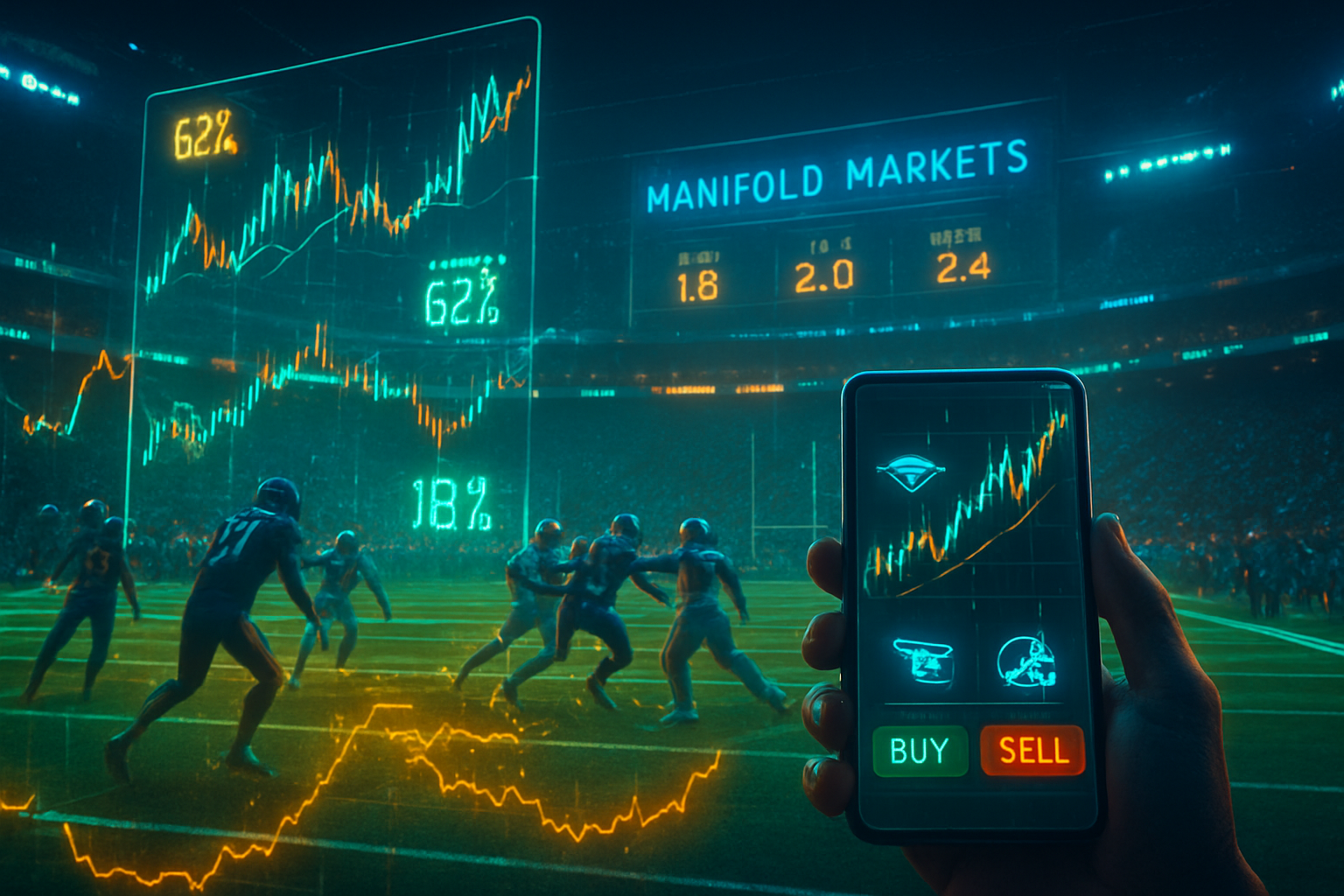
    As the NFL transitions into the high-stakes Divisional Round, the dust is still settling on a Wild Card Weekend that defied the expectations of many traditional analysts but was precisely tracked by the "wisdom of the crowd." On social prediction platform Manifold Markets, the high-octane matchups between the Houston Texans and the Pittsburgh Steelers, as well as the San Francisco 49ers and the Philadelphia Eagles, generated record-breaking trading volume, signaling a shift in how fans process sports data.

    While traditional sportsbooks were cautious, the play-money markets on Manifold reflected a growing skepticism toward the favorites early in the week. By the time the Texans dominated the Steelers 30–6 and the 49ers squeaked past the Eagles 23–19, the prediction market "whales" had already seen the writing on the wall. Currently, sentiment is shifting rapidly toward the Divisional Round, with the Seattle Seahawks emerging as a 19% favorite to take home the Lombardi Trophy, followed closely by the Los Angeles Rams at 18%.

    The Market: Betting on the "Underdog" Narrative

    The activity on Manifold Markets surrounding the Wild Card round was defined by its agility. Unlike traditional sportsbooks like DraftKings (NASDAQ: DKNG) or FanDuel, owned by Flutter Entertainment (NYSE: FLUT), which rely on professional oddsmakers to set a "line" designed to balance the house's risk, Manifold operates on a pure order-book model using "Mana," its native play-money currency.

    Leading up to the Texans-Steelers game on Monday, January 12, the market for a "Houston Upset" saw massive volatility. While traditional books held the Steelers as a slight favorite due to their veteran roster, Manifold’s user-driven odds hovered around a 31% probability for a Texans victory—a figure that rose sharply as news of Steelers’ QB Aaron Rodgers’ struggles against Houston’s top-ranked defense circulated in the comments sections. For the 49ers-Eagles clash, the market was even more divided; users on social platforms were far more bullish on the 49ers’ defense than the official point spreads suggested, with 49ers "Yes" shares trading at a significant premium in the hours before kickoff.

    Why Traders Are Betting: Sentiment vs. The Spread

    The surge in Manifold activity is driven by a fundamental difference in philosophy: sentiment-driven trading versus risk-mitigation betting. In a traditional setting, the "vig" or house edge often obscures the true probability of an event. On social prediction platforms, however, the price is the probability.

    Traders were particularly influenced by "real-time intelligence" found in the platform’s social feeds. For instance, the 49ers' upset over the Eagles was telegraphed by a surge in "Yes" bets following reports of locker-room friction in Philadelphia. While a sportsbook might wait for an official injury report or a confirmed story from a major outlet like ESPN, owned by The Walt Disney Company (NYSE: DIS), to move a line, Manifold traders often react to rumors and specialized data—such as advanced weather tracking or social media sentiment—within seconds. This creates a market that functions more like a high-frequency news aggregator than a gambling hall.

    Broader Context and Implications

    The rise of platforms like Manifold Markets reflects a broader trend in the "gamification" of forecasting. By removing the barrier of real-money risk (though Manifold does offer some real-money sweepstakes features in certain jurisdictions), the platform attracts a younger, more data-driven demographic that treats sports as a series of tradeable assets.

    This trend has significant implications for how sports data is consumed. Traditional media giants like FOX Corporation (NASDAQ: FOXA) are increasingly incorporating betting odds into their broadcasts, but social prediction markets offer a more granular look at what fans actually believe, rather than just what the house wants them to bet. Historically, these "wisdom of the crowd" platforms have shown a remarkable ability to sniff out upsets, as the collective intelligence of thousands of participants often outweighs the models of a few expert bookmakers.

    What to Watch Next

    With the Wild Card round concluded, the focus has shifted to the Divisional Round matchups scheduled for January 17–18. The No. 6 San Francisco 49ers will travel to face the top-seeded Seattle Seahawks, a game that Manifold users are already pricing as one of the most unpredictable of the season. Early trading shows the Seahawks as favorites, but a vocal minority of "mana-rich" traders are betting heavily on a 49ers momentum-carry.

    In the AFC, the Houston Texans’ blowout victory has made them a "market darling." They are set to face the No. 2 New England Patriots on Sunday, January 18. Traders will be watching the health of the Texans’ defensive front and the "mana" flow in prop markets, such as "Will the Texans record 3+ sacks?" These micro-markets often serve as leading indicators for the primary win/loss contracts.

    Bottom Line

    The high activity on Manifold Markets throughout the 2026 NFL Playoffs underscores the growing power of social prediction as a tool for sentiment analysis. By allowing users to trade on their convictions without the predatory structures of traditional betting, these platforms provide a clearer, more reactive picture of the sports landscape.

    As we move toward the Super Bowl, the lesson for fans and analysts alike is clear: if you want to know what's going to happen on the field, stop looking at the point spread and start looking at the order book. The wisdom of the crowd isn't just a psychological theory—it's a market force that is currently rewriting the playbook for NFL forecasting.


    This article is for informational purposes only and does not constitute financial or betting advice. Prediction market participation may be subject to legal restrictions in your jurisdiction.

    PredictStreet focuses on covering the latest developments in prediction markets.
    Visit the PredictStreet website at https://www.predictstreet.ai/.
  • The Ultimate Tail-Risk Hedge: Why Traders Are Betting Millions on the ‘Second Coming’ of Jesus

    The Ultimate Tail-Risk Hedge: Why Traders Are Betting Millions on the ‘Second Coming’ of Jesus

    As the clock struck midnight on January 1, 2026, a niche but high-volume corner of the prediction markets quietly resolved. The contract "Will Jesus Christ return in 2025?" on the decentralized platform Polymarket closed with a definitive "No," providing a modest 5.5% annualized return for the skeptics who had treated the "No" shares as a high-yield savings account. Within hours, a successor contract was born: "Will Jesus Christ return before 2027?"

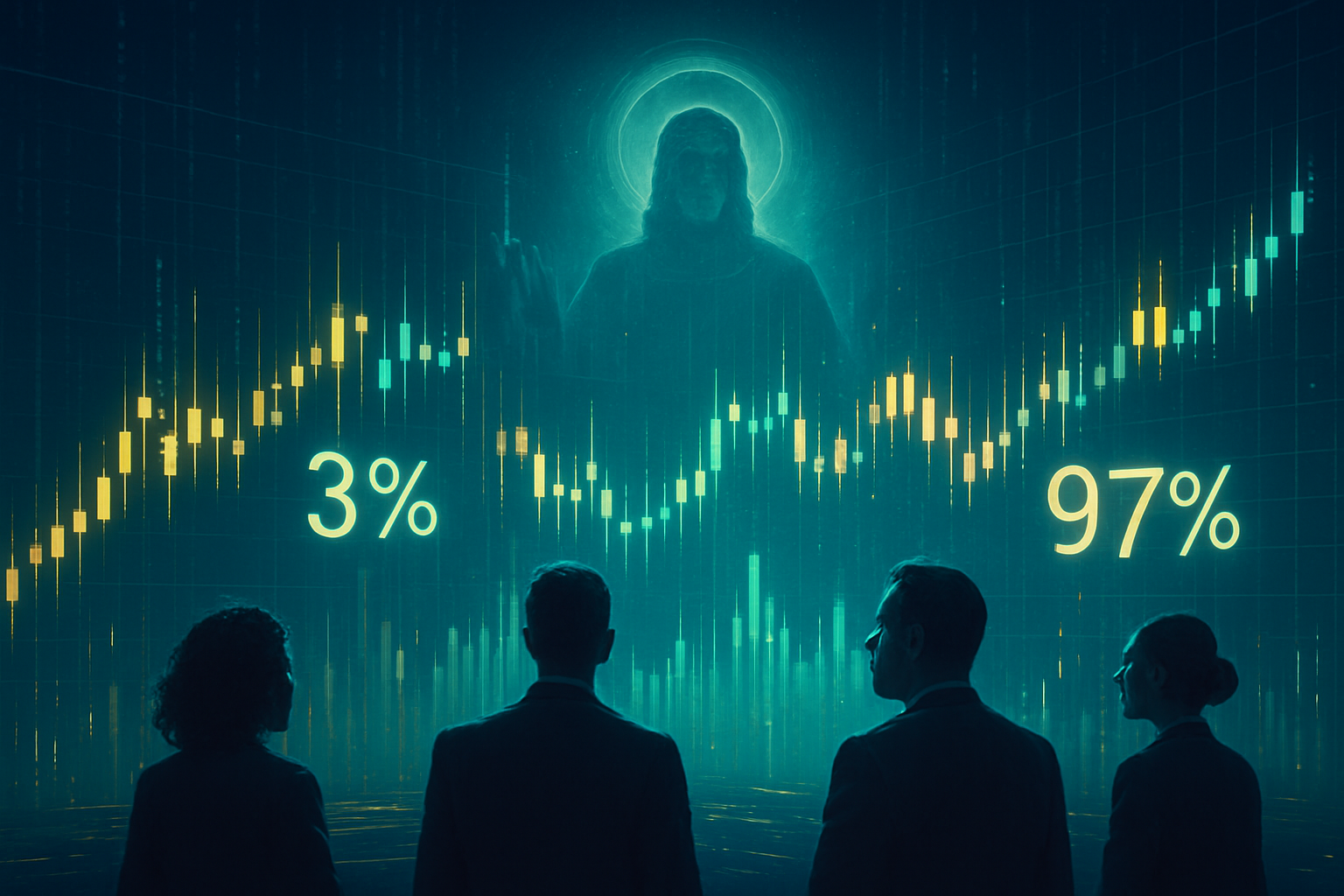
    Despite the theological and scientific impossibility perceived by many, this market is currently trading at a 3% probability. While that may seem negligible, the contract has already attracted hundreds of thousands of dollars in liquidity in the first two weeks of 2026. This trend highlights a growing fascination with "elusive" or "impossible" contracts—markets that predict events so world-altering that their resolution would arguably make the payout irrelevant. From extraterrestrial disclosure to the total eradication of cancer, these markets are no longer just memes; they are becoming significant financial indicators of public sentiment and tail-risk appetite.

    The Market: What's Being Predicted

    The primary market for the "Second Coming" is hosted on Polymarket, a decentralized prediction platform that has surged in popularity alongside the mainstreaming of crypto-based forecasting. As of January 13, 2026, "Yes" shares are priced at $0.03, while "No" shares sit at $0.97. This pricing indicates that the market views the event as a 33-to-1 long shot for the current calendar year.

    The resolution criteria for such a metaphysical event are surprisingly grounded. According to the contract details, the market resolves to "Yes" only if there is a "consensus of credible global news sources" confirming the event. The contract specifically cites organizations such as the Associated Press, Reuters (London Stock Exchange: LSEG), and The New York Times Company (NYSE: NYT) as primary arbiters. Furthermore, a definitive statement from major international bodies like the United Nations or the Vatican would trigger a "Yes" resolution.

    If no such consensus is reached by 11:59 PM ET on December 31, 2026, the market automatically resolves to "No." This binary clarity has turned the contract into a unique financial instrument, with total volume across the 2025 and 2026 iterations exceeding $3.5 million.

    Why Traders Are Betting

    The motivations behind these bets are as varied as the traders themselves. For many institutional and high-net-worth individuals, the "No" side of the Jesus market functions as a "yield play." By purchasing "No" shares at $0.97, a trader is essentially locking in a 3% return over twelve months. In an era where traditional bond yields from entities like the U.S. Treasury may fluctuate, a 3% "guaranteed" return—predicated on the non-occurrence of an apocalyptic event—is seen by some as an attractive alternative to traditional cash management.

    On the other side of the trade, "Yes" bettors are often driven by a mix of religious conviction, "black swan" hedging, and pure speculation. Buying "Yes" shares at 3 cents offers a 3,333% return if the event occurs. While some critics point out that the global financial system would likely collapse upon such an event—making the payout impossible to collect—believers and tail-risk enthusiasts argue that the "Yes" position is the ultimate hedge against a total change in the human paradigm.

    "It’s an arbitrage of belief," says one frequent Polymarket whale. "If you’re a materialist who thinks the probability is zero, you’re essentially taxing the hope of the believers. But the believers are willing to pay that tax for the 33x payout on the off-chance they are right. It’s the only place in the world where you can put a price tag on the divine."

    Broader Context and Implications

    The "Second Coming" market is part of a broader trend of "existential forecasting" that has taken over platforms like Polymarket and Kalshi. Similar markets have seen explosive growth. For instance, a contract regarding the official U.S. government disclosure of extraterrestrial life saw over $16 million in volume in 2025, with odds frequently spiking based on viral clips on platforms like YouTube, owned by Alphabet Inc. (NASDAQ: GOOGL).

    These markets reveal a fundamental shift in how the public processes "impossible" information. Rather than relying solely on opinion polls, which are often skewed by social desirability bias, prediction markets force participants to "put their money where their mouth is." Data suggests that while 20% of a population might tell a pollster they expect a major religious or cosmic event soon, less than 3% are willing to bet on it occurring within a specific 12-month window.

    However, these markets also raise regulatory and ethical questions. Critics argue that gamifying the end of the world or major catastrophes can desensitize the public to actual global risks. Regulators have historically been wary of "event contracts," though recent legal victories by platforms like Kalshi have opened the door for more diverse—and sometimes bizarre—trading pairs.

    What to Watch Next

    As we move through 2026, several factors could shift the 3% probability. Traders typically watch for "volatility catalysts," which in this market include major religious holidays (such as Easter or Passover), geopolitical escalations in the Middle East, or even unexplained astronomical phenomena reported by NASA.

    History shows that these markets are highly sensitive to "cascading news." In 2025, a false report of a UFO sighting briefly sent the "Aliens" market from 5% to 40% in a matter of minutes. Similar spikes are expected in the "Second Coming" market if any major religious leader makes a cryptic or prophetic announcement.

    Traders should also monitor the liquidity. As the end of the year approaches, the "time decay" on "Yes" shares will accelerate. If we reach November 2026 without a resolution, the "No" shares will likely climb toward $0.99, squeezing out any remaining "Yes" holders who aren't in it for the long haul.

    Bottom Line

    The Polymarket "Second Coming" contract is a fascinating intersection of theology, finance, and human psychology. While it may appear absurd on the surface, its multi-million dollar volume proves that there is a significant appetite for trading on the "untradable." It serves as a stark reminder that in the modern era, everything—even the end of the world as we know it—can be reduced to a ticker symbol and a probability curve.

    Whether viewed as a high-yield savings account for skeptics or a lottery ticket for the faithful, the market provides a more honest look at collective expectations than any poll could offer. As 2026 progresses, the 3% probability will remain a silent, fluctuating metric of our global anxiety and hope.


    This article is for informational purposes only and does not constitute financial or betting advice. Prediction market participation may be subject to legal restrictions in your jurisdiction.

    PredictStreet focuses on covering the latest developments in prediction markets.
    Visit the PredictStreet website at https://www.predictstreet.ai/.
  • War Clouds Over Tehran: Polymarket Odds Surge as Traders Bet on 2026 U.S.-Israeli Military Action

    War Clouds Over Tehran: Polymarket Odds Surge as Traders Bet on 2026 U.S.-Israeli Military Action

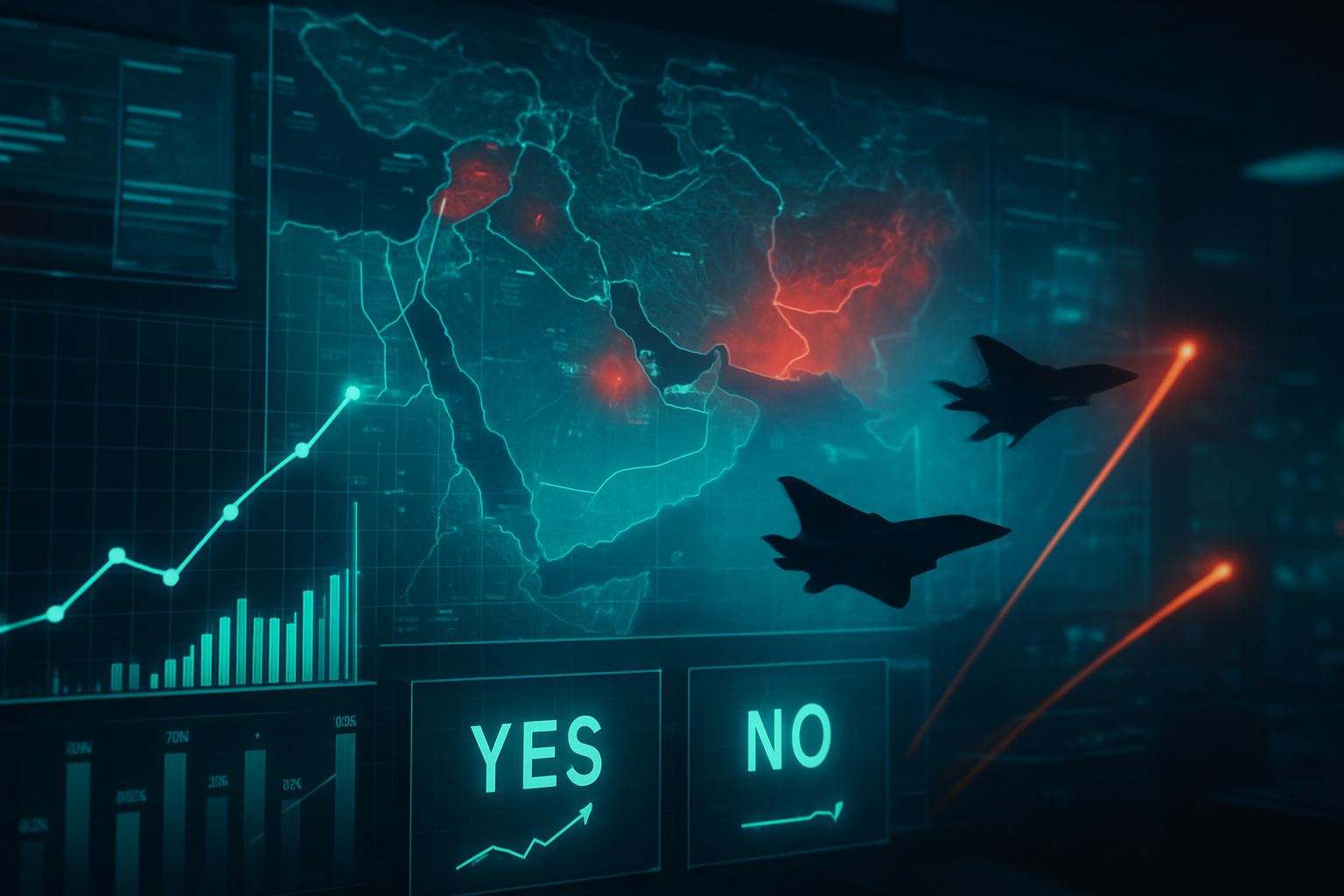
    As of January 13, 2026, the geopolitical landscape in the Middle East is reaching a boiling point, and nowhere is this tension more visible than in the world’s prediction markets. On platforms like Polymarket, the probability of a U.S. military strike on Iran by mid-year has surged to a staggering 71-80%, reflecting a market consensus that diplomatic avenues have all but vanished. This spike follows a series of escalations that began with the "12-Day War" in the summer of 2025 and has been further fueled by domestic instability within the Islamic Republic.

    Traders are dumping millions of dollars into contracts that speculate on kinetic military action, leadership changes, and the closure of vital shipping lanes. For many observers, these markets are no longer just a niche interest for speculators; they have become the primary real-time sentiment indicator for global conflict, often moving faster than traditional news cycles or intelligence briefings. With rumors of "Operation Iron Strike" circulating in Washington and ongoing nationwide protests in Iran, the "Yes" side of these contracts has seen unprecedented liquidity.

    The Market: What's Being Predicted

    The current focus of the predictive community is split between short-term Israeli actions and medium-term U.S. intervention. On Polymarket, a decentralized platform that has become the de facto home for geopolitical betting, the contract "Israel strikes Iran by January 31, 2026" is currently trading between 34% and 52%. This high volatility reflects daily fluctuations in satellite imagery and rhetoric from the Israeli Defense Forces. The total volume for this specific market has already surpassed $8 million, with liquidity being provided by both retail traders and institutional desks hedging against regional instability.

    Meanwhile, Kalshi (the U.S.-regulated exchange) has seen a surge in volume for leadership-based markets. The contract "Will Ali Khamenei be out as Supreme Leader by July 1, 2026?" is currently priced at a 52% probability. This market is particularly significant because it settles based on official government announcements or confirmations from multiple reputable news agencies. Unlike "war" markets, which have faced regulatory scrutiny, these "leadership" contracts have benefited from recent legal victories that allowed Kalshi to expand its offerings into political and administrative outcomes.

    The resolution criteria for these markets are stringent. For a strike to be confirmed "Yes" on Polymarket, there must be evidence of a kinetic military operation—drones, missiles, or manned aircraft strikes—originating from Israeli or U.S. forces and hitting targets on Iranian soil. Cyberattacks or intercepted missiles that do not cause ground impact typically do not trigger a "Yes" resolution, making these bets high-stakes and focused on overt military conflict.

    Why Traders Are Betting

    The primary driver behind the current 80% probability of U.S. action is the collapse of the Iranian economy and the regime's subsequent "all-in" push for nuclear reconstitution. In late 2025, the Iranian Rial plummeted to a historic low of 1.4 million to the dollar, sparking nationwide protests that have now spread to over 50 cities. Traders are betting that the U.S. administration will view this internal chaos as an opportune moment to degrade Iran's nuclear infrastructure under the guise of "Operation Iron Strike."

    Defense stocks have become a proxy for these bets in traditional markets. Companies like Lockheed Martin (NYSE:LMT) and Northrop Grumman (NYSE:NOC) are seeing record backlogs as the Pentagon replenishes stockpiles used during the limited June 2025 conflict. Similarly, RTX Corporation (NYSE:RTX), the manufacturer of the Iron Dome and Patriot interceptors, has seen its stock price correlate closely with the Polymarket odds; as the probability of an Iranian missile retaliation increases, so does the perceived demand for RTX’s defensive systems.

    Whale activity on Polymarket suggests a "hedged escalation" strategy. Large positions are being taken in "No" contracts for a new nuclear deal (currently trading at <5% probability) alongside "Yes" positions for military strikes. This indicates a market belief that the era of diplomacy is over. Furthermore, the redeployment of U.S. Air Force KC-135 tankers and F-35 fighter jets to the region in the first week of January has served as a "technical indicator" for traders who monitor flight tracking data as part of their due diligence.

    Broader Context and Implications

    The rise of these markets marks a shift in how the public consumes and acts on geopolitical intelligence. During the Cold War, such assessments were the exclusive domain of state actors and elite analysts. Today, the "wisdom of the crowd" provides a 24/7 price signal that incorporates satellite data, social media leaks from Iranian protesters, and shifts in energy markets. For instance, the "geopolitical premium" currently added to the price of Brent crude—monitored via ExxonMobil (NYSE:XOM) and Chevron (NYSE:CVX)—often lags behind the moves on Polymarket by several hours.

    Historically, prediction markets have shown a remarkable ability to discount "noise" and focus on outcomes. During the 2024 and 2025 skirmishes, Polymarket odds often preceded official announcements of military movement by up to 48 hours. However, the ethical and regulatory implications remain a point of contention. Critics argue that betting on war is ghoulish, while proponents argue that it provides a vital service: an honest, unsentimental assessment of risk that can help businesses and governments prepare for the worst.

    Furthermore, these markets reveal a deep public skepticism toward "soft power." In 2026, the market for a "New US-Iran Nuclear Deal" is virtually dead, trading at nearly zero. This suggests that the betting public has moved past the era of the JCPOA, viewing military or internal regime change as the only realistic outcomes remaining on the table.

    What to Watch Next

    The immediate milestone for traders is the January 31st deadline for the Israeli strike market. If the month ends without a confirmed kinetic event, we can expect a temporary "relief rally" in shipping stocks like ZIM Integrated Shipping (NYSE:ZIM) and a potential dip in defense contractors. However, the larger "U.S. Strike by June 30" market will likely remain elevated as long as "Operation Iron Strike" remains a discussed option in Washington.

    The second key date is March 31, the resolution point for several contracts regarding the stability of the Iranian regime. Should the nationwide protests result in a high-level defection or a change in the IRGC's command structure, the odds for an external strike might actually decrease, as the U.S. and Israel may opt to let the internal collapse play out rather than providing the regime with a "rally 'round the flag" moment through an outside attack.

    Finally, keep a close eye on the Strait of Hormuz. While prediction markets currently place the probability of a total closure at single digits, any movement toward maritime blockades would cause a catastrophic spike in energy-related contracts and likely force a "Yes" resolution on U.S. military intervention markets within hours, as the U.S. Navy is doctrinally committed to keeping the waterway open.

    Bottom Line

    Prediction markets in early 2026 are painting a grim picture of the Middle East. With an 80% probability of U.S. military action by mid-year, the "smart money" is no longer betting on if a conflict will occur, but when and how severe it will be. These platforms have effectively democratized intelligence, allowing anyone to see the same risk signals that are likely being discussed in the Situation Room.

    What this tells us about prediction markets as a tool is that they are at their best when information is asymmetric and stakes are high. While they cannot predict the future with 100% certainty, they offer a cold, hard look at reality that is often obscured by political rhetoric. As we move through the first quarter of 2026, the movement of these "war tokens" will remain the most reliable barometer for a world on the brink.

    Whether these bets resolve as "Yes" or "No," the data being generated today will serve as a historical record of what the world expected during one of the most volatile periods of the 21st century. For now, all eyes—and millions of dollars—remain fixed on Tehran.


    This article is for informational purposes only and does not constitute financial or betting advice. Prediction market participation may be subject to legal restrictions in your jurisdiction.

    PredictStreet focuses on covering the latest developments in prediction markets.
    Visit the PredictStreet website at https://www.predictstreet.ai/.
  • The Battle of the Kevins: Warsh Edges Out Hassett in High-Stakes Race for Fed Chair

    The Battle of the Kevins: Warsh Edges Out Hassett in High-Stakes Race for Fed Chair

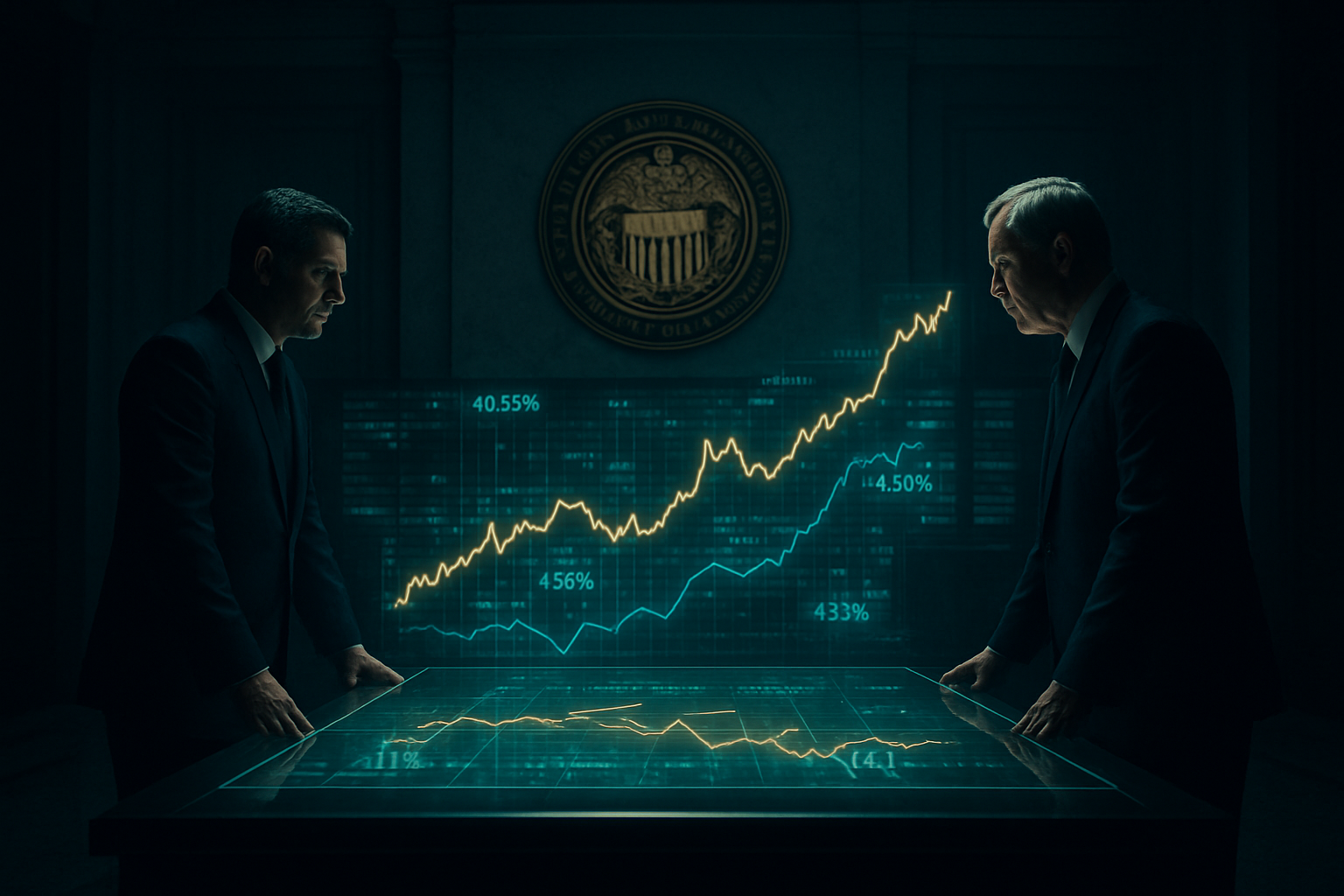
    As the countdown to the expiration of Jerome Powell’s term begins, the prediction markets have narrowed the field for the next leader of the Federal Reserve to a two-man sprint. In what traders are calling the "Battle of the Kevins," former Fed Governor Kevin Warsh has narrowly overtaken former Council of Economic Advisers Chairman Kevin Hassett as the favorite to receive Donald Trump’s nomination. On PredictIt, Warsh is currently trading at 43¢, a slim but significant lead over Hassett’s 41¢, marking a dramatic shift in a race that appeared settled just weeks ago.

    This market is drawing unprecedented interest due to its direct impact on global monetary policy and the escalating tensions between the White House and the current Fed leadership. With the Federal Reserve's independence at the center of the 2026 political discourse, prediction markets have become the primary venue for pricing in the "loyalty vs. credibility" debate that characterizes the administration's search for a successor.

    The Market: What’s Being Predicted

    The central prediction market revolves around the identity of the individual who will be confirmed as the next Chair of the Federal Reserve Board of Governors. While the primary action is concentrated on PredictIt, related contracts are trading with high volume on Polymarket (where Warsh leads 41% to 38%) and Kalshi (which shows a tighter 39% to 40% split in favor of Hassett).

    Trading liquidity has spiked in early January 2026, with over $15 million in combined volume across platforms. The resolution criteria for most of these markets require the individual to be officially nominated by the President and confirmed by the Senate. The timeline is fixed by the calendar: Jerome Powell’s term officially expires on May 15, 2026. However, the market also prices in the possibility of an "Acting Chair" scenario should the confirmation process stall—a contingency that has kept odds for darker-horse candidates like Christopher Waller (13¢) from hitting zero.

    Why Traders Are Betting

    The sudden surge for Kevin Warsh can be traced back to a mid-December interview President Trump gave to The Wall Street Journal, owned by News Corp (NASDAQ: NWSA). In the interview, the President explicitly narrowed his shortlist to "Kevin and Kevin," effectively ending the hopes of several other candidates. While Hassett was the initial frontrunner—peaking at nearly 85% on some platforms due to his perceived loyalty—traders began pivoting toward Warsh following reports of a successful 45-minute private meeting between Warsh and the President.

    Traders are increasingly betting that Warsh offers the "Goldilocks" solution for the administration. Having served as a Fed Governor from 2006 to 2011 and holding a background at Morgan Stanley (NYSE: MS), Warsh possesses the "market credibility" that institutional investors demand. Conversely, Hassett’s odds have softened amid concerns that his nomination might face a more difficult path in a Senate wary of installing a Chair perceived as too politically compliant. The "Warsh Trade" is essentially a bet that the administration will prioritize a candidate who can simultaneously appease the President’s desire for lower rates and Wall Street’s need for stability.

    Broader Context and Implications

    The "Battle of the Kevins" is unfolding against a backdrop of extreme institutional friction. Jerome Powell is currently under a Department of Justice investigation regarding alleged cost overruns in the renovation of the Fed’s headquarters, a situation Powell has characterized as political intimidation. Prediction markets are currently pricing a 30% chance that Powell resigns before his May 15 deadline, though his recent public vows to stay on have seen that probability drop from a December high of 70%.

    This market reveals a deep public skepticism regarding the traditional nomination process. By tracking the odds in real-time, we see that the market is currently more influenced by "vibe checks" and reported private meetings than by official White House press releases. Furthermore, the "Shadow Governor" strategy—where Powell might remain on the Board of Governors even after his Chairmanship ends to prevent an additional Trump appointment—has become a key variable that traders are now forced to calculate. This demonstrates how prediction markets have evolved to incorporate complex procedural maneuvering that traditional polling often misses.

    What to Watch Next

    The next major volatility event for this market will be the formal announcement of a nominee, which is expected no later than mid-February to allow for the confirmation process. Key dates to monitor include the resolution of the DOJ’s probe into the Fed's renovation budget; if the investigation is dropped or escalated, the odds for an interim or "Acting" Chair could fluctuate wildly.

    Additionally, watch for public comments from Senator Thom Tillis and other members of the Senate Banking Committee. Tillis has signaled he may block any new nominee until the Powell investigation is concluded. If a legislative "roadblock" becomes the consensus expectation, we could see the odds for both Kevins decline in favor of a "Field" bet or a scenario where the current Vice Chair for Supervision takes the reins temporarily.

    Bottom Line

    The narrow lead held by Kevin Warsh suggests that prediction markets are betting on a "return to normalcy" within the context of a disruptive administration. Traders are signaling that while the President wants a change, the structural need for a Chair with deep ties to the financial establishment—like Warsh’s history at Morgan Stanley (NYSE: MS)—will ultimately outweigh the desire for a more partisan appointment.

    Ultimately, these markets serve as a real-time barometer for the tension between political will and institutional inertia. Whether it is Warsh or Hassett who takes the gavel on May 16, the volatility of these contracts highlights just how much the "independence" of the Federal Reserve is currently being re-priced by the world's most informed speculators.


    This article is for informational purposes only and does not constitute financial or betting advice. Prediction market participation may be subject to legal restrictions in your jurisdiction.

    PredictStreet focuses on covering the latest developments in prediction markets.
    Visit the PredictStreet website at https://www.predictstreet.ai/.
  • The $100,000 Wall: Why Bitcoin Prediction Markets are Cooling in January 2026

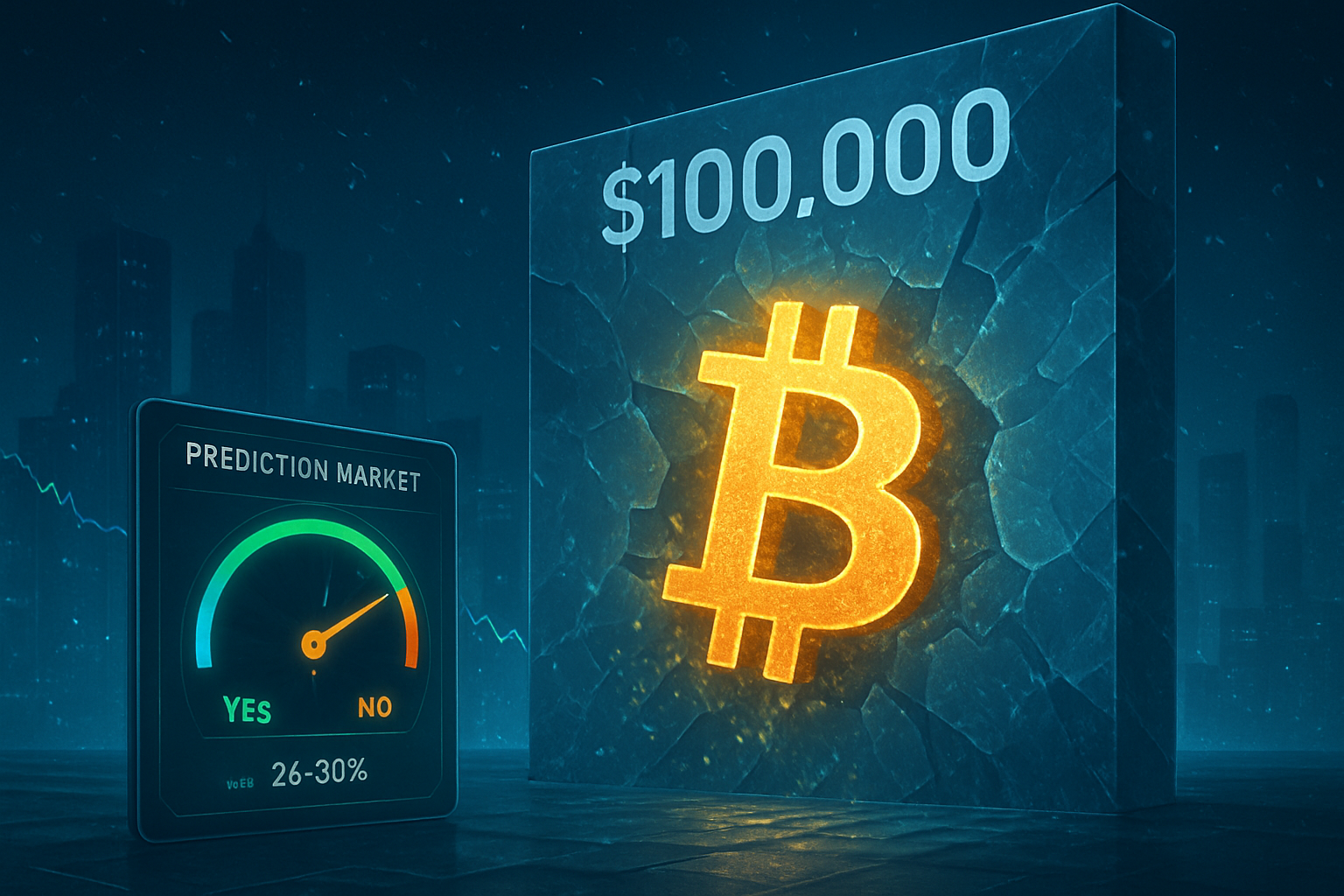
    The $100,000 Wall: Why Bitcoin Prediction Markets are Cooling in January 2026

    As of mid-January 2026, the psychological and technical barrier of $100,000 remains the most contested territory in the digital asset space. While Bitcoin (BTC) entered the new year with a wave of euphoria that saw traders pricing in a nearly 80% chance of breaching the six-figure mark, reality has set in with sobering speed. Current data from the world's leading prediction markets shows a dramatic recalibration of expectations, with the probability of Bitcoin hitting $100,000 by the end of the month sliding to a modest 25-30%.

    This shift in sentiment follows a period of intense volatility and a broader "Great Reset" in growth expectations. Despite Bitcoin hovering in a consolidation range between $91,000 and $92,500, the "easy money" narrative of early January has evaporated. Prediction markets are now signaling that the road to $100,000 may be paved with significantly more resistance than bulls had anticipated, reflecting a transition from speculative mania to cautious institutional accumulation.

    The Market: What's Being Predicted

    The focus of the trading community is currently centered on high-liquidity contracts across decentralized and regulated platforms. On Polymarket, the world’s largest decentralized prediction venue, the "Bitcoin Hits $100k in January" market has seen a surge in volume, surpassing $24 million as of January 13, 2026. After starting the year with a dominant "Yes" bias that reached 80% probability, the contract has collapsed to 28-29%. This indicates that the crowd, which was once certain of a historic breakout, is now hedging heavily against that outcome.

    On the CFTC-regulated platform Kalshi, the sentiment is mirrored with striking precision. The "Above $100,000" strike for January is currently trading between 27% and 34%. Interestingly, Kalshi’s tiered strike prices reveal where the true floor of confidence lies: while the $100,000 milestone is in doubt, the $95,000 level still holds a robust 73% probability. This suggests that while traders expect Bitcoin to gain ground from its current $91,000 level, they do not believe it has the momentum to clear the final 10% hurdle before the month concludes.

    The resolution criteria for these markets are strict: Bitcoin must touch or exceed $100,000 on major spot exchanges (usually an aggregate of Coinbase, Binance, and Kraken) at any point before midnight on January 31, 2026. With only half the month remaining, time decay—often referred to as "theta" in options trading—is beginning to work against the bulls.

    Why Traders Are Betting

    The primary driver behind the cooling odds is a combination of technical resistance and a "sticky" macroeconomic environment. After Bitcoin reached an all-time high of approximately $126,210 in late 2025, it entered a sharp 30% correction that bottomed near $84,000 in December. The "New Year's relief rally" that followed initially looked promising, but it has struggled to reclaim the $94,000 to $96,000 resistance zone. Traders on prediction markets are watching these levels closely; failure to break through $96,000 in early January acted as a "sell" signal for those betting on the $100,000 milestone.

    Macro-economic factors have also played a spoiler role. Inflation data (CPI) for the start of 2026 came in at 2.7%, higher than the Federal Reserve's target. This has led to a 97% probability on Kalshi that the Fed will leave interest rates unchanged at its January meeting, effectively ending hopes for a liquidity-driven spike. Furthermore, "OG Whales"—holders from the early Satoshi era—were spotted moving approximately $286 million worth of BTC into exchanges on January 12. This suggests that long-term holders are viewing the approach to $100,000 as an ideal zone to take profits, creating a massive "supply wall" that prediction market participants are wary of.

    Institutional sentiment remains a silver lining, albeit a slow-moving one. On January 13, U.S. spot Bitcoin ETFs saw net inflows of $116.67 million. While significant, this is a far cry from the multi-billion dollar daily surges seen in 2025. Major players like MicroStrategy (NASDAQ: MSTR) continue to double down, with recent reports showing board members buying the dip at $155 per share. Similarly, Coinbase (NASDAQ: COIN) has seen its shares rise as it benefits from its role as the primary custodian for the ETF market, though the stock's 4-6% gains have not been enough to drag the underlying asset past the $100,000 mark.

    Broader Context and Implications

    This market behavior fits into a well-documented historical pattern. Analysts point out that 2026 is the "third year" following the 2024 halving event. Historically, the third year of a Bitcoin cycle is often a period of consolidation or "sideways" movement rather than parabolic growth. The current skepticism in the prediction markets suggests that the "halving effect" may have been front-run in 2025, leaving 2026 as a year of price discovery and institutional absorption.

    The shift in odds also highlights the evolving role of prediction markets as a sentiment gauge. Unlike traditional financial analysts who might maintain "Buy" ratings regardless of short-term volatility, prediction market participants must put capital behind their convictions. The rapid drop from 80% to 28% probability reflects a "wisdom of the crowd" that is highly sensitive to real-time events, such as the aforementioned whale movements and Fed policy shifts. It reveals a public that is optimistic about Bitcoin's long-term value but deeply skeptical of a "vertical" price action in a high-interest-rate environment.

    Furthermore, the regulatory stability of platforms like Kalshi has allowed for more sophisticated hedging strategies. Large-scale miners and institutional holders are likely using these "event contracts" to hedge against the downside of their spot holdings. This professionalization of the market means that "dumb money" hype is increasingly being countered by calculated, risk-managed positions.

    What to Watch Next

    The remainder of January 2026 will likely be defined by two key events: the upcoming Federal Reserve meeting and the "liquidity window" of the third week of the month. If Bitcoin can decisively break and hold above the $96,000 level before January 20, prediction market odds are likely to see a rapid "gamma squeeze" back toward the 50% range. However, every day spent consolidating below $93,000 makes the $100,000 "Yes" contract more expensive and less likely to pay out.

    Investors should also monitor the daily ETF inflow data. If cumulative inflows for the spot ETFs cross the $60 billion mark this month, it could provide the necessary buy-side pressure to overwhelm the profit-taking whales. Conversely, any signs of a "leverage flush"—where over-leveraged long positions are liquidated—could send the $100,000 odds crashing into the single digits.

    Bottom Line

    The current state of the Bitcoin $100,000 prediction markets is a classic case of "rational cooling." The drop in probability from 80% to under 30% is not necessarily a bearish signal for Bitcoin’s fundamental value, but rather a reflection of the formidable technical and macroeconomic hurdles standing in the way of a historic milestone. Traders are no longer betting on a miracle; they are betting on the reality of resistance.

    Ultimately, prediction markets are doing exactly what they were designed to do: stripping away the noise of social media hype and providing a clear, price-weighted probability of a specific outcome. Whether or not Bitcoin hits $100,000 in the next two weeks, the movement of these odds tells us that the market is maturing, with participants placing more value on Federal Reserve policy and on-chain whale activity than on the "Moon" narratives of the past. For now, the $100,000 dream remains just that—a dream deferred to later in 2026.


    This article is for informational purposes only and does not constitute financial or betting advice. Prediction market participation may be subject to legal restrictions in your jurisdiction.

    PredictStreet focuses on covering the latest developments in prediction markets.
    Visit the PredictStreet website at https://www.predictstreet.ai/.
  • The Odds on the Red Carpet: Polymarket’s Golden Globes Partnership Sparks Fierce Backlash

    The Odds on the Red Carpet: Polymarket’s Golden Globes Partnership Sparks Fierce Backlash

    The night of January 11, 2026, marked a turning point for prediction markets as live betting odds from Polymarket were integrated directly into the Golden Globes broadcast on CBS (owned by Paramount Global, NASDAQ: PARA). This partnership with Penske Media Corporation aimed to mainstream "cultural betting," but it instead sparked a massive backlash from viewers who labeled the move "dystopian" and "cringe."

    The Market: What's Being Predicted

    The event saw record-breaking activity for an entertainment market, with roughly $2.5 million wagered across 30 categories on Polymarket. The Best Motion Picture – Drama category was the crown jewel, seeing $244,962 in volume.

    The market was notably efficient—and at times, suspiciously so. Timothy Chalamet (Marty Supreme) was a "lock" with 76% implied probability hours before his win. However, the night's biggest shock came when the 55% favorite Sinners was upset by Hamnet (30% probability), resulting in a significant "burn" for many top bettors.

    Why Traders Are Betting

    The draw of the Golden Globes for traders lies in the perception of "asymmetric information." Because awards shows involve human voters and multiple layers of production, traders often hunt for leaks. On the night of the 11th, several categories saw sharp odds movements seconds before the winners were announced, leading to widespread accusations of "insider trading" by "whales."

    Polymarket CEO Shayne Coplan has positioned the platform as a "truth engine" for cultural trends. For many users, betting on the awards provides a "second-screen" level of engagement that traditional viewership lacks, turning the ceremony into a live-action sportsbook.

    Broader Context and Implications

    The "gamification" of the awards has been met with fierce resistance. Critics on social media compared the live chyrons to the "Hunger Games," arguing that the focus on betting odds undermines the celebration of art. This controversy comes as the Golden Globes transition into a for-profit venture following the dissolution of the Hollywood Foreign Press Association (HFPA) in 2023.

    The partnership also highlights the "gambling creep" in American entertainment. As Polymarket attempts to move beyond politics and finance, its integration into high-profile broadcasts like the Globes (and recently the NHL) suggests a future where every cultural event has an "implied probability" attached.

    What to Watch Next

    The industry is now looking toward the Oscars. If the ratings for the Globes show a "betting bump," The Walt Disney Company (NYSE: DIS) may face pressure to integrate similar data into the Academy Awards broadcast. Additionally, regulatory scrutiny may increase if the "insider trading" optics around awards betting continue to worsen.

    Bottom Line

    Polymarket’s Golden Globes debut was a success for the platform’s metrics but a polarizing moment for the culture. While it proved that there is a million-dollar market for entertainment prediction, the backlash suggests a deep public discomfort with the commodification of award-season prestige. As prediction markets continue their march into the mainstream, the friction between market efficiency and cultural value remains unresolved.


    This article is for informational purposes only and does not constitute financial or betting advice. Prediction market participation may be subject to legal restrictions in your jurisdiction.

    PredictStreet focuses on covering the latest developments in prediction markets.
    Visit the PredictStreet website at https://www.predictstreet.ai/.
  • The ‘Maduro Bet’ Backlash: Will Congress Finally Ban Prediction Market Insider Trading?

    The ‘Maduro Bet’ Backlash: Will Congress Finally Ban Prediction Market Insider Trading?

    The world of prediction markets is facing its most significant legislative reckoning to date. Following a series of suspicious trades linked to high-stakes geopolitical events, Representative Ritchie Torres (D-NY) has introduced the "Public Integrity in Financial Prediction Markets Act of 2026." The bill seeks to explicitly criminalize insider trading on prediction platforms by government employees, political appointees, and elected officials—essentially extending the ethics of the STOCK Act to the digital forecasting age.

    As of January 13, 2026, the legislative push is gaining rapid momentum in Washington, D.C. While there is not yet a direct contract for the bill's passage on major platforms, proxy markets on PredictIt tracking a broader "ban on member stock trading" have seen a surge in volume, though they currently trade at a cautious 12% probability (12 cents). Despite the low odds of passage in a crowded election-year calendar, the market sentiment reflects a growing consensus: the "Wild West" era of government insiders wagering on their own classified briefings may be coming to a close.

    The Market: What's Being Predicted

    While the "Public Integrity in Financial Prediction Markets Act" is the headline, traders are currently forced to bet on its success through secondary markets. On PredictIt, the long-standing market for "Will Congress pass a ban on member stock trading?" has become the primary bellwether for the Torres bill. This contract is currently trading at 12¢, a slight uptick from its 2025 lows, but still reflecting deep skepticism that Congress will police itself during a midterm year.

    On Kalshi (Kalshi Exhange), which operates as a regulated contract market, traders are focusing on broader regulatory outcomes. Markets for "Will the CFTC adopt new insider trading rules in 2026?" are currently pricing in a 20% probability. This suggests that while a full act of Congress might be a long shot, traders believe administrative action from the Commodity Futures Trading Commission (CFTC) or the Securities and Exchange Commission (SEC) is increasingly likely.

    The liquidity in these regulatory markets has spiked since the bill was introduced on January 5. Over $2.5 million has changed hands on related legislative outcomes in the last week alone. The resolution criteria for the Torres bill would require the President to sign the act into law by December 31, 2026—a tight window that explains the current "underdog" odds.

    Why Traders Are Betting

    The sudden urgency for this legislation stems from a "smoking gun" incident on Polymarket involving the January 3, 2026, capture of Venezuelan President Nicolás Maduro. Just hours before the U.S. military raid was made public, a mysterious account named "Burdensome-Mix" placed a $32,000 bet that Maduro would be ousted. When news of the capture broke, the account’s position swelled to over $400,000, a staggering 1,200% return that many analysts believe could only have been achieved through material non-public information (MNPI).

    "The Maduro trade was the 'A-ha!' moment for regulators," says one high-volume trader on Kalshi. "It wasn't just a lucky guess; the timing was too surgical. It looked like someone in the loop decided to treat a classified military operation like a parlay bet."

    Further fueling the fire is the case of "0xafEe," a trader dubbed the "Google Insider." This individual has reportedly netted $1.2 million by correctly predicting search trends and product release dates for Alphabet Inc. (NASDAQ: GOOGL) with near-perfect accuracy. These incidents have created a "perfect storm" for Representative Torres, who has framed his bill as a necessary tool to prevent public service from becoming a "for-profit enterprise."

    Support for the bill has come from an unlikely corner: the industry itself. Tarek Mansour, CEO of Kalshi, has publicly endorsed the Act. Mansour argues that regulated exchanges already adhere to standards similar to those of the New York Stock Exchange (NYSE: ICE) or Nasdaq (NASDAQ: NDAQ), and that the bill would primarily target the "unregulated, offshore" activity that currently tarnishes the industry's reputation.

    Broader Context and Implications

    The "Public Integrity in Financial Prediction Markets Act" represents a pivotal moment in the professionalization of prediction markets. For years, these platforms have been touted as superior forecasting tools, aggregating the "wisdom of the crowd" to predict everything from elections to interest rates. However, the Maduro incident highlights a darker side: when the "crowd" includes individuals who can control the outcome or possess classified intelligence, the market ceases to be a forecasting tool and becomes a vehicle for corruption.

    Historically, prediction markets have been remarkably accurate, often outperforming traditional polling or expert analysis. Yet, if the public perceives these markets as "rigged" by insiders, liquidity will dry up, and their utility as a public sentiment gauge will vanish.

    The bill also touches on a larger trend of increased scrutiny on "political gambling." The CFTC has long sought to ban markets on election outcomes, arguing they threaten the integrity of the democratic process. By focusing on insider trading rather than a total ban, Torres may have found a middle ground that allows the industry to survive while imposing the same rigors faced by traditional finance.

    What to Watch Next

    The immediate hurdle for the bill is its lack of a Republican co-sponsor. While it has over 30 Democratic supporters, including high-profile figures like Nancy Pelosi, it will need a bipartisan coalition to clear the House Financial Services Committee. Analysts will be watching for any GOP members who have previously been vocal about banning congressional stock trading to join the bill.

    Key dates to monitor include:

    • January 25, 2026: The scheduled House Financial Services Committee hearing where the bill is expected to be discussed.
    • February 2026: The release of the CFTC's semi-annual regulatory agenda, which may include new rules for "event contracts" that mirror the Torres bill's language.
    • Mid-2026: The resolution of the Maduro "Invasion" payout dispute on Polymarket, which could trigger further legal action or legislative amendments.

    If a Republican co-sponsor signs on before the end of the month, expect the 12% "Yes" odds on PredictIt to double almost overnight.

    Bottom Line

    The proposed "Public Integrity in Financial Prediction Markets Act of 2026" is a reactive but perhaps necessary piece of legislation in a rapidly evolving financial landscape. The Maduro raid "Burdensome-Mix" trade served as a wake-up call, proving that the threat of insider trading in prediction markets is no longer a theoretical concern—it is a documented reality.

    While current market odds suggest the bill has a difficult path to becoming law in 2026, the rhetoric from leaders like Ritchie Torres and Tarek Mansour suggests that the status quo is no longer an option. Whether through this specific Act or through a series of administrative crackdowns by the CFTC and SEC, the "Wild West" days of prediction markets are being reined in.

    For traders, the message is clear: the market rewards information, but the government is drawing a hard line on how that information is obtained. As these markets mature into mainstream financial instruments, they must adopt the transparency and ethical standards of the institutions they aim to supplement.


    This article is for informational purposes only and does not constitute financial or betting advice. Prediction market participation may be subject to legal restrictions in your jurisdiction.

    PredictStreet focuses on covering the latest developments in prediction markets.
    Visit the PredictStreet website at https://www.predictstreet.ai/.
  • The $400,000 Secret: How an Anonymous Bet on Maduro Exposed the Deep Fault Lines of Prediction Markets

    The $400,000 Secret: How an Anonymous Bet on Maduro Exposed the Deep Fault Lines of Prediction Markets

    The early morning hours of January 3, 2026, will be remembered for the thundering rotors of U.S. special operations forces over Caracas. But for the high-stakes world of decentralized finance, the real "shock and awe" happened hours earlier on a digital scoreboard. As the world slept, an anonymous trader on the prediction platform Polymarket turned a relatively modest $34,000 into a staggering $410,000 windfall. The timing was more than suspicious—it was nearly telepathic.

    Just 48 minutes before President Trump reportedly signed the final execution order for "Operation Absolute Resolve"—the military raid that captured Venezuelan leader Nicolás Maduro—the anonymous account began aggressively buying "Yes" shares on the prospect of Maduro’s downfall. By the time news organizations like The New York Times Co. (NYSE: NYT) confirmed the capture, the market had spiked from a niche 8% probability to a virtual certainty, leaving regulators and the public asking a chilling question: Did a government insider just monetize a military secret?

    The Market: What's Being Predicted

    The controversy centers on several high-liquidity contracts hosted on Polymarket, a decentralized platform built on the Polygon blockchain. The primary market, "Will Nicolás Maduro be out of office by January 31, 2026?", had seen tepid volume throughout the winter, with many analysts assuming the Venezuelan strongman would remain entrenched despite growing international pressure.

    In the final days of December 2025, the "No" side of the trade was dominant, pricing the odds of Maduro's removal at less than 10%. However, blockchain data reveals that between 9:00 PM and 10:00 PM ET on January 2, a single wallet—created only days prior—conducted 13 separate transactions to scoop up nearly all available "Yes" shares at roughly 8 cents on the dollar.

    The liquidity for these trades was deep enough to absorb the $34,000 without immediate price slippage, but the sheer aggression of the buy orders eventually pushed the market to 25% just before the first reports of explosions at Fort Tiuna. While traditional financial markets were closed for the weekend, Polymarket traded 24/7, providing a real-time heatmap of a geopolitical earthquake.

    Why Traders Are Betting

    The debate over the Maduro trade has split the prediction market community into two camps. On one side are the "Oracle" proponents, who argue that prediction markets are doing exactly what they were designed to do: aggregate all available information, including whispers and "soft" signals, into a single, accurate price.

    "The market didn't just predict the raid; it announced it," said one prominent DeFi analyst. Traders point out that movements on Polymarket often precede official announcements because the financial incentive to be first is so high. Some suggest the trader might not have been a high-ranking official, but perhaps a logistical contractor or a staffer who noticed unusual activity at Florida's Southern Command and decided to "bet their hunch."

    However, the "Insider" camp is much more skeptical. The precision of the 9:58 PM ET wager—just minutes before the "go" order—suggests access to the most sensitive of state secrets. This has sparked a secondary controversy regarding a separate contract on whether the U.S. would "invade" Venezuela. While the capture of Maduro was undisputed, Polymarket initially hesitated to resolve the "invasion" contract as "Yes," sparking a backlash from traders who used platforms like Alphabet Inc. (NASDAQ: GOOGL) and Meta Platforms, Inc. (NASDAQ: META) to organize protests against the platform's "arbitrary" definitions of military action.

    Broader Context and Implications

    This event has catapulted prediction markets into the crosshairs of federal regulators. While the Intercontinental Exchange, Inc. (NYSE: ICE) manages traditional commodities and futures with strict insider trading prohibitions, decentralized platforms like Polymarket operate in a legal gray area.

    The Maduro trade has already triggered a legislative firestorm. Democratic Representative Ritchie Torres has introduced the Public Integrity in Financial Prediction Markets Act of 2026, which specifically seeks to criminalize the use of non-public government information on these platforms. "We cannot have a system where the decision to go to war is treated as a tip for a crypto-gambler," Torres stated in a recent press briefing.

    Historically, prediction markets have been praised for their accuracy in elections, but the Maduro trade represents a "dark frontier." It suggests that as these markets grow in liquidity, they may become unintended "leaks" for intelligence, where the price of a contract becomes a proxy for classified briefings. This creates a perverse incentive structure where those with the power to make events happen—politicians and generals—could theoretically profit from their own decisions.

    What to Watch Next

    In the coming weeks, all eyes will be on the Commodity Futures Trading Commission (CFTC) as they investigate the source of the funds used in the $34,000 trade. If the agency can trace the wallet to a U.S. person with security clearance, it could lead to the first major criminal prosecution for "event contract" insider trading.

    Furthermore, the resolution of the "invasion" contract remains a flashpoint. Polymarket's internal "Umpire" or decentralized governance mechanisms must decide if a targeted snatch-and-grab extraction by special forces constitutes a "invasion" of a sovereign nation. The outcome of this dispute will likely set the precedent for how future military and geopolitical contracts are phrased and resolved.

    Finally, keep a close watch on the "Maduro Trial" markets. Contracts are already appearing regarding the likelihood of a conviction in the Southern District of New York and the potential for a plea deal. These markets are currently seeing heavy volume as legal experts and political junkies weigh the strength of the narco-terrorism evidence against the complexities of international law.

    Bottom Line

    The "Maduro Trade" is a watershed moment for prediction markets. It proved that these platforms can indeed function as a "super-oracle," identifying events before they happen with uncanny accuracy. Yet, it also exposed a massive ethical and regulatory vacuum. If the public loses faith in the "fairness" of these markets—fearing they are playing against insiders with a 20/20 view of the future—liquidity could dry up just as the industry is reaching the mainstream.

    For now, the anonymous trader sits on a $410,000 profit, and the world has a new, albeit controversial, way to monitor the secrets of the state. Whether this remains a legitimate tool for forecasting or becomes a "black market for secrets" will depend on the regulatory actions taken in the wake of Operation Absolute Resolve.


    This article is for informational purposes only and does not constitute financial or betting advice. Prediction market participation may be subject to legal restrictions in your jurisdiction.

    PredictStreet focuses on covering the latest developments in prediction markets.
    Visit the PredictStreet website at https://www.predictstreet.ai/.
  • Ukraine Blacklists Polymarket as Ethical Backlash Grows Over $270 Million in “War Bets”

    Ukraine Blacklists Polymarket as Ethical Backlash Grows Over $270 Million in “War Bets”

    The Ukrainian government has officially moved to block access to Polymarket, the world’s largest decentralized prediction platform, marking a significant escalation in the regulatory and ethical scrutiny of geopolitical betting. The ban, finalized in mid-January 2026, comes after months of mounting tension over the platform's "war markets," which allowed global speculators to wager on the granular movements of the front lines in the ongoing Russia-Ukraine conflict. At the time of the block, internal data and local media reports suggested that over $270 million had been wagered on war-related outcomes, with active "open interest" exceeding $140 million.

    The decision was driven by a combination of unlicensed gambling concerns and a fierce moral debate over the "gamification" of human suffering. While markets regarding the likelihood of a ceasefire by late 2026 hovered around 35% just before the ban, the real controversy centered on hyper-local wagers. These included bets on the specific week a city might fall or the outcome of individual drone strikes, leading Ukrainian officials to condemn the platform as a parasitic entity that monetizes national trauma. Despite the crackdown on Polymarket, other prediction sites like Kalshi and PredictIt remain accessible to Ukrainian users for now, largely due to their more restrictive and less granular market listings.

    The Market: What's Being Predicted

    The markets that triggered the Ukrainian blockade were among the most liquid and controversial in Polymarket’s history. Unlike traditional political forecasting, these wagers focused on high-stakes military maneuvers and territorial control. Key contracts included "Will Russia control Pokrovsk by April 1, 2026?" and "Will Ukraine recapture Crimea before 2027?" These markets frequently saw millions of dollars in daily volume, with liquidity often exceeding that of major U.S. political races. The granularity reached a point where traders were essentially betting on the success or failure of specific tactical operations.

    Resolution criteria for these markets were often tied to reporting from established news organizations and conflict mappers. However, the reliance on real-time data created a volatile environment where odds could shift by 20% or more in a single hour based on unverified social media footage or telegram reports. For instance, the probability of a Russian breakthrough in the Donbas region spiked dramatically in late 2025 following a series of disputed map updates, leading to massive sell-offs and liquidations for those betting on Ukrainian defensive stability.

    The platform's decentralized nature made it difficult for any single authority to regulate the flow of capital, but the Ukrainian National Commission for the State Regulation of Electronic Communications (NKEK) eventually moved to block the domain under Resolution No. 695. The official justification cited Polymarket’s failure to obtain a local gambling license, a requirement for any entity offering financial predictions to Ukrainian citizens. However, the $270 million in cumulative war bets made it clear that the "war market" phenomenon had become a security and morale concern for the state.

    Why Traders Are Betting

    The influx of capital into Ukraine-related prediction markets was driven by a mix of institutional hedging, retail speculation, and the rise of "OSINT" (Open Source Intelligence) traders. Many sophisticated participants argued that prediction markets provided a more accurate "truth signal" than state-run media or biased news outlets. By putting money on the line, traders were incentivized to sift through propaganda to find factual battlefield developments. This led to a subculture of "war-room" traders who monitored satellite imagery and battlefield APIs to gain an edge, often moving the market hours before official government statements were released.

    However, this hunt for an information edge led to significant scandals. In late 2025, a controversy erupted when it was discovered that a third-party tool had synced the API of DeepState, a prominent Ukrainian defense monitoring group, directly into Polymarket’s trading interface. DeepState leadership expressed outrage, accusing speculators of "vulture-like behavior." Even more damaging was the "ISW Map Scandal," where an unauthorized edit to a map by the Institute for the Study of War led to a $1.3 million payout on a Polymarket contract that resolved based on what was later revealed to be a data error. These incidents reinforced the Ukrainian government’s view that these markets were not just unethical but prone to manipulation.

    Beyond the ethics, many international traders used these markets as a hedge against global economic instability. Large-scale bets on the duration of the war were often paired with positions in energy commodities or defense contractors like Lockheed Martin (NYSE: LMT) and Northrop Grumman (NYSE: NOC). For these investors, Polymarket served as a high-leverage instrument to protect portfolios against the macro-economic shocks caused by the conflict's expansion or contraction.

    Broader Context and Implications

    The Ukrainian ban on Polymarket represents a pivotal moment for the prediction market industry, highlighting the tension between the "free flow of information" and the ethical boundaries of speculative betting. Historically, prediction markets have been praised for their accuracy in forecasting elections and economic shifts. However, the "war bet" phenomenon has tested the limits of what society is willing to tolerate as a tradable asset. The $270 million figure has sparked debates in Washington and Brussels about whether war-related contracts should be categorized as "public interest" tools or predatory gambling.

    This regulatory crackdown isn't happening in a vacuum. Major tech platforms and search engines, including Alphabet Inc. (NASDAQ: GOOGL), have faced pressure to de-rank or restrict access to "conflict-betting" sites that do not adhere to local licensing laws. In Ukraine, the selective nature of the ban—blocking Polymarket while leaving Kalshi and PredictIt alone—suggests that granularity and data sourcing are the primary triggers for government intervention. Kalshi, which is regulated by the CFTC in the United States, typically avoids the highly specific battlefield contracts that Polymarket’s decentralized model allowed.

    Furthermore, the ban highlights the growing divide between regulated, centralized exchanges and decentralized, offshore platforms. While Polymarket has grown into a billion-dollar ecosystem, its lack of a physical headquarters or a traditional corporate structure makes it a difficult target for enforcement beyond IP blocking. For the broader gambling industry, including giants like Flutter Entertainment (NYSE: FLTR), the rise of these high-stakes geopolitical markets represents both a threat and a potential new frontier for regulated products, provided they can navigate the ethical minefield.

    What to Watch Next

    As we move further into 2026, the primary question is whether other nations involved in or affected by the conflict will follow Ukraine's lead. If European regulators decide to label "war bets" as a violation of humanitarian ethics or a security risk, Polymarket could face a cascading series of bans across the continent. Traders should monitor the upcoming NKEK reviews and potential appeals from decentralized autonomous organizations (DAOs) associated with the platform, though the likelihood of a reversal in the current wartime climate remains slim.

    Another key factor to watch is the movement of liquidity. With Polymarket blocked in Ukraine, will the $140 million in open interest migrate to more "sanitized" platforms, or will it move further underground into smaller, less transparent crypto-betting sites? The "ceasefire" markets, currently sitting at a 35% probability for a 2026 resolution, will likely remain a focal point for global traders, serving as a proxy for diplomatic progress. Any major shift in these odds will likely precede actual news from peace summits or frontline breakthroughs.

    Finally, the role of data providers will be under the microscope. Following the ISW and DeepState controversies, expect new "Terms of Service" from OSINT organizations to specifically prohibit the use of their data for financial betting. This could lead to a "data blackout" for prediction markets, forcing them to rely on more traditional—and potentially slower—news sources, which would fundamentally change the speed and volatility of the markets.

    Bottom Line

    The blockade of Polymarket in Ukraine serves as a stark reminder that even the most innovative financial tools are subject to the realities of national security and public sentiment. While prediction markets have proven their utility as powerful forecasting engines, the $270 million in "war bets" pushed the envelope further than the Ukrainian state was willing to tolerate. The "truth signal" provided by these markets was ultimately outweighed by the ethical outcry over speculators profiting from the destruction of cities and the loss of life.

    For the prediction market industry, this is a moment of reckoning. The success of regulated platforms like Kalshi in avoiding the ban suggests that a path forward exists through cooperation with regulators and a more curated approach to sensitive markets. However, for those who value the permissionless, "bet on anything" ethos of decentralized finance, the Ukrainian ban is a significant blow that could signal the beginning of a much wider regulatory crackdown on offshore geopolitical betting.

    As the conflict continues, the odds will keep shifting, but the venue for those bets is becoming increasingly fragmented. Whether prediction markets can survive this ethical crisis and remain a trusted tool for public sentiment remains to be seen, but the "war bet" era has undeniably changed the landscape of digital speculation forever.


    This article is for informational purposes only and does not constitute financial or betting advice. Prediction market participation may be subject to legal restrictions in your jurisdiction.

    PredictStreet focuses on covering the latest developments in prediction markets.
    Visit the PredictStreet website at https://www.predictstreet.ai/.
  • Federal Judge Blocks Tennessee’s Crackdown on Kalshi in Landmark Preemption Battle

    Federal Judge Blocks Tennessee’s Crackdown on Kalshi in Landmark Preemption Battle

    In a significant blow to state-level gambling regulators, a federal judge in Tennessee has temporarily halted the state’s attempt to shut down Kalshi’s sports prediction markets. On Monday, January 12, 2026, Judge Aleta Trauger of the U.S. District Court for the Middle District of Tennessee issued a temporary restraining order (TRO), preventing Tennessee officials from enforcing a cease-and-desist order that would have effectively banned the platform’s operations within the state.

    The ruling comes as prediction markets face an existential tug-of-war between federal regulators, who view them as financial exchanges, and state authorities, who see them as unlicensed sportsbooks. For Kalshi, the TRO is more than just a procedural victory; it represents a critical foothold in the company’s mission to establish its "event contracts" as federally protected financial instruments. Traders and legal experts alike are now focused on January 26, 2026, when the court will hold a hearing for a preliminary injunction that could set a long-term precedent for how these markets operate nationwide.

    The Market: What's Being Predicted

    At the heart of the legal dispute are Kalshi's "sports event contracts," which allow users to buy and sell positions on the outcomes of professional and collegiate sporting events. Unlike traditional sportsbooks, Kalshi operates as a Designated Contract Market (DCM), a status granted by the Commodity Futures Trading Commission (CFTC). This allows the platform to list binary options—contracts that pay out $1 if an event occurs and $0 if it does not—on a wide range of outcomes.

    The markets in question include high-volume contracts on the NFL and NBA, as well as controversial proposals regarding college sports, such as the NCAA transfer portal. Since the TRO was granted, volume on Kalshi’s sports-related contracts has seen a sharp uptick as Tennessee-based traders, who were facing a January 31 deadline to liquidate their positions, were given a reprieve. Currently, the odds for major sporting events on Kalshi remain highly liquid, often moving in lockstep with traditional betting lines but reflecting the unique risk-management strategies of financial traders rather than recreational bettors.

    Why Traders Are Betting

    The surge in interest surrounding this legal battle isn't just about sports; it's about the regulatory future of the entire prediction market industry. Traders are closely monitoring the court’s leanings because a victory for Kalshi would solidify the argument that federal law—specifically the Commodity Exchange Act—preempts state gambling regulations.

    Factors driving current market sentiment include:

    • Legal Precedent: Judge Trauger’s notation that Kalshi is "likely to succeed on the merits" of its claims has boosted confidence that federal DCM status acts as a legal shield.
    • State Overreach: Many traders view the Tennessee Sports Wagering Council’s (SWC) cease-and-desist as an aggressive move to protect state tax revenue from traditional licensed operators like Flutter Entertainment plc (NYSE: FLUT), the parent company of FanDuel, and DraftKings Inc. (NASDAQ: DKNG).
    • Whale Activity: Data suggests that large-scale institutional traders are increasingly using Kalshi’s sports contracts as a "proxy" for broader economic sentiment, particularly as these markets correlate with consumer spending and media rights valuations.

    The conflict intensified last Friday when Tennessee regulators threatened Kalshi and its competitors with civil penalties of up to $25,000 per violation and potential criminal charges for "aggravated gambling promotion." The judge’s intervention has, for now, neutralized those threats, allowing the market to function without the immediate shadow of a state-mandated shutdown.

    Broader Context and Implications

    This case is a microcosm of a much larger national debate. For years, prediction markets have lived in a grey area, but Kalshi’s recent legal successes—including its high-profile win against the CFTC over election markets—have emboldened the platform to take on state regulators. The core of Kalshi's argument is that its markets provide valuable economic data and hedging opportunities that traditional sports betting does not.

    From a regulatory perspective, the outcome in Tennessee will have ripples across the United States. If the court ultimately rules that federal CFTC regulation overrides state gambling laws, it could open the floodgates for prediction markets to operate in states where sports betting is currently restricted or heavily taxed. Conversely, a win for Tennessee would embolden other states to issue similar cease-and-desist orders, creating a fragmented "patchwork" of legality that could stifle the growth of centralized exchanges.

    Historically, prediction markets have proven to be remarkably accurate, often outperforming traditional polling and expert analysis. By treating sports as "events" rather than "games of chance," Kalshi is attempting to shift the public sentiment away from the stigma of gambling and toward the utility of information markets.

    What to Watch Next

    The most immediate milestone is the January 26, 2026, preliminary injunction hearing. This will be a more exhaustive examination of the legal arguments than the TRO phase. Legal analysts will be watching to see if the state of Tennessee can provide a compelling reason why federal preemption should not apply to sports contracts.

    Between now and the hearing, traders should watch for:

    1. Amicus Briefs: Potential filings from the NCAA or other major sports leagues that have expressed concern over "event contracts" involving collegiate athletes.
    2. Competitor Movement: Whether other platforms like Polymarket or Crypto.com seek similar injunctions based on the Tennessee ruling.
    3. Federal Response: Any clarifying statements from the CFTC regarding the extent of their "exclusive jurisdiction" over DCMs.

    If the preliminary injunction is granted, Kalshi will likely continue its Tennessee operations for the duration of the lawsuit, which could take months or years to reach a final verdict. If it is denied, the January 31 deadline for refunds and account closures will likely be reinstated, causing a massive liquidation event for Tennessee-based users.

    Bottom Line

    The legal skirmish in Tennessee is a defining moment for the intersection of finance and sports. By securing a TRO, Kalshi has successfully asserted that its federal credentials are not easily dismissed by state-level enforcement. For prediction markets, this is a test of the "DCM shield"—the idea that being a federally regulated exchange provides a level of legitimacy and protection that traditional gambling platforms lack.

    While the odds currently favor Kalshi in the courtroom of Judge Trauger, the broader war for the soul of prediction markets is far from over. As January 26 approaches, the industry stands at a crossroads: one path leads to a unified federal framework for all event-based trading, while the other leads to a contentious, state-by-state battle for survival. For now, the "vols" are high, and the legal stakes are even higher.


    This article is for informational purposes only and does not constitute financial or betting advice. Prediction market participation may be subject to legal restrictions in your jurisdiction.

    PredictStreet focuses on covering the latest developments in prediction markets.
    Visit the PredictStreet website at https://www.predictstreet.ai/.