Blog

  • The “Blue Wave” vs. The “Red Strike”: Prediction Markets Brace for a Volatile 2026

    The “Blue Wave” vs. The “Red Strike”: Prediction Markets Brace for a Volatile 2026

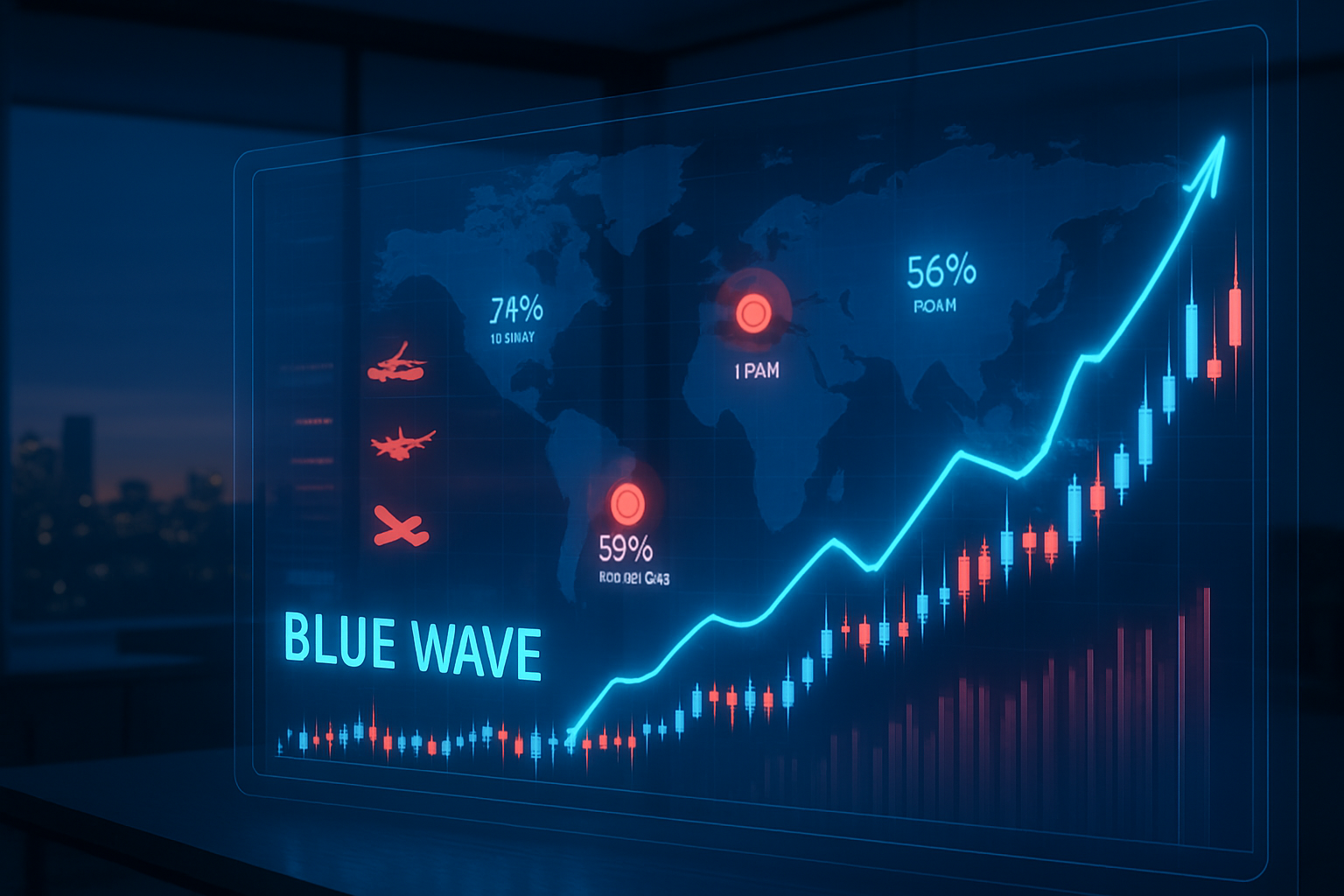
    As the United States enters the second year of the second Trump administration, the focus of global forecasting has shifted from the shock of the 2024 results to the high-stakes chess match of the 2026 Midterm elections. On January 15, 2026, prediction markets are signaling a dramatic pivot in American power: Polymarket and Manifold Markets currently place the odds of a Democratic takeover of the House of Representatives at a staggering 78% and 87%, respectively. Traders are betting heavily that the razor-thin Republican majority (220–213) will crumble under the weight of historical midterm trends and a series of brewing "catastrophe markets" abroad.

    While the domestic political map looks grim for the incumbent party, the "signal" from geopolitical markets is even more intense. In the wake of the successful January 3rd capture of Nicolás Maduro in Venezuela—an event priced into markets hours before official confirmation—traders have turned their capital toward Iran. With a "Winter Uprising" rocking Tehran and U.S. military strikes before June 30 now sitting at a 74% probability, these platforms are no longer just betting hubs; they have become the primary "parallel intelligence" infrastructure for global observers.

    The Market: What's Being Predicted

    The 2026 Midterm markets are currently the highest-volume domestic contracts on Polymarket, drawing in tens of millions in liquidity. The primary contract, "Which party will control the House after the 2026 election?", has seen a massive "Blue Wave" shift. Democrats are trading at 79¢, reflecting a belief that a net gain of just three seats is a historical inevitability during a GOP trifecta. On Manifold, the "Split Congress" scenario (Democratic House, Republican Senate) is the dominant forecast at 62%, as the Senate map remains structurally difficult for Democrats to flip entirely.

    Beyond the ballot box, "catastrophe markets" regarding Iran and Venezuela are seeing unprecedented volatility. On Polymarket, a contract titled "U.S. Military Action against Iran by June 30, 2026" has surged from 10% in late December to 74% today. This follows reports of over 2,500 deaths in the Iranian "Winter Uprising." Meanwhile, in Venezuela, despite the capture of Maduro, the "U.S. Invasion" contract remains a point of contention, trading at 22%. Traders are debating whether "special operations" qualify as an invasion, a semantic dispute that has led to millions of dollars being locked in escrow as the decentralized oracle UMA prepares a resolution.

    Why Traders Are Betting

    The divergence between market odds and official rhetoric is driven by what traders call "Alpha Raccoons"—pseudo-anonymous participants who appear to possess insider information or advanced surveillance data. During the "Maduro Trade" in early January, odds of the Venezuelan leader being "out of power" spiked from 8% to 65% a full six hours before News Corp (NASDAQ: NWSA) or the New York Times Company (NYSE: NYT) broke the story. Traders weren't watching cable news; they were monitoring the "Pizza Index" (late-night spikes in Pentagon deliveries) and tracking the repositioning of U.S. naval assets via open-source intelligence.

    In the case of the 2026 Midterms, the heavy "Yes" on a Democratic House flip is fueled by "Skin in the Game." Unlike traditional pundits, prediction market participants are financially incentivized to ignore political spin. While GOP strategists point to a strong economy, traders are focused on the "incumbent fatigue" and the historically narrow margin of the current House majority. Institutional desks at firms like Susquehanna have increasingly used these markets to hedge against potential regulatory shifts that a "Blue House" might bring, particularly for tech giants like Alphabet Inc. (NASDAQ: GOOGL) and Microsoft Corp (NASDAQ: MSFT), which face ongoing antitrust scrutiny.

    Broader Context and Implications

    The rise of these markets represents a paradigm shift in how the public consumes "truth." In early 2026, the signal value of a Polymarket percentage often carries more weight in diplomatic circles than a State Department briefing. These "catastrophe markets" provide a brutal, real-time assessment of risk that traditional forecasting methods cannot match. When the odds of a strike on Iran hit 74%, insurance premiums for oil tankers in the Strait of Hormuz rise in tandem, showing a direct link between prediction markets and the global economy.

    However, this "high signal" comes with significant regulatory and ethical concerns. The Public Integrity in Financial Prediction Markets Act of 2026, currently being debated in the House, seeks to address the "moral hazard" of betting on war. Critics argue that allowing individuals to profit from military strikes incentivizes sabotage or the leaking of classified information. Furthermore, the reliance of these platforms on cloud infrastructure from Amazon.com Inc. (NASDAQ: AMZN) has raised questions about "decentralization" and whether the government could theoretically "pull the plug" on markets that predict its own military secrets.

    What to Watch Next

    The immediate horizon is dominated by the June 30th "Strike Deadline." If U.S. military action in Iran does not occur by this date, the market could see a massive "liquidity drain" as traders recalibrate for a more diplomatic approach. Conversely, any official move toward a "government-in-exile" for Venezuela could send the "Regime Change" contracts on Kalshi and Polymarket into a frenzy.

    On the domestic front, the first major "move" in the Midterm markets is expected following the President's State of the Union address in February. Traders will be looking for any signs of policy shifts that could alienate the moderate suburban voters who hold the key to the House. Additionally, watch for "whale activity" from new wallets; in 2025, several large-scale bets preceded major cabinet reshuffles, suggesting that the "insider proxy" effect remains the most potent force in these markets.

    Bottom Line

    As of January 15, 2026, prediction markets are flashing red for both the Republican House majority and the stability of the Middle East. The 79% probability of a Democratic House takeover suggests that traders view the current GOP trifecta as a short-term phenomenon, likely to be checked by voters in November. Simultaneously, the 74% odds of military action in Iran indicate that the world is on the precipice of a significant kinetic conflict, one that the markets have been "pricing in" for weeks.

    These platforms have successfully transitioned from a curiosity into a "truth engine" that operates faster than traditional media. Whether it is the capture of a dictator or the flip of a Congressional seat, the markets are no longer just predicting the future—they are providing the earliest, most accurate map of the world as it actually exists. For global observers, the message is clear: if you want to know what happens next, don't watch the news—watch the tape.


    This article is for informational purposes only and does not constitute financial or betting advice. Prediction market participation may be subject to legal restrictions in your jurisdiction.

    PredictStreet focuses on covering the latest developments in prediction markets.
    Visit the PredictStreet website at https://www.predictstreet.ai/.
  • The New Standard: ICE’s $2 Billion Bet on Polymarket Signals the End of Traditional Polling

    The New Standard: ICE’s $2 Billion Bet on Polymarket Signals the End of Traditional Polling

    On January 15, 2026, the global financial landscape has been permanently altered by a collision between the old world of institutional finance and the new frontier of decentralized intelligence. The Intercontinental Exchange (NYSE: ICE), the powerhouse parent company of the New York Stock Exchange, has finalized a landmark $2 billion investment into Polymarket, the world’s leading decentralized prediction platform. This capital injection, first announced in late 2025, has acted as a catalyst for a valuation surge that now sees Polymarket in ongoing funding talks at a staggering $12 billion to $15 billion range—a ten-fold increase from its status just six months ago.

    This move marks a definitive turning point in how global markets price reality. With daily trading volumes on the platform peaking at over $700 million this month, traders are no longer just betting on outcomes; they are creating a new, liquid asset class out of human expectations. The convergence of ICE’s legacy infrastructure with Polymarket’s blockchain-based forecasting suggests that "truth" is becoming the most valuable commodity on the NYSE's books.

    The Market: What's Being Predicted

    While the primary "market" generating headlines today is the valuation of the platform itself, the underlying activity on Polymarket has reached unprecedented levels. As of mid-January 2026, the platform is dominated by high-stakes macroeconomic and entertainment contracts that function as real-time sentiment indicators for Wall Street. The "Fed Decision in January 2026" market has already cleared $360 million in volume, with traders currently pricing in a 95% probability that the Federal Reserve will hold interest rates steady on January 28.

    Trading liquidity has also reached a fever pitch in the entertainment sector. Ahead of the 98th Academy Awards, the market for Best Picture has attracted over $100 million in bets, with Paul Thomas Anderson’s One Battle After Another currently favored at 82%. Unlike traditional polling, which relies on static data, these markets are trading 24/7, providing a live ticker for shifting public perception that legacy media outlets are now forced to cite in their daily coverage. The resolution of these markets is handled via decentralized oracles, ensuring that payouts are automated and immune to the intervention of any central authority—a feature that was once a hurdle for institutional adoption but is now being embraced as a transparency gold standard.

    Why Traders Are Betting

    The surge in betting activity is driven by a fundamental shift in how both retail and institutional players view prediction markets. Following the massive success of the 2024 U.S. election cycle—which saw Polymarket process nearly $19 billion in cumulative volume—the platform has proven its accuracy often outweighs traditional forecasting models. Institutional "whales" are now using these markets as sophisticated hedging tools. For instance, a hedge fund holding significant tech positions might bet on a 75% probability of an AI-related regulatory bill passing to offset potential stock losses.

    Recent news has also played a critical role. The integration of Polymarket's data feeds directly into ICE’s distribution network has allowed institutional clients to view prediction odds alongside traditional market data. This "institutional seal of approval" has brought a wave of professional liquidity. Traders are also reacting to the platform’s newfound regulatory stability. By acquiring the CFTC-licensed exchange QCEX in late 2025, Polymarket effectively ended its years-long "regulatory exile," allowing American traders to legally participate in the ecosystem alongside international peers, vastly increasing the depth of every order book.

    Broader Context and Implications

    The $2 billion investment by Intercontinental Exchange (NYSE: ICE) is more than a simple capital raise; it is a strategic takeover of the data distribution layer for the next generation of finance. ICE has become the global distributor for Polymarket's event-driven data, effectively treating prediction probabilities as a "financial primitive" similar to stock prices or interest rate benchmarks. This trend is being mirrored across the industry, with competitors like CME Group (NASDAQ: CME) and Robinhood (NASDAQ: HOOD) racing to integrate their own prediction market hubs to capture the explosive growth in event-based trading.

    However, the rise of a $15 billion prediction giant has not come without friction. The "Public Integrity in Financial Prediction Markets Act of 2026," currently being debated in Congress, seeks to address concerns over insider trading. The bill was prompted by a controversial "Maduro trade" earlier this month, where a user reportedly made $400,000 on a market regarding U.S. military movements hours before the official announcement. This highlight’s the platform’s dual nature: while it is an incredibly accurate "truth engine," it also provides a lucrative incentive for those with non-public information to move the markets.

    What to Watch Next

    The most immediate milestone for the sector is the outcome of the "ORACLE Act" in New York. State lawmakers are currently debating a bill that would ban New York residents from trading on political or sports-related contracts. If passed, it would set up a high-stakes legal showdown between state regulators and the federal CFTC, which has largely moved toward a pro-innovation stance under recent leadership. A victory for Polymarket in New York would likely clear the final hurdle for a much-anticipated Initial Public Offering (IPO) later in 2026.

    Additionally, the upcoming Super Bowl LXI in February is expected to be the largest sports-betting event in history for prediction markets. With Kalshi and Polymarket now competing head-to-head for the U.S. sports audience, the total volume for a single game could exceed $2 billion. Traders should watch for any new partnerships between these platforms and major sports leagues, which would further cement the transition from "illegal gambling" to "regulated event-based derivatives."

    Bottom Line

    The partnership between ICE and Polymarket represents the definitive end of the "experiment phase" for decentralized prediction markets. When the owner of the NYSE decides that a blockchain-based betting platform is worth a multibillion-dollar investment, it signals that the world’s most powerful financial institutions no longer trust traditional polls or pundits—they trust the market.

    As we move deeper into 2026, prediction markets are evolving from a niche interest into a foundational piece of the global financial stack. Whether you are a hedge fund manager looking to hedge political risk or a retail trader betting on the Oscars, the message is clear: the most accurate way to see the future is to look at where the money is moving. While regulatory and legislative hurdles remain, the $15 billion valuation of Polymarket suggests that the "prediction economy" is here to stay, and its influence on public policy and financial markets will only grow from here.


    This article is for informational purposes only and does not constitute financial or betting advice. Prediction market participation may be subject to legal restrictions in your jurisdiction.

    PredictStreet focuses on covering the latest developments in prediction markets.
    Visit the PredictStreet website at https://www.predictstreet.ai/.
  • The Great Decoupling: How 2024 Cemented Prediction Markets as the World’s News Thermometer

    The Great Decoupling: How 2024 Cemented Prediction Markets as the World’s News Thermometer

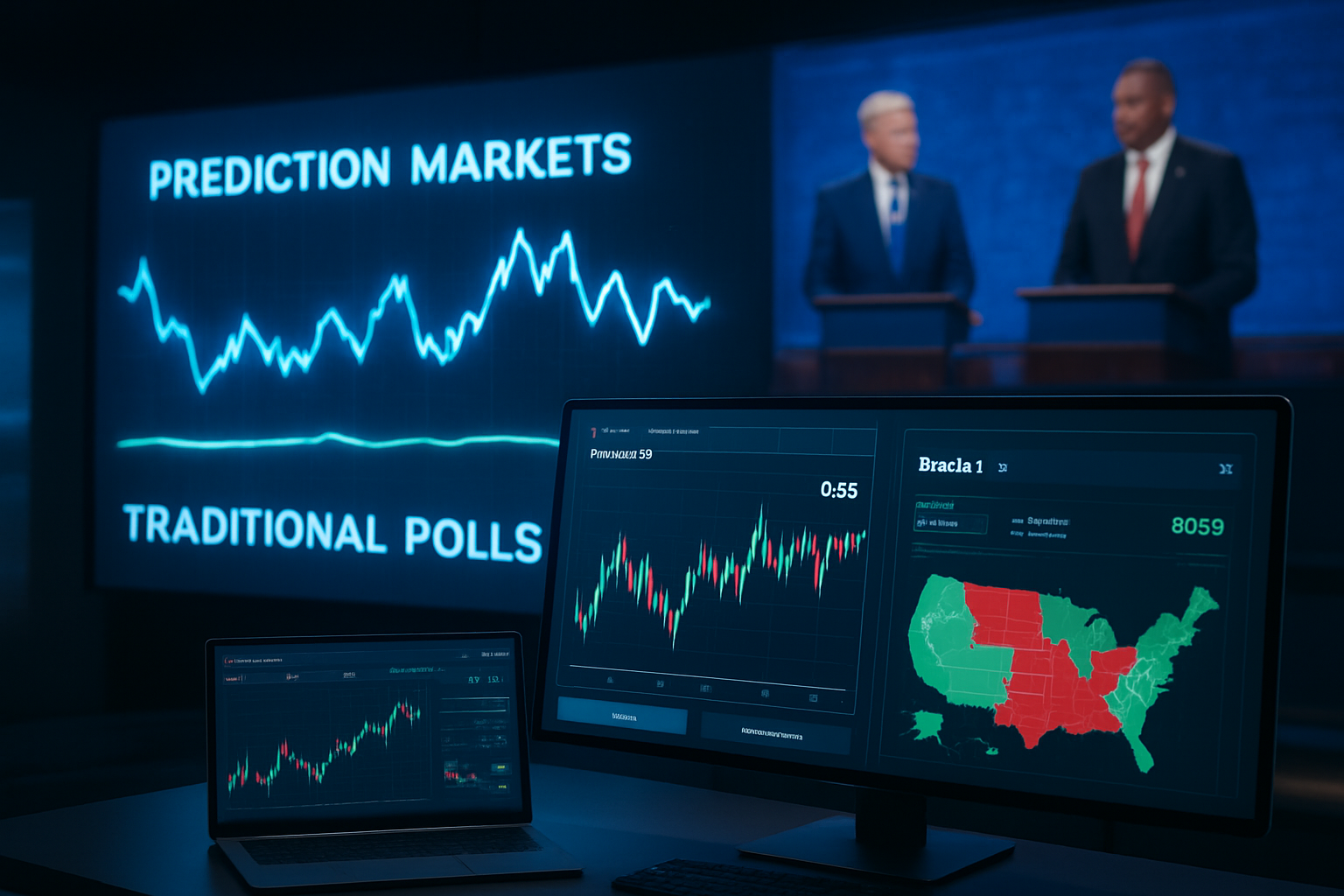
    In the high-stakes theater of the 2024 U.S. Presidential Election, two narratives competed for the public’s trust. One, driven by traditional pollsters like NYT/Siena and FiveThirtyEight, suggested a race "too close to call"—a coin-flip election destined for a weeks-long recount. The other, broadcast in real-time by prediction markets like Polymarket and Kalshi, signaled a decisive Donald Trump advantage as early as October.

    As of early 2026, the debate over which signal to follow is effectively settled. While major polling outfits struggled with a 3.8% error rate and missed the "Trump floor" for the third consecutive cycle, prediction markets correctly priced in a 312-electoral-vote sweep. This success has transformed the industry from a fringe interest for crypto-enthusiasts into a cornerstone of the global financial apparatus, lending these platforms "serious credibility" that has only intensified as we head into the 2026 midterms.

    The Market: What's Being Predicted

    The 2024 presidential market was the largest collective wagering event in human history. At its peak, Polymarket saw over $3.3 billion in volume on the winner alone, while Kalshi, following a landmark legal victory over the CFTC, processed hundreds of millions in regulated U.S. trades. On the eve of the election, while polls showed a dead heat, Kalshi traders priced Trump at a 62% favorite, and Polymarket hovered at 63%.

    The resolution criteria for these markets were strictly binary: who would be inaugurated on January 20, 2025? However, the real value lay in the swing-state markets. A December 2025 study by Vanderbilt University revealed that while PredictIt had a higher "hit rate" on the final binary outcome (93%), Polymarket was superior in predicting the magnitude of the shift in key states like Pennsylvania and Arizona. The liquidity in these markets allowed for a level of precision that traditional "margin of error" polling simply couldn't replicate.

    Why Traders Are Betting

    The primary driver of the 2024 market success was its ability to act as a "news thermometer." Unlike traditional polling, which functions as a "rearview mirror," prediction markets process information in seconds. The most cited example remains the June 2024 presidential debate. Within 15 minutes of the opening statements, Joe Biden’s odds on Polymarket collapsed from 38% to 19%. Traditional pollsters took nearly 14 days to release data reflecting that same collapse.

    Traders are also incentivized by "skin in the game," a factor that analysts say eliminates the "social desirability bias" often found in telephone polling. In 2024, many "shy Trump voters" were hesitant to tell a pollster their intentions but were more than happy to back their conviction with capital. Furthermore, the entry of major financial institutions like Intercontinental Exchange (NYSE: ICE)—which invested $2 billion into Polymarket in late 2025—has brought a more sophisticated class of institutional "whales" to the markets, further refining the price signal.

    Broader Context and Implications

    The shift in credibility has had profound regulatory and corporate implications. Following the 2024 election, Interactive Brokers (NASDAQ: IBKR) launched its ForecastEx platform, which has grown to represent a significant portion of its 4.13 million customer accounts as of January 2026. Similarly, Robinhood (NASDAQ: HOOD) reported that its election contracts were its fastest-growing revenue stream in 2025, generating $300 million in a single quarter.

    This mainstreaming has turned prediction markets into a "news thermometer" that is now integrated into daily journalism. In late 2025, Kalshi signed exclusive data partnerships with CNN and CNBC, the latter of which now runs a dedicated "Kalshi Ticker" alongside the S&P 500. The regulatory environment has also thawed; Polymarket’s acquisition of a CFTC-licensed exchange in late 2025 allowed it to legally re-enter the U.S. market, effectively ending the era of "gray market" offshore betting.

    What to Watch Next

    As we look toward the 2026 Midterm Elections, the markets are already providing a sharp divergence from "generic ballot" polls. While polls suggest a competitive environment, current markets on Polymarket and Kalshi are aggressively pricing in a Democratic takeover of the House of Representatives with a 75-80% probability. Conversely, Republicans are currently given a 66% chance of retaining the Senate, thanks to a structurally favorable map that traders believe will outweigh national sentiment.

    Another key metric to watch is the "Vance Premium." Current 2028 Presidential markets show Vice President JD Vance as the undisputed favorite at 48%, a figure that far outpaces his current public approval ratings. Traders are betting on the power of incumbency and institutional support—a nuance that traditional "favorability" polling often fails to capture.

    Bottom Line

    The 2024 election was not just a political event; it was the "proof of concept" for prediction markets. By correctly identifying the shift toward Donald Trump weeks before pollsters—and reacting to events like the June debate in minutes rather than weeks—these platforms proved they are the most efficient processors of political information currently available.

    As we move deeper into 2026, the question is no longer whether prediction markets are accurate, but rather how much they will disrupt the $18 billion polling and political consultancy industry. For investors and observers, the message is clear: if you want to know where the country is going, stop looking at the polls and start looking at the prices.


    This article is for informational purposes only and does not constitute financial or betting advice. Prediction market participation may be subject to legal restrictions in your jurisdiction.

    PredictStreet focuses on covering the latest developments in prediction markets.
    Visit the PredictStreet website at https://www.predictstreet.ai/.

  • The House Always Loses: How Kalshi’s $100 Million ‘Combos’ Launch is Revolutionizing Prediction Markets

    The House Always Loses: How Kalshi’s $100 Million ‘Combos’ Launch is Revolutionizing Prediction Markets

    As of mid-January 2026, the landscape of digital wagering has undergone a fundamental shift. What was once a niche world of political "event contracts" has been swallowed by the behemoth of American sports. Kalshi, the leading CFTC-regulated prediction market, has officially completed its metamorphosis into a financialized sports powerhouse. The catalyst? The late 2025 launch of "Combos," a peer-to-peer parlay feature that processed over $100 million in trading volume during its first week of full operation.

    Currently, sports markets—primarily centered on the NFL and NBA—now account for a staggering 90% of weekend trading volume on the platform. During the most recent NFL Wild Card weekend (January 10–12, 2026), the platform reached a fever pitch, with a single matchup between the Bears and Packers (NYSE: GME, just kidding – no ticker for NFL teams) generating $112 million in volume alone. For the first time, prediction markets aren't just predicting the news; they are competing directly for the multi-billion dollar sports betting throne.

    The Market: What's Being Predicted

    The central engine of Kalshi’s recent growth is the "Combos" feature, which allows traders to build custom, multi-leg event contracts. Unlike traditional sportsbooks where users bet against a "house" that sets the price, Kalshi uses a Request for Quote (RFQ) system. When a trader wants to bet on a "Combo"—such as the Lakers winning and LeBron James scoring over 25 points—the platform generates a live order book where other market participants can provide liquidity and take the opposite side.

    This peer-to-peer structure has led to unprecedented liquidity in sports prediction markets. While traditional sportsbooks like DraftKings (NASDAQ: DKNG) or FanDuel, owned by Flutter Entertainment (NYSE: FLUT), use centralized algorithms to manage risk, Kalshi’s market is entirely driven by supply and demand. Currently, the most active markets are the NFL Divisional Round matchups and NBA mid-season props, with individual contracts seeing tens of millions of dollars in open interest.

    The resolution of these markets is strictly tied to official league data, but the "event contract" wrapper allows for a level of transparency that traditional betting lacks. Because Kalshi is a regulated exchange, every trade is recorded on a public ledger, providing a level of "real-time truth" regarding where the money is actually flowing—a stark contrast to the opaque "handle" reports released by traditional sportsbooks weeks after the games end.

    Why Traders Are Betting

    The migration of "sharps" and institutional traders from sportsbooks to Kalshi is driven by three primary factors: pricing, limits, and taxes. In the traditional sports betting world, "winning players" are frequently limited or outright banned by sportsbooks to protect the house’s margin. On Kalshi, there is no house; winning is encouraged because the exchange earns its revenue from transaction fees, not from the losses of its users.

    Furthermore, the tax implications have become a major draw for high-volume traders. Many Kalshi contracts are treated as Section 1256 contracts, which qualify for a 60/40 tax split (60% long-term capital gains, 40% short-term). This is significantly more favorable than the ordinary income tax rates applied to standard sportsbook winnings. Traders are also leveraging the platform’s integration with Robinhood (NASDAQ: HOOD), which has democratized access to event contracts for millions of retail stock traders who view an NFL game through the same lens as a tech stock’s earnings report.

    Market sentiment is currently favoring "high-probability combos" as a way to hedge against broader economic volatility. With the S&P 500 showing signs of stagnation in early 2026, the short-term, high-liquidity nature of sports contracts offers an attractive alternative for capital. Large "whale" positions have been spotted in the NFL Super Bowl winner markets, where institutional-sized bets are being placed at odds that are often 2–3% better than what is available at traditional books due to the lack of a "vig" or overround.

    Broader Context and Implications

    The success of Kalshi’s sports pivot represents a broader "financialization of everything." Prediction markets are no longer just tools for political junkies or economists; they have become a mainstream asset class. This shift has not gone unnoticed by regulators. While Kalshi operates under the oversight of the Commodity Futures Trading Commission (CFTC), several states, including New York and Massachusetts, have recently filed lawsuits arguing that these "event contracts" are merely a loophole for illegal gambling.

    Historically, prediction markets have been praised for their "wisdom of the crowd" accuracy. By applying this to sports, Kalshi is providing a more accurate reflection of true probability than traditional odds. When a sportsbook moves a line, it is often a reaction to a liability shift; when Kalshi moves a line, it is a reaction to new information being priced into the market by thousands of competing traders.

    The implications for the industry are profound. As prediction markets gain market share, traditional sportsbooks are being forced to innovate. DraftKings has recently piloted its own "exchange-style" platform to compete with the transparency and pricing of Kalshi. We are witnessing the end of the "house" era and the beginning of the "exchange" era in American wagering.

    What to Watch Next

    All eyes are now on Super Bowl LXI. Analysts expect Kalshi to see its first-ever $500 million single-day trading event during the championship game. The "Combos" feature is expected to expand into more granular player props, including "micro-betting" contracts that resolve after every drive or quarter.

    Beyond the field, the legal battles in New York and Massachusetts will be the "Super Bowl" for the platform's regulatory future. A favorable ruling for Kalshi would effectively green-light the expansion of prediction markets into every state in the U.S., potentially siphoning billions more away from the "gray market" of offshore books. Additionally, keep a close watch on the NBA trade deadline in February; Kalshi is expected to launch "Trade Prediction" contracts, further blurring the line between sports news and financial markets.

    Bottom Line

    The transformation of Kalshi from a political prediction site into a $100 million-per-week sports powerhouse is the most significant development in the wagering industry since the repeal of PASPA in 2018. By treating a touchdown as a commodity rather than a gamble, Kalshi has cracked the code for institutional and retail engagement alike.

    Ultimately, the rise of sports on prediction markets tells us that the modern investor craves transparency and fairness. The days of being limited for winning or paying a 10% "juice" to a sportsbook are numbered. As we move further into 2026, the question is no longer whether prediction markets will survive, but how much of the $100 billion sports betting industry they will eventually own.


    This article is for informational purposes only and does not constitute financial or betting advice. Prediction market participation may be subject to legal restrictions in your jurisdiction.

    PredictStreet focuses on covering the latest developments in prediction markets.
    Visit the PredictStreet website at https://www.predictstreet.ai/.
  • The Preemption Power Play: Why Prediction Markets Are Betting 81% on a Federal Victory

    The Preemption Power Play: Why Prediction Markets Are Betting 81% on a Federal Victory

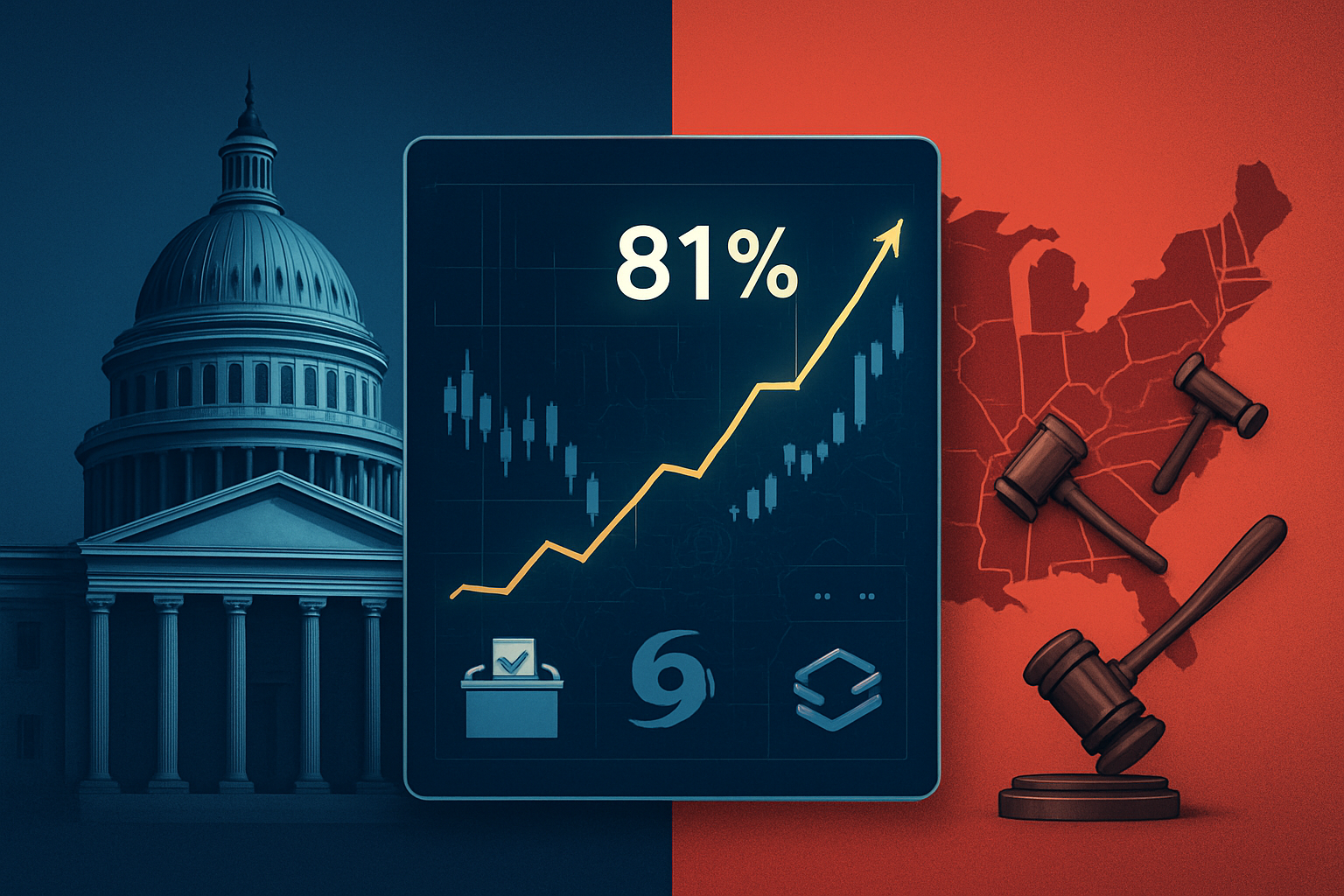
    The battle for the soul of the prediction market industry has reached a fever pitch as 2026 begins, with traders increasingly convinced that federal authority will ultimately crush state-level attempts to ban event contracts. On Manifold Markets, a leading sentiment-based forecasting platform, the probability that federal preemption will protect regulated exchanges from state-level bans currently sits at a dominant 81%. This high-conviction forecast reflects a growing belief among legal experts and high-stakes traders that the "Wild West" era of state-by-state regulation is nearing its end, potentially being replaced by a unified federal framework under the Commodity Exchange Act (CEA).

    This surge in confidence follows a chaotic 2025 that saw a direct collision between the U.S. Commodity Futures Trading Commission (CFTC) and aggressive state regulators in New York and Maryland. As several states attempt to enforce "gaming" bans on markets involving elections and catastrophic events, the 81% odds suggest the market believes the federal government’s exclusive jurisdiction over derivatives will serve as an impenetrable shield for companies like Kalshi and Interactive Brokers Group, Inc. (NASDAQ: IBKR).

    The Market: What's Being Predicted

    The specific market fueling this discussion is a high-volume "legal futurism" contract on Manifold Markets titled "Will Federal Preemption Protect DCMs from State Bans by End of 2026?" This market tracks whether a federal court or acts of Congress will explicitly prevent state gaming commissions from shutting down exchanges that hold Designated Contract Market (DCM) status. While Manifold operates on a play-money and sweepstakes model, it has become the primary hub for real-time legal analysis, with the 81% probability serving as a benchmark for institutional confidence.

    The odds have seen a dramatic climb since early 2025. Following a mixed ruling in Maryland that initially cast doubt on federal supremacy, the probability dipped to 55%. However, it rebounded sharply in late 2025 after a Manhattan federal judge issued a "litigation stay" against New York’s newly proposed ORACLE Act, allowing exchanges to continue operating while the constitutionality of the state's ban is litigated. The resolution criteria for this market require either a definitive U.S. Supreme Court ruling or a federal law that codifies the CFTC’s exclusive jurisdiction over event contracts as "financial derivatives."

    Liquidity in this niche legal market has been surprisingly deep, with over 1.2 million "mana" (Manifold’s currency) traded. Observers note that the market has become a "shadow docket" for the actual litigation occurring in the Second and Fourth Circuits. The timeline is tight; if no clear federal protection is established by December 31, 2026, the market will resolve to "No," creating a sense of urgency among the "bullish" legal theorists who currently hold the majority of positions.

    Why Traders Are Betting

    The core of the 81% bull case rests on the "Field Preemption" theory derived from the Commodity Exchange Act. Proponents argue that when Congress passed the CEA, it intended to "occupy the field" of derivatives trading. Traders point to the landmark 2024 victory by Kalshi against the CFTC as the foundational precedent. That ruling established that the CFTC could not block election contracts simply by labeling them "gaming." By extension, traders believe that if a contract is a federal financial instrument, it cannot simultaneously be a state-level gambling crime.

    "The logic is simple: you can't have a national exchange if 50 states have 50 different definitions of what constitutes a hedge versus a bet," says one high-volume Manifold trader known as LegalEagle. Traders are also heartened by the introduction of the Financial Prediction Markets Public Integrity Act of 2026 by U.S. Rep. Ritchie Torres. While the bill seeks to limit insider trading by government officials, its very existence is viewed by markets as a de facto federal recognition of prediction markets as a legitimate asset class. This legislative "nod" has contributed significantly to the recent 10-point jump in the preemption odds.

    Furthermore, "whale" activity suggests that institutional players are betting on the "too big to fail" nature of the current market. With daily global volumes for event contracts now exceeding $700 million, the fragmentation of these markets through state bans would cause massive financial disruption. Traders are betting that federal courts will prefer a uniform standard to avoid a "checkerboard" of legality that would render national hedging strategies impossible for corporations and retail investors alike.

    Broader Context and Implications

    The tension between federal and state authority is not a new phenomenon in the U.S. financial system, but its application to prediction markets is revolutionary. This conflict mirrors the early days of the internet and interstate commerce, where the Supreme Court eventually ruled that states could not burden the "national marketplace." If the 81% probability holds true, it would transform prediction markets from a legal gray area into a regulated pillar of the American financial system, akin to the Chicago Mercantile Exchange (CME Group Inc. (NASDAQ: CME)).

    In states like New York, the stakes are particularly high. The reintroduction of the ORACLE Act (Assembly Bill A09251) in January 2026 represents the "Last Stand" of state gaming commissions. The bill specifically targets "death markets" and "political wagering," categories that Kalshi and others argue are essential for hedging economic risk. A federal victory would effectively nullify the ORACLE Act, stripping state regulators of their power to define what constitutes a "productive" financial trade.

    Moreover, this market reveals a profound shift in public sentiment. By pricing the probability of federal preemption at 81%, the crowd is signaling that the era of viewing prediction markets as mere "gambling" is over. Instead, they are being priced as essential information-aggregation tools that require federal protection to function effectively. The historical accuracy of these markets—which correctly predicted the 2024 Kalshi court victory and the subsequent explosion in election trading volume—gives this 81% figure significant weight among policymakers.

    What to Watch Next

    The most immediate catalyst for market movement will be the resolution of the "litigation stay" in Manhattan. If the stay is lifted and New York begins active enforcement against DCMs, the 81% probability will likely plummet toward the 40-50% range as the "State Rights" argument gains momentum. Conversely, if the Manhattan court grants a permanent injunction against the ORACLE Act, the market could move toward a near-certainty of 95%.

    Another key milestone is the potential for a "Circuit Split." With the Maryland court (Fourth Circuit) currently favoring state rights and the D.C. and potentially New York (Second Circuit) favoring federal preemption, a collision at the Supreme Court is almost inevitable by late 2026. Legal observers are closely watching the "certiorari" filings—if the Supreme Court agrees to hear a preemption case, the Manifold market will likely see massive volatility as traders react to the conservative or liberal leanings of the justices regarding the "Administrative State" and the "Major Questions Doctrine."

    Finally, keep an eye on the CFTC’s own internal rulemaking. If the Commission, under new leadership in 2026, chooses to officially codify "Event Contracts" as "Swaps," it would provide the "Field Preemption" argument the definitive legal footing it currently lacks. Such a move would effectively end the state-level resistance and resolve the Manifold market at 100%.

    Bottom Line

    The 81% probability on Manifold Markets is a powerful testament to the perceived inevitability of federal dominance in the prediction market space. Traders have weighed the risks of aggressive state-level bans and found them lacking against the combined weight of the Commodity Exchange Act and recent pro-market court precedents. The market is increasingly viewing event contracts not as a subset of gambling, but as a primary financial tool that requires a single, federal regulator.

    This high conviction suggests that prediction markets have successfully navigated their most dangerous legal phase. While the "ORACLE Acts" of the world present a temporary hurdle, the prevailing sentiment is that the federal government—driven by the need for market stability and the push for financial innovation—will eventually act as the industry's ultimate protector.

    As we move further into 2026, the Manifold odds serve as a vital signal for both regulators and participants. The message is clear: the market expects federal law to prevail, and it is betting heavily that the "state ban" era is a closing chapter in the history of American forecasting.


    This article is for informational purposes only and does not constitute financial or betting advice. Prediction market participation may be subject to legal restrictions in your jurisdiction.

    PredictStreet focuses on covering the latest developments in prediction markets.
    Visit the PredictStreet website at https://www.predictstreet.ai/.
  • The Battle for Albany: New York’s High-Stakes Clash Over Prediction Markets

    The Battle for Albany: New York’s High-Stakes Clash Over Prediction Markets

    As of January 15, 2026, the future of the prediction market industry in the United States is being decided not in a trading pit in Chicago or a tech hub in San Francisco, but in the legislative chambers of Albany, New York. A fierce legal and legislative battle has erupted as New York lawmakers move to classify event contracts—the bread and butter of platforms like Kalshi and Polymarket—as "unlicensed gambling."

    The conflict reached a fever pitch this week with the introduction of competing bills that could either cement New York as a hub for "information finance" or effectively ban the industry from the state’s borders. With nearly $700 million in daily trading volume recorded across the industry on January 14, 2026, the stakes for traders and platforms have never been higher. At the heart of the debate is a fundamental question: Are these markets essential tools for risk management and truth discovery, or are they simply a high-tech loophole for illegal wagering?

    The Market: What's Being Predicted

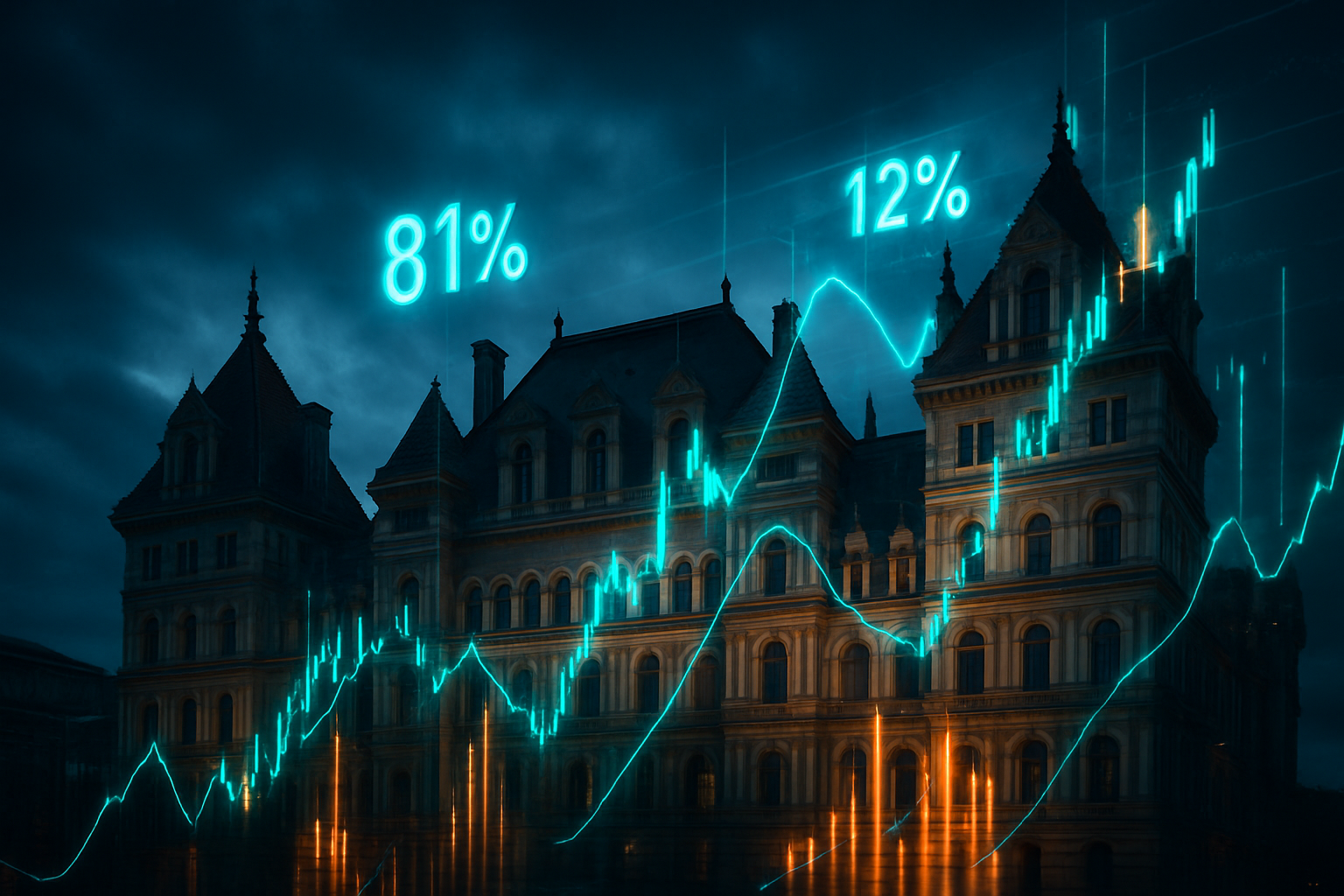
    While regulated exchanges like Kalshi often avoid hosting direct contracts on their own legality to prevent self-referential conflicts of interest, the "shadow market" for New York’s regulatory fate is incredibly active. On decentralized platforms like Manifold, traders are currently placing an 81% probability on federal preemption successfully shielding prediction markets from state-level bans. Meanwhile, on PredictIt, proxy contracts regarding federal oversight suggest a deep skepticism that Congress will intervene to save the platforms, with only a 12% chance given to new federal protections passing in 2026.

    The two legislative paths currently being "traded" in the court of public opinion are:

    • The ORACLE Act (Assembly Bill A9251): Reintroduced on January 7, 2026, by Assemblymember Clyde Vanel, this bill seeks to ban New Yorkers from trading on politics, sports, and "catastrophic events." It carries potential fines of up to $1 million per day for non-compliant platforms.
    • The NY Prediction Market Regulation Act (Senate Bill S8889): A more industry-friendly alternative introduced on January 13 by Senator Jeremy Cooney, which would treat platforms as financial entities regulated by the Department of Financial Services (DFS).

    Currently, Kalshi is operating in New York under a "litigation stay" following a cease-and-desist from the state’s gaming commission. This temporary reprieve has allowed the platform to maintain its position as a market leader, contributing over $466 million to the industry's record-breaking volume this week.

    Why Traders Are Betting

    The volatility in these markets is being driven by a "Vegas vs. Wall Street" narrative. Lawmakers like Vanel argue that prediction markets have "wrapped wagering in new jargon" to bypass state licensing requirements. Concerns intensified following the "Maduro Trade" earlier this month, where a Polymarket user made massive profits on a contract regarding a U.S. military raid just hours before it was officially announced—sparking fears of systemic insider trading.

    Conversely, the industry has successfully framed its services as indispensable hedging tools. For instance, small business owners in New York have been using Kalshi to hedge against the economic fallout of potential trade wars or local tax hikes. This "skin in the game" philosophy, industry advocates argue, creates a superior form of "truth discovery" that is more accurate than traditional polling or punditry.

    The recent marketing partnership between Polymarket and the New York Rangers—owned by Madison Square Garden Sports Corp. (NYSE: MSGS)—has also influenced sentiment. The sight of prediction market branding inside a major New York arena suggests a degree of mainstream acceptance that contradicts the "unlicensed gambling" label, emboldening traders who believe the industry is now "too big to ban."

    Broader Context and Implications

    This battle represents a significant friction point between state-level "public morality" concerns and federal Commodity Futures Trading Commission (CFTC) authorization. Kalshi, as a CFTC-regulated Designated Contract Market (DCM), argues that the federal Commodity Exchange Act (CEA) gives the CFTC exclusive jurisdiction over derivatives trading. If a state like New York can successfully classify these contracts as gambling, it could trigger a "regulatory domino effect," where other states implement their own patchwork of bans.

    The historical accuracy of these markets is also at play. Throughout 2024 and 2025, prediction markets consistently outperformed traditional forecasts on everything from inflation rates to election outcomes. Proponents argue that banning these markets would be akin to "blinding the pilot," removing a vital source of real-time, objective data from the public sphere.

    Furthermore, the introduction of the federal Public Integrity in Financial Prediction Markets Act by Representative Ritchie Torres on January 9 suggests that even if New York bans the practice, federal legitimization with stricter "insider" guardrails may be the ultimate endgame.

    What to Watch Next

    The most critical milestone for the industry is a pending ruling in the Southern District of New York (SDNY). A federal judge is expected to decide on Kalshi’s motion for a preliminary injunction by late February 2026. A victory for Kalshi would solidify the "federal preemption" argument, effectively neutering the ORACLE Act before it can be enforced.

    In Albany, the reconciliation process between the Vanel and Cooney bills will be the primary legislative focus throughout February. Traders should watch for any amendments to the Cooney bill that would allow for "limited" political and event-based contracts under DFS oversight, which would likely lead to a massive surge in liquidity and institutional participation.

    Finally, the activity of "whales"—large-scale traders—on the upcoming "February Fed Rate Hike" contracts will serve as a bellwether for the market's health. If institutional volume remains high despite the legal threats, it will signal that the financial sector remains committed to prediction markets as a permanent fixture of the modern economic landscape.

    Bottom Line

    The legal drama in New York is more than a regional spat; it is a defining moment for the legitimacy of "information finance." While the ORACLE Act poses an existential threat to the current model of event-based trading in the state, the emergence of the Cooney Bill and the ongoing protection of a federal litigation stay provide a glimmer of hope for the industry.

    For the prediction market community, the current odds favor a messy, protracted legal battle rather than a swift ban. The massive trading volumes recorded this month prove that the demand for these markets is irrepressible. Whether New York chooses to regulate and tax this activity or drive it into the arms of decentralized, offshore platforms will likely depend on the SDNY's interpretation of where "Wall Street" ends and "Vegas" begins.


    This article is for informational purposes only and does not constitute financial or betting advice. Prediction market participation may be subject to legal restrictions in your jurisdiction.

    PredictStreet focuses on covering the latest developments in prediction markets.
    Visit the PredictStreet website at https://www.predictstreet.ai/.
  • The $11 Billion Prediction: How Kalshi’s Meteoric Rise Defined the 2025 Financial Landscape

    The $11 Billion Prediction: How Kalshi’s Meteoric Rise Defined the 2025 Financial Landscape

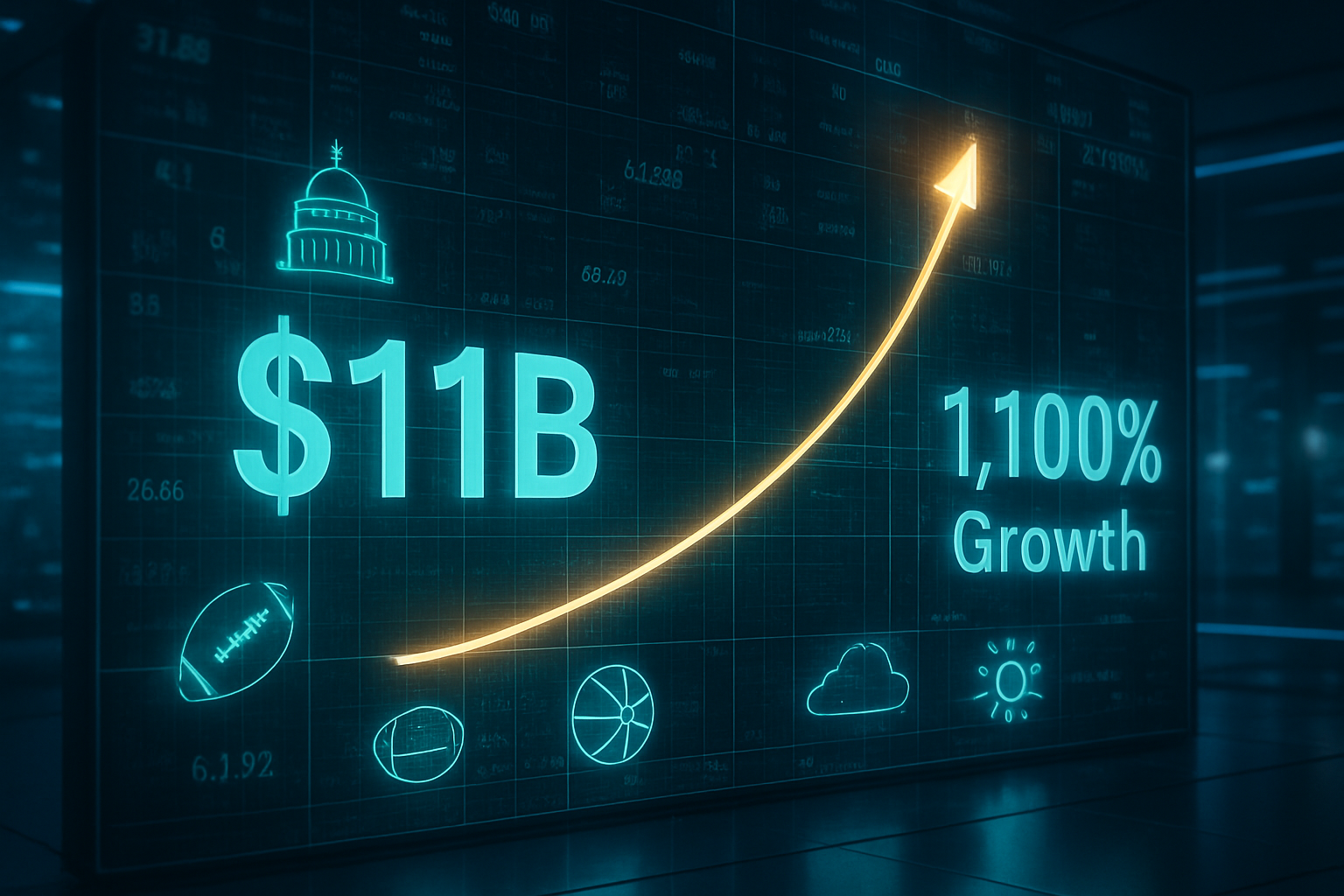
    The prediction market landscape has officially transitioned from a niche interest for statisticians into a cornerstone of the global financial system. As of January 15, 2026, Kalshi has cemented its status as the "CME of event contracts," reaching a staggering $11 billion valuation following a record-breaking $1 billion Series E funding round. This valuation marks a historic milestone for the platform, which only a year ago was battling for its legal life in federal court.

    The surge in valuation is underpinned by a year of unprecedented growth. In 2025, Kalshi’s total notional trading volume skyrocketed by 1,100%, hitting a massive $23.8 billion. Traders are no longer just betting on political outcomes; they are hedging against inflation, wagering on Federal Reserve pivots, and increasingly using the platform for sports and entertainment outcomes with the same precision once reserved for commodities and equities.

    The Market: From Election Volatility to Everyday Utility

    The primary driver of Kalshi’s dominance has been its transition from a specialized election-betting site to a high-volume exchange for nearly every conceivable event. While the 2024 U.S. presidential election served as the "killer app" that brought millions of users to the platform, the 2025 volume was sustained by a diversification into sports and economic indicators. By late 2025, the platform was regularly clearing over $1 billion in weekly volume, with NFL and NBA event contracts accounting for nearly 75% of the activity in the fourth quarter.

    Unlike its offshore, crypto-native competitor Polymarket, Kalshi has leaned heavily into its status as a federally regulated exchange. This positioning allowed it to integrate directly with mainstream financial platforms. A pivotal partnership with Robinhood Markets (NASDAQ: HOOD) in early 2025 allowed millions of retail investors to trade event contracts alongside their stock portfolios, drastically increasing liquidity. This integration turned "event trading" into a standard feature of the modern brokerage experience, moving the needle on liquidity and narrowing bid-ask spreads to levels comparable to major options exchanges.

    Why Traders Are Betting: Regulatory Clarity and Institutional Might

    The catalyst for this growth was the resolution of a long-standing legal battle with the Commodity Futures Trading Commission (CFTC). After a series of court victories in late 2024, the CFTC officially dropped its appeal in May 2025, effectively providing a green light for regulated political and event derivatives in the United States. This regulatory "seal of approval" triggered an immediate influx of institutional capital.

    Venture capital heavyweights Sequoia Capital and Andreessen Horowitz (a16z) led the charge, viewing Kalshi not just as a betting platform but as a vital piece of market infrastructure. Alphabet Inc. (NASDAQ: GOOGL), through its independent growth fund CapitalG, also participated in the $1 billion Series E round, signaling that Big Tech sees the inherent value in the data generated by these markets.

    "Kalshi has created the first true 'truth machine' for the financial world," noted one lead investor during the funding announcement. Institutional traders are now using Kalshi’s data to inform their strategies in traditional markets, recognizing that the "wisdom of the crowd" on a regulated exchange often moves faster than traditional polling or economic forecasting models.

    Broader Context and Implications

    The rise of Kalshi signifies a fundamental shift in how the public consumes and acts on information. During the 2024 election cycle, prediction markets famously outpaced traditional pollsters in accuracy, correctly pricing the outcome long before the major networks. This success fostered a "credibility revolution" that has forced traditional media outlets like CNN, owned by Warner Bros. Discovery (NASDAQ: WBD), and CNBC, owned by Comcast (NASDAQ: CMCSA), to feature Kalshi’s real-time odds as a primary data source for their coverage.

    Furthermore, the $11 billion valuation places Kalshi in the same conversation as established exchange operators like the Intercontinental Exchange (NYSE: ICE) and CME Group (NASDAQ: CME). It suggests that the market for "risk on outcomes" is potentially as large as the market for "risk on assets." By allowing individuals to hedge against specific real-world events—such as a government shutdown or a specific interest rate hike—Kalshi has democratized sophisticated hedging tools that were previously the exclusive domain of hedge funds and institutional desks.

    What to Watch Next

    As we move further into 2026, the focus for Kalshi shifts toward international expansion and the potential for an Initial Public Offering (IPO). Rumors are already circulating that the company has begun preliminary talks with investment banks for a late-2026 listing. If successful, it would be the first dedicated prediction market exchange to go public on a major U.S. exchange.

    Investors should also keep an eye on the platform’s "Day 1" contracts for the 2026 midterm elections and its expanding suite of weather-related derivatives. As climate volatility increases, Kalshi’s weather markets are becoming a vital tool for the insurance and agriculture industries. The ability for a local farmer to hedge against a specific temperature drop on Kalshi could be the next major growth frontier for the platform.

    Bottom Line

    Kalshi’s journey from a regulatory underdog to an $11 billion financial powerhouse is a testament to the power of prediction markets. The 1,100% volume increase in 2025 proves that there is an insatiable appetite for transparent, regulated, and liquid markets where participants can put their money where their mouth is.

    The involvement of blue-chip institutional backers and the clearing of regulatory hurdles have removed the "fringe" label from prediction markets. As we look ahead, the question is no longer whether prediction markets are a viable financial tool, but how deeply they will integrate into every aspect of our economic and political lives. For Kalshi, $11 billion may just be the beginning.


    This article is for informational purposes only and does not constitute financial or betting advice. Prediction market participation may be subject to legal restrictions in your jurisdiction.

    PredictStreet focuses on covering the latest developments in prediction markets.
    Visit the PredictStreet website at https://www.predictstreet.ai/.
  • The $400,000 Tip-Off: How the ‘Maduro Trade’ Broke Polymarket and Sparked a DC Crackdown

    The $400,000 Tip-Off: How the ‘Maduro Trade’ Broke Polymarket and Sparked a DC Crackdown

    The capture of Venezuelan President Nicolás Maduro by U.S. forces on January 3, 2026, was a geopolitical shockwave that few saw coming. But while the world’s intelligence agencies and newsrooms were caught off guard, a single anonymous trader on the prediction platform Polymarket appeared to have a front-row seat to the planning. In a series of high-conviction bets placed just hours before the "snatch-and-extract" operation in Caracas, a user known as "Burdensome-Mix" turned a modest $32,000 into a windfall of over $400,000.

    The trade has since become the center of a firestorm in Washington D.C. and New York, reigniting the debate over the legality and ethics of prediction markets. With odds on Maduro’s removal hovering at a mere 7% just before the raid, the sudden influx of "informed" capital has led lawmakers to question whether these platforms have become the ultimate venue for modern-day insider trading. The event, now dubbed the "Maduro Trade," is currently the primary exhibit in a push for federal regulation that could fundamentally alter the landscape of event-based betting.

    The Market: What's Being Predicted

    The controversy centers on several interlinked contracts hosted on Polymarket, a decentralized prediction platform that has surged in popularity despite its regulatory battles in the United States. The most prominent contract, "Maduro out by January 31, 2026?", saw relatively low volume throughout December as analysts remained skeptical of any immediate regime change in Venezuela. For much of the holiday season, shares were trading at approximately $0.07, representing a consensus probability of just 7%.

    However, the liquidity of the market changed drastically on December 26, 2025, when the "Burdensome-Mix" account was created. The trader began accumulating "Yes" shares aggressively across four specific contracts: Maduro’s removal, the presence of U.S. forces in Venezuela, and a controversial market titled "Will the US invade Venezuela by January 31?" By the early hours of January 3, the trader had amassed a position of $32,537.

    When news of the capture broke, the contracts "Yes" shares immediately spiked to $1.00. While the removal and troop presence contracts resolved smoothly, the "Invasion" contract, which saw over $10.5 million in total volume, became a flashpoint. Polymarket's refusal to initially pay out "Yes" holders—arguing that a tactical raid did not constitute a full-scale "invasion"—led to a "semantic freeze" that left millions in limbo and infuriated the trading community.

    Why Traders Are Betting

    The sheer precision of the "Maduro Trade" has led experts to believe this wasn't the result of superior geopolitical analysis, but rather what critics call the "Alpha Raccoon" effect. This term describes traders who exploit massive information asymmetry, likely derived from government or military leaks. Analysts note that "Burdensome-Mix" held four times more contracts than the next-highest bidder, suggesting a level of "conviction" that is rarely seen in speculative markets without inside knowledge.

    Suspicion has also fallen on the intersection of the political and financial worlds. Scrutiny has specifically targeted the dual roles of prominent figures like Donald Trump Jr., whose firm 1789 Capital has invested heavily in the sector. With Trump Jr. serving as a strategic advisor to the regulated exchange Kalshi and an advisory board member for Polymarket, critics argue that the proximity between prediction market stakeholders and the executive branch creates a moral hazard where non-public military plans could be commodified.

    From a trading perspective, the Maduro event showcased the limits of traditional forecasting. While mainstream media was focused on diplomatic stalemates, the "whisper" in the prediction markets was shouting. Proponents of the markets, such as economist Robin Hanson, argue that this is actually a feature, not a bug. They contend that the "Maduro Trade" forced private information into a public price, providing a more accurate signal to the world than any news outlet could offer.

    Broader Context and Implications

    The fallout from the Maduro Trade is now fueling a significant legislative push. On January 9, 2026, Rep. Ritchie Torres (D-NY) introduced the Public Integrity in Financial Prediction Markets Act of 2026. The bill aims to criminalize insider trading on these platforms by federal officials and their families. Torres has been vocal about his concerns, describing the current state of prediction markets as "the most corrupt corner of Washington."

    In Albany, the New York State Assembly is moving forward with the ORACLE Act (A9251). If passed, the act would effectively ban New York residents from trading on contracts linked to political or catastrophic events, potentially classifying them as unlicensed gambling. This mirrors the aggressive stance taken by the CFTC under Chair Michael Selig, who has been pressured by a group of 12 Democratic senators, led by Catherine Cortez Masto, to investigate the "improbable" timing of the Caracas-related trades.

    The financial community remains deeply divided. While some see these markets as essential tools for "hedging uncertainty"—a sentiment echoed by Thomas Peterffy, Chairman of Interactive Brokers (Nasdaq: IBKR)—others, like Daniel Taylor of the Wharton School, warn that the lack of robust oversight by the CFTC undermines the integrity of the entire financial system. Unlike the SEC's clear mandate over equities, the "event contract" space remains a regulatory gray zone.

    What to Watch Next

    The immediate focus for the industry is the progress of the Torres bill in D.C. and the ORACLE Act in New York. If these laws pass, they could force platforms like Polymarket to implement rigorous KYC (Know Your Customer) and "insider" screening processes similar to those used by traditional stock exchanges. We are also expecting a formal report from the CFTC by the end of Q1 2026 regarding the specific trades made by the "Burdensome-Mix" account.

    Another key milestone is the resolution of the "Invasion" contract dispute. The outcome of this arbitration will set a precedent for how prediction markets handle "edge cases" where the technical definition of an event differs from the public's perception. If Polymarket is forced to pay out, it could face a liquidity crunch; if it refuses, it may lose the trust of its most active whales.

    Finally, market watchers are looking at the 2026 midterm election markets. If "informed" trades continue to appear hours before major policy shifts or announcements, the calls for a total ban on political betting will likely become deafening. The maturation of these platforms hinges on their ability to prove they are tools for collective intelligence, not just laundry mats for classified leaks.

    Bottom Line

    The "Maduro Trade" has proven that prediction markets are no longer just a niche hobby for data nerds; they are potent, sometimes dangerous, tools of financial intelligence. A single trader turning $32,000 into $400,000 by betting on a secret military operation has stripped away the illusion that these platforms are immune to the same "insider" pressures that haunt Wall Street.

    As we move further into 2026, the question is not whether prediction markets will exist, but who will be allowed to use them and under what constraints. While the efficiency of the "Maduro price signal" was undeniably high, the cost of that efficiency may be a wave of regulation that brings the "Wild West" era of Polymarket to a definitive end. For now, the "Alpha Raccoons" are in the spotlight, and Washington is finally reaching for the trap.


    This article is for informational purposes only and does not constitute financial or betting advice. Prediction market participation may be subject to legal restrictions in your jurisdiction.

    PredictStreet focuses on covering the latest developments in prediction markets.
    Visit the PredictStreet website at https://www.predictstreet.ai/.
  • The New Wall Street: Prediction Markets Smash Records with $701.7 Million Day

    The New Wall Street: Prediction Markets Smash Records with $701.7 Million Day

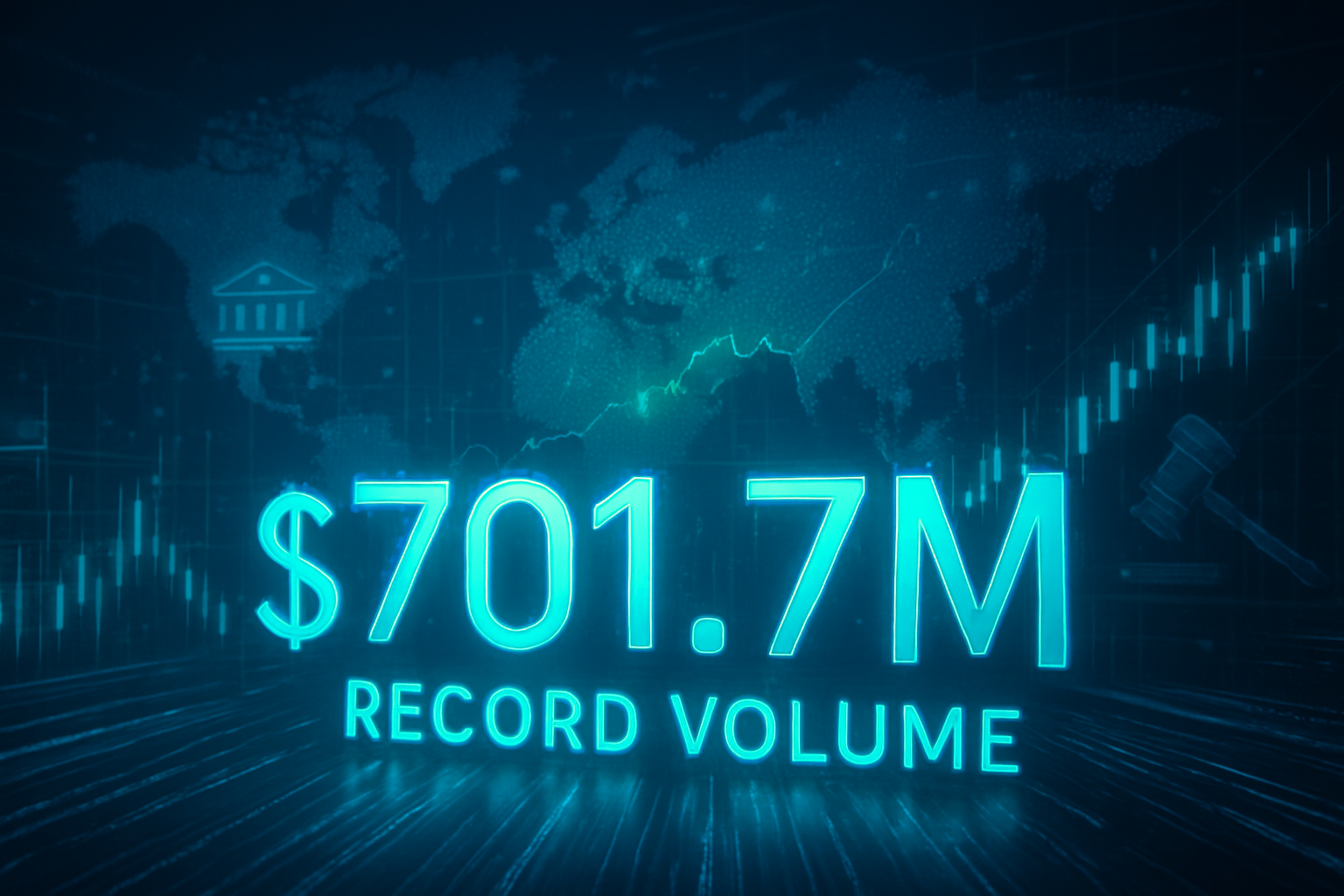
    The world of finance shifted on its axis this week. On Monday, January 12, 2026, prediction markets achieved a staggering, record-breaking $701.7 million in single-day trading volume. This milestone represents more than just a spike in activity; it marks the definitive arrival of "information finance" as a primary pillar of the global economy. For years, skeptics dismissed these platforms as glorified sportsbooks, but as of early 2026, they have transformed into what many are calling the world’s most accurate "truth engines."

    The surge was driven by a perfect storm of constitutional crises, geopolitical shocks, and the institutionalization of retail trading. At the center of the frenzy was a high-stakes standoff between the U.S. Department of Justice (DOJ) and Federal Reserve Chair Jerome Powell, alongside the sudden capture of Venezuelan President Nicolás Maduro. With millions of dollars moving by the second, the probability of a March interest rate cut fluctuated wildly, peaking at 74% as traders digested real-time updates that outpaced traditional news cycles by minutes.

    The Market: What's Being Predicted

    The $701.7 million daily volume was dominated by a "triopoly" of platforms that have spent the last year racing for market share. Kalshi solidified its position as the industry leader, capturing 66.4% of the volume with $465.9 million in trades. Much of this dominance is credited to Kalshi’s deep integration with Robinhood Markets, Inc. (NASDAQ:HOOD), which launched its dedicated "Prediction Markets Hub" last year, putting event contracts into the hands of over 100 million retail investors.

    While Kalshi owned the domestic macro markets, Polymarket and Opinion battled for the remaining share. Polymarket recorded $100.04 million in volume, buoyed by a $2 billion liquidity injection from the Intercontinental Exchange, Inc. (NYSE:ICE). Meanwhile, the relative newcomer Opinion (Opinion Labs) matched that figure with $100 million, specializing in high-frequency, AI-driven macro indicators.

    The most traded contracts on January 12 included:

    • The Federal Reserve Standoff: Contracts on whether Jerome Powell will resign or be removed before the March FOMC meeting.
    • The Maduro Aftermath: Predictions on the stability of a transitional government in Venezuela following Maduro’s capture.
    • NFL Postseason "Combos": A new feature on Kalshi that allows users to parlay economic outcomes with sports results—for instance, "CPI under 2.5% AND the Kansas City Chiefs win."

    Why Traders Are Betting

    The primary driver for this week’s massive volume was the unprecedented constitutional friction involving the Federal Reserve. On the evening of January 11, Chair Jerome Powell revealed that the DOJ had served the Fed with subpoenas regarding a massive headquarters renovation—a move Powell labeled a "pretext" for political interference. This sent traders into a frenzy. On Kalshi, the "Will the Fed cut rates in March?" contract saw over $120 million in volume on Monday alone as institutions used the market to hedge against a potential central bank decapitation.

    Geopolitical "insider" activity also fueled the surge. Following the U.S. military raid that captured Nicolás Maduro, a single anonymous trader on Polymarket turned a $32,000 bet into $400,000. The bet, placed just hours before the news broke, has sparked intense debate about the role of prediction markets in surfacing non-public information. Traders are no longer just betting on what they think will happen; they are betting on what they know is happening in the shadows.

    Furthermore, the "Mainstreet-ing" of these markets through Robinhood (NASDAQ:HOOD) has changed the trader profile. No longer restricted to crypto-enthusiasts, the January 12 record saw a massive influx of traditional retail investors treating "The Fed" or "The Greenland Declaration" as if they were tech stocks.

    Broader Context and Implications

    This record volume occurs against a backdrop of intense regulatory friction. While the federal courts largely cleared the way for election betting in 2025, a new "second front" has opened at the state level. Just this past week, the Tennessee Sports Wagering Council issued cease-and-desist orders to Kalshi and Polymarket, claiming their event contracts infringe on state gambling monopolies. However, on January 15, 2026, a federal judge granted a temporary restraining order (TRO) protecting Kalshi, suggesting that federal Commodity Futures Trading Commission (CFTC) oversight may preempt state law.

    The massive volume is also forcing Congress's hand. On January 9, Rep. Ritchie Torres (D-NY) introduced the "Public Integrity in Financial Prediction Markets Act of 2026." The bill aims to ban federal officials from trading on these platforms to prevent the very "information leakage" seen in the Maduro case.

    Despite these hurdles, the historical accuracy of these markets remains their greatest defense. Throughout the early 2026 geopolitical turmoil, prediction market odds have consistently moved 10 to 15 minutes ahead of major news wires like Bloomberg or Reuters. For many hedge funds, these markets are no longer a side-show—they are the primary signal.

    What to Watch Next

    The immediate focus for traders is the "Powell Pivot." With the DOJ investigation ongoing, any sign of Powell’s resignation will likely trigger another $500 million+ day. Markets are currently pricing a 35% chance of a leadership change at the Fed by February 1.

    On the regulatory front, keep an eye on the Ninth Circuit Court of Appeals. A ruling is expected by early February regarding Nevada’s attempt to shutter prediction market operations. If the court sides with Kalshi, it will effectively create a "green zone" for event contracts across the Western United States. Additionally, the finalization of the ICE (NYSE:ICE)-Polymarket integration is expected to bring a wave of institutional liquidity that could make $700 million days the new normal.

    Bottom Line

    The record-breaking volume of January 12 is a watershed moment for finance. It proves that prediction markets have solved the "liquidity trap" that previously kept them in the shadow of the New York Stock Exchange. By providing a clear, numerical probability for events that traditional markets struggle to price—like constitutional crises or military raids—platforms like Kalshi and Polymarket have become indispensable.

    For investors, the message is clear: the most valuable commodity in 2026 is no longer just data, but the synthesis of that data into tradable odds. As long as the world remains volatile, these "truth engines" will continue to grow, regulatory pressure notwithstanding.


    This article is for informational purposes only and does not constitute financial or betting advice. Prediction market participation may be subject to legal restrictions in your jurisdiction.

    PredictStreet focuses on covering the latest developments in prediction markets.
    Visit the PredictStreet website at https://www.predictstreet.ai/.
  • The $393 Million Signal: How Prediction Markets Nailed the Fed’s December Pivot

    The $393 Million Signal: How Prediction Markets Nailed the Fed’s December Pivot

    The final weeks of 2025 marked a historic turning point for both monetary policy and the burgeoning industry of prediction markets. As the Federal Reserve prepared for its final meeting of the year, a massive wave of capital flooded platforms like Kalshi and Polymarket, correctly forecasting a 25 basis point rate cut that many institutional analysts had doubted just weeks prior. In a stunning display of "wisdom of the crowd," traders pushed the odds of a December cut from a mere 45% in mid-November to over 80% by early December, providing a real-time roadmap for an economy in transition.

    This shift wasn't just a minor adjustment; it was a total recalibration of global economic expectations. At the heart of this movement was an unprecedented level of liquidity, with nearly $393 million wagered on the outcome of the December FOMC meeting. As the dust settles in mid-January 2026, the accuracy of these markets has solidified their status as essential tools for investors, policymakers, and the general public, often moving faster than traditional financial news cycles.

    The Market: What's Being Predicted

    The primary focus of the late-2025 trading frenzy was the Federal Open Market Committee (FOMC) meeting held on December 10–11. While the year had been defined by a "higher for longer" narrative, the narrative began to crumble as inflation data cooled. On Polymarket, the world’s largest decentralized prediction platform, the "Fed Decision: December" market became a titan of liquidity. Total volume on the event reached a staggering $393.9 million, making it one of the most traded non-political events in the platform's history.

    Simultaneously, Kalshi, the first regulated prediction market in the U.S., saw its own surge in activity. The platform's 25 basis point cut contract, which was trading at a sub-45% probability in early November, skyrocketed to an 80% consensus by November 24. These markets required a specific resolution: the target range for the federal funds rate had to be lowered by exactly 0.25 percentage points. Unlike traditional futures, these contracts offered a binary "Yes" or "No" outcome, allowing retail and institutional traders to hedge their portfolios with surgical precision.

    The liquidity was bolstered by the entry of major players. While Polymarket dominated in sheer volume, the price discovery on Kalshi was often cited by analysts as a leading indicator for the CME Group (NASDAQ: CME) FedWatch tool. By the time the Fed entered its traditional "blackout" period before the meeting, prediction market odds had already settled into a high-confidence range of 85% to 92%, effectively front-running the official announcement.

    Why Traders Are Betting

    The sudden shift in sentiment was catalyzed by a "perfect storm" of economic data and shifting rhetoric. In mid-November, the consensus was shaky; a series of robust employment figures had suggested the Fed might "skip" a December cut to prevent the economy from overheating. However, the release of the Personal Consumption Expenditures (PCE) price index—the Fed’s preferred inflation gauge—changed everything. The report showed core inflation cooling to 2.4%, providing the "greater confidence" that Chair Jerome Powell had frequently mentioned as a prerequisite for easing.

    Furthermore, a rise in the unemployment rate to 4.1% signaled a labor market that was "cooling but not collapsing," a scenario that favored a preemptive cut to ensure a soft landing. Traders also had to navigate a unique "data vacuum" caused by a brief government shutdown in late 2025, which delayed several official reports. During this period of uncertainty, prediction markets became the primary source of truth, as "whales" (large-scale traders) utilized alternative data sets—including private-sector payroll estimates and real-time shipping data—to place massive bets before the official numbers were even released.

    Notable activity included several "million-dollar positions" on Polymarket that bet heavily on the "Yes" outcome for a 25 bps cut when the odds were still below 60%. These positions, often suspected to be from sophisticated hedge funds or algorithmic traders, helped drive the price up and forced a realization across broader markets that the Fed’s path was more dovish than previously assumed.

    Broader Context and Implications

    The success of the December rate cut markets represents a milestone for the legitimacy of prediction markets. For years, these platforms were viewed as niche outlets for political junkies or crypto enthusiasts. However, the alignment between prediction markets and the CME Group (NASDAQ: CME) FedWatch tool—which stood at an 87.6% probability for a cut just days before the meeting—shows that these "alternative" venues are now operating at a level of sophistication equal to the multitrillion-dollar futures markets.

    The real-world implications are profound. When prediction markets move the odds of a rate cut from 45% to 80% in a week, it triggers immediate ripples in mortgage rates, corporate bond yields, and the valuation of growth stocks. Companies like Robinhood Markets (NASDAQ: HOOD) and Interactive Brokers (NASDAQ: IBKR) have taken note, increasingly integrating or expanding their exposure to event-based trading as users demand more direct ways to trade on macroeconomic news.

    Furthermore, this event highlighted the regulatory evolution of the space. As Kalshi fought and won key legal battles to offer more diverse markets, the influx of $393 million in volume proved that there is a massive, untapped appetite for regulated, transparent forecasting tools. Historical data from 2024 and 2025 now shows that prediction markets often capture "tail risks" and sudden sentiment shifts more accurately than traditional survey-based economic forecasts.

    What to Watch Next

    With the December cut now a matter of record, the focus has shifted immediately to the first FOMC meeting of 2026, scheduled for January 28. Current markets are currently pricing in a "wait and see" approach, but the volatility seen in December has taught traders not to get comfortable. The next major catalyst will be the upcoming CPI (Consumer Price Index) report and the initial Q4 GDP estimates.

    Traders should also keep a close eye on the "path to neutral" markets. While the December 25 bps cut was a victory for the doves, the debate for 2026 is centered on where the rate-cutting cycle ends. Platforms are already hosting high-volume markets on whether the terminal rate will fall below 3.00% by the end of this year. As of mid-January, these markets are showing a 60% probability of at least two more cuts before June 2026.

    Bottom Line

    The "December Pivot" will likely be remembered as the moment prediction markets truly came of age as a real-time economic sentiment indicator. By successfully processing complex data during a period of high uncertainty and a government data blackout, these platforms provided a clearer signal than many traditional financial institutions. The $393 million wagered on the outcome was not just a bet; it was a massive, decentralized calculation of the American economic future.

    As we move deeper into 2026, the convergence between prediction markets and traditional finance is only accelerating. Whether you are a retail investor looking to hedge against interest rate volatility or a policymaker gauging public expectations, the "wisdom of the crowd" on Kalshi and Polymarket is now a metric that cannot be ignored. The sudden shift from 45% to over 80% was the warning shot; the 25 basis point cut was the confirmation that the crowd was right all along.


    This article is for informational purposes only and does not constitute financial or betting advice. Prediction market participation may be subject to legal restrictions in your jurisdiction.

    PredictStreet focuses on covering the latest developments in prediction markets.
    Visit the PredictStreet website at https://www.predictstreet.ai/.