Blog

  • Hedging the Real World: How Traders are Using ‘Information Finance’ to Insure Against Economic Shocks

    Hedging the Real World: How Traders are Using ‘Information Finance’ to Insure Against Economic Shocks

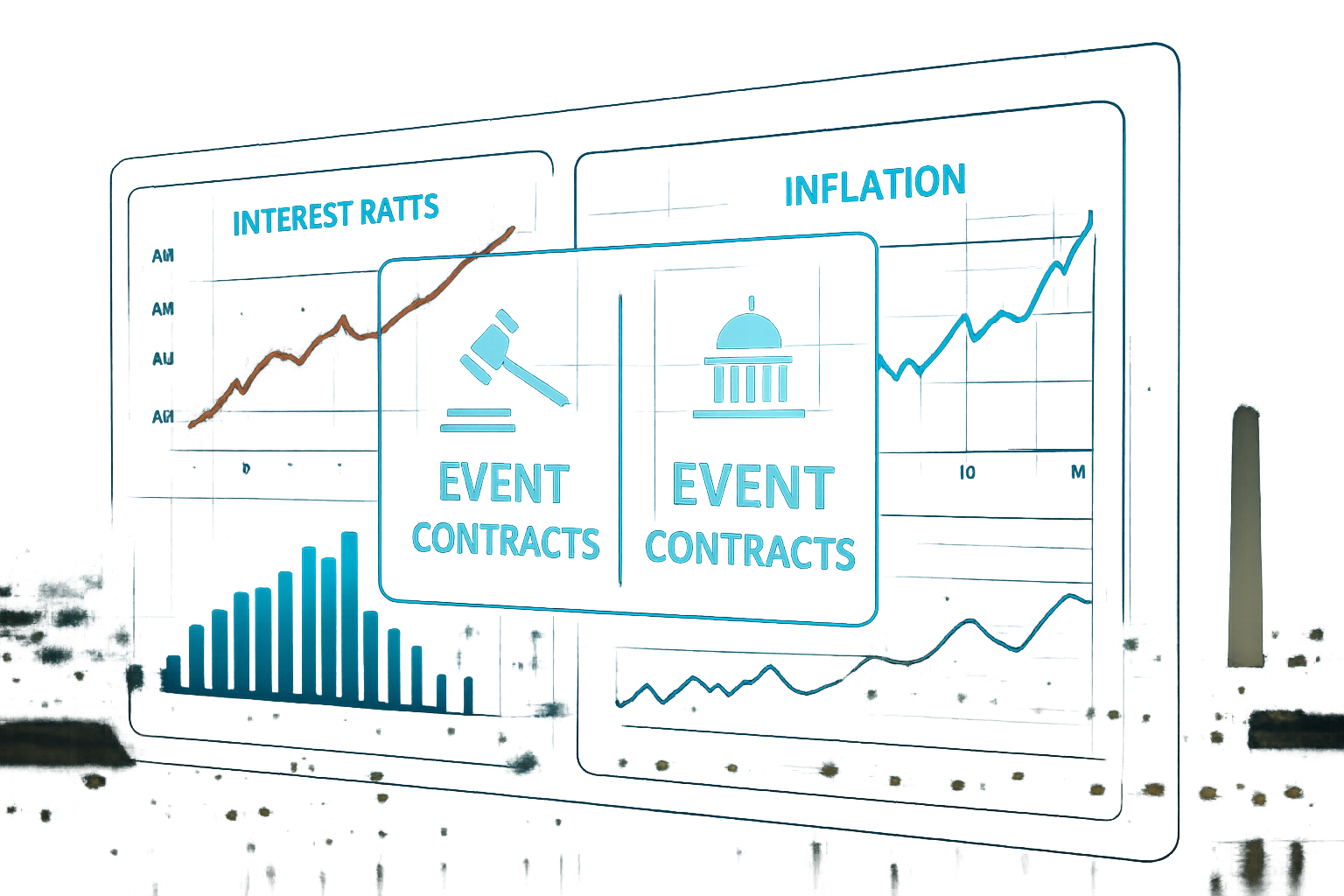
    As of January 16, 2026, the global financial landscape has undergone a silent revolution. The speculative fever that once characterized prediction markets during election cycles has matured into a sophisticated infrastructure for risk management. Today, traders are no longer just betting on outcomes; they are using platforms like Kalshi and Polymarket to hedge against the very economic forces that threaten their livelihoods—from the Federal Reserve’s interest rate decisions to the recurring threat of a U.S. government shutdown.

    The current market sentiment reflects a high-stakes waiting game. With a critical Federal Open Market Committee (FOMC) meeting less than two weeks away and a looming "shutdown cliff" on January 31, volume in economic event contracts has surged to record highs. On Kalshi, the flagship "Fed Rate Decision" market has become a primary liquidity pool for retail and institutional traders alike, offering a real-time, 24/7 alternative to the traditional CME FedWatch Tool.

    The Market: What's Being Predicted

    The focus of the prediction market community has sharpened on three primary economic pillars. First is the Federal Reserve's January 28 meeting. Traders on Kalshi currently place a 95% probability on a "Pause," keeping rates steady. However, the real action is in the March 2026 meeting contract, which has seen over $120 million in volume. This market currently prices a 42% chance of a 25-basis-point cut, a significant shift from just two weeks ago when odds favored a continued hold.

    Inflation remains the second major battleground. Following the December 2025 CPI print of 2.7%, Polymarket users are actively trading 2026 inflation caps. Currently, there is a 30% probability being priced in for inflation to rebound and stay above 3% for the duration of the year. Unlike traditional inflation swaps, these contracts are accessible with as little as $1, allowing individual investors to lock in "inflation insurance" for their cost-of-living expenses.

    Finally, the political risk of a government shutdown has returned to the forefront. As the January 31 funding deadline approaches, the "Will the government shut down?" contract on Kalshi is trading at 37 cents (37% probability). This market has gained immense credibility after traders accurately predicted the exact 43-day duration of the late 2025 shutdown, providing a more reliable signal than the conflicting reports coming out of Washington D.C.

    Why Traders Are Betting

    The surge in participation is driven by a fundamental shift in how markets perceive "Information Finance." This concept, championed by Ethereum co-founder Vitalik Buterin, posits that prediction markets are more than just betting hubs; they are "truth engines." Because participants have "skin in the game," the price of a contract reflects a distilled, incentivized consensus that often cuts through the noise of partisan pundits and TV economists.

    Traders are utilizing these markets for practical, real-world hedging. For example:

    • Mortgage Protection: Homeowners looking to refinance in the spring are buying "No" contracts on a March rate cut. If the Fed remains hawkish and rates stay high, the payout from the prediction market helps offset the higher monthly mortgage interest.
    • Business Liquidity: Government contractors and retailers like Albertsons Companies, Inc. (NYSE: ACI), which can see fluctuations in SNAP-related revenue during fiscal disruptions, are using shutdown contracts as a form of "business interruption insurance."
    • Portfolio Insurance: Investors holding tech-heavy portfolios—highly sensitive to interest rates—are hedging their exposure through CPI contracts. If inflation comes in "hot," the gains from their prediction market positions cushion the blow to their equity holdings in companies like Robinhood Markets, Inc. (NASDAQ: HOOD) or Interactive Brokers Group, Inc. (NASDAQ: IBKR).

    Broader Context and Implications

    This trend represents the mainstreaming of event contracts as a legitimate asset class. The institutional validation of these markets reached a milestone in late 2025 when the Intercontinental Exchange (NYSE: ICE)—the parent company of the New York Stock Exchange—announced significant infrastructure investments into prediction market data feeds. This has allowed for "conditional markets" to flourish, where traders can hedge complex scenarios, such as "What will the S&P 500 do if the CPI exceeds 3%?"

    Furthermore, the regulatory environment has stabilized. Following years of legal skirmishes, prediction markets are now largely viewed as a necessary tool for price discovery. The historical accuracy of these platforms—often leading traditional polling and economic models by days or weeks—has made them indispensable for corporate treasurers and risk managers. In 2026, the consensus is clear: if you want to know what the Fed will do, don’t watch the press conference; watch the Kalshi order book.

    What to Watch Next

    The next 15 days will be a crucible for these markets. The January 28 FOMC meeting will be the first major test of 2026. If the "Pause" holds as predicted, all eyes will immediately pivot to the March contract, where any deviation from the current 42% probability for a cut will signal a major shift in the Fed's "neutral rate" philosophy.

    Following closely is the January 31 government funding deadline. If the odds of a shutdown climb toward 50% in the final 72 hours, expect a spike in volatility across broader equity markets. Traders should also monitor the release of the next CPI "teaser" data, as the prediction markets for inflation are currently very sensitive to any signs of a "second wave" of price increases.

    Bottom Line

    The rise of prediction markets in early 2026 marks the end of an era where economic forecasting was the exclusive domain of elite institutions and academic models. Through "Information Finance," the collective intelligence of thousands of traders is providing a real-time, high-fidelity map of our economic future.

    For the average participant, these markets have transitioned from a hobby into a utility. Whether it is a federal employee hedging their paycheck against a shutdown or a retail investor protecting their savings from inflation, the ability to trade directly on the outcomes of world events has changed the nature of financial security. As we head into a pivotal February, these markets won't just be predicting the news—they will be the most important financial news on the ticker.


    This article is for informational purposes only and does not constitute financial or betting advice. Prediction market participation may be subject to legal restrictions in your jurisdiction.

    PredictStreet focuses on covering the latest developments in prediction markets.
    Visit the PredictStreet website at https://www.predictstreet.ai/.
  • PredictIt: The ‘Gold Standard’ of Politics Holds Its Ground Against Crypto Giants and Retail Powerhouses

    PredictIt: The ‘Gold Standard’ of Politics Holds Its Ground Against Crypto Giants and Retail Powerhouses

    In the fast-evolving landscape of 2026 prediction markets, the conversation is often dominated by the massive volumes of crypto-native platforms or the retail explosion of regulated exchanges. Yet, as the primary season for the 2026 Midterm elections heats up, one name remains the essential dashboard for political professionals and junkies alike: PredictIt. Despite a decade of regulatory hurdles and the arrival of well-funded competitors, the "little exchange that could" has cemented its status as the most trusted signal in political forecasting.

    Currently, PredictIt’s markets for the 2026 Midterms show a divided government as the most likely outcome, with Democrats trading at 78¢ to retake the House of Representatives and Republicans holding a 69¢ lead to retain the Senate. While larger competitors like Polymarket and Kalshi boast higher total trading volumes, PredictIt's prices are frequently cited by cable news networks and political strategists as the definitive "market view," a testament to its unique market architecture and historical accuracy.

    The Market: What's Being Predicted

    PredictIt’s current board is dominated by two massive cycles: the 2026 Midterms and the 2028 Presidential Election. On the 2026 front, traders are closely watching the "GOP Senate Seats" contract, which suggests a narrow majority of 51-52 seats is the most probable scenario. Meanwhile, the 2028 Presidential Winner market has already seen over $15 million in shares traded, with Vice President JD Vance leading the Republican field at 28¢ and California Governor Gavin Newsom fronting the Democrats at 23¢.

    The platform's survival into 2026 is a story of legal resilience. Following a landmark victory in the case of Clarke v. CFTC, the platform’s operator, Aristotle International, successfully transitioned PredictIt into a fully regulated Designated Contract Market (DCM). While it now operates under the expanded "Aristotle Exchange" banner with a higher per-contract limit of $3,500, it still pales in comparison to the "no-limit" environment of Polymarket or the institutional scale of Kalshi. However, this smaller footprint is precisely what traders say makes its data more reliable; the high "signal-to-noise" ratio remains PredictIt's greatest competitive advantage.

    Why Traders Are Betting

    The enduring appeal of PredictIt lies in its "anti-whale" design. For years, the platform was capped by a strict $850 individual investment limit per contract. While that limit was recently raised to $3,500 under its new regulatory status, the DNA of the platform remains geared toward the "wisdom of the crowd" rather than the "influence of the wealthy." On larger platforms like Polymarket, a single "whale" with a $10 million position can move the odds significantly, creating a price that reflects one person's conviction rather than a broad consensus.

    Traders on PredictIt are often "super-forecasters"—political staffers, data scientists, and policy wonks—who treat the platform more like an intellectual hobby than a get-rich-quick scheme. This has created a market environment where prices are less susceptible to sudden, irrational spikes caused by social media hype. Recent news, such as shifting polling data in key battleground states like Pennsylvania and Arizona, tends to be priced into PredictIt hours before it reflects on more volatile, high-volume platforms.

    Broader Context and Implications

    The platform’s resilience is increasingly backed by academic data. A 2025 study from Vanderbilt University, which analyzed over $2 billion in betting volume across the 2024 election cycle, found that PredictIt achieved a 93% accuracy rate in predicting state-level outcomes, significantly outperforming Kalshi (78%) and the crypto-giant Polymarket (67%). The study concluded that PredictIt’s position limits prevented market manipulation and ensured that prices were driven by a diverse array of independent information sources.

    This accuracy has kept PredictIt at the center of the regulatory conversation. While Kalshi has found success through a high-profile integration with Robinhood Markets (NASDAQ: HOOD), and Polymarket has scaled via a strategic partnership with Intercontinental Exchange (NYSE: ICE), PredictIt has leaned into its academic roots. Originally launched as a research project by Victoria University of Wellington, it continues to provide anonymized data to over 200 universities worldwide, making it the most studied prediction market in history.

    What to Watch Next

    As we move toward the 2026 Midterm filing deadlines in March, PredictIt's "Candidate Entry" markets will be the primary focus. Traders are currently eyeing several "Will They Run?" contracts for high-profile Senate seats that could swing the balance of power. Any movement in these contracts often serves as a precursor to formal announcements, as "insider" sentiment often leaks into the market via small, incrementally trades.

    Furthermore, the integration of Aristotle Exchange’s new derivatives clearing capabilities will be a major milestone to watch in mid-2026. This move is expected to introduce more complex "bracket" contracts, allowing traders to bet on the exact margin of victory in the House and Senate. The question for the market is whether PredictIt can maintain its "gold standard" accuracy as it scales up to compete with the sheer financial gravity of its larger rivals.

    Bottom Line

    PredictIt’s position in 2026 proves that in the world of forecasting, bigger is not always better. By prioritizing a broad base of small-stakes traders over a narrow base of high-rolling speculators, the platform has created a unique ecosystem where information is valued over capital. It remains the "purist's market," a place where the collective intelligence of thousands of political junkies outweighs the massive liquidity of the crypto world.

    As the 2026 election cycle intensifies, PredictIt will likely remain the primary reference point for those seeking the "true" probability of political events. While other platforms may offer more excitement and higher stakes, PredictIt’s decade of data and academic rigor have made it the indispensable "North Star" of the prediction market industry.


    This article is for informational purposes only and does not constitute financial or betting advice. Prediction market participation may be subject to legal restrictions in your jurisdiction.

    PredictStreet focuses on covering the latest developments in prediction markets.
    Visit the PredictStreet website at https://www.predictstreet.ai/.
  • The End of the Pundit Era: How ‘Information Finance’ Took Over Your News Feed

    The End of the Pundit Era: How ‘Information Finance’ Took Over Your News Feed

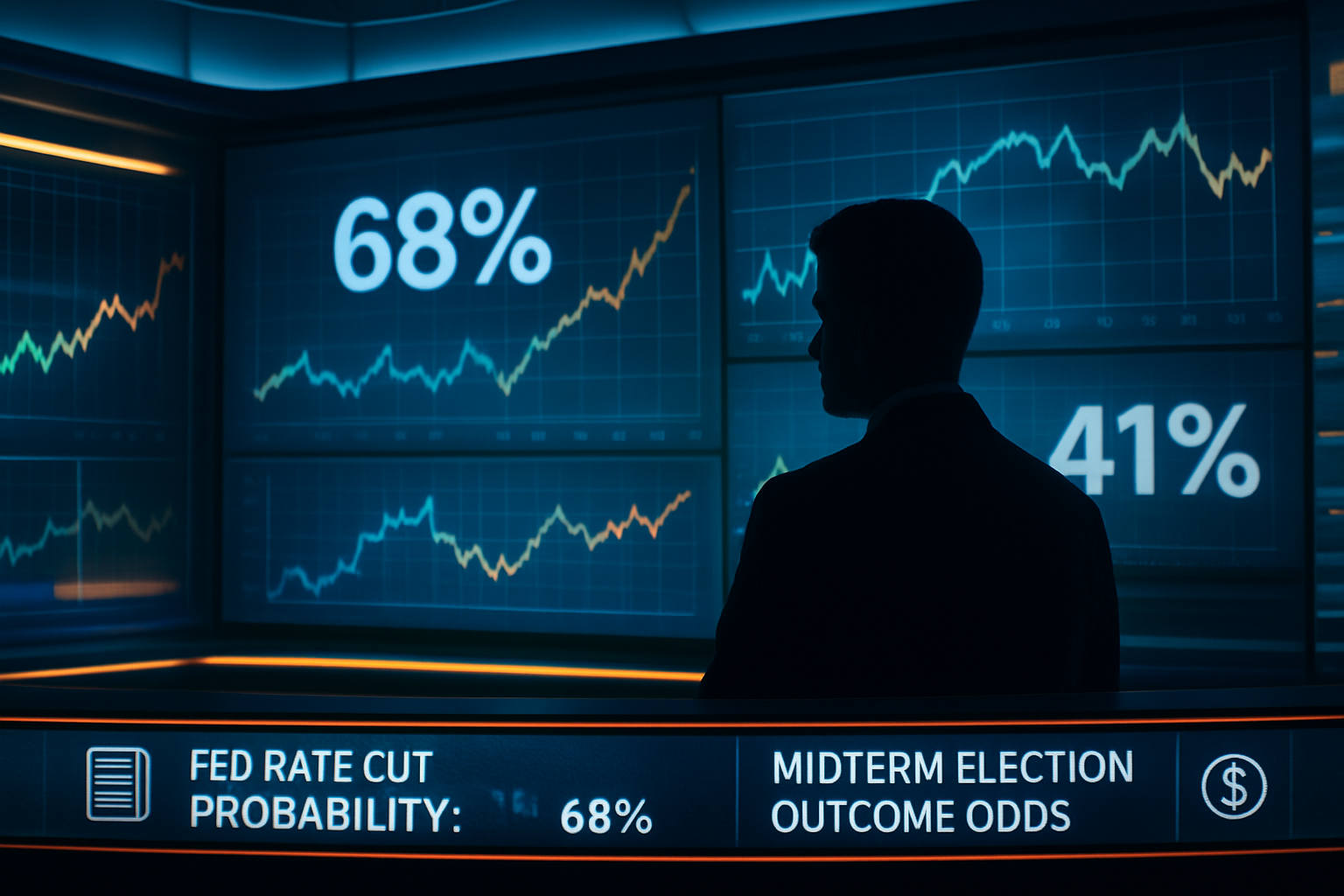
    On any given night in early 2026, a viewer tuning into prime-time news is less likely to see a panel of political consultants arguing over "vibes" and more likely to see a glowing, fluctuating percentage at the bottom of the screen. As of January 16, 2026, the traditional news ticker has been permanently altered. The price of Brent Crude and the S&P 500 now share screen real estate with the "Probability of a Fed Rate Cut in March" and the "Odds of the 2026 Midterm House Flip," powered by real-money prediction markets like Kalshi and Polymarket.

    This seismic shift represents the mainstreaming of "Information Finance"—a term coined to describe the use of financial incentives to aggregate truth. Currently, prediction markets are pricing the likelihood of a major legislative breakthrough on AI regulation at 64%, a figure that has surged 15% in the last 48 hours following a series of closed-door committee meetings. This "market-driven signal" is no longer a fringe curiosity; it has become the definitive barometer for reality, treated by networks with the same institutional weight as the Nielsen ratings or the morning's jobs report.

    The Market: What's Being Predicted

    The integration of prediction market data into mainstream news has reached a fever pitch. In late 2025, CNBC, owned by Comcast (NASDAQ:CMCSA), signed a landmark multi-year deal with Kalshi to serve as its exclusive data provider for on-air prediction widgets. This partnership has birthed the "CNBC Prediction Hub," where viewers can track live probabilities on everything from corporate merger approvals to the likelihood of the next CEO of Apple (NASDAQ:AAPL). These markets are currently seeing record volumes, with the "March Fed Meeting" contract alone regularly exceeding $500 million in open interest.

    Meanwhile, CNN, a subsidiary of Warner Bros. Discovery (NASDAQ:WBD), has completely overhauled its data segments. Chief Data Analyst Harry Enten’s famous "Poll of Polls" has been largely replaced by a segment titled "Market Signals." On these broadcasts, the "price" of an event is treated as the consensus probability. If a contract for a specific candidate to win an election is trading at $0.62, the network reports a "62% probability of victory," providing a real-time, 24/7 pulse that traditional polling—which often takes weeks to conduct and release—simply cannot match.

    The primary platforms driving this data are Kalshi, the first CFTC-regulated prediction market exchange in the U.S., and Polymarket, the decentralized giant that recently secured a $2 billion investment from the Intercontinental Exchange (NYSE:ICE). While Kalshi focuses on U.S.-regulated financial and political events, Polymarket provides a broader look at global geopolitical shifts and cultural milestones. Together, they have created a dual-engine of "Consensus Pricing" that newsrooms now use to fact-check their own reporting.

    Why Traders Are Betting

    The migration of news media toward market data was born out of a crisis of confidence in traditional forecasting. The 2024 election cycle served as the ultimate proof of concept: while traditional pollsters often showed a "dead heat" or slight lead for various candidates, prediction markets consistently priced in a Donald Trump victory with 60%+ confidence throughout October 2024. More importantly, markets called the "swing state sweep" on election night by 10:00 PM ET, hours before network pundits were willing to commit to the data.

    Traders are putting their money where their mouths are because prediction markets reward accuracy and punish "cheap talk." Unlike a pundit who retains their salary regardless of the accuracy of their predictions, a trader on Kalshi or Polymarket faces a direct financial penalty for being wrong. This "skin in the game" creates a high-fidelity signal that filters out noise. Recent surges in the probability of a "Soft Landing" for the U.S. economy, currently trading at 78% on Kalshi, are being driven by institutional desks at firms like Interactive Brokers (NASDAQ:IBKR), which integrated Kalshi's API for its professional clients in 2025.

    Furthermore, the rise of "Information Finance" has attracted a new class of "news-traders." These individuals use advanced sentiment analysis and real-time social media scraping to identify information asymmetries before they hit the wire services. When a major news event breaks—such as the recent Golden Globes, where Polymarket correctly predicted 26 out of 28 winners—the market often moves seconds before the host opens the envelope, providing a "spoiler effect" that has made live prediction trackers must-watch television.

    Broader Context and Implications

    The institutionalization of prediction markets marks the end of the "polling industrial complex" as we knew it. For decades, media organizations relied on statistical sampling that struggled with declining response rates and "shy voter" syndromes. In 2026, the industry has embraced the philosophy that a market of 100,000 incentivized participants is a more accurate "truth engine" than a survey of 1,000 disengaged households. This shift was accelerated by the CFTC’s 2025 legal defeat in the Ninth Circuit Court of Appeals, which permanently legalized election and event betting in the United States, removing the final regulatory shadow over the industry.

    This trend has profound real-world implications for how corporate America operates. Companies like Robinhood (NASDAQ:HOOD) and Coinbase (NASDAQ:COIN) have launched their own "Prediction Hubs," allowing retail investors to hedge against political or economic outcomes. If a trader believes a new tax bill will hurt their tech stocks, they can now "buy" the probability of that bill passing as a form of insurance. Prediction markets have effectively turned the news into a tradable asset class.

    Historically, prediction markets have boasted a significantly lower "Brier Score"—a measure of the accuracy of probabilistic forecasts—than expert panels. As this data becomes more pervasive, it is revealing a new type of public sentiment: one that is pragmatic and forward-looking rather than ideological. However, critics argue that this "commodification of truth" could lead to market manipulation or "prediction loops," where the market's high probability of an event actually helps cause that event to happen.

    What to Watch Next

    As we move deeper into 2026, the next major milestone for the integration of prediction markets into media will be the "Local News Expansion." Several regional news groups are reportedly in talks with Kalshi to launch localized markets on state-level legislation and local mayoral races. This would bring "Information Finance" to the grassroots level, potentially providing a more accurate look at community sentiment than the dwindling number of local political reporters can provide.

    The 2026 Midterm Elections will also serve as the next "Super Bowl" for these platforms. Expect to see networks like CNN and CNBC debut fully interactive "Probability Maps," where viewers can see the live market-cap of each congressional race in real-time. Additionally, the role of AI in these markets is expected to grow. We are already seeing the emergence of "AI Traders" that can process legislative text and court filings in milliseconds, often moving the markets before a human reporter can even finish reading the headline.

    Finally, keep an eye on the potential for a "National Prediction Exchange" ticker to be added to the NYSE floor. With the Intercontinental Exchange’s heavy backing of the sector, the boundary between a "stock" and an "event contract" is blurring. By the end of this year, we may see a world where the "Probability of World Peace" is a standard index listed right next to the Dow Jones Industrial Average.

    Bottom Line

    The transition from traditional punditry to "Information Finance" represents one of the most significant shifts in the history of journalism. By replacing subjective opinions with real-money probabilities, news organizations like CNN and CNBC are attempting to reclaim their role as "arbiters of truth" in a fragmented media landscape. The success of these markets in 2024 and 2025 has proven that when money is on the line, the "wisdom of the crowd" usually outweighs the "wisdom of the expert."

    As a tool, prediction markets are now indispensable for anyone trying to navigate a volatile world. They provide a clear, quantified signal amidst the noise of the 24-hour news cycle. While they are not infallible, their track record for speed and accuracy has made them the gold standard for forecasting the future.

    In this new era, the question for the average news consumer is no longer "What do you think will happen?" but "What does the market say?" As of early 2026, the market is speaking louder than ever, and for the first time, the entire world is finally listening.


    This article is for informational purposes only and does not constitute financial or betting advice. Prediction market participation may be subject to legal restrictions in your jurisdiction.

    PredictStreet focuses on covering the latest developments in prediction markets. Visit the PredictStreet website at https://www.predictstreet.ai/.
  • From Elections to End Zones: How Kalshi’s ‘Sports Trading’ is Disrupting the $120 Billion Betting Industry

    From Elections to End Zones: How Kalshi’s ‘Sports Trading’ is Disrupting the $120 Billion Betting Industry

    As the NFL enters the Divisional Round of the playoffs, a quiet revolution is taking place in how fans engage with the gridiron. While traditional sportsbooks are flooded with standard wagers, a new breed of market participant is flocking to Kalshi, the federally regulated event contract exchange. Since its aggressive expansion into sports in early 2025, Kalshi has effectively rebranded sports betting as "sports trading," turning every touchdown and turnover into a liquid financial asset.

    Currently, the market for the Super Bowl LX champion has seen massive volume, with the Seattle Seahawks holding a 25% probability of victory as of January 16, 2026. This shift is more than just a change in terminology; it represents a fundamental move away from the "house-banked" model of traditional gambling toward a peer-to-peer exchange model. In just one year, sports contracts have grown to account for over 85% of Kalshi’s total trading volume, generating hundreds of millions in revenue and challenging the dominance of established giants like DraftKings Inc. (NASDAQ: DKNG).

    The Market: What's Being Predicted

    The core of Kalshi’s sports offering is the "event contract." Unlike a traditional bet at a sportsbook like FanDuel—owned by Flutter Entertainment plc (NYSE: FLUT)—where a bettor faces off against a bookmaker's "vig" or margin, Kalshi users trade directly with one another. Each contract is structured as a binary "Yes" or "No" outcome, where the price ranges from $0.01 to $0.99. A price of $0.25 implies a 25% market-implied probability that the event will occur. If the prediction is correct, the contract pays out exactly $1.00.

    Trading is currently concentrated on the road to Super Bowl LX. The liquidity in these markets has reached unprecedented levels for a prediction platform. During the 2026 NFL Wild Card weekend, a single matchup between the Chicago Bears and Green Bay Packers saw over $112 million in notional volume. Traders aren't just betting on winners; they are trading contracts for "Total Points," "Passing Yards," and even "First Touchdown Scorer" in real-time. Because these are exchange-traded products, the "odds" (or prices) are determined entirely by supply and demand on the order book, often resulting in tighter spreads than those found at traditional sportsbooks.

    Why Traders Are Betting

    The migration of "sharps"—professional and highly successful bettors—from traditional books to Kalshi is driven by one major factor: the exchange doesn't ban winners. Traditional sportsbooks are notorious for limiting or outright banning accounts that consistently turn a profit. On Kalshi, high-volume traders provide liquidity, and the platform profits from small transaction fees regardless of who wins, creating a hospitable environment for sophisticated mathematical models.

    Additionally, the tax implications are a significant draw. Many traders are treating these contracts as financial derivatives rather than gambling winnings. In many cases, these trades are reported via 1099-B forms, allowing for more favorable capital gains treatment compared to the W-2G forms issued by casinos. Furthermore, Kalshi’s introduction of "Combos" in late 2025—a peer-to-peer version of a parlay—allows traders to request quotes for custom, multi-leg outcomes, bringing the complexity of Wall Street "structured products" to the Sunday afternoon football slate.

    Broader Context and Implications

    Kalshi’s expansion into sports is the direct result of a landmark legal battle. Following the KalshiEX LLC v. CFTC decision in late 2024, the platform secured a ruling that election and event contracts do not constitute "gaming" under the Commodity Exchange Act. This established a federal precedent that has allowed Kalshi to operate as a Designated Contract Market (DCM) regulated by the Commodity Futures Trading Commission (CFTC). This federal oversight provides a layer of institutional trust that offshore or state-regulated sites struggle to match.

    The success of these markets also signals a shift in public sentiment toward "Information Finance." The prices on Kalshi are increasingly being used by sports analysts as the "true" probability of an event, free from the bias of bookmaker-adjusted lines. However, the move has not been without controversy. The NCAA has recently petitioned the CFTC to halt trading on collegiate sports, arguing that the high-stakes environment of an exchange could compromise the integrity of student-athletes.

    What to Watch Next

    The immediate focus is the Super Bowl LX champion market. With the Seattle Seahawks (25%) and the Los Angeles Rams (21%) leading the pack, the NFC West is currently viewed as the powerhouse of the league. However, the Buffalo Bills (15%) and New England Patriots (14%) remain high-volume favorites in the AFC. Any injury reports or practice updates during the upcoming Divisional Round are expected to cause immediate, sharp volatility in these prices.

    Beyond the current season, the industry is watching for Kalshi’s potential move into "Micro-Trading." There are rumors that the platform may soon launch play-by-play contracts—allowing traders to buy or sell the probability of a specific third-down conversion being successful. This would require ultra-low latency technology and could potentially push Kalshi’s daily volume into the billions, firmly placing it alongside the largest financial exchanges in the world.

    Bottom Line

    Kalshi has successfully bridged the gap between the trading floor and the stadium. By stripping away the "house" and replacing it with a transparent, regulated order book, they have fundamentally changed the incentives of sports forecasting. The fact that sports now dominate their revenue proves that there is a massive appetite for a financialized approach to athletic competition.

    As we move toward the Super Bowl in February, these markets will serve as the ultimate test of the "wisdom of the crowd." For the average fan, Kalshi offers a fairer price and a more flexible way to engage with the game. For the broader financial world, it is the clearest evidence yet that prediction markets are no longer a niche hobby—they are a core pillar of the modern data economy.


    This article is for informational purposes only and does not constitute financial or betting advice. Prediction market participation may be subject to legal restrictions in your jurisdiction.

    PredictStreet focuses on covering the latest developments in prediction markets.
    Visit the PredictStreet website at https://www.predictstreet.ai/.
  • The Empire State vs. The Wisdom of Crowds: New York’s ORACLE Act Threatens to Shutter Prediction Markets

    The Empire State vs. The Wisdom of Crowds: New York’s ORACLE Act Threatens to Shutter Prediction Markets

    As the 2026 legislative session kicks off in Albany, a high-stakes battle is brewing that could decide the future of information finance in the United States. New York lawmakers are currently weighing Assembly Bill A9251, more ominously known as the "ORACLE Act." The proposed legislation seeks to categorize event contracts on platforms like Kalshi and Polymarket as "unlicensed gambling," threatening the industry with existential fines that could reach as high as $1 million per day for non-compliance.

    Despite the aggressive rhetoric from state regulators, prediction market traders remain surprisingly resilient. While the ORACLE Act represents the most severe state-level crackdown to date, decentralized "shadow markets" currently assign an 81% probability to the theory that federal law will ultimately override New York’s efforts. For the burgeoning prediction market industry, this is more than just a regulatory hurdle; it is a fight for the right to exist as a legitimate financial tool rather than a digital casino.

    The Market: What's Being Predicted

    At the center of the storm is Assembly Bill A9251, the Oversight and Regulation of Activity for Contracts Linked to Events (ORACLE) Act. Introduced by Assemblymember Clyde Vanel, the bill aims to close what proponents call a "legal gray area" that has allowed prediction markets to flourish among New York residents. The bill specifically targets five "sensitive" categories for immediate banning: political outcomes, athletic events, catastrophic occurrences, death-related contracts, and securities price movements.

    While Kalshi—a federally regulated exchange—avoids hosting markets on its own legal standing to prevent conflicts of interest, the broader ecosystem is betting heavily on the outcome. On the decentralized platform Manifold, the "NY Legal Survival" market has seen significant volume as the bill moved to the Assembly Committee on Consumer Affairs and Protection on January 7, 2026. Current odds suggest that while the bill may pass the Assembly, it faces a steep climb in the Senate, where a competing, more moderate bill (S8889) seeks to regulate these markets under the Department of Financial Services (DFS) rather than banning them outright.

    The resolution of this legislative tug-of-war is expected by the end of the current session in June 2026. If A9251 passes in its current form, any platform continuing to serve New Yorkers after a court-ordered injunction would face a scorched-earth penalty: civil fines of $10,000 per violation, escalating to a mandatory $1 million per day for persistent operations.

    Why Traders Are Betting

    The sudden urgency in Albany is largely attributed to a series of high-profile events that have galvanized both critics and supporters. Chief among them is the controversial "Maduro Trade" on Polymarket earlier this month. Reports that a trader turned a $32,000 position into over $400,000 just hours before a U.S. military-led raid in Venezuela have fueled insider-trading concerns among NY lawmakers.

    In a bold counter-move that has stunned the regulatory community, Polymarket recently signed a landmark sponsorship deal to become the Official Prediction Market Partner of the New York Rangers, owned by Madison Square Garden Sports (NYSE: MSGS). By displaying live odds on the LED screens of Madison Square Garden, the industry is effectively daring the state to shut down a product that is becoming woven into the city’s sports and cultural fabric.

    Traders are also closely monitoring the internal politics of the New York Statehouse. While the ORACLE Act has the backing of the New York State Gaming Commission, it faces opposition from financial heavyweights like Interactive Brokers Group (NASDAQ: IBKR). Interactive Brokers' Chairman Thomas Peterffy has been vocal about the need for a financial-first approach, arguing that the Senate’s regulatory path is the only way to keep New York at the forefront of financial innovation.

    Broader Context and Implications

    The New York battle is the frontline of a much larger war over "Federal Preemption." Under the Commodity Exchange Act (CEA), the Commodity Futures Trading Commission (CFTC) has primary jurisdiction over derivatives and event contracts. Kalshi has consistently argued in federal court that its status as a Designated Contract Market (DCM) preempts state gambling laws. If New York succeeds in enforcing the ORACLE Act, it could create a fragmented "patchwork" of state laws that would make it nearly impossible for prediction markets to operate nationwide.

    Industry advocates argue that these platforms are not gambling hubs but "Truth Discovery Engines." Peterffy and other industry leaders contend that prediction markets provide a public service by aggregating disparate information into a single, capital-backed consensus estimate. They argue that in an era of rampant misinformation, these markets offer more accurate forecasting than traditional polls or pundits.

    Furthermore, the industry emphasizes the "Risk Management" utility of these contracts. For example, a New York small business owner might use a Kalshi contract to hedge against the financial impact of a proposed local tax hike—a form of "event insurance" that traditional providers often refuse to cover.

    What to Watch Next

    The next six months will be critical for the industry. Traders should watch for the following key milestones:

    • Senate Committee Hearings (February/March 2026): Keep a close eye on the progress of Senate Bill S8889. If the Senate favors regulation over Vanel’s ban, the ORACLE Act may be significantly watered down or stalled.
    • SDNY Court Rulings: Kalshi is currently operating in New York under a litigation stay. Any movement in the Southern District of New York regarding the state's previous cease-and-desist orders will serve as a bellwether for the ORACLE Act's enforceability.
    • Legislative Session Close (June 2026): This is the ultimate deadline for the ORACLE Act. If the bill fails to reach the Governor’s desk by then, the "survival" probability on shadow markets is likely to skyrocket toward 100%.

    Bottom Line

    The battle over the ORACLE Act is a fundamental clash between 20th-century gambling regulations and 21st-century information finance. New York’s attempt to impose $1 million-a-day fines underscores the perceived threat these markets pose to traditional regulatory structures. However, the industry's pivot toward mainstream partnerships—such as the New York Rangers deal—suggests they are prepared for a long and public fight.

    Ultimately, the market sentiment remains cautiously optimistic. Traders are betting that the financial utility of these platforms—their ability to hedge risk and discover truth—will prove too valuable for New York to discard. Whether the state chooses to ban, regulate, or ignore these "engines of insight," the outcome in Albany will set the precedent for the rest of the nation.


    This article is for informational purposes only and does not constitute financial or betting advice. Prediction market participation may be subject to legal restrictions in your jurisdiction.

    PredictStreet focuses on covering the latest developments in prediction markets.
    Visit the PredictStreet website at https://www.predictstreet.ai/.

  • The Truth Engine: How Prediction Markets Became the New Foundation for Global Capital

    The Truth Engine: How Prediction Markets Became the New Foundation for Global Capital

    In early 2026, the global financial landscape is undergoing a silent but profound restructuring. What were once dismissed as niche "betting" sites for political junkies have transformed into the "truth engine" of the modern economy. Prediction markets are no longer just speculative sideshows; they have emerged as core financial infrastructure, providing a real-time, incentivized layer of ground-truth data that traditional equity and debt markets are increasingly relying upon to price risk.

    As of January 16, 2026, the total notional trading volume across major event contract platforms has stabilized above $13 billion monthly. This surge is driven by a fundamental shift in perception: institutional investors and corporate treasurers are no longer "betting" on outcomes; they are "hedging" against uncertainty. From the probability of a specific AI breakthrough to the timing of Federal Reserve rate cuts, prediction markets are now the primary venue where the world’s collective intelligence is priced in real-time.

    The Market: What’s Being Predicted

    The prediction market ecosystem has coalesced around two dominant titans: Polymarket and Kalshi. While Polymarket remains the leader in global geopolitical and cultural forecasting, Kalshi has solidified its position as the premier federally regulated exchange for institutional players in the United States. Current market data shows that nearly 40% of all volume is now concentrated in "Economic Infrastructure" contracts—markets that predict regulatory approvals, corporate earnings beats, and technological milestones.

    The valuations of these platforms reflect their newfound status as the "CME of Event Contracts." Polymarket recently reached a staggering $9 billion valuation following its pivotal role in providing more accurate sentiment data than traditional polling during the 2024 and 2025 global election cycles. Meanwhile, Kalshi has hit an $11 billion valuation, bolstered by its integration into mainstream retail platforms. The liquidity in these markets is now deep enough to support "whale" positions exceeding $50 million without moving the needle more than a few percentage points, a level of maturity that was unthinkable just 24 months ago.

    Why Traders Are Betting

    The primary driver behind this explosive growth is the entry of institutional capital. In a landmark move for the industry, the Intercontinental Exchange (NYSE: ICE), the parent company of the New York Stock Exchange, recently committed $2 billion to Polymarket. This investment isn't just about equity; it’s a strategic play to distribute Polymarket’s event-driven data through ICE’s global terminals. Institutions now view prediction market odds as "sentiment factors" that are as essential to their models as bond yields or consumer price indices.

    Beyond institutional giants, the startup ecosystem has pioneered a new use case for event contracts: capital formation and risk mitigation. Early-stage tech firms are now using prediction markets to "pre-market" their products. By launching or seeding markets on platforms like Manifold or Polymarket, startups can gauge the real-world probability of consumer adoption or technical feasibility before a single line of code is written. Furthermore, companies are increasingly using "Yes" contracts on specific regulatory crackdowns to hedge against the downside risk of their own stock prices—essentially creating a customized insurance policy against political or legal volatility.

    Broader Context and Implications

    This shift into the mainstream was facilitated by a series of regulatory breakthroughs throughout 2025. The passing of the GENIUS Act (Guiding and Establishing National Innovation for U.S. Stablecoin Act) provided the legal certainty needed for the stablecoin-based settlement layers that power Polymarket. Additionally, the "CLARITY Act" officially codified event contracts as a protected class of financial derivatives under the CFTC, effectively ending the era of "gambling" classifications that had long hindered American expansion.

    The integration of these markets into traditional finance is now nearly seamless. Robinhood Markets (NASDAQ: HOOD) and Coinbase Global (NASDAQ: COIN) have both launched dedicated prediction market hubs, allowing retail investors to swap between stocks and event contracts with one click. This has created a feedback loop where prediction market data influences equity prices in real-time. For example, when a prediction market on a pharmaceutical company's FDA approval shifts from 40% to 70%, the company's stock price often moves in tandem within seconds, as high-frequency trading (HFT) firms bridge the two markets.

    What to Watch Next

    As we look toward the remainder of 2026, the next frontier for prediction markets is their direct integration into the venture capital (VC) stack. Several Tier-1 VC firms are reportedly experimenting with "Prediction-Linked Funding," where a startup’s next tranche of capital is automatically unlocked based on their success probabilities in a dedicated prediction market. This would effectively decentralize the "milestone" process, moving it from a private board room to a public, incentivized market.

    The second major milestone to monitor is the upcoming Public Integrity Act of 2026, currently being debated in the U.S. Congress. This legislation aims to create standardized self-regulatory measures for prediction markets to prevent insider trading and ensure that these platforms remain robust "truth engines" as they scale toward $50 billion in annual volume. The outcome of this debate will determine if prediction markets can maintain their reputation for accuracy as they become increasingly central to global finance.

    Bottom Line

    Prediction markets have completed their journey from the fringes of the internet to the center of the financial world. By providing a mechanism to price the "unpriceable," they have filled a massive gap in the traditional capital markets. The multi-billion dollar valuations of Polymarket and Kalshi, coupled with the $2 billion vote of confidence from Intercontinental Exchange (NYSE: ICE), signal that "Information Finance" is here to stay.

    In the future, we may look back at 2026 as the year the world stopped guessing and started pricing. As these markets become more liquid and regulated, they will likely serve as the primary hedge against the binary uncertainties of a volatile global landscape—transforming how companies are built, how risks are managed, and how the world discovers the truth.


    This article is for informational purposes only and does not constitute financial or betting advice. Prediction market participation may be subject to legal restrictions in your jurisdiction.

    PredictStreet focuses on covering the latest developments in prediction markets.
    Visit the PredictStreet website at https://www.predictstreet.ai/.
  • The 81% Gamble: Prediction Markets Fight for Survival Under Federal Shield

    The 81% Gamble: Prediction Markets Fight for Survival Under Federal Shield

    As the prediction market industry enters a pivotal 2026, a high-stakes legal battle is unfolding that will determine whether these platforms are treated as sophisticated financial exchanges or local gambling dens. At the heart of the conflict is a strategy known as "Federal Preemption," where platforms argue that federal oversight by the Commodity Futures Trading Commission (CFTC) overrides the power of individual states to shut them down.

    Currently, decentralized forecasting platform Manifold shows that professional predictors are heavily favoring the industry's legal defenses. Traders have pushed the probability of federal preemption succeeding to a commanding 81%, reflecting a belief that the momentum of institutional adoption and federal law will eventually crush state-level bans. This surge in confidence comes despite a legislative assault from states like New York, making the upcoming judicial rulings some of the most anticipated events in the history of decentralized finance.

    The Market: What’s Being Predicted

    The central question facing traders on Manifold and other platforms is whether the federal Commodity Exchange Act (CEA) grants the CFTC "exclusive jurisdiction" over event contracts. Platforms like Kalshi and Interactive Brokers (Nasdaq: IBKR) argue that because they are registered as Designated Contract Markets (DCMs), their "yes/no" contracts are financial derivatives—not wagers.

    On Manifold, the contract titled "Will Federal Preemption Protect DCMs from State Bans by End of 2026?" has seen its volume spike in early January. The 81% probability currently assigned to a "Yes" outcome suggests that the market views state-level interference as a temporary hurdle rather than a permanent barrier. This odds-on favorite status has remained resilient even as New York moves forward with its controversial "ORACLE Act," which seeks to impose fines of up to $1 million per day on platforms offering contracts on elections or government actions.

    Resolution for these markets is tied to a series of pending court cases, most notably a motion for a preliminary injunction in the Southern District of New York. A final ruling, expected by late February 2026, will likely serve as the primary catalyst for these odds to either move toward 100% or collapse into uncertainty.

    Why Traders Are Betting

    The bullishness among traders regarding federal preemption is driven by several key factors. First is the "institutionalization" of the asset class. Major players like Robinhood Markets (Nasdaq: HOOD) and Goldman Sachs (NYSE: GS) have signaled significant interest in "yes/no" derivatives, with Robinhood already integrating event contracts into its core app. Traders believe that as these markets become more intertwined with the traditional financial system, courts will be increasingly hesitant to allow a "checkerboard" of state laws to dismantle a federally regulated exchange.

    Furthermore, the introduction of the "Public Integrity in Financial Prediction Markets Act" by Representative Ritchie Torres has provided a legislative North Star. This bill seeks to codify federal protections for prediction markets while adding strict insider-trading guardrails. Traders are betting that the existence of this bill—and the broader success of prediction markets in forecasting the 2024 and 2025 economic shifts—proves their social utility, making them "too big to ban."

    There is also a strategic legal perspective: the CEA has historically been interpreted to provide a uniform national market for commodities and futures. If a state like New York can ban a CFTC-approved contract, it sets a precedent that could allow states to interfere with traditional oil, gold, or interest rate futures—a scenario that many legal experts believe the federal judiciary will work hard to avoid.

    Broader Context and Implications

    The fight for federal preemption is more than a legal technicality; it is a battle against a "regulatory domino effect." If states like New York successfully classify prediction markets as gambling, the industry faces an existential threat. A state-by-state licensing model—similar to the one used by DraftKings (Nasdaq: DKNG) and Flutter Entertainment (NYSE: FLUT) for sports betting—would require platforms to "geofence" their users, effectively splitting a single national market into 50 tiny, illiquid pools.

    For a prediction market to be accurate, it requires deep liquidity. If a New Yorker cannot trade against a Californian on the outcome of a federal election, the market’s predictive power diminishes. Moreover, a "gambling" classification would subject these platforms to higher tax rates and prevent institutional firms from using them for hedging, as many corporate charters prohibit participation in "gaming" but allow "derivatives."

    We are also seeing a shift in corporate alliances. MSG Sports Corp (NYSE: MSGS) recently signed a marketing partnership with Polymarket, signaling that even traditional sports and entertainment giants are betting on the long-term legality of these exchanges. This broader acceptance suggests that the public and corporate sentiment has already shifted toward viewing these as information tools rather than casinos.

    What to Watch Next

    The immediate horizon is dominated by the New York judicial system. By late February 2026, the Southern District of New York is expected to rule on whether the New York Gaming Commission can enforce its proposed bans. A victory for Kalshi or its allies in this venue would likely send the Manifold odds into the 90% range.

    Additionally, industry watchers are keeping a close eye on the "Cooney Bill" (SB S8889) in the New York State Senate. This rival legislation offers a middle ground, proposing that prediction markets be regulated by the Department of Financial Services (DFS) as financial products rather than by the Gaming Commission. If this industry-friendly bill gains traction, it could provide a legislative "off-ramp" that resolves the preemption conflict without a Supreme Court showdown.

    Finally, the activity of Interactive Brokers (Nasdaq: IBKR) and their ForecastEx exchange remains a key bellwether. As one of the most conservative and regulated firms in the space, their continued expansion into event contracts serves as a "real-money" bet that federal law will ultimately prevail over state-level objections.

    Bottom Line

    The 81% probability of federal preemption succeeding is a testament to the industry's growing confidence that prediction markets have crossed the Rubicon into mainstream finance. The Commodity Exchange Act was designed to prevent a patchwork of state laws from disrupting national commerce, and platforms are betting their entire business models on that protection holding firm.

    If the 19% "tail risk" materializes and states win the right to ban these markets, the industry will likely be forced into a costly and fragmented sports-betting style model. However, for now, the smart money is betting that the federal government—not the states—will remain the sole arbiter of this new financial frontier. As we approach the critical February rulings, the stakes for the "ORACLE" of the markets have never been higher.


    This article is for informational purposes only and does not constitute financial or betting advice. Prediction market participation may be subject to legal restrictions in your jurisdiction.

    PredictStreet focuses on covering the latest developments in prediction markets.
    Visit the PredictStreet website at https://www.predictstreet.ai/.

  • From Niche to Necessity: Robinhood and Coinbase Trigger a $13 Billion Prediction Market Revolution

    From Niche to Necessity: Robinhood and Coinbase Trigger a $13 Billion Prediction Market Revolution

    As of January 16, 2026, the financial landscape has undergone a seismic shift that few traditional analysts predicted just two years ago. The world of prediction markets, once a niche playground for crypto enthusiasts and political junkies, has officially entered the mainstream. Driven by the aggressive entry of retail powerhouses Robinhood Markets, Inc. (NASDAQ: HOOD) and Coinbase Global, Inc. (NASDAQ: COIN), event contracts have transformed into a foundational asset class for the modern investor.

    Current market data shows that the probability of prediction markets becoming a standard feature in every major U.S. brokerage by year-end has surged to over 85%. This interest is not merely speculative; it is fueled by a staggering $13 billion industry volume recorded in December 2025 alone. With liquidity reaching levels that rival mid-cap equity markets, the "wisdom of the crowds" is no longer a theory—it is a billion-dollar reality integrated into the daily lives of millions of retail traders.

    The Market: What’s Being Predicted

    The explosion of prediction markets is best illustrated by the sheer volume passing through retail interfaces. Robinhood (NASDAQ: HOOD) reported a landmark third quarter in 2025, where its Prediction Markets Hub processed 2.3 billion event contracts. This represented a 100% increase over the previous quarter, a growth rate that accelerated into October 2025, where a single month saw 2.5 billion contracts traded. Much of this growth was facilitated by Robinhood’s deep integration with Kalshi, the first CFTC-regulated exchange to clear event contracts at scale.

    Not to be outdone, Coinbase (NASDAQ: COIN) took a more vertical approach to the market. In late December 2025, Coinbase announced the acquisition of "The Clearing Company," a move specifically designed to bring on-chain clearing and settlement of event contracts under its own roof. By securing specialized talent and moving toward Derivatives Clearing Organization (DCO) status, Coinbase has effectively built an "Everything Exchange" where users can hedge against inflation, bet on the outcome of the next Fed meeting, or predict the success of a blockbuster movie—all within the same app where they hold their Bitcoin.

    Currently, the most liquid markets across these platforms include:

    • Macroeconomic Data: Monthly CPI prints and Federal Reserve interest rate decisions.
    • Geopolitical Events: Resolution of international trade disputes and election outcomes.
    • Corporate Milestones: Earnings beats or misses for "Magnificent Seven" companies.
    • Pop Culture: High-stakes outcomes in professional sports and entertainment awards.

    Why Traders Are Betting

    The primary driver of this retail surge is the unprecedented ease of access. For years, prediction markets like Polymarket were largely restricted to the crypto-native population due to the friction of moving funds onto decentralized protocols. Today, the integration into existing brokerage accounts at Robinhood and Coinbase has eliminated that barrier. Traders are no longer "gambling" on offshore sites; they are participating in what many now view as a superior form of price discovery.

    Recent events, such as the volatility surrounding the late-2025 labor negotiations and the surge in global trade tensions, have driven traders toward these markets as a way to hedge real-world risk. Traditional forecasting methods—polls, punditry, and expert analysis—have often lagged behind the real-time probability feeds provided by these high-volume markets. Large "whales" are also increasingly active, with notable positions exceeding $50 million being placed on the direction of U.S. Treasury yields, suggesting that institutional capital is now using prediction markets to fine-tune their portfolios.

    Furthermore, the psychological shift cannot be ignored. Retail traders have embraced the "event contract" as a simpler, more intuitive version of options trading. Rather than dealing with Greeks like Delta or Theta, a prediction market contract is binary: you are either right or you are wrong, making it a highly attractive entry point for the millions of new investors who entered the market during the 2021-2024 period.

    Broader Context and Implications

    The "too big to ignore" status of the industry has forced a massive rethink of regulatory frameworks in the United States. Following a landmark legal victory by Kalshi against the Commodity Futures Trading Commission (CFTC) in 2024, the federal stance has shifted from opposition to reluctant oversight. However, a new battleground has emerged at the state level.

    As of early 2026, states like Michigan and Tennessee have attempted to classify prediction markets as illegal sports betting. This has sparked a high-stakes legal counter-offensive. In December 2025, Coinbase (NASDAQ: COIN) filed a series of lawsuits against state regulators, arguing that event contracts are federal commodities subject only to CFTC jurisdiction. This conflict led to the formation of the "Coalition for Prediction Markets," an industry alliance featuring Robinhood, Coinbase, and Kalshi, which is currently lobbying for the "Safe Harbor Act" in Congress to provide permanent legal clarity.

    Historically, the accuracy of these markets has proven to be a double-edged sword for regulators. During the 2024 and 2025 election cycles, prediction markets consistently outperformed traditional polling data in predicting swing state outcomes. This accuracy has led major news organizations like CNN and CNBC to integrate real-time market odds into their broadcasts, further cementing the legitimacy of these platforms in the eyes of the public.

    What to Watch Next

    The coming months will be critical for the continued expansion of the $13 billion industry. The most significant milestone to monitor is the progress of the Safe Harbor Act. If passed, it would effectively end the state-level bans and open the door for even more conservative financial institutions—such as traditional banks and retirement fund providers—to offer event contracts to their clients.

    Additionally, the industry is watching the launch of Coinbase’s fully integrated clearing house. If Coinbase can successfully transition its 100 million users toward its proprietary "The Clearing Company" infrastructure, it could potentially challenge the dominance of Kalshi and Polymarket. Investors should also look for the expansion of contracts into "hyper-local" events, such as city-level zoning laws or weather-related outcomes, which would represent the final frontier of the prediction market as a ubiquitous information tool.

    Key dates to watch:

    • February 20, 2026: First hearing on the Coinbase vs. Michigan jurisdiction lawsuit.
    • March 2026: Expected rollout of Robinhood's "Macro Hub" for professional-grade economic event contracts.
    • Q2 2026: Quarterly earnings reports for Robinhood and Coinbase, which will reveal the full revenue impact of the 2025 volume surge.

    Bottom Line

    The transition of prediction markets from a fringe digital asset experiment to a $13 billion pillar of retail finance is complete. By lowering the barriers to entry and navigating the regulatory gauntlet, Robinhood (NASDAQ: HOOD) and Coinbase (NASDAQ: COIN) have done more than just create a new way to trade; they have created a real-time, incentivized map of human expectations.

    Ultimately, these markets have proven that when people are forced to "put their money where their mouth is," the resulting data is far more accurate than any poll or expert opinion. As we move deeper into 2026, the question is no longer whether prediction markets will survive, but how deeply they will reshape our understanding of risk, news, and the global economy. For the retail investor, the ability to trade on the future has finally arrived, and there is no going back.


    This article is for informational purposes only and does not constitute financial or betting advice. Prediction market participation may be subject to legal restrictions in your jurisdiction.

    PredictStreet focuses on covering the latest developments in prediction markets.
    Visit the PredictStreet website at https://www.predictstreet.ai/.
  • The Rise of the Truth Engine: How Prediction Markets Are Front-Running Geopolitical Chaos

    The Rise of the Truth Engine: How Prediction Markets Are Front-Running Geopolitical Chaos

    As of January 16, 2026, the global intelligence community is no longer looking solely at satellite imagery or diplomatic cables to gauge the risk of war in the Middle East. Instead, they are watching the order books. The concept of "Operation Iron Strike"—a rumored Israeli military operation against Iranian strategic sites—has moved from classified briefings to the most liquid trading pits on the internet. With a critical January 31 deadline looming for high-stakes strike contracts, prediction markets have officially transitioned from speculative hobbies to "Truth Engines" for global risk.

    Currently, the probability of an Israeli strike on Iran before the end of the month is fluctuating wildly between 34% and 52% on Polymarket. This volatility isn't just noise; it represents the collective intelligence of thousands of traders processing real-time data from the ground in Tehran and Tel Aviv. The surge in interest is driven by a unique combination of "Information Finance" (InfoFi) and a breakdown in traditional news speed, where prediction platforms are now consistently outperforming major terminals by as much as 15 minutes.

    The Market: What's Being Predicted

    The focal point of the current geopolitical trading frenzy is the "Operation Iron Strike" contract series. These markets, primarily hosted on the decentralized platform Polymarket and the regulated U.S. exchange Kalshi, task traders with a binary outcome: Will Israel conduct a military strike against Iran by January 31, 2026?

    As we cross the mid-month mark, the liquidity in these specific contracts has reached unprecedented levels. The "Israel Strike" contract on Polymarket has seen over $8 million in monthly volume, while related markets regarding Iranian regime stability and the potential ouster of Supreme Leader Ayatollah Ali Khamenei have attracted upwards of $32 million.

    The resolution criteria for these markets are stringent. For the "strike" contract to resolve "Yes," there must be verified reports of kinetic military action—airstrikes, drone swarms, or special operations—conducted by the Israel Defense Forces (IDF) against Iranian soil. The January 31 deadline is particularly significant, as it marks the end of a period of intense military exercises and follows the "Bazaar Revolts" that have destabilized the Iranian domestic front throughout late 2025.

    Why Traders Are Betting

    The primary driver of the current odds is a divergence between "official" expert analysis and "on-the-ground" data signals. While traditional media outlets like Thomson Reuters (NYSE: TRI) and Bloomberg have cited analysts suggesting a strike is more likely in March 2026, the markets have shifted focus to January. This shift was triggered by a five-hour Israeli security cabinet meeting on January 5, which traders interpreted as a definitive "go" signal.

    Furthermore, markets are being influenced by the hyper-devaluation of the Iranian Rial, which recently hit 1.4 million to the USD. Traders use "Information Finance" to hedge against this instability. Large positions—colloquially known as "whale" moves—have been spotted moving into "Yes" positions shortly after localized unrest in Tehran, often before Western media can verify the reports.

    The most striking evidence of this "Truth Engine" effect occurred on January 3, 2026, during the capture of Nicolás Maduro in Venezuela. A single Polymarket wallet correctly front-ran the U.S. military announcement by nearly six hours, turning a $32,500 bet into a $400,000 payout. This ability to synthesize "hidden" information into a public probability has made these platforms essential for those looking to avoid being blindsided by "black swan" events.

    Broader Context and Implications

    The evolution of prediction markets into institutional-grade tools is no longer a fringe theory. Intercontinental Exchange (NYSE: ICE), the parent company of the New York Stock Exchange, recently made a strategic $2 billion investment in prediction market infrastructure, signaling that "InfoFi" is the next frontier of the financial sector. Even mainstream fintech is leaning in; Robinhood (NASDAQ: HOOD) recently launched a dedicated "Prediction Markets Hub," allowing retail users to trade geopolitical outcomes alongside traditional stocks.

    This shift has profound implications for how the public consumes news. If a market moves 15 minutes before a Comcast (NASDAQ: CMCSA)-owned CNBC broadcast can confirm a headline, the market becomes the headline. This has led to the introduction of the "Public Integrity in Financial Prediction Markets Act of 2026" by U.S. lawmakers, aimed at preventing government officials with "inside" geopolitical knowledge from profiting on these platforms.

    Historically, prediction markets have proven more accurate than individual pundits because they force participants to "put their money where their mouth is." In 2026, this is becoming the primary mechanism for filtering out "diplomatic spin" from the hard reality of impending conflict.

    What to Watch Next

    As we approach the January 31 deadline, several key milestones will dictate the movement of the "Iron Strike" markets. First, any movement of U.S. carrier strike groups in the Persian Gulf will likely cause immediate spikes in "Yes" probabilities. Second, the internal stability of the Iranian regime during the "Winter Uprising" remains a wildcard; if the regime appears to be losing control of the IRGC, the probability of a foreign intervention may increase as a means of securing nuclear sites.

    Market participants should also monitor the News Corp (NASDAQ: NWSA)-owned Wall Street Journal’s live integration of prediction data, which has begun to feature "market-implied probabilities" in its geopolitical coverage. These feeds will likely be the first to reflect any 11th-hour diplomatic breakthroughs or sudden escalations.

    Bottom Line

    Prediction markets have moved beyond the realm of "betting" and into the realm of "sensing." They have become a decentralized intelligence agency for the common investor and the institutional desk alike. The January 31 contract represents more than just a military deadline; it is a test of the market’s ability to price the most complex and secretive risks in the world.

    Whether the outcome is peace or "Operation Iron Strike," the real winner in 2026 is the democratization of information. By transforming speculation into a structured, liquid, and transparent probability, prediction markets are proving to be the most reliable "Truth Engines" in an era of unprecedented geopolitical uncertainty.


    This article is for informational purposes only and does not constitute financial or betting advice. Prediction market participation may be subject to legal restrictions in your jurisdiction.

    PredictStreet focuses on covering the latest developments in prediction markets.
    Visit the PredictStreet website at https://www.predictstreet.ai/.
  • The Volume Trap: Why Vanderbilt Researchers Say ‘Bigger’ Isn’t ‘Better’ for Prediction Markets

    The Volume Trap: Why Vanderbilt Researchers Say ‘Bigger’ Isn’t ‘Better’ for Prediction Markets

    In the high-stakes world of "information finance," the common wisdom has long been that more money equals more truth. The theory of the "wisdom of the crowd" suggests that as trading volume increases, market prices become more accurate reflections of reality. However, a bombshell new study from Vanderbilt University is turning that assumption on its head, revealing that the world’s largest prediction market was actually its least accurate during the most recent election cycle.

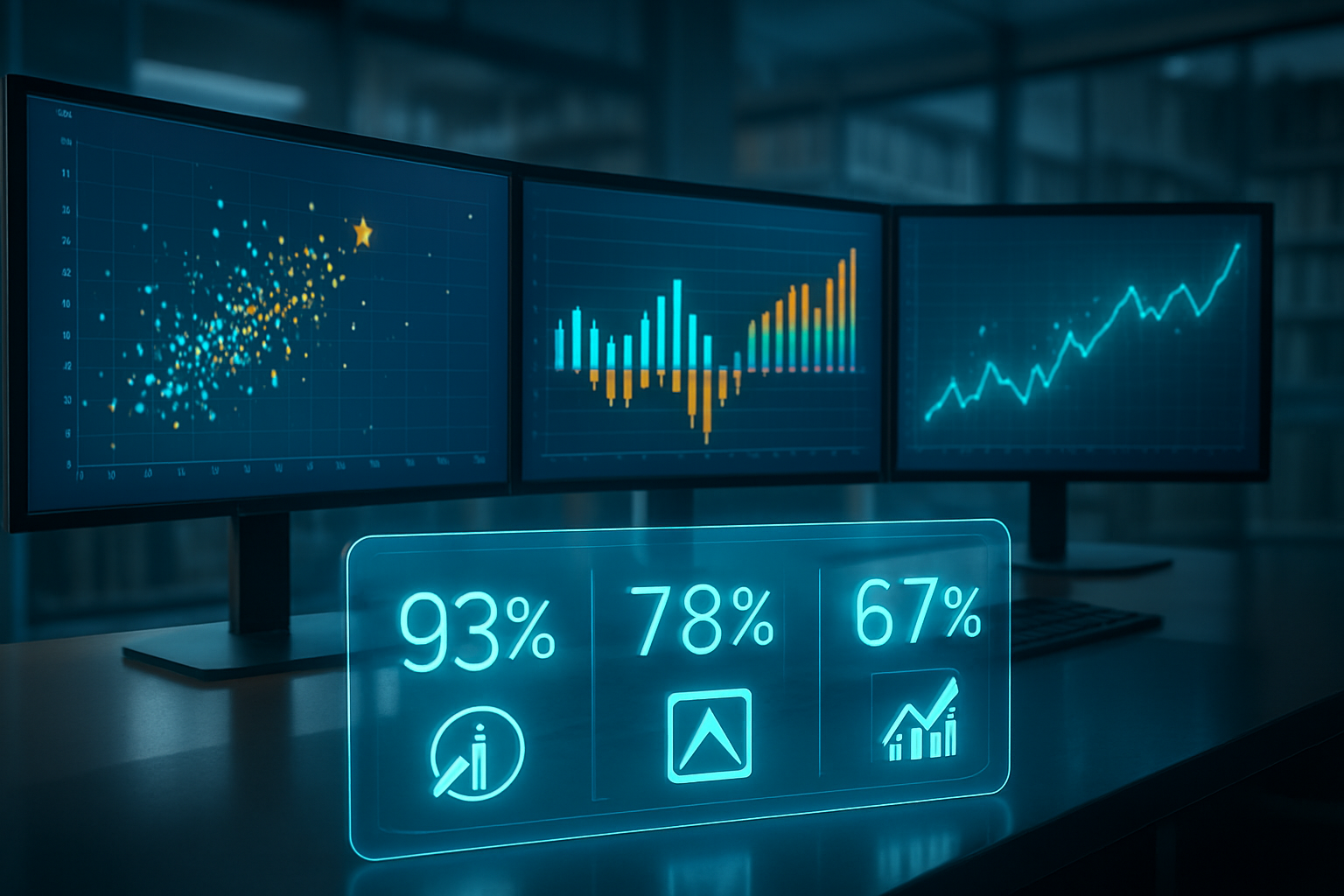
    The study, authored by Vanderbilt political science professor Joshua D. Clinton and researcher TzuFeng Huang, analyzed over 2,500 political contracts across the major players in the space: PredictIt, Kalshi, and Polymarket. Their findings have sent shockwaves through the industry: PredictIt, the smallest of the trio by volume due to strict regulatory limits, emerged as the "gold standard" with a 93% accuracy rate. Meanwhile, the $2.4 billion behemoth Polymarket trailed significantly behind at just 67%, raising serious questions about whether massive liquidity is a feature or a bug in political forecasting.

    The Market: What's Being Predicted

    The Vanderbilt research focused on the accuracy and efficiency of prediction markets during the 2024 U.S. election cycle—an event that saw prediction markets move from the fringes of the internet to the center of mainstream media. At the heart of the study was a comparison of how accurately these platforms predicted the outcome of 2024 presidential, congressional, and down-ballot races.

    Trading on these events took place across several distinct ecosystems. PredictIt, operated by Victoria University of Wellington with a "no-action" letter from the CFTC (though frequently under legal scrutiny), has long maintained a $850 limit per contract. Kalshi, a regulated exchange in the U.S., saw its volume explode after winning a landmark legal battle to host election markets. Polymarket, a decentralized platform built on the Polygon blockchain, became the global "whale" of the industry, fueled by international liquidity and massive crypto-native bets.

    Despite the disparities in how they operate, the study looked at the "market-implied probability" on the eve of Election Night. While PredictIt correctly called 93% of the outcomes it listed, Kalshi followed with a respectable 78%. Polymarket’s 67% accuracy rate was particularly notable given its $2 billion-plus handle, suggesting that a significant portion of its volume may have been "noise" rather than "signal."

    Why Traders Are Betting

    The discrepancy in accuracy appears to be rooted in the very factor that proponents of prediction markets usually celebrate: volume. Researchers Clinton and Huang found that massive liquidity often acts as a "double-edged sword." In the case of Polymarket, the influx of billions of dollars attracted not just informed "insiders," but also speculative noise and political partisans who used the market as a tool for "cheerleading" rather than objective analysis.

    One of the most striking findings in the Vanderbilt study was the presence of "herd behavior." Researchers noted that price movements were frequently driven by "within-market actions"—traders reacting to what other traders were doing on the same platform—rather than external political news or polling data. This created a feedback loop where prices became untethered from reality. In several instances, the study found that the probability of mutually exclusive outcomes (like a "Republican Sweep" and a "Democratic Sweep") actually moved in the same direction simultaneously—a sign of fundamental market irrationality.

    Furthermore, the rise of social media influence played a pivotal role. Platforms like X (formerly Twitter) became echo chambers where "whales" could influence market sentiment, leading smaller traders to follow their lead in a classic display of the "herd" mentality. This behavior was less prevalent on PredictIt, where the $850 cap prevents any single trader from moving the needle too far, forcing the price to rely on a broader, more diverse consensus of smaller, more cautious bettors.

    Broader Context and Implications

    The Vanderbilt study arrives at a time when prediction markets are becoming deeply integrated into the American financial and media landscape. Major public companies have already placed their bets on the sector’s longevity. Robinhood (NASDAQ: HOOD) recently launched its "Prediction Markets Hub" in partnership with Kalshi, while Interactive Brokers (NASDAQ: IBKR) has developed its own exchange, ForecastEx, to allow clients to hedge against economic and political volatility.

    The institutionalization of the space is accelerating. Intercontinental Exchange (NYSE: ICE), the parent company of the New York Stock Exchange, recently made a strategic investment in Polymarket, while Alphabet (NASDAQ: GOOGL) has begun integrating live prediction data from both Kalshi and Polymarket into Google Finance results. Even traditional media is pivoting; News Corp (NASDAQ: NWS), via Dow Jones, recently signed an exclusive partnership to embed Polymarket modules into The Wall Street Journal and MarketWatch.

    However, the Vanderbilt findings serve as a warning for these corporate giants. If these markets are "merely loud" rather than "wise," their utility as a hedging tool or a journalistic "thermometer" is compromised. The researchers warn that if the public and media outlets treat these markets as infallible "truth machines," they risk being misled by speculative bubbles rather than informed by the "wisdom of the crowd."

    What to Watch Next

    As we move deeper into 2026, the focus of prediction markets is shifting from the 2024 post-mortem to the upcoming midterm cycles and global economic indicators. Traders and researchers alike will be watching to see if platforms like Polymarket can implement new mechanisms to dampen "herd behavior" and filter out speculative noise.

    Keep a close eye on the "arbitrage gaps" identified by the Vanderbilt team. The researchers found that identical contracts often traded at significantly different prices across platforms, particularly in the final two weeks of an event. As market efficiency experts work to bridge these gaps, we may see the emergence of cross-platform "aggregator" tools that attempt to find a "true" price by weighing the signals from PredictIt, Kalshi, and Polymarket against each other.

    Additionally, regulatory scrutiny remains a looming shadow. While Kalshi has secured key legal victories, the CFTC continues to express concern over the "gamification" of democracy. The Vanderbilt study’s finding that PredictIt—the most regulated and restricted platform—was also the most accurate could provide a surprising defense for the "low-limit" model that regulators prefer.

    Bottom Line

    The Vanderbilt study by Clinton and Huang is a landmark moment for the prediction market industry. It challenges the foundational belief that higher volume leads to better data, proving instead that on platforms like Polymarket, billions of dollars in liquidity can lead to "informational cascades" where traders simply follow the leader into inaccuracy.

    For the prediction market enthusiast, the lesson is clear: size isn't everything. PredictIt’s 93% accuracy rate suggests that a diverse group of small-stakes traders may be better at filtering out noise than a handful of high-rolling "whales." As prediction markets become an embedded feature of platforms like Robinhood (NASDAQ: HOOD) and Google Finance (NASDAQ: GOOGL), the industry must grapple with the reality that "herd behavior" is a potent force that can easily drown out the truth.

    In the end, prediction markets remain a powerful tool for forecasting, but they are not a crystal ball. They are a reflection of human psychology—and as this study shows, humans are just as prone to following the crowd as they are to finding the truth.


    This article is for informational purposes only and does not constitute financial or betting advice. Prediction market participation may be subject to legal restrictions in your jurisdiction.

    PredictStreet focuses on covering the latest developments in prediction markets.
    Visit the PredictStreet website at https://www.predictstreet.ai/.